
You can turn even the smallest balcony into a productive, calming garden by thinking vertically, choosing lightweight pots, and matching plants to your light and wind conditions. Prioritize stackable or wall-mounted systems, climbers for privacy, and foldaway furniture to keep circulation open. A few smart choices will give you year-round interest, easy maintenance, and more usable space—here’s how to get there step by step.
Maximise Vertical Space With Wall-Mounted Planters
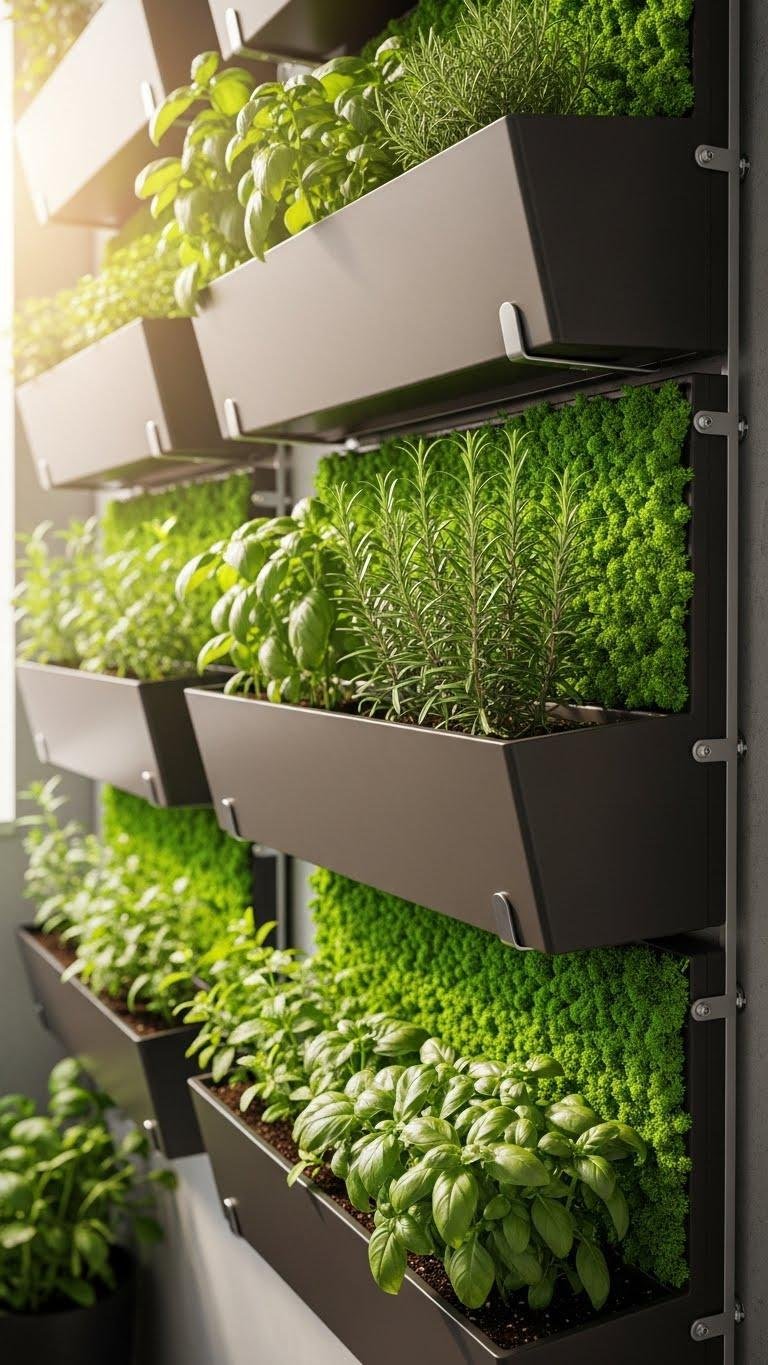
Start by mapping your balcony wall—measure width, height and light patterns—so you can fit wall-mounted planters where they’ll get the sunlight they need.
You’ll arrange herb pockets and moss panels into tiers, balancing weight and access. Choose sturdy anchors, lightweight soil, and drought-tolerant herbs. Rotate pots seasonally, prune for airflow, and leave open pathways so your space stays liberating and efficient.
Create a Living Privacy Screen With Climbing Plants
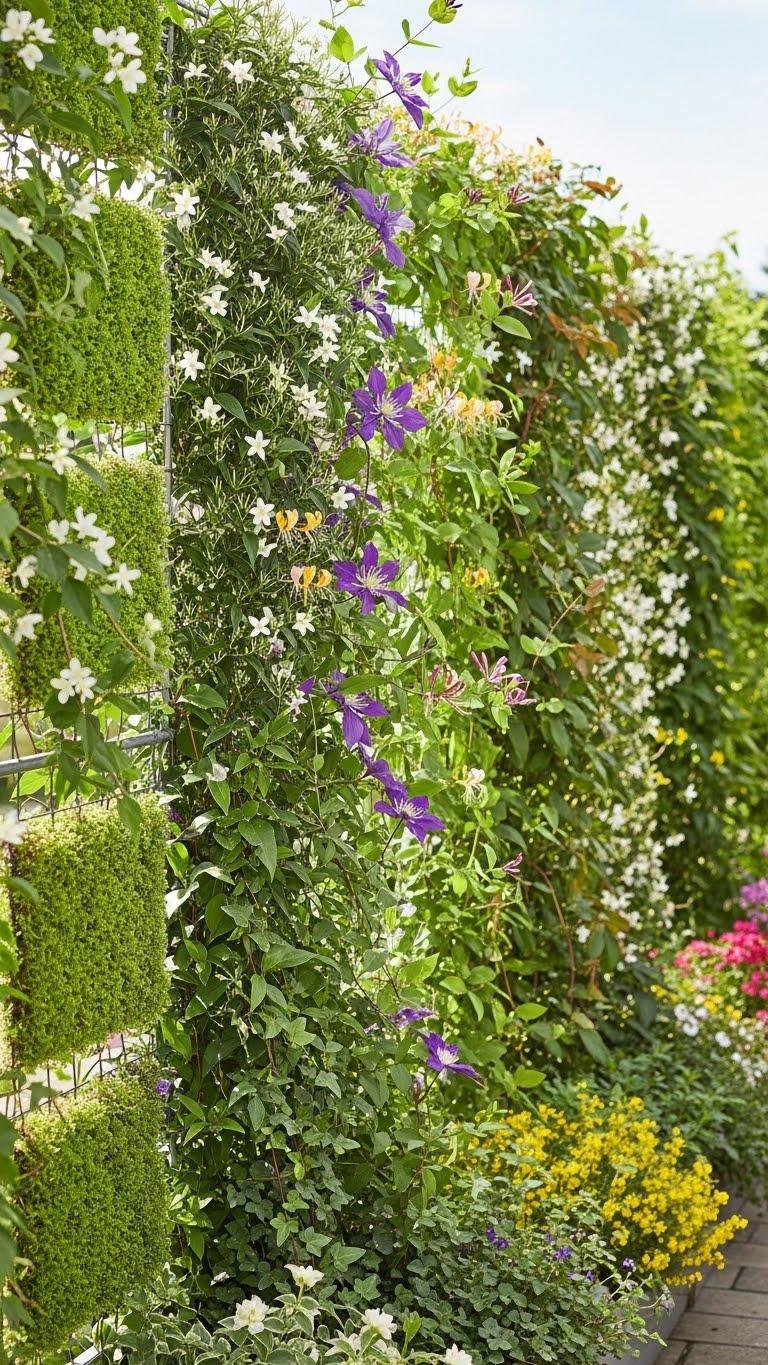
Growing climbers into a living privacy screen transforms a bare railing or trellis into a green wall that actually works—measure the available height and sunlight first, then pick vigorous, site-suited vines (fast-growing jasmine, clematis, honeysuckle, or evergreen ivy) that match your light and wind exposure.
Train stems on wire, add lightweight moss paneling for texture, and mix scented climbers for scent and seclusion.
Use Hanging Baskets to Free Floor Area
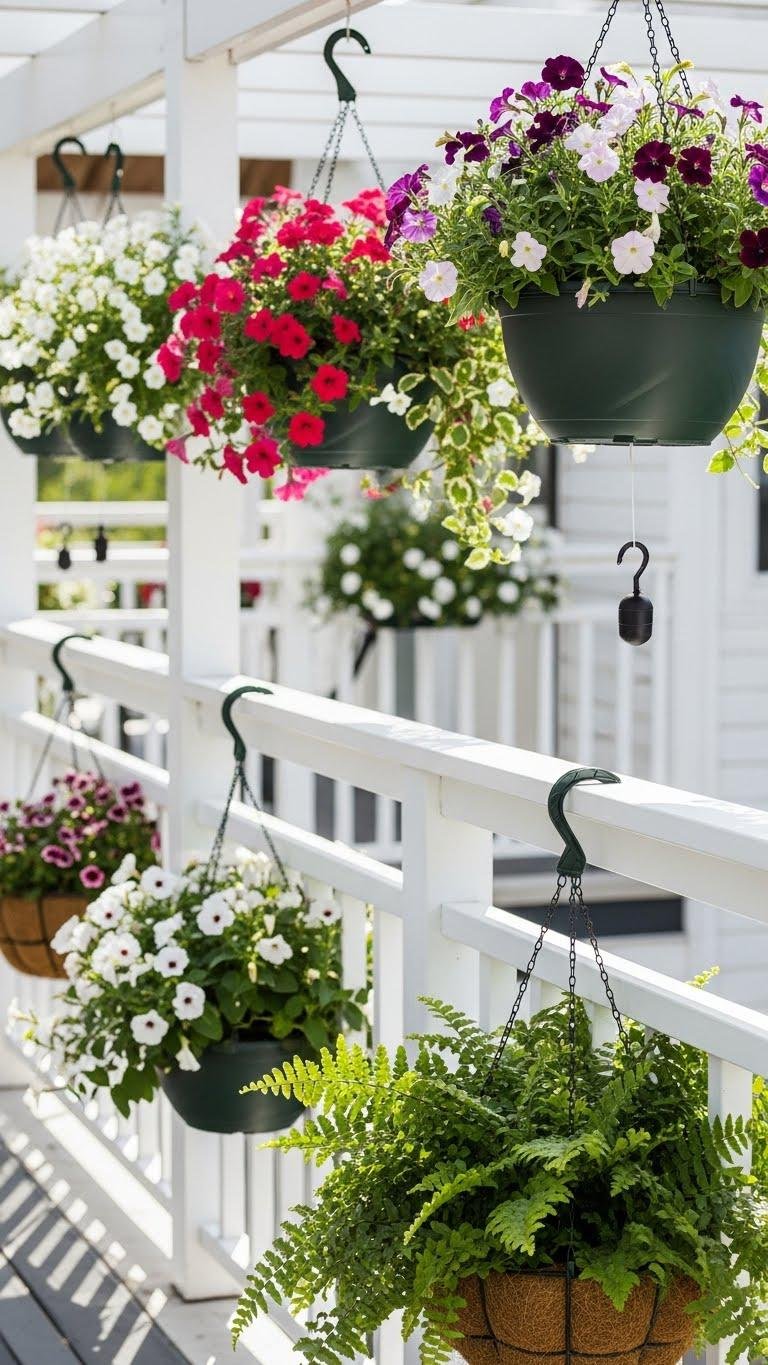
By suspending baskets from railings, beams or a sturdy overhead bracket, you free precious floor space while adding another planting plane that catches light and breeze; you’ll want to place heavier, sun-loving pots where they’ll get direct sun and reserve shaded spots for ferns or herbs that prefer less heat.
Choose space saving baskets and use weighted hanging anchors for safety; rotate containers for even growth.
Build a Compact Trellis for Vining Vegetables
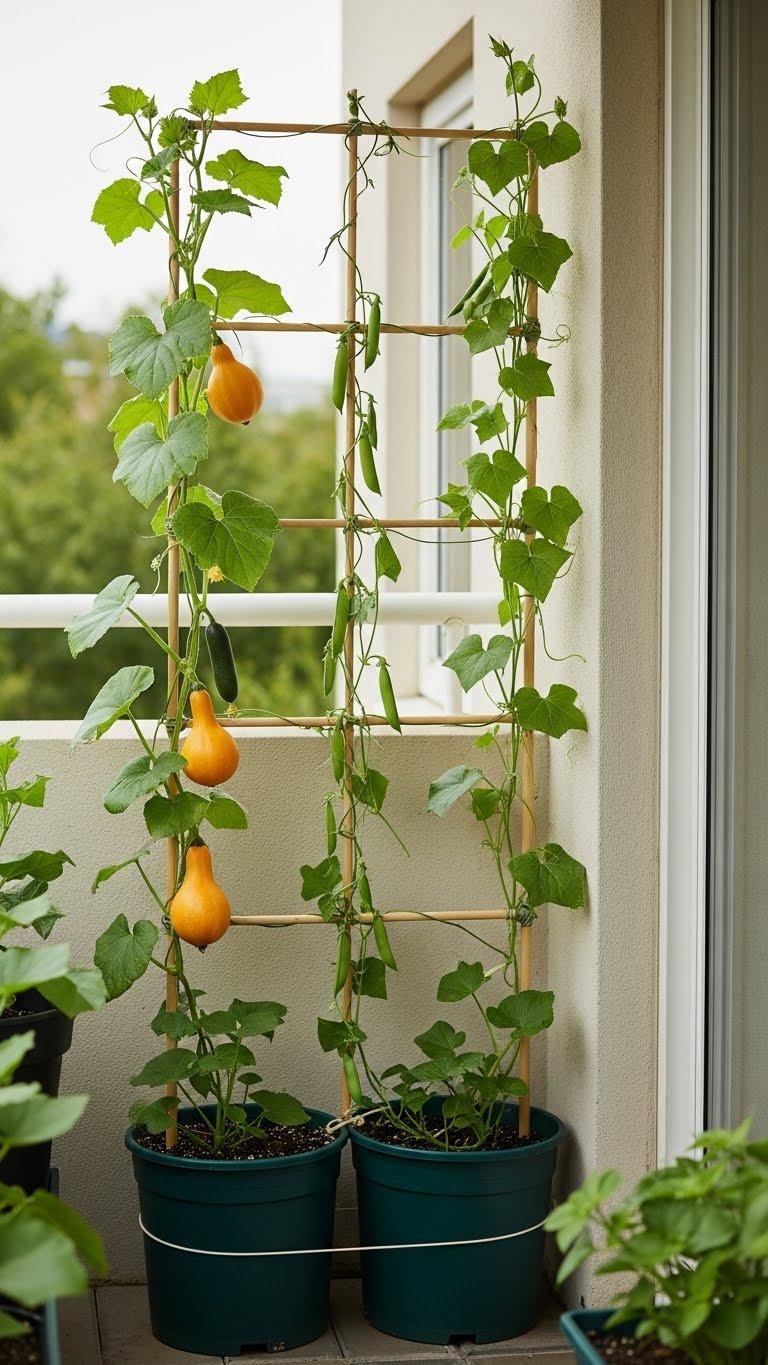
Think vertically to reclaim floor space and give vining vegetables the support they need: a compact trellis channels squash, cucumbers, peas, or beans upward, improving air circulation, sunlight exposure, and harvest accessibility. You’ll build a compact lattice or micro trellis from lightweight wood or PVC, anchor pots securely, train vines with ties, and prune for airflow—freeing space while maximizing yield and mobility on your balcony.
Add a Mini Water Feature for Calm and Cooling
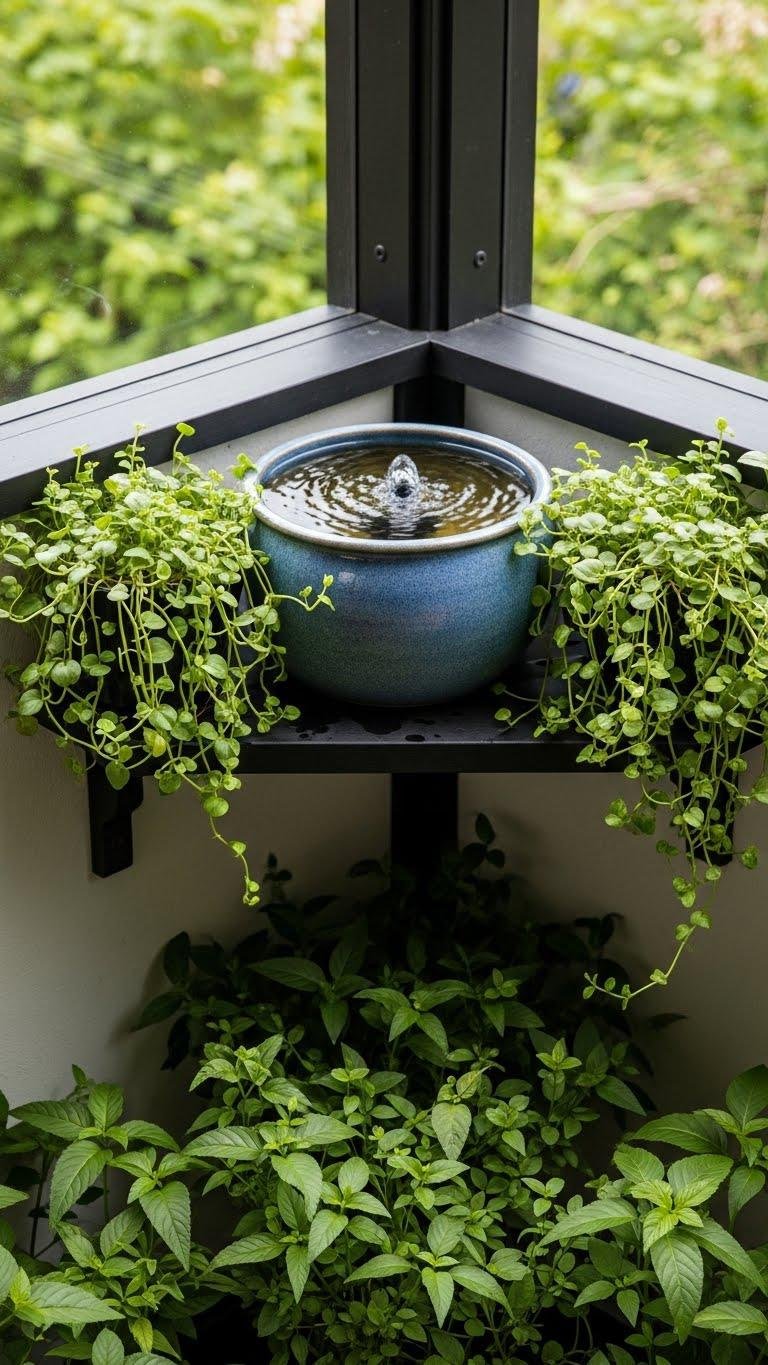
A small water feature can turn the same wall or railing you used for the foldaway bench into a cooling, calming focal point that benefits both you and your plants.
Position a ceramic birdbath or compact mini fountain on a corner shelf or hung planter, route a discreet pump, and choose shade-tolerant moisture-loving greens. You’ll enjoy subtle sound, lower temps, and easy maintenance.
Plant an Edible Herb Wall for Cooking Convenience
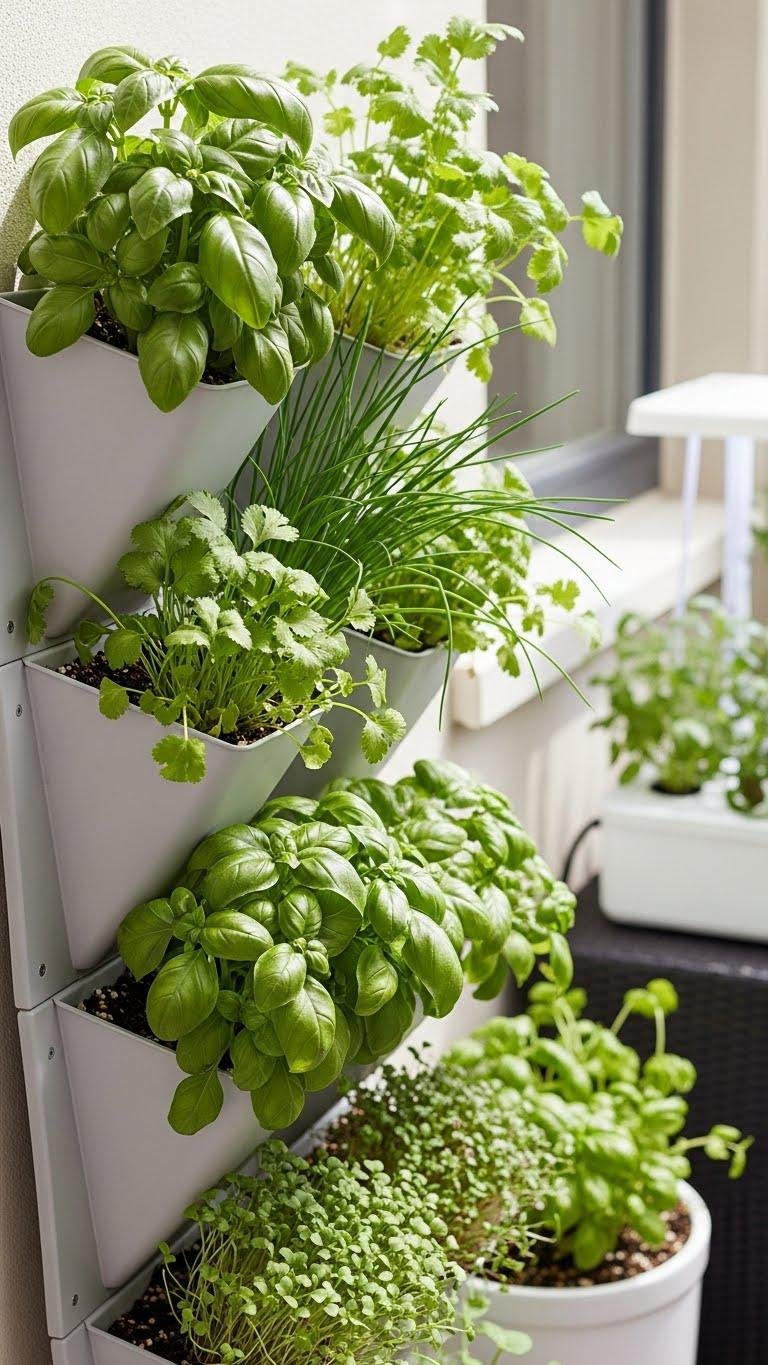
If you want fresh flavors within arm’s reach while cooking, build a vertical herb wall on the sunny side of your balcony using shallow pockets, staggered pots, or a modular planter panel. Place basil, cilantro, chives and compact kitchen microgreens in well-draining mixes; consider vertical hydroponics for water efficiency.
Arrange for easy reach, occasional pruning, and quick harvests so you stay free to cook anywhere.
Choose Coastal-Tolerant Plants for Windy Balconies
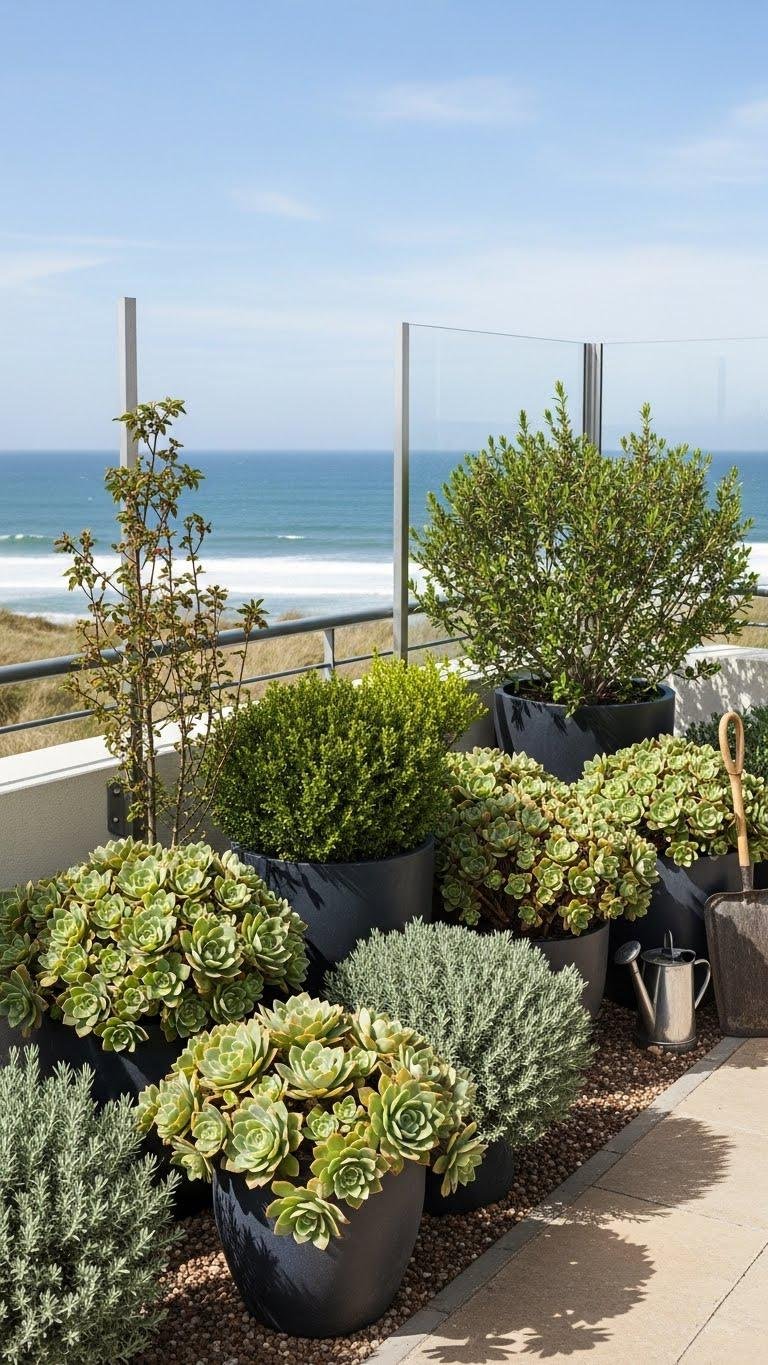
Resilience matters when your balcony faces constant gusts, so pick plants that shrug off salt spray, gritty wind, and occasional drought.
You’ll choose salt tolerant succulents and compact shrubs with wind shedding foliage, anchor them in heavy pots, and arrange windbreak screens.
Keep roots cool, water deeply but infrequently, and leave space to move—your balcony stays liberated, low-maintenance, and hardy.
Layer Plants by Height to Create Depth
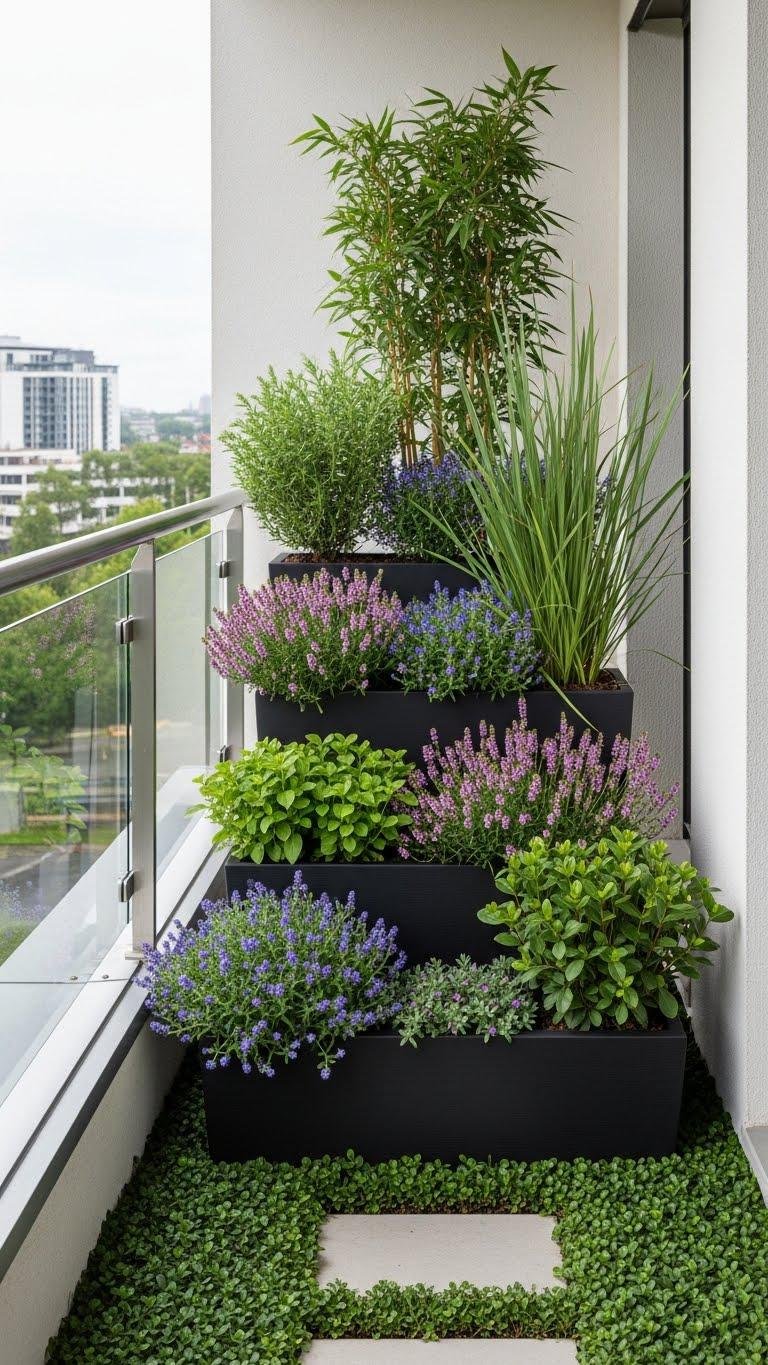
Having anchored your wind-tolerant specimens and screens, think vertically to give the balcony a layered, room-like feel.
Arrange tallest plants at the back or near railings, medium pots midplane, and low groundcover in front to maximize sightlines.
Use tiered foliage and staggered silhouettes to craft privacy, shade, and movement.
Rotate pots for light balance and keep pathways clear for effortless freedom.
Incorporate Evergreen Containers for Year-Round Structure
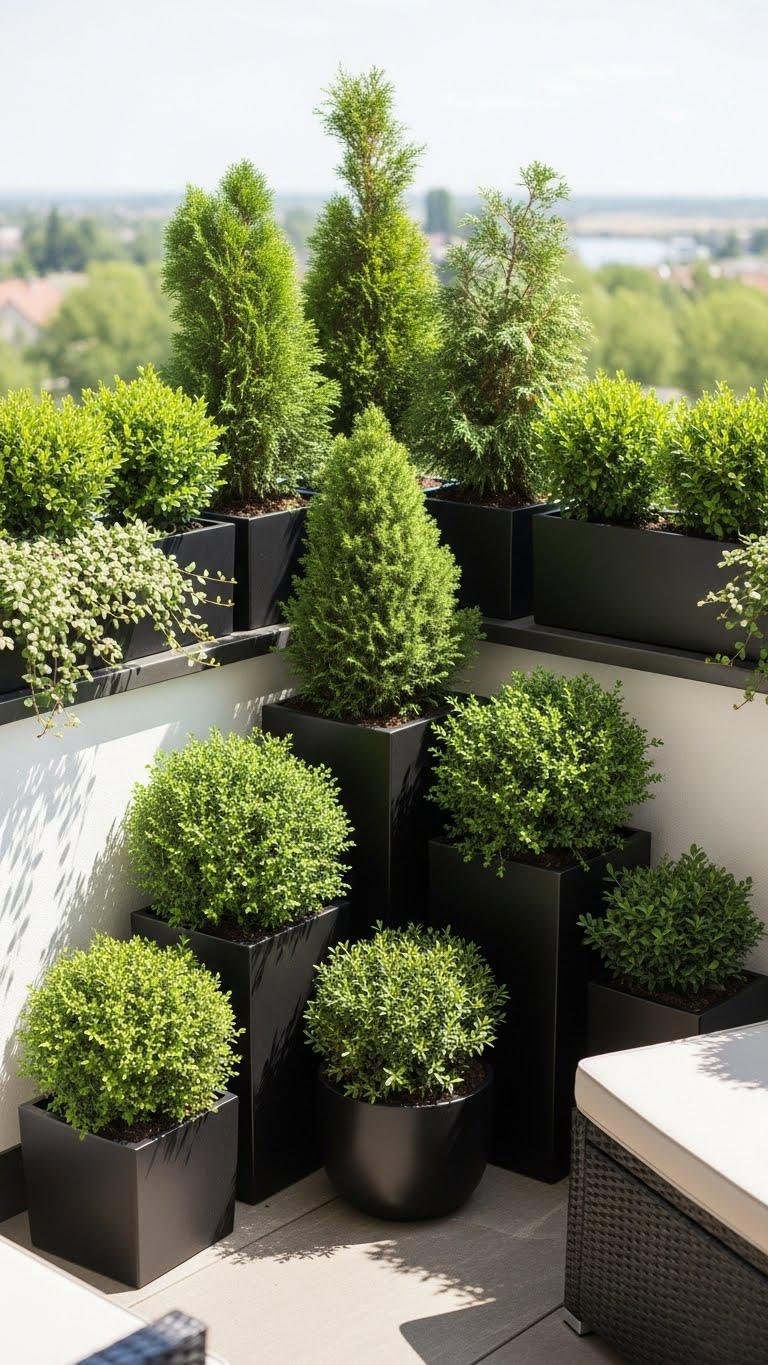
Structure matters: evergreen containers give your balcony reliable form and year-round interest, so place them where they define corners, frame seating, or anchor views.
You’ll choose evergreen silhouettes and structural foliage that suit scale and wind. Cluster varied heights, pick tough species, and leave room to move.
This keeps the space usable, low-maintenance, and visually steady through every season.
Set Up Self-Watering Planters to Save Time and Water
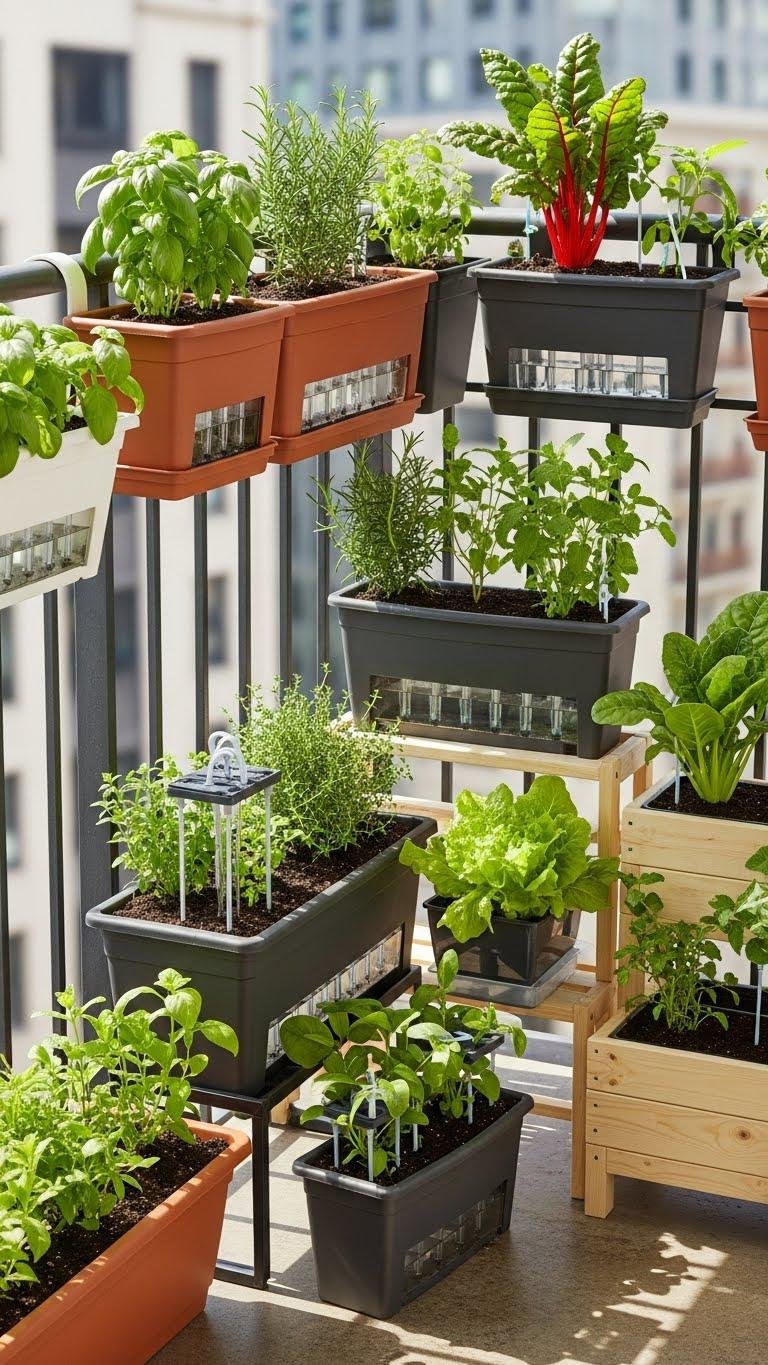
Because balcony space and time are limited, set up self-watering planters so your plants get consistent moisture without daily fuss.
Choose compact reservoirs, capillary matting for even uptake, and self watering spikes for isolated pots. Position planters where refill access is easy and light suits plants.
You’ll conserve water, reduce chores, and keep herbs and greens thriving while staying mobile and unburdened.
Use Terracotta and Mediterranean Elements to Brighten Space
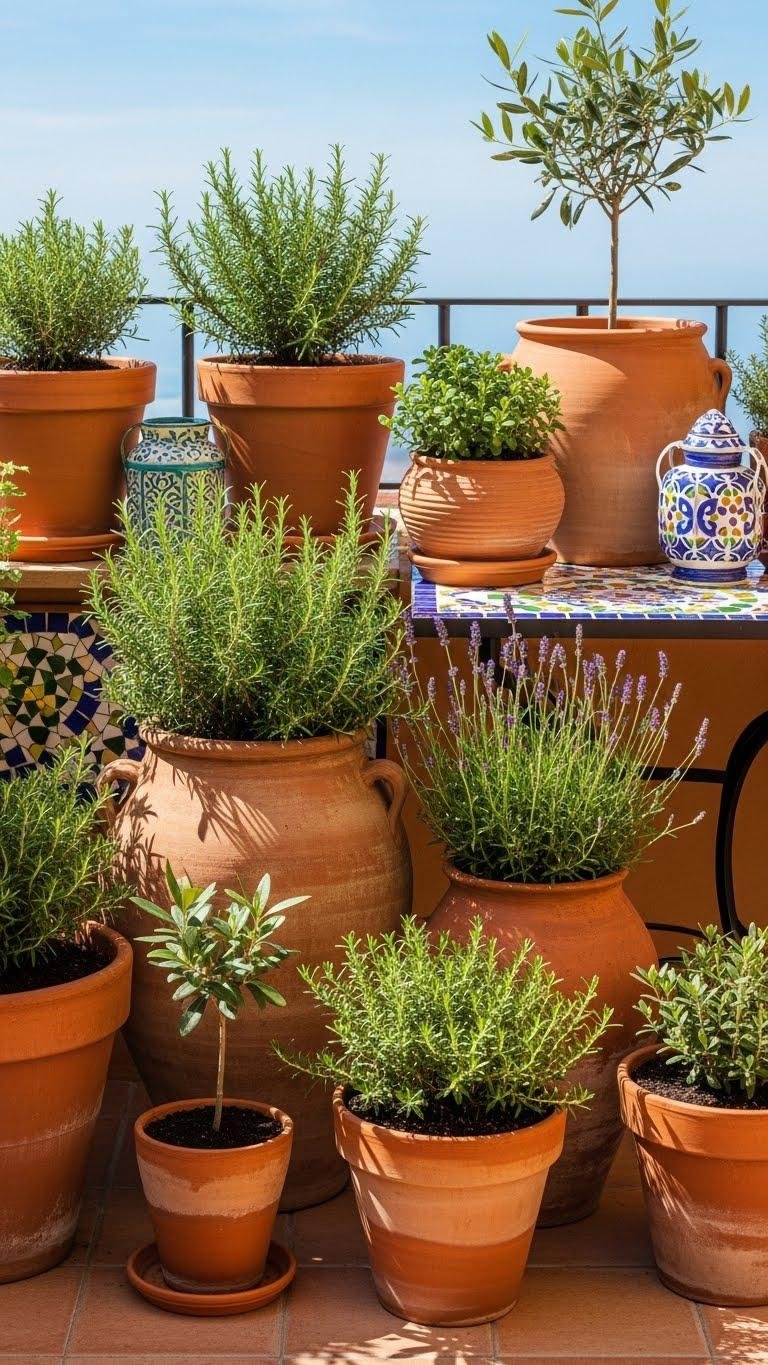
Drawing on warm, sun-drenched colors and breathable clay, terracotta pots instantly lift a balcony’s mood while helping regulate soil moisture for Mediterranean herbs and drought-tolerant plants.
You’ll arrange sun baked ceramics of varied sizes to maximize vertical space, pair them with compact rosemary, lavender, and olive saplings, and add mosaic accents on a small table or wall to create effortless, freeing Mediterranean charm.
Create a Microclimate With Sheltered Plant Groupings
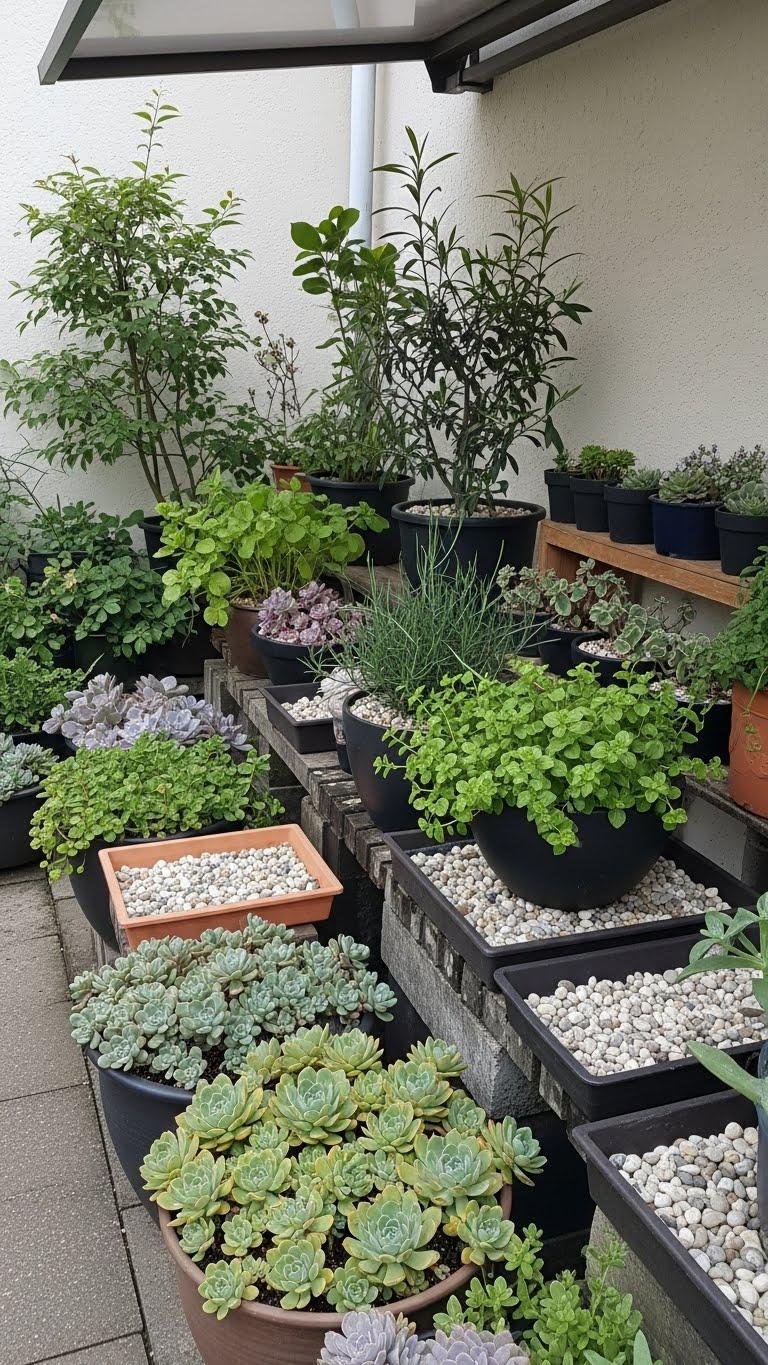
By grouping pots and planters close to walls, railings, or under an awning, you can create a pocket of calmer air and more stable temperatures for tender plants.
Arrange sheltered succulents with taller, hardy specimens behind them to buffer wind.
Use trays, pebble dishes, or dense foliage to form humidity pockets.
This compact layout saves space, protects plants, and lets you garden freely.
Install Solar-Powered Lighting for Evening Ambience
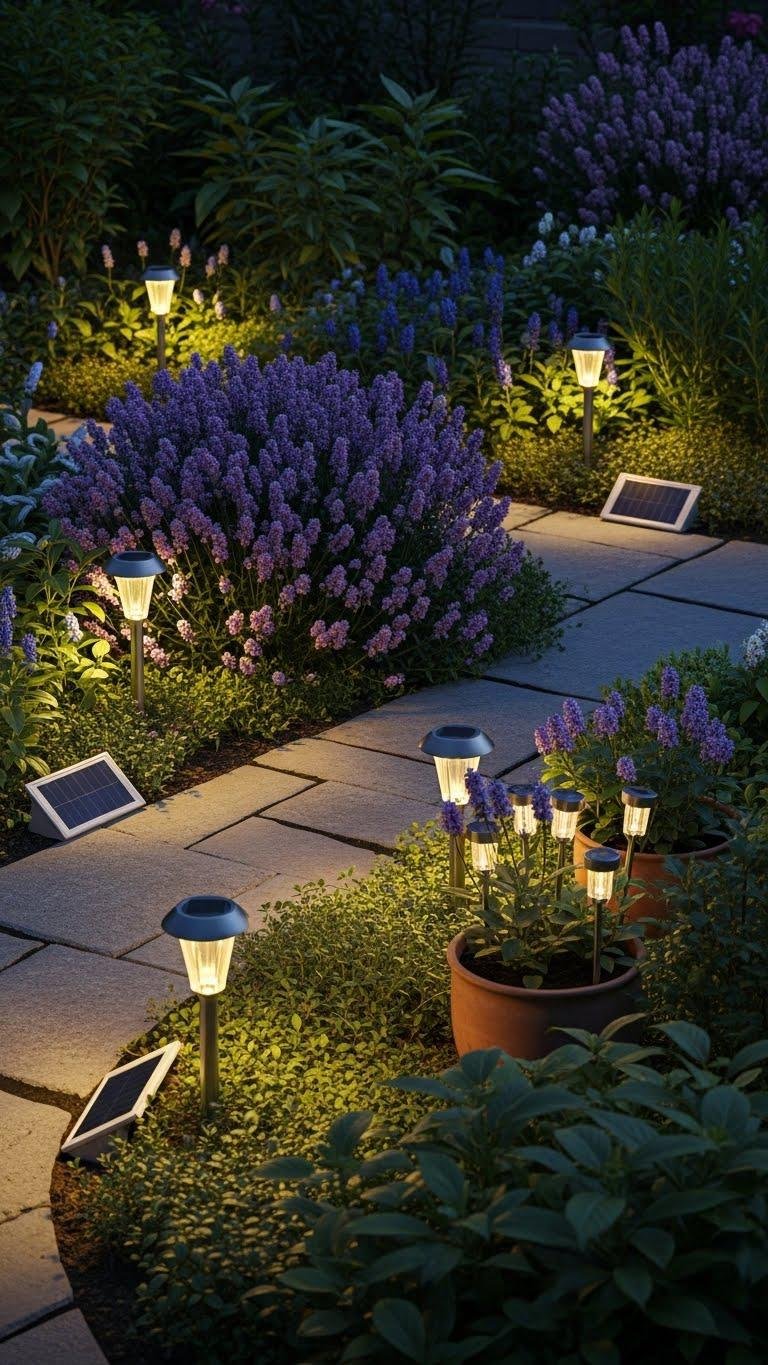
Once you’ve clustered plants into a sheltered microclimate, extend that cozy feel into the evening with solar-powered lighting that highlights foliage and pathways without wiring or upkeep.
You’ll position low-profile units along solar pathways and tuck stake lights among pots to create depth. Choose fixtures with dusk sensors and warm LEDs, orient panels for sun, and keep placement flexible so the space stays free and effortless.
Integrate Built-In Storage Benches for Dual Function
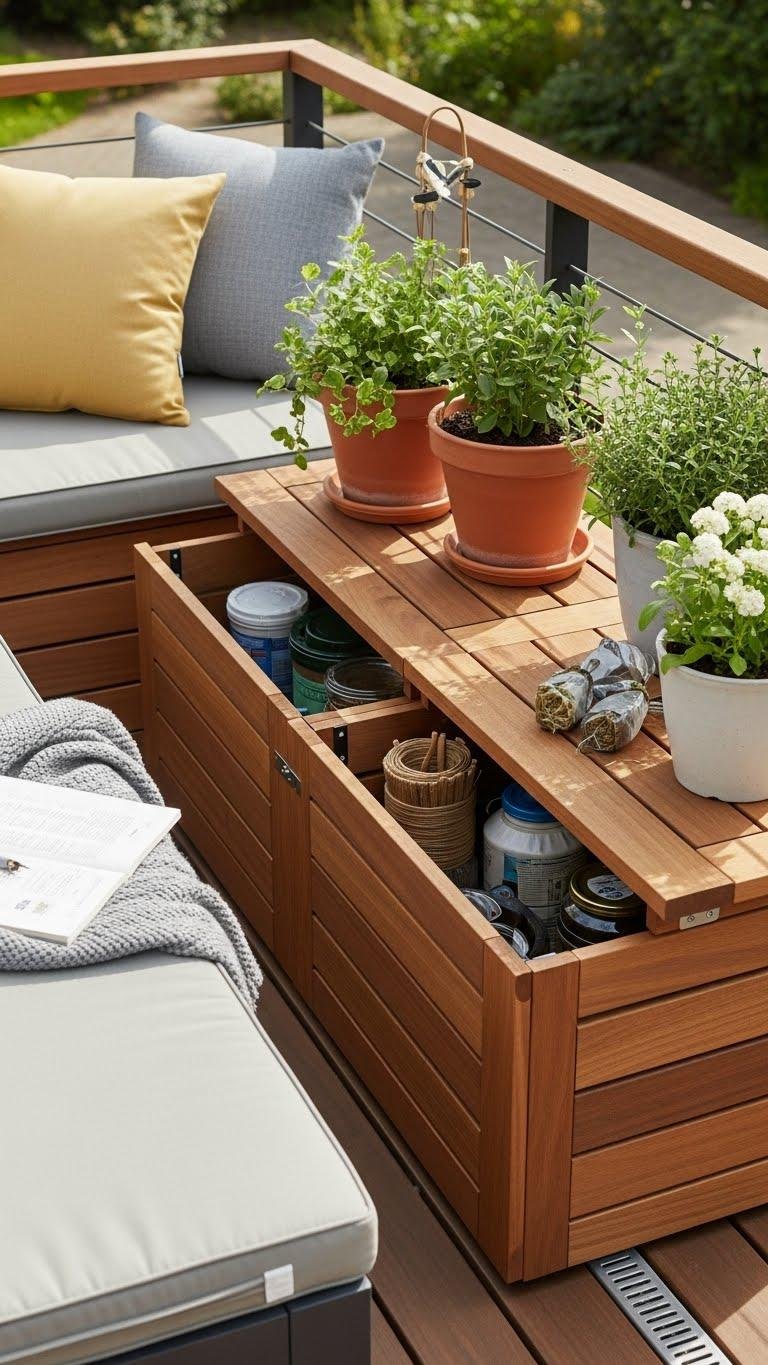
Storage-benches give you seating, hidden tool space, and a tidy base for pots without stealing square footage. You’ll design benches that double as plan stands, with hidden storage for soil, ties, and pruners and cushioned seating for long mornings.
Anchor units to railings, use moisture-resistant wood, and keep drainage clear so plants and your freedom to rearrange stay unhindered.
Use Lightweight, Wind-Resistant Pots and Materials
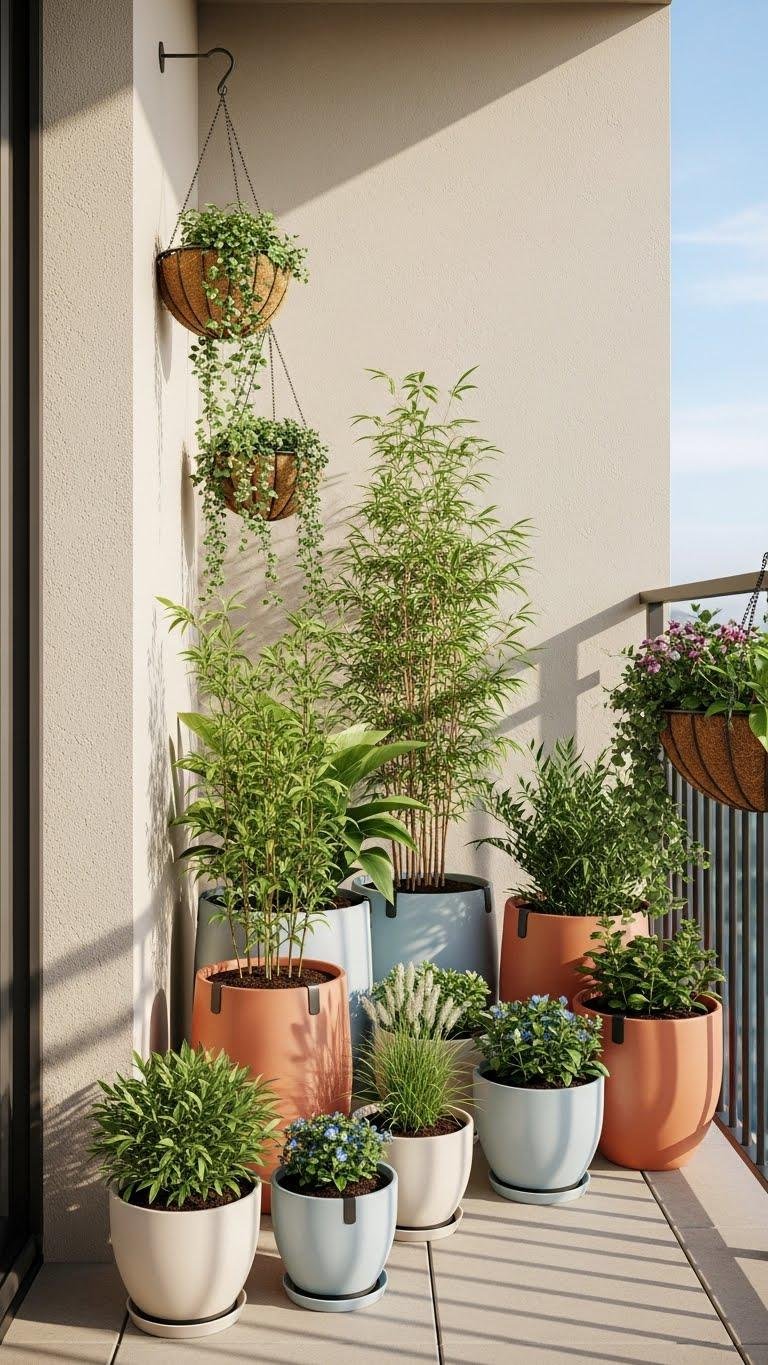
After you’ve secured benches and hidden tools, pick pots and materials that won’t become hazards on a breezy balcony. Choose lightweight ceramics for stable, manageable planters and pair them with windproof fabrics for hanging baskets and cushion covers.
Anchor taller plants with low-profile restraints, position heavier pots near walls, and leave open sightlines so you can move freely and keep plants safe in gusts.
Craft a Small Pollinator-Friendly Balcony Garden
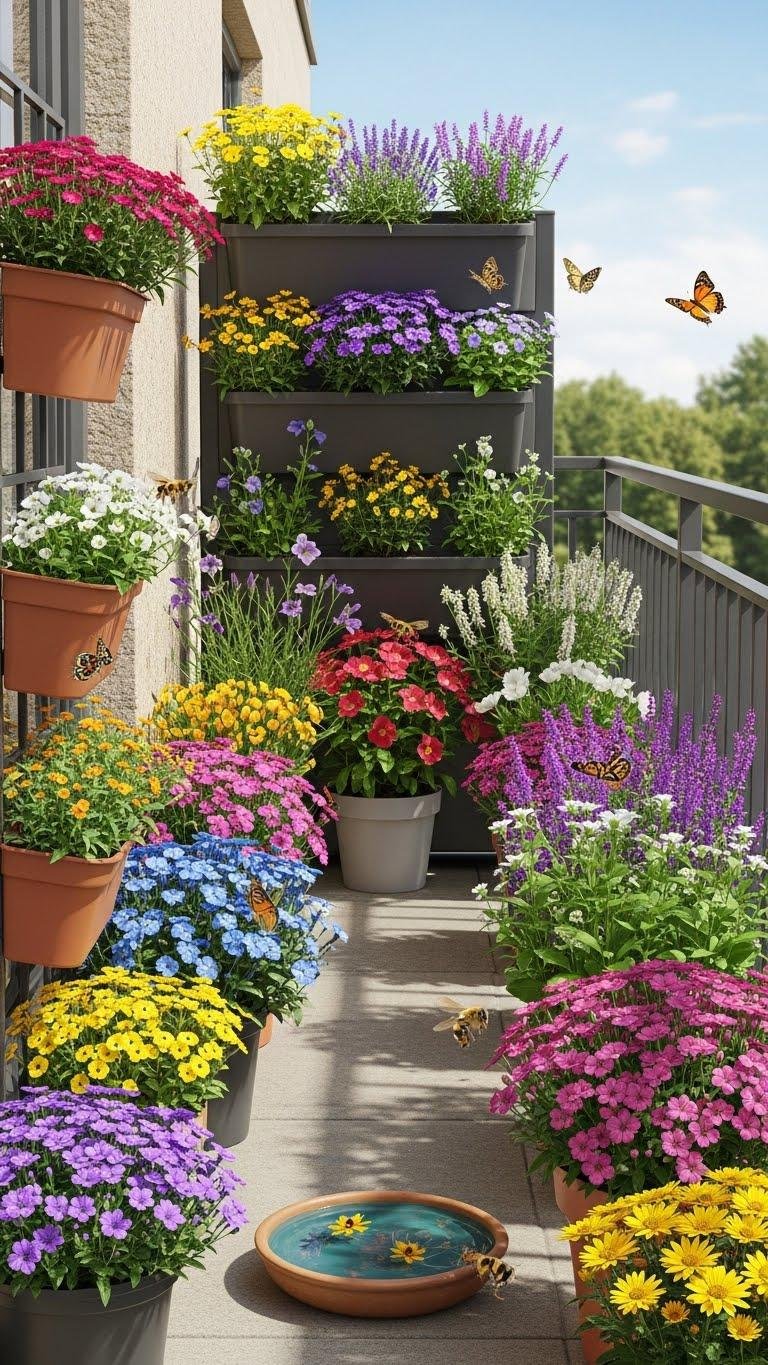
Bringing pollinators to your balcony starts with choosing the right mix of compact, nectar-rich plants and arranging them so bees, butterflies, and hoverflies can find food and shelter easily. You’ll create a pollen corridor with staggered pots, vertical planters and a sunny ledge.
Place clustered nectar stations at varying heights, include native blooms and a shallow water dish so pollinators visit freely.
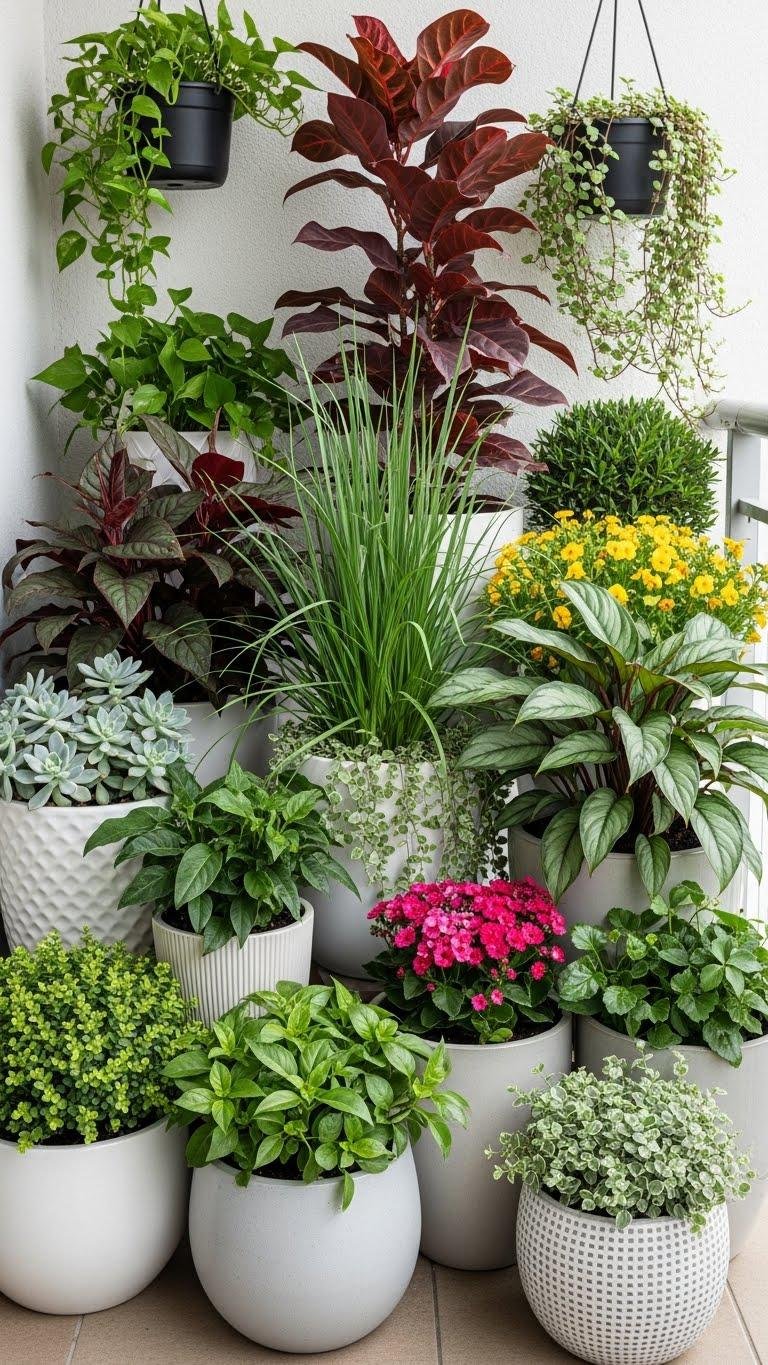
Combine Textures and Colors for Visual Impact
Add a Pergola or Overhead Frame for Vertical Interest
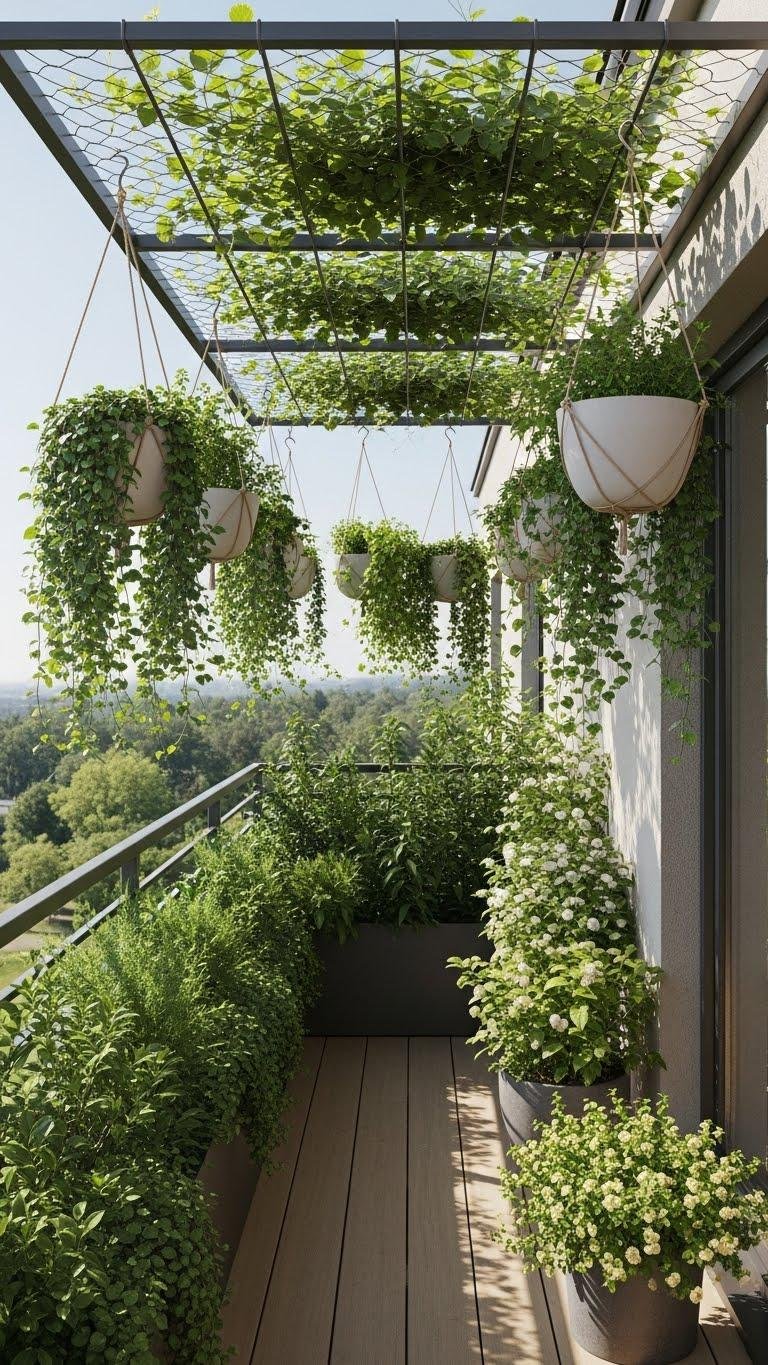
If you want to lift the eye and expand usable space, install a pergola or slim overhead frame to create vertical planting and shade without crowding the floor. You’ll hang suspended planter frames, climbers, and trailing herbs to maximize layers, enjoy dappled lighting, and define zones. Choose sturdy, lightweight materials, secure fixings, and fast-draining pots so your balcony stays free and functional.
Incorporate Composting Solutions for Container Gardens
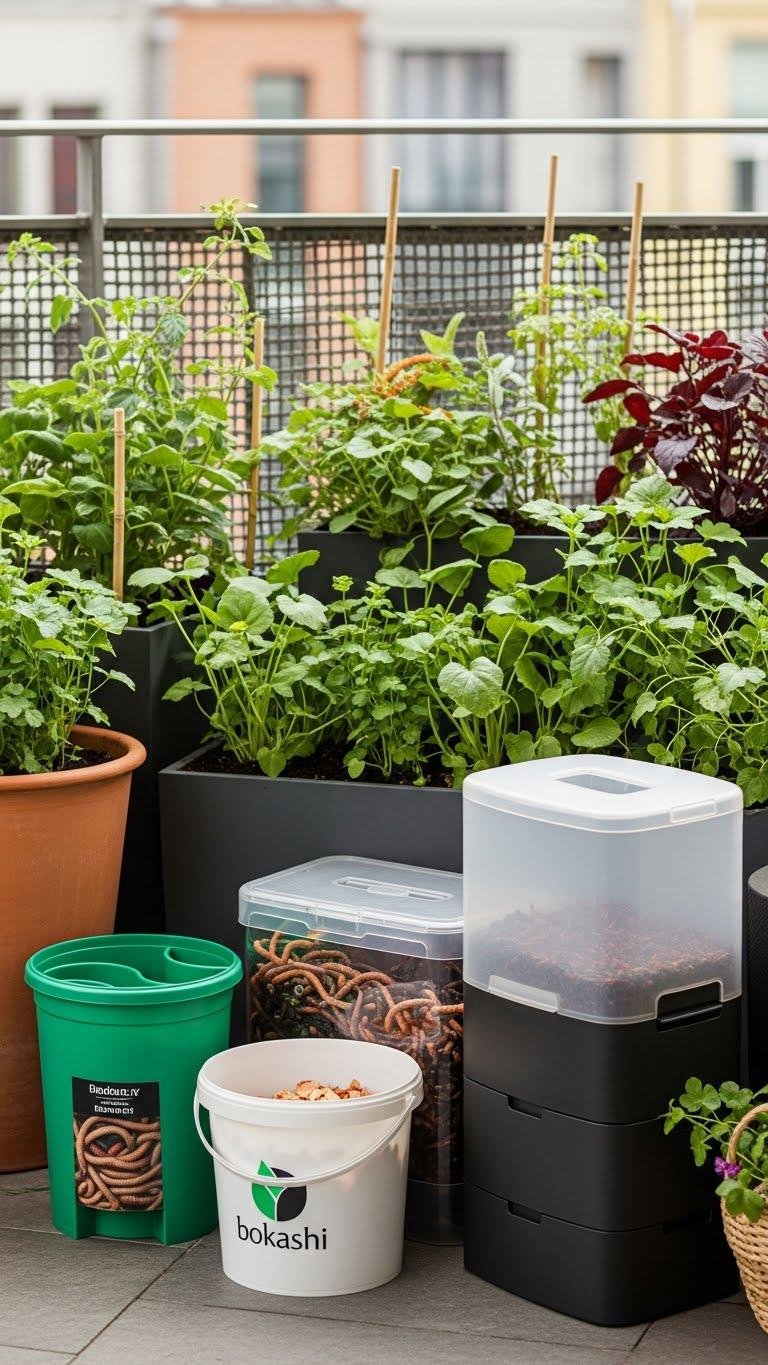
Composting on a balcony gives your container plants a steady source of nutrient-rich, moisture-retentive soil without needing a yard; you can set up a compact worm bin, bokashi bucket, or tumbling composter against a wall or under a bench to save floor space and keep odors contained.
Choose cold composting for low-maintenance scraps, use worm bins for fast, rich castings, and rotate containers quickly.
Use Flexible, Foldaway Furniture to Adapt the Space

Make your balcony work for both lounging and gardening by choosing flexible, foldaway furniture that tucks away to free up planting space when you need it. You’ll pick a foldaway table, slim chairs, or a wall mounted desk that flips down for potting or coffee.
This lets you reconfigure circulation, maximize sunlight for plants, and enjoy open space whenever you want.
Employ Low-Maintenance Native and Climate-Resilient Plants
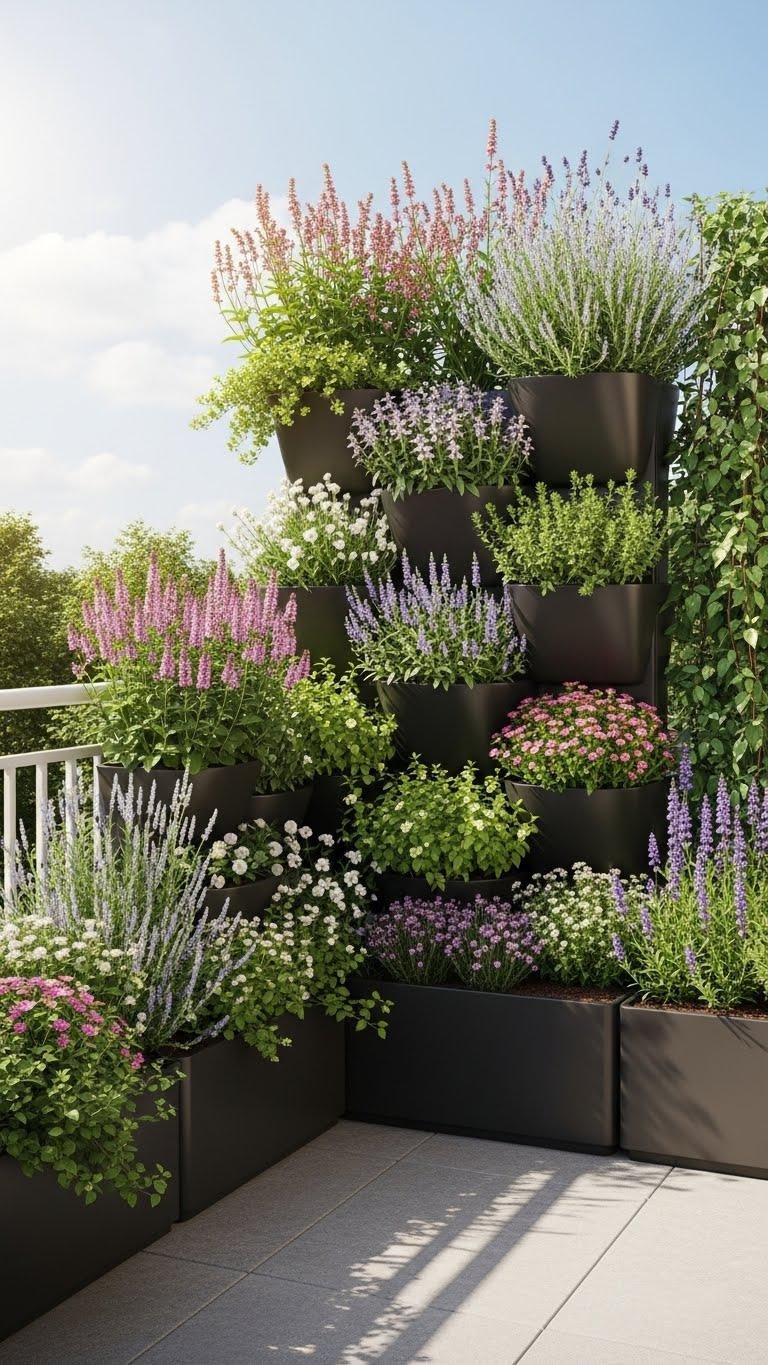
Because your balcony faces a specific sun pattern and wind exposure, choose native and climate-resilient plants that thrive with the light, heat, and moisture your space actually gets. Pick native perennials and drought tolerant shrubs in modular containers to save water and time. Arrange for vertical layers and staggered rooting depths so you maximize greenery without crowding, keeping maintenance minimal and mobility high.
Create a Relaxation Nook With Natural Materials and Greenery
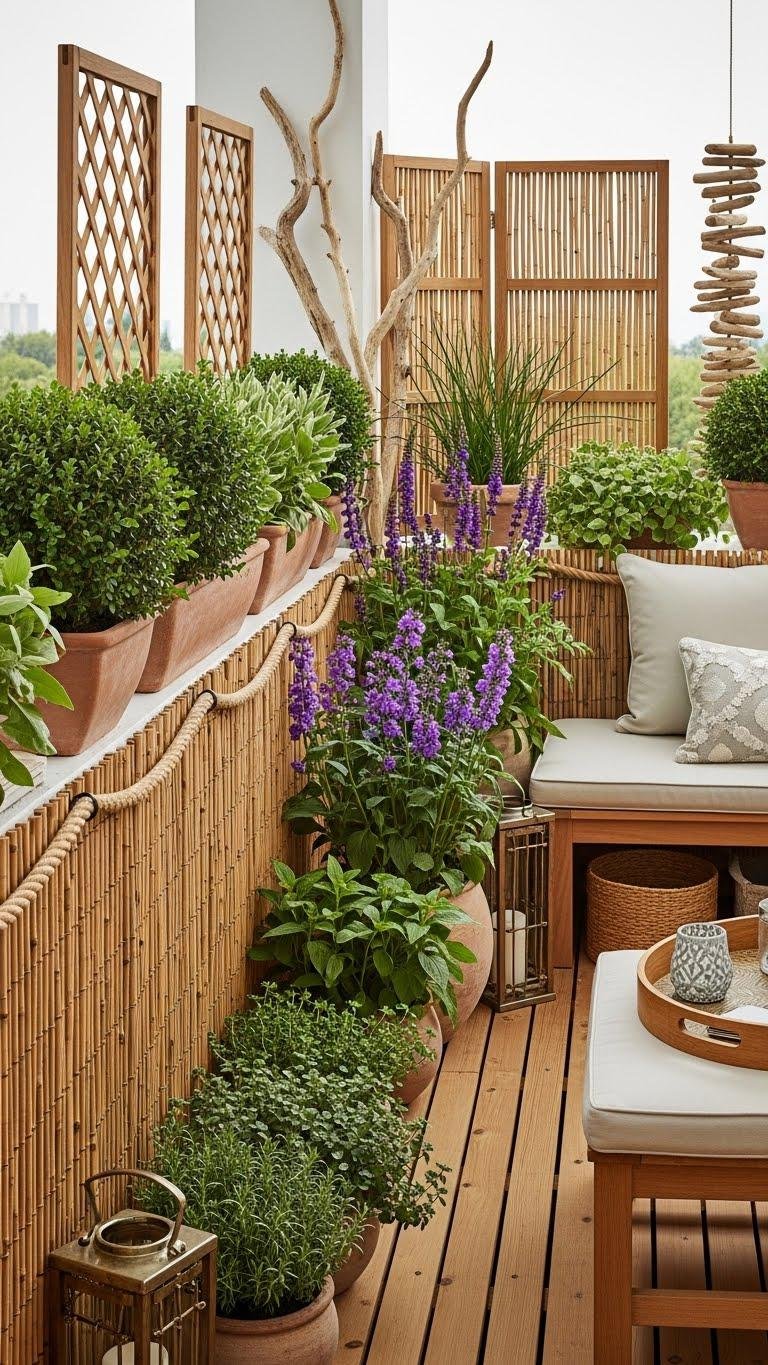
When you carve out a small corner of your balcony for relaxation, favor natural materials—teak slats, woven rope, clay pots—and cluster greenery to create layers of privacy and shade; place taller shrubs or a lattice-backed planter at the windward edge, mid-height perennials at seating level, and low, shallow-rooted herbs near your feet so each plant gets the light and airflow it needs.
Add driftwood accents, bamboo screens, a low bench, cushions, and a small tray table to keep the space open, breathable, and yours.