
You can cut watering time and water waste on your balcony without losing plant health by using a few smart drip and container techniques. Start with a compact layout, low‑flow drippers or soaker lines, and a simple timer or gravity reservoir, then match emitters to pot size and group plants by need. With a bit of setup and routine maintenance you’ll save effort—and there’s more practical setup and troubleshooting to walk through next.
Choose the Right Drip Irrigation System for Balconies
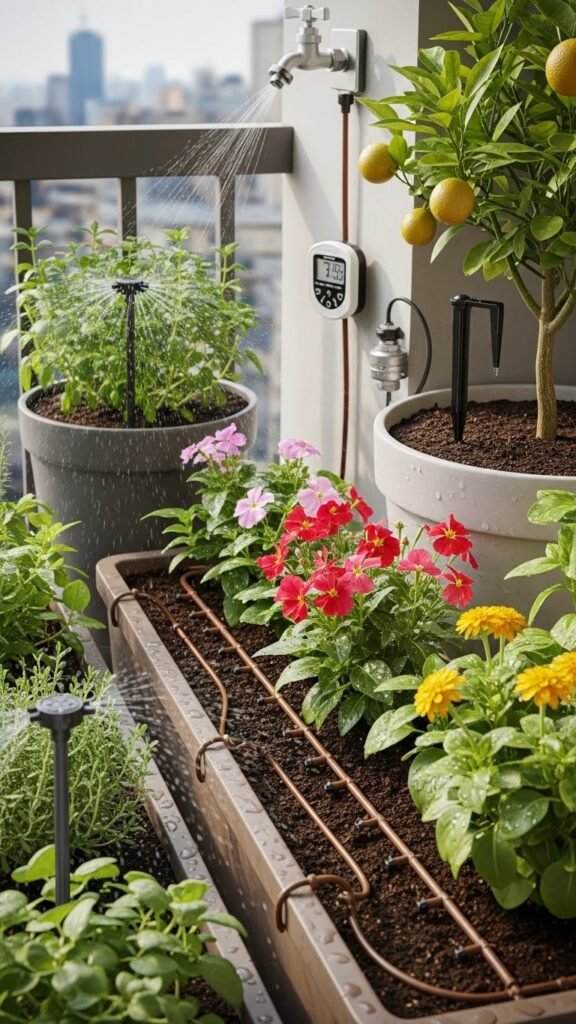
When you’re picking a drip irrigation system for a balcony, focus on flow rate, emitter spacing, and system size so water reaches each pot without waste.
You’ll pick a drip design that fits pot layouts, minimizes clogging, and favors adjustable emitters.
Check emitter lifespan, UV resistance, and easy maintenance.
Choose timers and fittings that let you water on your schedule, simply and reliably.
Measure Your Balcony and Sketch a Simple Layout
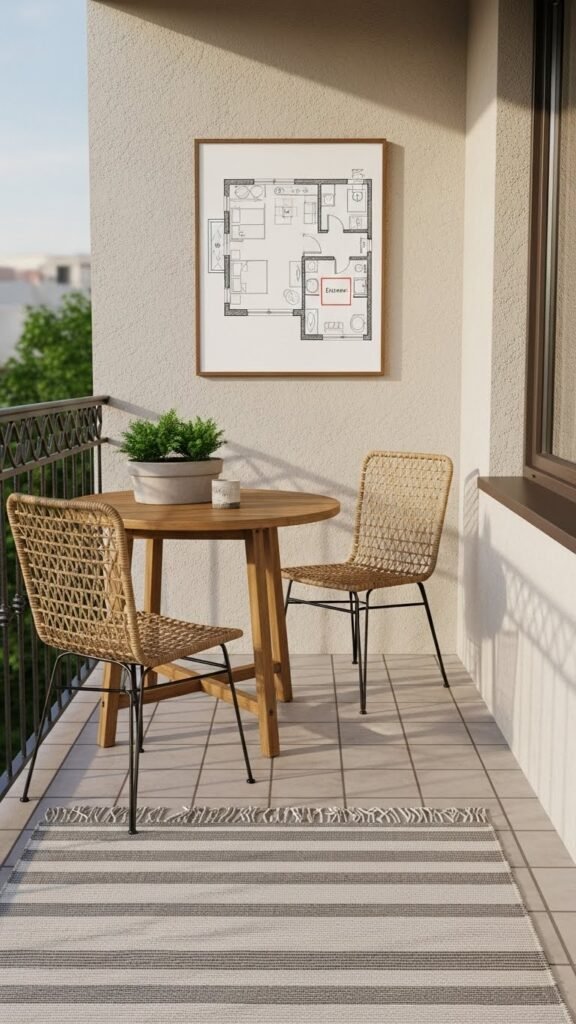
Before you buy hoses or emitters, measure your balcony and sketch a simple layout so every pot and planter gets the right amount of water.
Take precise space measurement—width, depth, railing gaps—and note sunlight zones. Create a scale drawing, mark each container, and label irrigation points. That plan saves time, reduces waste, and gives you the freedom to adjust placement confidently.
Select Low-Flow Drippers for Container Plants
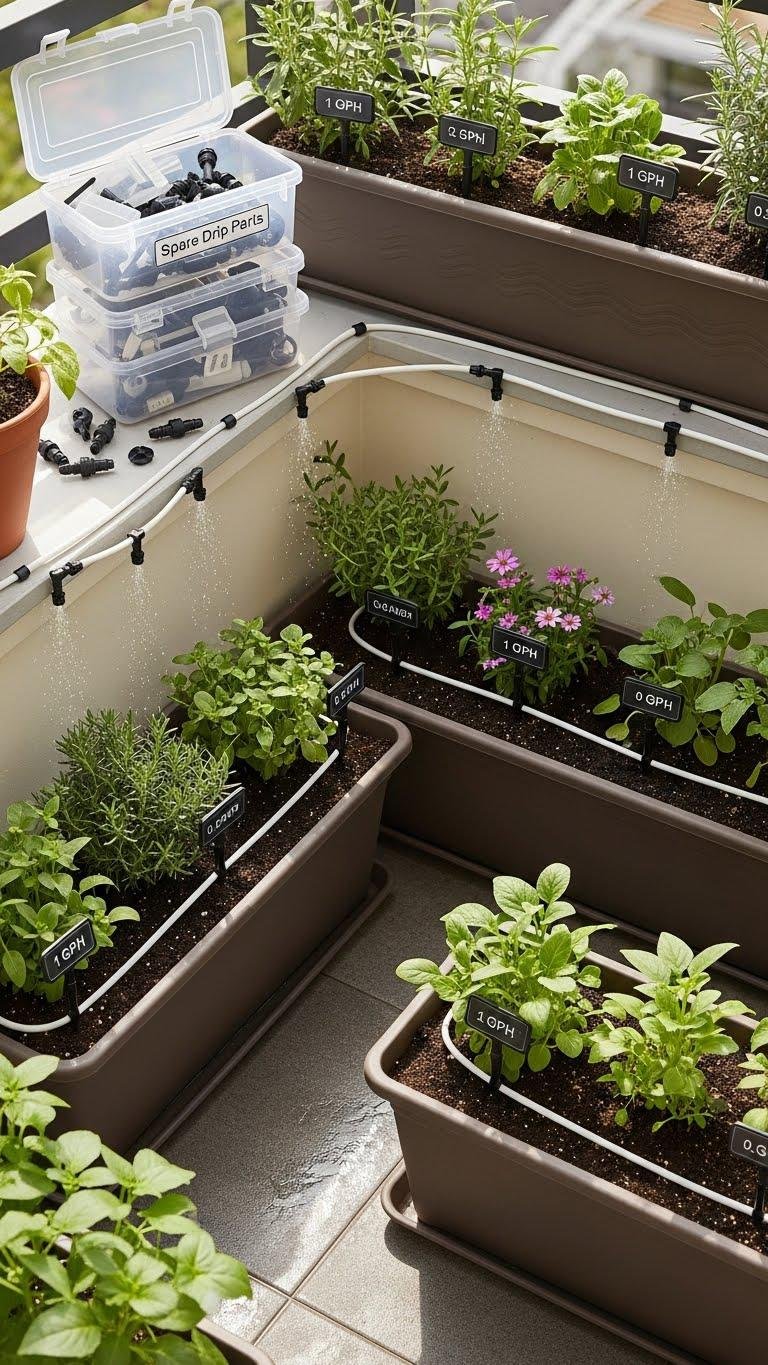
Choose low-flow drippers that match your containers’ size and your plants’ water needs—these emitters deliver 0.5–2 gallons per hour so you avoid runoff and overwatering in small pots. You’ll pick emitters by flow, adjust placement per pot, and value dripper aesthetics for a tidy balcony.
Keep spare parts for emitter recycling and rinse lines seasonally to maintain reliable, effortless watering.
Use Soaker Hoses for Long Planter Boxes and Railings
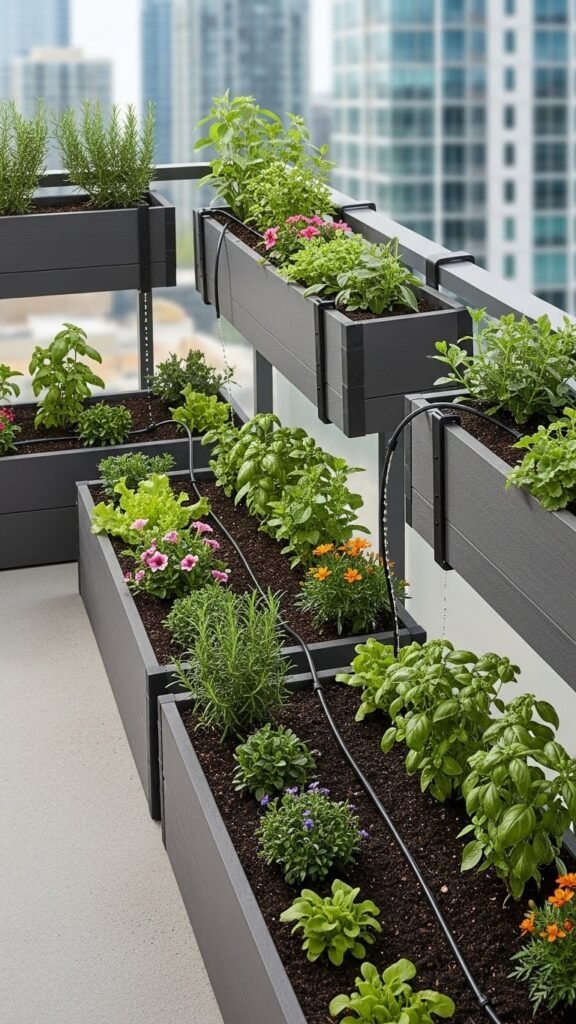
If your balcony has long planter boxes or rail-mounted troughs, soaker hoses give even, low-pressure watering along their length and save you from moving multiple drippers.
You can run them discreetly behind railings, combine with capillary matting under pots to wick moisture, or pair with a decorative dripline for a cleaner look. They free you to travel without constant watering chores.
Install a Gravity-Fed System for Simple Self-Watering
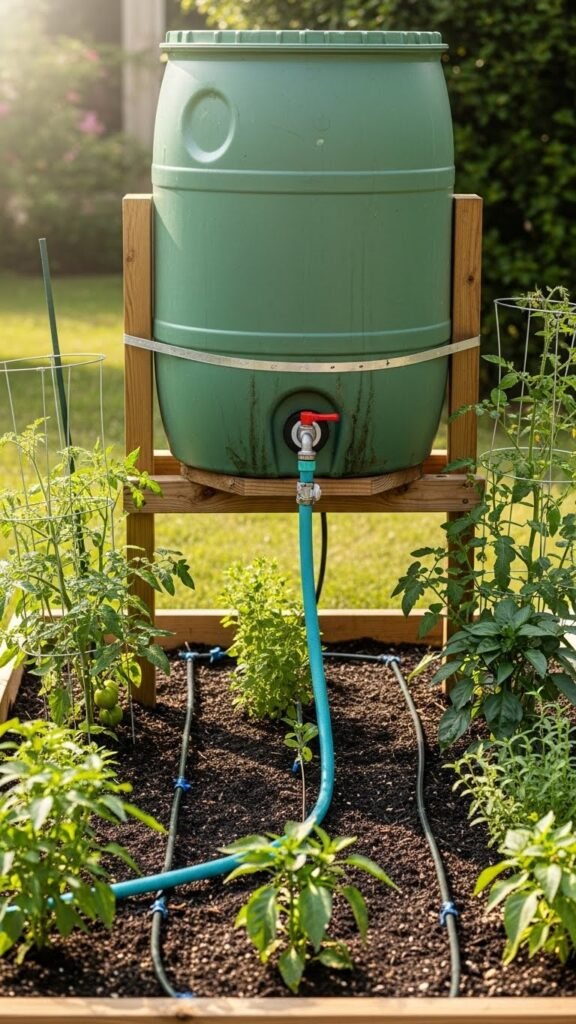
Think of a gravity-fed system as a simple, reliable way to keep your balcony pots watered without pumps or timers: you elevate a water reservoir and let gravity do the work through tubing and emitters to each zone. You’ll use rainwater harvesting, fit adjustable drippers, and plan tubing runs for reach. Schedule simple gravity reservoir refurbishment annually to prevent clogs and keep freedom-focused maintenance minimal.
Add a Weather-Based Smart Controller to Save Water
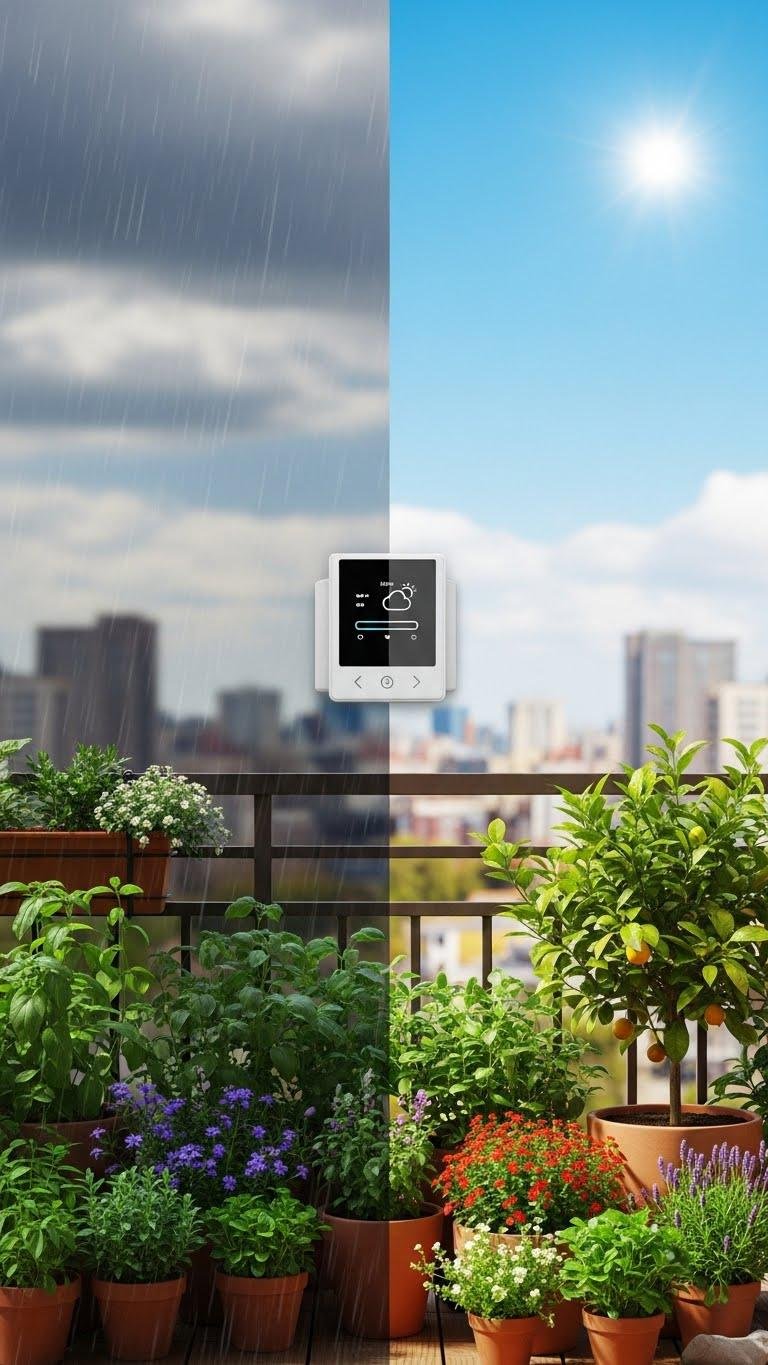
When you add a weather-based smart controller, your system adjusts watering schedules automatically based on local forecasts and real-time conditions, so you avoid overwatering during rain or cool spells.
Choose a compact weather based controller with simple app controls and reliable water saving sensors. You’ll conserve water, protect plants, and free yourself from daily watering chores while keeping balcony gardening flexible and efficient.
Integrate a Soil Moisture Sensor for Precise Watering
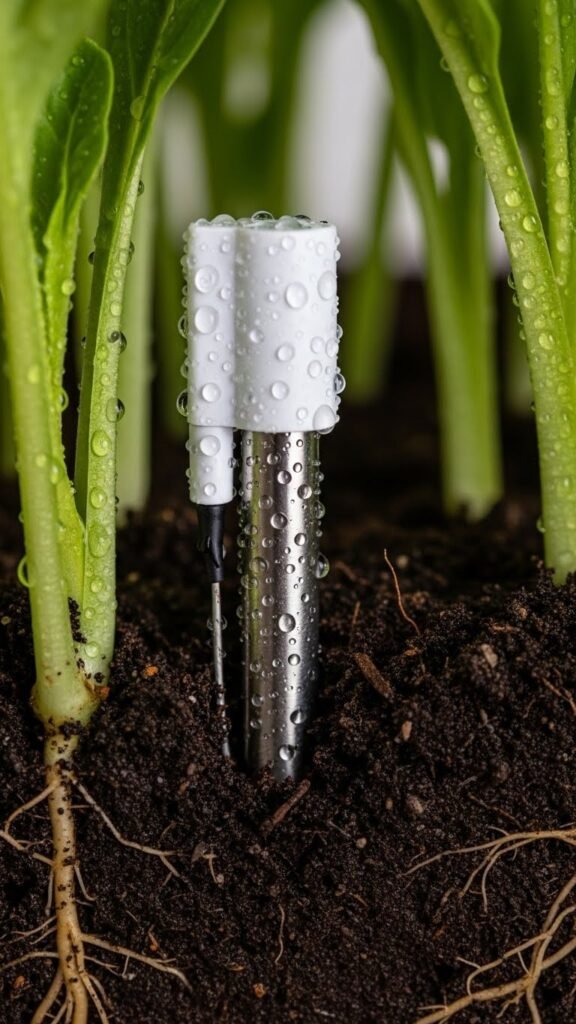
Pairing a soil moisture sensor with your weather-based controller gives you precision you can’t get from forecasts alone: the sensor reads the actual water level at the root zone and tells your system when to water.
Place sensors at representative depths and pots for reliable sensor placement.
Set a simple calibration schedule, check readings after repotting, and let automated decisions free you to enjoy your balcony.
Use Timers to Automate Watering for Busy Schedules
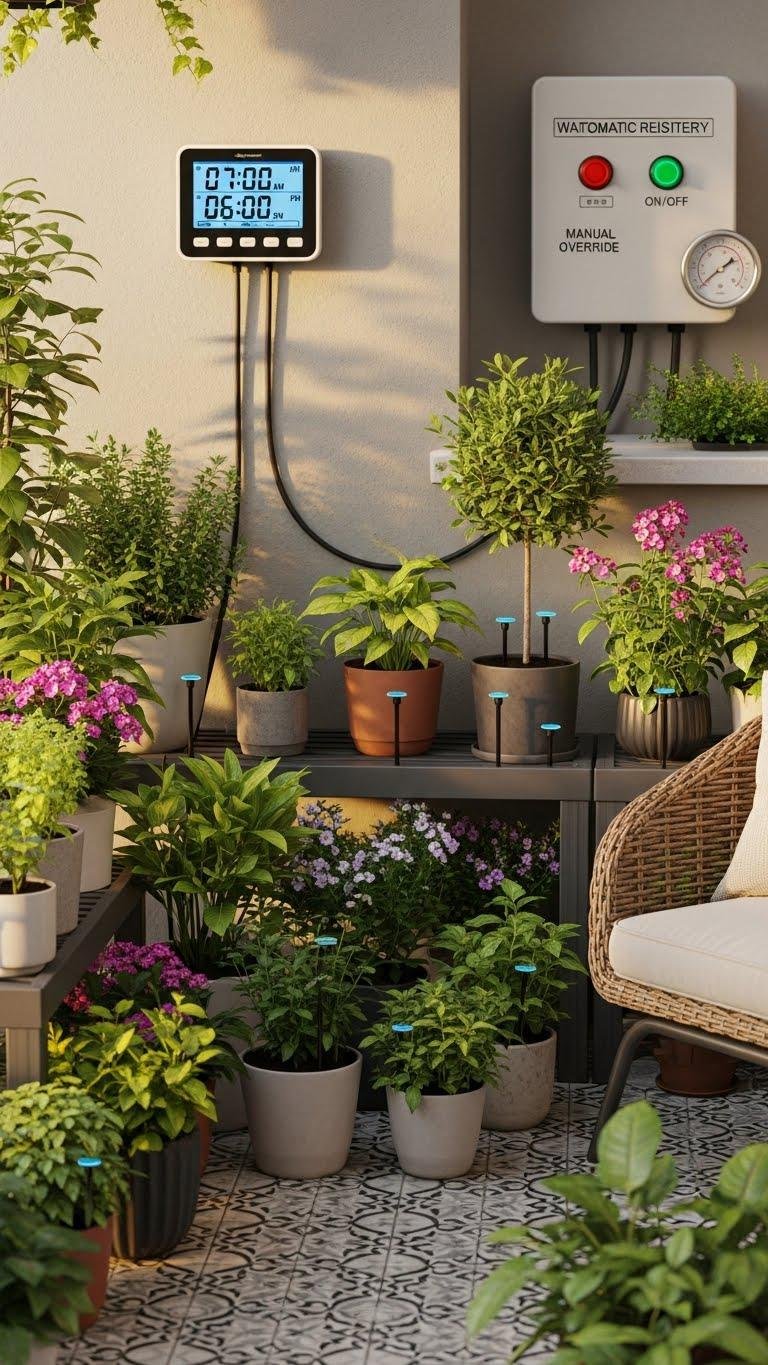
Regularly using timers lets you automate your balcony watering so you don’t have to remember routines or rush home to water.
Choose reliable units that control automatic valves and resist weather. Set flexible scheduling routines for morning or evening cycles, adjust for seasons, and pair timers with simple manual overrides. You’ll free time, reduce stress, and keep plants healthy without constant attention.
Employ Micro-Tubing for Tight Spaces and Small Pots
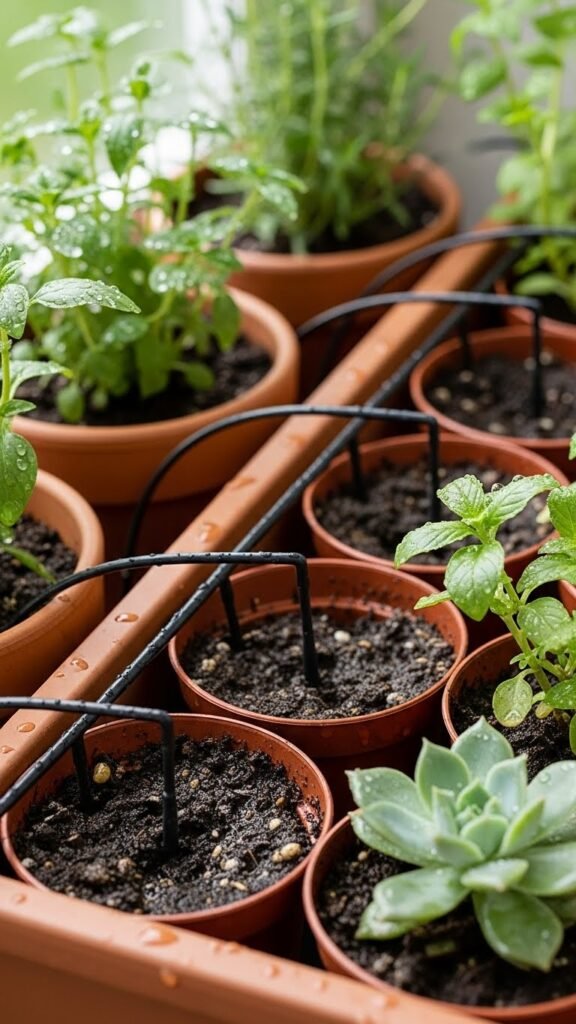
Tuck micro-tubing into tight corners and between pots to deliver water precisely where roots need it, and you’ll avoid soggy surfaces and wasted runoff.
Route tubes under capillary matting for even moisture, and use micro sprayheads sparingly for wider pots.
You’ll save water, simplify maintenance, and keep mobility for rearranging containers — a tidy, flexible setup that supports freedom and low-effort care.
Fit Pressure Regulators and Filters to Protect Emitters
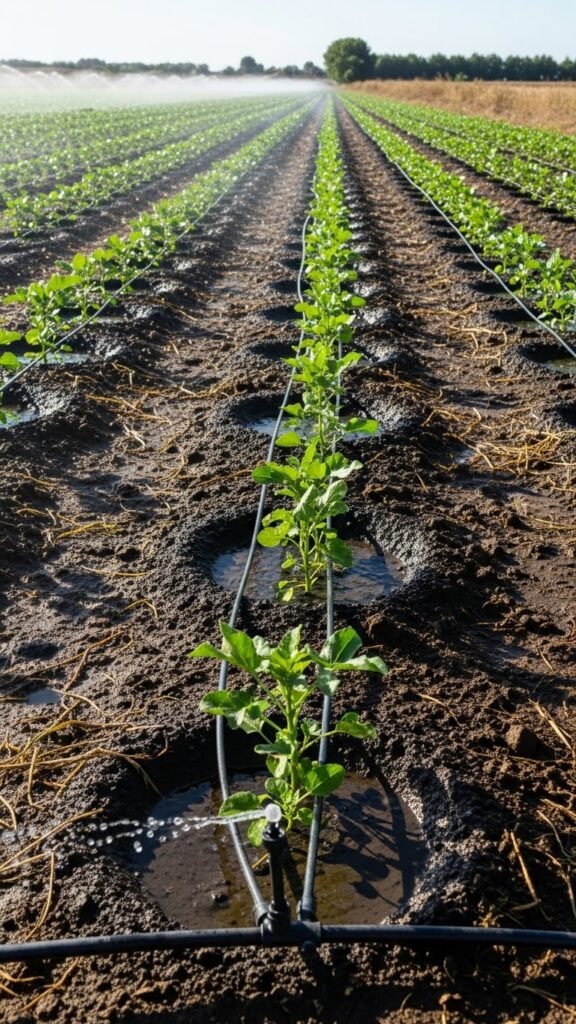
Protect your emitters by fitting a pressure regulator and a filter at the system’s inlet so flow stays steady and particles don’t clog tiny orifices.
You’ll perform pressure testing to confirm stable PSI, choose filters rated for local water, and check emitter compatibility before installing.
Mulch Pots and Planters to Reduce Evaporation
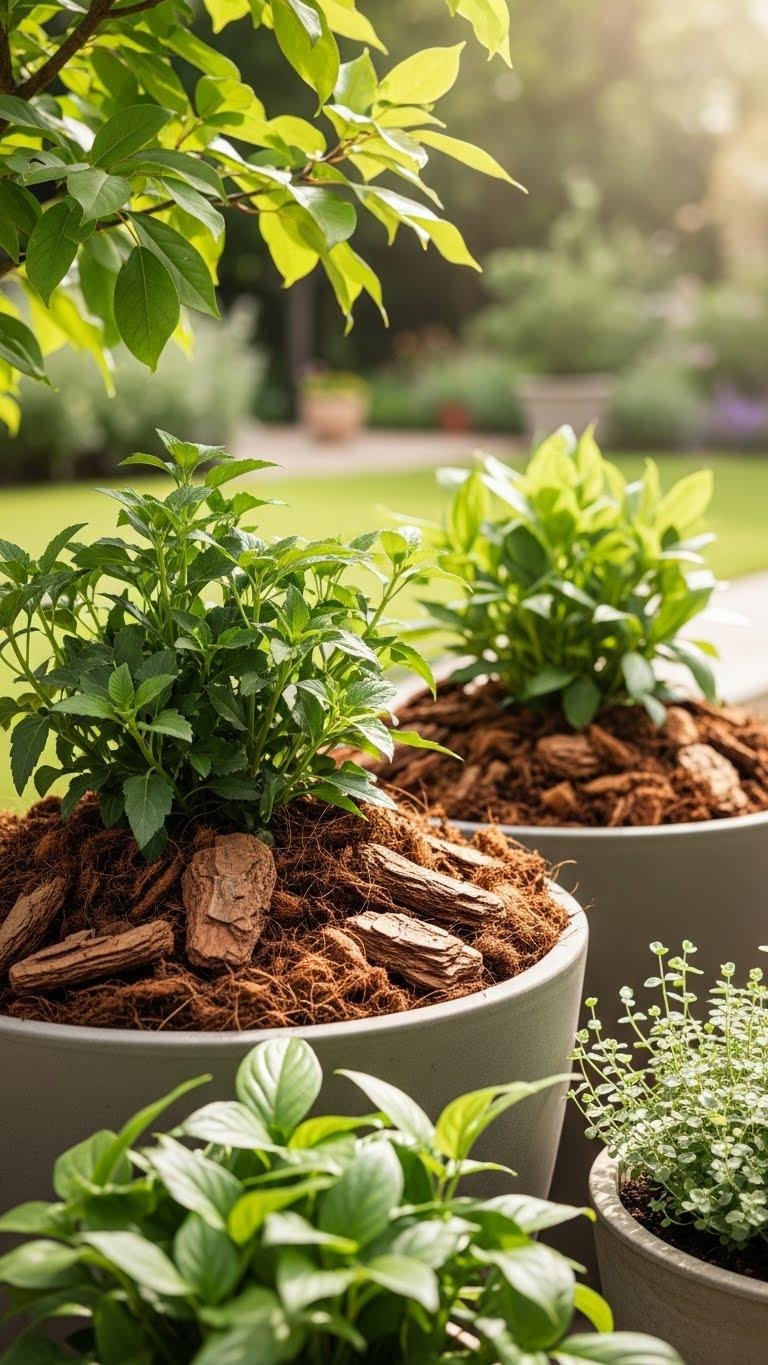
Layering mulch over the soil surface in your pots cuts evaporation, keeps roots cooler, and helps you water less often. Choose organic mulch like shredded compost or coconut coir to improve moisture retention and soil health. Top with decorative bark for a tidy finish that resists drying.
Apply a 2–3 cm layer, refresh seasonally, and you’ll free time while supporting healthier plants.
Create a Removable Drip Line for Seasonal Changes
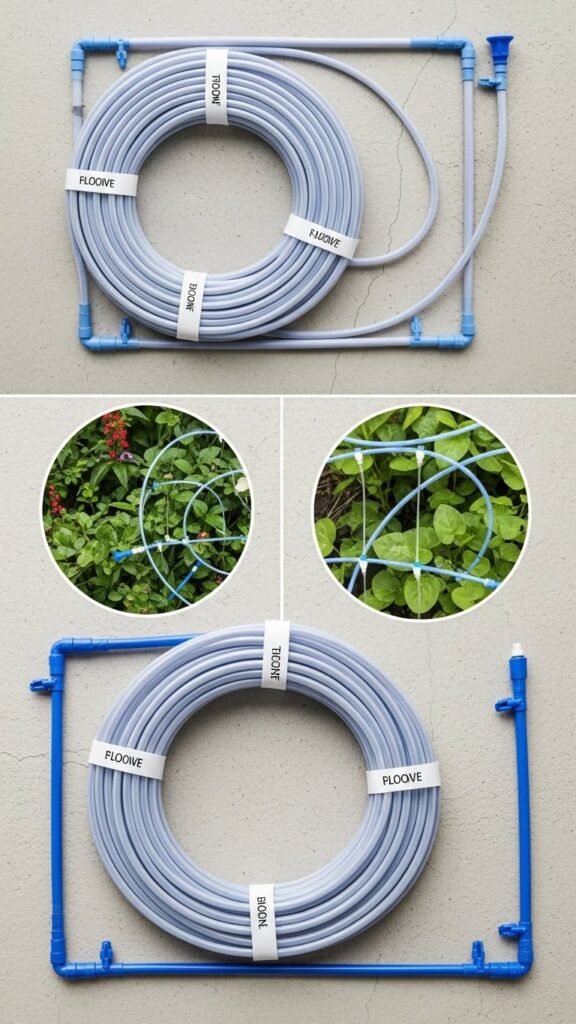
Swap in a removable drip line to adapt your balcony irrigation for changing seasons and plant needs, making maintenance and storage simple. You’ll design modular tubing layouts that snap together, letting you reconfigure or remove lines quickly for seasonal portability. Choose lightweight, durable tubing and discreet emitters, label connections, and store the system compactly so you stay free to travel or switch plantings without hassle.
Winterize and Drain Systems Before Freezing Weather
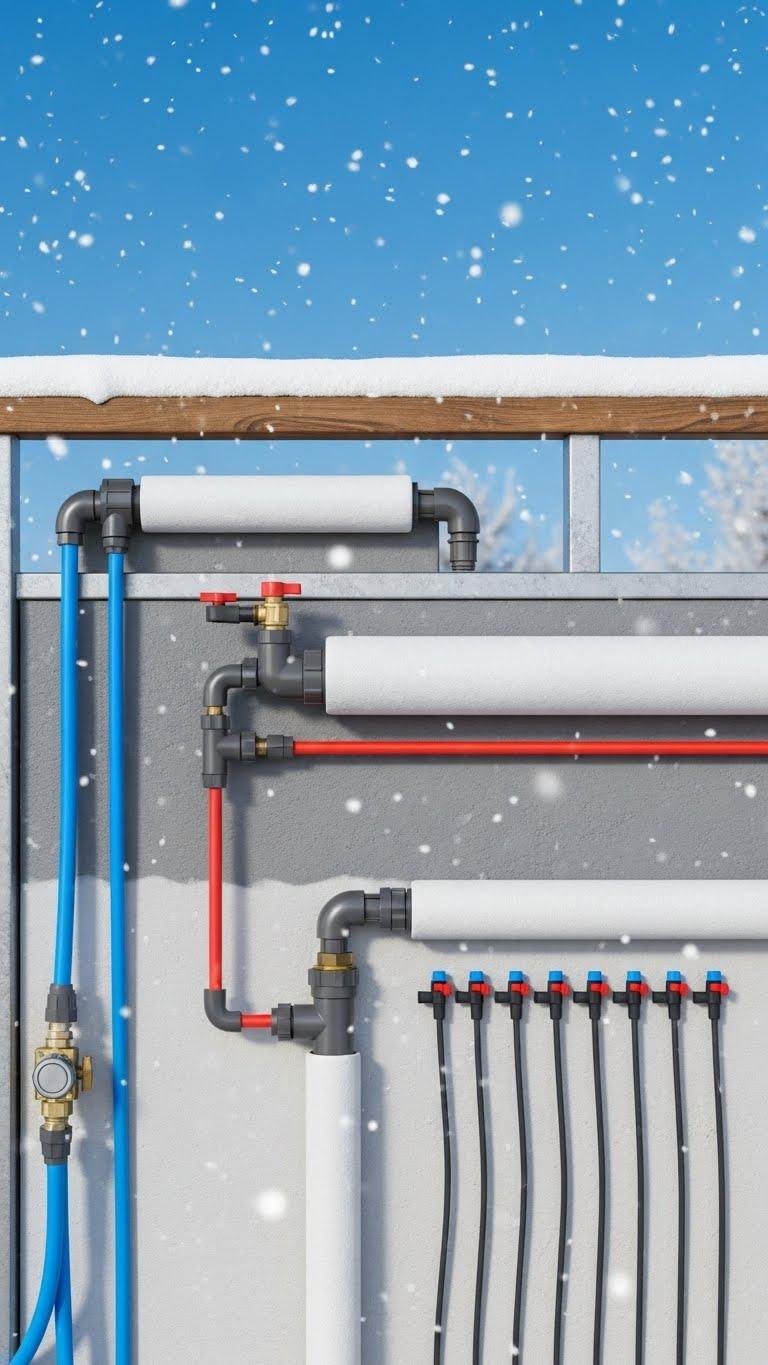
As temperatures drop, drain and winterize your balcony irrigation so frozen water can’t crack pipes, damage valves, or burst pots. Shut mains, open low points, and blow lines clear with low-pressure air. Remove drippers and store indoors. Insulate valves with foam covers, secure antifreeze safe fittings where needed, and stow timers and pumps.
Do this quickly to protect gear and preserve your freedom to garden.
Pair Irrigation With Slow-Release Fertilizer for Efficiency
Use Raised or Self-Watering Containers to Boost Efficiency
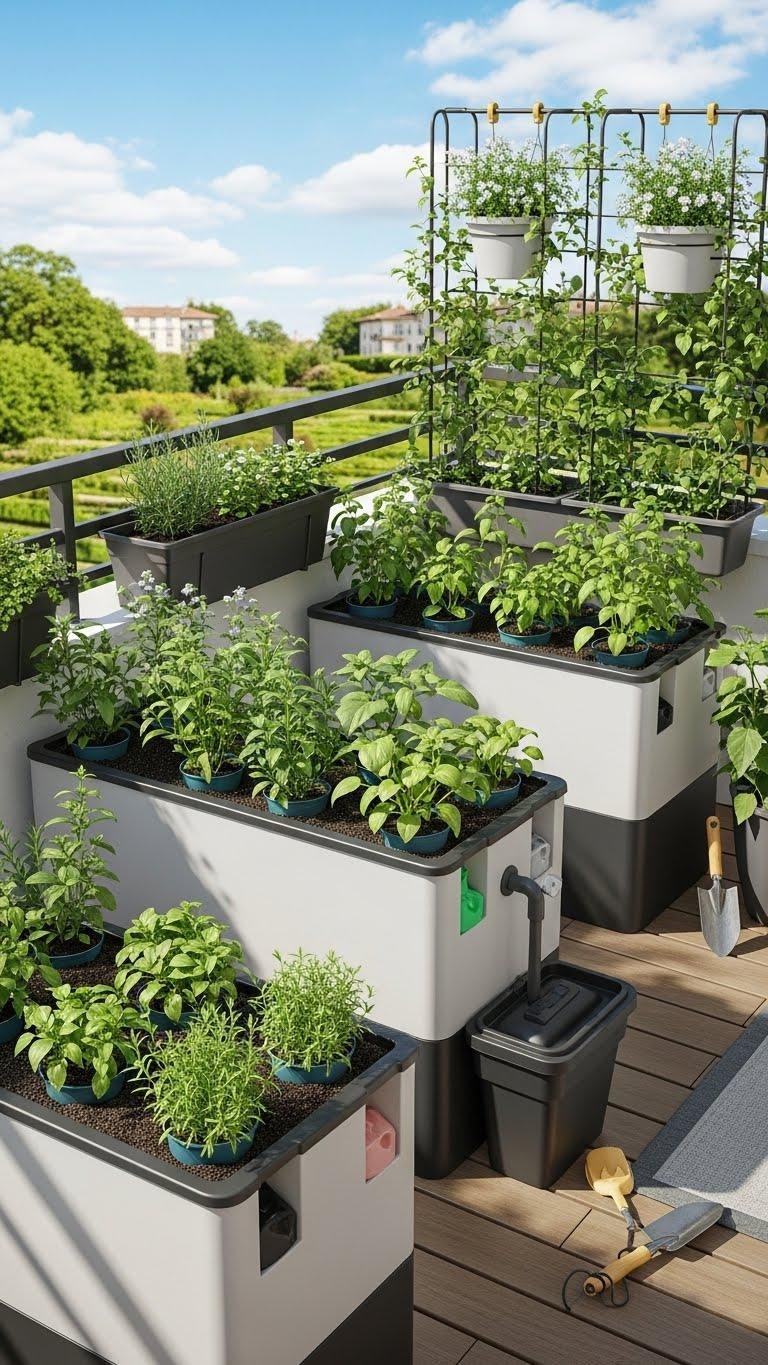
If you want better water use and healthier roots, choose raised beds or self-watering containers that hold moisture where plants need it most.
You’ll save time and reduce waste with self watering reservoirs, especially for drought tolerant herbs and compact veggies.
A raised bed or stackable, space saving system gives freedom to design your balcony, keeps roots cooler, and cuts watering frequency.