
You can turn even a narrow balcony into a productive kitchen garden with smart layouts and compact systems. Focus on vertical towers for tomatoes, rail trellises for beans, hanging herbs, and tiered shelves for mixed greens to squeeze more plants into less space. Use self-watering pots, lightweight mixes, and simple windbreaks to cut maintenance and extend the season — and there are plenty of specific setups that make each square foot count.
Vertical Tomato Towers for Small Balconies
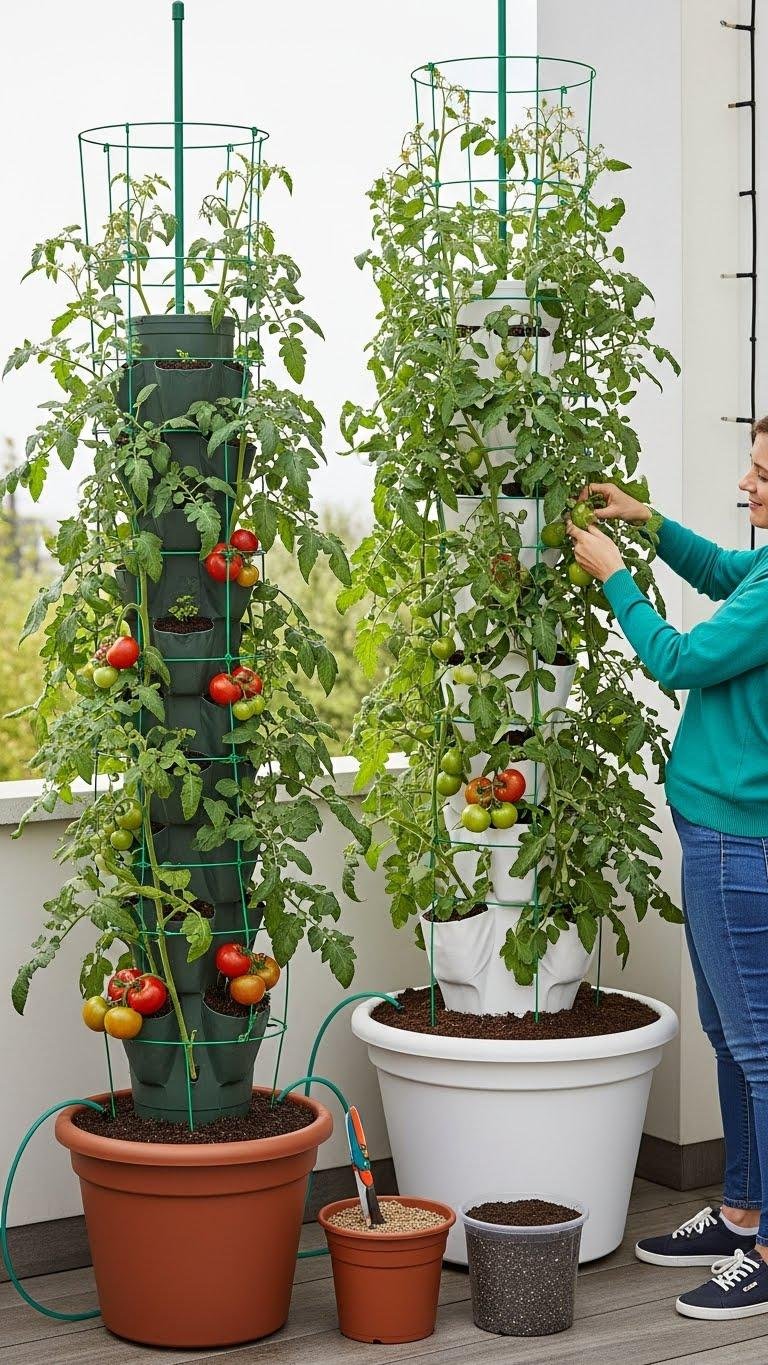
Stack a tomato tower when you want maximum fruit from minimal floor space: vertical towers use staggered pots or a tall planter with inserted grow pockets to give indeterminate tomatoes room to climb while concentrating root volume.
You’ll use compact trellising and stackable soil mixes, add vertical irrigation lines, and monitor microclimate management—prune for airflow, harvest regularly, and keep watering consistent for liberated, productive balcony growing.
Tiered Planter Shelves for Mixed Greens
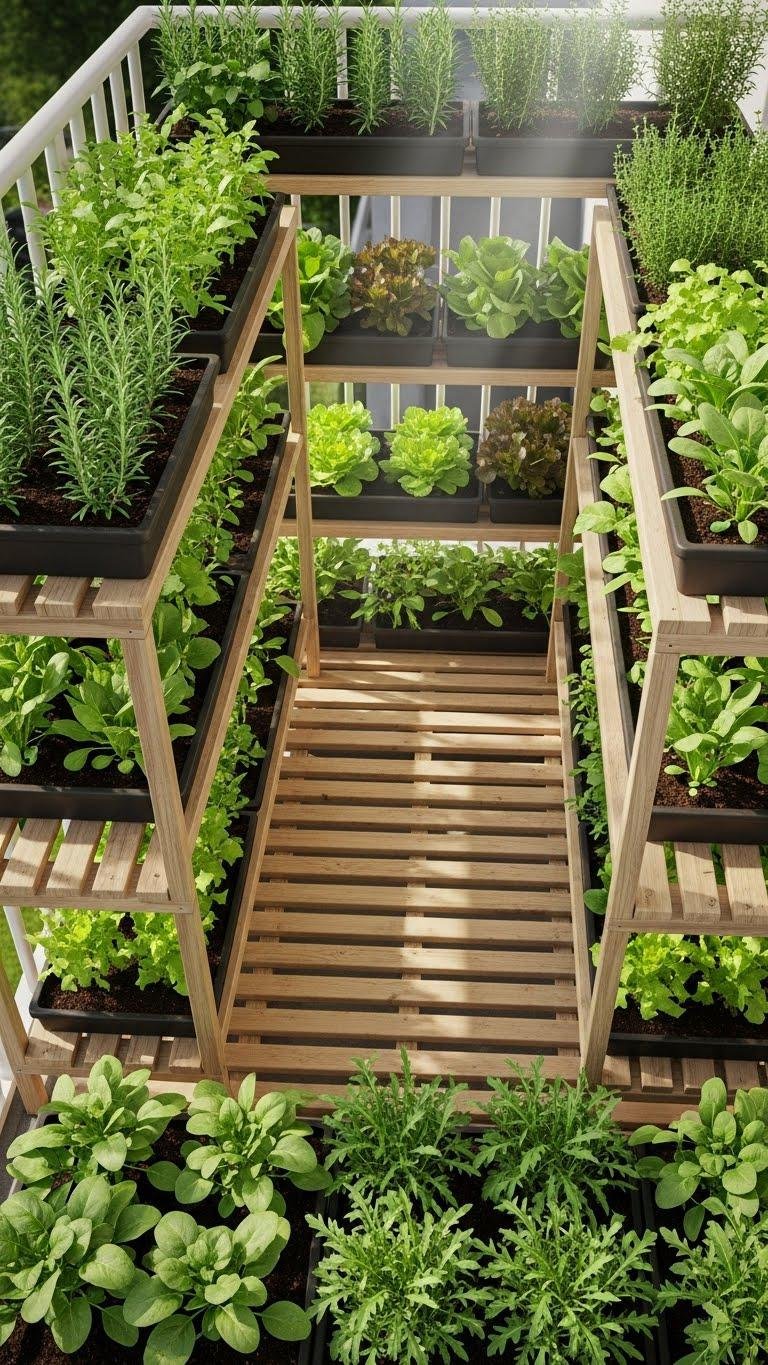
Arrange tiered planter shelves to maximize light, airflow, and access for mixed greens on a small balcony. You’ll position shallow trays at varying heights for quick rotation, enable succession harvesting, and group plants by water need to simplify care. Use sturdy, airy materials to improve microclimate control, allow easy reach for daily checks, and keep pathways clear so you can harvest freely and often.
Hanging Basket Herb Garden
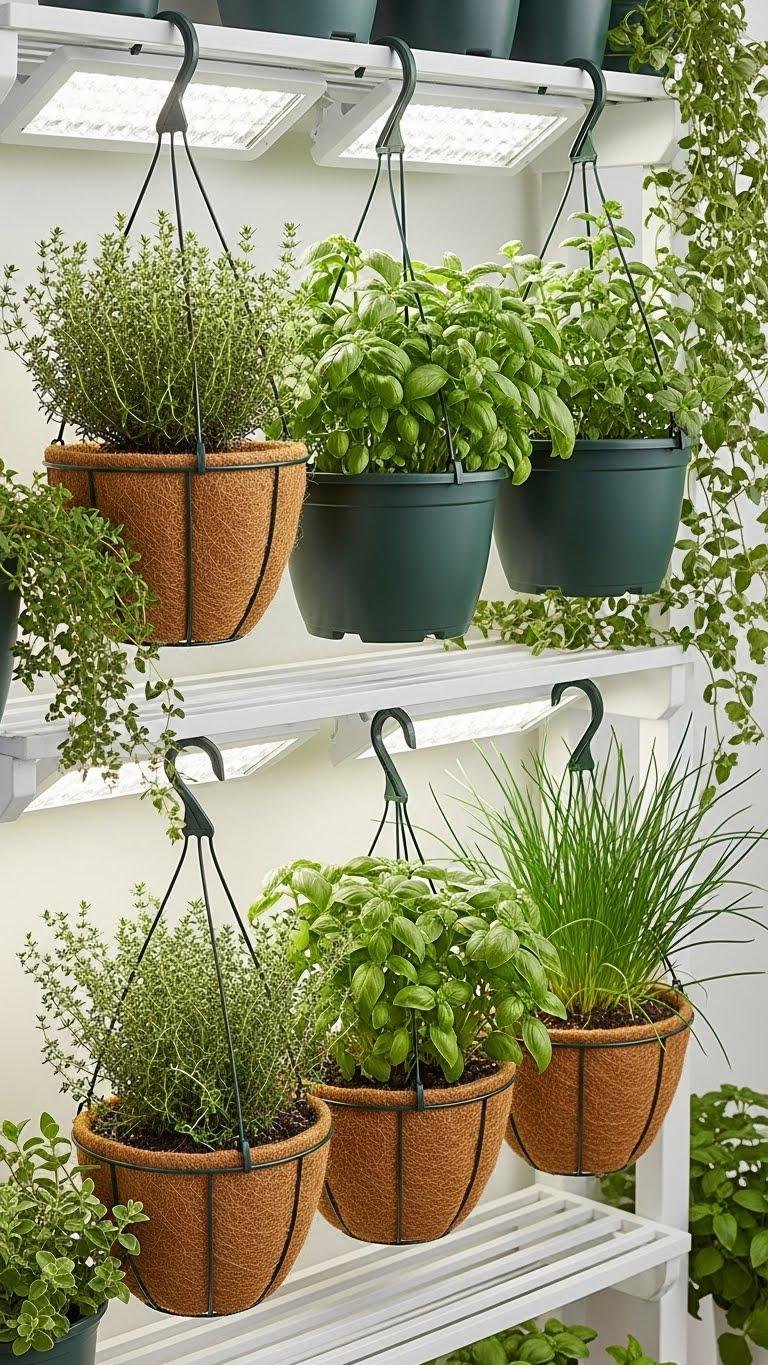
If your tiered shelves make the most of horizontal space, hanging baskets let you exploit vertical airspace for herbs that prefer good drainage and bright light. You’ll pick lightweight mixes, secure hooks, and microclimate pots to control moisture. Plant thyme, basil, and chives in scented pairings that boost harvests and flavor. Rotate baskets for even sun and easy access.
Self-Watering Containers for Large Peppers
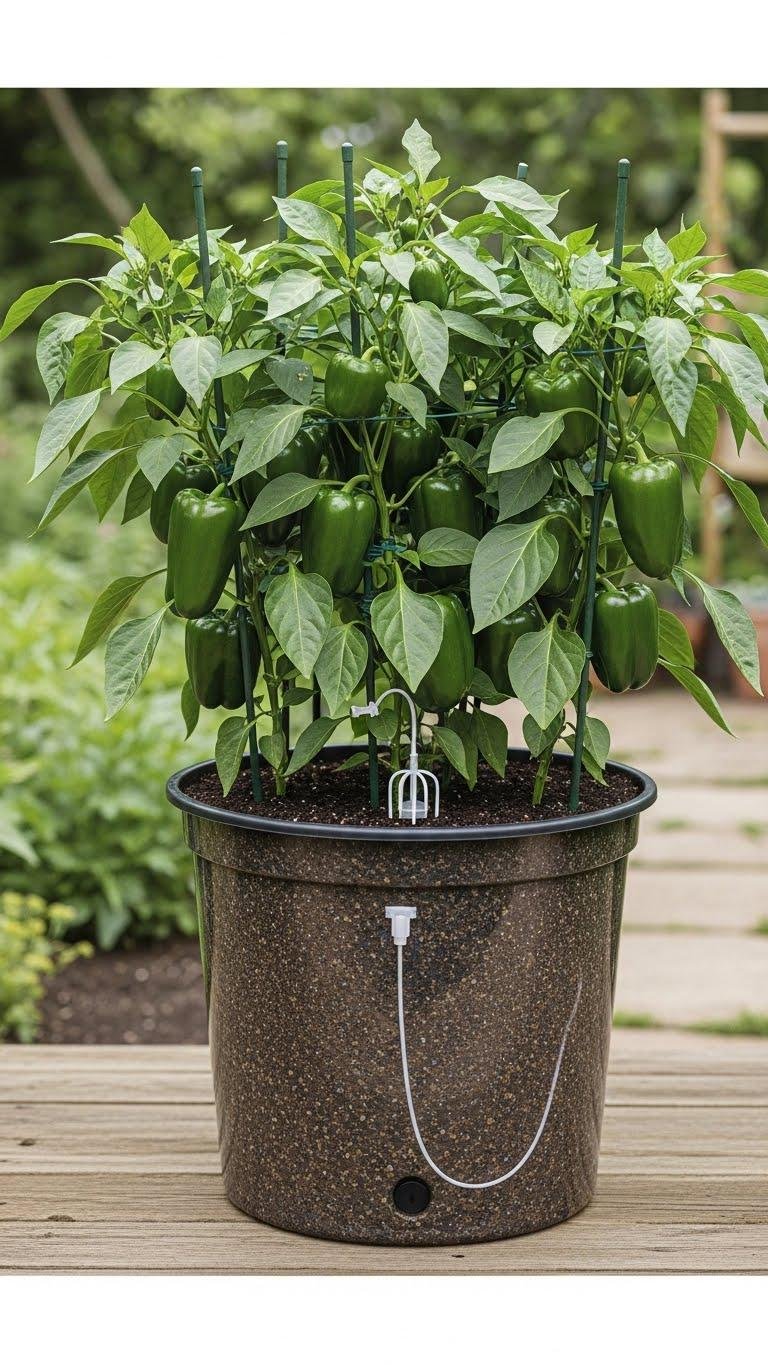
Moving your vertical beans aside for a moment, you’ll find large pepper varieties benefit from a different approach: self-watering containers keep root moisture steady without overwatering.
Choose a deep reservoir pot with an automatic drip filler or wicking system, fill with a well-draining peat free mix, stake plants, and water-monitor regularly so you stay free to harvest big, healthy peppers with minimal fuss.
Pallet Vertical Salad Wall

Turn a wooden pallet into a productive salad wall by lining its slats with landscape fabric, filling pockets with a light, well-draining potting mix, and planting shallow-rooted greens and herbs in staggered rows.
You’ll maximize space with a vertical salad wall, water consistently, and harvest fresh leaves. Consider pallet hydroponics for cleaner, faster growth and simpler nutrient control on a small balcony.
Compact Patio Tomato Containers
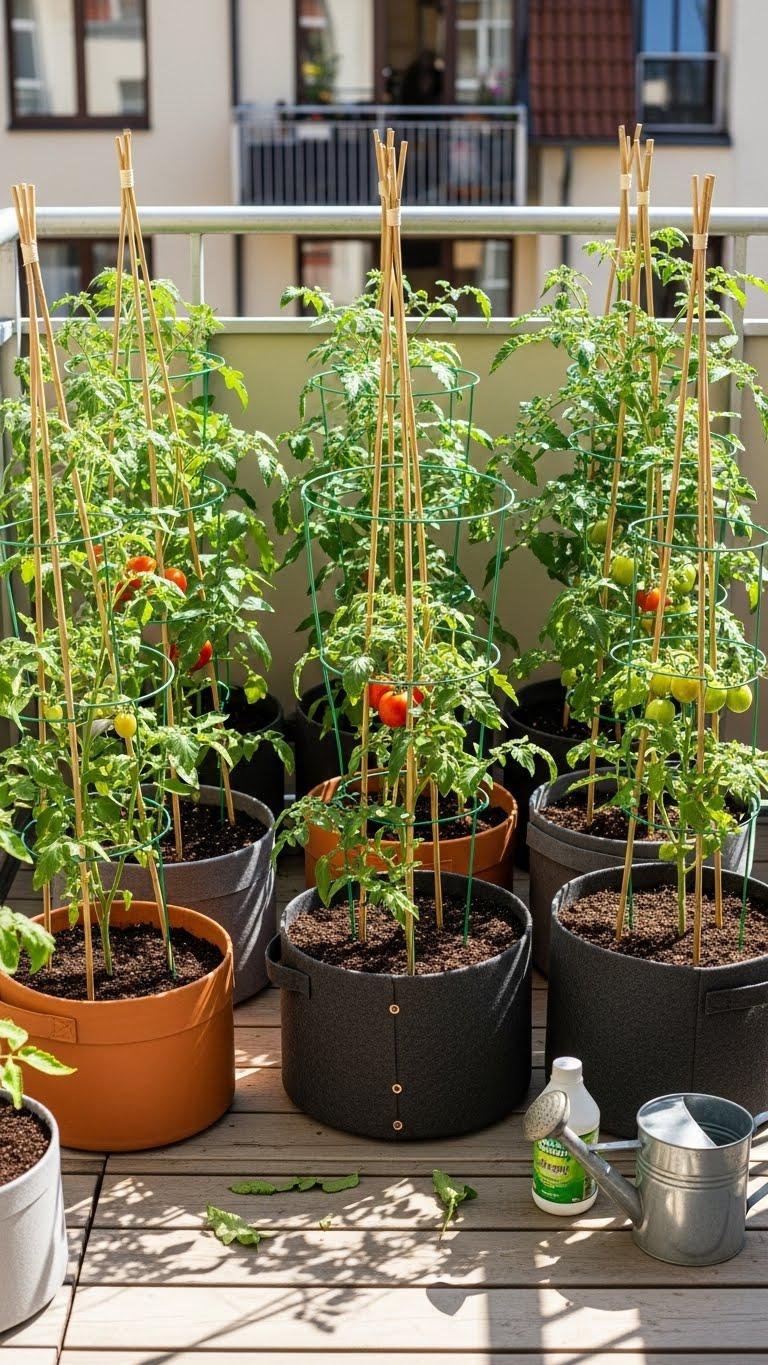
For a productive balcony, choose determinate or patio-specific tomato varieties that stay compact and set fruit on short stems; they’ll fit 10–12 inch containers and respond well to single-stem training.
You’ll position a compact trellis or low tomato cages for support, use rich potting mix, water consistently, and feed regularly.
Prune suckers minimally so plants stay airy and easy to harvest.
Grow Bag Potato Stack
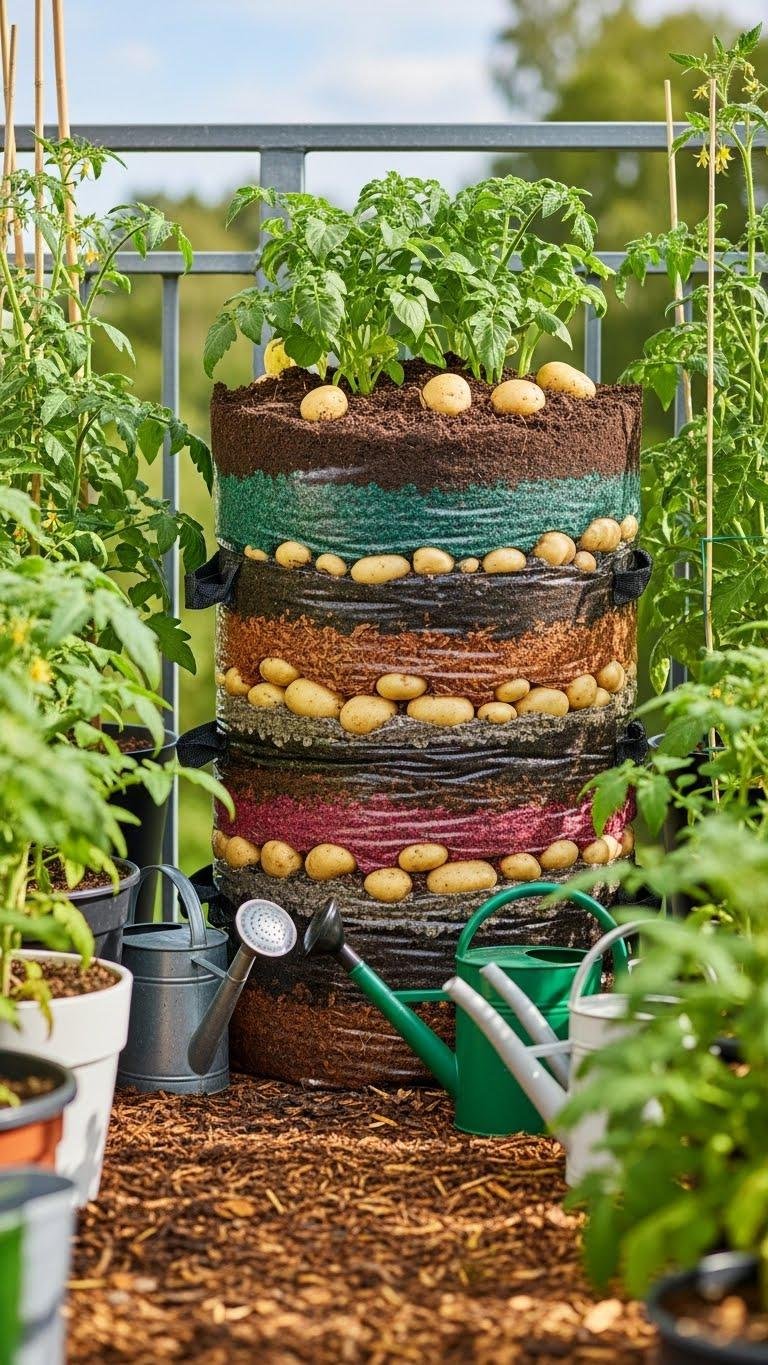
After enjoying compact tomatoes in pots, you can squeeze a hearty potato harvest into the same limited space using a grow bag potato stack. You’ll layer soil and seed potatoes in portable bags, practice grow bag stacking to save floor area, and rotate potato sack rotation for even ripening.
Water, mulch, and harvest strategically to keep freedom of movement on your balcony.
Slatted Wall With Climbing Cucumbers
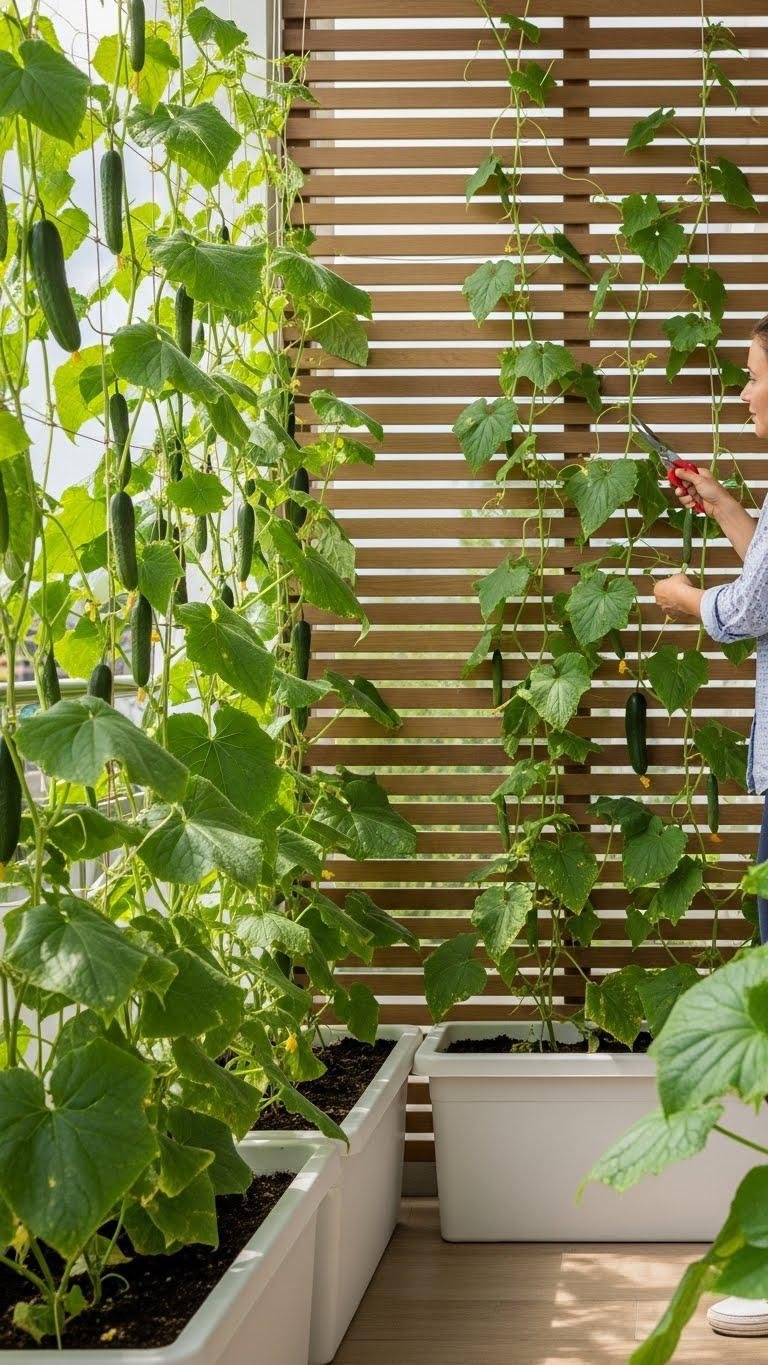
Climbing cucumbers thrive on a slatted wall, where vertical support maximizes fruiting space while keeping vines off the floor.
You’ll attach a sturdy vertical trellis or weave a lightweight cucumber lattice to guide shoots upward, conserving balcony square footage. Train young vines, prune excess lateral growth, and position containers for sun and drainage. Harvest often to encourage continuous production and freedom to pick fresh.
Window-Box Edible Flower Border
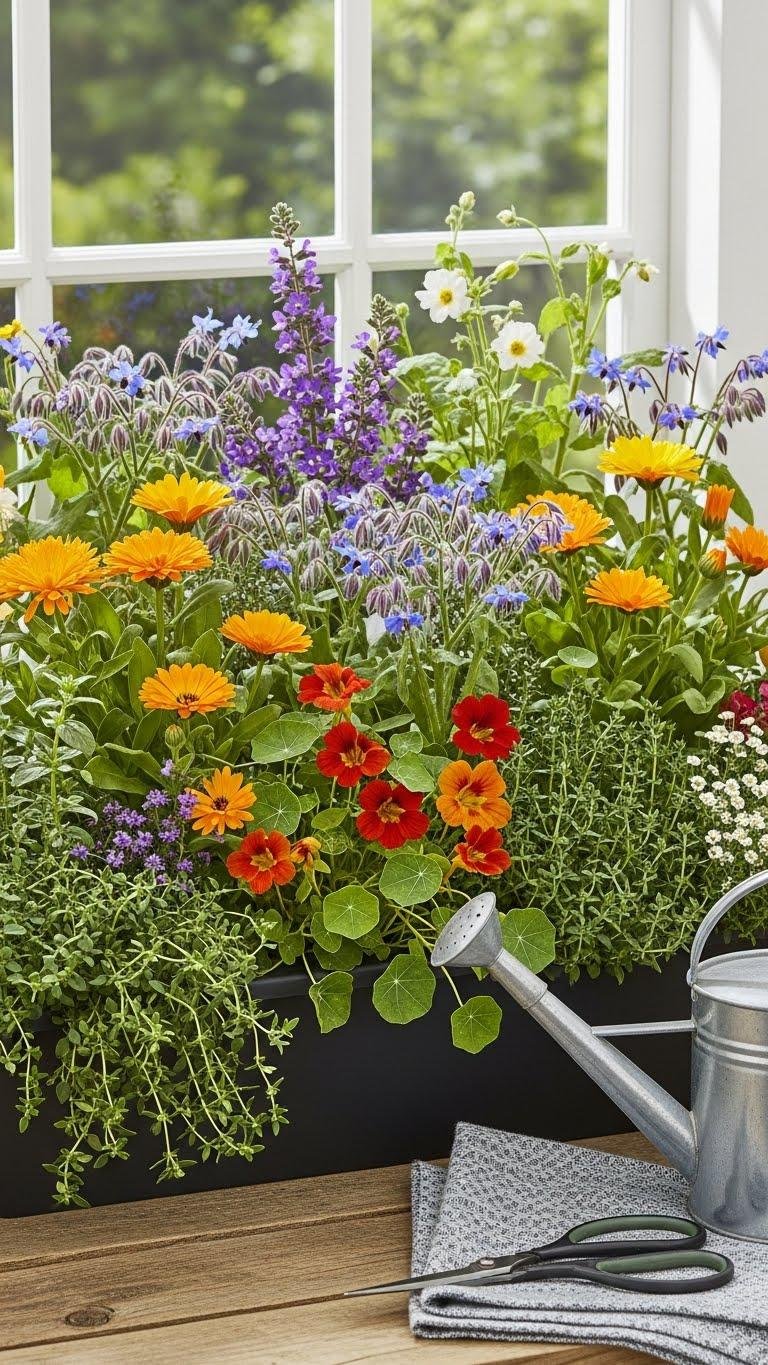
Brighten your sill and boost flavor by planting a window-box edible flower border that mixes compact, nectar-rich blooms with herbs you can snip for salads and cocktails.
Choose pollinator friendly blooms like calendula, borage and dwarf nasturtium. Add scented companion plants such as lemon verbena or thyme to repel pests and scent breezes.
Use well-draining mix, stagger heights, water consistently, and harvest often.
Corner L-Shaped Raised Planter
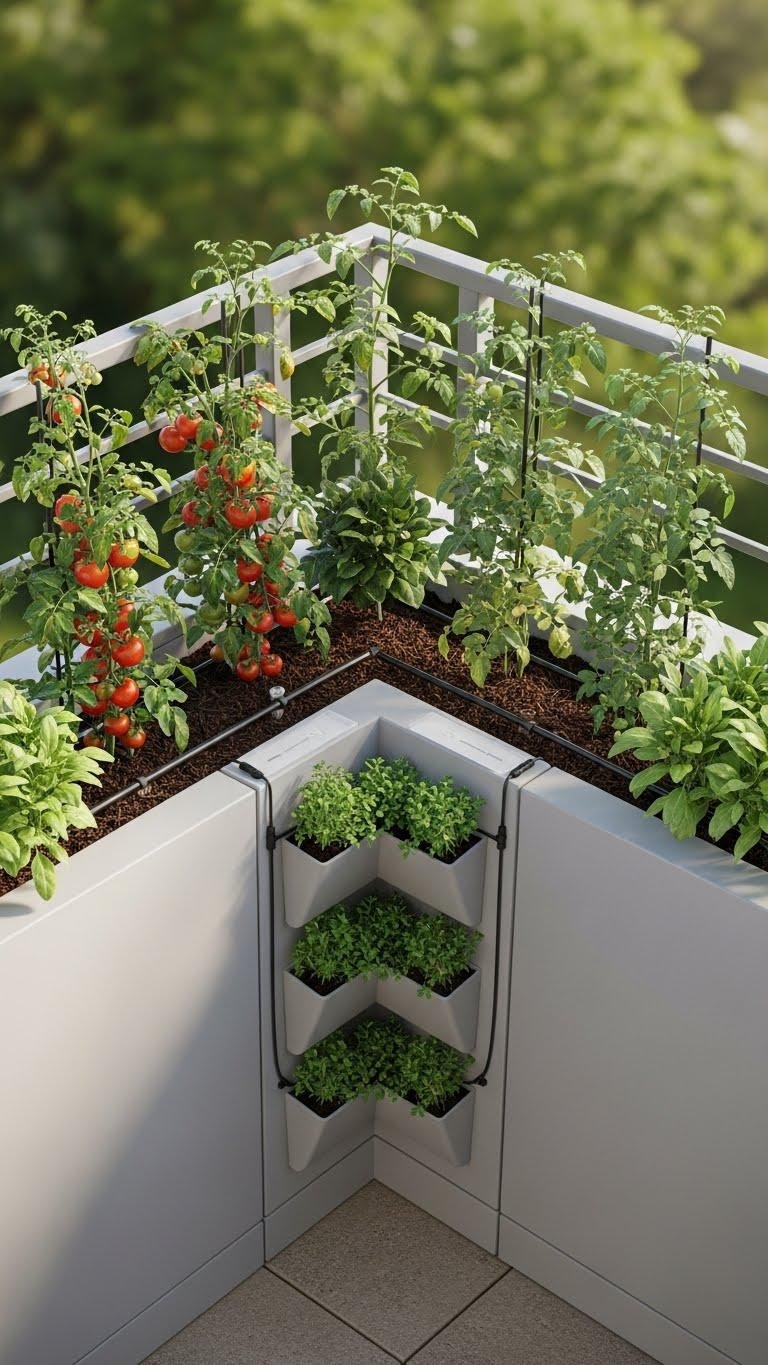
If your window box taught you how to mix compact, fragrant edibles, an L-shaped raised planter makes that approach scale up for a corner of your balcony where space meets structure.
You’ll orient sun-loving tomatoes and herbs along the long side, shade-tolerant greens in the return, install drip lines for irrigation zoning, and use vertical mulch pockets to retain moisture and maximize rooting volume.
Multi-Level Strawberry Staircase
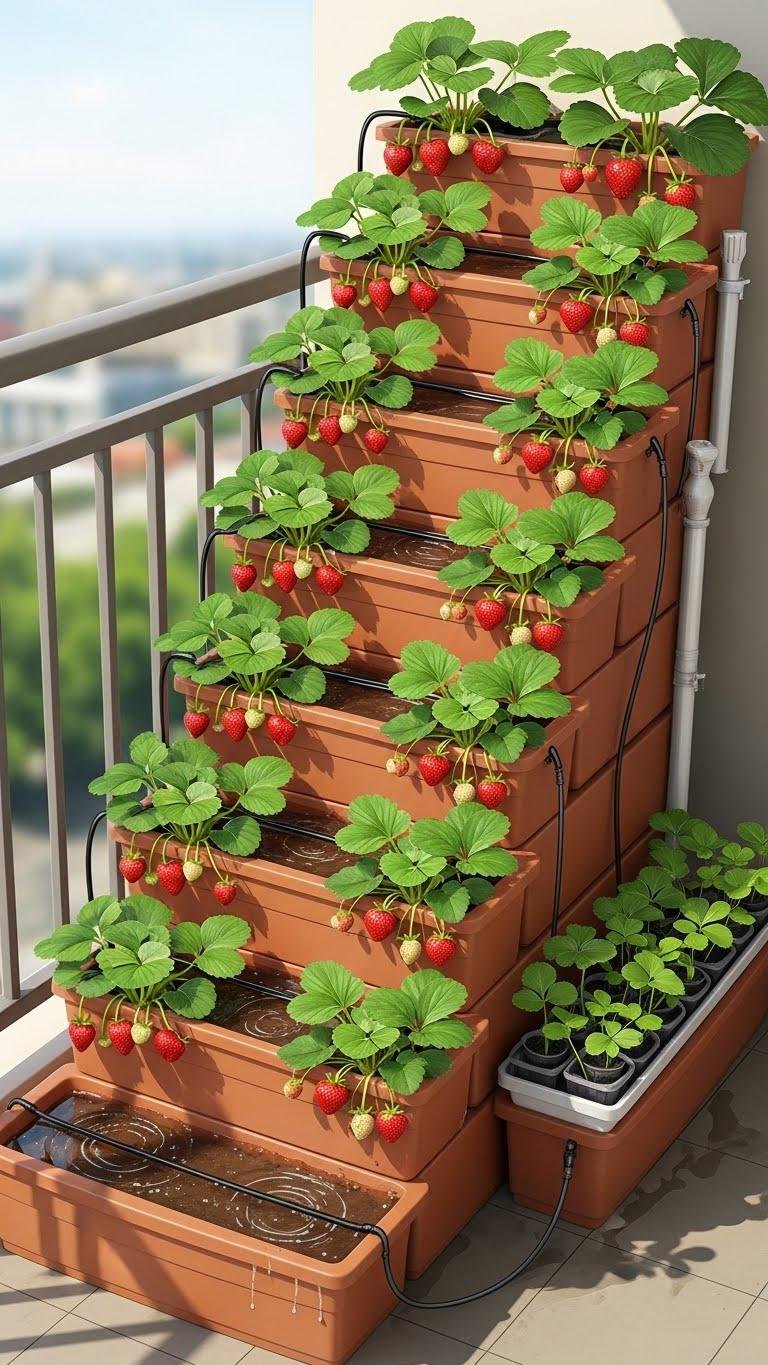
Because strawberries fruit best with good drainage and sun exposure, a multi-level staircase lets you stack shallow containers so each crown gets light, airflow, and easy harvest access.
You’ll arrange plants for compact propagation, use staggered irrigation lines to match slope and pot size, and choose fast-draining mixes.
This setup frees balcony space, simplifies pruning, and speeds ripening without fuss.
Balcony-Sized Food Forest in Containers
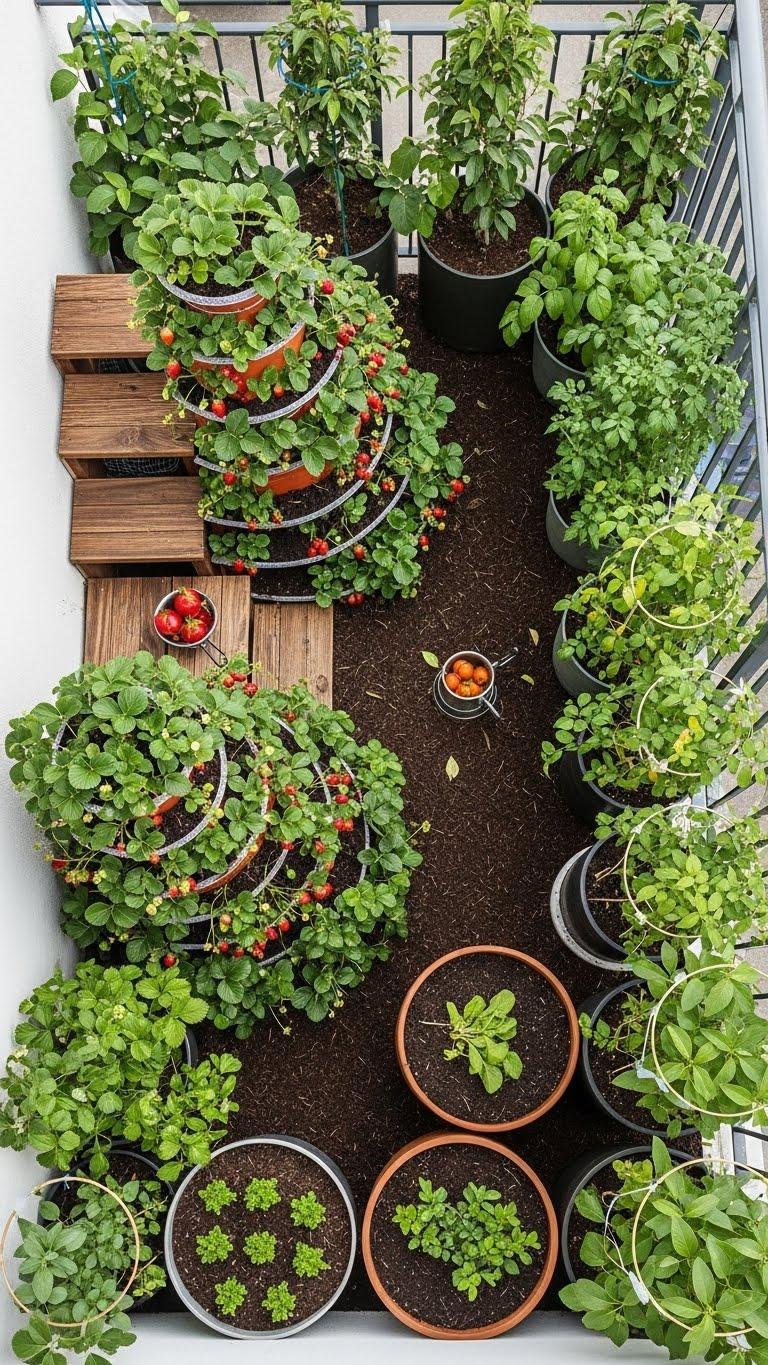
After arranging strawberries on a staircase to maximize sun and drainage, you can scale that same thinking up into a compact food forest in containers that fits a balcony.
Layer dwarf fruit, herbs, and nitrogen-fixers to form a micro canopy. Choose deep pots, amend with compost and mycorrhizal inoculant, prune for airflow, and harvest freely while rotating crops for soil health.
Trellised Sugar Snap Pea Arch
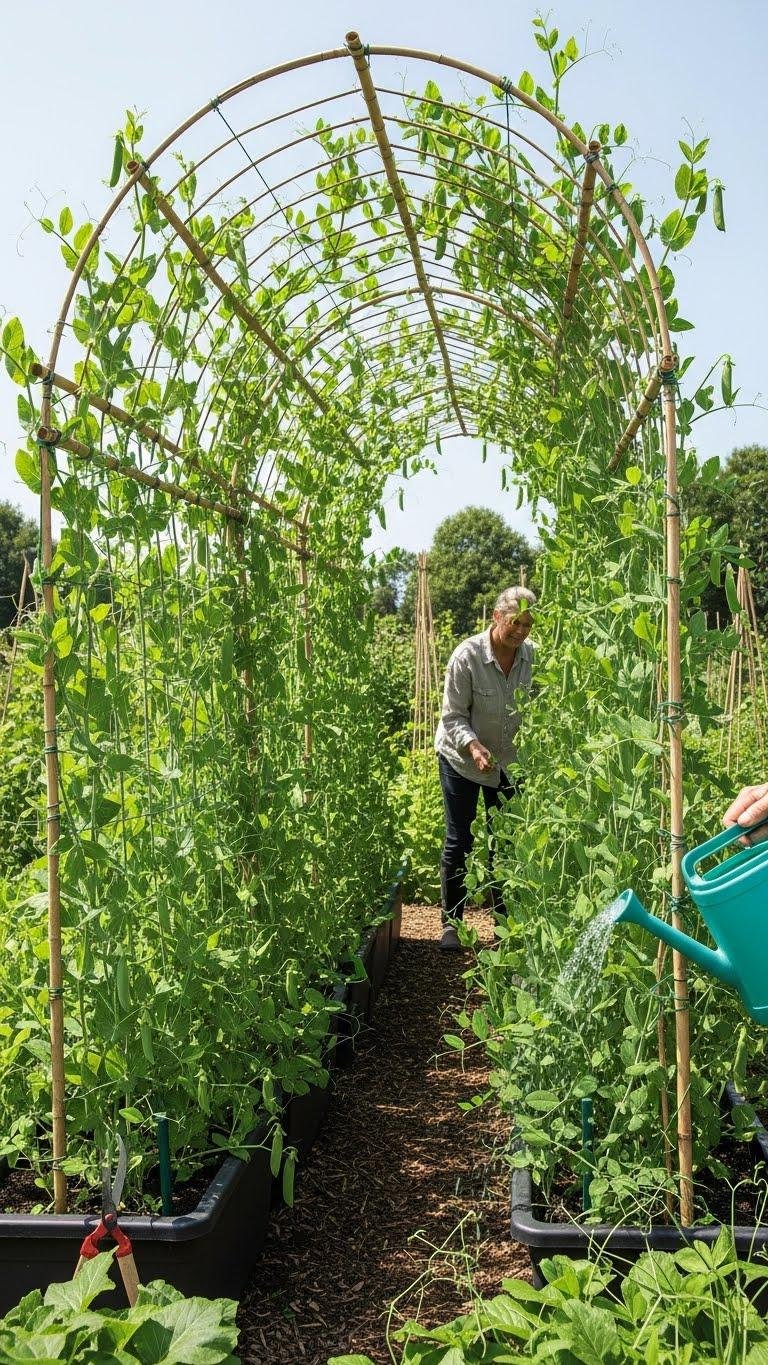
Train a simple arch of trellis netting or bamboo canes to support vigorous sugar snap peas, letting vines climb and fill a vertical corridor that saves floor space and boosts yield.
You’ll set deep containers, sow adjacent to the pea trellis, and water consistently. Prune lower shoots, harvest daily, and schedule light arch maintenance each week so plants stay healthy and productive.
Portable Rolling Planters for Sun Tracking
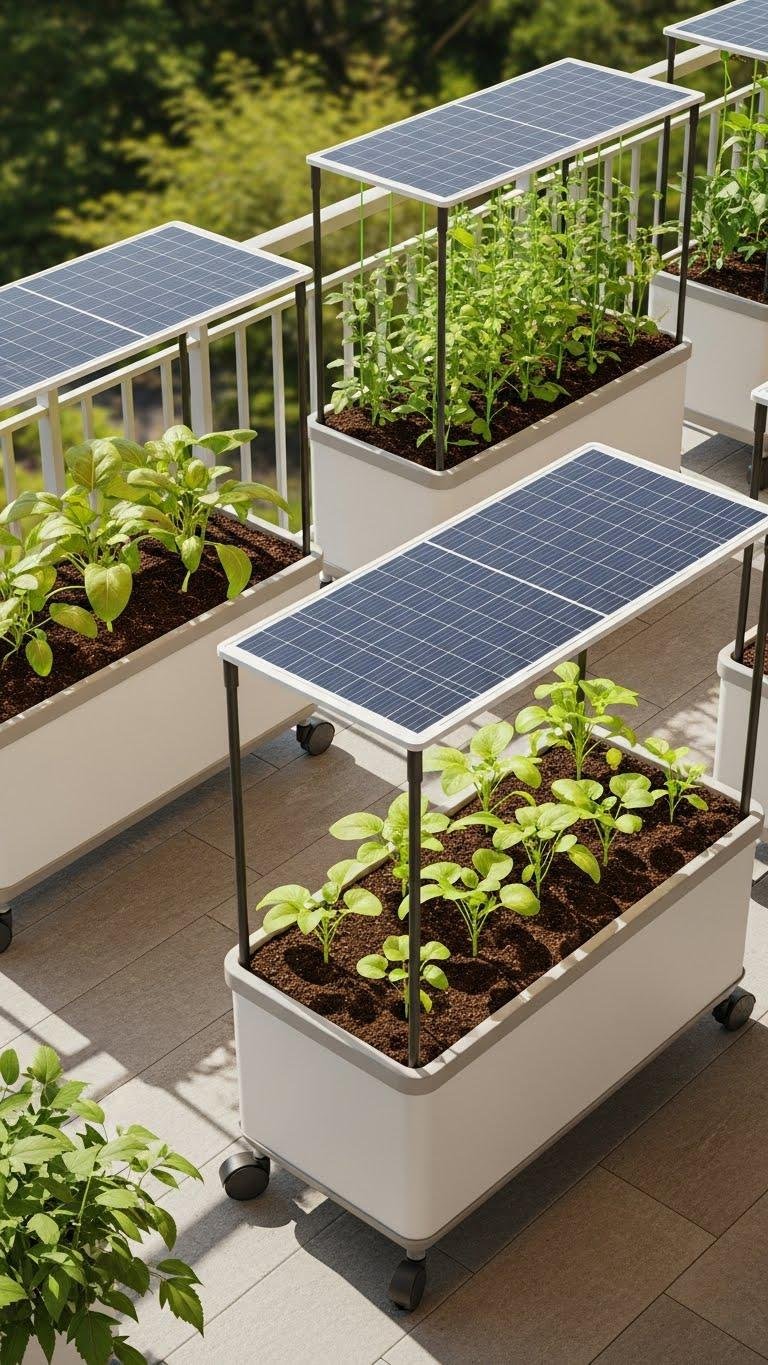
Roll your containers onto lightweight casters so you can follow the sun and give each crop the light it needs to thrive.
Choose sturdy mobile planters with deep soil, secure drainage, and low-profile wheels for balcony edges. Move seedlings to maximize morning sun, adjust positions for heat, and install detachable solar canopies to protect tender leaves while preserving flexibility and freedom to rearrange as seasons change.
Shade-Tolerant Lettuce Nook
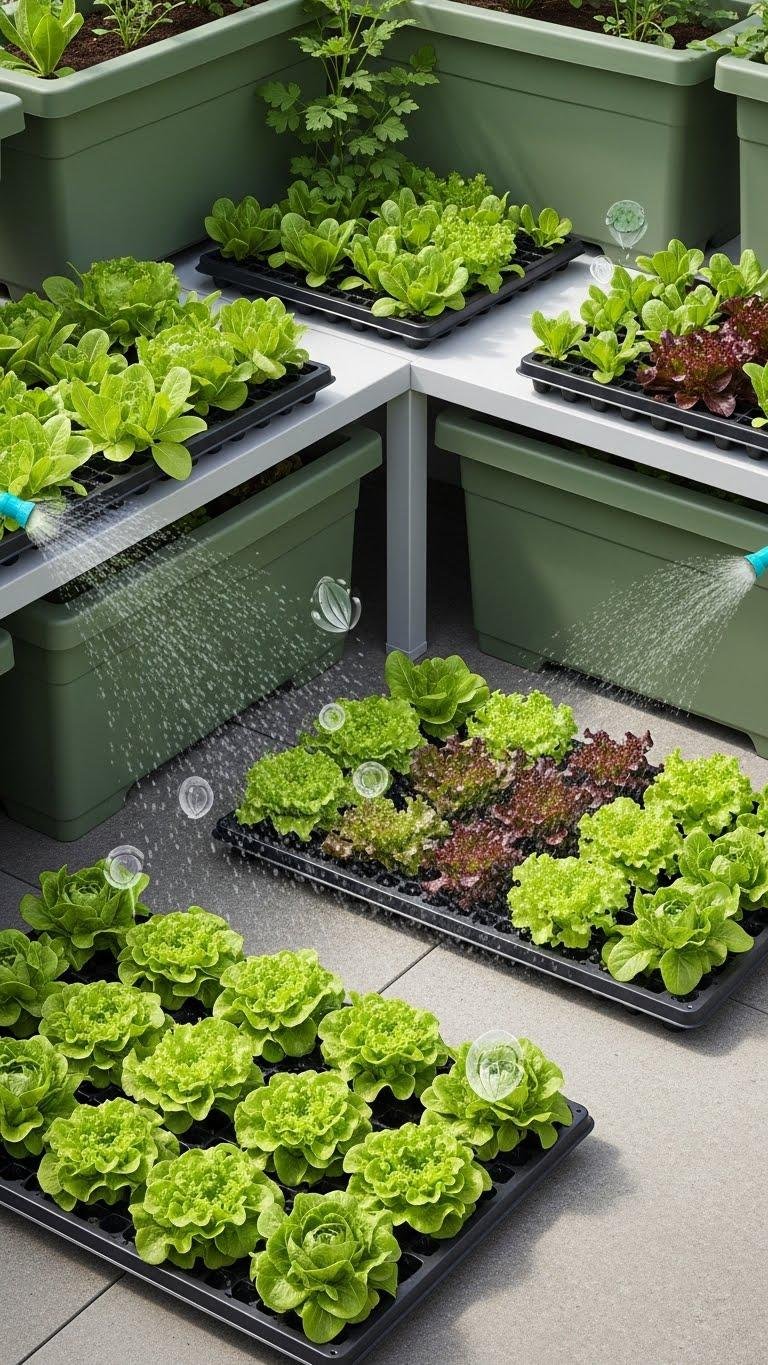
After harvesting your deep-rooted crops, carve out a cool corner for a shade-tolerant lettuce nook that thrives where taller tubs cast partial shade.
You’ll set shallow trays in a shaded microclimate, choose cool season mixes, and sow successive small batches. Water gently, feed lightly, and rotate trays for airflow. This compact strategy lets you harvest crisp greens without sun-hungry commitment.
Herb Spiral on a Small Footprint
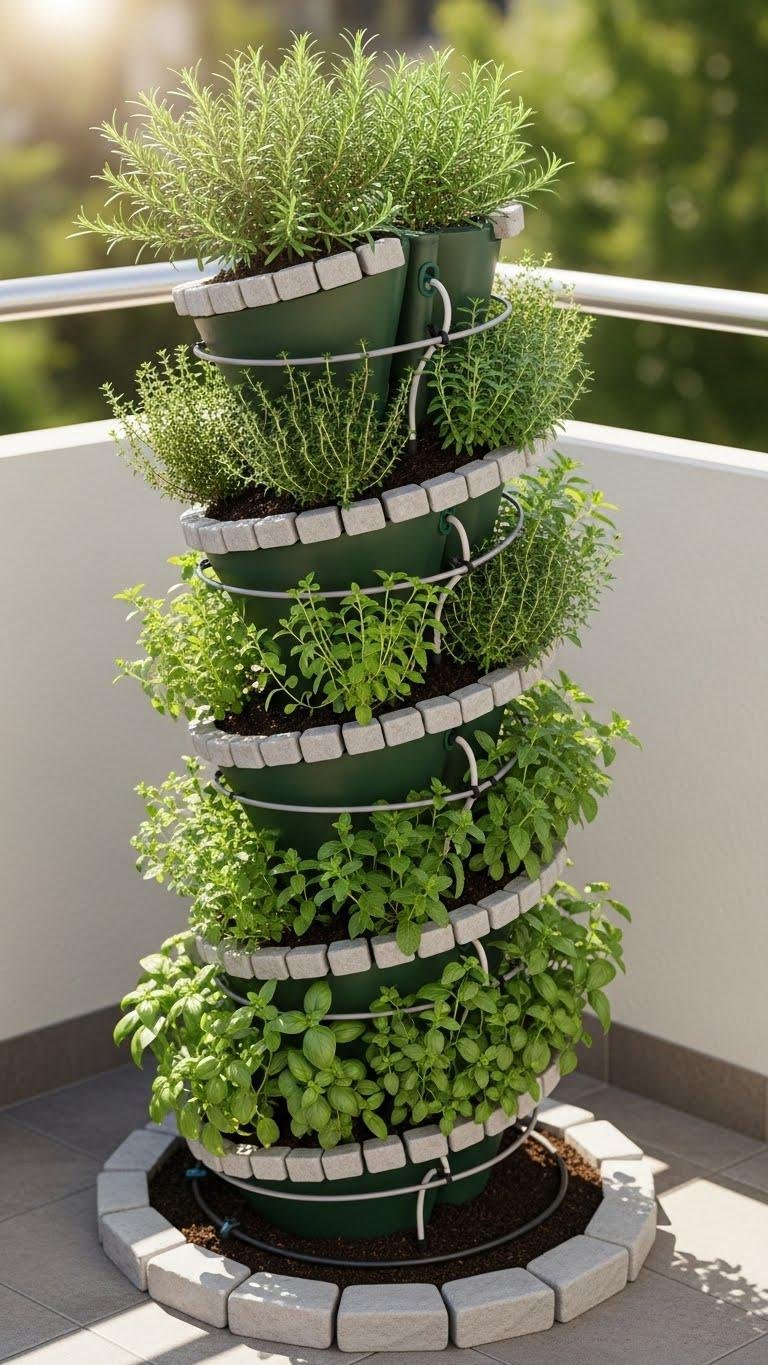
Built vertically on a tight balcony, an herb spiral packs multiple microclimates into a few square feet so you can grow Mediterranean sun-lovers at the top and moisture-loving herbs near the base.
You’ll build a micro herbspiral with stacked soil gradients, stone edging, and targeted planting choices. Use simple spiral irrigation tubing for consistent moisture, prune for airflow, and harvest freely from this compact, efficient system.
Mixed Herb and Flower Companion Beds
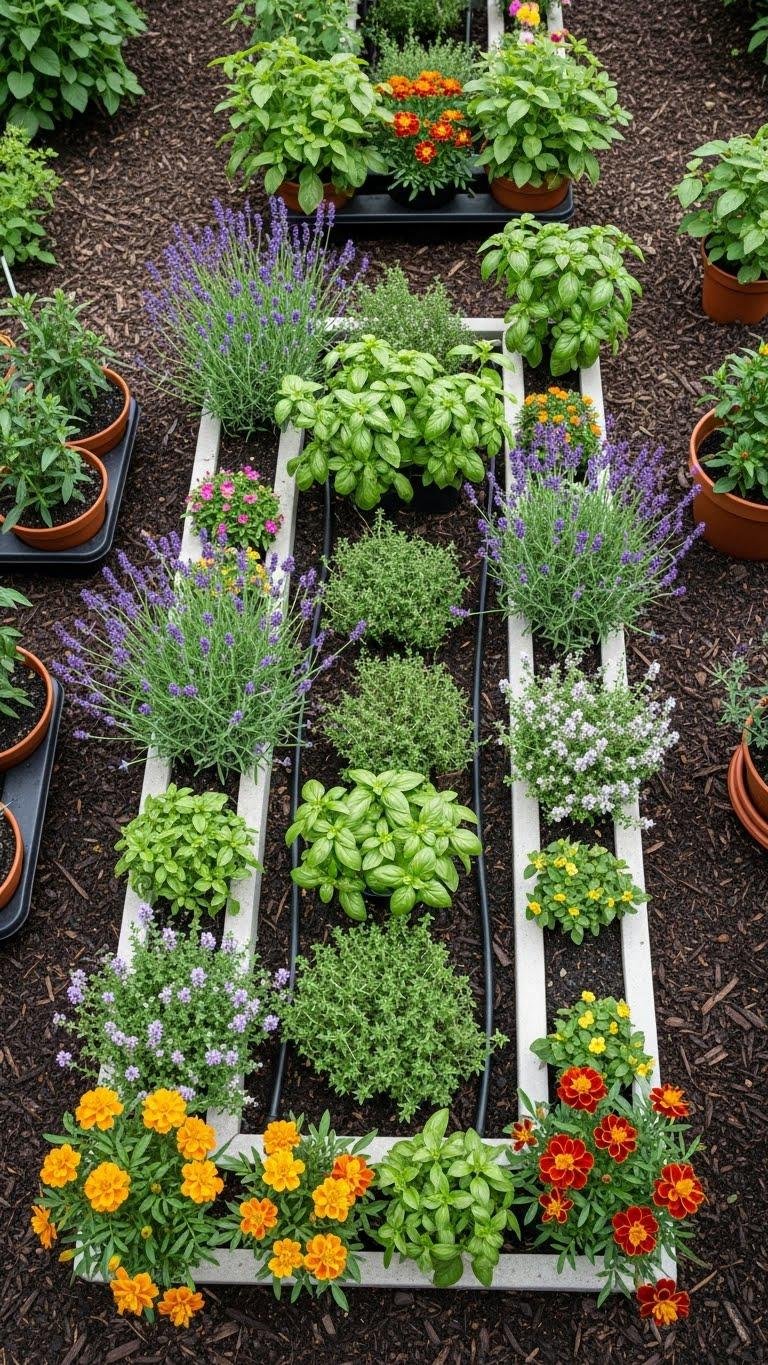
Move a few of those drip-irrigated pots closer together and you’ll open space for mixed herb-and-flower beds that boost pollinators and suppress pests while keeping maintenance low. You’ll choose scent pairing—lavender with thyme, basil with marigold—to deter pests and attract beneficials.
Plant in shallow troughs, rotate blooms, deadhead sparingly, and watch a compact pollinator magnet increase yield while freeing time for other pursuits.
Winter-Ready Cold Frame Boxes
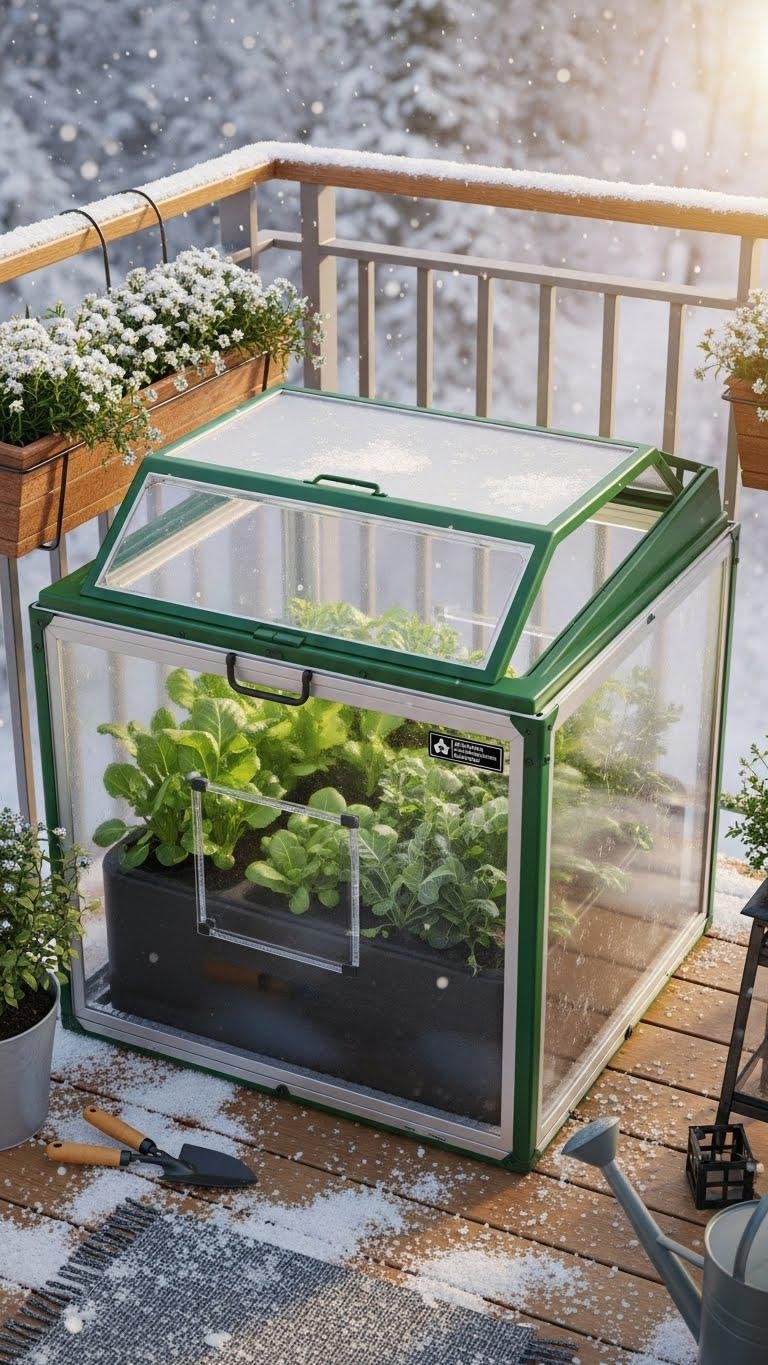
When temperatures drop and frost starts nipping tender leaves, a snug cold frame box gives you controlled warmth and light so you can extend your balcony’s growing season with minimal fuss.
You’ll choose insulated coldframes with clear panels, ventilate on sunny days, and secure frost proof lids for overnight protection. Plant hardy greens, monitor moisture, and harvest fresh leaves well into winter.
Windbreak Slat Planters for Exposed Balconies
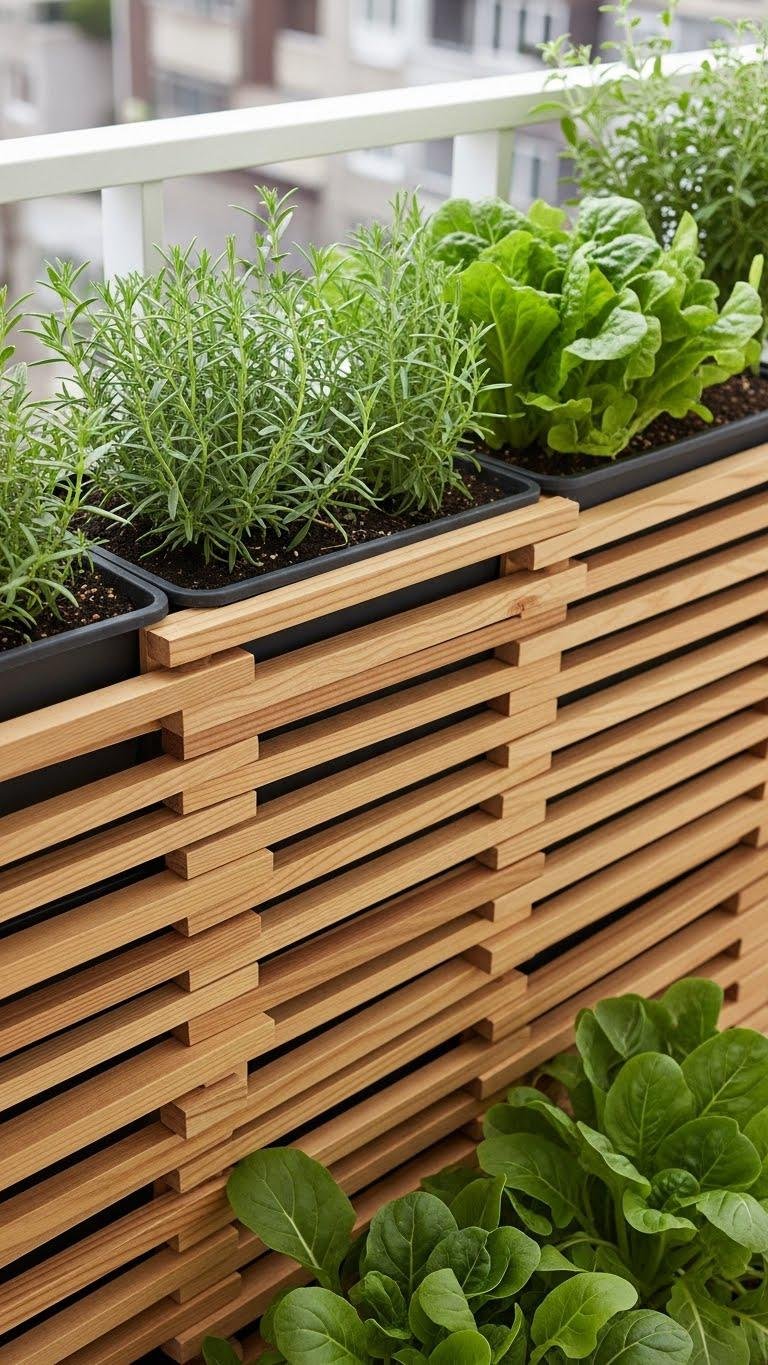
Although exposed balconies can fling cold gusts and salt spray at your plants, windbreak slat planters give you a compact, effective shelter that still lets air and light through.
You’ll mount staggered slats, plant shallow-root herbs and leafy greens, and orient gaps to reduce wind shear. The design prioritizes windbreak aesthetics, drainage, and acoustic buffering while keeping maintenance minimal and plant health central.