
You can get your hands dirty without overwhelm by trying simple projects that build skills fast — think a cedar raised bed, container potatoes, or a no‑dig patch. Each idea is practical, low‑cost, and gives clear wins so you’ll stay motivated. Start small, learn what thrives where you live, and watch confidence grow as you add compost, cold frames, trellises, and quick salad crops — and then you’ll be ready for the next step.
Start a No-Dig Vegetable Patch
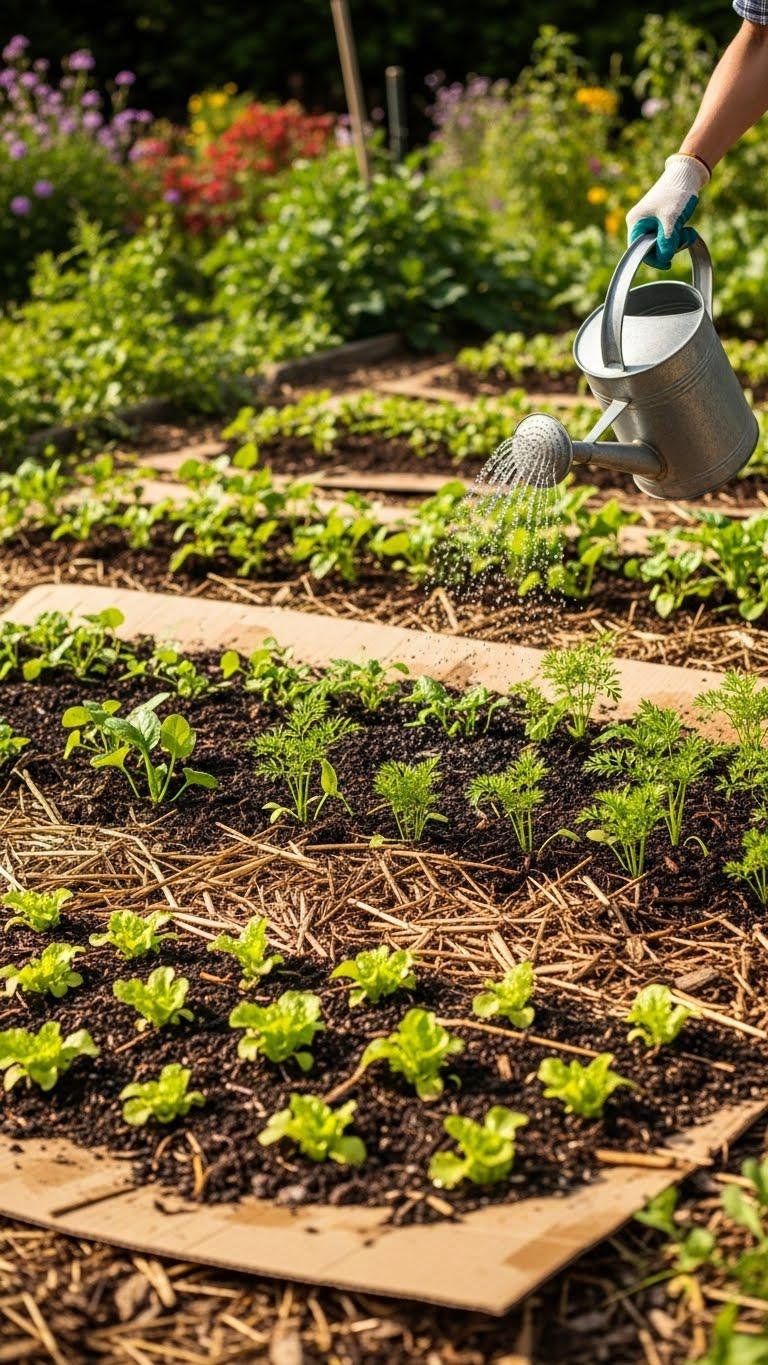
Start your no-dig vegetable patch by selecting a sunny, well-drained spot and laying down a sheet of cardboard or several layers of newspaper to smother grass and weeds.
Then add compost, straw, and mulch in layers to promote soil building and use no till techniques to protect structure.
Plant seedlings, water gently, and reap freedom from backbreaking prep while nurturing rich, productive beds.
Plant an Herb Container Collection
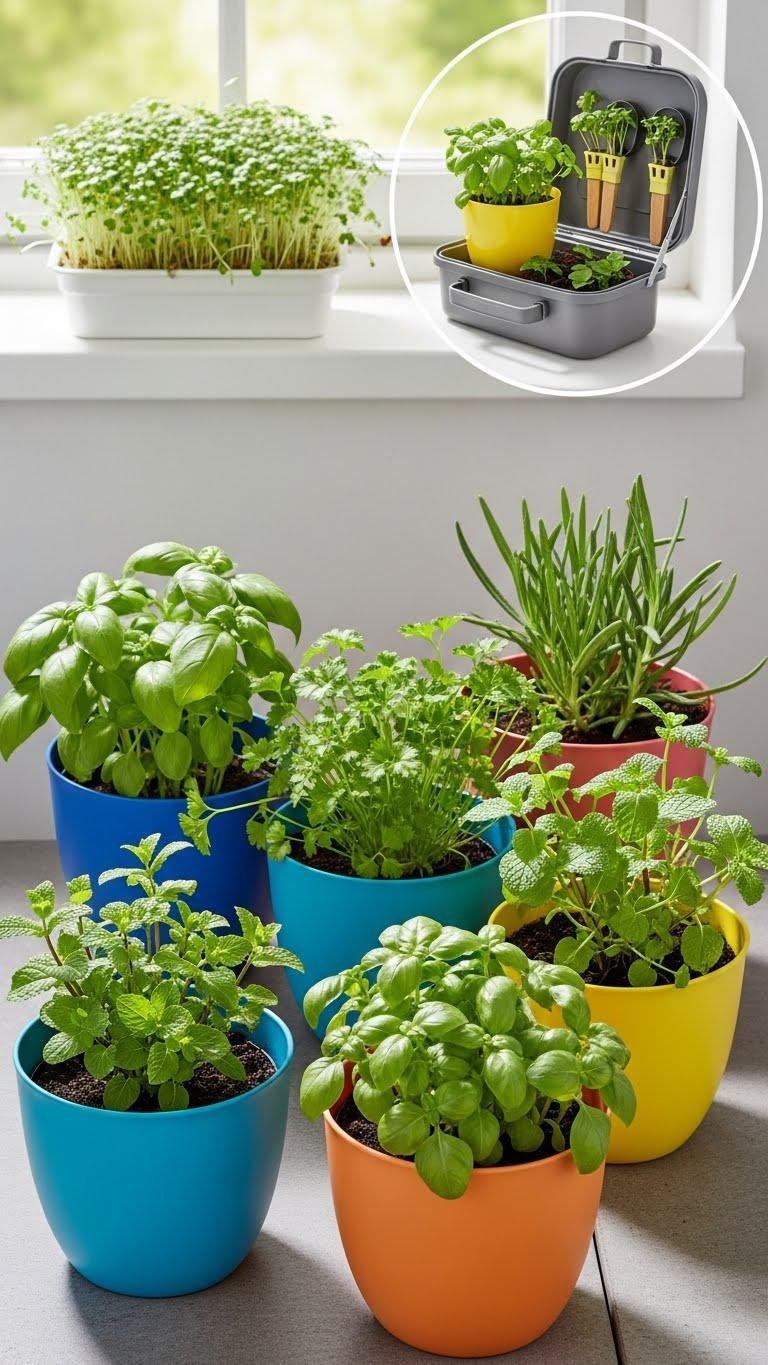
If you enjoyed the easy, low-effort gains of a no-dig vegetable patch, you can bring that same satisfaction to a set of herb containers that fit any balcony, patio, or spare corner.
Choose hardy herbs, group by water needs, and use lightweight pots for mobility.
Start windowsill microgreens for quick flavor and keep travel friendly cuttings to root and swap when you roam.
Create a Patio Pond in a Large Pot
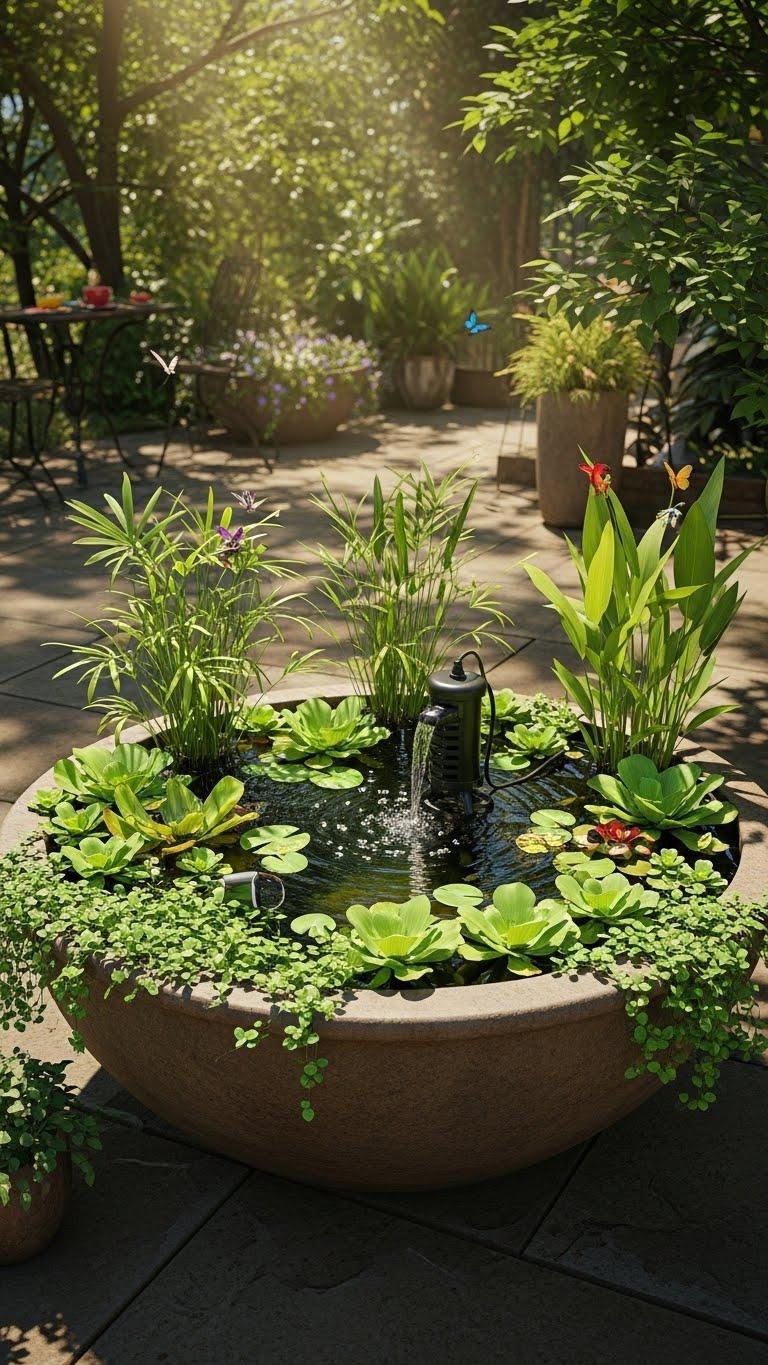
A patio pond in a large pot gives you a living water feature without needing a yard—choose a sturdy, watertight container, line it if necessary, add aquatic soil and plants, and you’ll have a compact, low-maintenance habitat that attracts wildlife and soothes the space.
Place in sun/part shade, add a small pump or let it be a mini bog garden, and enjoy freedom-focused calm.
Install a Small Vertical Tomato Tower
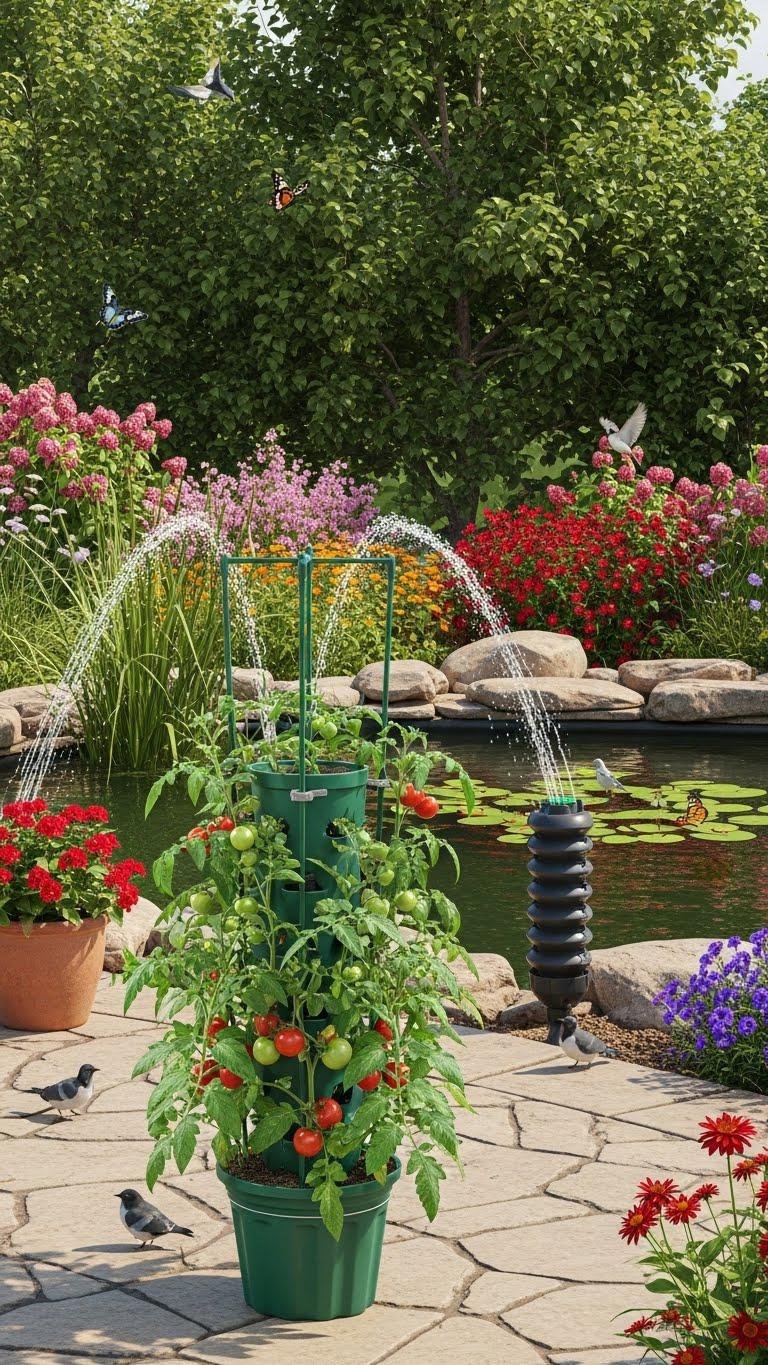
Once your patio pond settles and invites birds and butterflies, you can add a vertical tomato tower to bring fresh fruit into the same small space. Choose a compact tower, secure it, and plant determinate varieties.
Practice vertical pruning to focus growth, install stacked irrigation for consistent moisture, and stake or tie stems. You’ll harvest more while keeping mobility and freedom in your garden.
Set Up Hanging Baskets for Strawberries
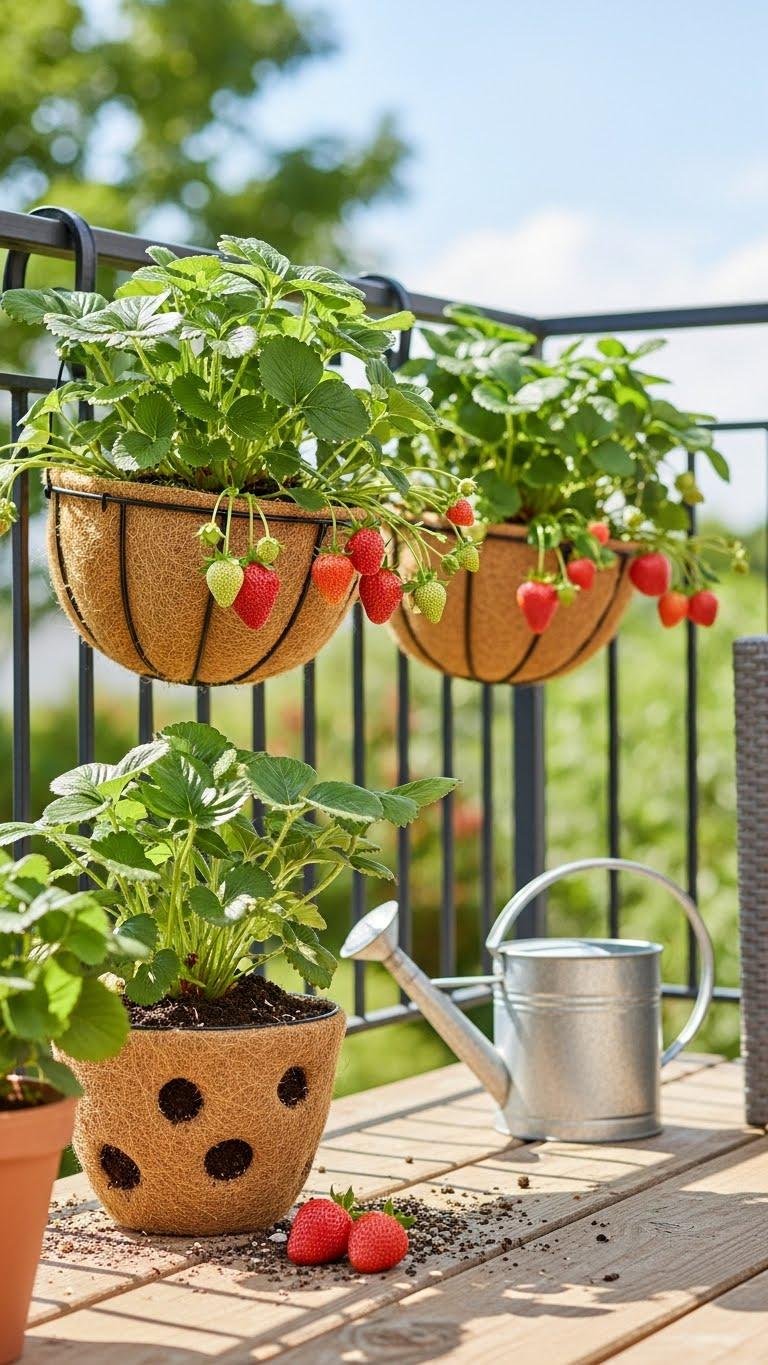
Bring strawberries up where you can see and pick them easily by setting up hanging baskets—it’s a space-saving way to enjoy fresh fruit on a patio or balcony. Choose compact strawberry varieties, use lightweight mix, and make certain baskets have good drainage.
Hang at eye level, follow a consistent watering schedule, fertilize lightly, and prune runners to keep plants productive and your freedom to harvest daily.
Plant a Cool-Season Salad Mix
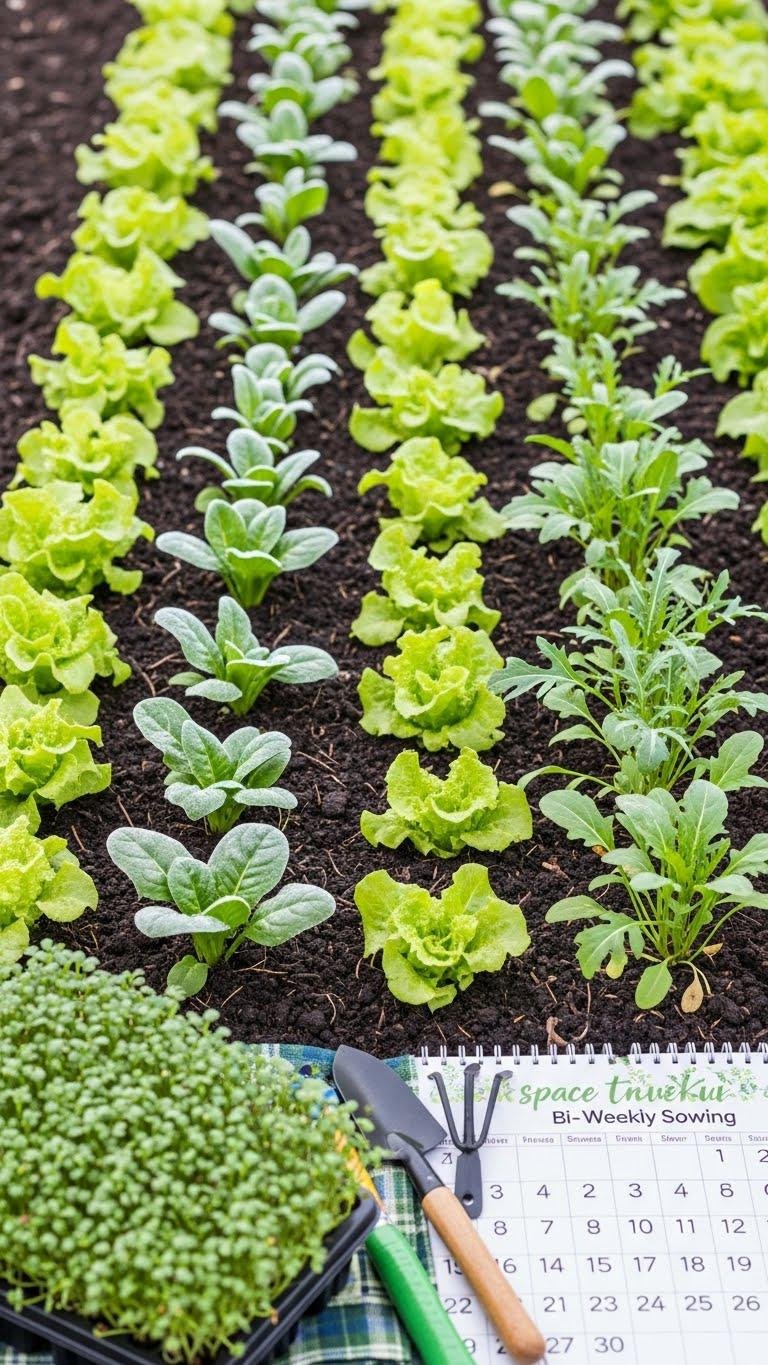
Plant a cool-season salad mix now to enjoy fast, crisp greens through early spring and fall; these mixes of lettuces, arugula, spinach, and mizuna germinate quickly, tolerate light frost, and give you a continuous harvest with minimal fuss.
Sow thin rows, practice succession sowing every two weeks, harvest outer leaves, and use a microgreen tray for quick, space-saving sprouts that keep you free to roam.
Sow a Warm-Season Zinnia and Cosmos Patch
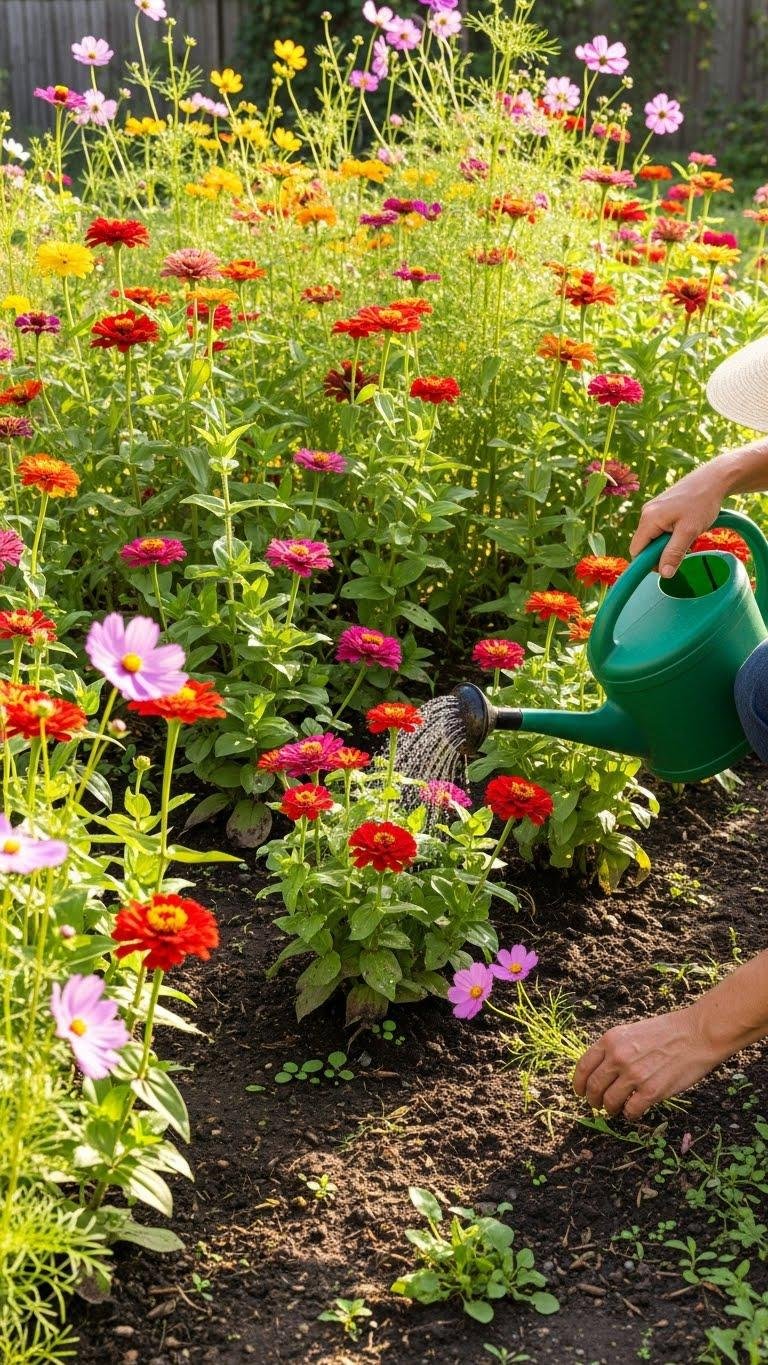
Choose a sunny spot, loosen the soil, and scatter zinnia and cosmos seeds for a cheerful, low-maintenance patch that blooms all summer. Pick bold color selection you love, mix heights for movement, and mind seed spacing—thin seedlings to recommended distances.
Water gently, keep weeds down, and deadhead spent blooms. You’ll enjoy effortless, free-spirited summer color with minimal fuss.
Establish a Small Pollinator-Friendly Flower Bed
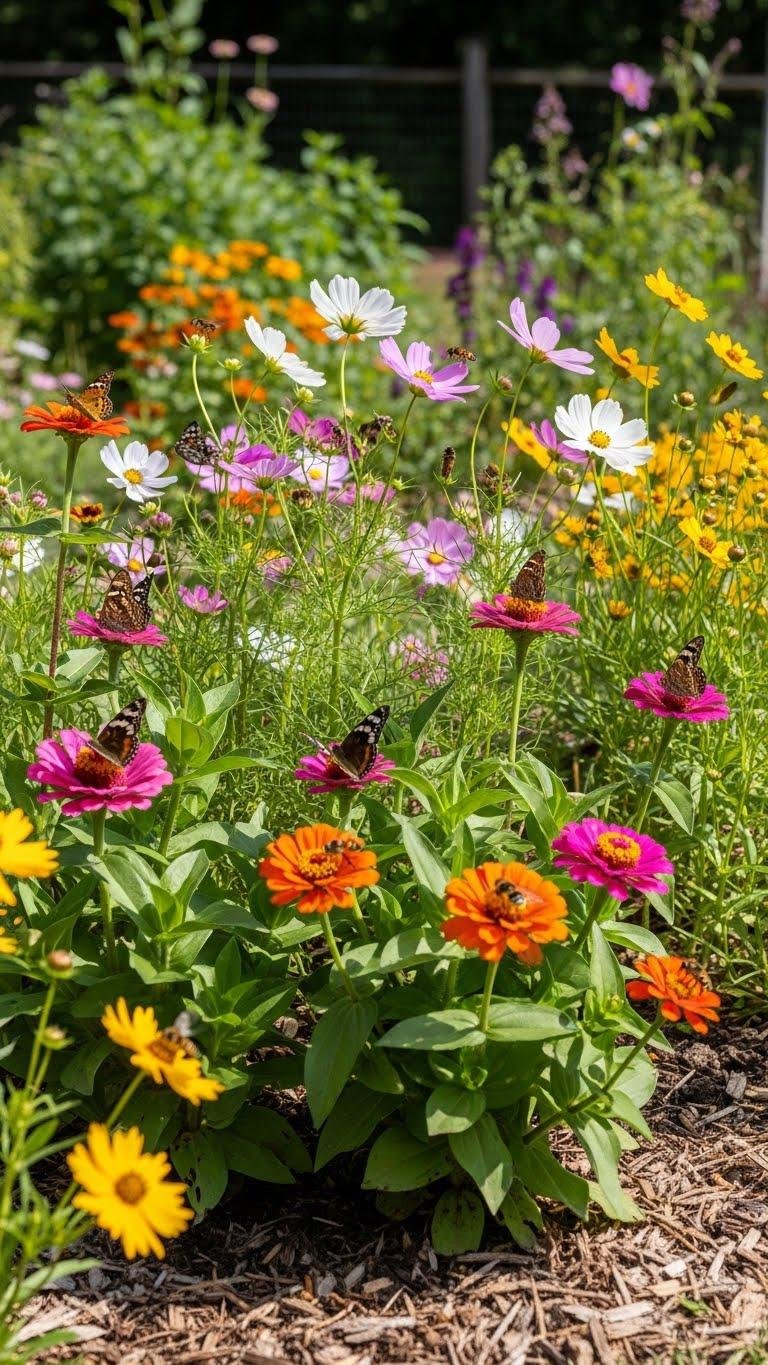
After enjoying a carefree zinnia and cosmos patch, you can create a small pollinator-friendly bed that keeps butterflies, bees, and hoverflies coming back all season.
Choose native blooms, group by bloom time, and plant in sunny, well-drained soil. Mulch lightly, water deeply, and avoid pesticides.
Plan a seasonal rotation to extend nectar availability and let nature visit your free, lively space.
Grow Bush Beans in Containers
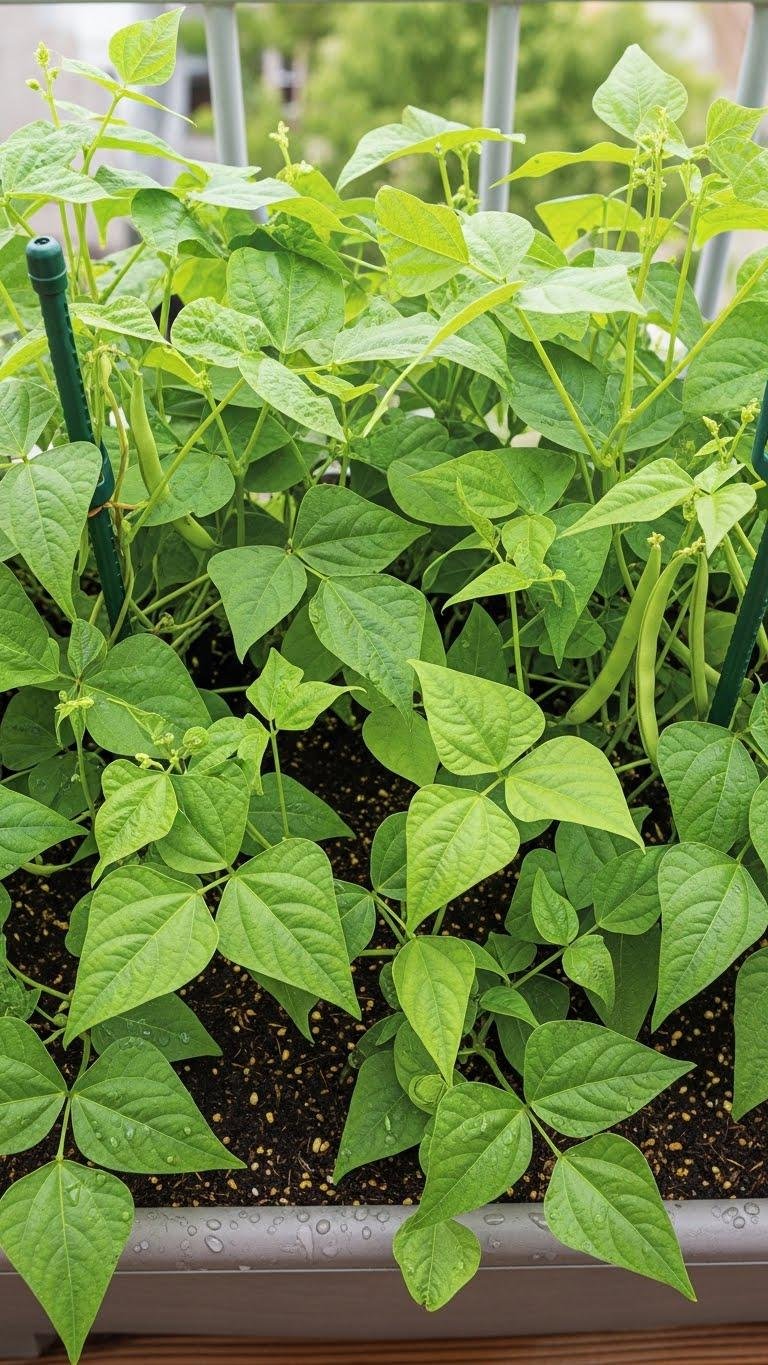
Grab a roomy container, fill it with well-draining potting mix, and you’ll have a productive patch of bush beans on a balcony or patio in no time. Choose compact varieties to save space, sow evenly, water regularly, and feed lightly.
You’ll harvest fast, enjoy fresh beans, and keep freedom to move pots. Add simple vertical support if plants sprawl.
Start a Window-Sill Herb Garden
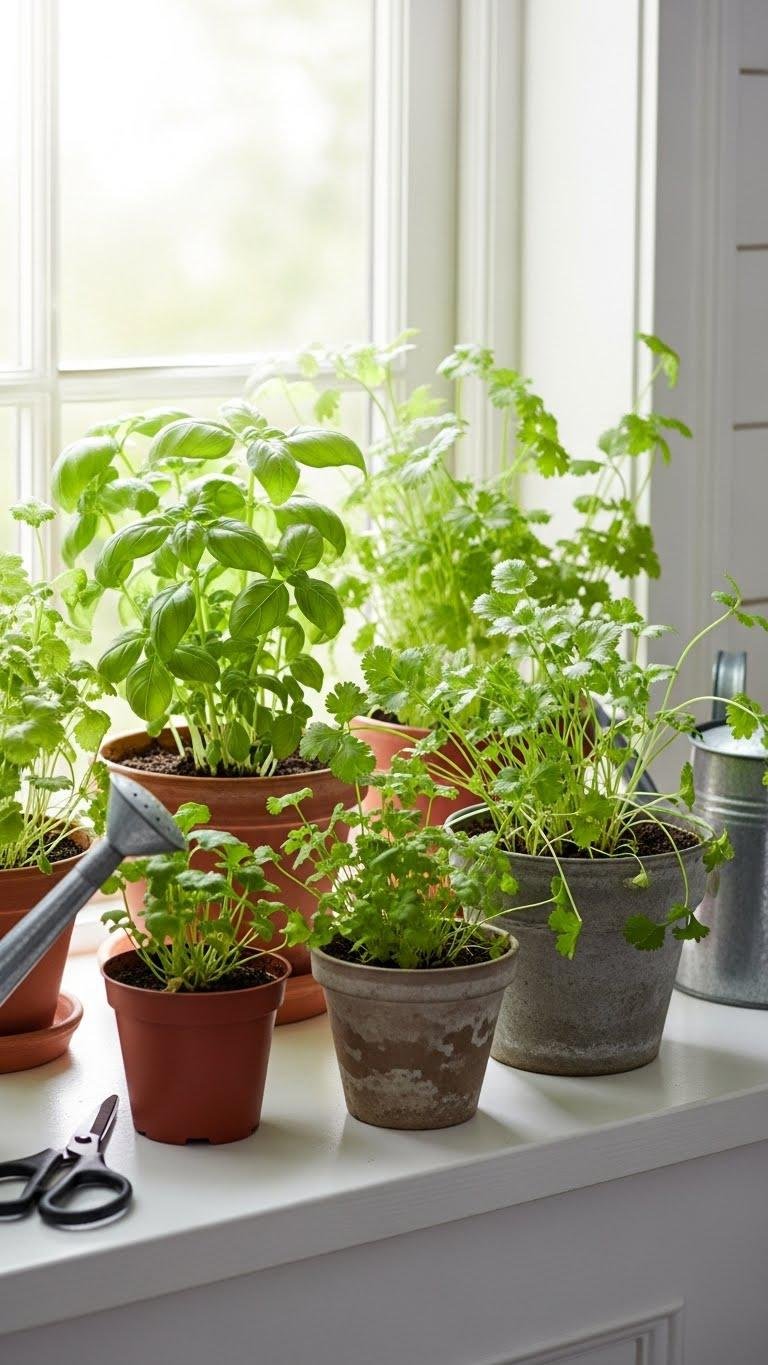
Bringing fresh herbs to your kitchen is easier than you think—start by picking a sunny sill, gather a few small pots with good drainage, and you’ll have flavorful, cut-and-come-again greens all season.
Do a quick sunlight mapping, choose hardy herbs, fill pots with quality potting mix, water modestly, and snip leaves often. You’ll enjoy freedom, flavor, and low-maintenance success.
Prepare a 10’x10’ Beginner Vegetable Plot

If you’re ready to grow more than herbs, a 10’x10’ plot gives you enough space to raise a variety of vegetables without overwhelming your schedule or budget.
You’ll plan beds, test soil, and map crop rotation to keep pests and nutrients balanced.
Respect seed spacing, choose easy crops, and plant successive rounds.
You’ll harvest freedom, save money, and enjoy fresh food.
Mulch and Maintain a Front Yard Tidy Bed

Mulching your front-yard tidy bed keeps weeds down, retains moisture, and gives the space a finished look with minimal effort. Spread 2–3 inches of organic mulch, avoid piling at stems, and refresh yearly.
Combine simple edging techniques for clean lines without heavy tools. Mulch supports weed prevention and saves watering time, so you’ll enjoy a neat, low-fuss bed that frees your weekends.
Edge and Clean Up a Lawn Garden Border
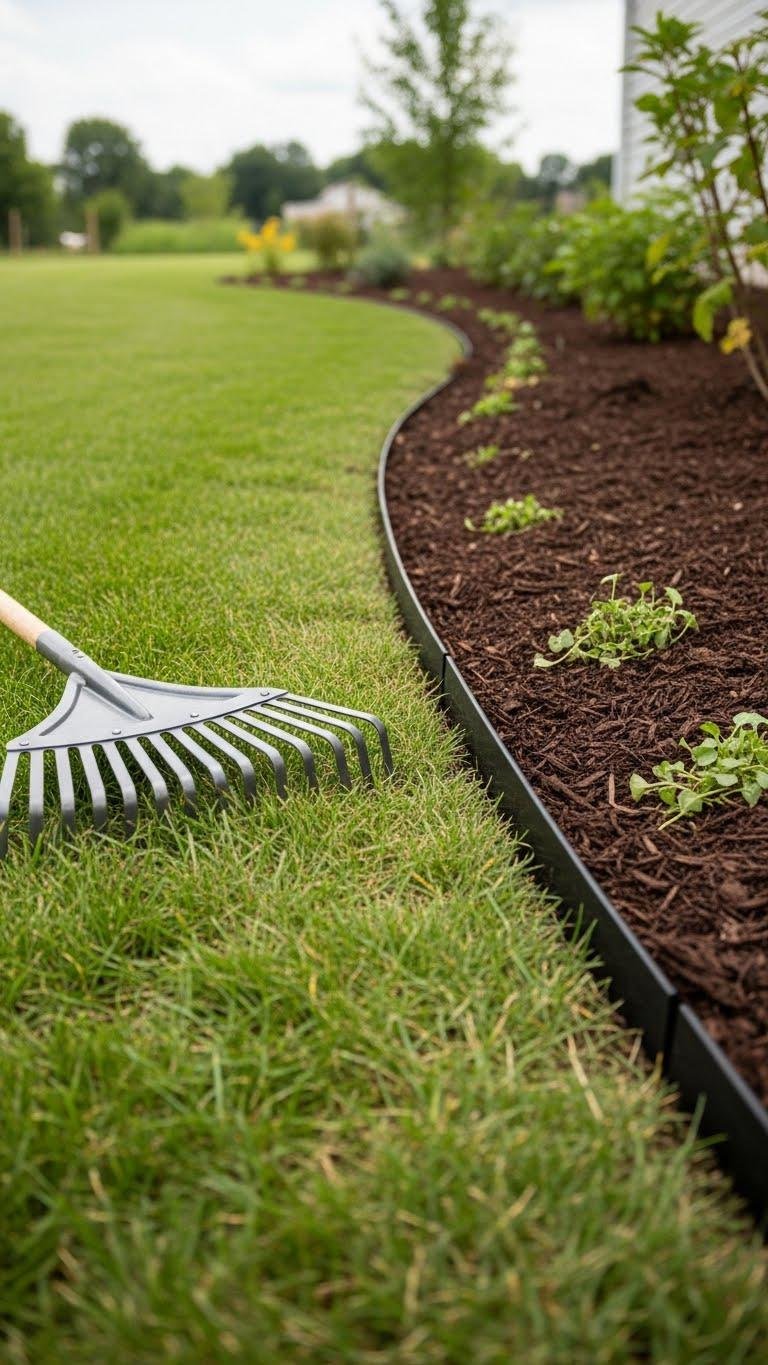
Once your bed has fresh mulch and tidy edges, give the lawn border the same attention to make the whole yard look sharp.
Grab an edging tool or spade and define a clean line. Remove grass runners, weeds, and debris during border clearing. Rake and tidy clippings, then install simple lawn edging if you want a lasting edge that keeps beds neat and low-maintenance.
Test and Adjust Soil Ph for New Beds

Start by testing the soil so you know what you’re working with: a simple pH kit or lab test will tell you whether the bed is acidic, neutral, or alkaline and how much adjustment is needed.
You’ll use soil testing results to plan pH adjustment — lime raises pH, sulfur lowers it. Make changes gradually, retest, and enjoy plants that thrive in liberated, well-balanced soil.
Plant Companion Flowers to Attract Beneficial Insects
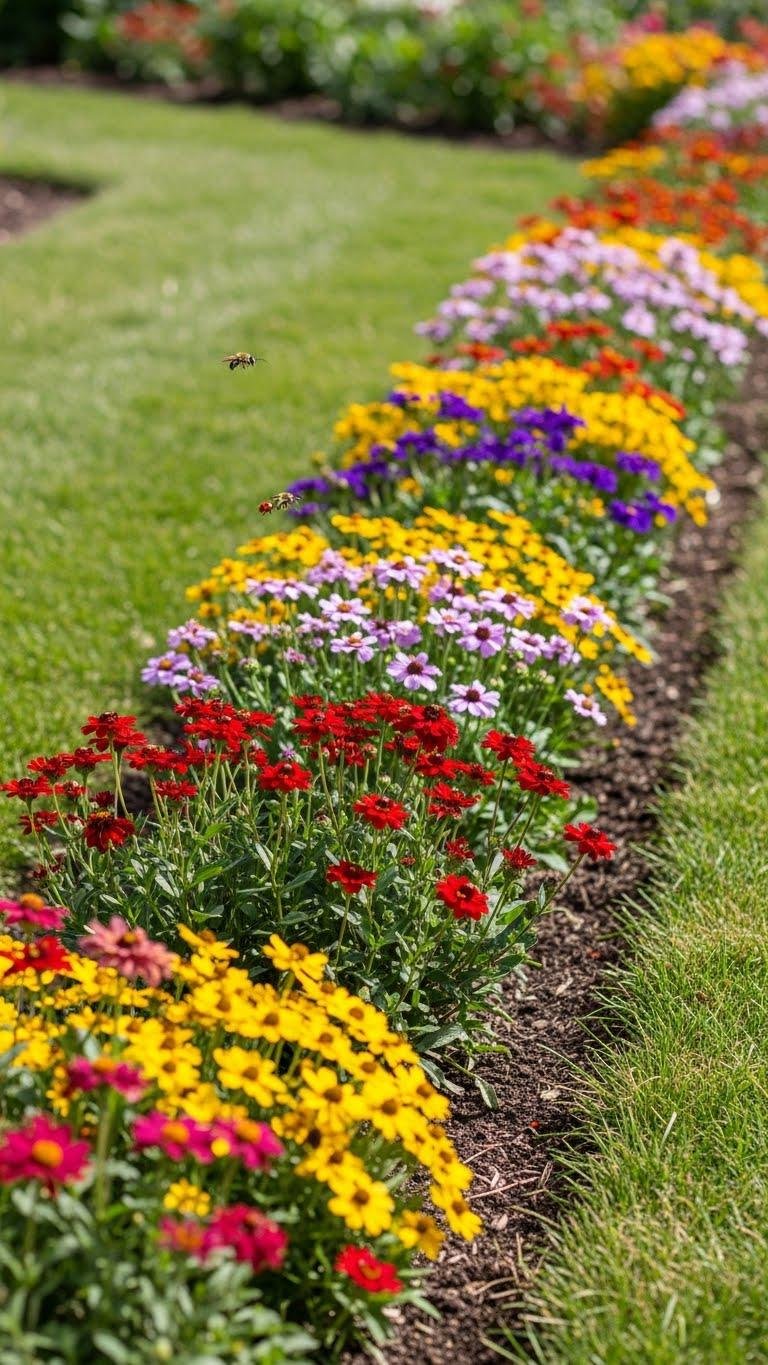
Plant a strip of companion flowers along the edges of your beds to draw in beneficial insects like ladybugs, lacewings, and solitary bees. Choose native bloombeds and diverse blooms to provide nectar, pollen, and shelter.
You’ll attract beneficial beetles and pollinators that control pests naturally. Plant in sunny patches, avoid pesticides, and enjoy a low-maintenance, freeing way to boost garden health.
Create a Mixed Veggie Container for a Patio
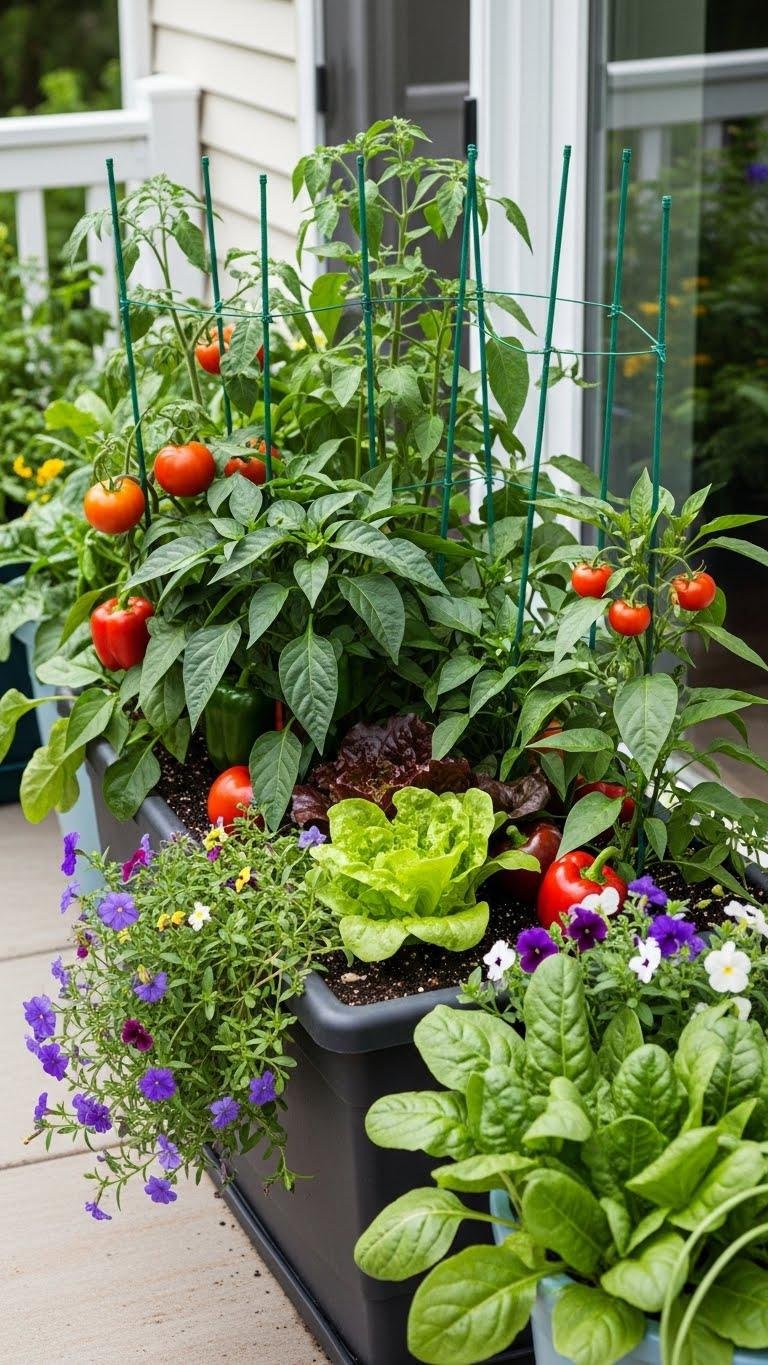
If you’ve added companion flowers to attract pollinators, you can bring those same benefits closer to hand by creating a mixed vegetable container for your patio.
Choose plants by microclimate selection—sun lovers, shade-tolerant greens—and use succession planting to replace spent crops.
Pick compact varieties, good soil, and sturdy containers.
You’ll enjoy fresh harvests and gardening freedom right outside your door.
Set Up Self-Watering Large Planters
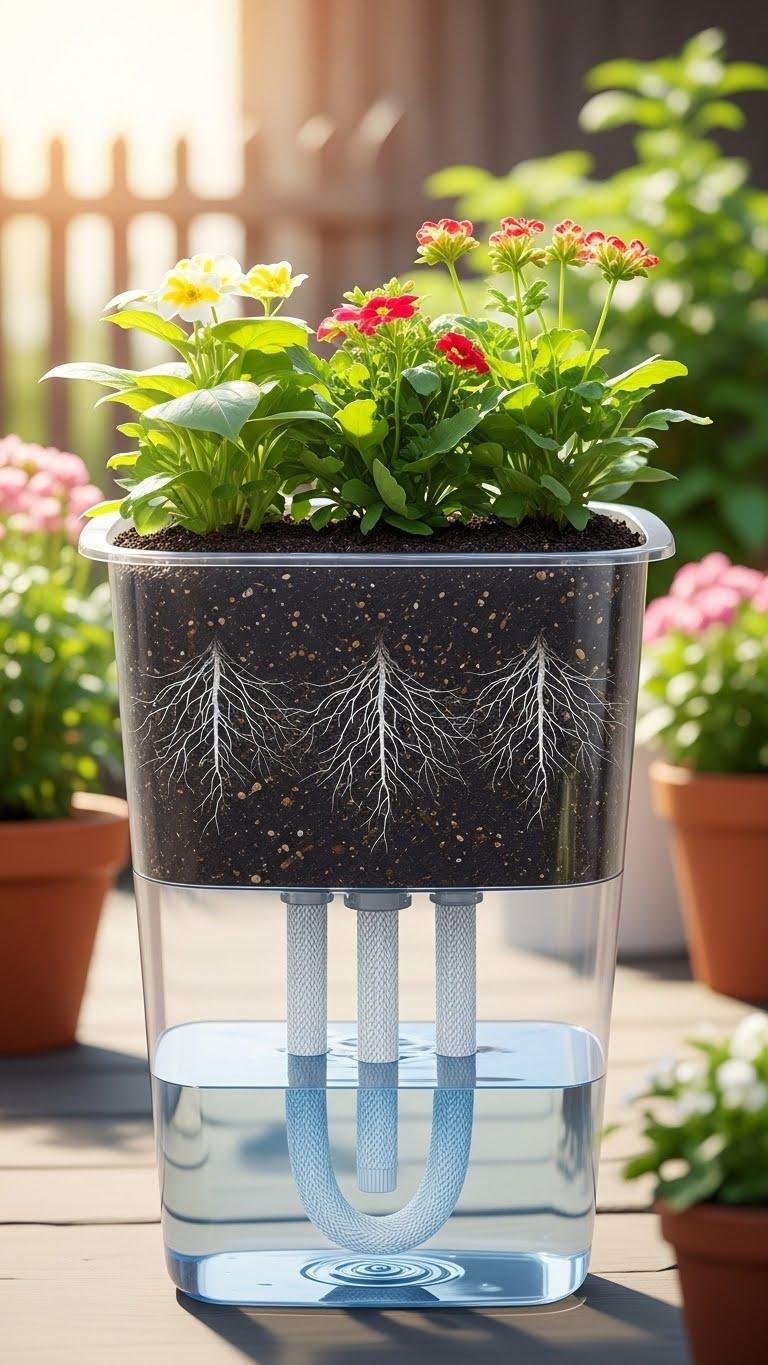
Self-watering planters simplify container gardening by keeping roots consistently moist, so you’ll water less often and reduce plant stress during hot spells.
Set up large planters with a reservoir design and a capillary wick reaching the soil. Fill reservoir, add quality potting mix, and place plants. You’ll enjoy more freedom, less chore time, and healthier, resilient containers all season long.
Build a Simple Cold Frame for Seedlings
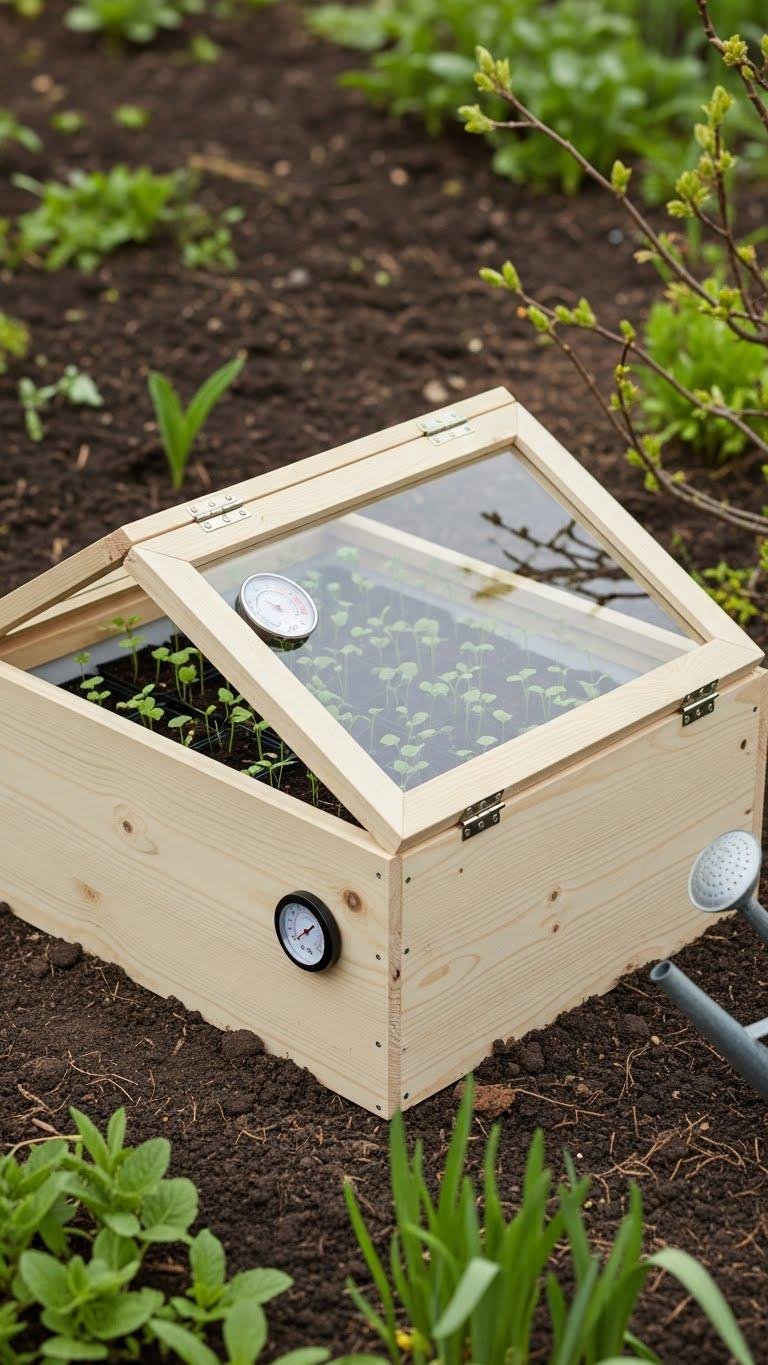
Get a cold frame set up and you’ll extend your growing season by protecting seedlings from frost, wind, and temperature swings.
Build a simple wooden box with clear glazing hinged on top for easy access.
You’ll control humidity with ventilation, check moisture, and practice seedling hardening by gradually increasing air exposure.
It’s a low-effort way to gain freedom and faster starts.
Train Cucumbers on a Small Trellis
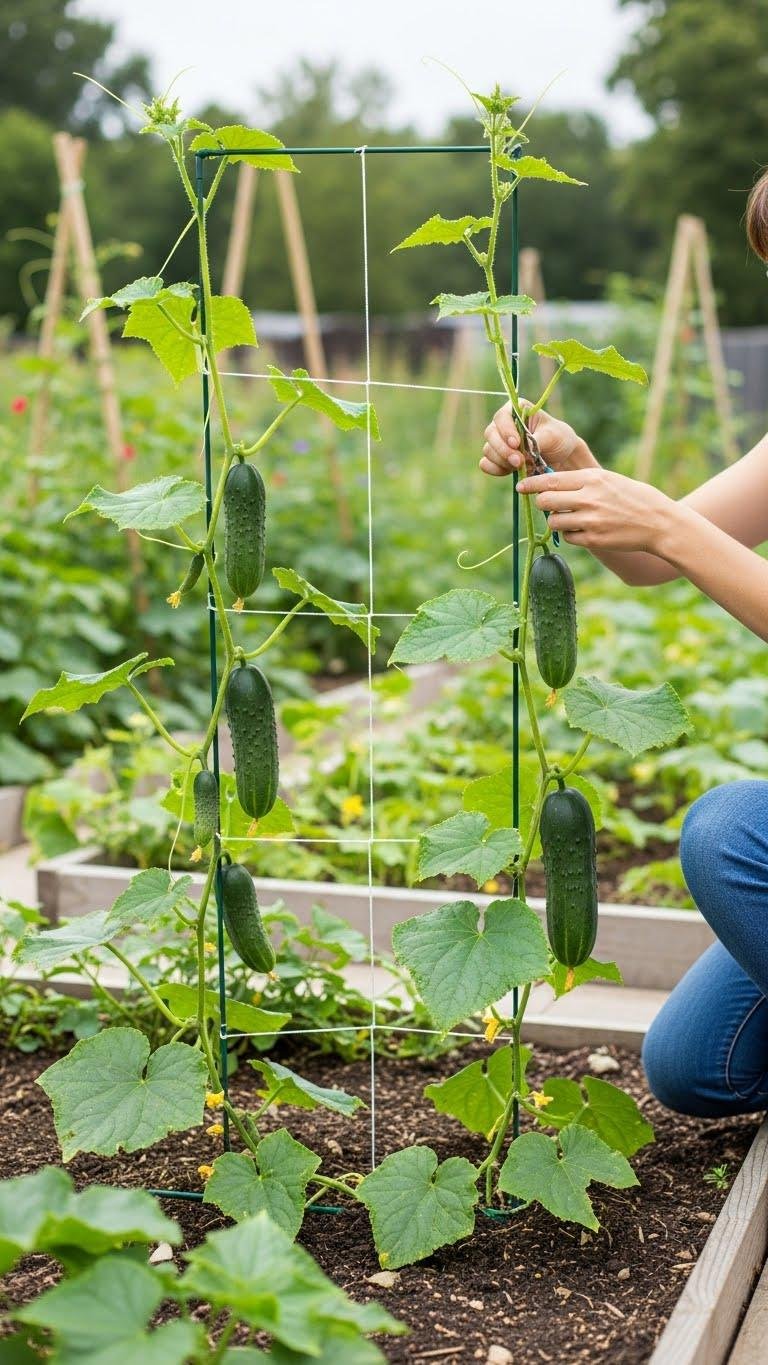
When you train cucumbers up a small trellis, you save space, improve air circulation, and make harvests easier.
Choose sturdy vertical supports and secure vines loosely as they climb. Tie or clip stems every few inches, check for congestion, and follow simple pruning timing to remove weak runners.
You’ll enjoy cleaner fruit, faster drying after rain, and more room for other freewheeling garden choices.
Plant Quick-Growing Radishes and Carrots
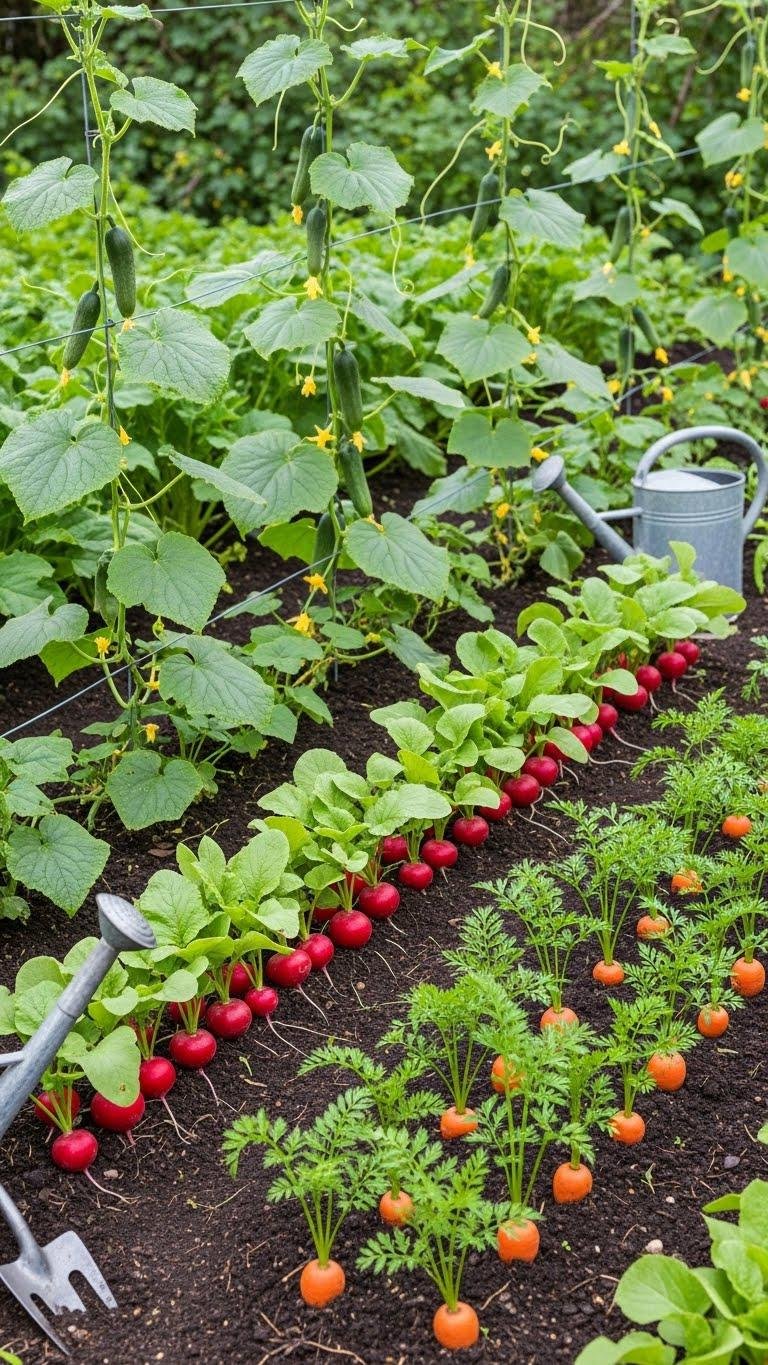
Once your cucumbers are climbing neatly on their trellis, you can free up bed space by sowing quick-growing radishes and carrots nearby—both give fast rewards and keep soil productive between slower crops.
Sow in rows with succession sowing every two weeks, use simple thinning techniques so roots develop, water evenly, and harvest young for crisp snacks. You’ll gain quick freedom and confidence.
Start a Compost and Fertilizer Routine
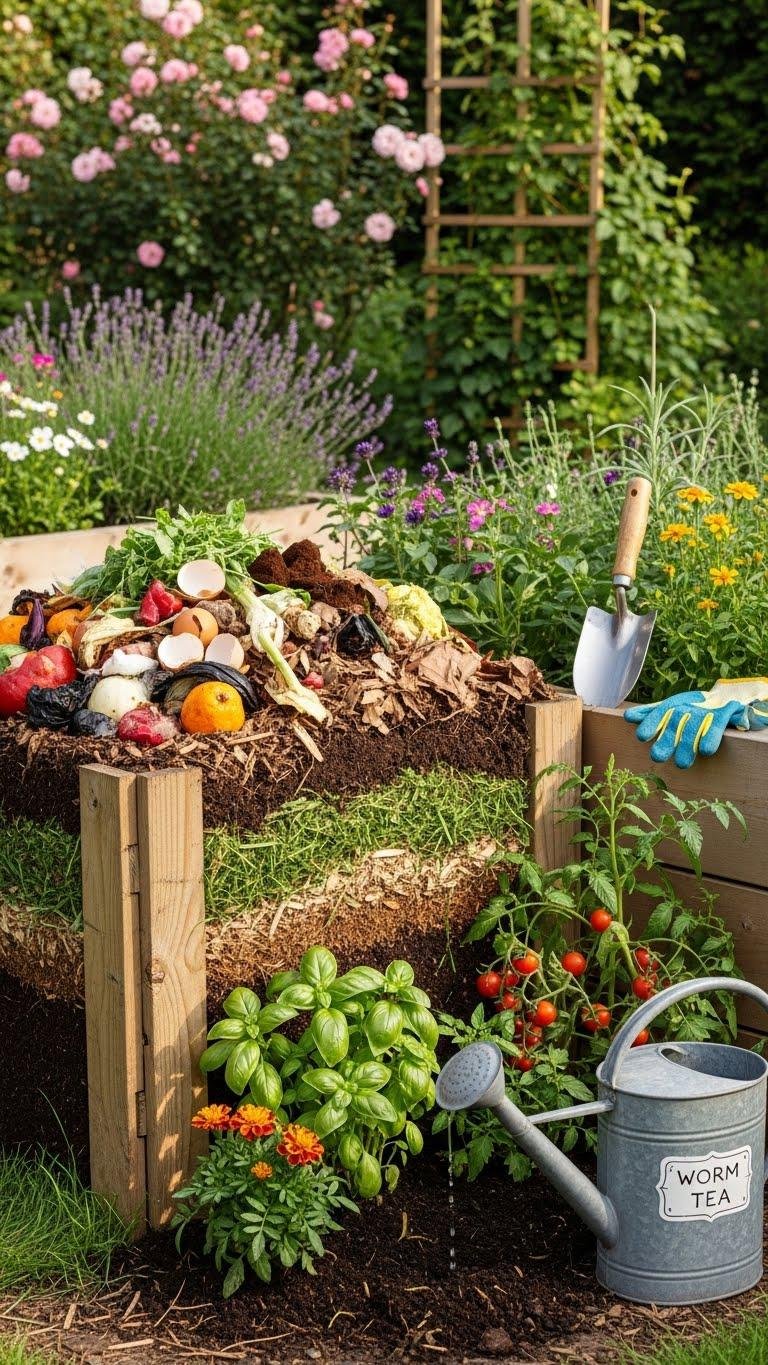
Because healthy soil makes everything easier, start a simple compost and fertilizer routine now to feed your beds steadily and sustainably.
Collect kitchen bokashi or traditional scraps, layer greens and browns, and turn weekly.
Add finished compost and dilute worm tea as liquid fertilizer.
You’ll free yourself from store-bought chemicals, improve texture and fertility, and enjoy plants that repay your steady, low-effort care.