
You can design a living garden that sustains birds year-round by choosing native trees, shrubs, vines, and perennials that provide food, shelter, and nesting sites. Focus on oaks, hackberry, serviceberry, flowering dogwood, viburnums, and fruiting shrubs like winterberry and elderberry, then add nectar vines, pollinator flowers, and native grasses to create layered habitat and connectivity. Keep going to see a practical 22‑plant list and placement tips.
Oaks (Quercus Spp.)
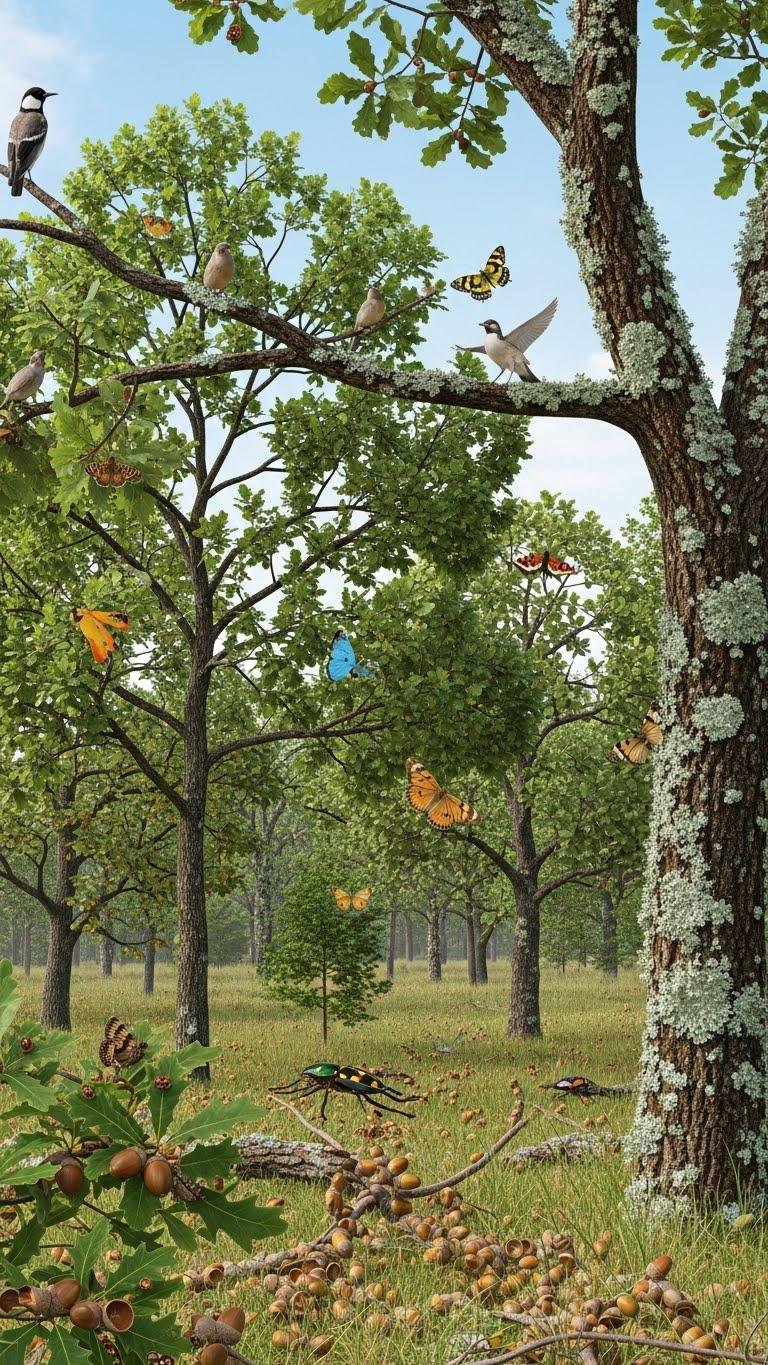
Although they may look like simple shade trees, oaks (Quercus spp.) function as keystone species in many temperate and Mediterranean ecosystems, supporting more animal life per tree than almost any other native genus.
You’ll value their acorn wildlife resources and lichen relationships, which sustain birds, invertebrates, and fungi. Protect local oak stands, manage for diversity, and prioritize habitat connectivity to preserve ecological freedom.
Flowering Dogwood (Cornus Spp.)
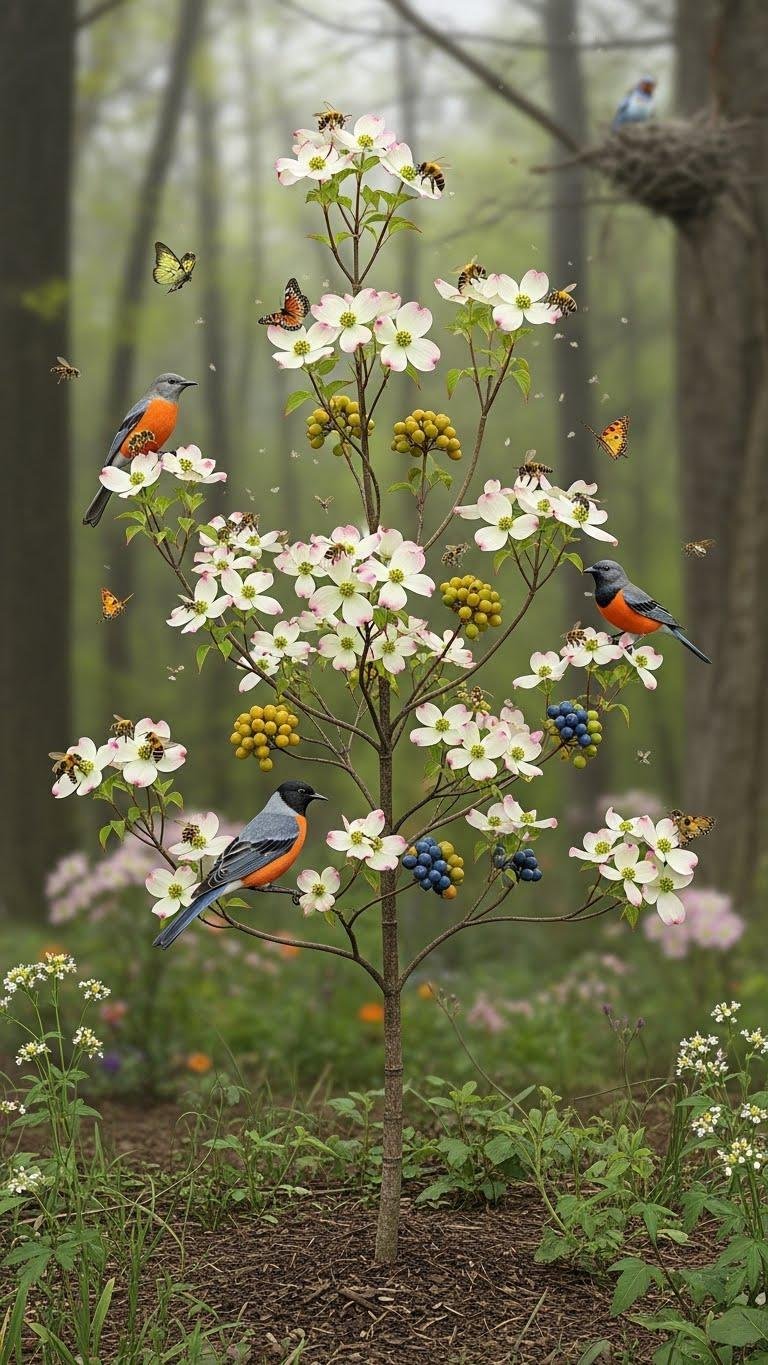
A small-statured tree with outsized ecological value, flowering dogwood (Cornus spp.) provides seasonal nectar, fruit, and structural habitat that benefit pollinators, frugivorous birds, and resident insects across temperate woodlands.
You’ll plant it for Spring blooms and persistent berries; its Shade tolerance lets it occupy understory niches, supporting migratory stopovers and resident nesting. Manage for native genotypes and layered habitat to maximize conservation outcomes.
Winterberry Holly (Ilex Verticillata)
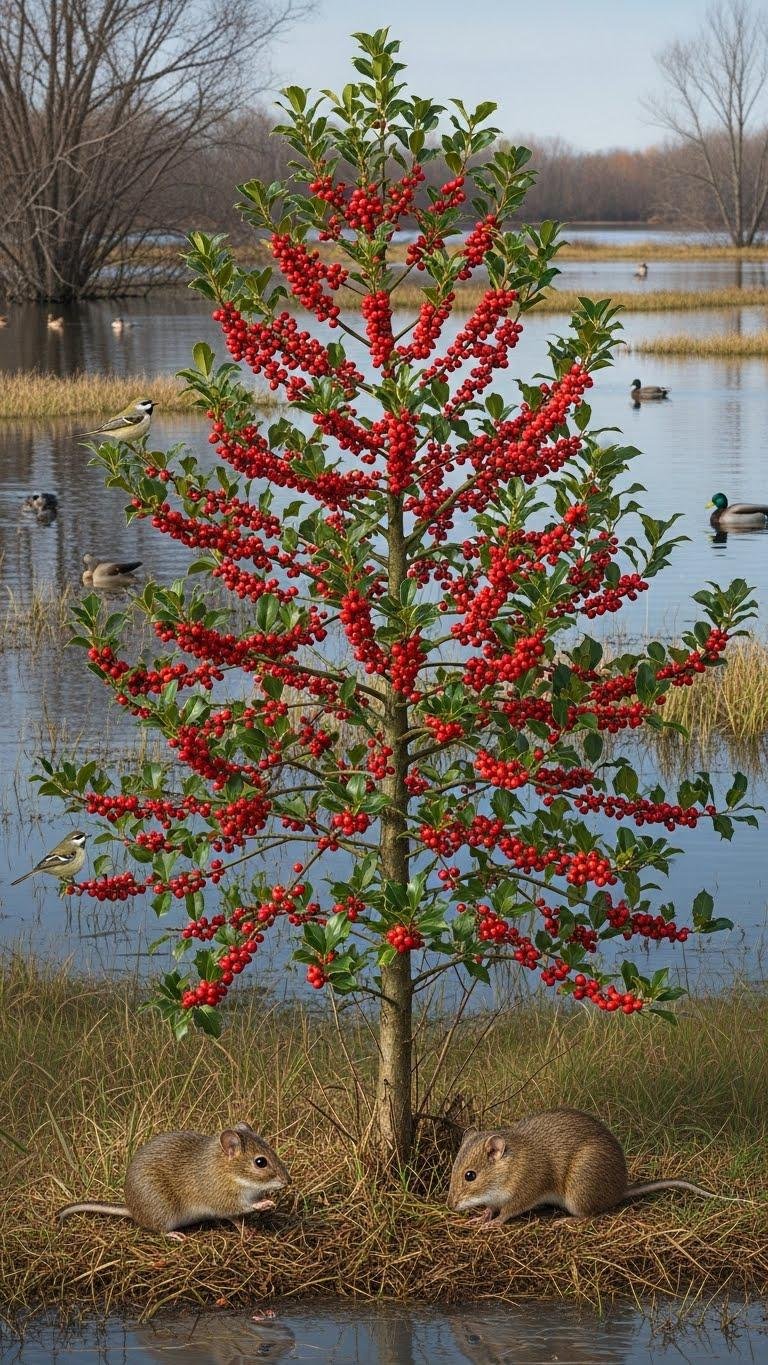
Plant winterberry holly (Ilex verticillata) where moist soils and seasonal flooding recreate its native wetland edges, because this deciduous holly produces copious red drupes that sustain overwintering songbirds, waterfowl, and small mammals when other food is scarce. You’ll manage winterberry propagation via cuttings or seed; prioritize female plants and pollinators, apply targeted fruiting maintenance, and monitor hydrology to conserve local bird populations.
Serviceberry / Juneberry (Amelanchier Spp.)
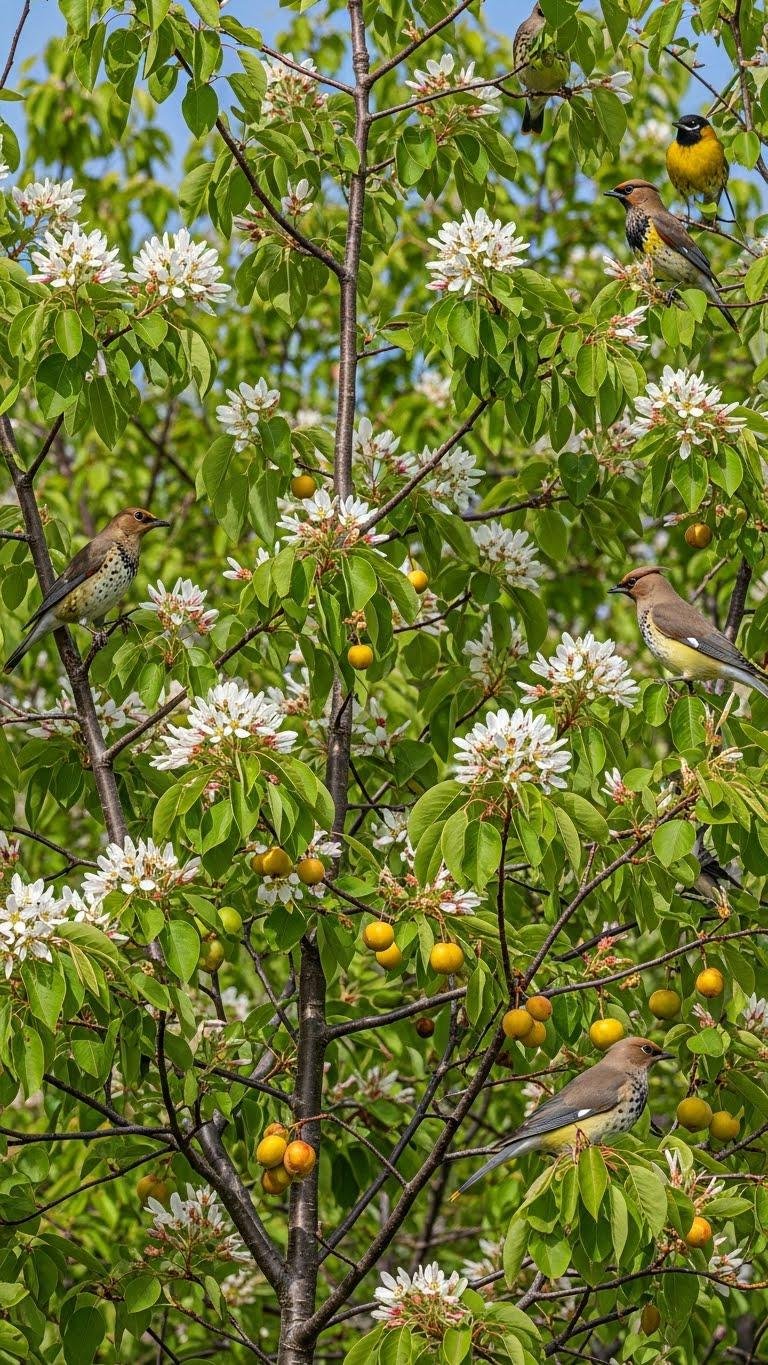
Moving from wetland margins where winterberry sustains waterfowl and overwintering songbirds, consider serviceberry (Amelanchier spp.), a native understory tree-shrub that supports breeding and migratory bird populations through spring nectar, summer fruits, and structural habitat.
You’ll value its predictable fruit timing for thrushes and waxwings, and its dense branching provides secure juvenile habitat, aiding local avian recruitment and landscape resilience.
Sumac (Rhus Spp.)
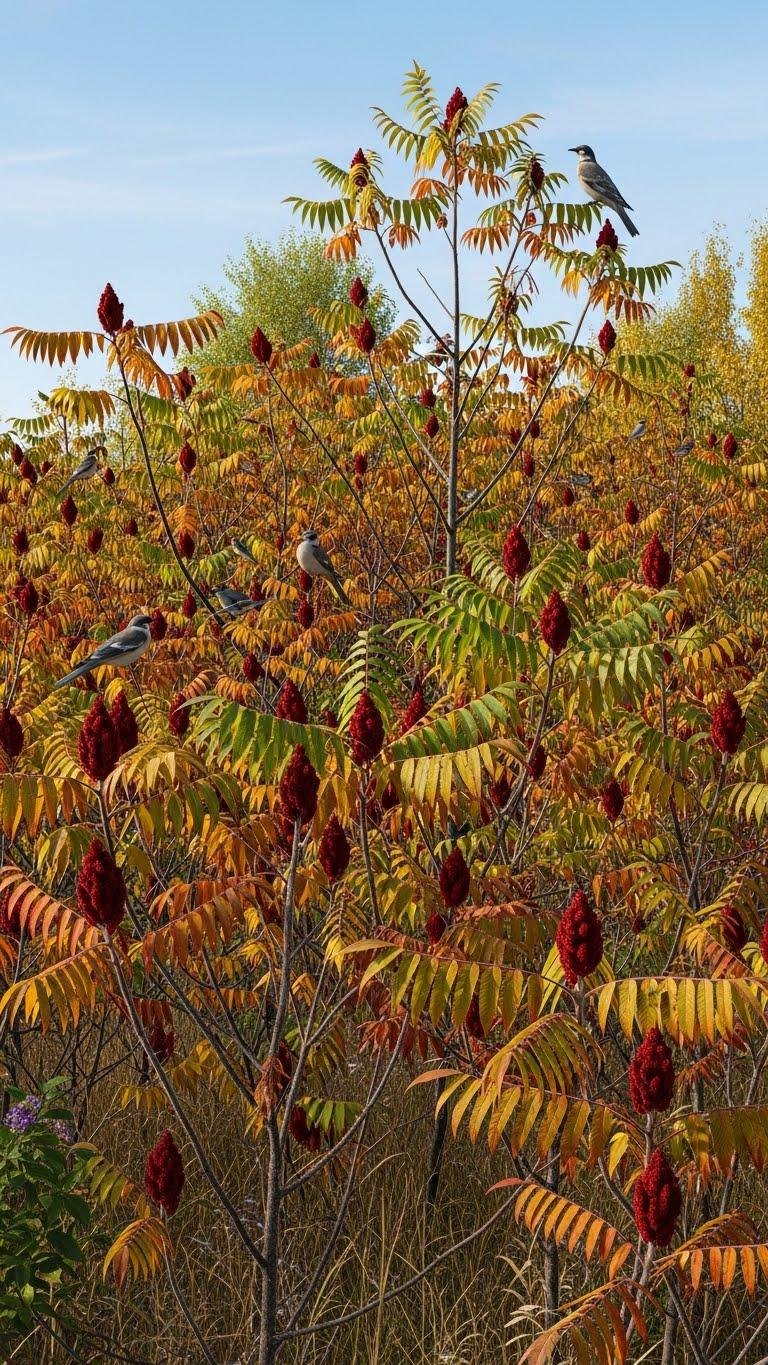
Just as hackberry supplies summer fruit and structural habitat, sumacs (Rhus spp.) offer a different seasonal resource profile that benefits birds across the year. You’ll plant dense colonies that create wildlife shelter, nesting sites, and food in fall and winter. Their native adaptation supports local biodiversity, and traditional medicinal uses inform respectful management. You’ll rely on these shrubs for resilient, freedom-minded conservation.
American Beautyberry (Callicarpa Americana)
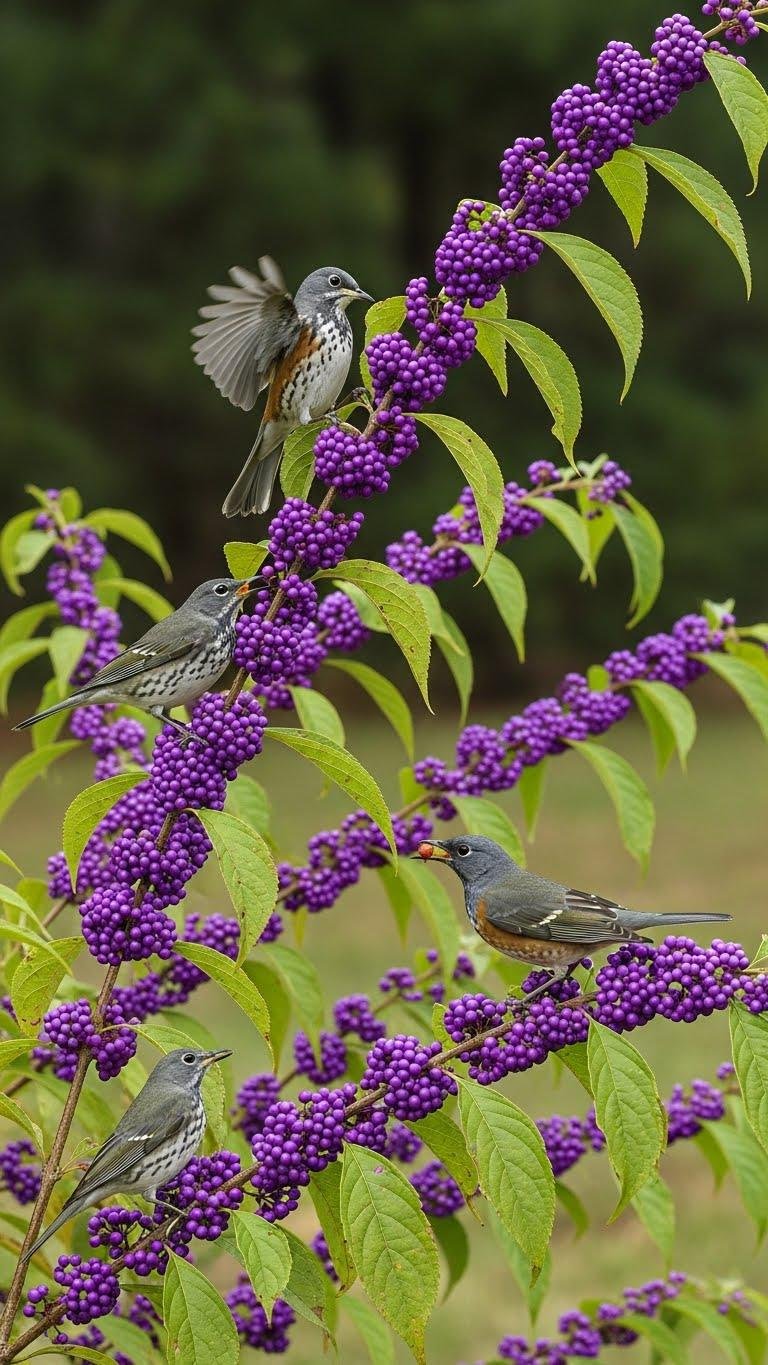
Often overlooked, American beautyberry (Callicarpa americana) reliably supports songbirds and migrating thrushes with its striking clusters of violet berries from late summer into winter. You’ll observe clear wildlife interactions as birds feed and disperse seeds.
In managed yards across the Southeast, follow cultivation tips: plant in partial shade, make certain well-drained soil, avoid pesticides, and let fruits persist to maximize conservation value and seasonal freedom.
Northern Bayberry (Myrica Pensylvanica)
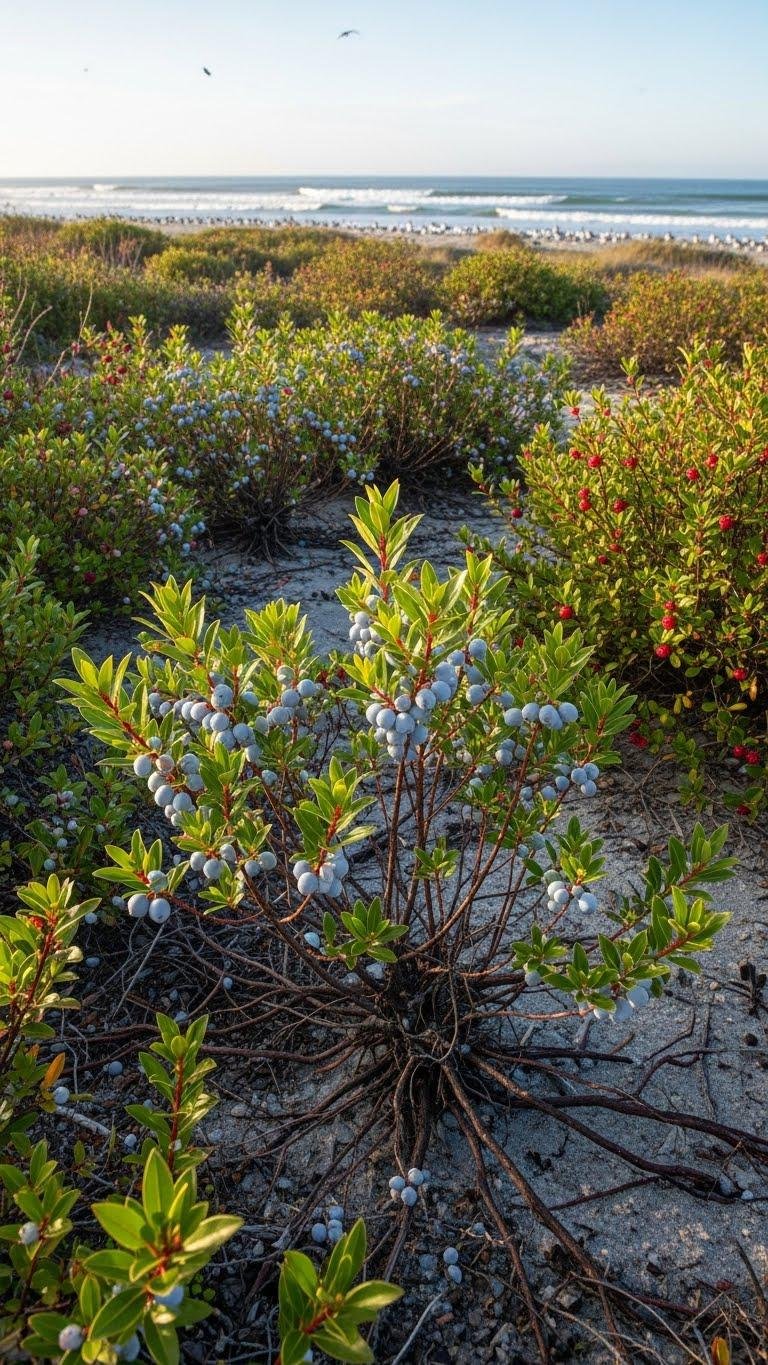
Moving from the chaparral and coastal scrub species like Toyon, Hollyleaf Cherry, and Coffeeberry, you’ll find Northern Bayberry (Myrica pensylvanica) occupies cooler, salt‑influenced uplands and sandy shorelines across northeastern North America where it provides complementary habitat values.
You’ll plant it to enhance wildlife shelter, forage continuity, and erosion control; its notable salt tolerance and nitrogen‑fixing root associations support resilient, freedom‑oriented coastal restoration.
Coral Honeysuckle (Lonicera Sempervirens)

If you liked how trumpet creeper draws hummingbirds to vertical structures, coral honeysuckle (Lonicera sempervirens) offers a less aggressive alternative that still supports pollinators along fence lines, forest edges, and riparian corridors.
You’ll plant native vines that provide measured hummingbird attraction and dependable vertical support without invasiveness. Manage placement for habitat connectivity, conserve nectar sources, and let birds access freedom in restored, resilient landscapes.
Cardinal Flower (Lobelia Cardinalis)
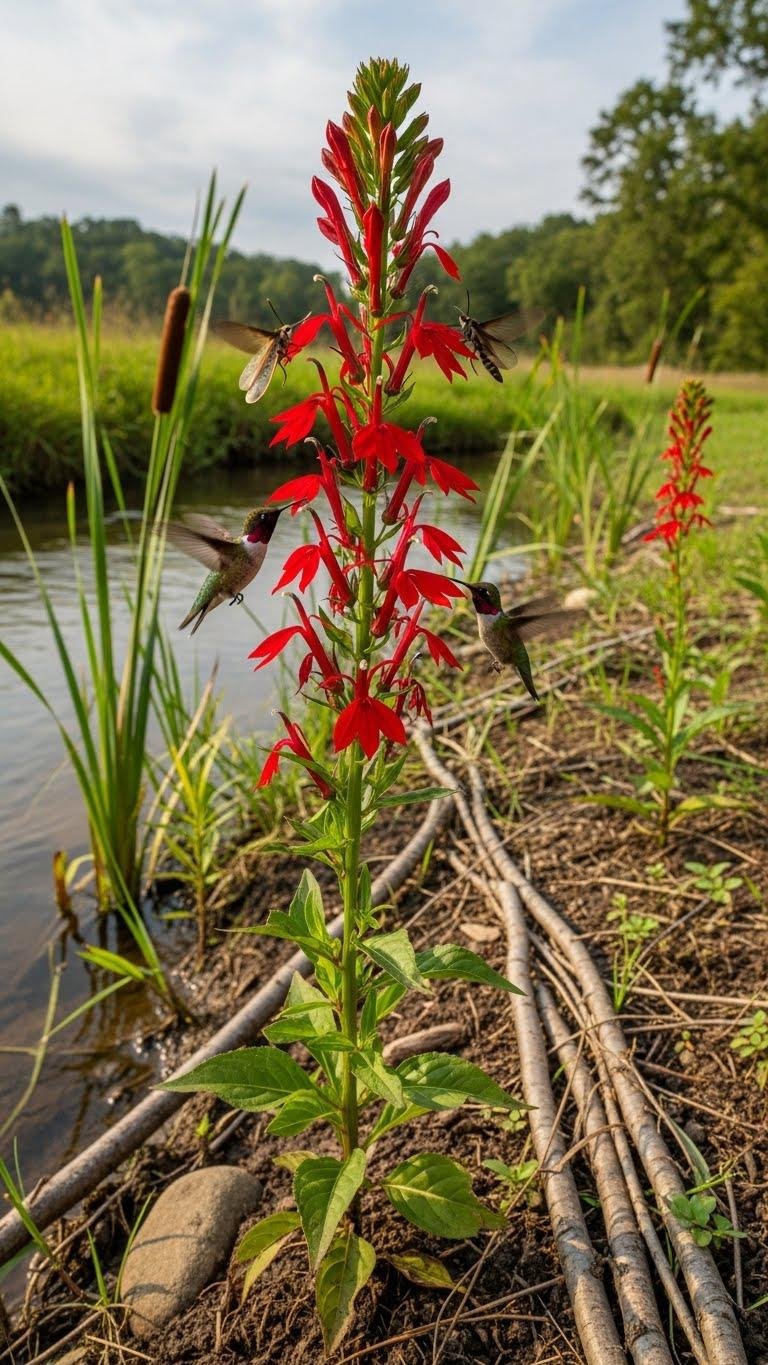
Frequently overlooked in casual plantings, cardinal flower (Lobelia cardinalis) is a native, wetland‑loving perennial that delivers intense red tubular blooms precisely when hummingbirds and specialized pollinators need high‑quality nectar.
You can use it in habitat restoration to boost localized nectar production, stabilize riparian edges, and support seasonal bird movements; cultivate in moist soils, preserve hydrology, and let natural processes guide resilient, freedom‑centered landscapes.
Bee Balm (Monarda Spp.)
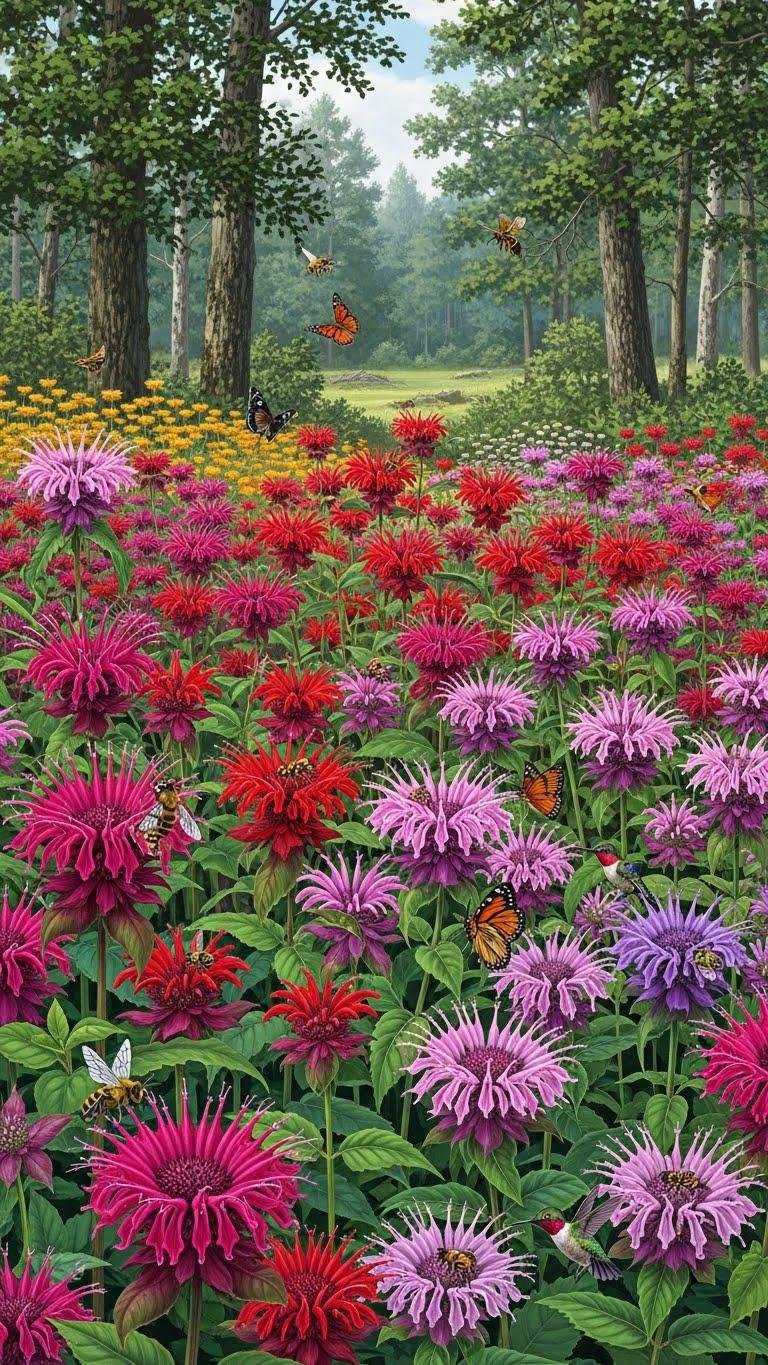
Commonly found in meadow margins and moist open woods, bee balm (Monarda spp.) offers dense clusters of tubular flowers that you can plant to attract bees, butterflies, and hummingbirds while enhancing pollinator network resilience.
You’ll manage sun, soil moisture, and spacing to support pollinator attraction and genetic diversity; choose heritage cultivars to preserve local ecotypes and enable wild birds to thrive within liberated, conserved landscapes.
Penstemon (Penstemon Spp.)
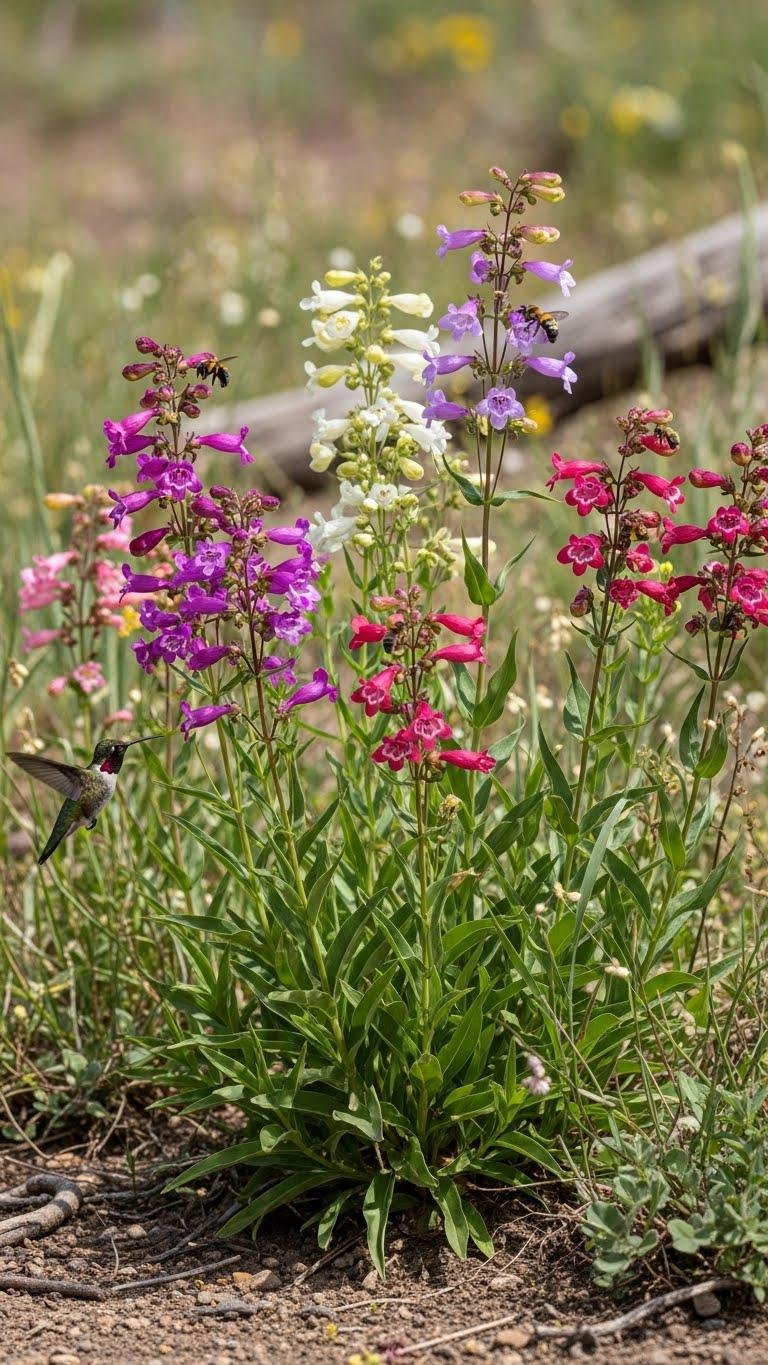
Like bee balm, penstemons anchor meadow edges and open woods but favor drier, well-drained soils and sunnier microsites, so you’ll plant them where moisture tapers and soil texture shifts.
You’ll observe hummingbird and specialized bee visits; note Pollinator preferences vary by species. Their native provenance supports local fauna, and Drought tolerance lets you conserve water while restoring habitat and maintaining movement corridors for wild birds.
Coneflowers (Echinacea Spp.)
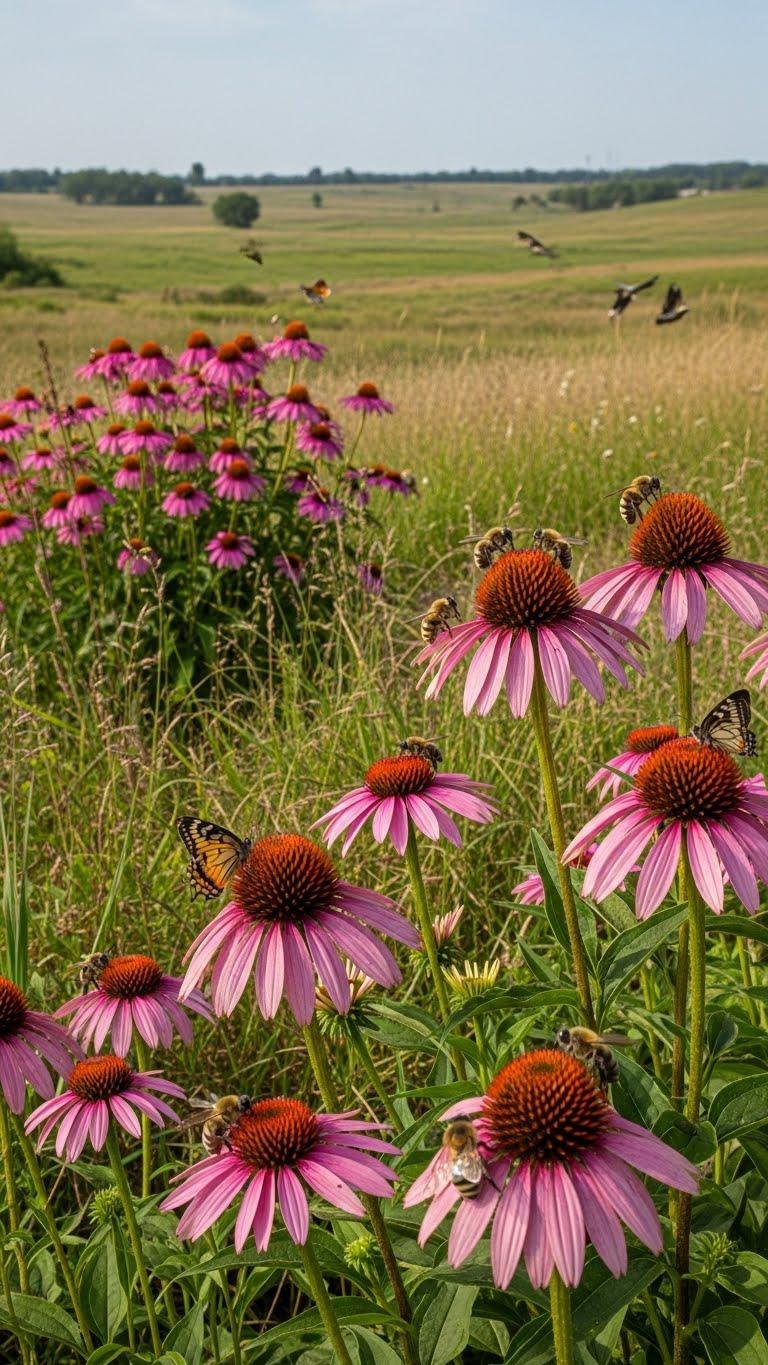
Look for coneflowers (Echinacea spp.) in sunny, open prairie edges and degraded grasslands where well-drained soils and periodic disturbance keep woody encroachment at bay. You’ll value their role in pollinator habitat: nectar attracts bees and butterflies, while seed persistence supports birds through winter. Manage patches with fire or mowing mimicry to maintain open conditions, conserve local genotypes, and promote resilient, place-based populations.
Black‑Eyed Susan (Rudbeckia Hirta)
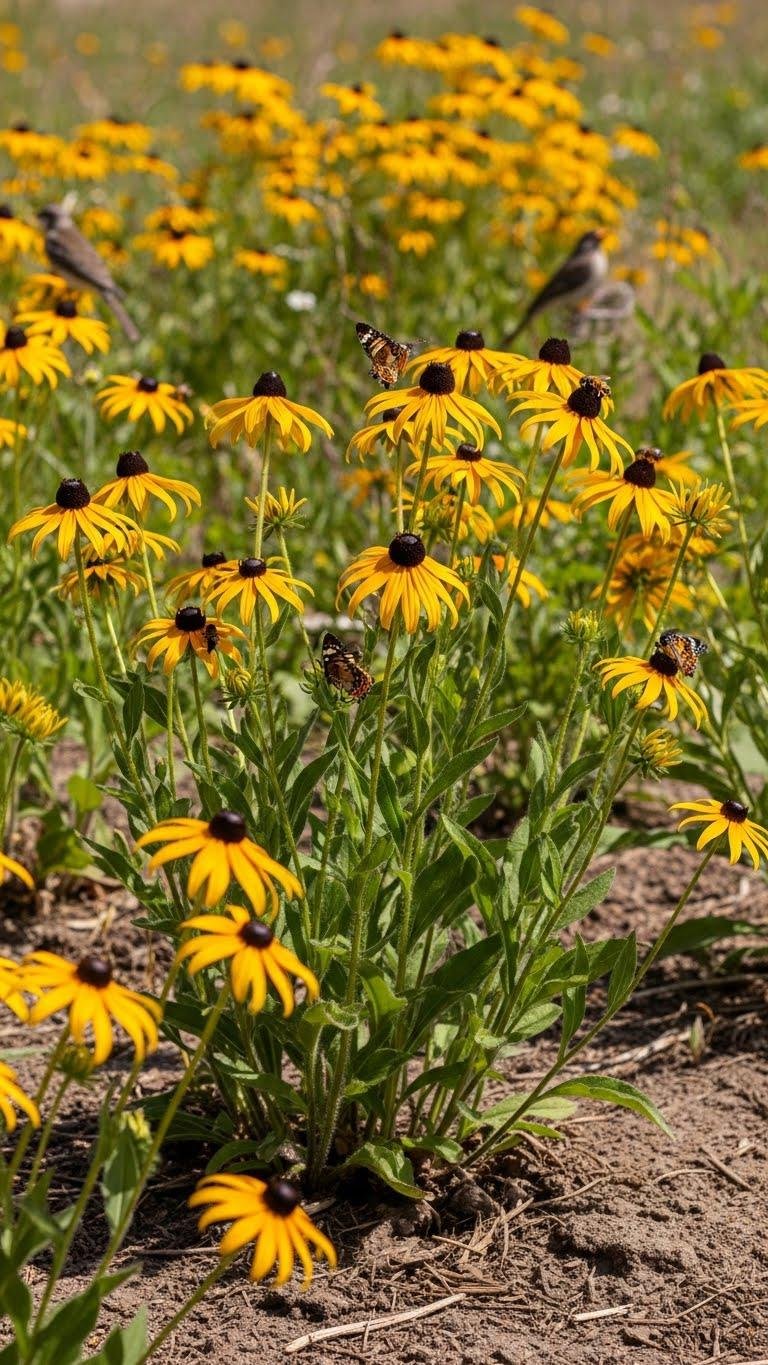
Spot Rudbeckia hirta—black‑eyed Susan—in sunny, disturbed openings, roadside verges, and prairie edges where its drought‑tolerant roots and coarse-textured leaves thrive on well‑drained soils. You’ll favor its robust blooms for pollinator habitat; birds and insects use nectar and later seed heads.
Manage patches to promote natural seed dispersal and resilient local populations, conserving open landscapes and seasonal resource freedom.
Goldenrod and Asters
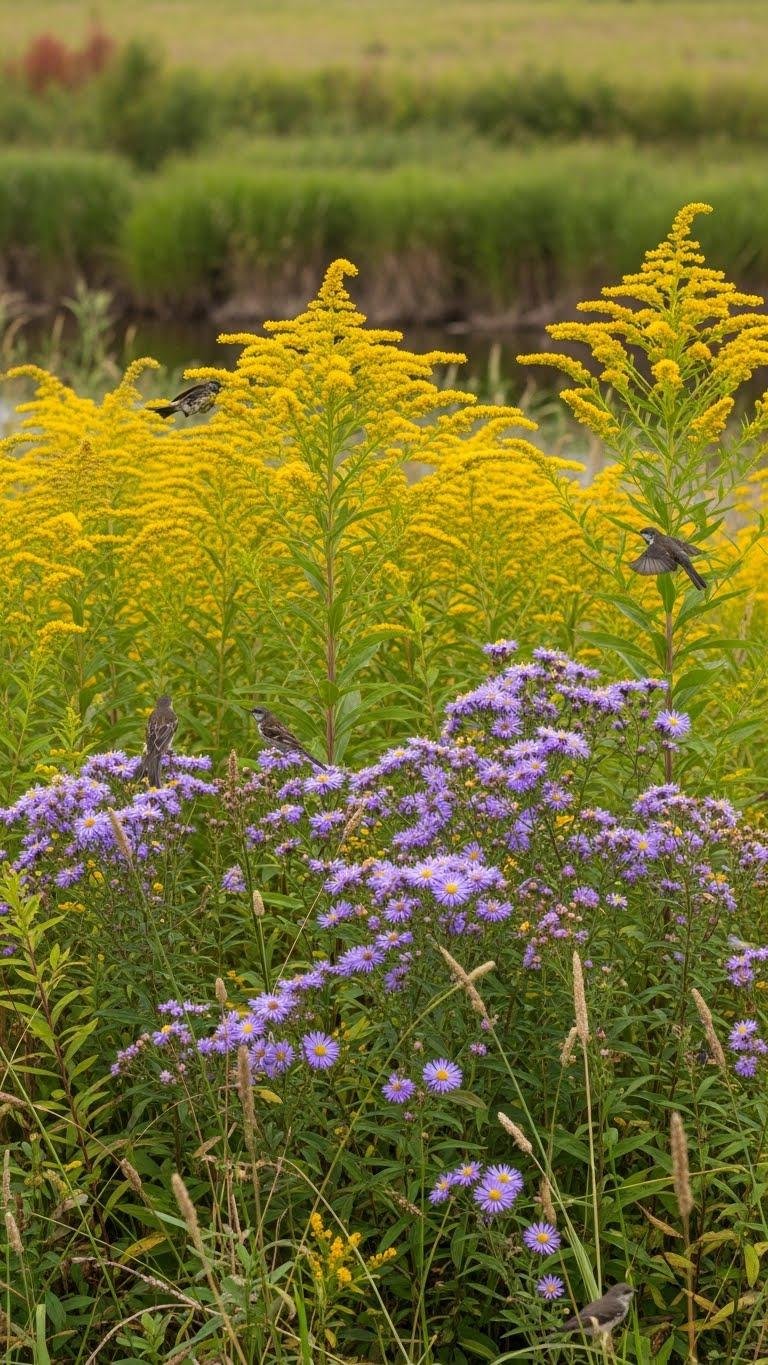
When you plant native goldenrods (Solidago spp.) and asters (Symphyotrichum spp.) along meadow edges and riparian margins, they extend the flowering season from late summer into fall and sustain migrating and resident songbirds through declining insect abundance.
You’ll create late-season nectar sources and contiguous Pollinator corridors that bolster local food webs, support insectivores, stabilize seed availability, and preserve landscape-scale freedom for avian movements.
Milkweed (Asclepias Spp.)
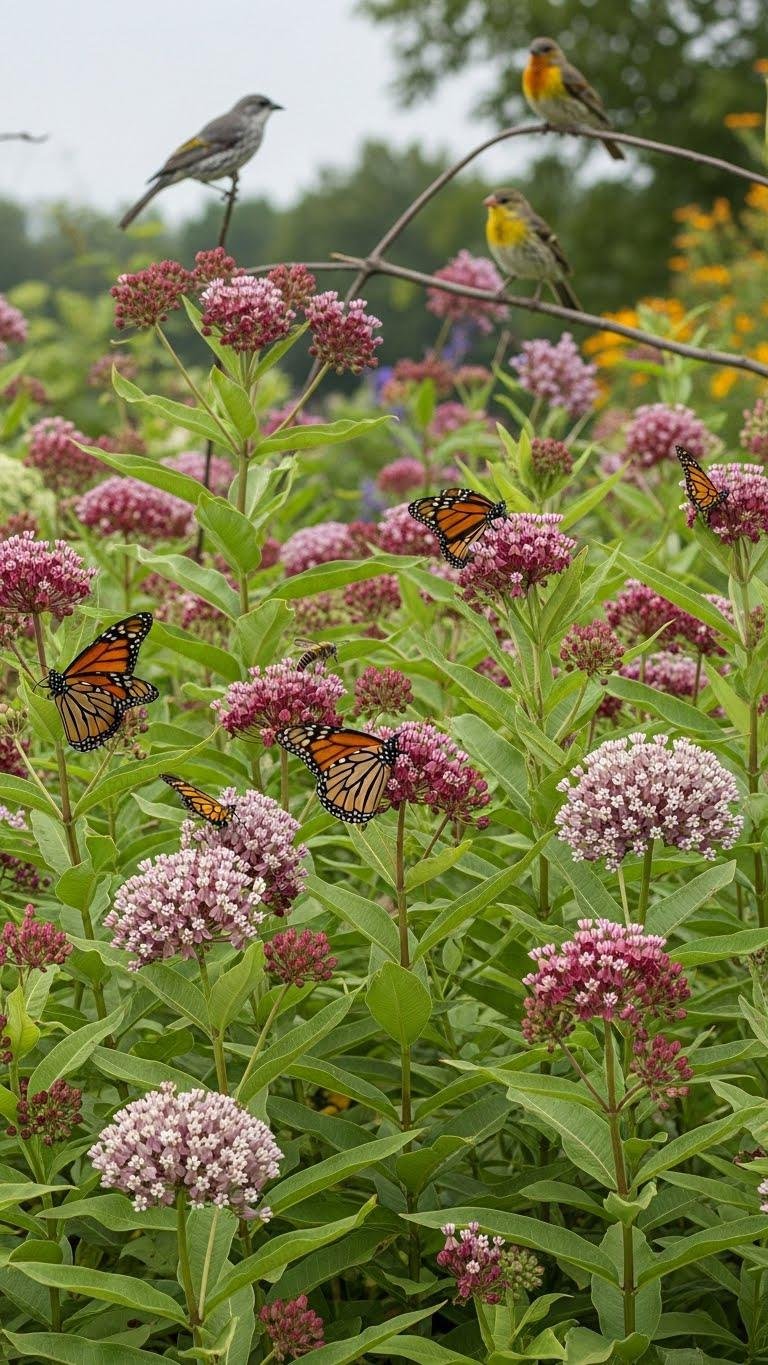
Many species of milkweed (Asclepias spp.) anchor pollinator networks and provide critical larval host and adult nectar resources for monarchs, bees, and a suite of native insects that, in turn, feed songbirds and other wildlife.
You’ll plant milkweed to restore monarch habitat, support pollination services, and tolerate sap sucking insects that attract predators. Manage stands locally to maximize diversity and seasonal freedom for wildlife.