
You can create a vibrant butterfly oasis that keeps color and nectar coming from spring into fall by planting the right mix of natives and ornamentals. Include host plants like milkweeds and butterfly weed for caterpillars, long‑blooming nectar sources like coneflowers, salvias, and verbena, and structural grasses or shrubs for perching and shelter—this list of 25 species will help you attract, support, and enjoy more butterflies all season long, and there’s a smart planting plan to follow next.
Butterfly Weed (Asclepias Tuberosa)
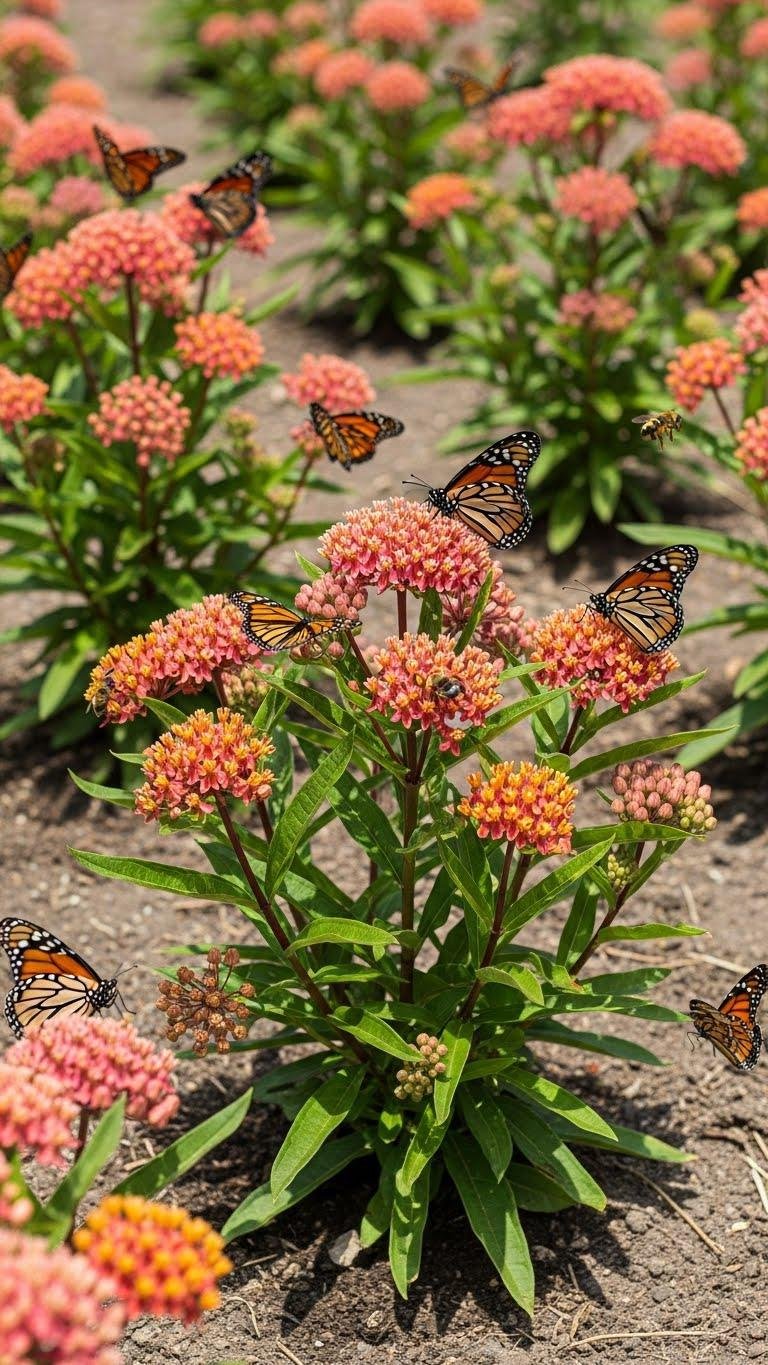
Often overlooked, butterfly weed (Asclepias tuberosa) is a compact, sun-loving perennial that’ll instantly attract monarchs and many other pollinators to your garden.
You’ll learn precise rooting techniques to establish strong plants and create pollinator habitat that supports larvae and adults.
Plant in free-draining soil, give full sun, and space for airflow; you’ll enjoy vibrant blooms and resilient, low-maintenance colonies.
Common Milkweed (Asclepias Incarnata)
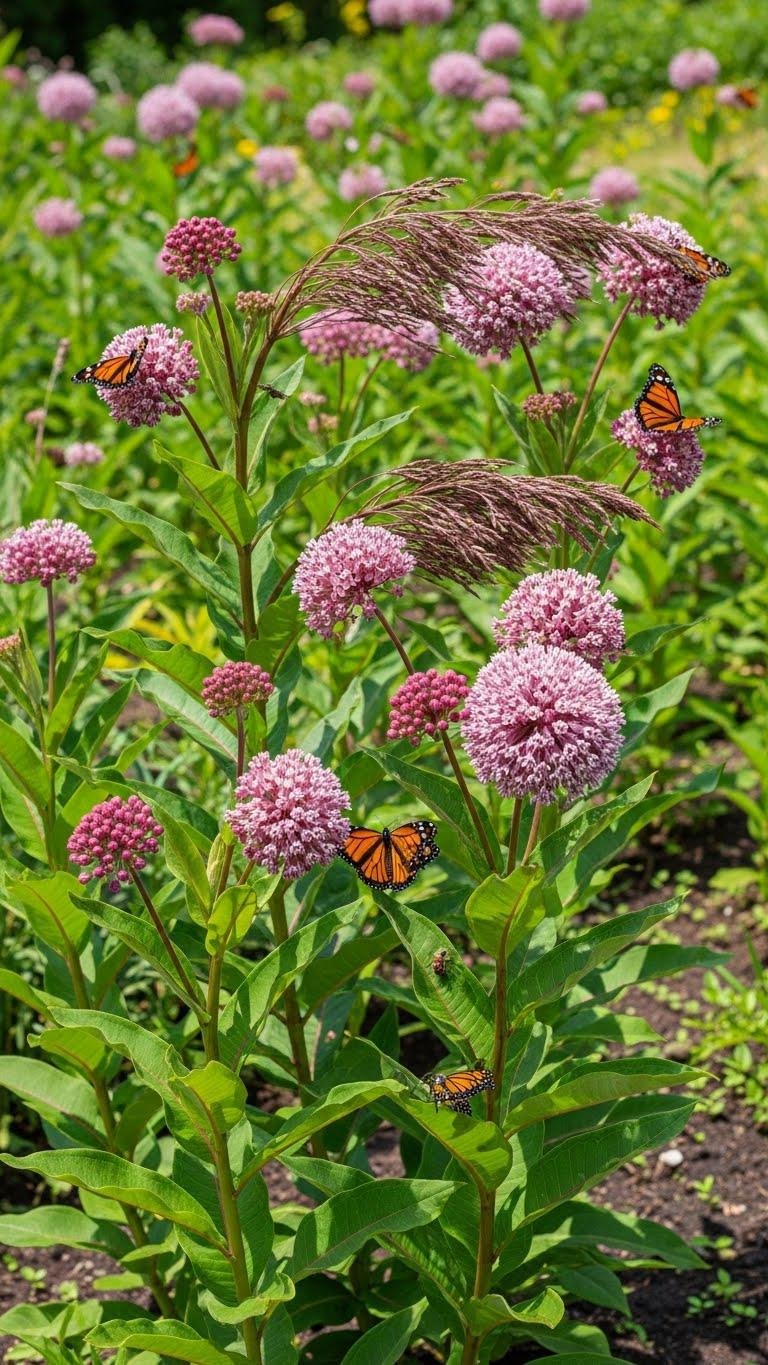
Plant common milkweed (Asclepias incarnata) where soil stays moist and sunlight is plentiful, and you’ll quickly notice its tall, fragrant clusters of pink to mauve flowers drawing monarchs, bees, and other pollinators.
You’ll create valuable Monarch habitat and support larvae while managing Nectar timing by staggering blooms. Plant confidently, let stems sway, and watch butterflies claim a wild, free landscape.
Coneflower (Echinacea)
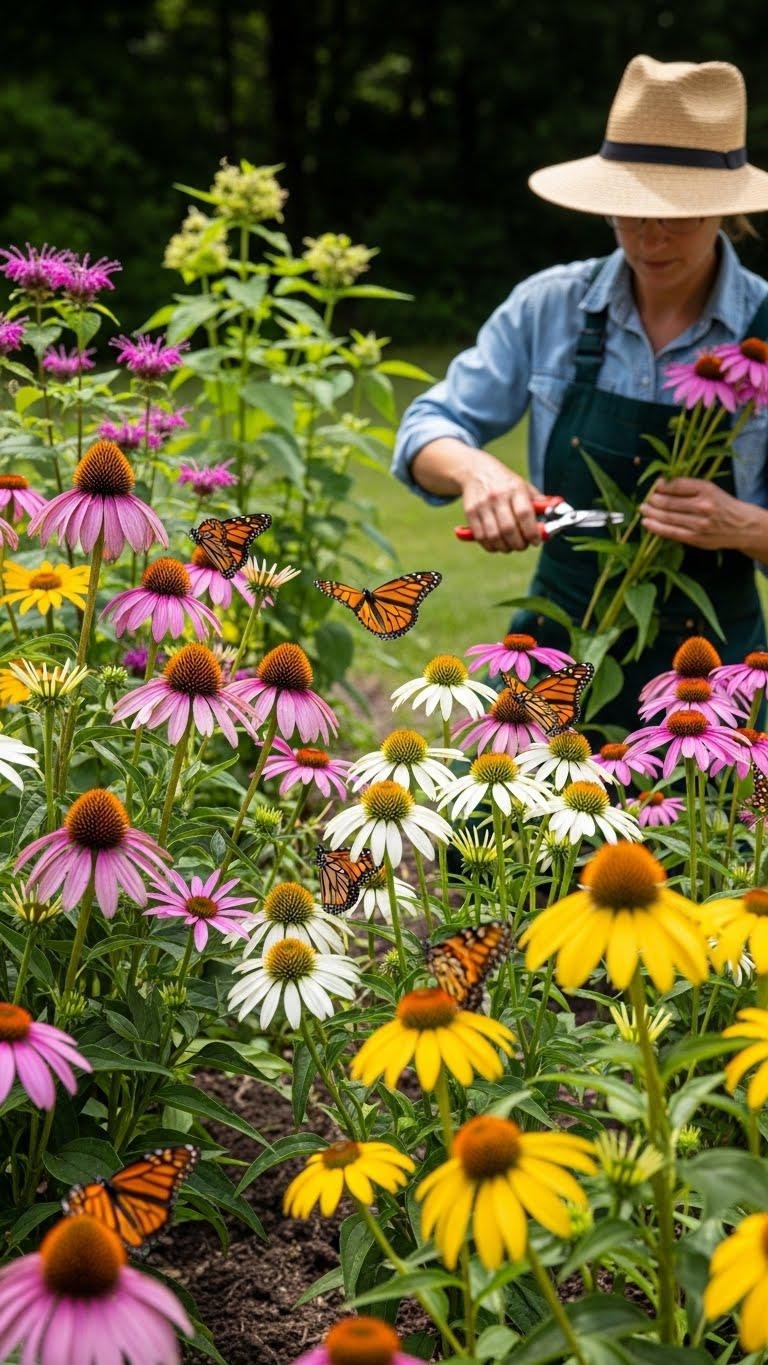
After you’ve established milkweed for monarchs, add coneflowers (Echinacea) to broaden nectar sources through summer and into fall. You’ll attract butterflies with long-lasting blooms, support pollinator health, and create resilient habitat.
Choose locally appropriate varieties and practice native propagation to keep genetics regional. Plant in sunny, well-drained spots, deadhead selectively, and enjoy vibrant, low-fuss color that frees your garden to flourish.
Joe Pye Weed (Eupatorium)
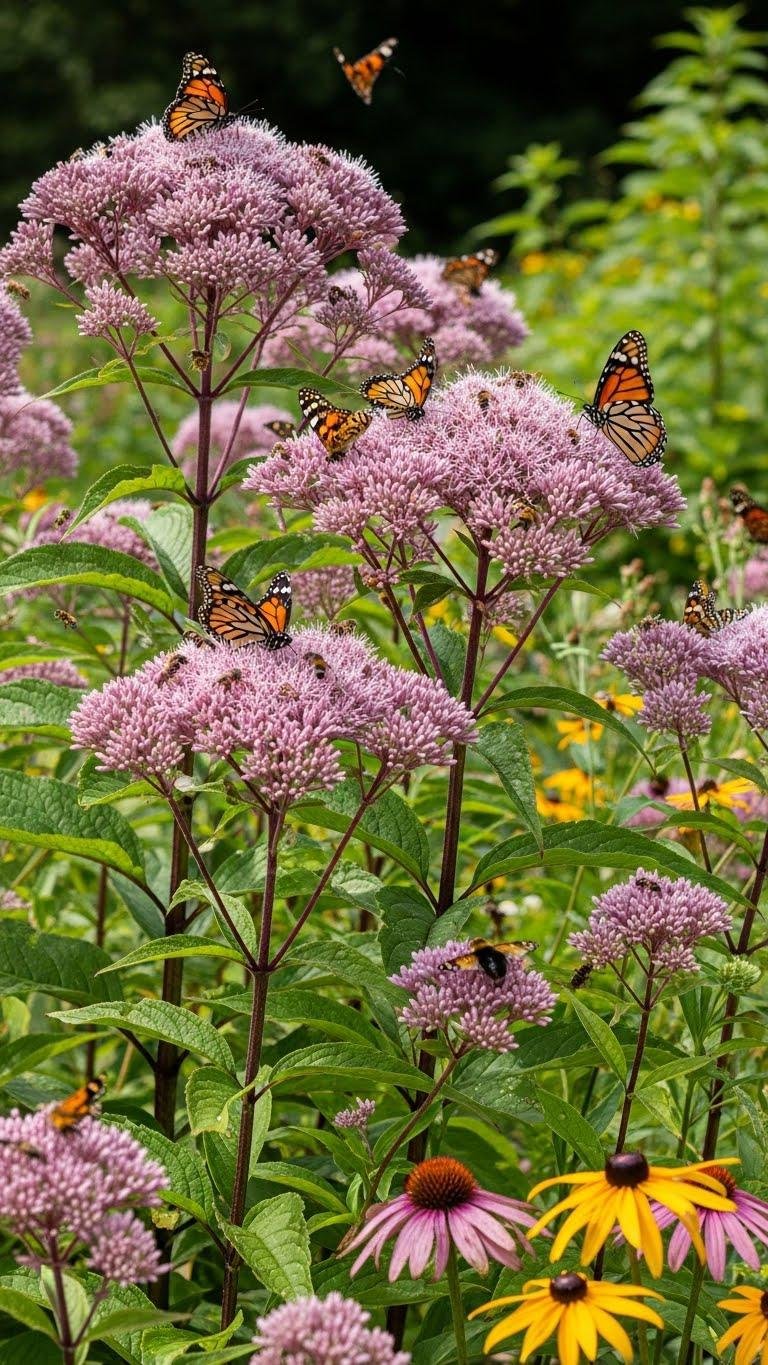
Bring towering, fragrant blooms to your butterfly patch with Joe Pye Weed (Eupatorium), a late-summer favorite that reliably draws a procession of butterflies, bees, and other pollinators. You’ll plant it for bold height, nectar-rich flower clusters, and sturdy stems.
Promote native propagation to expand local pollinator habitat, choose moist sunny sites, and let this free-spirited perennial anchor your liberated garden design.
Goldenrod (Solidago)
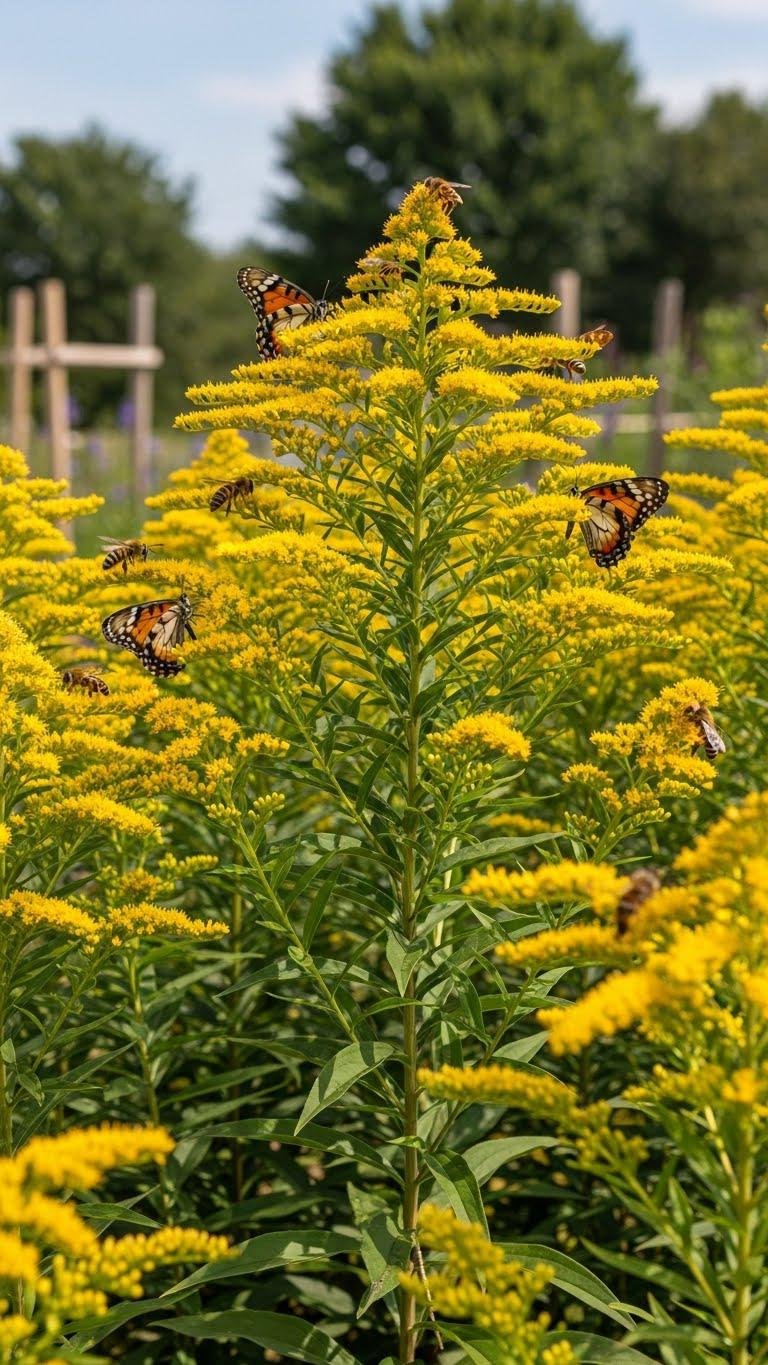
Gold-plated spikes of late-season flowers, goldenrod (Solidago) lights up fall gardens and fuels migrating butterflies and bees when other nectar sources fade.
You’ll appreciate its toughness: tolerate poor soil, full sun, and crowds of pollinators. Use goldenrod in habitat restoration projects and try seed propagation or division to expand stands.
Plant confidently—this native invites life and seasonal freedom.
Zinnia
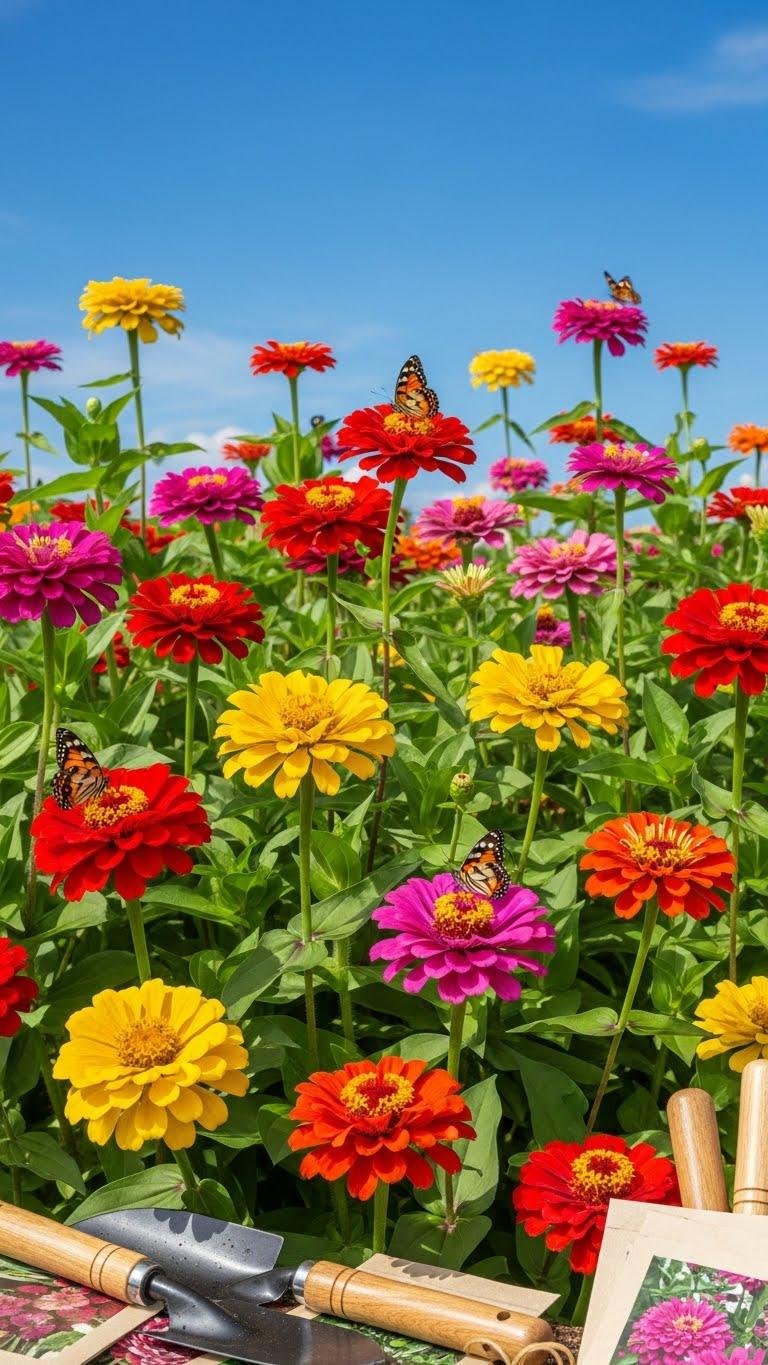
Plant zinnias for an instant butterfly magnet—these heat-tolerant annuals produce bright, daisy-like blooms all summer into fall, giving butterflies and other pollinators a dependable nectar source when many perennials slow down.
You’ll choose zinnia varieties for color, height, and bloom form, plant in full sun, deadhead to prolong flowering, and practice seed saving to preserve preferred traits for future free, bold gardens.
Verbena
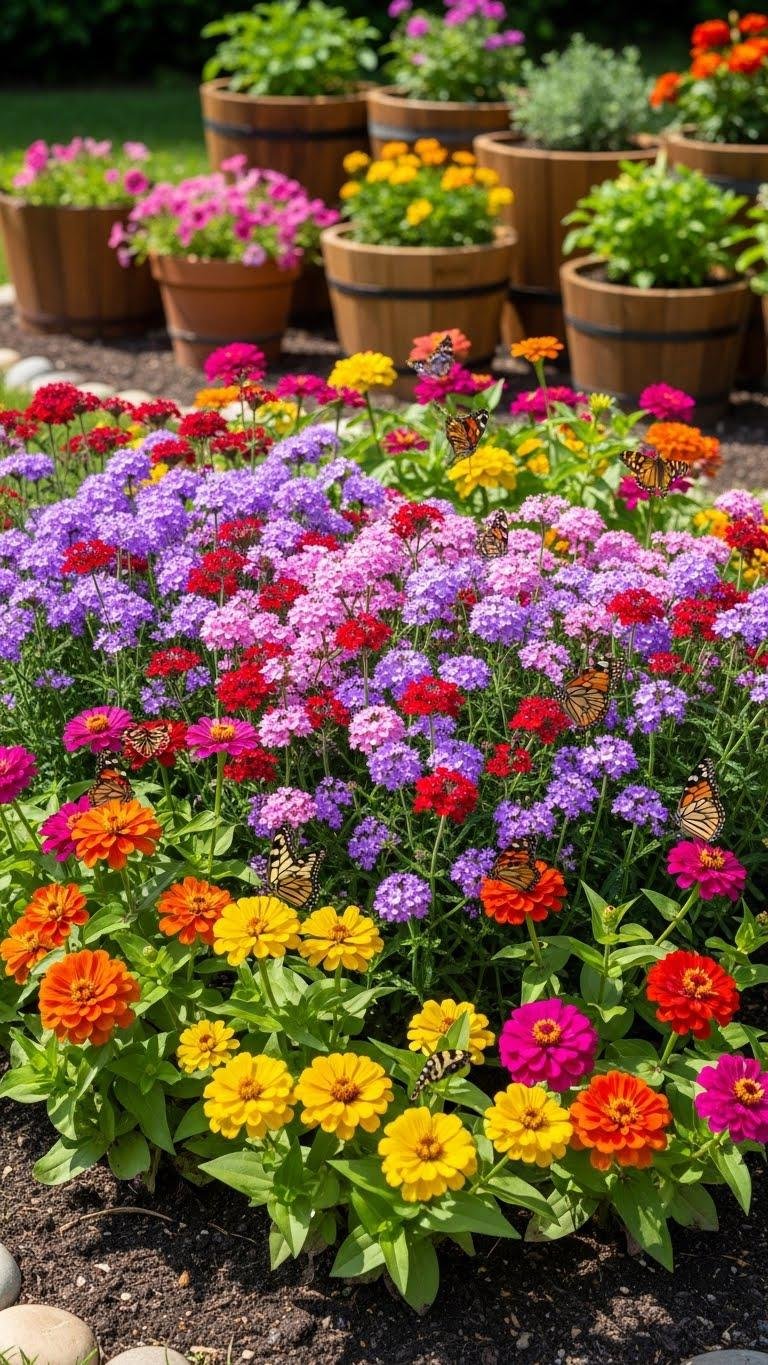
If you love zinnias for nonstop color, you’ll find verbena a perfect complement—these low-maintenance plants fill in gaps with airy clusters of tiny, nectar-rich flowers that attract butterflies by the dozen.
You’ll encourage pollinator behavior by planting verbena in sunny, well-drained spots or in container gardening setups. They rebloom with minimal fuss, letting you roam freely while supporting vibrant butterfly activity.
Salvia
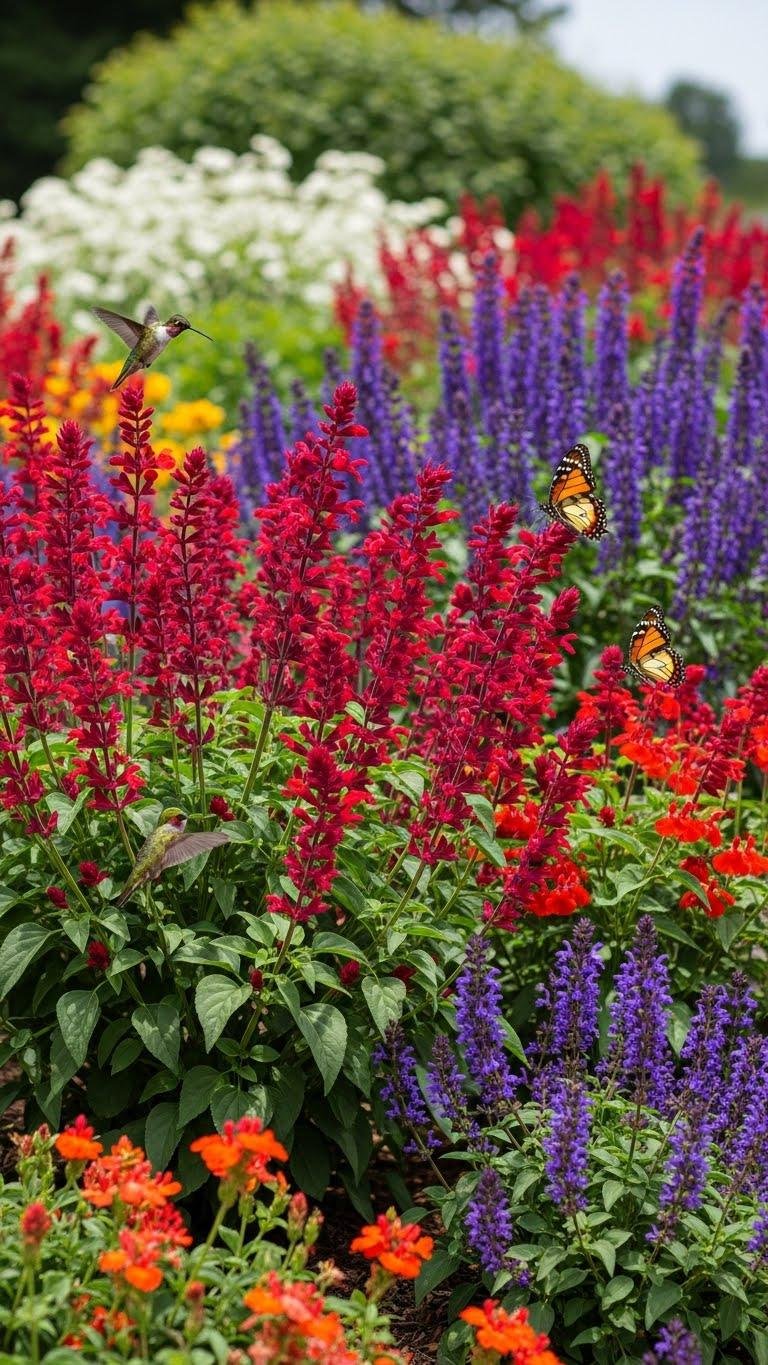
Attract hummingbirds and butterflies with salvia, a sun-loving perennial that delivers spikes of vivid, nectar-rich blooms through summer and into fall.
You’ll choose salvia varieties to match color, size and drought tolerance; they’re low-maintenance and free you to garden boldly.
Watch pollinator preferences — tubular red and purple types lure hummingbirds, while broader blooms attract bees and butterflies for continuous, vibrant visits.
Sunflower (Helianthus)
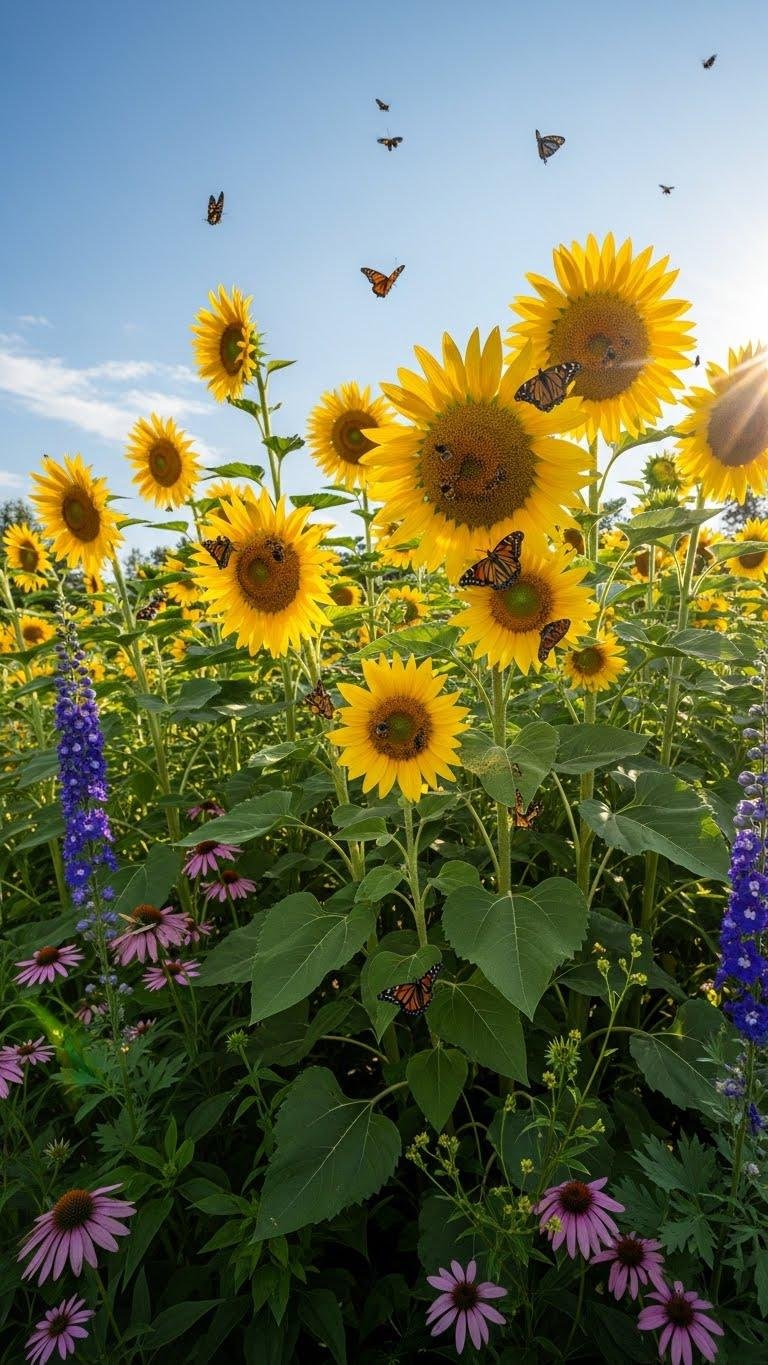
Sunflowers (Helianthus) are bold, sun-loving perennials and annuals that give your garden instant drama with towering stalks and large, nectar-rich flower heads that butterflies and other pollinators can’t ignore.
You’ll choose native varieties for resilience, plant in full sun, and rely on straightforward seed propagation. They attract butterflies, support pollinator freedom, and deliver reliable, joyful color with minimal fuss.
Lavender (Lavandula)
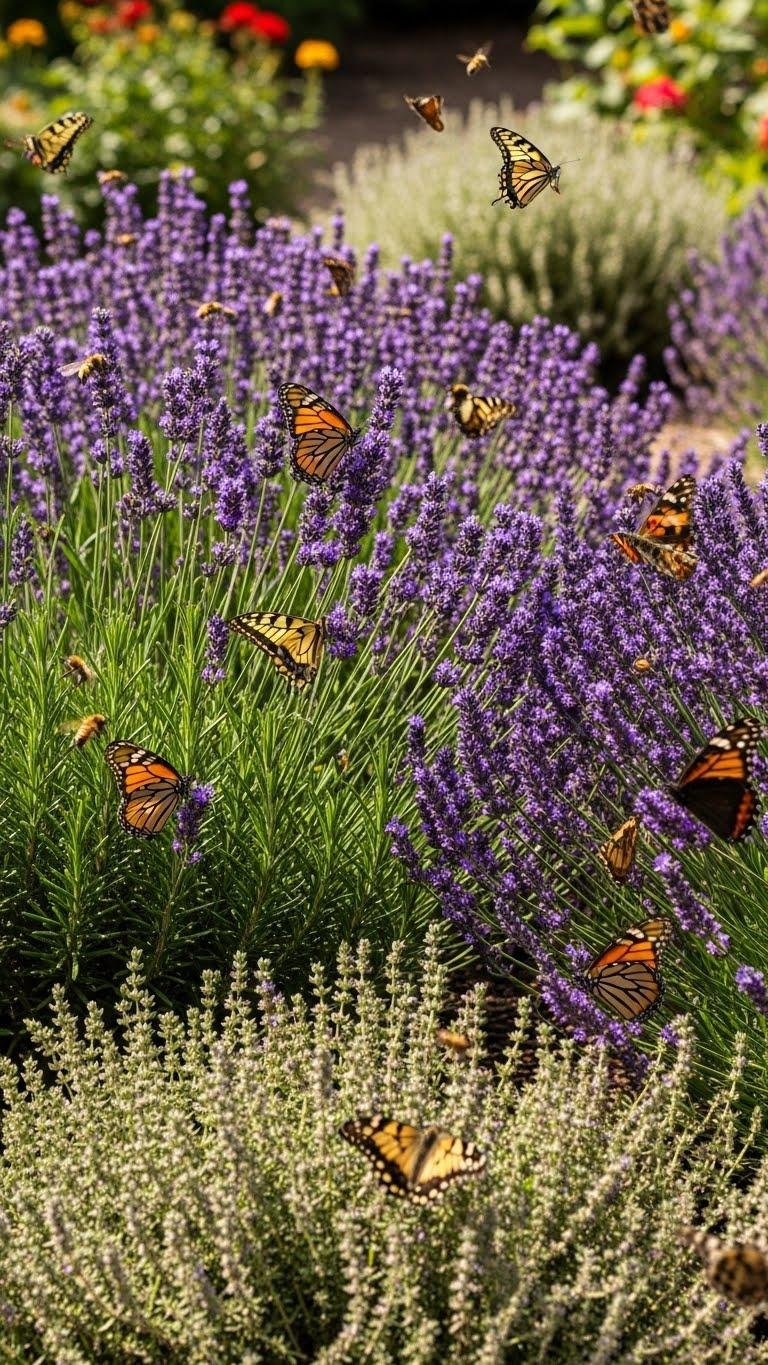
Fragrant and hardy, lavender (Lavandula) brings elegant color, calming scent, and year-round structure to butterfly gardens, and you’ll find its nectar especially irresistible to many butterflies and bees.
You’ll plant it for fragrance pairing with rosemary or thyme, appreciate its drought tolerance, and enjoy low-maintenance pruning tips. Grow it in full sun, lean soil, and watch pollinators flock to your liberated, aromatic haven.
Little Bluestem (Schizachyrium Scoparium)
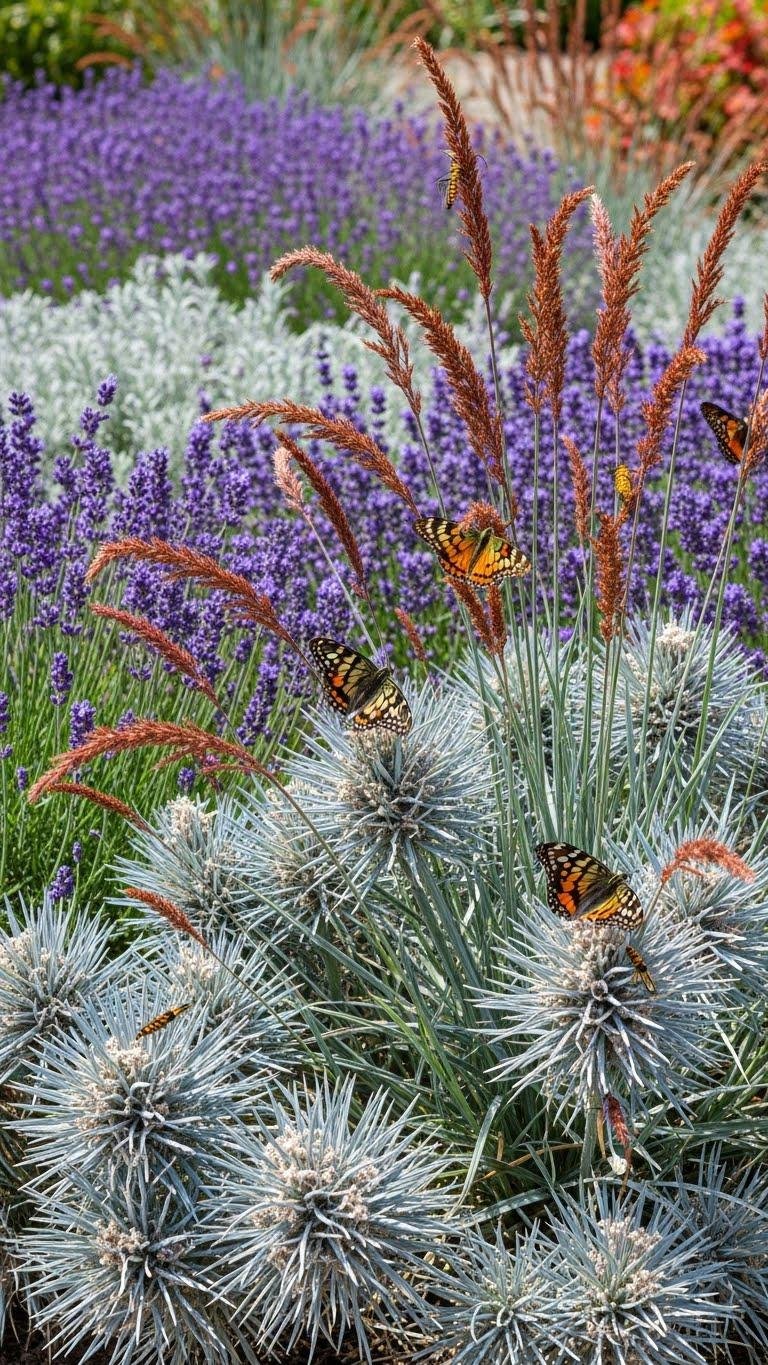
After planting lavender’s aromatic anchors, add Little Bluestem to give your butterfly garden long-lasting texture and movement; this native warm-season grass offers steel-blue foliage that turns coppery-red in fall, providing seasonal contrast that butterflies and beneficial insects use for cover and perching.
You’ll encourage habitat restoration and seed propagation, choose well-drained sites, and enjoy resilient, low-maintenance beauty that invites free-ranging pollinators.
Prairie Dropseed (Sporobolus Heterolepis)
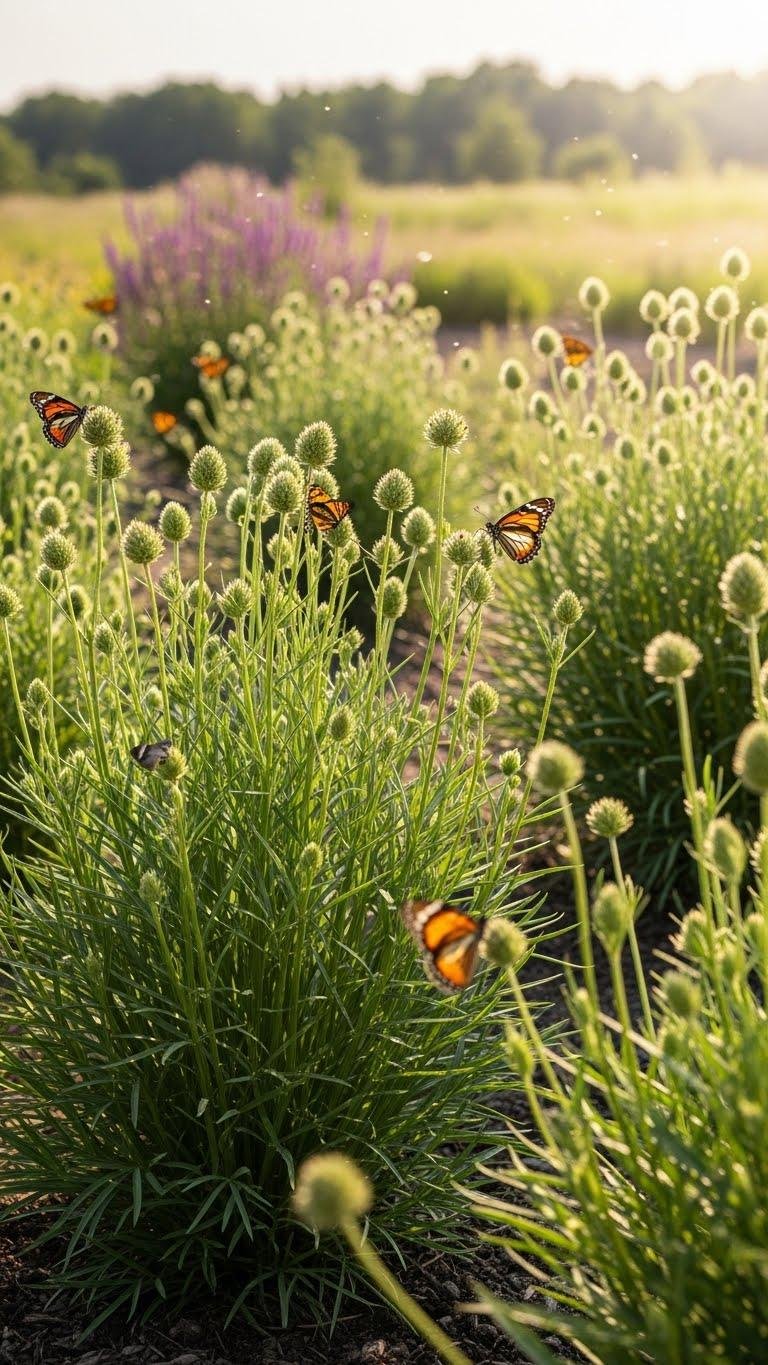
One of the most elegant native grasses you can add to a butterfly garden is prairie dropseed (Sporobolus heterolepis), prized for its fine-textured, fountain-like clumps of green foliage that perfume the air with a subtle, nutty scent when warmed by sun.
You’ll use it for habitat restoration, attract pollinators, and encourage resilient landscapes; observe proper seed germination techniques for best results.
Side-Oats Grama (Bouteloua Curtipendula)
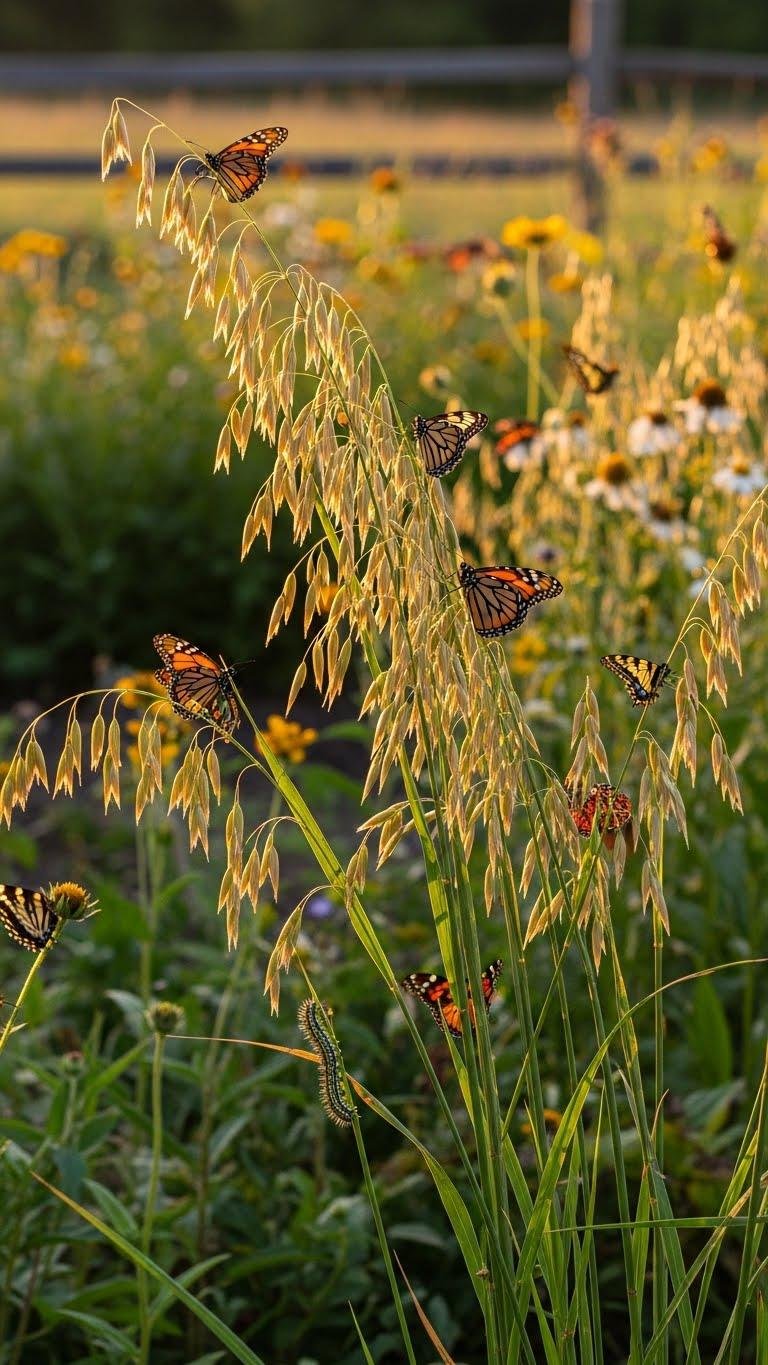
Where prairie dropseed offers fine texture and a gentle scent, side-oats grama (Bouteloua curtipendula) brings a striking architectural rhythm to a butterfly garden with its graceful, dangling seed-rows and warm golden tones.
You’ll welcome this resilient native grass for habitat, low maintenance, and reliable seed dispersal that feeds caterpillars and seeds new colonies, letting your landscape stay wild, free, and boldly alive.
June Grass (Koeleria Macrantha)
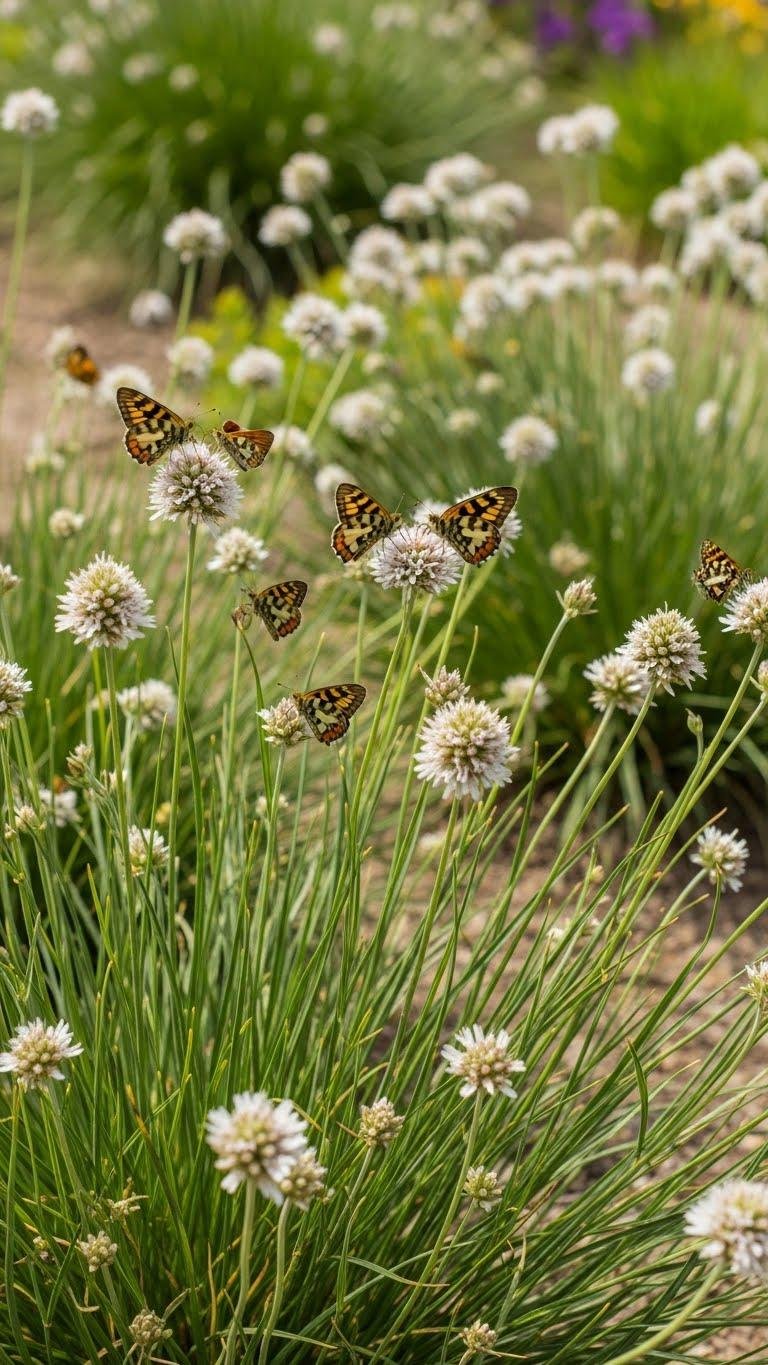
Although it’s modest in stature, June grass (Koeleria macrantha) punches above its weight in butterfly gardens with fine, tufted foliage and airy flower heads that open in late spring, providing early-season nectar and landing platforms for smaller butterflies and skipper species.
You’ll appreciate its drought tolerance, easy maintenance, and how simple seed collection lets you spread freedom-loving clumps across sunny, well-drained slopes.
Golden Alexanders (Zizia Aurea)
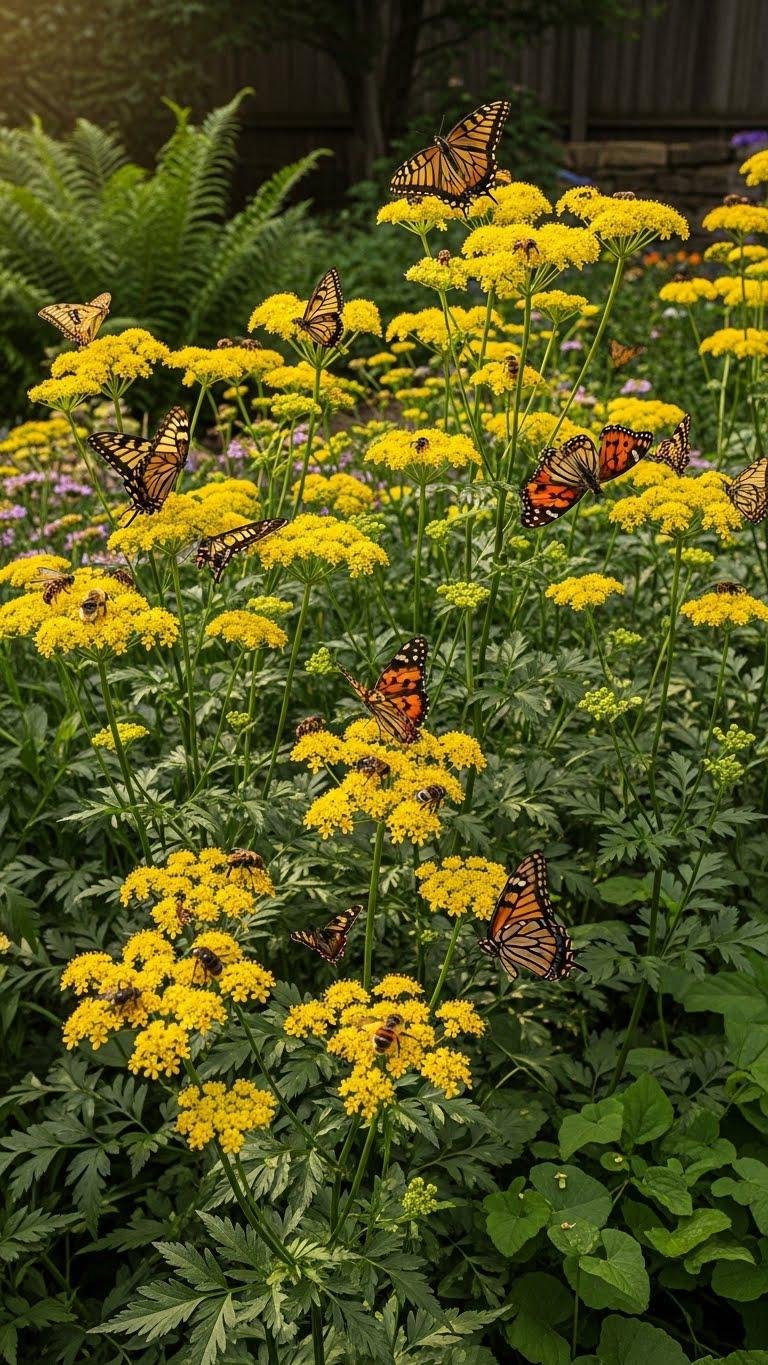
Often planted by native-plant gardeners, Golden Alexanders (Zizia aurea) is a reliable early-season nectar source that attracts a wide variety of butterflies and beneficial insects.
You’ll appreciate its airy yellow umbels, easy native propagation, and strong pollinator attraction. Plant it in sun to part shade, let it naturalize, and enjoy resilient, low-maintenance color that supports freedom-loving wildlife and your garden’s ecological goals.
Wild Bergamot (Monarda Fistulosa)
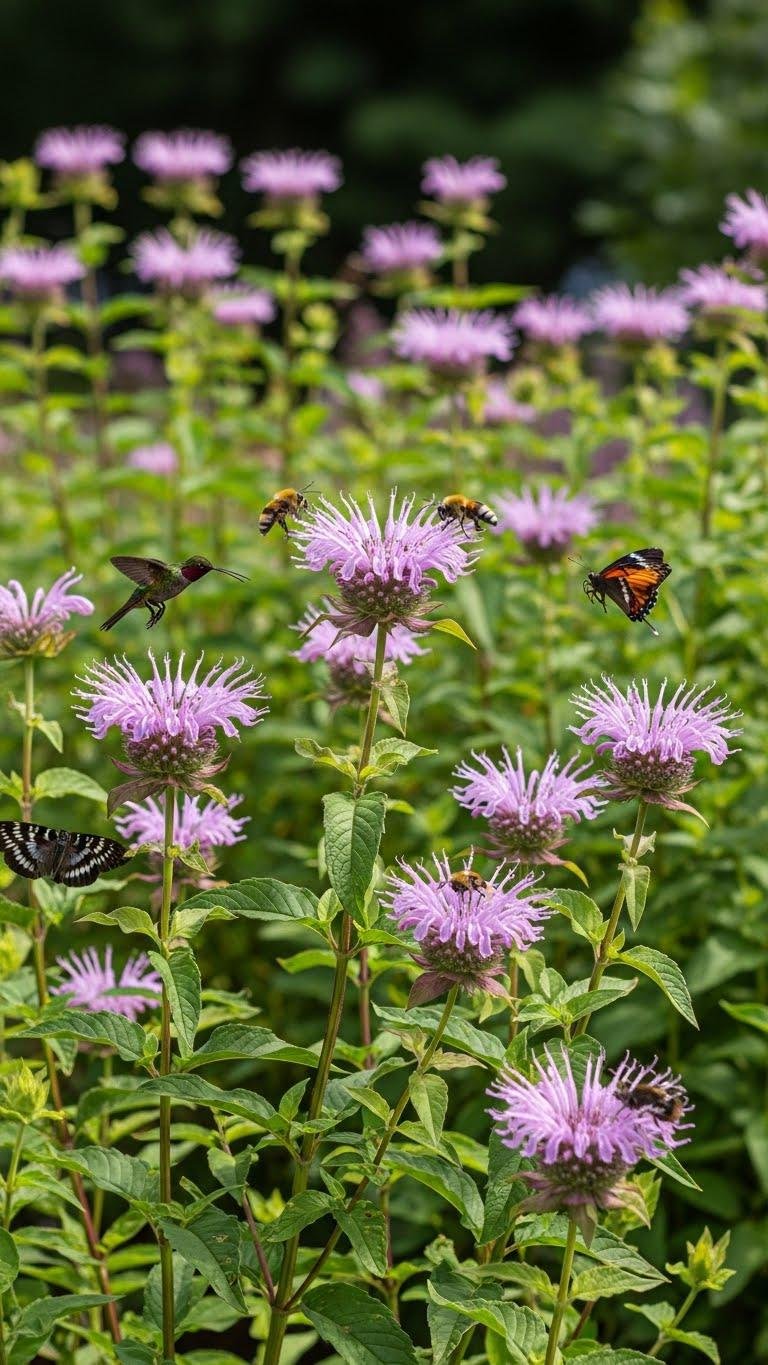
Wild bergamot (Monarda fistulosa) reliably draws hummingbirds, bees, and butterflies to your garden with its shaggy lavender to pink flower heads and fragrant, minty foliage.
You’ll welcome native pollinators and relish low-maintenance, drought-tolerant growth. Plant it in sun to part shade, deadhead for longer bloom, and explore traditional medicinal uses responsibly — it’s hardy, free-spirited, and excellent for wildlife-friendly landscapes.
Hoary Vervain (Verbena Stricta)
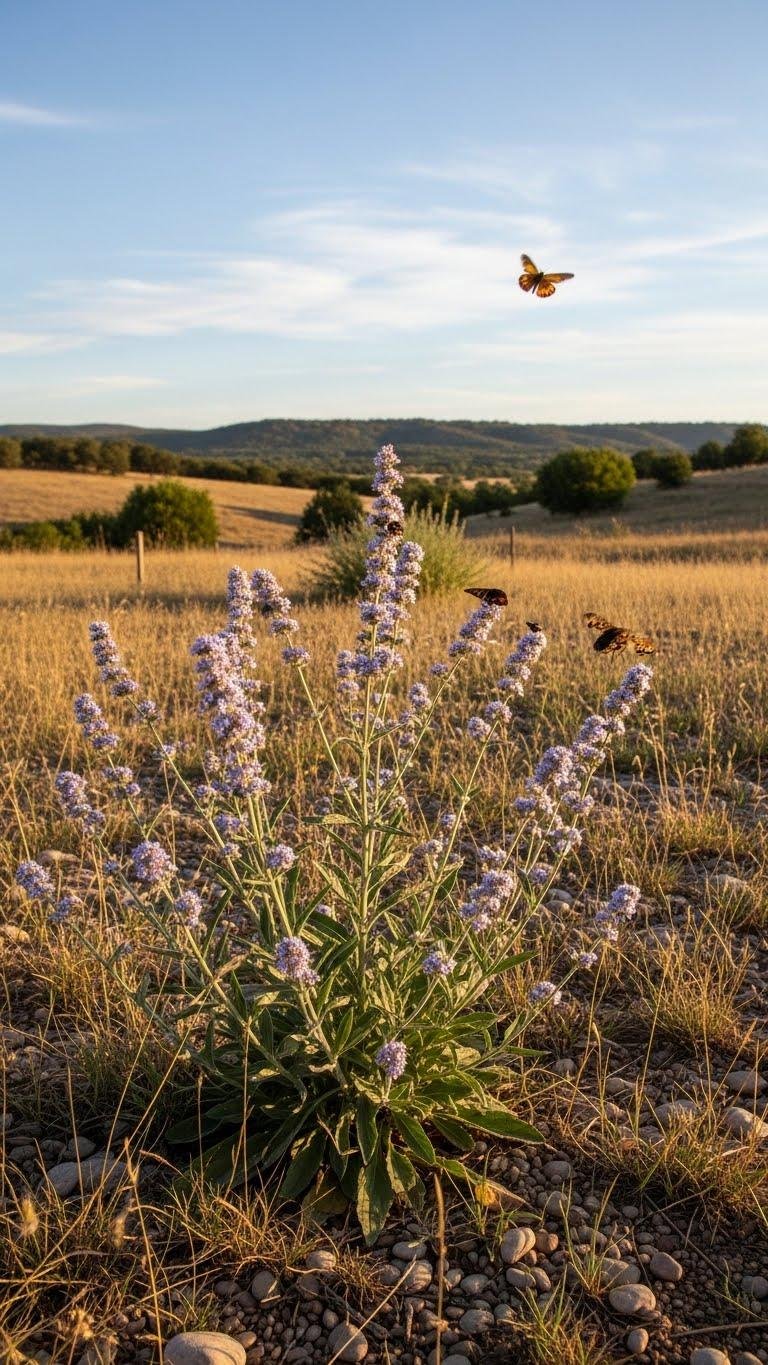
If you enjoyed the airy charm of wild bergamot, you’ll find hoary vervain brings a different kind of magnetism to the butterfly garden. You’ll plant Verbena stricta for tall spires of lavender that thrive in dry, open sites, aiding habitat restoration.
Expect vigorous pollinator interactions as bees and butterflies swarm. It’s low-maintenance, drought-tolerant, and liberating for wild, free landscapes.
Bronze Fennel (Foeniculum Vulgare)
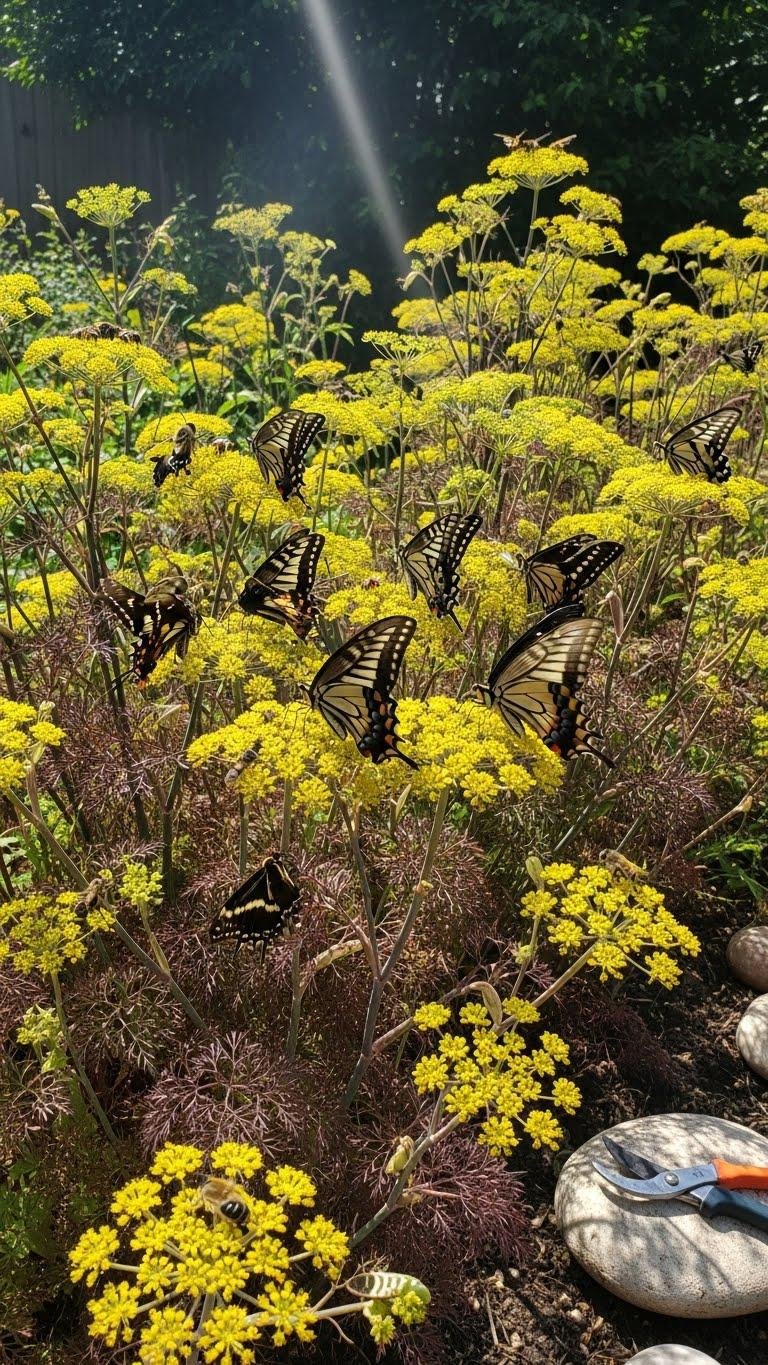
Add bronze fennel to your butterfly garden to attract an amazing variety of pollinators with its lacy foliage and umbrella-like yellow flower heads. You’ll enjoy its culinary uses—fronds and seeds add flavor—while managing invasive tendencies by trimming seed heads and containing roots.
Plant it in sunny spots, watch swallowtails and other species thrive, and savor the freedom of a self-directed, vibrant pollinator haven.
Butterfly Bush (Buddleia)
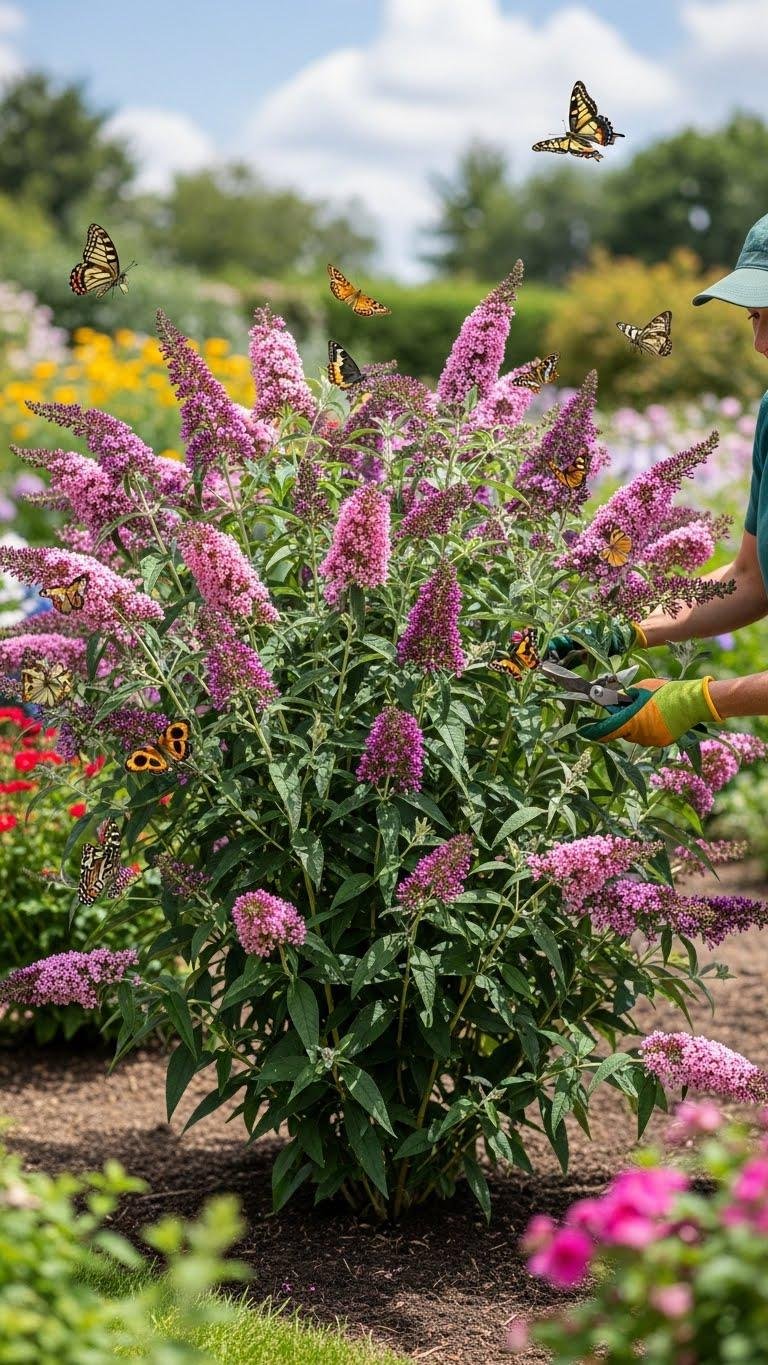
You’ll notice that bronze fennel’s feathery texture and aromatic blooms attract many species, but for a powerhouse nectar source that keeps butterflies lingering, plant a butterfly bush (Buddleia).
You’ll love its prolific nectar production, fast growth, and freedom to shape your landscape. Cut back with correct pruning timing to encourage blooms; choose sun, well-drained soil, and watch pollinators flock.
Buttonbush (Cephalanthus Occidentalis)
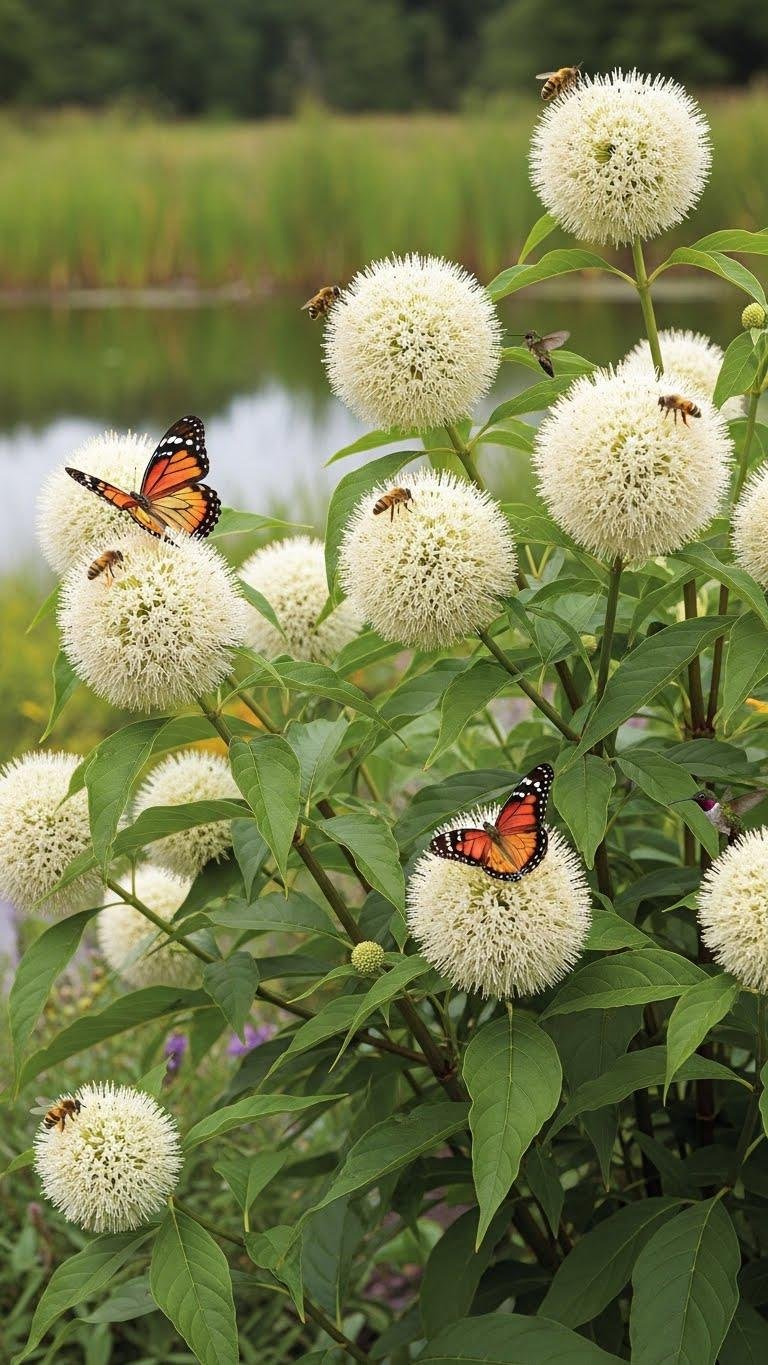
Often overlooked in backyard plantings, buttonbush (Cephalanthus occidentalis) draws attention with its spherical, fragrant flower clusters that brim with nectar and attract butterflies, bees, and hummingbirds.
You’ll love planting it along ponds or in wetland habitat; it tolerates soggy soil, supports native pollinators, and provides structure and seasonal interest. Choose bold placement for maximum wildlife benefit and effortless beauty.
Shrubby Cinquefoil (Dasiphora Fruticosa)
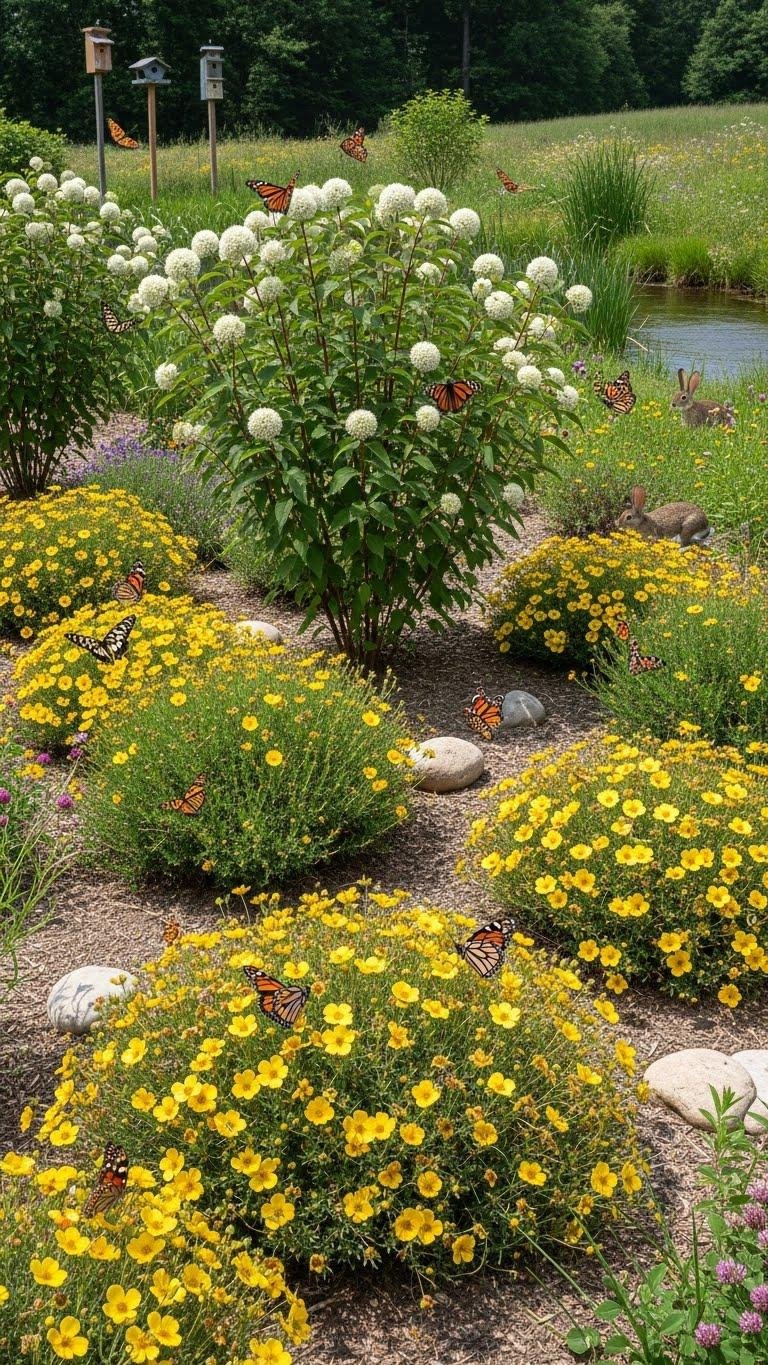
If you’ve enjoyed the showy blooms and wildlife magnetism of buttonbush, shrubby cinquefoil offers a contrasting form and season of interest for drier spots.
You’ll find low, airy shrubs with golden flowers that butterflies love. Use seed or softwood cuttings for efficient plant propagation.
It thrives in sunny, well‑drained sites, suits habitat restoration projects, and rewards gardeners seeking resilient, free‑spirited landscapes.
Prairie Blazing Star (Liatris Pycnostachya)
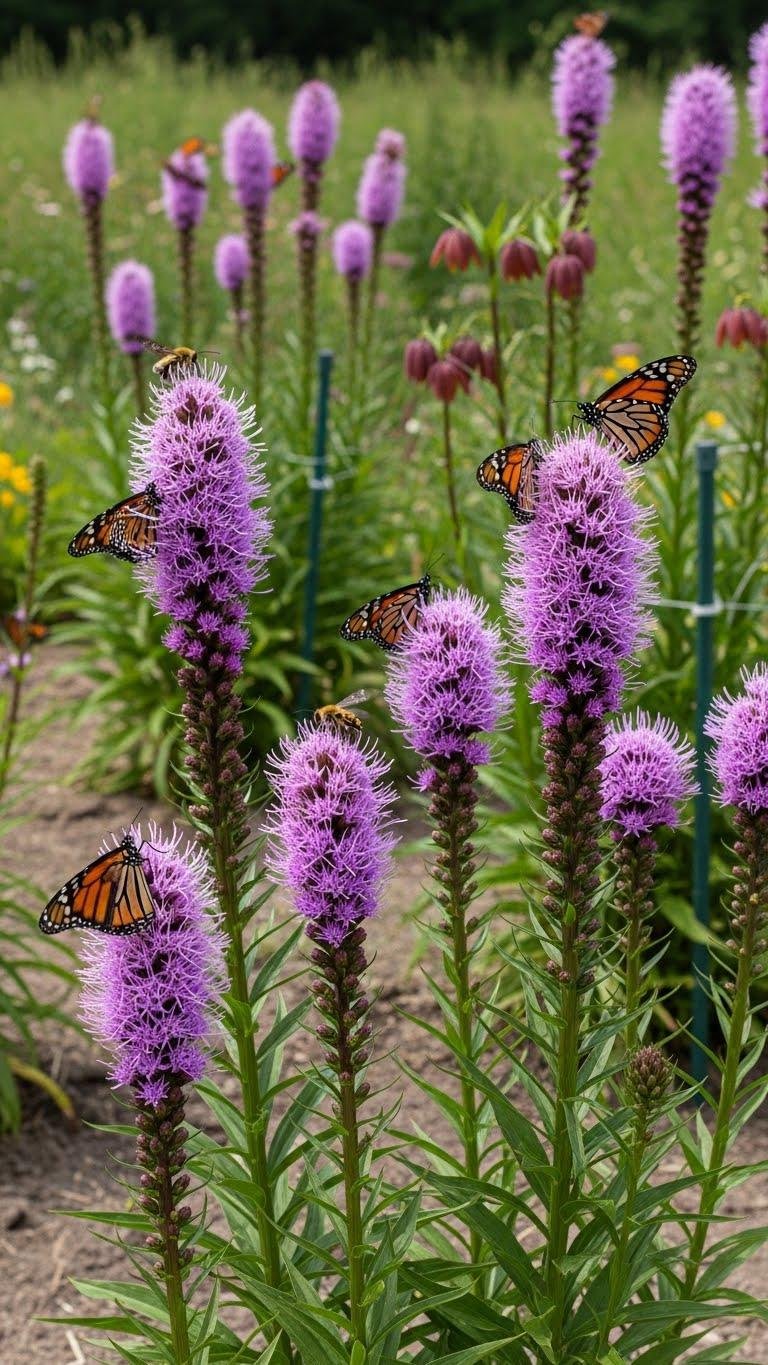
Plant prairie blazing star (Liatris pycnostachya) where you want tall, nectar-rich blooms that reliably attract butterflies and native bees through late summer. You’ll master Liatris cultivation by choosing full sun, well-drained soil, and minimal fuss.
Expect intense Pollinator interactions: monarchs, fritillaries, and solitary bees visit freely. Stake clumps if wind-prone, divide every few years to maintain vigor and liberty in your meadow.