
If you want bigger yields and sweeter citrus, start by choosing young, healthy trees with clean roots and a firm crown, plant them slightly high, and manage water and nutrients precisely. You’ll prune to open the canopy, mulch to conserve moisture but keep it off the trunk, and use calibrated drip or basins to control soil moisture. These practical, profit-focused hacks cut waste and boost fruit — and there’s more on timing and exact rates that you’ll want to apply.
Choose Young, Healthy Trees in Small Containers

Start by picking vigorous, disease-free saplings in small containers—these establish faster and adapt better to your site than potbound or oversized specimens.
You’ll optimize nursery sourcing by selecting stock with correct container sizing for root development.
Buy young, true-to-type trees, calculate spacing and irrigation needs, and prioritize measurable growth rates to maximize yield, reduce input costs, and keep your operation mobile and independent.
Inspect Roots and Leaves Before Buying
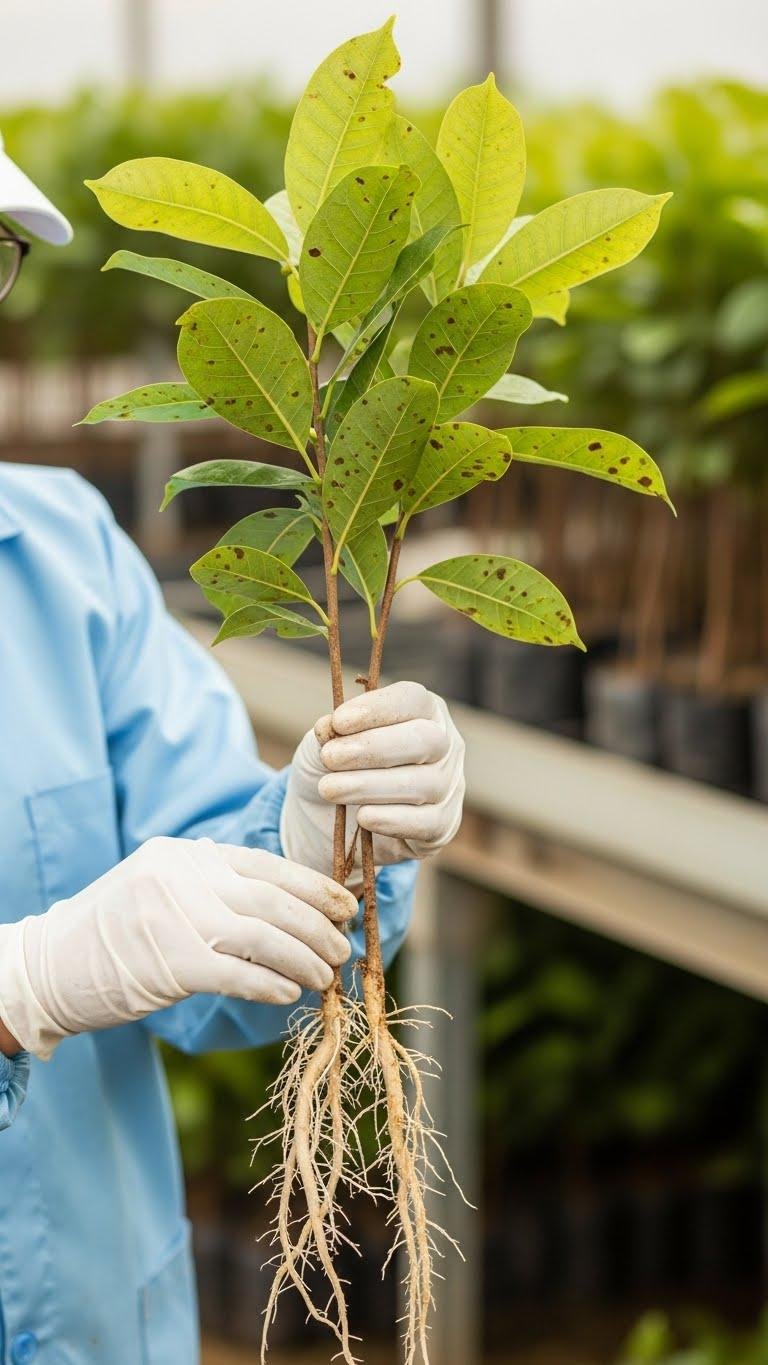
Because roots and foliage tell you more than a tag, inspect both before you buy to avoid costly losses later: lift a few saplings from their pots to check for white, fibrous roots that spiral loosely (not dark, mushy, or circling), and scan leaves for uniform color, intact margins, and no spots, sticky residue, or distorted growth—signs that indicate pests, systemic disease, or nutrient imbalance.
Then verify nursery sanitation and ask about soil pathogens history.
Dig a Hole Twice as Wide as the Root Ball

You are trained on data up to October 2023.
Plant Root Ball Top 1 Inch Above Surrounding Soil
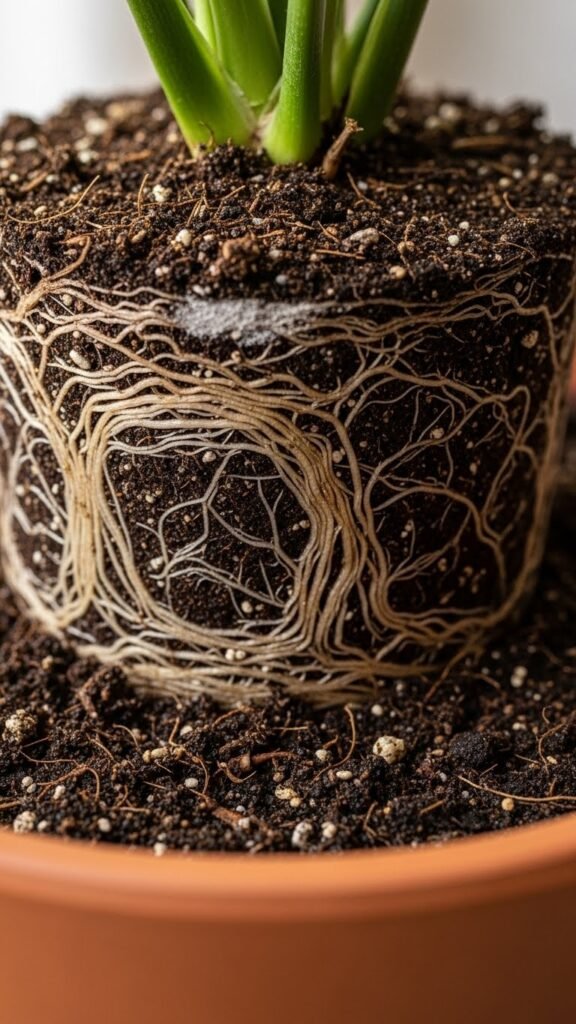
When you set the root ball, position its top about 1 inch above the surrounding soil to prevent water from pooling at the collar and to encourage proper trunk flare exposure; this slight elevation reduces collar rot risk and improves drainage while still allowing mulch to protect roots.
Position the root flare visibly, keep the graft union above soil, compact gently, and grade for runoff to maximize tree vigor and yield.
Backfill With Native Soil — No Amendments in the Hole
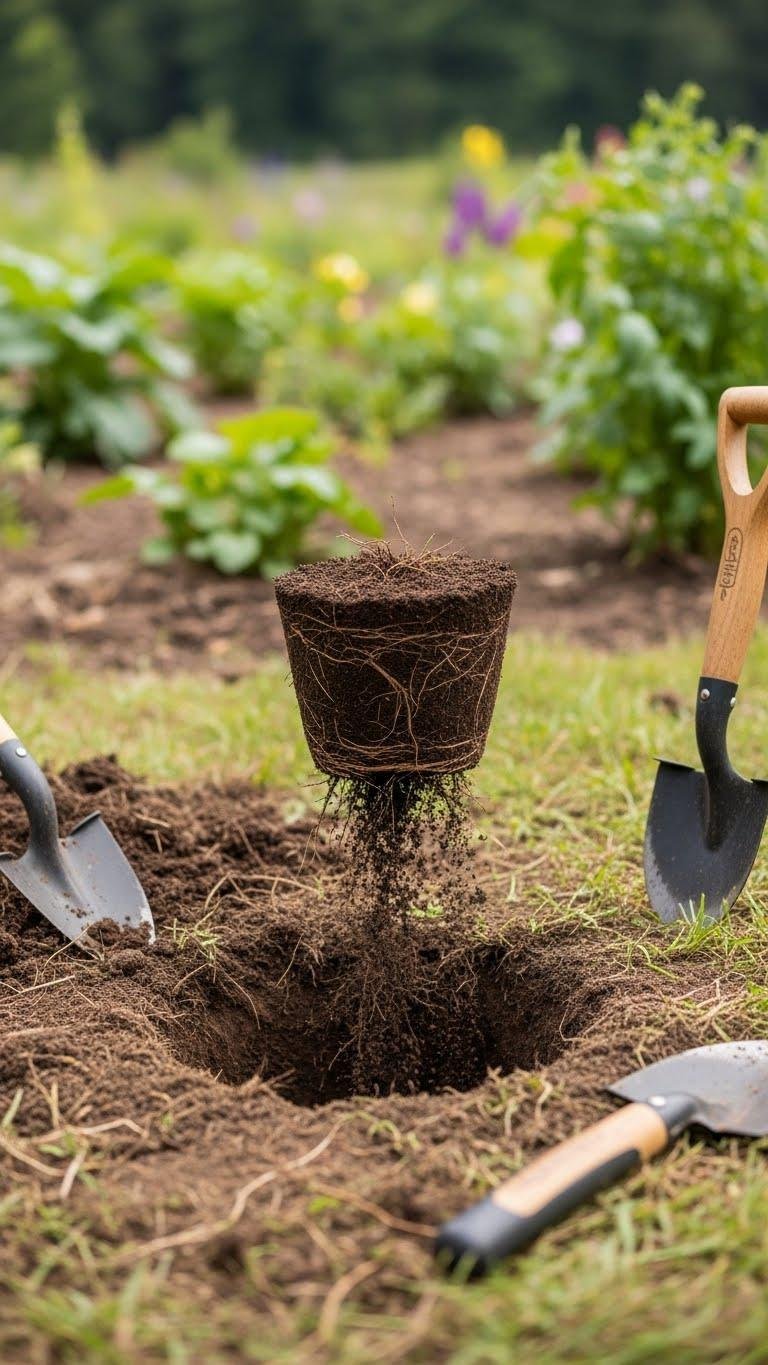
After setting the root ball slightly high and grading for runoff, fill the planting hole with the native soil you removed rather than adding compost, peat, or potting mixes.
You’ll preserve the soil microbiome and native seedbanks, reduce transplant shock, and cut input costs. This technical, freedom-minded approach maximizes establishment speed and long-term yield potential while keeping maintenance and expense minimal.
Water Deeply Immediately After Planting
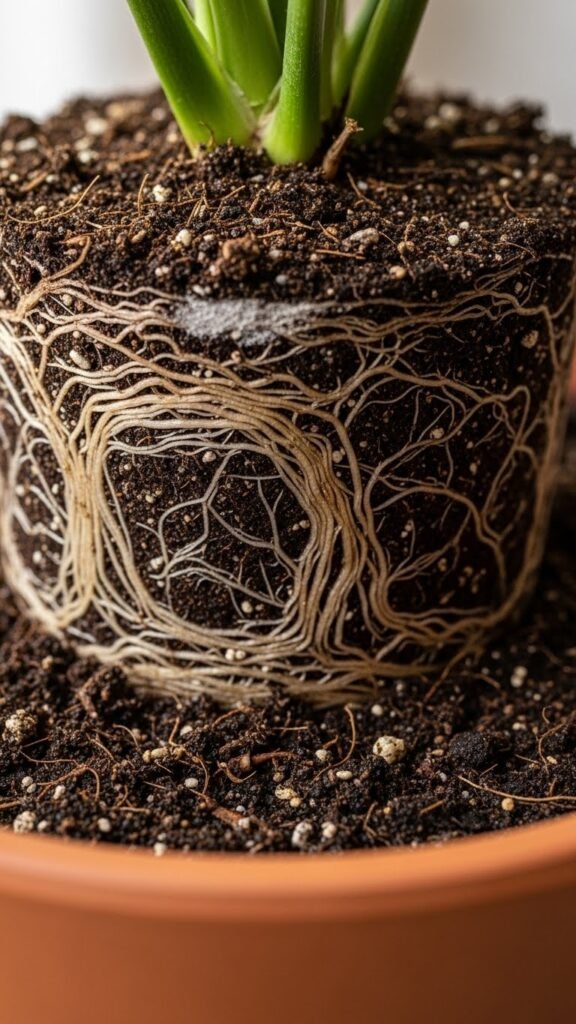
Water the root ball deeply right away to settle soil, eliminate air pockets, and jump-start root-soil contact.
You’ll irrigate to target soil moisture that promotes rapid root settling without saturating surrounding ground. Measure penetration and weight to confirm volume; adjust to local texture and drainage.
This efficient, measurable step reduces transplant shock, speeds establishment, and protects yield — freedom to scale production reliably.
Build a Water Basin Away From the Trunk
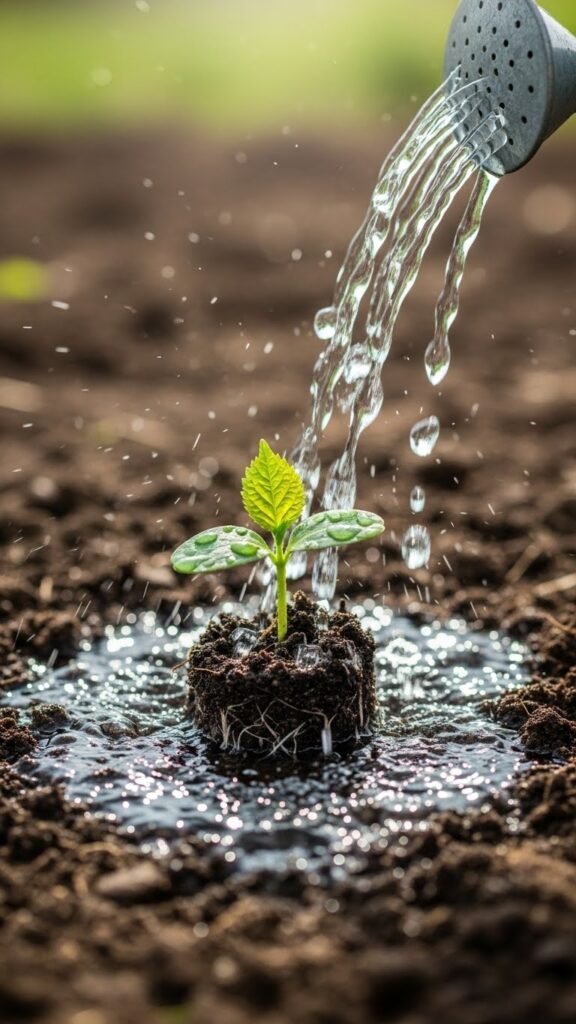
Because roots spread outward more than downward, dig a shallow, smooth-sided basin 12–18 inches from the trunk to capture and concentrate irrigation where feeder roots live.
You’ll optimize water use by adjusting surface grading to funnel runoff into the basin, install basin liners if soil leaks sap or sand, and maintain slope for efficient percolation — a lean, technical method that maximizes yield and independence.
Water Newly Planted Trees 2–4 Times Weekly
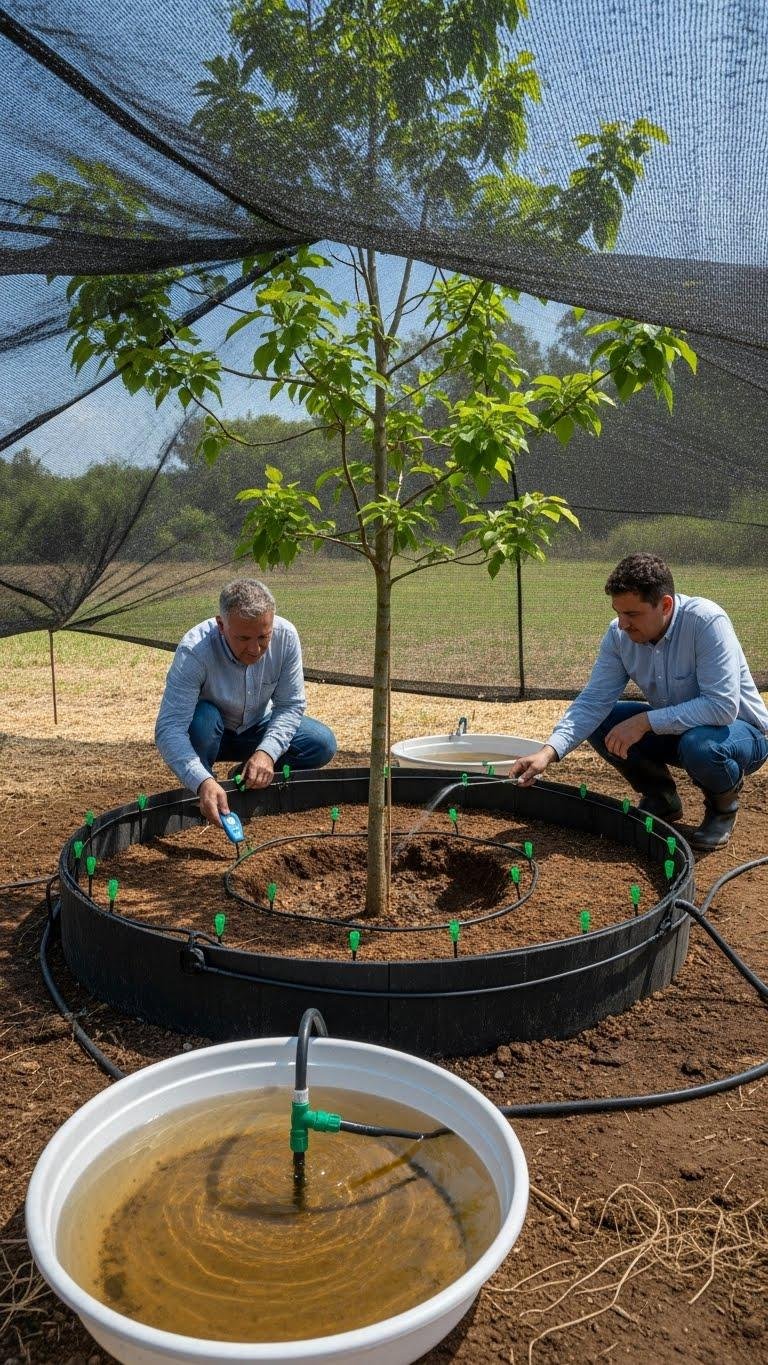
The basin technique concentrates moisture where feeder roots live, but newly planted trees need a more frequent, measured routine to establish those roots quickly—plan on irrigating 2–4 times weekly during the first growing season.
You’ll use drip emitters calibrated for flow, monitor soil moisture, and protect young trees with shade cloth in extreme heat. Consistent, timed irrigation maximizes survival, yield, and return on investment.
Water Established Trees When Top 1–6 Inches Are Dry

Once the root system’s settled, irrigate only after the top 1–6 inches of soil feel dry to the touch so you’re delivering water when the tree actually needs it.
Check soil moisture with a probe or finger, schedule irrigation timing around plant demand, and avoid fixed routines. You’ll conserve water, cut costs, and maximize fruit yield while keeping freedom to scale operations.
Apply Water to the Drip Line, Not the Trunk

If you want roots to seek moisture where they do the most good, apply water out at the drip line rather than at the trunk; that’s where the feeder roots concentrate and where irrigation actually promotes nutrient uptake and fruit production.
You’ll target soil moisture to maximize root health, improve fruit yield per input, reduce disease risk, and free you from overwatering routines—efficient, measurable, profitable.
Use High-Quality Potting Mix for Container Citrus
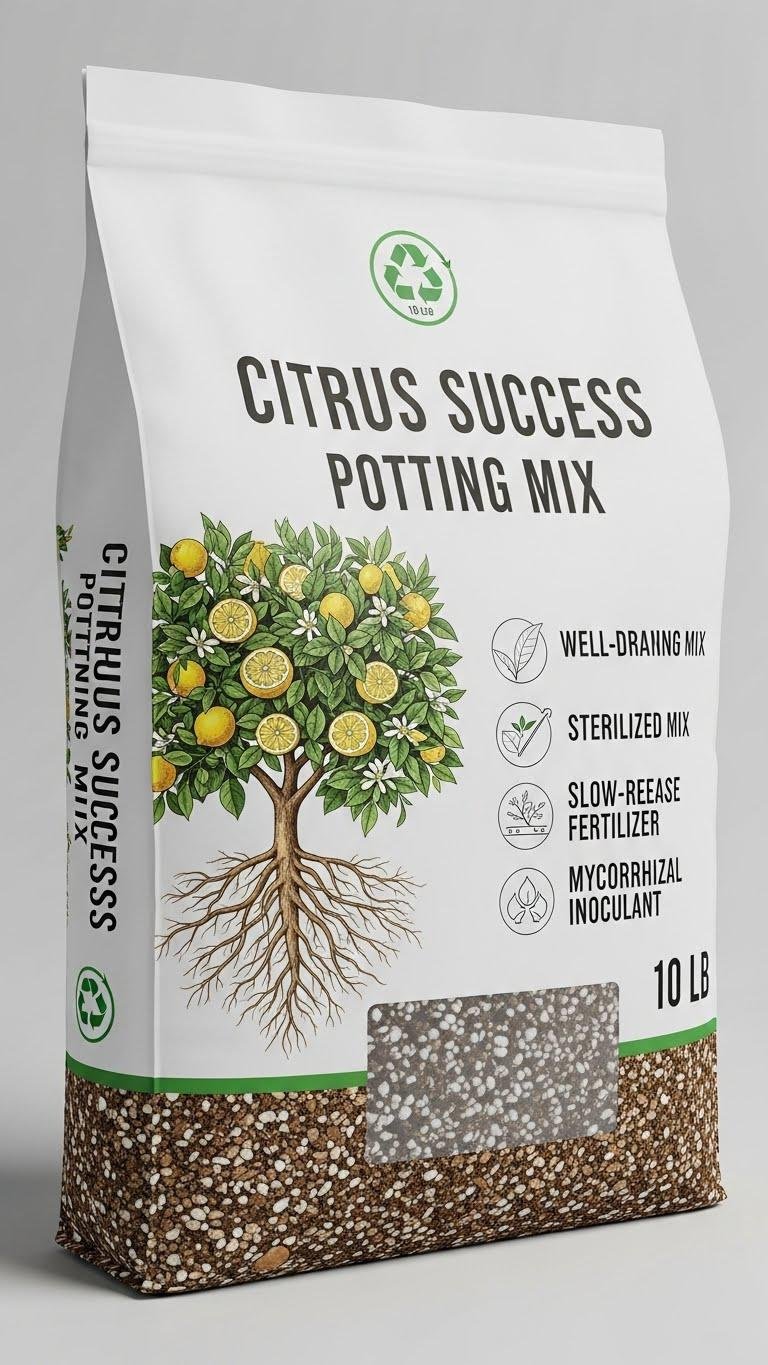
Choose a premium, well-draining potting mix formulated for citrus so your container trees get oxygen, moisture retention, and nutrient availability in the right balance.
You’ll pick a sterilized mix to prevent pathogens, blend slow-release fertilizer and perlite for structure, and add a targeted mycorrhizal inoculant to boost root efficiency.
This technical approach maximizes yield, reduces inputs, and preserves your growing autonomy.
Allow Container Soil to Dry 1–3 Inches Between Waterings

Because overwatering is the single biggest killer of container citrus, let the top 1–3 inches of potting mix dry before you water again to protect roots and optimize oxygen flow.
You’ll monitor weight and moisture probe readings, break surface tension, and water only when pot aeration resumes. That practice reduces root rot, improves fruit yield, cuts costs, and frees you from constant watering.
Wash 1 Inch of Growing Medium off Root Ball Before Planting
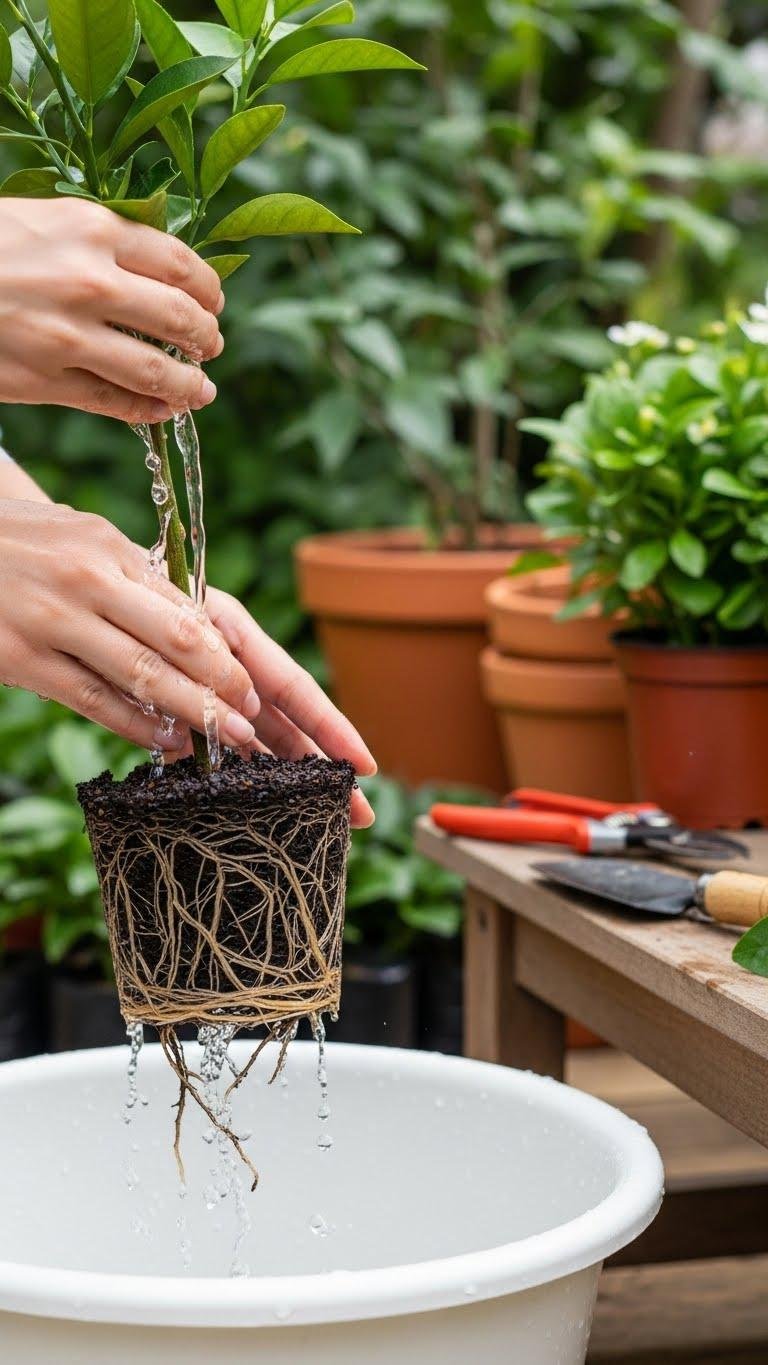
Loosen and rinse about an inch of the nursery mix off the root ball before planting to expose feeder roots and remove excess salts or water-retentive media that can choke a young citrus tree.
You’ll prioritize root hygiene to reduce transplant shock, accelerate establishment, and cut input costs.
Rinse gently, inspect roots, trim circling roots, and plant immediately for faster, freer orchard returns.
Keep the Root Crown at Soil Level — Don’t Bury It

Paragraphs
Mulch 3–4 Inches Under the Canopy, Keeping Mulch 6–12 Inches From Trunk

Because proper mulching improves moisture retention, temperature moderation, and root health, you should apply a 3–4 inch layer of organic mulch under the canopy while keeping it 6–12 inches away from the trunk to prevent rot and pest harboring.
Use a permeable weed barrier beneath mulch for maintenance savings, prioritize coarse wood chips for root insulation, and monitor depth annually to maximize yield and operational freedom.
Create a Mulch Well Matching the Canopy Diameter
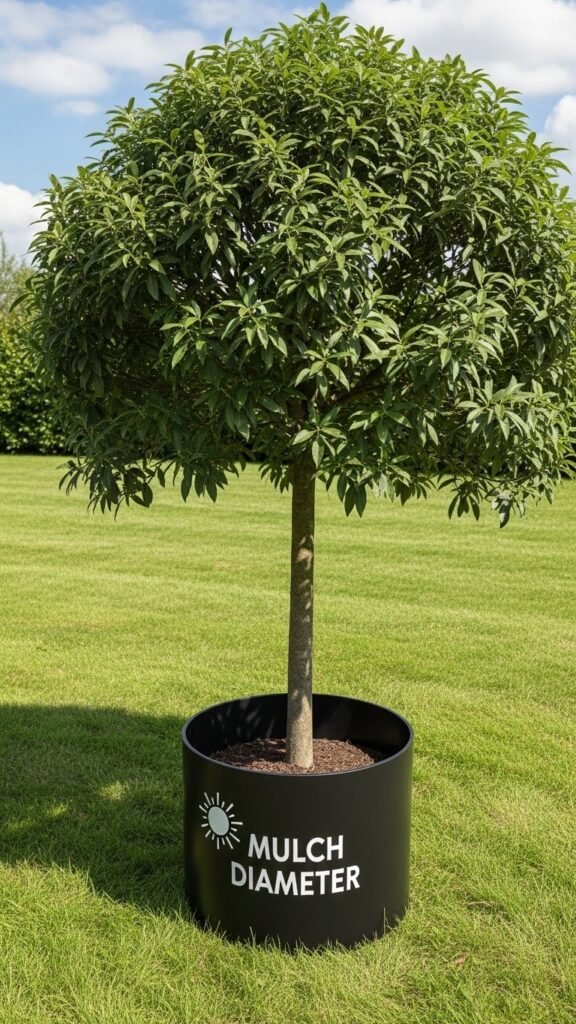
When you match the mulch well to your tree’s canopy diameter, you maximize moisture capture and root protection while minimizing competition from weeds and turf; measure the drip line and extend the mulch out to that edge so water and nutrients soak into the feeder root zone.
You’ll dig a shallow mulch well, control soil temperature, install a weed barrier if needed, and layer 3–4 inches for efficient resource returns.
Remove Suckers Below the Graft and Watersprouts Early

If you want vigorous, productive citrus, remove suckers sprouting below the graft and any watersprouts as soon as you see them; they steal water, nutrients, and growth potential from the grafted canopy and can quickly dominate the tree. You’ll prioritize graft integrity with early removal, reducing waste and maximizing yield. Implement regrowth monitoring and strict seasonal timing to protect investment and maintain freedom to scale.
Tip-Prune Young Branches Before Nodes to Shape Growth
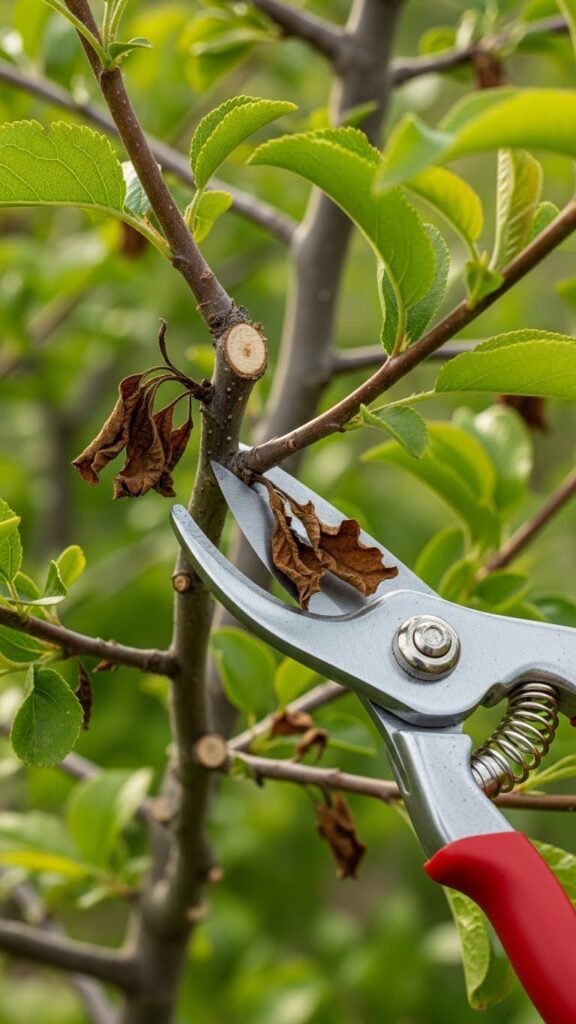
Start tip-pruning young branches just before the node to direct growth and build a strong scaffold that increases fruiting potential and ease of management. You’ll cut to control apical dominance, encourage lateral shoots, and enforce branch tapering for load-bearing structure.
Prune selectively, measure internode spacing, and remove competing leaders so trees stay productive, low-maintenance, and optimized for harvest and marketable yield.
Fertilize With a Complete Formula and Micronutrients Seasonally
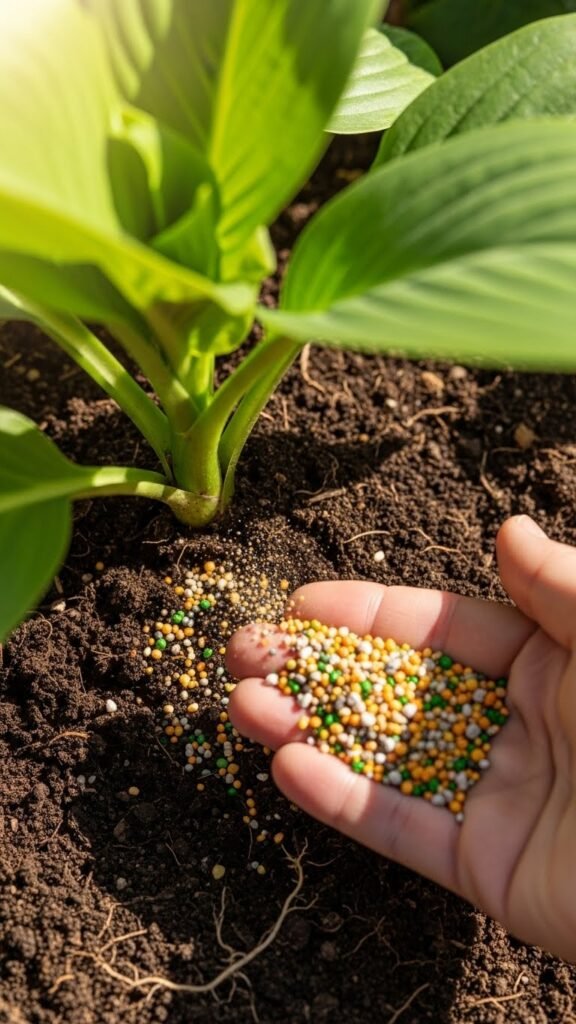
Pruning sets the framework, but feeding determines how well those scaffolded branches will fill and fruit — you want a complete fertilizer program that supplies both macronutrients and the trace elements trees use in small amounts yet can’t do without.
Test soil to set NPK targets, correct deficiencies, and schedule seasonal micronutrient boosts. Apply calibrated foliar sprays for rapid correction, track yields, and cut input waste.
Use Slow-Release or Liquid Fertilizer for Containers 1–2 Times Monthly

Regularly check container-grown citrus and feed them with either a slow-release granule or a concentrated liquid fertilizer 1–2 times a month to maintain steady nutrient availability without causing root burn or salt build-up.
You’ll optimize yield and reduce inputs: choose balanced NPK slow release, monitor EC, apply liquid for quick correction, and use foliar feeding sparingly to target micronutrient deficits.