
You’ll find petals that perfume syrup, flowers that sting your tongue with pepper, and blossoms that sit like satin on a salad. Smell chamomile’s apple hush, see nasturtiums’ fire, taste chive flowers’ crisp onion note. I’ll show you how to use each bloom safely and smartly, and which ones to keep for syrup, salad, or garnish—but first, learn the simple rule that keeps edible flowers from spoiling a dish.
Chamomile

When you cup a chamomile blossom between your fingers, its papery white petals and sunny yellow center give off a warm, apple-like sweetness that smells like late afternoon light.
You’ll steep this daisy lookalike into a soothing tea, watching pale gold unfurl. Its fragile aroma loosens tight thoughts, inviting you to taste gentle floral clarity and reclaim a small, quiet freedom.
Chives
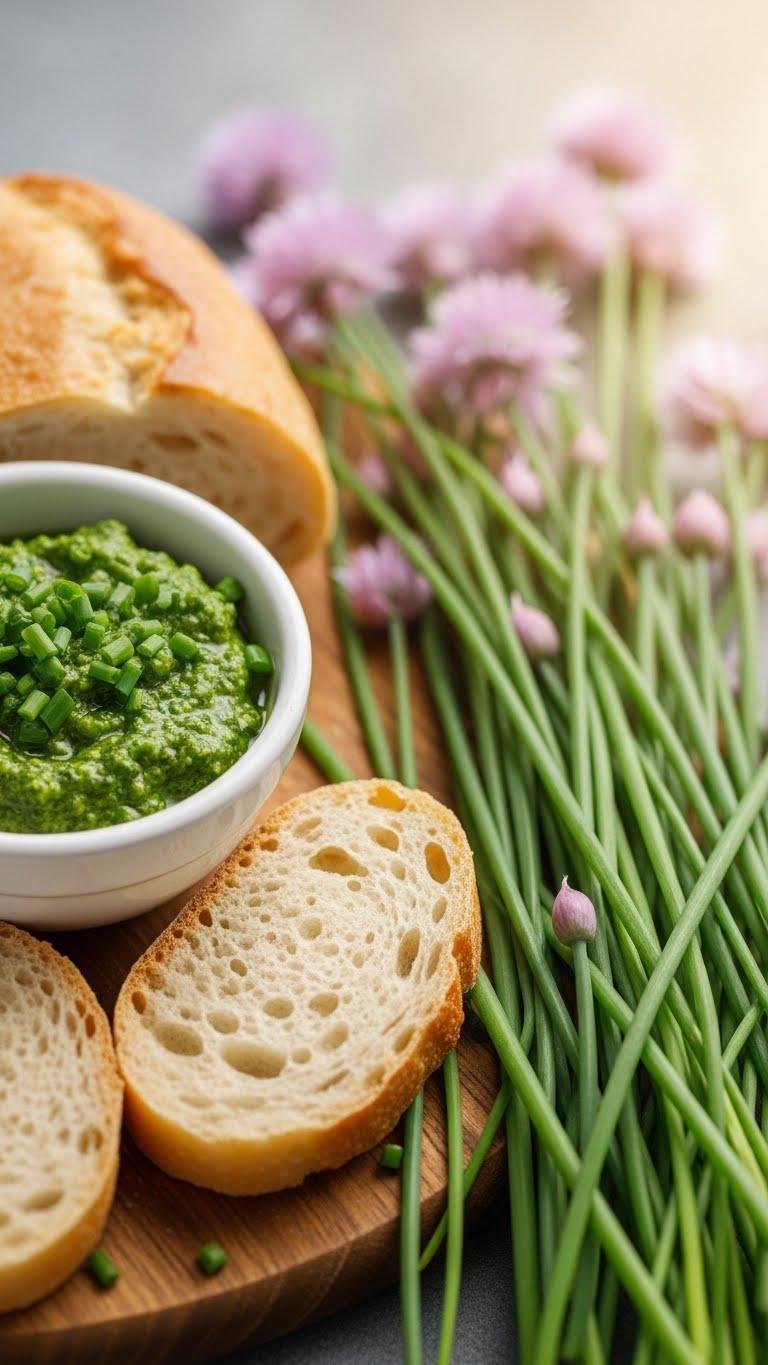
Often you’ll pinch a slender spray of chives and smell a bright, oniony green that snaps like a fresh breeze across the tongue.
You scatter violet blooms as an oniony garnish, their texture crisp and tidal.
You blitz bulbs and blossoms into chive pesto, bright and herbaceous, then smear it over warm bread, letting freedom’s sharp, clean flavor lift every bite.
Marigold
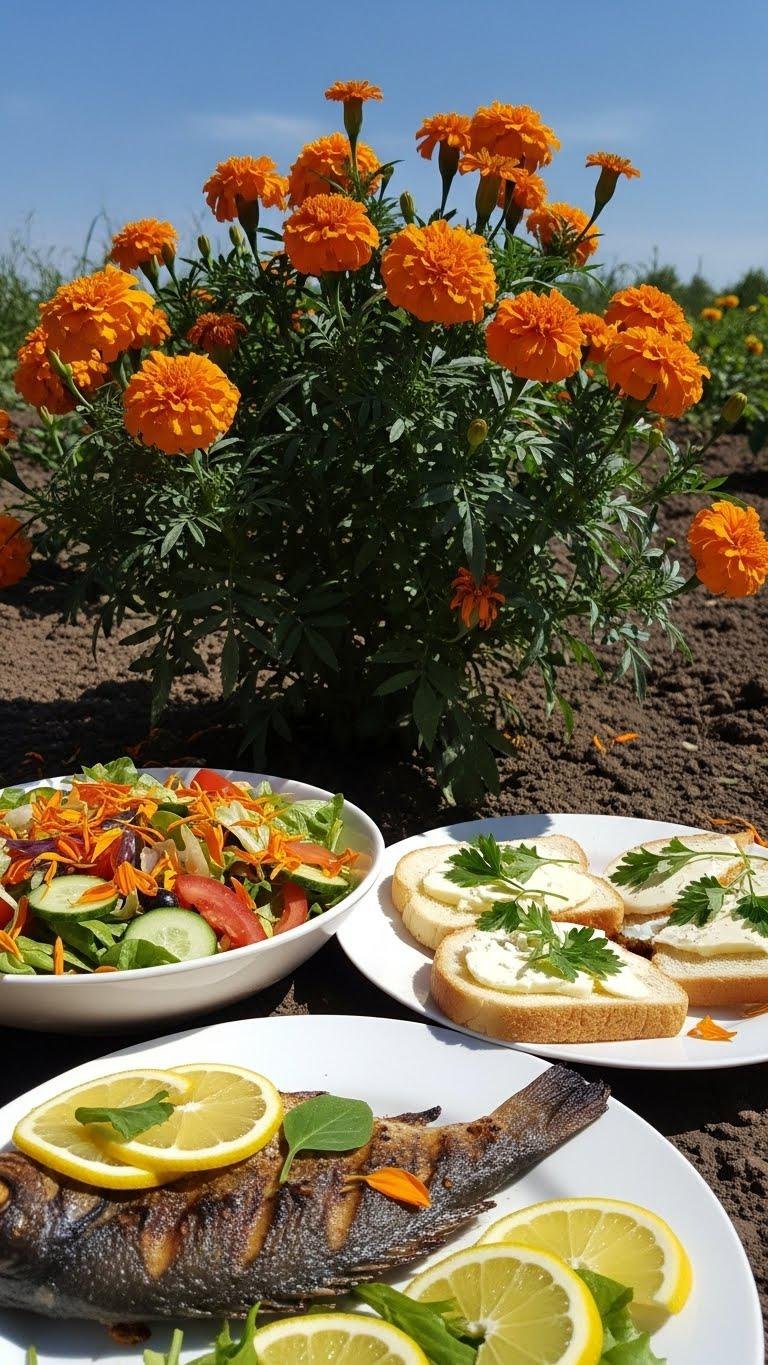
If you enjoyed the satiny warmth and honeyed hint of daylilies, try marigolds next for a brighter, citrusy counterpoint.
You’ll harvest petals that snap with zesty orange scent; sprinkle them over salads, grilled fish, or buttered toast.
Follow Marigold cultivation tips: full sun, well-drained soil, deadhead regularly.
For bold Marigold flavor pairing, match with citrus, herbs, and mild cheeses.
Nasturtium
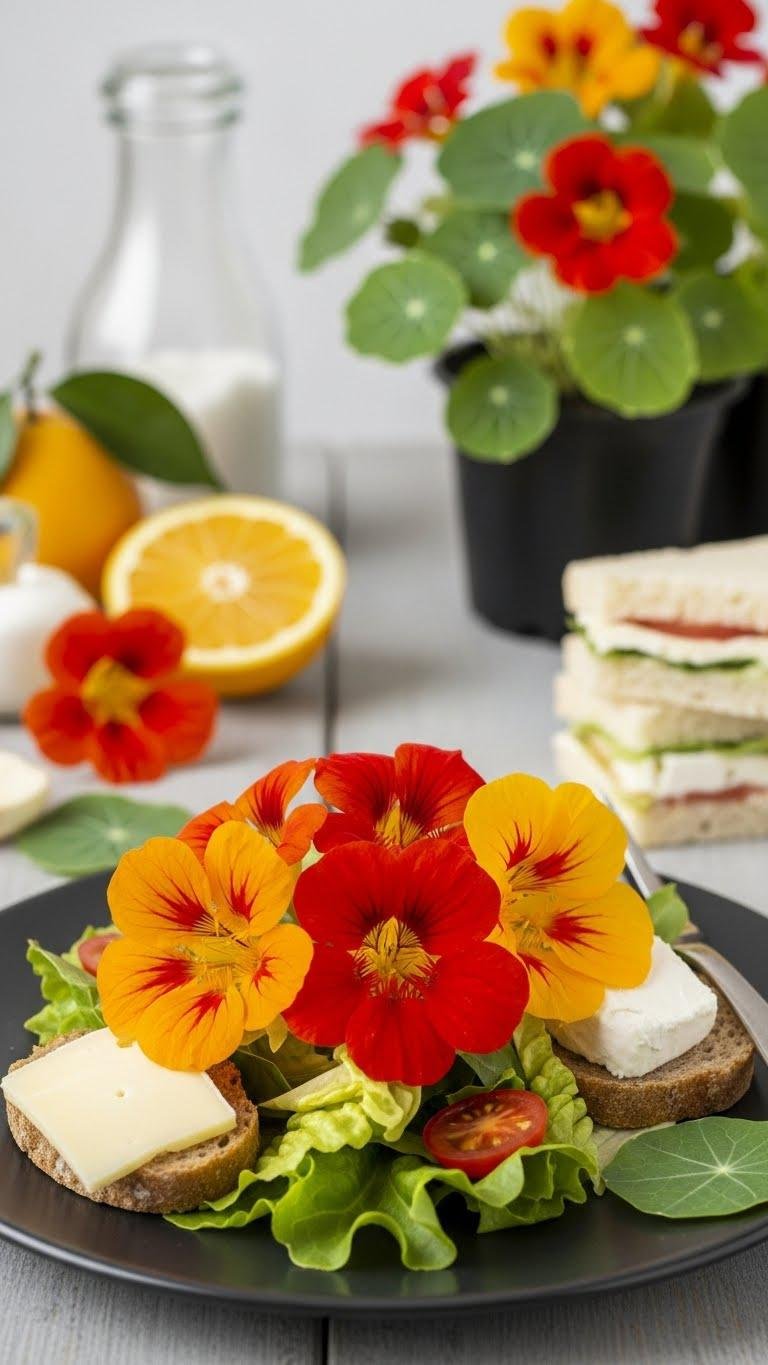
You’ll find nasturtium petals peppered with a bright, peppery bite that livens salads, sandwiches, and soft cheeses.
You’ll taste citrus heat, see vivid orange and crimson, and arrange blooms like bold culinary plating.
Use them as a peppery garnish, press petals into goat cheese, save pods for seed harvesting, and relish easy container cultivation that frees your cooking and garden to roam.
Rose
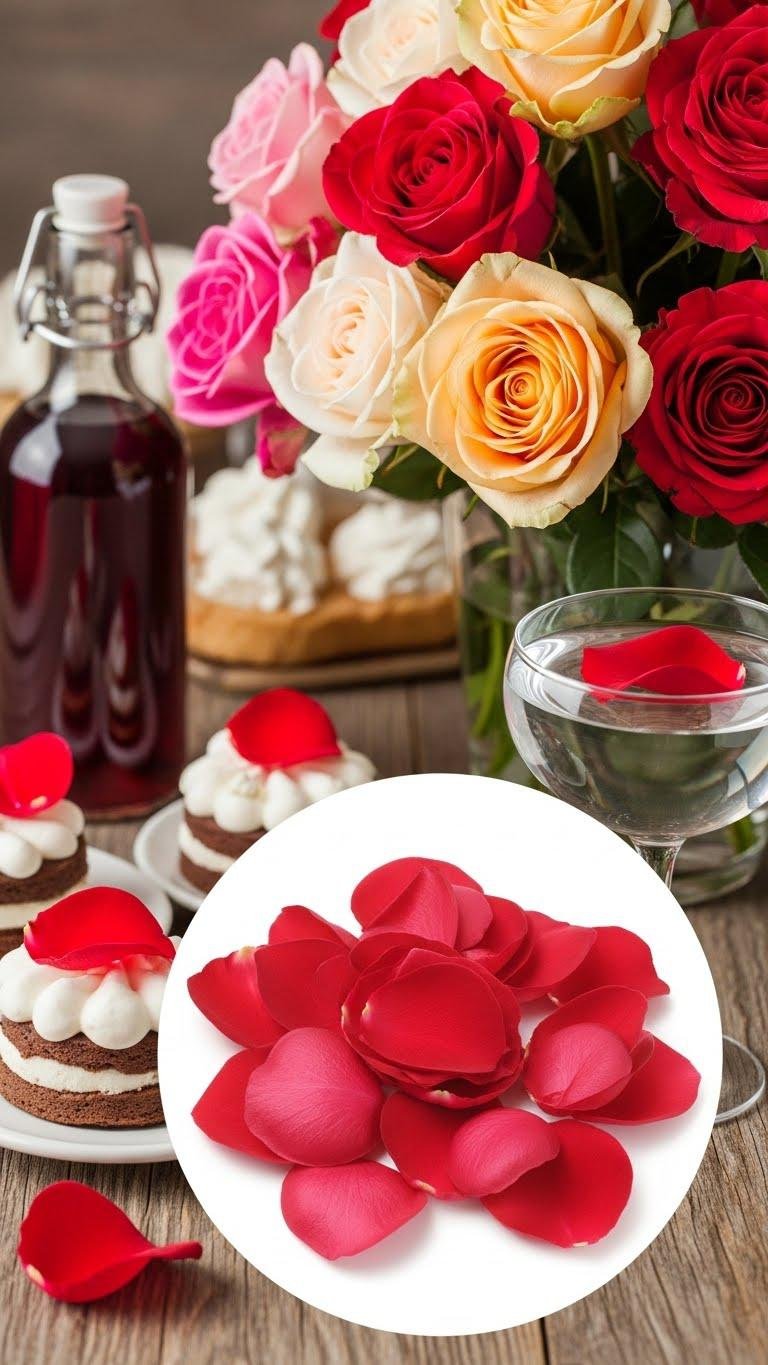
Roses offer a perfume-forward bite that brightens desserts, syrups, and salads with floral sweetness and a faint citrus tang. You’ll pluck a velvety rose petal, taste perfume and silk, then sprinkle petals over goat cheese or fold them into batter.
Make bright rose syrup to glaze pastries or stir into cocktails, freeing dishes with fragrant, liberated flavor.
Lavender
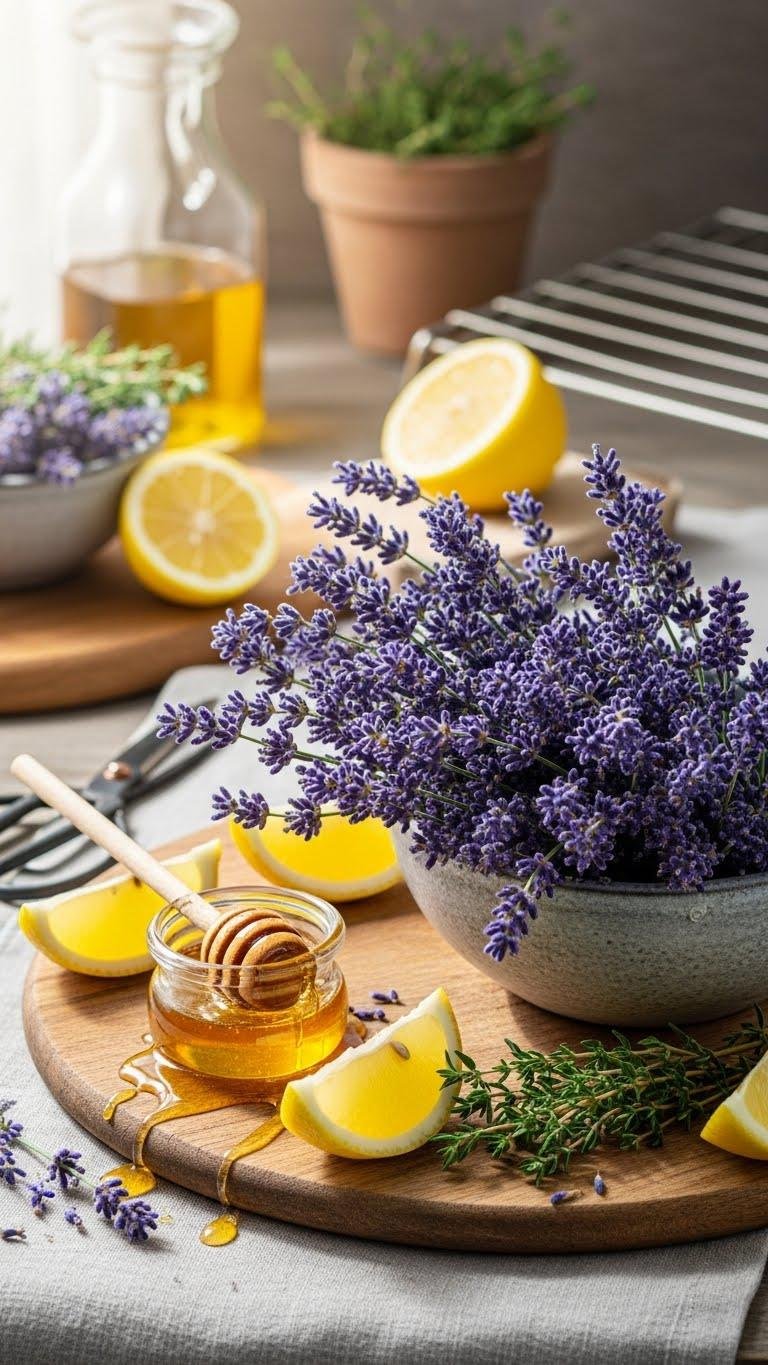
Breathe in the sharp, honeyed aroma of lavender and let its resinous, slightly minty bitterness lift your dishes—its tiny purple buds give a floral, herbaceous note that’s at once cooling and warm. You’ll pair it with lemon, honey, thyme; culinary pairings should be bold but balanced.
Snip sparingly, dry gently, and follow simple garden care so you can harvest freedom in every sprinkle.
Borage
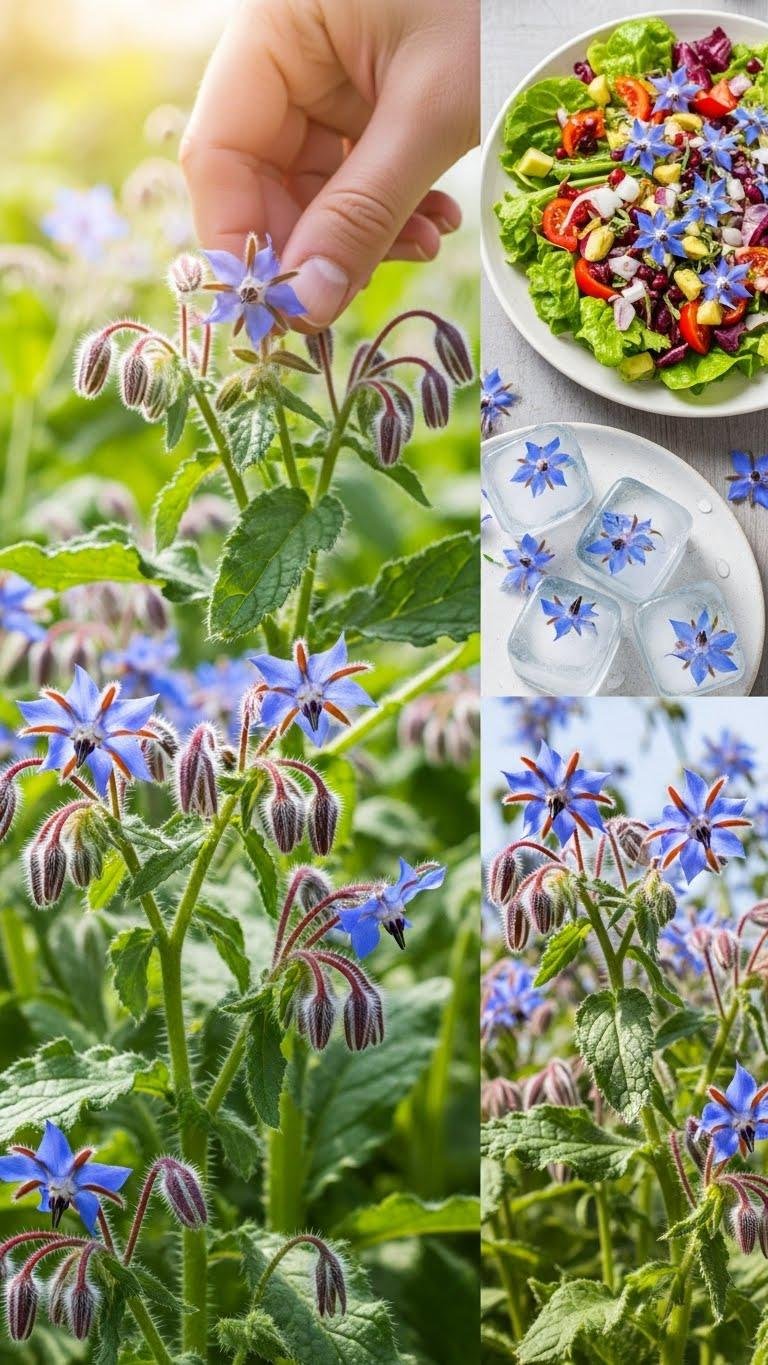
Plucking a star-shaped borage blossom, you’ll notice its cool, cucumber-fresh scent and a crisp, moist texture that snaps gently between your teeth. You’ll plant freely, experimenting with borage cultivation in sunlit beds, watching blue stars dance.
Use blossoms to top salads, freeze into ice cubes, or infuse syrups — culinary uses that brighten plates and invite effortless, joyful creativity.
Pansy
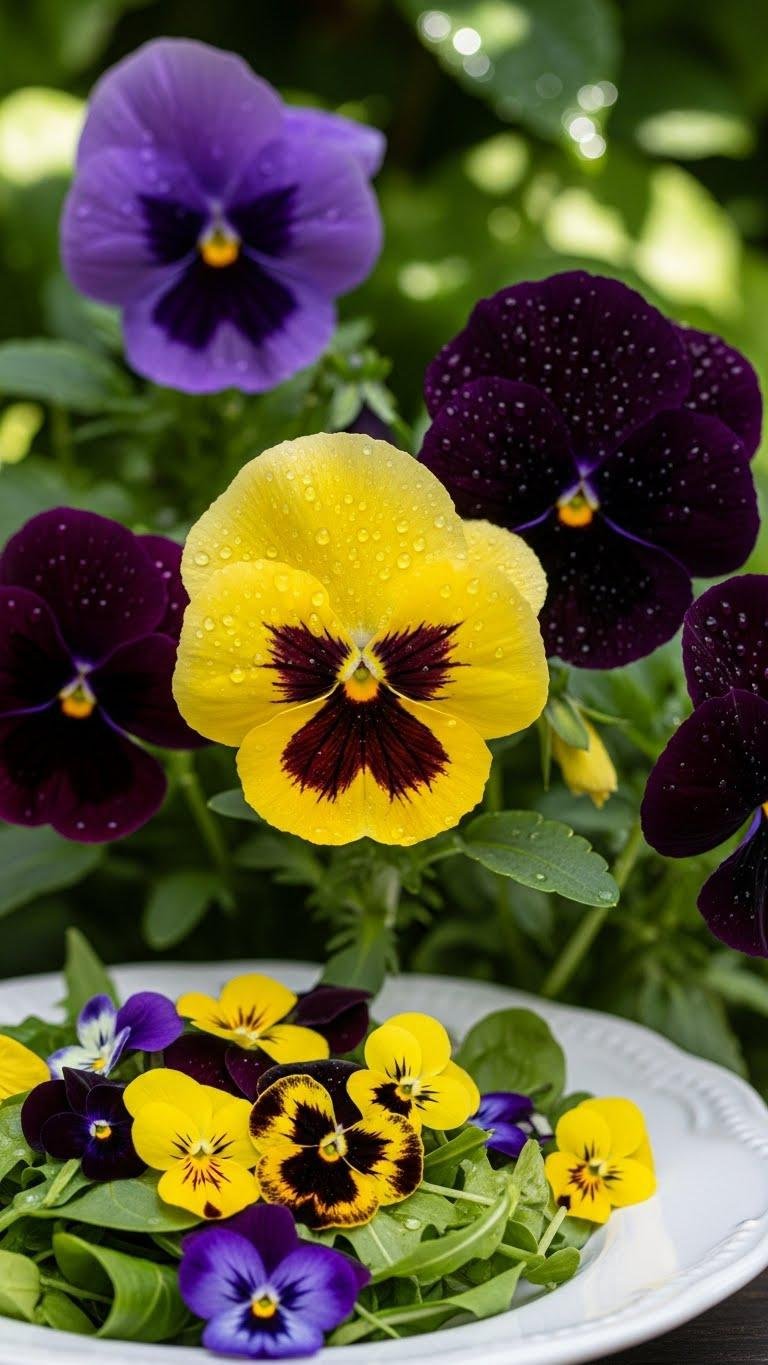
Reach for a pansy and you’ll feel its delicate, velvety petals between your fingers, each bloom like a miniaturized painting with vivid purples, buttery yellows, and ink-black veins.
You’ll taste a mild, grassy sweetness; use pansy symbolism to add romantic whimsy to salads or desserts.
Follow simple pansy cultivation tips: cool sun, rich soil, regular deadheading, and you’ll harvest freedom on a plate.
Viola
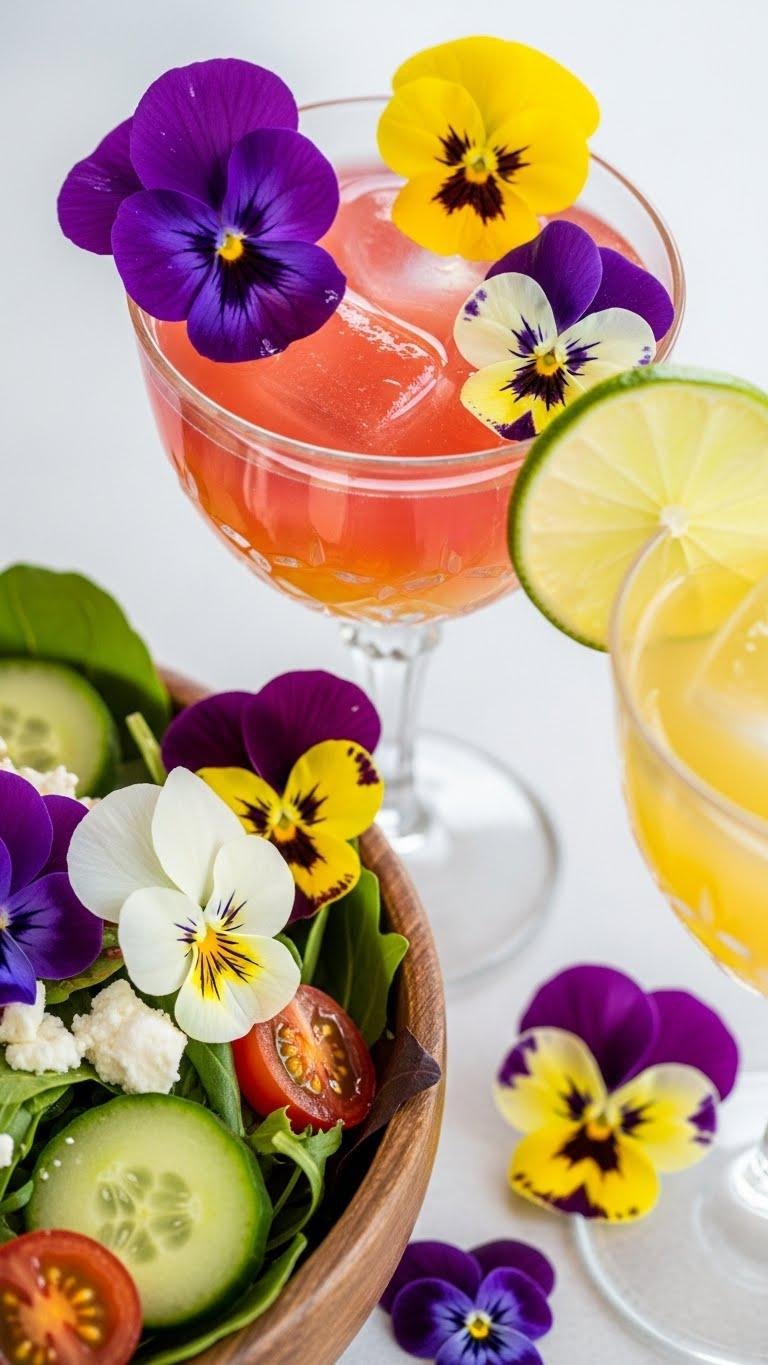
If you loved the pansy’s velvet petals and gentle sweetness, you’ll find violas offer a smaller, more delicate echo of that charm.
You’ll taste subtle honey and lemon notes as you scatter edible viola varieties across salads and cocktails. Their tiny faces deliver potent floral coloring—bright purples, yellows, whites—letting you paint plates boldly while keeping flavors light and freeing.
Elderflower
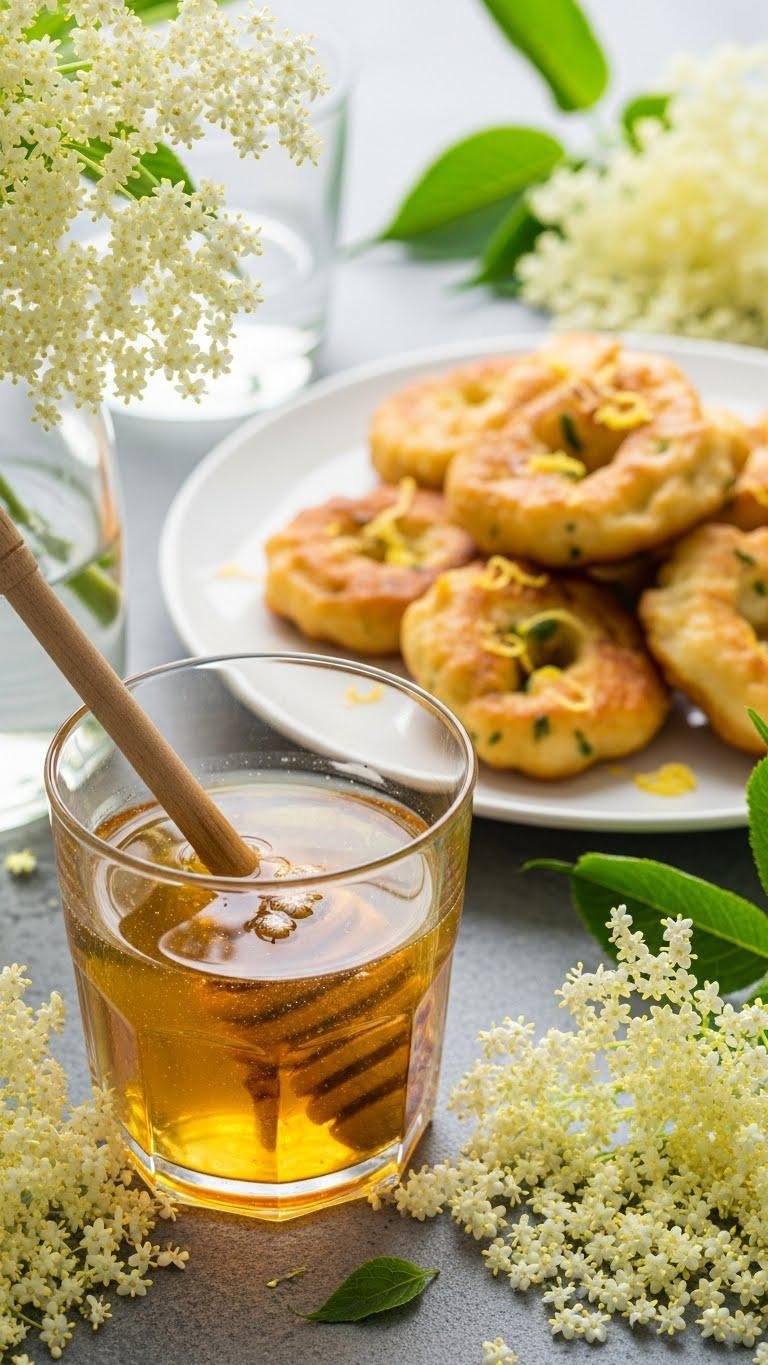
Wonder what spring smells like in a sip? You’ll taste sun-warm honey and green musk in elderflower cordial, bright and floral without cloying sweetness.
Sprinkle blossoms into batter for airy elderflower fritters that crackle with lemon zest. You’ll serve freedom on a plate and in a glass, subtle aroma lifting conversation, inviting guests to roam flavorfully beyond ordinary herbs.
Calendula
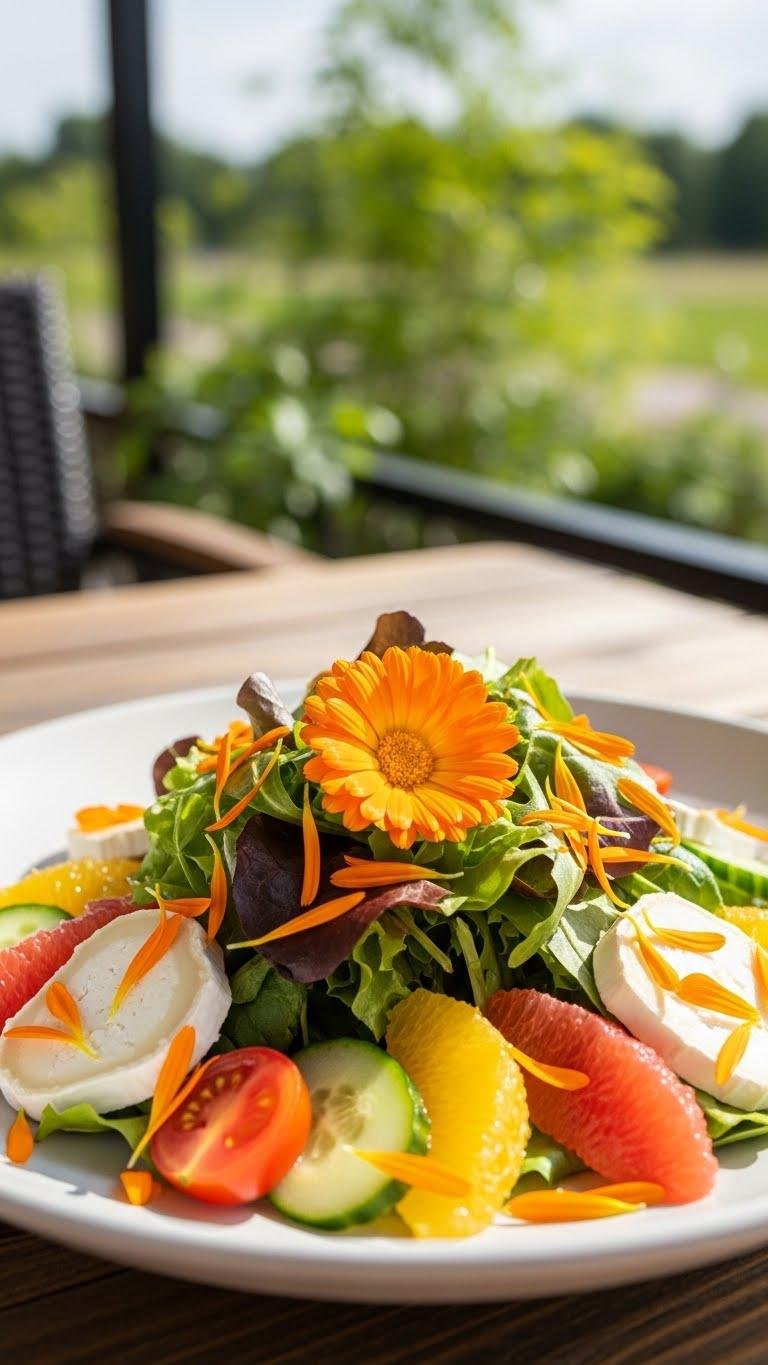
After tasting elderflower’s airy sweetness, you might be ready for calendula’s bold, sunlit presence—its petals taste tangy, slightly peppery, with a faint citrus edge that wakes the palate.
You’ll scatter vivid orange and gold petals over salads, infuse oils, or press them for petal preservation. Pair calendula with goat cheese, citrus, and herbs; culinary pairings celebrate brightness and freedom.
Squash Blossom
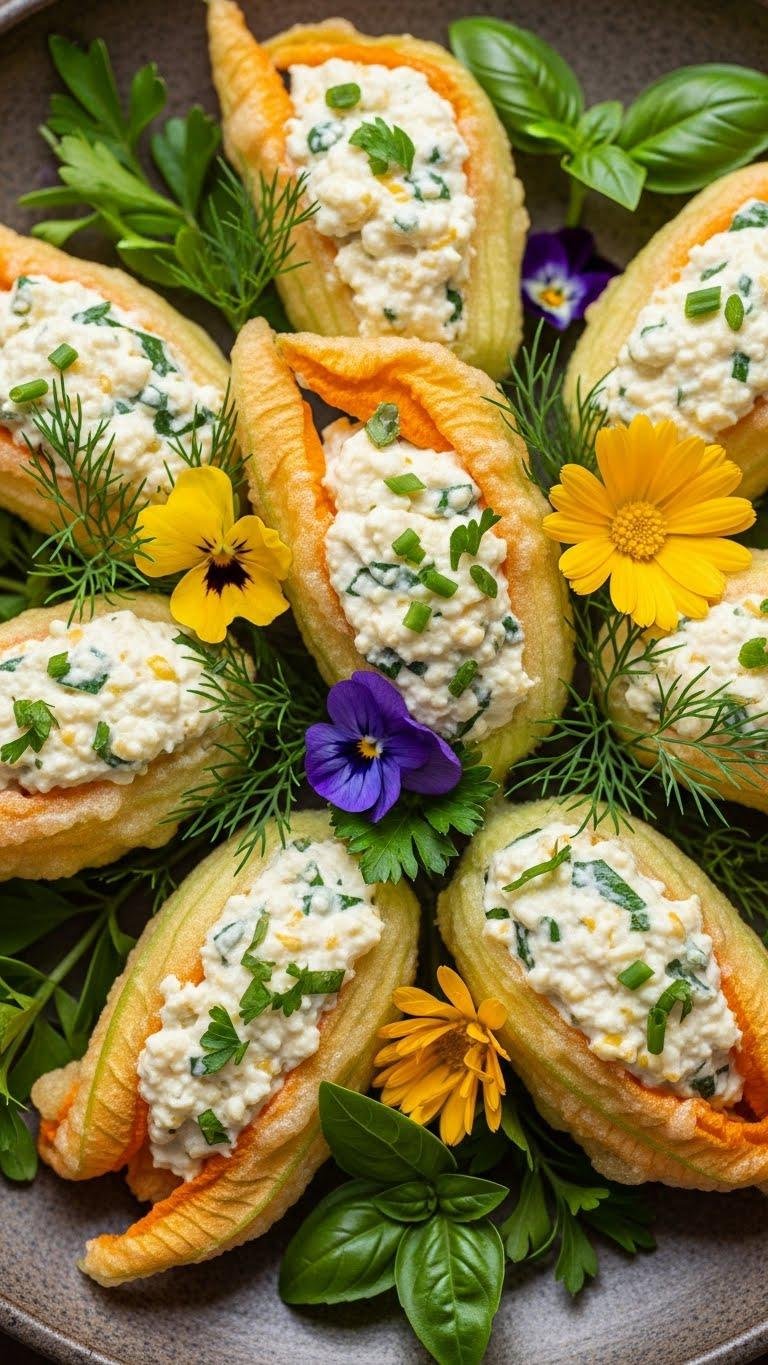
Squash blossoms offer a delicate, honeyed vegetal note with a tender, almost custardy texture that melts on your tongue. You’ll savor petals that bruise like silk, perfect for stuffed blossoms filled with ricotta or herbed chèvre.
Lightly batter them as tempura squashflowers to crisp edges while preserving plush interiors. You’ll plate them freely, scattering color and scent that invite bold, joyful bites.
Chrysanthemum
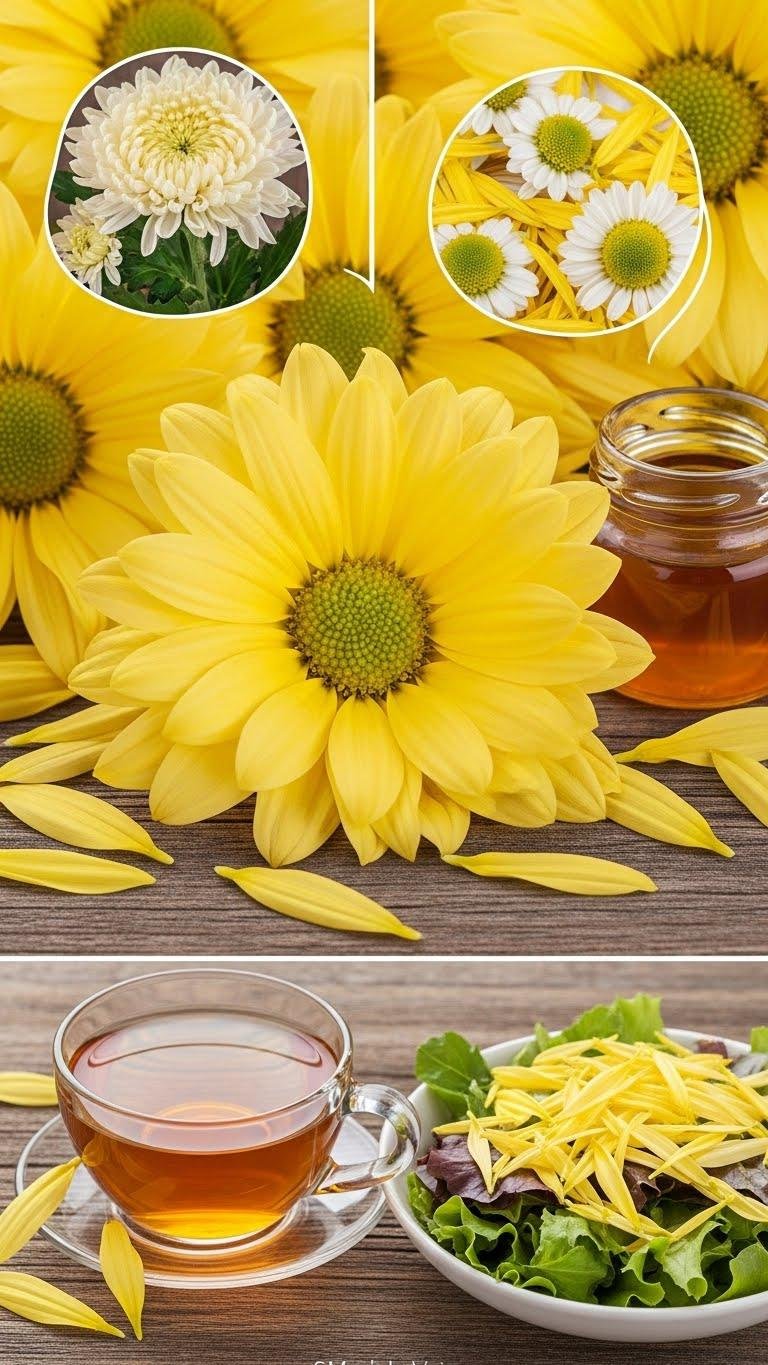
When you bite into a chrysanthemum petal, you get a bright, tea-like bitterness that wakes the palate with astringent clarity, edged by a floral honey note that lingers like a faint tea infusion. You’ll slice petals into salads and syrups, steep them for delicate tea infusions, and respect their medicinal properties—herbal, calming, and clean—letting flavor free you to craft bold, airy plates.
Cornflower
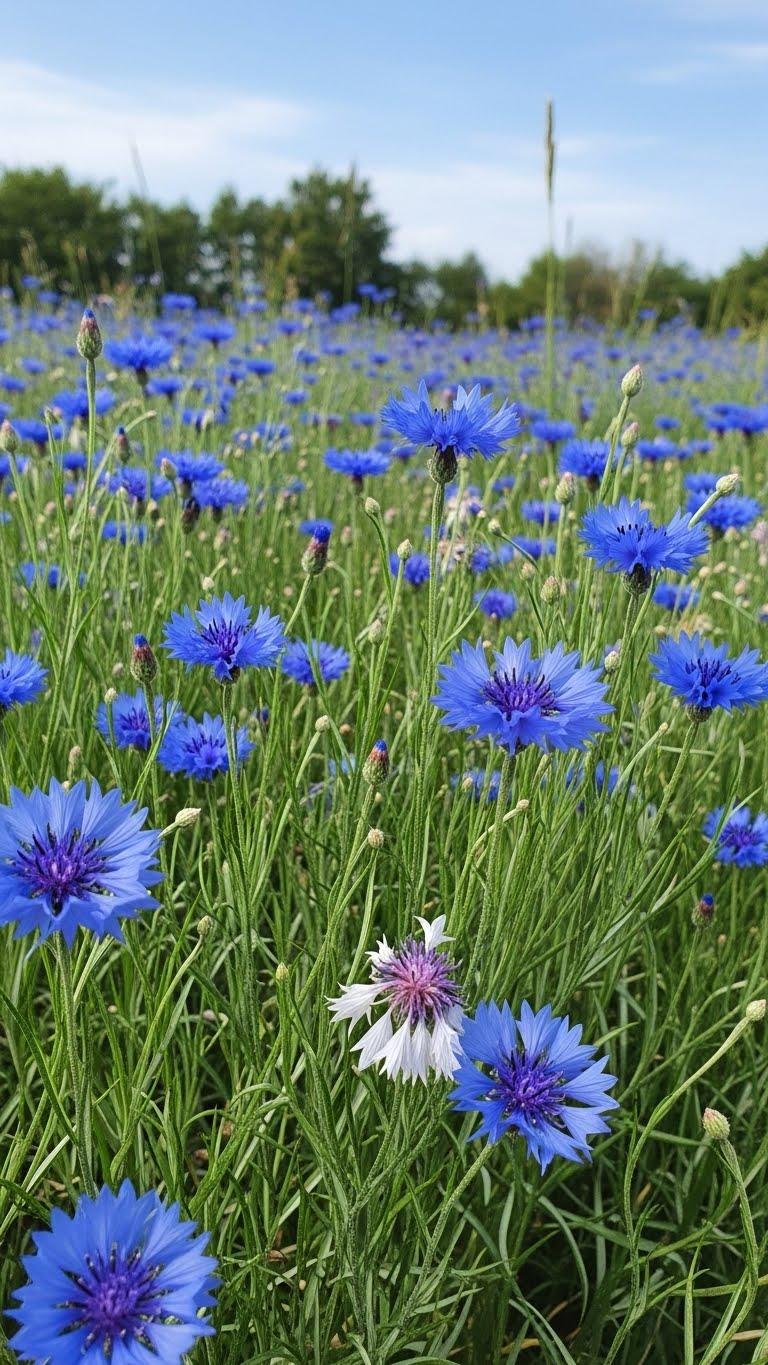
From the chrysanthemum’s tea-like astringency you might wander to the cornflower’s crisp, floral whistle—its thin, papery petals snap with a dry, haylike scent that brightens dishes with a cool, subtly sweet note.
You’ll scatter vibrant blue petals for color, use them for ornamental dyeing, and practice seed saving to steward future blooms, tasting a meadow’s clear, liberated edge.
Honeysuckle
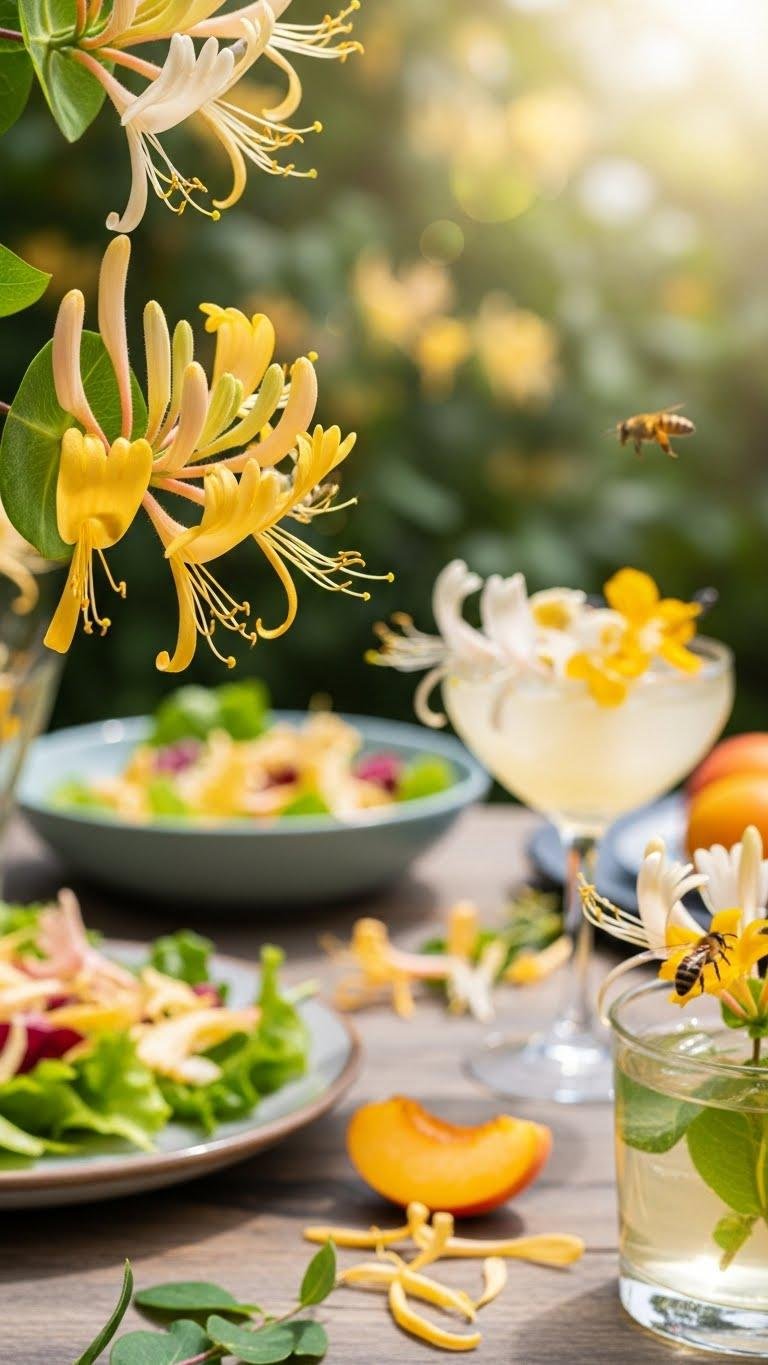
Where jasmine offered a honeyed hush, honeysuckle brings a brighter, nectar-rich clarity that lifts flavors with a citrusy, almost peach-like sweetness. You’ll pluck individual trumpets, inhale their warm, clean perfume, and drape petals over salads, syrups, cocktails.
Respect foraging etiquette matters: take sparingly, avoid nests, and honor pollinator attraction by leaving blooms. The taste is vivid, freeing, immediate.
Lilac
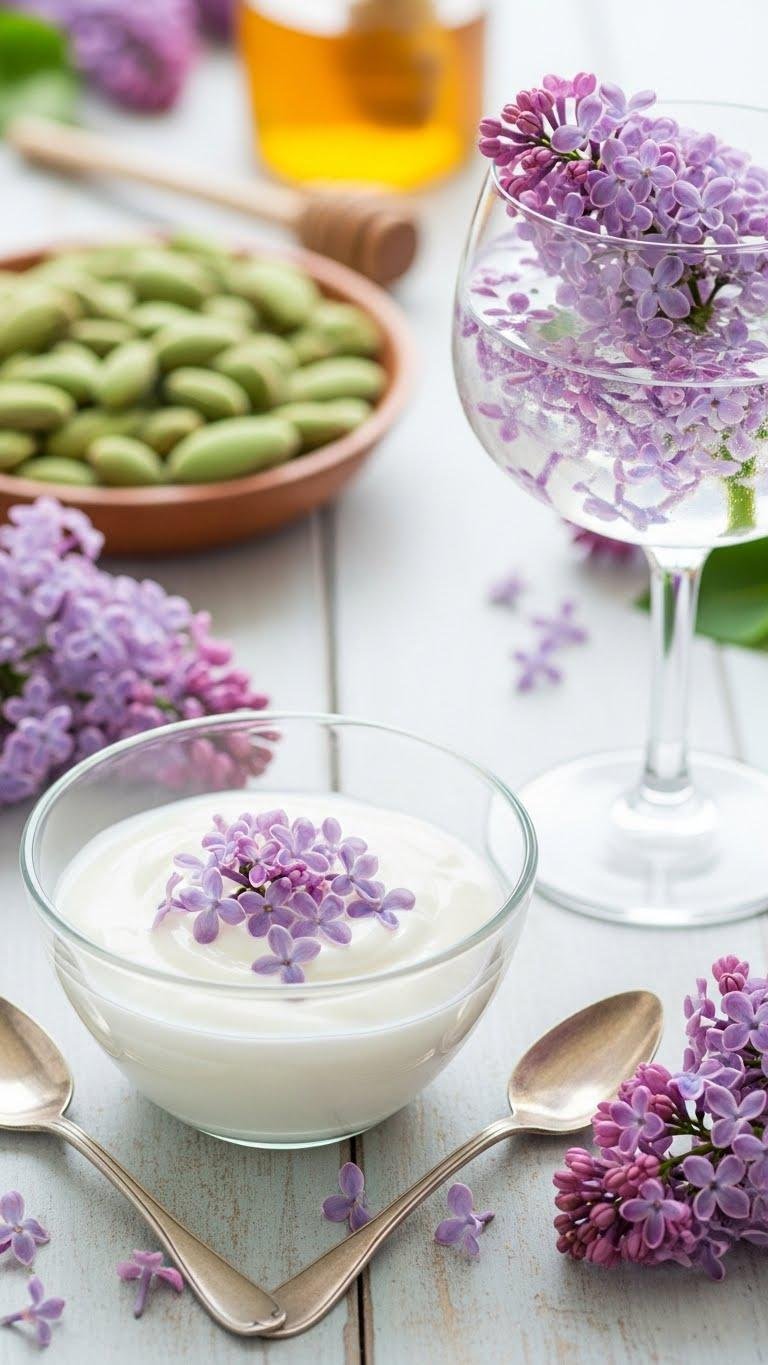
Breathe in—the lilac’s scent unfurls like a soft, powdery breeze, edges of honey and green almond rounding its floral core. You’ll taste violet clarity when you sprinkle blossoms over chilled yogurt or gin cocktails; think light culinary pairing that honors fragile perfume.
Try fragrant preservation in sugar or syrup to capture summer’s liberty, then release petals sparingly for bright, aromatic accents.
Sunflower Petals
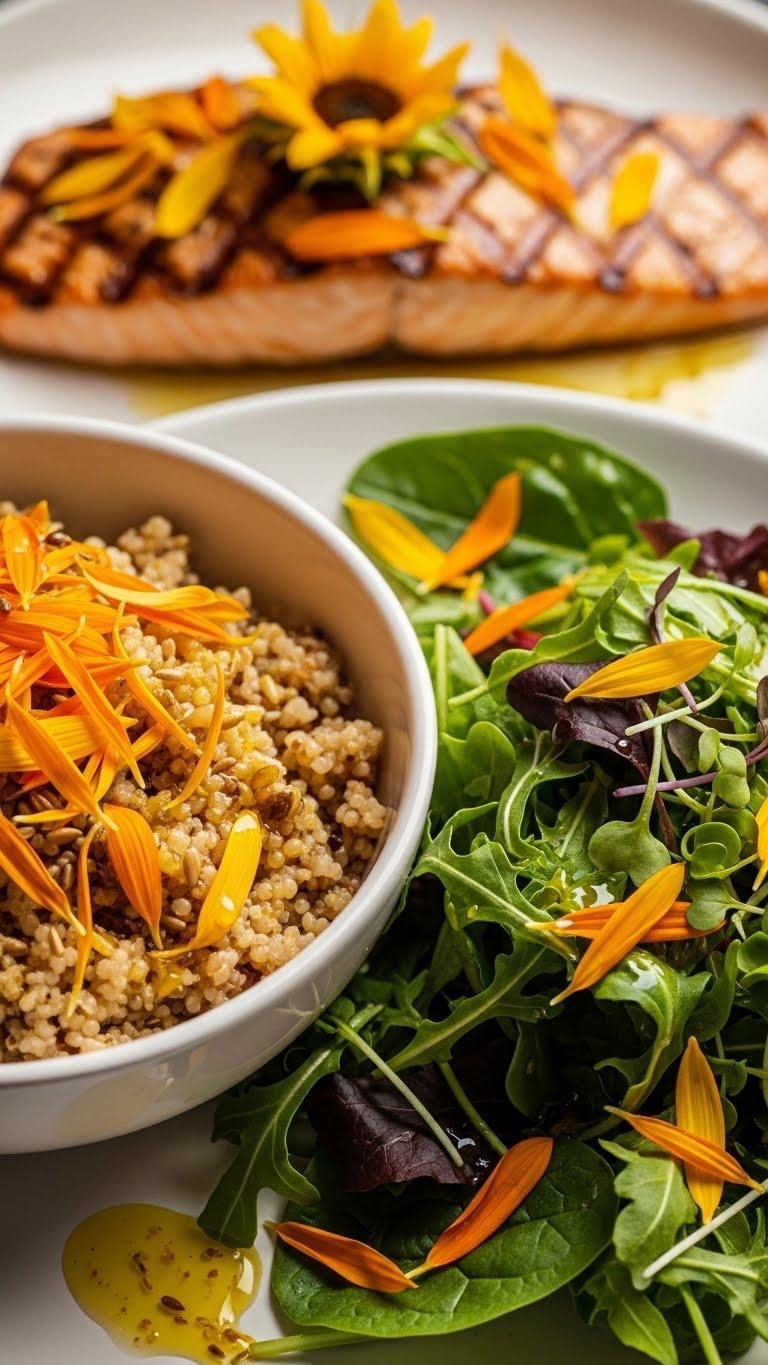
Often you’ll find sunflower petals surprising—leaning toward bright, green-tinged honey rather than cloying sweetness—so they bring sunny chew and a faintly nutty undernote to dishes.
You’ll drizzle sunflower petal infused oil over warm grains, tear petals into a sunflower petal salad garnish, or scatter them on grilled fish. Their crisp aroma and resilient texture invite bold, liberated plating.
Bee Balm
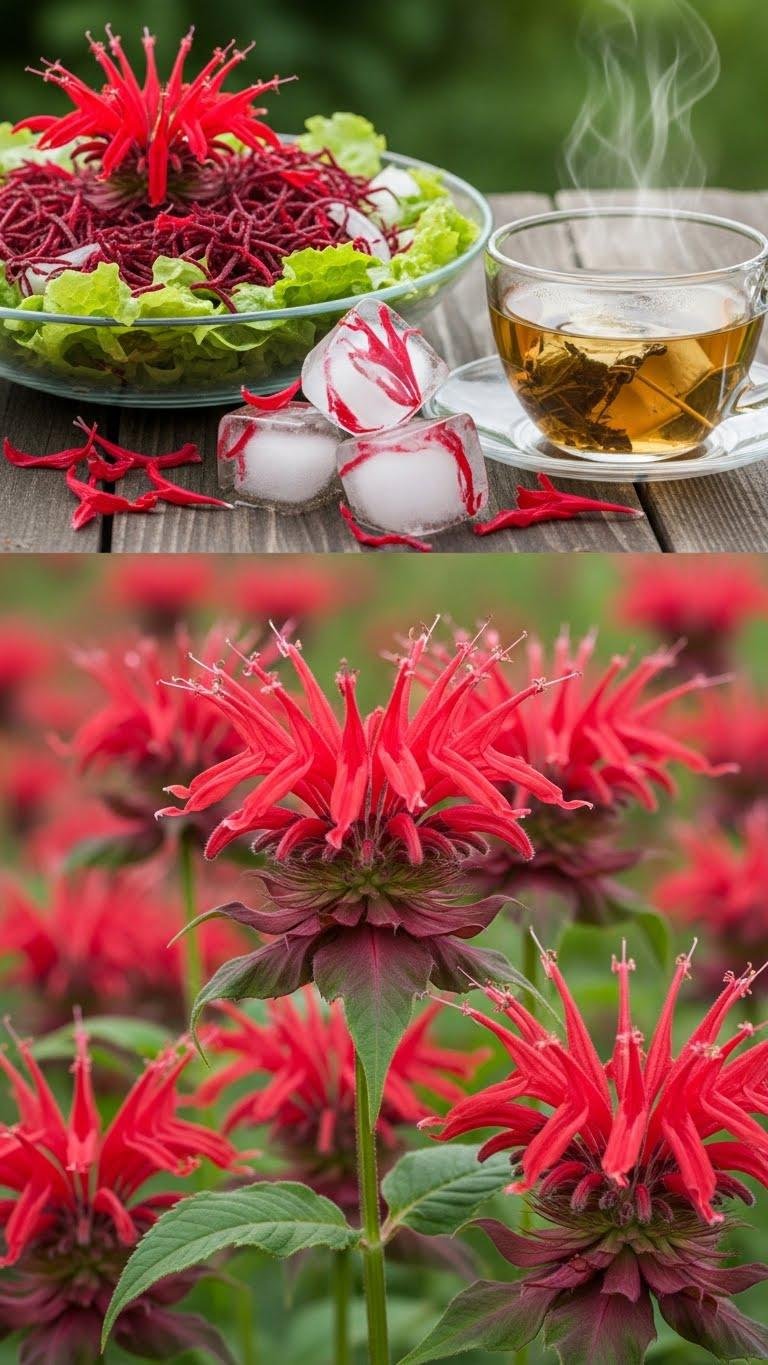
Taste bee balm and you’ll meet a brisk, citrus-herb snap—think lemony bergamot tempered by minty coolness and a faint floral perfume that lingers on the palate. You’ll tear petals into salads, freeze into ice cubes, or steep for a bold herbal infusion.
Its vivid red blooms promise pollinator attraction, and you’ll relish their bright, freeing flavor in savory and sweet dishes.
Geranium (Scented)
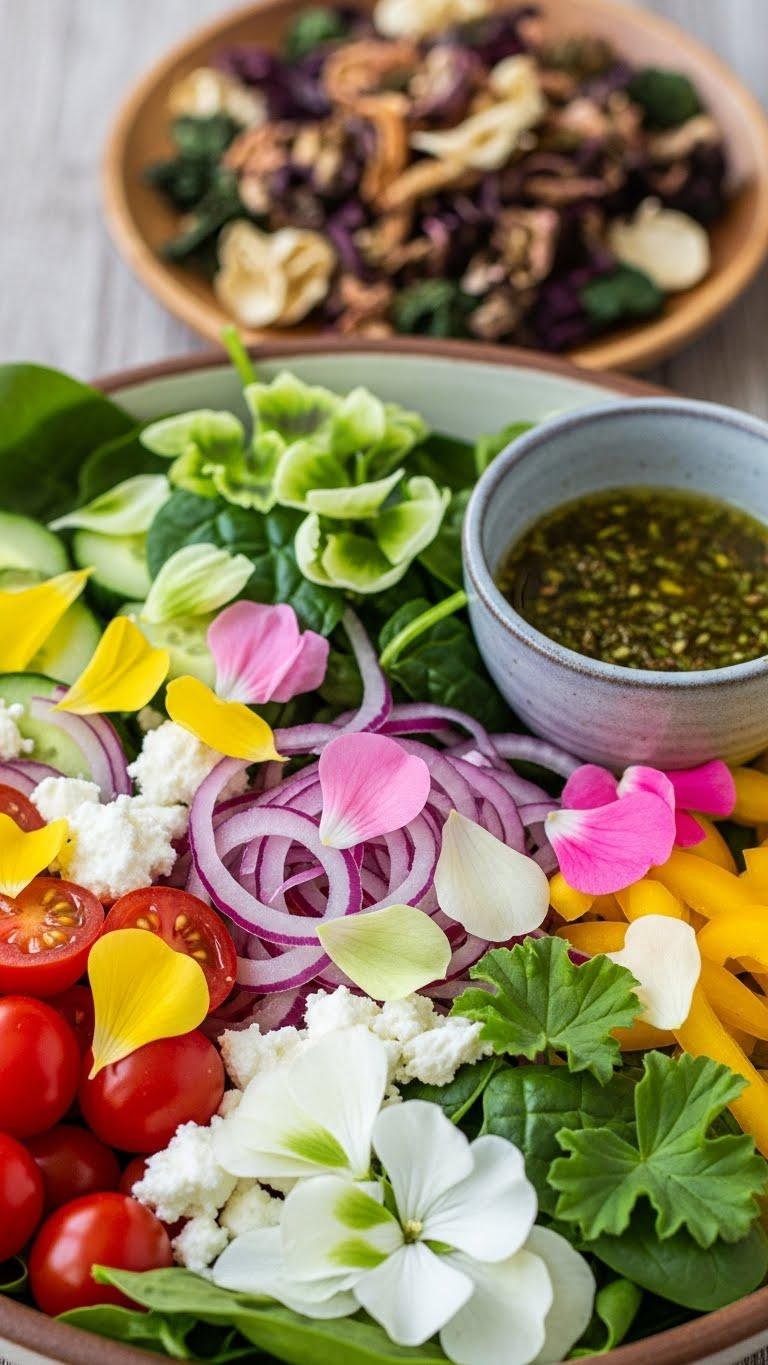
If bee balm brightened your salad with citrusy zing, scented geraniums will surprise you with perfumed complexity—lemon, rose, mint, or even coconut depending on the cultivar.
You’ll taste petals that flirt with savory and sweet, snip leaves for instant scent pairing in dressings, and dry fragments for potpourri crafting.
Use sparingly; their fragrance commands the dish and invites bold, liberated experiments.
Dianthus (Carnation)
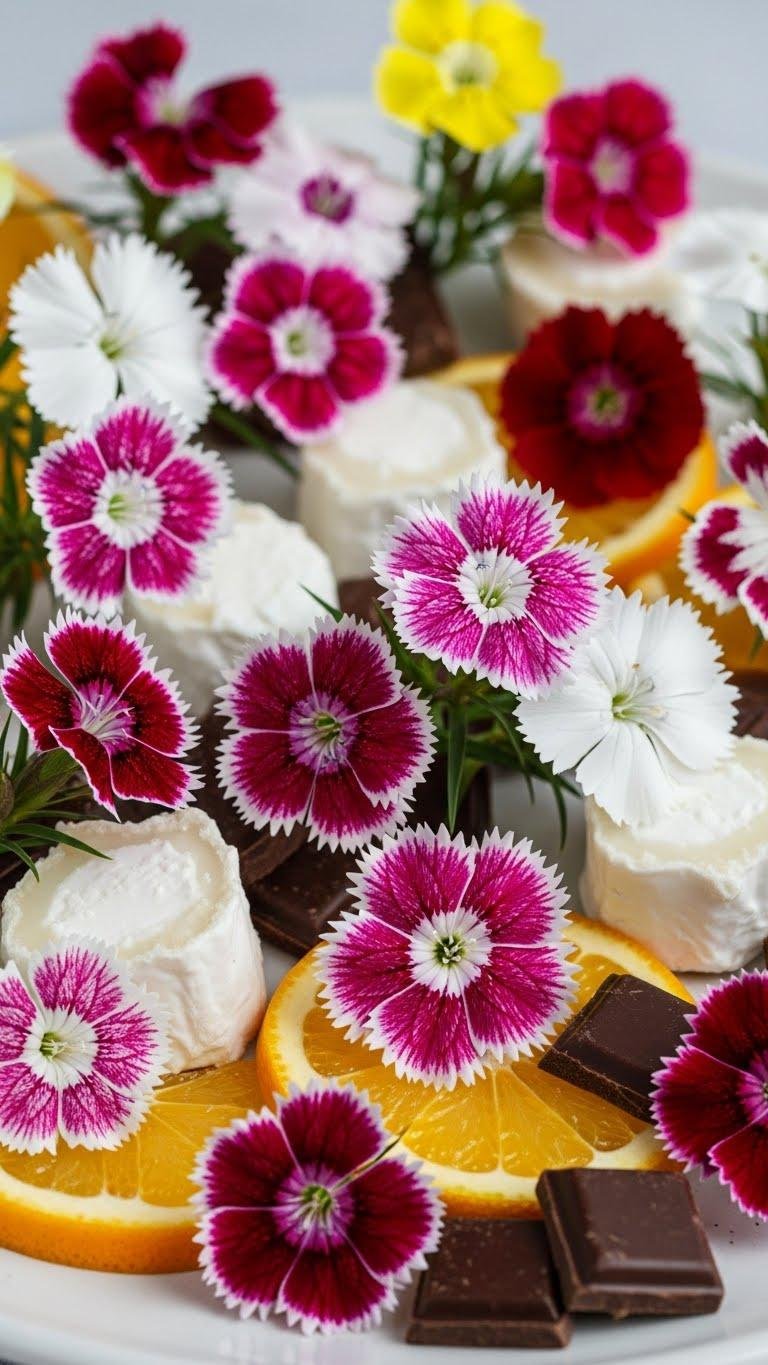
Petals like confetti, dianthus brings a crisp, clove‑like note to salads and confections that’s both bright and slightly spicy—you’ll notice a clean sweetness edged with peppery warmth. You’ll scatter fringed blooms over citrus, goat cheese, or chocolate, experimenting with floral pairings and cent repurposing of stems into syrups. Taste is immediate, vivid, freeing — precise, decorative, and utterly edible.
Snapdragon
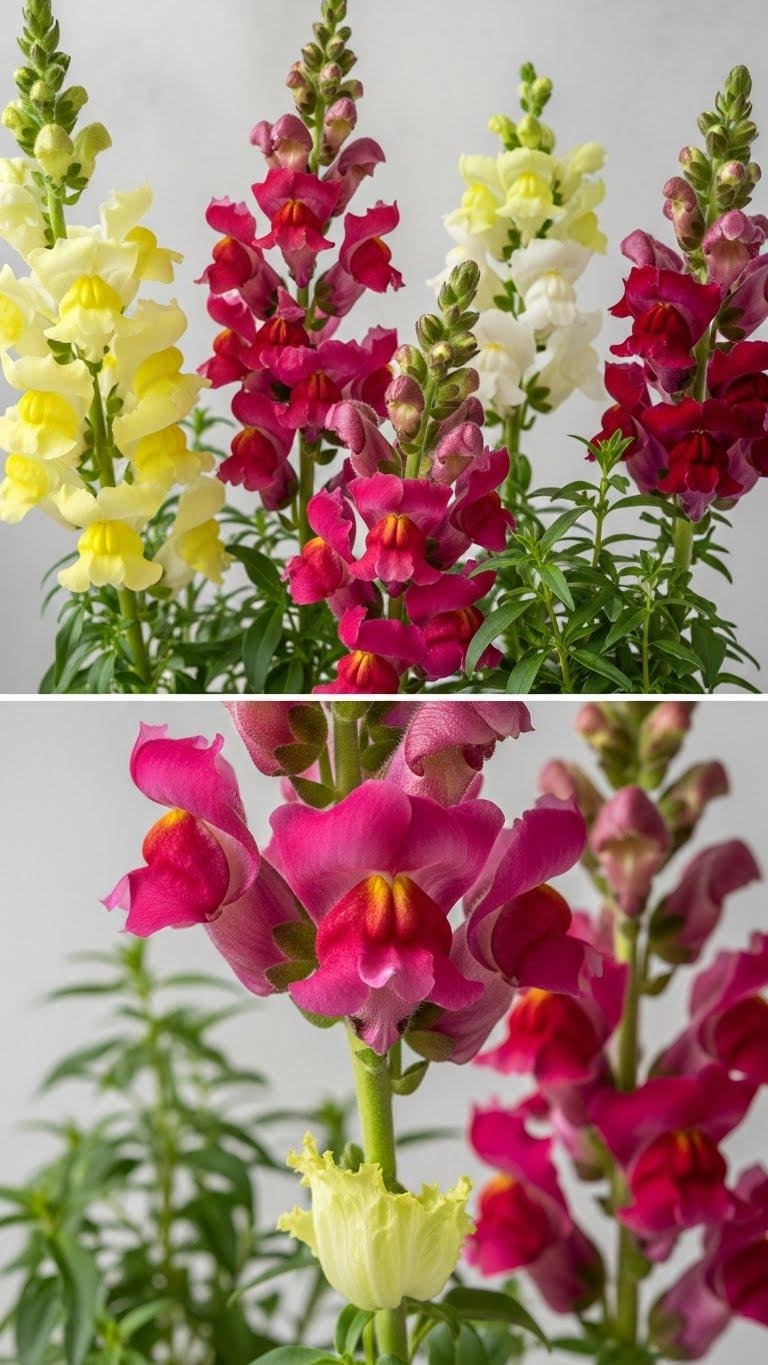
Snapdragons surprise you with a crisp, slightly bitter green note and a faint floral sweetness that’s more vegetal than perfumed; bite a lower petal and you’ll find a mild, lettuce‑like texture while the inner throat offers a subtle honeyed hint.
You’ll appreciate heirloom varieties for nuanced color and stamina; their playful shape carries floral symbolism—strength and grace—so garnish boldly, taste freely, and pair with crisp herbs.