
If you want year‑round structure and interest, choose evergreens that suit your light, soil, and maintenance needs. You’ll get tidy hedges from boxwood, bold verticals from hollies or arborvitae, and seasonal blooms from camellia or pieris. Consider foliage contrast—loropetalum, aucuba, nandina—and tough, low‑care screeners like juniper or distylium. I’ll outline 20 dependable choices and where each performs best so you can plan with confidence.
Boxwood (Buxus Spp.)
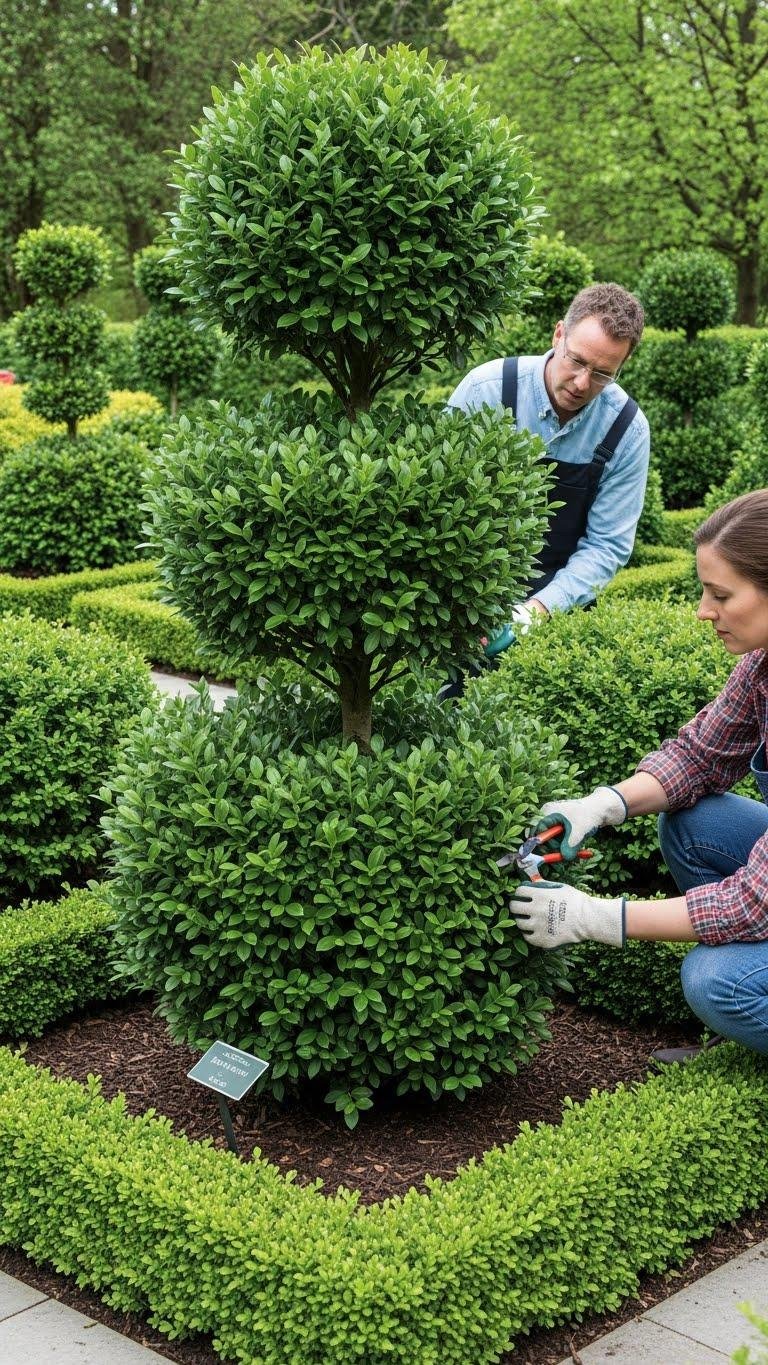
Japanese Plum Yew (Cephalotaxus Spp.)
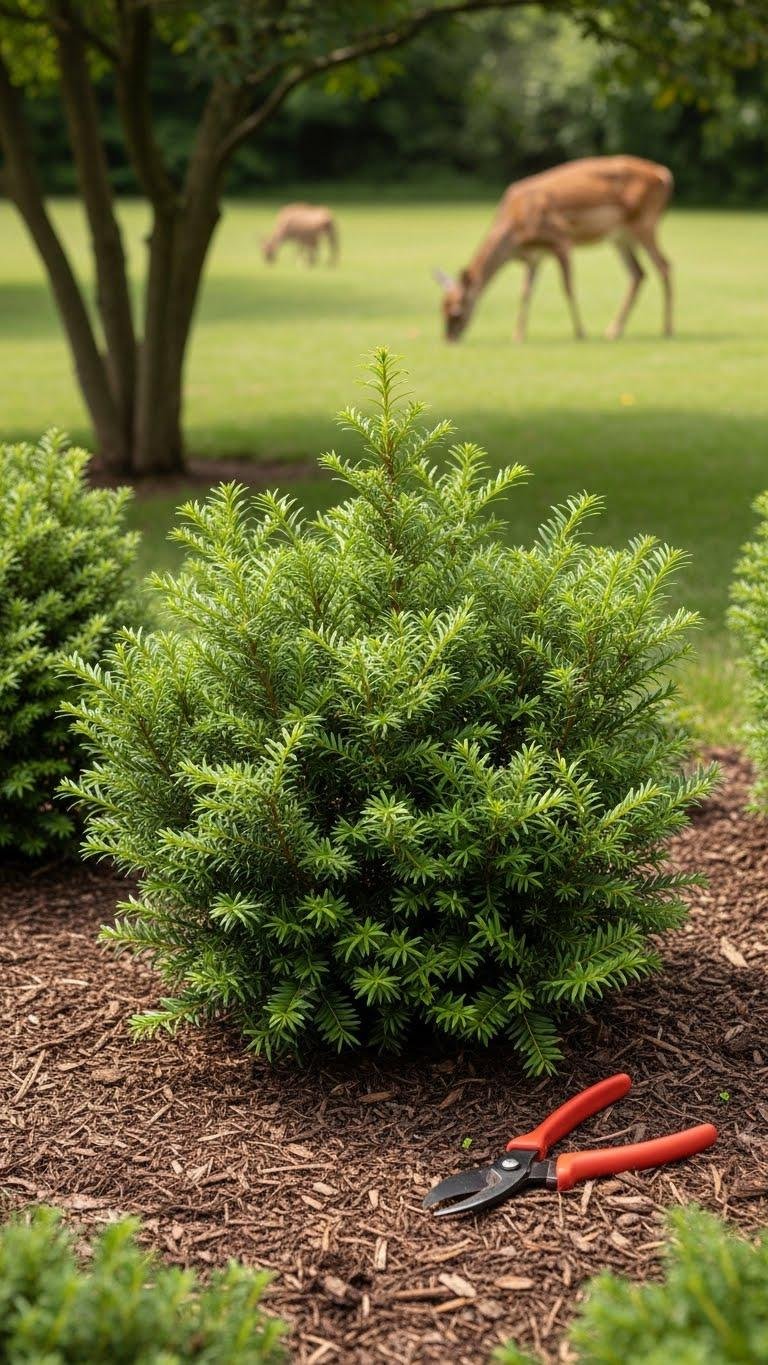
If you like the year-round structure and low-maintenance profile of Nellie Stevens holly, Japanese plum yew offers a different evergreen option with softer foliage and a finer texture.
You’ll appreciate its shade tolerance, compact habit, and slow growth for tight spaces. Prune sparingly to shape, mulch to conserve moisture, and enjoy reliable deer resistance while keeping planting choices open and effortless.
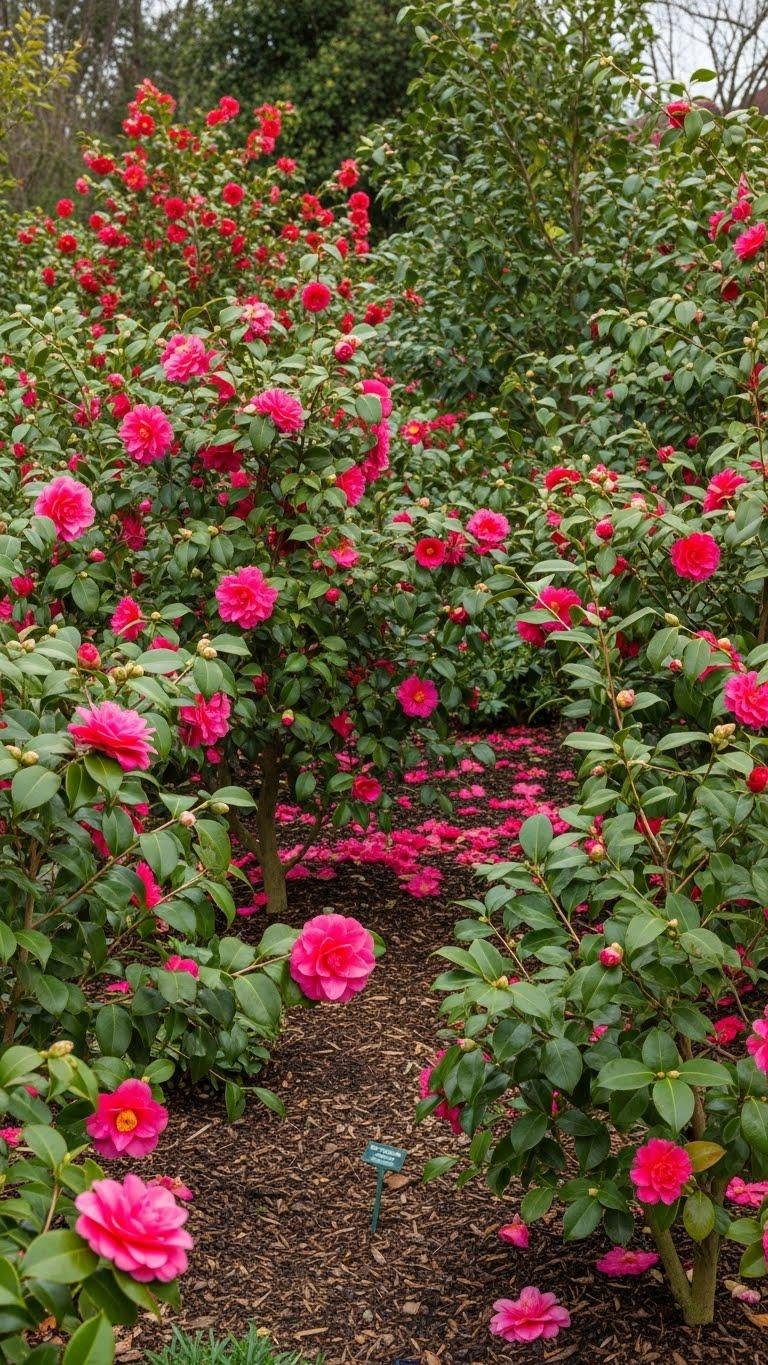
Camellia (Camellia Spp.)
Pieris (Pieris Japonica)
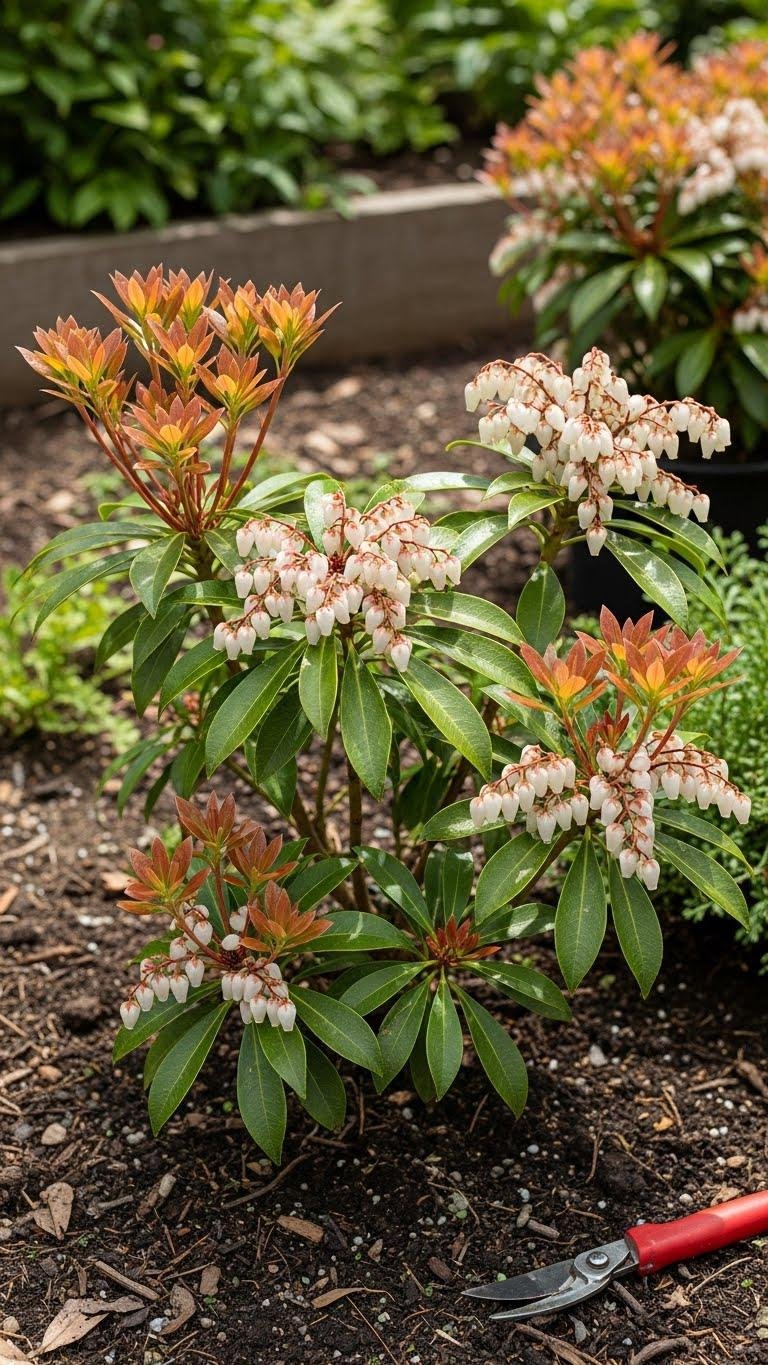
Admire Pieris japonica for its year-round structure and striking seasonal interest: glossy, lance-shaped evergreen leaves set off pendulous clusters of bell-shaped white or pink flowers in late winter to spring, often preceded by flushed-bronze new growth.
You’ll plant it in acidic soil, place it in dappled shade, prune lightly after winter bloom, and expect low maintenance but reliable form for borders or containers.
Rhododendron / Evergreen Azalea
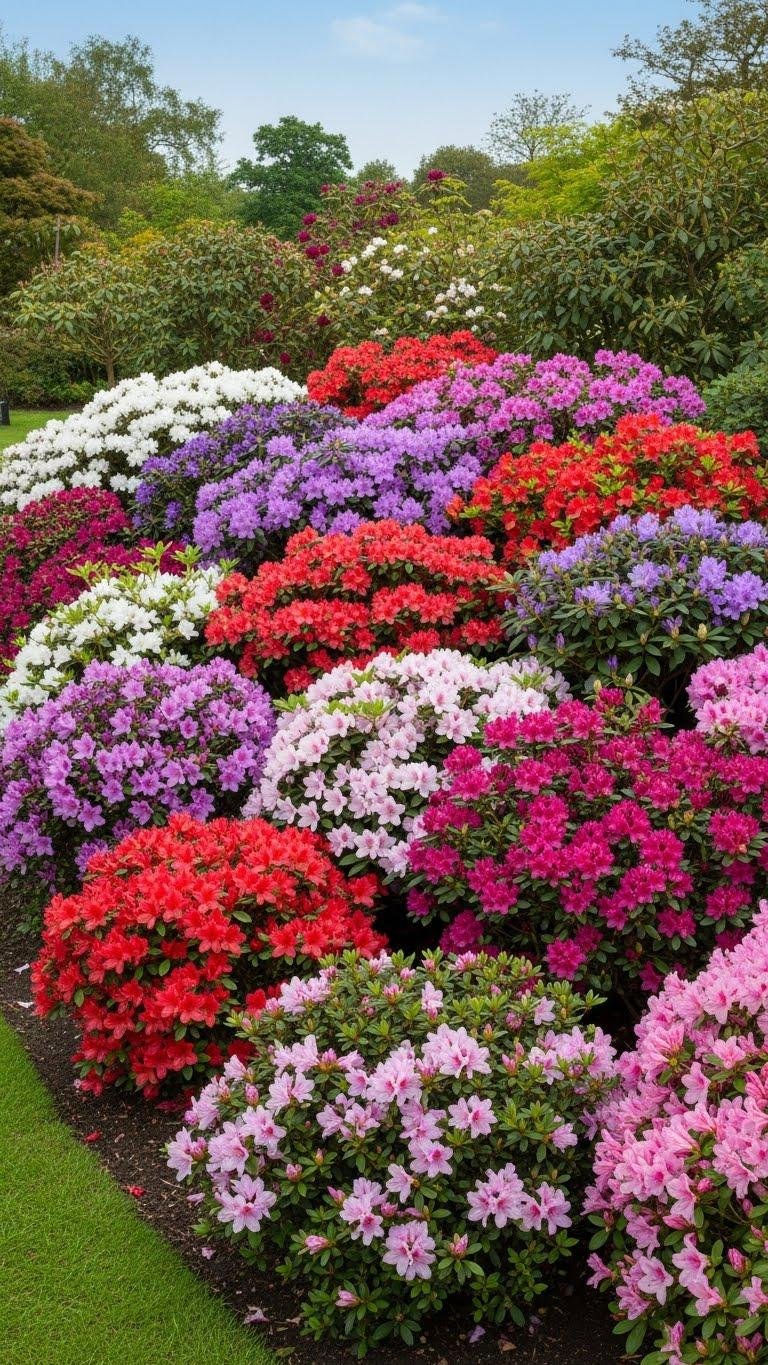
Like Pieris, rhododendrons and evergreen azaleas give you broad-season structure with showy flowers, but they bring a wider palette of bloom colors and form options to the border.
You’ll choose acidic soil and sheltered sites, select compact form cultivars for tight beds, and practice light ridge pruning after seasonal bloom.
They reward you with reliable foliage and repeatable color without fuss.
Euonymus Japonicus
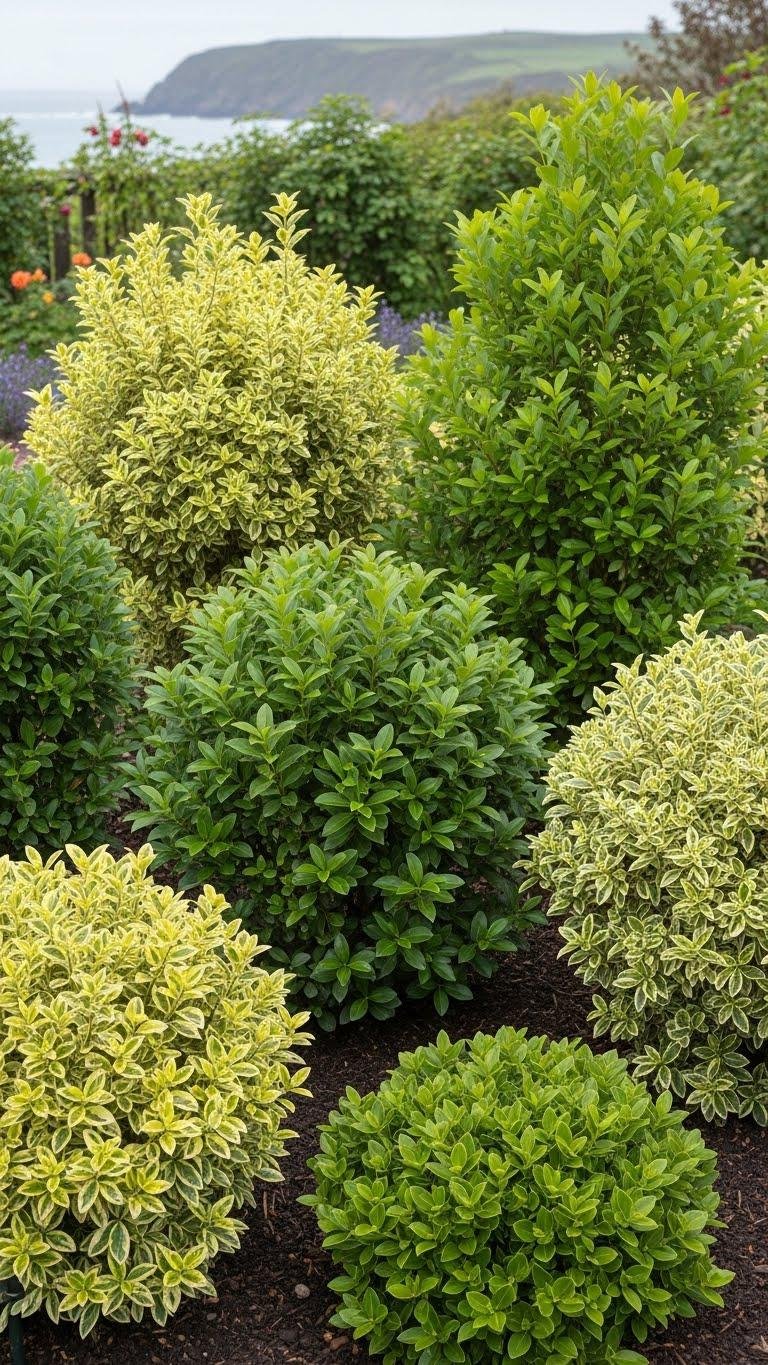
Euonymus japonicus gives you an evergreen backbone that’s tough, adaptable, and easy to shape.
You’ll use it for crisp structure, choosing variegated varieties to brighten shade or solid green for mass.
Plant in well-drained soil, prune seasonally, and apply hedging techniques for clean lines or free-form screens.
It tolerates coastal exposure and rewards low-maintenance freedom with reliable year-round foliage.
Loropetalum (Chinese Fringe Flower)
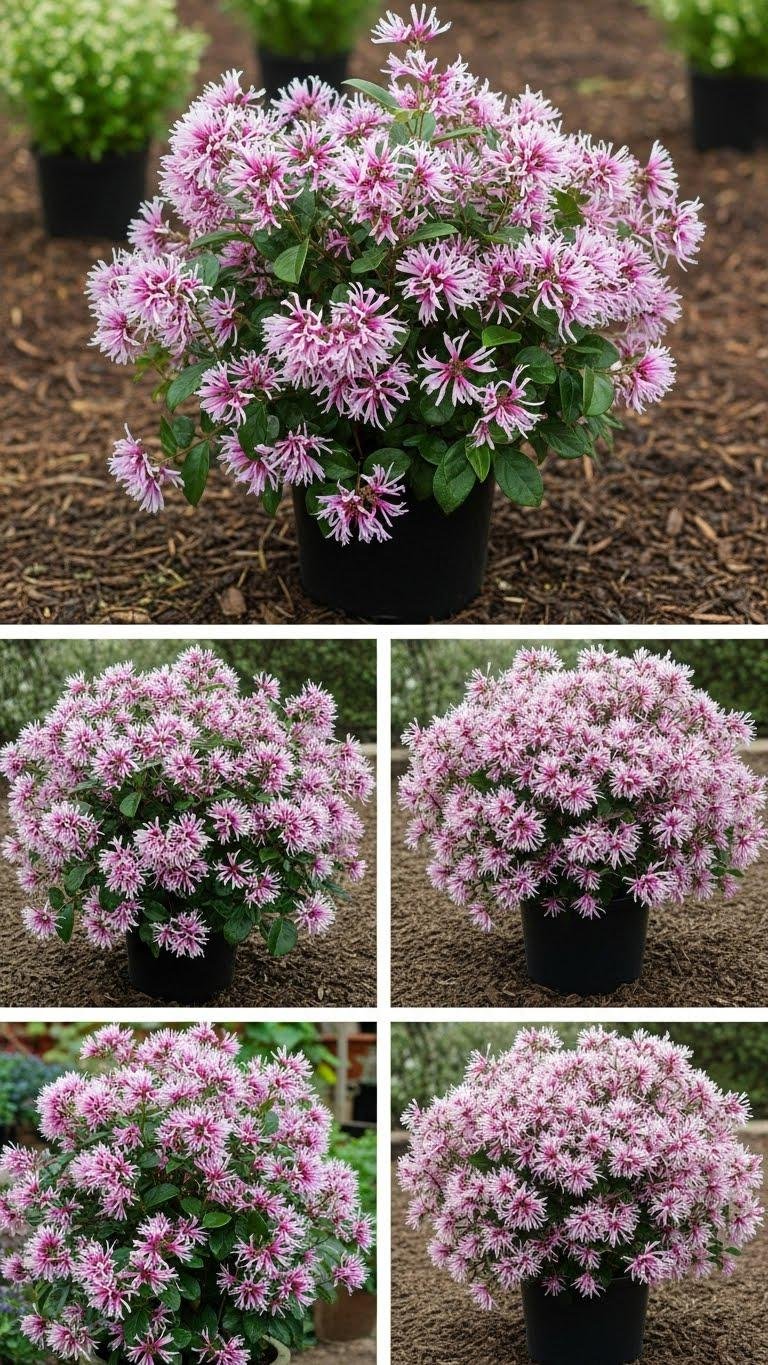
Often used for color contrast and seasonal interest, Loropetalum (Chinese fringe flower) gives you striking foliage and airy, fringe-like blooms that last from late winter into spring.
You’ll appreciate fragrant foliage and low-maintenance habits: plant in well-drained acid soil, mulch, water to establish, and perform light seasonal pruning to shape after bloom.
It tolerates containers, hedges, and free-form specimens.
Nandina Domestica
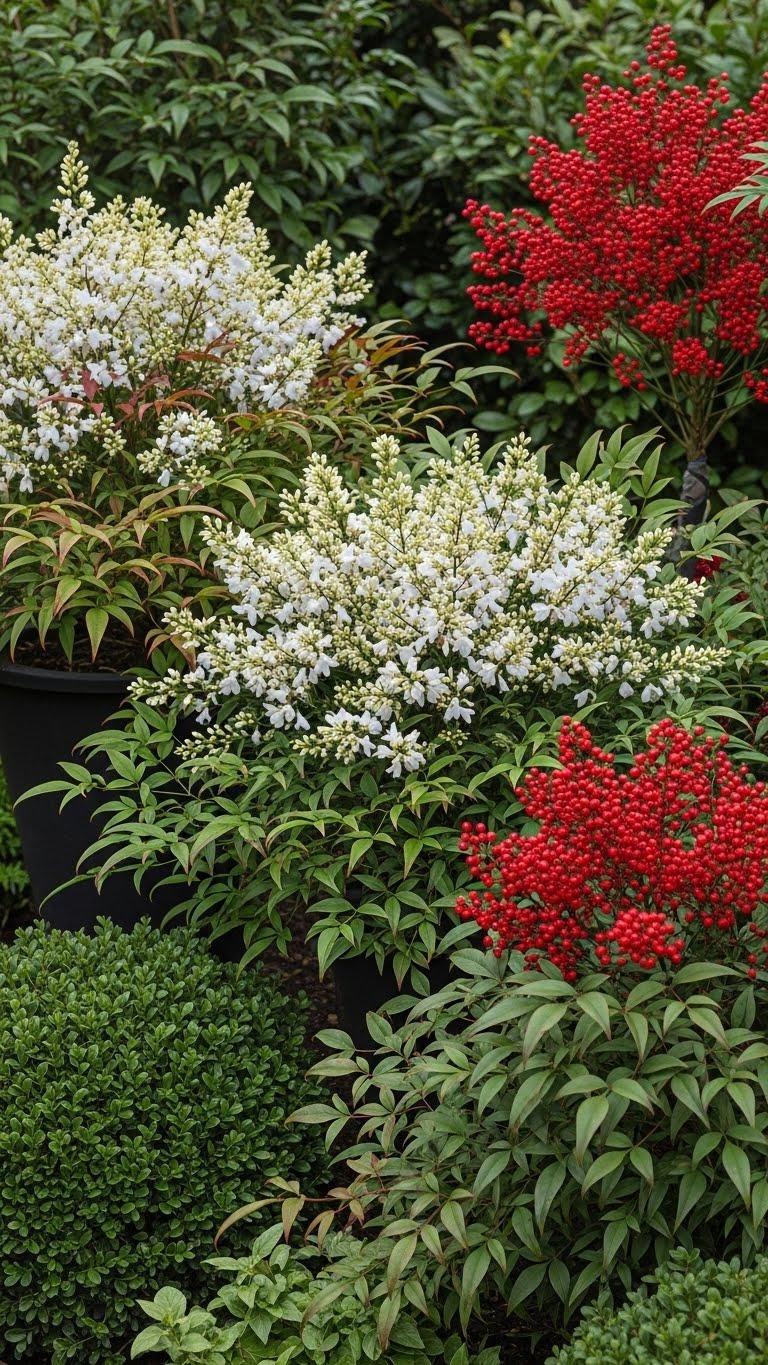
Nandina domestica, commonly called heavenly bamboo, gives you year-round structure with lacy foliage, clusters of white flowers in spring, and bright red berries that persist into winter.
You’ll appreciate low-maintenance care, adaptable light tolerance, and selective pruning to shape compact mounds. Use it for ornamental foliage contrasts and winter berry focused accents in borders or containers when you want reliable, liberated garden design.
Leucothoe (Leucothoe Spp.)
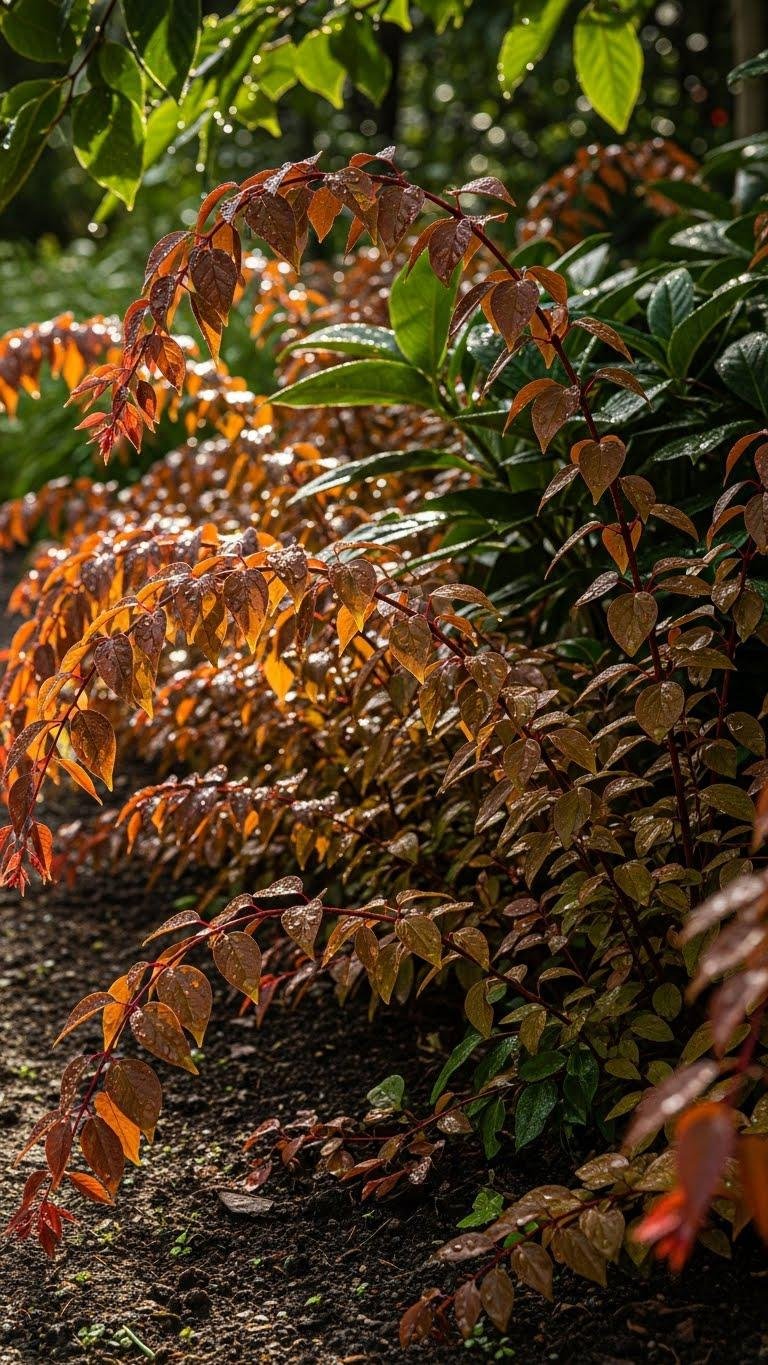
If you liked the year-round structure and seasonal color of heavenly bamboo, consider Leucothoe for a different kind of evergreen interest.
You’ll enjoy arching branches, glossy leaves that flush bronze or red, and compact forms for borders.
Plant in fertile, well-drained soil with consistent moisture, high soil acidity preferences, and reliable shade tolerance.
Prune lightly after flowering to maintain tidy habit.
Dwarf Arborvitae (Thuja ‘Tater Tot’ and Similar)
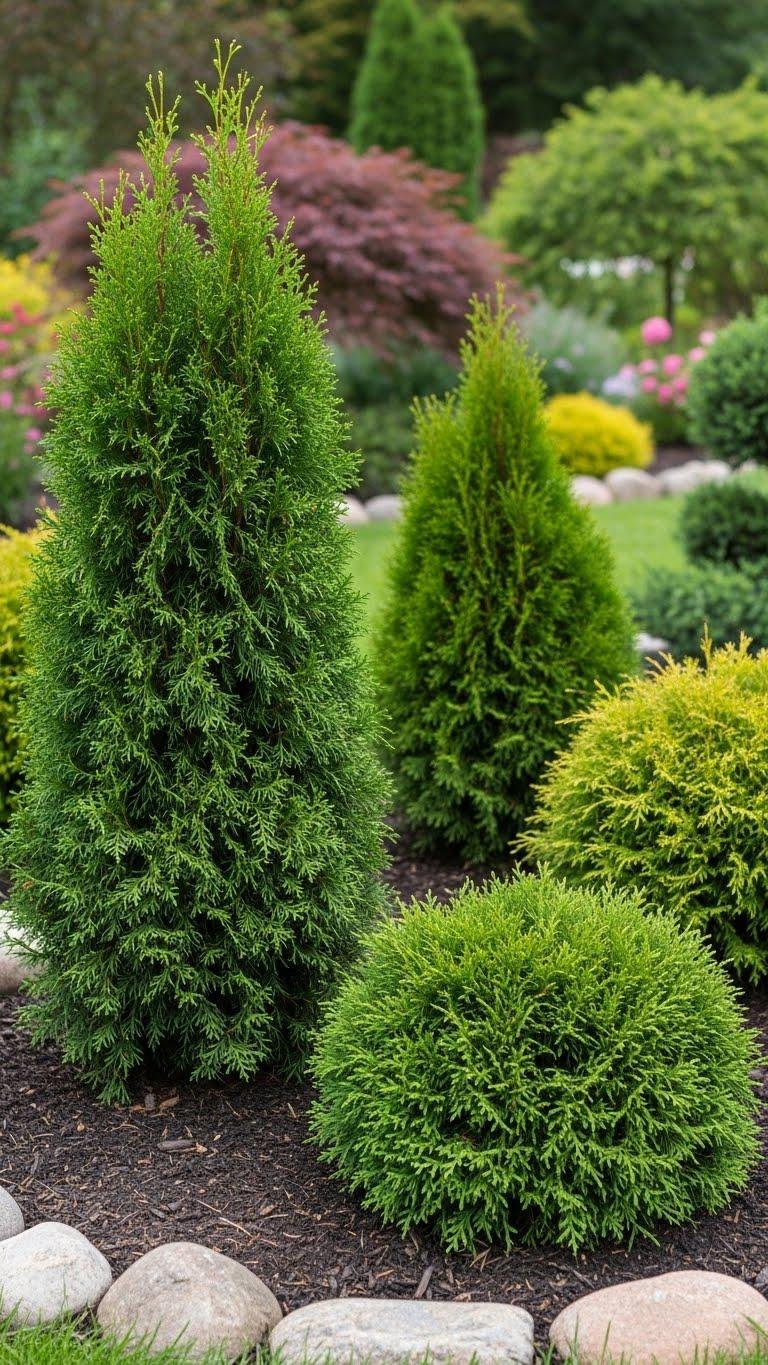
Think small but expect big impact: dwarf arborvitae like Thuja ‘Tater Tot’ give you dense, columnar or mounded evergreen structure that works equally well in tight borders, rock gardens, and foundation plantings.
You’ll appreciate low-maintenance pruning, excellent winter hardiness, and adaptability to container planting. Space them for airflow, choose well-drained soil, and you’ll have reliable year-round form that frees you to design boldly.
Globe Arborvitae (Thuja ‘Green Globe’)
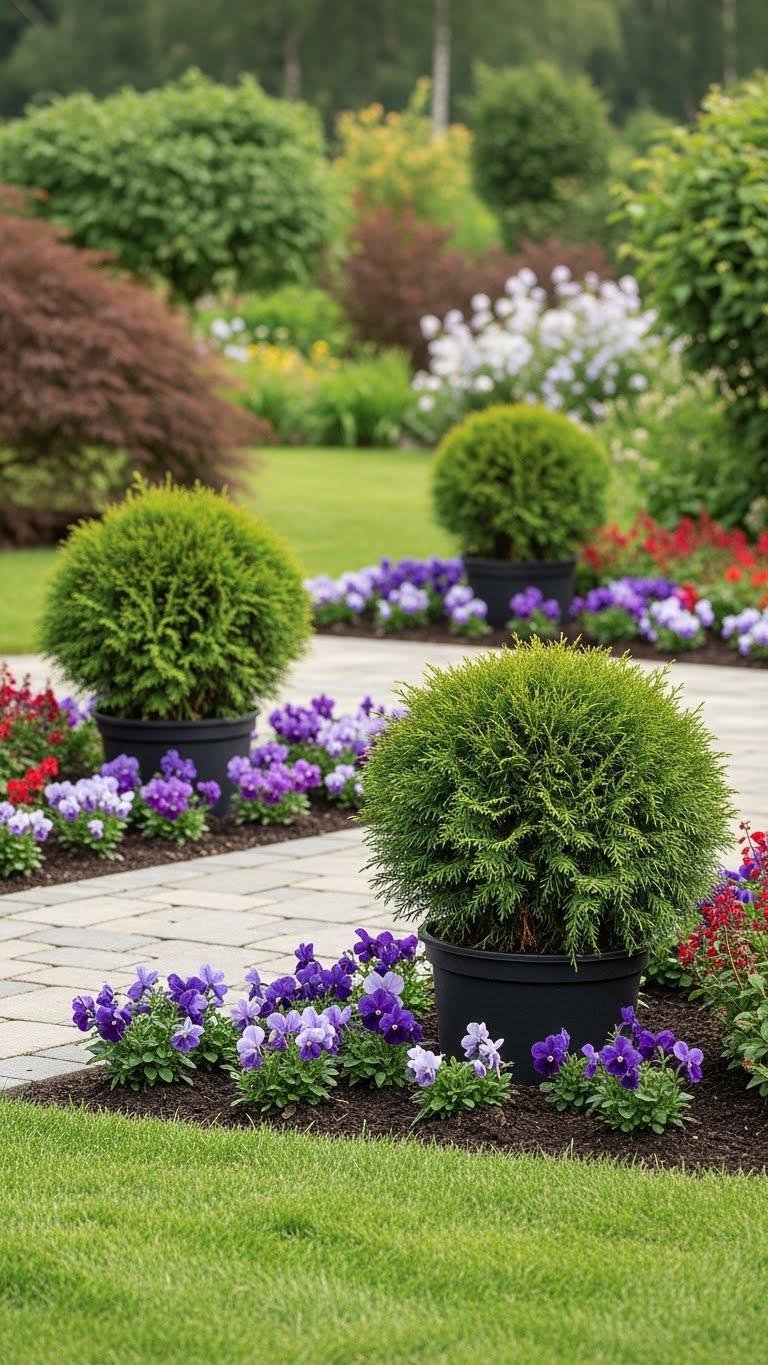
Where dwarf arborvitae give you vertical accents, Globe Arborvitae (Thuja ‘Green Globe’) offers compact, perfectly rounded form that works as a focal knot in small beds, edging, or containers.
You’ll place it for structure, prune lightly to keep shape, and use container planting for portability. It’s low-maintenance, cold-hardy, and offers reliable deer resistance so your design stays intact.
Wax Myrtle (Morella/Morella Cerifera)
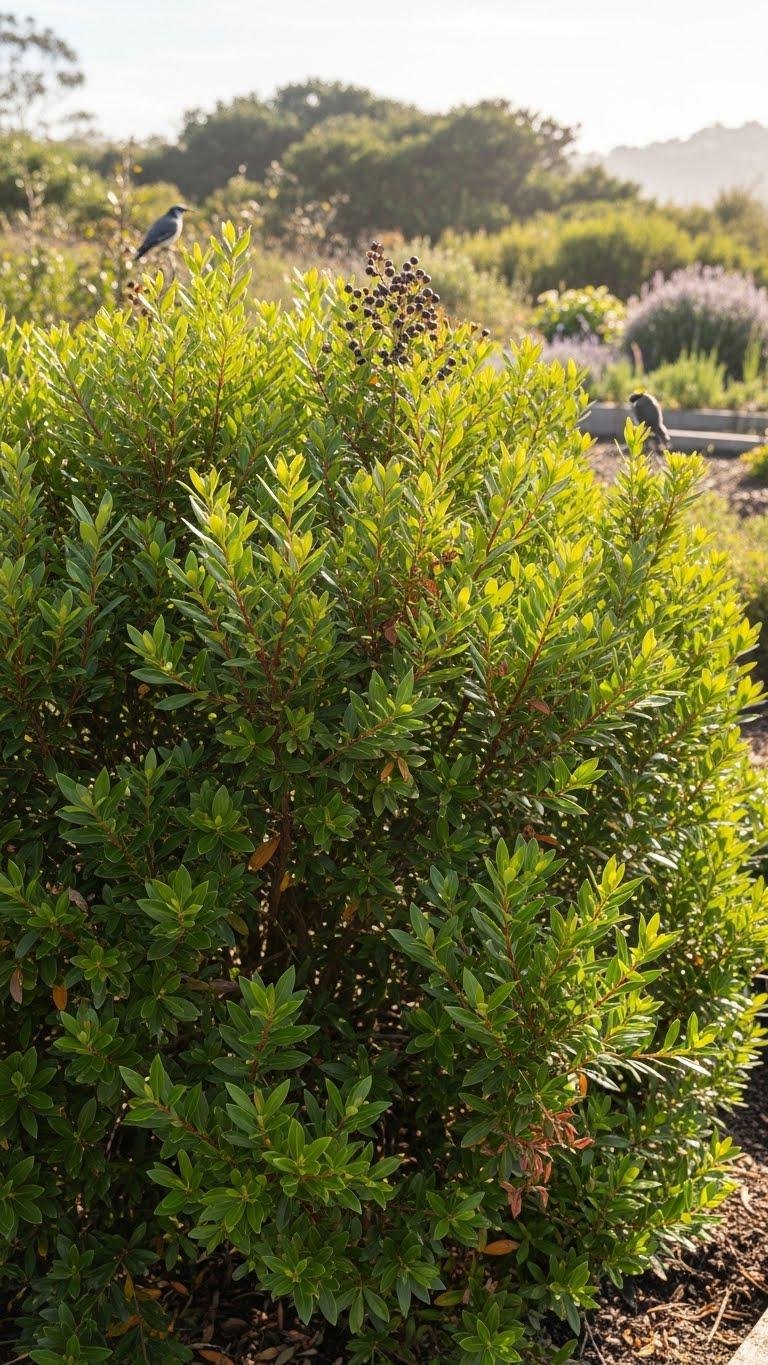
Offering glossy, aromatic foliage and rapid growth, Wax Myrtle (Morella cerifera) makes a versatile evergreen for screens, windbreaks, or a multi-stem specimen in mixed borders.
You’ll prune to shape, expect dense growth, and enjoy its salt tolerance on coastal sites. Birds use berries for wildlife habitat; plant in sun to part shade, amend soil for drainage, and let it self-sow sparingly.
Distylium
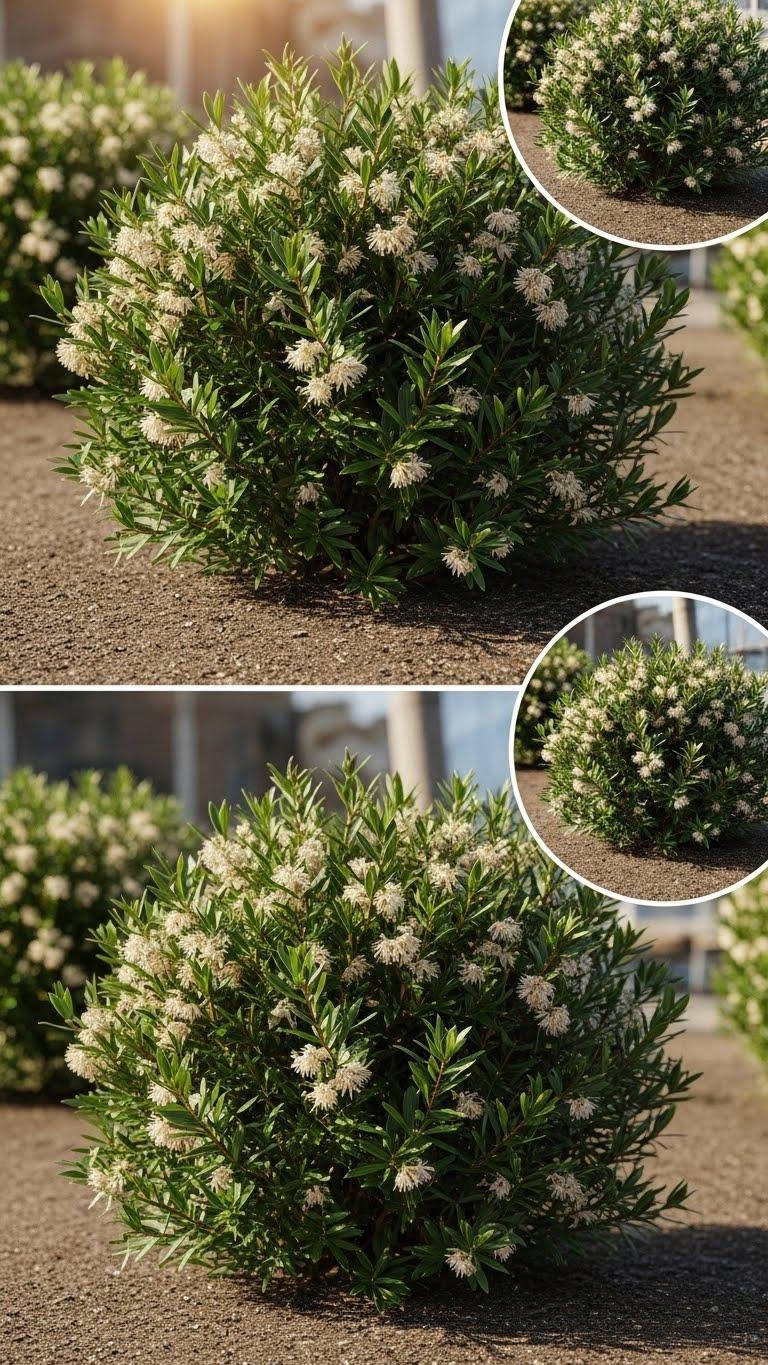
Dense and adaptable, Distylium is a low-maintenance evergreen shrub that thrives in sun to part shade and tolerates poor, sandy, or clay soils as long as drainage is reasonable.
You’ll appreciate its compact growth habit, glossy foliage, and late winter fringe flowers. Prune lightly for shape, plant where salt tolerance matters, and rely on its resilience to give you year-round structure with minimal intervention.
Juniper (Groundcover and Shrub Forms)
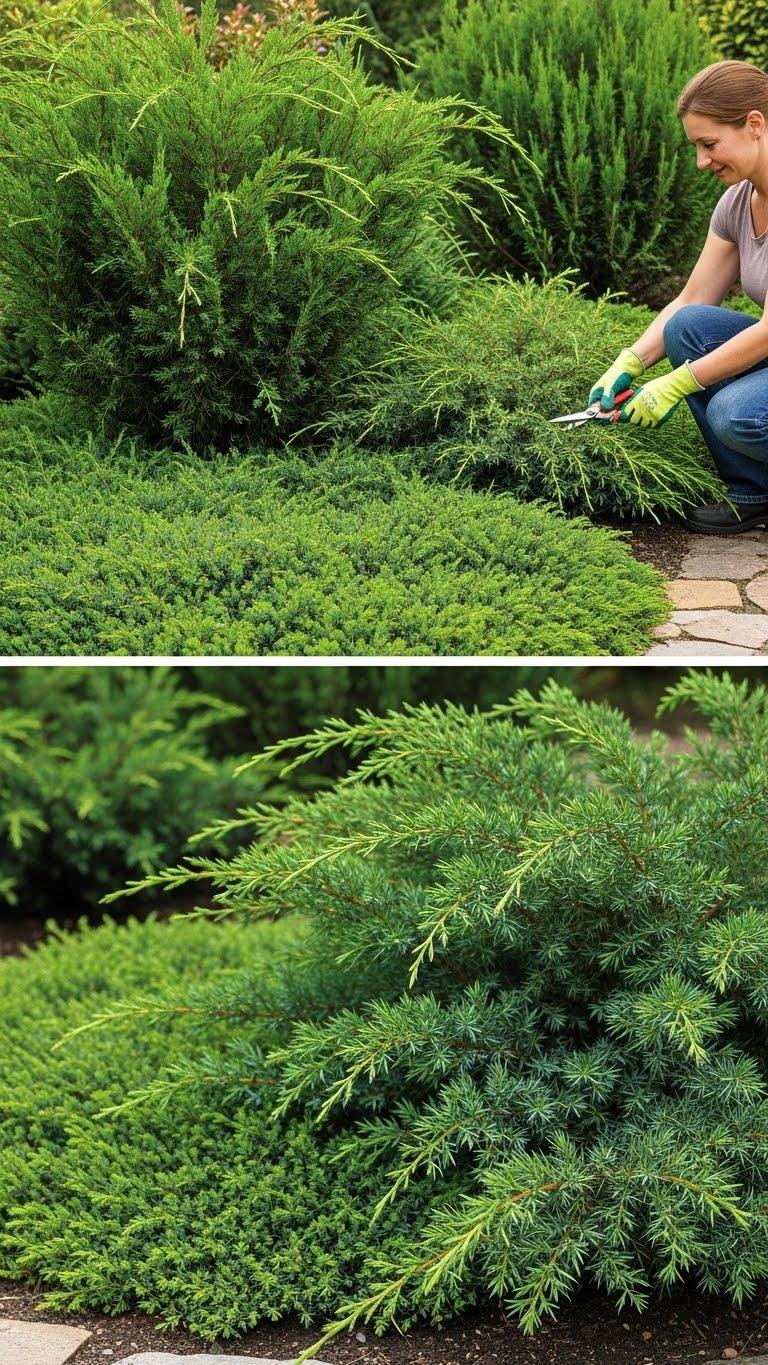
If you liked Distylium’s low-maintenance habit and year-round structure, you’ll find junipers offer similar reliability with more form options. You can choose mat-forming groundcovers or upright shrubs, prune selectively with needle pruning to shape without heavy ties, and enjoy aromatic foliage that repels pests.
Plant in free-draining soil, give full sun, and expect tough, low-water performance that frees your schedule.
Aucuba Japonica (Gold Dust Aucuba)
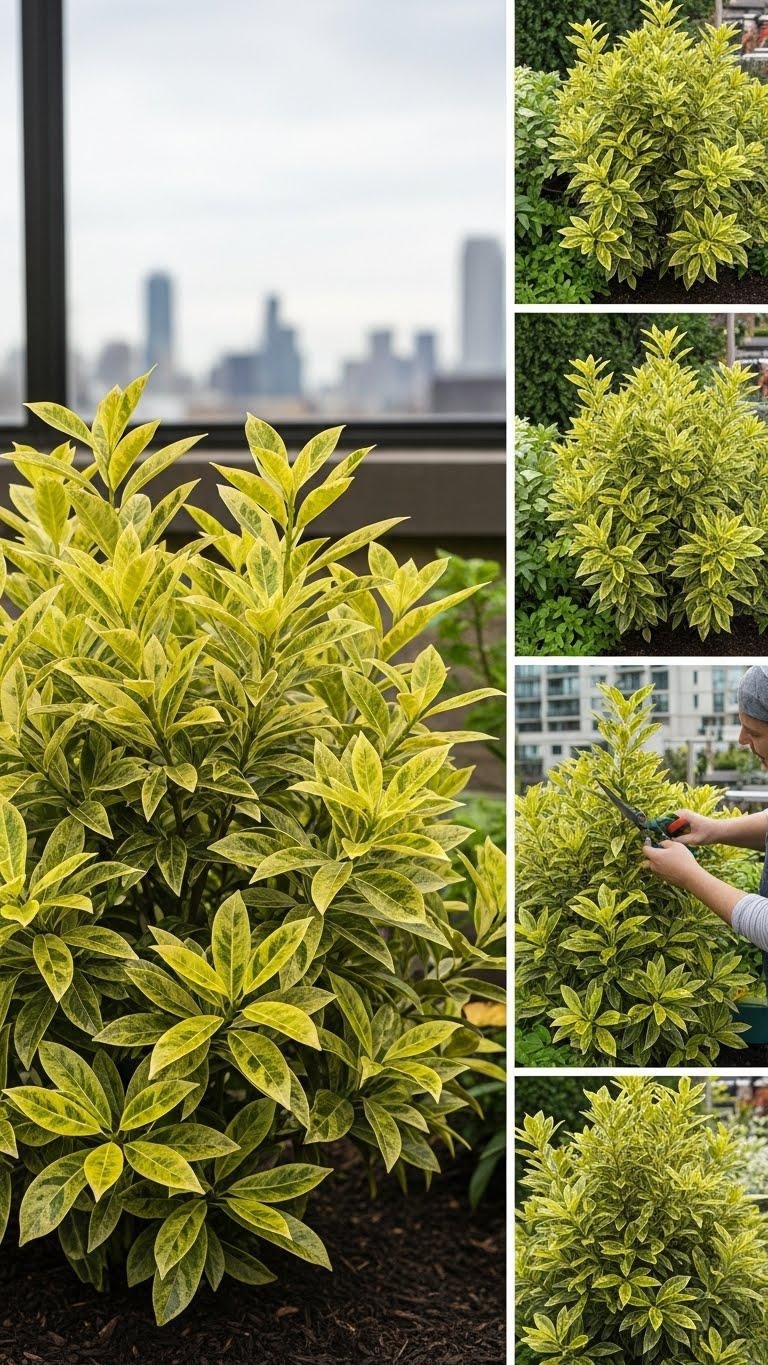
Aucuba japonica, known as Gold Dust Aucuba, gives you glossy, evergreen leaves splashed with bright yellow variegation that punch up shady spots where many shrubs struggle.
You’ll appreciate its strong shade tolerance, low-maintenance habit, and resistance to urban conditions. Prune lightly to shape, monitor for scale, and select cultivars with distinct variegation patterns to match your design and freedom to rearrange.
Nellie Stevens Holly Alternative Shrubs for Screens
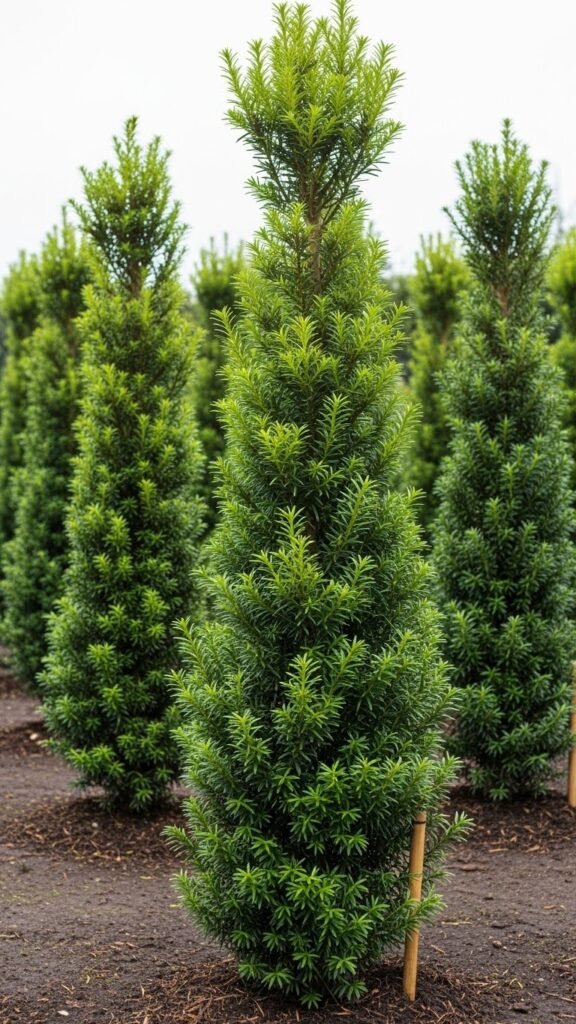
When you’re looking for tall, narrow screening but want alternatives to Nellie R. choose columnar yews, Sky Pencil holly, or upright boxwood.
You’ll get reliable drought tolerance, fast vertical growth, and good deer resistance with proper spacing and pruning. Plant in well-drained soil, stake young stems, and prune annually for a tight screen that preserves sightlines and your freedom to shape borders.
Dwarf Conifers (E.G., Dwarf Japanese Cedar)
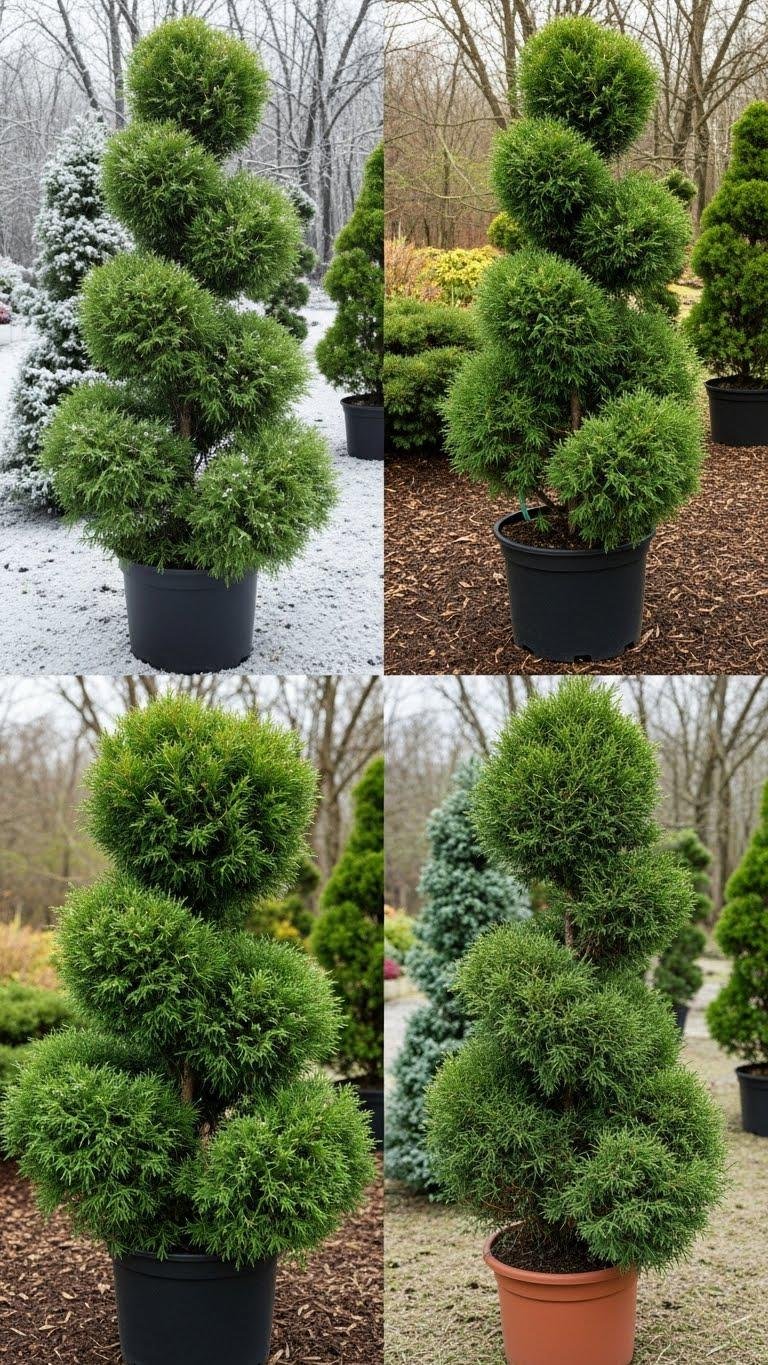
Think small but expect year-round structure: dwarf conifers like dwarf Japanese cedar (Cryptomeria japonica ‘Elegans’ and similar cultivars) give you compact, conical forms that hold color and texture through seasons.
You’ll enjoy low-maintenance silhouettes, precise dwarf pruning for shape, and excellent cold tolerance.
Use container gardening to move specimens, control soil, and create flexible screens or focal points without sacrificing evergreen structure.
Holly Cultivars With Persistent Berries
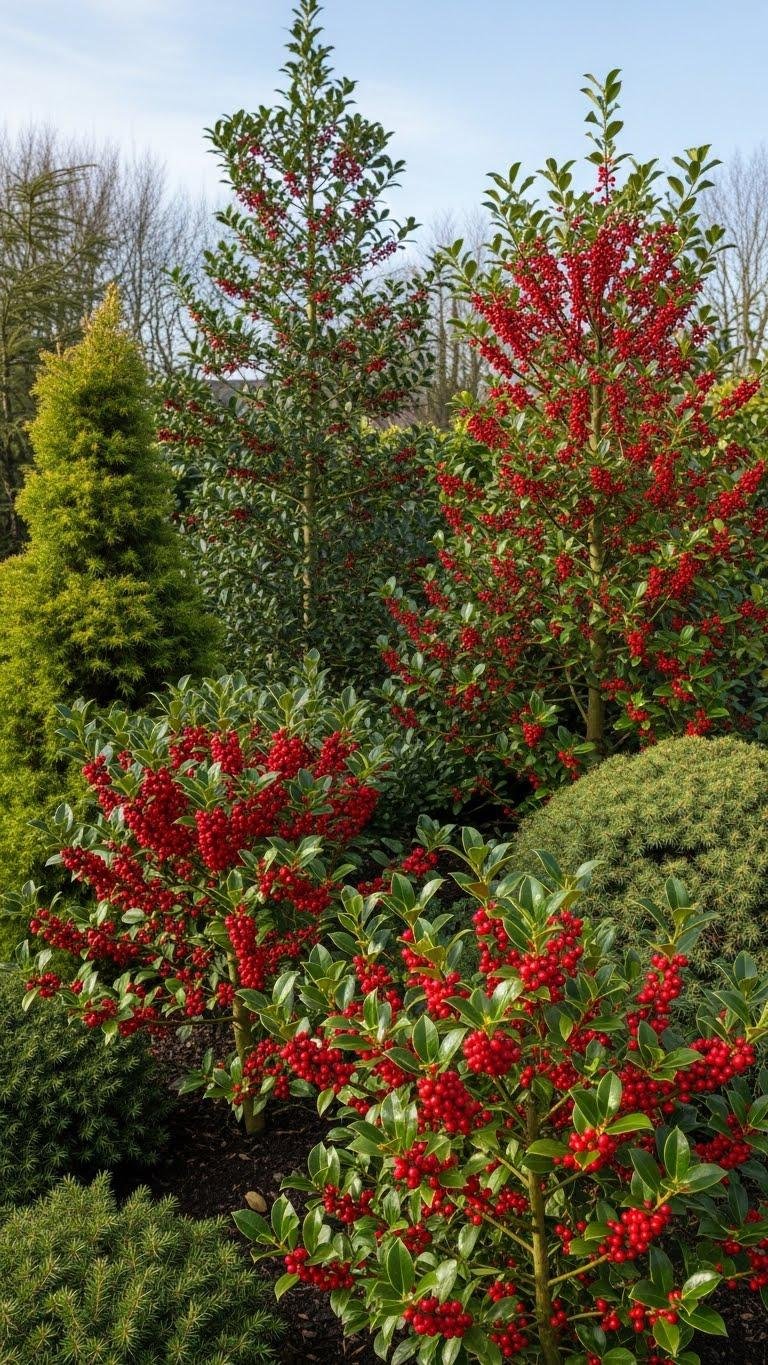
If you like the year-round form dwarf conifers provide, hollies offer another way to keep color and interest through winter — with the added benefit of long-lasting berries that feed birds and brighten the garden.
You’ll choose female hollies for showy fruit; select cultivars noted for berry persistence mechanisms like dense seed coats and delayed abscission. Prune selectively, site for sun, and enjoy low-maintenance structure.
Evergreen Shrubs for Deep Shade
Paragraphs