
You want a yard that feels effortless and stays interesting all year, so start by anchoring beds with structure and layering plants for depth. Think evergreens, clumping grasses, and bold shrubs as your backbone, then repeat key species and colors to build rhythm while sprinkling low gems and spiky accents for punctuation. I’ll walk you through 23 practical tricks that balance form, flow, and maintenance—so your beds look intentional without constant fuss.
Use Layering for Depth and Visual Interest

Start With Trees and Shrubs for Structure
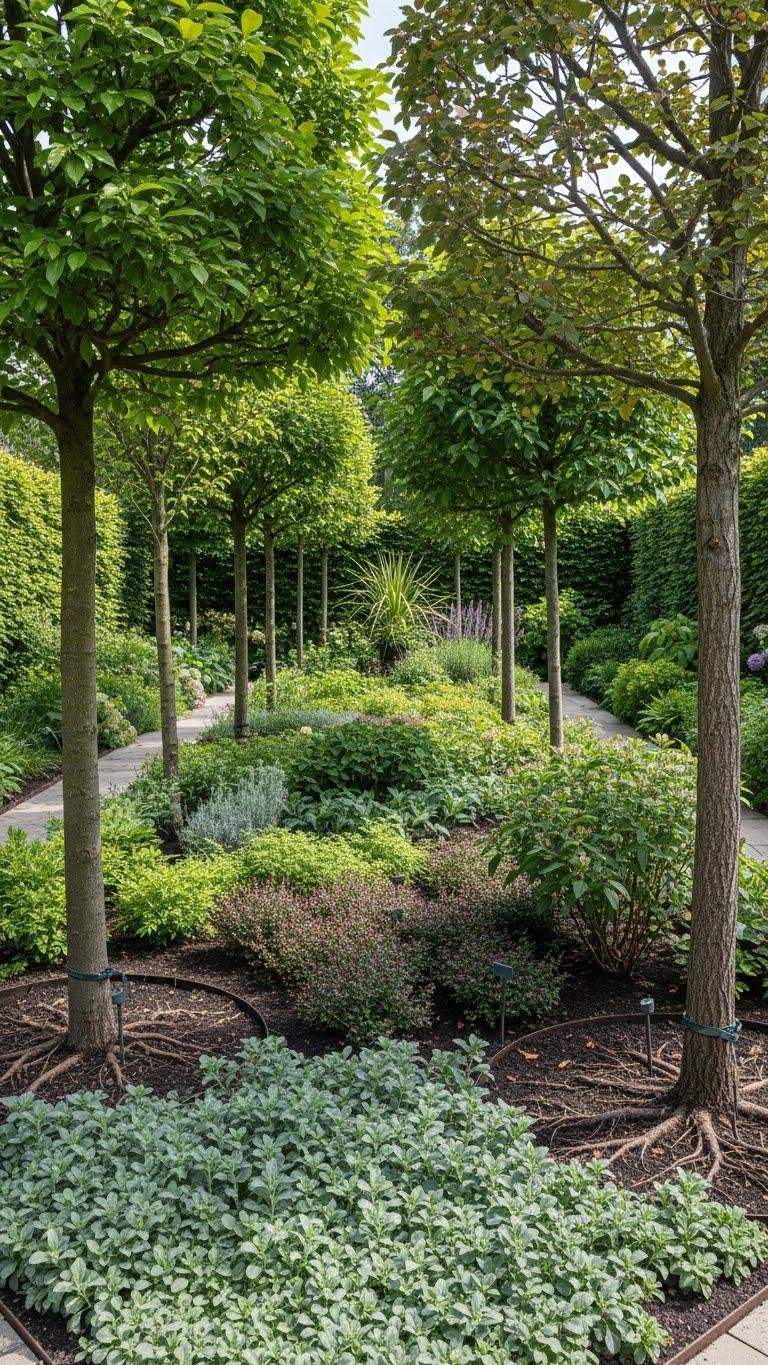
Because a garden needs a sturdy backbone, start by placing trees and shrubs to define sightlines, shade, and year-round form; they set scale, create microclimates, and give your layered plantings something to play off.
Choose species that match your freedom — low-maintenance, sculptural, adaptable. Plan seasonal pruning, install root barriers where needed, and position anchors so you can rearrange smaller layers around them.
Arrange Tall Plants Toward the Back or Center
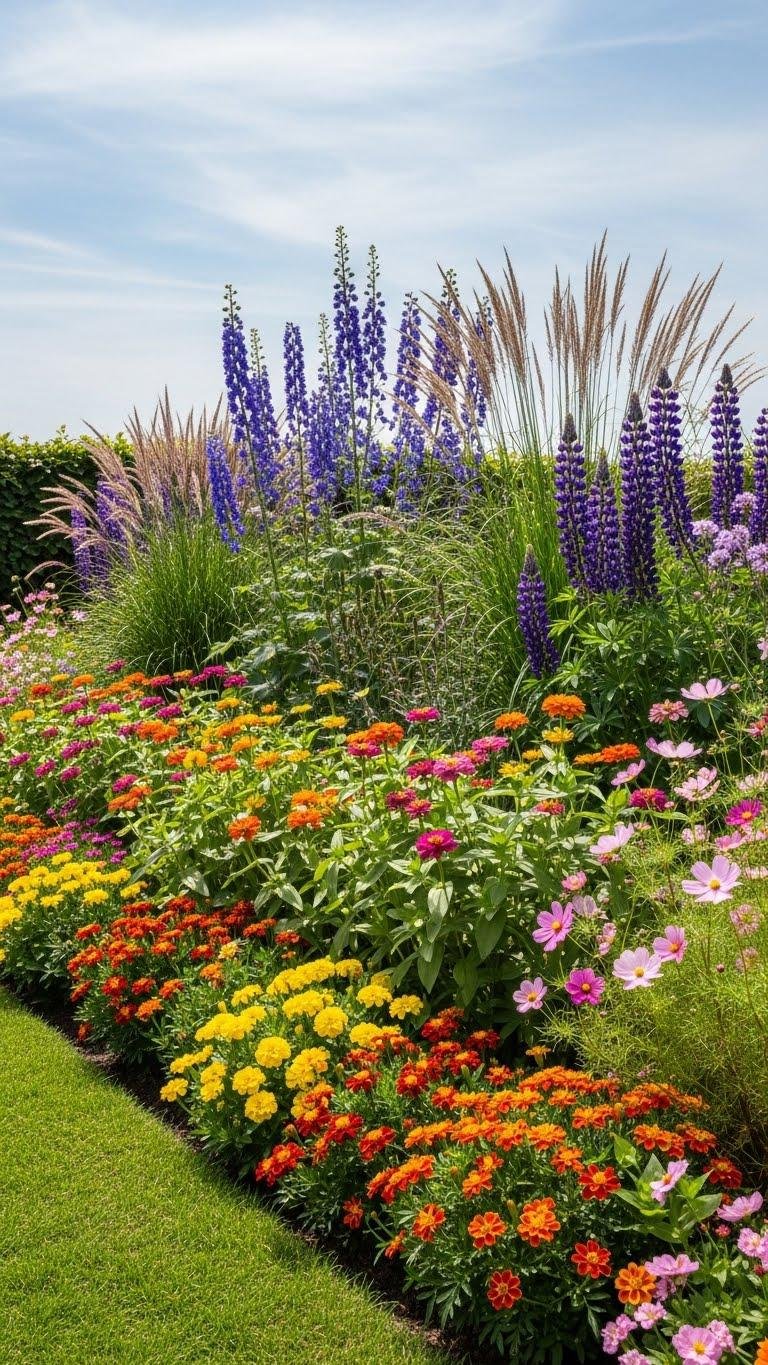
Place Short Plants in the Foreground for a Polished Edge
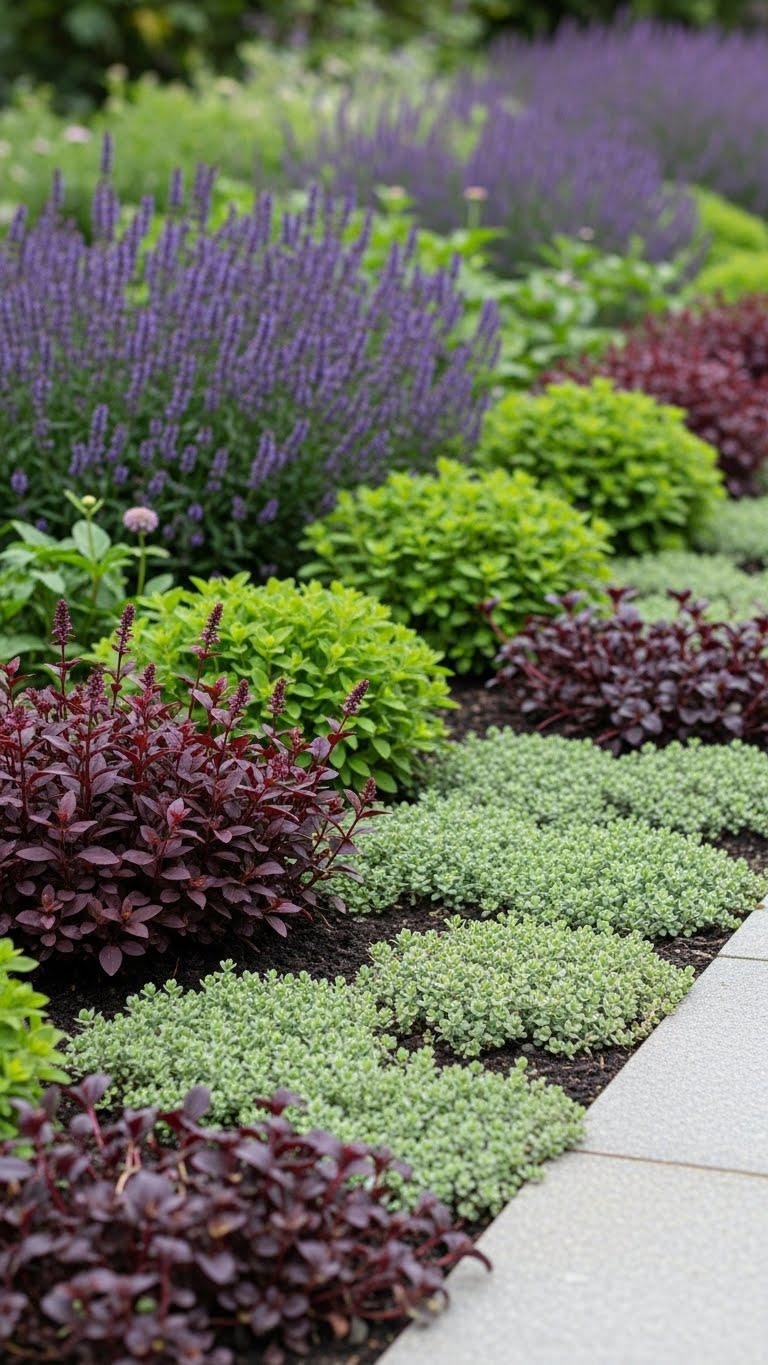
If you want a crisp, finished look, place low-growing plants at the front edge of your bed to frame the display and prevent soil from showing. You’ll choose compact groundcovers and tidy low perennials that tolerate foot traffic and define pathways.
Plant in staggered clusters for natural flow, trim sparingly, and let these quiet performers unify beds without stealing the show.
Repeat Plants and Colors to Create Cohesion
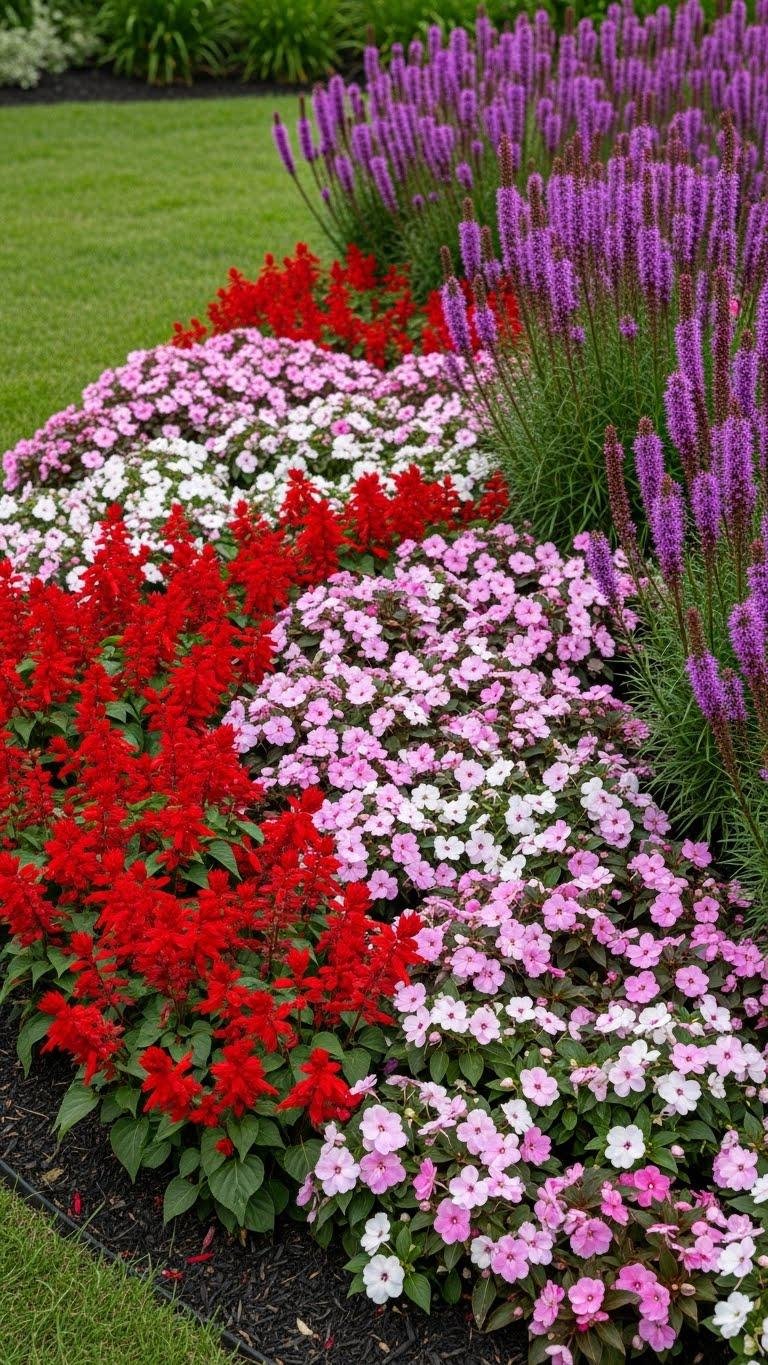
Repeating a few key plants and colors across your bed ties disparate elements into a cohesive whole, so choose two or three varieties and echo them in groups to create rhythm and balance.
You’ll use color repetition and pattern rhythm to guide the eye, mixing textures and heights sparingly. This controlled repetition frees you to experiment while keeping the design unified and confidently bold.
Create Drifts of Perennials for Natural Flow
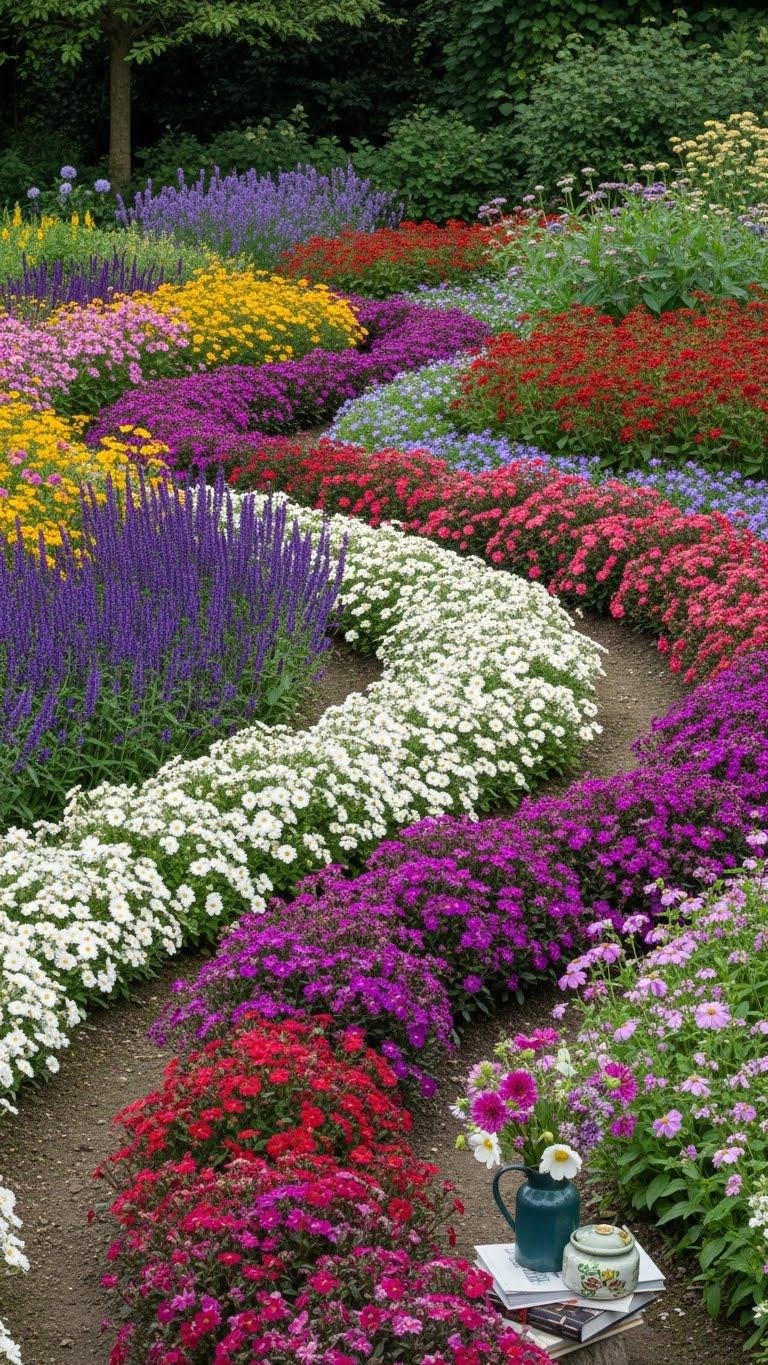
Often you’ll find that grouping perennials into sweeping drifts gives a garden a relaxed, natural movement that single specimens can’t match.
You plant clusters to echo meandering paths, guiding feet and eyes. Choose varieties with staggered bloom times for continuous color, and plan spots for seasonal cuttings to bring indoors.
Let scale, repetition, and gentle swoops create freedom and effortless flow.
Mix Textures: Bold Leaves With Fine Foliage
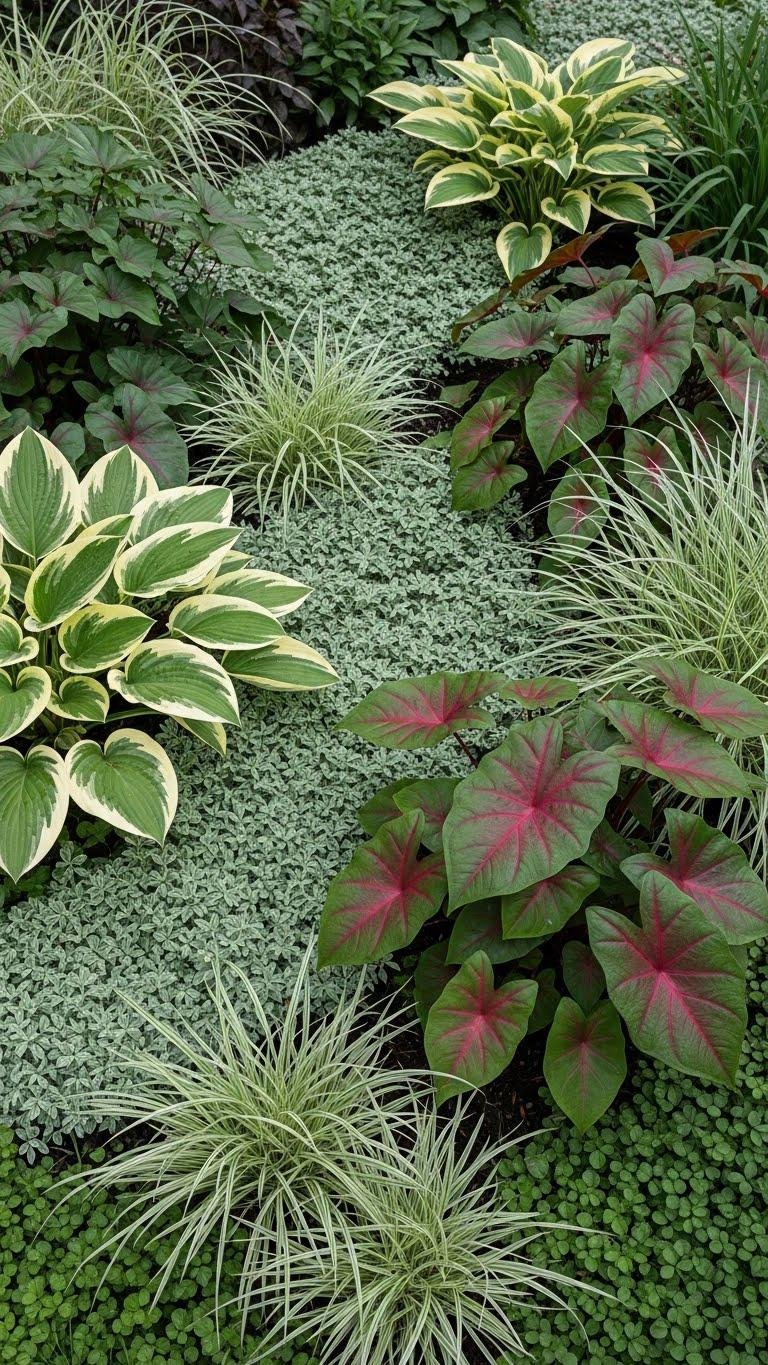
Combine Spiky Accents With Soft Mounds
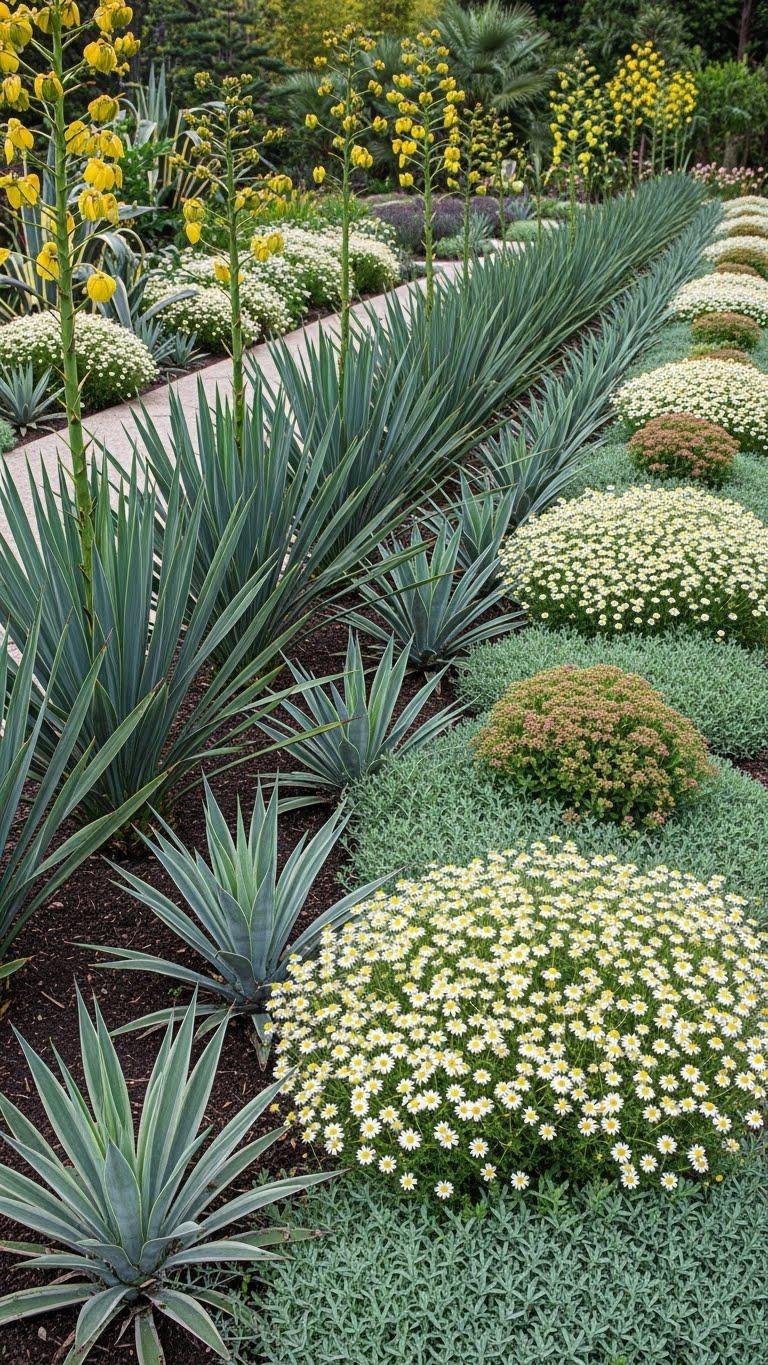
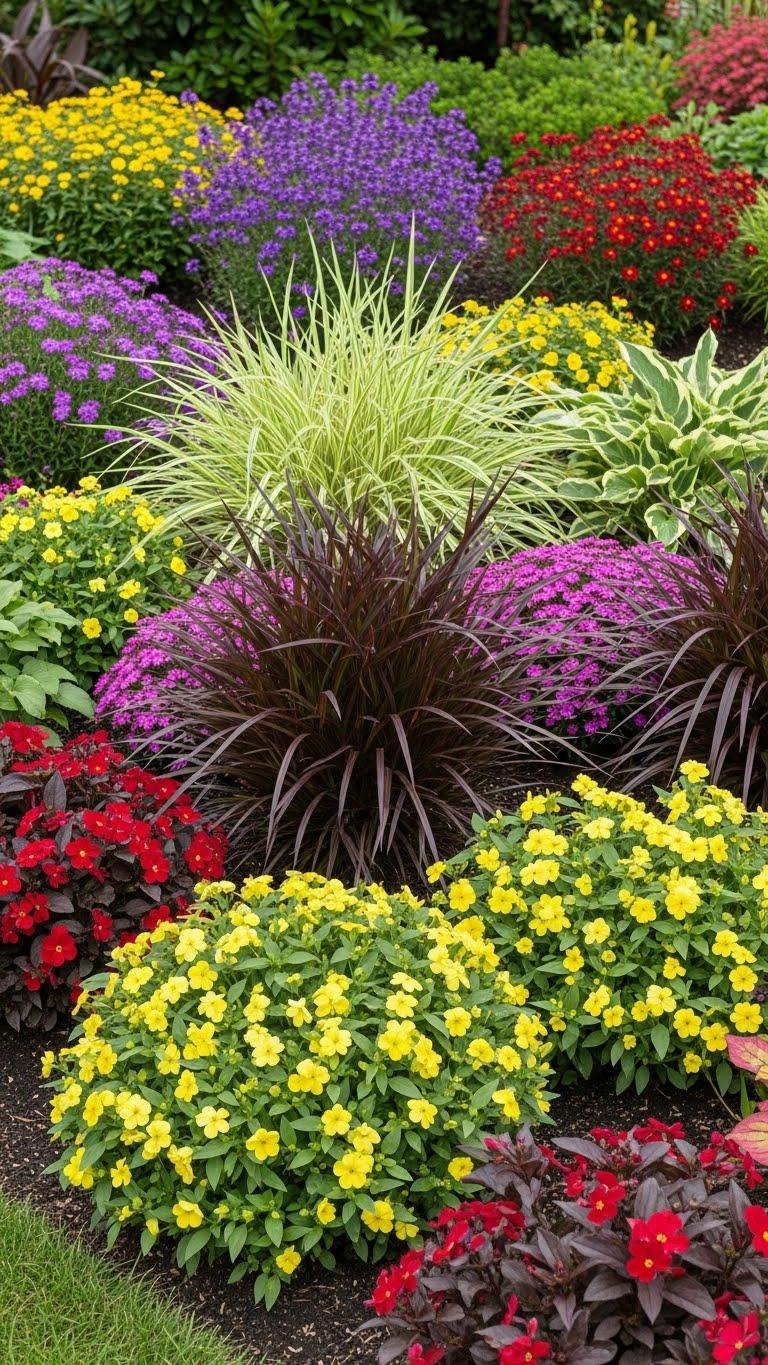
After balancing bold leaves with airy foliage, bring a sharper edge to your bed by pairing upright, spiky accents—think yucca, agave, phormium, or purple fountain grass—with low, soft mounds like creeping sedum, pulmonaria, or chamomile. You’ll use spiky silhouettes to punctuate pathways while mounded contrasts soften sightlines; mix heights, repeat shapes, and let free-ranging form guide placement for effortless impact.
Balance Mass and Scale to Fit Your Yard

Because the size of your bed should feel like it belongs to the whole yard, start by measuring sightlines and nearby structures so you can choose plants that match the scale—not overwhelm it.
Then plan proportional planting: group masses to balance visual weight, mix heights and textures, and leave breathing space.
You’ll create confident, free-flowing beds that read right from every angle.
Use Curved Lines to Guide the Eye
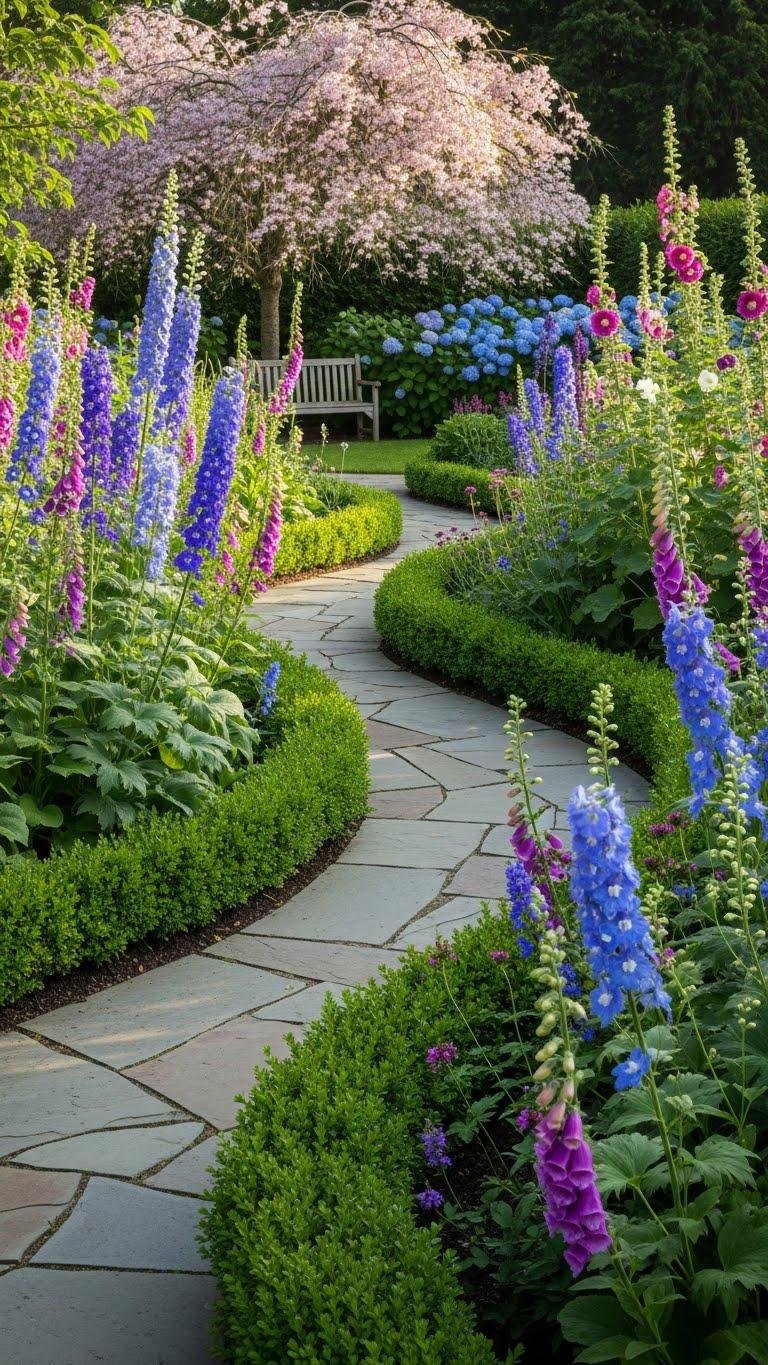
When you lay out sweeping curves instead of rigid straight beds, the garden instantly feels more natural and inviting; curved lines steer sightlines, slow movement, and create focal moments without shouting for attention.
You’ll plant to emphasize meandering pathways, use low hedges and taller perennials as sightline anchors, and let curves reveal scenes gradually so the yard feels freer, playful, and intentionally composed.
Echo Colors Across Separate Beds
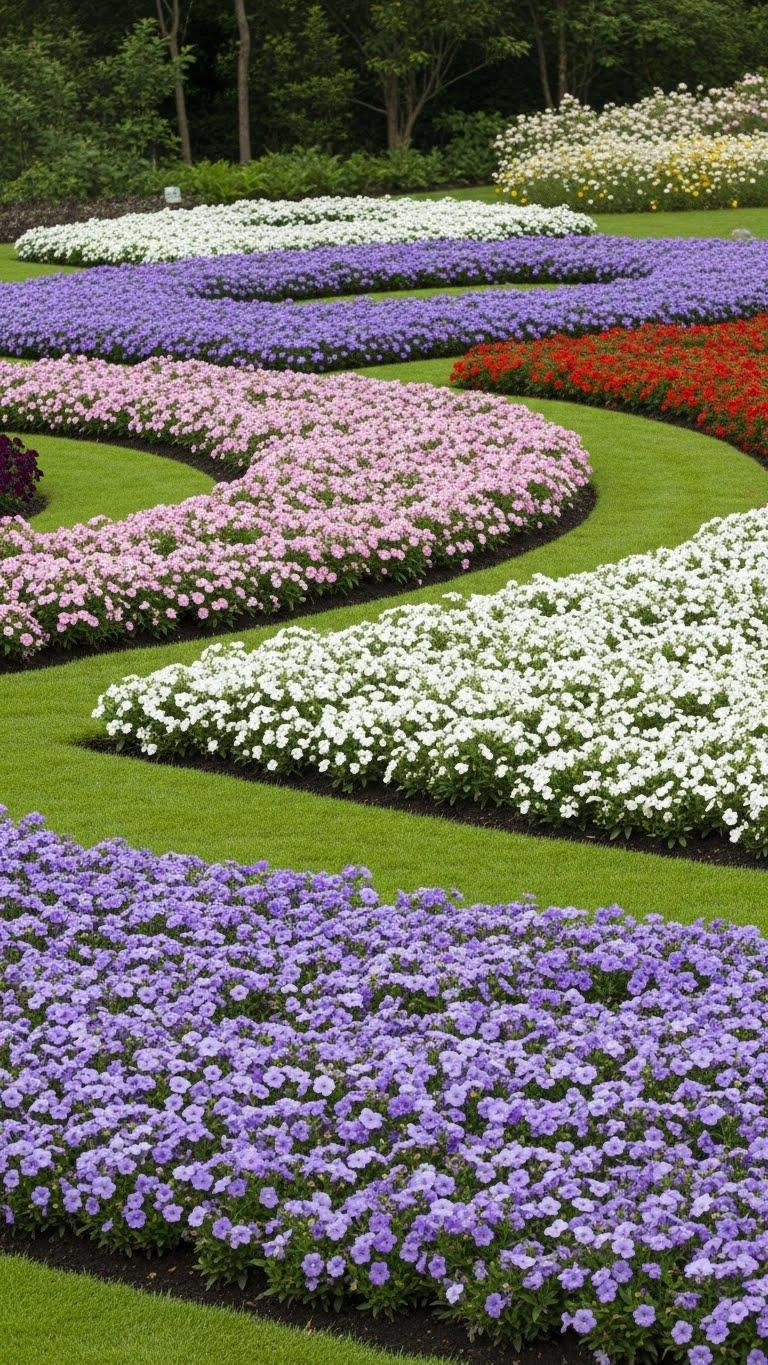
Often you’ll want a color to whisper rather than shout across the garden, so repeat tones in separate beds to knit the whole yard together.
You’ll create color echoes by repeating a bloom or foliage tint at intervals, and build palette bridges with intermediary hues.
Move colors deliberately, keep contrast balanced, and let rhythm, not strict matching, give the landscape freedom and cohesion.
Plant in Groups Rather Than Single Specimens
Let Form Guide Your Formal or Informal Style
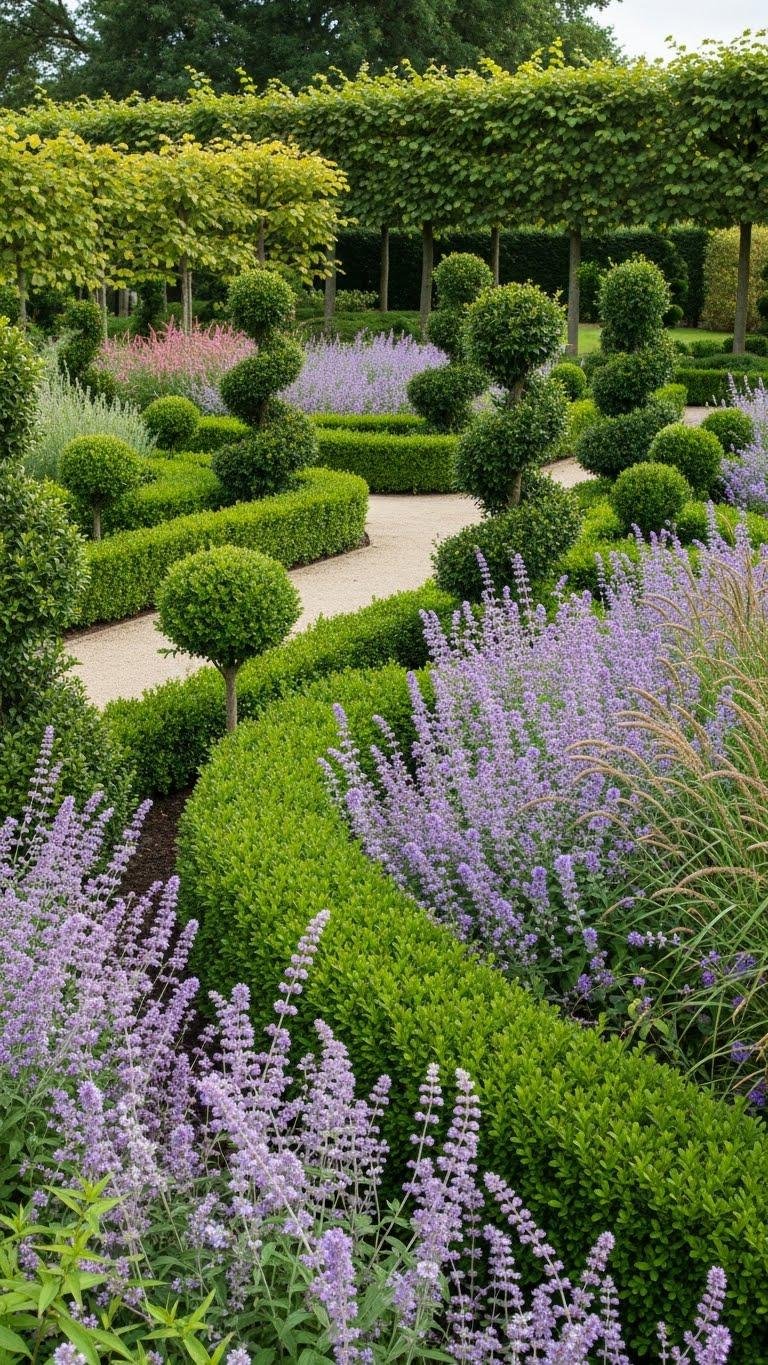
If you let plant form be your starting point, you’ll find it easy to choose a look—structured, architectural species like boxwood and clipped yew will read formal, while loose, billowing perennials such as nepeta and asters will read informal.
Let formal curves direct pathways and anchors, then counterpoint them with informal textures in drifts and edges so your bed feels deliberate yet free.
Deviate From Rules With Bold Front-Row Specimens
Limit Highly Contrasting Forms to One or Two Focal Points
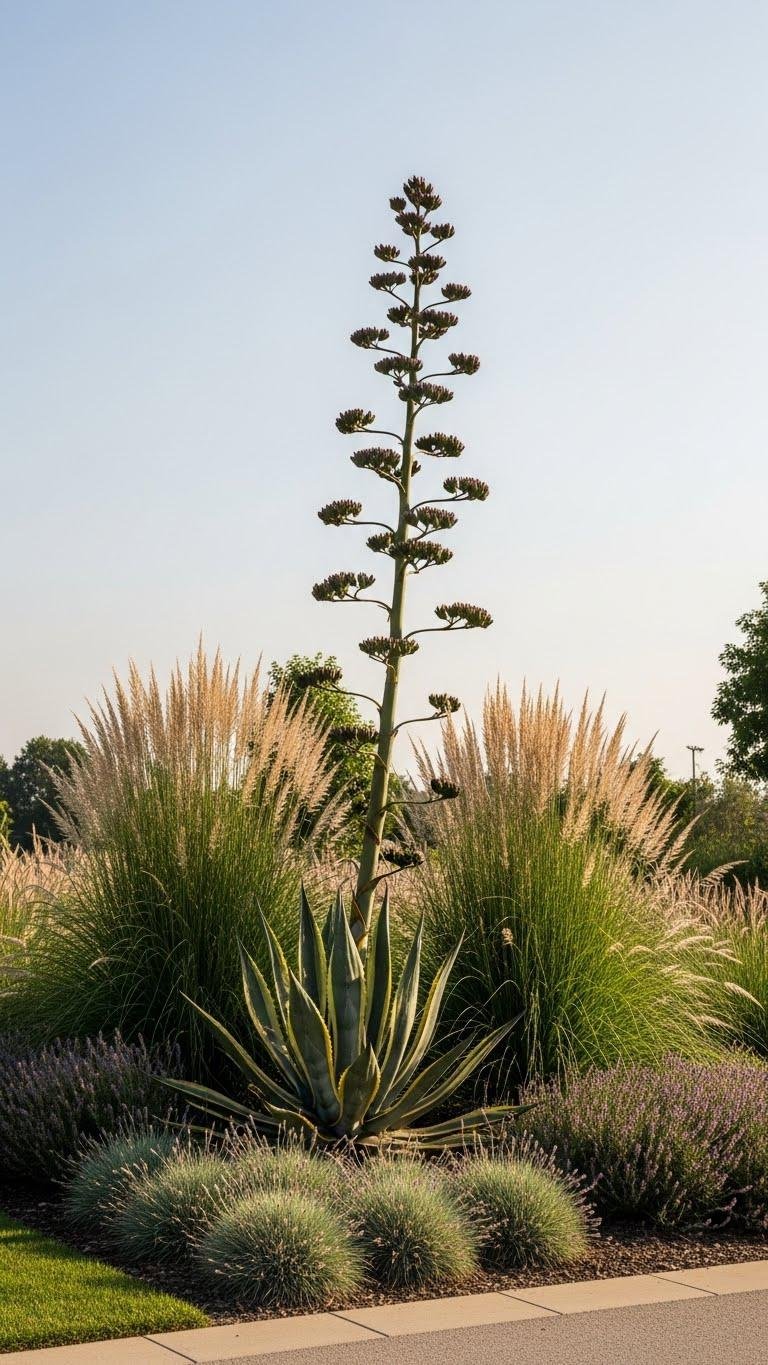
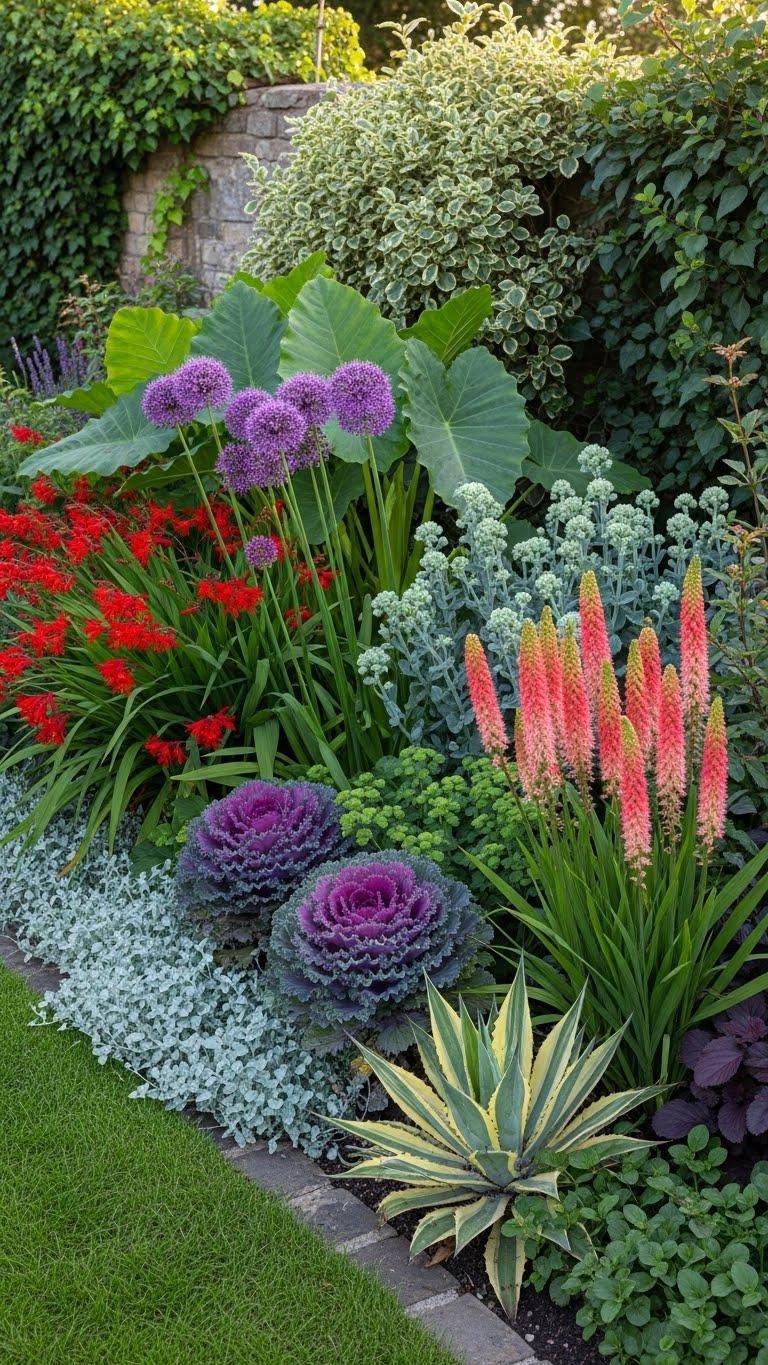
Because dramatic contrasts grab the eye, limit highly contrasting forms—like architectural agaves or feathery maiden grass—to one or two focal points so the rest of the bed supports rather than competes with them.
You’ll create bold high contrast silhouettes without chaos. Use focal restraint: pick placements, repeat textures sparingly, and let surrounding plantings breathe, giving you a liberated, confident composition that still reads as intentional.
Overplant Slightly to Achieve a Full Tapestry

Think of overplanting as laying a woven groundcover—plant a little tighter than feels comfortable so gaps vanish as plants settle and spread.
You’ll arrange dense clusters and staggered seedlings to build instant richness, then thin selectively as growth demands.
Work in layers, mixing heights and textures, letting freedom guide your cuts so the bed reads abundant, intentional, and easy to maintain without looking forced.
Apply Golden Rectangle Proportions for Balanced Beds
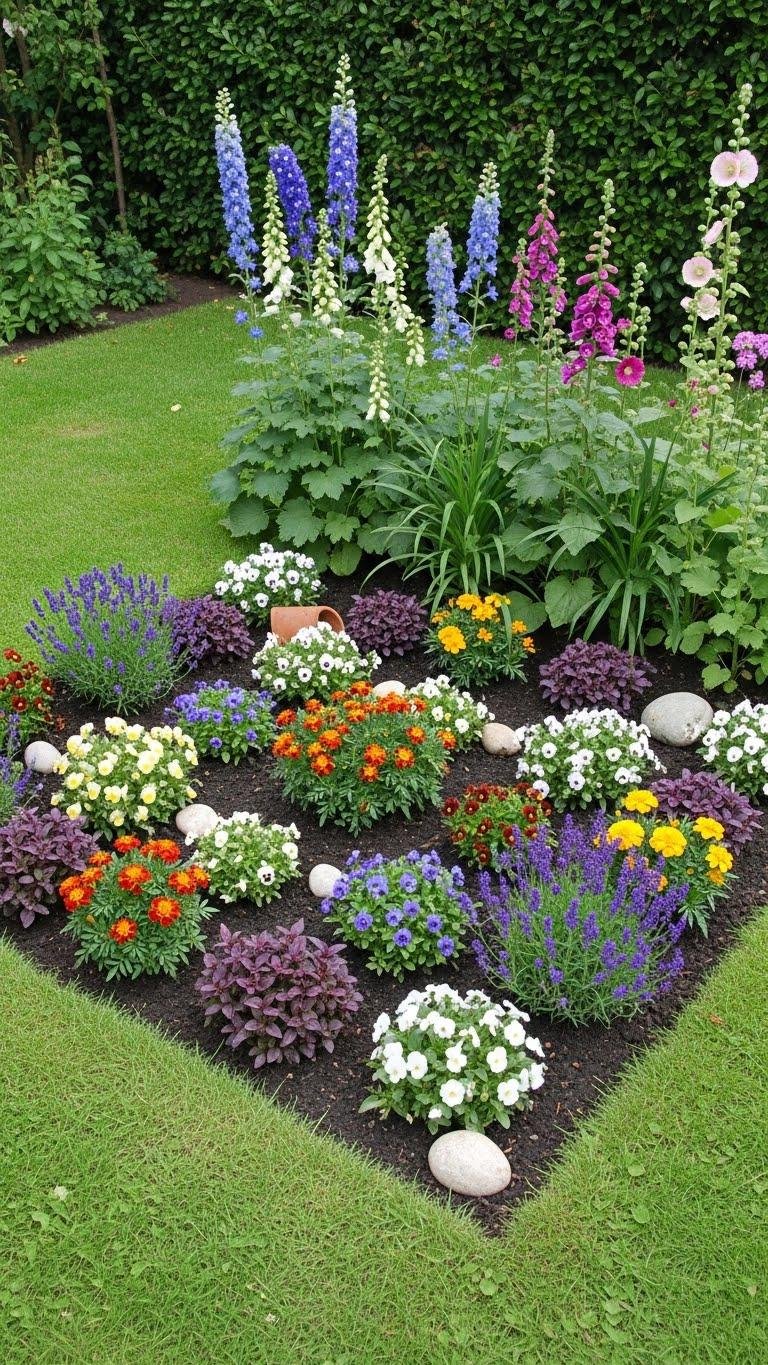
When you lay out a bed using the golden rectangle, you give the eye a quietly satisfying rhythm that makes plant groupings feel naturally balanced.
Use that proportional layout to plan plant spacing, place taller specimens along the long axis, and cluster shorter companions within the square.
You’ll create visual balance without rigidity, freeing you to tweak textures, colors, and movement while keeping harmony.
Layer Bloom Times for Continuous Color
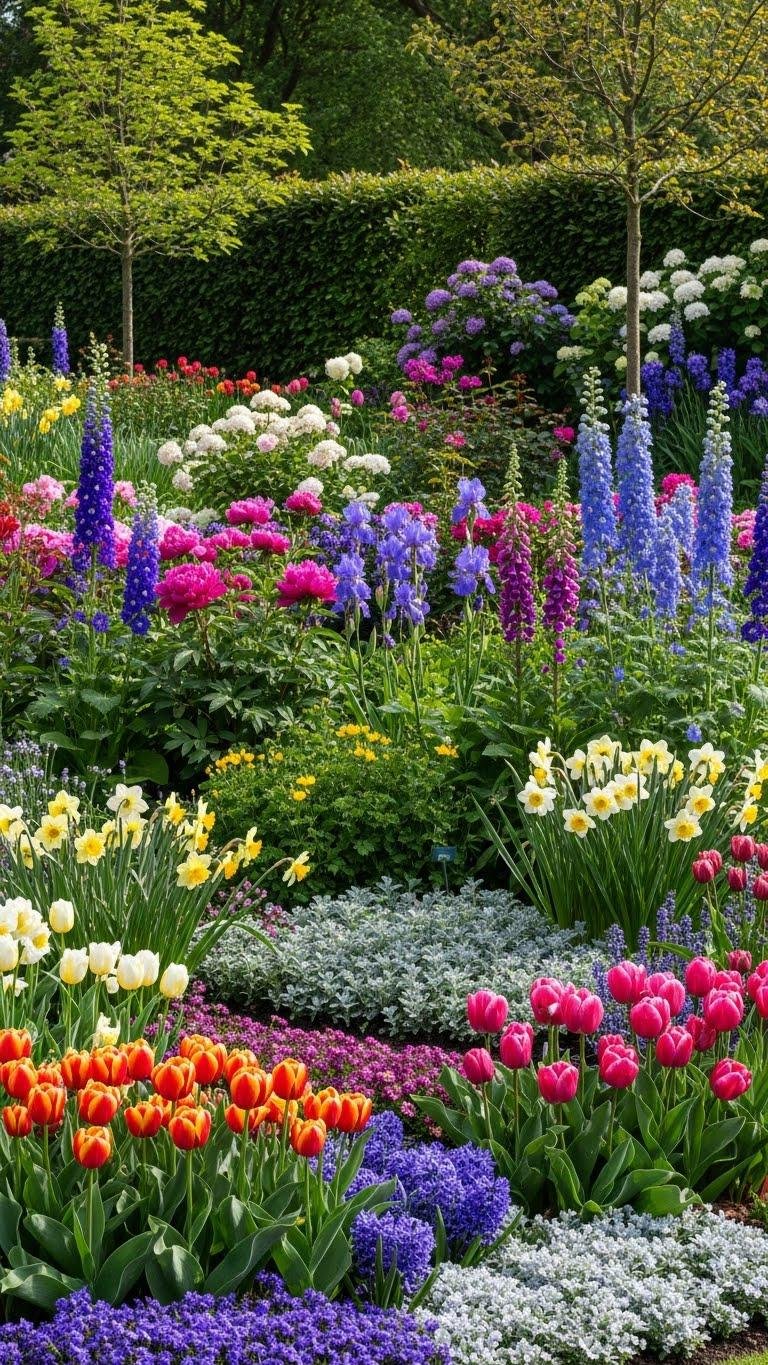
Staggering bloom times gives your garden a steady show instead of a single peak, so plan combinations of early bulbs, mid-season perennials, and late-flowering shrubs that hand the spotlight to each other.
You’ll design with succession planting: map weeks, mix heights, and choose repeat bloomers.
Embrace staggered bloomtime to keep color rolling, tweak motifs freely, and enjoy continuous seasonal rhythm.
Anchor Beds With Consistent Structural Plants
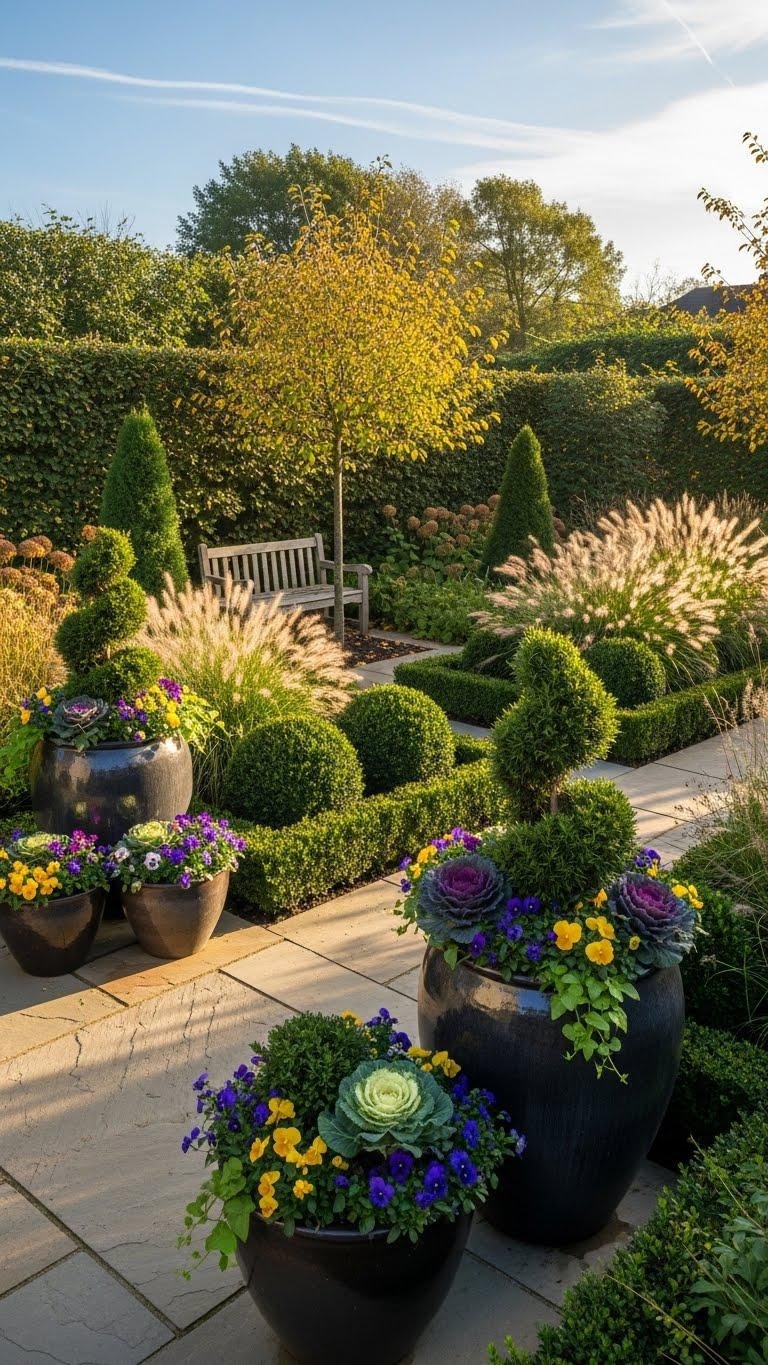
Anchor your beds with a few reliable structural plants that give form and rhythm through every season, so the rest of your choices can play supporting roles.
Choose seasonal anchors — evergreens, clumping grasses, bold shrubs — to define lines and sightlines.
Use container anchors at edges or patios for movable drama. You’ll enjoy a confident, low-fuss framework that frees playful seasonal swaps.
Intermix Short Plants Throughout for Surprise Views
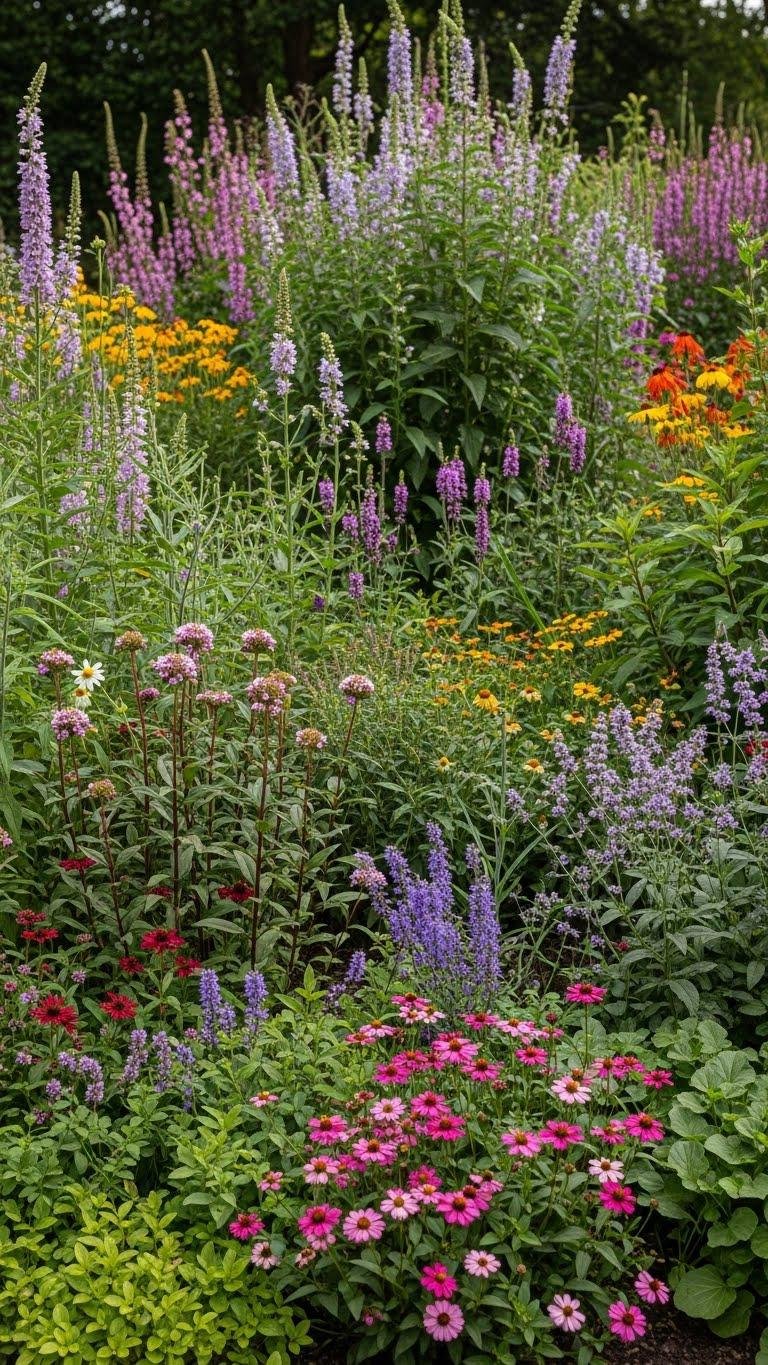
You’ve set the stage with tall, steady performers; now tuck low-growing gems among them to reward close-up exploration.
You’ll create pockets of texture and color that deliver unexpected height contrast and invite touch. Stagger short perennials and annuals so eyes roam; mix bloom times for a seasonal surprise.
This layered, freer approach keeps beds intimate, dynamic, and joyfully discoverable.
Connect Beds Around Trees and Foundation for Flow

When you link planting beds around trees and along foundations, the garden reads as a continuous room rather than a series of disconnected spots. You’ll plan edges to avoid root conflicts, choose shallow-rooted companions, and stagger heights for canopy continuity.
Let paths and mulch tie zones together, and pick resilient perennials so beds flow effortlessly, inviting wandering and spontaneous planting choices.
Match Plant Scale to Bed Width and Property Size
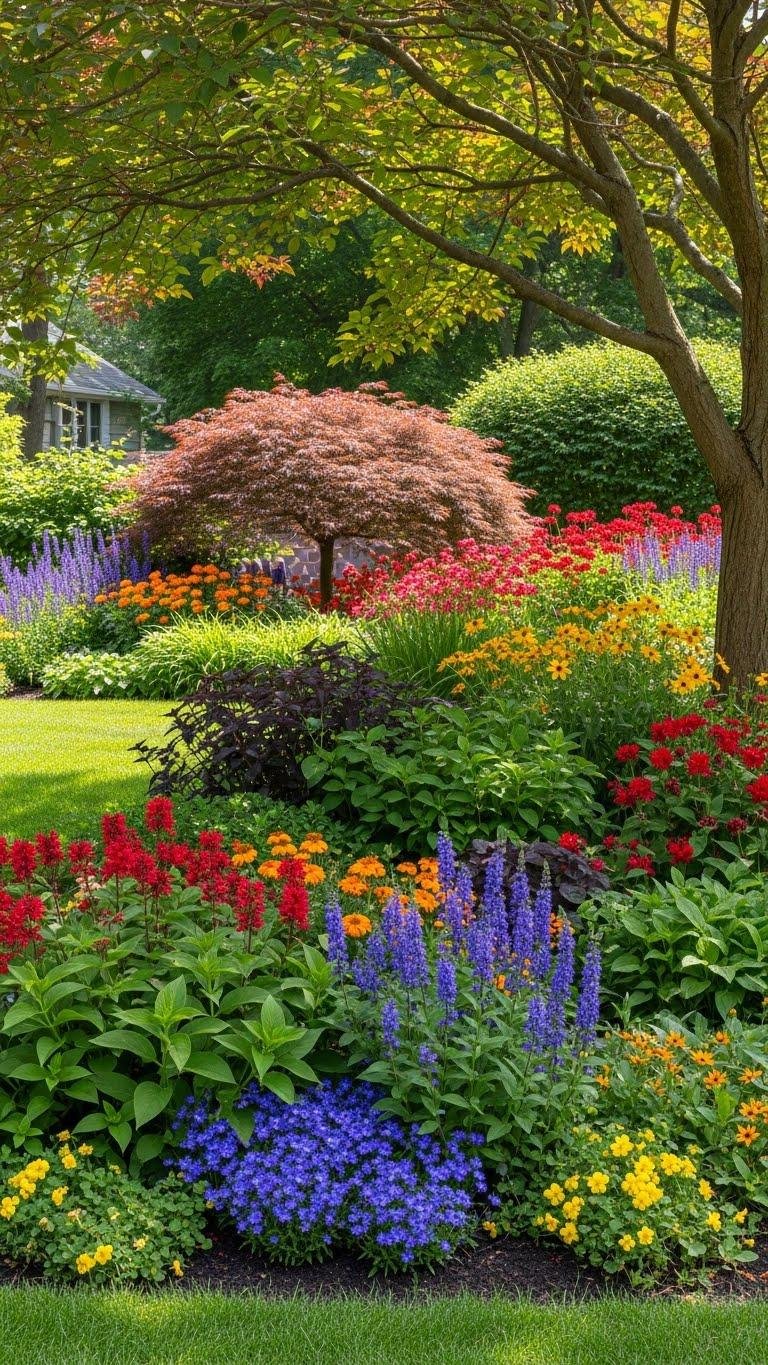
After you’ve linked beds around trees and the foundation to create that continuous garden room, think about how each bed’s width and the size of your property set limits and opportunities for plant choices.
You’ll choose taller focal plants for wide beds, low drifts for narrow edges, and favor native species for resilience. Scale plants to enhance curb appeal while keeping a liberated, balanced composition.