
You can give your beds a crisp, finished look without hiring pros by using simple, durable borders that suit your style and budget. From clean brick rows and corten steel strips to gravel collars, living edges, or recycled concrete, each option balances form and function while controlling mulch, soil, and water flow. Pick materials, anchor them well, and you’ll transform edges into features — here’s how to choose and install the right one for your yard.
Brick and Paver Straight Edge
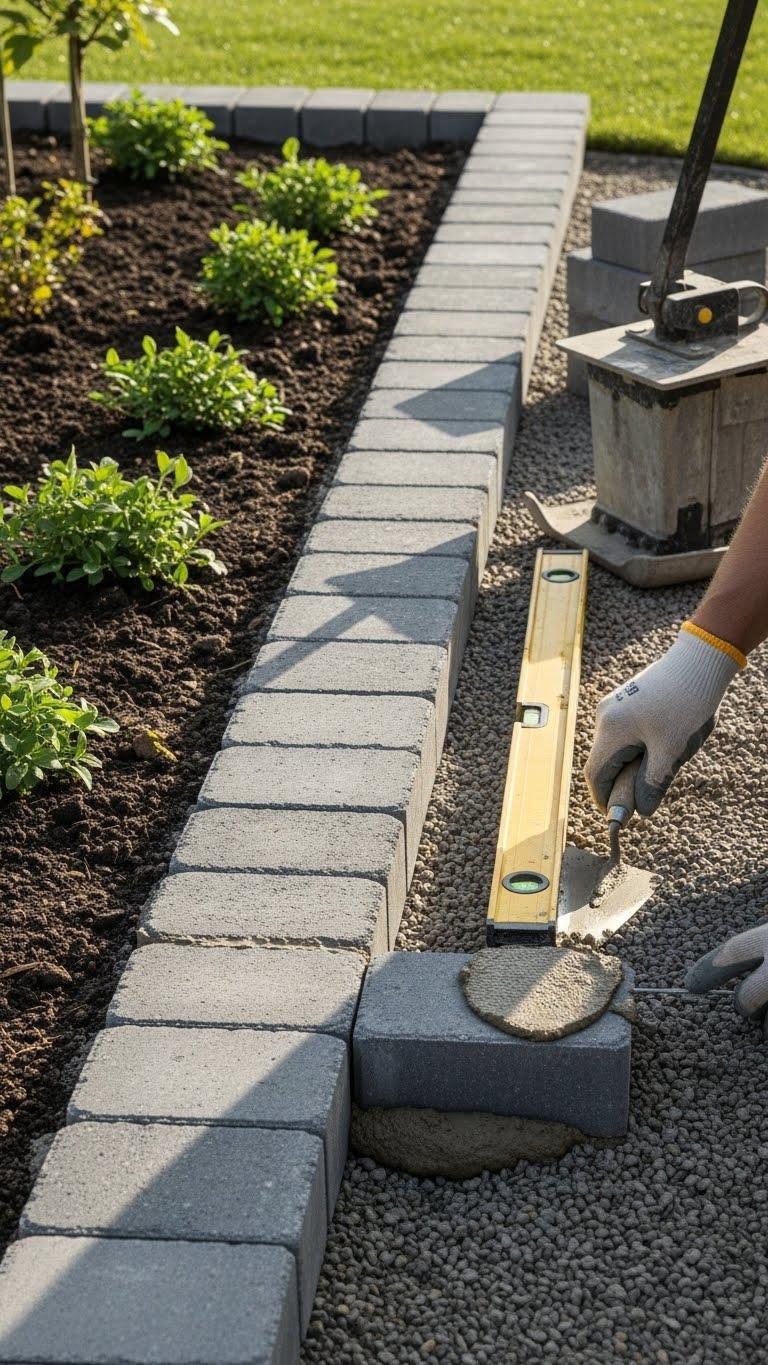
Lay a crisp, low-profile border with bricks or pavers to give your garden a clean, professional edge. You’ll choose a straight pattern layout, set units on compacted base, and use mortar techniques for secure joints.
Visualize precise lines, scrape turf, tamp, and check level frequently. This approach keeps maintenance low and frees you to enjoy a tidy, controlled outdoor space.
Curved Interlocking Paver Border
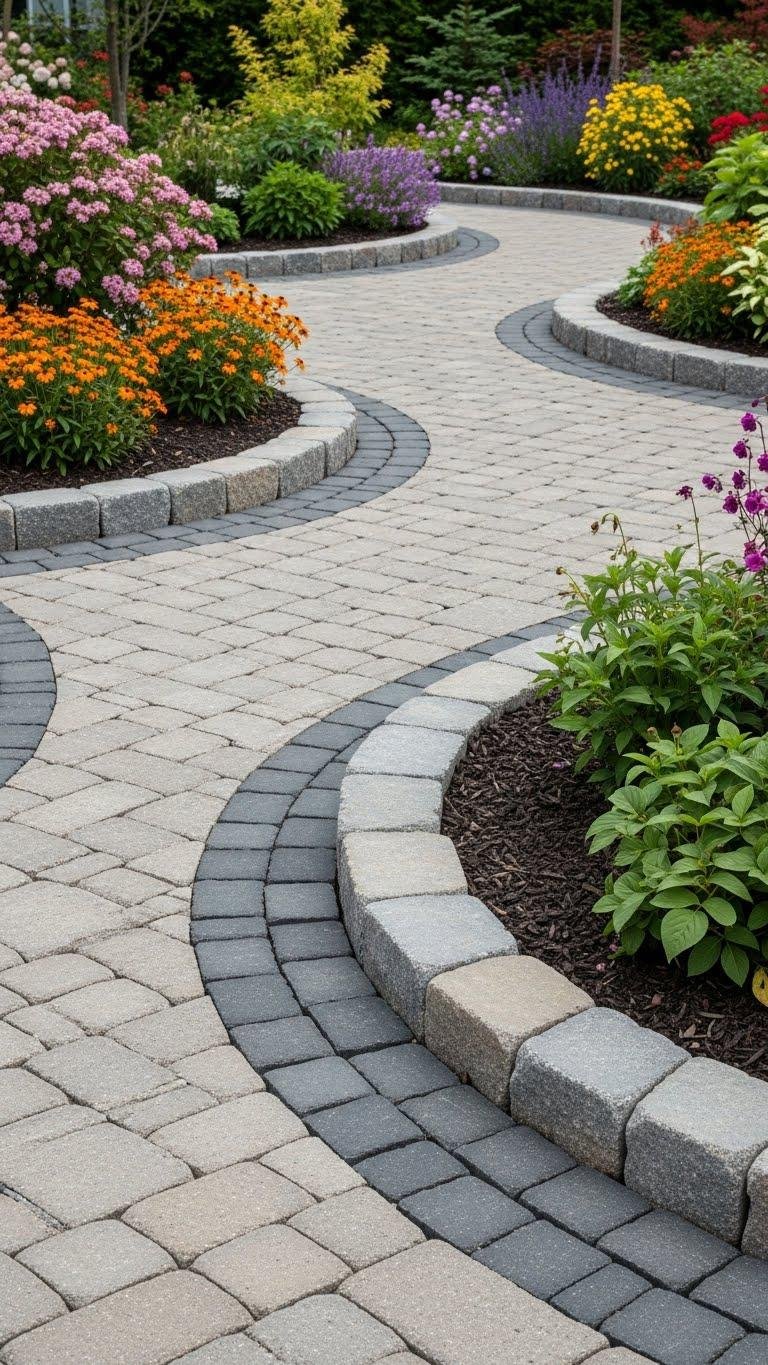
Curve your garden edges with interlocking pavers to add movement and a softer, more organic feel to your landscape.
You’ll shape flexible curvework that lets paths and borders flow naturally. Lay pavers in interlock patterning for strength and visual rhythm, cutting pieces to follow arcs.
Compact base material, level carefully, then sand joints.
The result feels intentional, free, and enduring.
Poured Concrete Curb
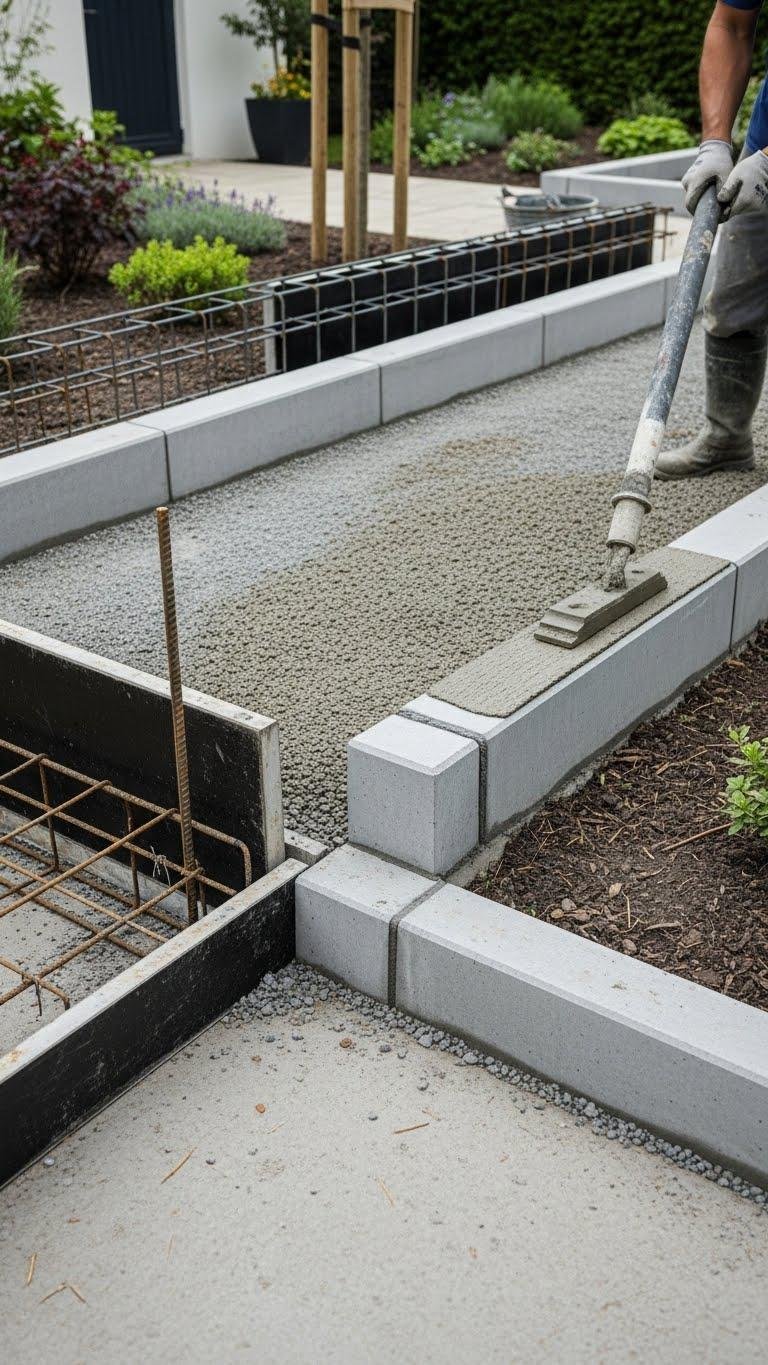
When you want a clean, durable edge that stands up to mowing and heavy use, pour a concrete curb to define beds and pathways with crisp, long-lasting lines.
You’ll set forms, add rebar, and pour for a smooth, textured finish. Tool the top, add expansion joints to prevent cracks, then reveal a minimalist, maintenance-light border that gives your garden freedom and structure.
Recycled Concrete Aggregate Edge
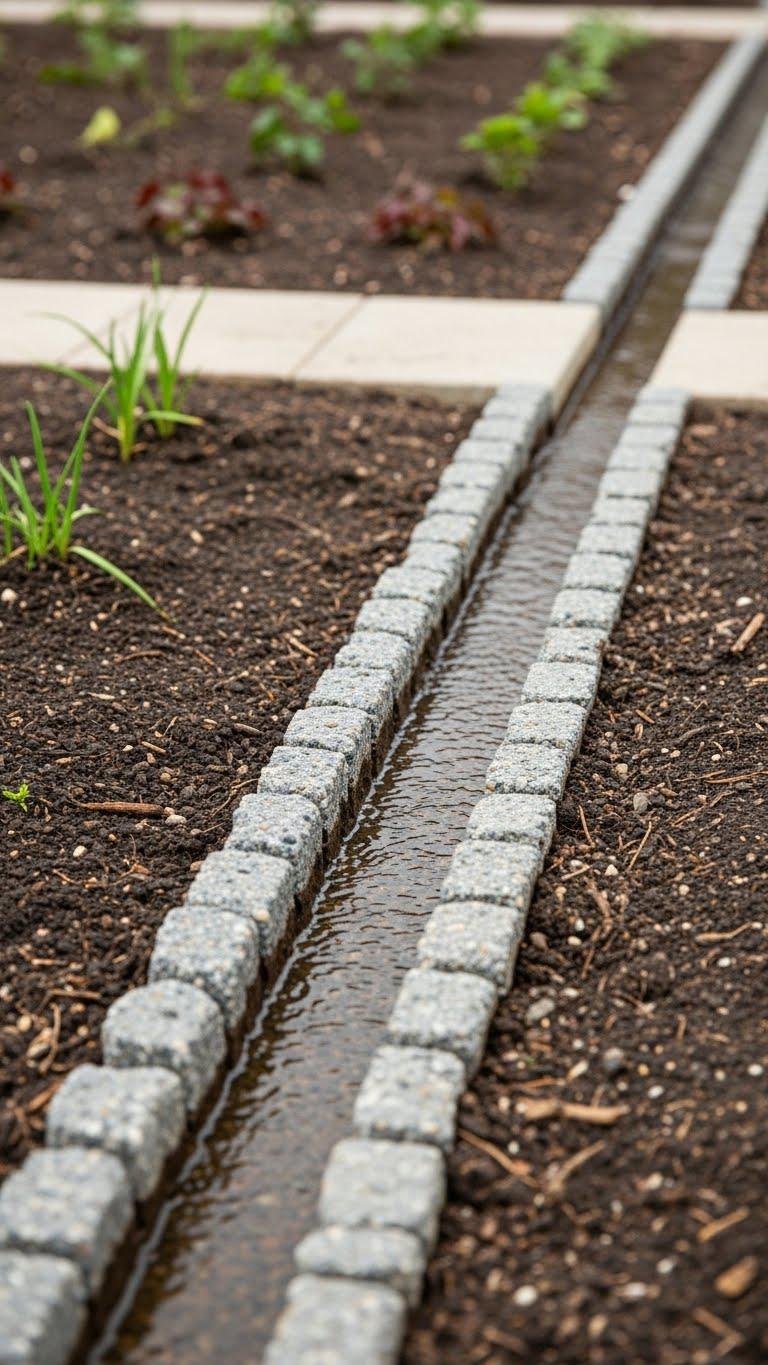
Recycle crushed concrete to create a rugged, low-maintenance edge that’s both eco-friendly and economical. You’ll spread recycled aggregate in a shallow trench, compacting it for a crisp line that resists erosion.
Permeable edging lets water filter through, reducing runoff while keeping beds tidy. It’s straightforward to install, durable, and freeing — giving your garden a clean, confident boundary you control.
Low Seating Paver Ledge
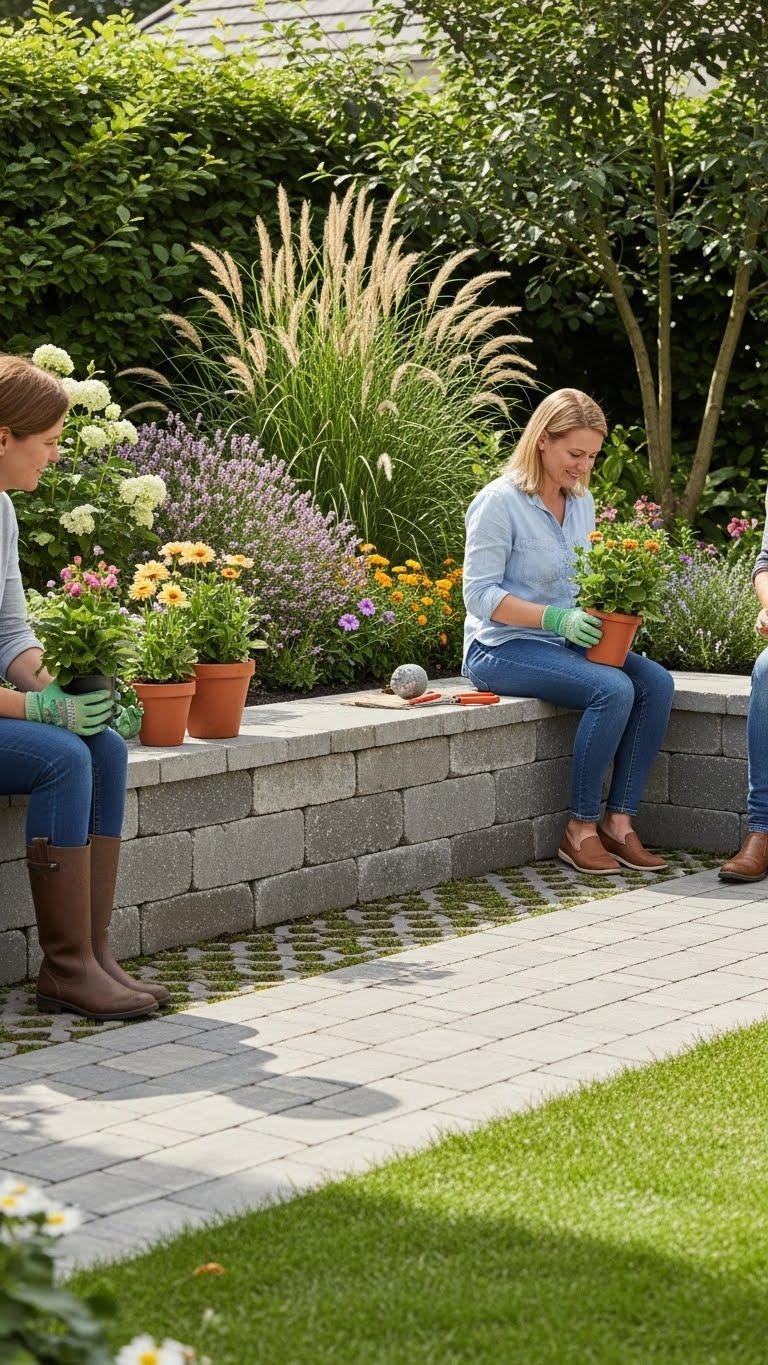
As a compact, multifunctional border, a low seating paver ledge gives your garden both form and function—define beds with a sturdy row of pavers set at seat height so you can sit, pot, or step up for pruning.
You’ll choose permeable paver units for drainage, anchor them on a crushed base, and create a bench integrated edge that’s clean, durable, and invites relaxed, hands-on garden freedom.
Dry-Stacked Fieldstone Border
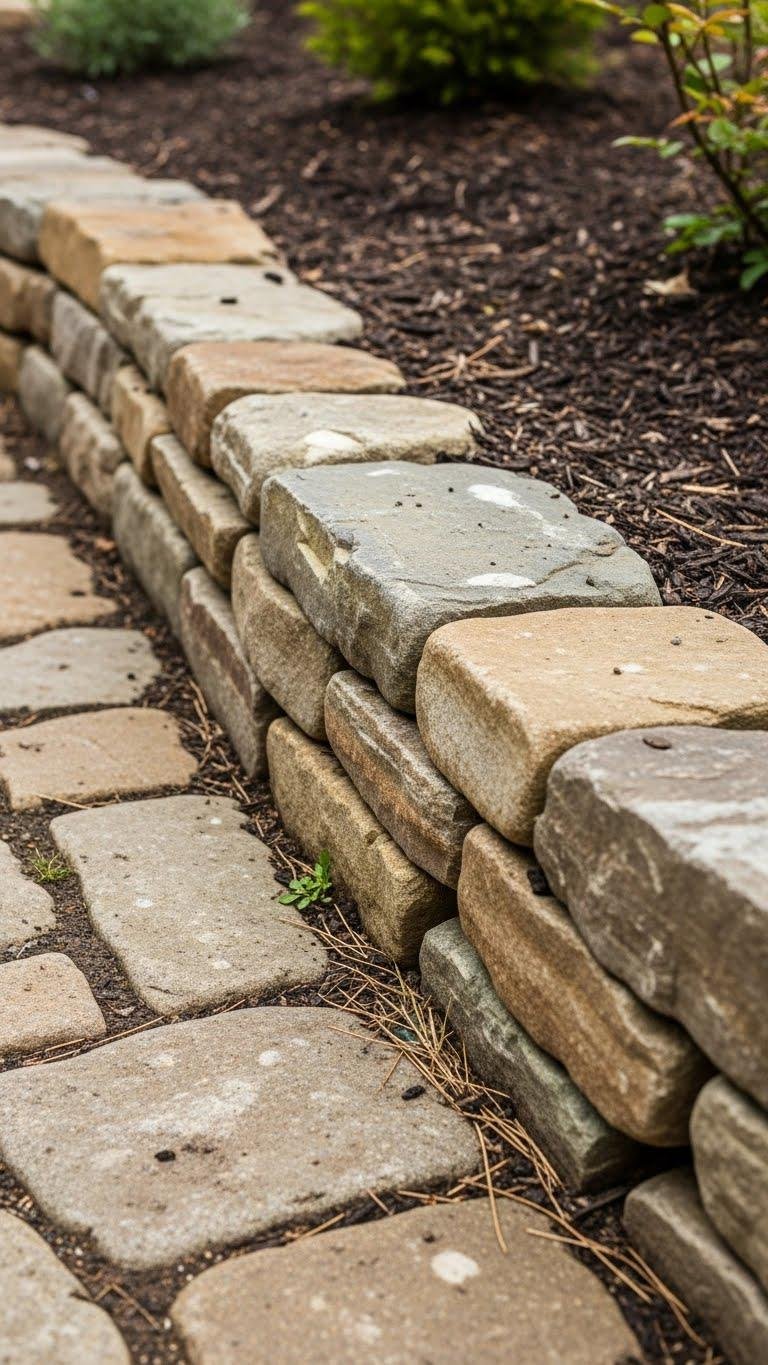
If you prefer a more rustic, natural edge after the clean lines of a paver ledge, a dry-stacked fieldstone border gives your garden a timeless, textured frame.
You’ll place varied stones without mortar, using stability techniques like interlocking and shimming.
The result feels free and intentional.
Plan seasonal maintenance—reset settling stones and clear weeds—to keep that effortless, enduring look.
Uniform Natural Rock Line
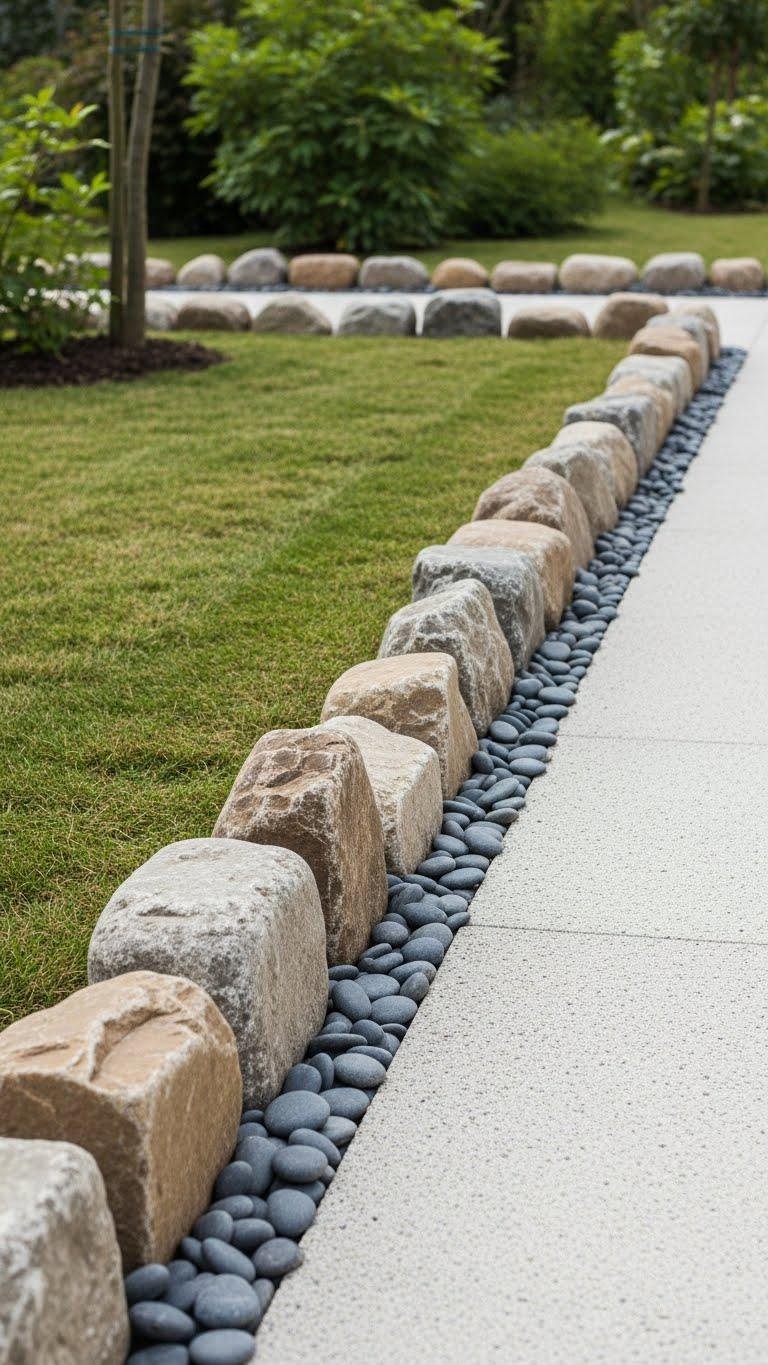
When you want a neat, consistent edge that still feels organic, a uniform natural rock line delivers clean rhythm without looking manufactured.
You’ll place matching natural boulder pieces or smooth river stones in a steady sequence, keeping spacing and height even.
This minimalist approach frames beds, guides movement, and frees you to tweak curves or plantings later while maintaining a calm, deliberate boundary.
Mixed-Size Rustic Rock Edge
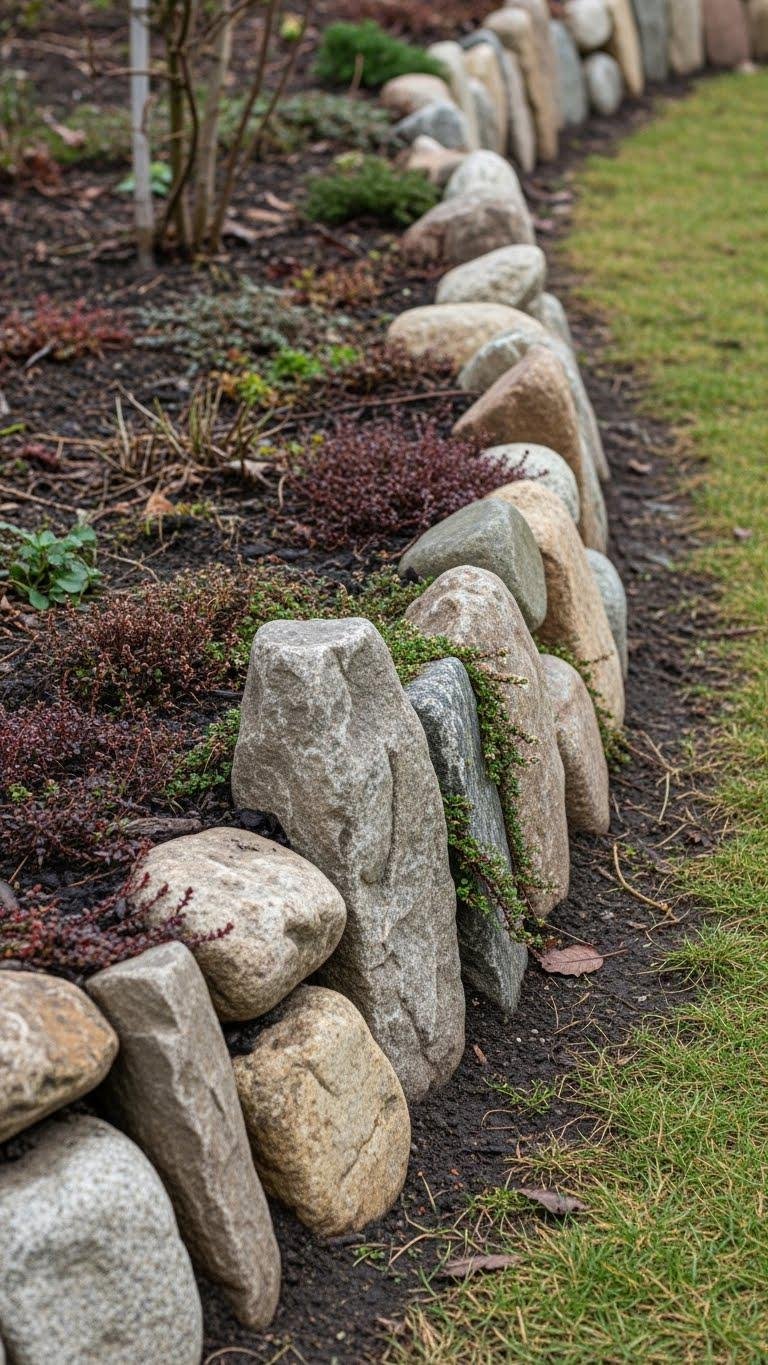
Want a border with more character and texture? You’ll arrange mixed-size rustic rocks to create an organic, flowing edge that feels wild yet deliberate. Vary heights and gaps for visual rhythm, tuck low plants between stones, and emphasize earthy texture.
It’s low-fuss but requires seasonal maintenance: reset shifted rocks, clear debris, and refresh gravel to keep the look free and intentional.
Flagstone Stepping Border

Lay irregular flagstones in a staggered line to create a striking stepping border that guides the eye and foot through your garden. You’ll choose flagstone patterns that echo your landscape, varying shapes for organic flow.
Set consistent stepping spacing for comfortable strides, tuck low-growing groundcover between stones, and anchor edges with compacted sand so the border feels effortless, open, and intentionally free.
Slate Flat Edging
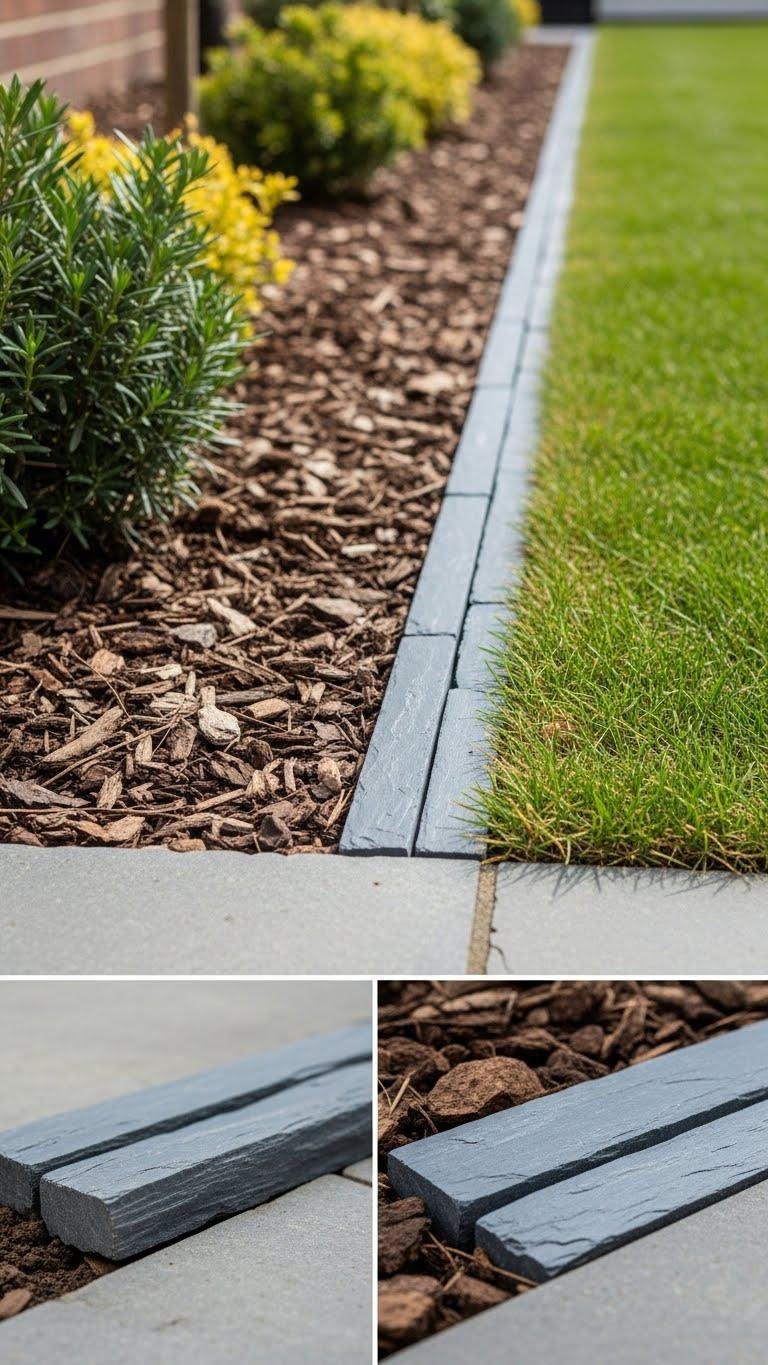
Choose thin, uniform pieces of slate to create a clean, modern flat edging that defines beds and pathways with understated elegance.
You’ll lay each slab flush with the soil for a sleek contrast against mulch and lawn.
This low-profile option frees your design, resists shifting, and looks minimal.
maintenance tips: set on compacted sand, level frequently, and replace cracked pieces promptly to keep lines crisp.
Pressure-Treated Lumber Strip

If you prefer a warmer, more traditional look than sleek slate, a pressure-treated lumber strip makes a sturdy, budget-friendly edging that frames beds and pathways with clean lines.
You can cut and place boards yourself, choose rot resistant treatments, and use board sealing methods to extend life. Stain or paint for a personal finish that keeps borders neat and liberating.
Railroad Tie Rustic Border
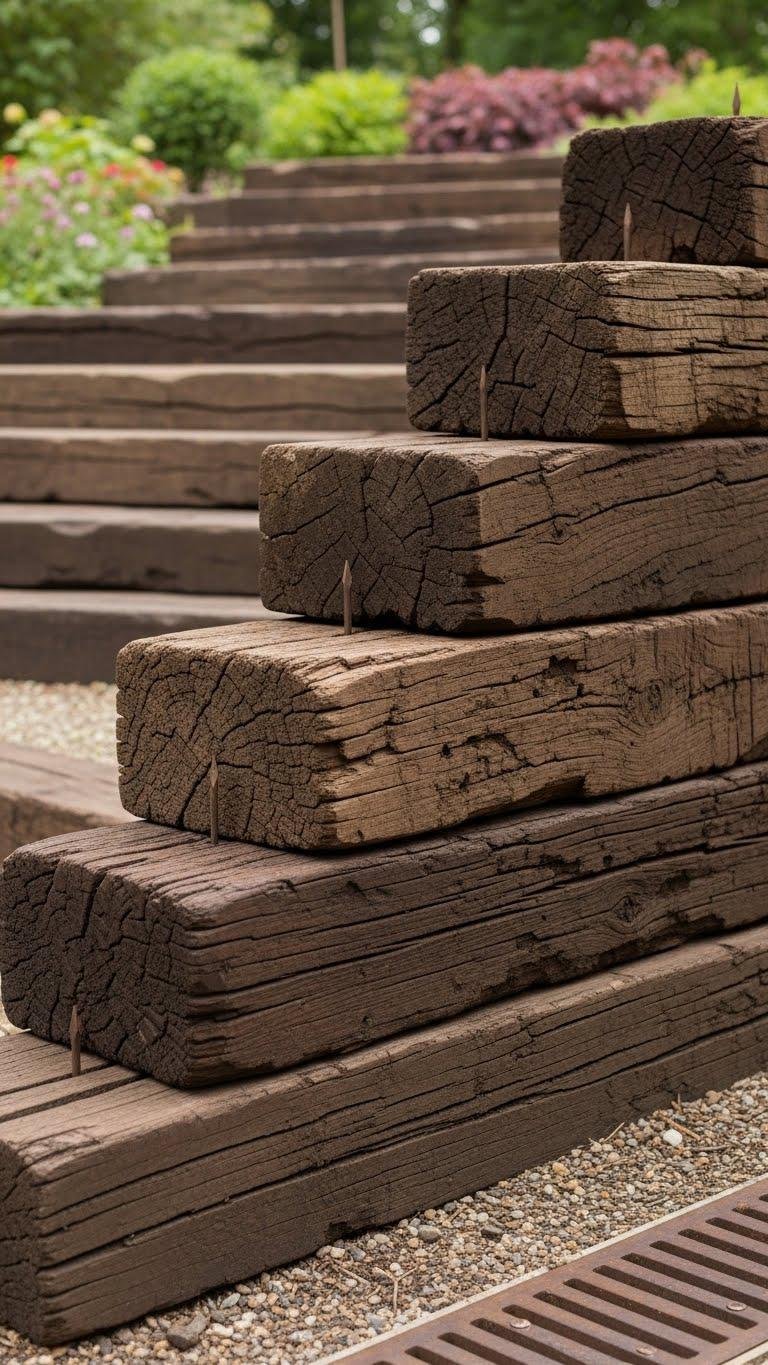
For a rugged, long-lasting border that brings vintage character to your garden, use reclaimed railroad ties arranged end-to-end or stacked for height.
You’ll create a strong, low-maintenance edge with weathered charm, rough textures, and deep brown tones.
Place ties straight or staggered, secure with spikes, and leave gaps for drainage.
You’ll welcome rustic freedom while limiting insect habitat near soil.
Timber Sleeper Raised Edge
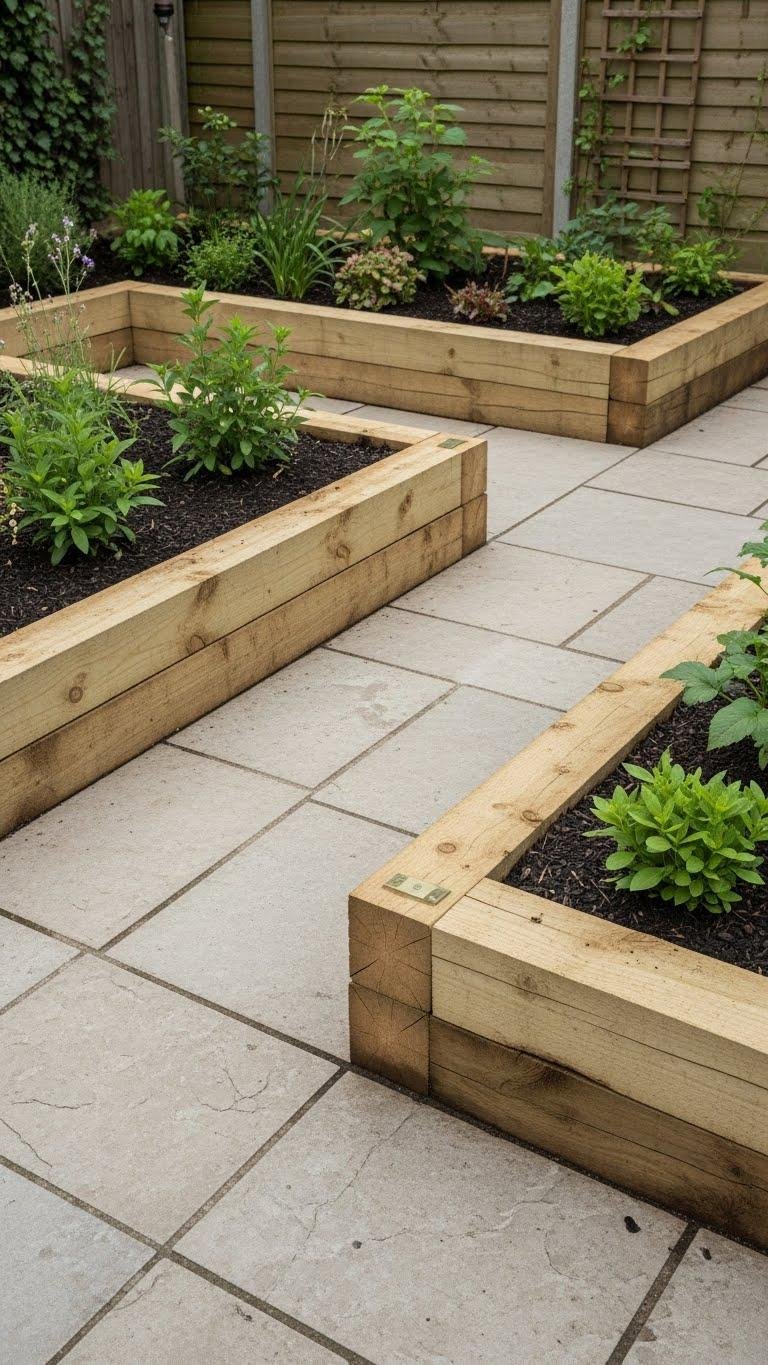
Anchor timber sleepers along your beds to build a sturdy, raised edge that blends industrial strength with natural warmth.
You’ll set sleepers level, secure with sleeper anchoring spikes, then apply timber preservation treatment to resist rot and pests.
The result gives clean lines, defined planting zones and durable containment that lets you shape beds freely while keeping maintenance minimal and appearance refined.
Staggered Lumber Corner Edging
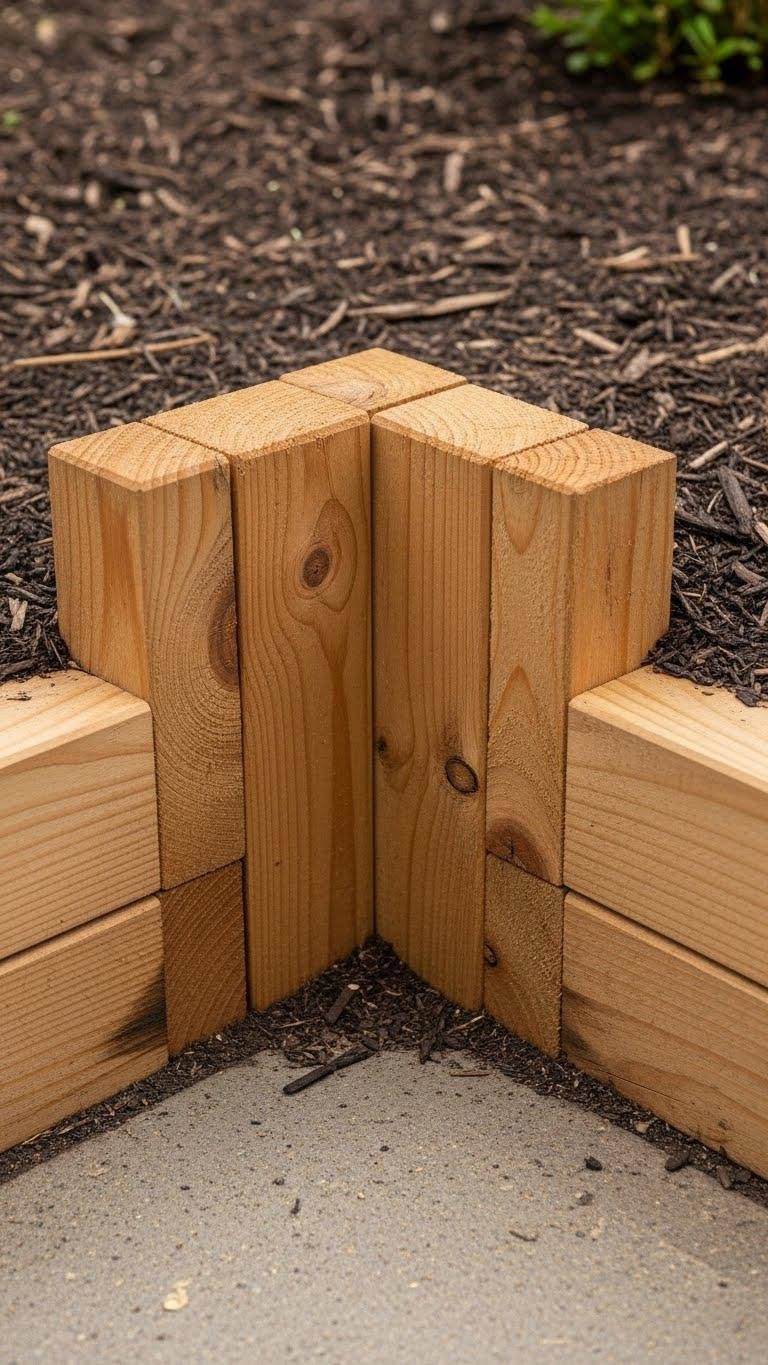
When you stagger lengths of treated lumber at the corner of a bed, you create a stepped, interlocking profile that emphasizes the junction while containing soil and mulch neatly.
You cut boards with angled joinery for tight fits, assemble the stack for a crisp silhouette, and apply weatherproof sealant to extend life. It’s a bold, restrained edge that frees your layout to flow.
Wooden Round Scalloped Border
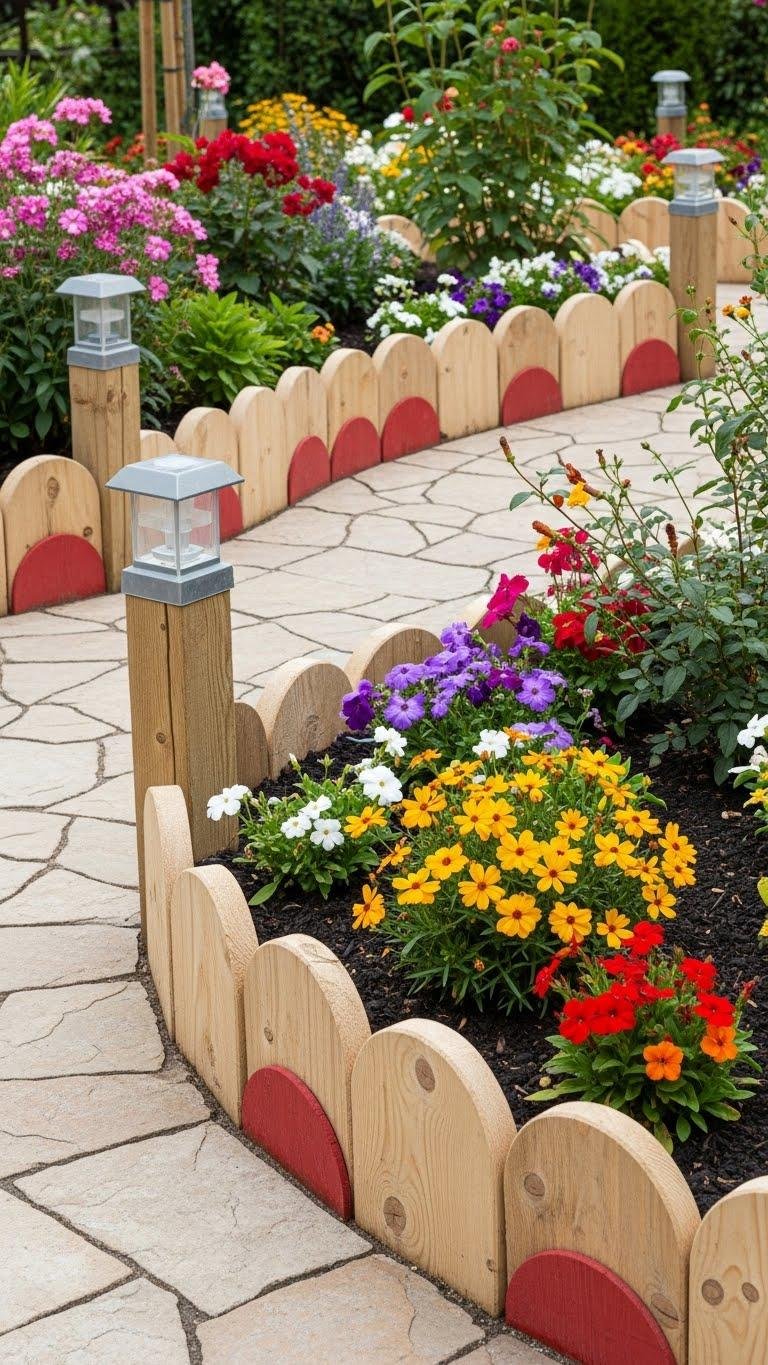
Give your garden a soft, handcrafted finish with a wooden round scalloped border that gently frames beds and pathways. You can repurpose reclaimed pallet boards, cutting uniform rounds and arranging them edge-to-edge.
Sand, seal, or apply painted scallops for contrast. You’ll set posts for stability, nest the rounds tightly, and enjoy a liberated, cottage-like edge that’s durable and invigoratingly personal.
Reclaimed Slate or Tile Accent
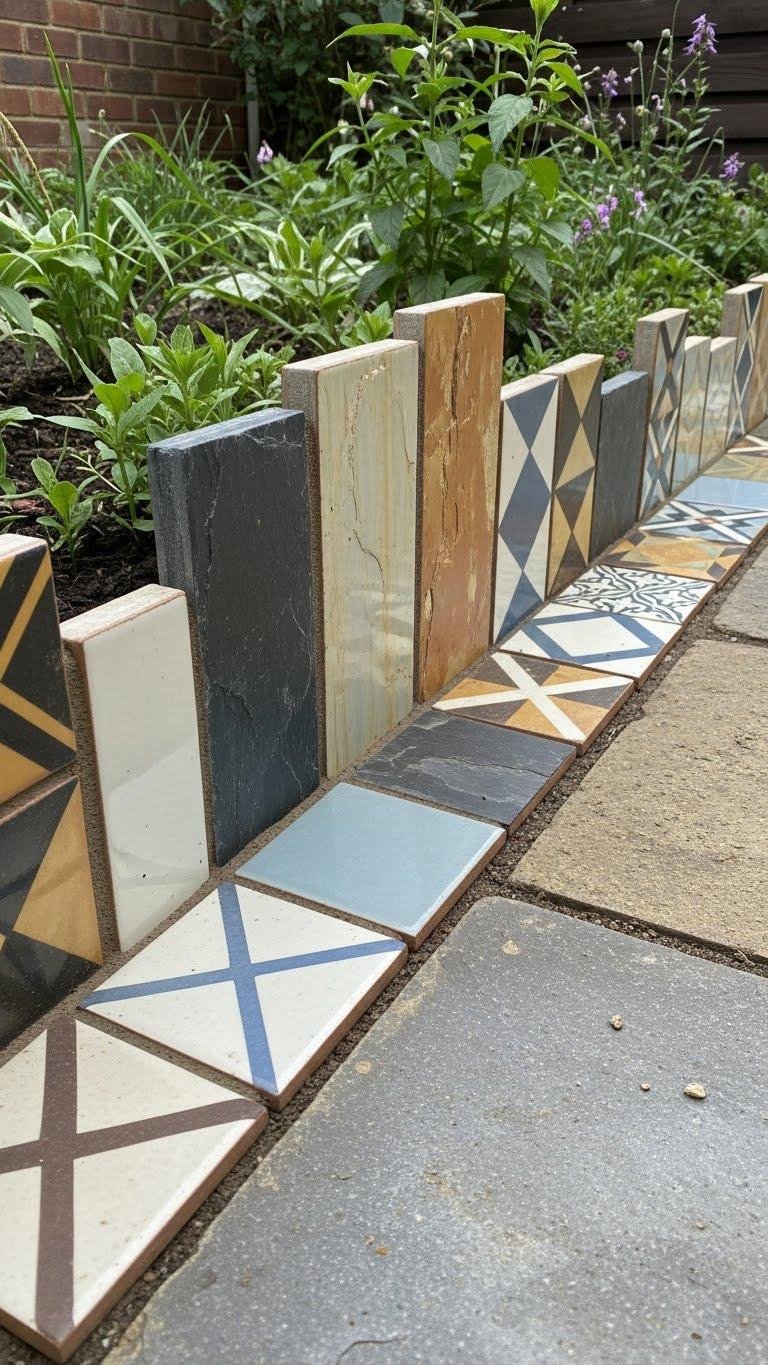
Salvaging old slate or ceramic tiles, you can create a striking accent border that adds texture and color to your garden beds. Lay reclaimed tile upright or flat, varying sizes for rhythm. Use mortar or gravel to secure pieces and finish edges cleanly.
Slate mosaics introduce natural tones and geometric patterns, letting you craft a personal, low-cost border that feels liberated and intentional.
Broken Pottery and Glass Mosaic Edge
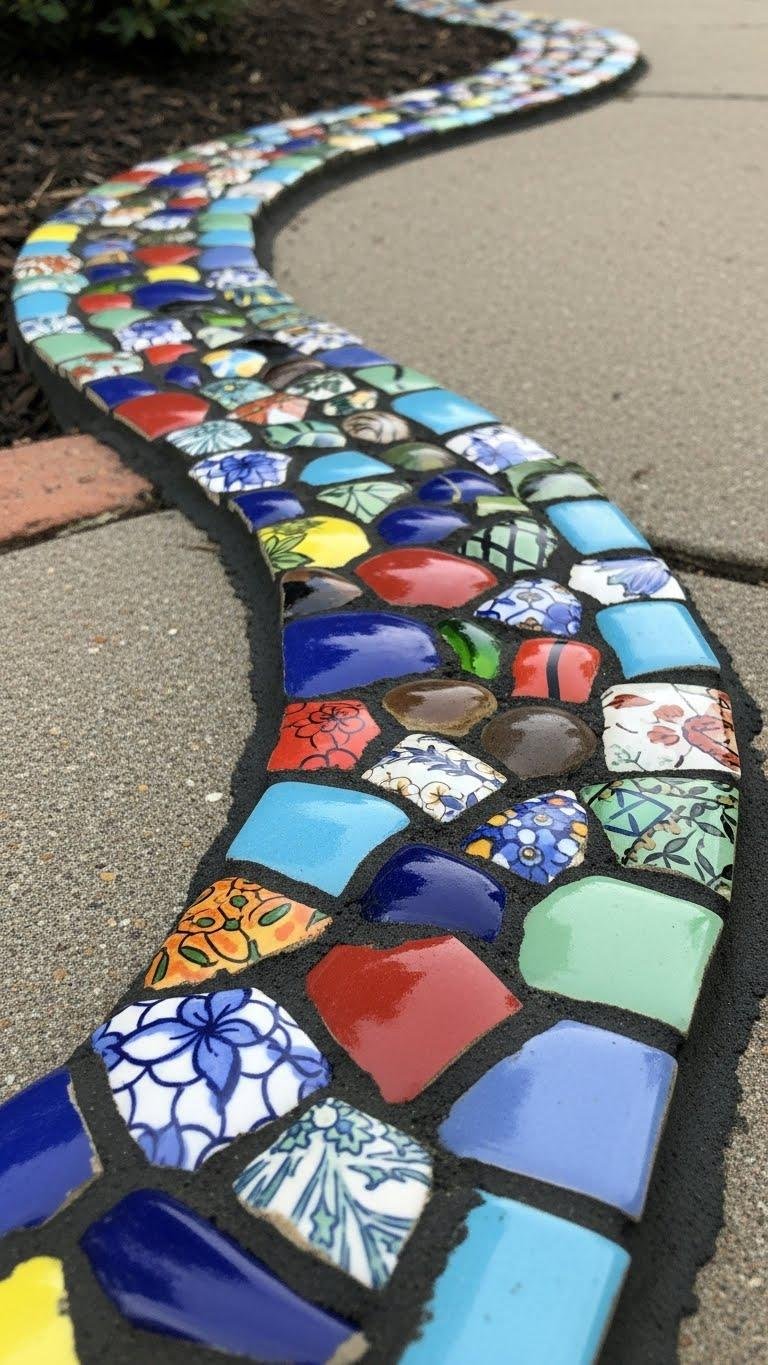
If you liked the textured rhythm of reclaimed slate, try composing a mosaic border from broken pottery and glass for a brighter, more playful edge.
You’ll lay ceramic shards into mortar, shaping a flowing Mosaic pathway that guides feet and eyes.
Choose bold colors, control spacing, and seal grout for durability.
This creative border frees your design, adding shimmer and personality to beds or walkways.
Upcycled Metal Sculptural Border

Turn discarded scrap into a striking garden edge by welding, bending, or fastening metal pieces into a sculptural border that frames beds and pathways. You can create bold, repurposed hubcaps accents, corten panels, or hammered strips to catch light and shadow.
Use welded garden silhouettes for continuity, anchor securely, and let curves guide movement — it’s rugged, inventive freedom with polished impact.
Turf-Cut Natural Lawn Edge
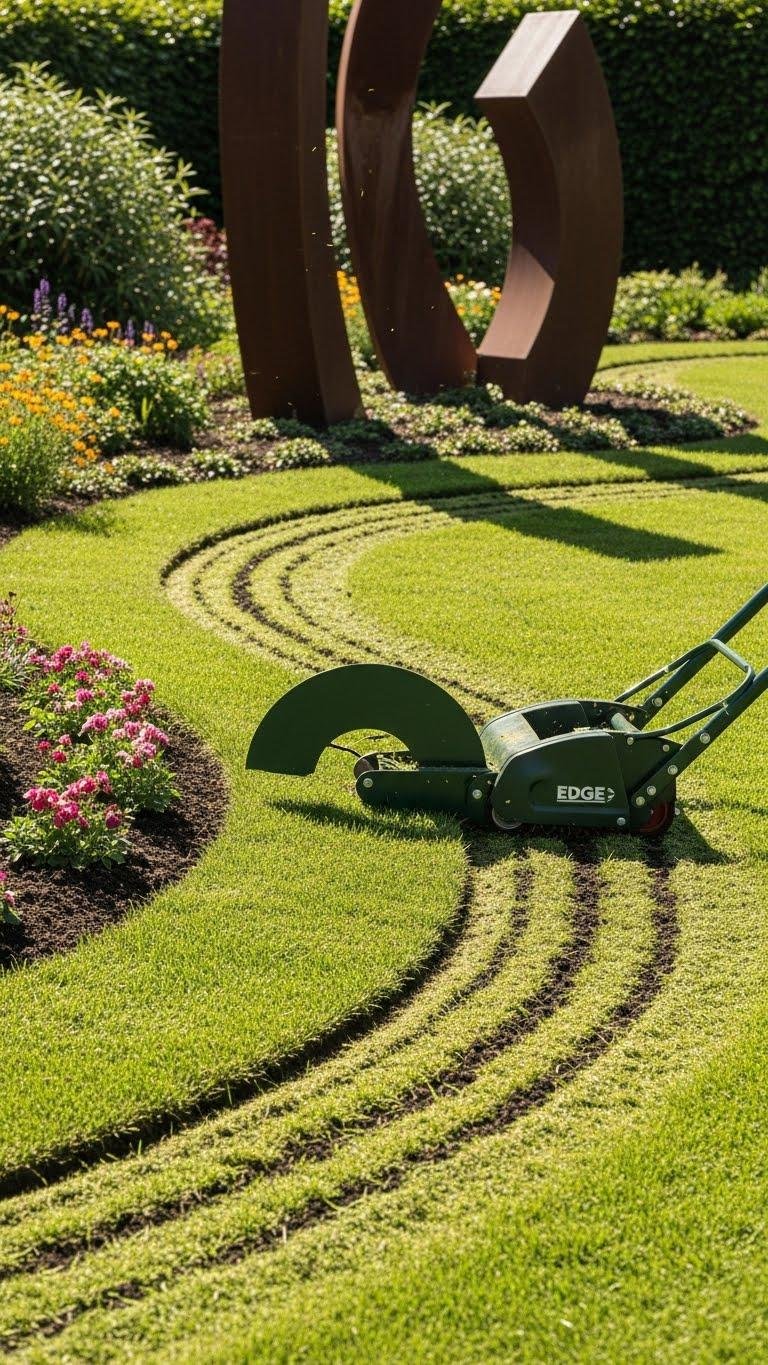
After the bold, industrial edge of metal sculpture, a turf-cut natural lawn edge offers a softer, more organic finish that frames beds with clean simplicity.
You’ll carve crisp curves and a turf scallop using a half-moon edger or an edge scarifier, revealing neat soil lines.
Maintain rhythm and freedom: cut confidently, remove clippings, and let the border breathe.
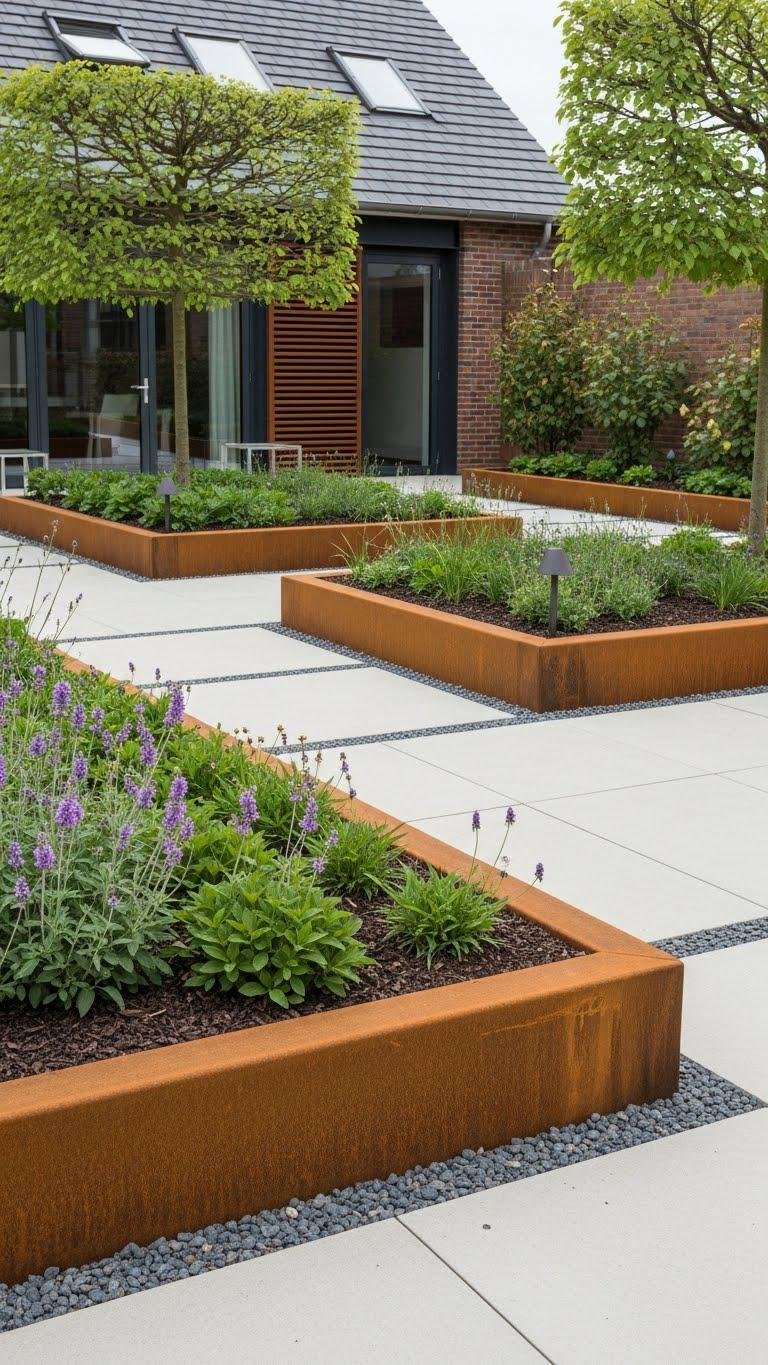
Corten Steel Slim Profile
Paragraphs
Galvanized Aluminum Rolled Edge
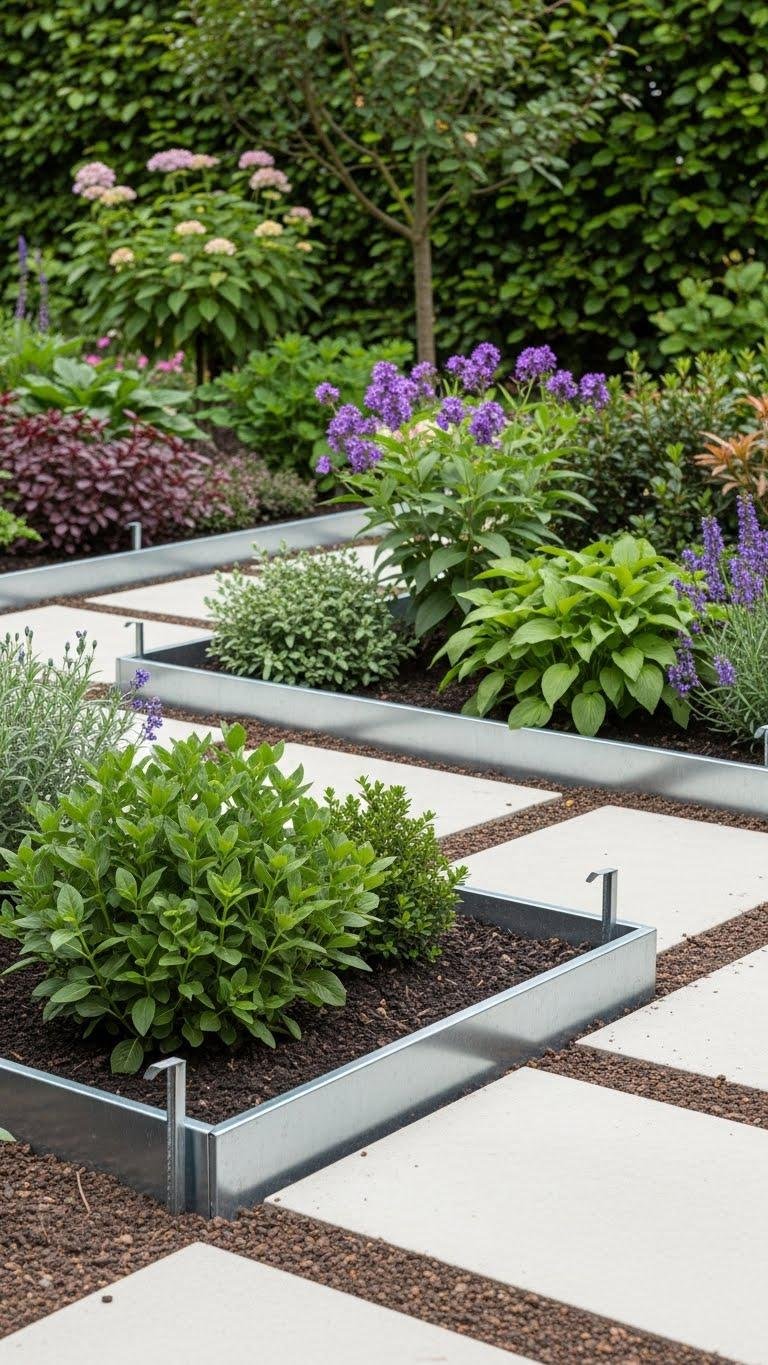
Consider galvanized aluminum rolled edge when you want a crisp, low-profile border that’s lightweight, durable, and easy to install. You’ll enjoy clean lines that frame plantings and pathways without dominating the space.
Rolled installation tucks neatly into soil; stakes hold it steady. Galvanized maintenance is minimal — rinse occasionally and inspect seams. It’s a freeing, restrained choice for polished garden edges.
Narrow Gravel or Decomposed Granite Collar

A narrow gravel or decomposed granite (DG) collar gives your beds a crisp, low-profile edge that’s both affordable and easy to install. You’ll dig a shallow trench, lay weed suppressant fabric, then add permeable edging and compacted DG or gravel.
The result: clean lines, quick water drainage, minimal maintenance, and a liberated, sculpted look that frames plants without heavy barriers.
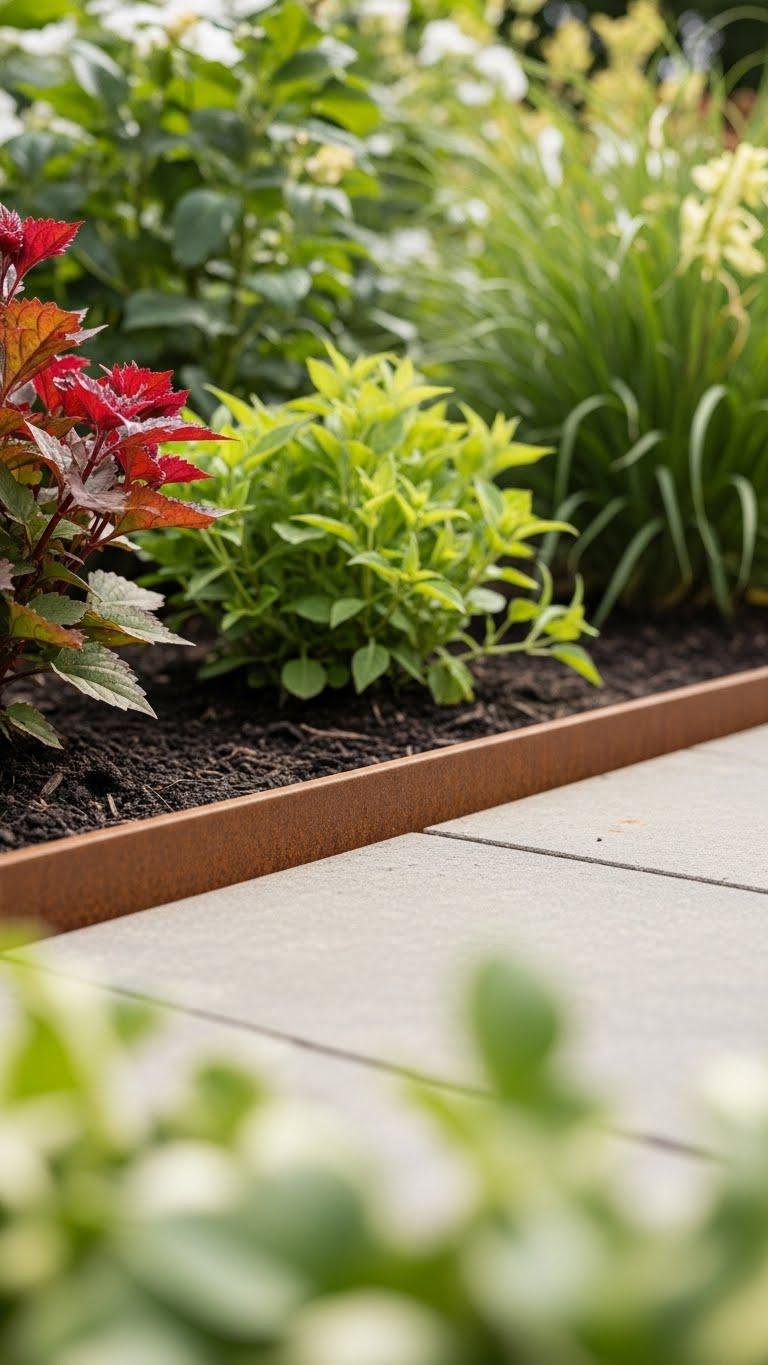
Hidden Low-Profile Metal Trim
Paragraphs
Solar Stake Lighting Along Borders
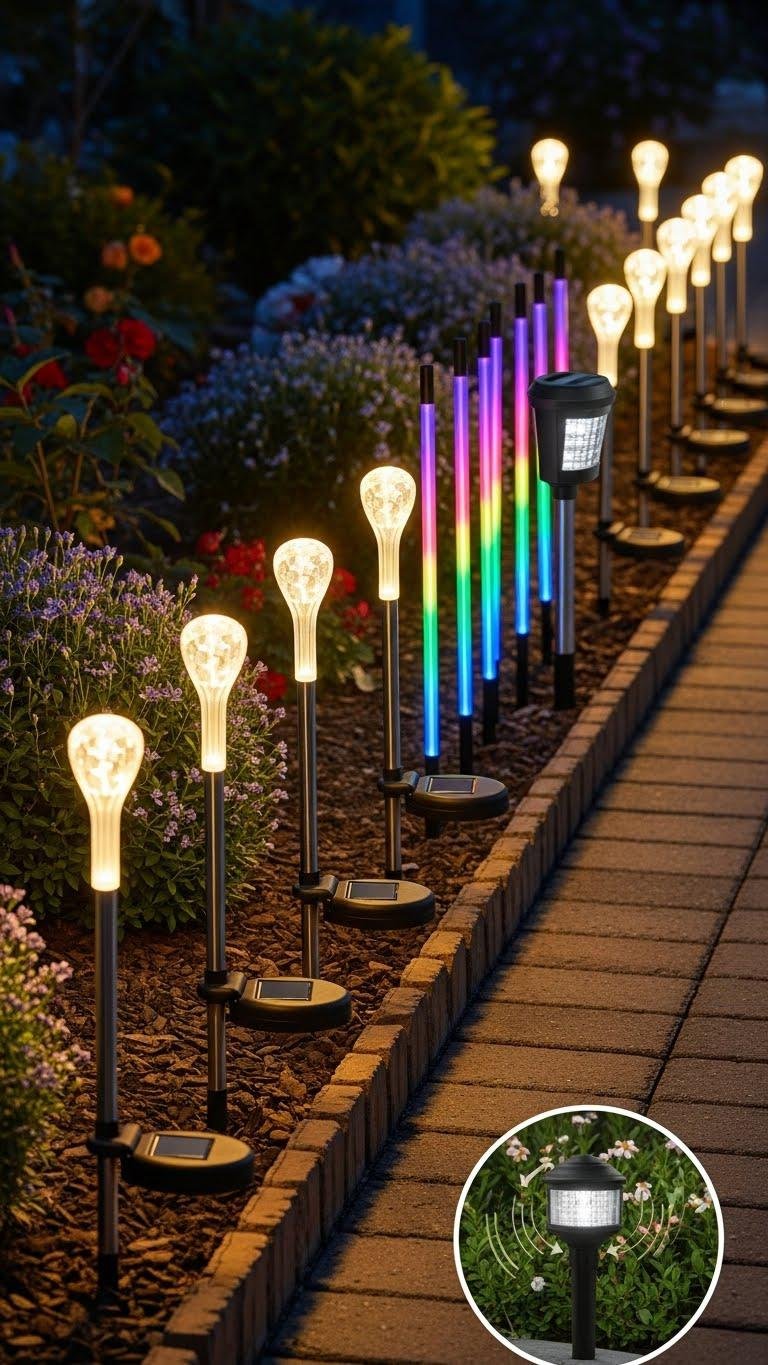
Brighten up your garden edges with solar stake lighting that tucks neatly into borders and charges by day to cast soft, energy-free illumination at night. You’ll place solar pebble stakes or slim rods for a refined line, choose warm white for cozy evenings or color changing for festive flair, and opt for motion activated units where security and spontaneous freedom guide your layout.
Low-Growing Living Plant Edge
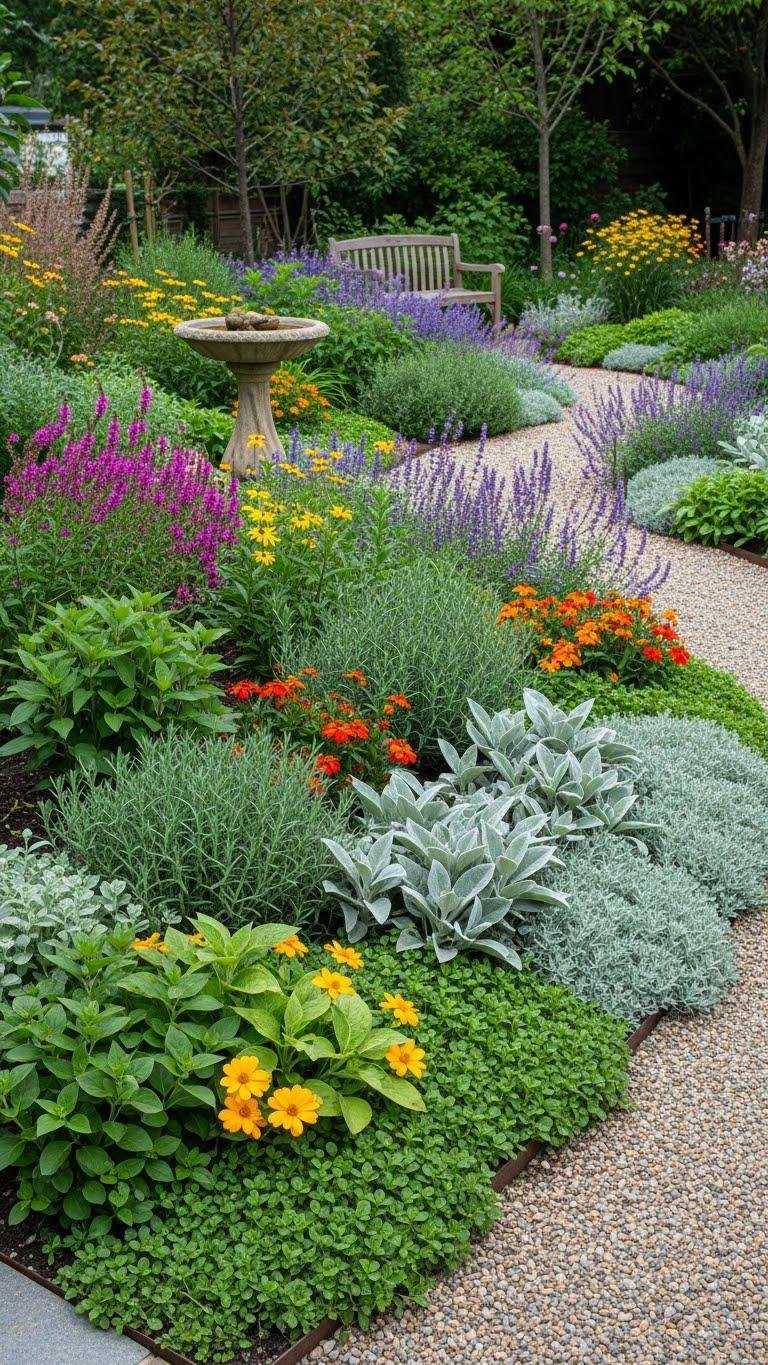
Planting a low-growing living edge frames your beds with texture and color while keeping pathways clear, and you’ll get seasonal interest without tall upkeep.
You’ll choose native groundcovers for resilience, weave a seasonal flowering edge of low perennials, and trim clean lines to maintain freedom of movement.
This polished, low-maintenance border offers tactile contrast, scent, and steady blooms without crowding your space or schedule.