
You’ll find simple, stylish ways to define beds, paths, and borders with materials that fit your budget and yard. Picture neat steel strips, rustic birch rows, low cedar trims, or colorful bottle mosaics—each option balances form and function so plants stay tidy and edges look intentional. I’ll show practical installation tips, material trade-offs, and quick wins that make a real difference—so you can pick the right approach and get started.
Natural Birch Log Border for a Woodsy Look
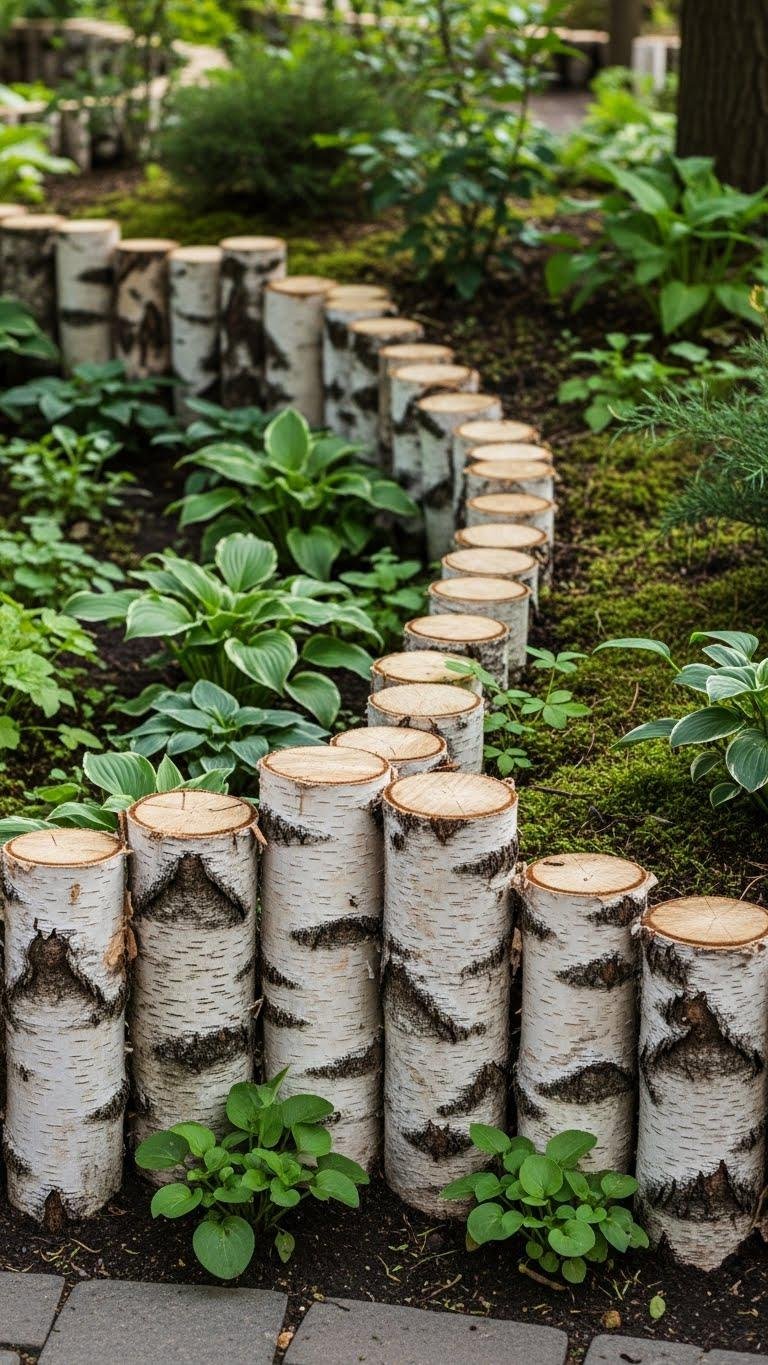
Choose birch logs for a border when you want a rustic, woodland feel that blends with plants and paths. You’ll leave birch bark visible, stagger log placement for rhythm, and let natural decay soften edges.
Place logs slightly buried to stabilize, encourage moss promotion in shady spots, and enjoy low-maintenance lines that age gracefully, giving your garden freedom to evolve without rigid, manufactured borders.
Cedar or Redwood Low-Profile Hydrangea Border
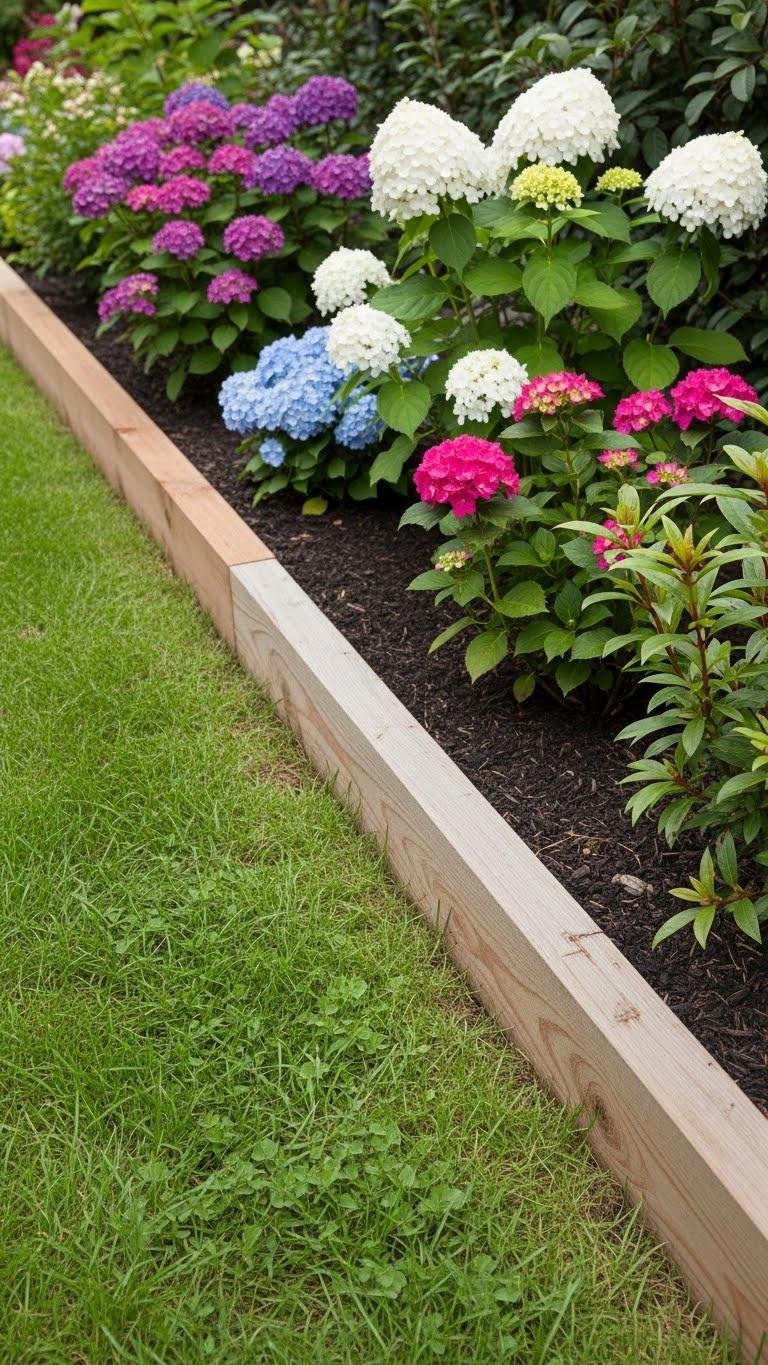
If you want a softer, more natural edge than pressure-treated lumber, cedar or redwood low-profile borders pair beautifully with hydrangeas and other flowering shrubs.
You’ll install them flush to the lawn for a low profile look, enjoy cedar weathering to a silvery patina, and place a root barrier to protect beds.
They’re hydrangea compatible, durable, and easy to replace.
Landscape Timber Steps and Raised Bed Edge
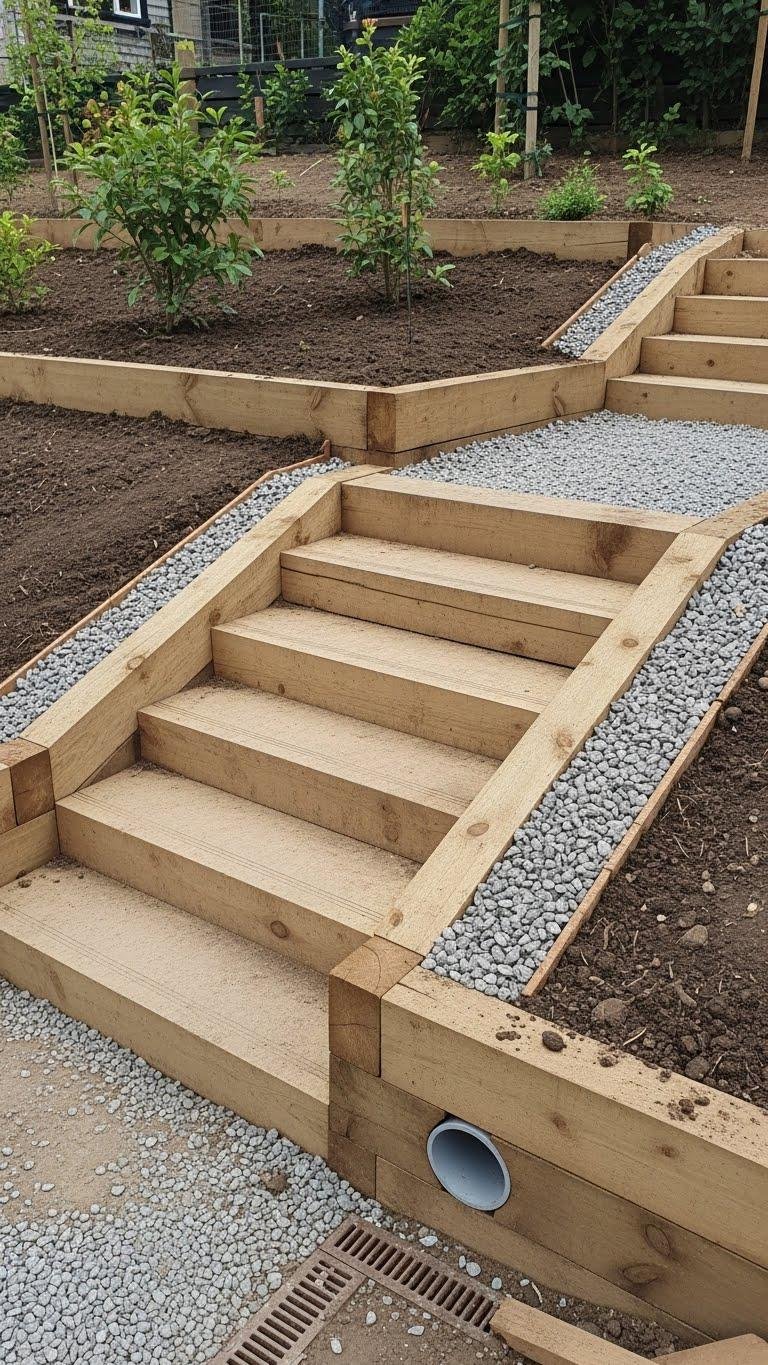
Build timber steps that double as raised-bed edges to create a clean, functional changeover between grades and planting areas.
You’ll set timbers level, anchor securely, and backfill the raised bed to prevent soil compaction while keeping paths clear.
Integrate drainage solutions like gravel channels and perforated pipe.
The result feels free and intentional—durable timber steps that frame beds and guide movement.
Reclaimed Railroad Tie Statement Border
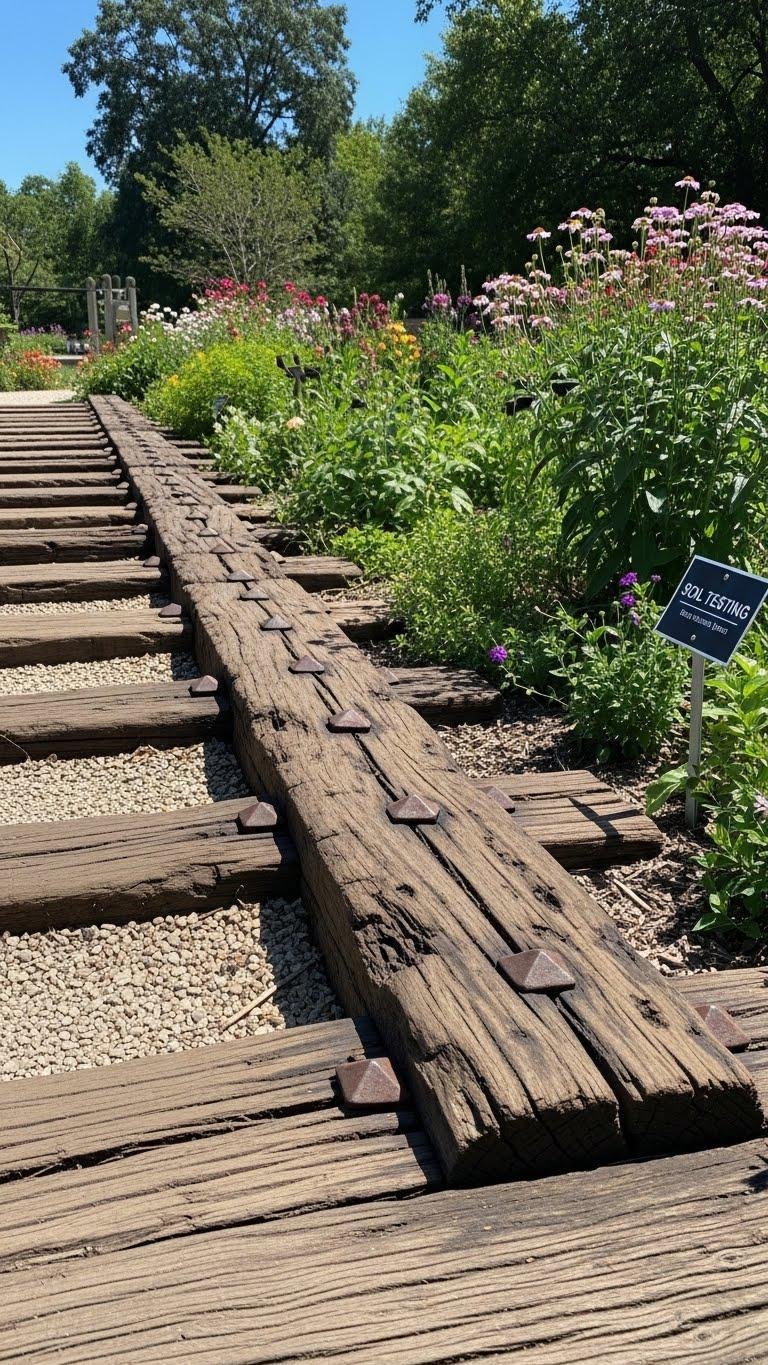
After framing beds with timber steps, you can make a bolder statement by lining paths or borders with reclaimed railroad ties—those thick, weathered sleepers add instant weight and character.
You’ll enjoy the weathered texture and rustic lines; add rail spike accents for subtle shout-outs to historic preservation.
Test and mitigate soil contamination before installing so your bold edge stays safe and free.
Corrugated Galvanized Steel Modern Edge
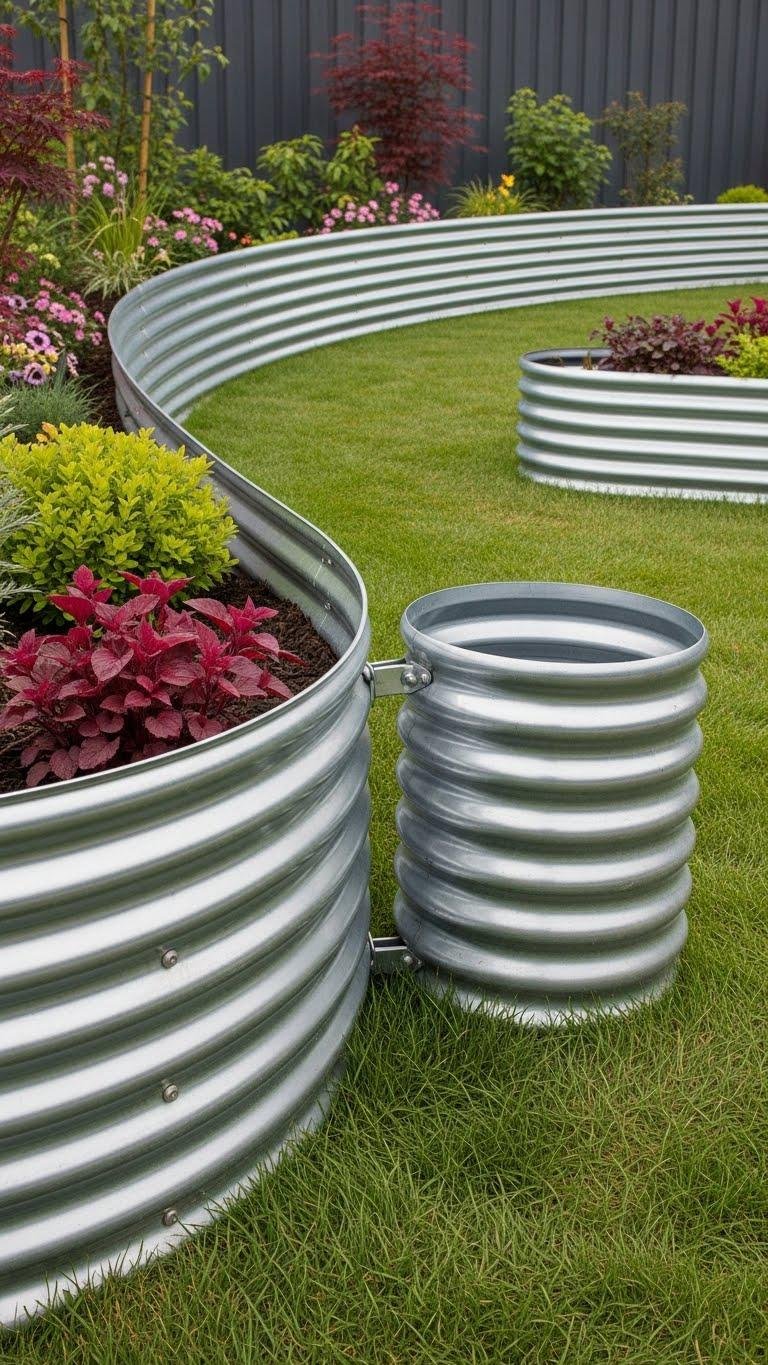
With its rippled profile and bright metallic finish, corrugated galvanized steel gives borders a sleek, modern edge that contrasts beautifully with soft plantings.
You can cut and shape panels to define curves, anchor them low for clean lines, and reuse offcuts as corrugated planters.
Those galvanized accents resist weather, stay low-maintenance, and let you craft a bold, liberated yard with minimal fuss.
Corten Steel Contemporary Garden Line
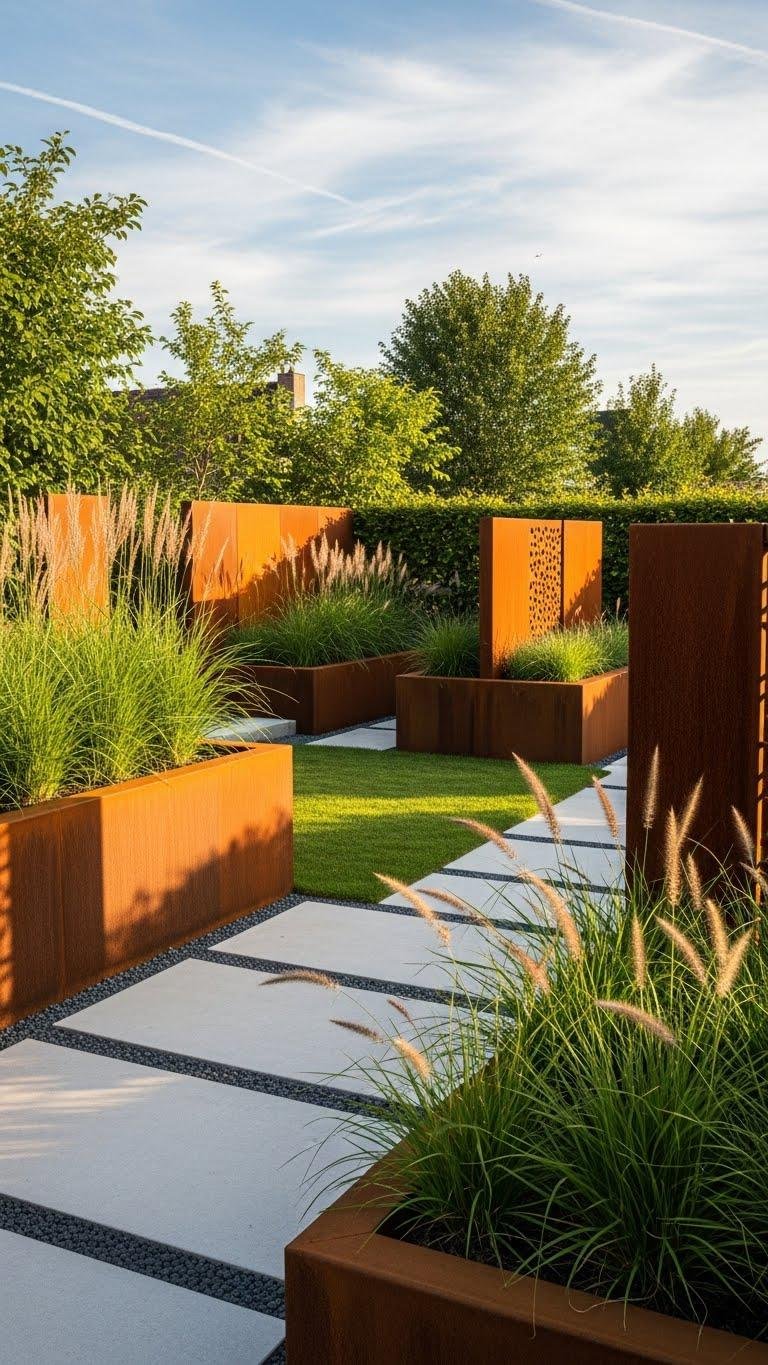
Embrace the warm, rusted tones of Corten steel to create a striking contemporary garden line that ages like a living sculpture.
You’ll anchor beds with clean, modern minimalist panels that develop rich corten patina over time. Cut and stake weathering steel for low-profile separation, letting grasses and paving contrast the textured edge. It’s bold, low-maintenance, and liberating to install yourself.
Thin Metal Strip Crisp Professional Border
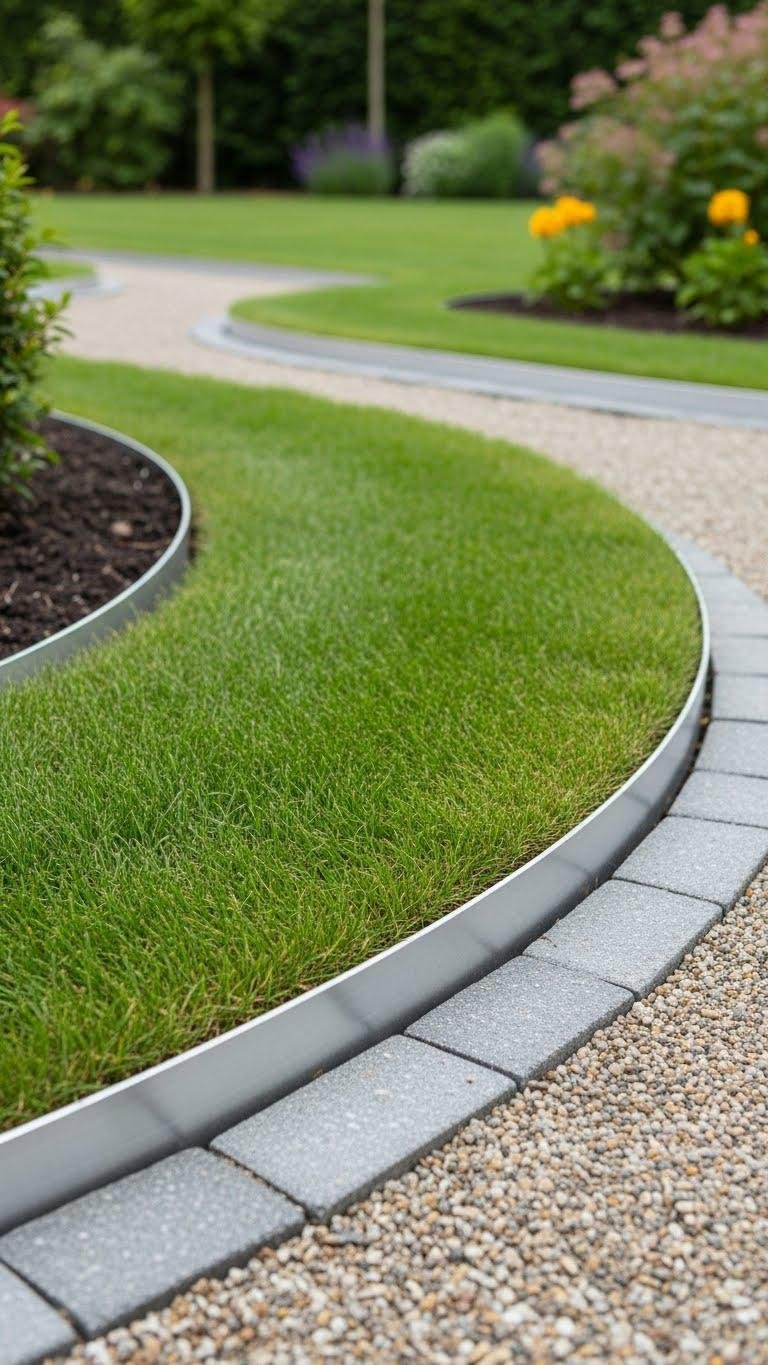
A thin metal strip creates a crisp, professional border that reads cleanly against turf, gravel, or planting beds; you’ll love the minimalist look. Install thin steel edging flush to the ground, stake firmly, and bend gently around curves.
It gives a crisp finish, resists rot, and lets you mow right up to the edge. Fast, precise, and liberating for your yard.
2xEDGE Stapled Wood and Metal Combo
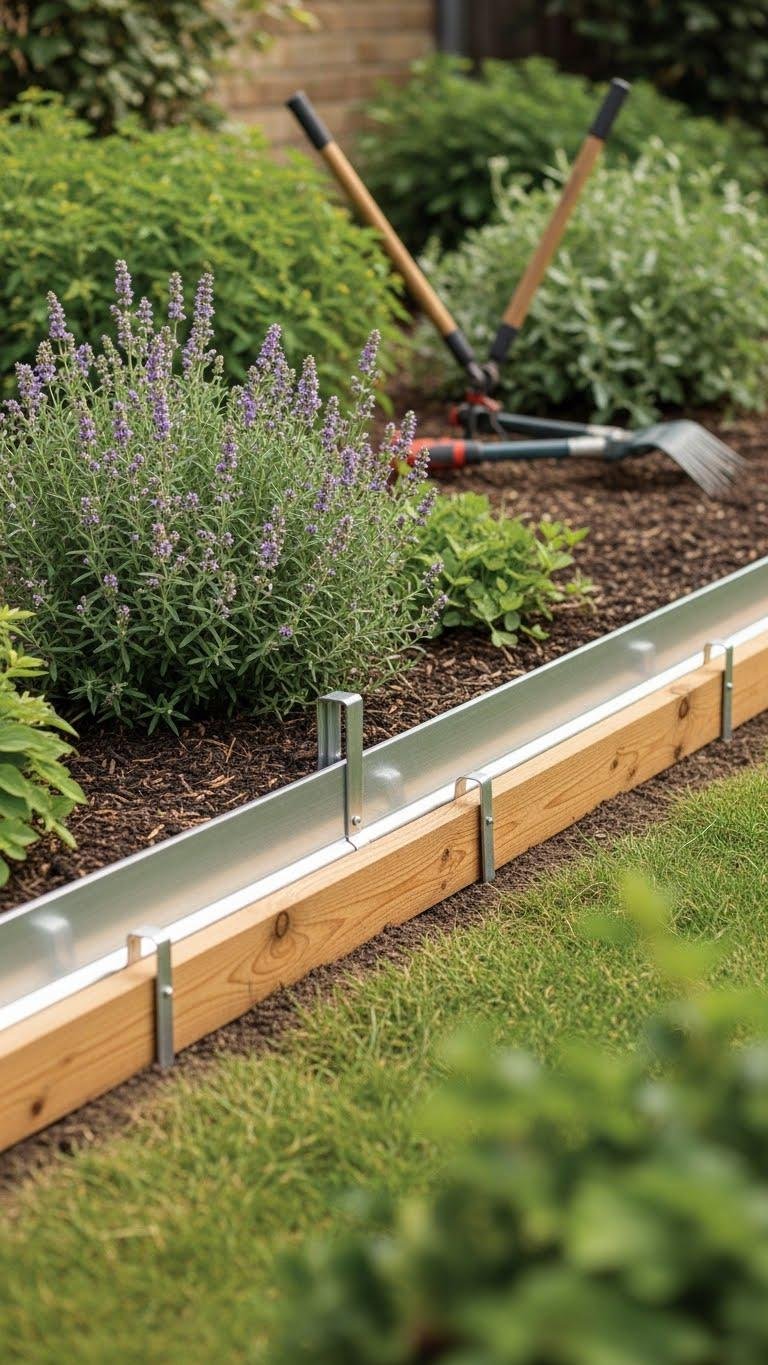
If you like the crisp look of metal edging but want a warmer, anchored feel, xEDGE stapled wood-and-metal combo gives you both. You’ll place the metal strip, staple treated wood to the top edge, and anchor with stakes for a low-profile, durable border.
Follow xedge maintenance routines and simple installation tips to preserve finish and keep lines clean, freeing your yard to evolve.
Brick Soldier Course for Classic Curb Appeal
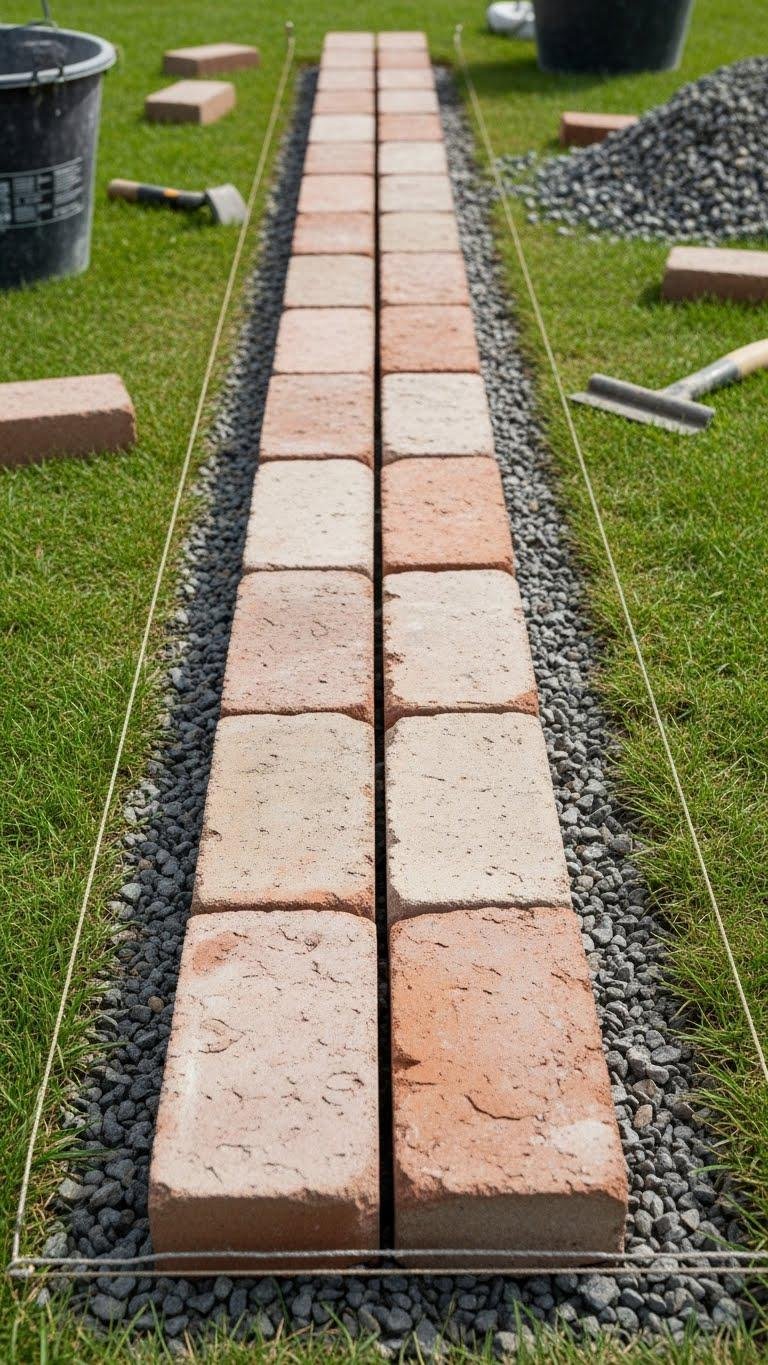
Lay a neat soldier course of bricks for a look that reads timeless and tidy: stand the bricks on their short edge, butt them tightly together, and sink the row into a compacted gravel-and-sand bed so the top sits slightly above the lawn or garden edge.
You’ll follow a classic pattern; choose tight joints and optional mortared installation for permanence, trimming and leveling as you go.
Diagonal Brick Pattern for Visual Interest
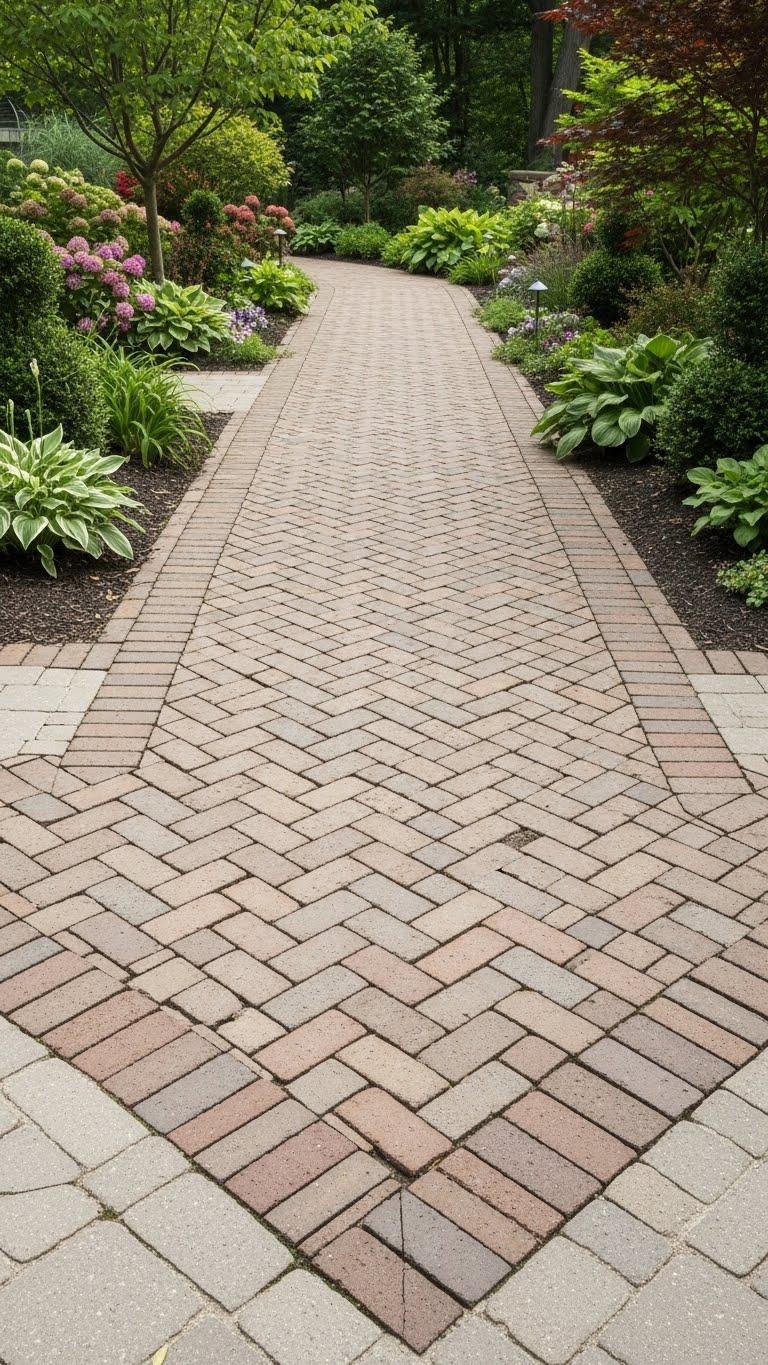
When you set the bricks on a 45-degree angle instead of in straight rows, the result immediately feels more dynamic and upscale; the diagonal layout draws the eye along pathways and beds, adding movement to an otherwise static border.
You’ll lay bricks tightly, use sand for stability, and tuck herringbone accents at corners for rhythm. It’s bold, tidy, and easy to maintain.
Precast Concrete Zigzag Edging
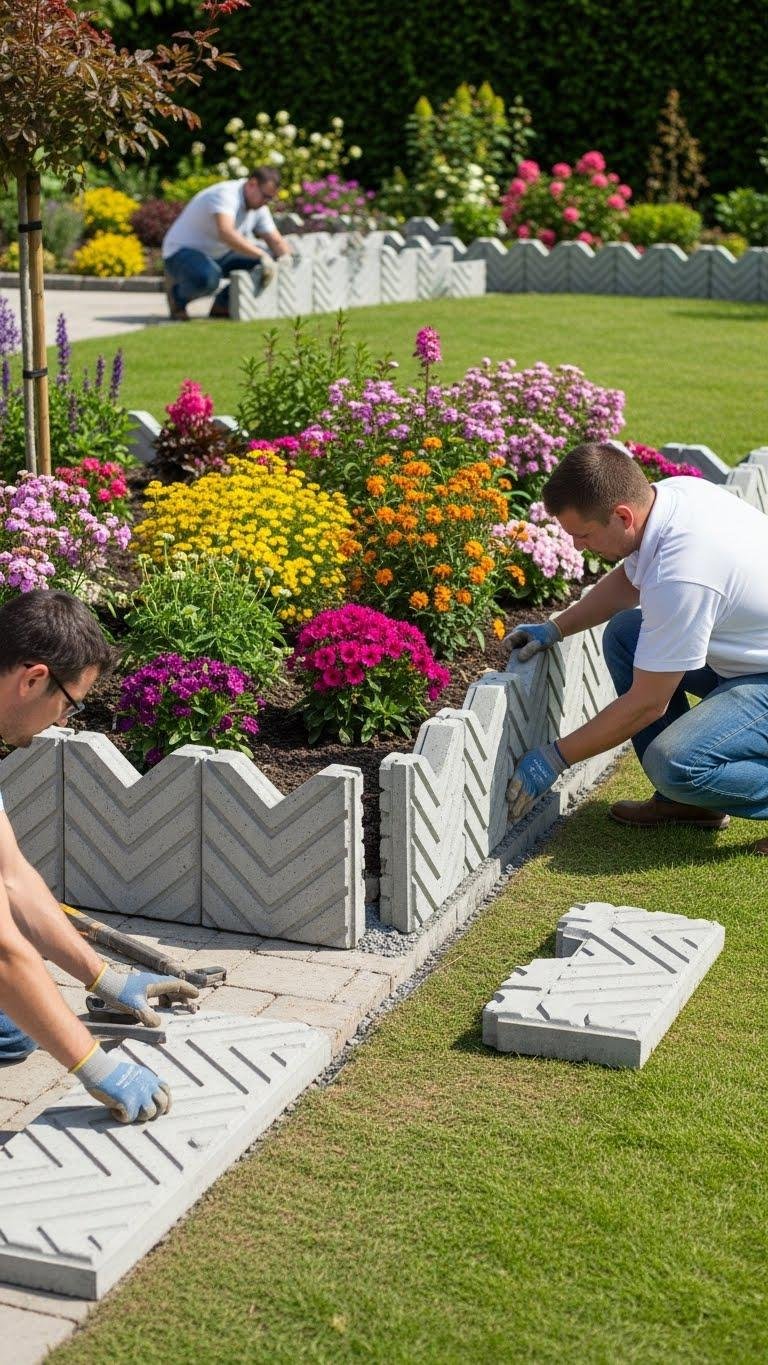
Because precast concrete comes in ready-made zigzag sections, you can install a bold, low-maintenance edge quickly and without forming or pouring on site.
You’ll snap sections together, set on a compacted base, and backfill. Choose pieces with stamped patterning and integral coloring for texture and lasting hue.
It’s durable, low-effort, and gives your beds a crisp, confident boundary that frees you to roam.
Natural Rock Lined Flower Bed Border
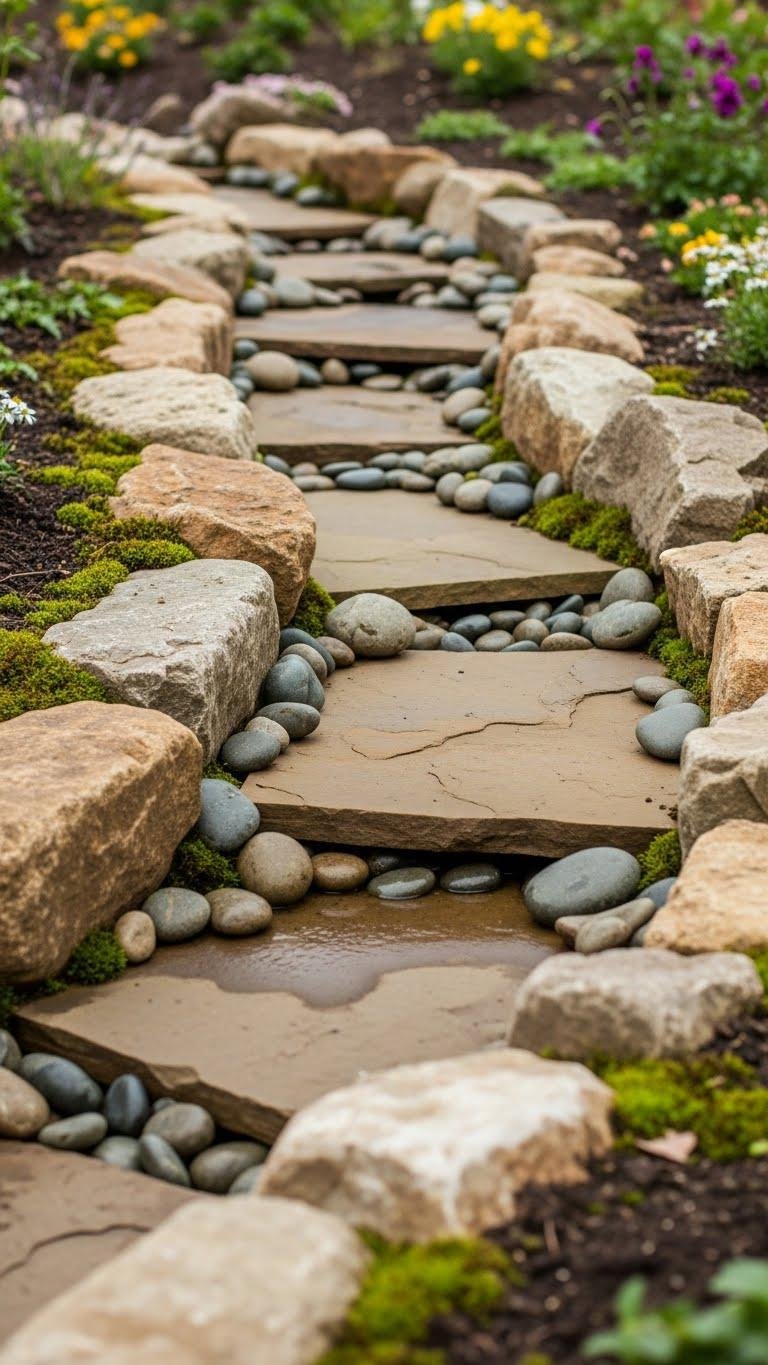
Smooth riverstones, flagstone slices, or rough field rocks can give your flower beds a timeless, organic edge that anchors the planting and blends with the landscape. You’ll collect native stones, arrange them by size, and nestle pieces so water drains.
Leave natural gaps for mossy crevices to form. This low-maintenance border feels wild, easy to adjust, and frees you to experiment.
Cobblestone or Slab Stone Path Edge
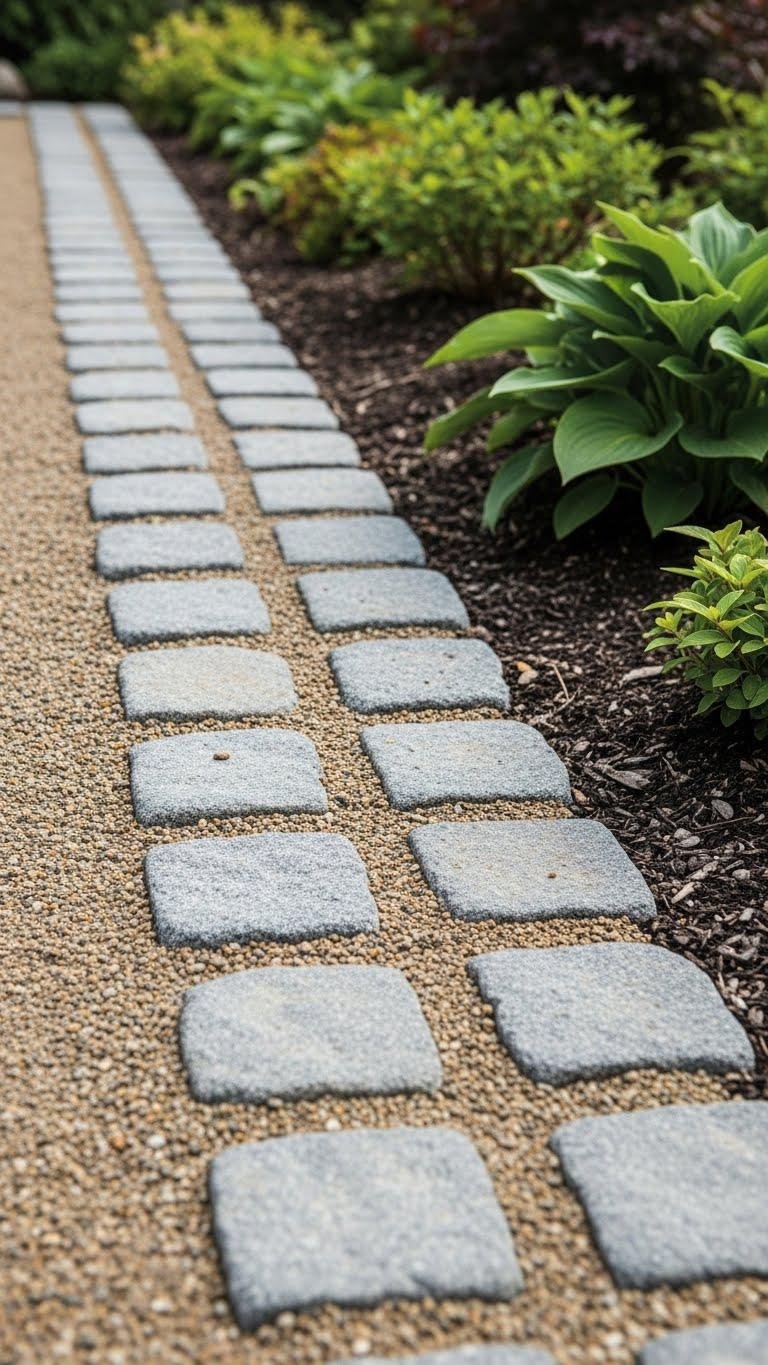
Lay cobblestones or slab stones along your path’s edge to create a clean, durable border that guides foot traffic and defines planting beds. Space stones evenly, bed them on compacted sand, and backfill with gravel infill to lock edges.
Tilt slightly away from the path to form a subtle drainage slope. You’ll get a low-maintenance, sturdy edge that feels open and deliberate.
Recycled Glass Bottle Colorful Border
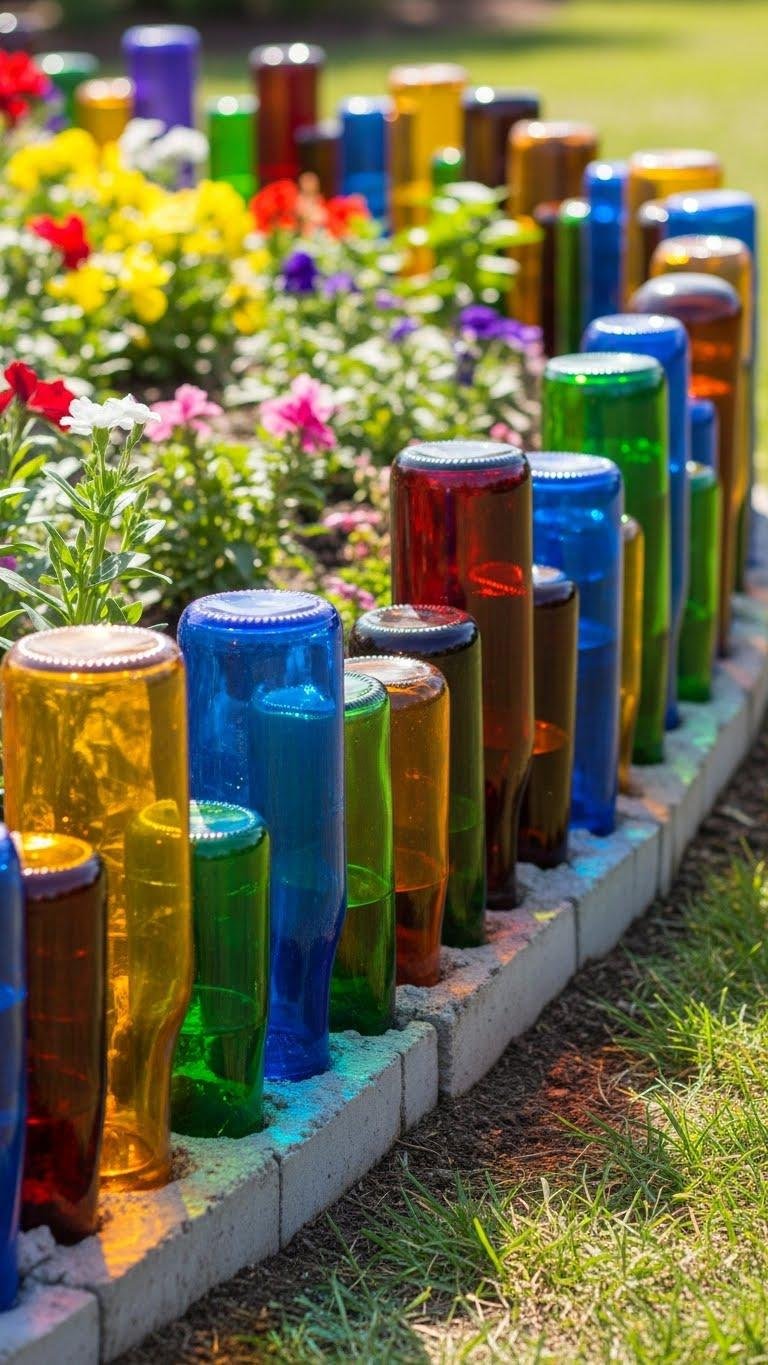
Bright glass bottles turned rim-down make a striking, budget-friendly border that catches light and adds color to any bed or path. You’ll press bottles into soil or concrete, varying heights and hues for playful bottle mosaics.
Consider basic glass annealing knowledge to reduce breakage when trimming. It’s an easy, free-spirited edge that lets you personalize curves, patterns, and reclaimed finds.
Recycled Rubber Tire Edging for Durability
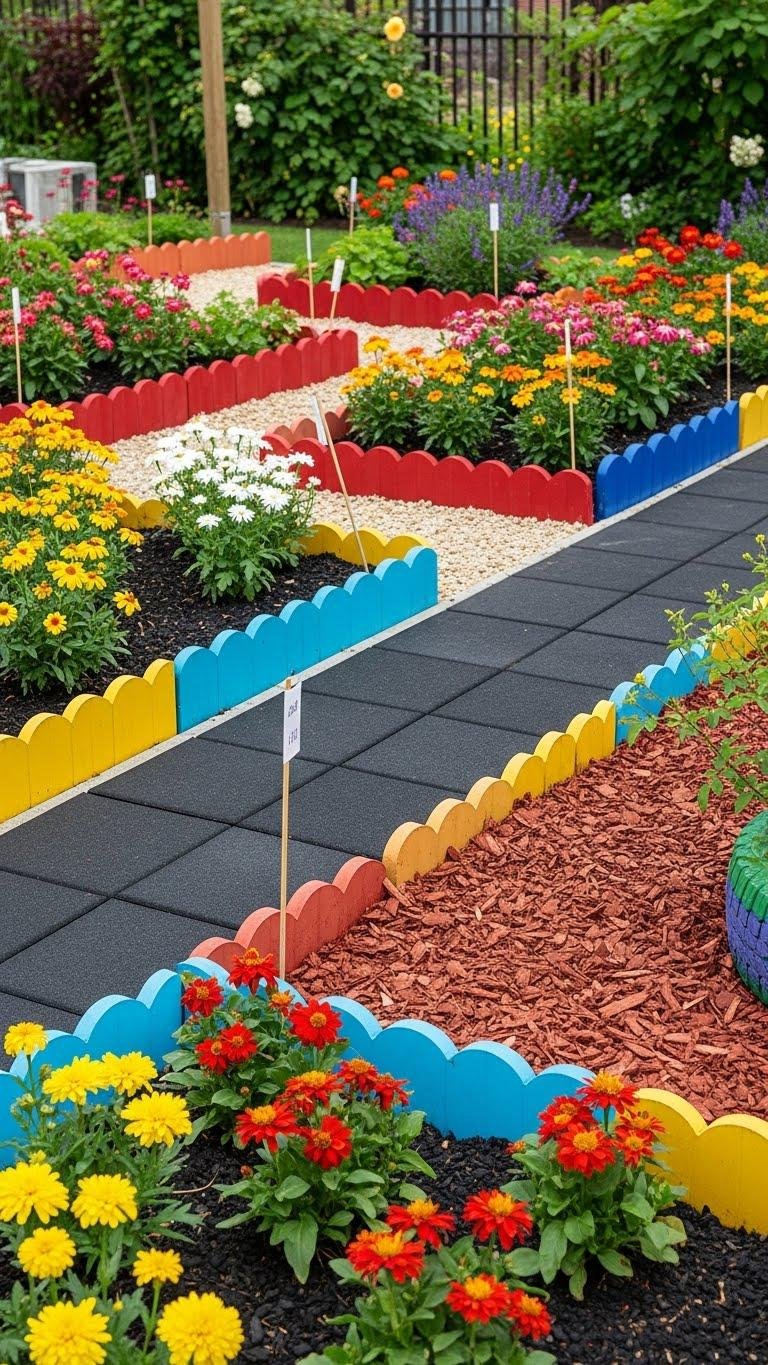
If you liked the colorful whimsy of bottle borders but want something tougher, recycled rubber tire edging gives you long-lasting structure without losing style.
You can cut tires into sleek scallops or lay rubber pavers for a clean line. It resists rot, cushions roots, and accepts paint. Pair with tire mulch for cohesive texture. Install simple stakes; shape borders to suit your free, adventurous yard.
Composite Recycled Wood-Plastic Trim
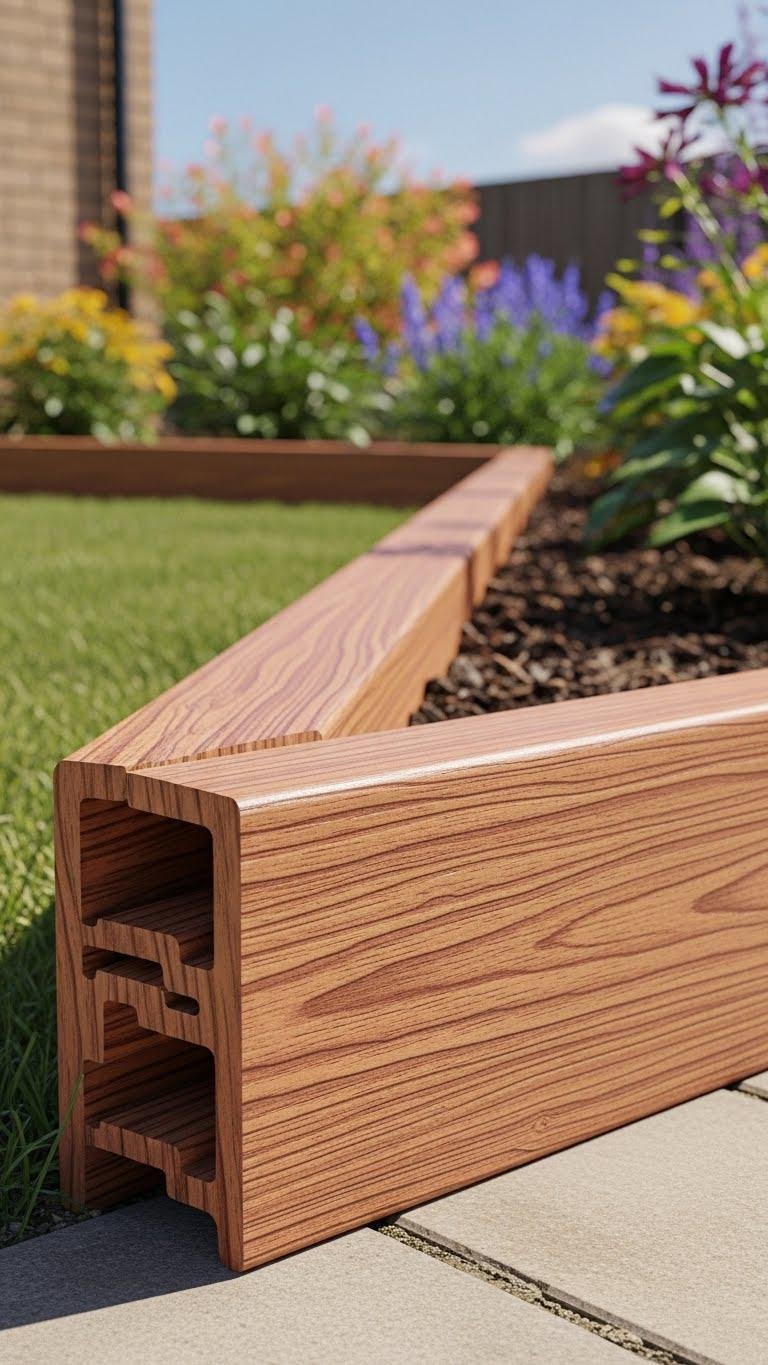
Composite recycled wood-plastic trim gives you the look of natural timber with far less upkeep: it’s made from shredded wood fibers and recycled plastic fused into rigid boards that resist rot, pests, and fading.
You can cut, curve, and anchor strips to define beds quickly. It’s low maintenance, UV resistant and color stable, so your edging stays sharp while you enjoy freedom from constant repairs.
Bamboo Roll or Live Bamboo Edge
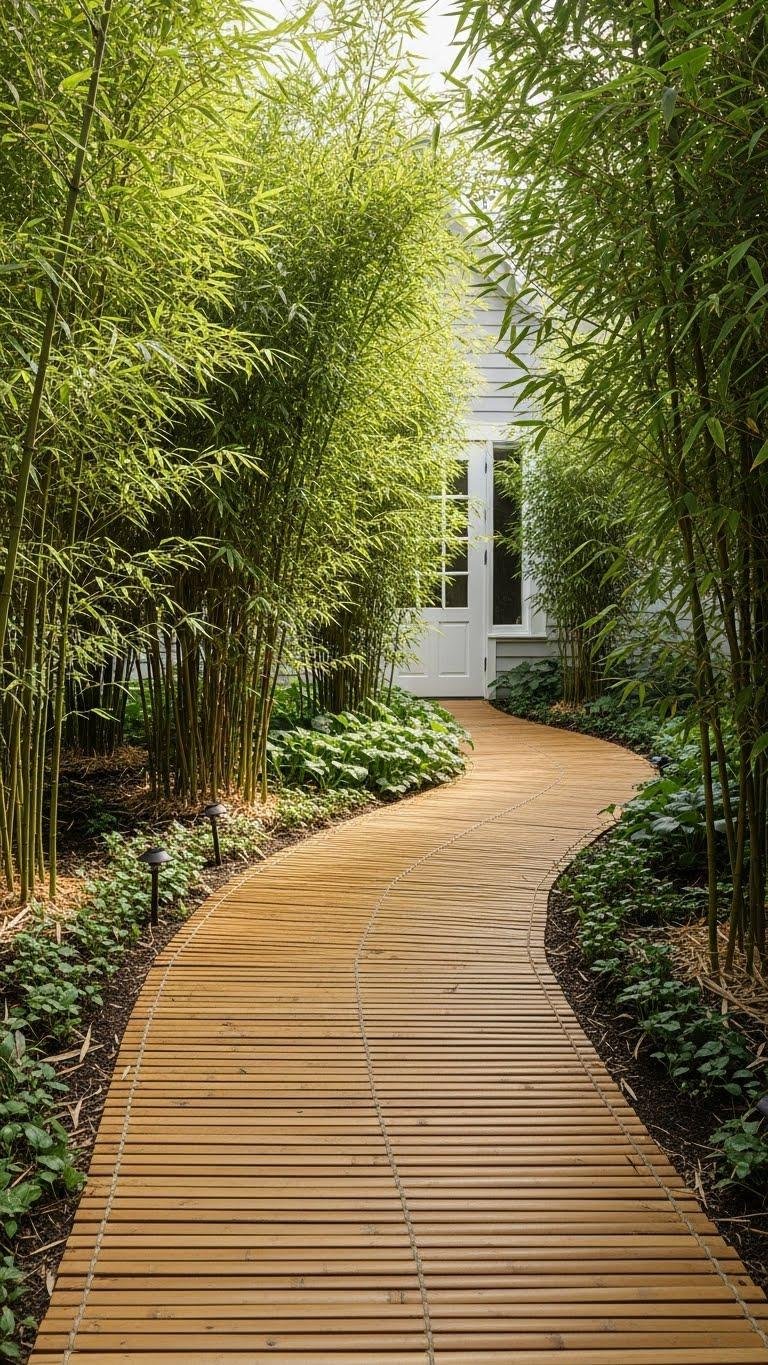
Moving from durable, low‑maintenance composite trim, bamboo offers a softer, more natural edge that fits cottage, tropical, or minimalist gardens.
You can roll bamboo matting to define a bamboo pathway or plant live bamboo for a lush, movable border. Install a root barrier for containment, stagger heights for rhythm, and trim annually.
It’s simple, freeing, and visually calm.
Wattle Willow Branch Woven Fence
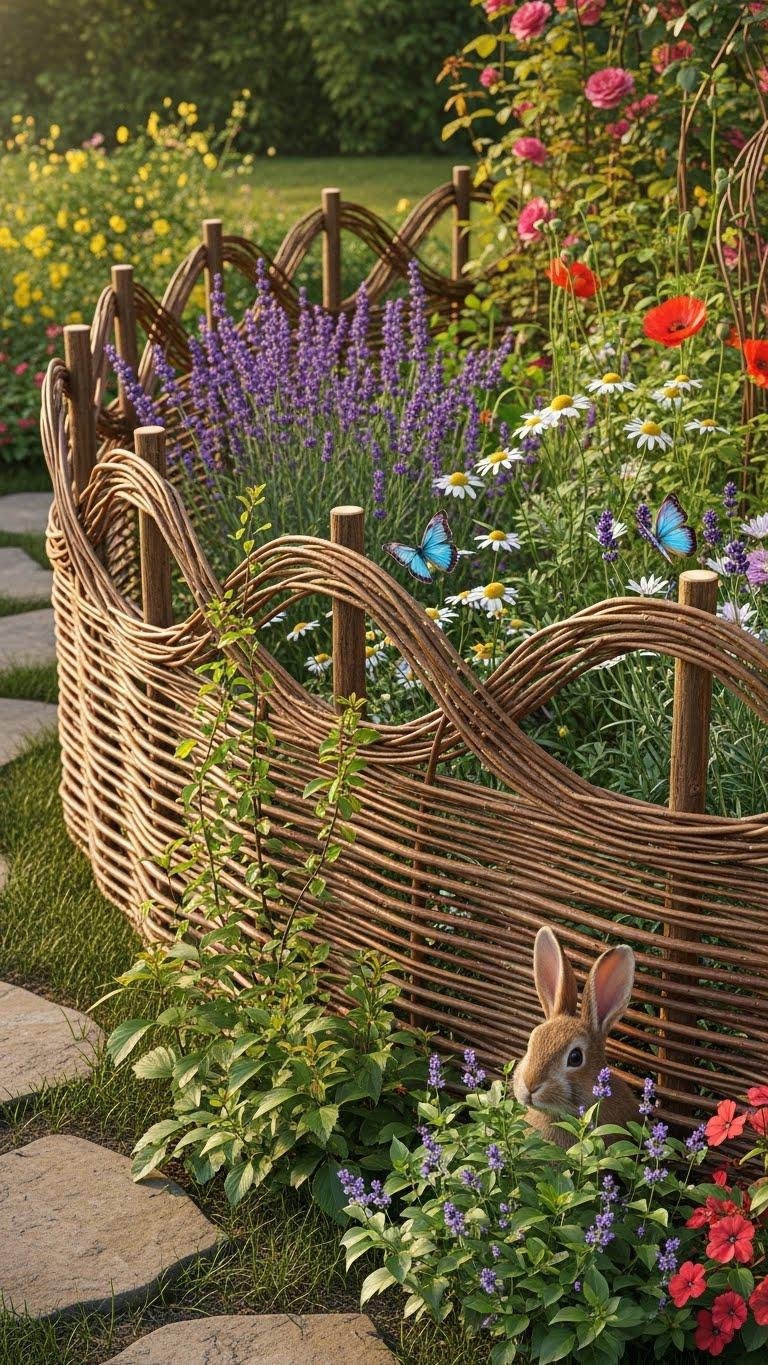
Weave flexible willow rods into a low, rustic fence to frame paths or garden beds with natural texture and gentle curves. You’ll push upright stakes, then practice willow weaving to interlace branches tightly, creating a living, repairable edge.
It’s lightweight, portable, and inviting — you’ll enjoy a handmade look that encourages wildlife habitat and soft separation without feeling confined or permanent.
Cast Concrete Permanent Garden Border
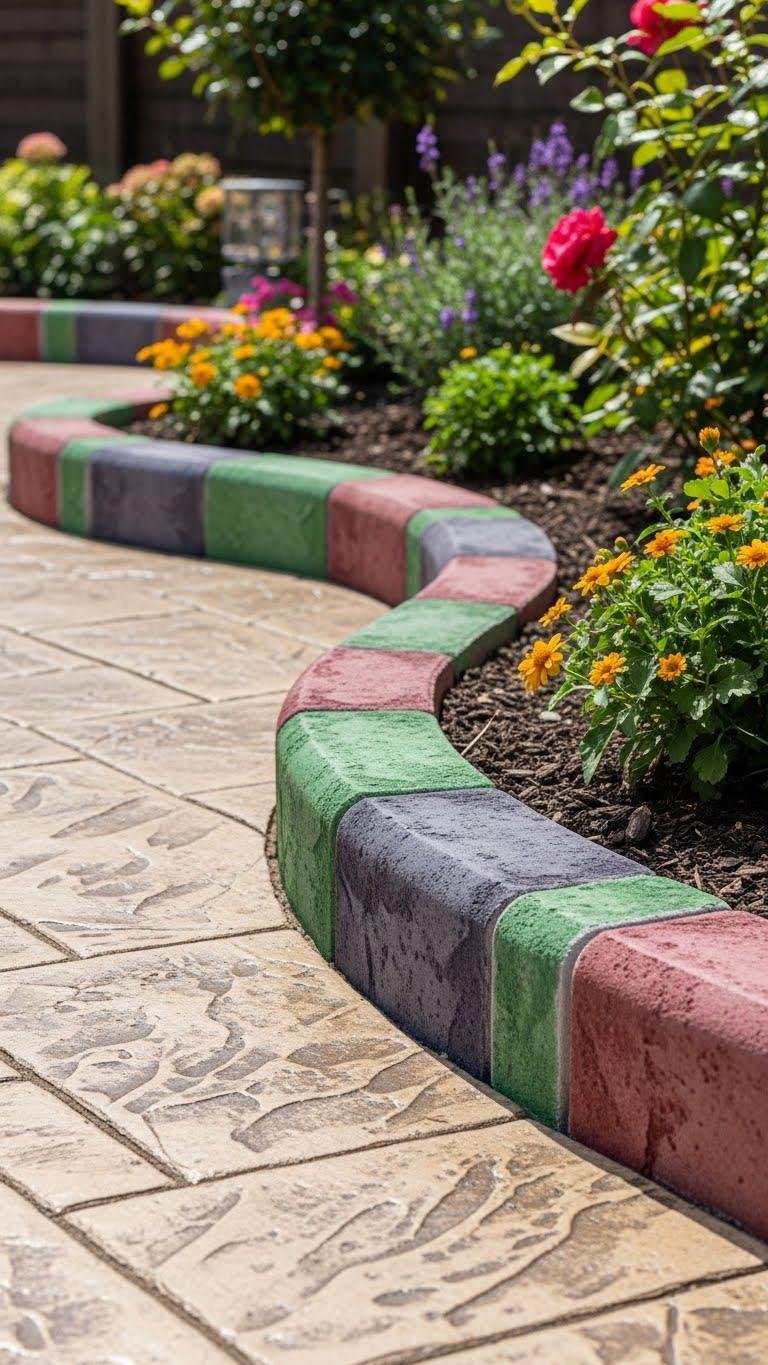
Pour a cast concrete border when you want a clean, durable edge that anchors beds and paths for decades. You’ll form curved forms, pour concrete with integral color, then finish it for impact.
Choose a stamped finish for pattern or exposed aggregate for texture. It’s low-maintenance, permanent, and gives your garden a bold, liberated look you can build yourself.
Ceramic Pottery and Shell Creative Edge
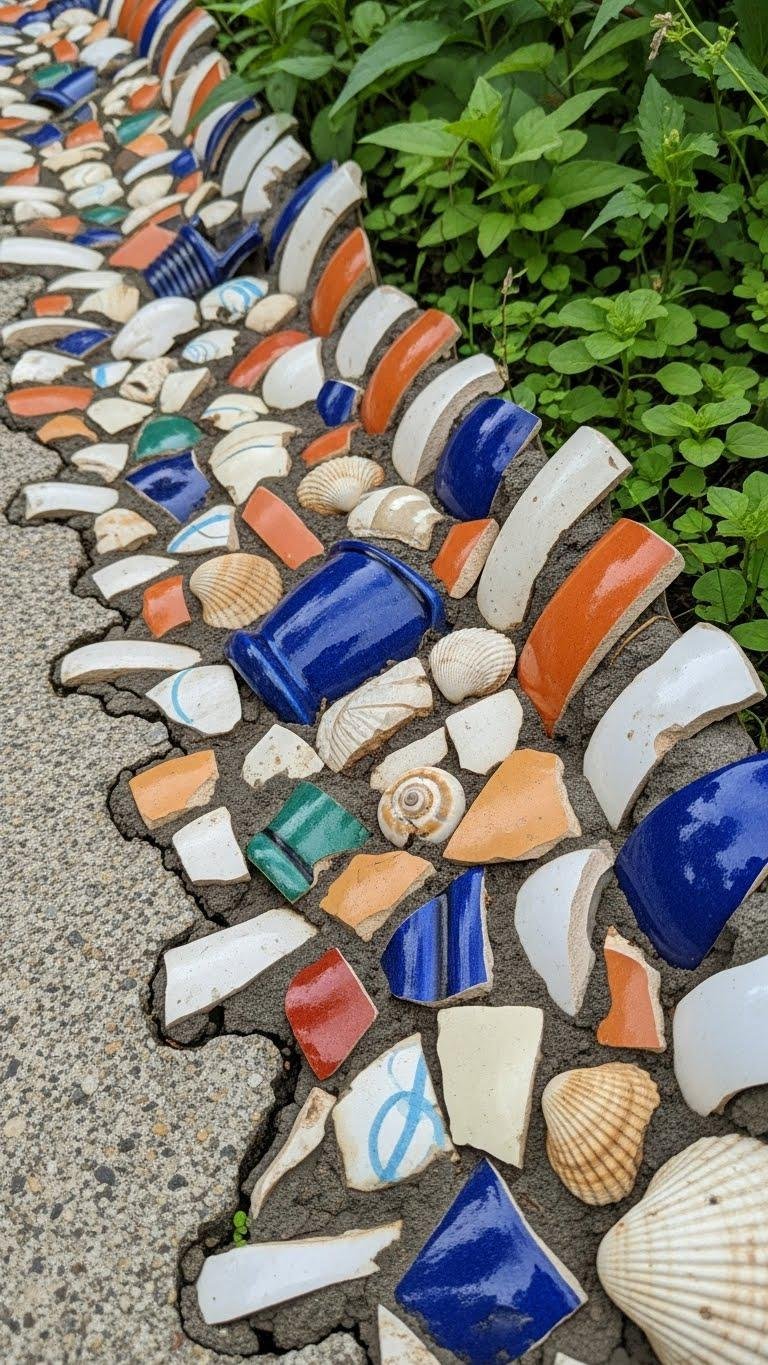
Give your border a handmade look by arranging broken ceramic pots and shells into a low, decorative edge that’s both cheap and quick to install. You’ll press glazed shard faces outward, alternating colors and sizes for rhythm. Embed pieces in packed soil or mortar, creating a shell mosaic band that resists erosion. It’s a freeform, personal border you can tweak anytime to suit your mood.
Plastic Roll or Fence Budget-Friendly Border
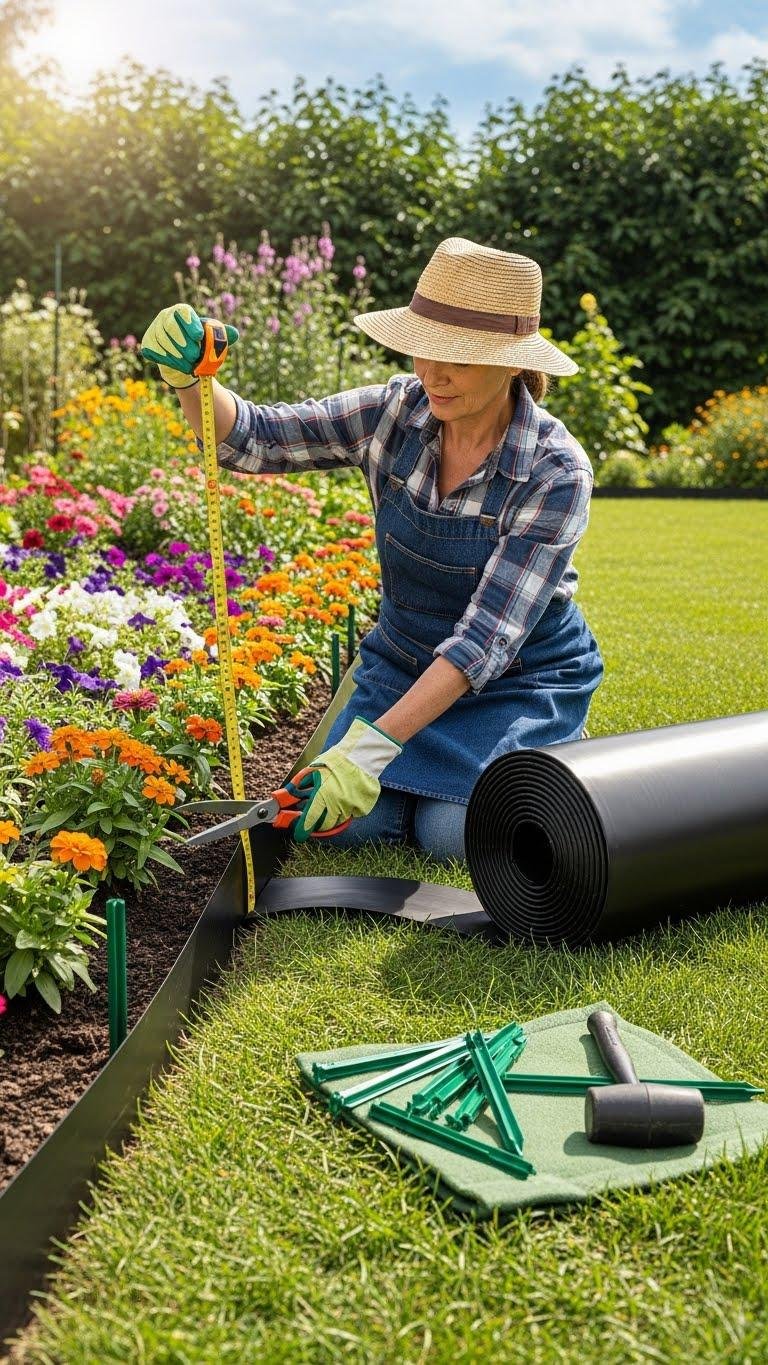
If you liked the handmade look but want something even cheaper and faster, plastic roll or fence borders give you a tidy edge with minimal work.
You’ll unroll UV stabilized edging, cut to fit, and press or hammer in stake secured supports.
It’s quick, low-maintenance, and lets you shape beds or paths precisely.
Perfect for a flexible, budget-friendly yard upgrade.
Layered Wood Chip Over Cardboard No-Dig Edge
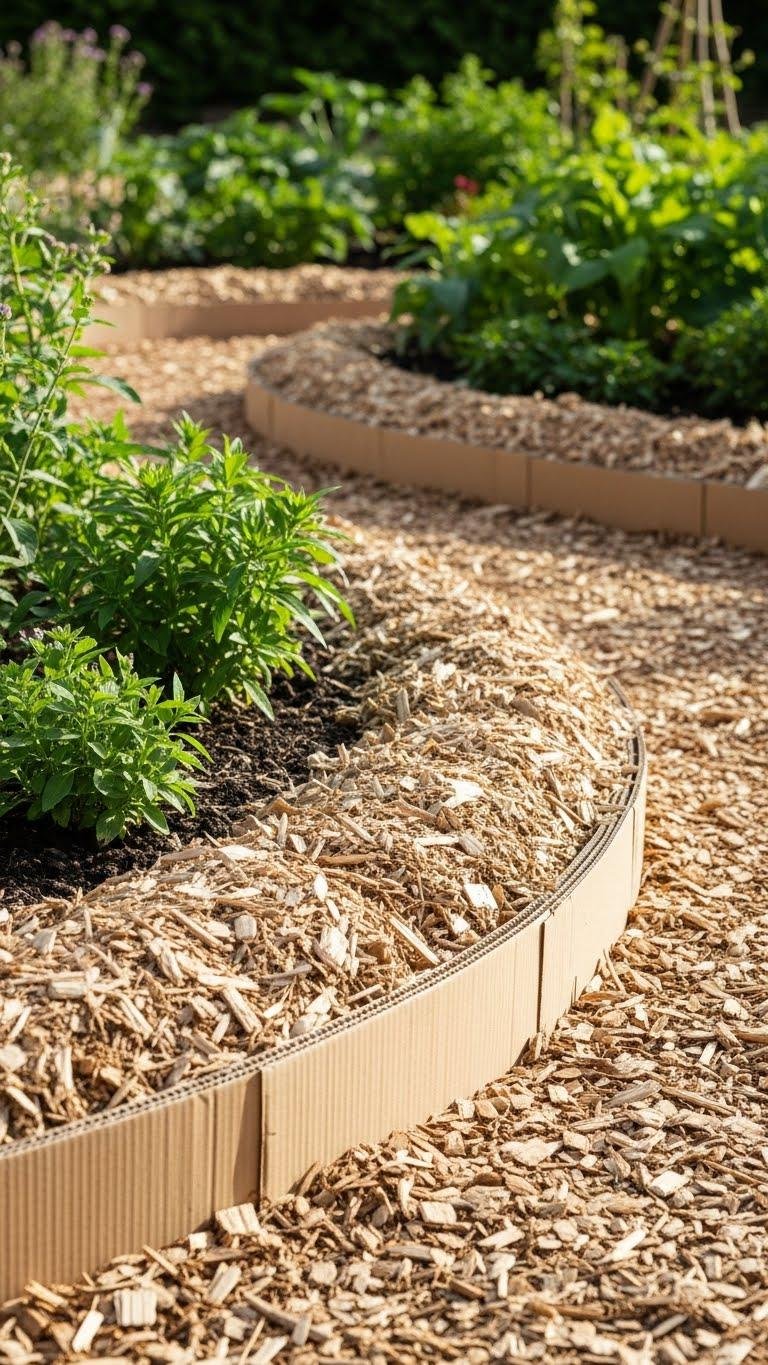
Using simple materials and a few hours of muscle, you can create a clean, no-dig edge by laying down corrugated cardboard topped with layered wood chips.
You’ll place a cardboard foundation, overlap seams, and tamp edges.
Stack chips in 2–4 inch layers, shaping a gentle berm that defines beds or a mulched pathway.
It’s low-cost, natural, and frees you from constant trimming.