
You can cut significant water use and operating cost by applying 23 practical irrigation hacks that focus on soil, hydraulics, controls and verification. Start by mapping soils and slopes, zoning by plant need, and switching to drip or rotary nozzles; then layer in ET‑based scheduling, soil moisture and flow monitoring, pressure regulation, and automated shutoffs. There’s more on implementation, measurement, and rebates to help you justify each upgrade.
Implement Drip and Micro‑Irrigation
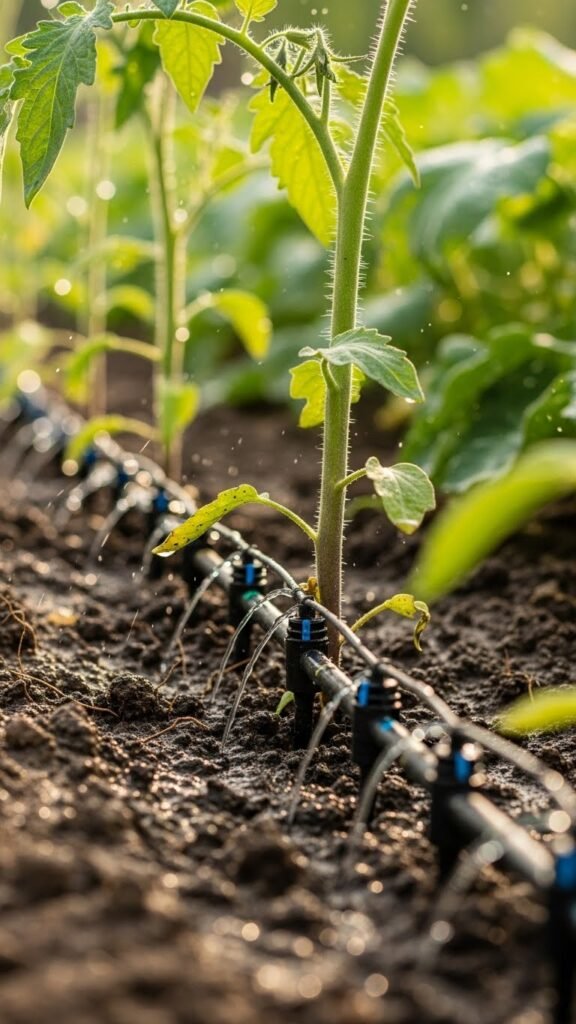
Drip and micro‑irrigation deliver water directly to the root zone using low‑flow emitters, tubing, and pressure‑compensating components, so you’ll cut water use, evaporation, and runoff while improving plant health.
Design zones for uniform pressure compensation, size tubing for flow, and choose accessible emitters. Flush lines, install filters and routine maintenance to prevent emitter clogging.
You’ll gain precise control and water independence.
Pair Weather Stations or Cloud Weather Feeds
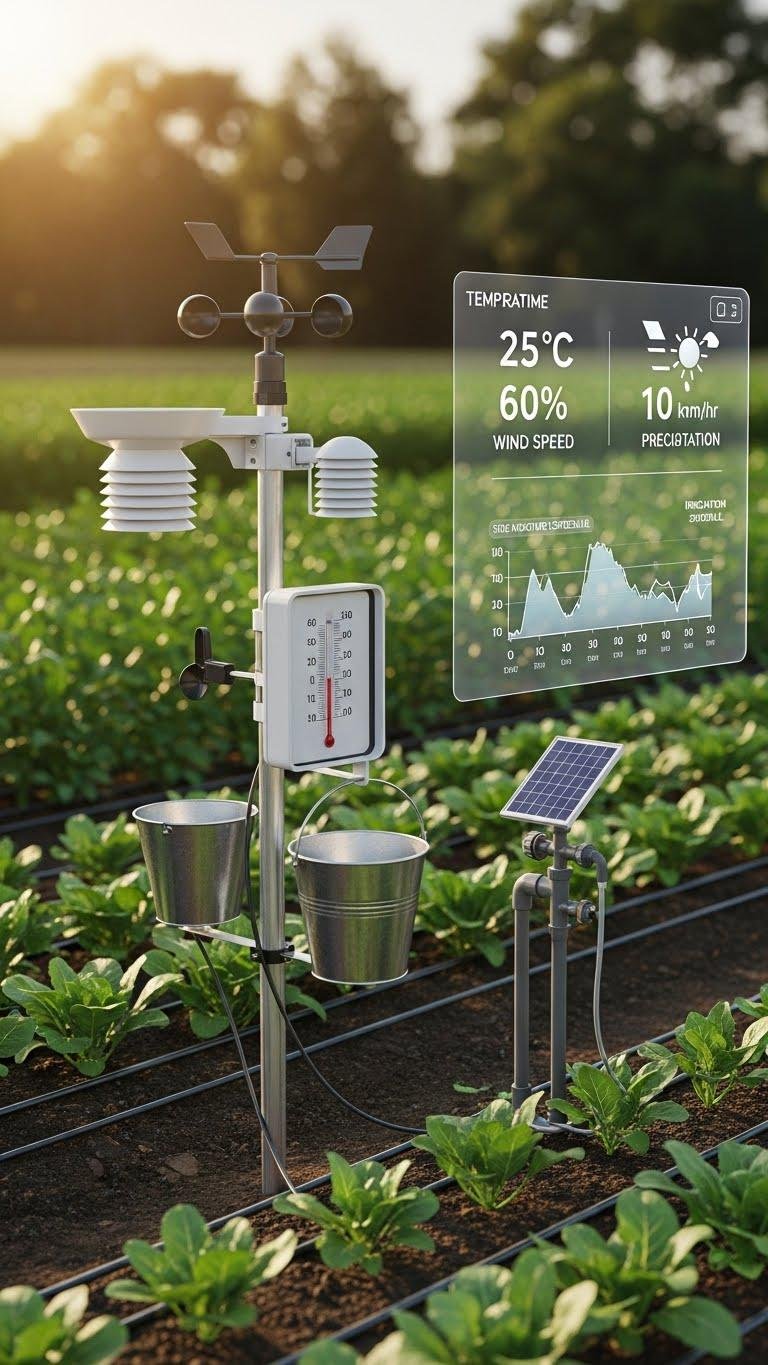
By pairing your controller with a local weather station or a reliable cloud weather feed, you’ll feed real-time temperature, humidity, wind, and precipitation data directly into scheduling algorithms so runtimes adapt automatically to current conditions.
You’ll integrate local sensors and forecast aggregation to refine evapotranspiration estimates, reduce unnecessary cycles, and retain autonomous control—yielding precise, water-saving schedules without constant manual intervention or vendor lock-in.
Add Master Valves for Major Shutoff
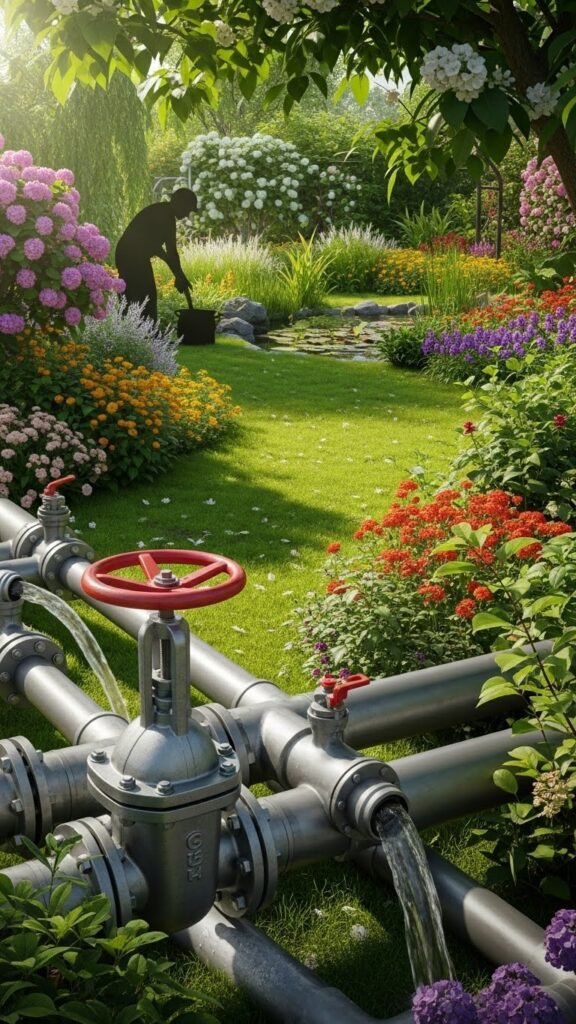
Once you’ve got flow monitoring and leak detection in place, add a master valve to give you immediate, centralized shutoff control for major sections or the whole system.
You’ll install a master shutoff valve at the main feed, tie it into your controller and sensors, and enable emergency isolation routines.
That lets you protect landscapes, conserve water, and regain control fast.
Replace Spray Heads With Rotary Nozzles
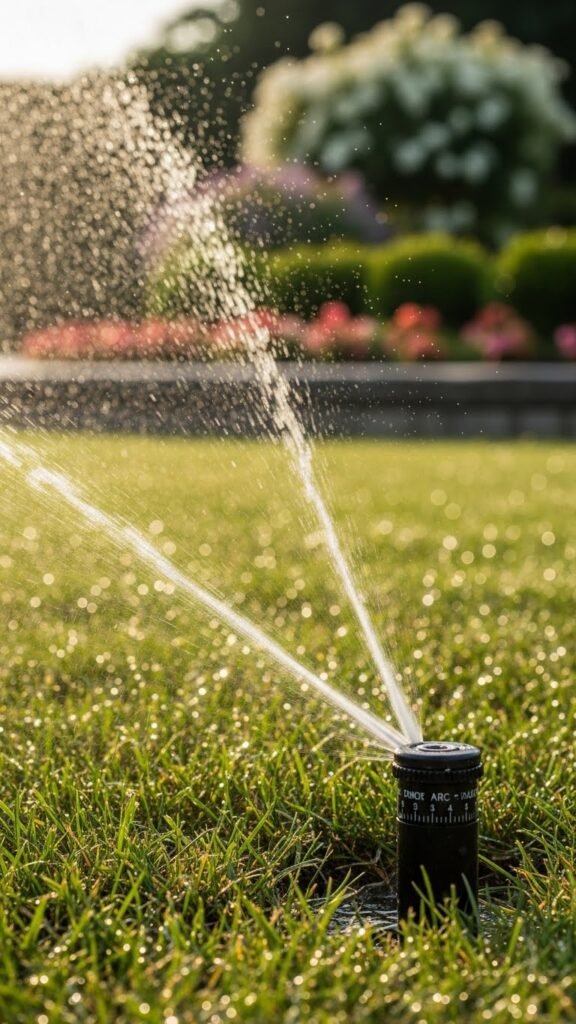
After you’ve matched nozzles and stabilized pressure, swapping traditional spray heads for rotary nozzles will further cut runoff and improve uniformity.
You’ll assess rotary compatibility with existing fittings, adjust arc and radius, and verify head spacing.
Focus on nozzle aerodynamics to reduce misting and wind drift.
Install flow-matched rotors, test for uniform coverage, and secure efficient, freedom-friendly watering control.
Schedule Seasonal and Event‑Based Adjustments
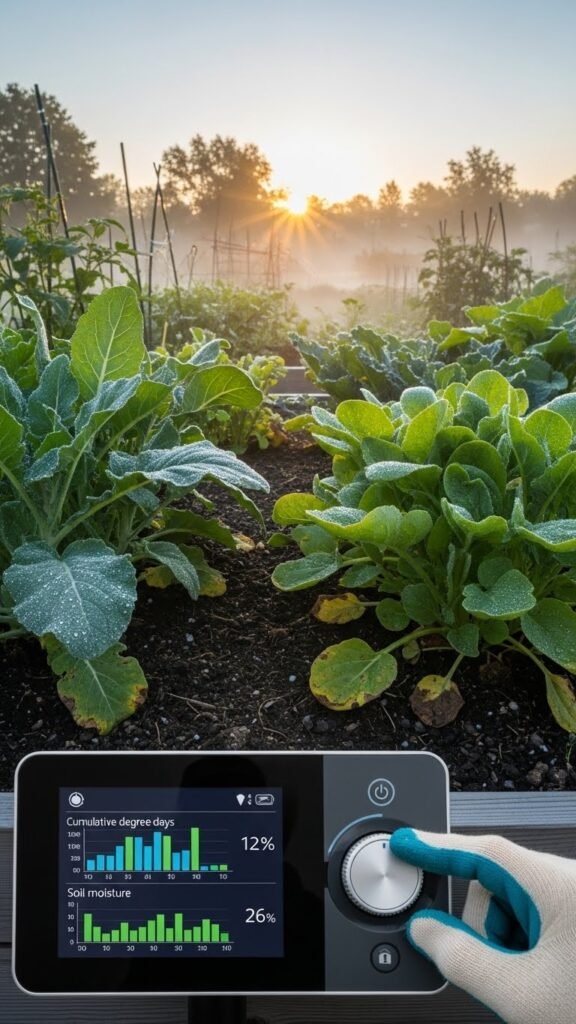
Because plant water needs and evapotranspiration change with temperature and daylight, you should update your irrigation schedule at least monthly and around major weather events.
During seasonal shift, reduce or increase runtimes based on cumulative degree days and soil moisture. Define event triggers — heavy rain, heat spikes, irrigation repairs — and adjust zones manually or via controller presets so you retain control and conserve water.
Automate Freeze and High‑Wind Shutoffs
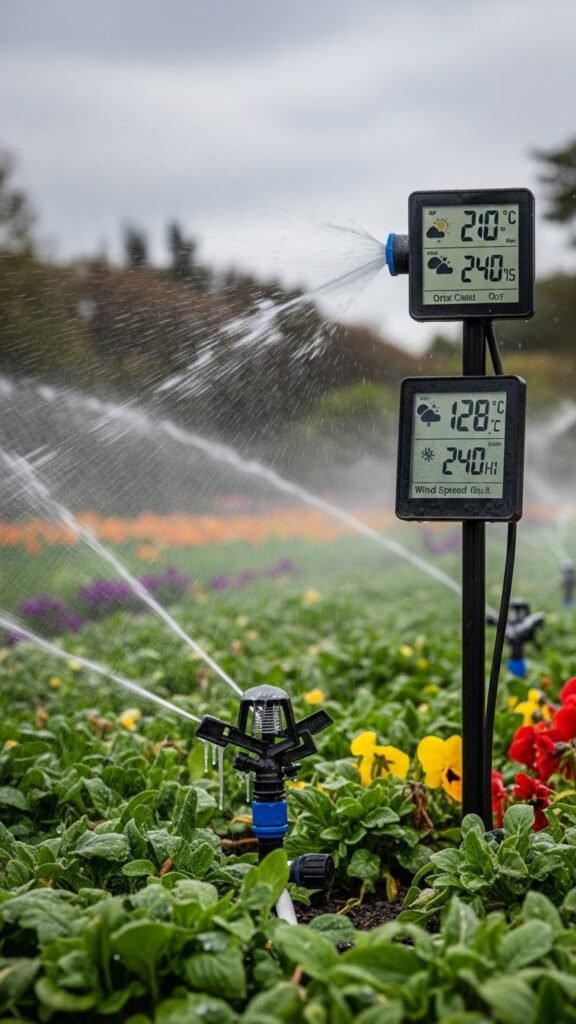
If temperatures drop near freezing or sustained high winds pick up, automate shutoffs so your system stops running before pipes freeze or sprinklers spray into the wind.
You’ll install freeze sensors and set wind thresholds in the controller or hub. Tie sensors to local weather feeds, define hysteresis to avoid chatter, and enable manual override so you keep control while protecting plumbing and conserving water.
Log Runtime and Analyze Usage Trends
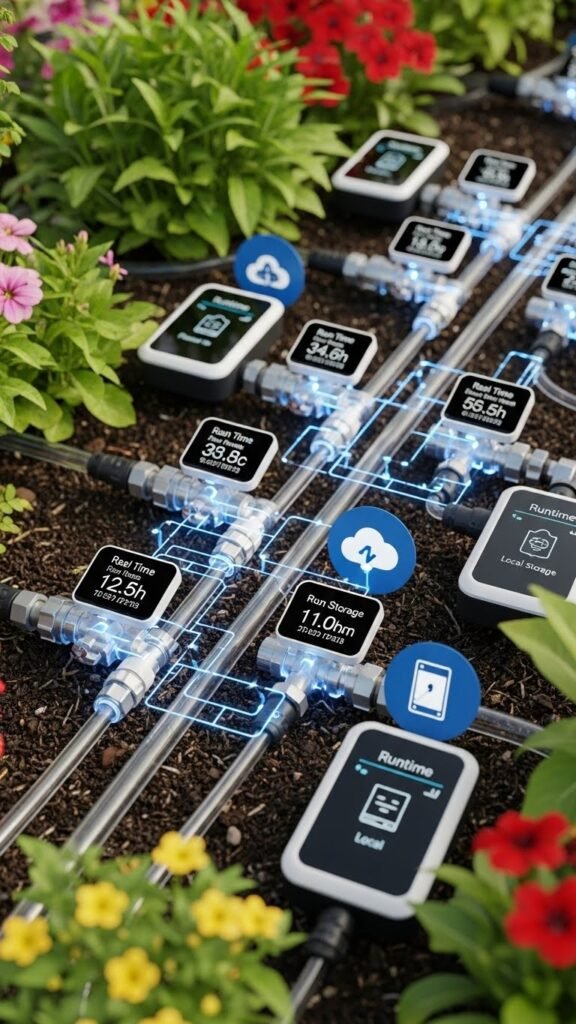
Logging runtime data gives you the evidence you need to optimize watering and catch faults early. You’ll implement runtime logging on valves and controllers, timestamp events, and store metrics locally or in the cloud.
Use usage analytics to spot leaks, inefficient cycles, or overwatering. Analyze trends weekly, set alerts for anomalies, and export summaries so you can tweak schedules and retain operational freedom.
Combine Redundant Sensors for Verification
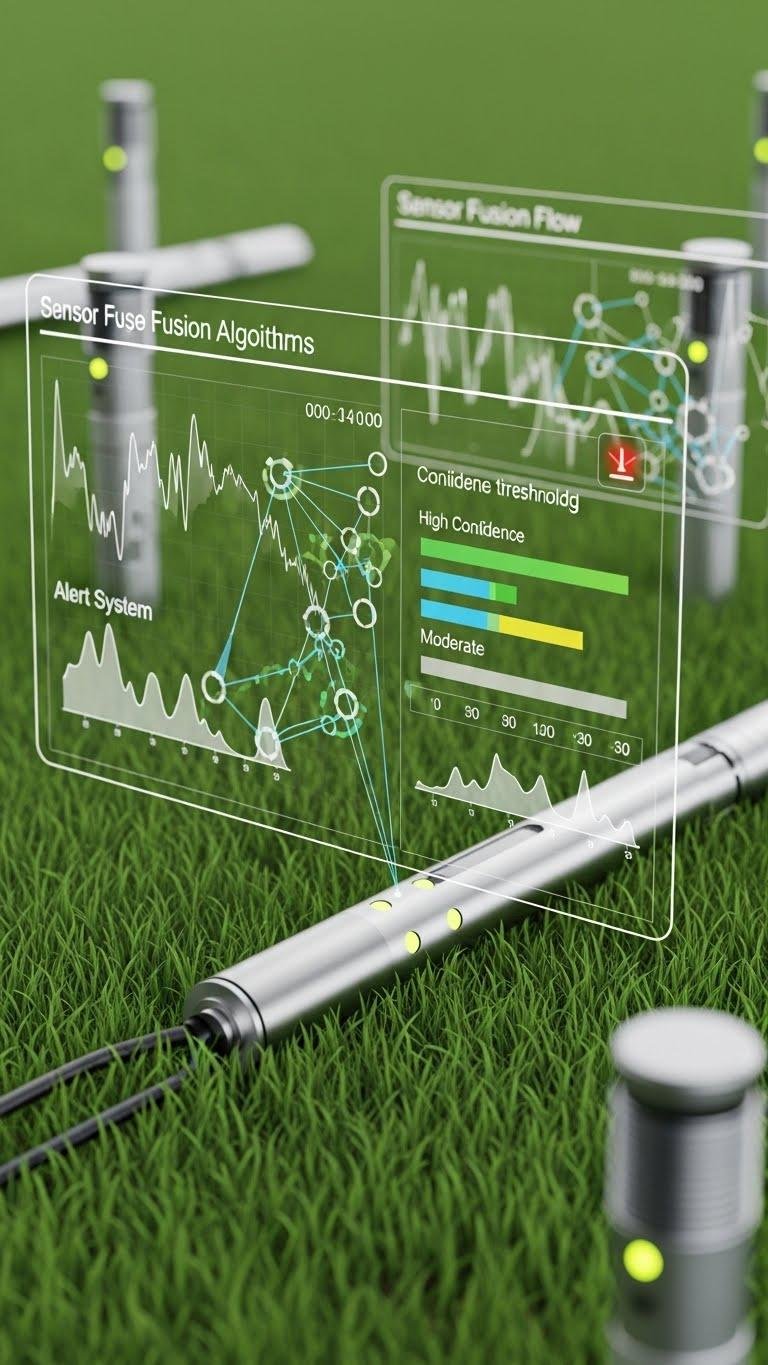
After you’ve got runtime logs and weekly trend summaries, add redundant sensors to verify what the data says and catch false readings. You’ll deploy overlapping moisture and flow sensors, cross checking sensors to detect drift or failure.
Use sensor fusion algorithms to merge inputs, set confidence thresholds, and trigger alerts or fallback rules. This keeps control autonomous, reliable, and under your command.
Perform Regular System Maintenance
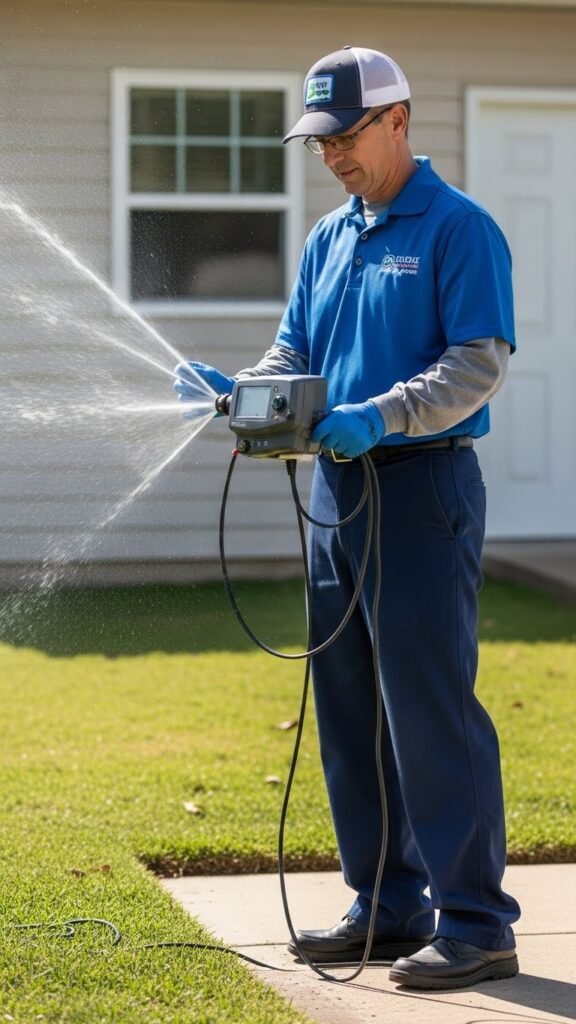
Regularly inspect and service your irrigation system to prevent drift from design specifications and to maintain efficiency. You’ll schedule routine inspections quarterly, verify pressure, check valves and emitters, and log performance.
Replace clogged nozzles, perform timely filter replacements, and recalibrate controllers after season changes. You’ll act decisively to fix leaks, adjust zones, and preserve water savings while keeping system autonomy and reliability.
Integrate With Building or Central Management
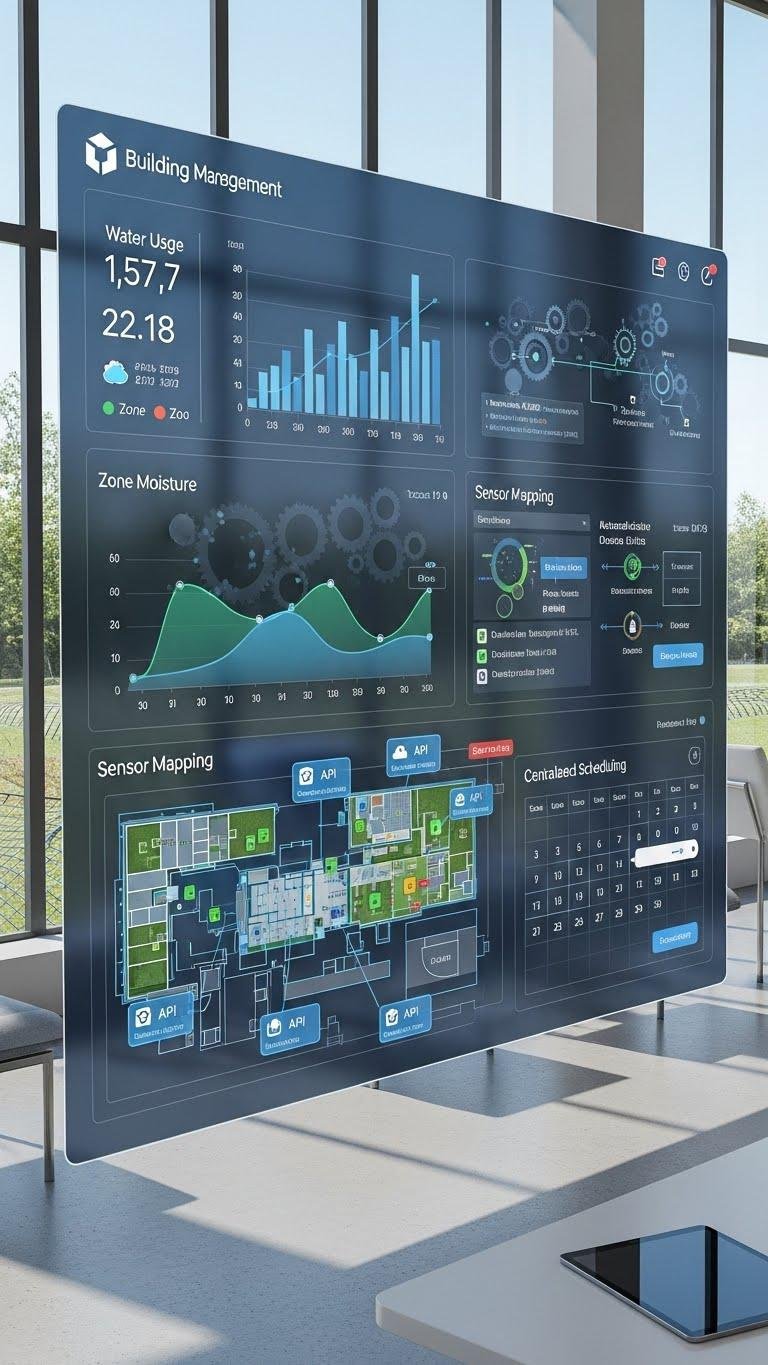
After you’ve verified savings with metered pre/post data, plug your irrigation system into the building or central management platform so those verified metrics feed operations and finance automatically.
You’ll map sensors via standard interface protocols, expose telemetry to APIs, and enable centralized scheduling for coordinated runtimes.
That integration reduces manual oversight, preserves autonomy, and lets you scale control while keeping data-driven freedom.
Set Alerts and Dashboards for Rapid Response
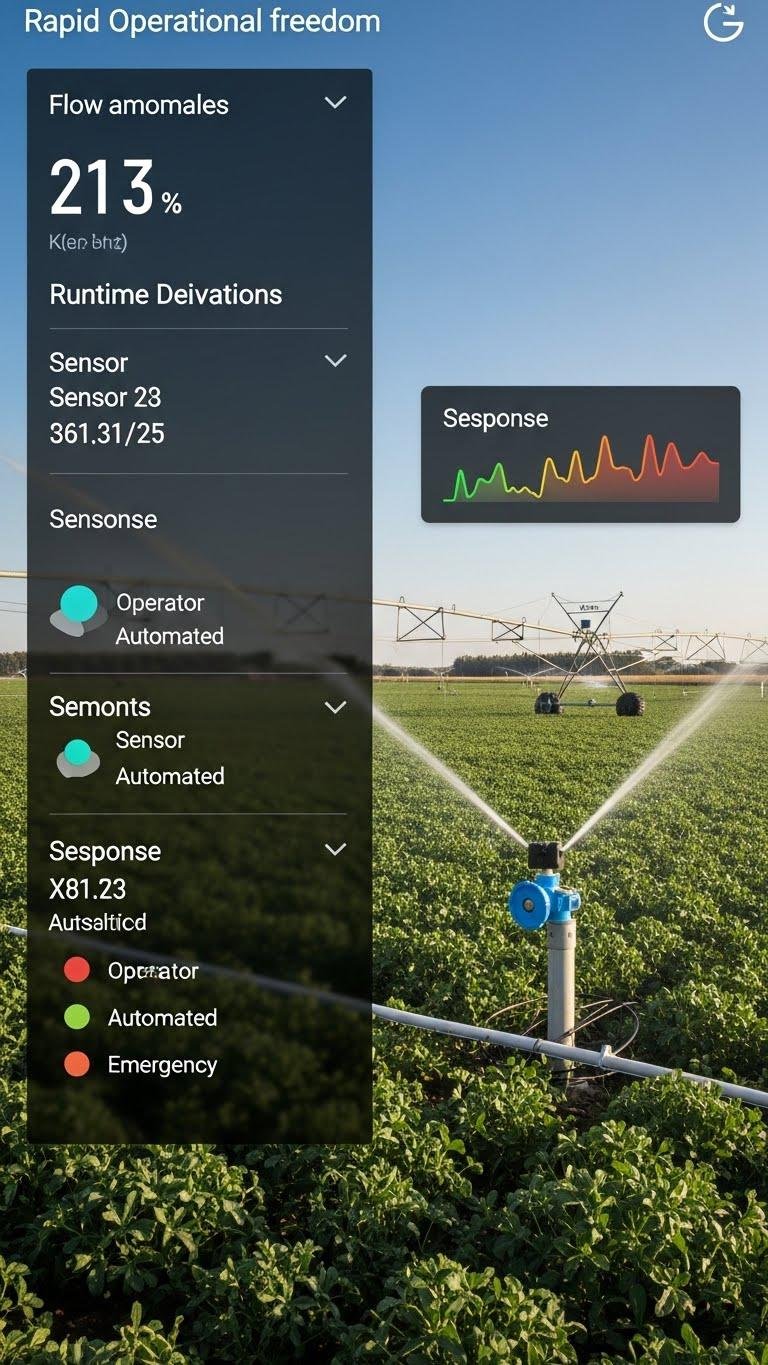
While you’ve tied irrigation metrics into your central platform, you’ll need alerts and dashboards that turn that data into immediate action; configure dashboards to surface key KPIs — flow anomalies, runtime deviations, sensor failures, and soil-moisture trends — and set tiered alerts for thresholds that require operator, automated, or emergency responses.
Then create custom dashboards and real time alerts so you can act fast, prioritize fixes, and retain operational freedom.