
You can give your garden a fresh look without spending much by focusing on simple, plant-forward changes that pack visual punch. Start with painted fences, reclaimed raised beds, and gravel paths, then add bold annuals, layered perennials and heavy mulch to cut maintenance. Practical DIYs—upcycled planters, pallet seating, basic trellises—stretch your budget and boost curb appeal; keep going and you’ll see how small projects stack into a transformed outdoor space.
Paint Fences and Gates for Instant Refresh
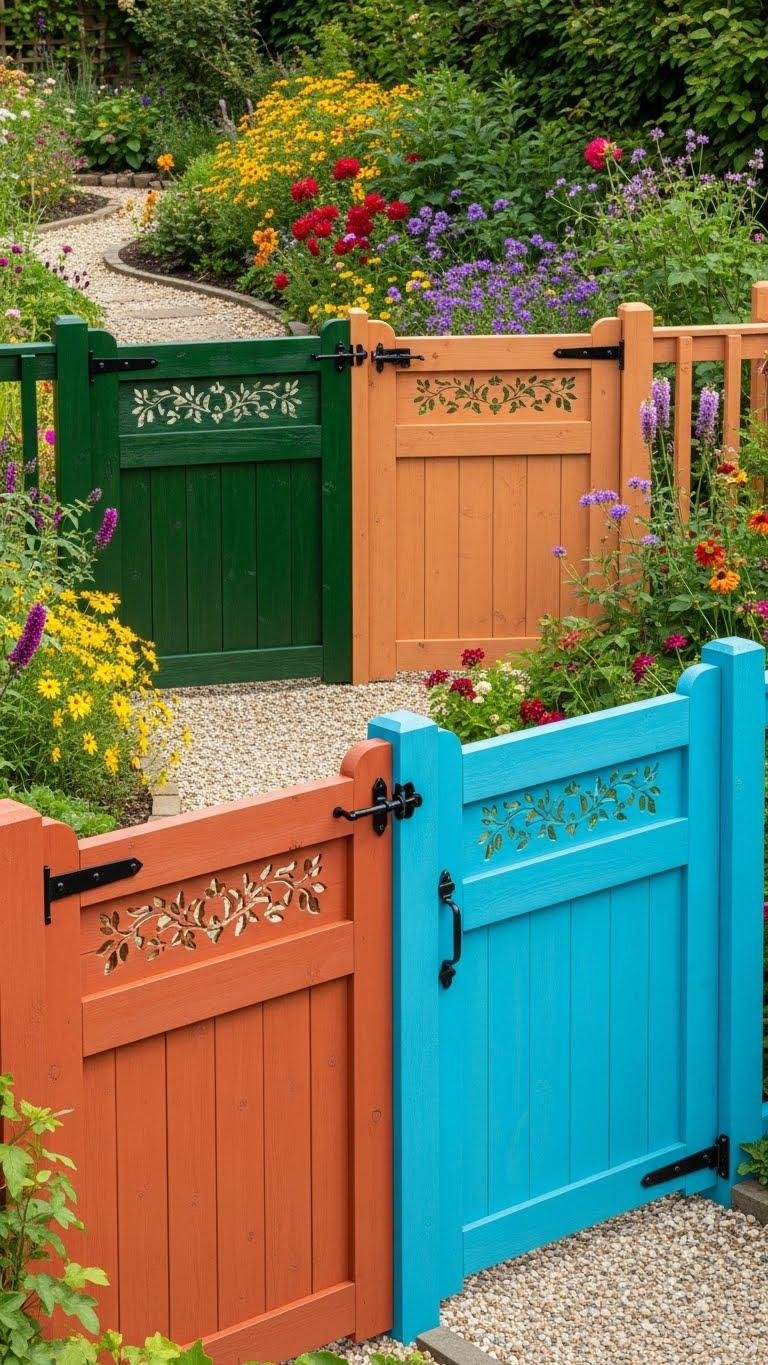
Refresh your garden instantly by painting fences and gates—choose colors that complement your plants and hardscaping to make foliage pop and paths read clearly.
You’ll pick weatherproof coatings for durability, prep wood, sand, and prime. Try decorative stencils on panels for bold accents.
Work section by section, free to swap hues each season, keeping lines crisp so beds and borders feel purposeful.
Resurface a Small Patio With Reclaimed Paving
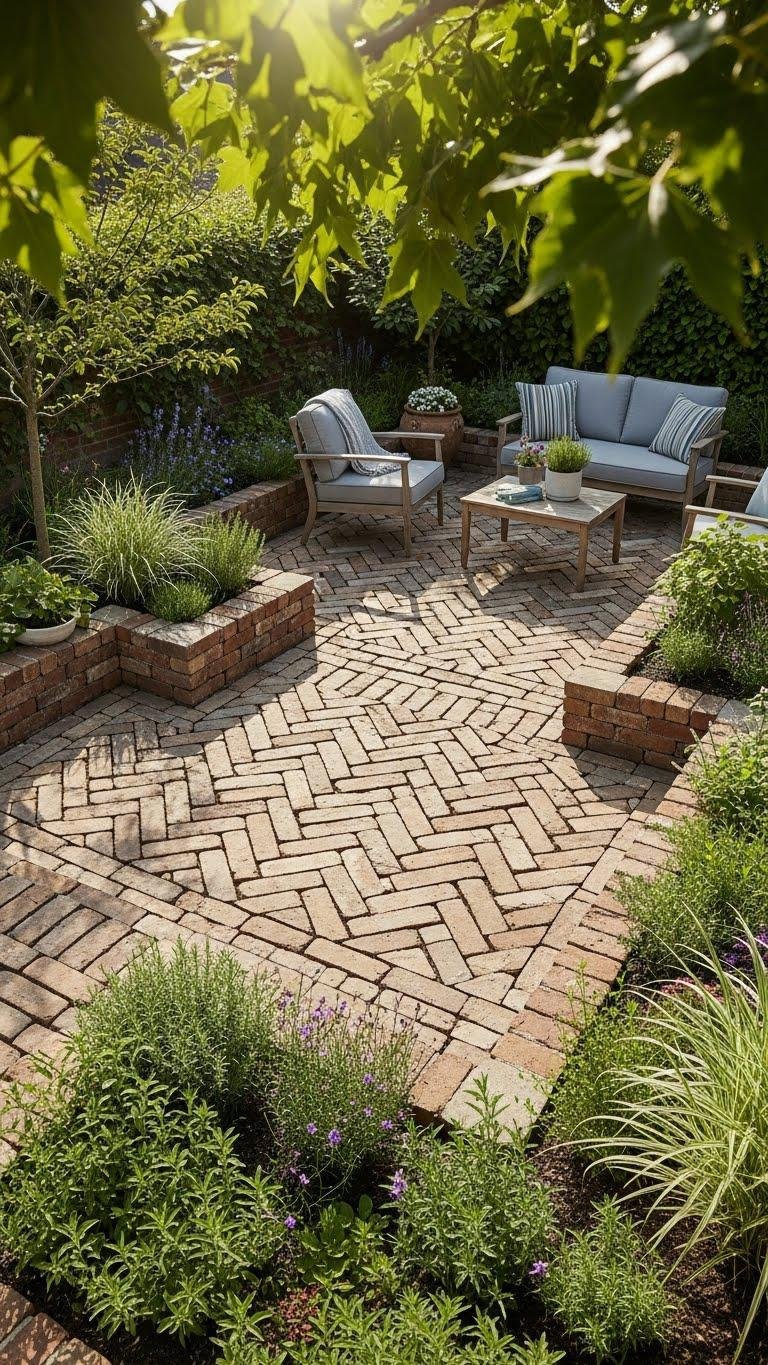
With a few hours and reclaimed paving, you can give a small patio a characterful new surface that ties the planting beds and seating area together.
Lay salvaged bricks in a patterned herringbone to create movement, set edges with herbs or grasses, and use permeable jointing so water feeds roots.
You’ll free the space, add texture, and invite relaxed outdoor living.
Lay Mulch or Gravel to Define Paths
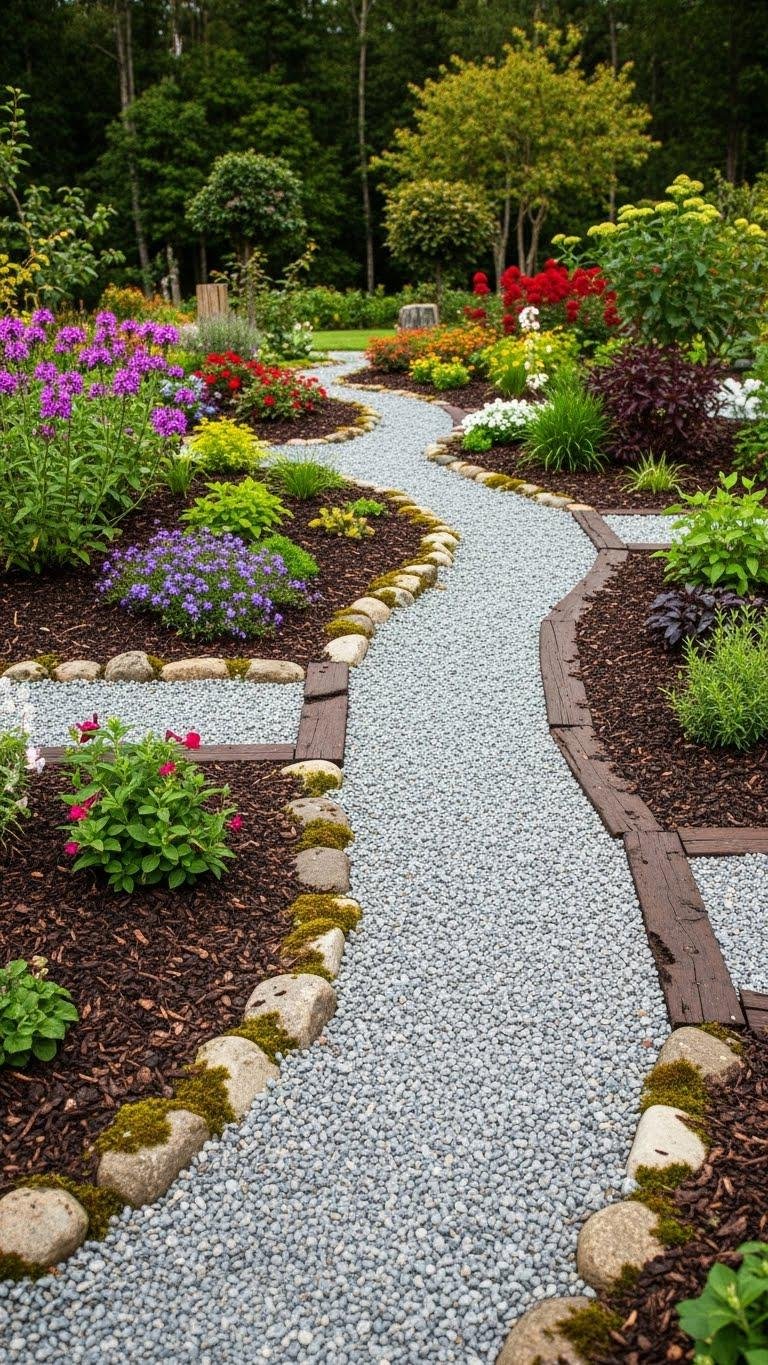
Bring order to garden routes by laying mulch or gravel to define paths that guide movement and highlight planting beds. You can edge with simple path edging—stones, timber, or recycled metal—to keep materials tidy and protect roots.
Choose color and gravel patterning to echo nearby foliage, then rake clean lines. You’ll create low-cost, breathable walkways that free you to explore and tend plants.
Build Simple Raised Beds From Reclaimed Timber
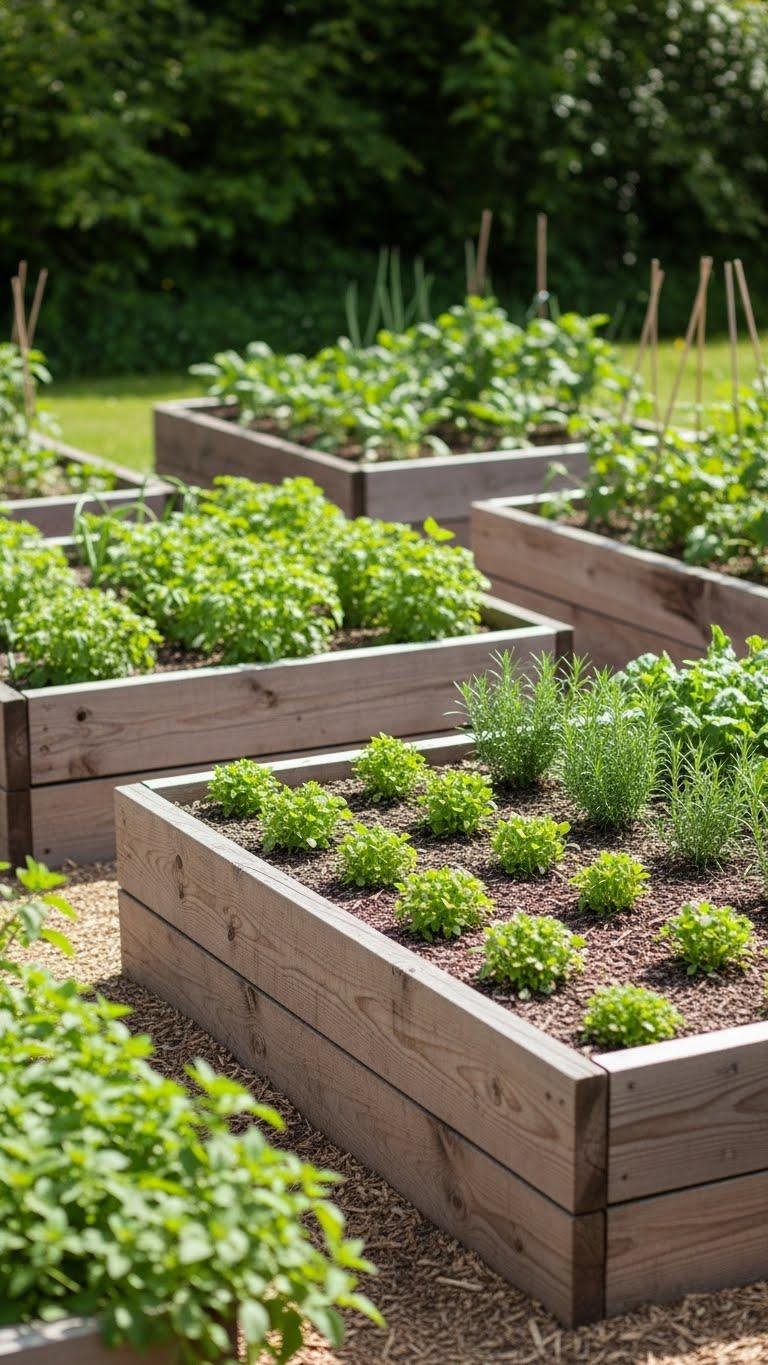
Start by sizing and assembling simple rectangular frames from reclaimed timber so you can plant sooner rather than later. Position beds with smart corner placement to maximize sun and access.
Do a quick soil testing to amend texture and nutrients before filling. Fill with airy, compost-rich mix, plant herbs and veggies in tight rows, and enjoy low-cost, high-yield freedom in your garden.
Create a Focal Border Using Upcycled Planters
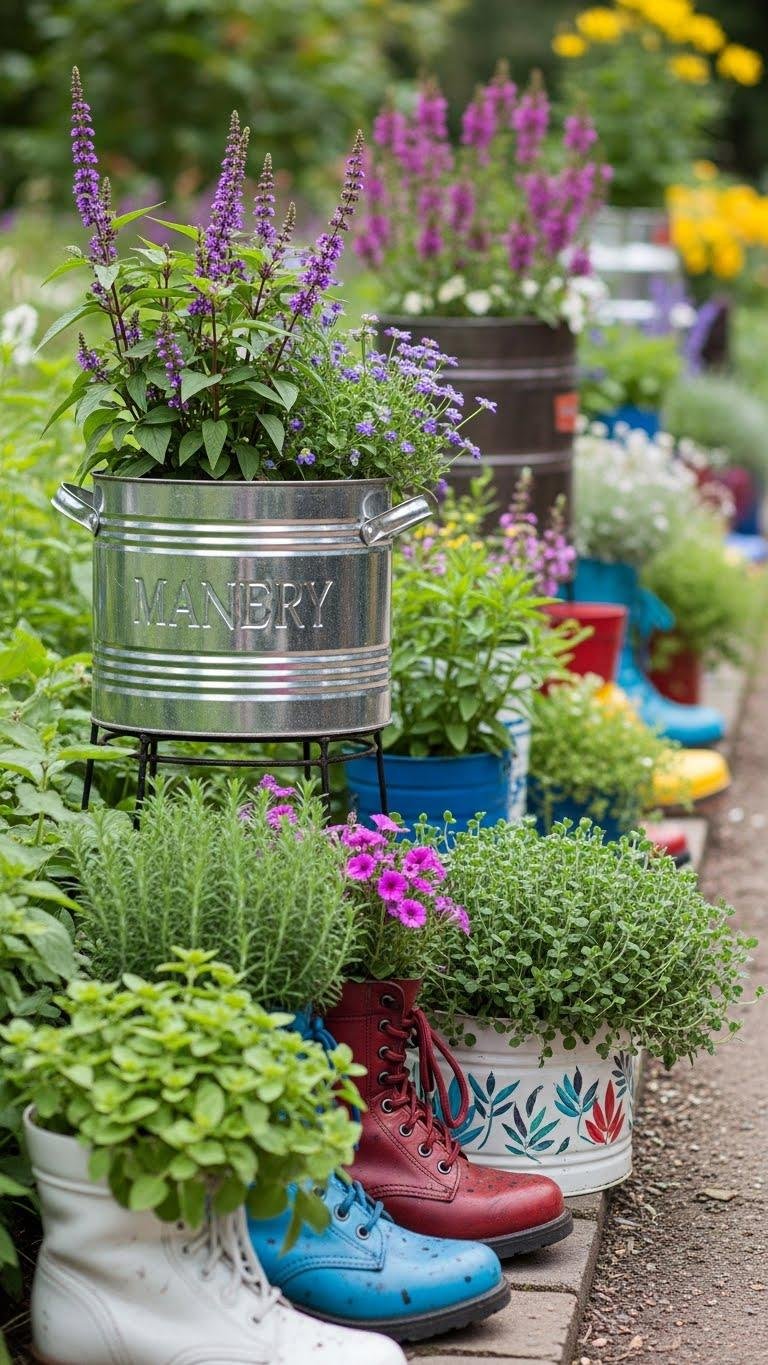
Give an old collection of mismatched containers new life by arranging upcycled planters into a striking focal border that frames a path or lawn edge. Mix vintage tin planters with painted boot pots, varying heights and textures. Plant low, flowing herbs and bold perennials for color and scent.
You’ll enjoy a liberated, low-cost border that guides movement and highlights favorite views.
Start a Seed Tray to Multiply Plants Cheaply
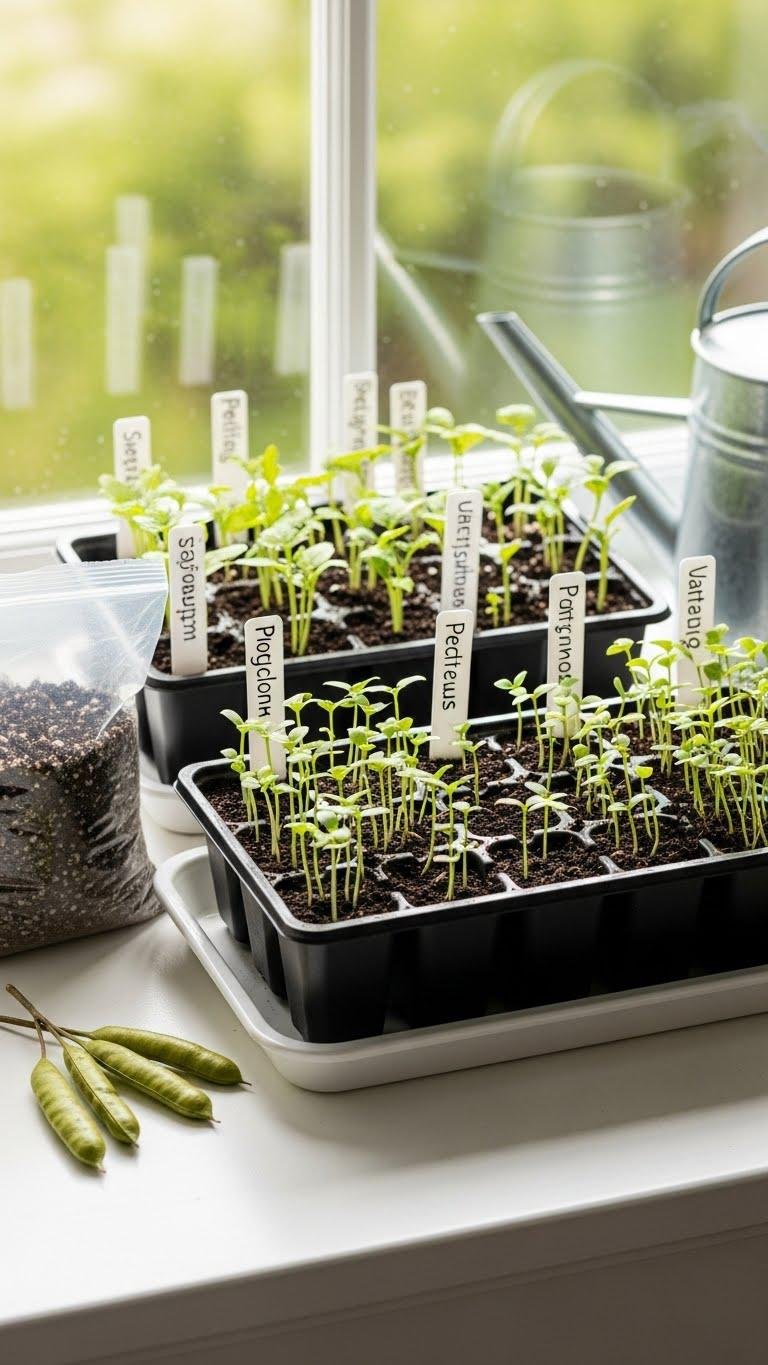
Kick off a seed tray on a sunny windowsill to multiply plants cheaply and take control of your garden’s palette.
You’ll start seeds from saved pods, practice seed saving, and watch tiny cotyledons unfurl.
Use shallow cells, free potting mix, clear labels, and strict tray sanitation to prevent damping-off.
Harden seedlings gradually, then transplant to expand beds without spending much.
Divide Perennials to Fill Empty Spaces

Dig into crowded clumps to revive your beds and fill bare spots with mature, free plants. You’ll use root division and clump splitting to free vigorous sections, exposing healthy crowns.
Lift, separate with a fork or knife, then replant where gaps yawn. Water and mulch; watch foliage spread. This hands-on, budget-friendly move gives your garden instant structure and liberty.
Plant Fast-Impact Annuals for Colour
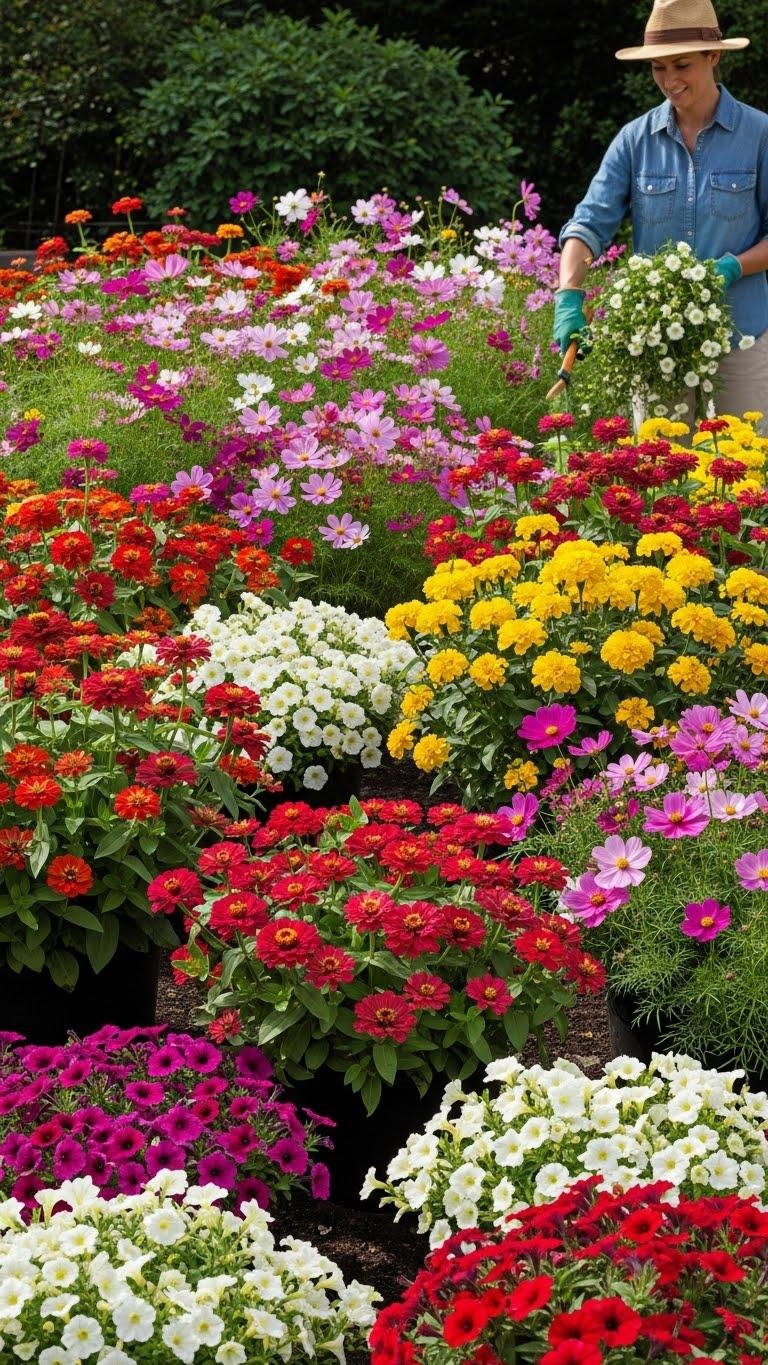
Brighten bare beds fast by planting annuals that flower the same season—choose vigorous options like zinnias, cosmos, marigolds, and calibrachoa that germinate or bloom quickly so you see color within weeks.
Plant in groups for bold swaths, tuck pairs into compact containers, and mix heights for movement. Rotate seasonally with simple seasonal rotations, deadhead spent blooms, and enjoy liberated, instant color.
Grow Vertically With Trellises or Pallet Gardens
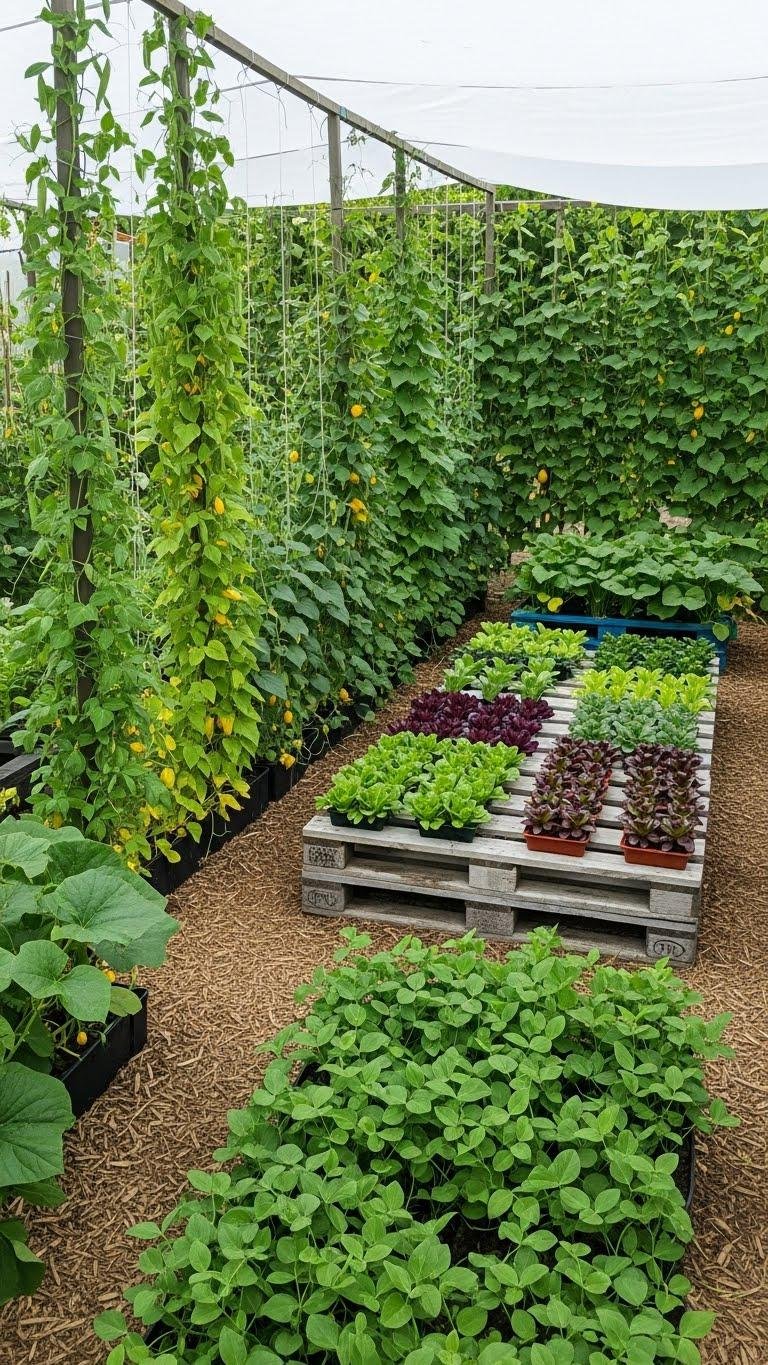
By adding trellises or a pallet garden, you’ll instantly gain height, shade and usable space without enlarging your footprint.
Use sturdy vine supports and reclaimed wood to train vertical veggies like peas, beans and cucumbers.
Visualize leafy curtains, easy harvests and cooler patios. You’ll save ground space, boost yields and enjoy a freer, more sculpted plot that feels open and intentional.
Collect Cuttings and Join Plant Swaps
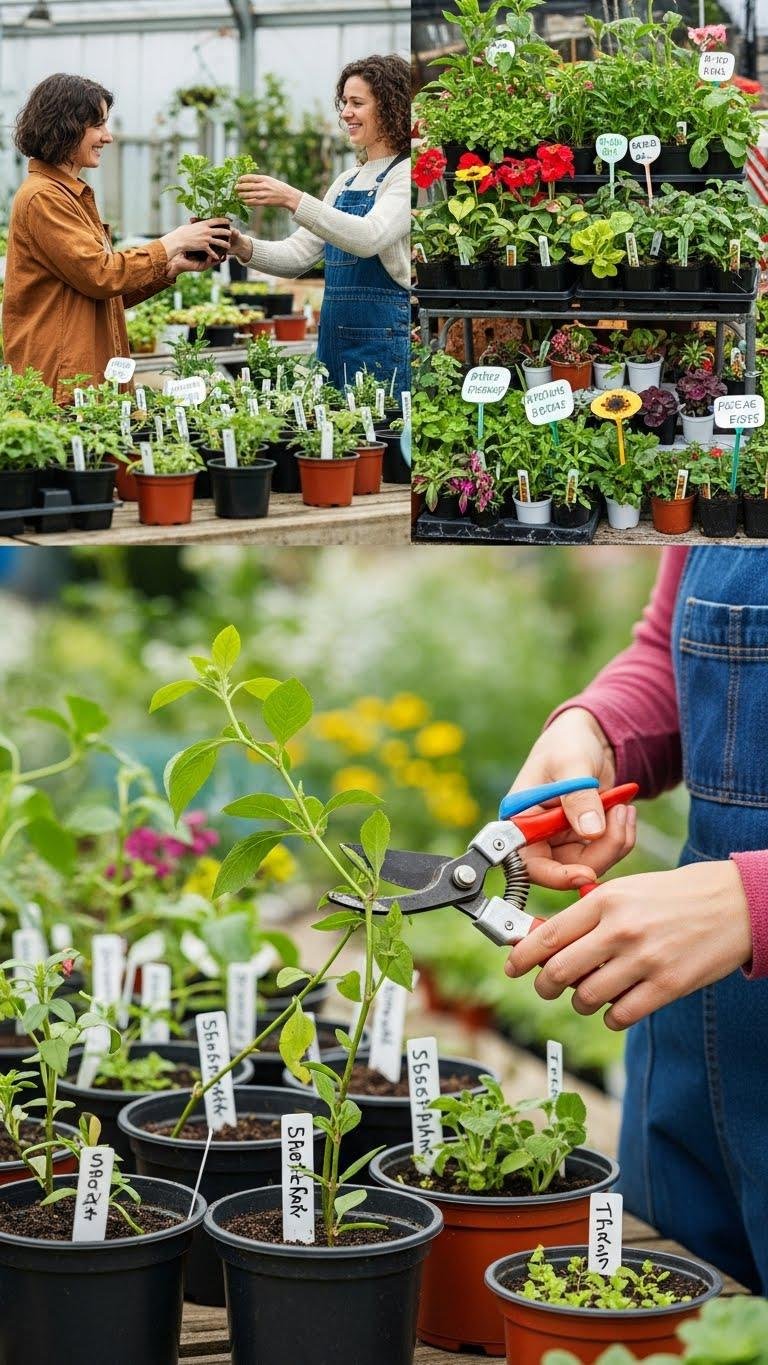
Start snipping healthy stems and you’ll be surprised how quickly your garden can multiply. Take firm, angled cuts, label species and pot immediately — basic cutting etiquettes that boost success.
Trade extras at local swaps, follow swap etiquette, and bring healthy, pest-free plants. You’ll expand variety without cost, swap stories, and feel free to experiment, watching new roots and leaves transform your space.
Convert Old Furniture Into Planters or Seating
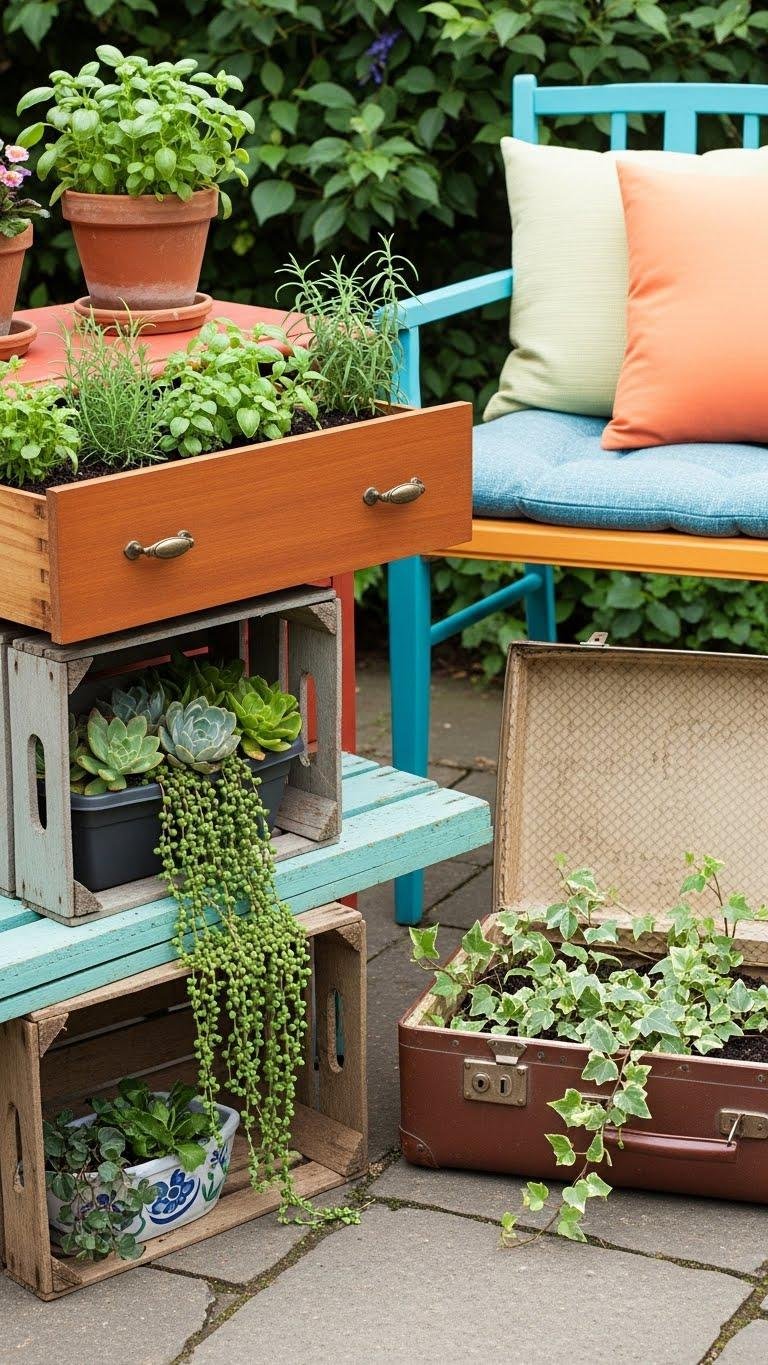
Give old chairs, drawers, or dressers a second life as planters or seating that doubles as garden art.
You can hollow a dresser drawer for herbs, stack crates into a bench staircase for cascading succulents, or line a vintage suitcase planter with drainage for trailing ivy.
Paint boldly, seal where needed, and arrange pieces to create cozy, free-flowing planting nooks that invite you outside.
Make Bird Baths and Feeders From Repurposed Items
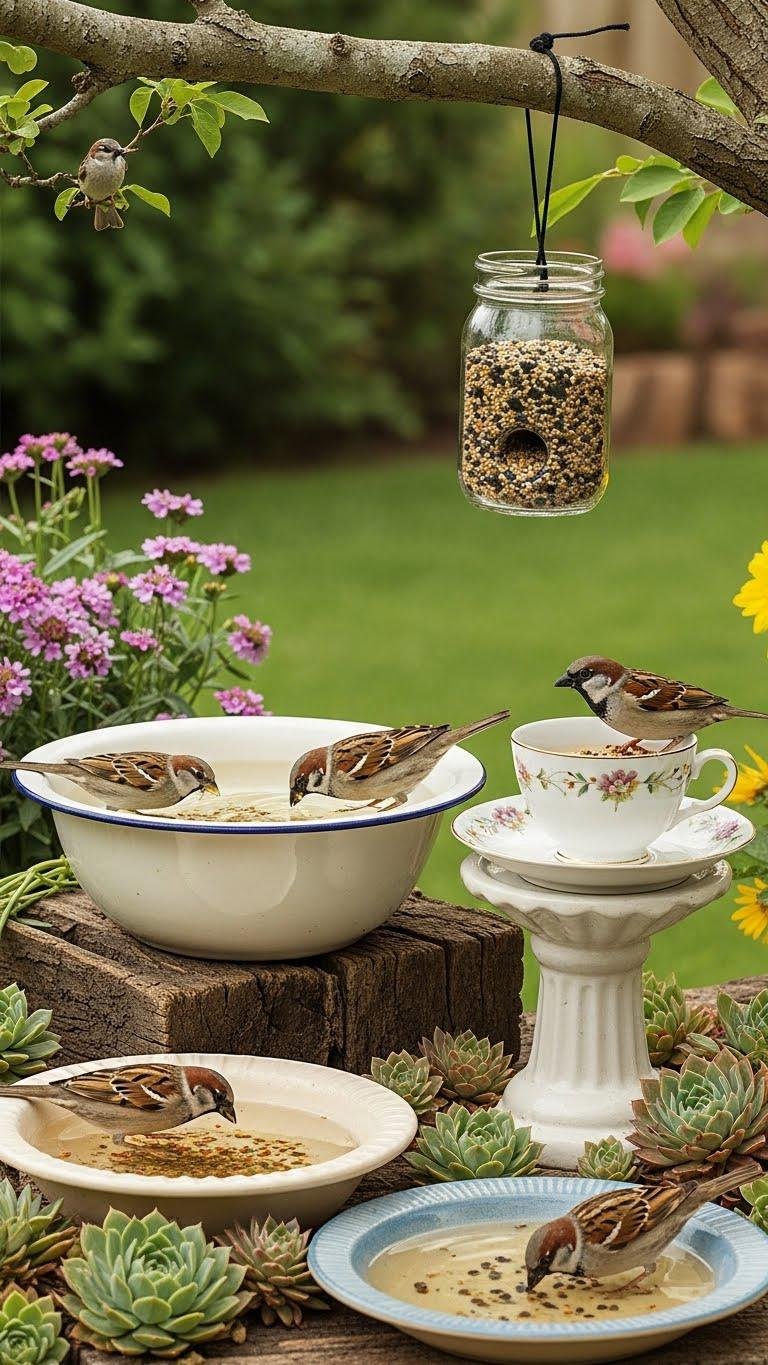
Bring old bowls, teacups, colanders, and even wheel rims back to life as bird baths and feeders that brighten your garden and invite feathered visitors.
You’ll hang a mason jar seed feeder from a branch, perch a vintage teacup on a pedestal for sipping sparrows, and nestle shallow dishes among succulents.
Keep water fresh, place feeders near cover, and enjoy liberated, lively wildlife.
Build DIY Trellises or Arbors From Scrap Wood
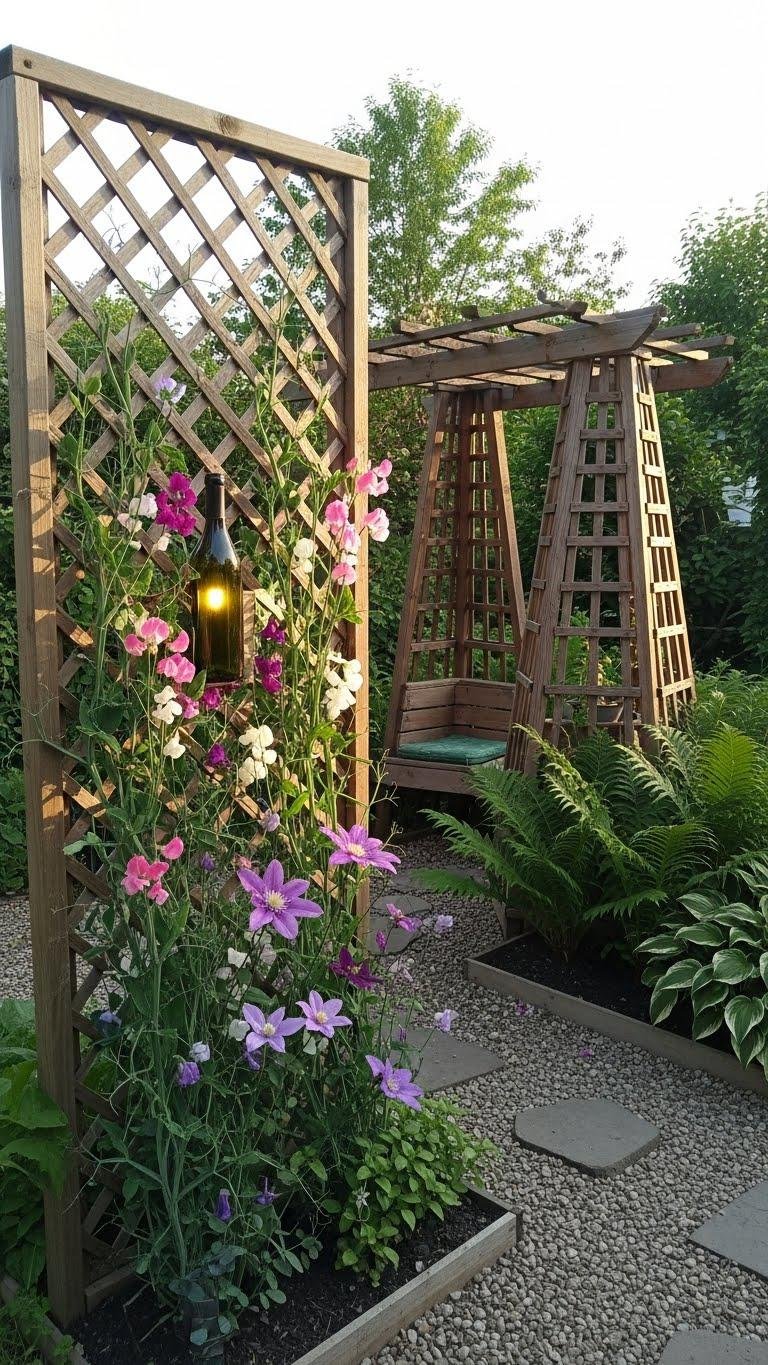
After you’ve welcomed birds with repurposed baths and feeders, use scrap wood to add vertical interest that supports climbing plants and creates shaded nooks. Build a rustic lattice or simple climbing frame for sweet peas and clematis, inset a wine bottle for a light feature, or craft a hinged obelisk for flexible shading.
You’ll gain height, privacy, and freedom to shape growth.
Paint Pots, Stones, and Garden Art for a Splash of Colour

Liven up bare corners by painting pots, stones, and simple garden art to steer the eye and highlight your plants’ colors and textures. You can mix bold hues, create colorful mosaics on stepping stones, or stencil leaves with plant themed stencils on terracotta.
Choose weatherproof paint, balance color with foliage, and place pieces to lead pathways or frame focal plants for a liberated, joyful look.
Create Edging From Reclaimed Bricks or Bottles

If you’ve brightened corners with painted pots and stepping stones, you can anchor that color with simple, rustic edging made from reclaimed bricks or bottles.
Lay bricks staggered or vertical for pattern borders around beds, or bury colored glass bottles neck-down for striking glass edging.
Both options define beds, hold soil, and let you craft a free, personal garden edge that highlights plants.
Install Solar String Lights for Evening Ambience
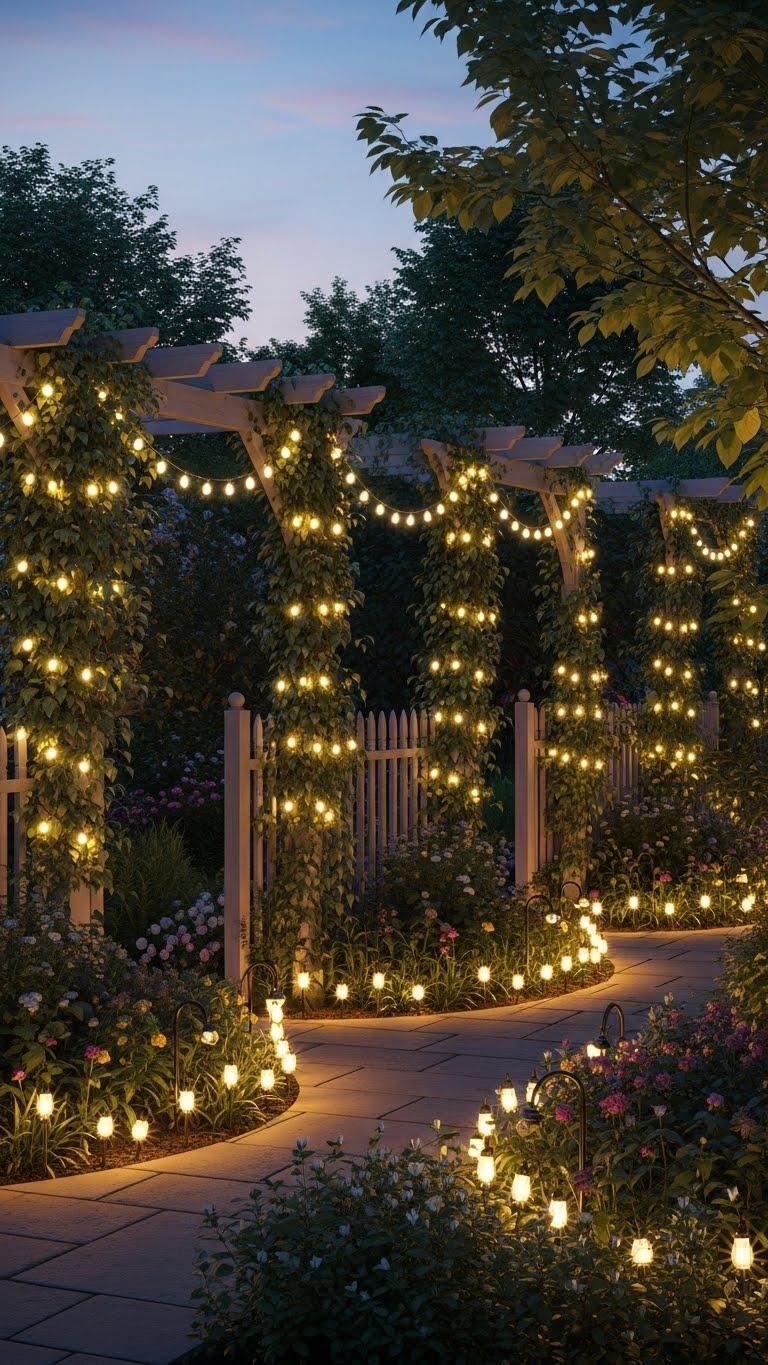
String up solar string lights along pergolas, fences, or through shrub canopies to give your garden soft, plant-flattering illumination after dusk.
You’ll place solar lanterns where foliage and trunks catch light, creating pockets of glow.
Tuck strands to highlight leaf texture, frame beds, and mark moonlit pathways.
Installation’s simple, cordless, and frees you to wander and garden long into evening.
Use Tealights and Candles for Temporary Mood Lighting

Often you’ll want a quick, flexible way to change your garden’s evening mood, and tealights or candles do that beautifully.
You can cluster tealights in jars among low foliage to create flicker focalpoints, tuck candles into scented corners near lavender or rosemary, and move them as you need. They’re cheap, safe with holders, and let you sculpt cozy, plant-forward pockets of light instantly.
Place Mirrors and Reflective Surfaces to Amplify Light
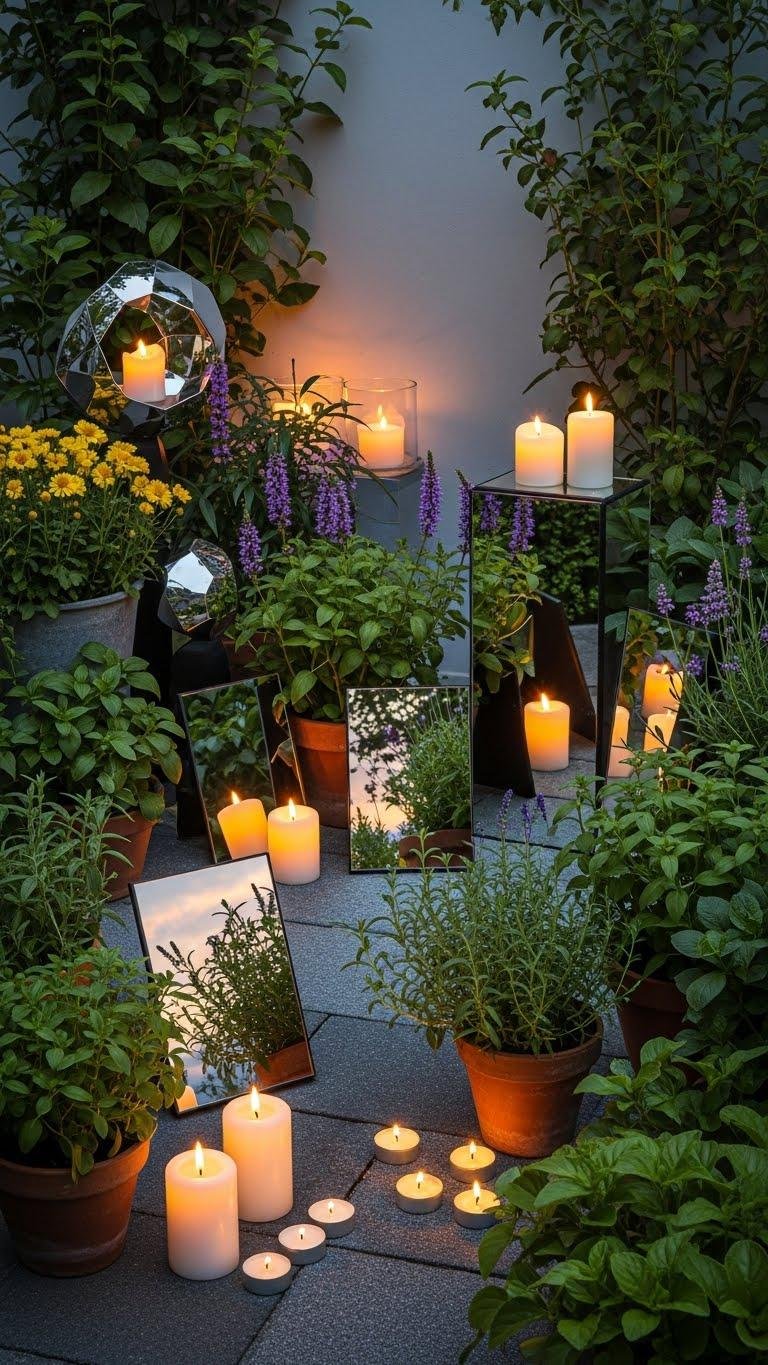
After you’ve set mood with candles and tealights, mirrors and reflective surfaces will multiply that glow and make small pockets of light feel larger. You’ll place mirror mosaics among potted herbs, angle small panels to bounce sunset into shady corners, and add reflective sculptures near foliage.
These moves brighten plant colors, create depth, and give your garden a liberated, airy feel without breaking the bank.
Add Inexpensive Cushions and Textiles to Seating
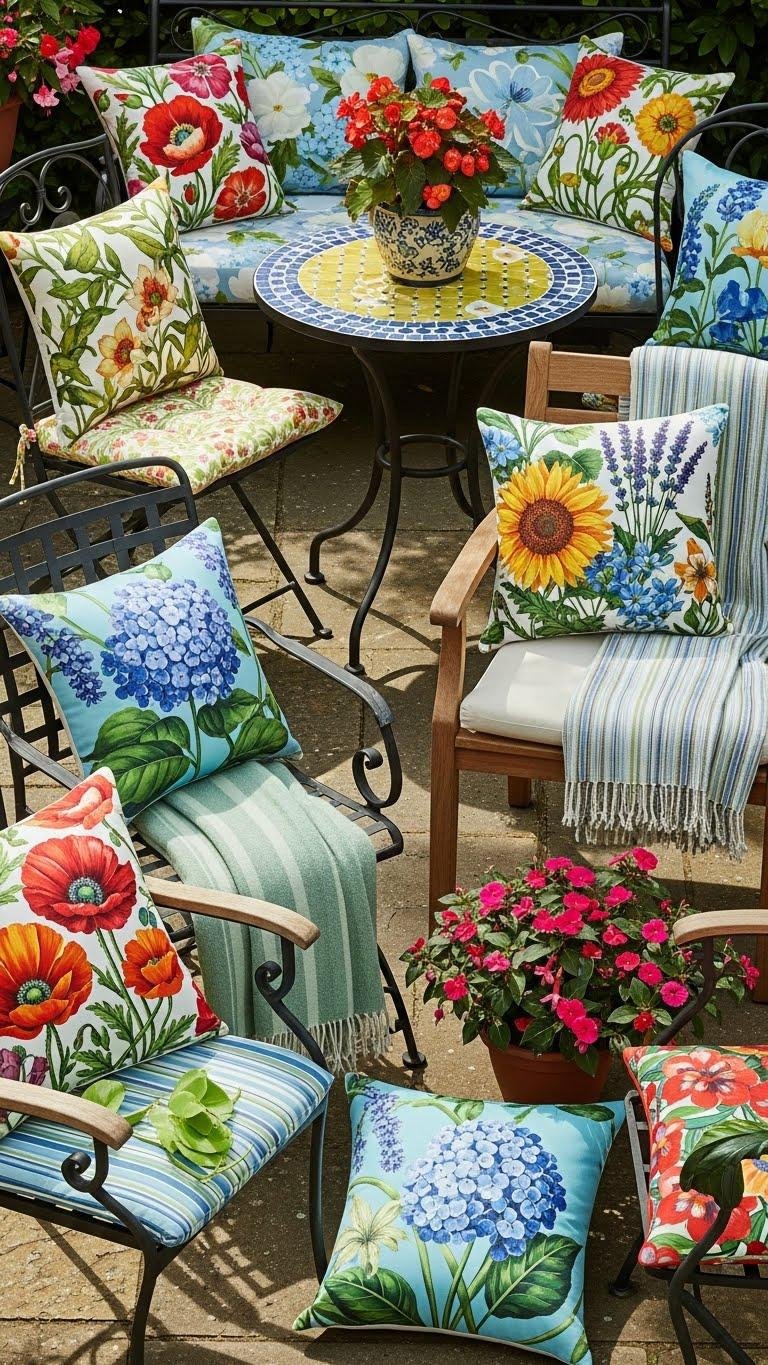
Regularly swapping out cushions and throws is one of the quickest ways to refresh your garden seating without spending much—choose weather-resistant fabrics in colors and patterns that echo nearby blooms and foliage so the seating feels like a planted extension of the bed.
You’ll pick pattern cushions and weatherproof throws that contrast foliage, tie to seasonal blooms, and invite you to linger outdoors.
Make a Simple Fire-Pit Area With a Metal Bowl and Gravel
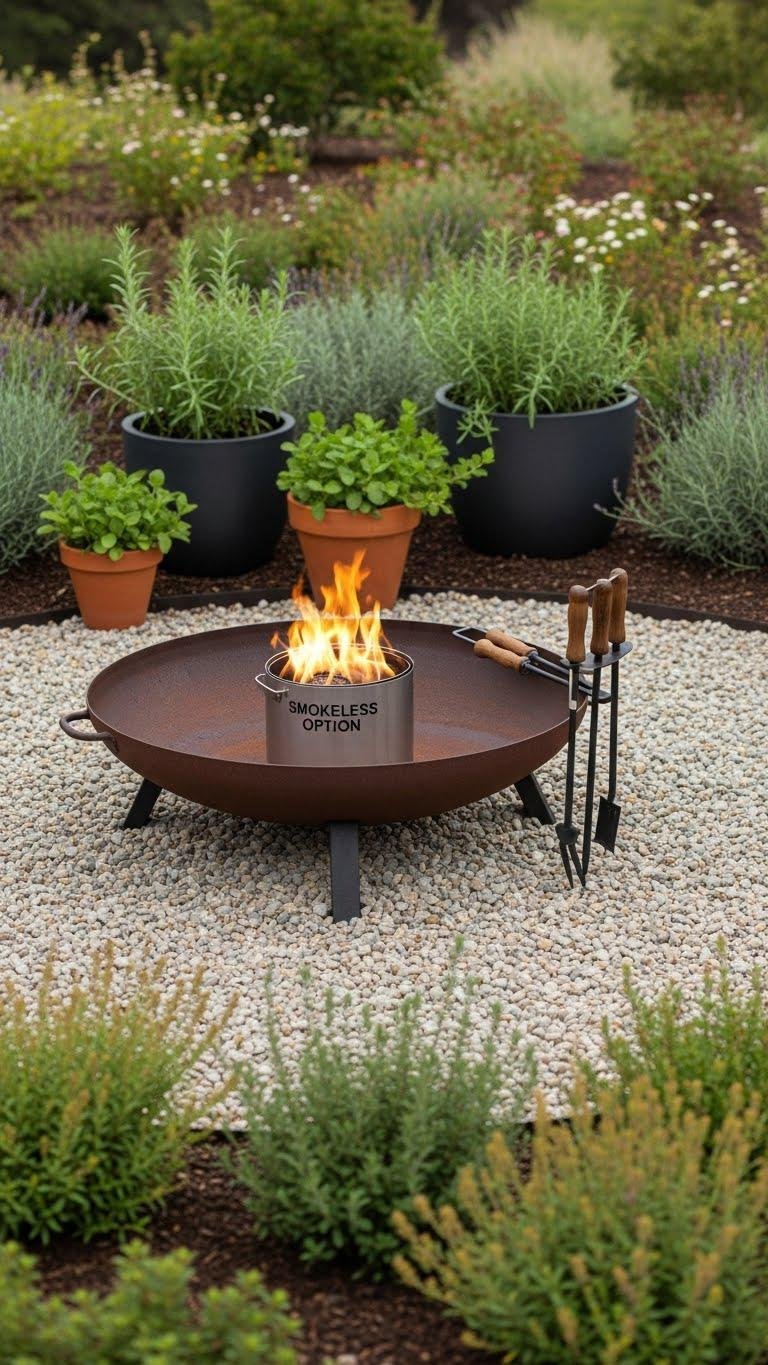
Create a cozy, low-cost fire-pit spot by sinking a sturdy metal bowl into a shallow bed of clean gravel—it’s simple, safe, and looks at home among plantings.
You’ll position potted herbs and low native shrubs around the edge, choose a smokeless option insert, and keep tools handy.
This portable setup lets you enjoy evening warmth without permanent landscaping or fuss.
Start a Compost System to Recycle Waste Into Soil
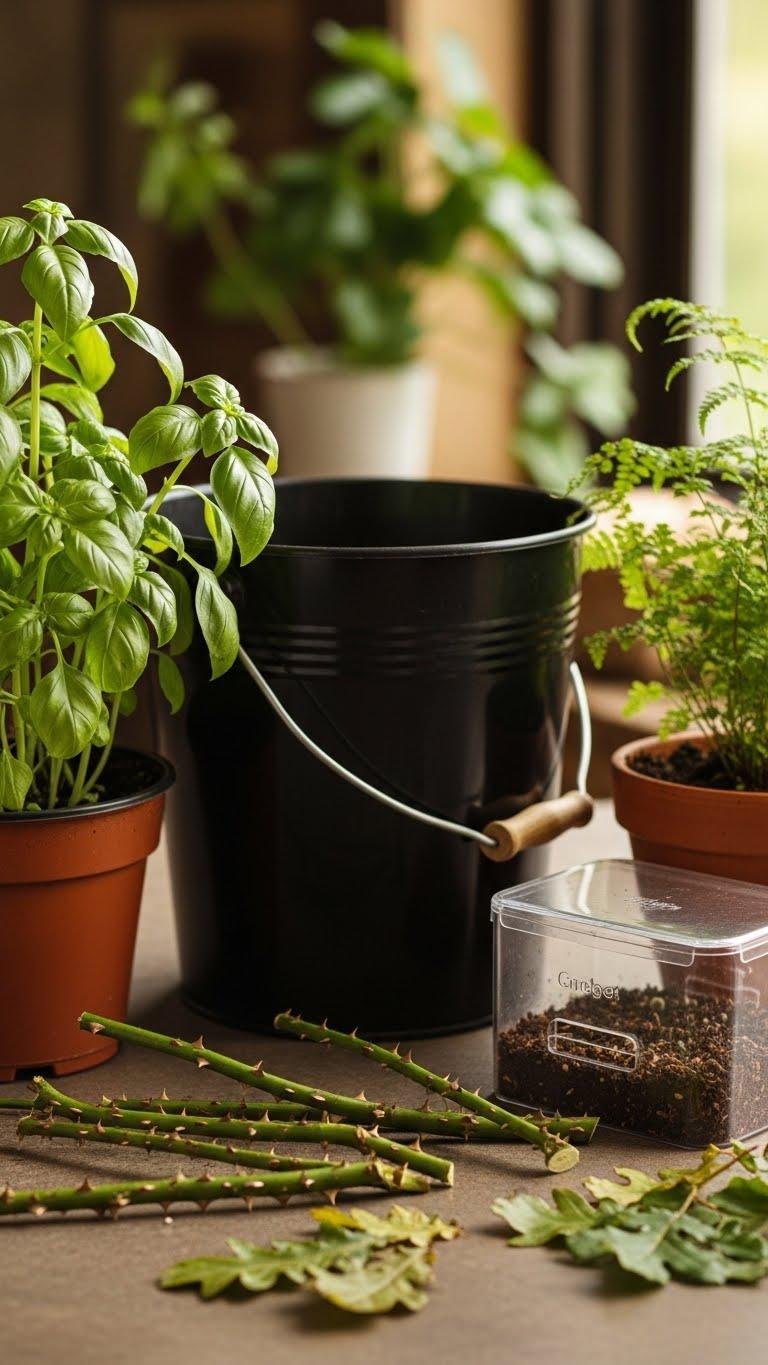
Composting turns kitchen scraps and garden trimmings into rich, dark soil you can see and feel—perfect for nourishing beds and containers.
You’ll set up a simple kitchen composting bucket or a small vermicompost bin, layer greens and browns, and turn weekly.
The result smells earthy, feeds roots, reduces waste, and gives you freedom to grow lush, resilient plants on a tight budget.
Mulch Heavily to Reduce Watering and Weeding

Often you’ll find that a thick layer of mulch is the single best thing you can do to cut watering and keep weeds down. Spread 2–4 inches of organic mulch around plants to slow evaporation, a simple water retention strategies move.
It also blocks light, a core weed suppression techniques tactic. You’ll free time, save water, and let plants thrive with minimal fuss.
Repair and Maintain Tools to Save Money
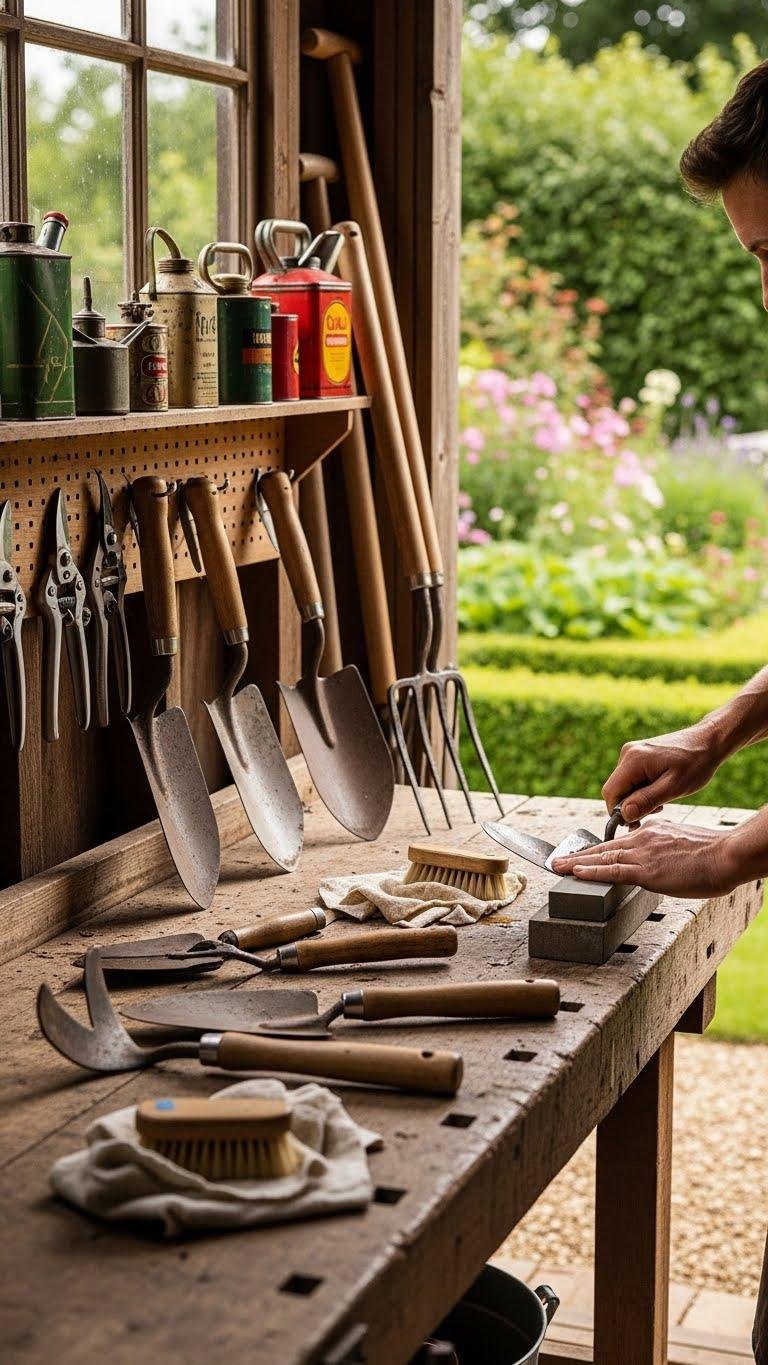
If you want your garden to look its best without buying new gear every season, learn to keep your tools sharp, oiled, and adjusted. You’ll save cash and time by doing simple tool sharpening, loosening rust with vinegar, oiling pivots, and tightening screws.
Replace cracked grips and tackle handle replacement yourself. A well-kept spade and pruner make beds neater and plants freer to thrive.
Create a Compact Seating Nook From Reclaimed Materials
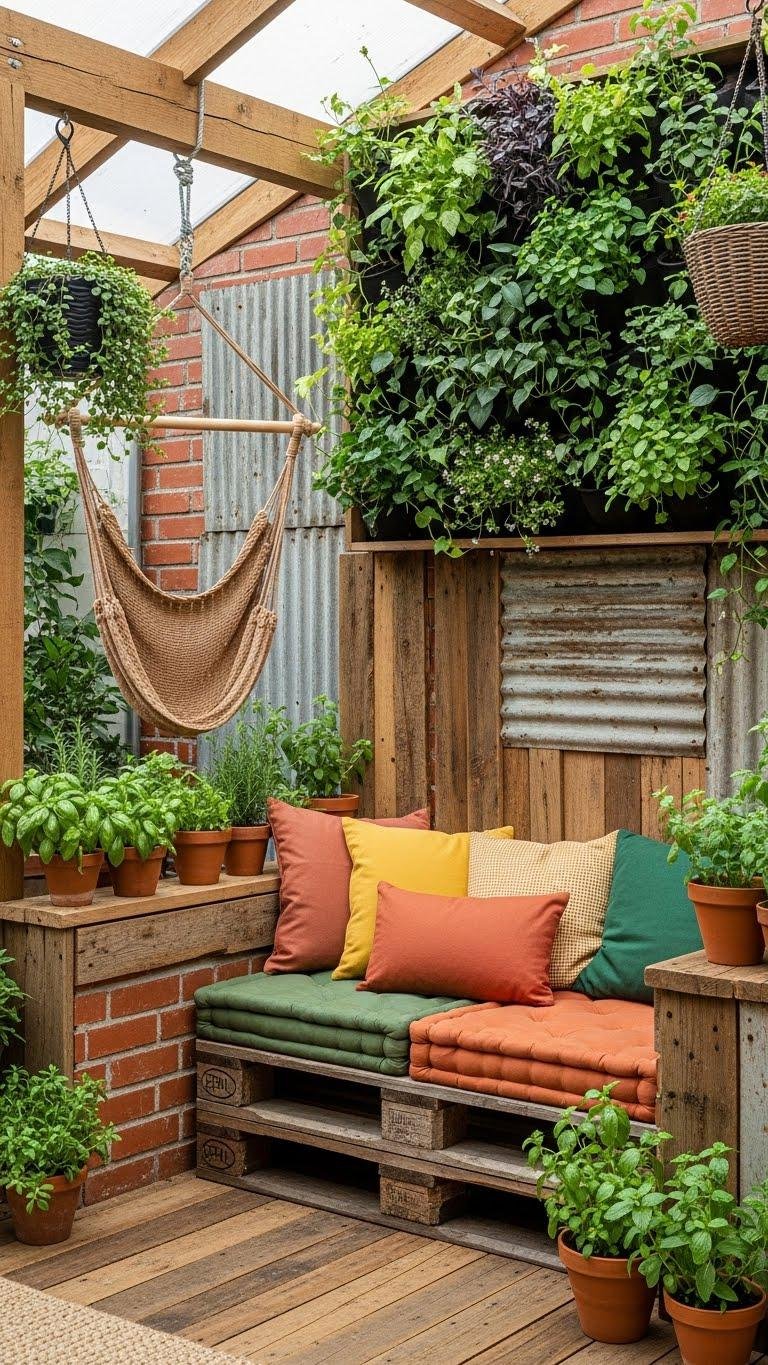
When space is tight, you can fashion a cozy seating nook from reclaimed wood, bricks, and salvaged metal to keep costs down and add instant character; position it near a focal plant or vertical garden so the seating feels tucked into greenery.
Scavenge a reclaimed palette for a bench, add cushions, hang a compact hammock for drifting afternoons, and border with pots of herbs.