
You want a garden that feels private and stylish without breaking the bank or your back. These 20 DIY screens show practical, picture-ready ways to frame views, block sightlines, and add texture—think cedar lattice with climbers, slatted wind-friendly panels, vertical planters, and renter-safe no-dig options. Each idea balances airflow, durability, and curb appeal, so you can pick a solution that fits your space and skill level — and then start planning the build.
Cedar Lattice Panel With Climbing Vines
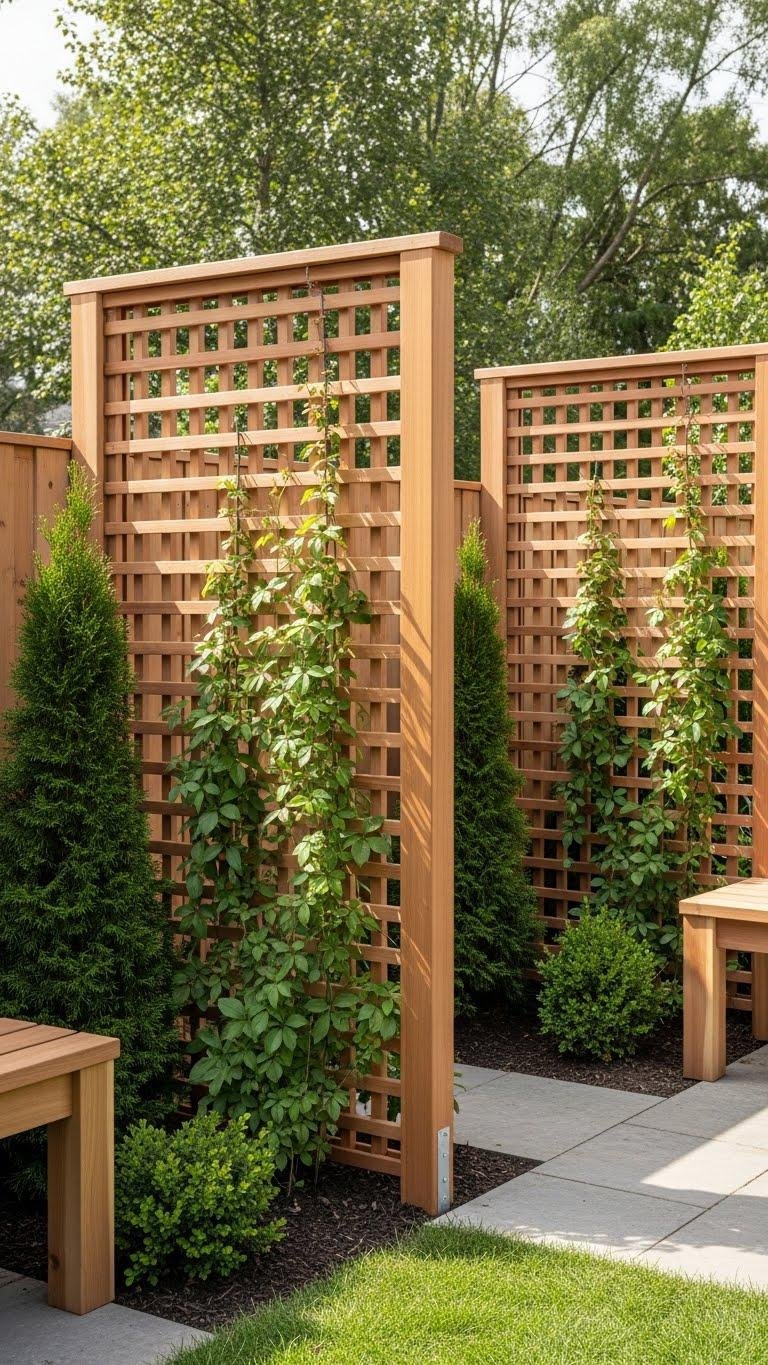
Anchored along a fence or freestanding between garden beds, a cedar lattice panel gives you an elegant, natural screen that breathes—its open grid lets light and air through while the warm grain of cedar resists rot and insects.
You’ll train climbing vines for privacy, complement arborvitae screening, and sit by built-in benches integration. Fasten panels, guide tendrils, prune for sightlines and freedom.
Slatted Wood Screen for Airflow
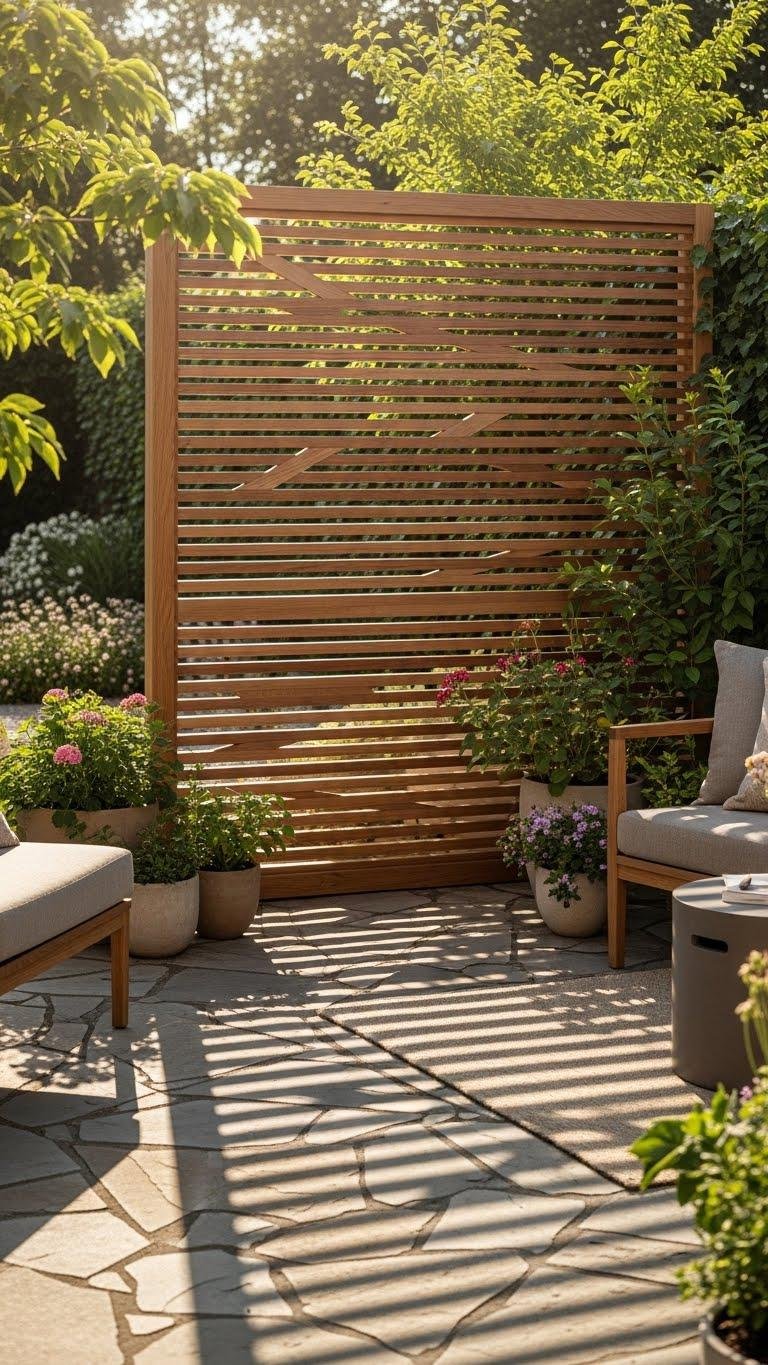
Angle a slatted wood screen to capture breezes and cast patterned shade across your patio or garden path.
You’ll position slats for airflow optimization, balancing privacy with movement. Use durable hardwood, stagger gaps for cooling drafts, and anchor securely.
The result’s clean lines and deliberate shadow play create a liberated, calm space where you control light, sightlines, and breeze without sacrificing style.
Pressure-Treated Post and Lattice Fence
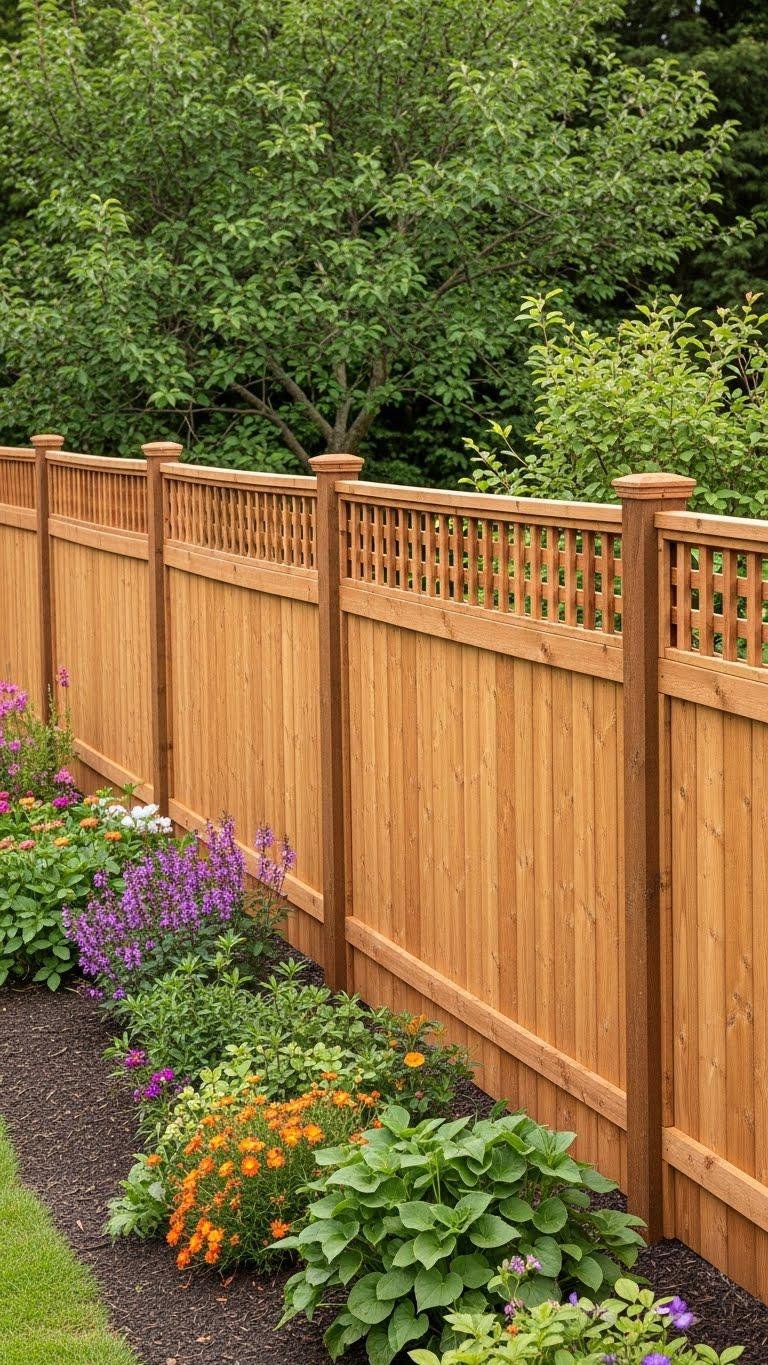
If you prefer a more permanent solution than a portable screen, pressure-treated posts with lattice panels give you lasting privacy and a clean, structured look.
You’ll set rot resistant posts in concrete, space privacy lattice fixing points evenly, and attach panels level for a crisp silhouette.
Stain or paint to match your garden, then enjoy rugged, low-maintenance screening that lets you reclaim outdoor freedom.
Composite Decking Privacy Panel
Curved Top Garden Screen
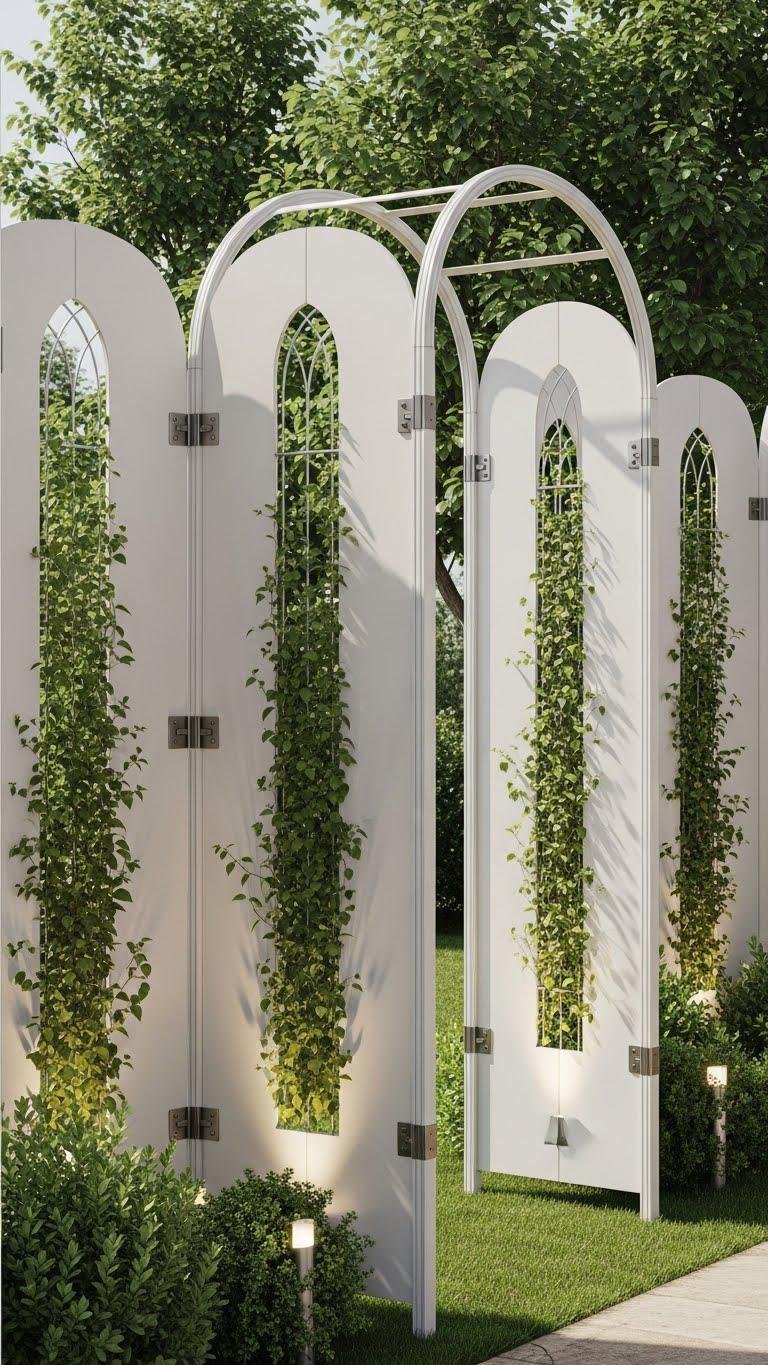
When you want a softer silhouette in your garden, a curved top screen gently breaks up straight lines while still giving solid privacy; its arched profile directs the eye upward and creates pockets for climbing plants or accent lighting.
You’ll craft a striking curved top silhouette using lightweight panels, secure them with arched motif hardware, and leave gaps for vines to weave, keeping the space airy and free.
Planter-Integrated Privacy Wall
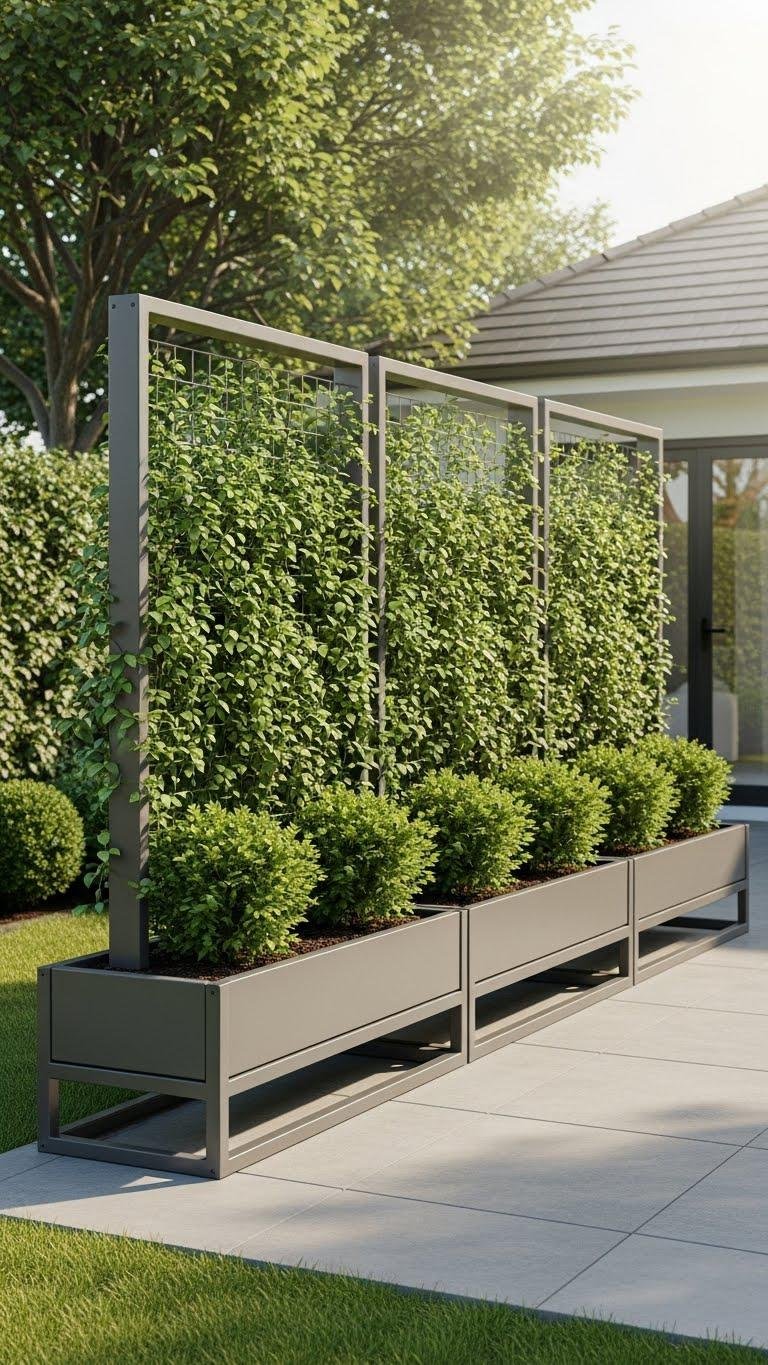
Planter-integrated privacy walls marry function and foliage, letting you build a vertical screen that also grows life. You’ll anchor a sturdy frame, fit raised troughs at the base, then stack layered planters upward for instant green coverage. Choose fast-growing vines and compact shrubs, keep irrigation simple, and position the wall to block sightlines while preserving airflow and a sense of open freedom.
Reclaimed Wood Pallet Screen
Accordion-Style Portable Screen
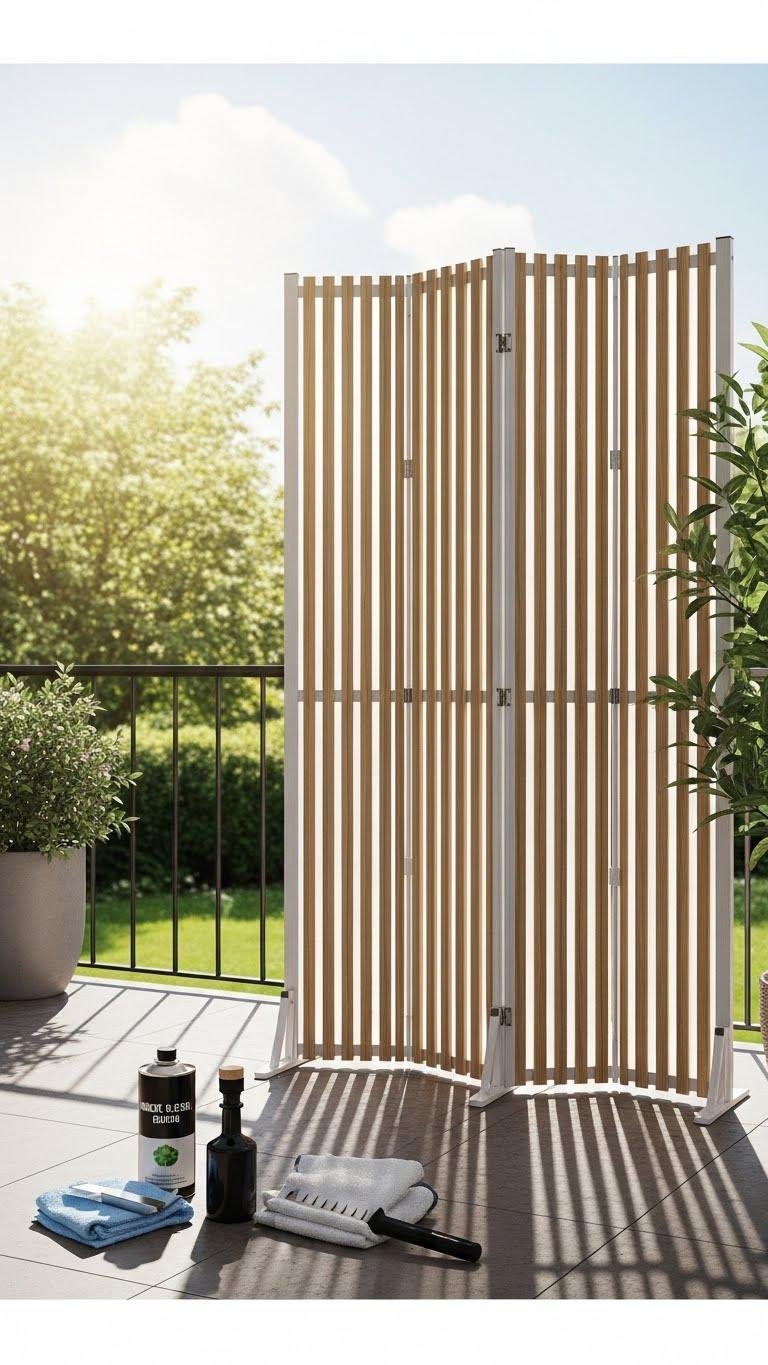
Folded up, an accordion-style portable screen lets you create instant privacy wherever you need it—on a balcony, patio, or between garden zones. You’ll unfold lightweight panels, lock portable hinges, and position it to shape sightlines and sunlight.
Choose slatted wood or waterproof fabric for airflow and style. Quick-clean accordion maintenance keeps it smooth: wipe joints, oil hinges, and store folded when storms threaten.
Hanging Curtain Privacy Canopy
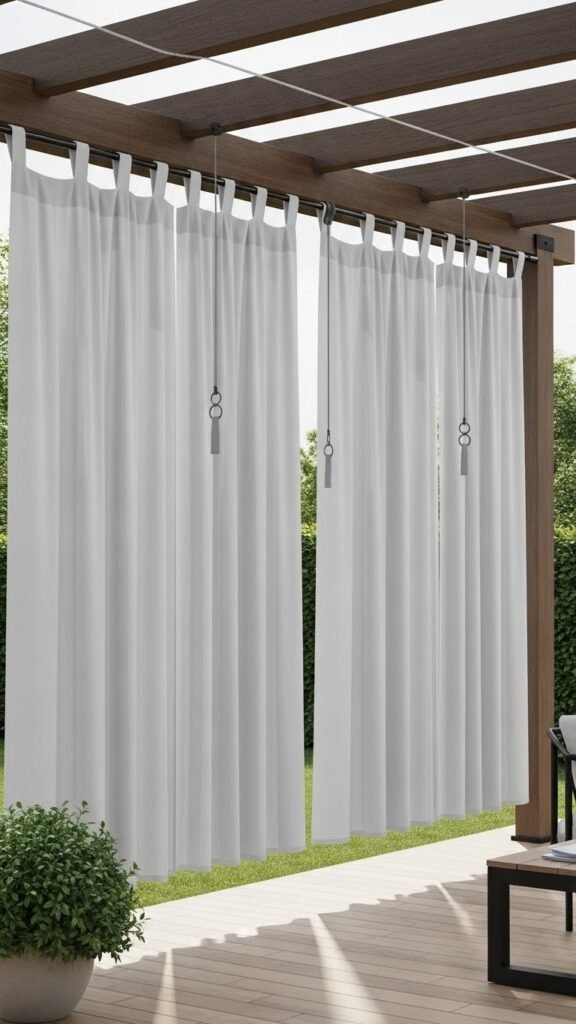
A hanging curtain privacy canopy turns open air into a sheltered retreat by suspending weatherproof panels or drapes from a pergola, beam, or tensioned cable—so you can control sightlines, shade, and breeze with a few hooks and rings.
You’ll mix indoor canopy comfort with outdoor durability: use sheer fabrics for light diffusion, heavier panels for privacy, and simple pull rings so you can open, close, and roam freely.
Lattice With Built-In Shelves for Plants
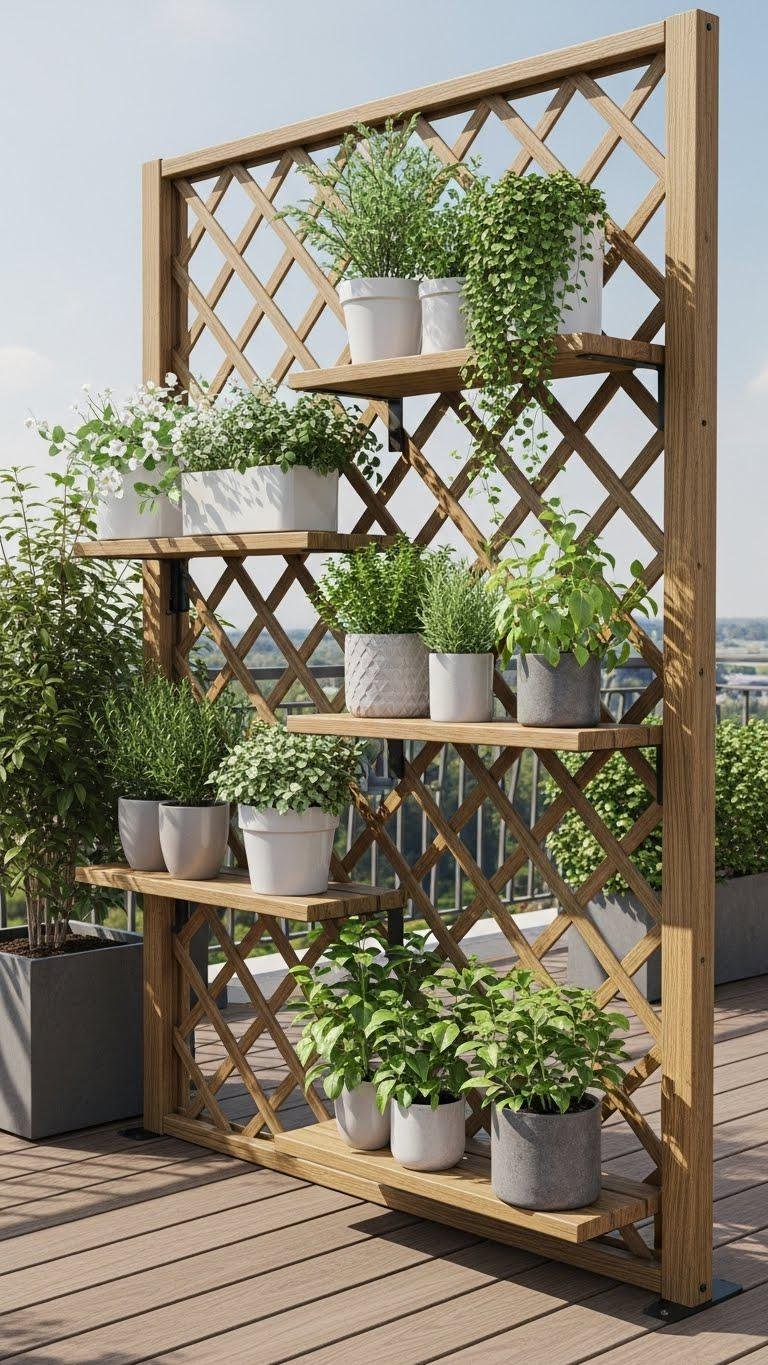
If you liked the way slatted panels break wind while framing views, try a lattice that doubles as a plant shelf: mount a sturdy frame, weave or attach lattice panels, then integrate staggered shelves at varied heights to hold pots and trailing plants.
You’ll create compact shelving for a tight terrace, arrange an easy herb display, and enjoy open privacy that still feels freeing.
Painted Powder-Coated Metal Divider
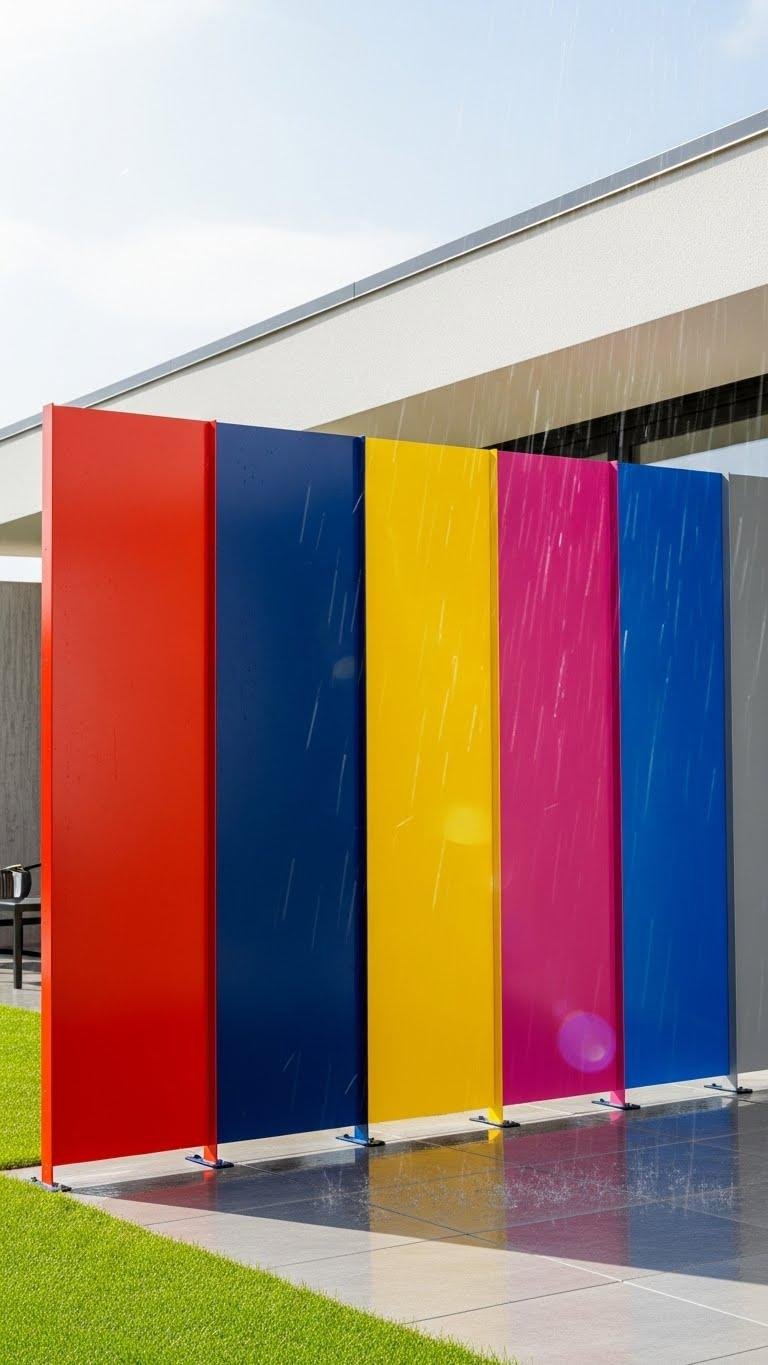
Consider powder-coated metal when you want a durable, low-maintenance divider that still feels polished—its baked-on finish resists rust and holds color far better than paint alone, so your screen stays crisp through sun and rain. You’ll install sleek panels, pick bold hues with colorfast finishes, and enjoy minimal powder coated maintenance. Anchor securely, space for airflow, and keep freedom-focused style.
Mixed-Material Screen (Wood and Metal)
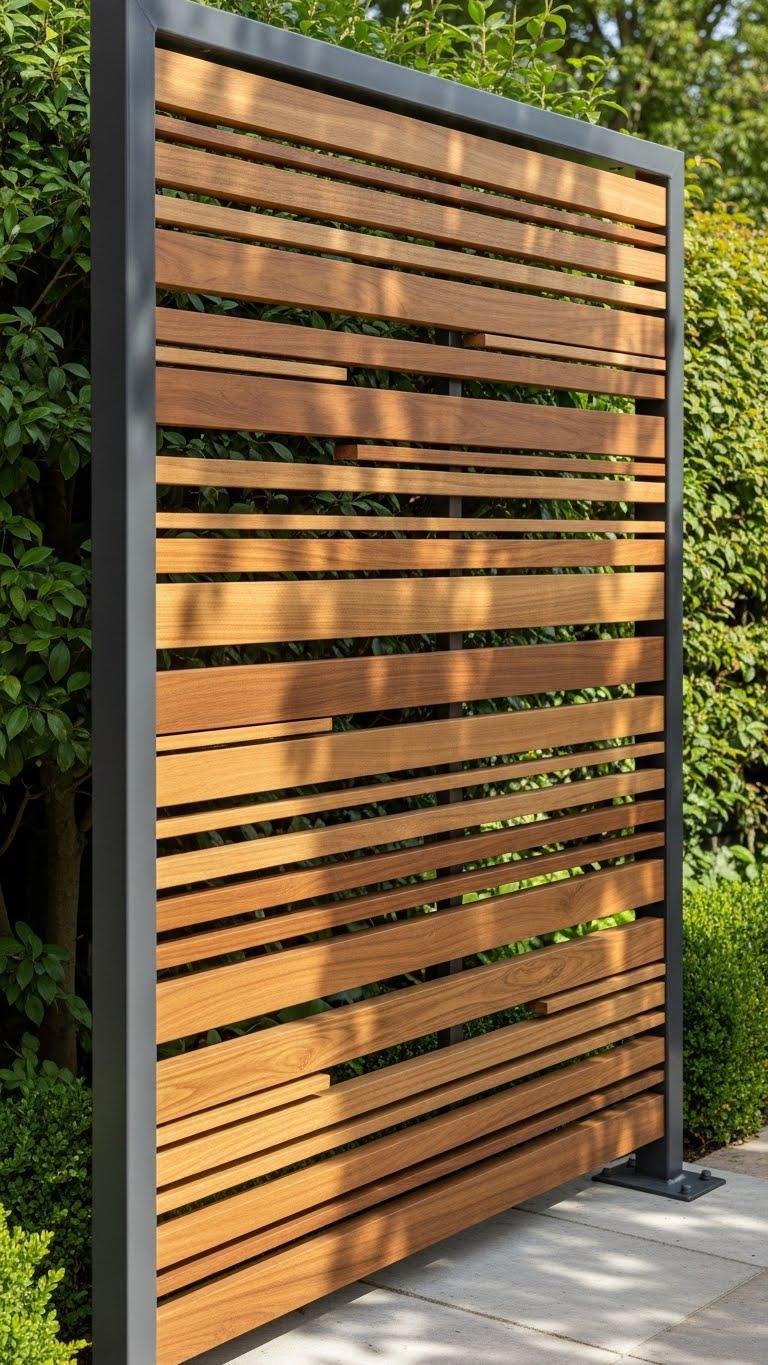
Moving from the clean resilience of powder-coated metal, a mixed-material screen blends warm wood with sturdy metal to give you both texture and structure.
You’ll pair hardwood slats with a steel frame, sealing wood with weatherproof coatings and treating joints for rust prevention. Install floating gaps for light, secure with hidden brackets, and enjoy a durable, stylish barrier that feels effortless and free.
Vertical Garden Privacy Panel
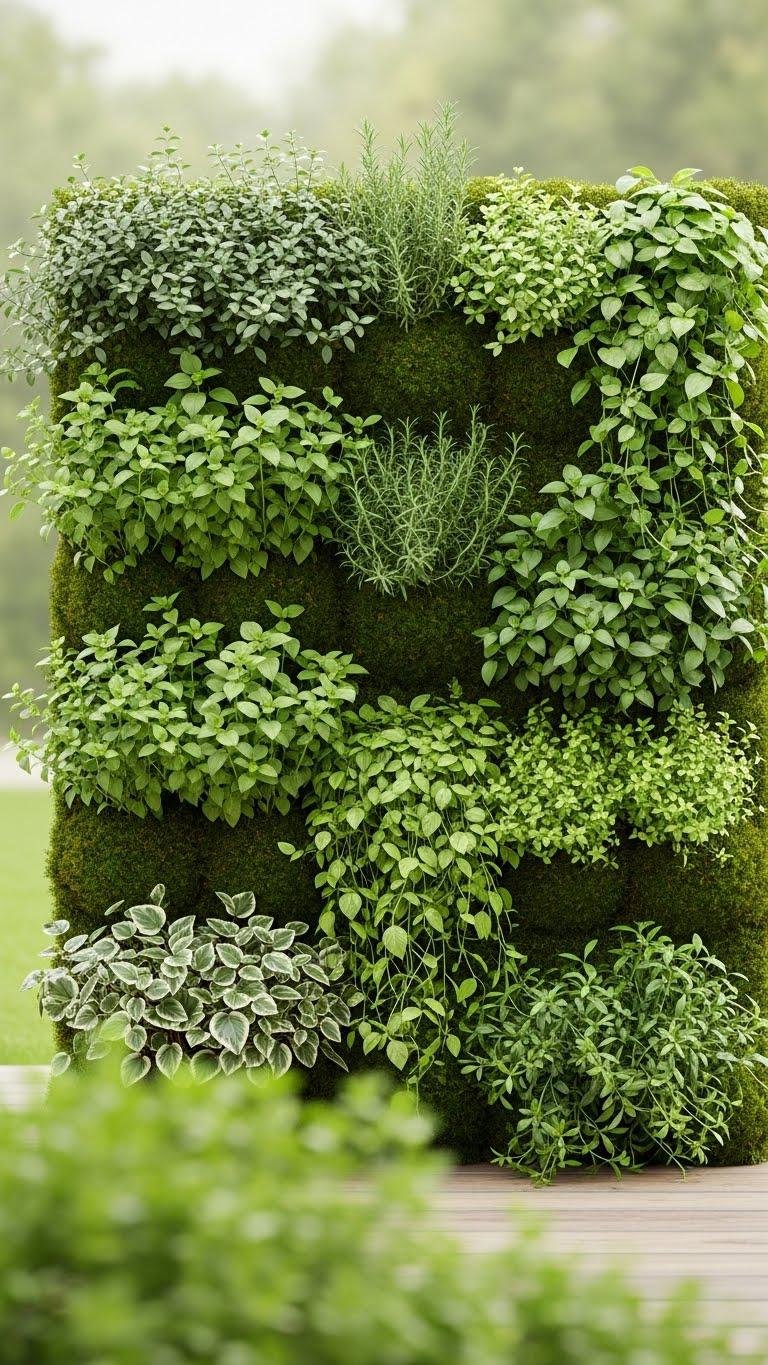
When you mount a vertical garden privacy panel, you get living coverage that softens sightlines while adding texture, scent, and seasonal color. You’ll anchor a vertical herbboard or combine planters with a modular mosswall to craft layers of green.
Choose hardy herbs, trailing vines, and compact moss pockets. Maintain accessible irrigation, prune for shape, and enjoy a private, breathable screen that feels freeing.
Lightweight Panel for Renters (No-Dig)
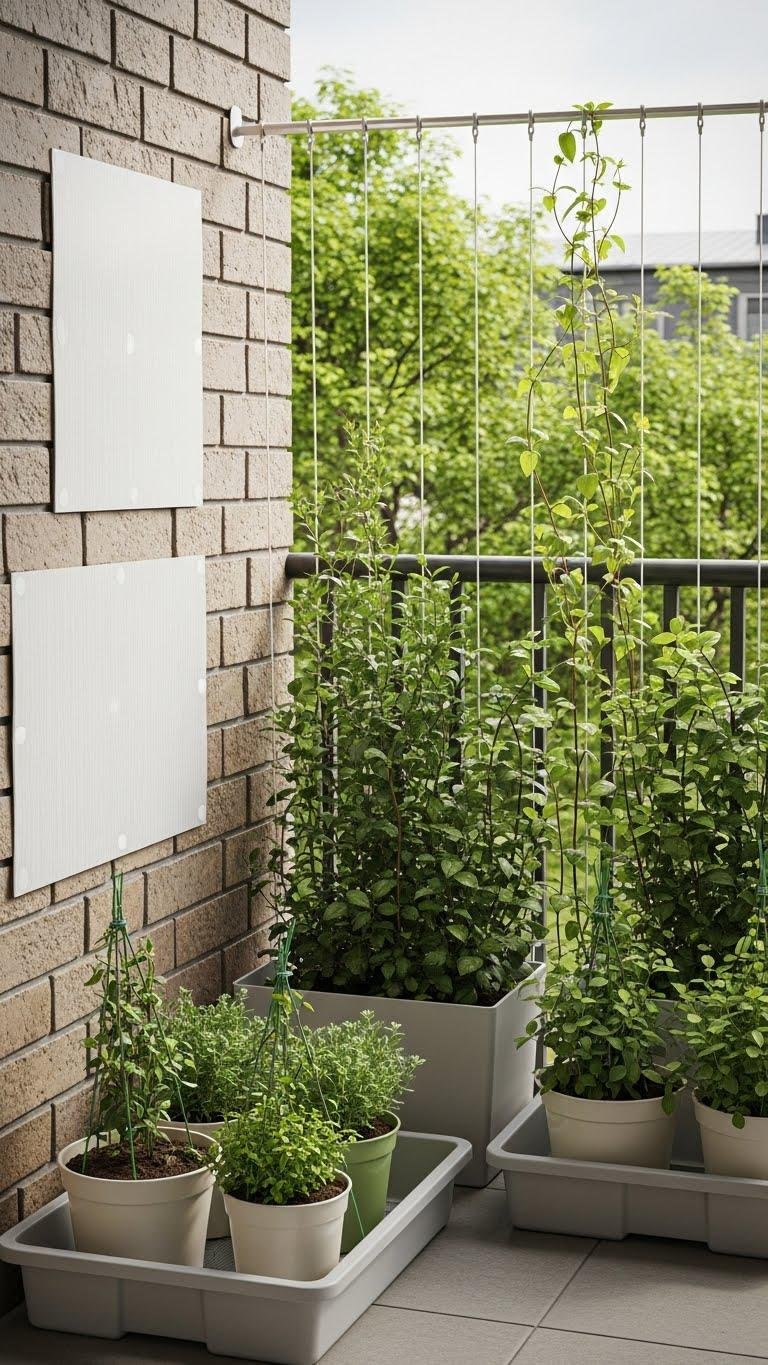
If you love the look of a living privacy panel but rent or can’t dig into the ground, a lightweight, no-dig panel gives you the same layered greenery without permanent changes.
You can install adhesive mounted panels for green texture on masonry, or use tension rod screens to divide space on balconies. Choose modular trays, lightweight pots, and clipped vines for easy removal and bold impact.
DIY Trellis Screen for Tall Climbers
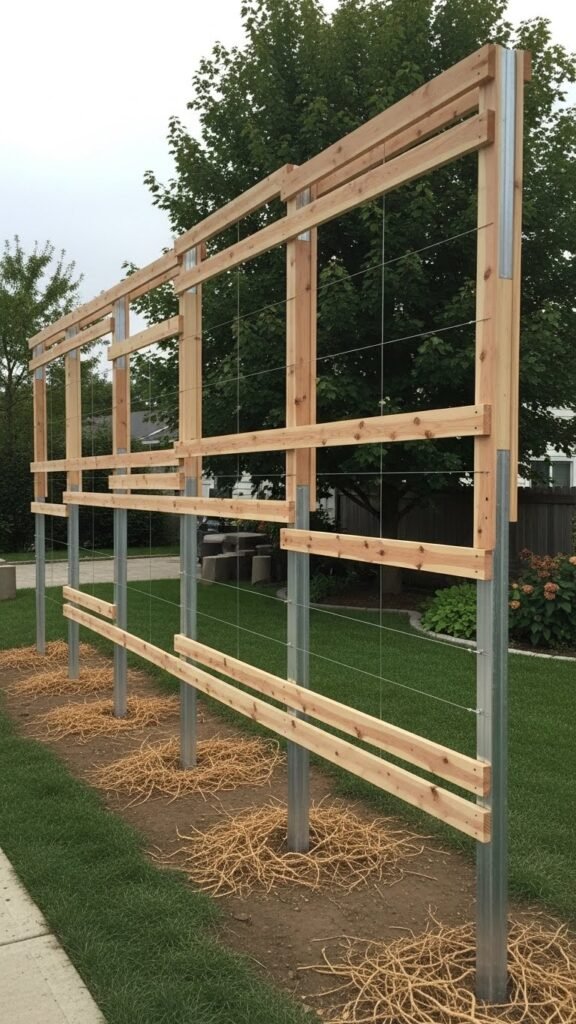
Stitch together a tall, airy trellis screen that gives climbing vines room to soar while staying sturdy and simple to build. You’ll use cedar slats, metal posts, and tensioned crosswires, anchoring posts past frost line.
Add trellis lighting for evening ambiance and install root barriers to protect foundations. Fasten panels modularly so you can rearrange, expand, or remove sections as freedom and seasons demand.