
You’ll find plenty of ways to support climbers, whether you want a rustic bamboo teepee, a sleek diamond-wire wall, or a repurposed door turned trellis. Each option balances looks, strength, and easy upkeep, and I’ll point out what works best for delicate vines versus heavy roses or cucumbers. Pick a style, learn a few simple anchoring and training tricks, and you’ll be ready to transform a plain fence or tiny balcony—but first, consider where your plants actually need support.
Birdcage Trellis for Hanging Vines
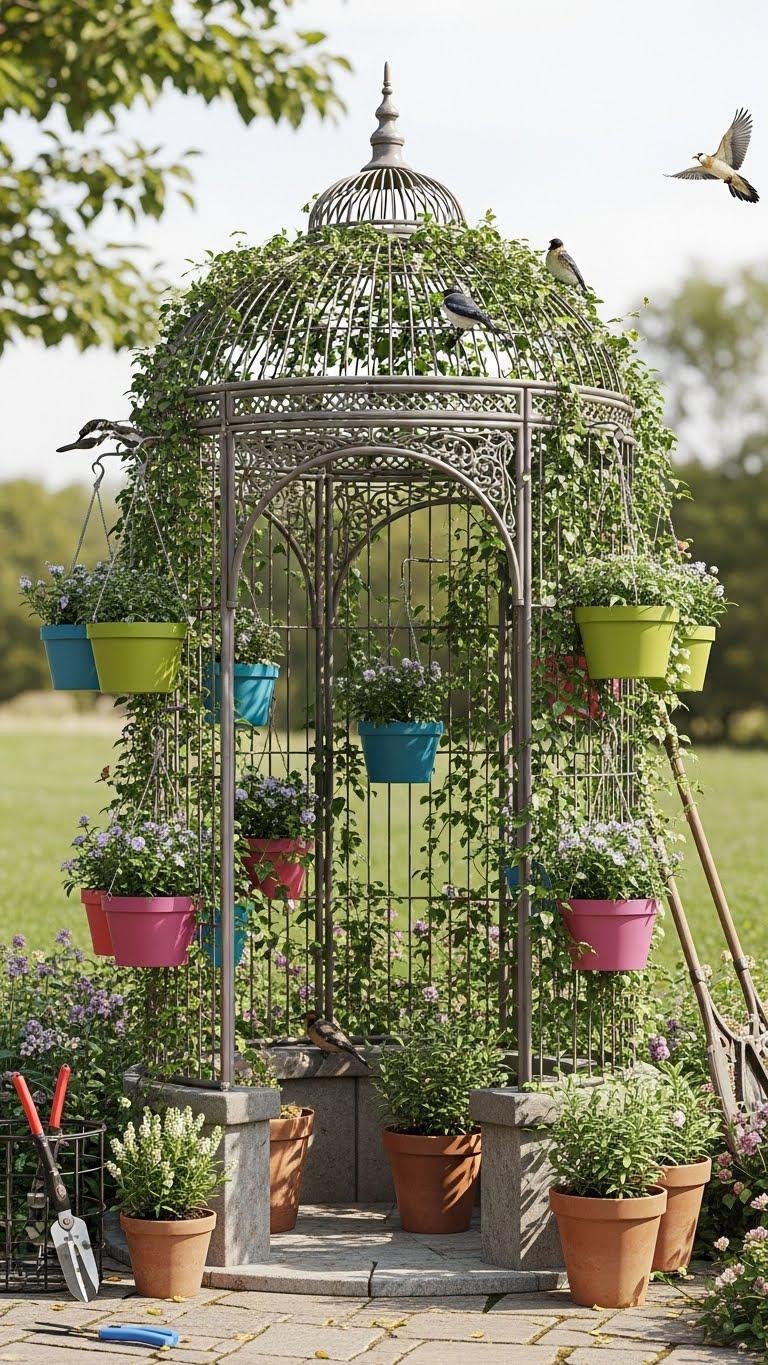
If you want a decorative yet functional support for hanging vines, a birdcage trellis gives you vertical structure and instant charm. You’ll hang planters from lightweight frames, letting vines spill free while keeping plant roots contained.
It can be bird attracting without feeders, so you’ll enjoy visits. Plan for seasonal maintenance—pruning, repotting, and checking fastenings—to keep the structure safe.
Laurel Wreath Wire Frame
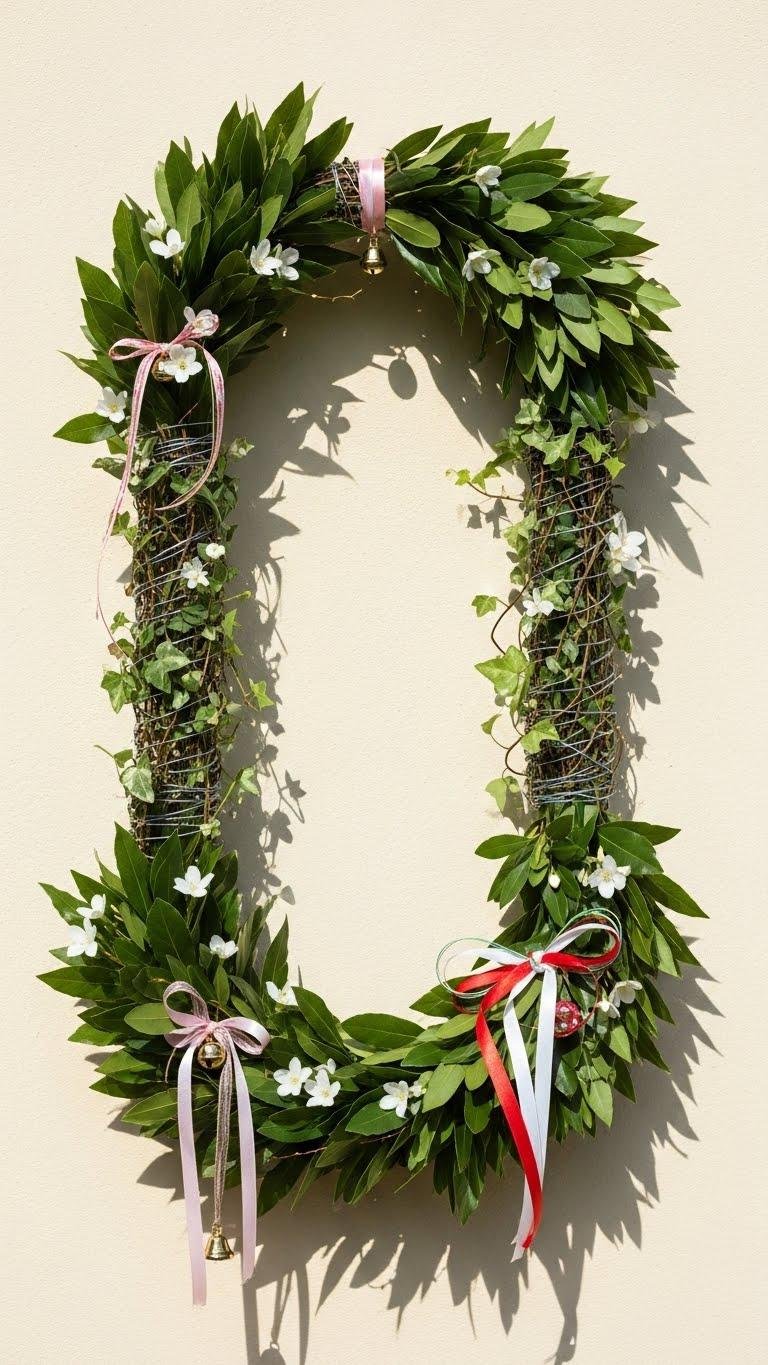
When you wrap a simple wire frame with fresh or faux laurel, it creates an elegant, evergreen support that’s perfect for training light climbers like jasmine or small-leaf ivy.
You’ll shape wreath mechanics to guide vines, anchoring shoots with soft ties. Mount it on a sunny wall or fence, then swap seasonal embellishments—ribbons, tiny lights, or bells—to reflect your free, changing style.
Diamond Wire Wall Trellis
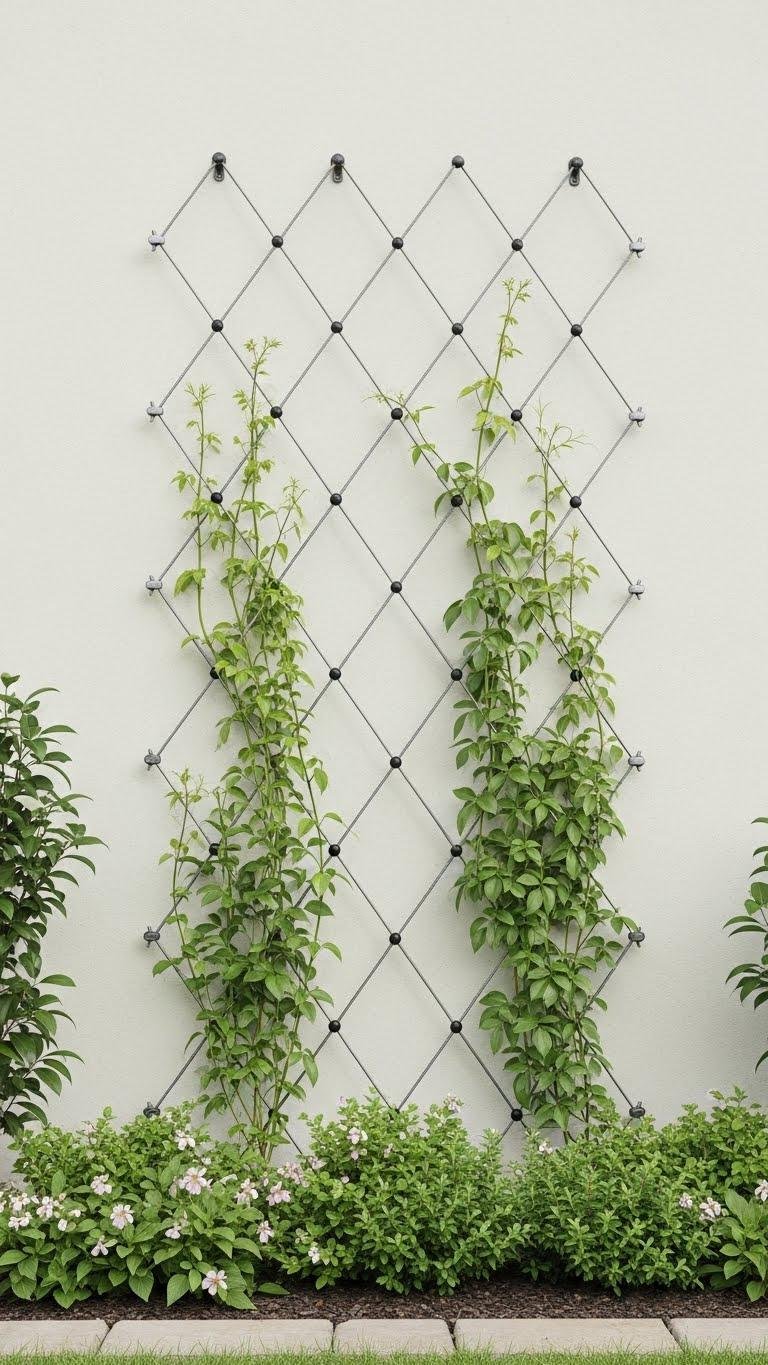
Moving from the circular charm of a laurel wreath, a diamond wire wall trellis gives you a more structured, vertical framework that’s ideal for heavier climbers or for creating a patterned backdrop.
You’ll anchor diamond-pattern cables to the wall, tension them for strength, and coat hardware with weatherproof coatings.
It’ll support vines, boost privacy screening, and let you train growth cleanly while keeping an open, liberated garden feel.
Bamboo Teepee for Climbers
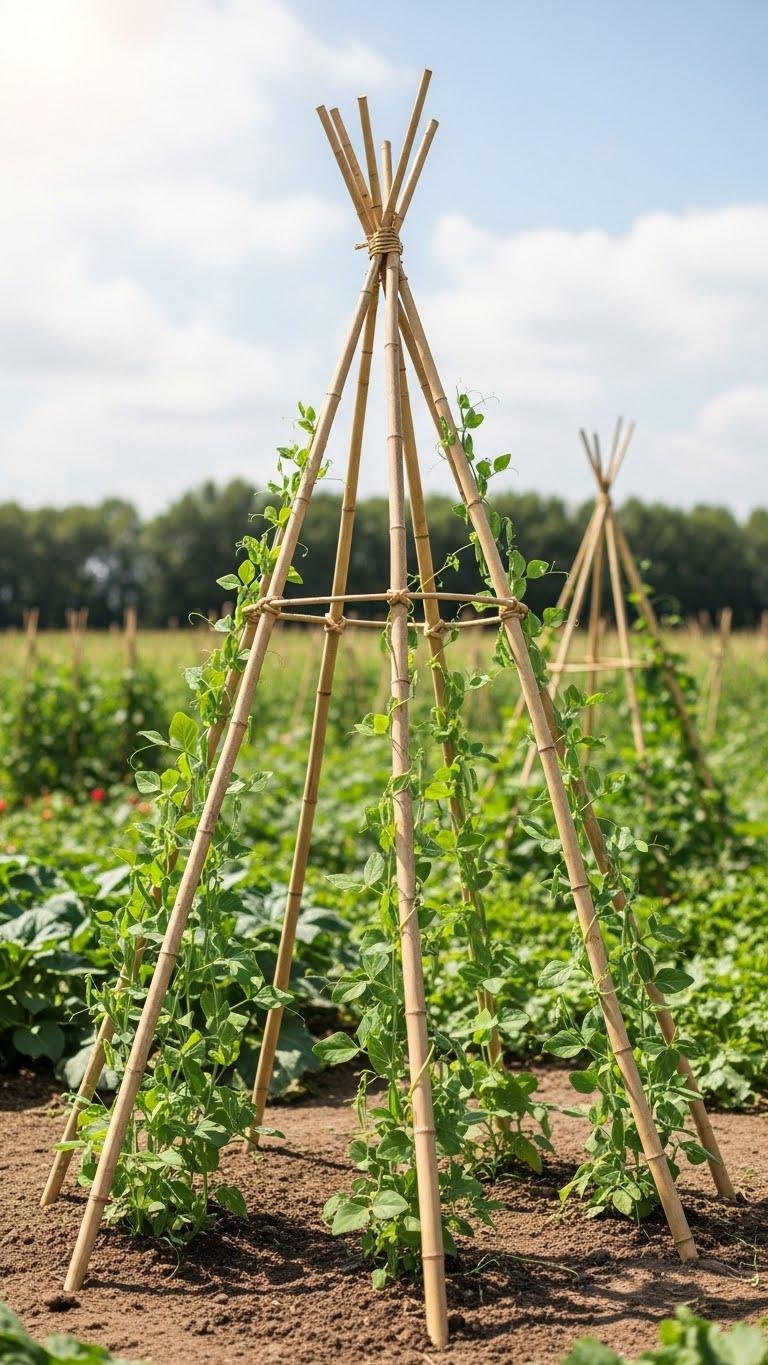
Rising from a single knot at the top, a bamboo teepee gives you a simple, lightweight support that’s perfect for peas, beans, sweet peas, and other twining climbers.
You lash poles with straightforward bamboo knotting, set legs wide for stability, and plant to preserve soil aeration. It’s portable, low-cost, and lets your garden climb free while you easily reposition or dismantle the structure.
Ladder-Style Wooden Trellis
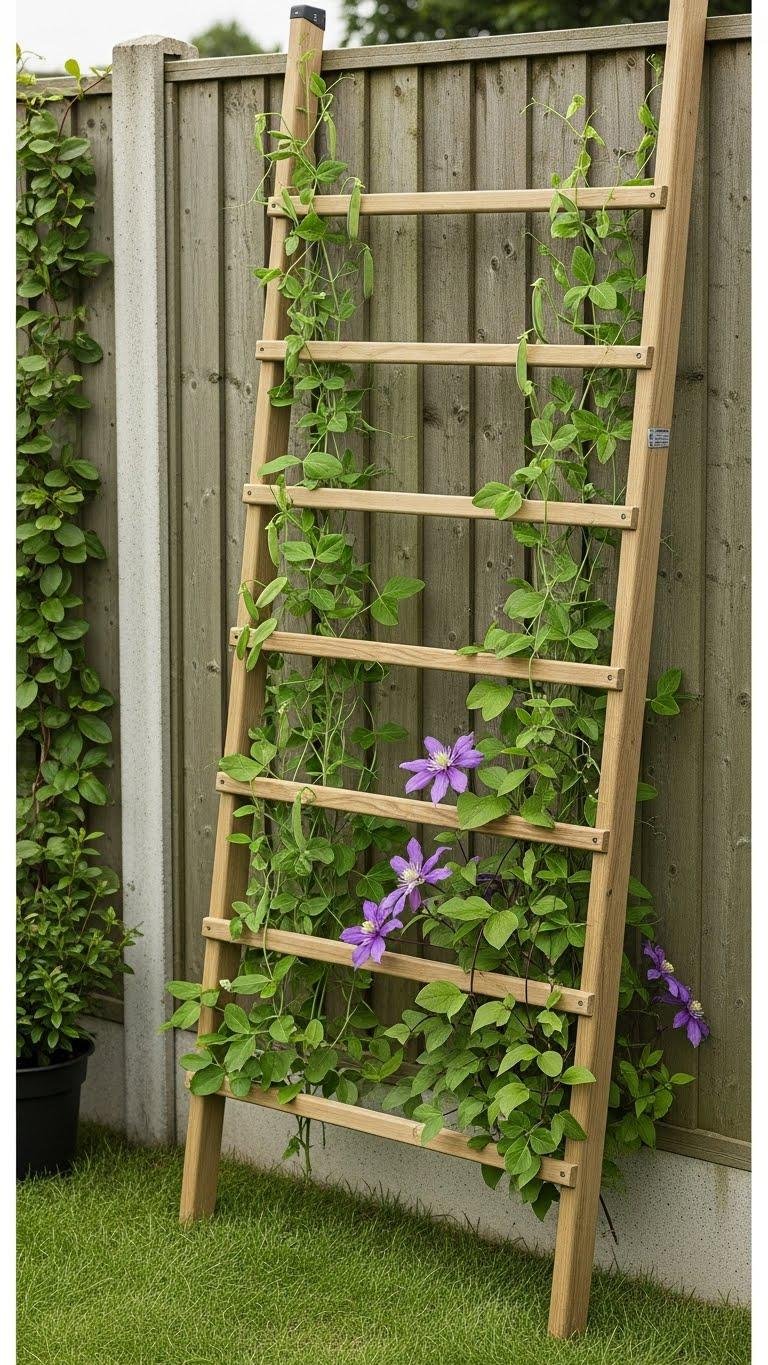
Build a ladder-style wooden trellis by leaning or securing rungs between two sturdy rails to give vining plants predictable vertical paths. You’ll choose vertical slats spacing to suit peas, beans, or clematis, cut durable wood, and sand edges.
Anchor the base or lean against a fence, apply a weatherproof finish, and let your climbers freely explore upward while you maintain simplicity and mobility.
Copper Pole Spiral Support
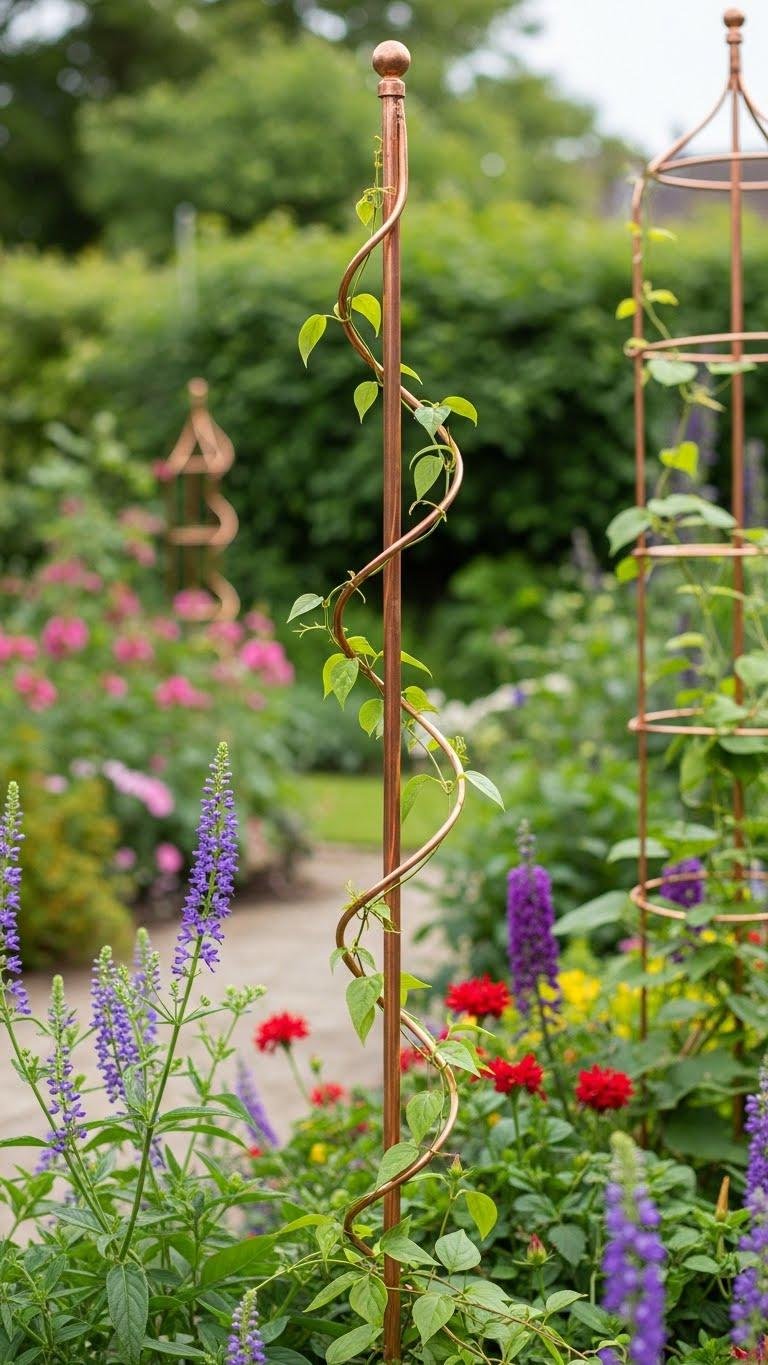
Twist a copper pole spiral into your garden to give climbers a slender, elegant path that won’t distract from their foliage or flowers.
You’ll insert the pole firmly and use spiral anchoring to stabilize vigorous vines. Over time copper patina softens the shine, adding charm while resisting corrosion.
You can guide tendrils upward easily, keeping plants free and sculptural with minimal fuss.
Netting Panel Trellis for Cucumbers
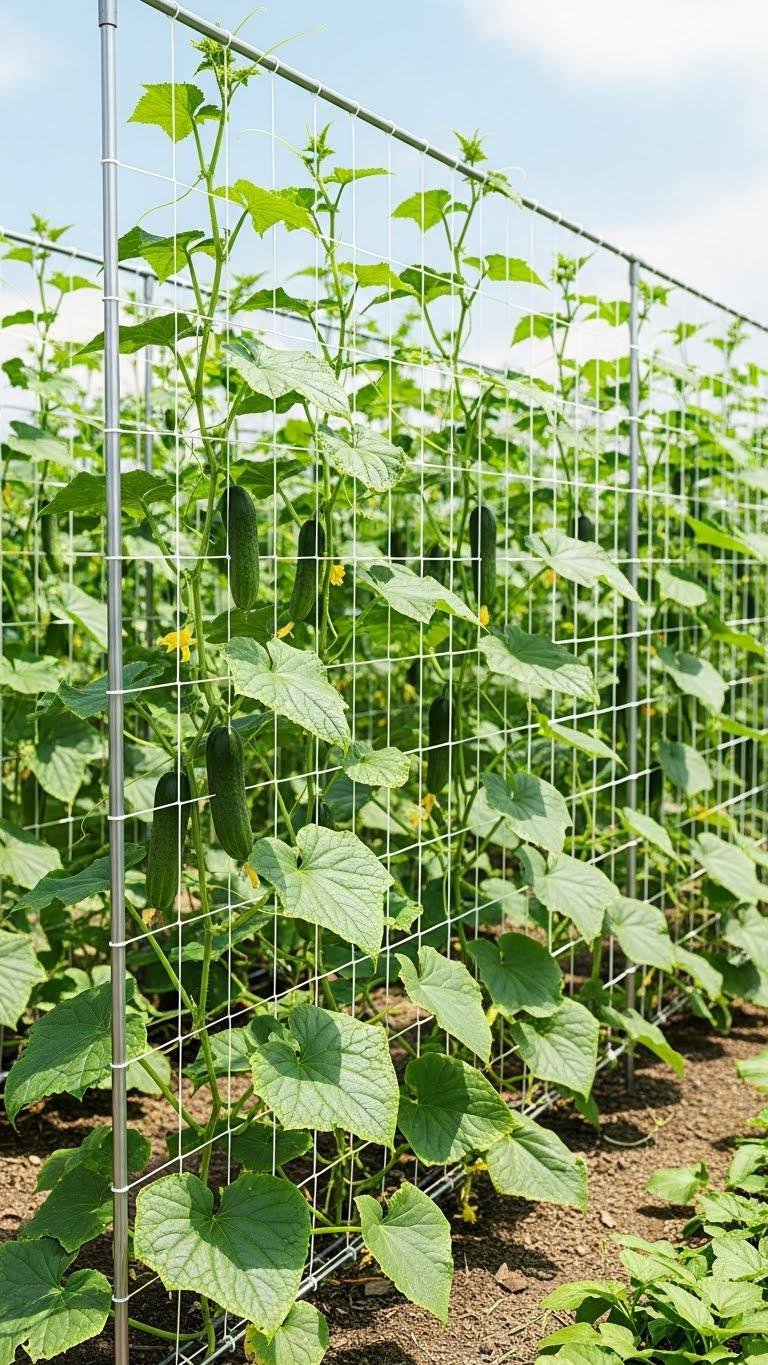
If you liked how a copper spiral gives vines a neat, vertical route, you’ll find a netting panel trellis is a fast, space-saving option for cucumbers.
You install lightweight vertical netting on stakes, train tendrils upward, and harvest easily.
Space panels to respect cucumber spacing — about 12–18 inches per plant — and you’ll enjoy freer movement, cleaner fruit, and efficient airflow.
Repurposed Door Climb Frame
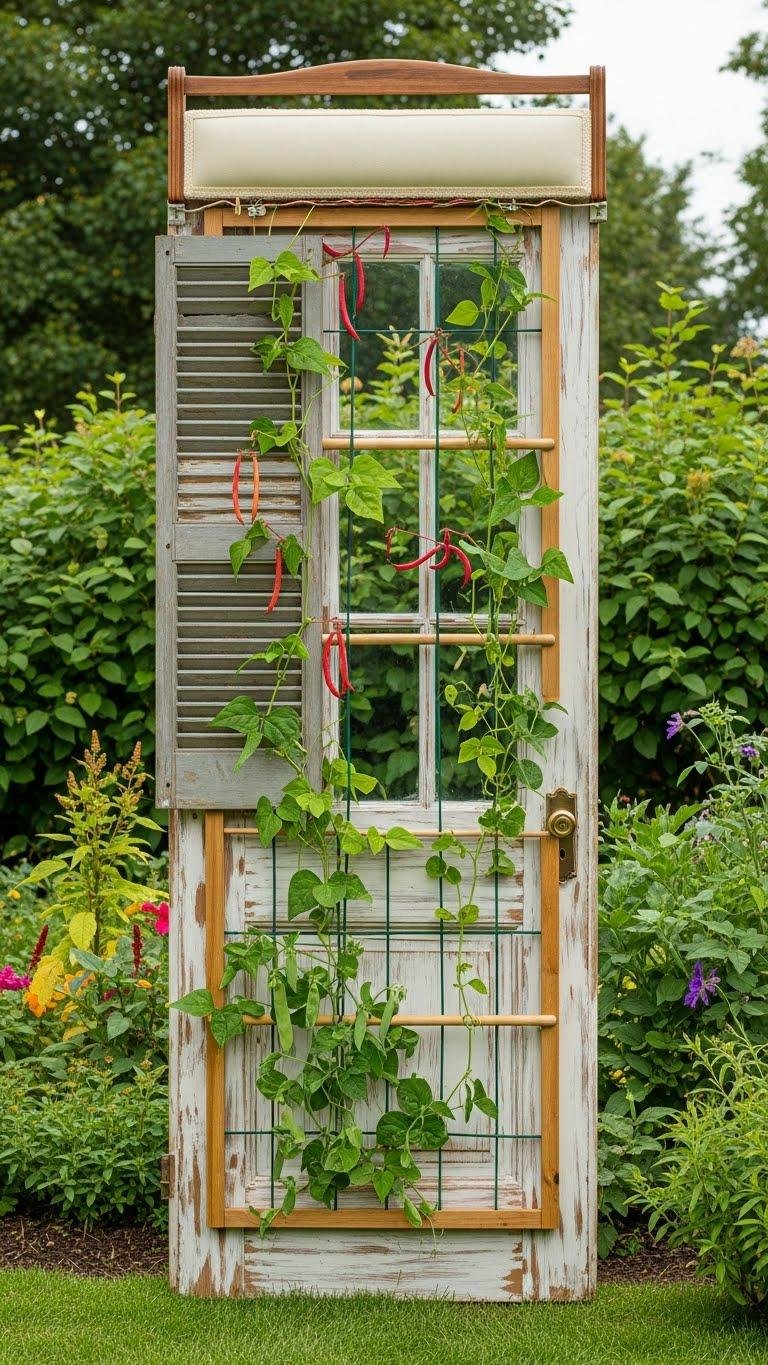
Give an old interior door new life by turning it into a sturdy climb frame for beans, peas, or vining ornamentals.
You’ll strip, sand, and seal the door, then anchor it upright.
Add rungs or lattice, or combine an upcycled shutter side panel and a vintage headboard top for character.
It’s portable, bold, and frees your garden from boring supports.
Pallet Vertical Garden Trellis
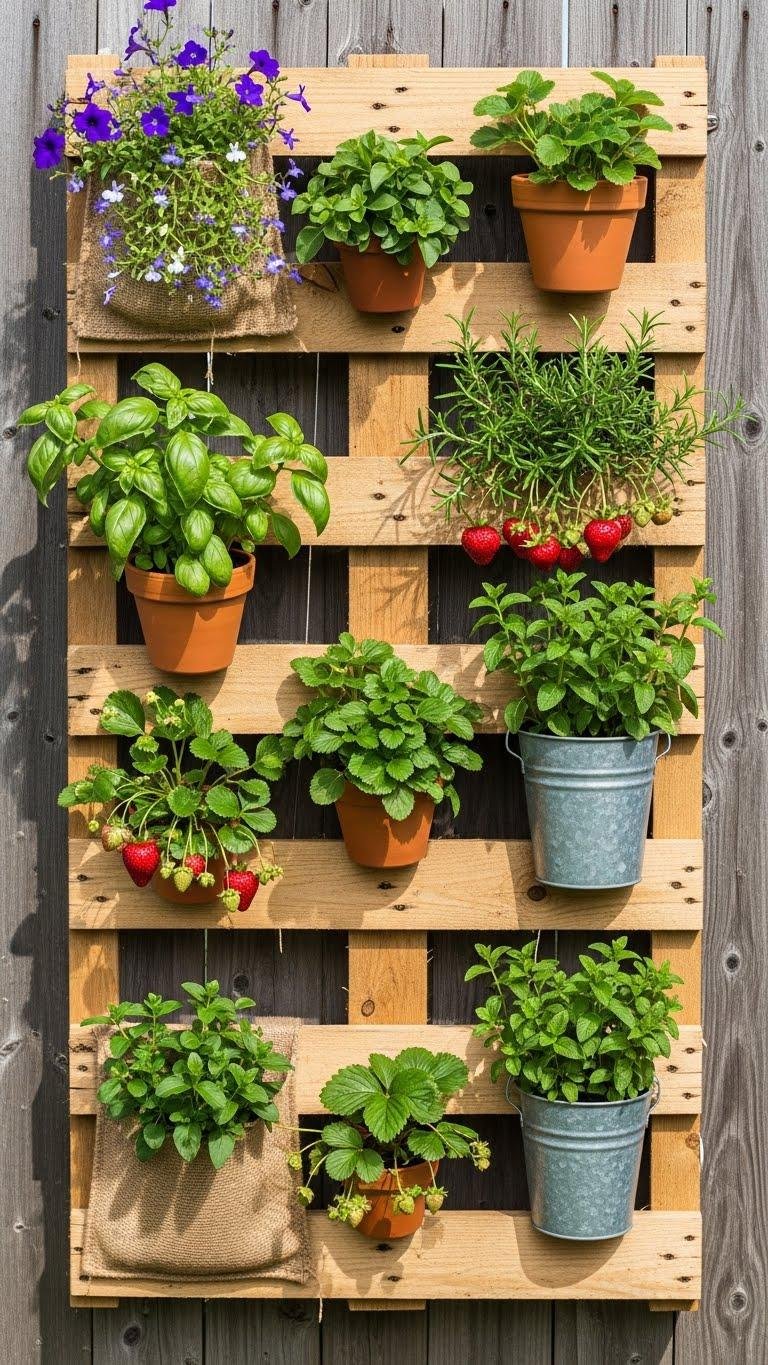
Turn a reclaimed pallet into a space-saving vertical trellis that’s perfect for herbs, strawberries, and trailing annuals. You’ll strip, sand, and seal wood, then add pockets or small pots to create a vertical planter.
Fill with compact soil, secure plants, and mount the lightweight frame to a wall or fence. It frees your garden, saves space, and looks ruggedly simple.
Archway Cloaked in Roses
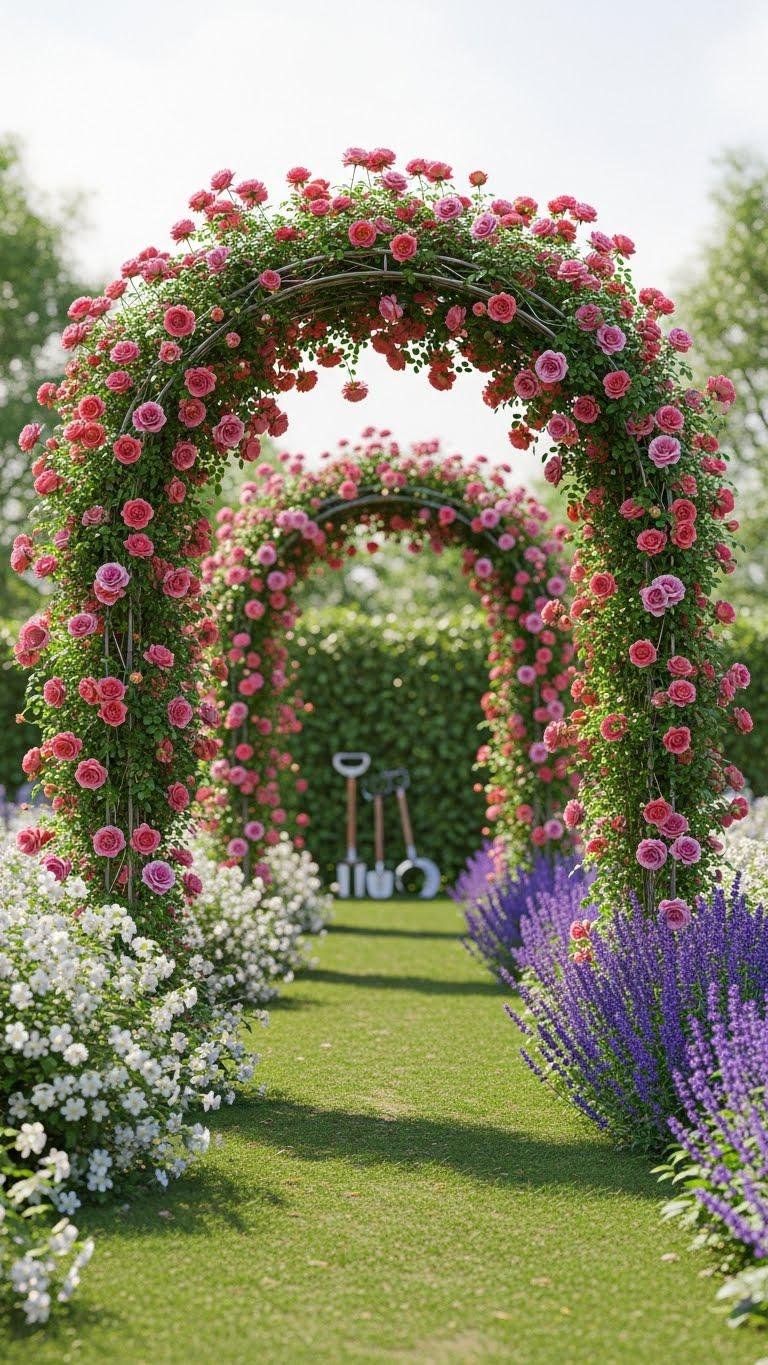
After you’ve mastered vertical pallets, try framing a path with an archway cloaked in roses for a more romantic focal point.
You’ll build a sturdy metal or wood frame, train climbers with ties, and use rosette pruning to encourage blooms. Choose scent pairing — jasmine or lavender nearby — to amplify fragrance.
Walk through, breathe free, and maintain supports annually.
Rustic Branch Lattice
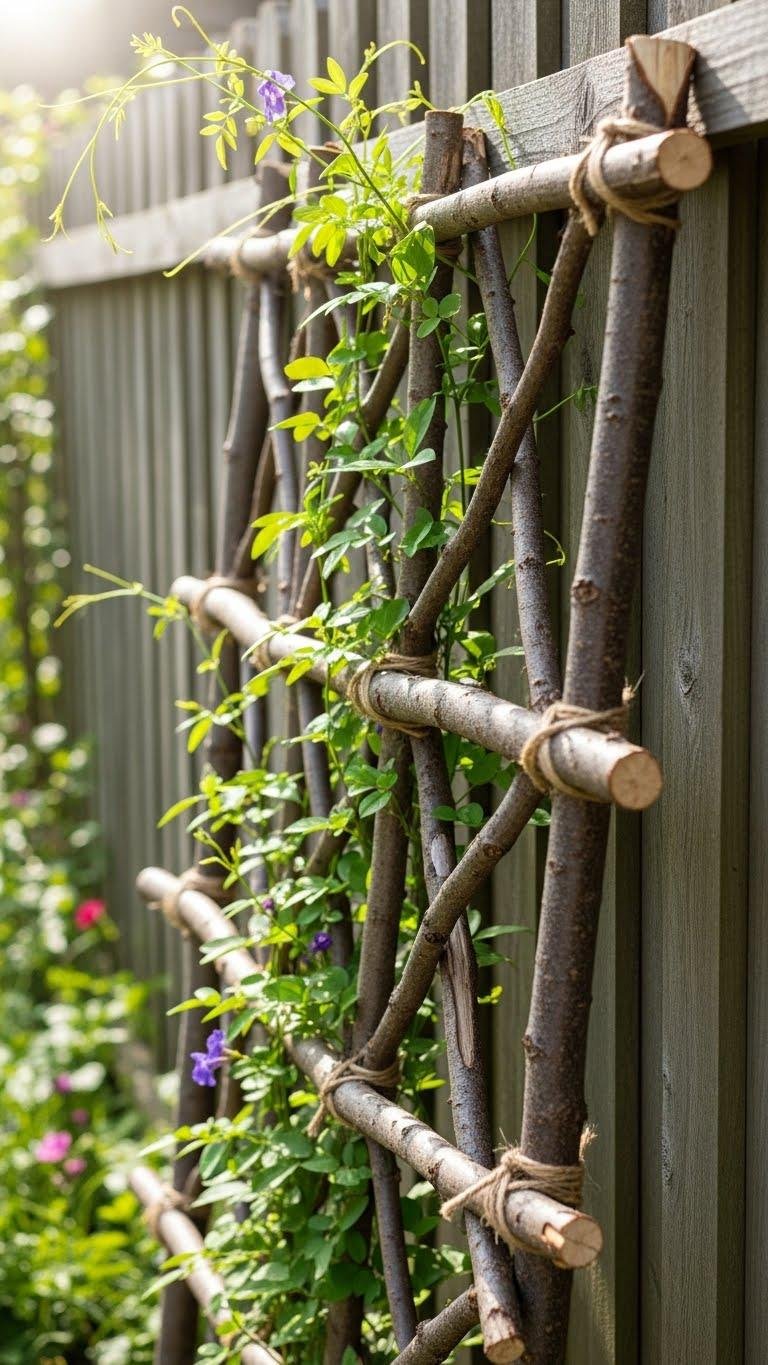
For a charming, budget-friendly trellis, weave together sturdy branches and saplings into a rustic lattice you can lean against a fence or mount as a freestanding panel.
Choose weathered branches for character, lash intersections with twine or galvanised wire, and trim ends for a neat silhouette.
Your twig lattice supports vines while keeping a wild, liberated aesthetic that’s simple to repair.
PVC Pipe Grid Trellis
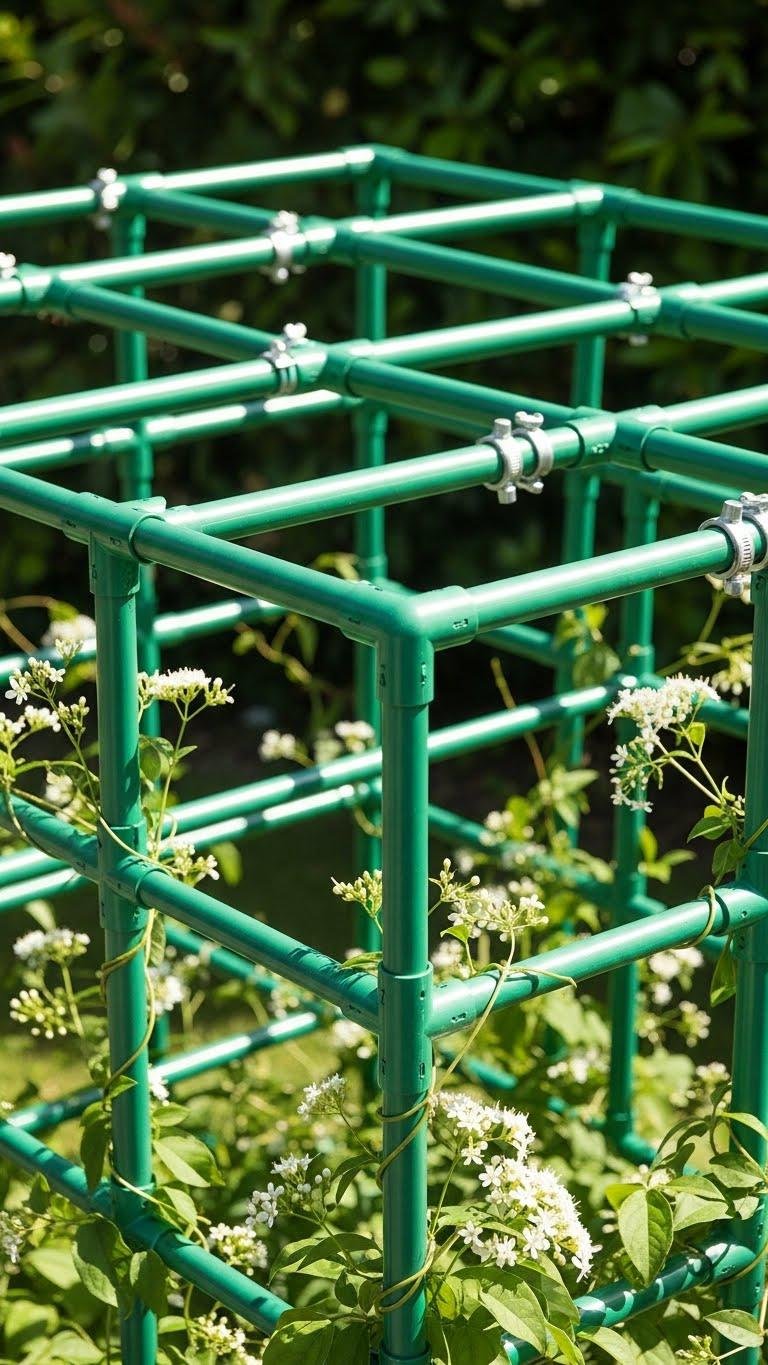
If you like the DIY spirit of a branch lattice but want something sleeker and longer-lasting, a PVC pipe grid trellis gives you a clean, lightweight alternative that’s easy to assemble.
You’ll build PVC gridwork with lightweight connectors and secure joints using pipe clamps.
Paint or choose a powder coat finish for durability.
It’s modular, portable, and lets your vines climb freely.
Hoop-Style Tomato Support
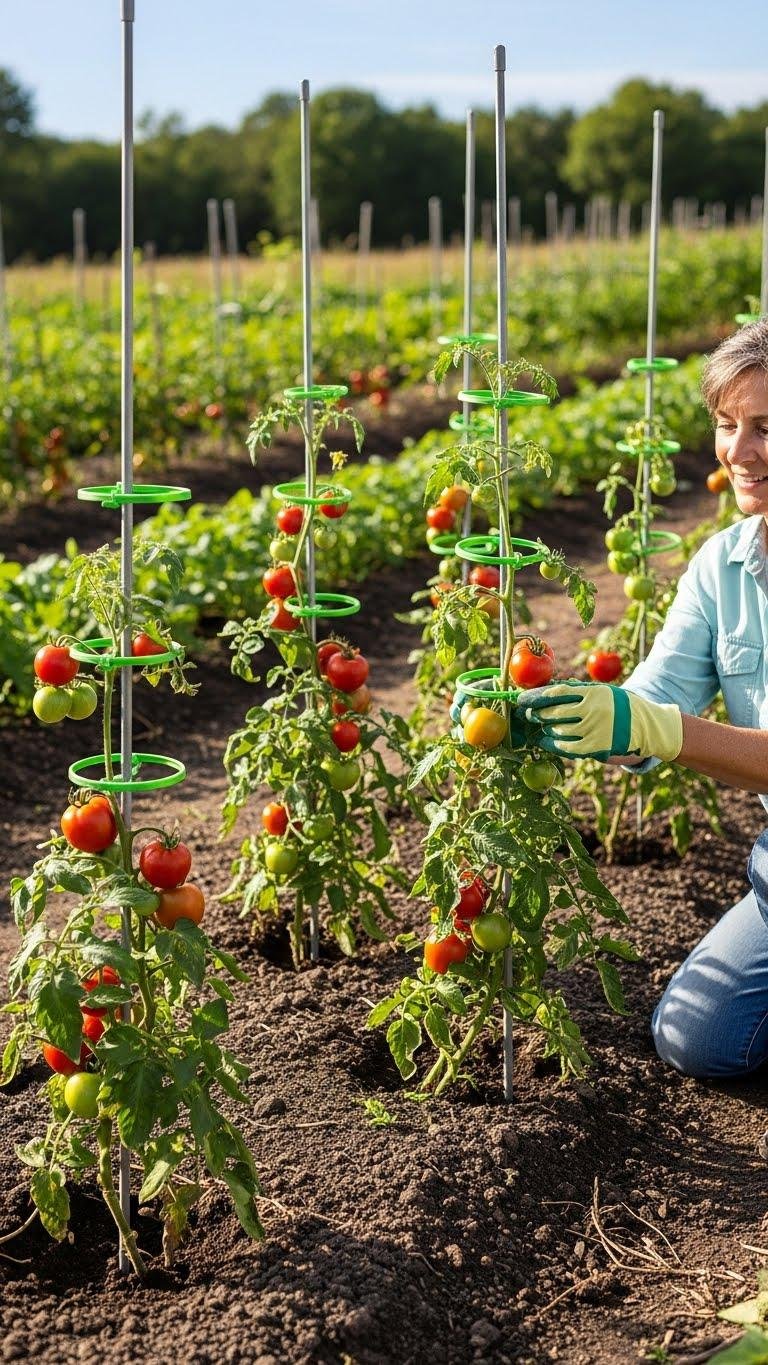
Try a hoop-style tomato support when you want simple, sturdy support that’s easy to set up and tuck away each season.
You’ll push vertical hoops into soil around plants, then slide adjustable rings up as vines grow. This lets you guide stems, improve airflow, and harvest freely.
It’s compact, low-maintenance, and perfect if you value mobility and straightforward garden solutions.
Obelisk Plant Pillar
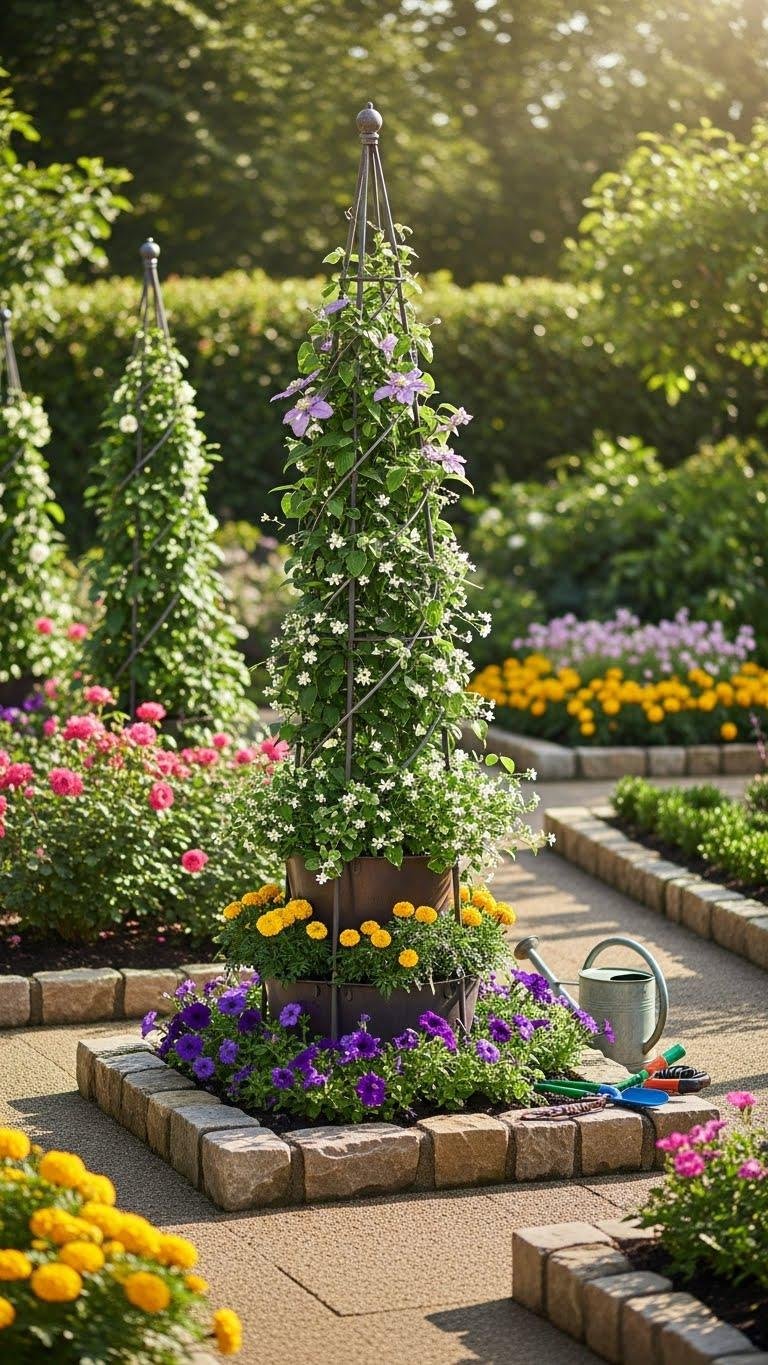
Moving from the low-profile mobility of hoops, an obelisk plant pillar gives your climbers a vertical centerpiece that’s both decorative and functional. You’ll build a sturdy frame that lets vines spiral freely, anchoring it for stability and root protection. Position it where you can prune and perform seasonal maintenance easily. It frees your garden design while keeping care simple and intentional.
Window Frame Vine Display
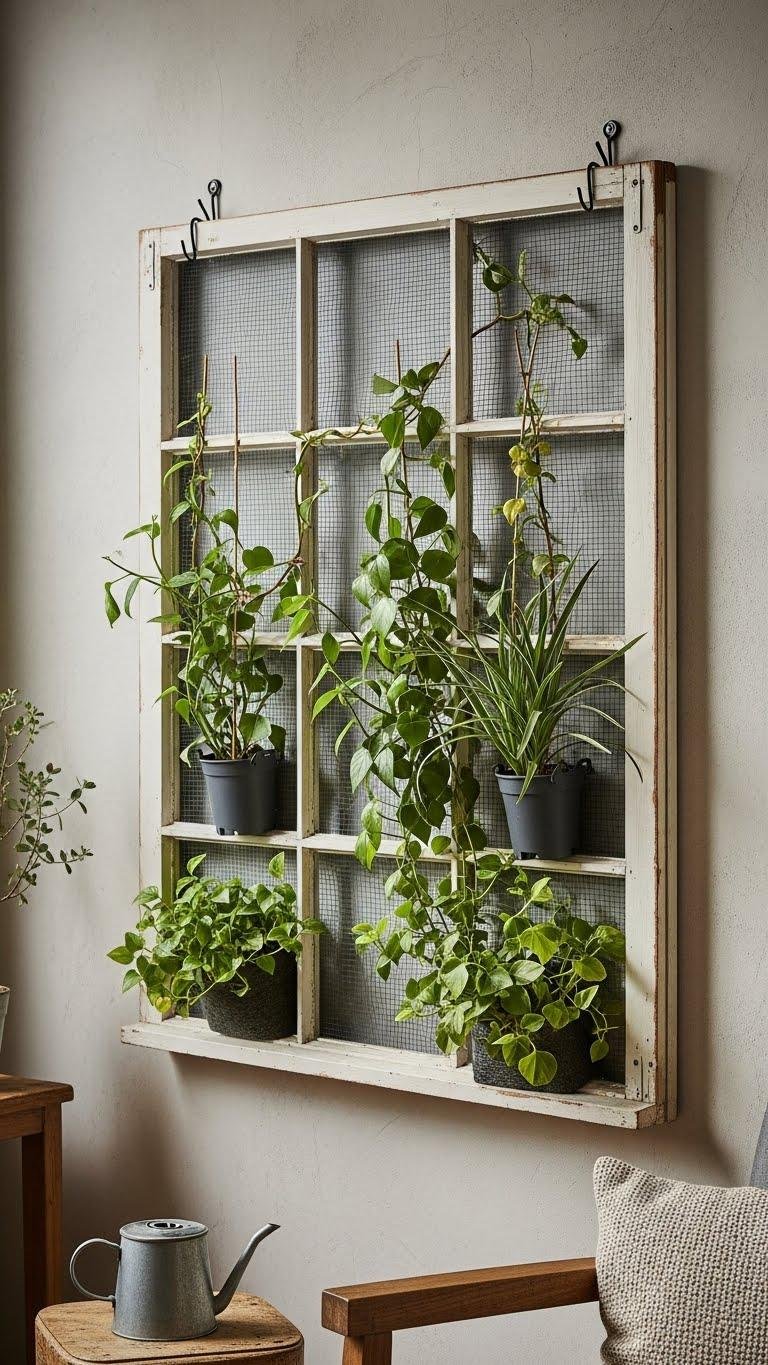
Frame a section of your wall with an old window to give climbing plants instant structure and charm.
You’ll hang the frame securely, add hooks or mesh, and train vines through panes for a living picture.
The look offers rustic charm and lets you swap plants for seasonal rotation.
It’s simple, freeing, and keeps plants accessible for pruning, watering, and display.
Tension Wire Balcony Trellis
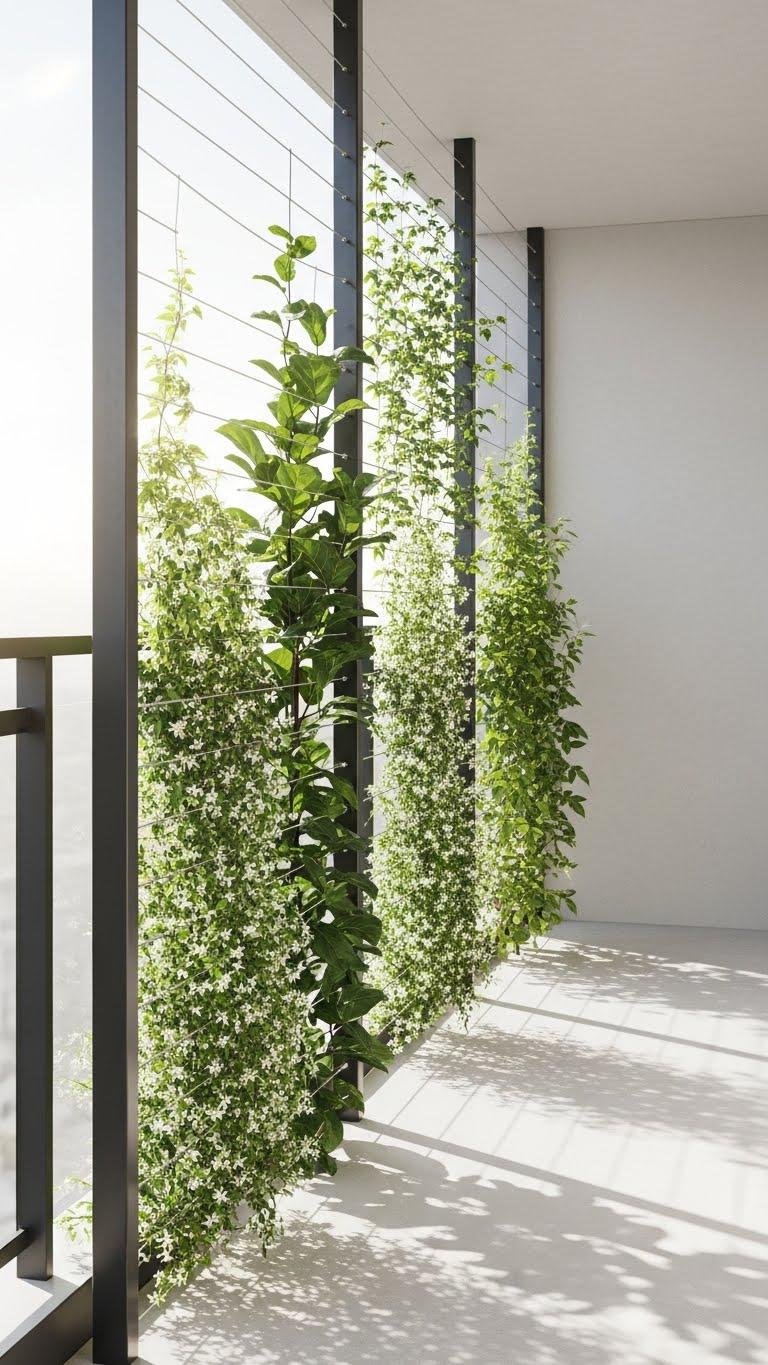
Stretch thin stainless-steel wires across your balcony to create a slim, sturdy trellis that won’t eat into valuable floor space.
You’ll enjoy vertical planting without clutter, increasing balcony privacy while keeping sightlines open.
Anchor wires to strong posts or walls, check load capacity for heavy climbers, and tension regularly.
It’s a minimalist, freeing solution that’s easy to install and adapts as your plants grow.
Chain-Link Fence Plant Screen
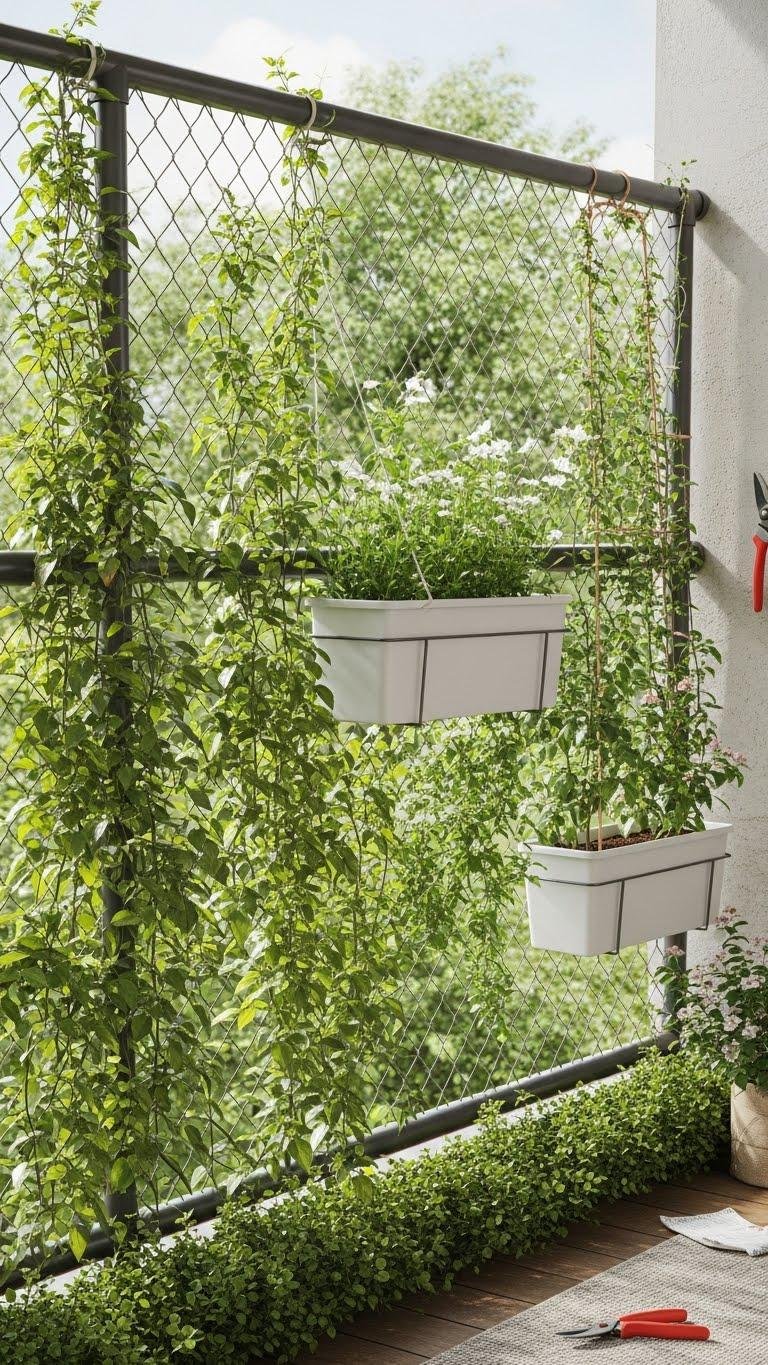
If your balcony or yard already has a chain-link fence, you can turn it into a ready-made plant screen that’s both durable and low-maintenance. You’ll weave vines or attach planters for instant privacy screening, guiding climbers with simple ties.
Choose hardy species, check fastenings regularly, and follow basic maintenance tips like pruning and replacing ties so the screen stays lush and free.
Freestanding Fan-Shaped Trellis
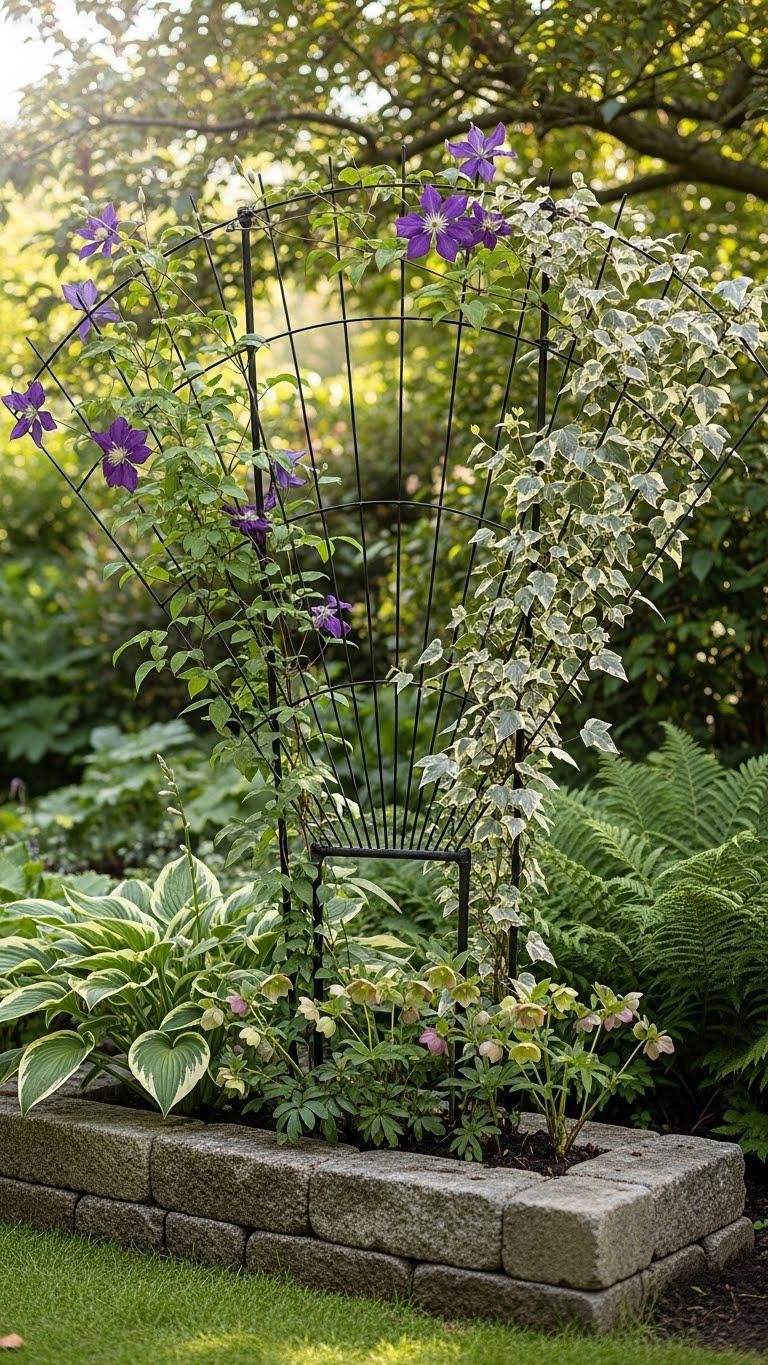
A freestanding fan-shaped trellis gives you a portable, decorative support that’s easy to position where you need instant vertical interest or privacy.
You can plant shade tolerant species at its base, then spread vines across the fan for quick coverage.
Choose a lightweight frame with a stable portable base design so you can move the trellis, reshape plantings, and reclaim space whenever you want.
Corkscrew Stake for Single Vines
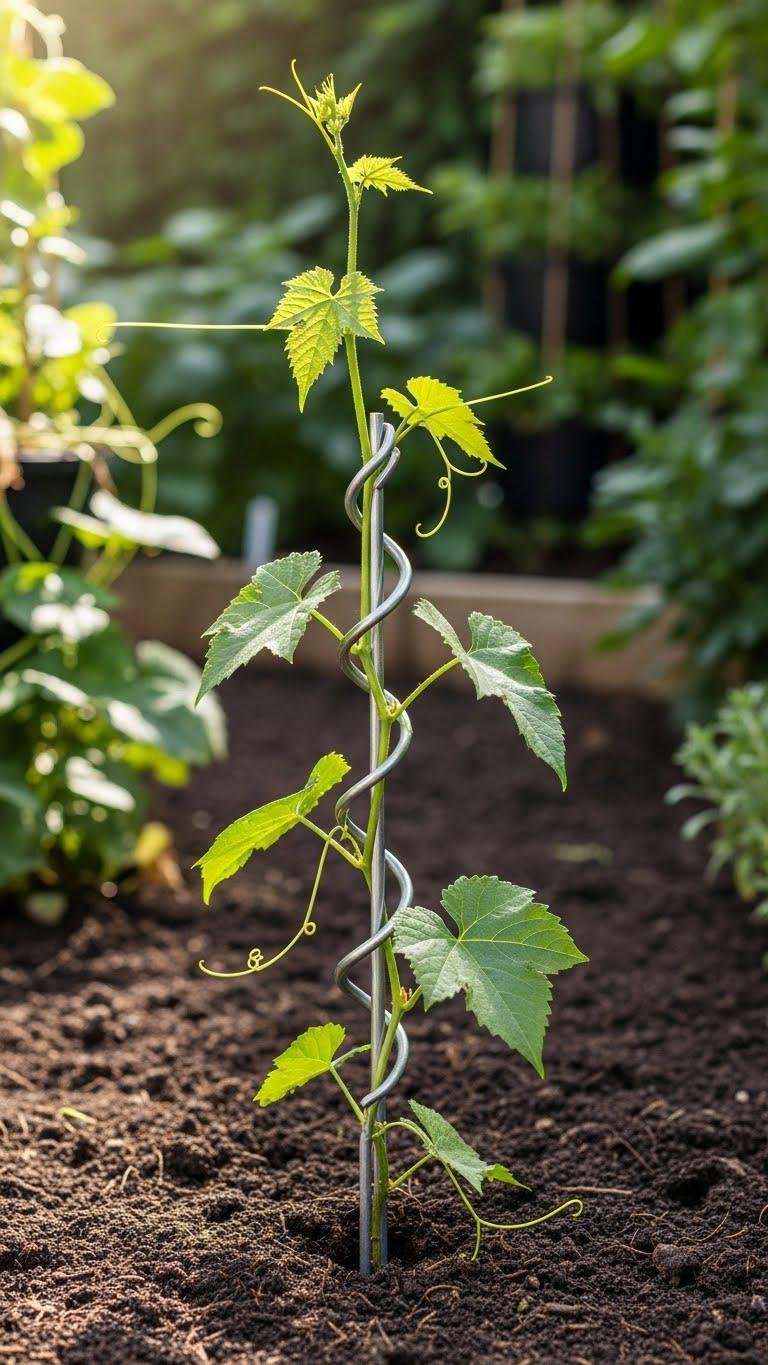
While a fan trellis works great for broad coverage, sometimes you only need a simple, vertical support for a single vine — that’s where a corkscrew stake shines.
You’ll push the metal spiral beside the stem, guide tendrils into its coils, and watch spiral growth patterns encourage upward momentum.
It’s ideal for single vine training when you want tidy, space-saving freedom in your garden.
Mixed-Material Modular Panels
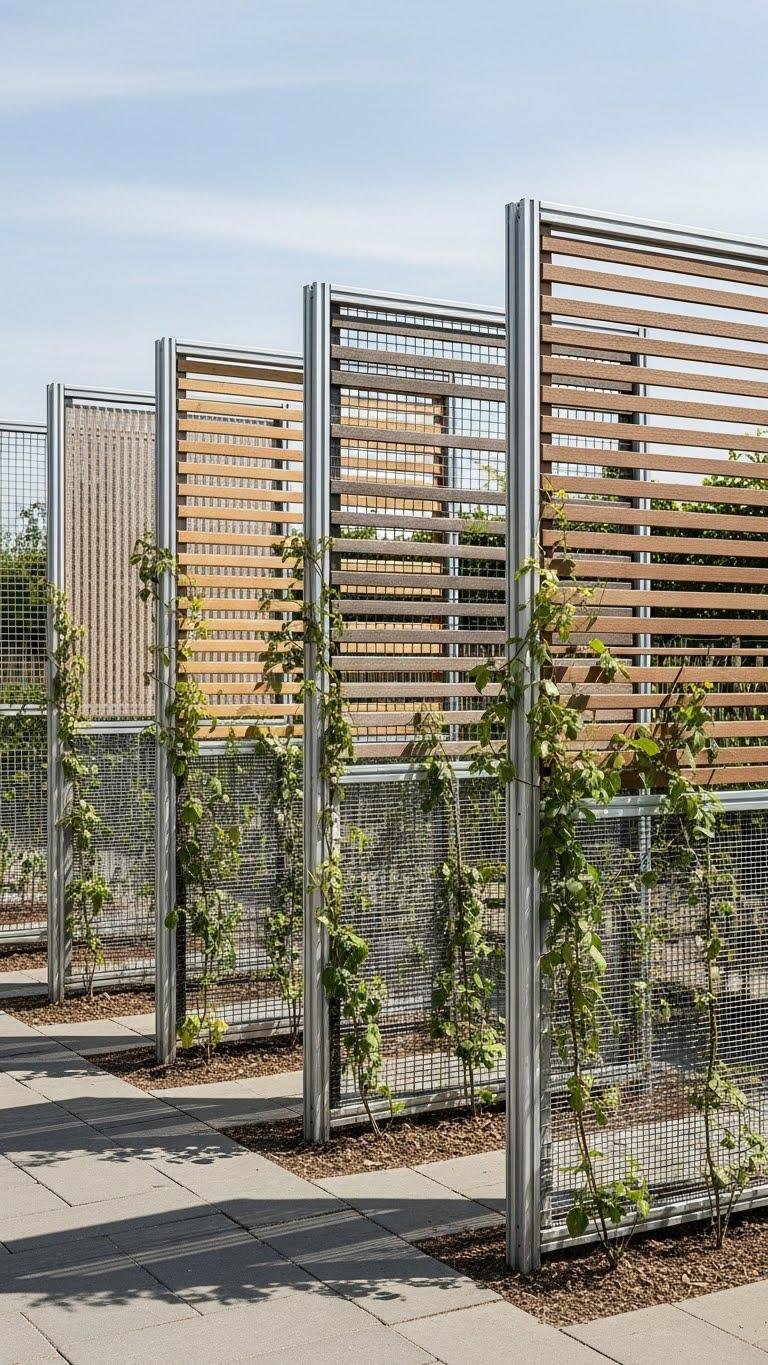
If you liked the clean lines and productivity of espaliered trees, mixed-material modular panels give you that same sense of order but with more flexibility and texture.
You’ll assemble lightweight frames and attach slats or mesh with modular connectors, mixing wood, metal, and sustainable composites.
They let you reconfigure height and gaps, support vines robustly, and keep design freedom without sacrificing structure or durability.