
You’ll get more consistent, healthier plants when you apply practical light strategies grounded in plant physiology and energy efficiency. Start with full‑spectrum, high‑PPE LEDs, match spectra and PPFD to growth stages, and use metering, zoning, and smart schedules to cut waste. Manage heat, maintain optics, and log trials so you can refine settings. Keep going—there’s a compact checklist and step‑by‑step setup that makes these tips actionable.
Choose Full‑Spectrum LEDs for Balanced Growth
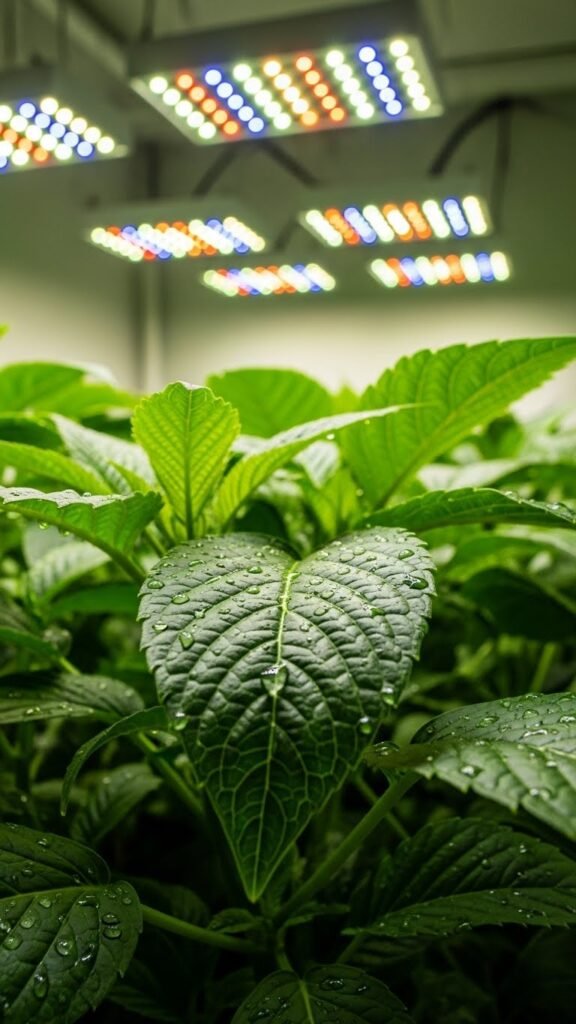
Increase Blue Light for Compact Seedlings and Greens
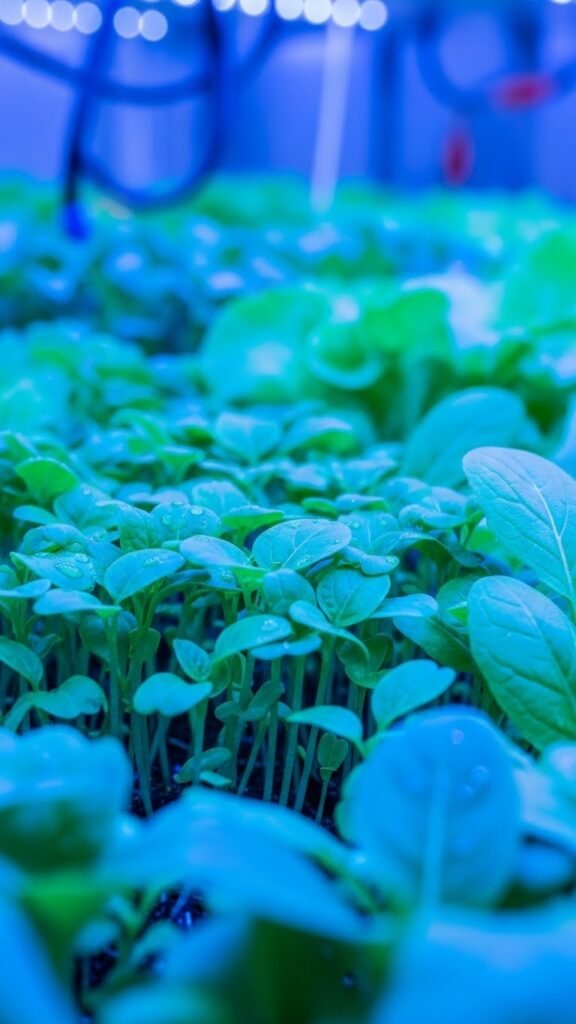
Once you’ve matched red and far‑red to flowering and set adaptable white mixes for mixed beds, increase blue light when you need shorter, sturdier seedlings or tender leafy greens.
You’ll use blue enriched recipes to tighten internodes, counter leggy growth, and complement compactness genetics.
Start with 10–30% higher blue fraction, monitor leaf thickness and chlorophyll response, and adjust duration rather than intensity.
You are trained on data up to October 2023.
Boost Red Light for Flowering and Fruiting
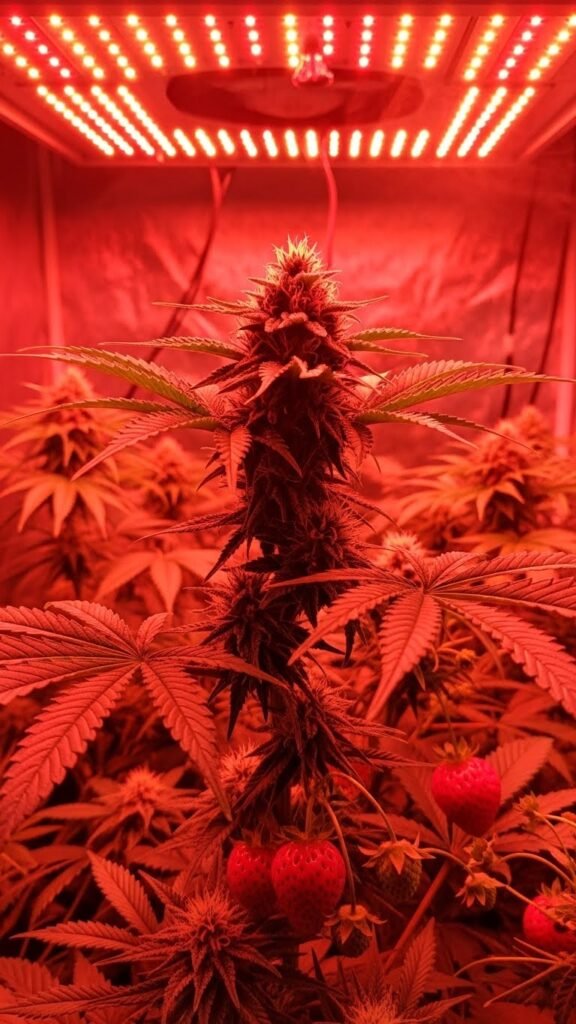
Shifting your spectrum toward increased red light will speed flowering and boost fruit set by stimulating phytochrome and photosynthetic responses tied to reproductive development.
You’ll favor 660–665 nm peaks, increase red:far‑red balance modestly, and match intensity to species-specific fruiting photoperiods.
Monitor bud initiation, reduce excess vegetative blue, and use timed boosts during bloom to maximize pollination and carbohydrate allocation without overstressing plants.
Add Far‑Red to Enhance Canopy Photosynthesis
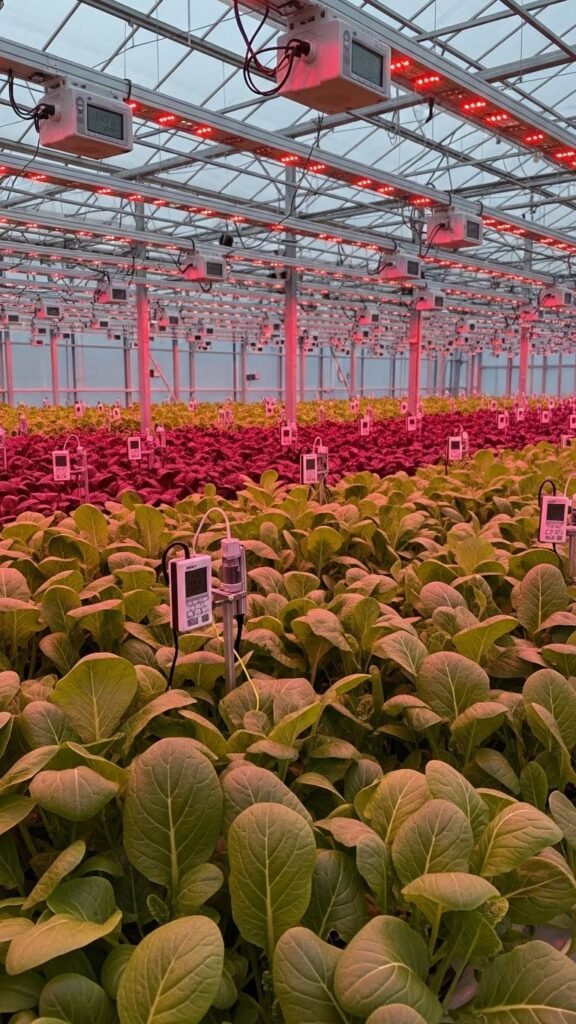
Target PPFD Instead of Wattage
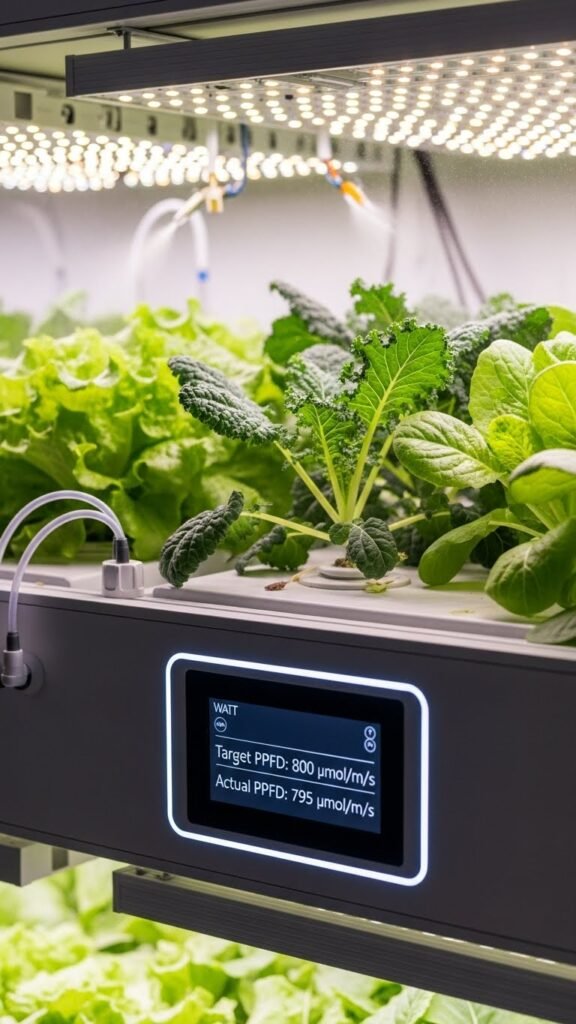
Focusing on PPFD (photosynthetic photon flux density) rather than wattage gives you a direct, measurable target for the light plants actually use, because PPFD quantifies the number of PAR photons (µmol·m⁻²·s⁻¹) hitting the canopy rather than the electrical power a fixture consumes. Set a realistic target PPFD per species, measure with a calibrated meter, and optimize sensor placement to map uniformity and avoid wasted energy.
Set PPFD for Low‑Light Houseplants
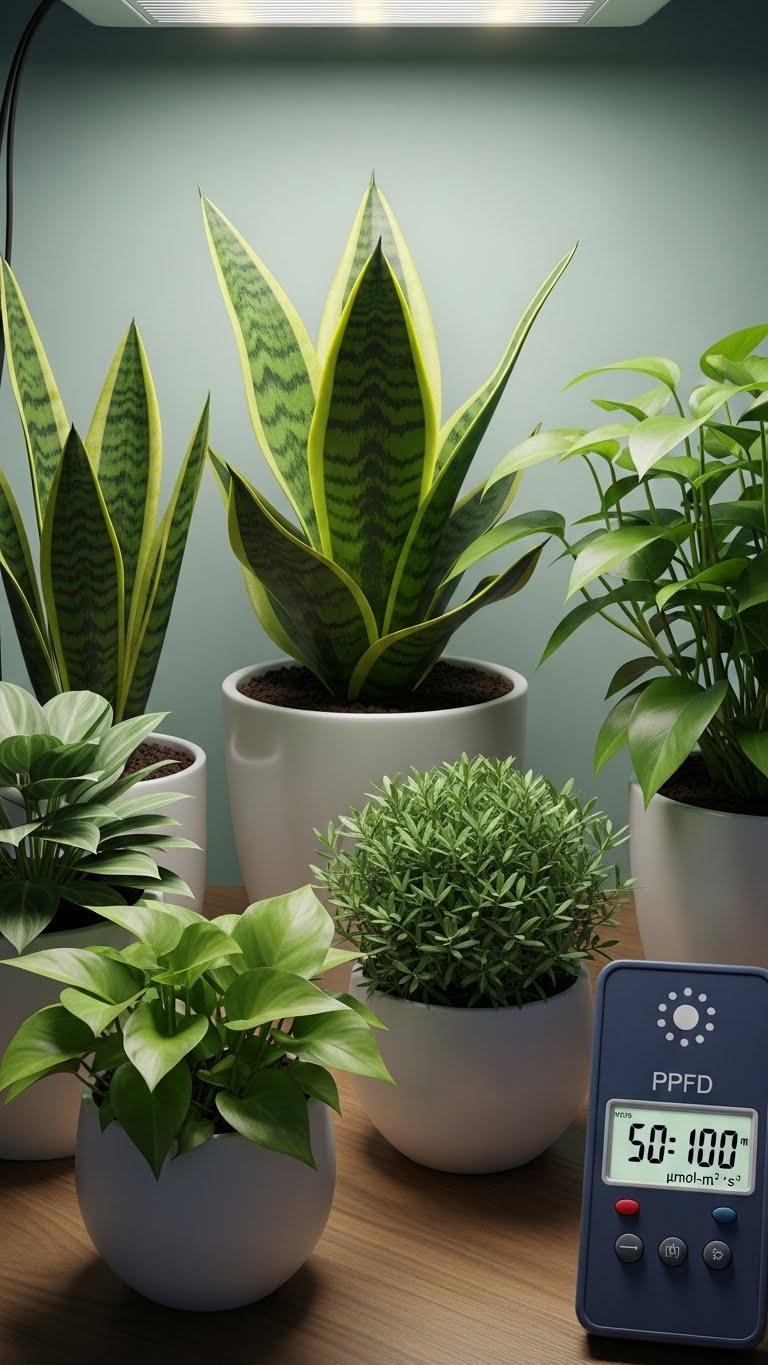
Now that you’re aiming PPFD instead of wattage, you can set concrete light goals for low‑light houseplants. Aim 50–100 μmol·m⁻²·s⁻¹ for true low light to keep growth balanced, minimize water use by reducing evaporation, and maintain slower stomatal demand for better water use efficiency.
Gentle light reduces stress, supports compact habit, and improves pest resistance by avoiding etiolated, weakened tissue.
Set PPFD for Medium‑Light Ornamentals
Plan Photoperiods for Flowering Responses
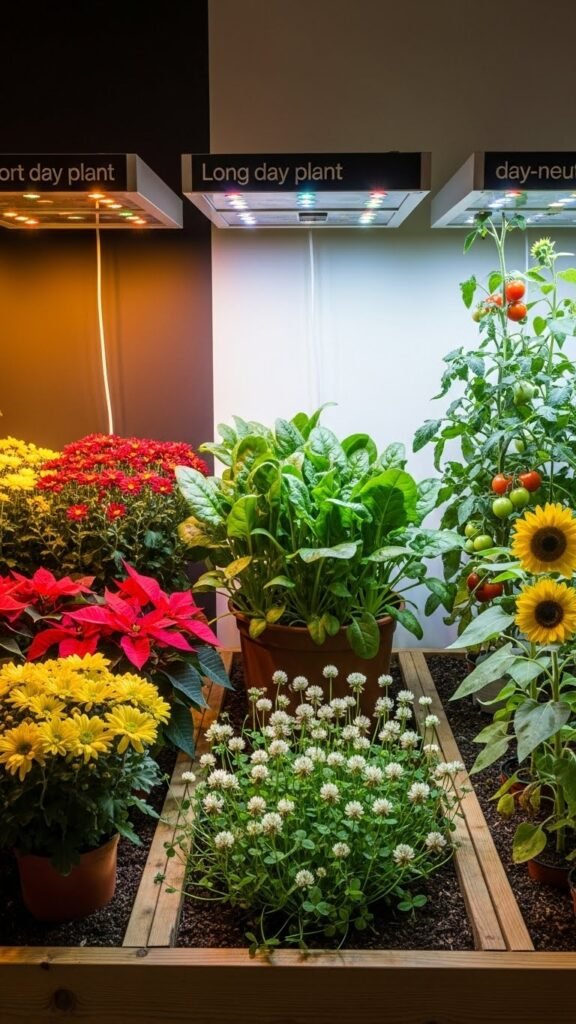
Because flowering is triggered by the plant’s perception of day length and night continuity, you should design photoperiods that reliably match the species’ photoperiodic category (short-day, long-day, or day-neutral) and the cultivar’s sensitivity thresholds.
Time dark periods to preserve circadian entrainment, avoid unintended night interruption, and shift schedules gradually so plants adapt without stress, giving you predictable bloom timing.
Use End‑of‑Day Far‑Red to Influence Morphology
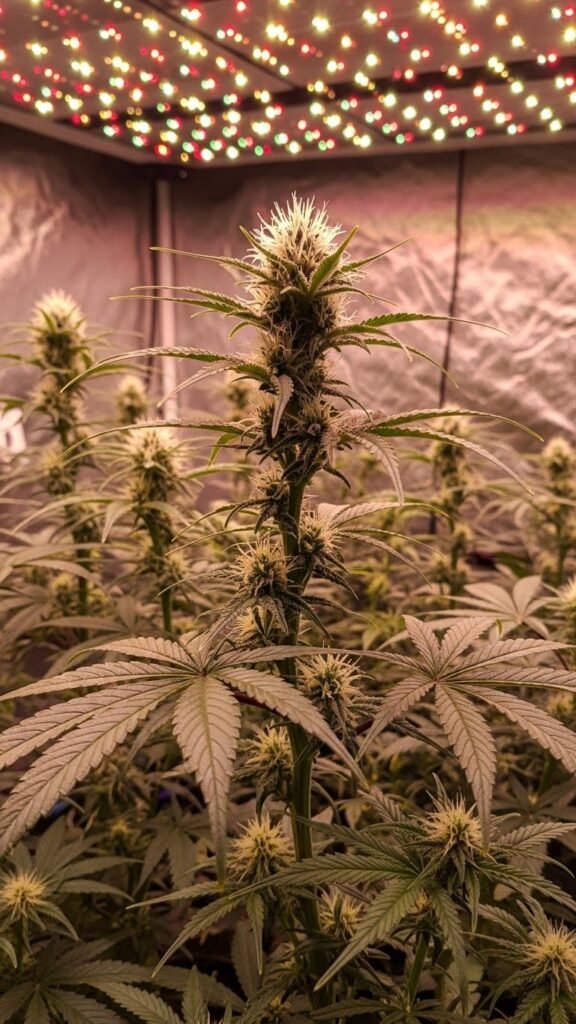
If you add a brief pulse of far‑red light at the end of your daily light period, you can reliably shift plant morphology by manipulating phytochrome balance; this late‑day signal mimics sunset and tells plants to elongate stems and accelerate flowering in many species.
Use end‑of‑day far‑red for controlled phytochrome cycling in the evening to trigger shade avoidance responses—short pulses, timed consistently, yield predictable results.
Prefer LEDS Over HPS and Fluorescents
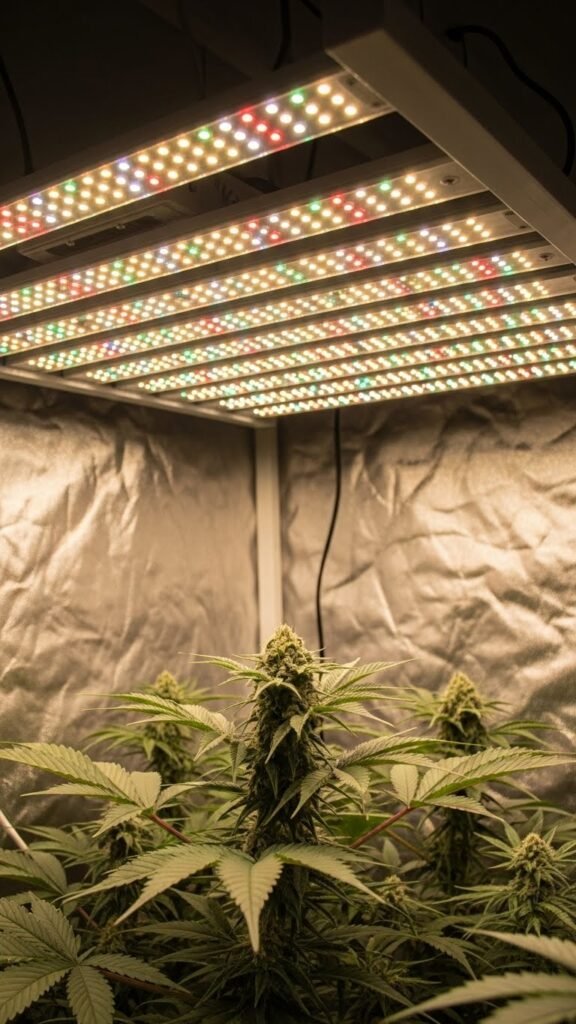
Usually, you’ll get better results with LEDs than with HPS or fluorescent fixtures because LEDs deliver higher photosynthetic photon efficacy, tunable spectra, lower heat output, and longer lifespan—so you can supply more usable light per watt, tailor wavelengths to plant needs, and place fixtures closer to the canopy without burning tissue.
Choose quality LEDs for consistent spectrum uniformity and strong color rendering; they cut energy use, reduce heat stress, and let you control light precisely.
Position Fixtures for Even Canopy Coverage
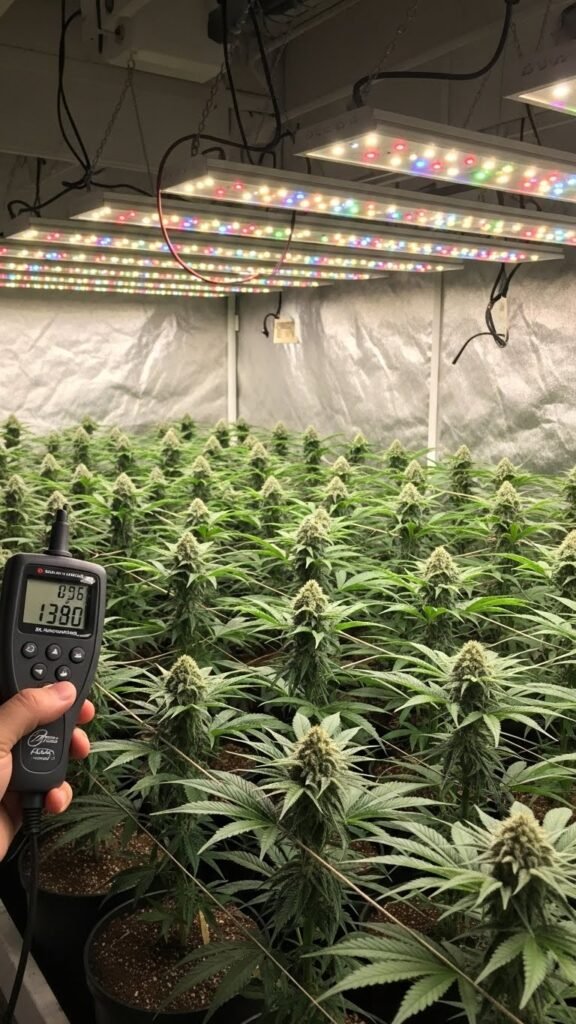
Aim lights so every plant gets uniform photon delivery across the canopy — uneven light creates hotspots and shaded zones that stunt growth and reduce yield.
You’ll map intensity with a PAR meter, apply angle grids to optimize beam spread, and use fixture staggering to smooth overlaps. Adjust height and tilt iteratively, document readings, and lock positions once canopy uniformity meets target PPFD ranges.
Use Multiple Low‑Intensity Fixtures for Uniformity
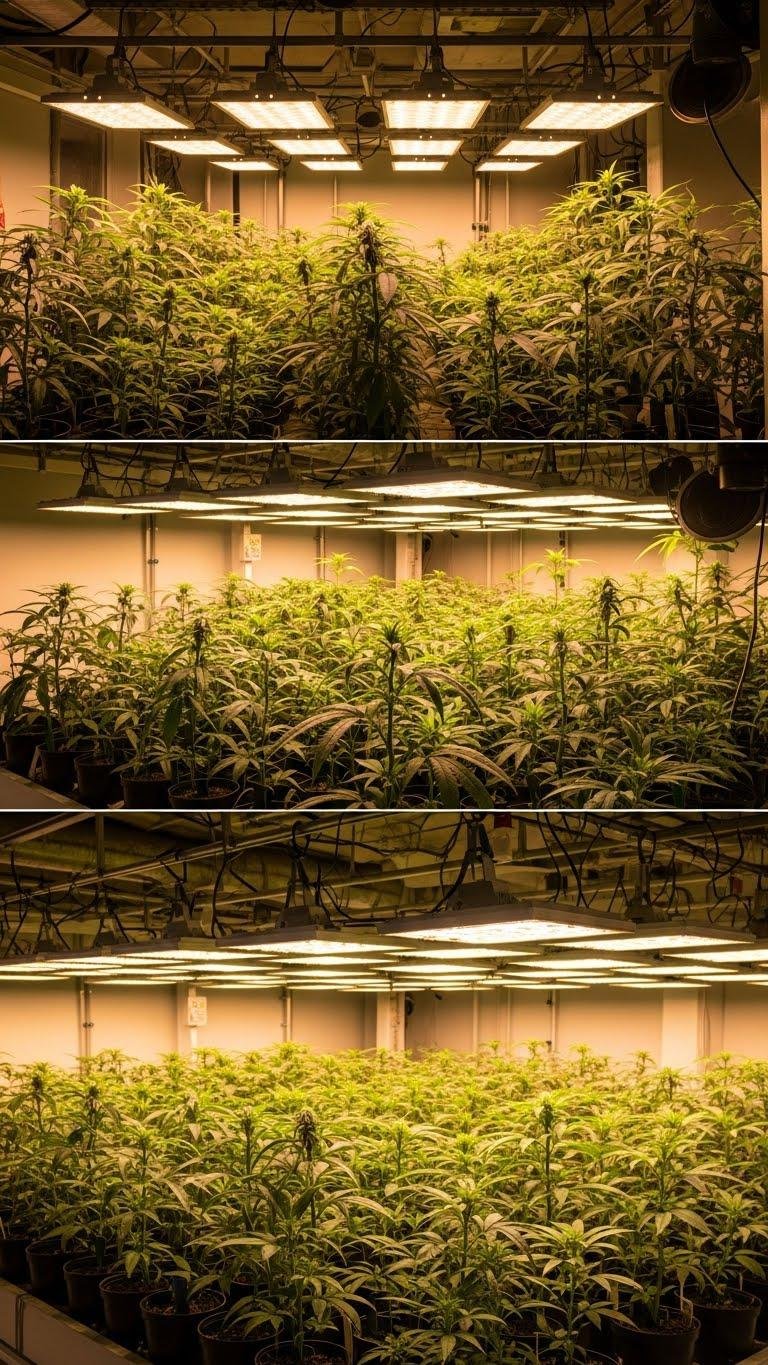
Once you’ve mapped canopy PPFD and eliminated hotspots, distribute light with several lower‑intensity fixtures rather than relying on a few powerful sources. You’ll achieve uniform PAR, reduce shadowing, and lower heat.
Use layered fixtures at varied heights to create consistent depth and optional mood lighting for aesthetics. This approach improves photosynthesis efficiency, gives you placement flexibility, and minimizes stress across plants.
Maintain Proper Distance to Prevent Scorching or Etiolation
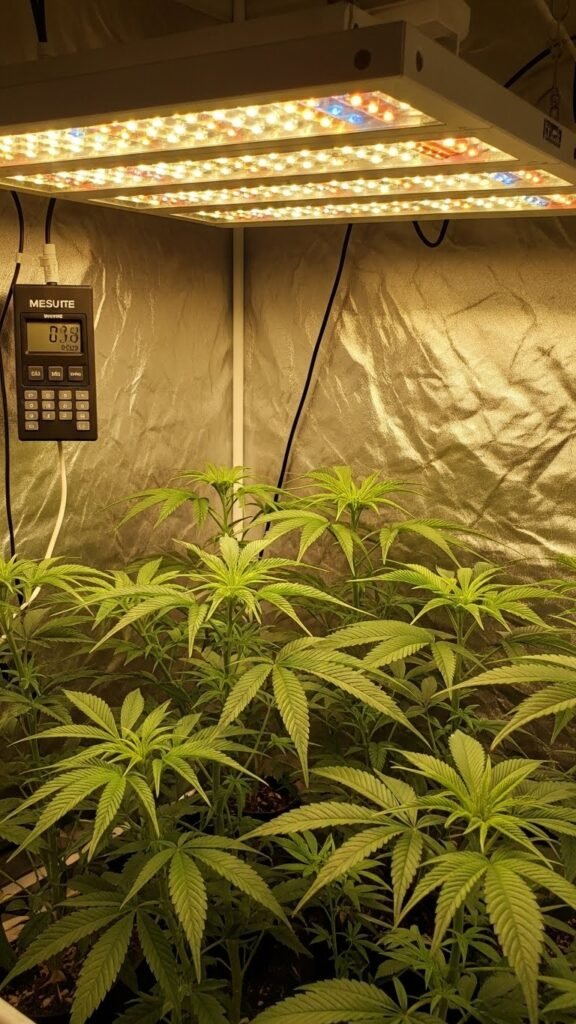
If you keep fixtures at the right distance, you’ll prevent leaf scorch from excessive intensity and avoid etiolation from light that’s too weak or distant.
Measure PAR or use manufacturer charts to set an ideal hang for each species, adjust as plants grow, and monitor ambient temperature to guarantee light placement doesn’t overheat leaves.
Reassess weekly and act decisively for healthy, vigorous growth.
Manage Fixture Heat With Cooling and Ventilation
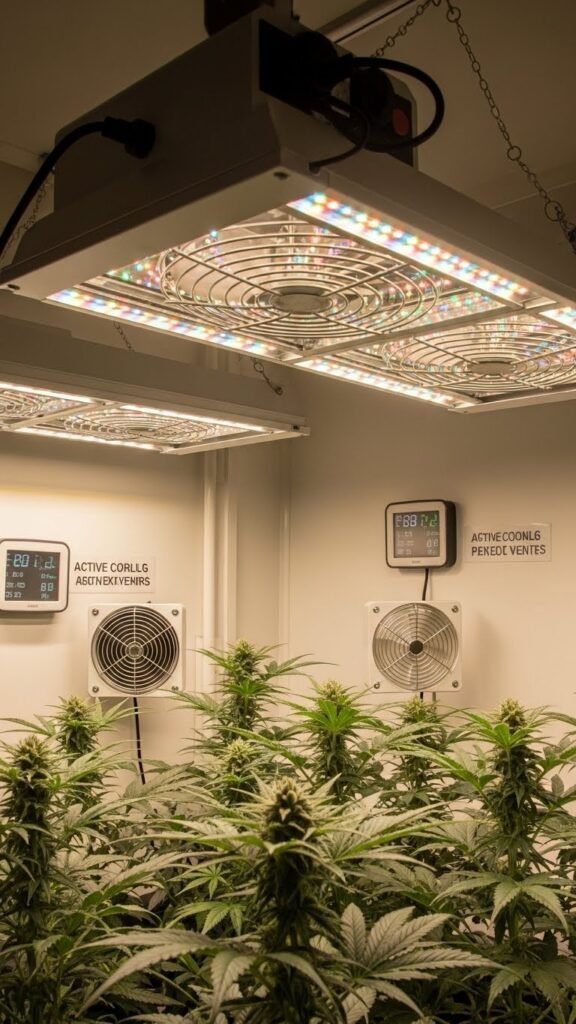
Because many grow lights—especially HID and high-output LEDs—emit significant heat, you need to control fixture temperature with targeted cooling and ventilation to protect foliage and maintain ideal canopy conditions.
Use active cooling (fans, inline extractors) and passive vents, monitor canopy temps, and design airflow management to remove radiant heat. That preserves photosynthesis, prevents stress, and keeps you free to optimize light placement.
Implement Dimming and Scheduling to Save Energy
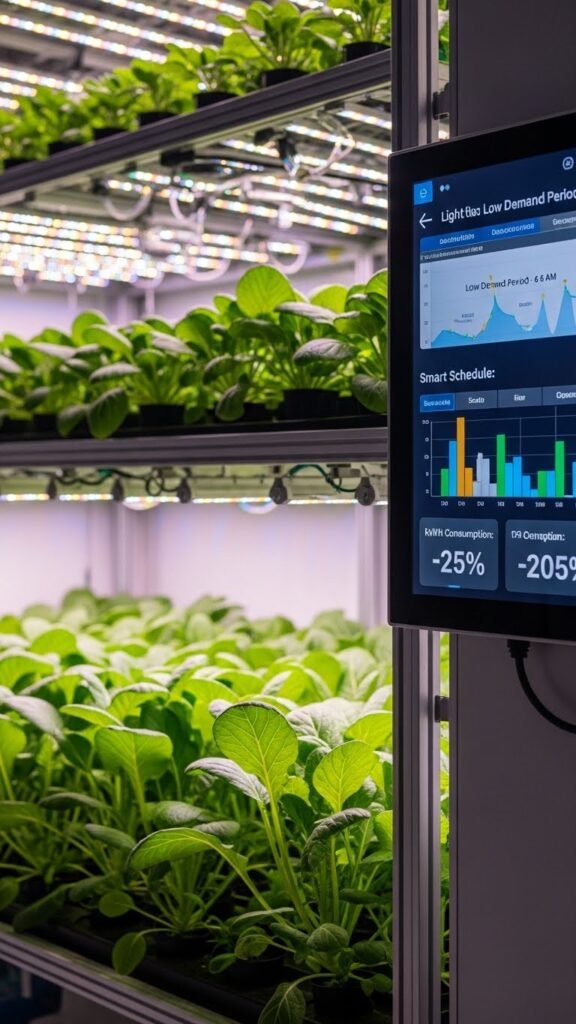
When you combine dimming controls with smart schedules, you’ll cut energy use while matching light to plants’ actual physiological needs; research shows reducing intensity during low-demand periods and shortening photoperiods where appropriate lowers kWh consumption without sacrificing yield.
You can integrate motion sensors for incidental-area shutdowns and use adaptive zoning to tailor intensity by species and stage, giving you control and freedom while conserving power.
Use a Quantum/PPFD Meter for Accurate Measurements
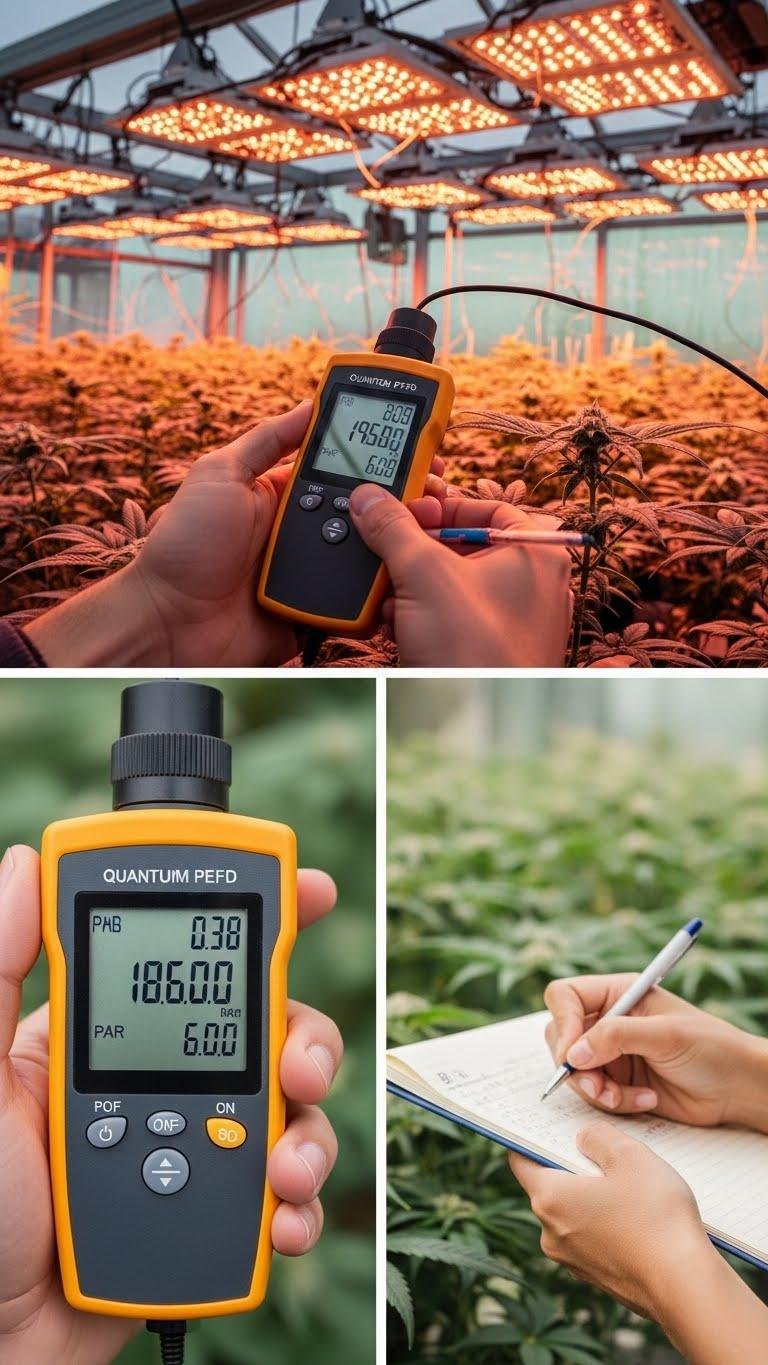
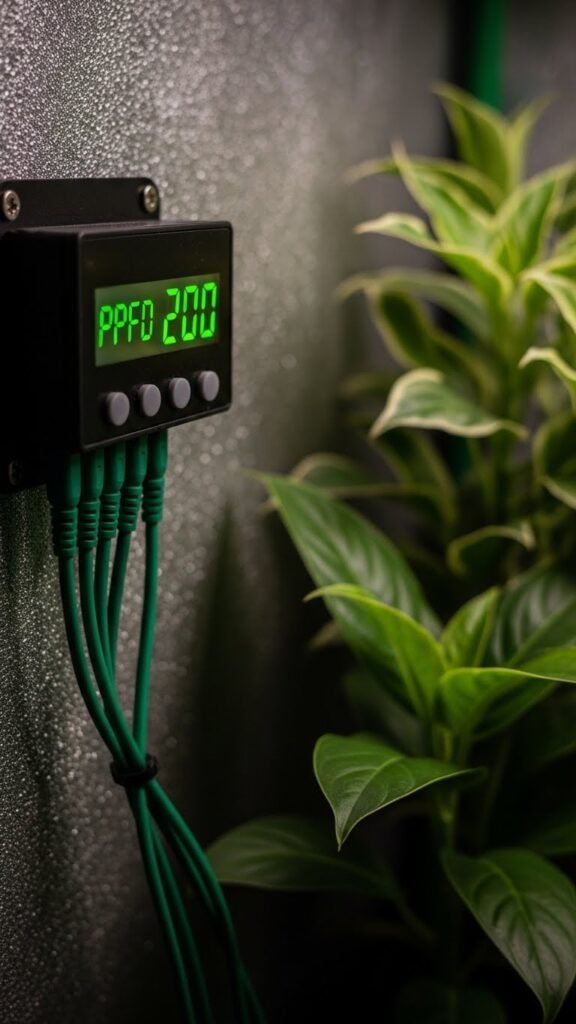
Measure light with a quantum/PPFD meter to know exactly how much usable light your plants receive, not just the fixture’s wattage. You’ll get actionable data for measurement calibration and ideal sensor placement.
Take readings at canopy level, across several spots, and record PAR values to set schedules confidently. Calibrate periodically to maintain accuracy so your plants get exactly the light they need.
Keep Fixtures Clean and Monitor LED Output Over Time
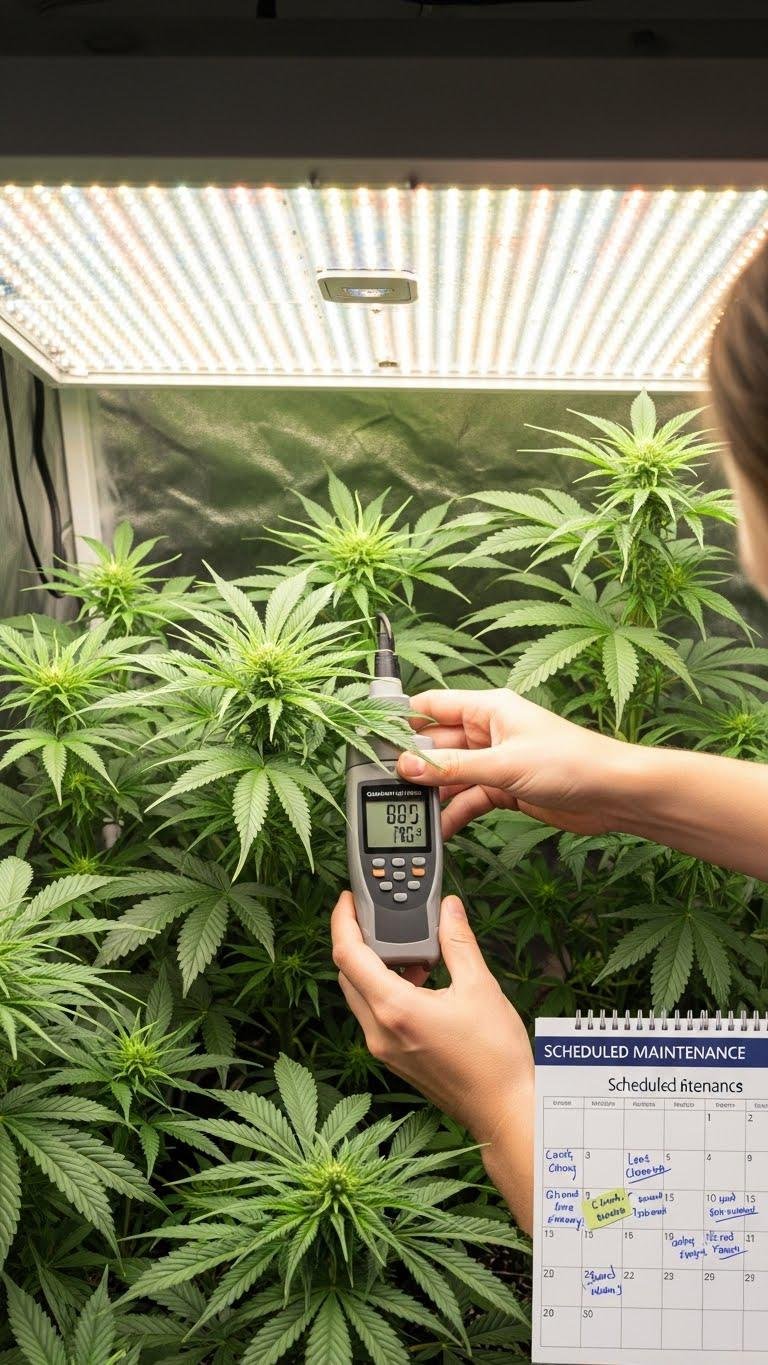
Regularly clean your fixtures and track their output so your lights keep delivering the PAR levels your plants need.
You should schedule lens cleaning to remove dust that cuts light output, inspect drivers and lenses monthly, and log PPFD readings.
Use a calibrated meter and perform sensor calibration periodically.
That gives you reliable data to adjust height or replace LEDs, preserving growth and your independence.