
You can turn tiny balconies, narrow walls, and sunny windows into productive green zones with hanging gardens that save floor space and boost yield. This list gives practical, plant-focused ideas—from fabric-pocket herb walls to self-watering stacked baskets and gutter salad bars—so you’ll find solutions for light, weight, and watering limits. Keep going to pick the setups that suit your space and the plants you actually want to grow.
Vertical Fabric Pocket Herb Wall
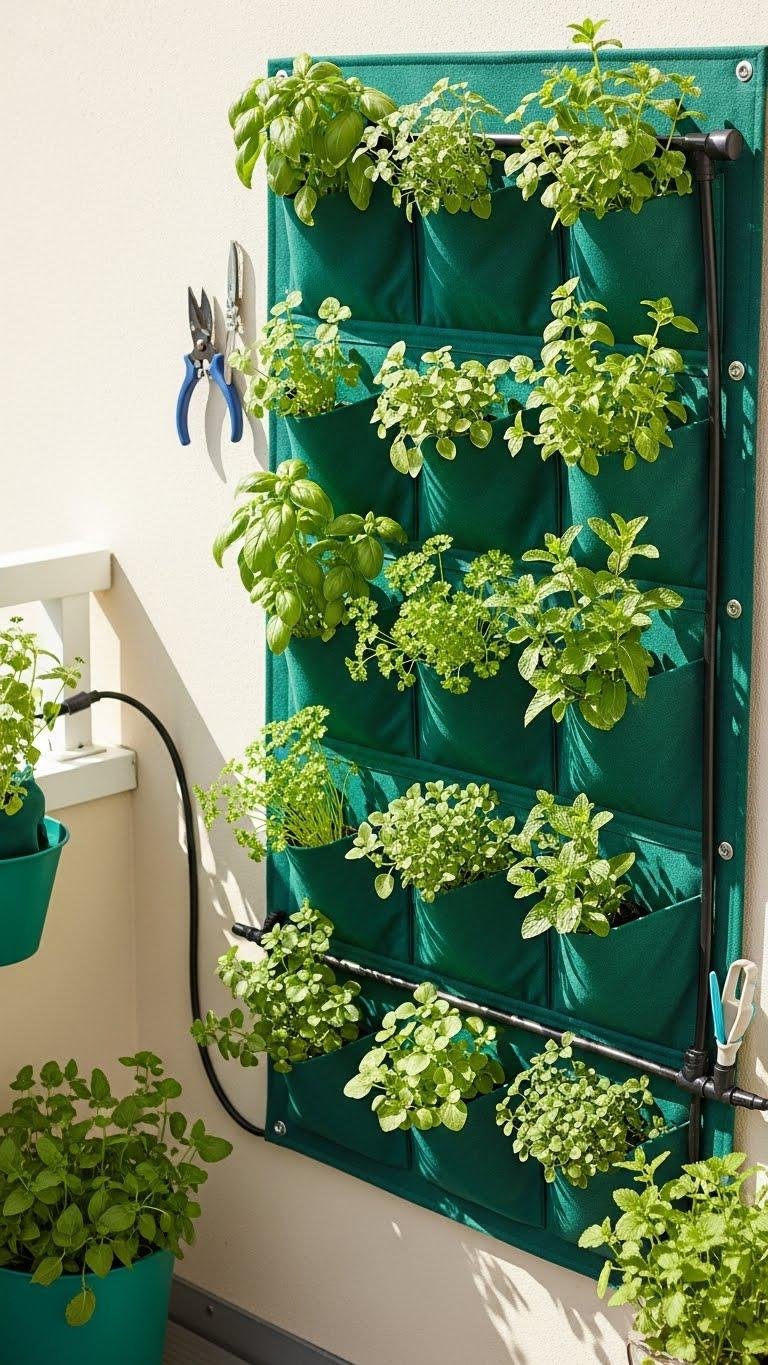
A vertical fabric pocket herb wall gives you a high-yield, space-saving way to grow fresh herbs on any sunny wall or balcony rail.
You’ll plant compact varieties, rotate crops for vertical harvested results, and set simple pocket irrigation to save time.
You’ll prune for vigor, harvest often, and move pockets seasonally.
This keeps herbs productive, portable, and fiercely independent.
Hanging Macramé Planter Trio

Hang three macramé planters at staggered heights to maximize light and visual interest while keeping floor space clear. You’ll choose sturdy cords and pots that suit your trailing herbs or succulents, balancing boho textures with durable materials. Pay attention to planter spacing so each plant gets airflow and light. Secure anchors, water lightly, prune regularly, and enjoy a liberated, green corner.
Stacked Self-Watering Baskets
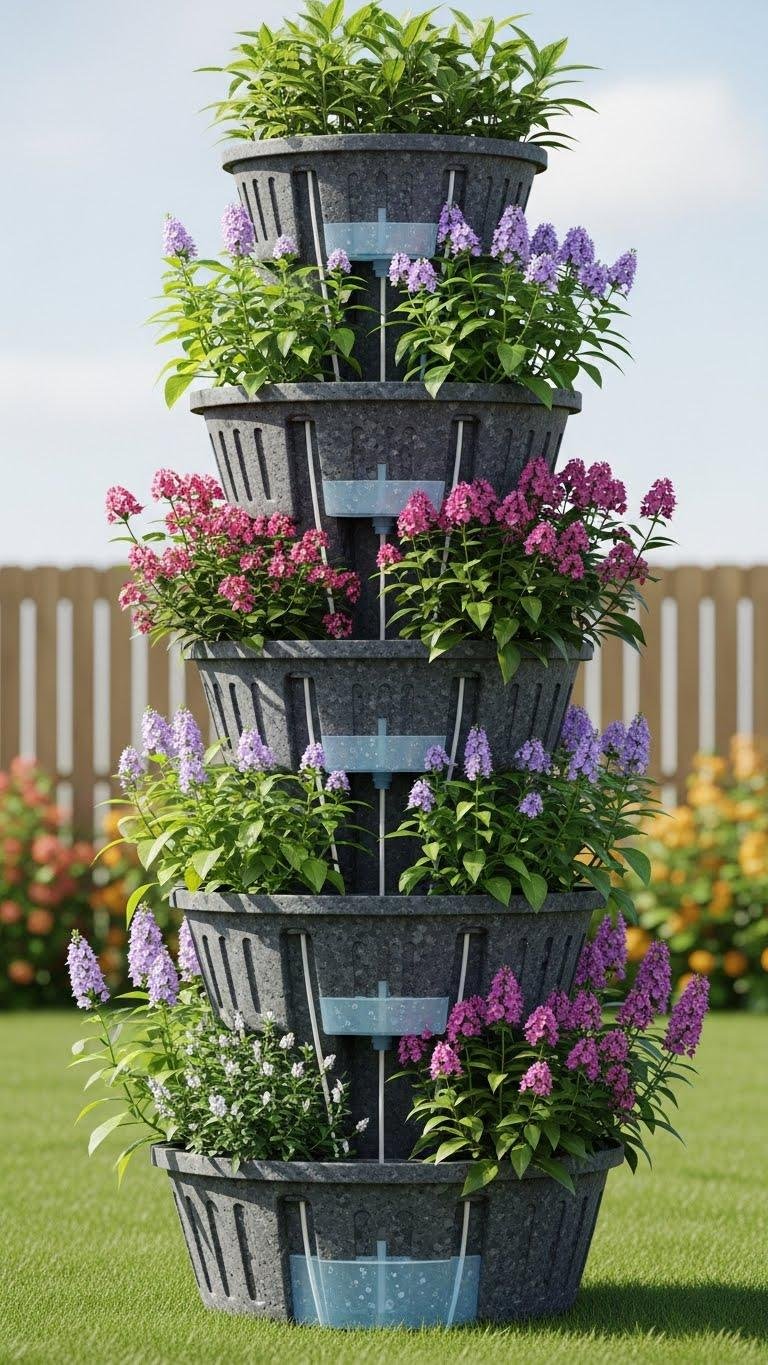
If you liked the vertical vibe of macramé planters, stacked self-watering baskets give you a compact, low-maintenance way to grow more plants in the same footprint.
You’ll love the space saving design: basket stacking channels water down through compact irrigation reservoirs so roots stay hydrated.
Plant herbs, greens, trailing flowers, and roam freely knowing your self watering setup cuts chores and maximizes yield.
Gutter Garden Salad Bar
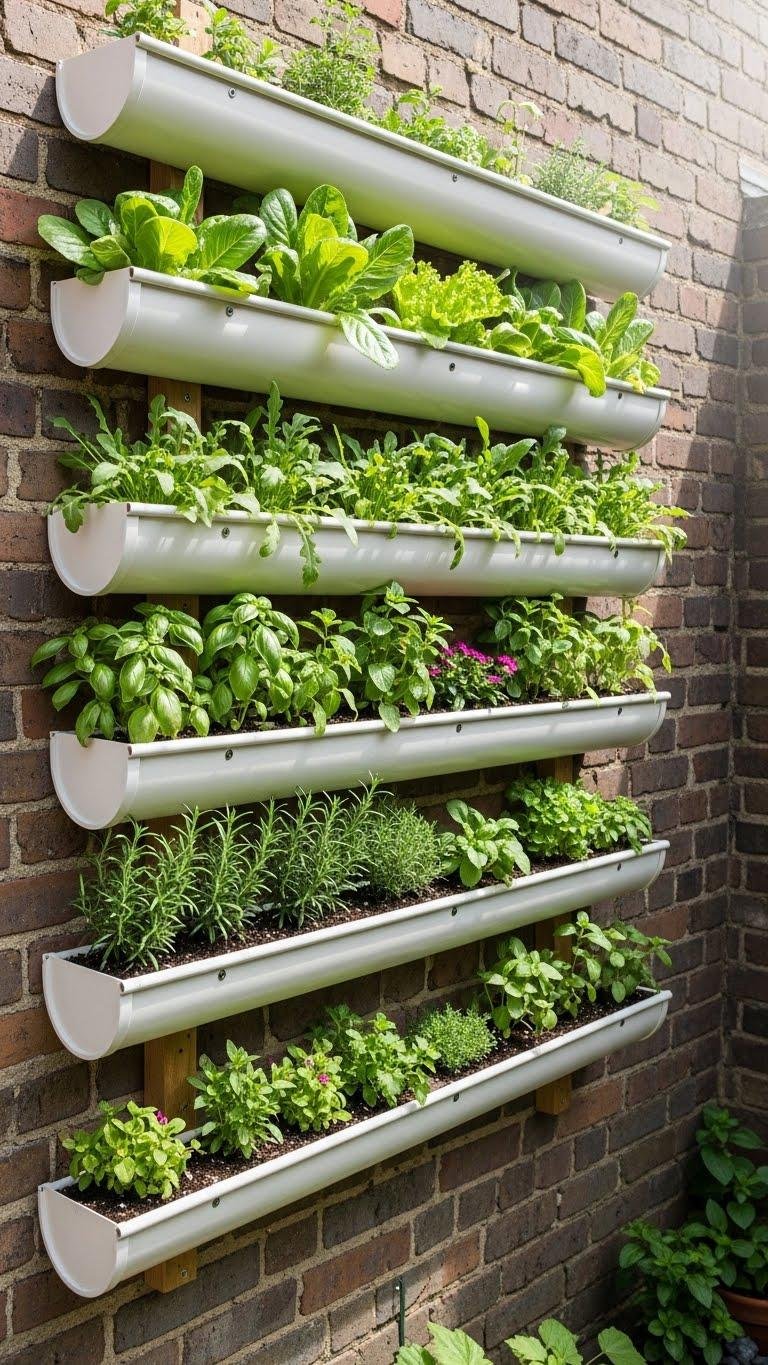
Turn ordinary rain gutters into a slim, space-saving salad bar that lets you grow lettuce, arugula, herbs, and baby greens in tight spots.
You’ll mount them horizontally or stagger vertically, add drainage holes, and use lightweight soil.
Treat each gutter as a portable planter slice of your salad tower setup.
Harvest continuously, move units for sun, and free up floor space for living.
Repurposed Pallet Vertical Herb Rack
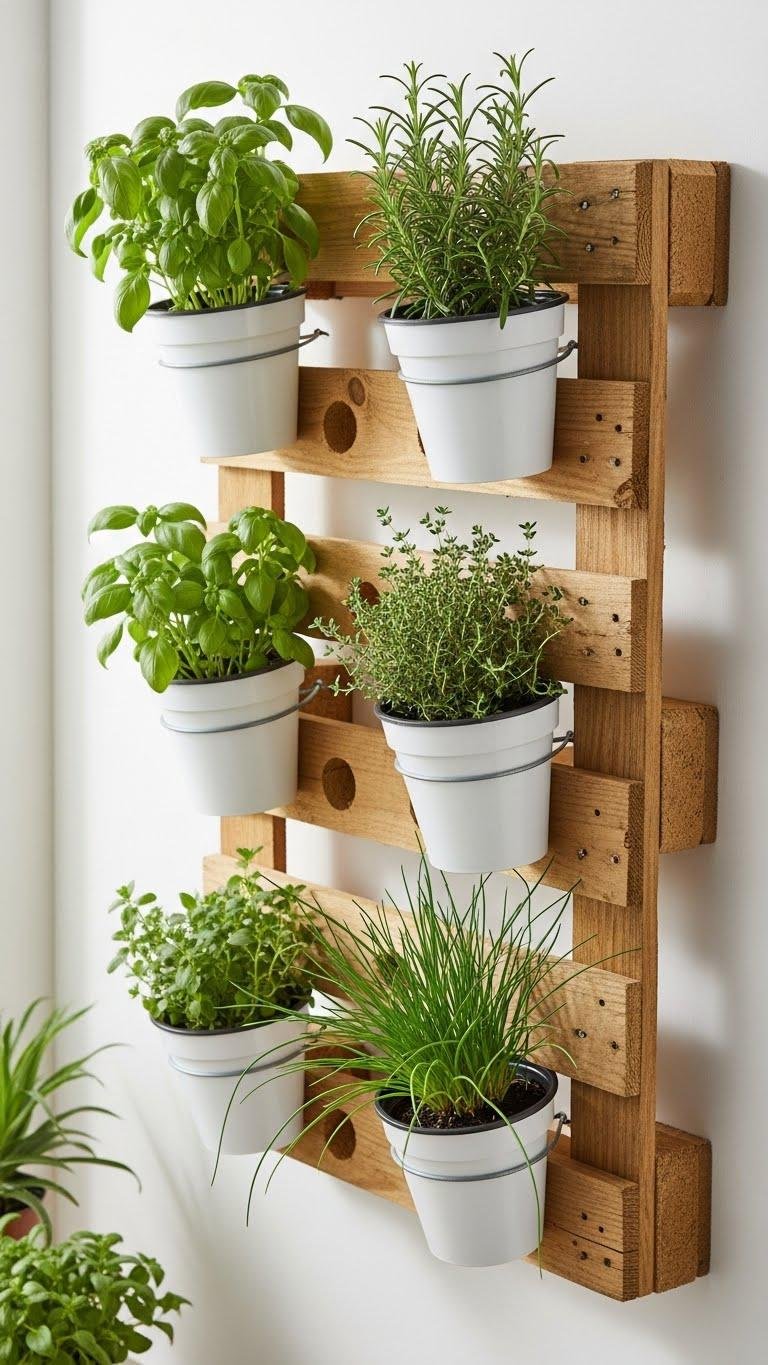
A repurposed pallet vertical herb rack lets you transform scrap wood into a compact, low-cost planter that stacks basil, rosemary, thyme, and chives within arm’s reach.
You’ll mount pockets, add drainage, and arrange herbs by light needs for pallet aromatherapy and flavor.
Rotate pots for seasonal rotations, prune to encourage growth, and keep watering simple so you stay free and productive.
Mason Jar Window Herb Row
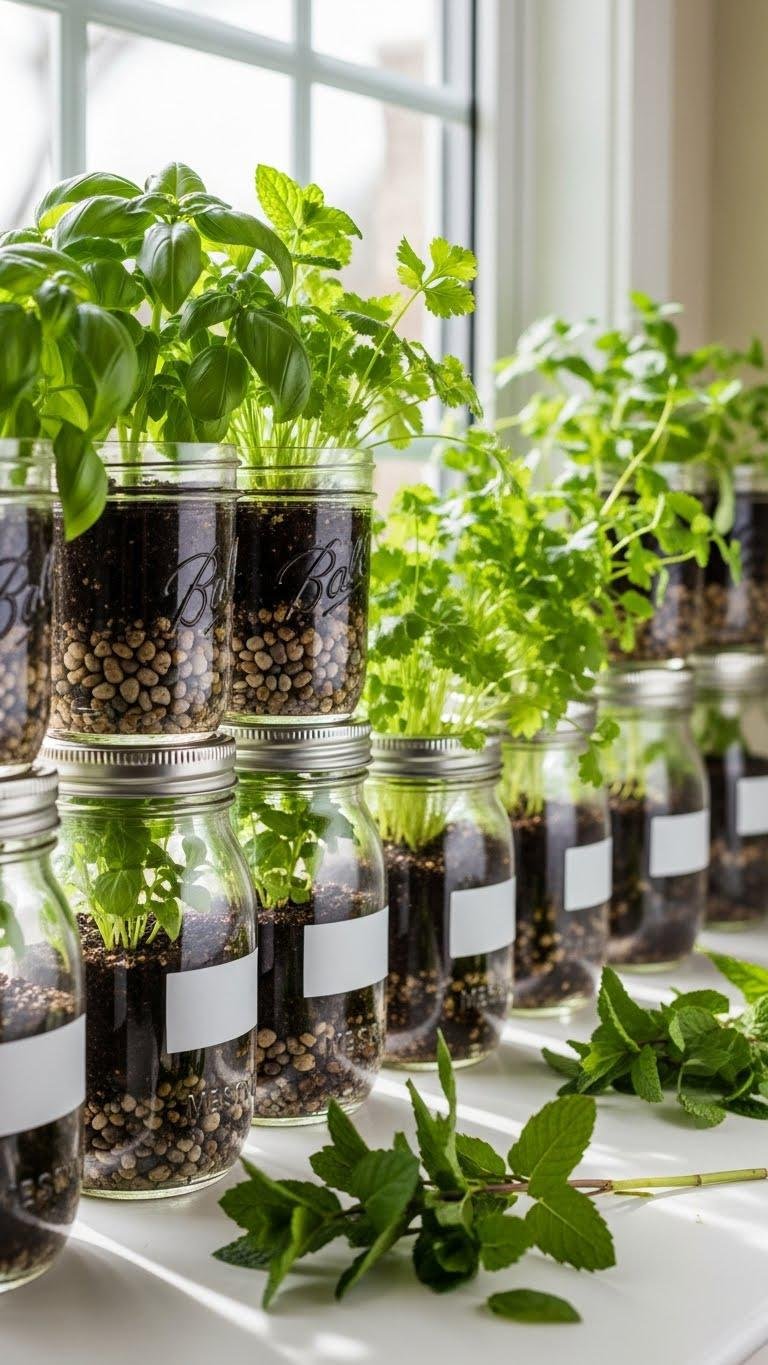
Line up mason jars on your windowsill and you’ll get an efficient, space-saving herb station that uses natural light and easy access to keep basil, parsley, cilantro, and mint thriving.
You’ll secure jars, add drainage pebbles, potting mix, and label each for a sunny sill.
Practice seedling rotation, prune for vigor, and harvest freely to enjoy fresh herbs without wasting space.
Upcycled Bottle Pocket Garden
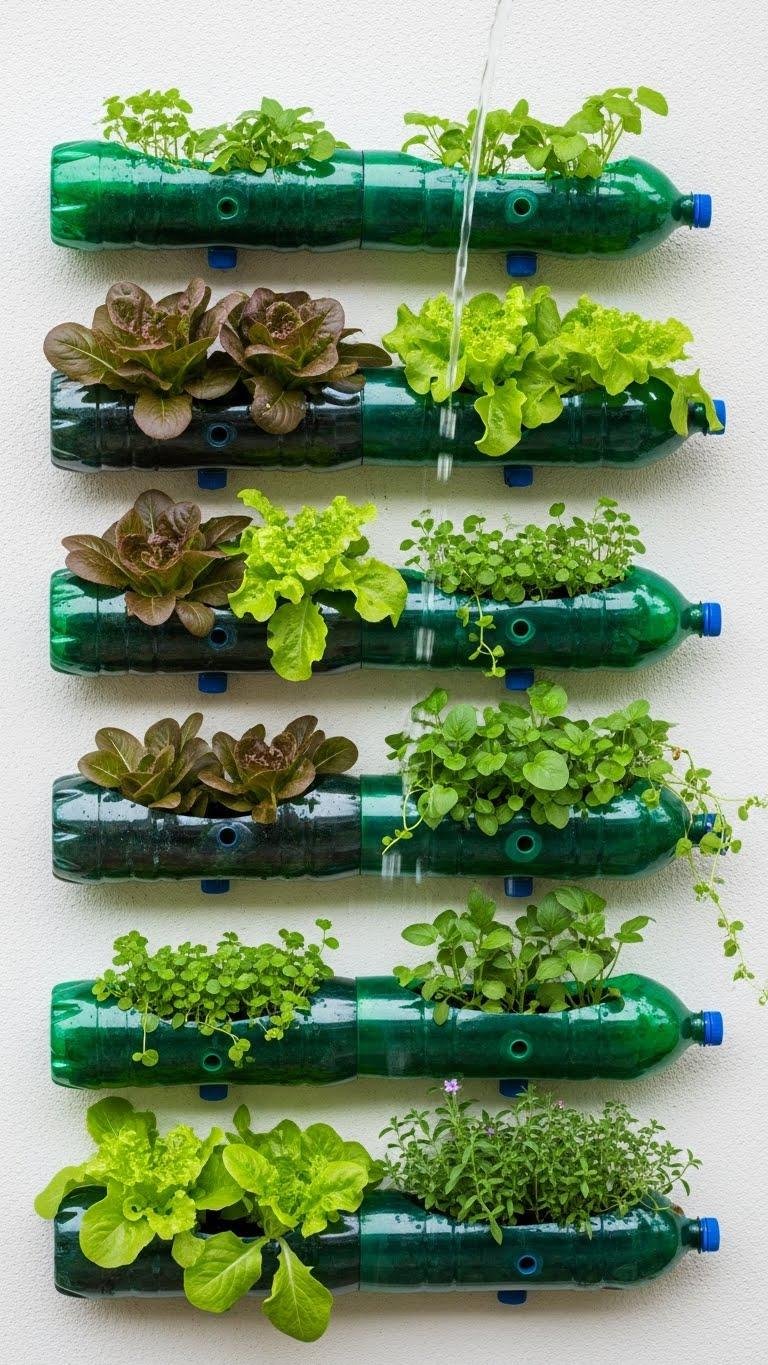
Give old plastic bottles new life by cutting them into shallow pockets and mounting them vertically to create a space-saving pocket garden for lettuces, herbs, and trailing plants.
You’ll arrange bottles by sunlight mapping, pick compact varieties from a seed exchange, and plant densely.
Water from the top, add drainage holes, and rotate pockets so each plant gets freedom to grow without crowding its neighbors.
Multi-Tiered Chain Basket Tower
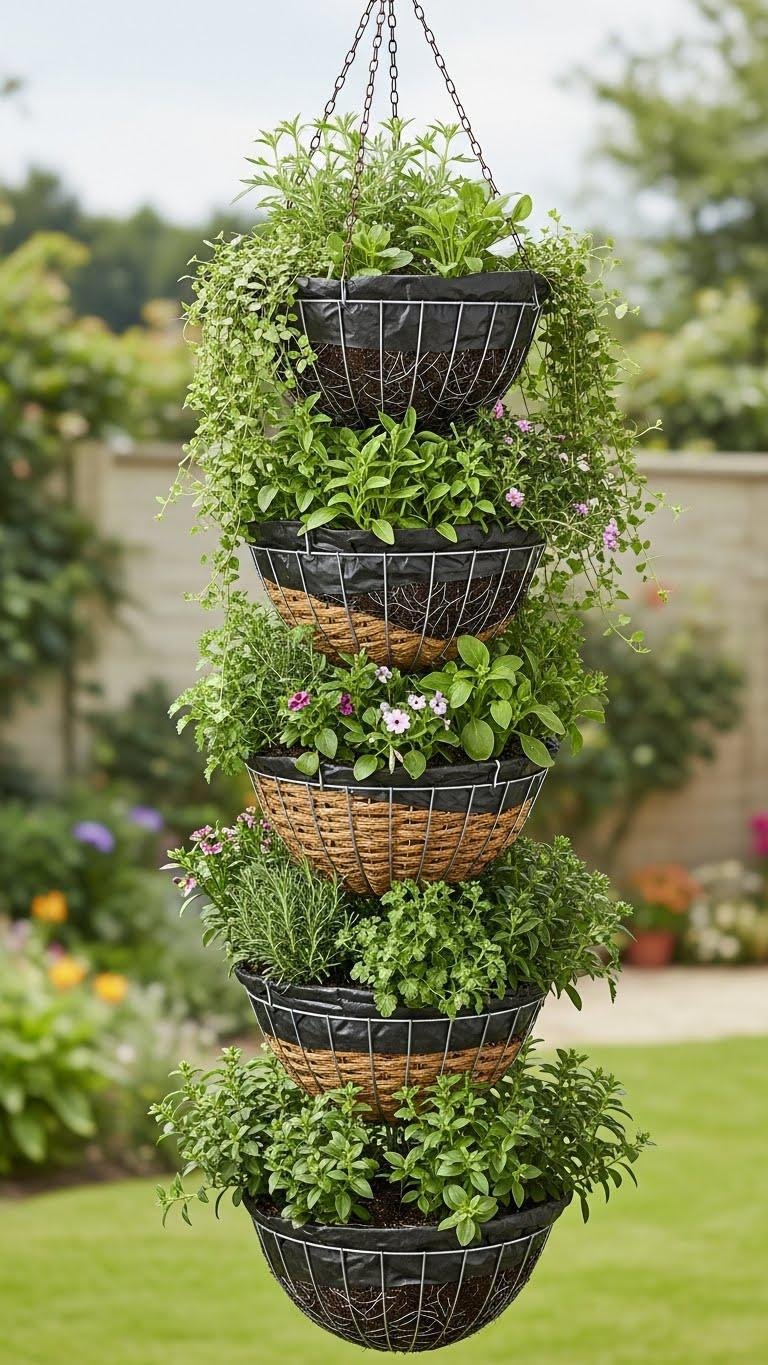
Stack lightweight wire or woven baskets on hanging chains to build a vertical tower that maximizes growing space for trailing herbs, compact greens, and small flowering plants. You’ll use rust resistant chains and simple root zone liners to protect soil and roots.
Hang at varied heights, water efficiently, prune for airflow, and rotate baskets so each plant gets sun and freedom to thrive.
Hanging Succulent Frame
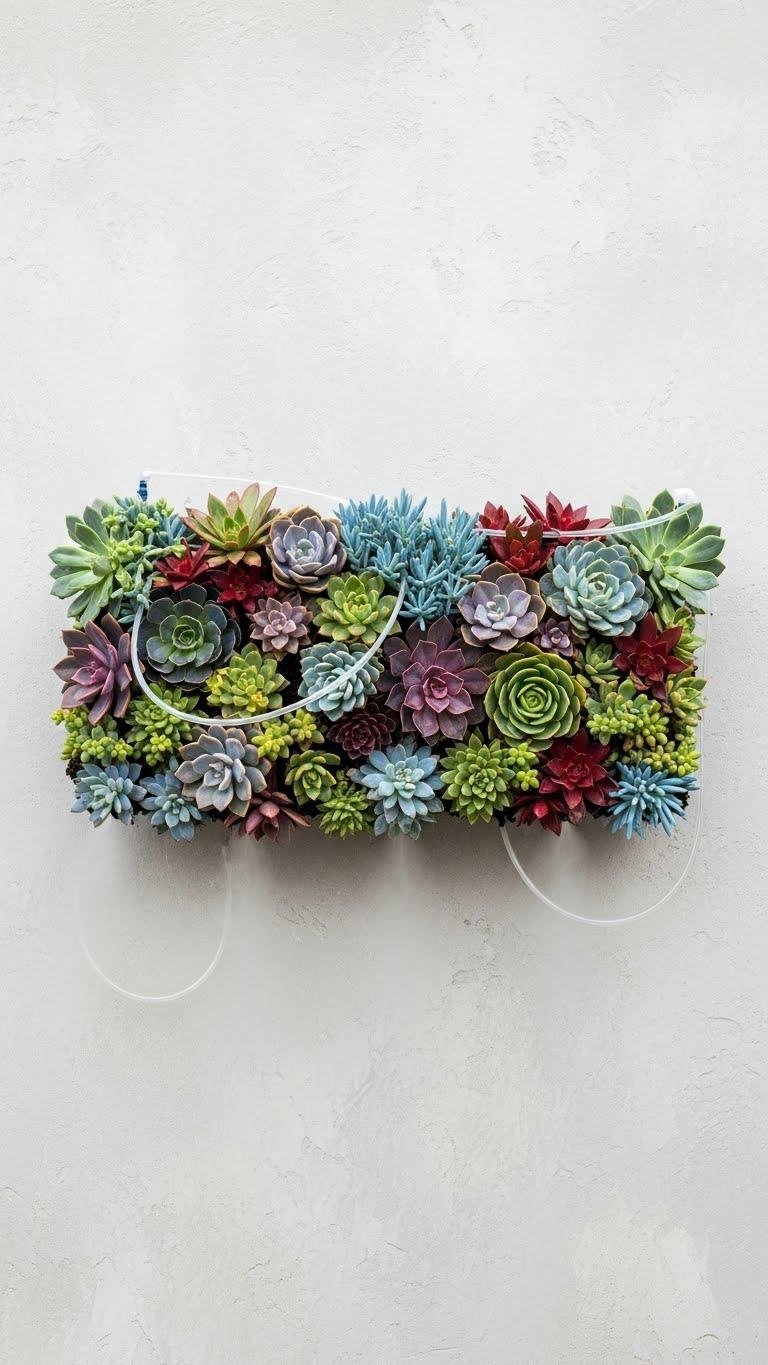
If you liked the vertical herb tower, a hanging succulent frame offers a lower-maintenance way to get vertical color and texture in a small footprint.
You’ll design succulent mosaics on a shallow frame, choose drought-tolerant varieties, and secure lightweight soil pockets. Mount with good drainage and simple frame irrigation—drip tubes or occasional misting—so your display stays vibrant while freeing up ground space.
Hanging Strawberry Pocket System
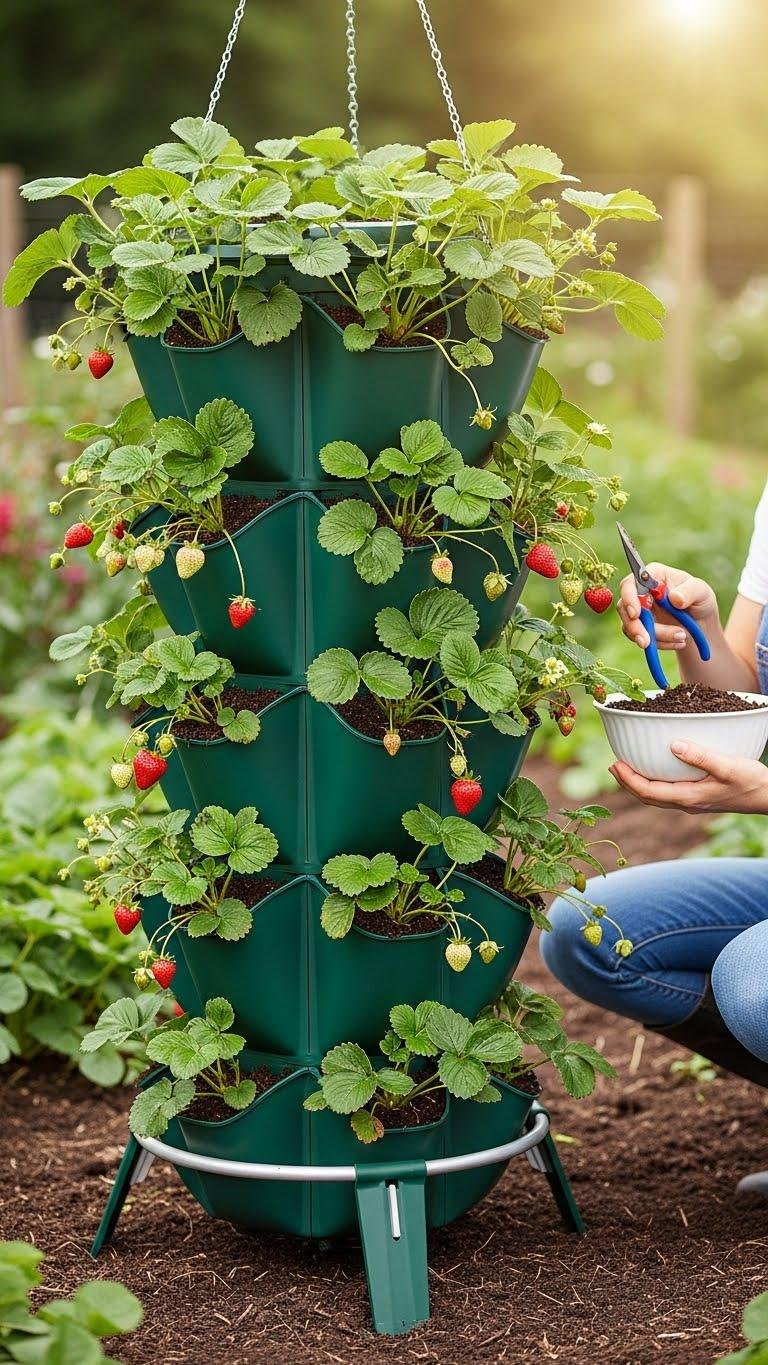
Hang a pocketed planter to turn unused vertical space into a productive strawberry wall. You’ll use compact pockets for dense planting and easy watering, encouraging strawberry propagation from runners.
Choose portable planters so you can rearrange sunlight and protect crops. Prune and feed regularly, then employ seasonal rotation to refresh soil and maximize yields, keeping your garden nimble and free.
Fence-Mounted Espalier Fruit Strip
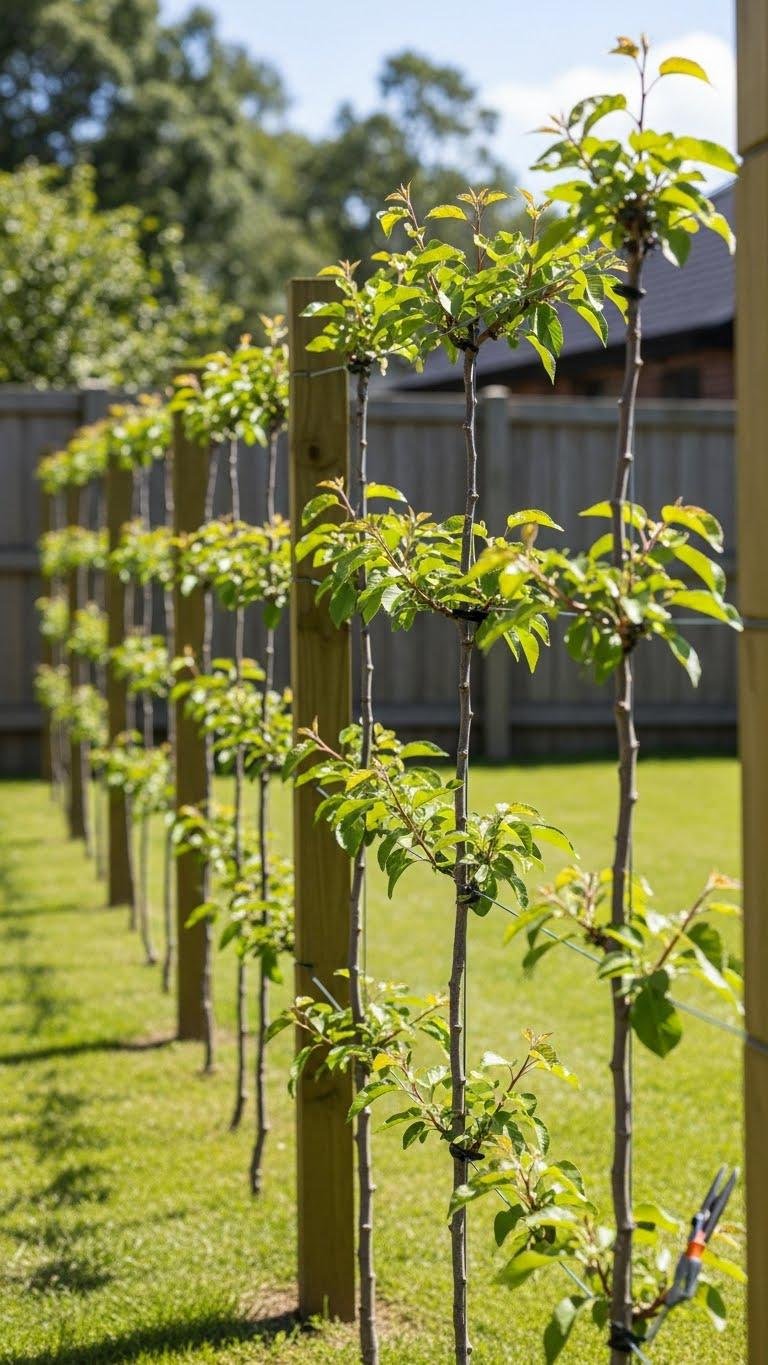
Mount espaliered fruit trees along a fence to turn wasted vertical space into a productive, tidy fruit strip.
You’ll choose dwarf rootstock espalier varieties, secure branches to wires, and position trees for sun and airflow.
Follow a seasonal pruning schedule to shape fruiting arms, boost yields, and simplify harvesting.
It’s a low-footprint, disciplined method that frees your ground space and time.
Suspended Coconut Shell Planters
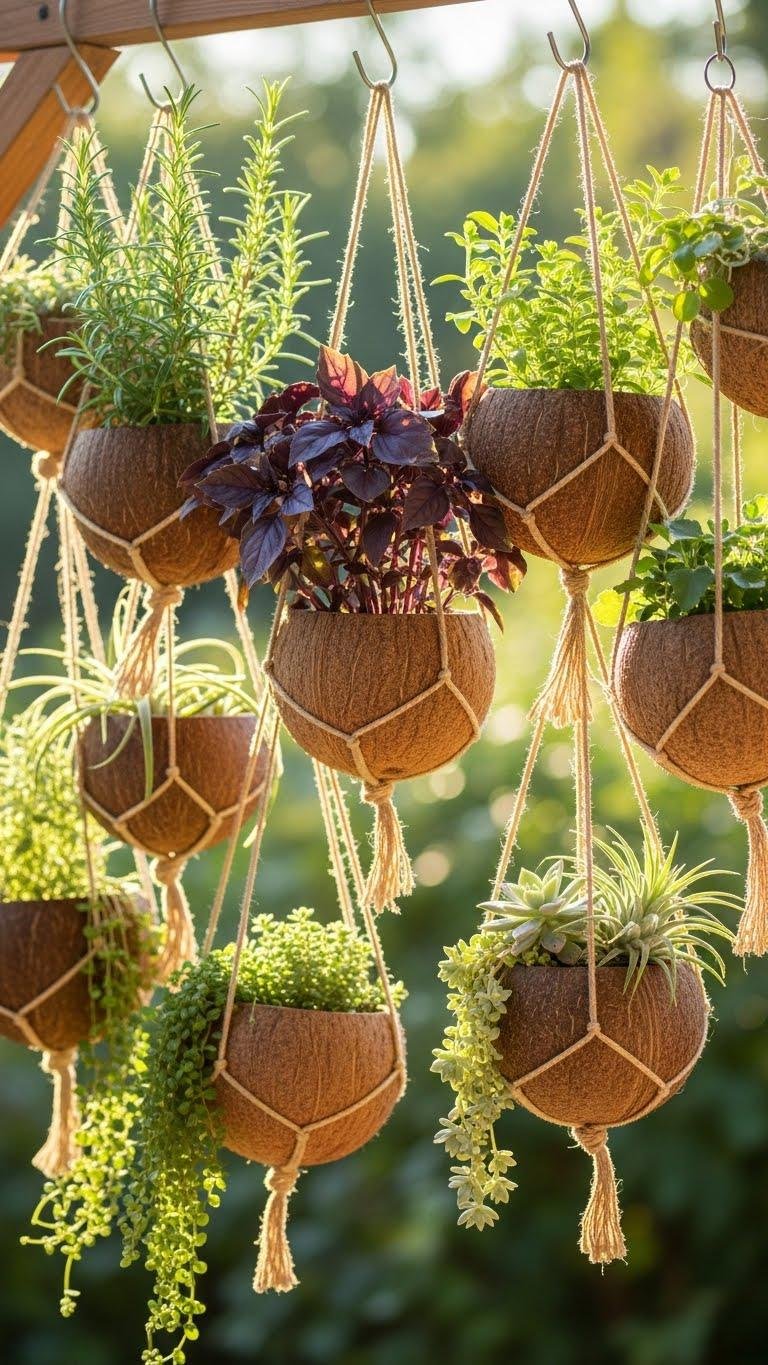
Suspend coconut shells from hooks or a simple frame to create lightweight, rustic planters that save ground space and suit herbs, succulents, and small ornamentals. You’ll drill drainage, line interiors with shell insulation or moss, and hang at varied heights for sun access. Treat shells as coconut art: stain or paint minimally, secure with recycled rope, and enjoy a portable, free-spirited green display.
Lightweight Balcony Tray Wall
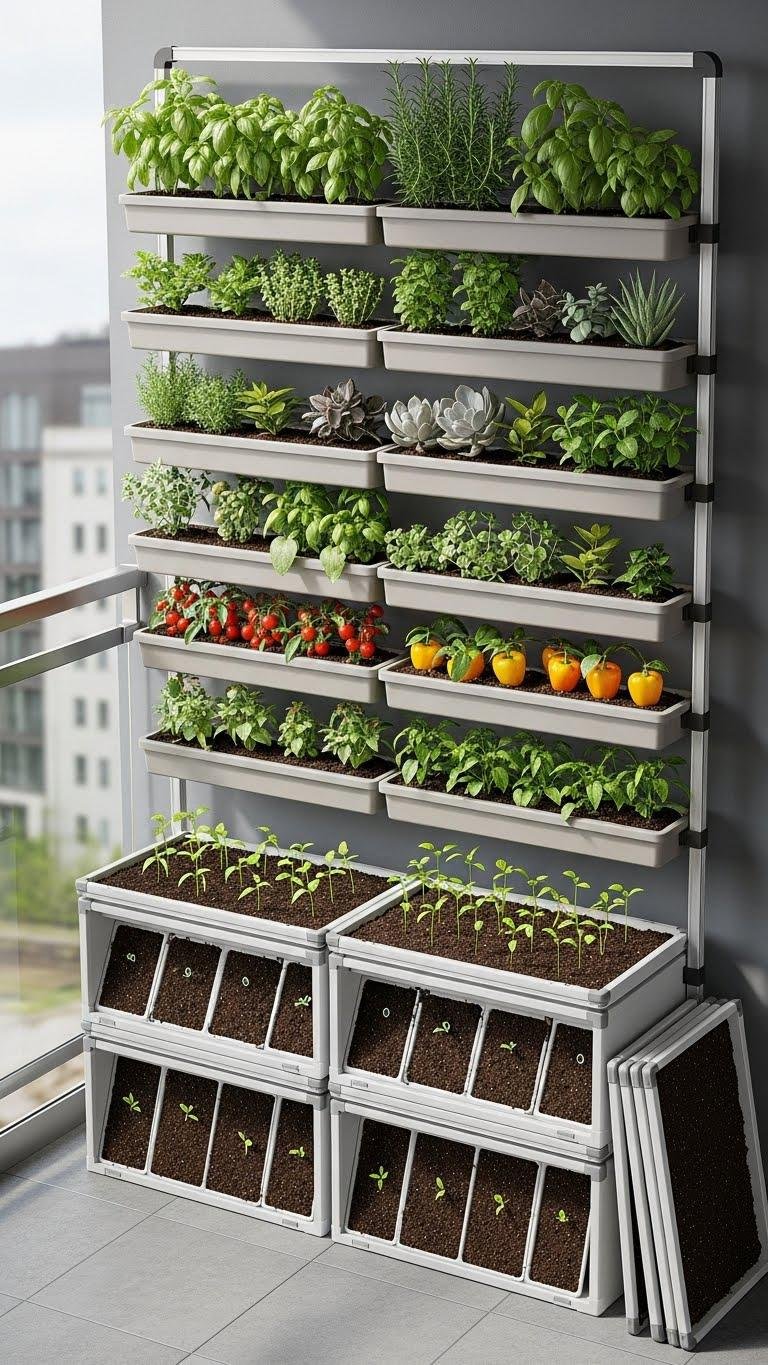
Creating a lightweight balcony tray wall lets you maximize vertical space without heavy hardware or bulky pots.
You’ll mount slim frames and clip in windproof trays for herbs, succulents, and compact edibles. Use foldable seedbeds for easy sowing and storage, and choose breathable media to prevent rot.
This setup frees your balcony, keeps plants accessible, and stays adaptable as your garden evolves.
Hanging Microgreen Shoe-Organizer
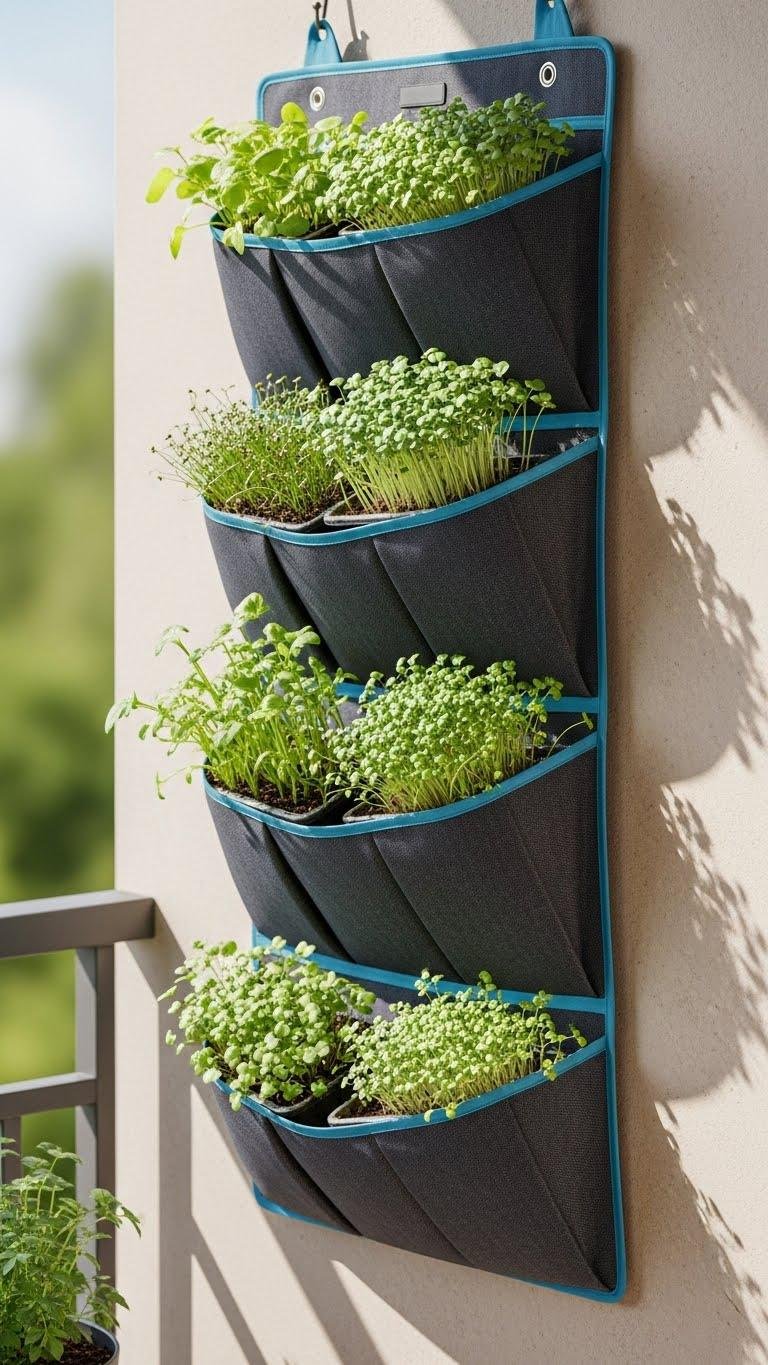
Often overlooked, a hanging shoe organizer turns into a compact microgreen farm that saves space and speeds harvests. You hang it on a balcony or wall, fill each removable pocket with soil or trays, and create a portable microgreen station that you can rearrange or take down anytime.
It’s efficient, low-cost, and frees you to grow fresh greens anywhere.
Drip-Irrigated Living Wall Module
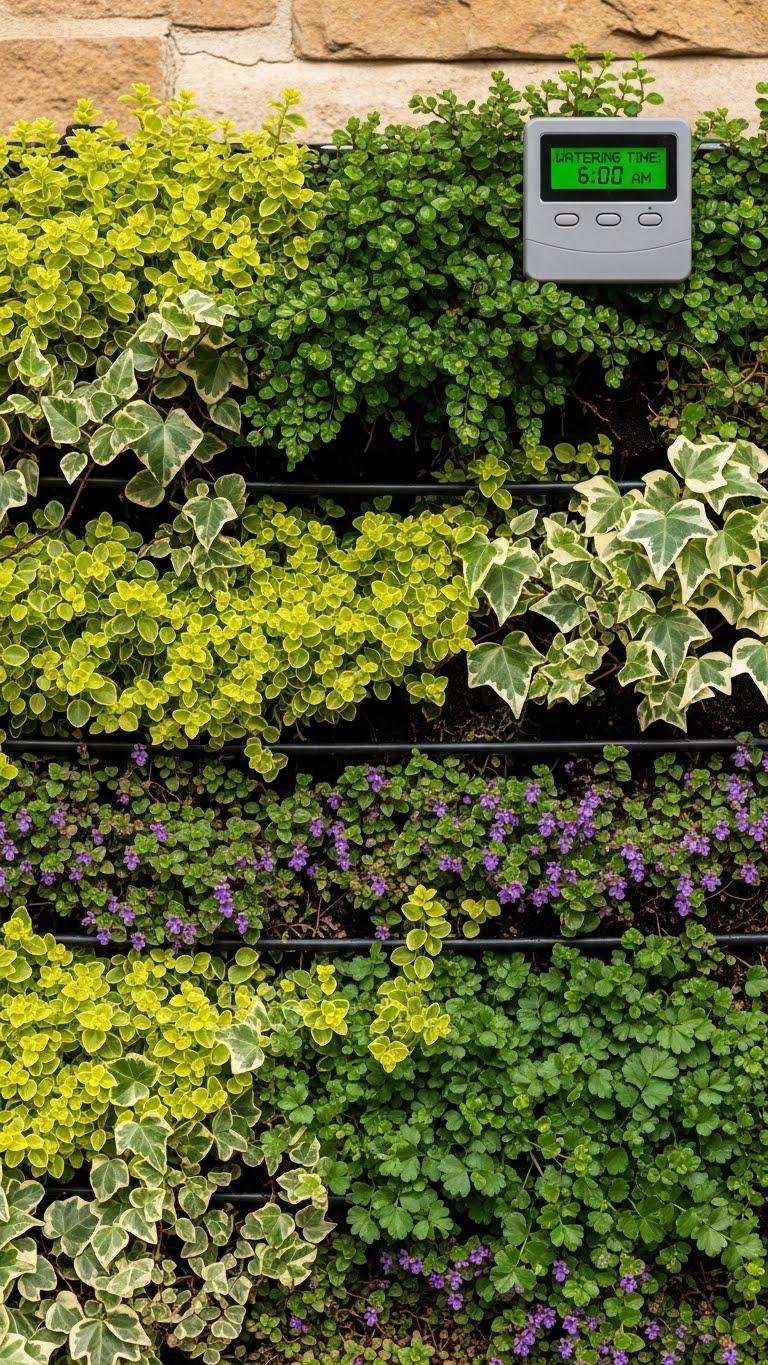
Think of a drip‑irrigated living wall module as a self‑watering panel that keeps plants healthy with minimal effort.
You mount living modules on any wall, connect drip irrigation, and set a timer. You’ll control moisture, reduce watering chores, and free up time for creativity.
Choose hardy, compact plants, check emitters occasionally, and swap modules to change color or texture instantly.
Hanging Fern and Pothos Indoor Canopy
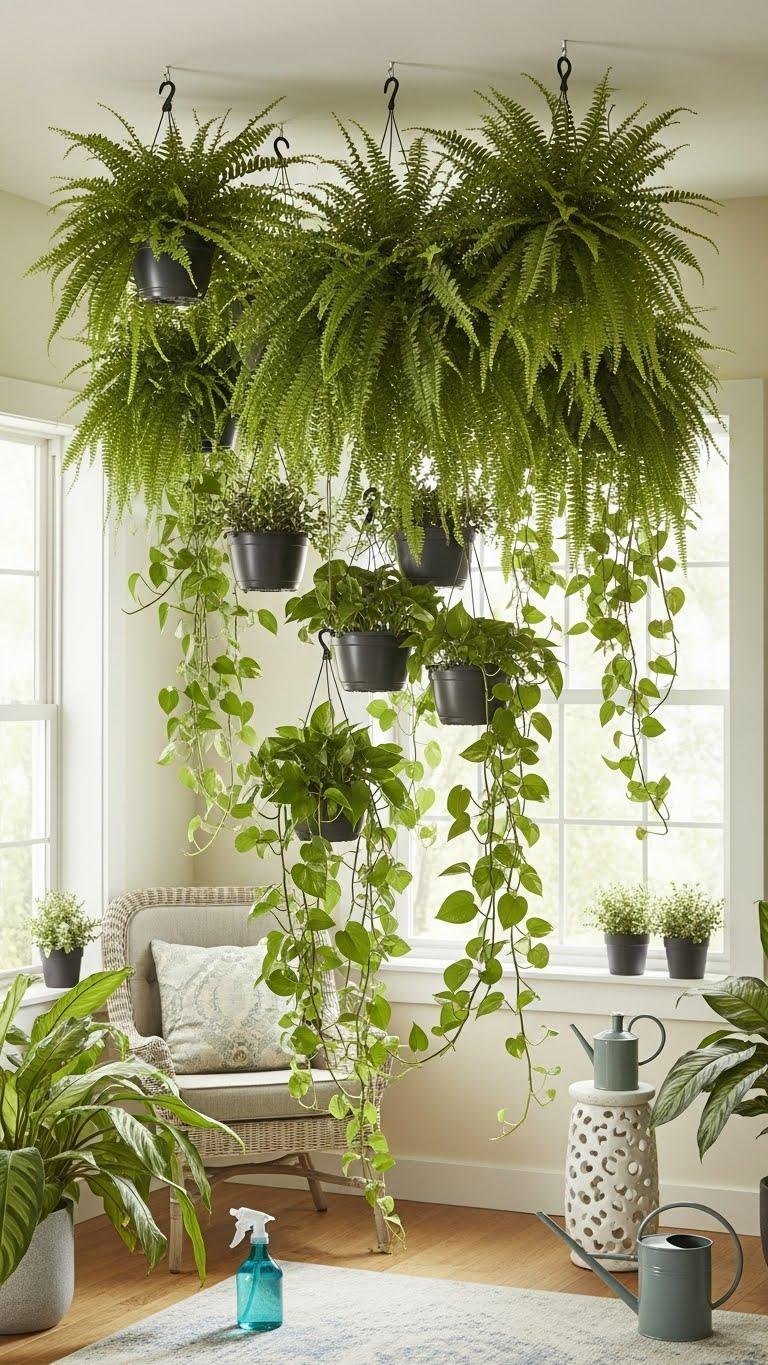
Frequently, you’ll suspend a mix of Boston ferns and pothos to form a lush indoor canopy that softens corners and boosts humidity. You’ll hang staggered pots to create a fern canopy that shades seating and shelters trailing stems.
Water and mist routinely, prune to shape the pothos drape, and choose light-tolerant varieties so your canopy stays vigorous without fuss.
Stacked Straw-Bale Planting Wall
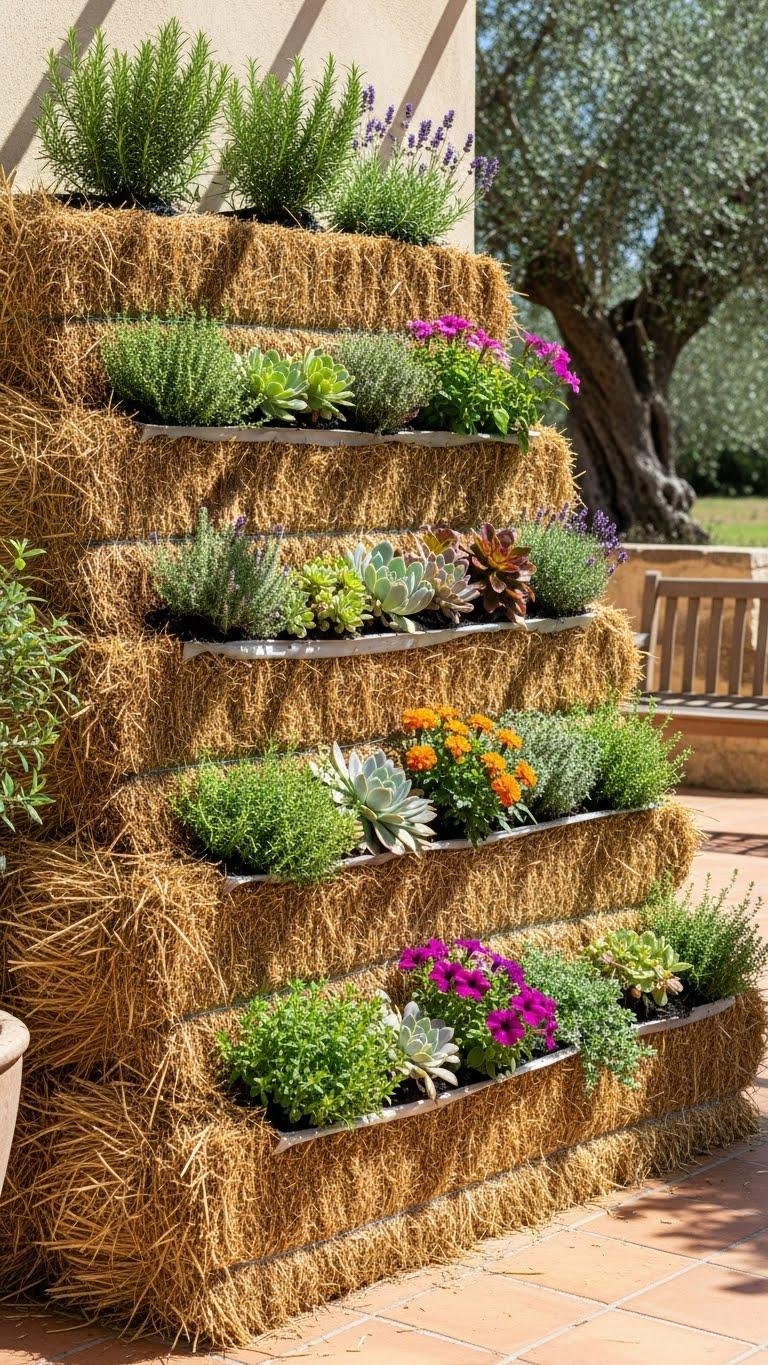
If you like the vertical drama of a fern-and-pothos canopy, a stacked straw-bale planting wall brings that same lush effect to a sunny patio or unused corner.
You stack straw bale blocks, notch planting pockets, and tuck in drought-tolerant herbs, succulents, or annuals.
The bales create an insulating habitat, a compost core that feeds roots, and simple moisture control so you stay low-maintenance and free.
Ceiling-Suspended Herb Grid
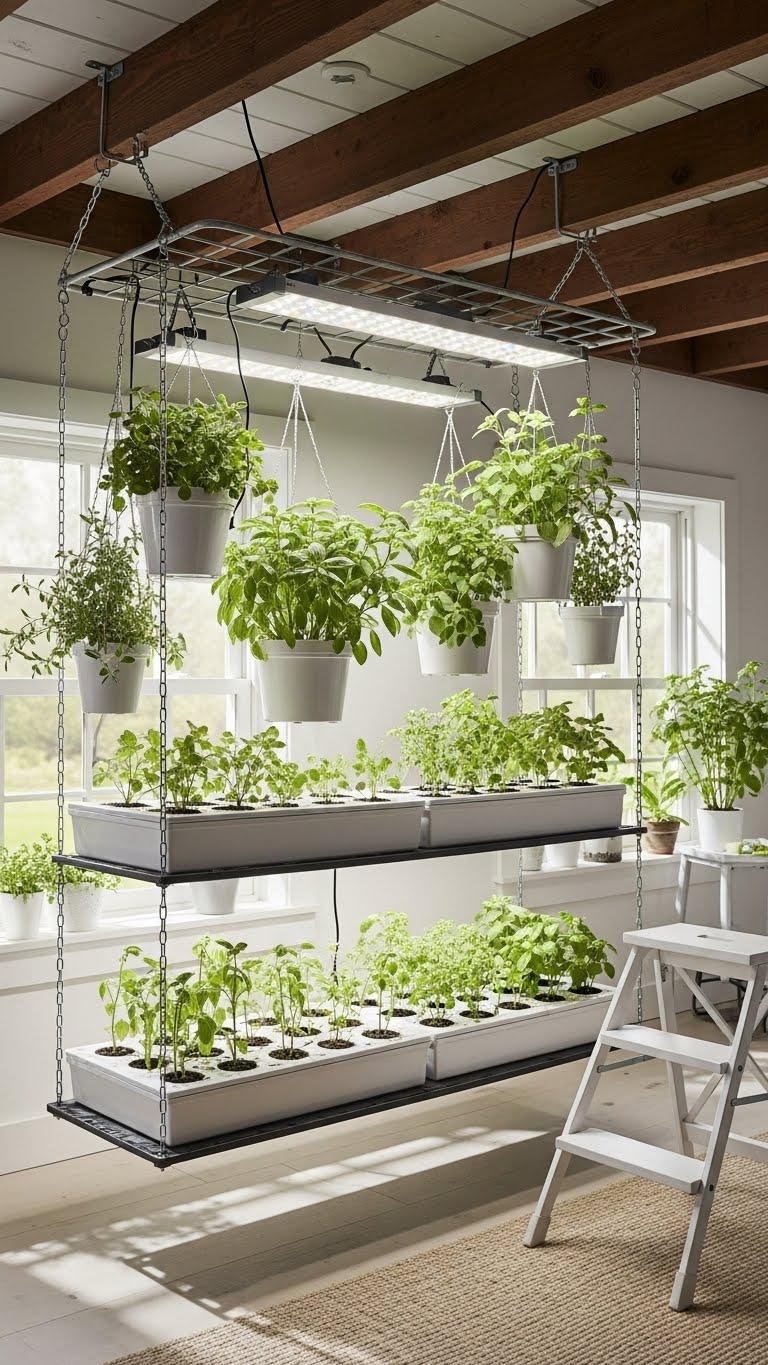
Hanging from exposed joists or a simple frame, a ceiling-suspended herb grid turns overhead space into a productive, sunlit canopy you can reach from a step stool.
You’ll mount a herb trellis and hang pots or airtight seedling trays, add LED growlights for low-profile light, and prune for air. It’s a space-optimizing system that keeps herbs accessible, free, and thriving.
Metal-Grid Bottle and Can Display
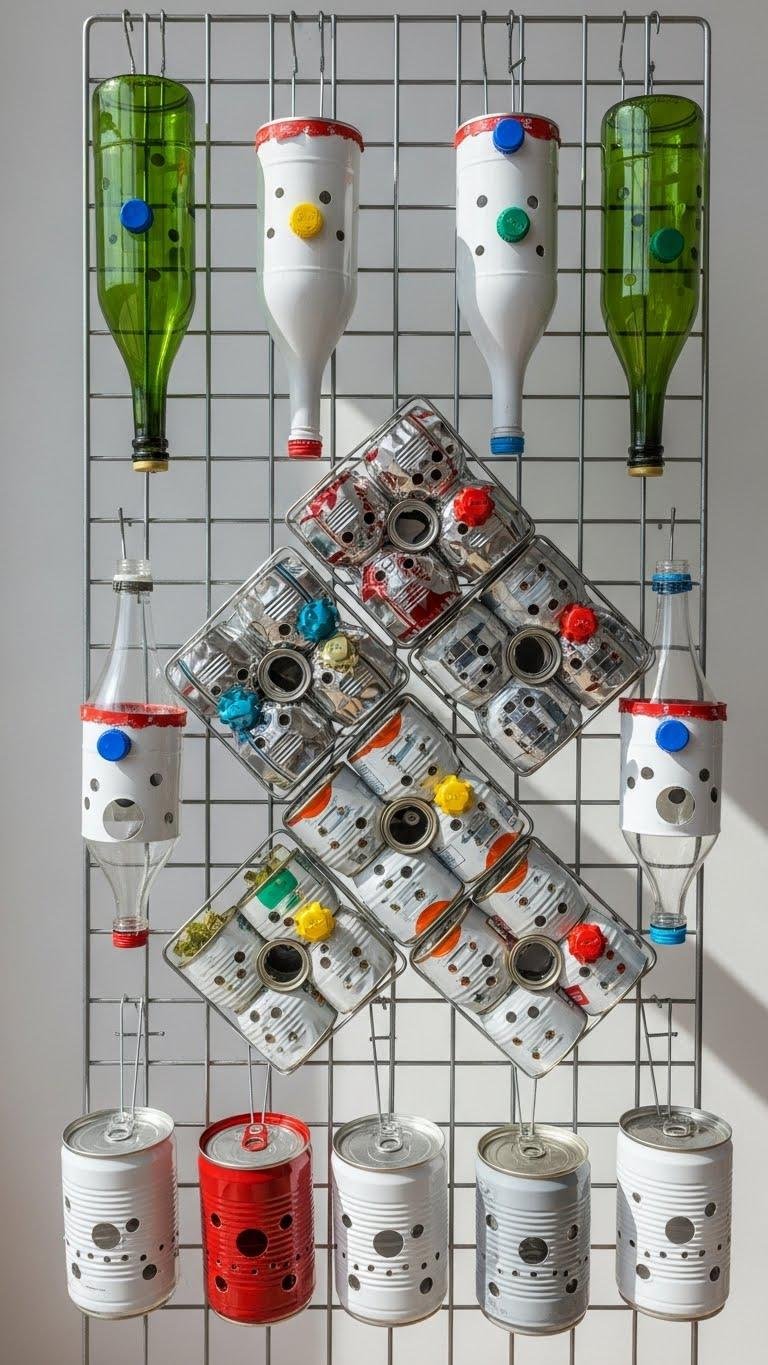
Put a sturdy metal grid to work as a vertical display for bottles and cans, turning recyclables into a tidy, plant-ready feature.
You’ll hang bottles by necks or zip-tie cans into a modular geometric shelving pattern, add drainage, and cap pots with recycled caps for flair. This frees floor space, boosts sun exposure, and keeps maintenance simple so you can garden on your terms.
Netting Layered Vertical Shade Garden
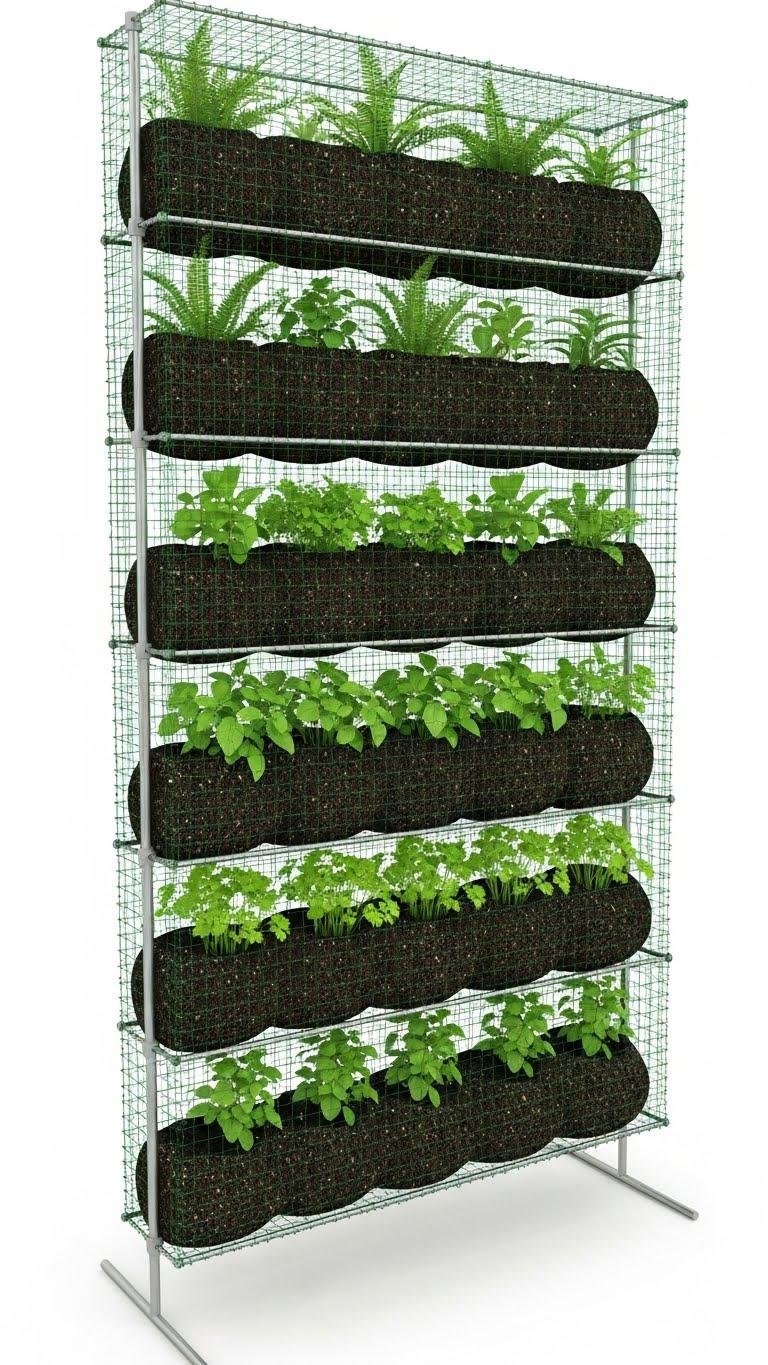
Moving from a metal-grid display to a netting-layered shade garden gives you a way to protect delicate plants while still using vertical space. You’ll attach shade netting to a lightweight frame, create layered pockets for soil and seedlings, and arrange moisture-loving ferns or herbs. This setup frees up floor area, shields young growth, and lets you rearrange pockets for light and airflow with ease.
Lightweight Tray Succulent Staircase
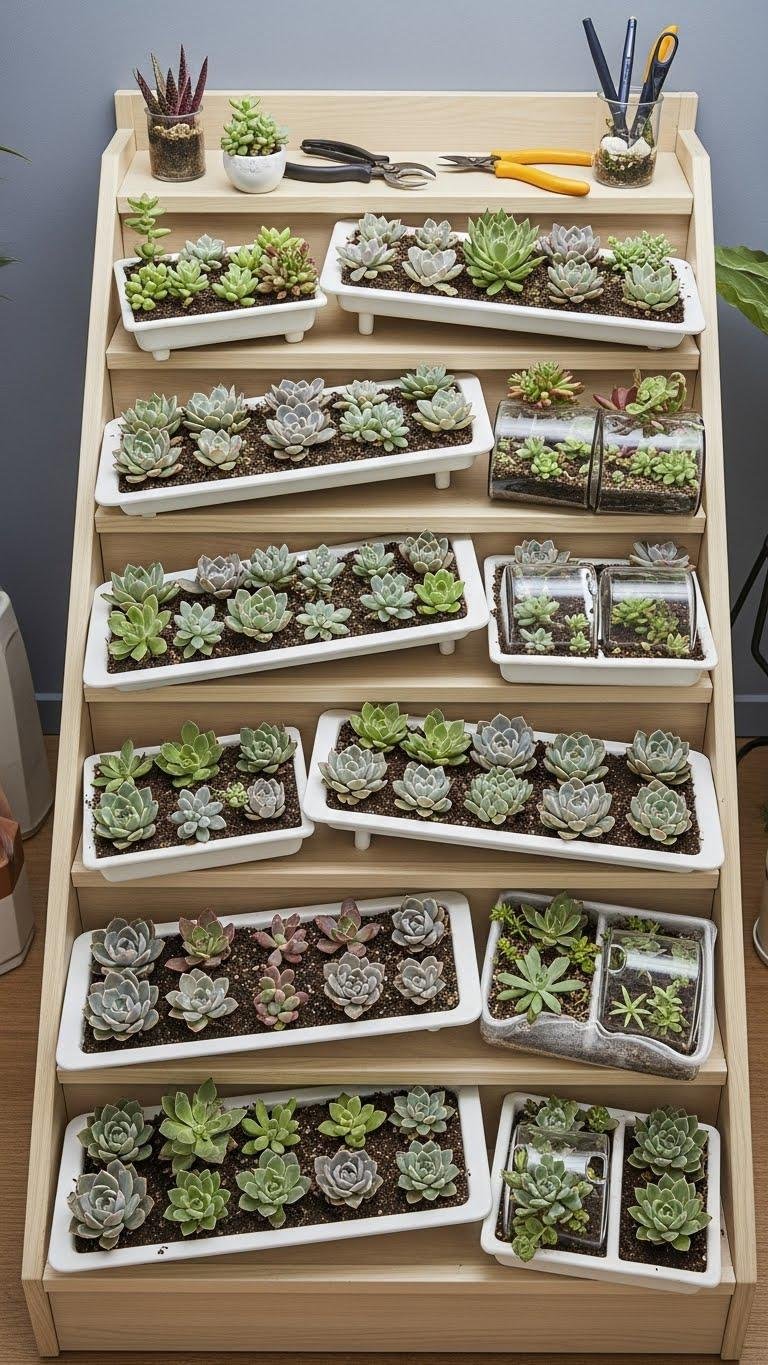
When you stack lightweight trays on a narrow staircase or tiered frame, you get a compact, eye-catching display that keeps succulents accessible and well-drained.
You’ll arrange stairwell succulents by size and light need, use gritty mix, and angle trays for runoff.
Think miniature terrarium pockets for humidity-sensitive pups.
This setup frees floor space, stays portable, and invites easy pruning and propagation.