
You’ll keep more plants alive if you work smarter, not harder: match each species to its light zone, map microclimates, and water only when the root zone needs it. Measure humidity and moisture, rotate pots for even growth, and quarantine new arrivals. Use well‑draining mixes, repot rootbound plants, improve airflow, treat pests physically first, and add targeted LEDs and timers — and there’s a simple checklist that ties it all together.
Rotate Plants Regularly for Even Growth
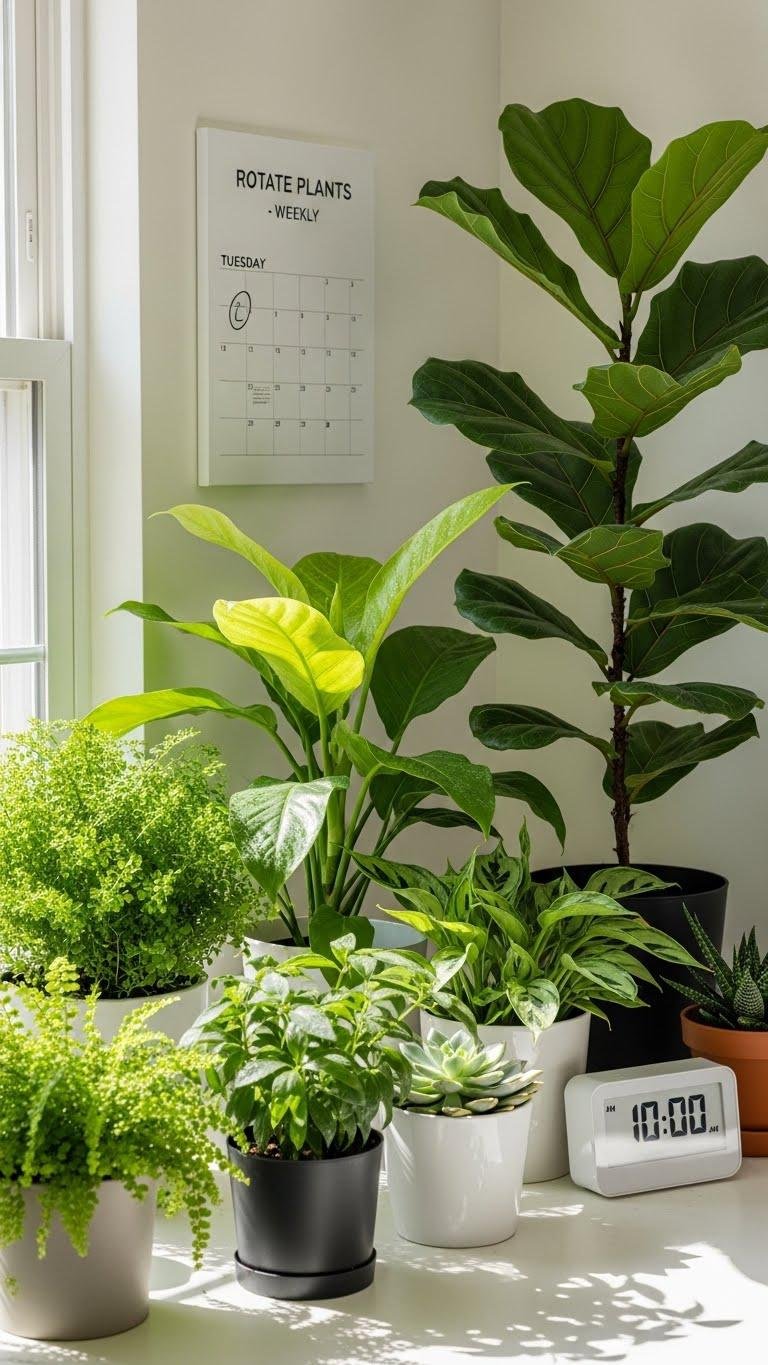
Regularly rotate your plants to make certain all sides get even light and prevent lopsided growth. You’ll set a simple rotate schedule—weekly or biweekly—so stems don’t stretch toward windows.
When you practice consistent pot turning, you keep growth balanced, reduce pruning, and let each plant express its shape. You’ll stay in control, free to rearrange without panic.
Use Supplemental Grow Lights When Needed
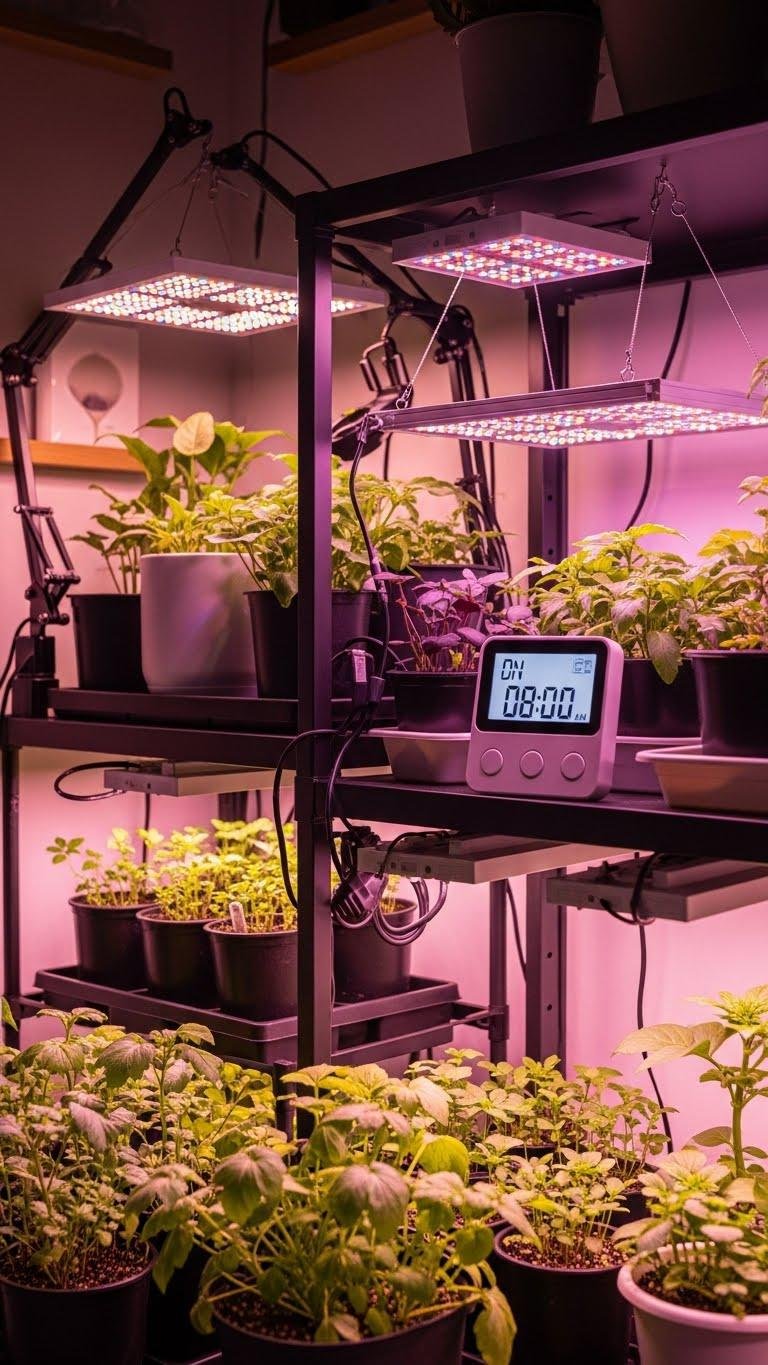
Paragraphs
Place Sun‑Loving Plants by East or South Windows
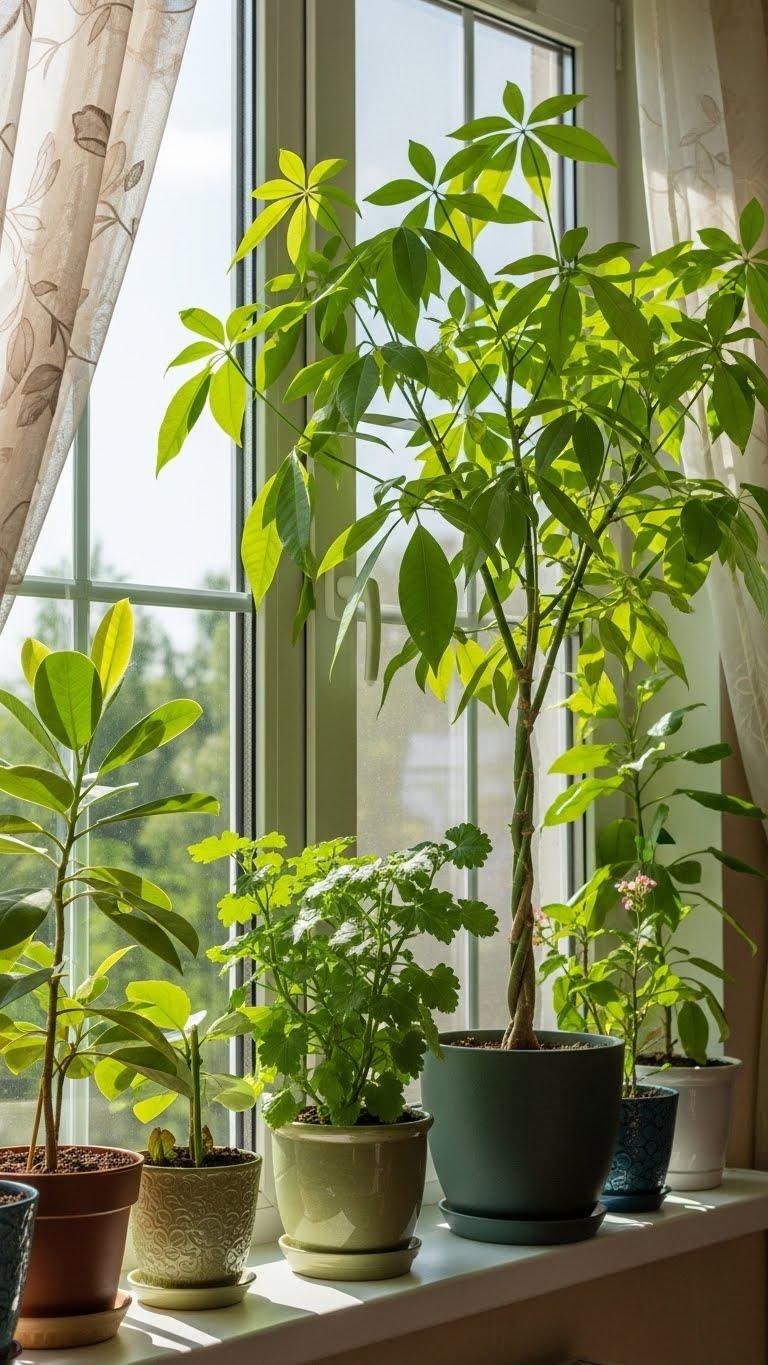
Position sun-loving plants where they’ll get the most direct light—east- or south-facing windows—so they can photosynthesize efficiently and stay compact.
For morning placement, set pots where early sun warms leaves, rotating weekly to prevent leaning.
Use sheer window treatments to diffuse harsh midday rays without reducing light.
You’ll preserve vigor, encourage blooms, and keep plants manageable with minimal fuss.
Check Soil Moisture With a Finger or Meter
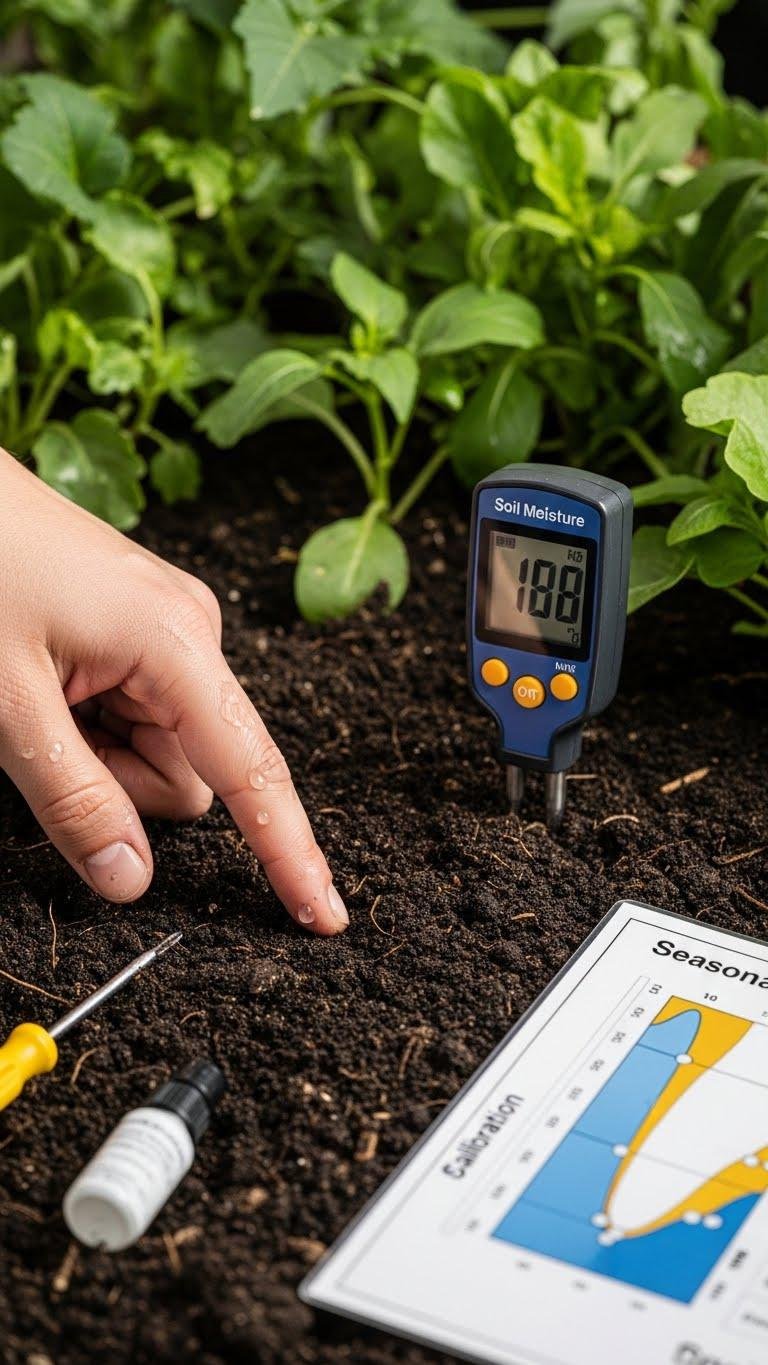
Check soil moisture with a quick finger probe or a handheld meter to know when to water rather than guessing.
You’ll feel dampness or read levels, and you’ll adjust habits confidently.
Perform sensor calibration occasionally and do seasonal sampling to track changing needs.
Don’t rely on schedules; trust measurements, free yourself from overwatering, and water only when the root zone actually needs it.
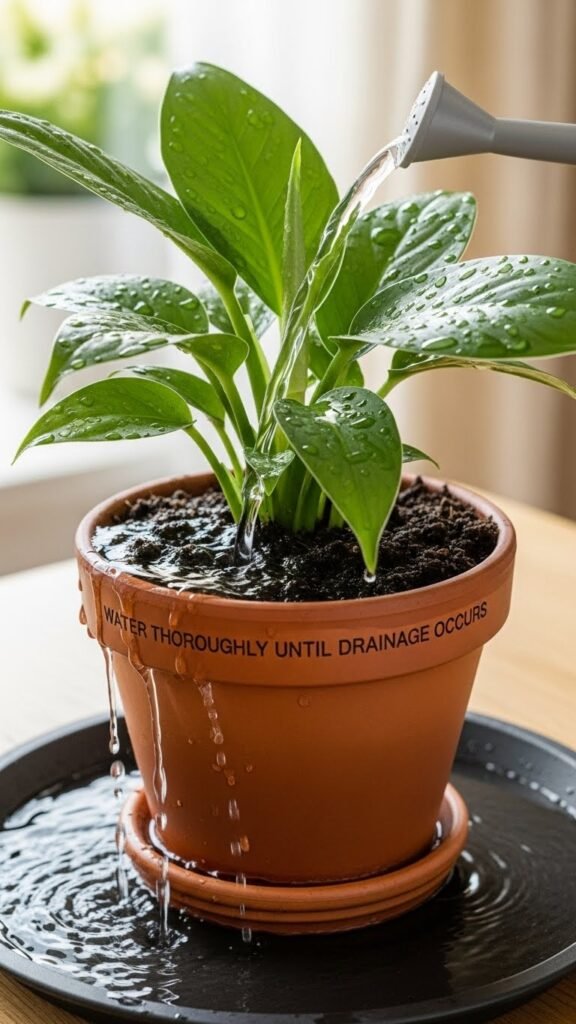
Water Thoroughly Until Drainage Occurs
Choose Well‑Draining Potting Mixes
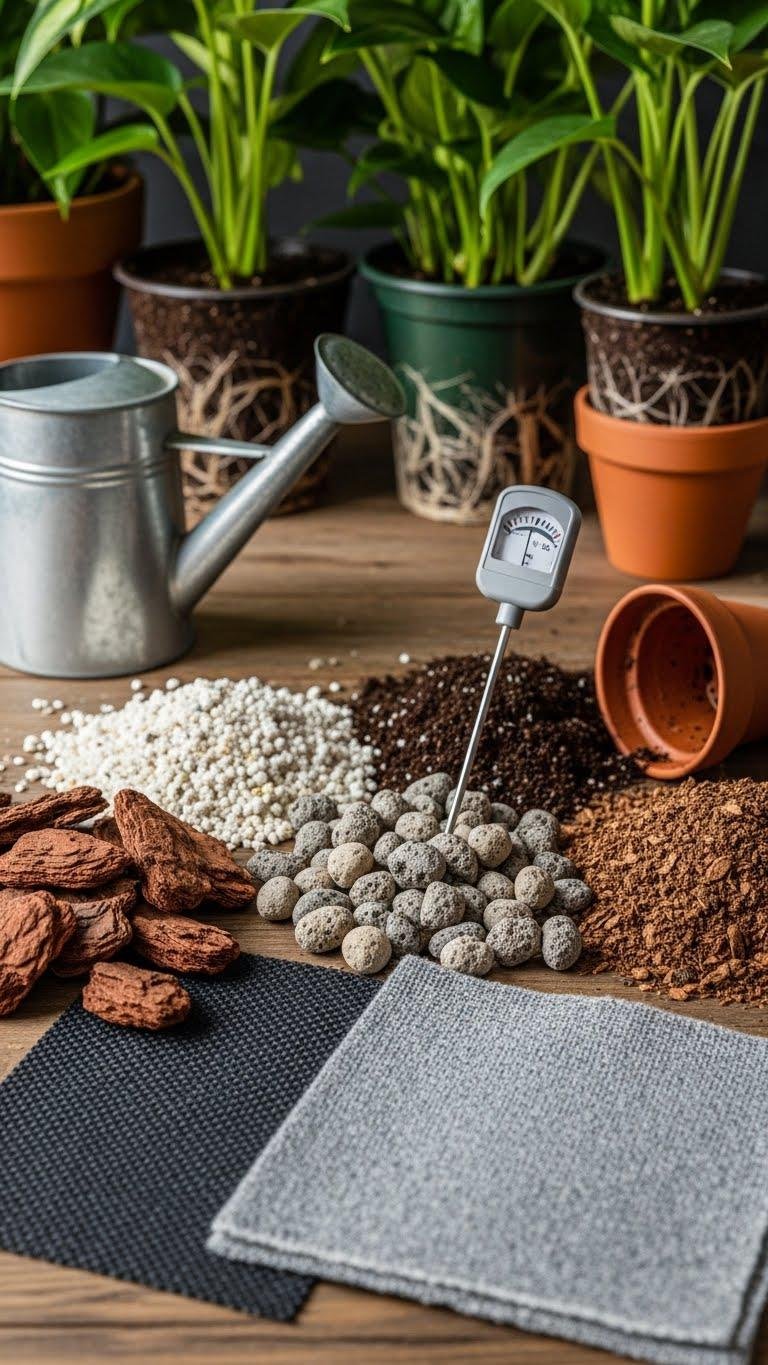
For healthy roots, pick a potting mix that drains quickly while still holding enough moisture for the plant’s needs. You’ll choose mixes with perlite, pumice or bark and add soil amendments sparingly to tailor texture and nutrients.
Fit a breathable container liner to protect pots and reduce compaction. Test moisture before watering, adjust mix for each plant’s freedom to thrive.
Always Use Pots With Drainage Holes
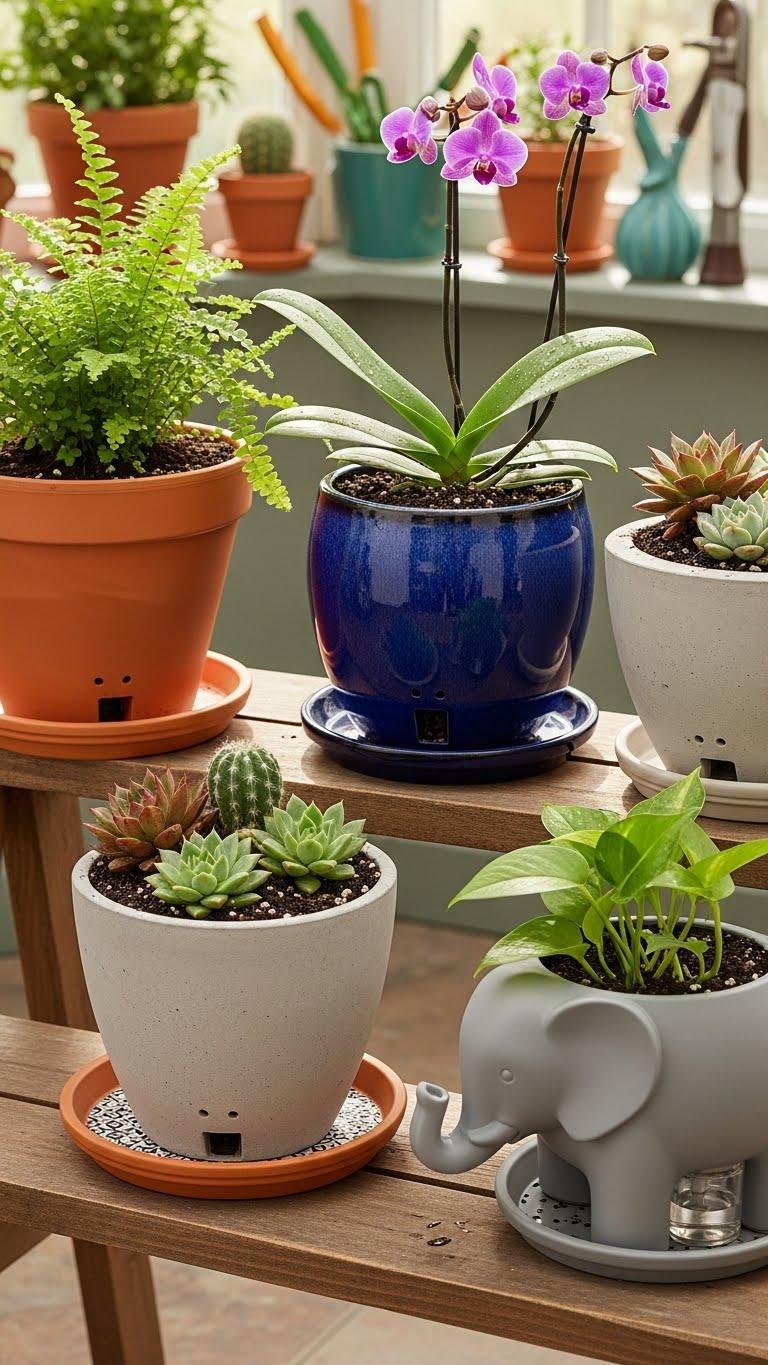
Although it’s tempting to pick a decorative pot without holes, always choose containers with drainage so excess water can escape and roots won’t sit in soggy soil.
You’ll prevent rot, control moisture, and keep plants thriving. Use self watering inserts or trays above decorative saucers to catch runoff without sealing the pot.
That gives you freedom to water confidently and avoid hidden problems.
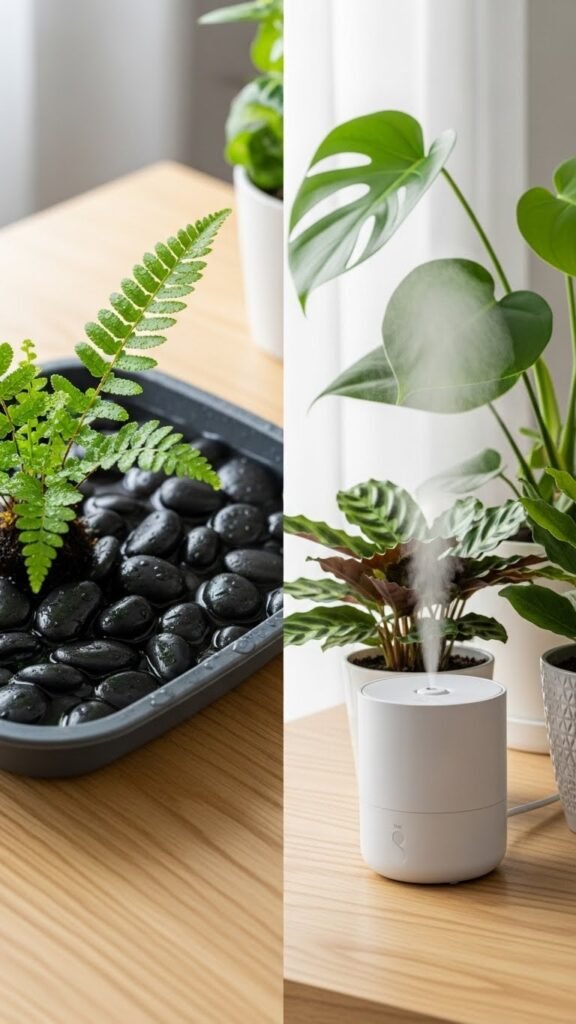
Raise Humidity With Pebble Trays or Humidifiers
Keep Stable, Draft‑Free Temperatures
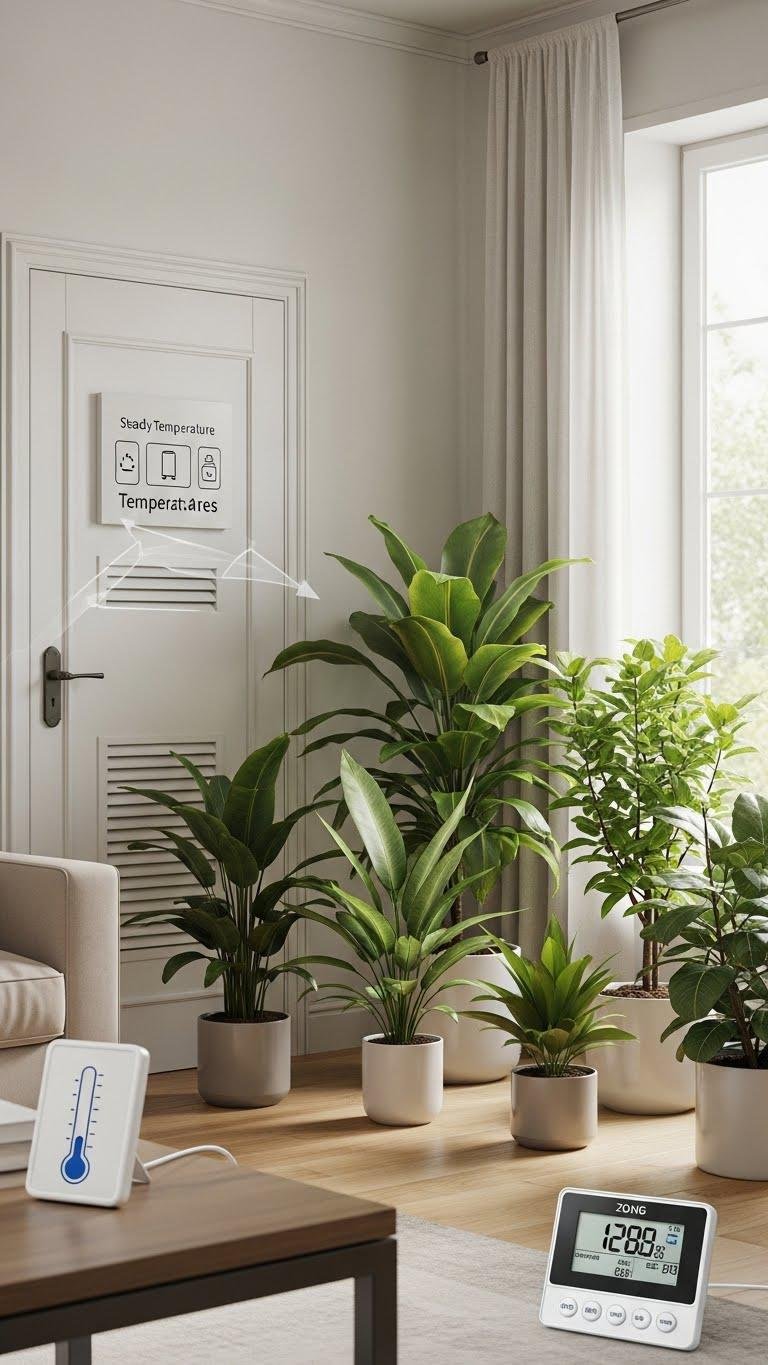
If you want healthy houseplants, keep indoor temperatures steady and free from drafts; sudden swings stress roots and stunt growth. You’ll control climate with thermostat zoning to protect different rooms and plants.
Place pots away from vents and doors, use temperature monitoring to track microclimates, and adjust placement or insulation. That steady, draft‑free environment lets plants thrive while you maintain freedom to arrange your space.
Harden New Plants Gradually
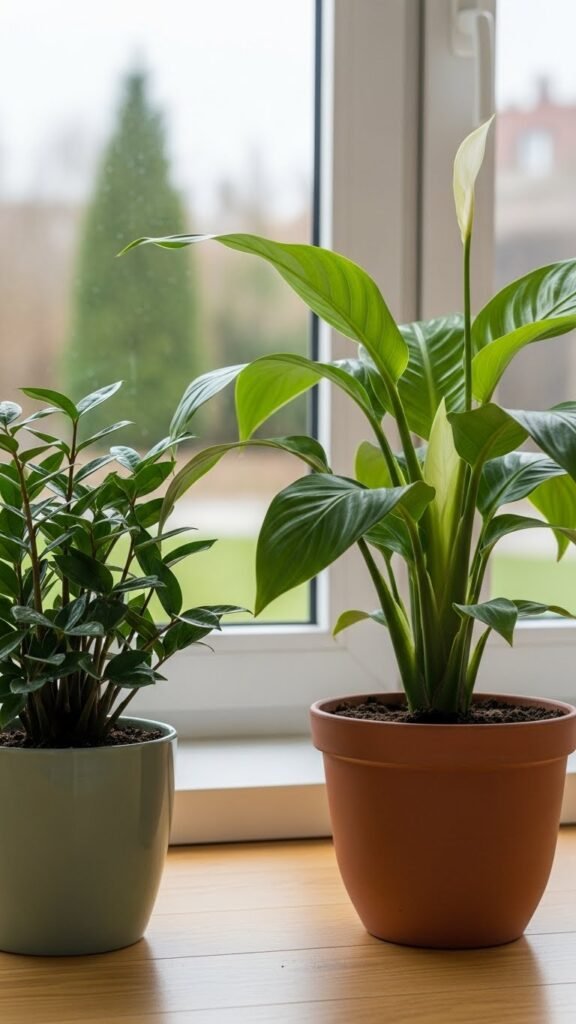
When you bring new plants indoors or out, harden them gradually so they adapt without shock; start by exposing them to reduced light, wind, and temperature variation for a few hours a day and increase exposure over 7–14 days.
You’ll follow an acclimation timeline: begin with brief gradual exposure, monitor moisture and leaf response, then extend time confidently so plants thrive without stress.
Shade Plants From Overheating Window Glass
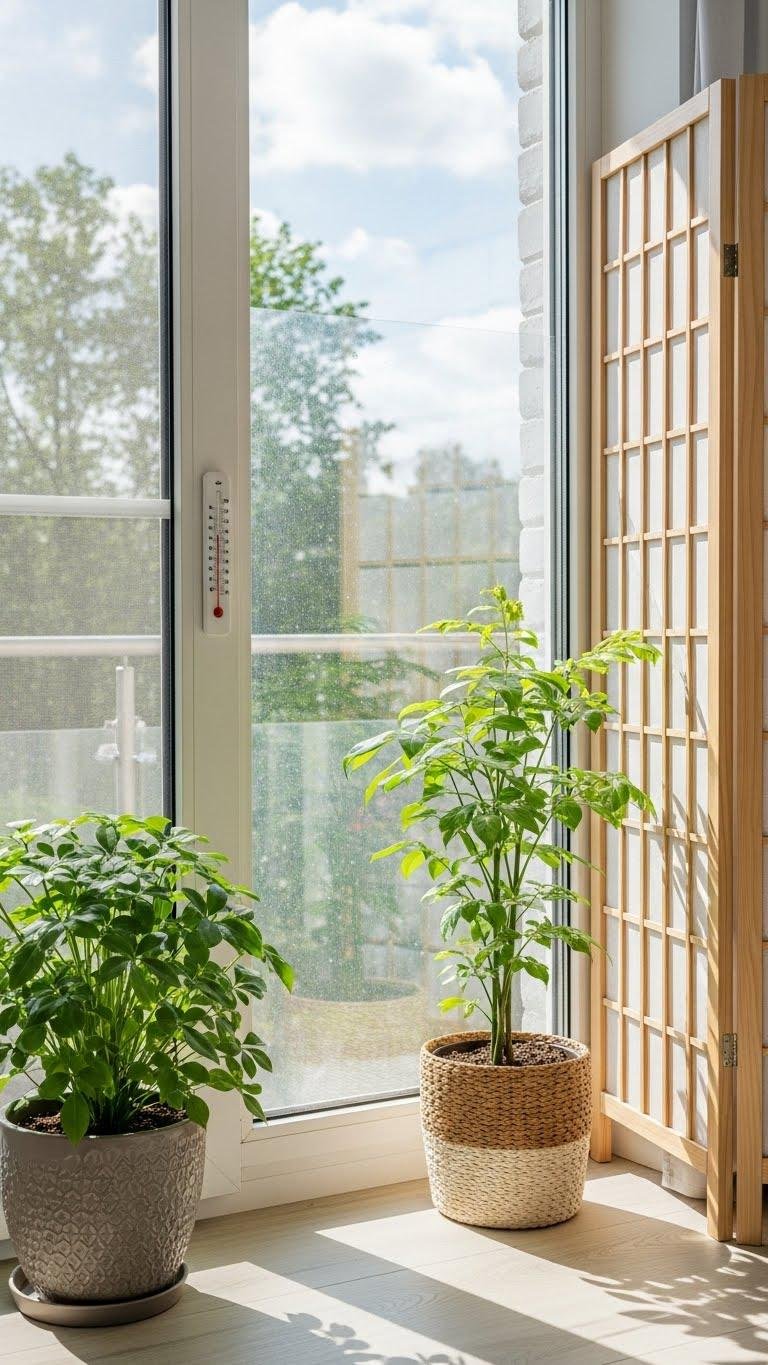
During hot afternoons, shield your plants from overheating window glass by creating a buffer that cuts glare and heat without blocking all light. Move pots back a foot, add sheer curtains or reflective window film, or use a light wooden screen.
Monitor glass temperature with a thermometer and adjust shading as needed. You’ll protect foliage while keeping freedom to position plants where they thrive.
Fertilize Lightly During Active Growth
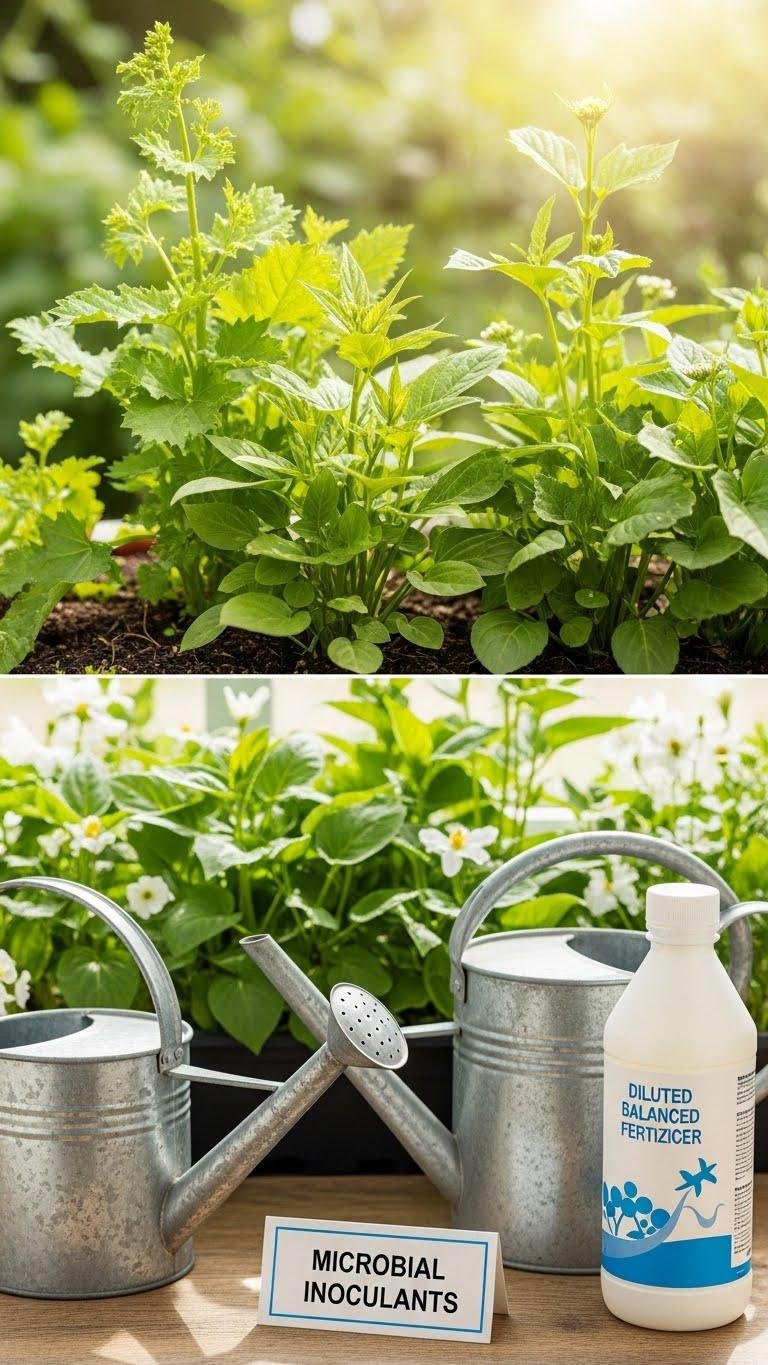
You’ll want to feed your plants lightly while they’re actively growing to support new leaves and blooms without risking salt buildup or leggy growth.
Use a balanced, diluted fertilizer every 2–4 weeks and consider microbial inoculants to boost soil life.
Encourage healthy root exudates by avoiding overwatering and giving plants bright, consistent light so they grow strong without dependency or excess.
Repot When Plants Become Rootbound
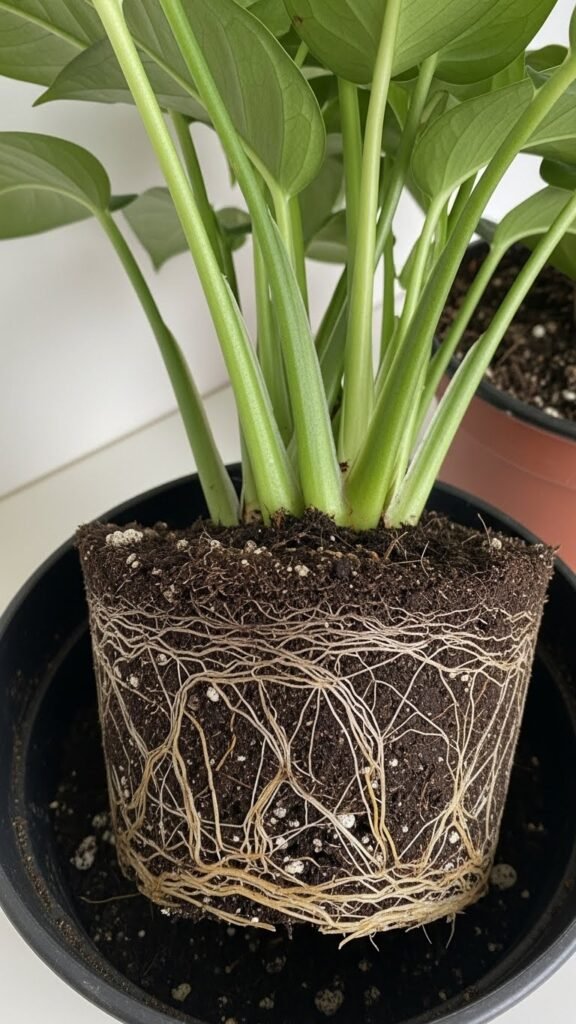
Check your pots regularly for signs the roots are crowding the soil: roots circling the drainage hole, soil that dries out almost immediately after watering, or stunted top growth all mean the plant’s become rootbound and needs more room.
Gently free the root ball, trim and root prune tangled roots, refresh soil, and repot so your plant can expand and thrive without constraint.
Use Slow‑Release or Diluted Liquid Fertilizers

When you want steady, low-maintenance feeding, choose slow‑release granules or dilute liquid fertilizers so plants get nutrients without sudden spikes that stress roots.
You’ll prefer slow release pellets for months-long supply; apply per label. Mix diluted liquid feed occasionally for control. Add microbial inoculants to boost root uptake and resilience.
Feed less in winter; monitor growth and adjust minimally to stay free.
Flush Containers Annually to Remove Salt Build‑Up
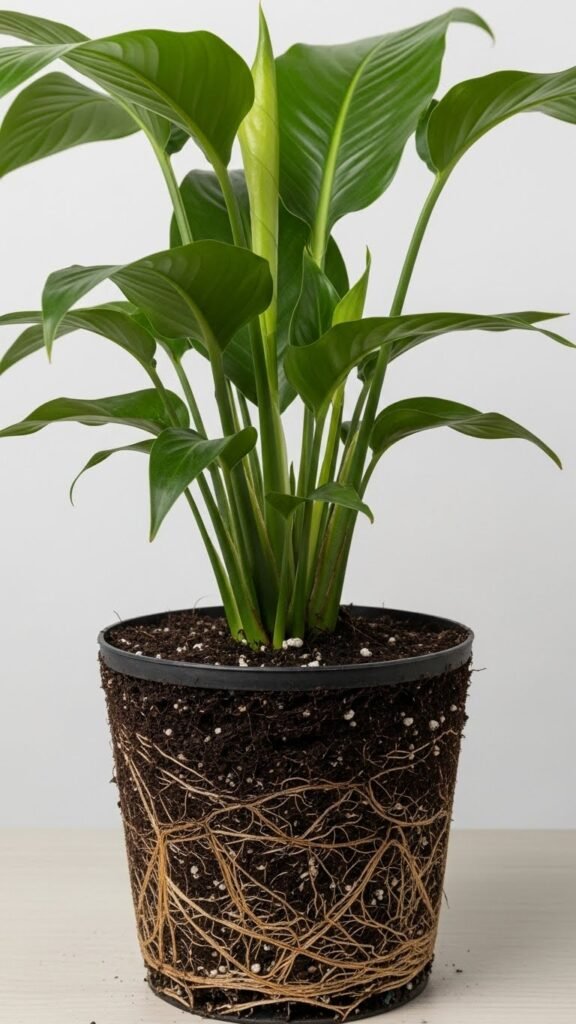
Regularly flush your containers to remove the salt buildup that accumulates from fertilizers and hard water, because those salts can burn roots and stunt growth over time.
You should perform soil flushing annually: run plenty of water through pots until runoff is clear, let drains fully, and repot or refresh medium if mineral buildup persists.
This protects roots and preserves plant vigor.
Inspect Regularly for Pests and Diseases

You should inspect your plants at least once a week, scanning leaves, stems, undersides, and soil for tiny signs of pests or disease—webbing, sticky residue, discolored spots, wilting, or slow growth—and note anything unusual so you can act fast.
Use a magnifier for microscopic inspection, keep symptom journaling with dates and photos, and set routine checks so you stay proactive and independent.
Improve Airflow to Reduce Fungal Issues
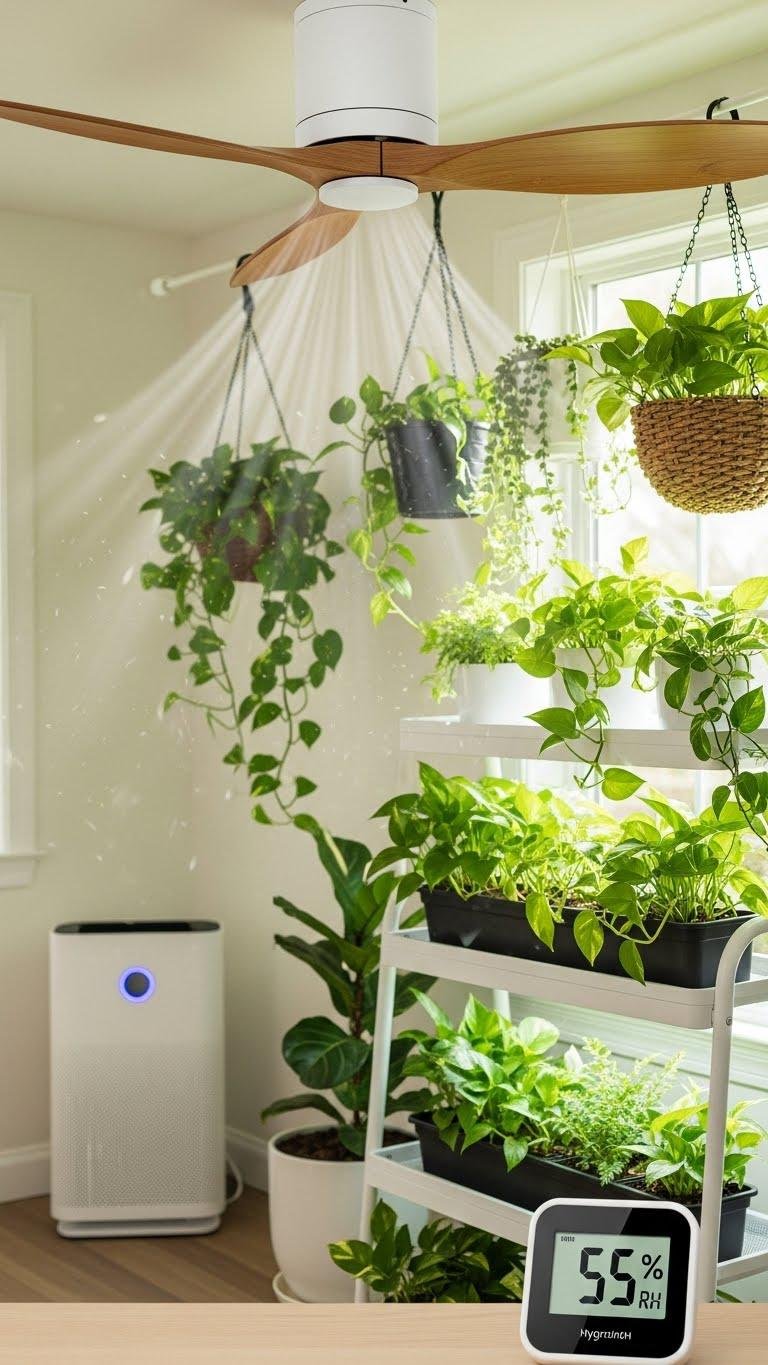
By opening up crowded spaces and encouraging steady air movement, you’ll cut humidity pockets that let fungal spores thrive.
Move plants for cross-ventilation, trim dense foliage, and set low-speed ceiling fans to circulate air without drying roots. Use air purifiers to reduce airborne spores and monitor humidity with a hygrometer.
You’ll prevent mildew and keep plants vigorous while retaining freedom to arrange your space.
Optimize Space With Vertical and Trailing Solutions
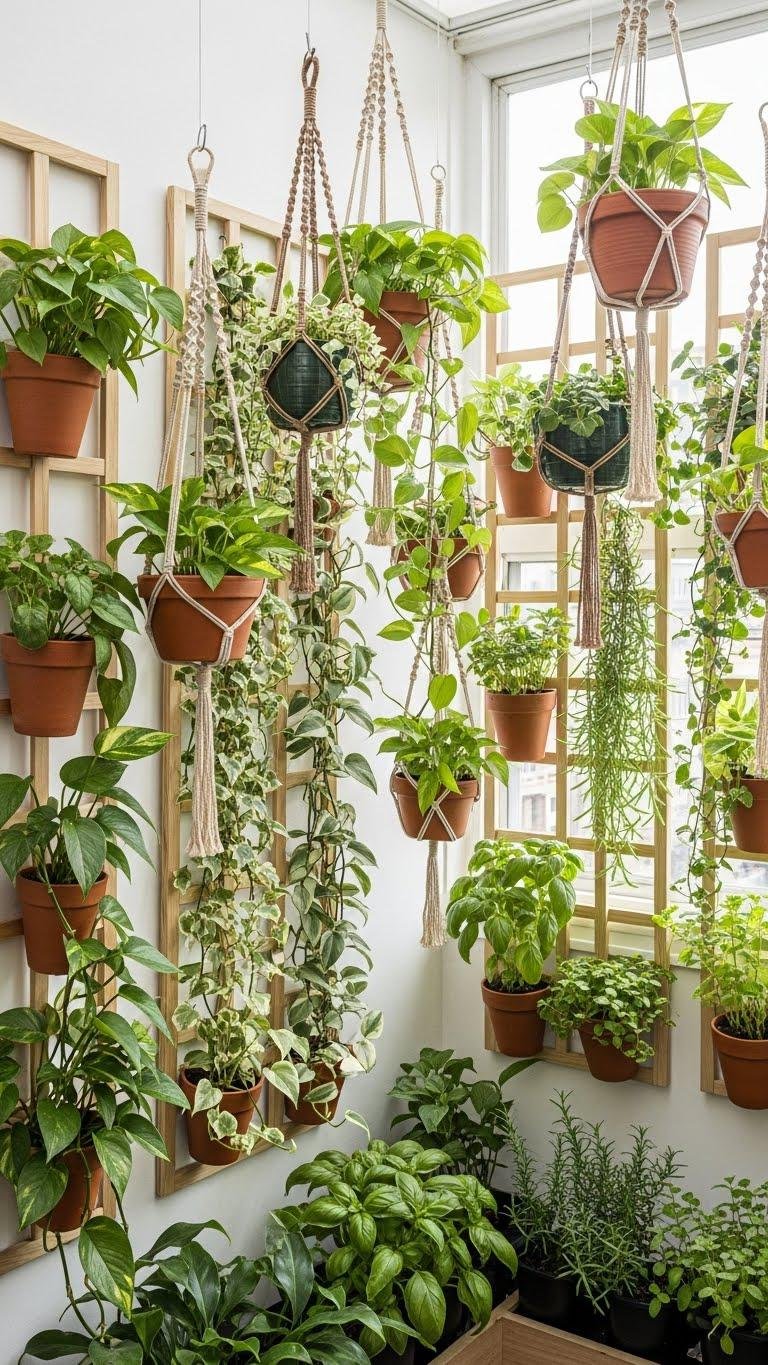
Good airflow gives you room to think vertically, so don’t waste horizontal space when plants benefit from height and trailing habits.
Use vertical trellises to train climbers, reclaim floor area, and create living screens.
Mount hanging planters for vines and herbs, keeping light exposure and soil moisture manageable.
You’ll maximize freedom, simplify care, and enjoy a layered, mobile indoor garden.