
You can bring fresh herbs to every meal with a few smart tweaks: match plants to your light, use adjustable full‑spectrum LEDs for darker months, and choose compact or vertical setups for small spaces. I’ll show practical combos, potting tips, simple hydroponics, and harvesting routines that keep basil, thyme, mint, cilantro, and rosemary thriving — plus layout ideas to make them easy to reach and maintain.
Create a South‑Facing Window Herb Garden

Now that you’ve matched herbs to the light in your home and mapped microclimates, put those notes to work by planning a south-facing window herb garden—this exposure delivers the longest, brightest light, so place sun-loving herbs like basil, rosemary, thyme, and sage where they’ll get 6–8 hours of direct sun.
Use microclimate mapping, rotate pots, add thermal mass integration (stone trays) to steady temps and extend growing freedom.
Set Up a North/East Window Shade‑Tolerant Herb Shelf
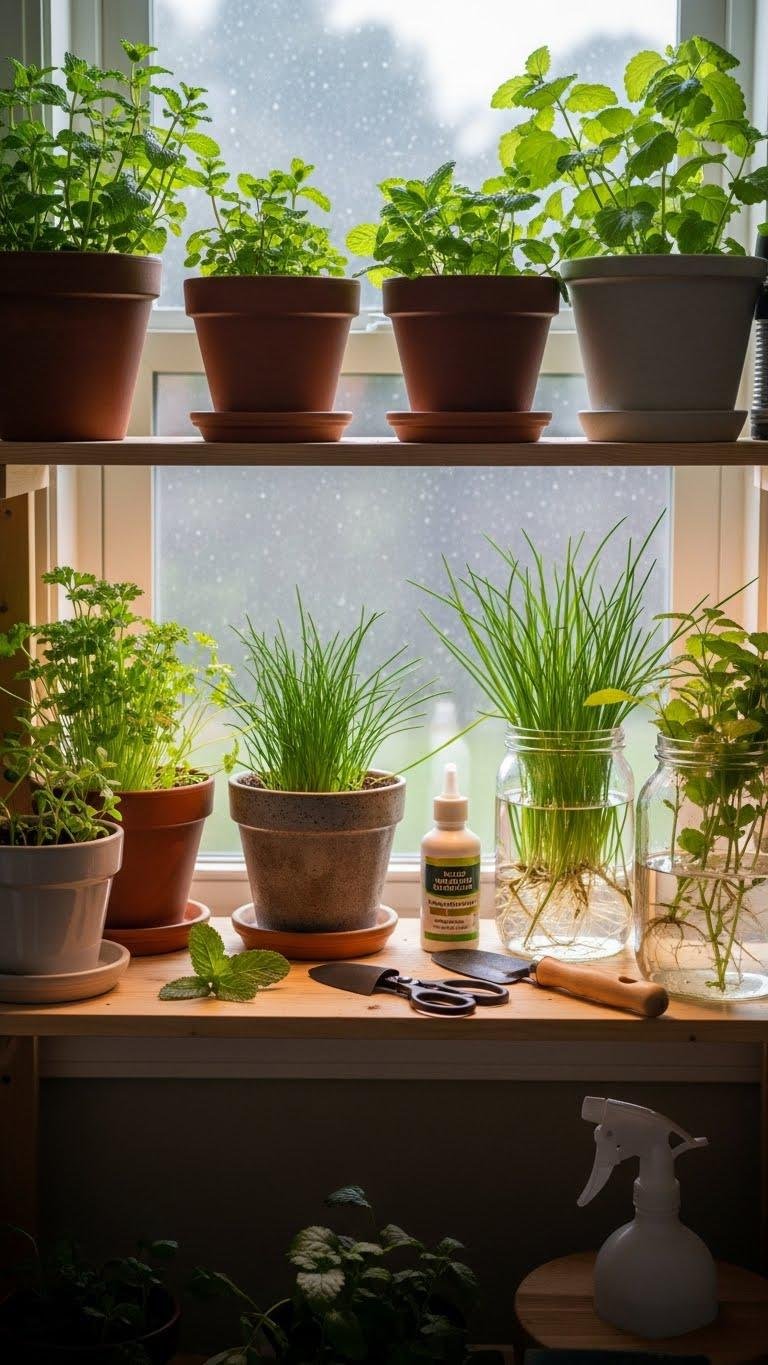
While north- and east-facing windows give gentler light, you can still grow a thriving shelf of shade-tolerant herbs by choosing the right plants, arranging pots for airflow, and supplementing light only when necessary.
Pick mint, parsley, chives and lemon balm, practice low light propagation, use shade tolerant fertilizers sparingly, rotate pots weekly, trim for vigor, and embrace simple routines that free you.
Use a Hydroponic Countertop Kit for Continuous Harvests
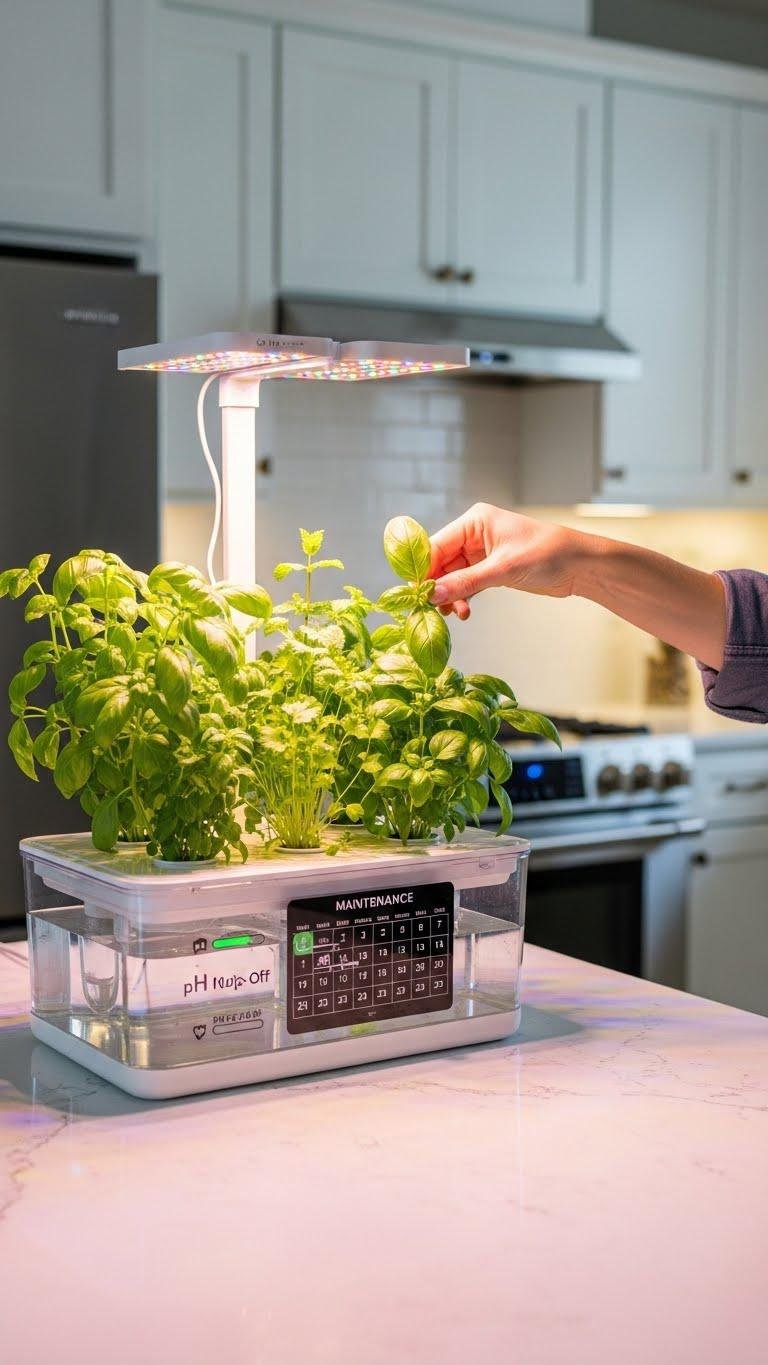
If you want year-round fresh herbs with minimal fuss, a countertop hydroponic kit is a smart next step after setting up proper light. You’ll gain continuous harvests by managing nutrient cycling, pruning for production, and monitoring pH.
Keep reservoir maintenance on a schedule: clean, refill, and change solution weekly or biweekly. It’s efficient, compact, and frees you to harvest anytime.
Plant Mediterranean Perennials in Deep, Well‑Draining Pots

When you choose Mediterranean perennials like lavender, rosemary, and santolina, plant them in deep, well‑draining pots so their roots can spread and stay dry between waterings.
Select containers that provide adequate root depth and use a gritty potting mix with added perlite or sand.
Position plants in bright light, water sparingly, and prune for airflow so they thrive and free you to enjoy harvests.
Grow Fast Annuals From Seed on a Staggered Schedule
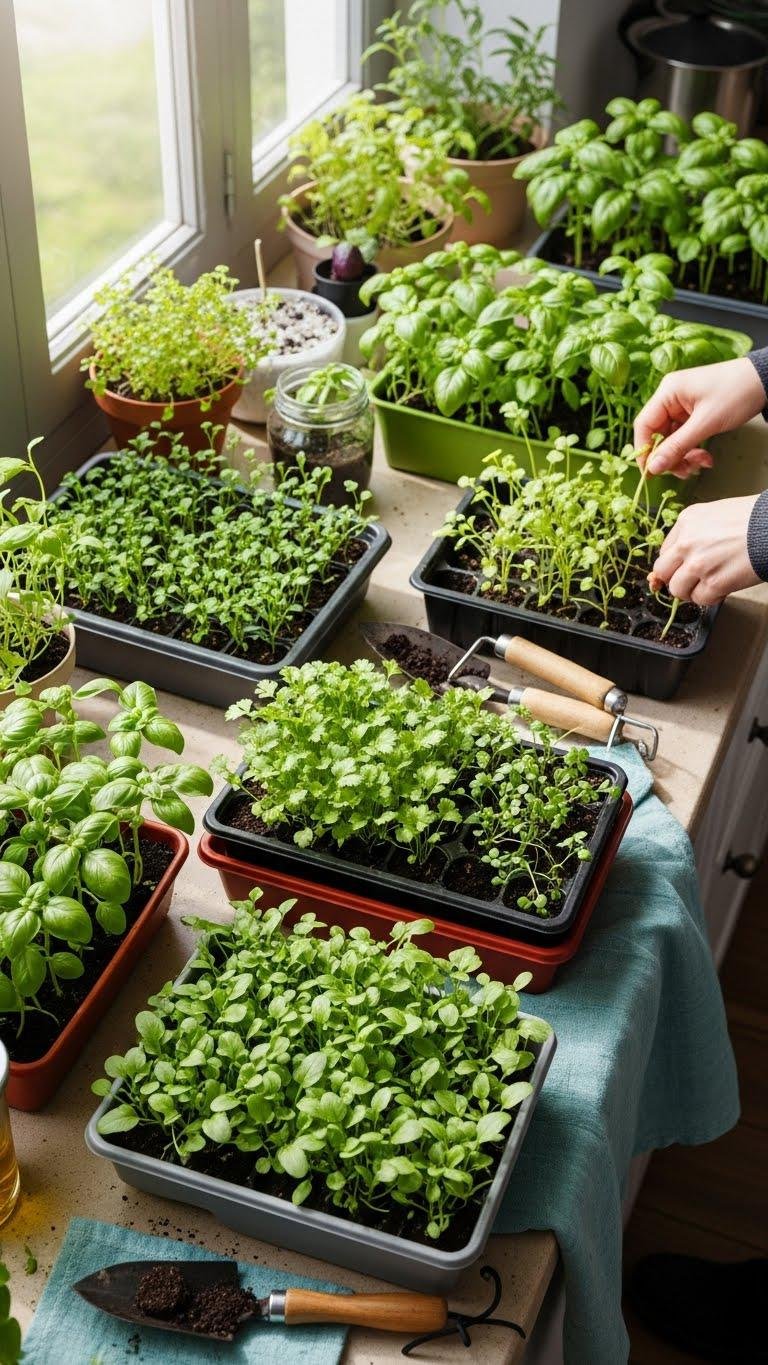
Regularly sowing quick‑growing annuals on a staggered schedule keeps your kitchen windowsill or balcony overflowing with fresh herbs and salad greens all season long.
You’ll plan succession planting every 2–3 weeks, choosing fast basil, cilantro, arugula and culinary microgreens.
Use shallow trays, consistent warmth, and light; thin seedlings promptly and harvest young leaves to encourage continuous growth and freedom to pick whenever you need.
Use Vertical Planters or Hanging Baskets to Save Space
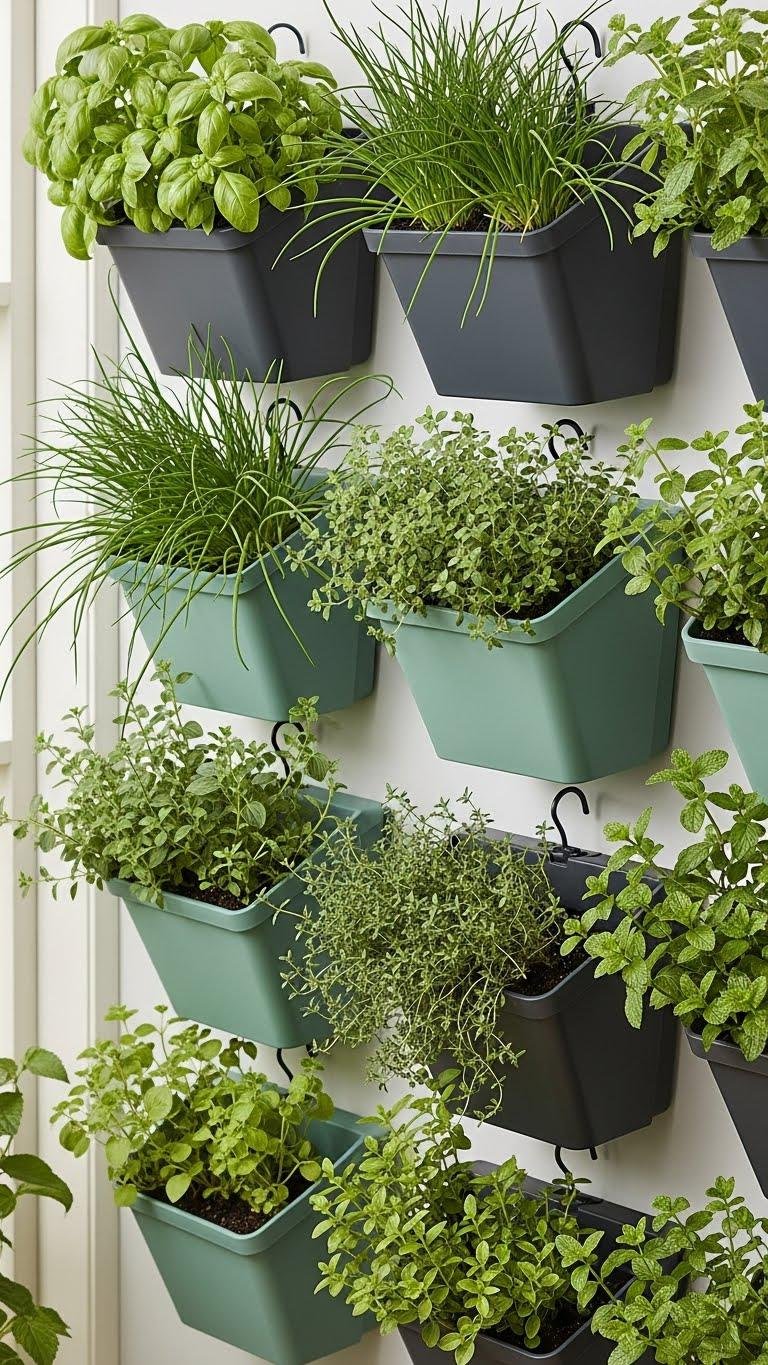
Free up floor space and boost light exposure by stacking herbs in vertical planters or hanging baskets that make every inch count. You’ll choose stacked pockets for shallow-rooted basil, chives, and thyme, or cascading planters for trailing oregano and mint.
Install secure hooks, use well-draining mix, water from the top, and rotate units so each plant gets fresh air and easy access.
Employ Reflective Surfaces to Maximize Indoor Light
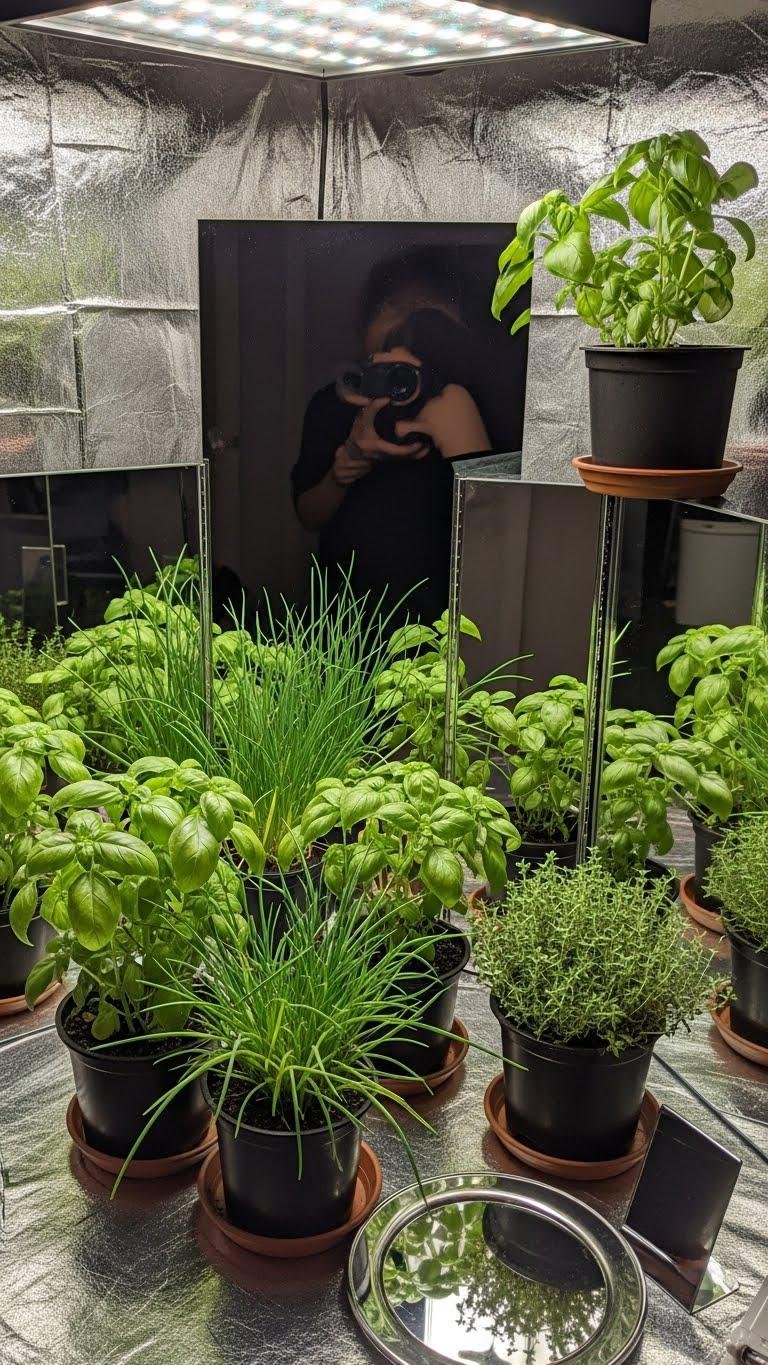
By angling mirrors, glossy panels, or even aluminum foil sheeting around your herb racks and windows, you can bounce scarce indoor light to the undersides and inner rows of plants so none of your basil, chives, or thyme sits in a dim spot.
Plan mirror placement to avoid glare, secure reflective foil smoothly, and adjust angles seasonally so each pot gets steady, even light.
Maintain Proper Humidity and Nighttime Temperature Drops
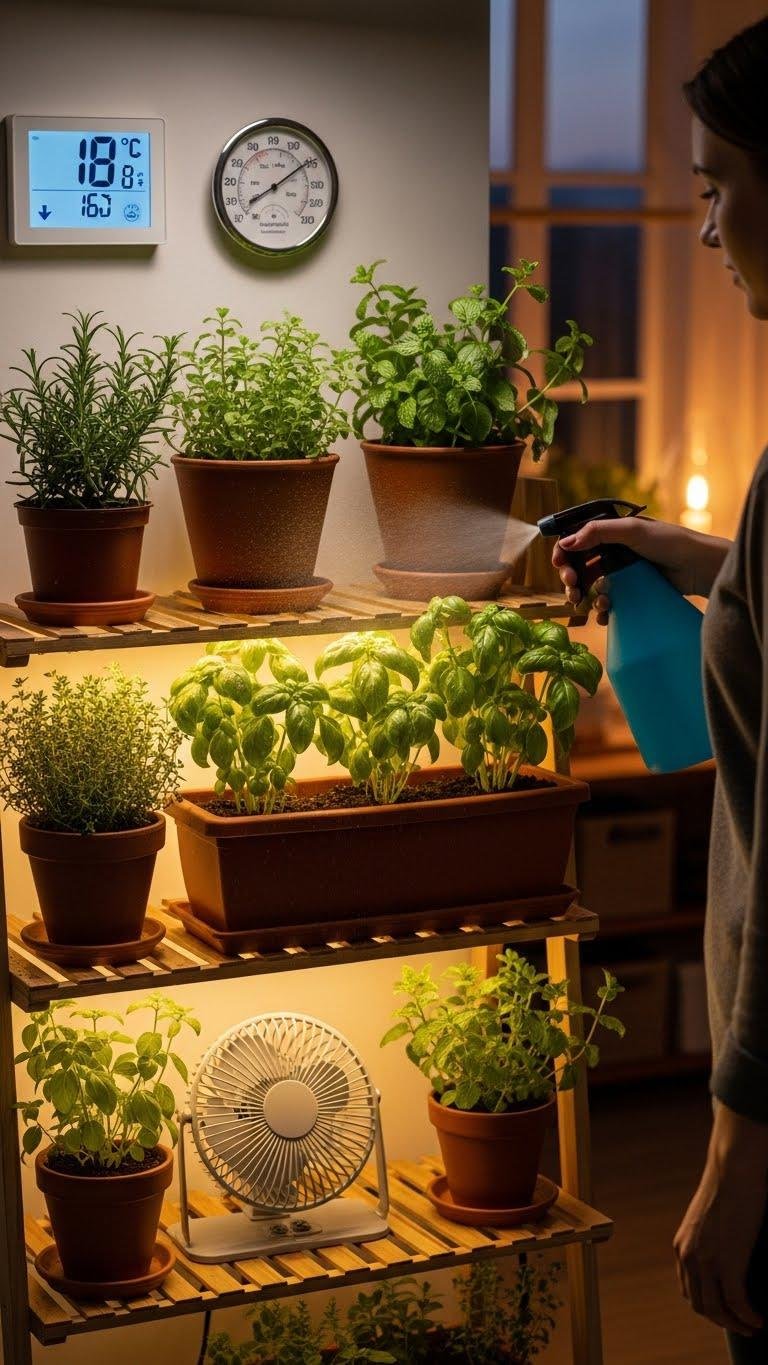
After you’ve been rotating pots to keep growth balanced, pay attention to humidity and nighttime temperature drops to help herbs thrive. You’ll mimic outdoor nights by lowering temps 10–15°F after dusk and keeping relative humidity moderate; avoid overhumidifying to prevent mildew.
Use a thermostat, a small fan, and occasional misting; monitor with a hygrometer so you stay precise and free to experiment.
Feed With Diluted Fertilizer During Active Growth
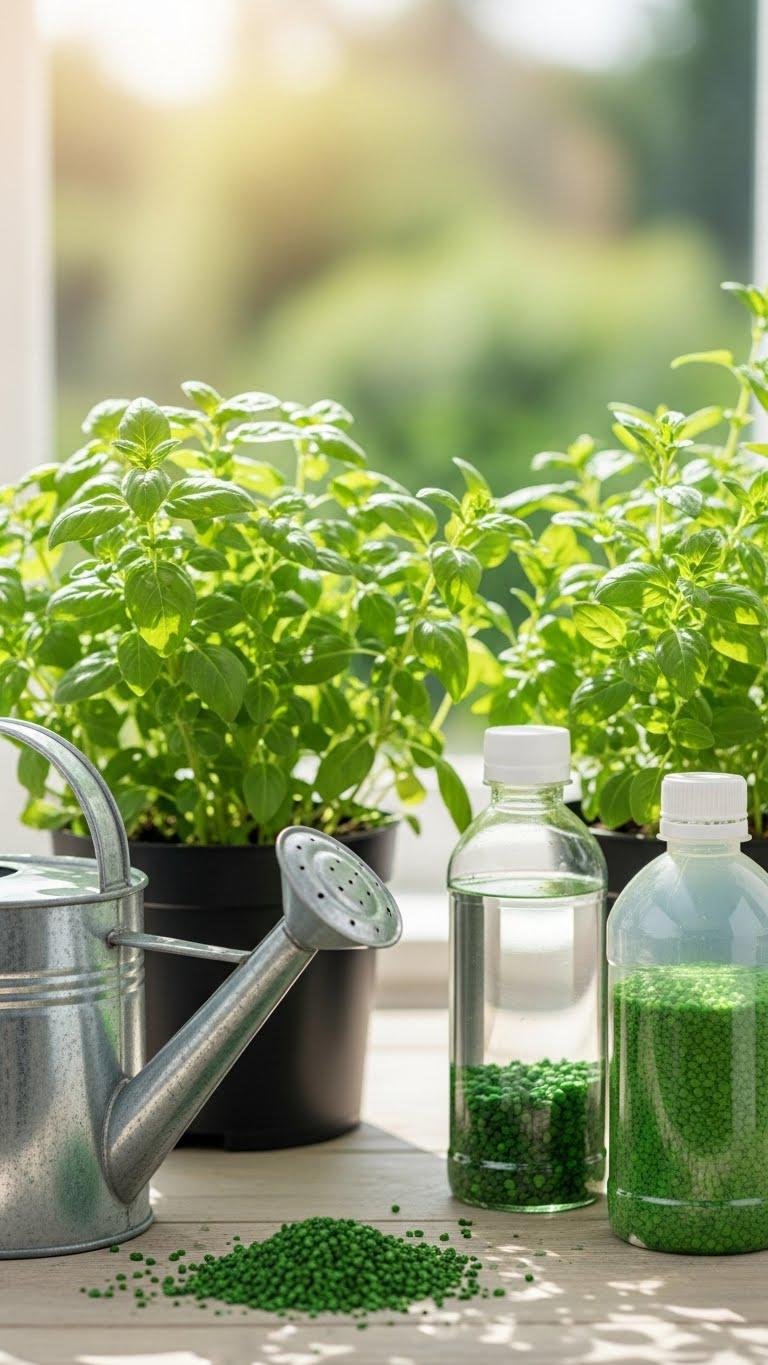
Start feeding your herbs once you see vigorous new growth, using a balanced water-soluble fertilizer diluted to half or quarter strength so you don’t burn tender roots.
Alternate occasional slow release granules in potting mix with light organic liquid feedings every two to four weeks during active growth. You’ll encourage robust leaves without overdoing nutrients, keeping care simple and freeing your time.
Monitor and Treat Common Pests Organically
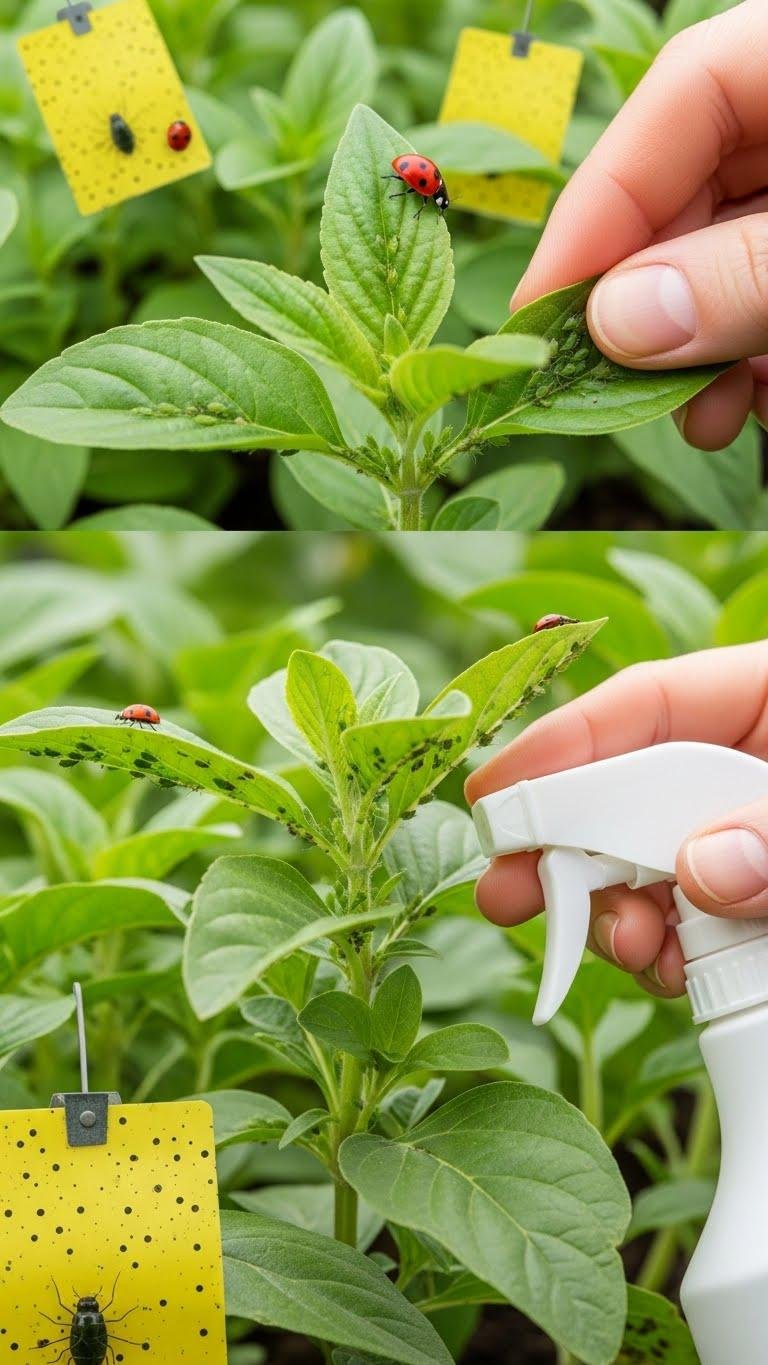
Although pests will sometimes sneak past quarantine, you can catch most problems early by checking your herbs closely and regularly—inspect undersides of leaves, stem junctions, new growth, and the soil surface at least once a week.
Remove pests by hand, rinse with water, use insecticidal soap, deploy sticky traps, and encourage natural predators like ladybugs. Act quickly to protect flavor and freedom.
Repot or Refresh Soil Every 12–18 Months
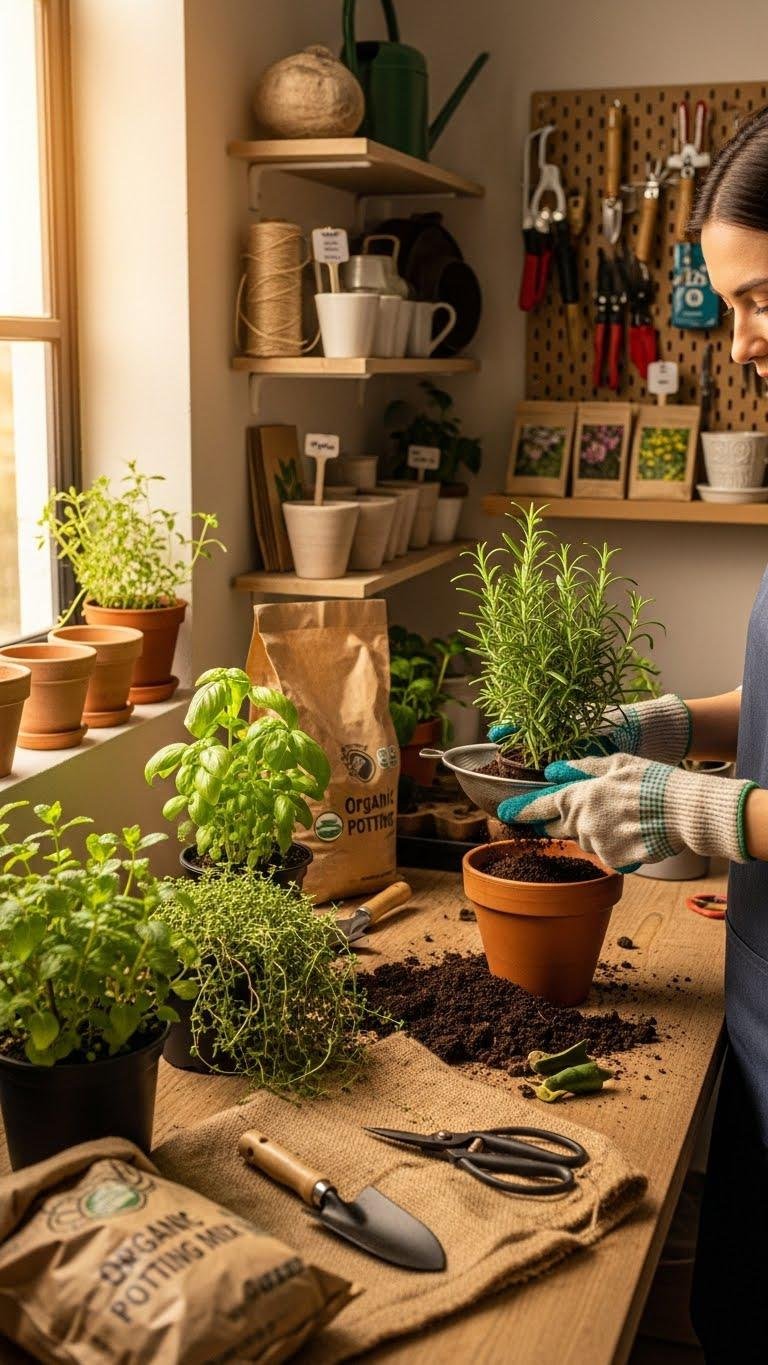
Regularly—about every 12–18 months—you should repot herbs or refresh their soil to prevent nutrient depletion, root crowding, and poor drainage from stunting growth.
You’ll do a quick soil testing to check pH and nutrients, trim roots if pot-bound, replace half the mix or repot into larger containers, and practice container sterilization between uses.
These steps keep your herbs vigorous and free.
Pair Herbs by Flavor and Use for Kitchen Convenience
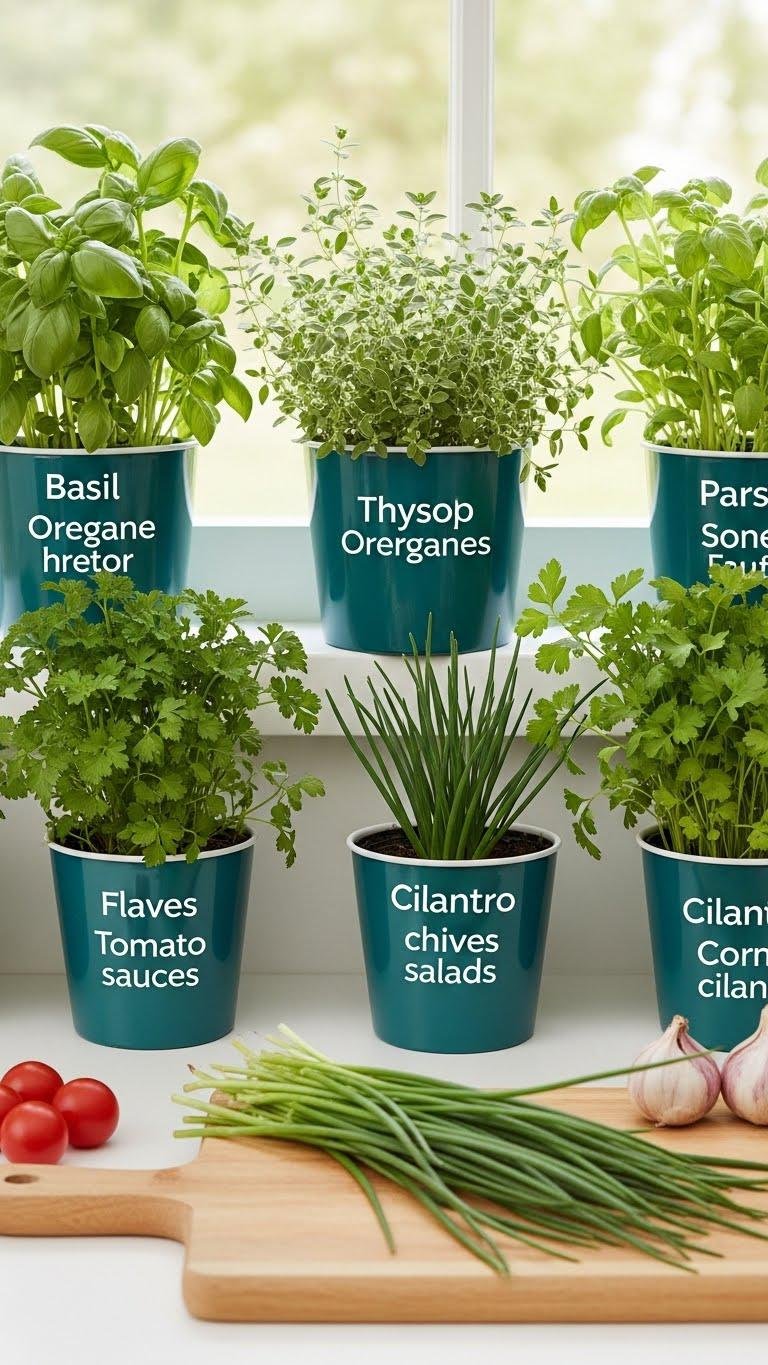
When you group herbs by flavor and typical use—like keeping basil, oregano, and thyme together for tomato dishes, and parsley, chives, and cilantro near fresh salads and garnishes—you’ll save time and make cooking smoother; arrange pots or window boxes so the herbs you grab together are literally side by side, label them if needed, and note which ones prefer the same light and watering to avoid extra care work.
Pair herbs by flavor pairing, streamline meal planning, and place frequently used combinations within arm’s reach so you’ll cook more freely and efficiently.
Combine Permanent Perennials With Quick‑Turnover Annuals
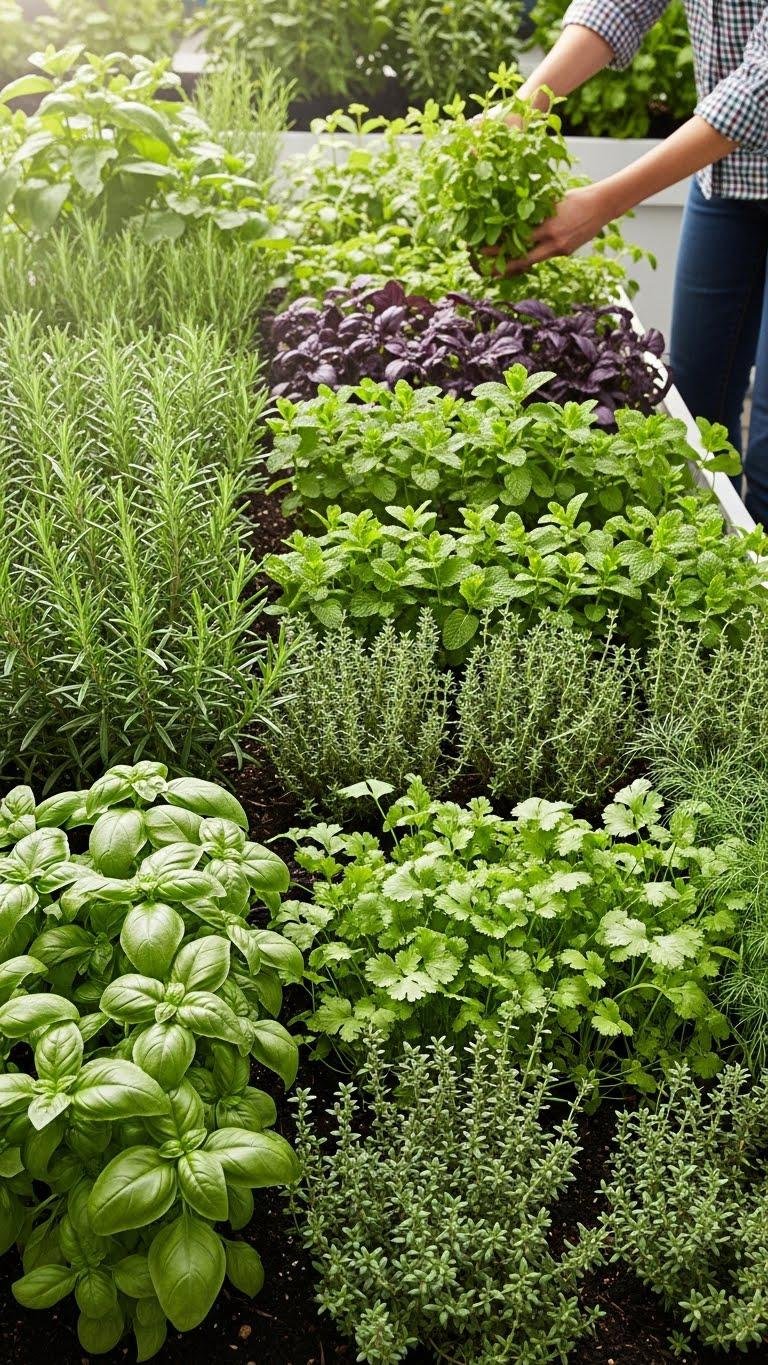
Pairing long-lived perennials like rosemary, mint, and thyme with fast-turnover annuals such as basil, cilantro, or dill gives you steady structure and fresh variety in the same container or bed.
You’ll plan perennial rotation to prevent overcrowding, use microclimate planning for light and warmth, and stagger plantings.
Harvest often, replace annuals quickly, and enjoy continuous, low-fuss flavor freedom indoors.