
You’ll find 26 compact, stylish ways to bring succulents into your rooms without fuss. Each idea balances sculptural form with easy care—think shallow dishes, stacked towers, hanging pods, and single-specimen statements. I’ll show plant choices, textures, and simple styling cues that keep designs modern and low-maintenance, plus quick placement and light tips to help them thrive—so you can pick a look that fits your space and keep going.
Tall Columnar Succulent Backdrop for Shelves
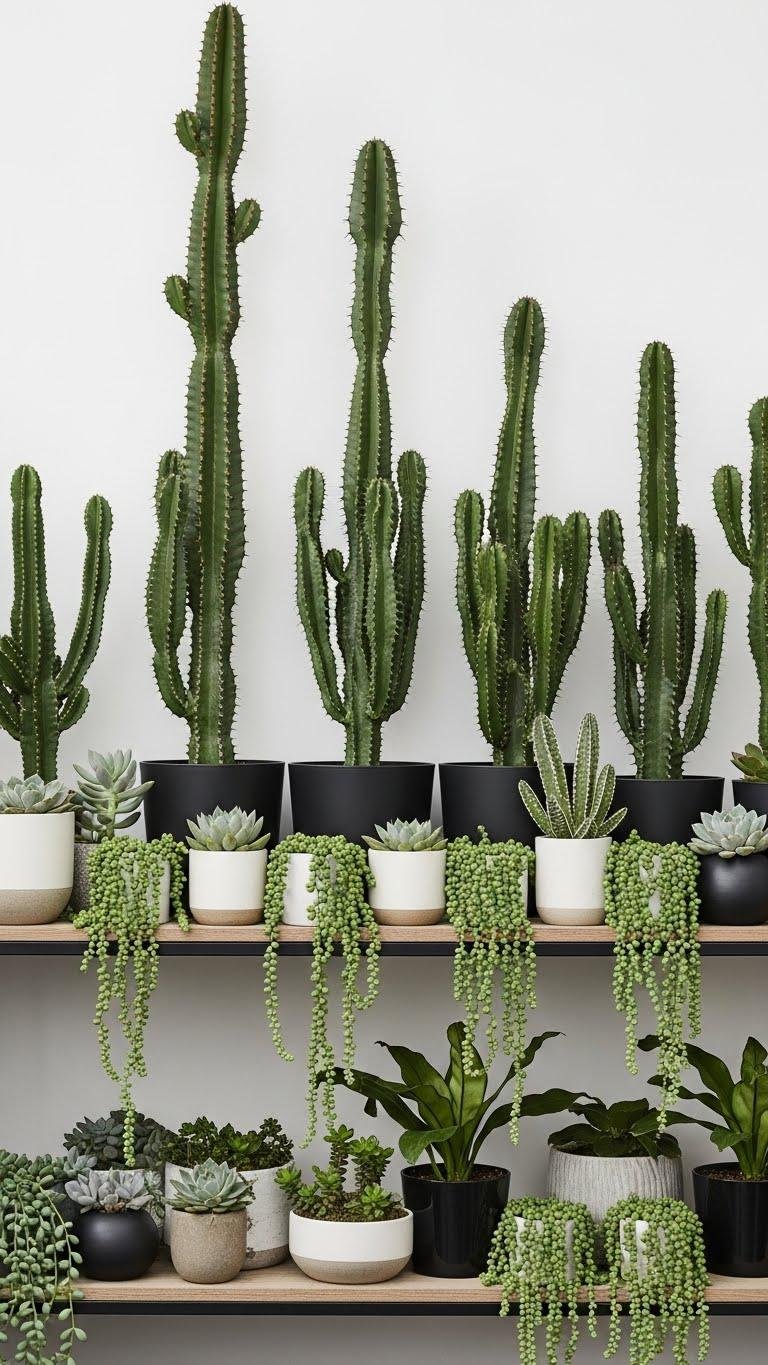
Tall columnar succulents give your shelf a sculptural backbone, anchoring low pots and trailing vines with vertical interest.
You’ll choose species with clean vertical silhouettes to form a striking shelf backdrop. Place them at varying depths, keep soil lean, and rotate for even growth. The look’s minimal, liberated — you’ll enjoy low-maintenance drama that reads modern and effortlessly free.
Layered Rosette and Cactus Centerpiece
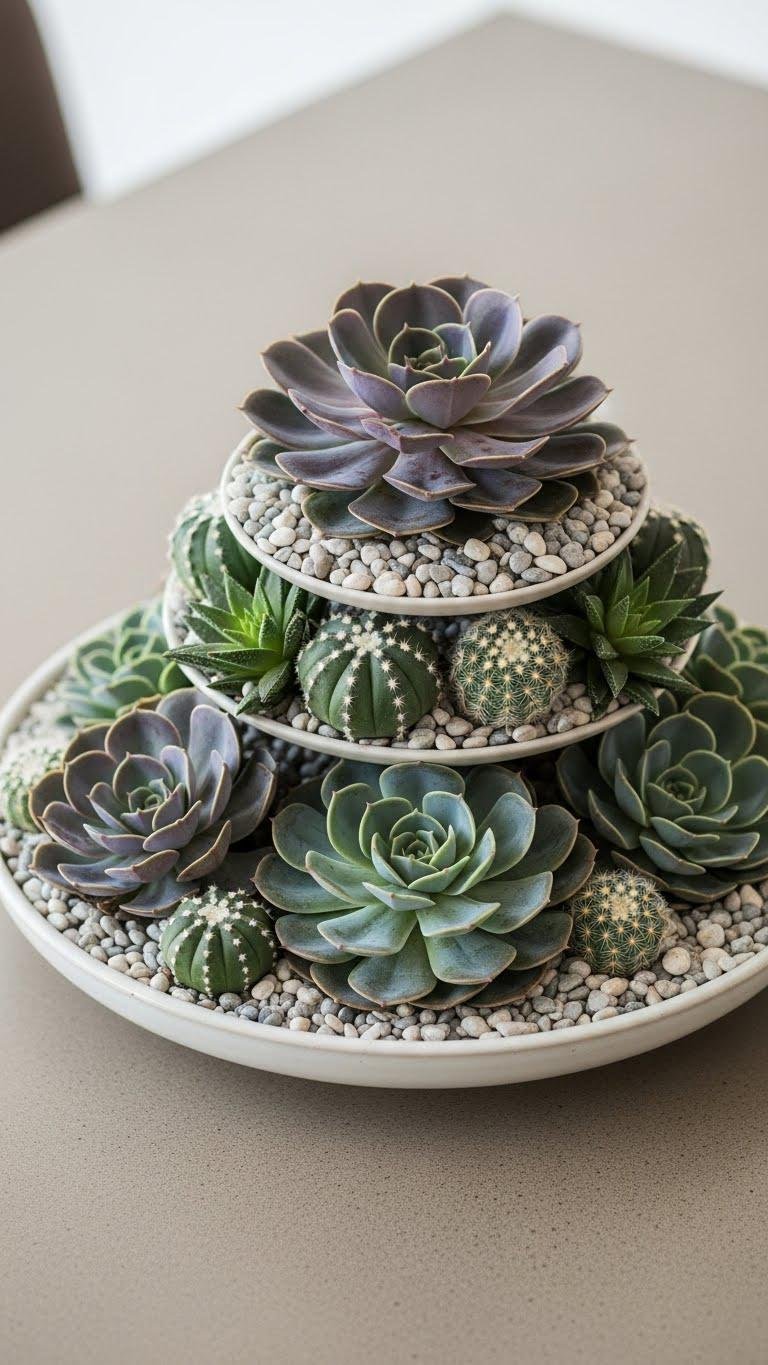
If you liked the columnar backbone, layer in rosettes and low cacti to soften that vertical drama and create a compact centerpiece. You’ll use rosette layering to build airy tiers, then add cactus pairing for contrast and texture. Choose sculptural Echeveria, mini Astrophytum, and pale gravel. You’ll keep soil shallow, water sparingly, and let the composition breathe—modern, liberated, intentional.
Trailing Succulents in a Shallow Dish Garden
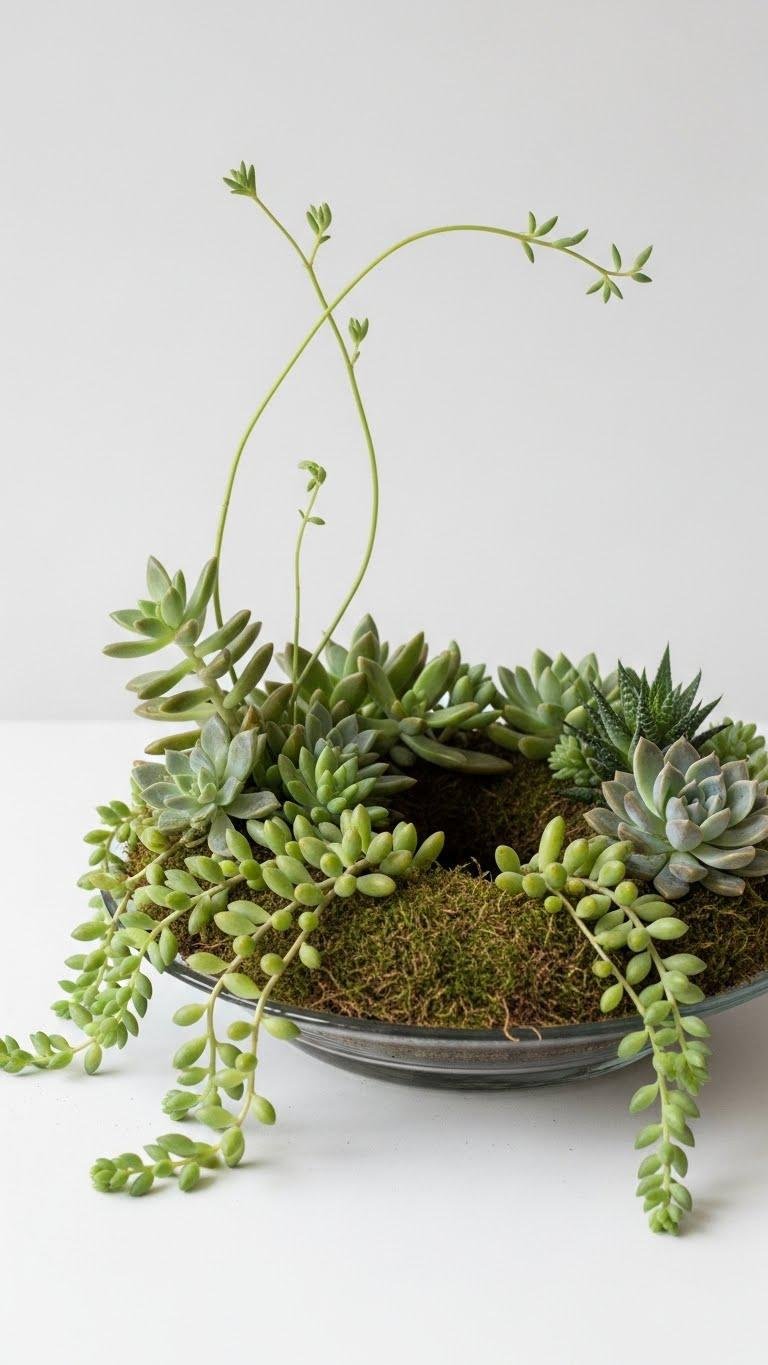
Lean into low, cascading movement by planting trailing succulents in a shallow dish garden where form and negative space matter as much as the plants themselves.
You’ll favor airy compositions, a minimal palette, and a discreet drip tray to protect surfaces. Add a moss ring for contrast and moisture buffering. Let stems spill freely; prune sparingly to keep the design effortless and modern.
Symmetrical Twin-Pot Pairing
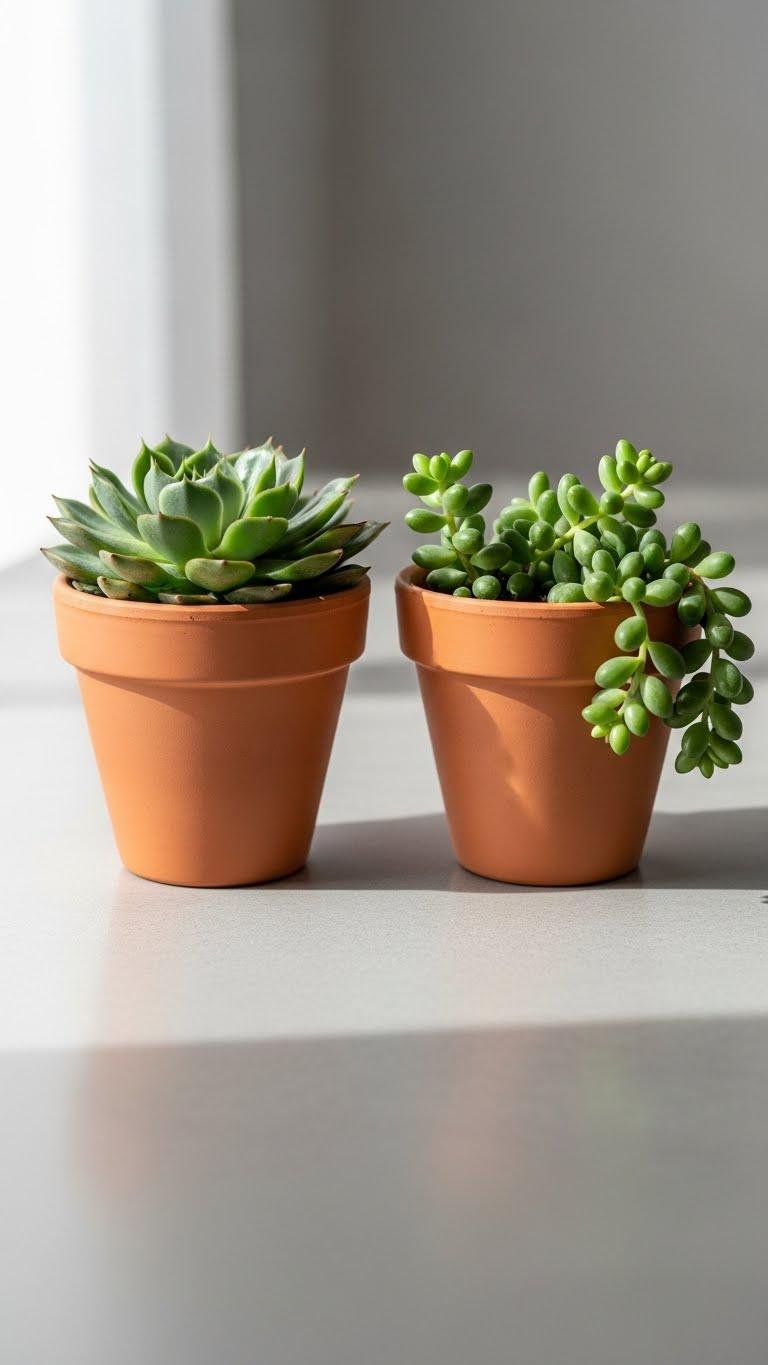
Often you’ll place two matching pots side by side to create a calm, balanced focal point; the twin-pot pairing relies on symmetry to amplify form and texture rather than color.
You choose matching pots and simple succulents, use mirrored placement for rhythm, and let negative space breathe. This minimalist approach feels modern and liberating — deliberate, quiet, and effortlessly chic.
Geometric Grid of Mini Succulents
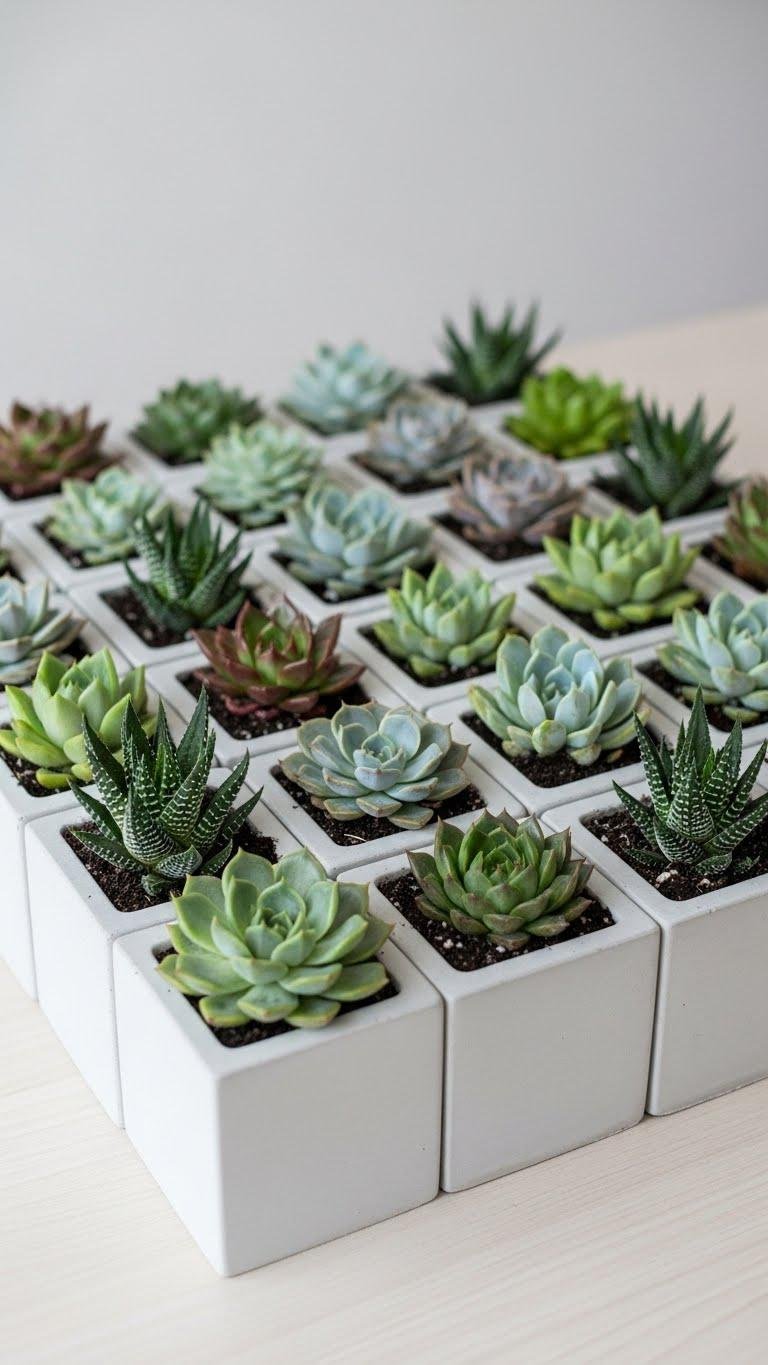
When you arrange tiny succulents in a strict grid, the repeated shapes read like a living graphic — tidy, rhythmic, and unmistakably modern.
You choose modular planters, keep precision spacing, and let varieties breathe.
The result feels deliberate but liberating: a compact, editable landscape you can remix anytime.
It’s a minimalist statement that respects plant needs and your appetite for flexible style.
Abstract Swirl Arrangement With Negative Space
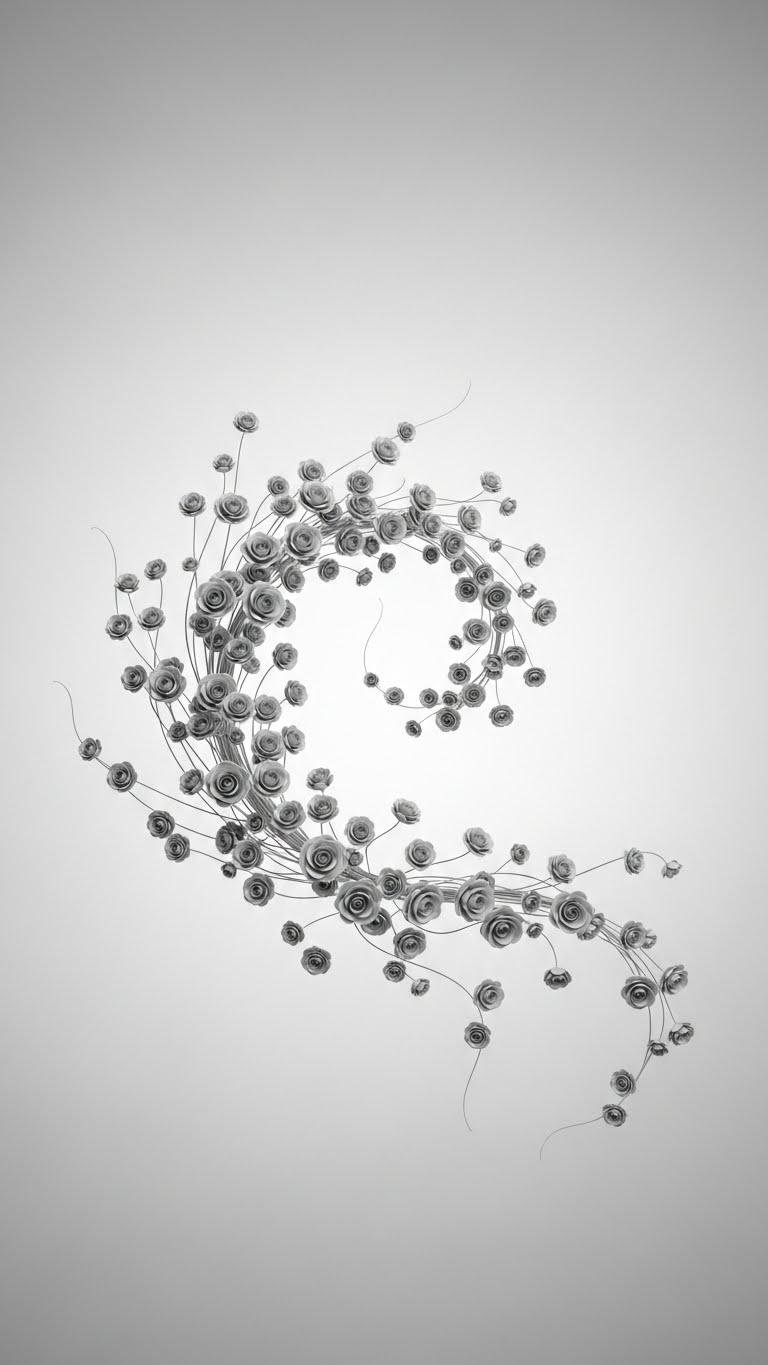
If the grid reads like a living graphic, the swirl plays like motion captured — a spiral of tiny rosettes and trailing stems that channels energy while leaving breathing room. You arrange an abstract swirl with confident spacing, favoring negative space and minimalist contrast.
You keep airy placement, let each plant breathe, and create a calm, liberated focal point that reads modern and effortless.
Monochromatic Green Display in White Pots
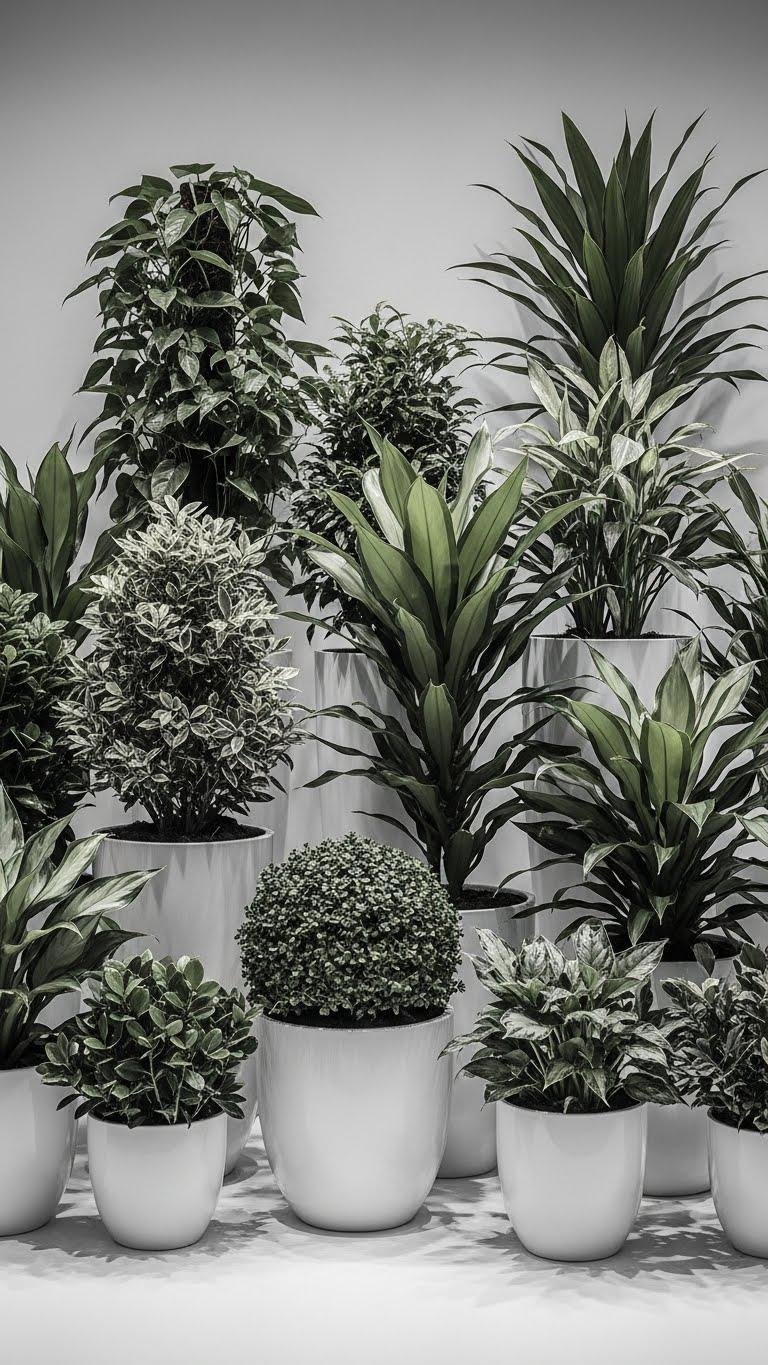
Although the palette stays within a single hue, a monochromatic green display in white pots feels deliberately modern and serene; you’ll rely on texture, scale, and pot geometry to create contrast and movement. Choose matte white pots, mix succulents with varying heights foliage, and space them confidently.
Let form and shadow dictate rhythm so your display reads calm, curated, and free.
Complementary Blue-and-Orange Succulent Mix
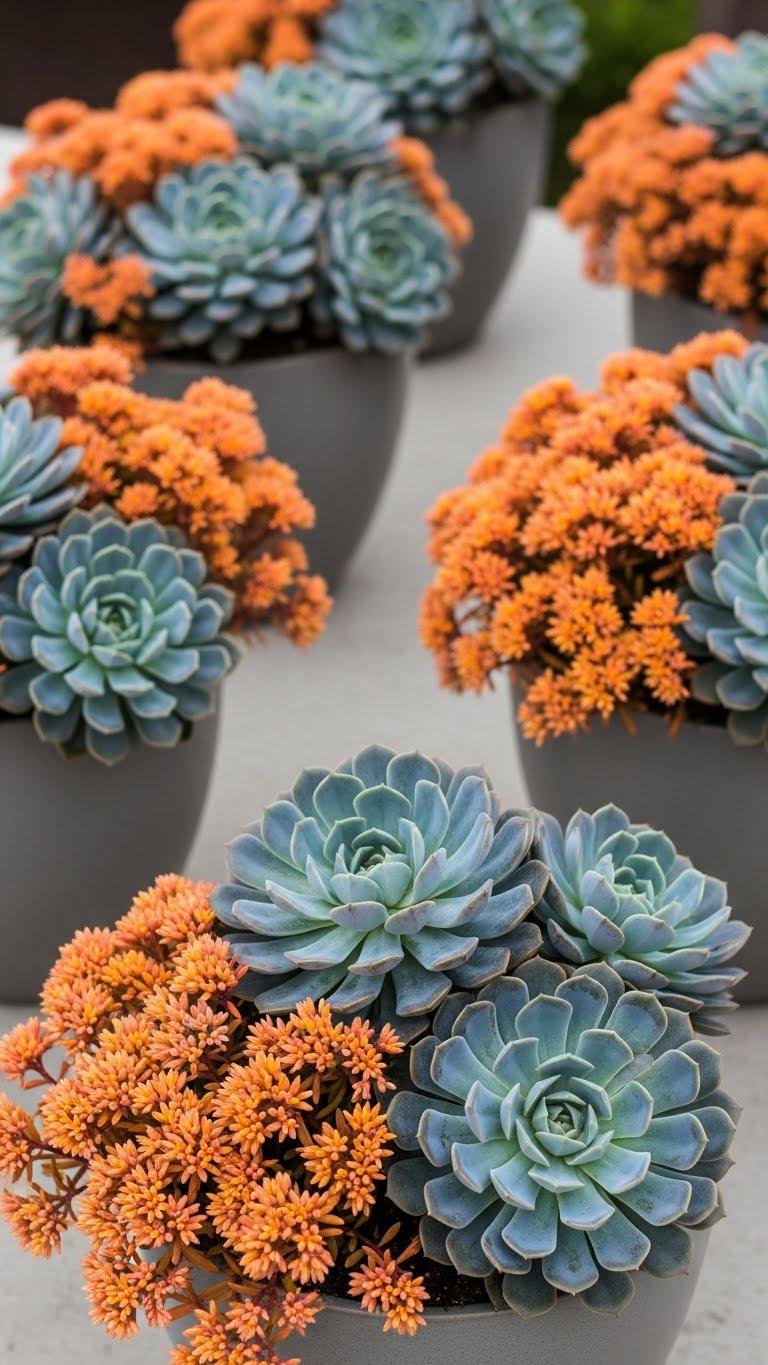
Lean into contrast: pair blue-gray rosettes like pachyverias and echeverias with warm orange sedums and crassulas to create a punchy complementary scheme that still reads refined. You’ll favor clean lines, letting blue contrast anchor the composition while orange accents punctuate rhythm.
Choose sculptural pots, spare soil covers, and loosened groupings so each plant breathes — a liberated, modern vignette you’ll actually enjoy.
Terrarium Mini Ecosystem With Pebble Layers
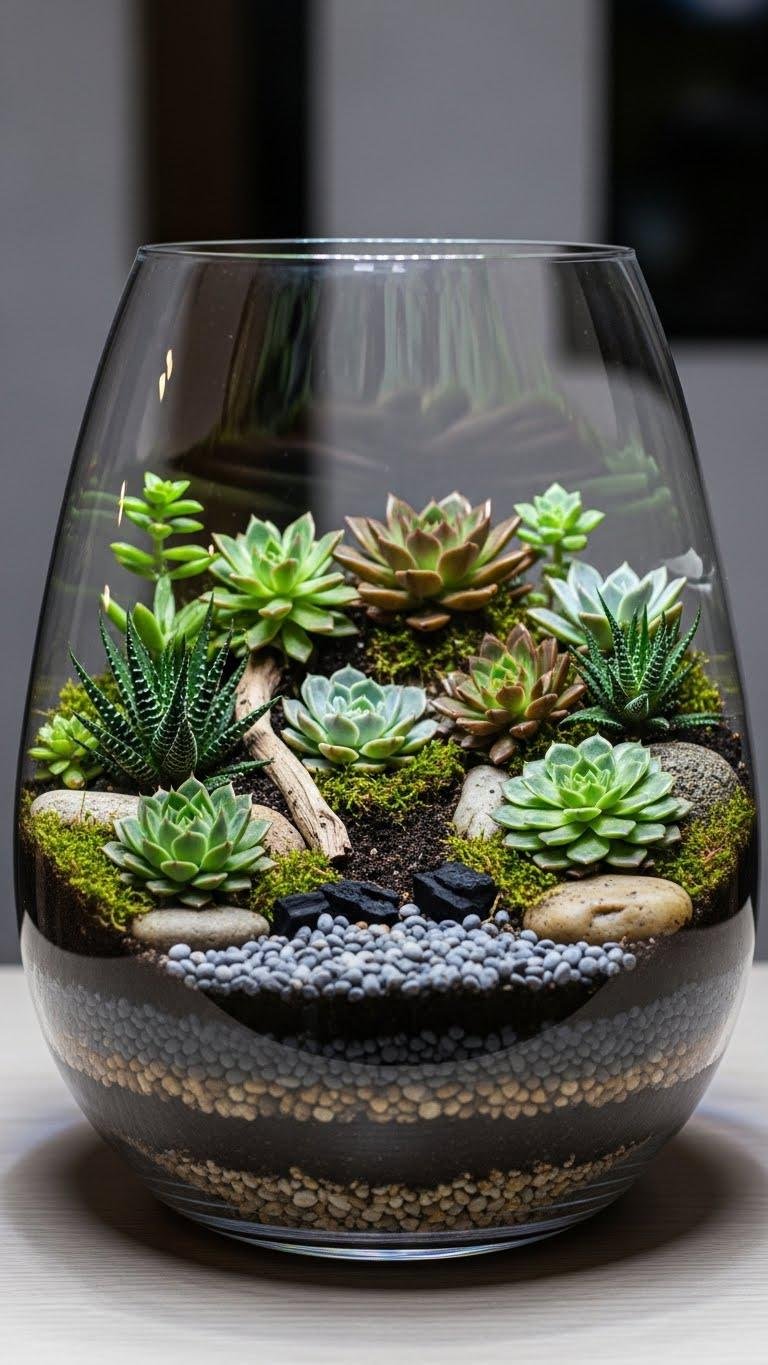
In a glass vessel layered with pebbles, charcoal, and soil, you create a compact ecosystem that looks deliberate and lives with minimal fuss.
Choose succulents that tolerate closed homes, tuck a micro pebble layer for drainage, and position plants to form tiny humidity pockets.
You’ll water sparingly, prune dead leaves, and enjoy a low-maintenance terrarium that feels curated and free.
Cupcake Stand Vertical Succulent Tower
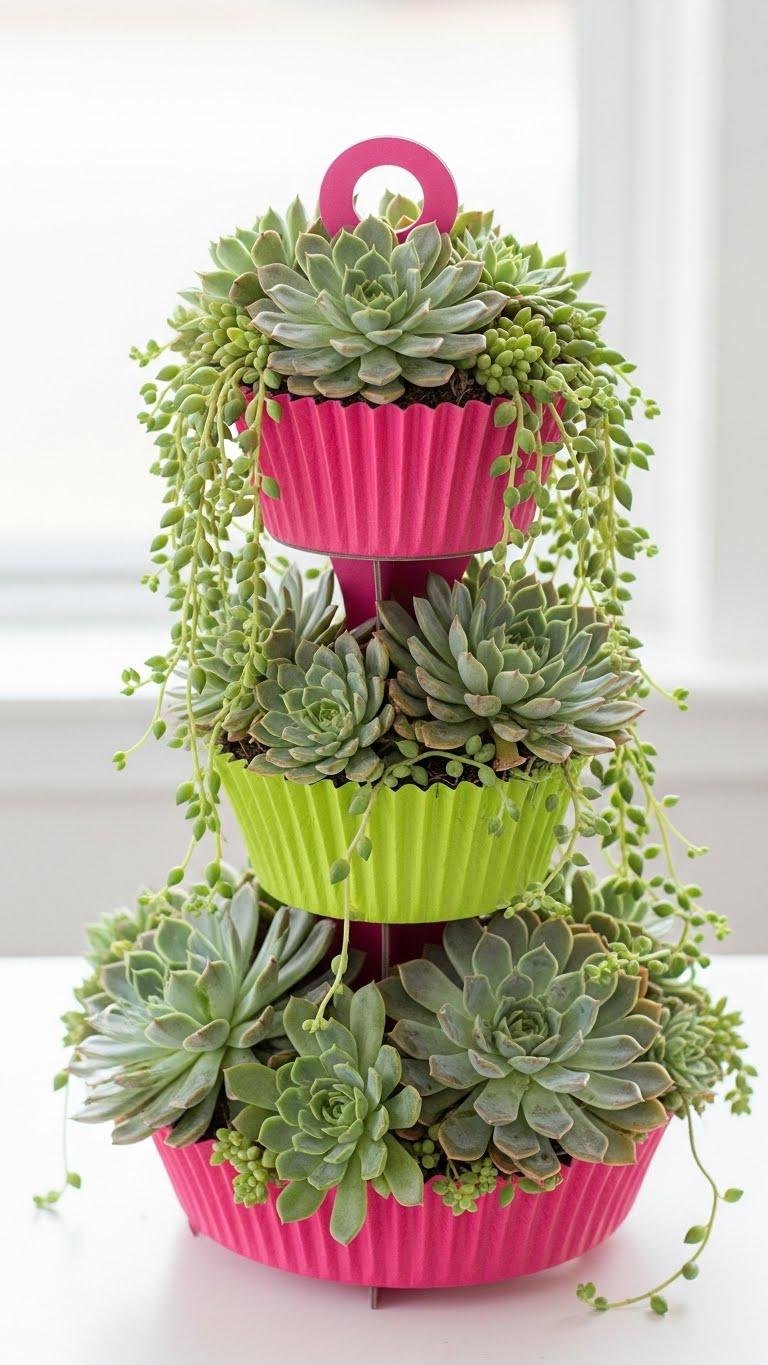
If you loved the compact order of a layered terrarium, try stacking life upward with a cupcake stand vertical succulent tower.
You’ll repurpose a tiered stand into a bold cupcake centerpiece, arranging hardy rosettes and trailing sedums. It celebrates vertical propagation, easy watering, and airflow.
You’ll curate negative space, mix textures, and move the tower freely to follow light for effortless, liberated green decor.
Wood Slice With Branches and Hanging Glass Pods
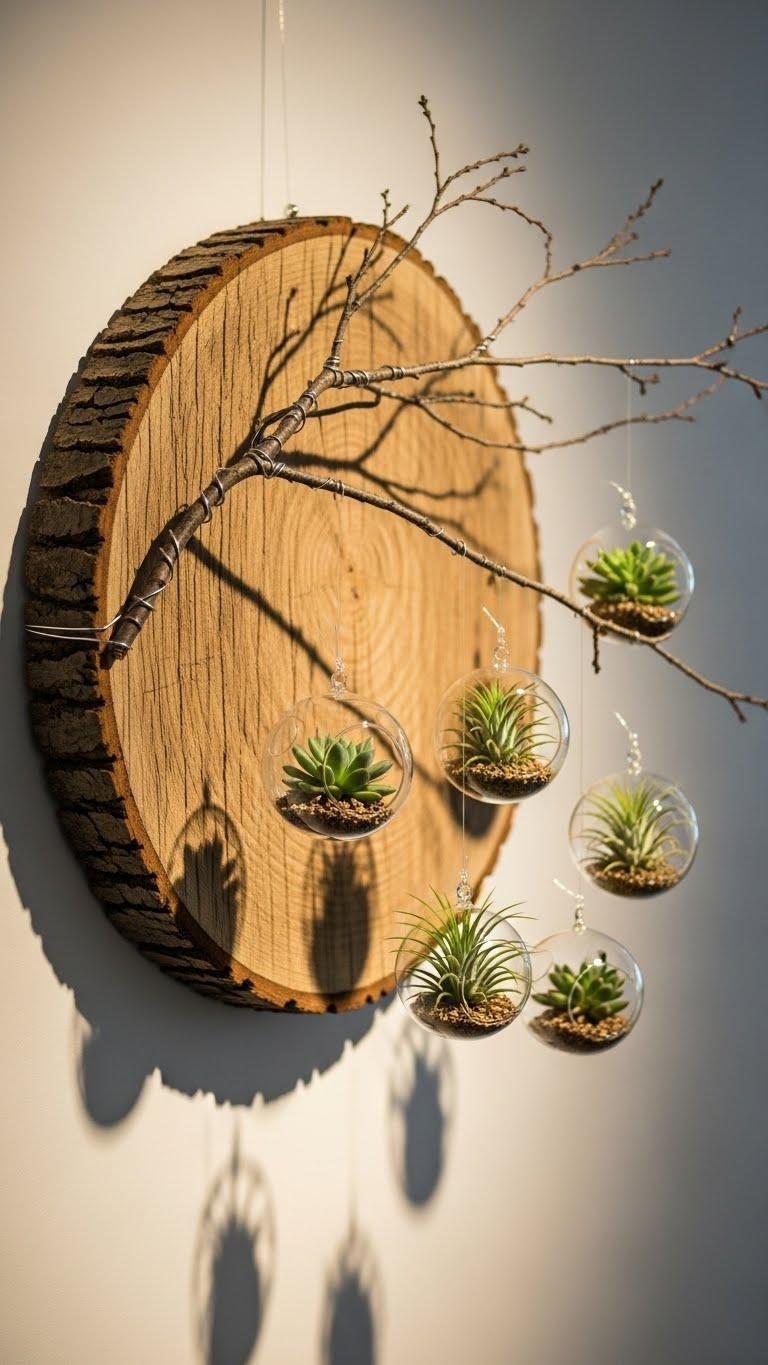
Bring a slice of the forest indoors by mounting a reclaimed wood round and wiring on a few delicate branches, then suspend glass pods to cradle tiny succulents and air plants.
You’ll enjoy clean branch silhouettes against raw wood, minimalist composition, and airy glass pods that free plants from pots. It’s effortless, modern, and lets your space breathe while staying distinctly botanical.
Clamshell Coastal Succulent Scene
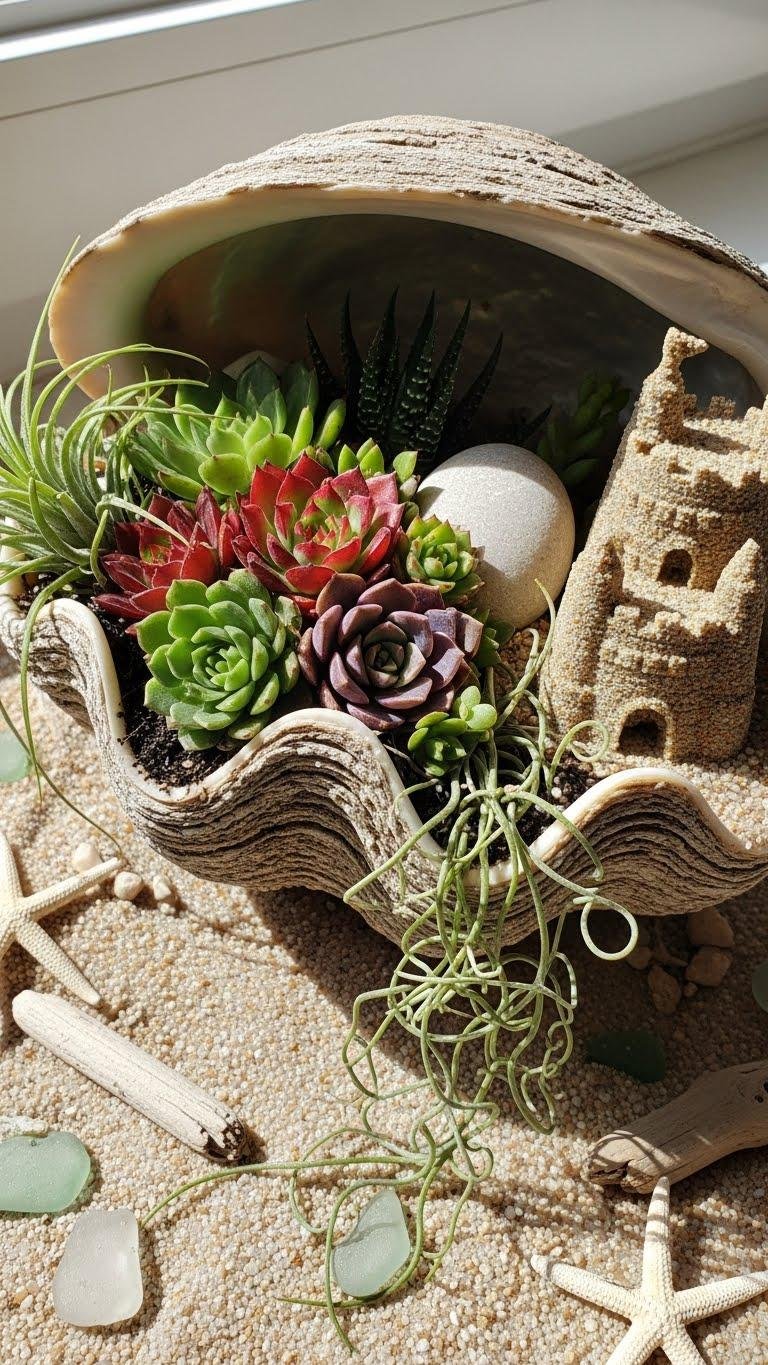
When you nest tiny succulents and air plants inside a large, weathered clamshell, you create a compact coastal vignette that reads both sculptural and seaside-chic.
You’ll arrange texture contrasts — rosettes, trailing strings, a single beach pebble — and add a miniature sandcastle for whimsy.
Keep soil minimal, mist lightly, and position the shell where light feels free and effortless.
Echeveria ‘Dusty Rose’ Focal Arrangement
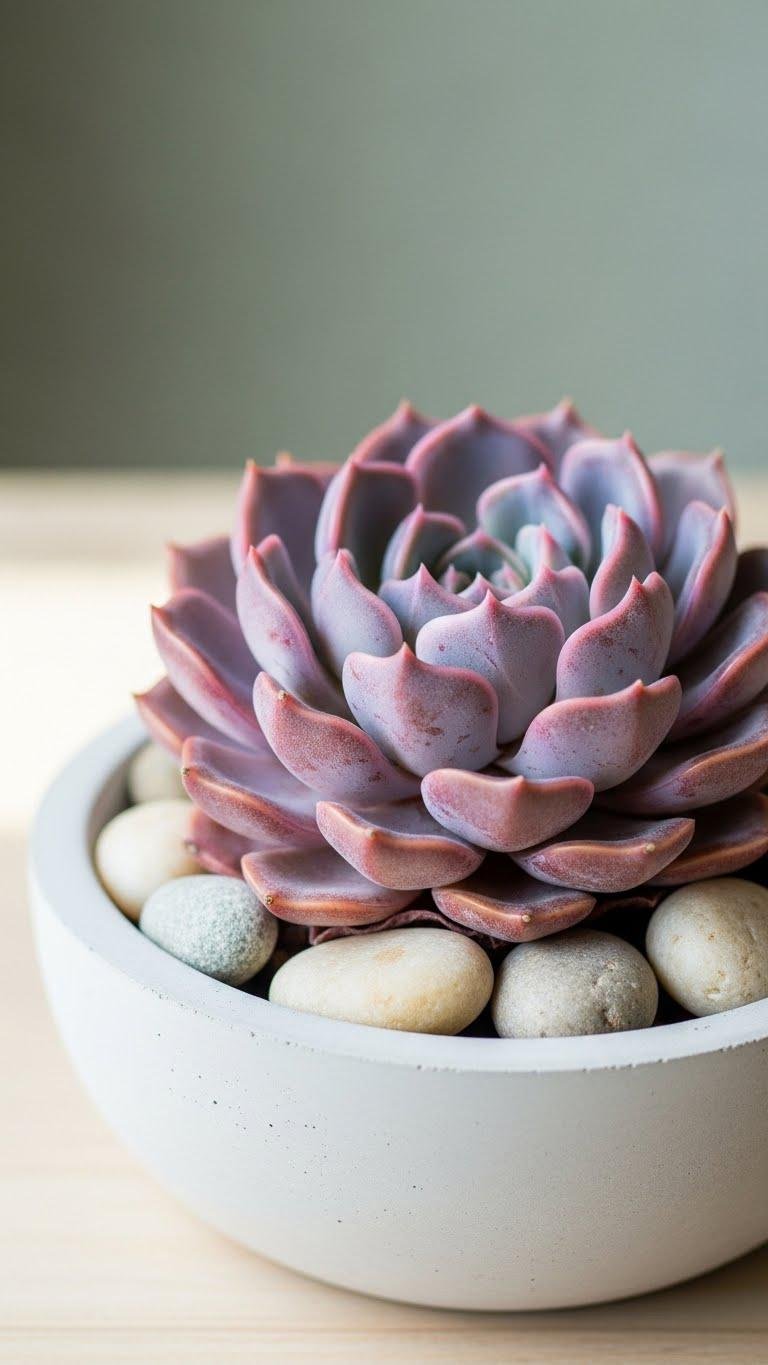
From the seaside cluster, scale up to let a single Echeveria ‘Dusty Rose’ command the scene as a sculptural focal point. You’ll place it centrally, keep surrounding textures muted for color contrast, and choose a shallow pot that breathes. Trust minimalist spacing, stick to a simple watering schedule, and let the rosette’s form suggest calm—free, intentional decor that feels effortless.
Golden Barrel Cactus and Sedum Contrast Bed
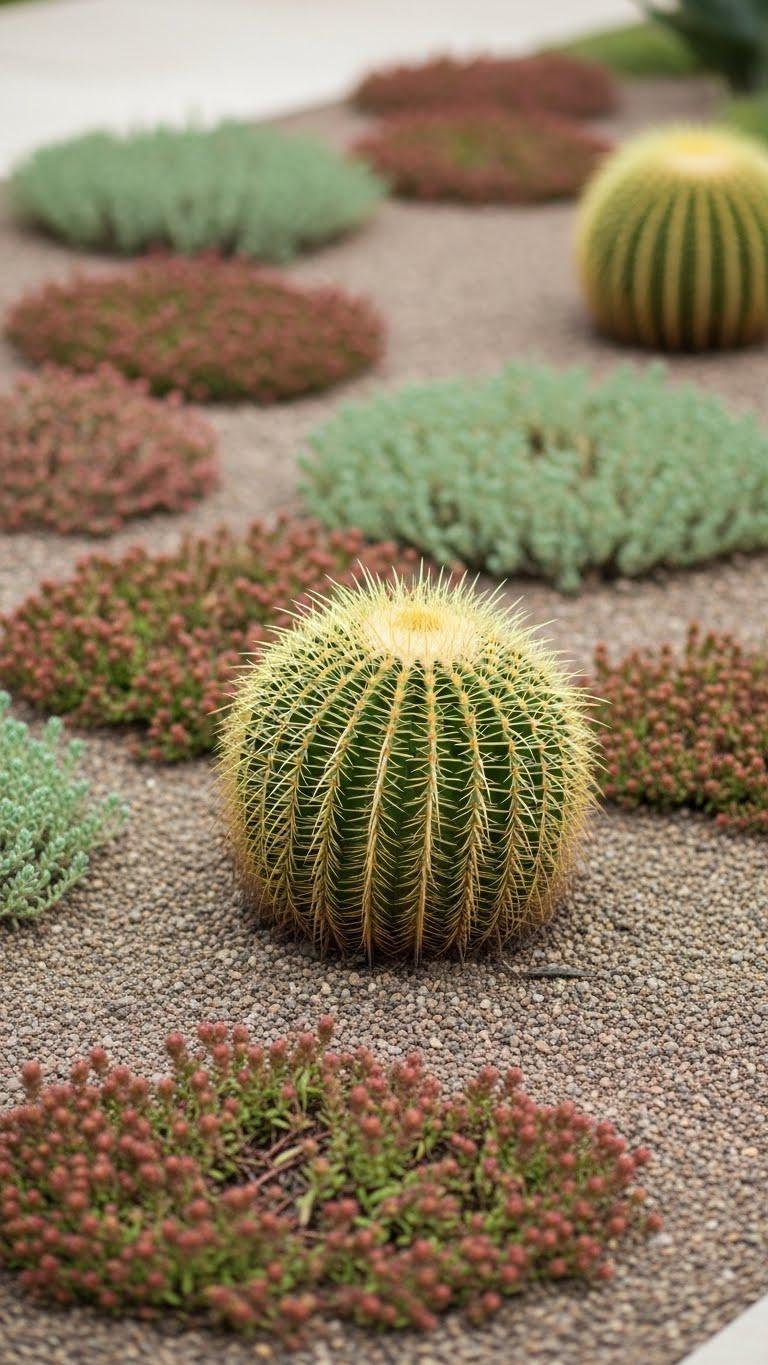
Often you’ll let a single golden barrel cactus anchor the bed, its ribbed globe providing a bold, architectural counterpoint to low, spreading sedums.
You’ll place it where lighting contrast highlights form, pair gritty soil mix for drainage, and tuck varied sedum textures around the base.
This minimalist vignette feels modern, liberating, and easy to maintain while staying botanically precise and on-trend.
Rock Garden With Dasylirion, Aeonium, and Aloe
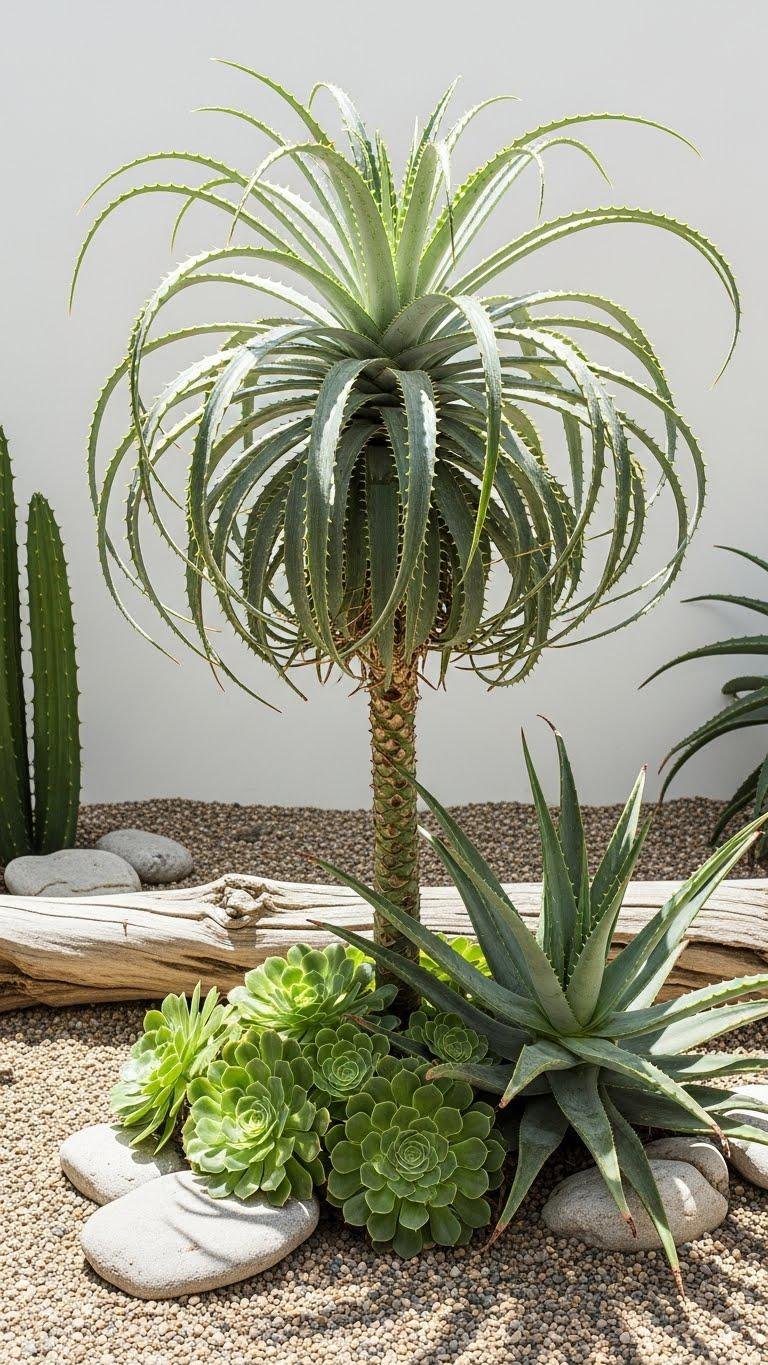
If you let a sculptural Dasylirion anchor the composition, its spiky, fountain-like leaves will set a dramatic silhouette against low rosettes of Aeonium and architectural Aloe.
You’ll craft a desert silhouette indoors with gravel, driftstone, and negative space. This drought tolerant pairing demands bright light, sparse watering, and room to breathe—clean, modern, and freeing for a pared-back plant mood.
Spherical Cacti Haloed by Mammillaria and Parodia
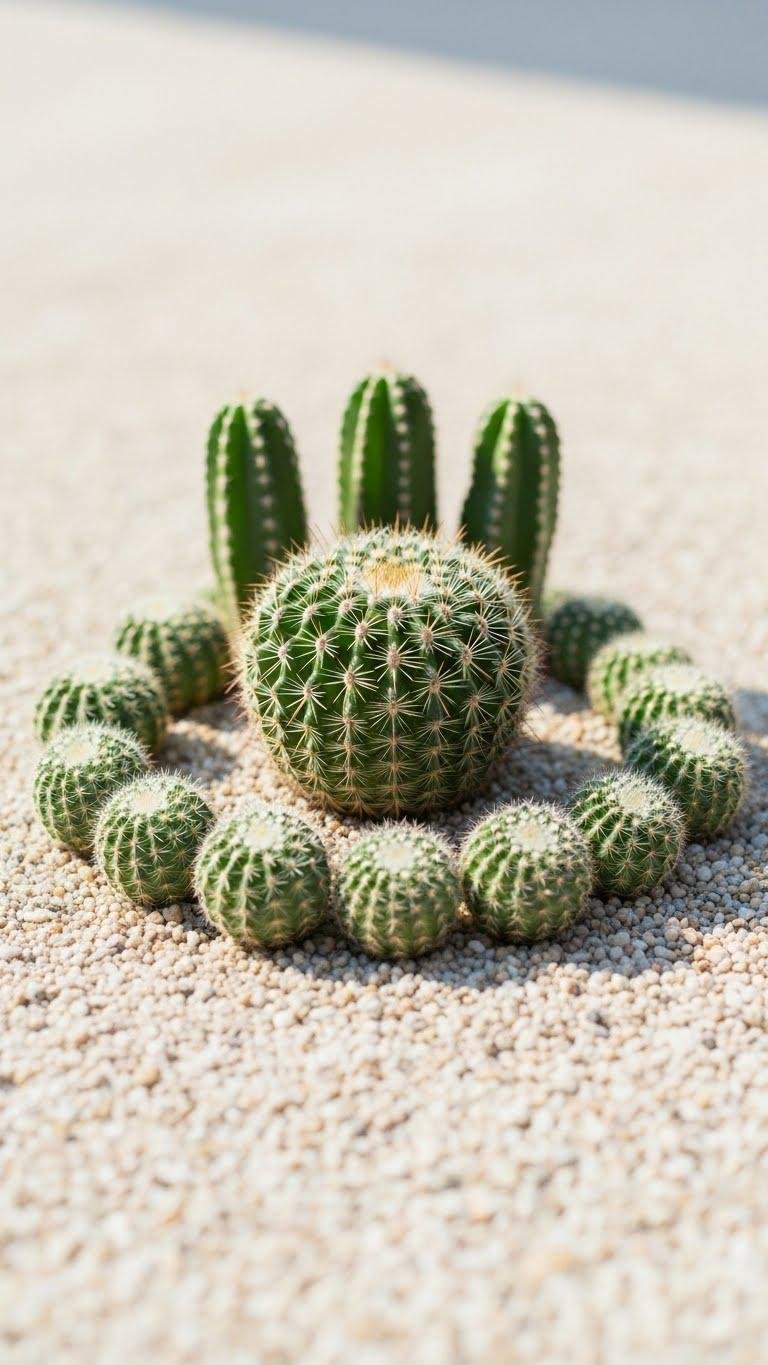
A compact sphere of cactus commands the vignette, its rounded form softened by a halo of smaller Mammillaria and Parodia that trace its silhouette like punctuation. You arrange with restraint, balancing textural contrast between velvet ribs and sharp areoles.
The spiny silhouette reads modern, playful, free. Choose pale gravel, open light, minimal watering—letting shape and restraint speak louder than ornament.
Cordyline Accent With Mounded Succulents

When you set a tall, architectural Cordyline against low, mounded succulents, the contrast sharpens every form.
You’ll embrace clean lines and bold silhouette while enjoying textural contrast between spiky leaves and soft rosettes. Place it near light, allow room for seasonal rotation, and prune sparingly.
The look feels modern, free, and deliberate—minimalist gardening that respects space and movement.
Imperfect Symmetry Trio in a Long Tray
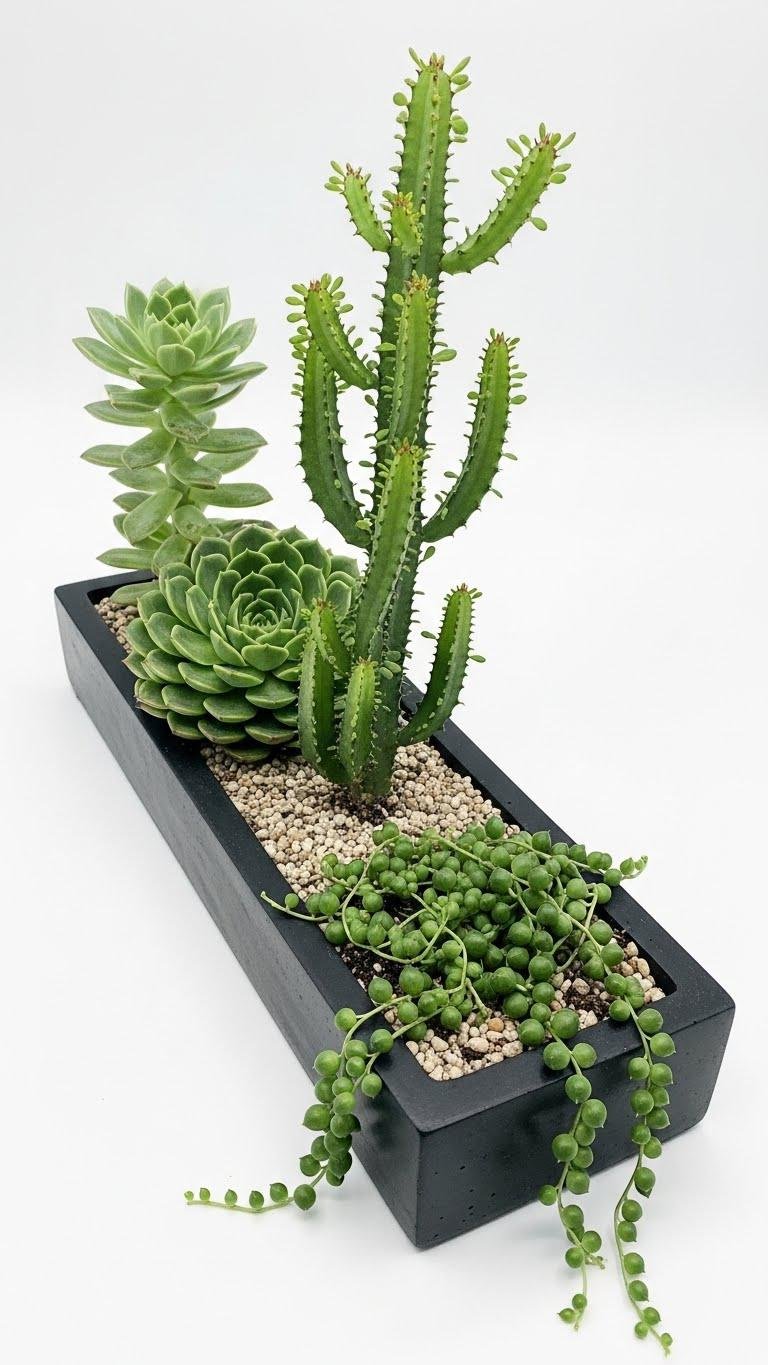
Though you’ll aim for balance, let the trio feel slightly off-kilter: place three distinct succulents in a long tray so their heights, textures, and spacing read as intentional asymmetry.
You’ll curate asymmetrical balance with varied heights — a rosette, an upright, a trailing stem — keeping soil low, clean lines, and room to breathe.
It feels modern, freeing, effortless.
Hanging Teacup Succulent Display
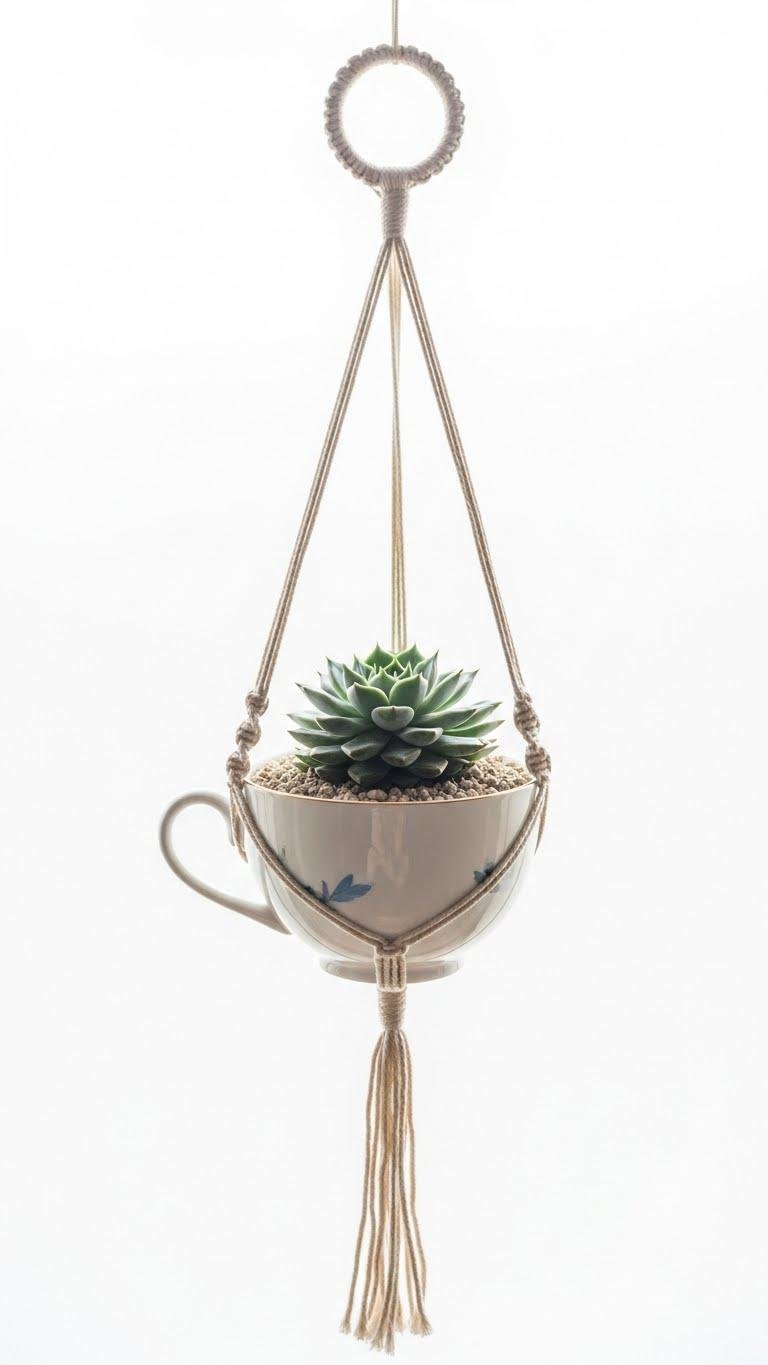
Swing a delicate teacup from a thin macramé loop and you’ve turned a humble vessel into a sculptural micro-garden. You’ll choose a vintage teacup, add gritty soil and a compact succulent, then suspend it with a minimalist macramé hanger near bright, indirect light.
It frees your space, adds airy charm, and keeps care simple—prune sparingly, water lightly, enjoy movement.
Layered Sand and Succulents in a Glass Vessel
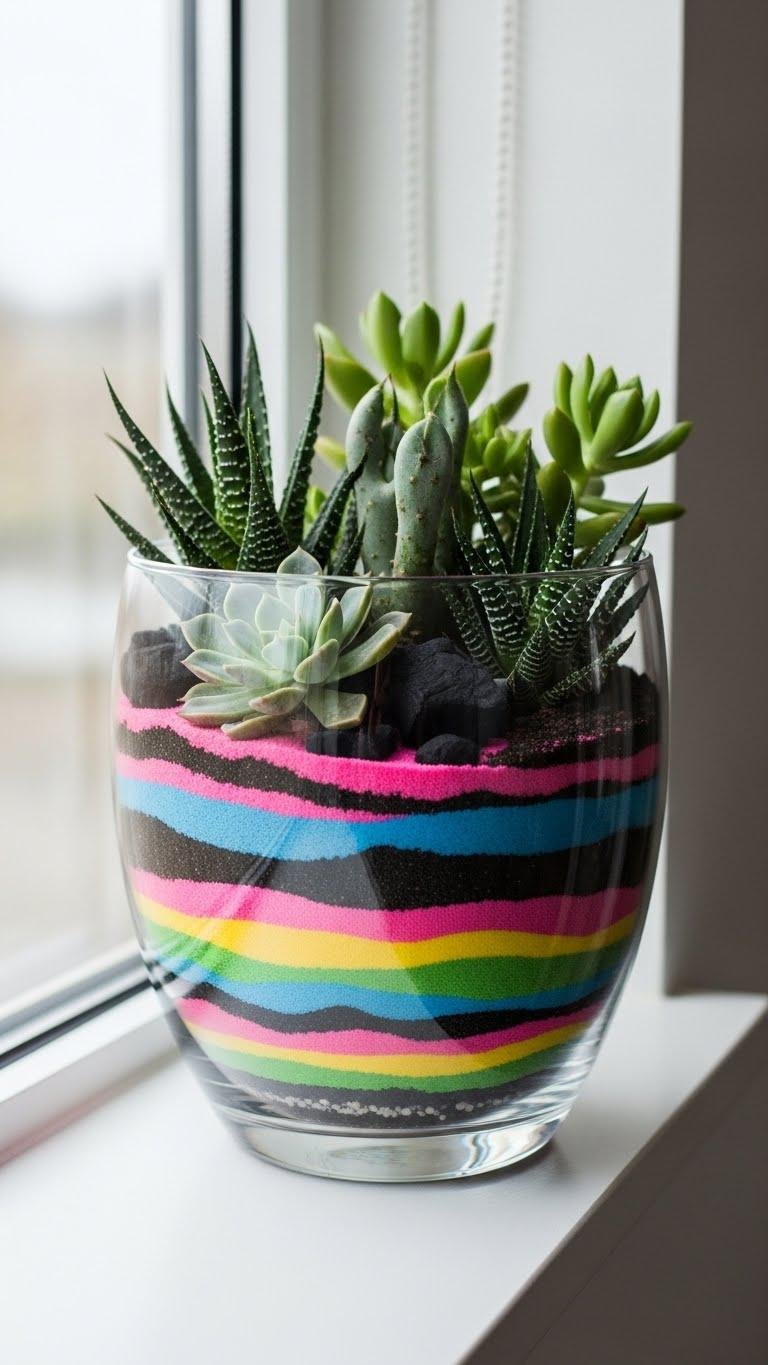
A clear glass vessel turns layered sand and succulents into a living sculpture you can place on a windowsill or coffee table.
You’ll layer colored sand for mood, add charcoal and drainage layers, then soil. Choose low-water rosettes, arrange negative space, and keep watering minimal. This compact, modern display feels free, sculptural, and easy to refresh as your style evolves.
Concrete Birdbath Tabletop Arrangement

From the sleek glass vessel you just admired, shift to something more tactile: a low-profile concrete birdbath repurposed as a tabletop planter.
You’ll arrange compact, patio safe varieties—hens-and-chicks, sedums—leaving negative space.
Add coarse substrate and subtle drainage solutions; elevate a few soil pockets for contrast.
This grounded, modern vignette feels free, low-maintenance, and quietly sculptural.
Succulent Wreath for Indoor Door Décor
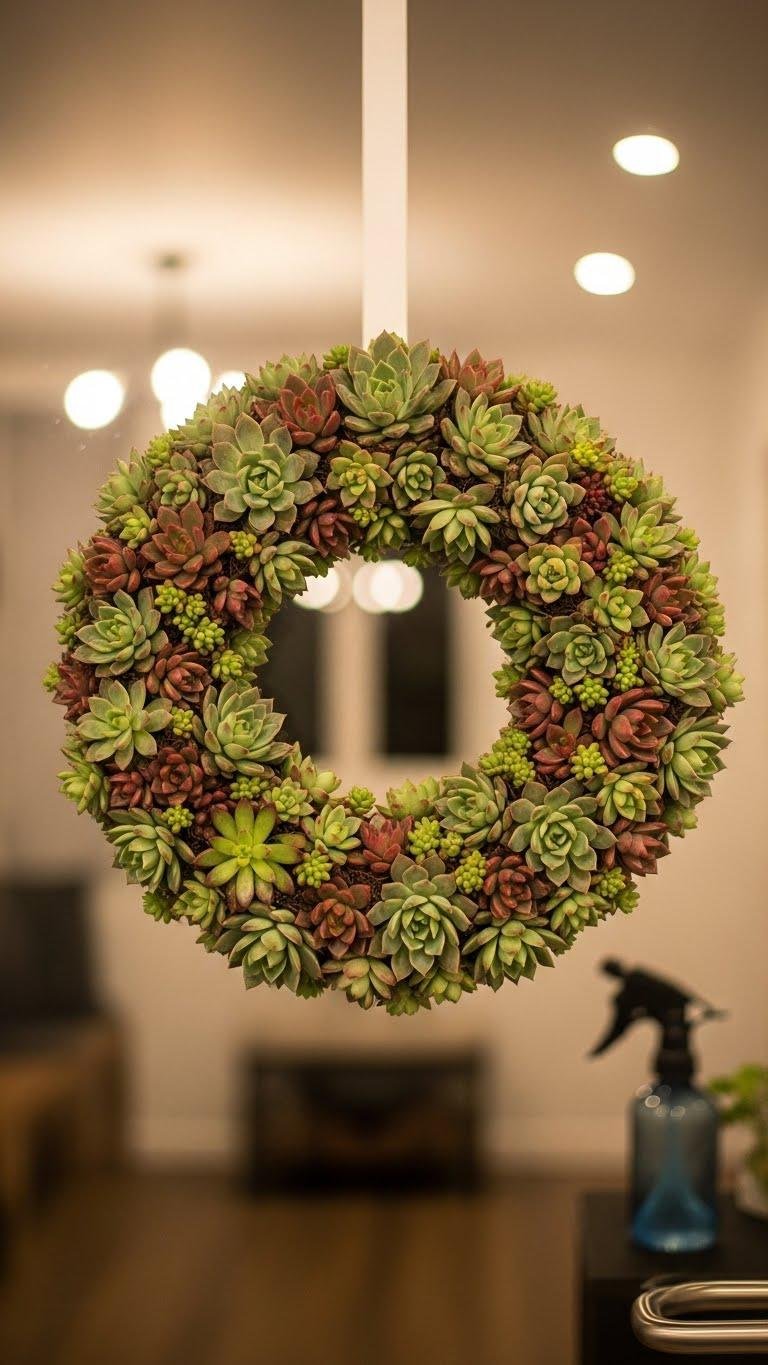
Bringing living texture to your entry, a succulent wreath blends sculptural form with low-maintenance function—perfect for indoor doors where light is limited but style matters.
You’ll choose compact varieties and secure them on a lightweight frame, favoring mini wreaths for slim doors. Rotate occasionally, mist sparingly, and minimize door maintenance—this sleek botanical accent lets you express freedom without fuss.
Miniature Fairy Garden With Low Succulents

Nestled on a sunny windowsill or tucked into a shelf nook, a miniature fairy garden uses low-growing succulents to create a tiny, tidy landscape you’ll care for with ease.
You’ll arrange rosettes around a miniature mossscape, add tiny stonework paths, and prune sparingly. The result feels modern, calm, and freeing — a living micro-retreat that’s low-maintenance and stylish.
Spiral Pattern Planting in a Shallow Bowl
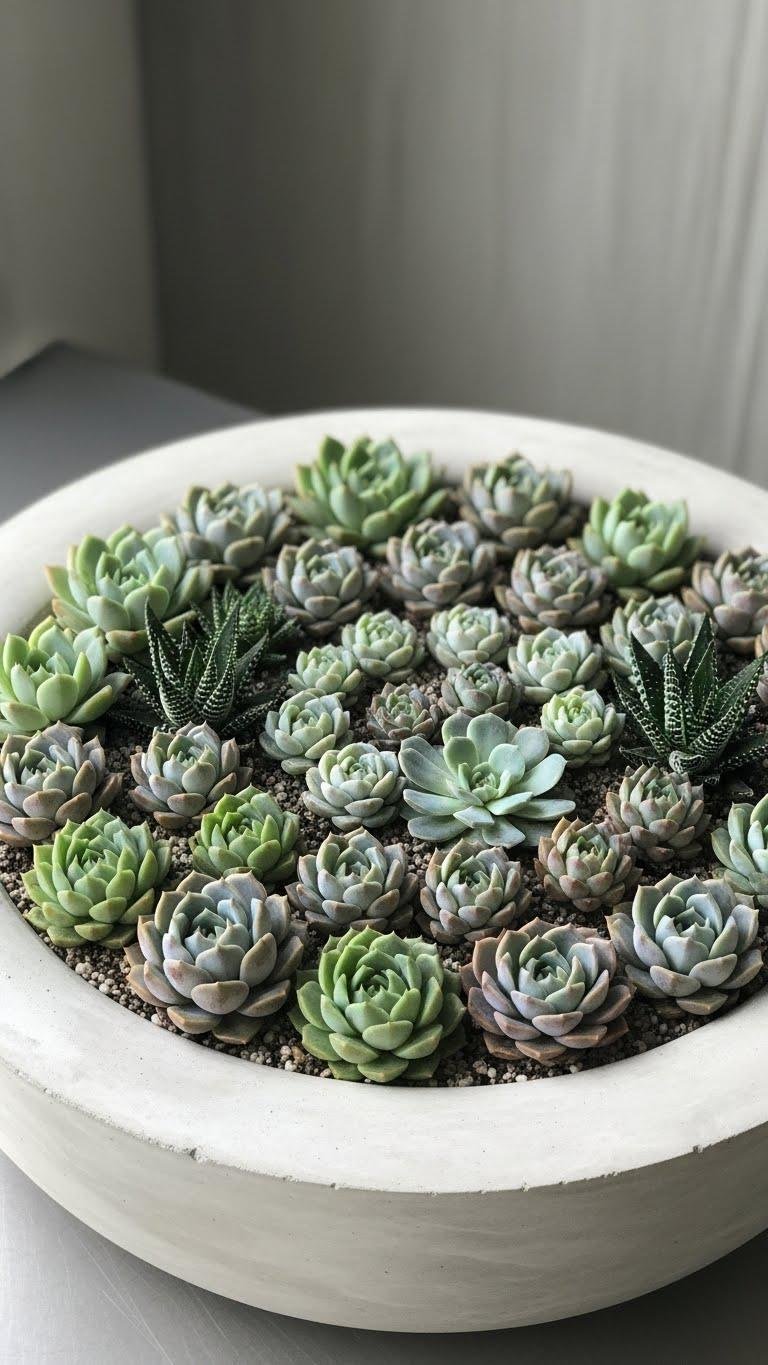
Against a shallow, sculpted bowl you’ll arrange succulents in a graceful spiral that maximizes visual flow and root space. You’ll favor varied heights, spacing to let each rosette breathe, and a restrained palette for chic spiral aesthetics.
The shallow composition keeps soil minimal, drainage intentional, and the look modern—letting you create a calm, unfussy focal piece that feels free and deliberate.
Alternating Texture and Color Row Planter

Arrange succulents in neat alternating rows to create a planter that reads like a living textile—contrast coarse, spiky forms with soft, compact rosettes and swap deep greens for silvers and burgundies to keep the rhythm clear.
You’ll layer for textural contrast and confident color rhythm, choose low-profile pots, let each row breathe, and prune minimally so the arrangement feels deliberate yet liberating.
Succulent-Filled Hollow Log Centerpiece
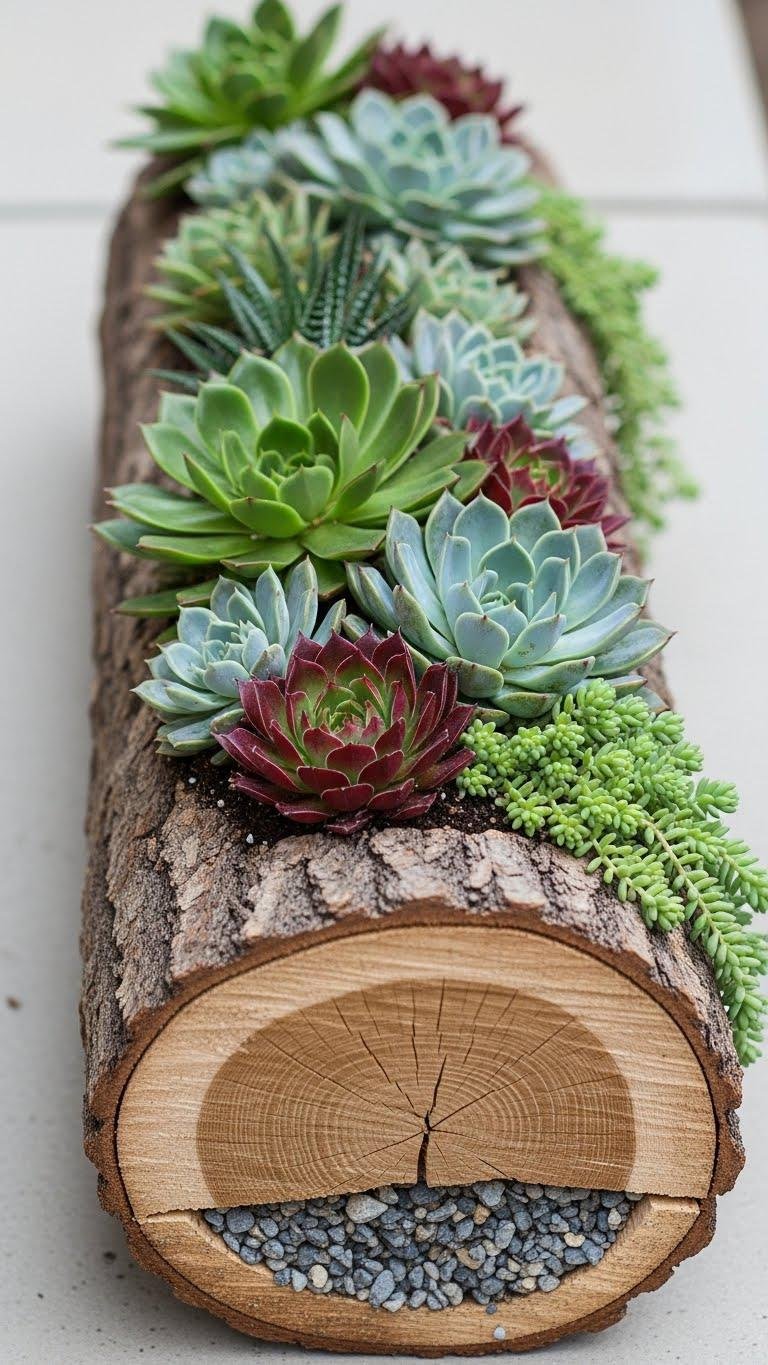
Using a hollow log as your base gives you an instant, organic vessel that’s both rustic and refined; you’ll fill it with low-growing rosettes, trailing sedums, and a few sculptural echeverias to balance form and flow.
Seal the interior for log preservation, add compact soil and pebble drainage solutions, arrange with negative space, and let the centerpiece breathe — simple, modern, and liberating.