
You’ll spark curiosity and confidence with 25 hands-on gardening activities that suit small hands and short attention spans. I’ll show you quick wins—seed races, kitchen-scrap regrows, mini-greenhouses—and safer ways to use tools, wash up, and handle critters. Each idea mixes planting, crafts, experiments, and habitat-building to keep kids engaged and proud of their work. Ready for easy projects that actually stick?
Fast-Germinating Seed Stations (Radish, Cress, Beans)
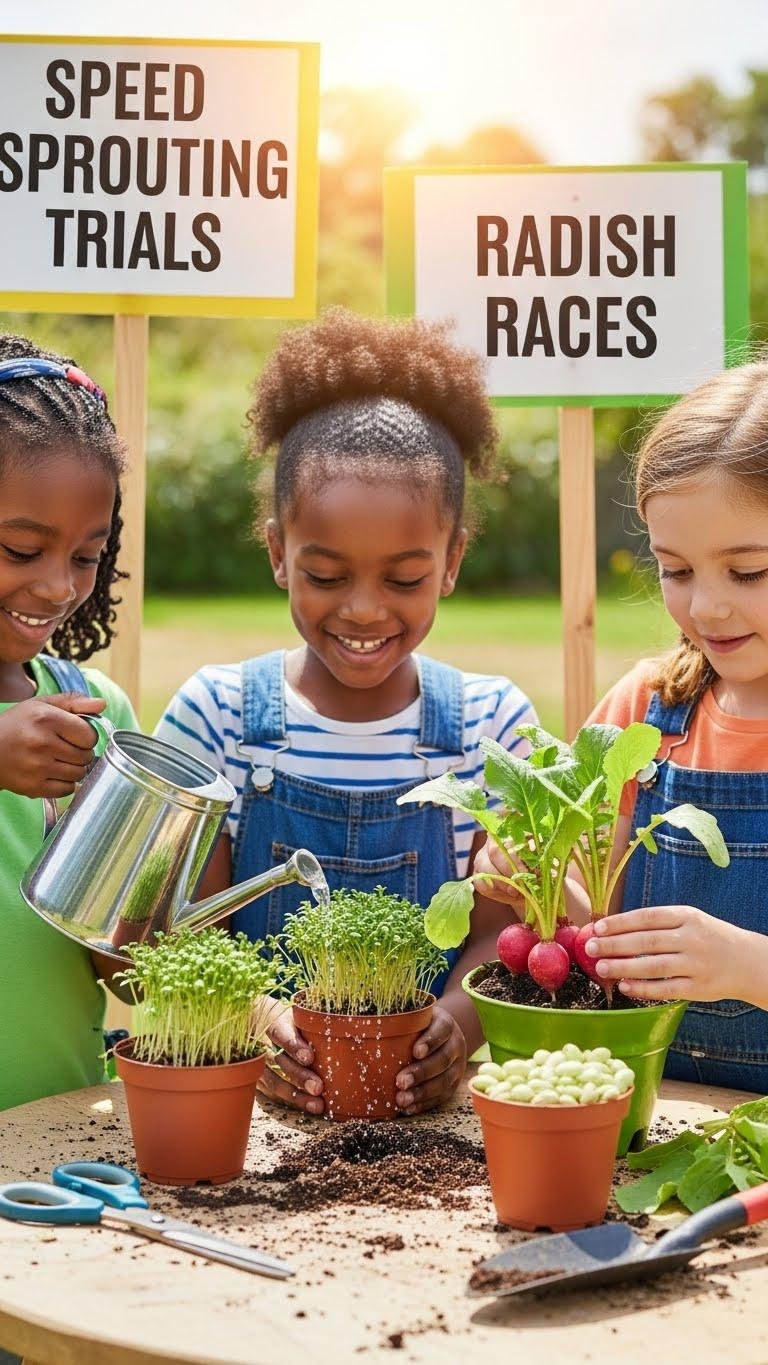
Grab some seeds and get ready to watch things pop up fast: radish, cress, and beans make perfect quick-win stations for kids. You’ll run Speed Sprouting trials, set up Radish Races, and teach gentle watering, sunlight needs, and safe handling.
Let them experiment freely but supervise scissors and soil hygiene. Celebrate quick wins to build confidence and curiosity.
Kitchen-Scrap Regrowth Experiments
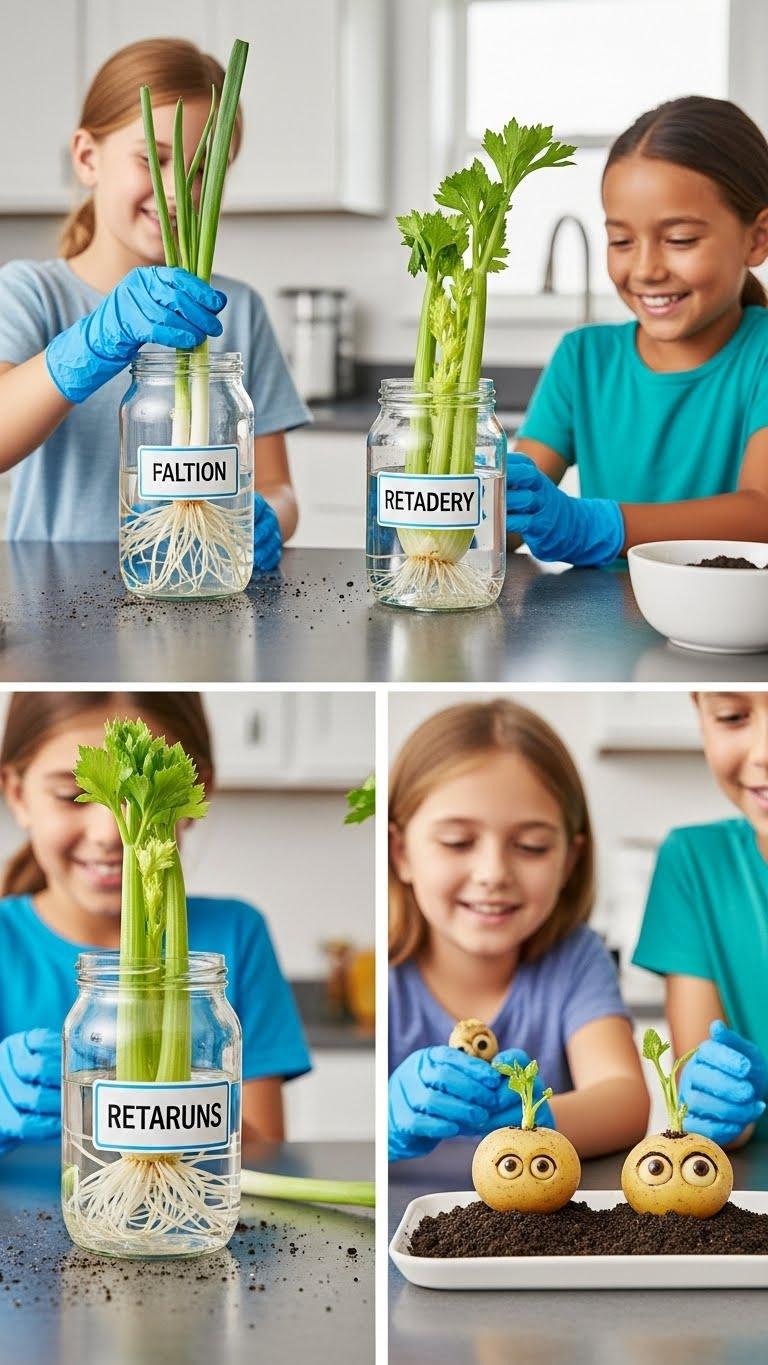
Try regrowing kitchen scraps to turn lunchtime leftovers into a hands-on science project kids can manage with a little supervision. You’ll guide simple kitchen regrowth experiments: celery bases in water, potato eyes in soil, green onion roots on a jar.
Teach hygiene, label jars, and keep curious hands safe. Celebrate small wins, encourage questions, and let kids experiment within calm boundaries.
Mini Raised Beds and Container Gardens
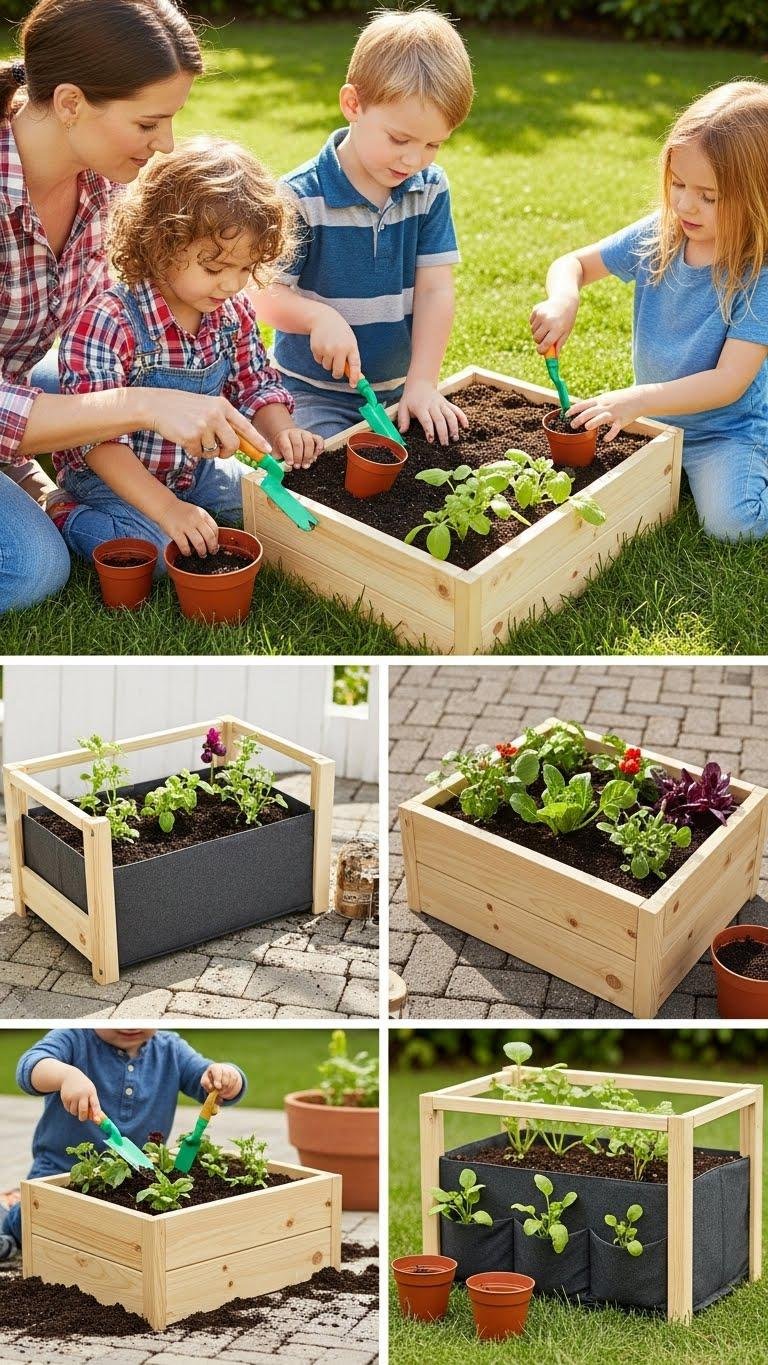
You’ve seen how kitchen scraps can spark curiosity—now let’s bring that same hands-on energy to miniature beds and pots you can build together. Choose pocket planters or small raised frames, fill with loose soil, add water retention mulch to cut watering, and plant easy seeds.
Teach safe tool use, supervise lifting, and let kids design freely while you guide boundaries and cleanup.
Seed Mosaics and Soil Art
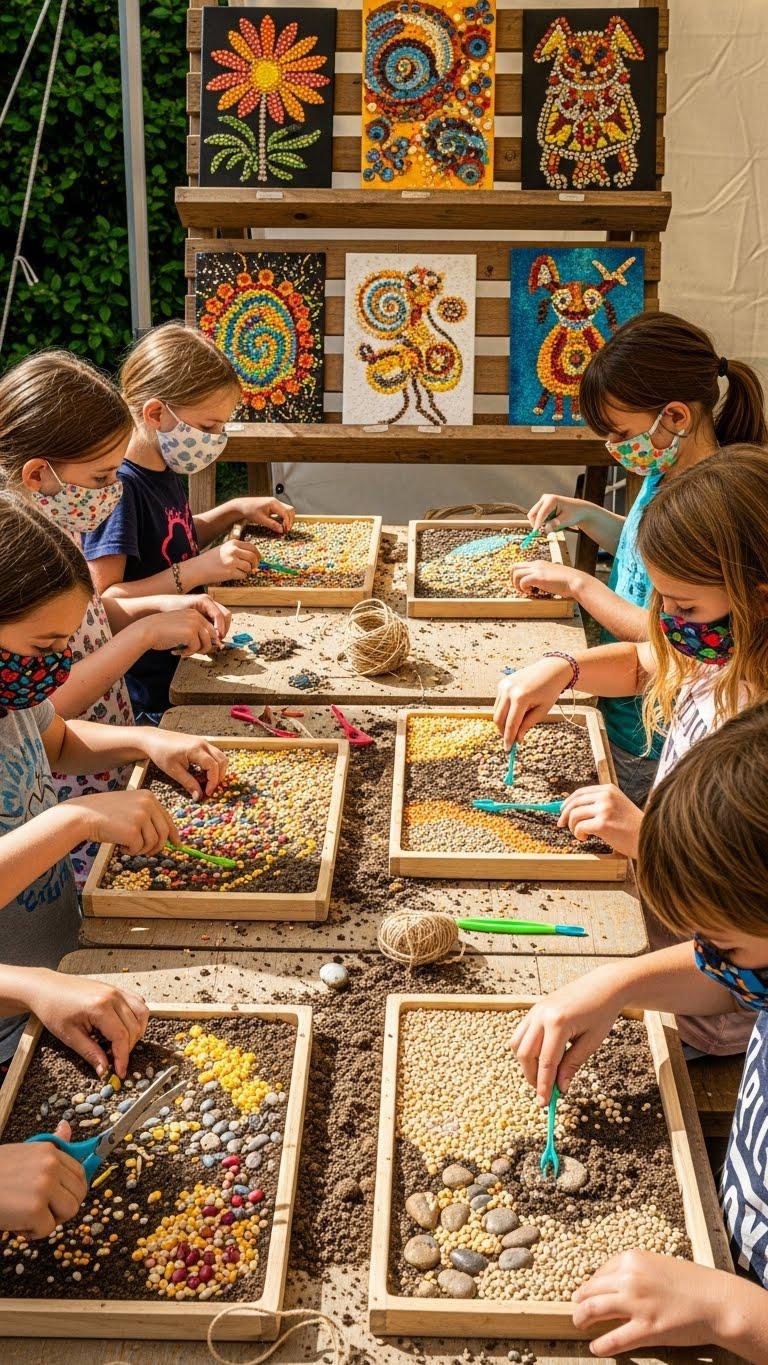
Get hands-on with seed mosaics and soil art, where kids press seeds, pebbles, and colored sand into sticky soil or glue to make bright, touchable pictures that teach pattern, texture, and patience.
You’ll guide them to plan designs, use tweezers for tiny bits, and wear masks if dusty. Encourage bold choices, supervise scissors and glue, and celebrate creative freedom safely.
Pressed Flower Bookmarks and Cards
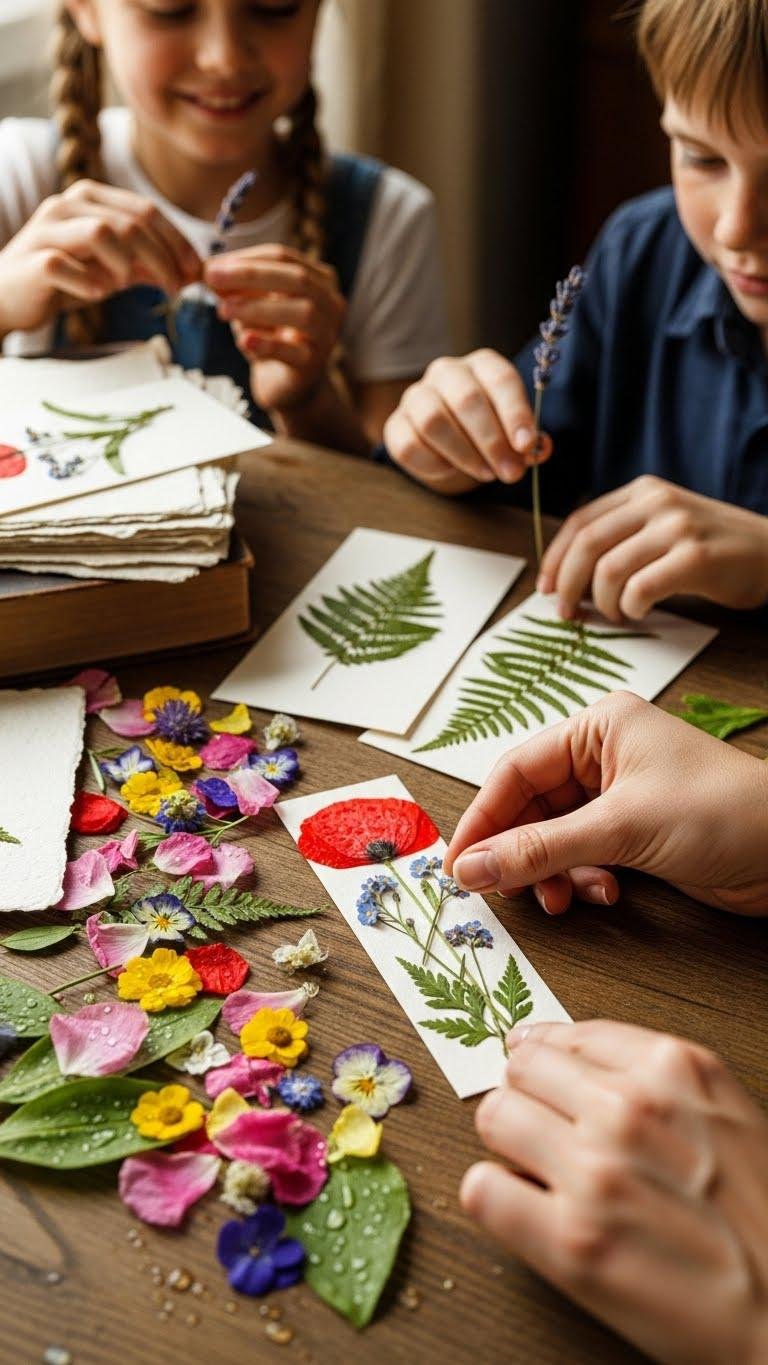
Try pressing petals and leaves flat to make delicate bookmarks and cards that brighten reading nooks and gift stacks. You’ll learn simple color preservation tricks, press safely between paper and heavy books, and label specimens for botanical identification.
Let kids choose compositions, glue carefully, and seal with clear tape or laminator. Encourage gentle handling and respect for living plants while they craft and explore.
Leaf and Flower Printing Projects
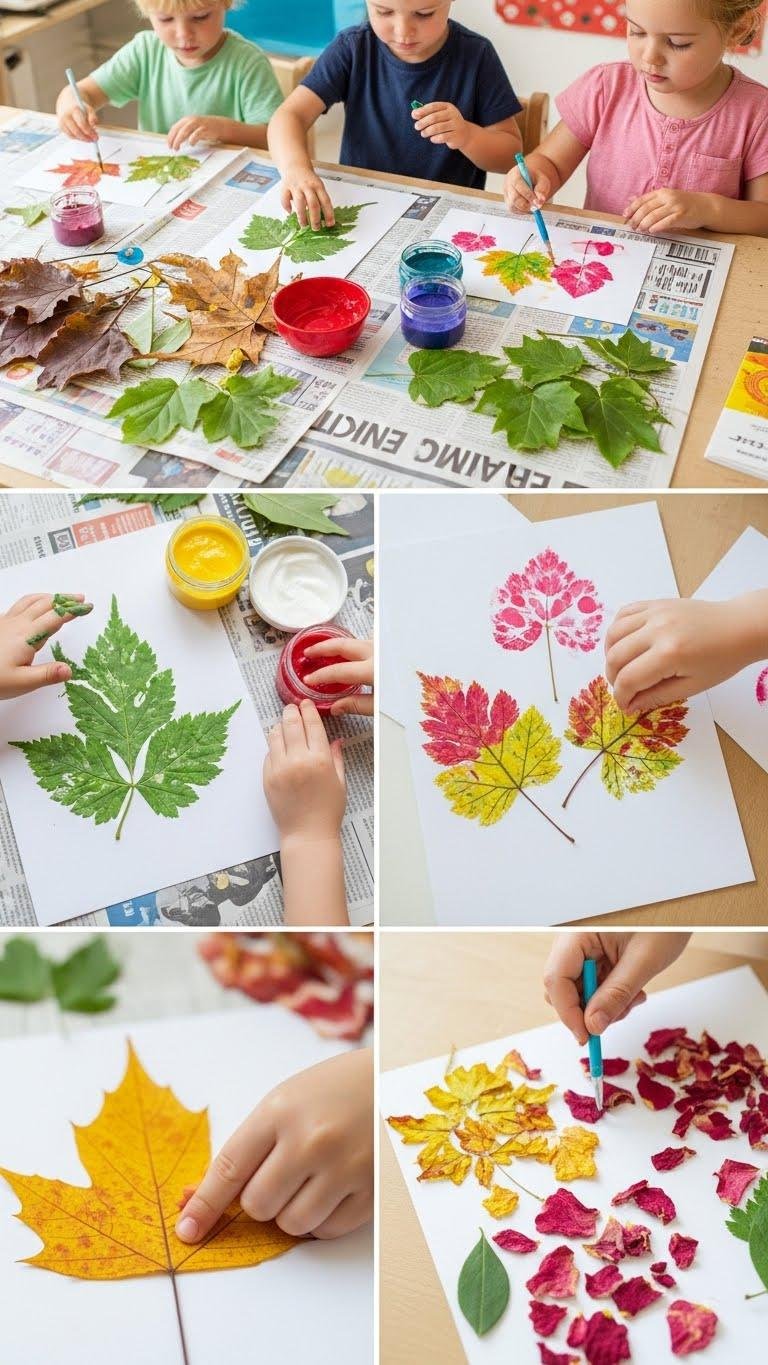
Printing with leaves and flowers brings nature’s textures into bold, surprising artwork you and the kids can make together. Gather sturdy leaves and petals, protect work surfaces, and use washable paint for leaf stamping.
Press, roll, and lift to reveal patterns. For petal collages, arrange dry petals on paper, glue gently, and let kids explore color and shape while you supervise for safety and fun.
Plant Height Measurement and Growth Charts

While your seedlings are busy stretching toward the sun, you and the kids can measure their progress and make a colorful growth chart to track every new inch — safely using rulers, markers, and a steady hand.
Teach simple height journaling: date, height, note. Celebrate growth milestones with stickers, encourage curious questions, keep measurements consistent, and wear gloves if soil’s messy.
Light Direction and Watering Frequency Experiments
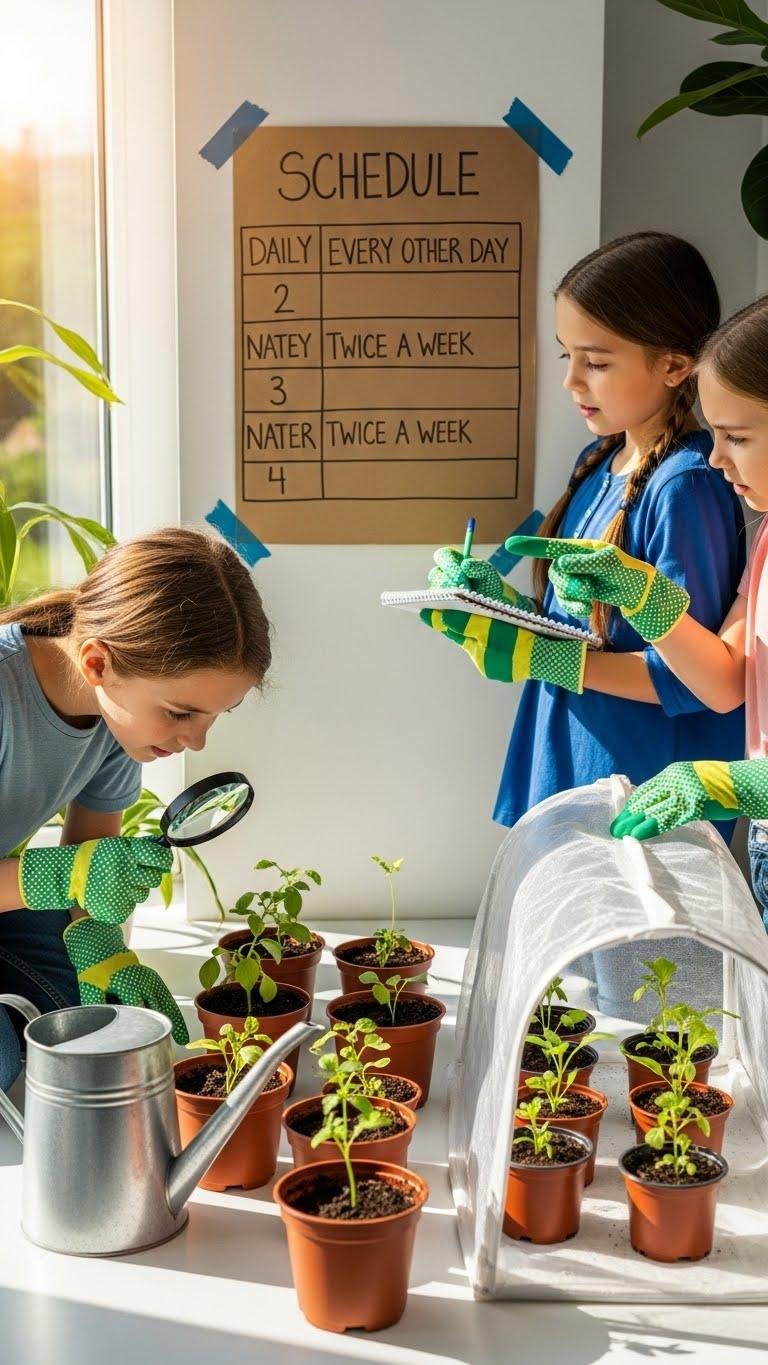
If you want to see how sunlight and water shape your seedlings, set up simple experiments that test light direction and watering frequency side by side. You’ll compare Sunlight vs. shade, rotate pots to change angle, and try different Watering schedules.
Record results, wear gloves, and avoid overwatering. Let kids design trials, note safety, and celebrate discoveries with freedom and curiosity.
Seed Viewer and Magnifier Observations

Soil Ph and Nutrient Testing Activities
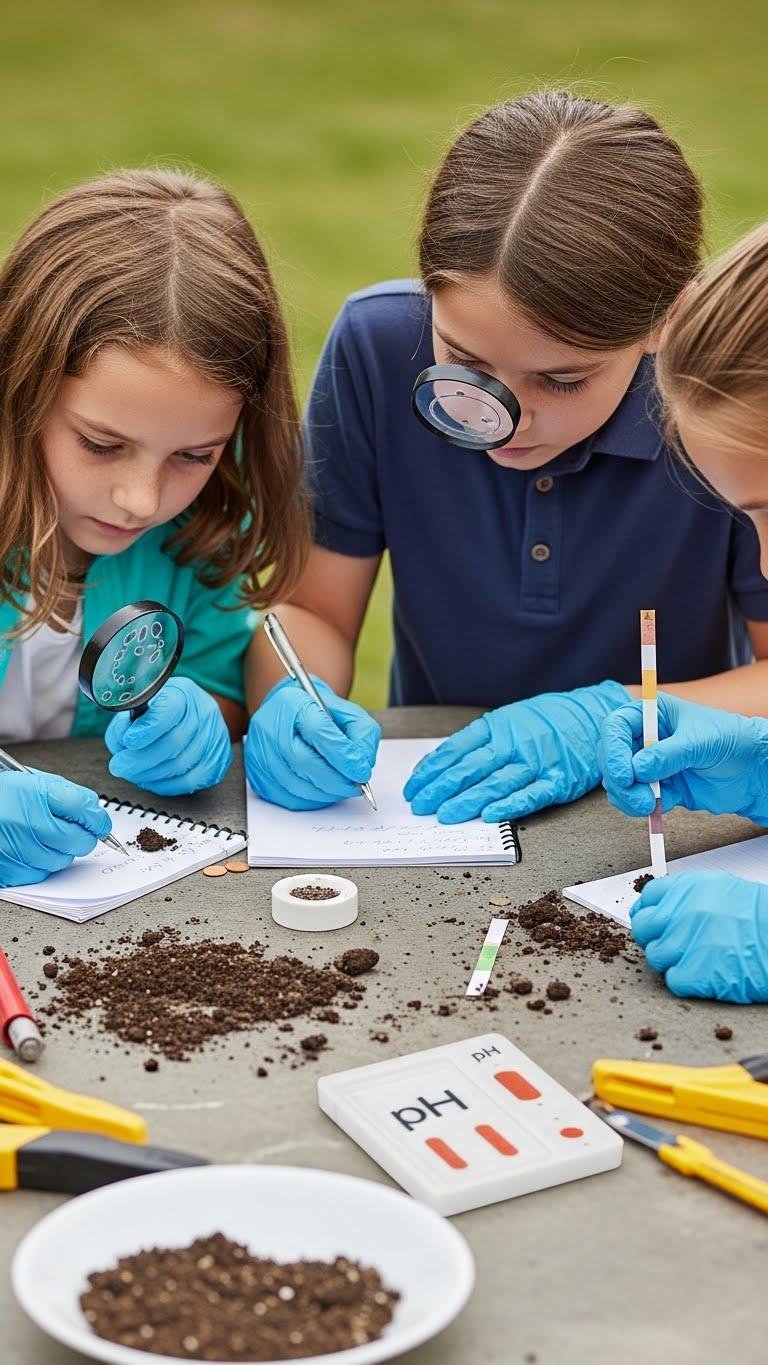
How do you know what your soil really needs? Grab test strips, a pH kit, and gloves — you’ll love the hands-on science. Teach kids to sample, note acidity indicators, and add safe amendments.
Observe soil microbes with a magnifier, record changes, and keep experiments controlled. Emphasize cleanliness, gentle handling, and freedom to explore while staying safe and curious.
Themed Gardens (Pizza, Sensory, Pollinator)
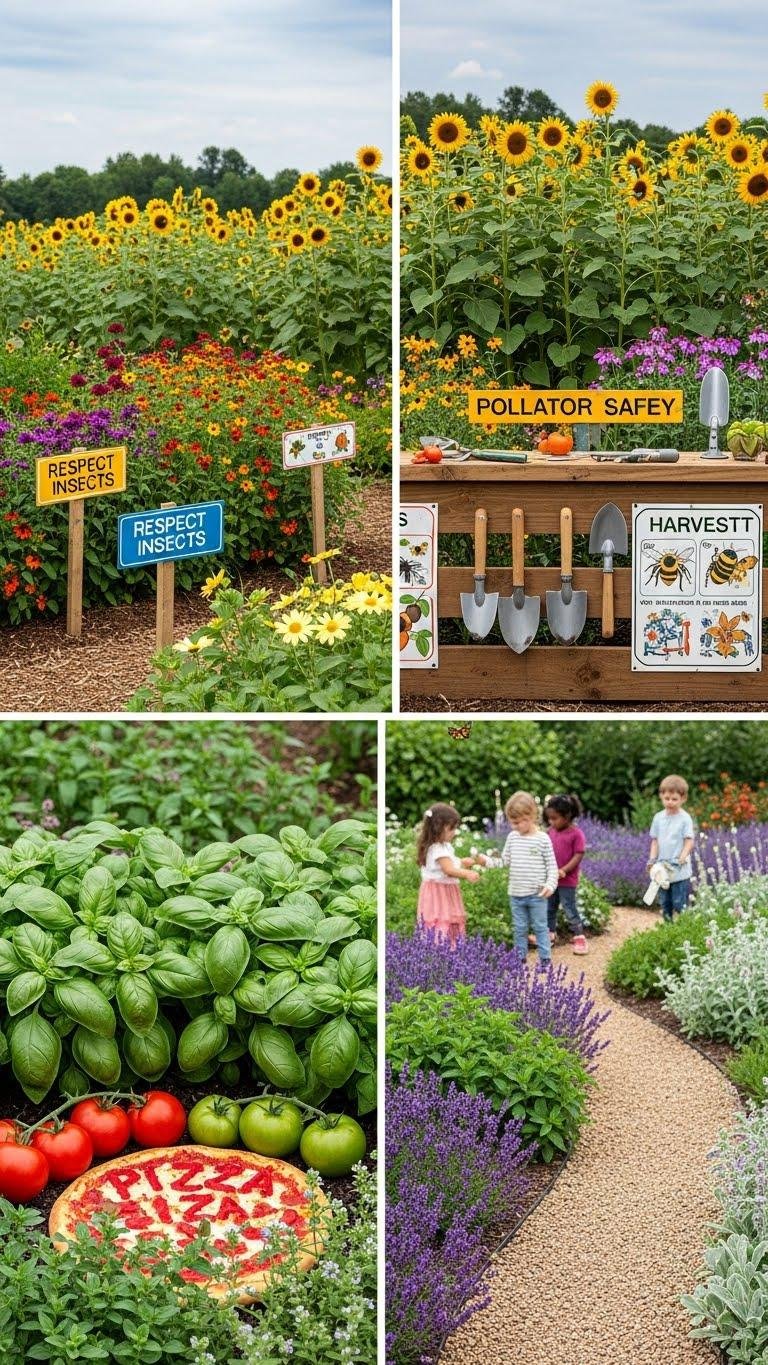
You can carry the curiosity from a scavenger hunt straight into designing themed garden beds that teach and delight.
Build a pizza patch with basil, tomatoes and oregano for kid-friendly pizza parties. Create sensory paths and scent stations with lavender, mint and lamb’s ear. Add pollinator plots of sunflowers and bee-friendly blooms. Teach safe harvesting, tool use and respect for visiting insects.
Timed Harvesting and Weeding Challenges
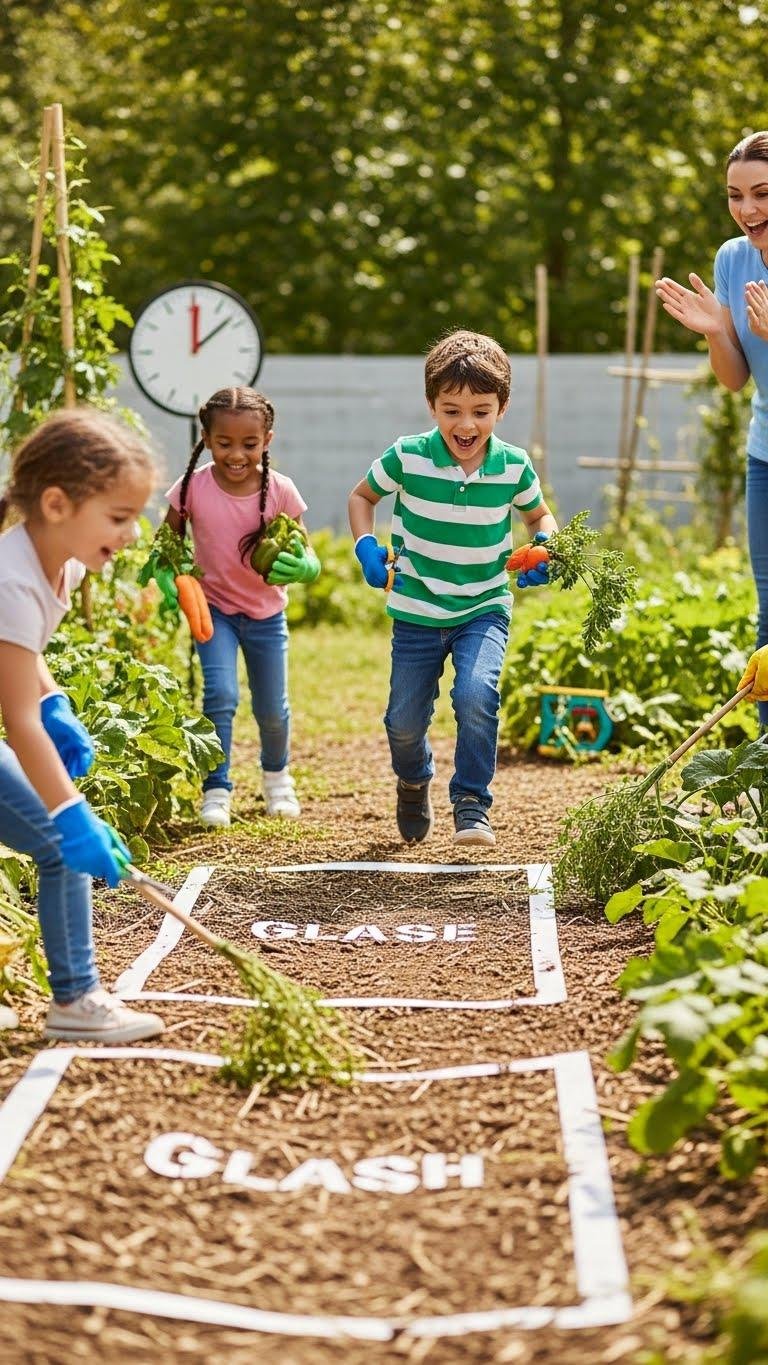
When the garden’s at its most bountiful, turn task time into a friendly race: set short timers for harvesting ripe veggies and for pulling weeds, then challenge kids to beat the clock while keeping safety front and center.
You’ll run a Harvest relay, assign zones, teach gentle snips, and time Speed weeding sprints — gloves on, scissors ready, boundaries clear, praise loud.
Plant-Themed Bingo and Matching Games
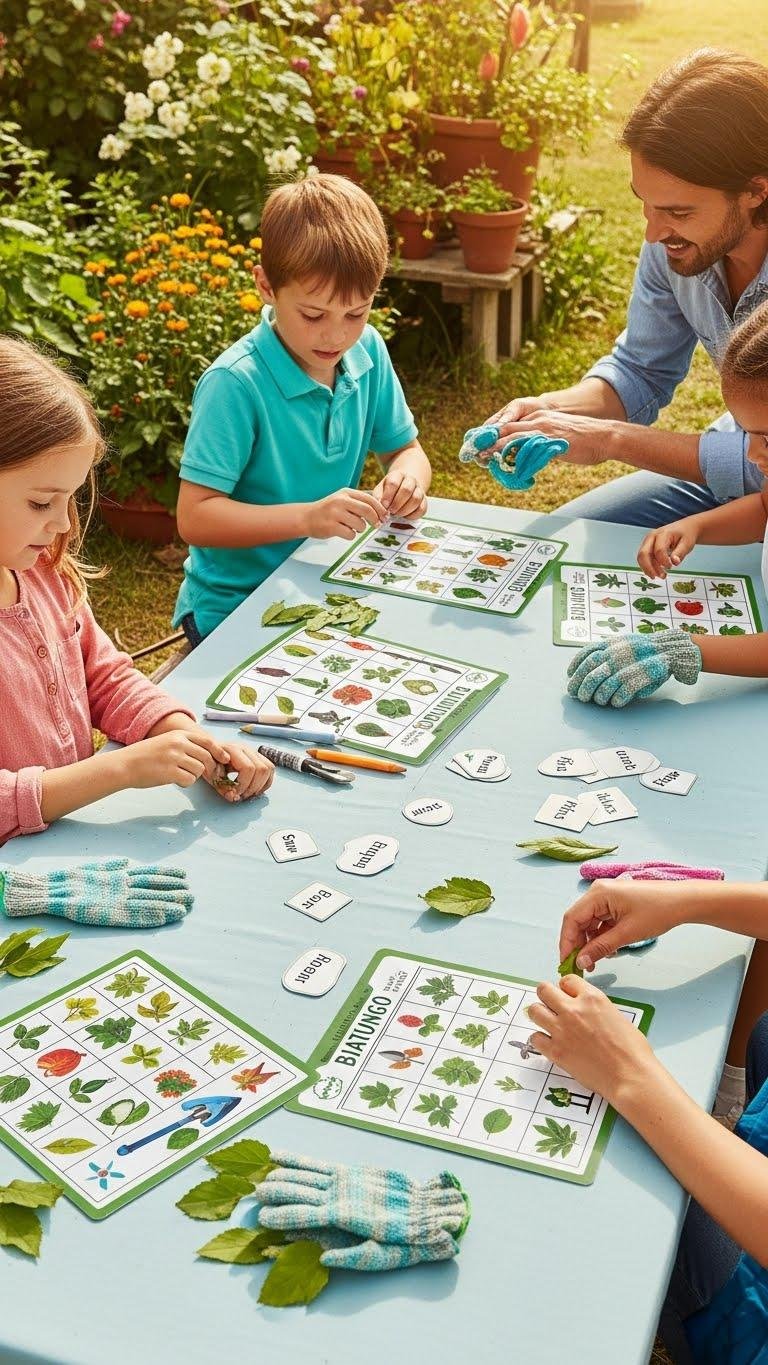
After a lively Harvest relay or Speed weeding sprint, keep the energy up with plant-themed Bingo and matching games that sharpen observation and reinforce safety habits. You’ll try bingo variations: picture, sound, or scent cards.
Teach matching strategies—pair leaves to names, tools to uses—encourage gentle handling, glove checks, and clear boundaries. Let kids explore freely while you guide calmly.
Seed-Sorting and Counting Races
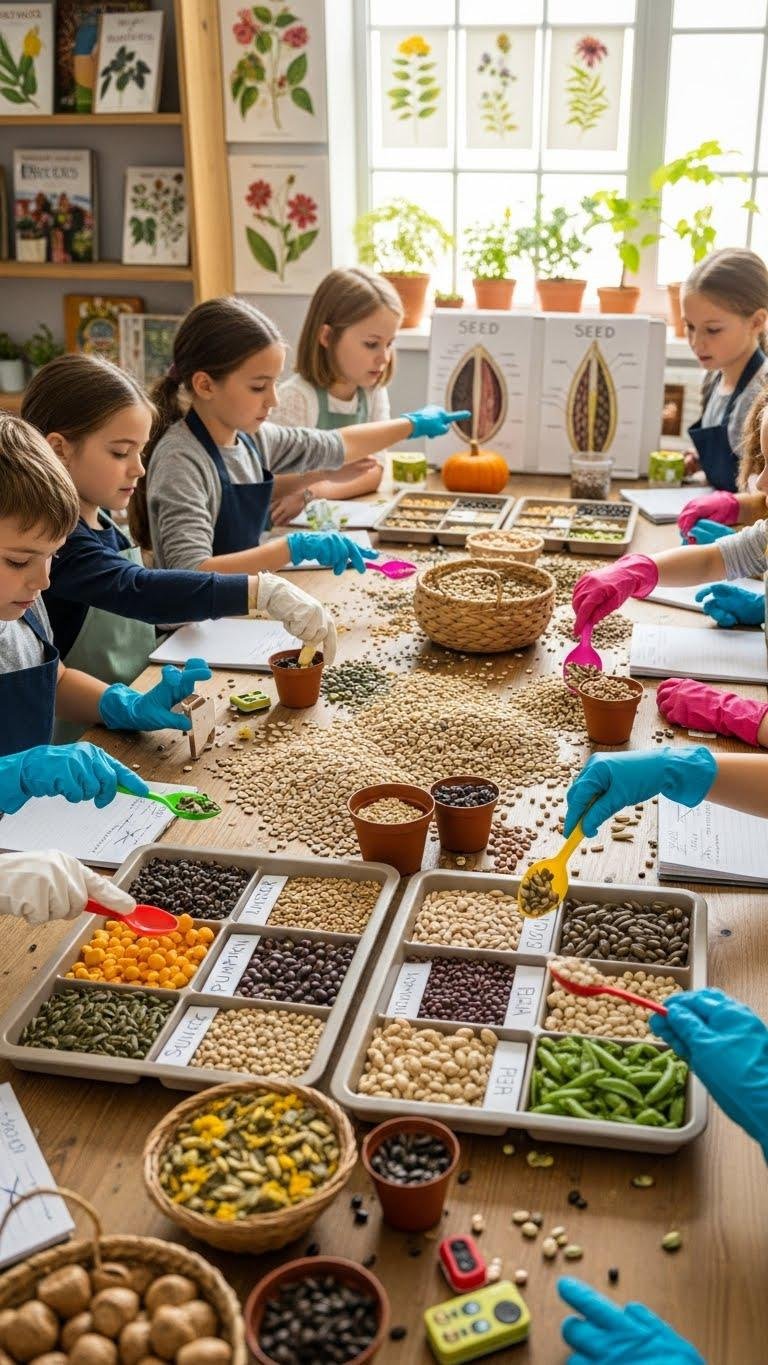
Kick off a Seed-Sorting and Counting Race by laying out labeled trays, spoons, and mixed seed piles so kids can scoop, sort, and count in quick rounds—keep safety top of mind by having everyone wear gloves and use scoops instead of bare hands. You’ll guide them to compare seed anatomy, tally totals, and discuss dispersion methods between rounds, cheering fast, careful work and curious questions.
Simple Trellis and Bean Tower Building
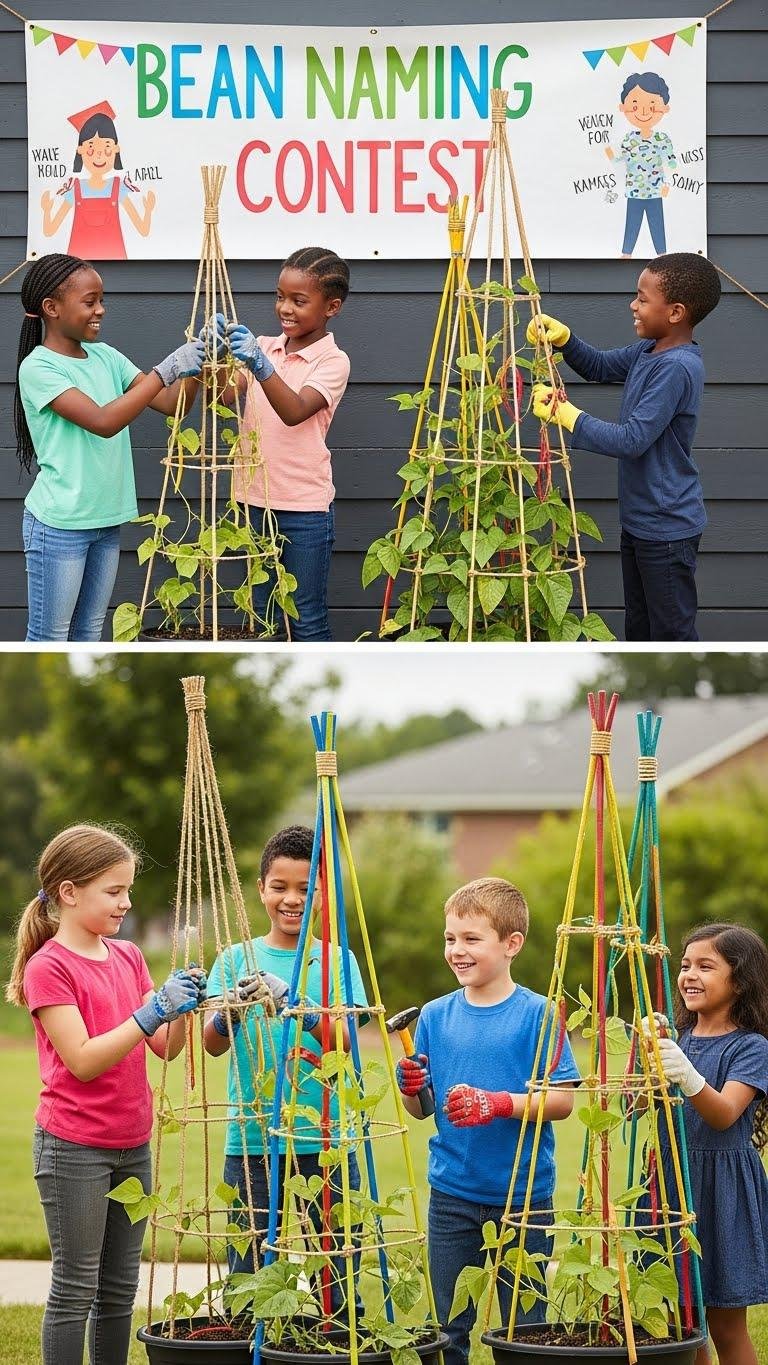
Grab some stakes, twine, and a few enthusiastic hands—you’re about to build simple trellises and bean towers that teach kids how plants climb. Show safe knot-tying, let kids choose poles, and supervise hammering.
Encourage Trellis Decorating with paint or ribbons and playful Bean Naming contests to spark ownership. Keep tools light, gloves on little hands, and celebrate every climbing tendril.
Raised Beds From Recycled Materials
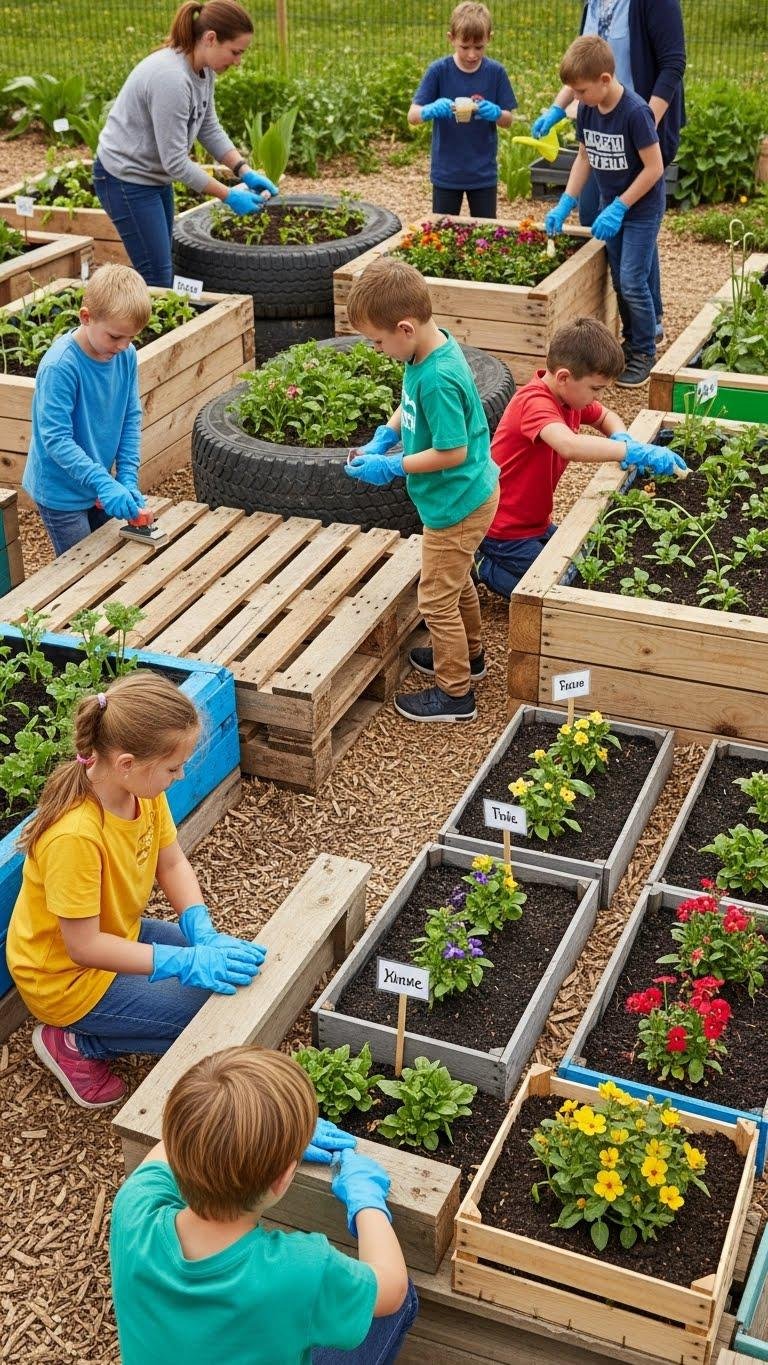
Turn old pallets, tires, and wooden crates into bright raised beds that teach kids about reuse while keeping their little hands safe and busy. You’ll build upcycled planters and pallet gardens together, sanding rough edges, securing corners, and adding non-toxic paint.
Let kids choose plants, label rows, and water daily. Supervise lifts, use gloves, and celebrate their freedom to create and grow.
Pollinator Hotels and Habitat Shelters
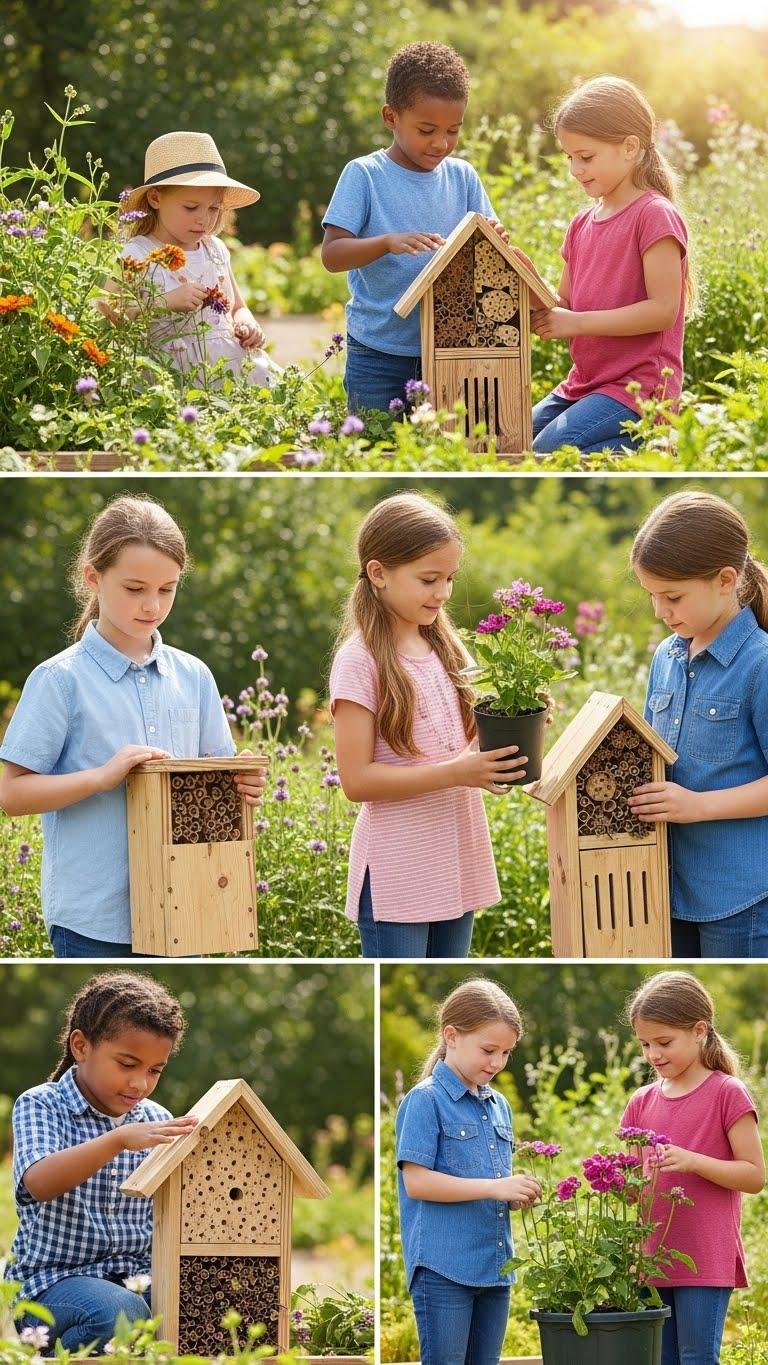
After your compost and wormery lessons have taught kids how kitchen scraps feed the garden, you can bring in pollinator hotels and habitat shelters to show how we shelter the helpers that visit our plants.
Guide kids to build sturdy nesting boxes, bundle hollow stems, and plant native blossoms. Teach safe handling—no squeezing insects—and place shelters where sunlight and shelter meet.
Mini-Greenhouses From Clamshells or Bottles
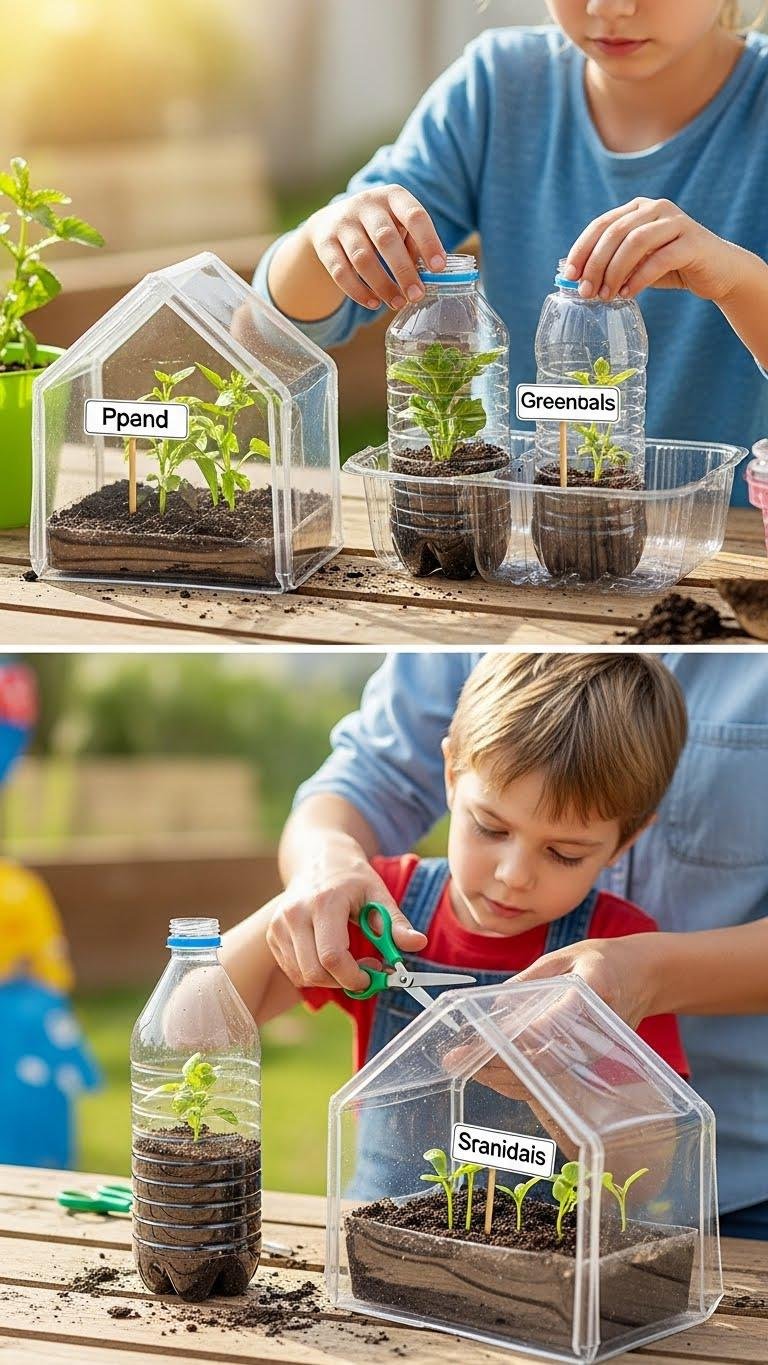
With a few clear clamshells or plastic bottles and some soil, you can create tiny greenhouses that jump-start seedlings and teach kids about warmth, moisture, and growth. Let them plant, label, and snap on clear lids. Try ventilation experiments by poking holes or propping tops open; supervise scissors use, avoid sharp edges, and encourage independent tinkering while keeping safety front and center.
Houseplant Propagation With Cuttings

Want to multiply your favorite houseplants? Grab scissors, pick a healthy stem, cut just below a leaf node and remove lower leaves. Place cuttings in water or moist soil, watch root development, and keep bright indirect light.
Teach kids gentle handling and clean tools for safety. Celebrate when new roots form, then pot up and free your plant collection to roam.