
You should treat mulching as the single smartest move for saving water and building healthier roots; when done right it cuts evaporation, evens soil temperatures, suppresses weeds and encourages deeper, stress‑resilient roots. I’ll show exact depths, which materials work best for vegetables versus perennials, how to avoid nitrogen tie‑up, and when plastic or wood chips are the smarter choice — but there’s one common mistake that ruins results.
Why Mulching Is the Single Best Move for Soil Moisture
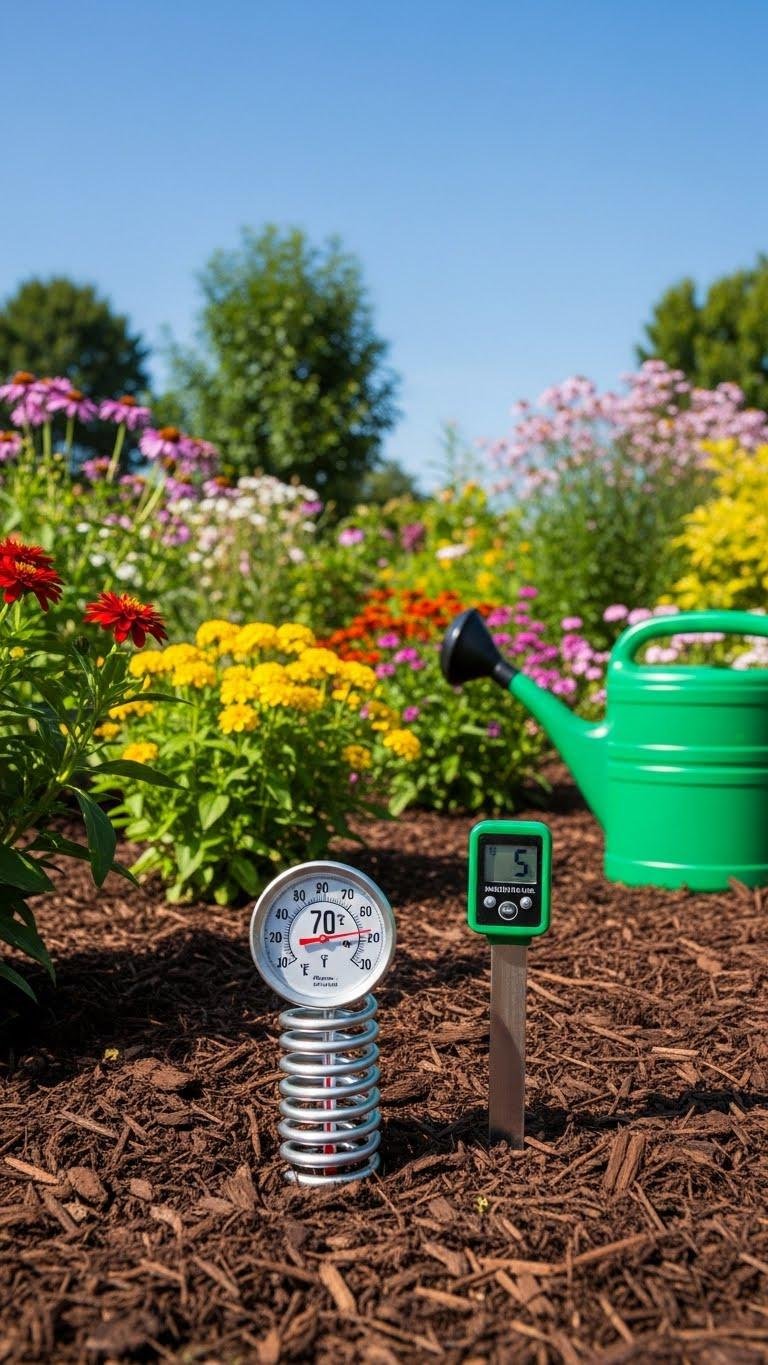
When you spread a layer of mulch around plants, you’re making the most effective, low-effort investment in preserving soil moisture: mulch cuts direct evaporation, moderates soil temperature swings, and slows surface runoff so more water soaks in where roots can use it.
You’ll reduce soil evaporation noticeably, let moisture sensors confirm steadier readings, and gain freedom from daily watering with a disciplined, low-maintenance routine.
How Thick Should Your Mulch Layer Be for Vegetables
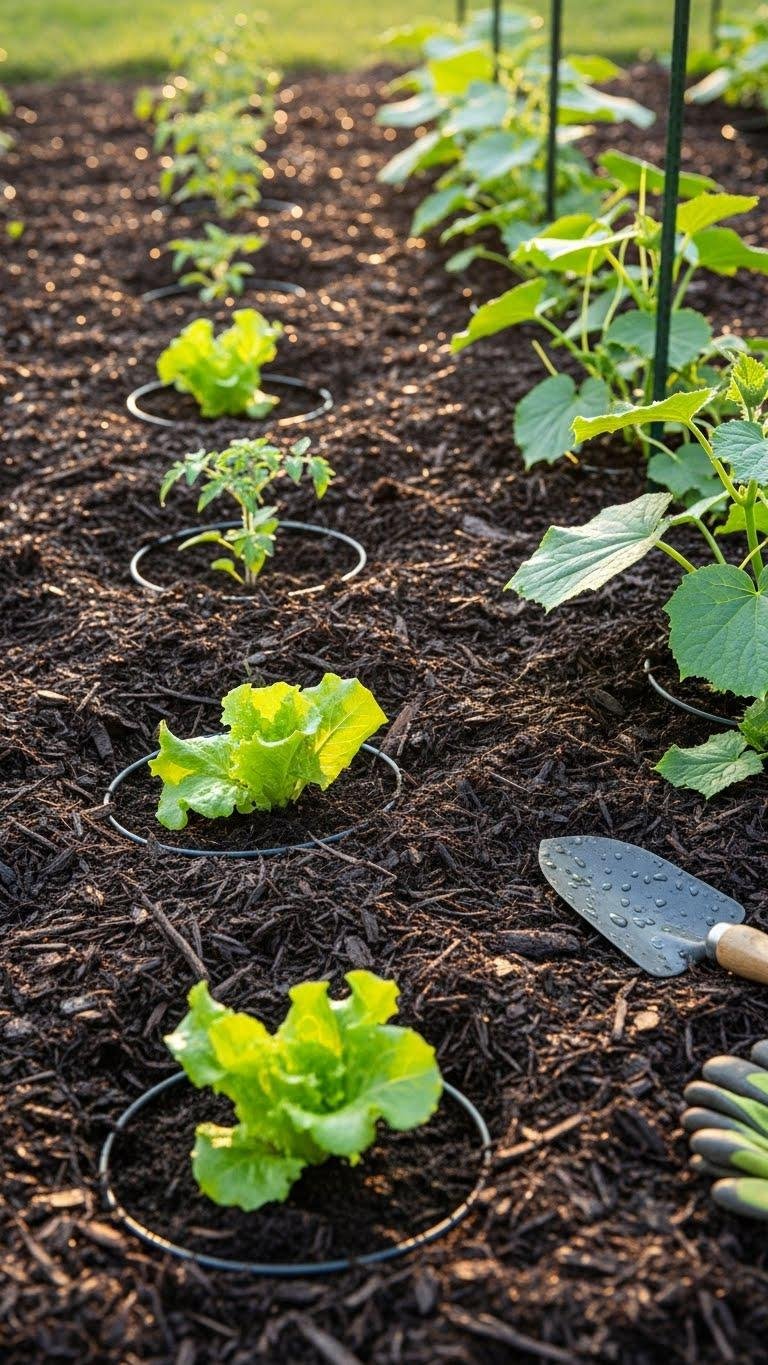
If you want vegetables to thrive, aim for a mulch layer that’s thick enough to conserve moisture and suppress weeds without smothering young plants—generally 2–4 inches for most annual vegetable beds.
You’ll monitor mulch depth around established plants so it won’t block air to the crown or restrict root spread. Keep mulch away from stems, refresh seasonally, and adjust for soil texture and climate.
Best Organic Mulches to Boost Water Retention
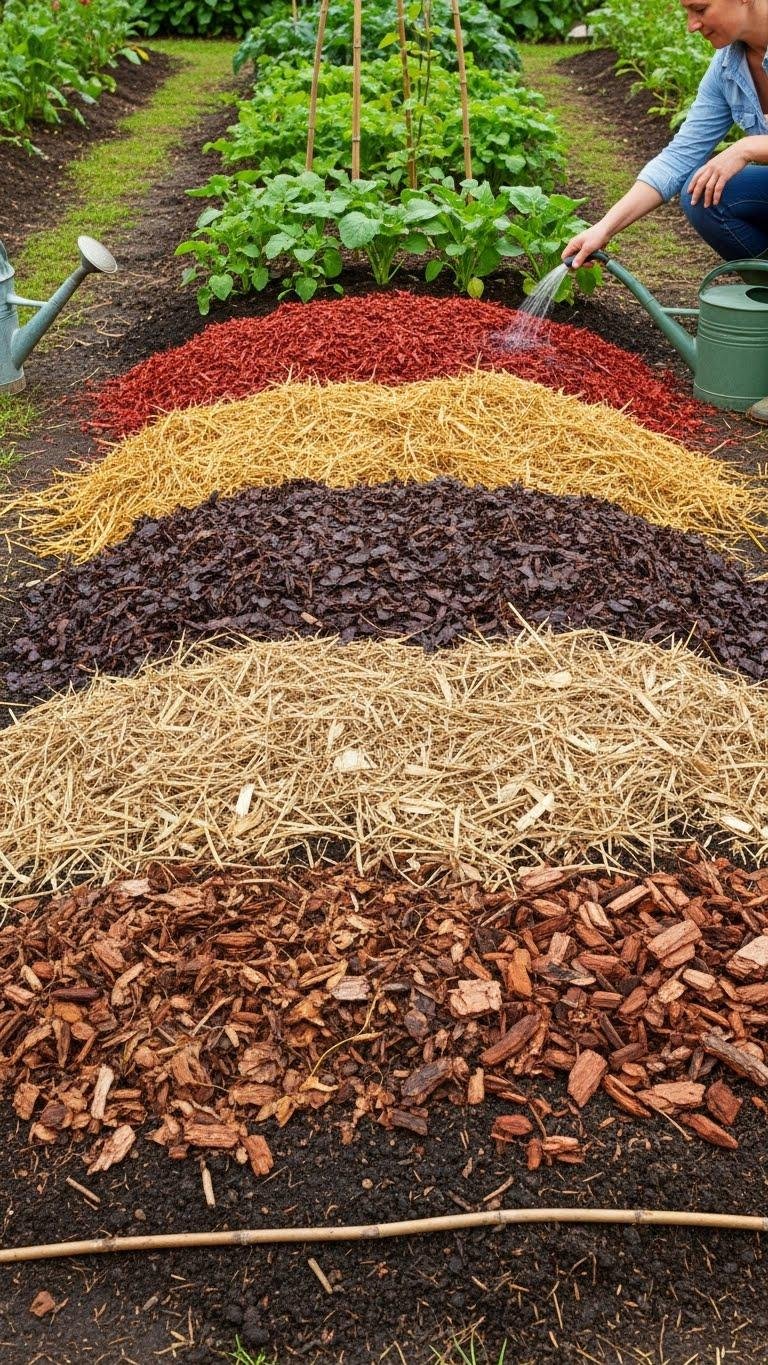
Now that you’ve got the right mulch depth, choose organic materials that hold moisture and break down into soil-building humus.
Use shredded bark, composted leaves, straw, and well-aged wood chips to maximize water retention and feed roots. Layer thin compost as organic amendments under mulch, monitor moisture, and refresh annually so your beds stay productive and free to grow how you want.
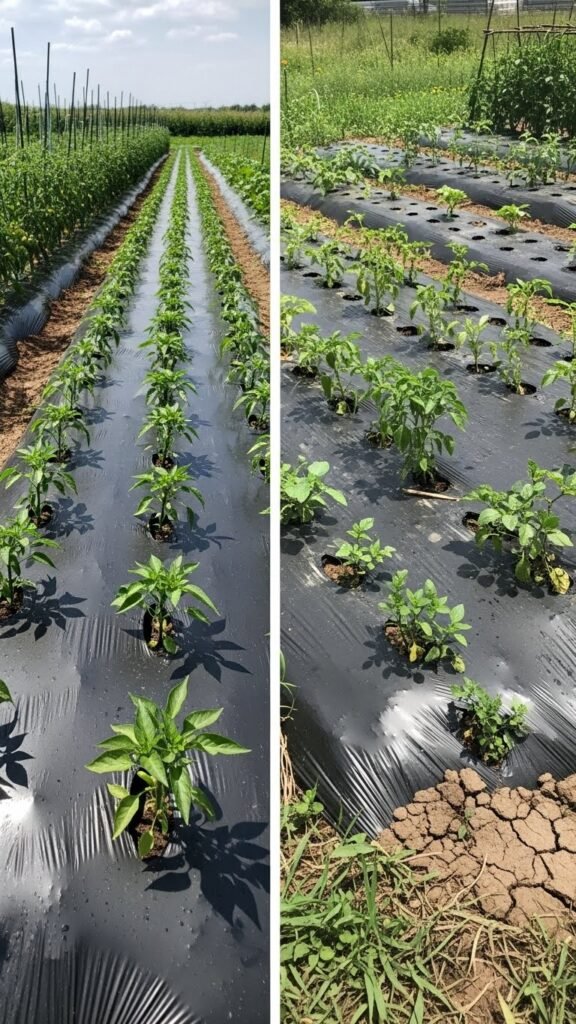
When Plastic Mulch Outperforms Straw and When Not To Use It
Timing: When to Apply Mulch for Maximum Moisture Benefits

After weighing the trade-offs between plastic and straw mulches for different garden scales and crops, timing becomes the factor that determines whether mulch preserves moisture or creates problems.
You’ll consult seasonal calendars, align with pre planting rituals, and wait until soil warms and holds moisture after rains.
Apply mulch thinly around seedlings, avoid smothering crowns, and refresh before prolonged dry spells.
How Mulch Encourages Deeper, Healthier Roots

Mulch encourages roots to grow deeper by keeping the soil cooler and more evenly moist near the surface, so plants send roots downward in search of oxygen and stable moisture rather than crowding into a stressed top layer.
You’ll see improved root penetration as fluctuating surface moisture is dampened, boosting consistent water uptake and anchorage so your plants explore deeper, more resilient soil horizons.
Mulching Strategies for Young Trees and Established Trees
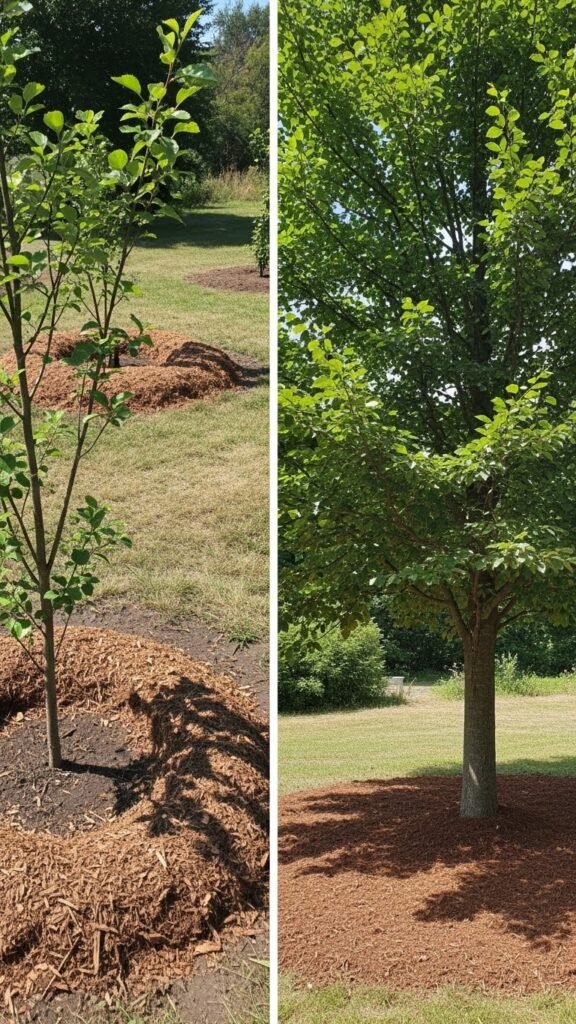
The same principles that encourage deeper, healthier roots — cooler, evenly moist soil and reduced surface stress — guide how you mulch young versus established trees, but the application differs.
For young trees, mulch a wider saucer, avoid mounding near stems, coordinate with root staking and higher watering frequency.
For established trees, apply thinner, broader layers to conserve soil structure and let roots explore.
How Mulch Reduces Irrigation Needs and Saves Water
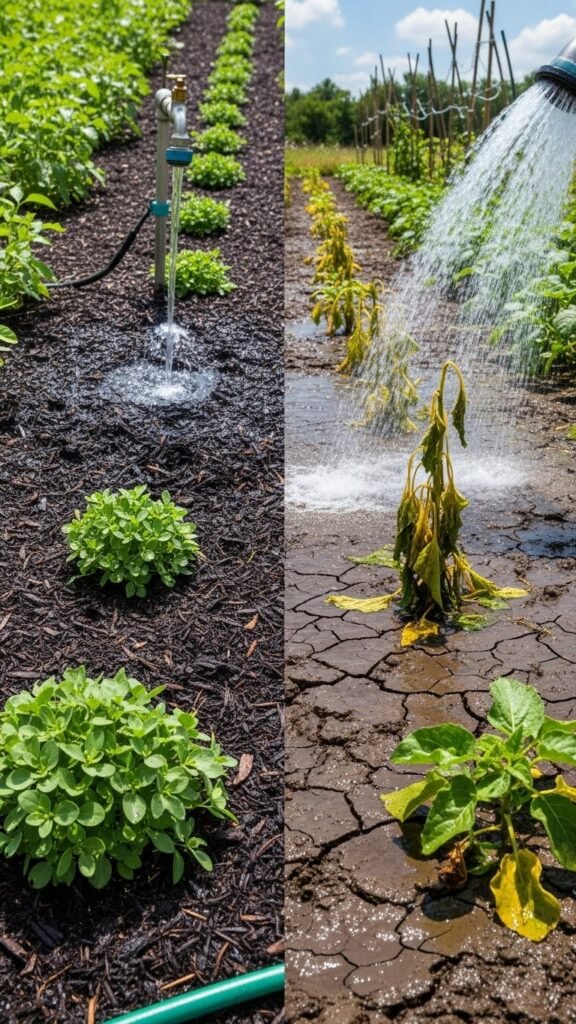
Regularly applied mulch lets you cut back on irrigation by slowing evaporation, insulating soil temperature, and improving moisture infiltration so more water reaches roots where it matters.
You’ll integrate drip integration beneath mulch to deliver targeted water, reduce runoff, and extend irrigation cycles. Combine mulch with evapotranspiration monitoring to schedule taps precisely, conserve water, and keep roots resilient without overwatering.
Preventing Nutrient Loss: Matching Mulch With Fertilization

Since conserving moisture changes how nutrients move and break down in the soil, you’ll need to match your mulch choice and application with your fertilization plan to avoid nutrient loss or imbalance.
Choose mulches that don’t immobilize nitrogen, time slow release fertilizers with mulch placement, and monitor results with routine tissue testing so you can adjust rates and maintain free, productive plant growth.
Using Composted Yard Waste to Improve Soil Nutrients

Composting yard waste returns essential organic matter and a broad spectrum of nutrients to your soil, improving structure, water retention, and microbial activity while reducing reliance on synthetic fertilizers.
You’ll apply finished compost as mulch, feed soil life, and speed nutrient cycling.
Brew compost tea for targeted foliar or root boosts, test pH and nutrient levels, and adjust applications seasonally to maximize freedom and resilience.
Choosing Coarse vs. Fine Mulch for Temperature Control
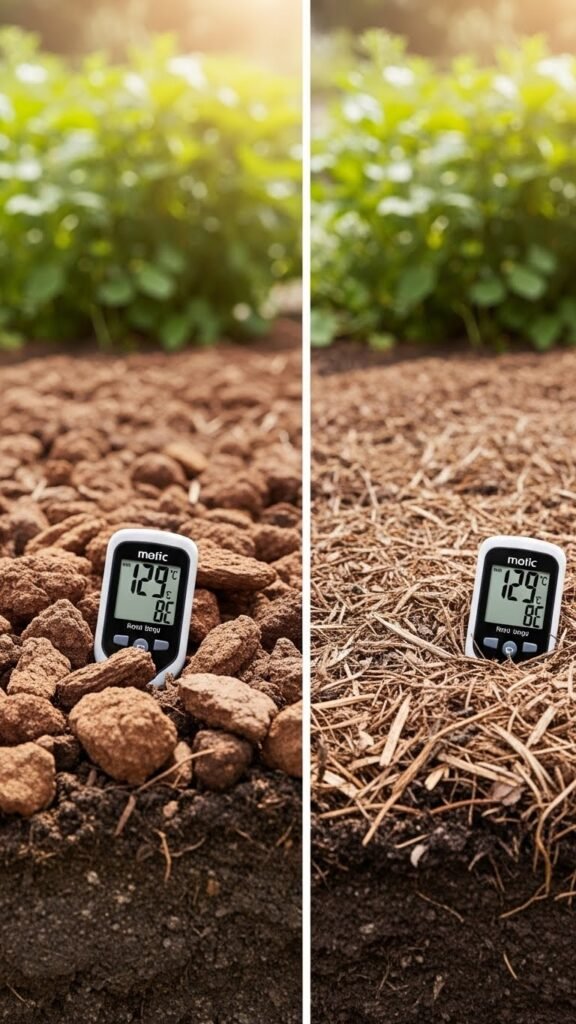
When you pick between coarse and fine mulch, think about how each alters soil temperature and moisture dynamics: coarse mulches (like wood chips or straw) insulate more effectively, buffering against rapid swings and keeping roots cooler in summer and warmer in early spring, while fine mulches (like shredded leaves or compost) warm the soil faster and improve seedbed contact but can compact and retain surface moisture differently. Choose coarse insulation for extremes; use fine buffering for quick warming and contact.
Mulch Techniques That Suppress Weeds Without Chemicals
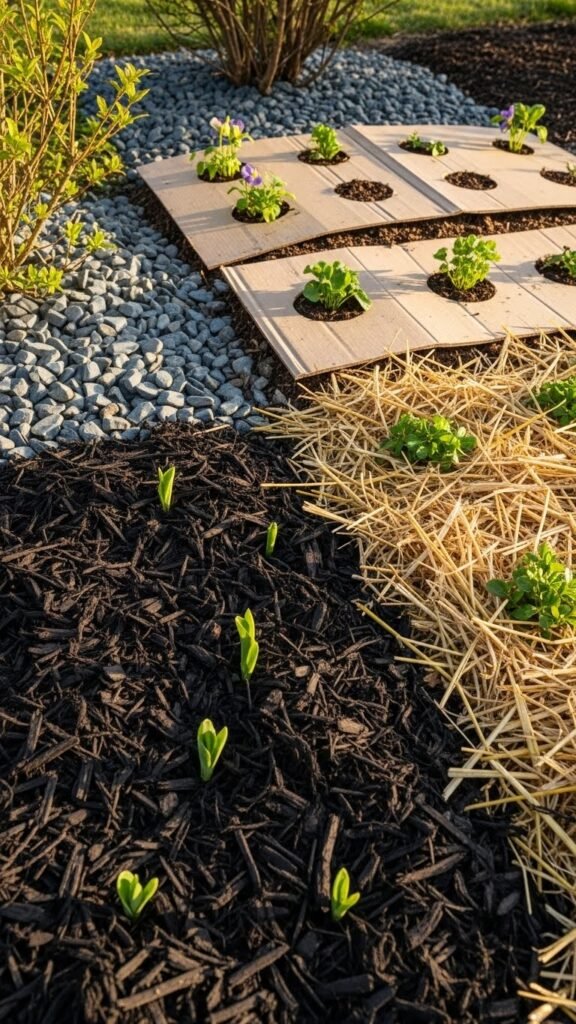
By laying mulch deliberately and choosing the right materials, you can choke out weeds without chemicals and cut back on tedious weeding. Use thick organic layers (3–6 inches) to block light, combine with fabric barriers at borders for stubborn patches, and rotate tamped straw or wood chips.
Consider solarization alternatives like dark compost covers for seasonal control while preserving soil life.
How Mulch Improves Soil Structure and Aggregation

Improving soil structure starts at the surface: mulch feeds a living mattress of microbes and worms that bind particles into stable aggregates, so your soil holds water, drains excess, and resists compaction.
You’ll manage aggregate dynamics by adding varied organic layers, encouraging pore formation and root channels.
Work in moderate mulch, monitor texture, and let biology reshape friability for freer, resilient soils.
Avoiding Common Mulch Mistakes That Harm Roots
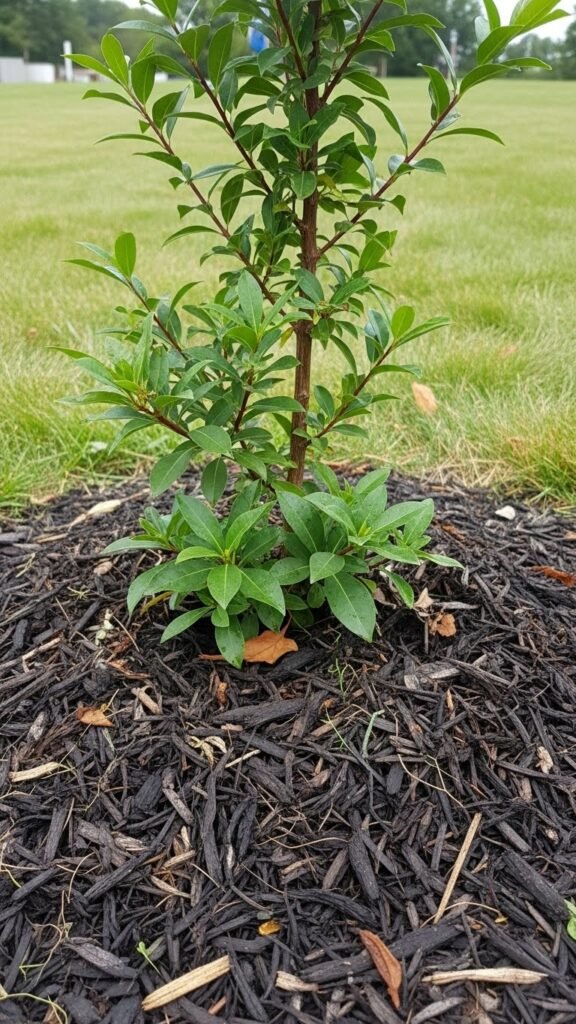
You’ve seen how mulching fosters a living, aggregated soil that benefits roots, but improper application can undo those gains and stress plants.
Don’t create shallow piling against stems or trunks; keep mulch 2–3 inches deep and pull back from crowns. Avoid plastic contact that suffocates roots and traps moisture.
Inspect annually, refresh properly, and let roots breathe.
Mulching Practices for Drought-Prone Landscapes

In drought-prone landscapes, mulch becomes your frontline tool for conserving water and protecting roots, so apply it strategically: lay a 2–3 inch layer of organic mulch over the root zone, keep it pulled away from stems and crowns, and avoid plastic or non-breathable barriers that trap moisture and heat.
Pair mulch with drought tolerant groundcovers, direct runoff to rainwater harvesting basins, and mulch around basins to reduce evaporation.
Renewing and Replenishing Mulch: Best Schedule
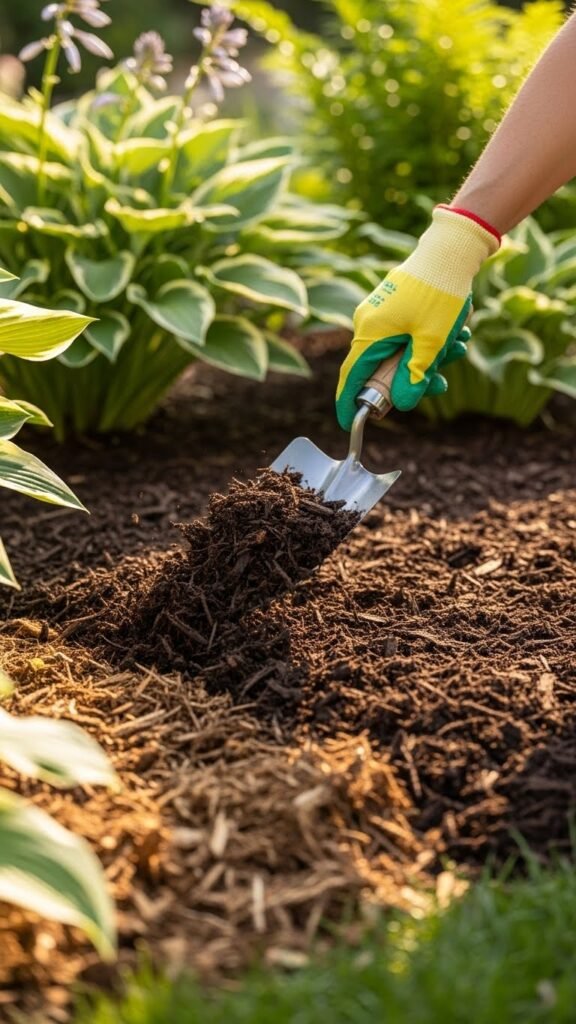
After you’ve applied mulch correctly and paired it with drought-tolerant plantings and water harvesting, plan how often to refresh that protective layer so it keeps doing its job. Inspect mulch each season, schedule seasonal replenishment based on mulch decomposition rate, climate, and plant needs.
Top up thin spots annually, replace deeply decomposed material every 2–3 years, and keep trunks clear for airflow.
Long-Term Benefits of Mulching Disturbed or Compact Soils
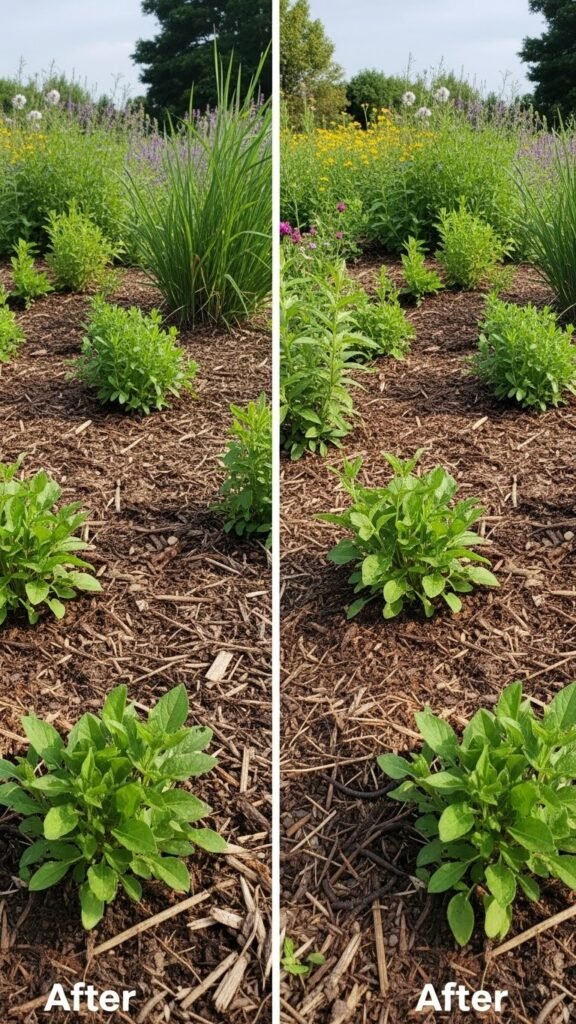
Mulching over disturbed or compacted soil builds structure and resilience over time, loosening heavy soils and encouraging aggregation as organic matter breaks down and soil life rebounds.
You’ll accelerate compaction remediation by layering coarse then fine mulch, adding targeted soil inoculation with compost teas or mycorrhizae, and maintaining moisture.
Over seasons you regain porosity, root penetration, and drought resilience while freeing your landscape from recurring hardpan.
Eco-Friendly Mulching: Recycling Yard Waste and Wood Chips
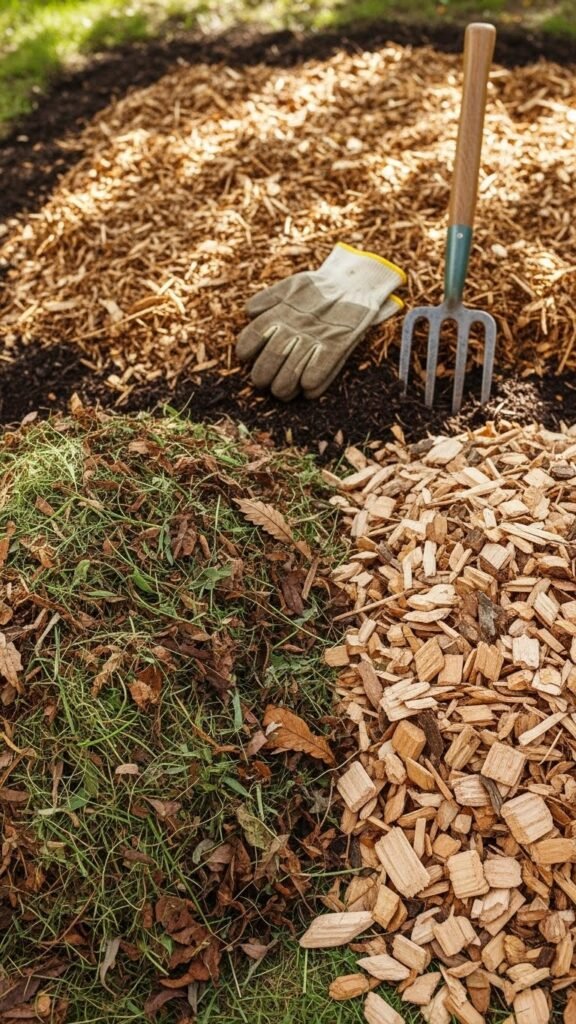
When you recycle yard waste and wood chips as mulch, you cut disposal costs, build soil structure, and lock in moisture while keeping synthetic materials out of your garden; do it right by shredding branches, composting fresh clippings until they’re stable, and layering chips to minimize nitrogen drawdown.
Embrace wood chipcycling and leaf shredding: mix composted material, test moisture, apply 2–4 inches, refresh annually for resilient, free-growing beds.