
You can turn a small patio into a calm, plant-forward retreat that’s easy to maintain and rich in texture. Think layered pots of Mediterranean topiaries and herbs, low bluestone seating with integrated planters, vertical green walls for privacy, and drought-tolerant borders that free up time and water. I’ll walk you through 21 practical ideas that balance form, fragrance, and function—so you can pick what fits your space and lifestyle.
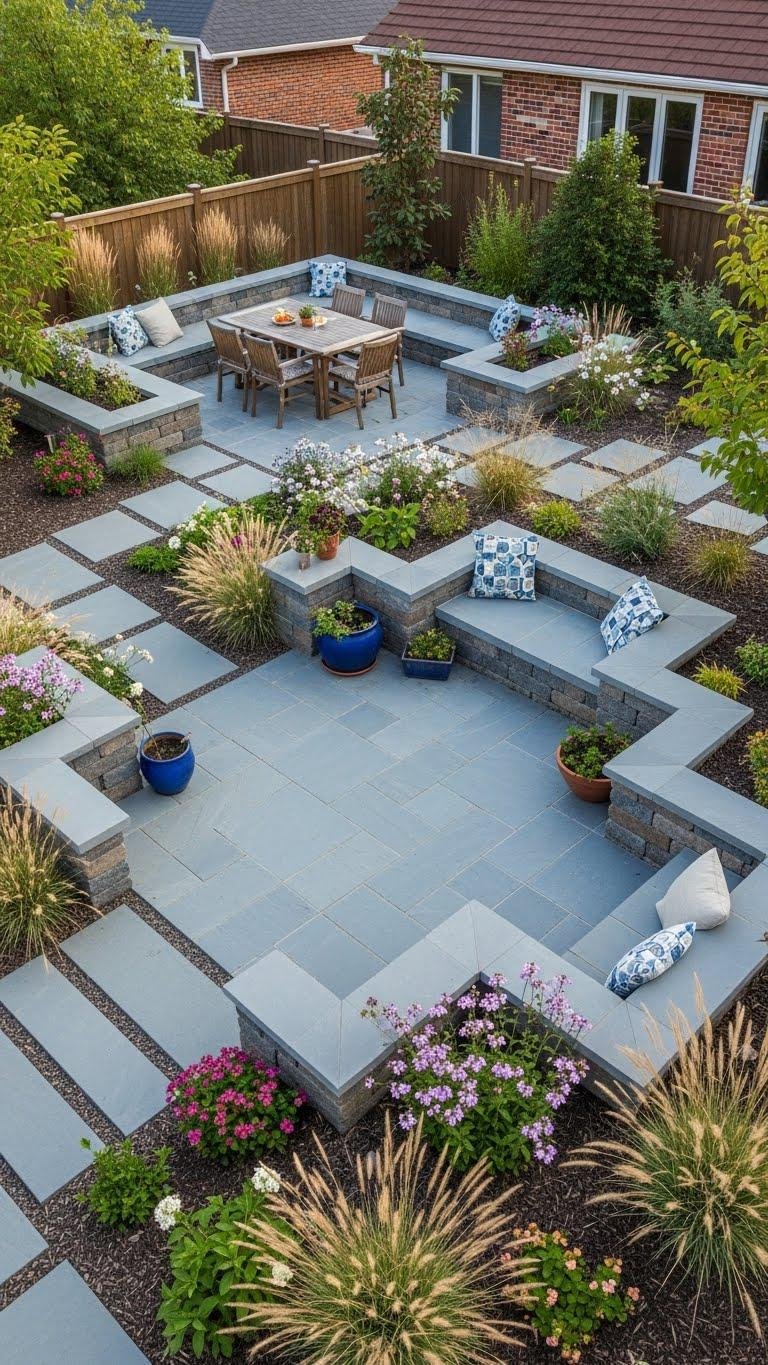
Create a Cozy Bluestone Patio With Custom Sitting Walls
Install a Vertical Garden to Maximize Small Spaces
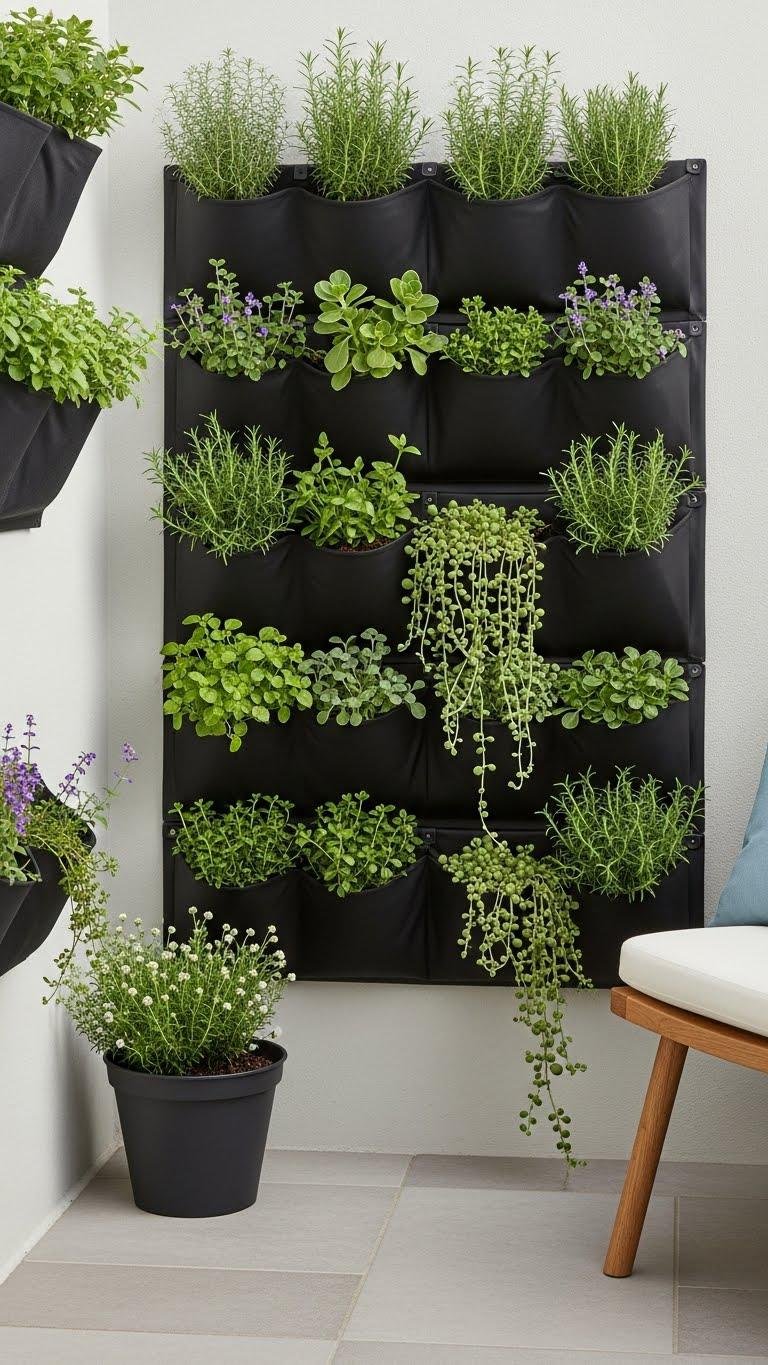
Maximizing a small patio starts with thinking upward: a vertical garden turns walls and fences into productive, living screens so you get more plants without sacrificing floor space.
You’ll craft a living wall with layered pocket planters, choosing fragrant herbs, trailing succulents, and compact perennials.
This frees ground area, creates privacy, and lets you move, prune, and rearrange for effortless, liberated outdoor living.
Build a Low-Water Native Planting Bed With Gravel Groundcover
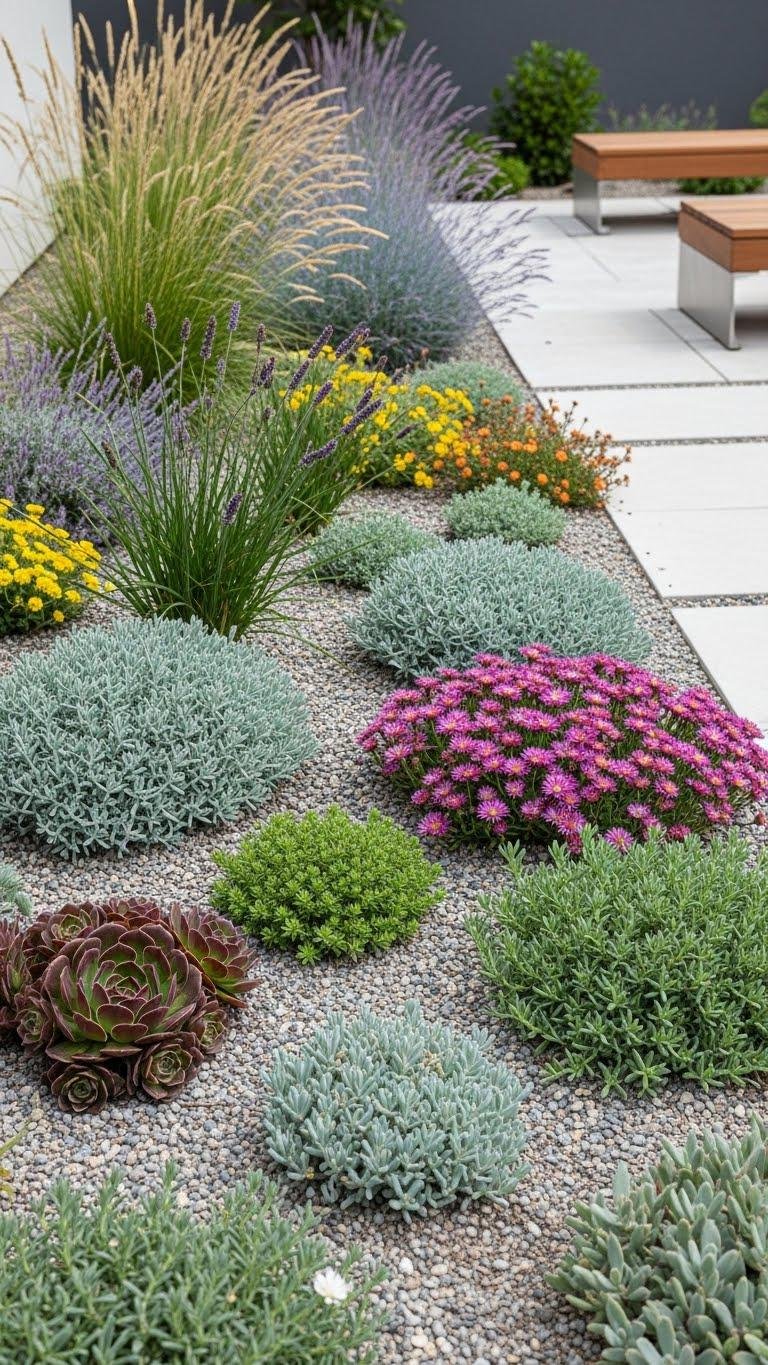
After opening up wall space with a vertical garden, you can bring the same efficient, plant-first thinking down to ground level by creating a low-water native planting bed topped with gravel.
Choose native succulents and drought-tolerant grasses, group by height and texture, and lay gravel mulch to suppress weeds and reflect light.
You’ll free maintenance time and enjoy a minimalist, living patio canvas.
Add a Gas Fire Pit Surrounded by Potted Topiaries
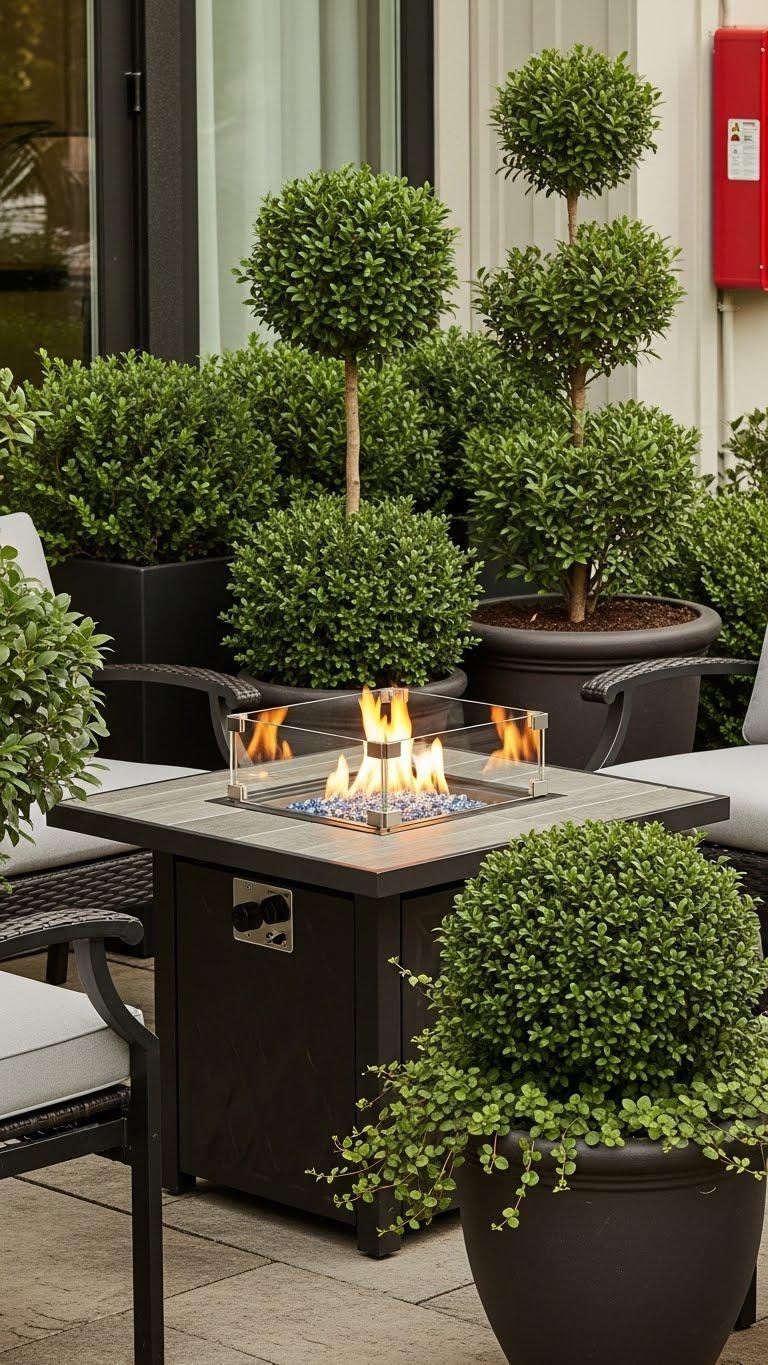
When you center a low-profile gas fire pit on the patio, it becomes an instant focal point that pulls your plantings into a coherent, sculptural composition. You’ll place Mediterranean topiary in sturdy pots around the pit, creating rhythm and breathing space. Keep freedom alive: arrange for sightlines, stepback room, and perform a Safety gas check before each season to enjoy warmth without worry.
Design a Privacy Screen Using Bamboo or Reclaimed Wood
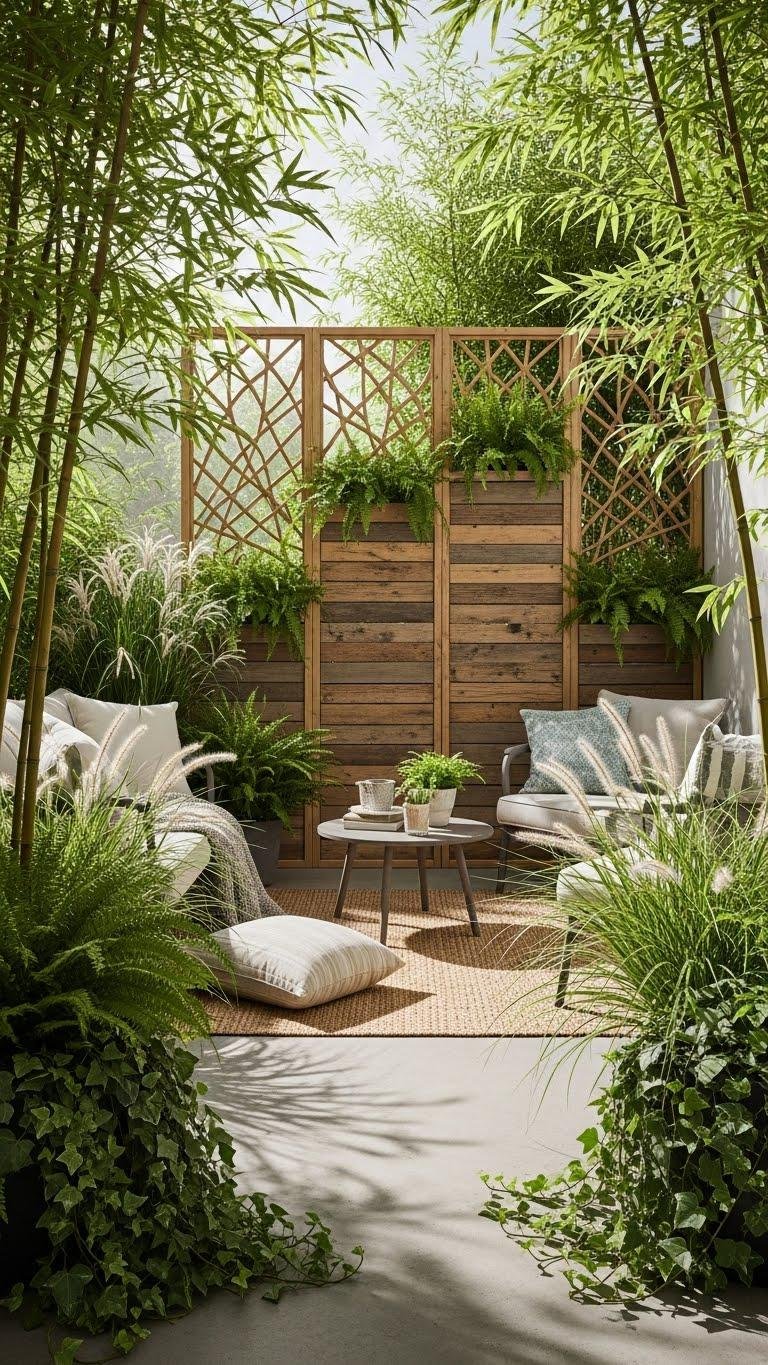
Frame your patio with a living screen of bamboo or weathered reclaimed wood to carve out a sheltered, plant-forward room. You’ll use bamboo latticework or reclaimed paneling to sculpt sightlines, anchor containers, and soften edges with ferns, grasses, and trailing ivies.
This screen defines zones without boxing you in, creates dappled shade, and invites easy movement and spontaneous lounging outdoors.
Layer Vertical Trellises With Climbing Hydrangeas
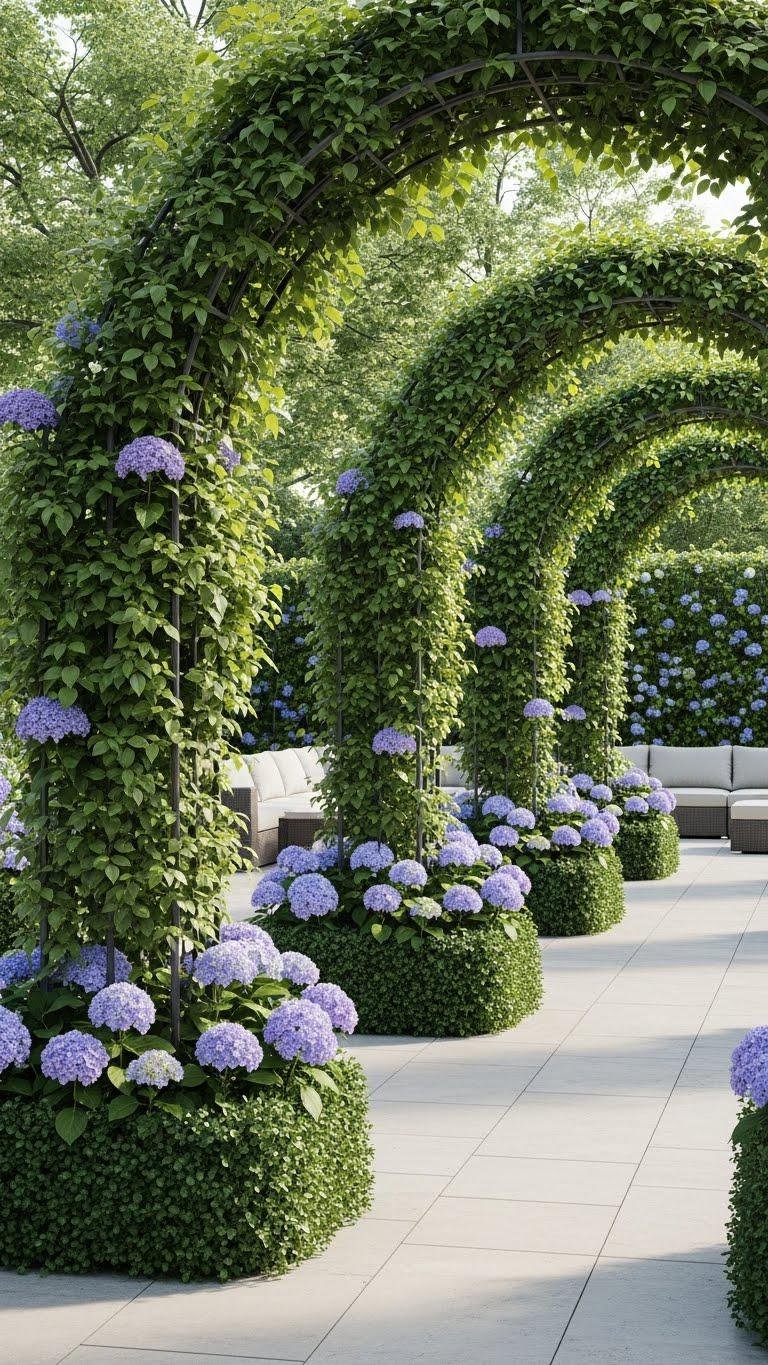
Layer vertical trellises close to the patio edge to lift the garden upward and give climbing hydrangeas room to unfurl their mophead blooms. You’ll arrange layered trellises at varying depths so vines weave and cascade without crowding seating.
Train stems gently, prune for air and light, and leave walking space. This creates a liberated, green vertical room that feels airy and deliberate.
Incorporate Recycled Metal Sculptural Planters
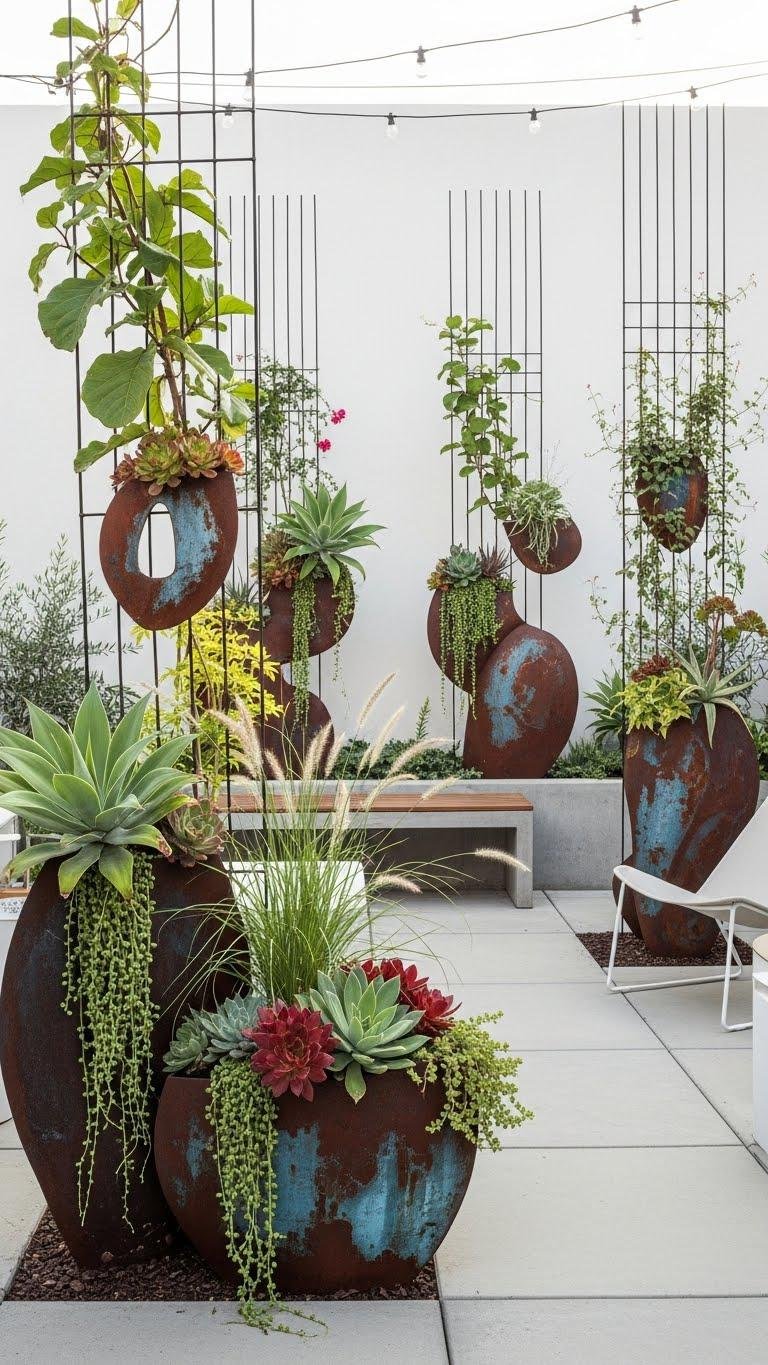
After the airy vertical room created by trellises, bring in recycled metal sculptural planters to anchor and punctuate the space. You’ll place recycled planters as focal points, pairing metal sculptures with resilient succulents, grasses and trailing vines.
Let negative space frame each piece, allowing movement, light and touch. This keeps the patio liberated, urban, and intensely plant-forward.
Carve Out an Outdoor Kitchen Garden With Seating
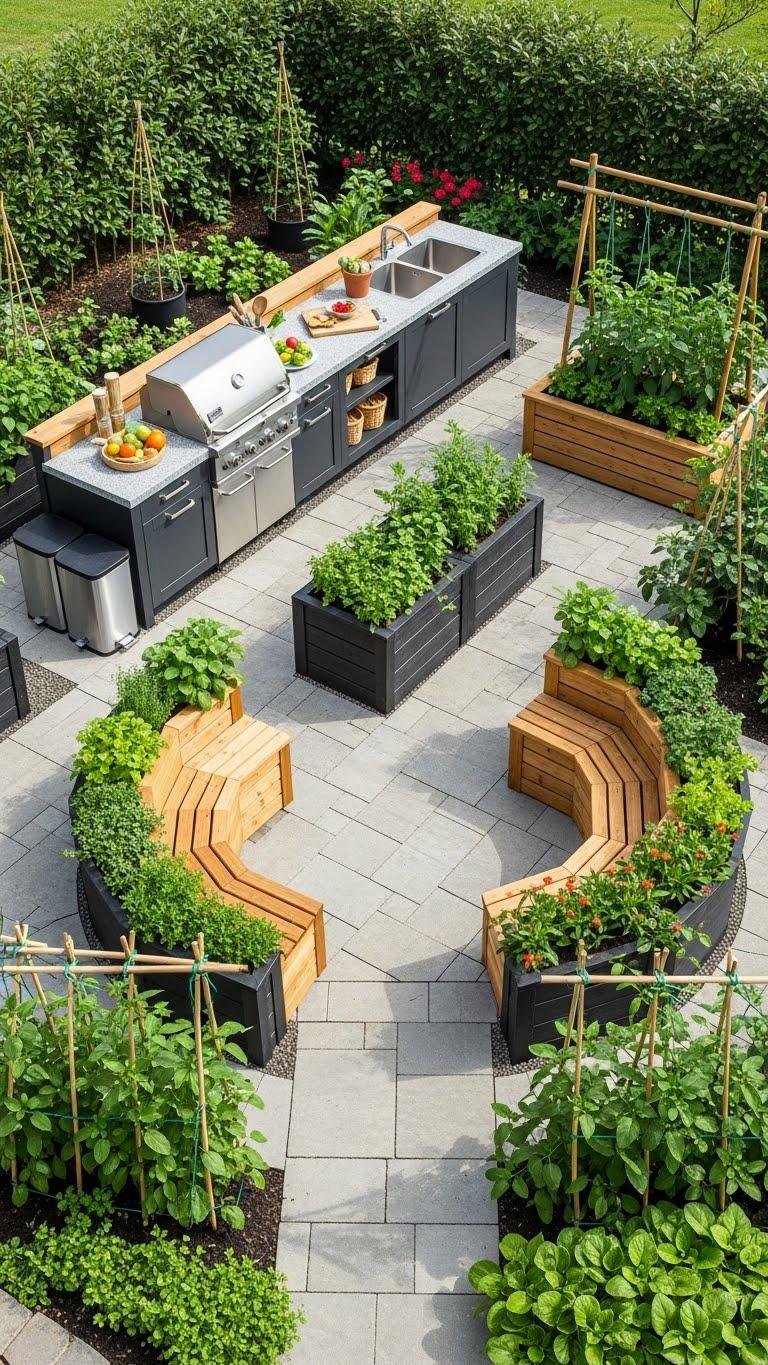
When you carve out an outdoor kitchen garden with seating, think with respect to pantry-to-plate: place culinary herbs, compact vegetables, and heat-tolerant greens within arm’s reach of your prep counter and grill so harvesting is effortless.
Design edible seating that doubles as planter benches, use container counterpoints to layer height and scent, and leave clear circulation so you can move, pick, and cook freely.
Frame a Relaxing Corner With Tall Grasses and Boxwood Spheres
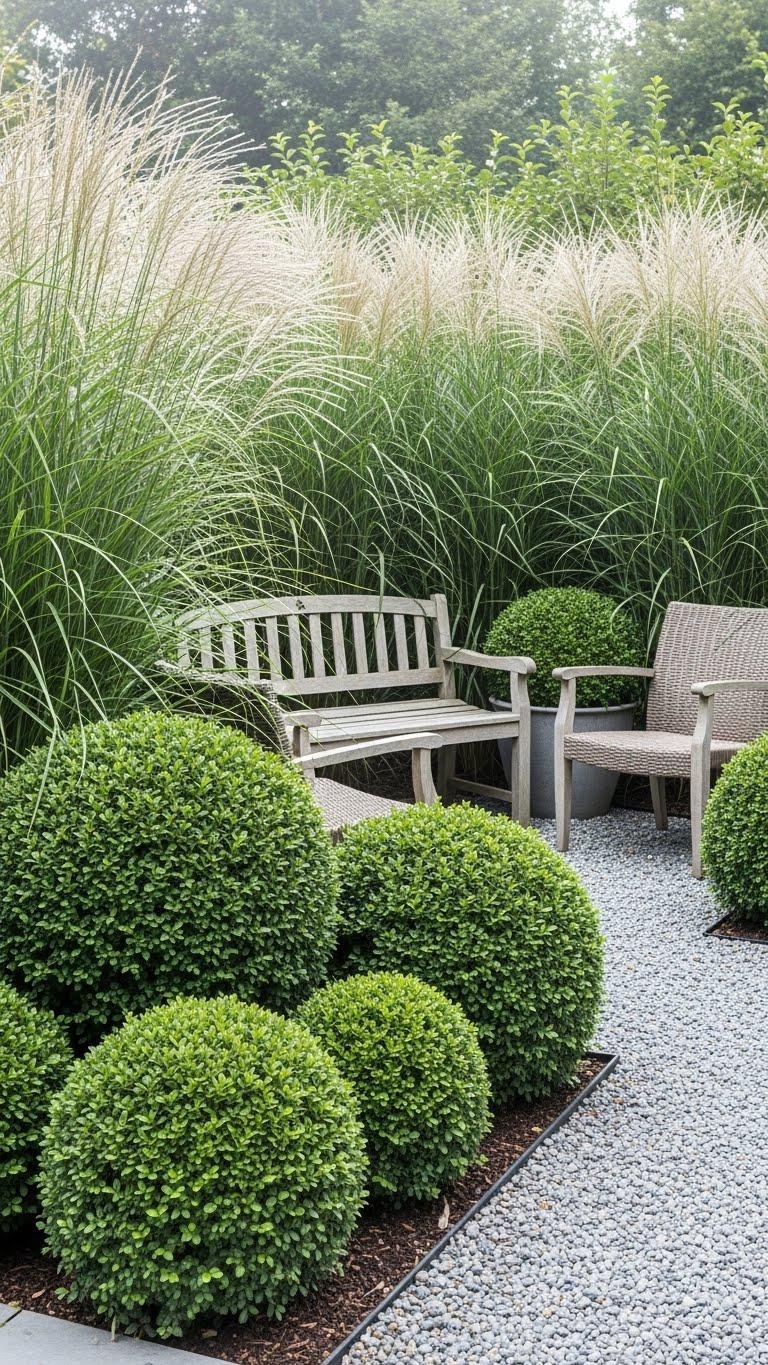
If you want a serene nook, plant tall ornamental grasses to rise like a soft curtain and anchor them with clipped boxwood spheres for year-round form and contrast.
You’ll shape a shaded nook that invites retreat, arranging plants to frame seating and sightlines. Use pebble mulch to define beds, improve drainage, and keep the composition clean, airy, and effortless.
Install Accent Lighting to Highlight Plants and Features
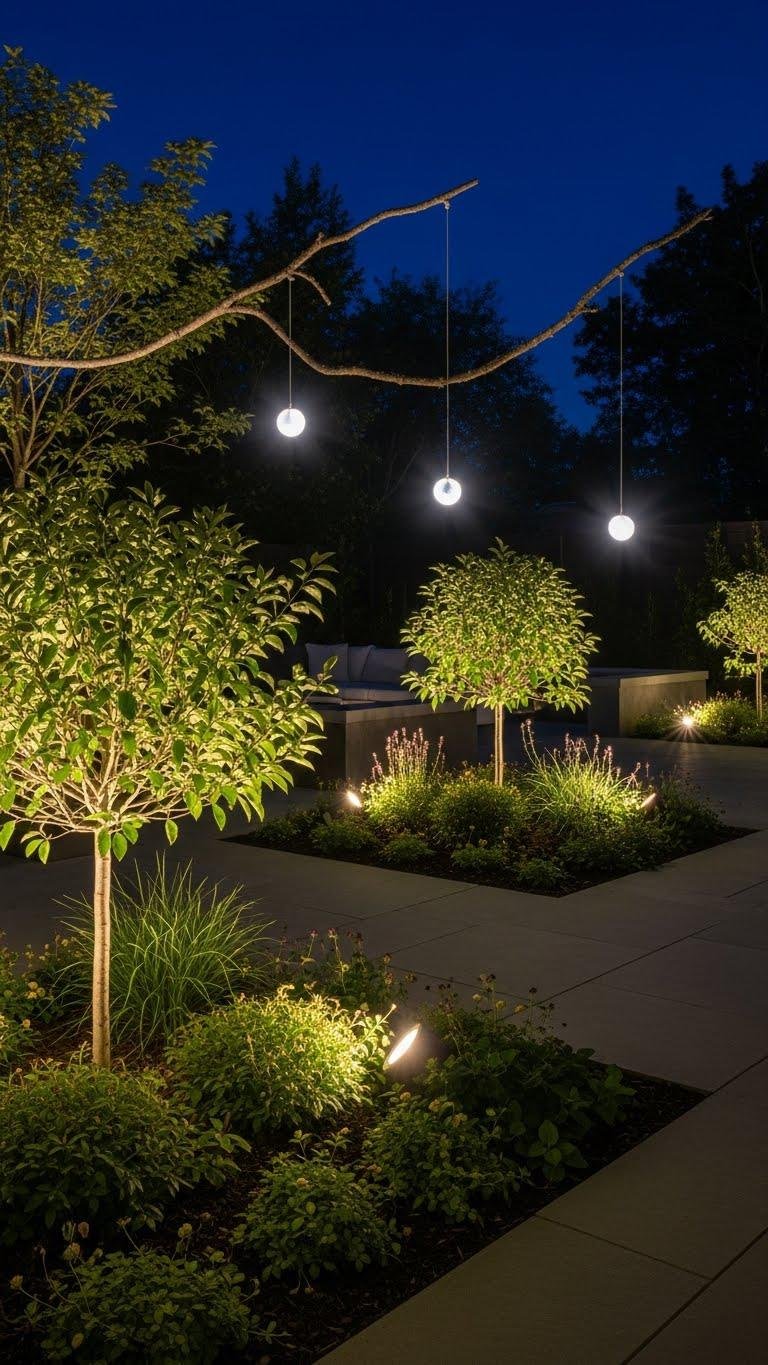
Install low, focused lighting to sculpt your patio’s plants and architectural features, turning daytime shapes into dramatic nocturnal forms.
Place LED uplighting at the base of specimen shrubs and small trees to reveal texture. Suspend subtle moonlighting pathways from branches for safe, ethereal routes. You’ll control mood, extend evenings, and keep sightlines open—letting plant forms breathe and you move freely.
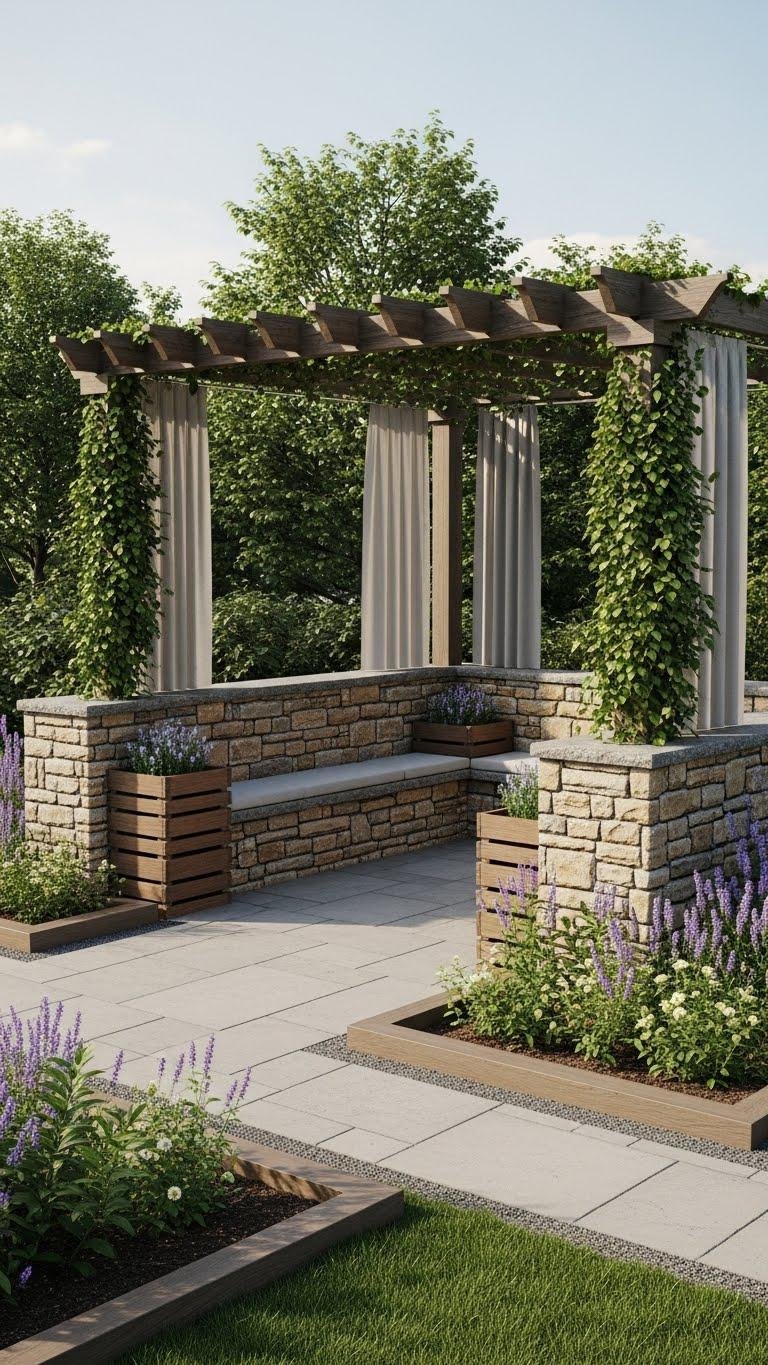
Use Partial Stone Walls to Support a Shaded Pergola
Replace Lawn With Gravel and Potted Culinary Herbs
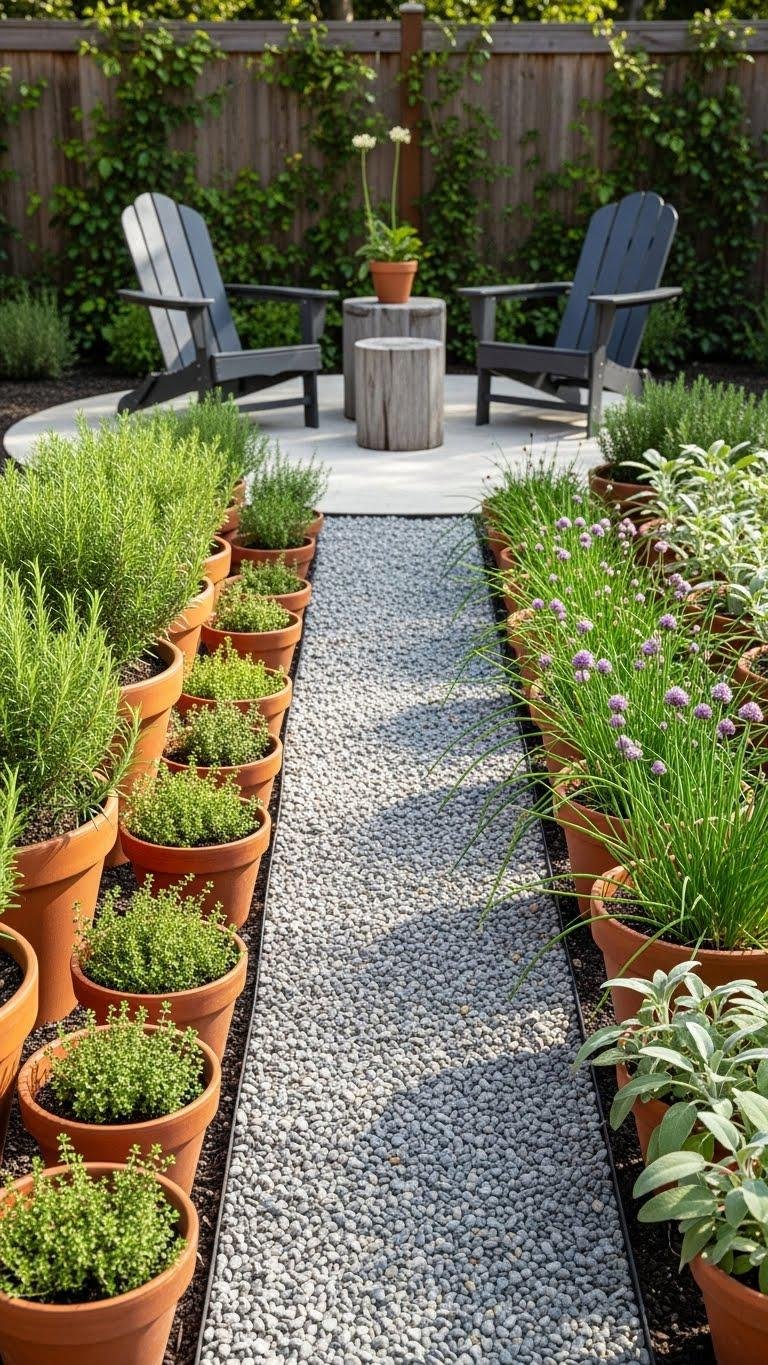
With a strip of gravel and a cluster of pots, you can replace thirsty turf with a low-maintenance, kitchen-ready border that emphasizes plants and usable space.
You’ll create a container kitchen: thyme, rosemary, chives, and sage in sun-warmed pots. The culinary xeriscape trims watering, frees you from lawn chores, and shapes clear paths and seating niches for relaxed, purposeful outdoor living.
Add a Compact Outdoor Shower for Transitional Backyards
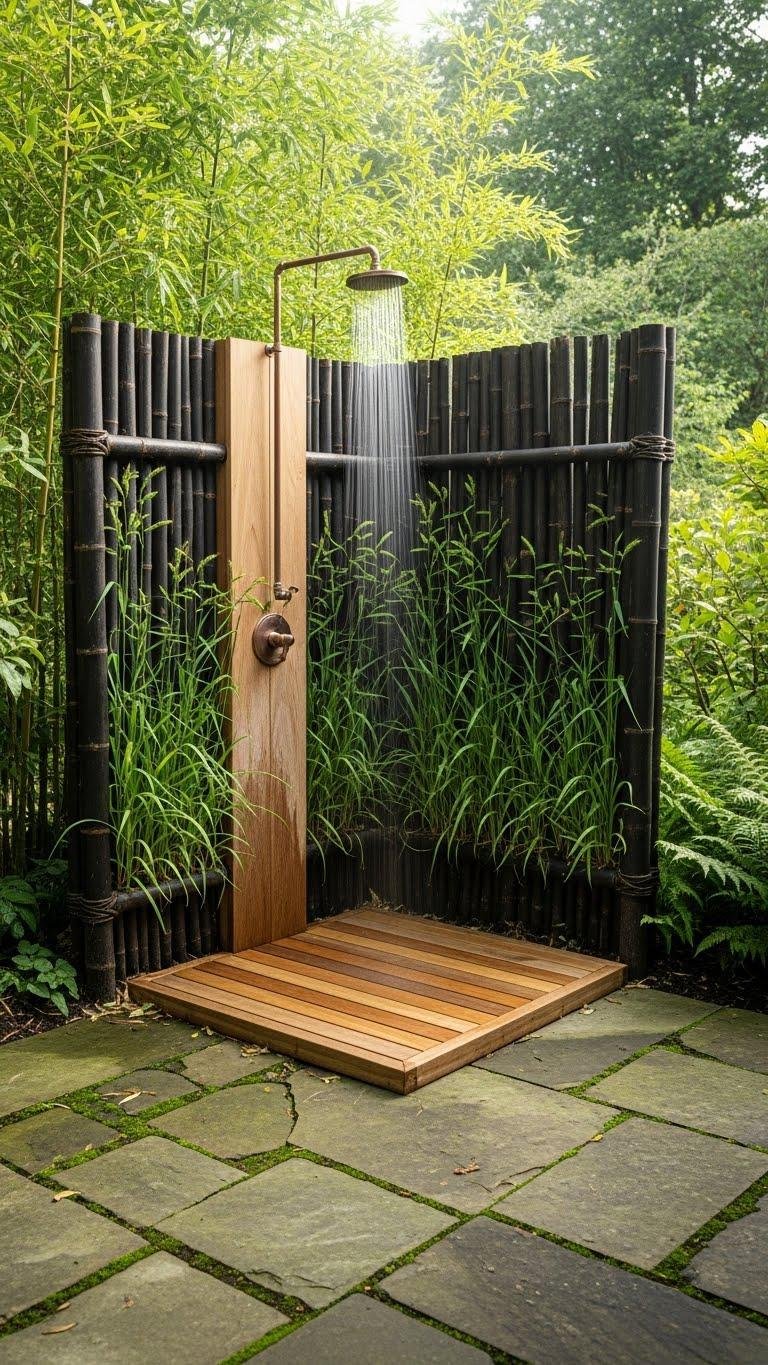
Placed at the edge of a patio or tucked between tall grasses, a compact outdoor shower lets you move seamlessly from garden to home while keeping dirt and salt outside.
You’ll choose a simple compact shower with natural materials, orienting it toward sun and breeze.
Add a green privacy enclosure of bamboo or slatted wood so you rinse off surrounded by foliage and freedom.
Craft Built-In Planter Benches for Intimate Seating
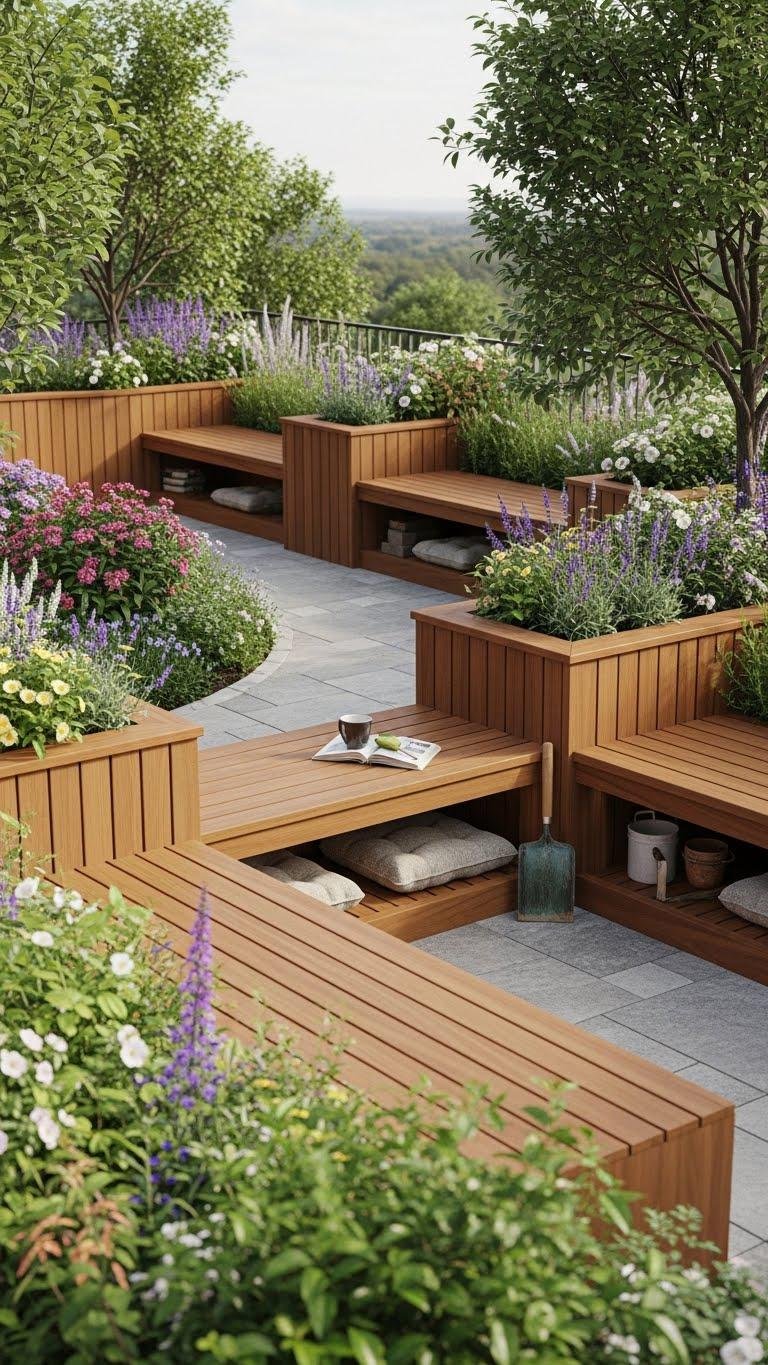
When you carve seating out of beds and borders, built-in planter benches let you sit literally within the garden — roots, blooms and scent at arm’s reach.
You’ll favor teak seating for warmth, curved benchwork to follow pathways, and planter integration that frames views.
Include built in storage beneath the seat for cushions and tools.
The result feels freeing, intimate, and effortlessly green.
Set Up a Multi-Level Paver Patio With a Custom Fireplace
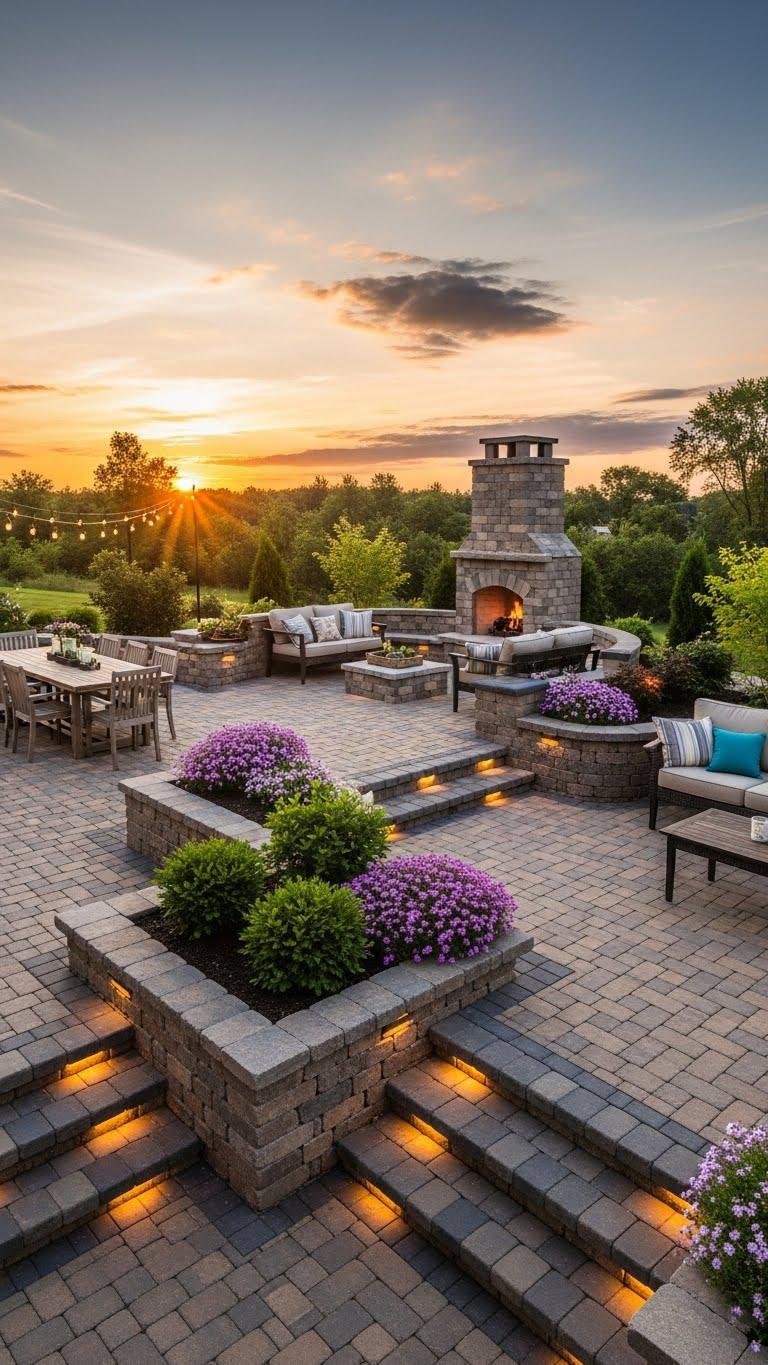
Anchor your outdoor rooms by layering paver levels that step down toward a custom fireplace, creating distinct zones for dining, lounging, and planting.
You’ll design tiered seating into each level, using native shrubs and spill-over perennials to soften edges. Position the hearth focalpoint to draw movement and sightlines, so you freely flow between meals, naps, and evening gatherings under open sky.
Paint Fences and Trellises in “Go Away Green” for Camouflage
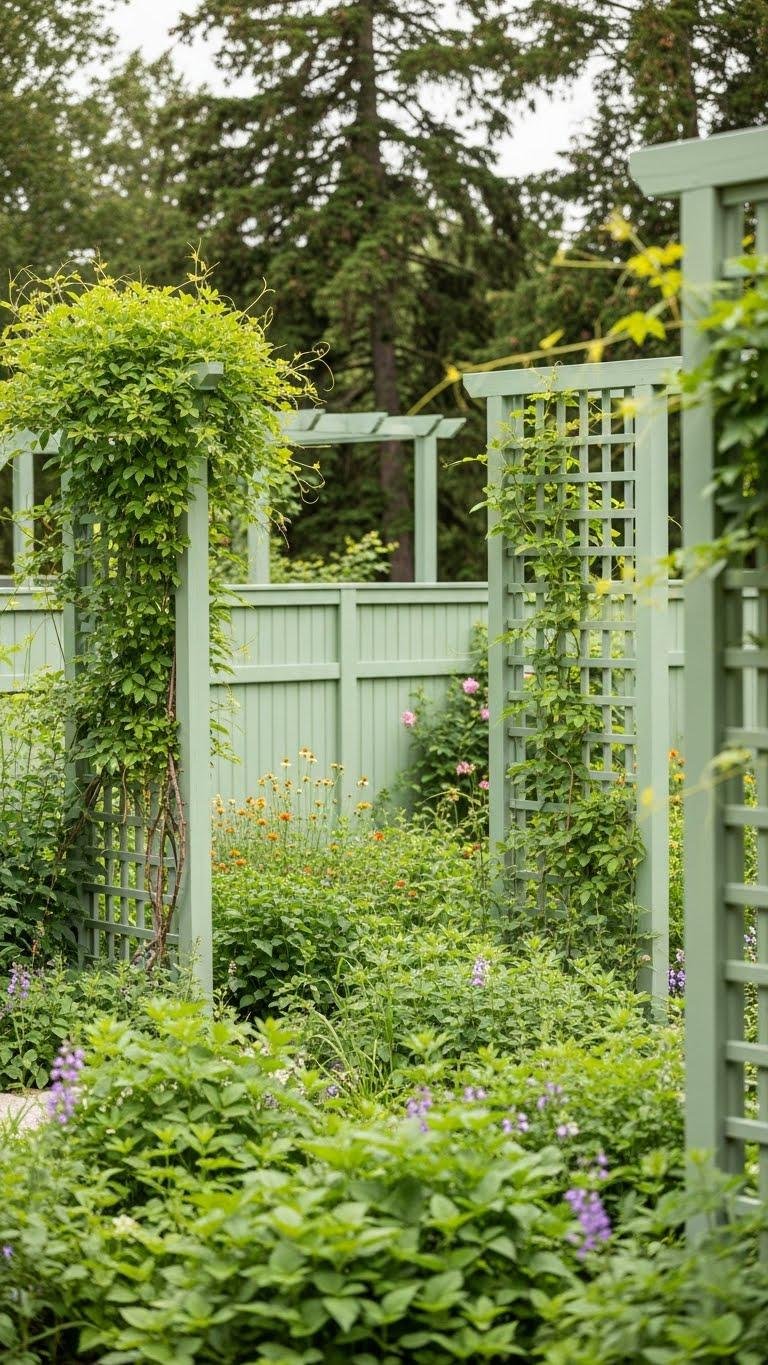
By painting fences and trellises Go Away Green, you let structures recede so plants take center stage — foliage, blooms, and textures read as uninterrupted.
You’ll use a camouflage backdrop to blur lines, creating depth and a sense of boundless space. A muted lattice fades, supporting vines without demanding attention, so your patio feels open, free, and entirely about the garden.
Plant Drought-Resistant Grevillea and Catmint Borders
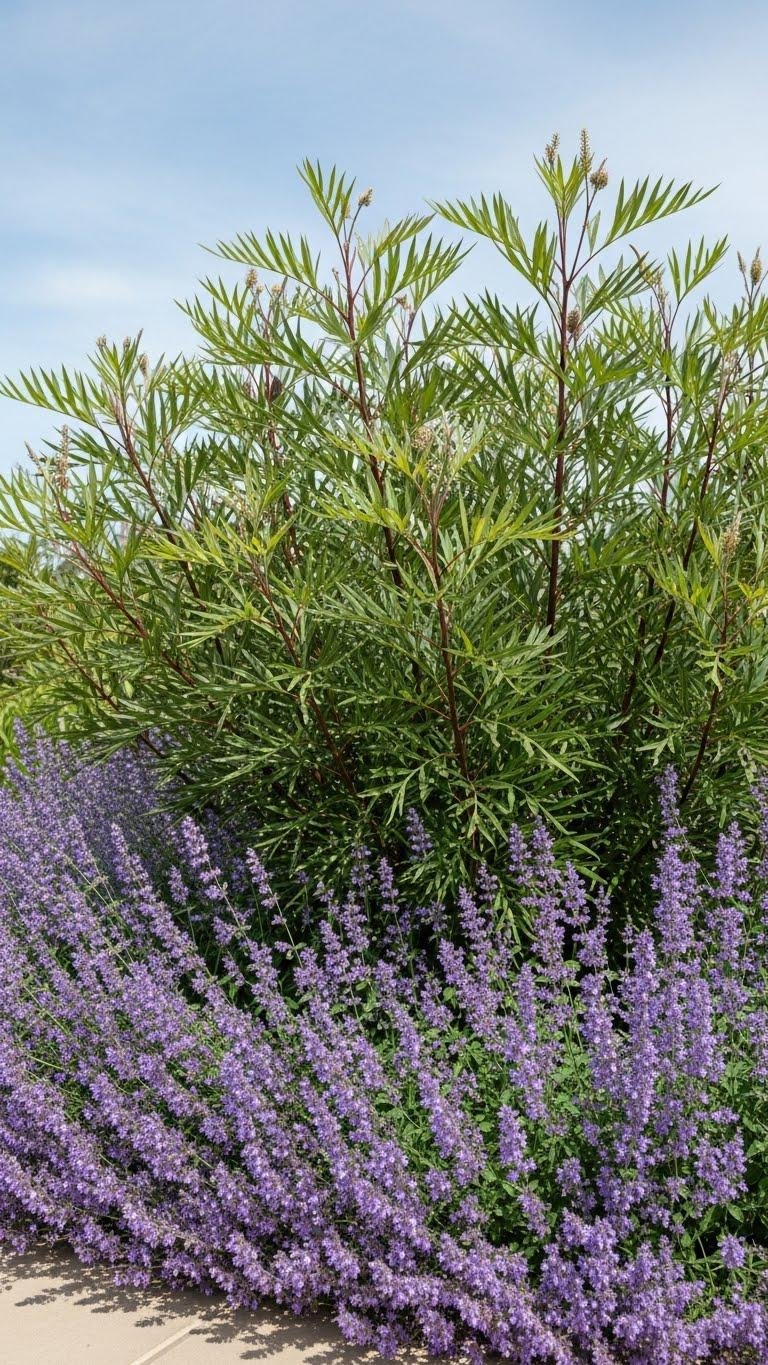
Planting drought‑tough grevillea with low, fragrant catmint creates a long‑lasting border that frames patios without stealing space — grevillea gives structure and year‑round foliage while catmint lays down a soft, nectar‑rich edge that blooms prolifically and tolerates dry feet.
You’ll place drought tolerant grevillea at the rear, stagger catmint borders forward, and enjoy low-maintenance, pollinator‑friendly freedom.
Combine Natural Stone Paths With Raised Vegetable Beds
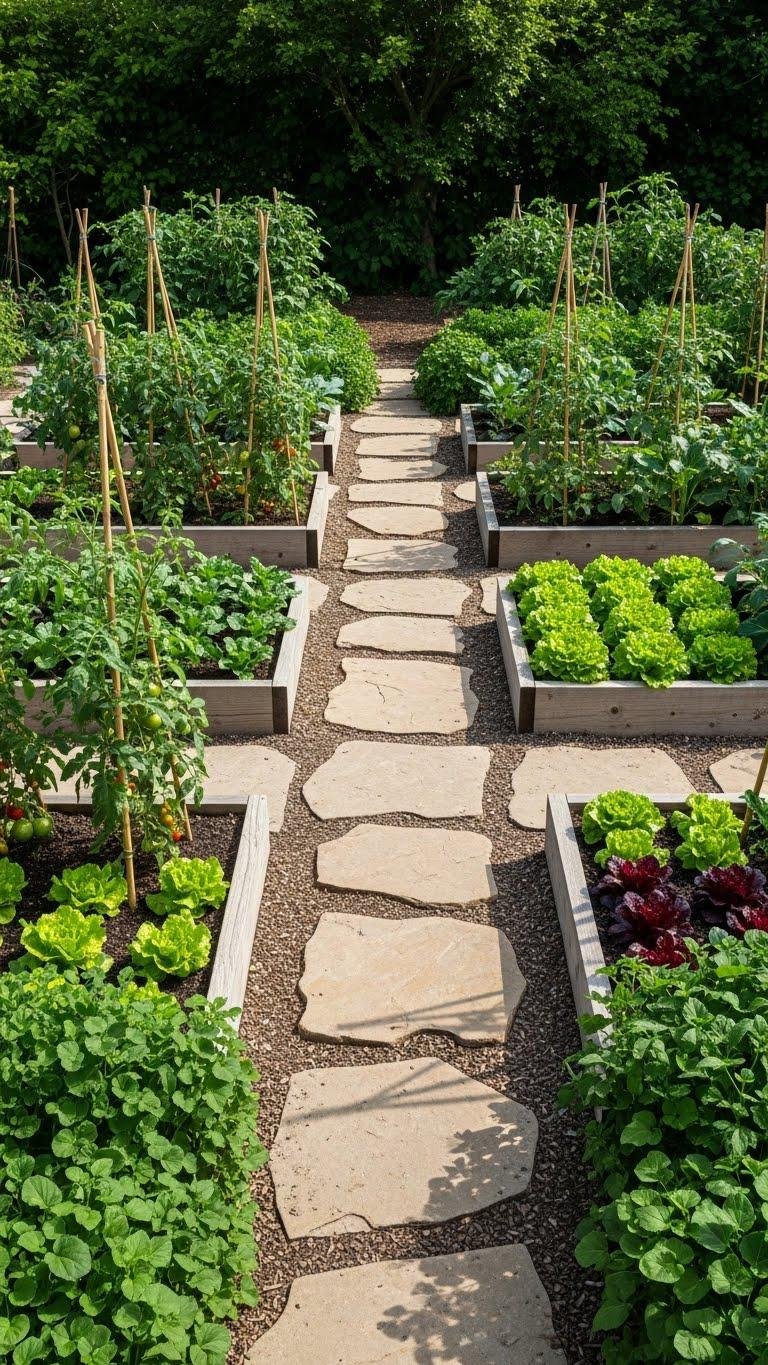
When you lay natural stone paths between raised vegetable beds, you create clear circulation that keeps feet off soil and makes harvesting effortless.
Arrange beds and stone edging to frame sightlines, letting sun-loving tomatoes and cool lettuces breathe.
Use companion planting at bed edges to deter pests and boost yields.
The layout invites roaming, effortless care, and a sense of open, sovereign gardening.
Integrate Vertical Shelving Units for Herbs and Succulents
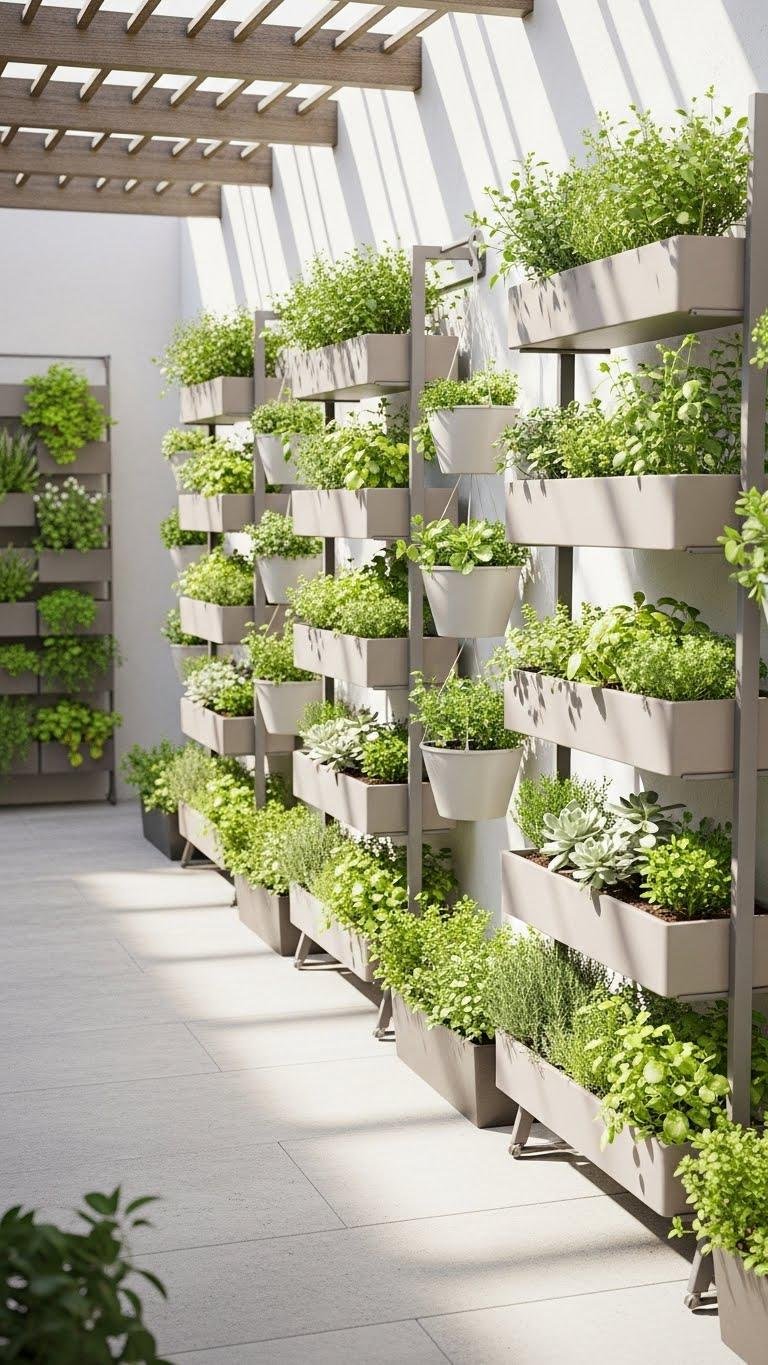
Move from ground-level beds to upright displays that multiply growing space without crowding walkways. You’ll mount modular ladders or slim shelving to frame sun and shade pockets, pairing hanging planters with shallow trays for herbs and drought-tolerant succulents.
Arrange by height and water needs so maintenance stays light. This frees floor area, creates private green walls, and keeps the patio airy and intentional.
Use Accent Brickwork With Sculptural Greenery to Revamp an Overgrown Yard
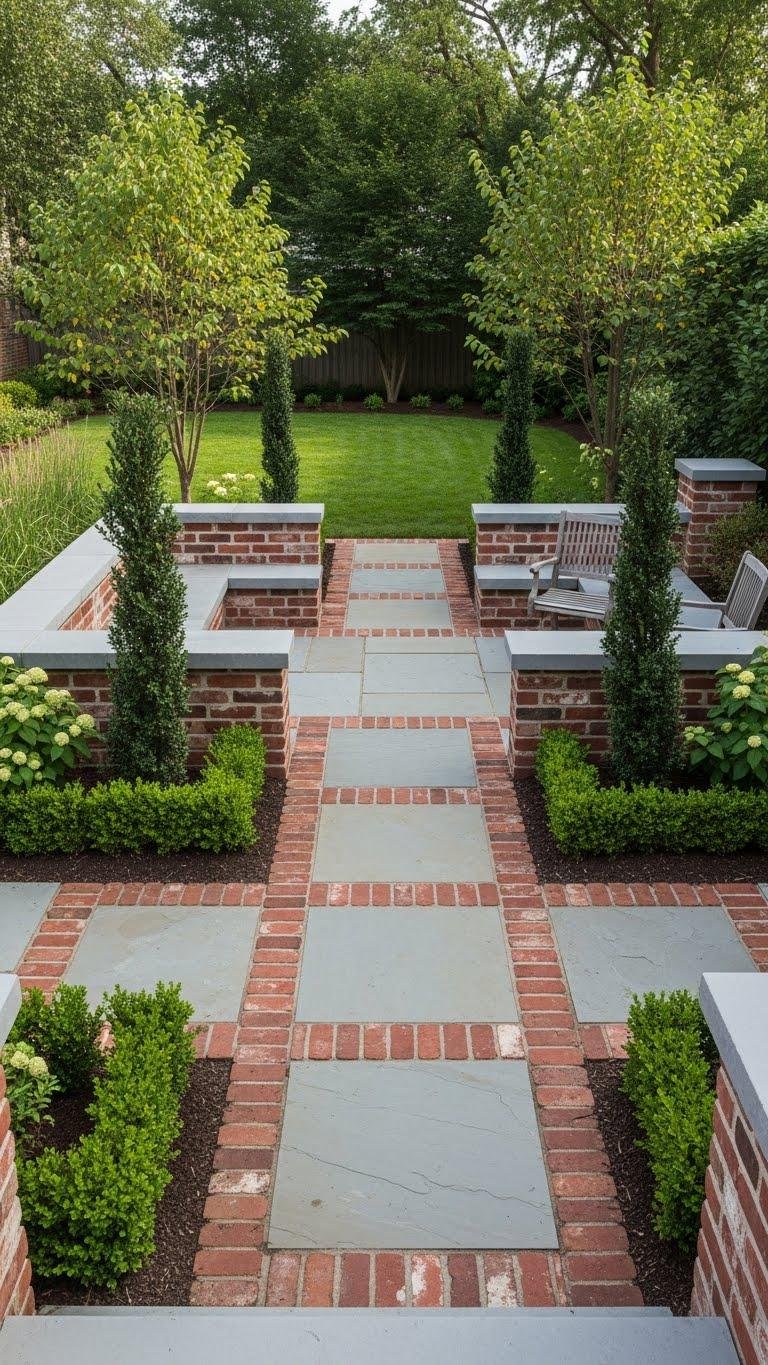
Anchor your overgrown yard with bold accents of brickwork that both define circulation and showcase sculptural greenery. You’ll place a rustic keystone path and low walls to frame seating and sightlines, then plant sculpted boxwood and columnar specimens for rhythm.
Keep beds minimal, let masonry punctuate open space, and prune for form — freedom to move, relax, and admire clear, deliberate structure.