
You can turn your garden into a living defense by planting a mix of pest‑repelling species that attract beneficial insects, mask host scents, and deter nibblers. With herbs like basil, rosemary, and chives, flowers such as marigolds and calendula, and strategic use of alliums and geraniums, you’ll cut pest pressure while boosting pollination and flavor. Start with a few reliable choices and you’ll quickly see how to expand your palette — here’s how.
Marigolds

When you plant marigolds around vegetable beds and along borders, they act as a living barrier that deters nematodes, whiteflies, and certain beetles; their strong scent and root exudates are the primary reasons they work.
You’ll use companion planting strategically, spacing blooms for airflow, cutting spent flowers, and scheduling seasonal care to maximize protection and keep your plot independent, productive, and low-maintenance.
Basil
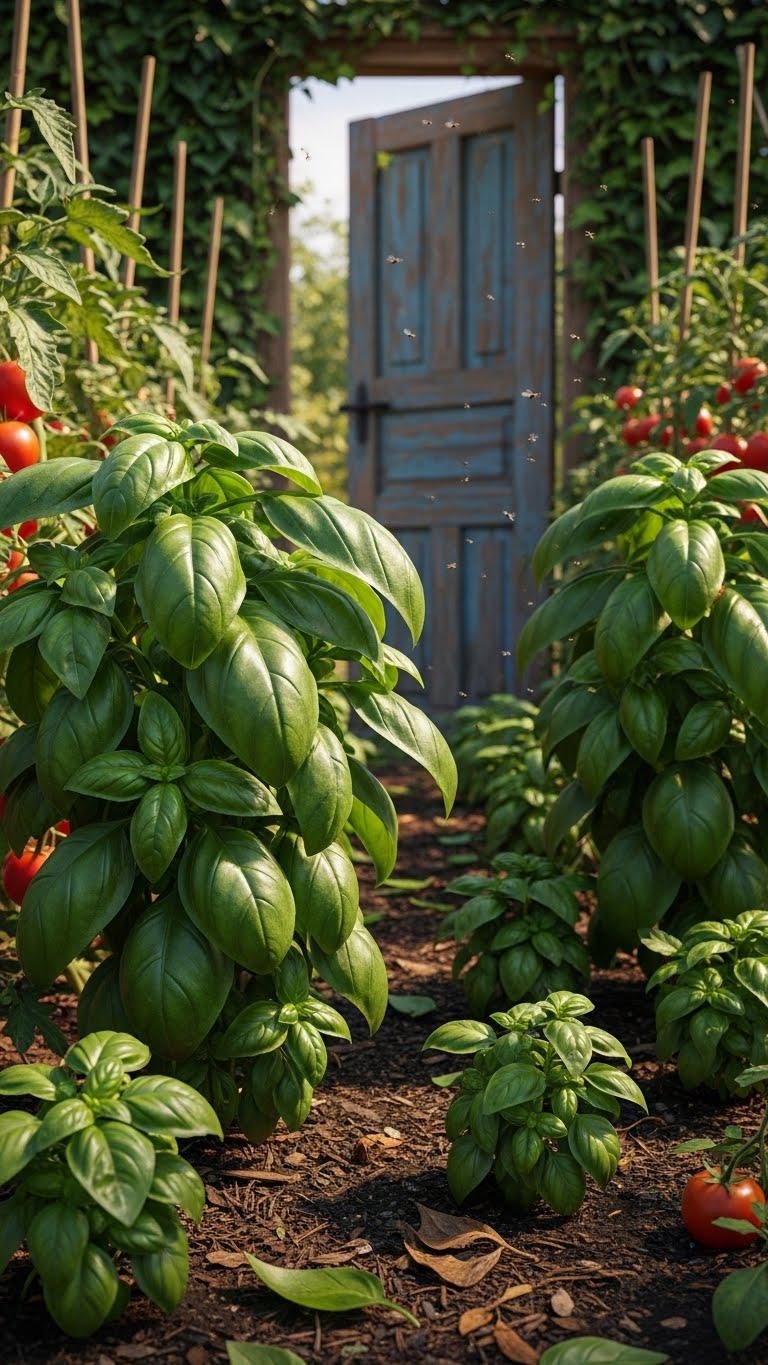
A handful of basil plants can do more than flavor your dishes—they’ll help repel flies, mosquitoes, and aphids when you tuck them among tomatoes and near doorways; their strong aromatic oils and sticky leaves confuse pests and mask the scents that attract them.
You’ll use basil’s culinary uses fresh or preserved, and practice companion planting strategically to protect crops while keeping freedom to design your garden.
Chives
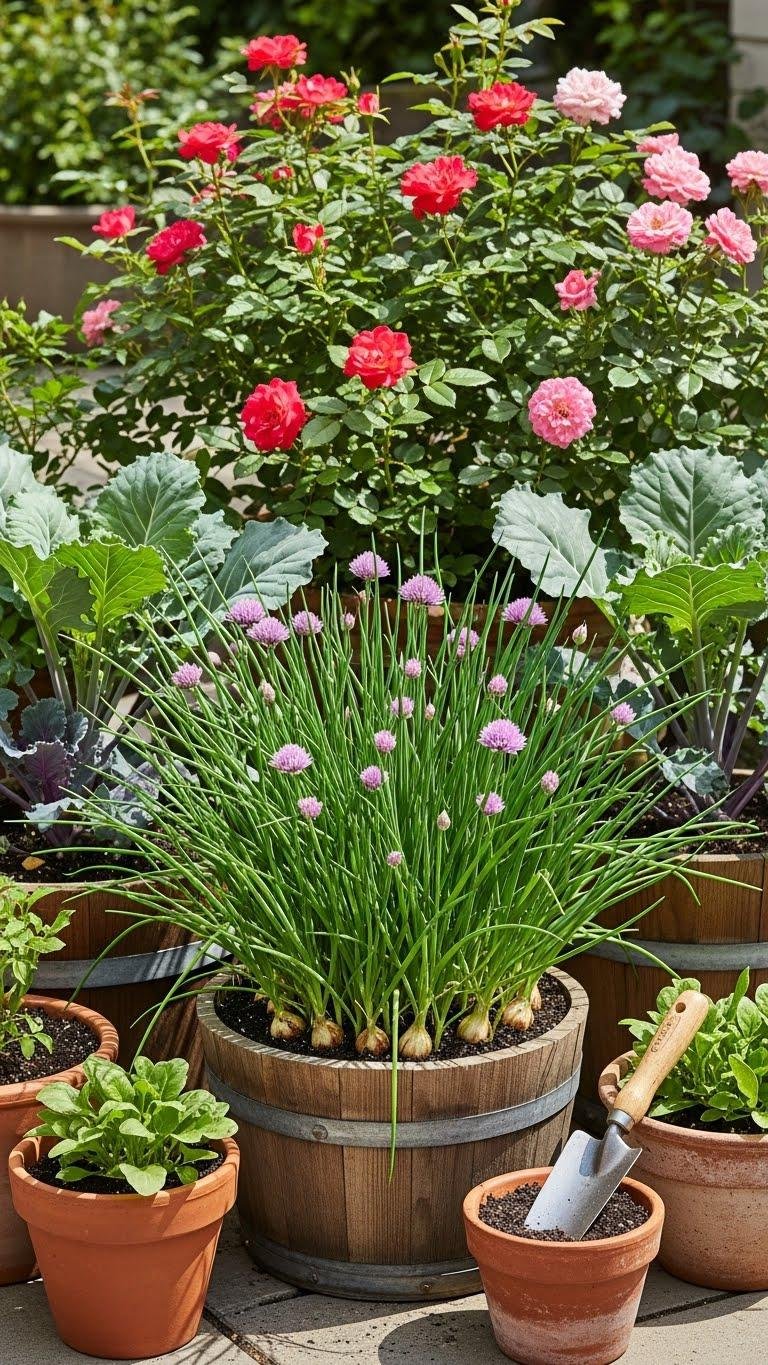
Often overlooked, chives pack a powerful punch for pest control and kitchen use — plant them along borders, near roses, or next to brassicas to help deter aphids, carrot flies, and Japanese beetles with their oniony scent and dense clumping habit.
You’ll harvest snappy leaves, edible flowers, and bulbs; practice container cultivation for mobility, succession sowing, and easy division to keep vigor.
Lavender

Chives repel pests with sharp, oniony scents; lavender uses scent too, but in a different key — dry, floral, and strongly attractive to beneficial insects while repelling moths, fleas, and some beetles. You’ll plant lavender for borders, harvest blooms for culinary uses, and distill or buy essential oil benefits for calm and pest control.
Grow in full sun, sharp drainage, and prune annually to stay vigorous.
Rosemary
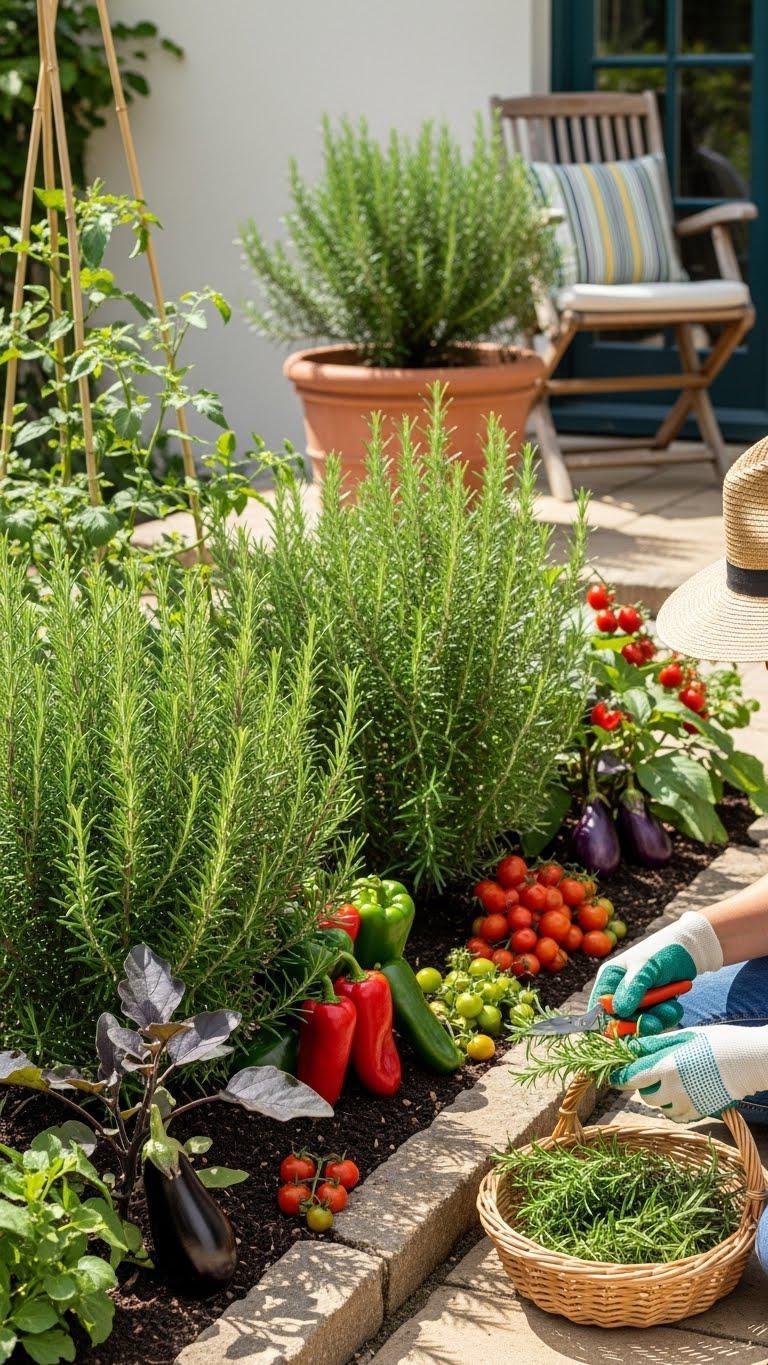
Plant rosemary along sunny borders or near vegetable beds to deter many common pests with its strong, resinous aroma and tough, needle-like foliage.
You’ll enjoy dual benefits: pest control and culinary uses—snip fresh sprigs for meat or roasted vegetables.
It thrives in well-drained soil, tolerates drought, and suits container growing on patios, giving you fragrant, low-maintenance freedom in small or larger gardens.
Catnip
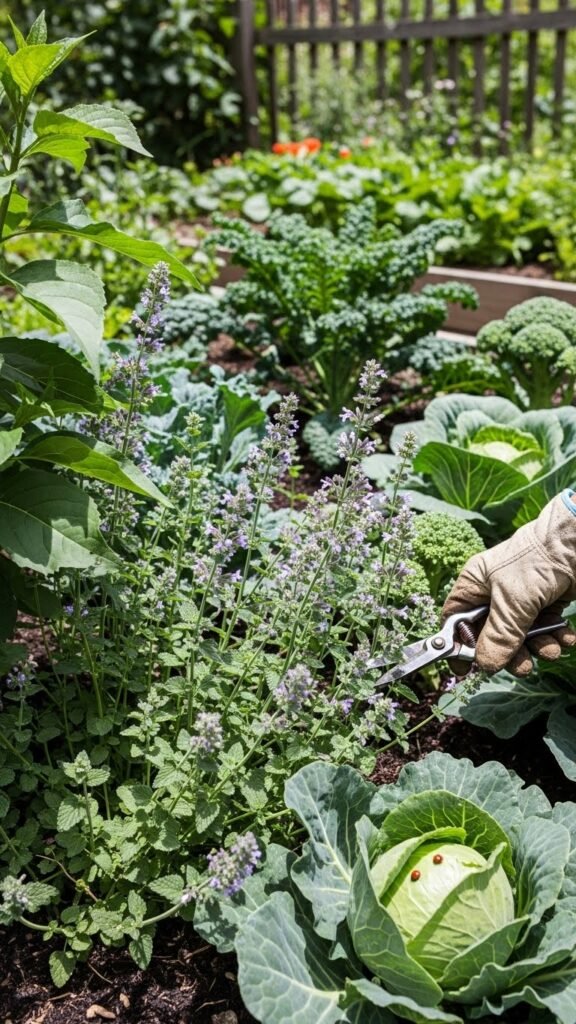
If you’ve used mint to shield brassicas, catnip offers a complementary option for repelling common garden pests. You’ll plant catnip cultivation in well-drained soil, full sun to part shade, and prune to prevent spreading.
It deters aphids, flea beetles, and squash bugs. Watch catnip toxicity for pets; limit access or use containment. Harvest flowers to boost potency and freedom in your garden.
Nasturtiums
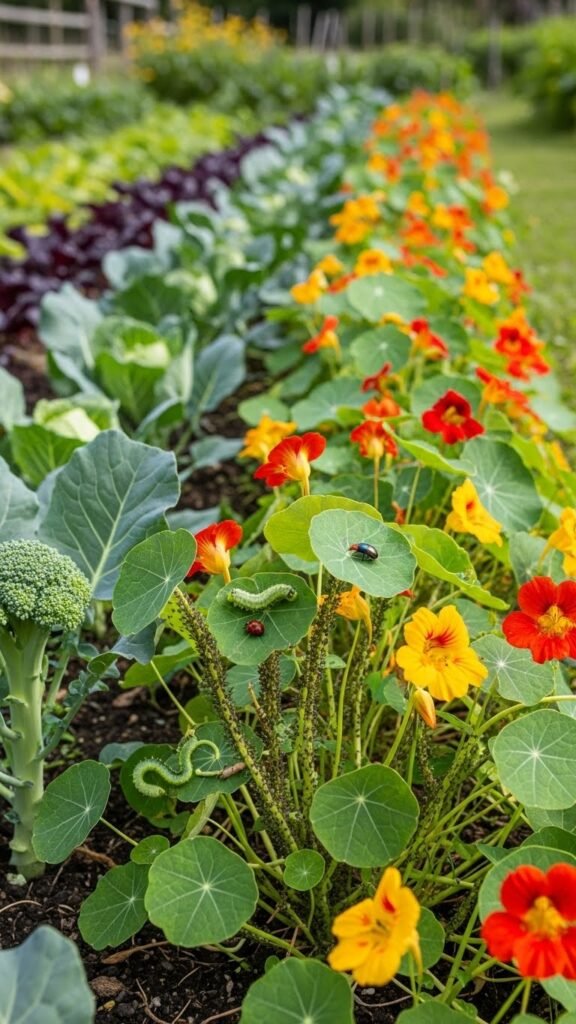
Use nasturtiums as sacrificial trap crops around brassicas to lure aphids, cabbage loopers, and flea beetles away from your main plants. Plant them at edges for companion planting benefits, attracting pests and beneficial insects.
Their edible flowers add color and utility—harvest petals for salads. You’ll cut pesticide needs, protect yields, and keep garden management simple while preserving your freedom to experiment.
Garlic
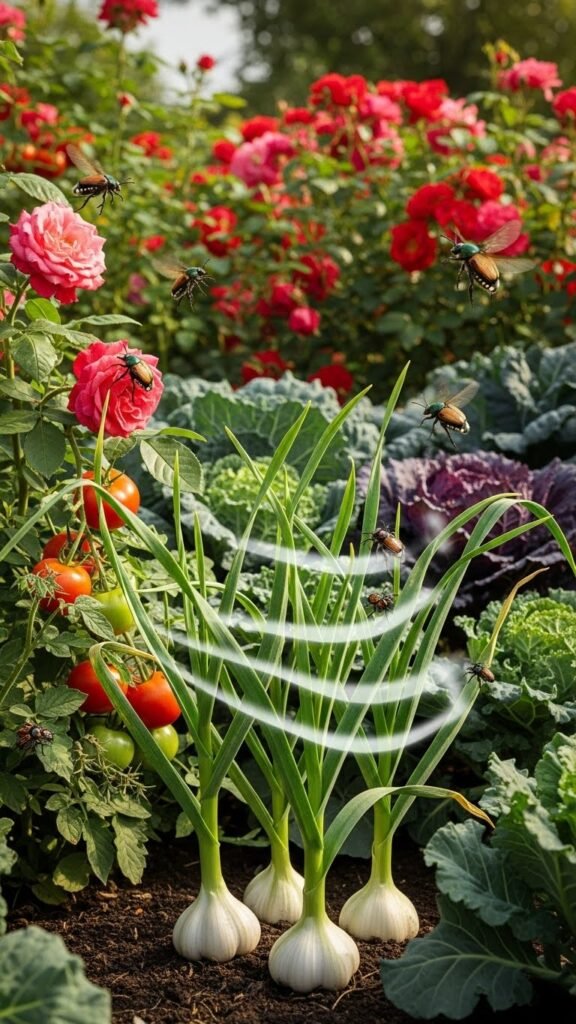
Garlic makes an excellent companion plant for repelling many common garden pests because its strong scent masks the odors pests use to find hosts; plant cloves near roses, tomatoes, and brassicas to deter aphids, Japanese beetles, and certain fungal diseases.
You’ll use companion planting as a simple, low-cost pest deterrent: space cloves 4–6 inches apart, mulch lightly, and harvest bulbs when tops yellow.
Calendula
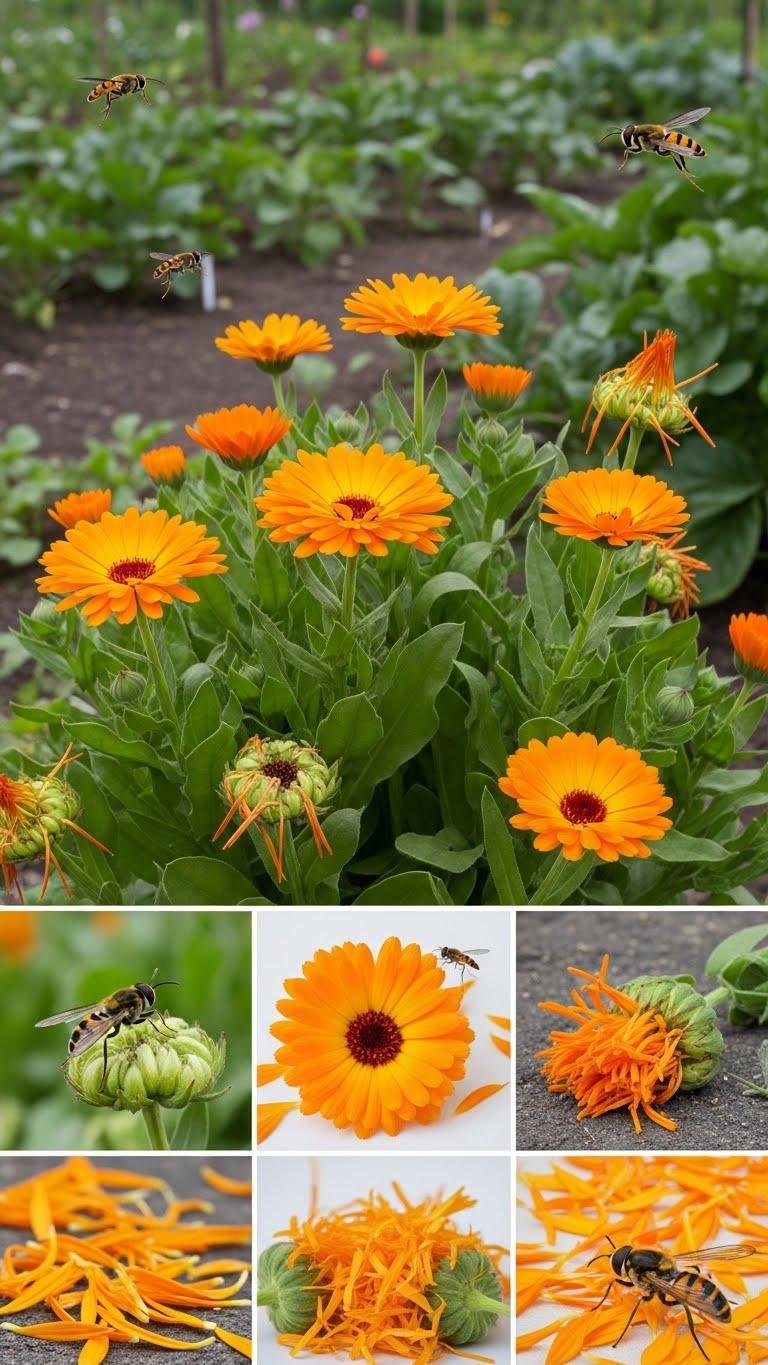
A few bright calendula plants do more than cheer up your beds—they attract beneficial insects like hoverflies and parasitic wasps while repelling some pests with their strong scent and dense foliage.
You’ll use calendula for companion planting to boost nearby crops, harvest petals for natural remedies, and practice seed saving to maintain varieties.
Plant freely, prune spent blooms, and rotate annually.
Lemon Balm
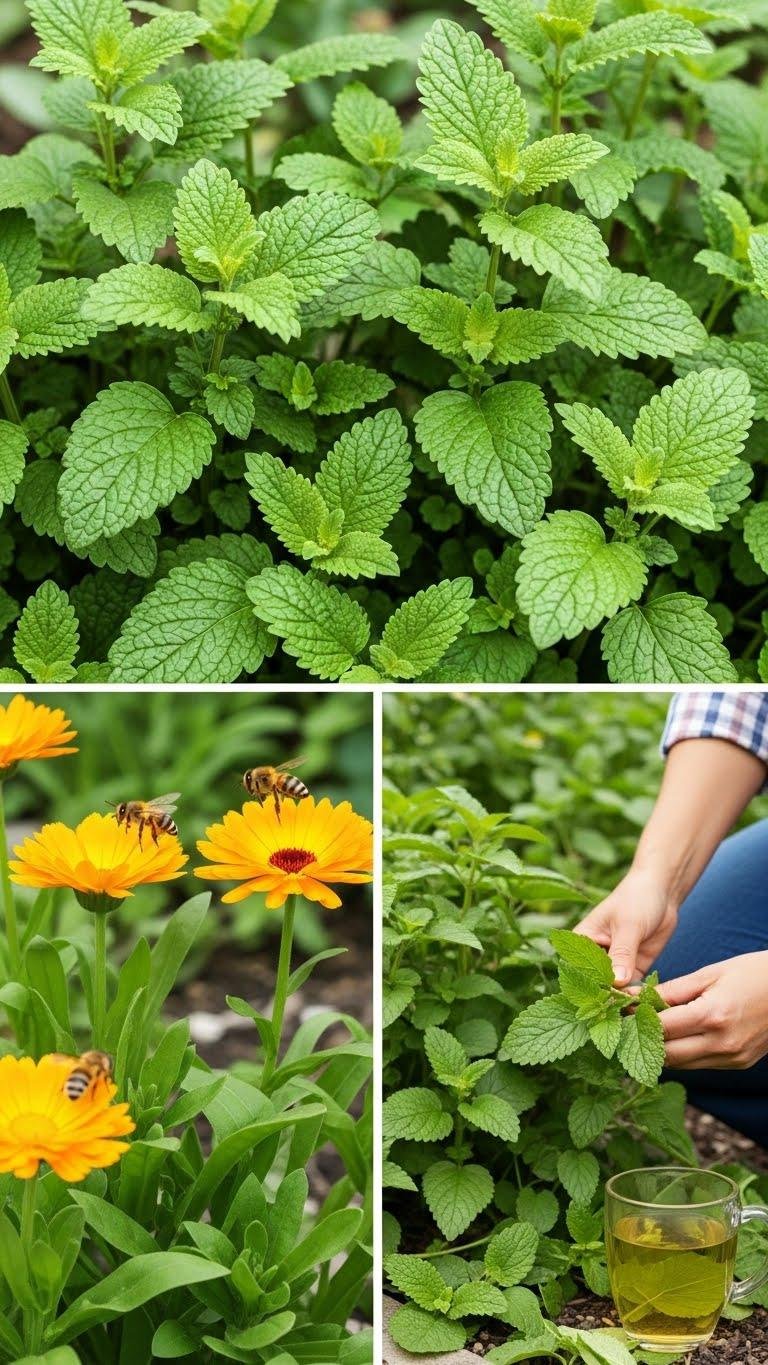
Calendula’s habit of attracting beneficials pairs well with lemon balm, which brings its own pest-deterring strengths and garden benefits. You’ll use lemon balm in borders or container cultivation to repel mosquitoes and aphids while keeping mobility and control.
Harvest leaves for lemon balm tea benefits and dried sachets. Prune vigorously to prevent scrambling and encourage dense, fragrant growth that protects nearby plants.
Thyme
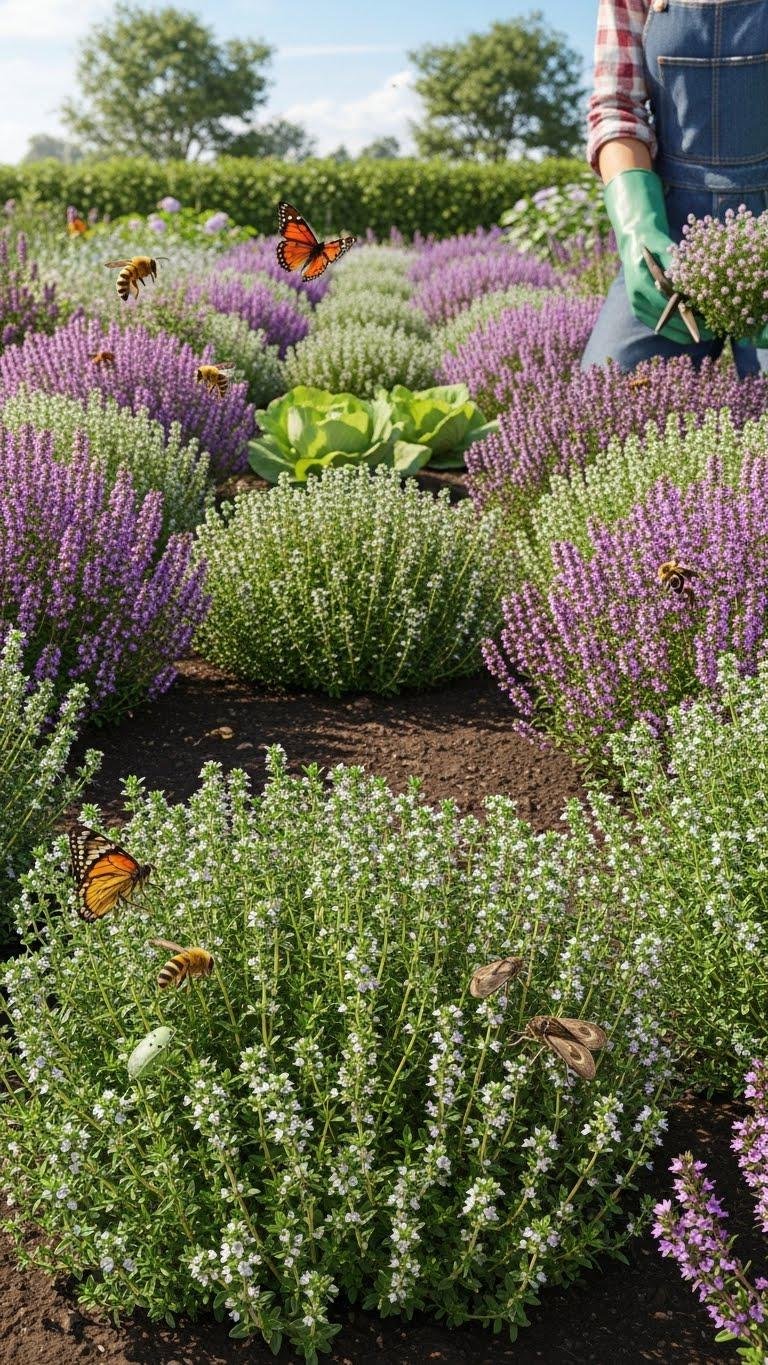
Plant thyme along pathways, borders, or in containers where its low, aromatic habit can repel cabbage moths, whiteflies, and other garden pests while attracting pollinators.
You’ll choose culinary thyme for flavor and medicinal thyme for healing uses; both thrive in well-drained soil and full sun.
Prune lightly after flowering, harvest leaves often, and let the plant naturalize to secure pest control and freedom in your garden.
Petunias
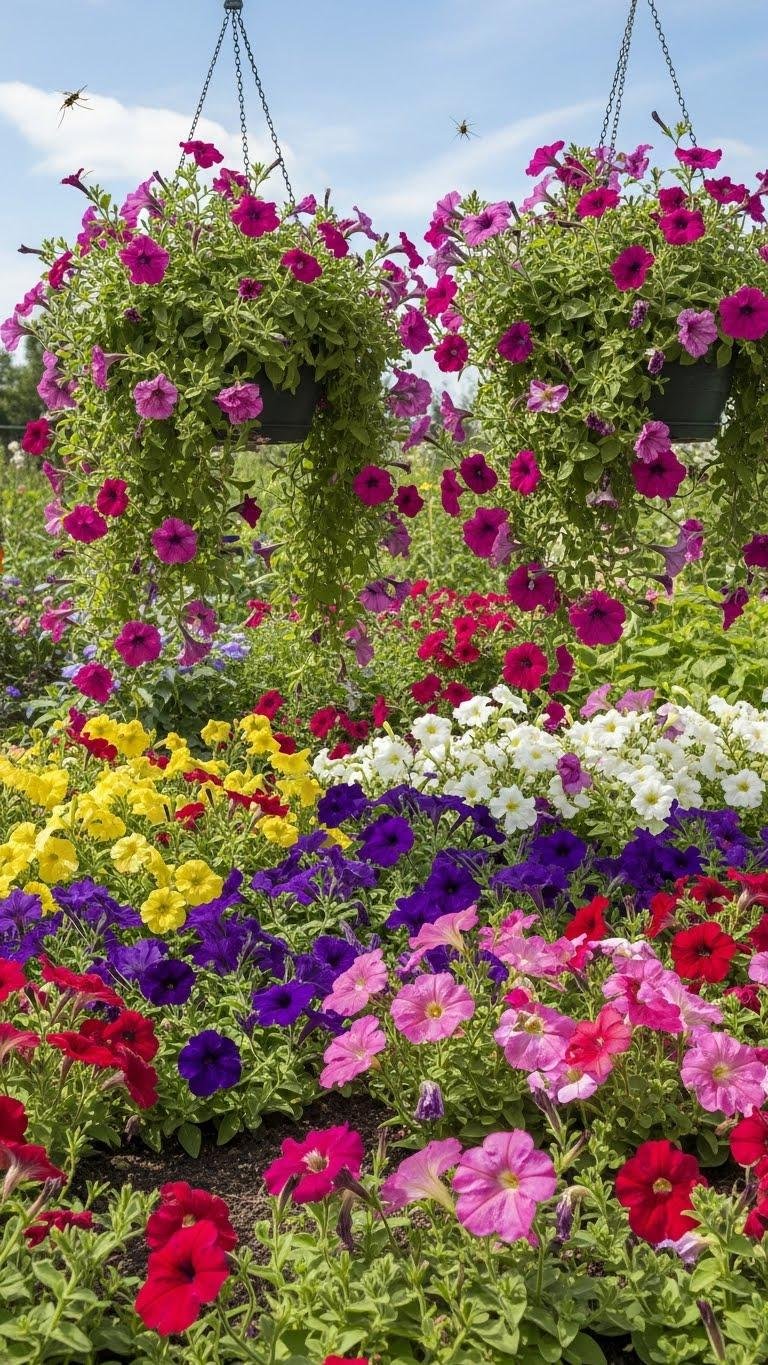
Often overlooked at the edges of beds, petunias reward you with long-lasting color and a natural knack for deterring certain pests like aphids and tomato hornworms when planted en masse.
You’ll choose container petunias for balconies or mix trailing varieties along borders. Water regularly, deadhead spent blooms, and space plants for airflow so you maintain vigor, color, and practical pest suppression all season.
Borage
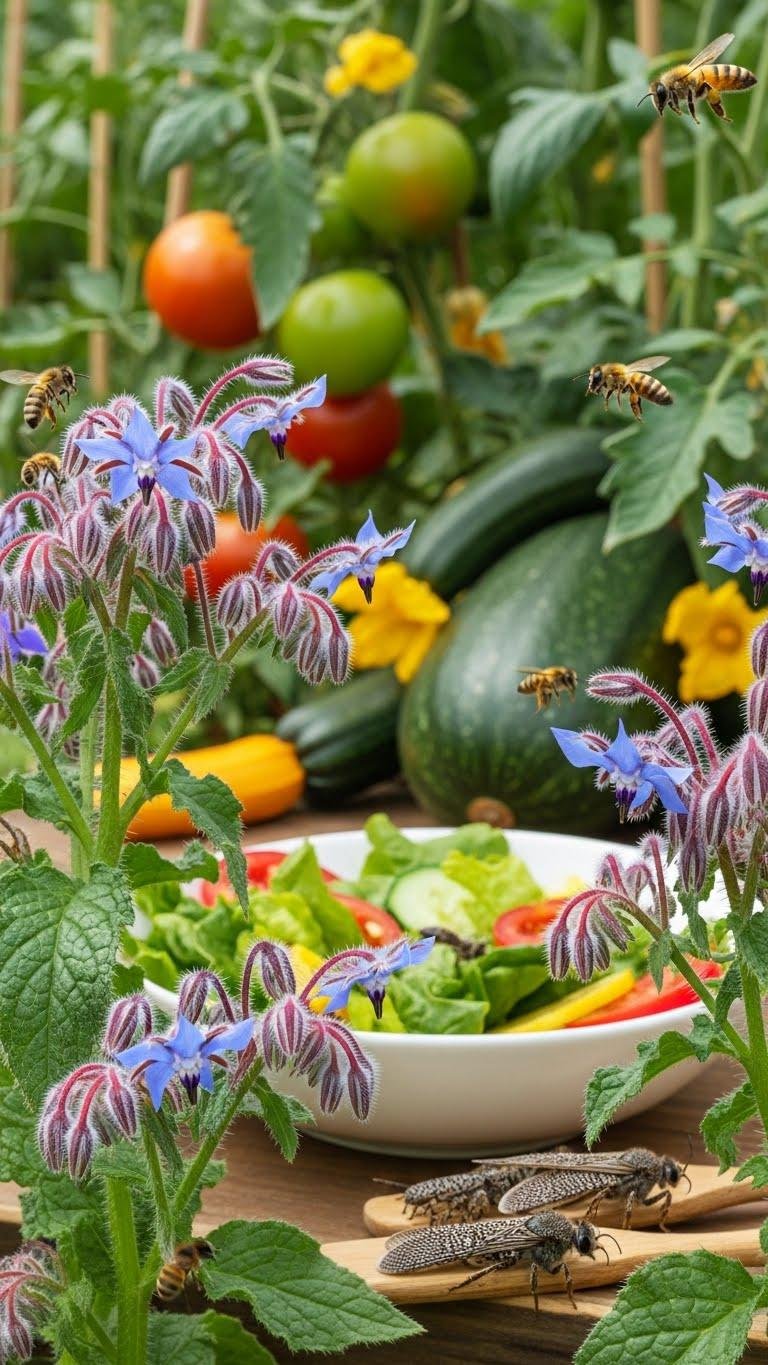
Think of borage as a magnet for pollinators and a useful companion in vegetable beds: its star-shaped blue flowers attract bees and predatory insects, while the hairy leaves can deter tomato hornworms and squash vine borers.
You’ll sow it freely near tomatoes and squash; its edible flowers supply salads and garnishes, and its reputation as a pollinator magnet boosts yields without restrictive chemicals.
Hyssop
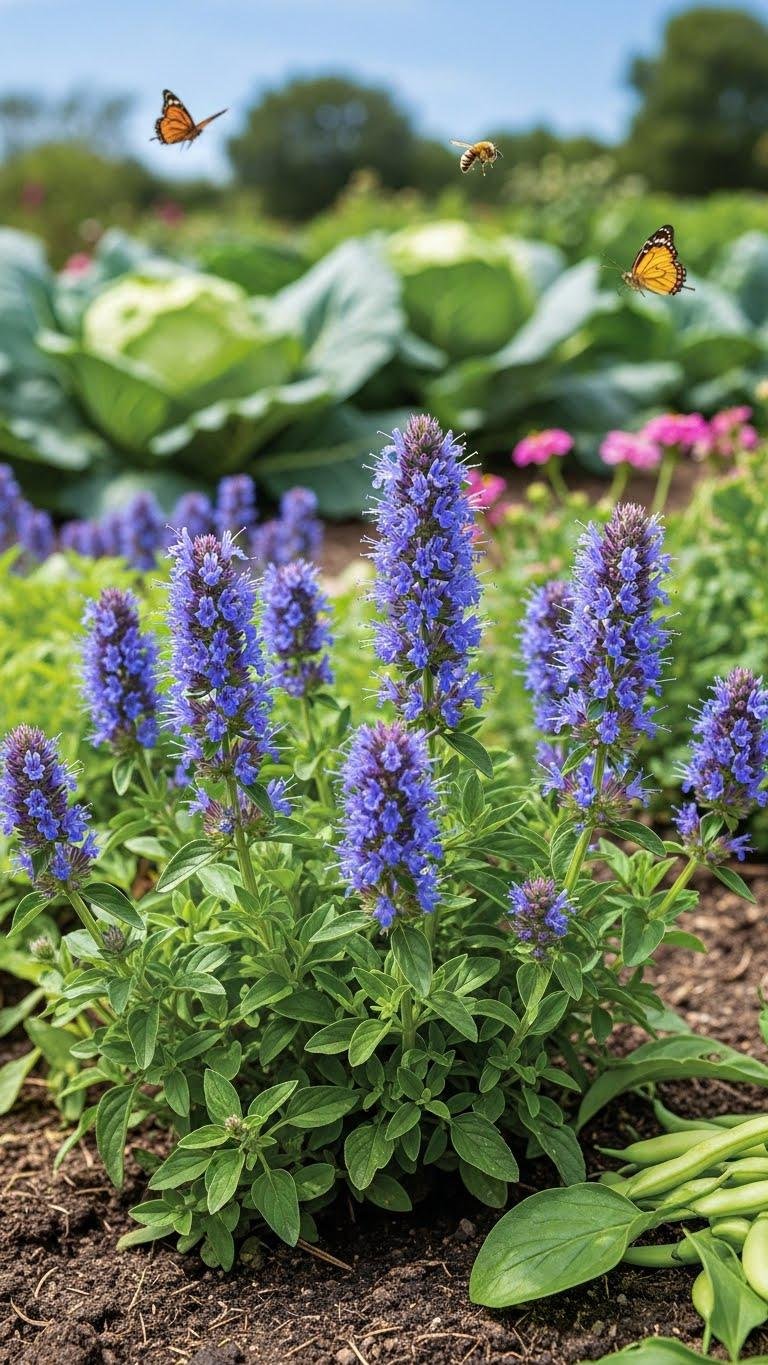
Aromatic hyssop brings concentrated minty-floral scent and compact spikes of blue to your garden, and you’ll find it both a useful pollinator magnet and a practical pest deterrent near brassicas and beans.
You’ll harvest leaves for culinary applications and steep flowers for medicinal uses; plant in full sun, well-drained soil, prune to encourage blooms, and let it assert low-maintenance freedom in your beds.
Geraniums
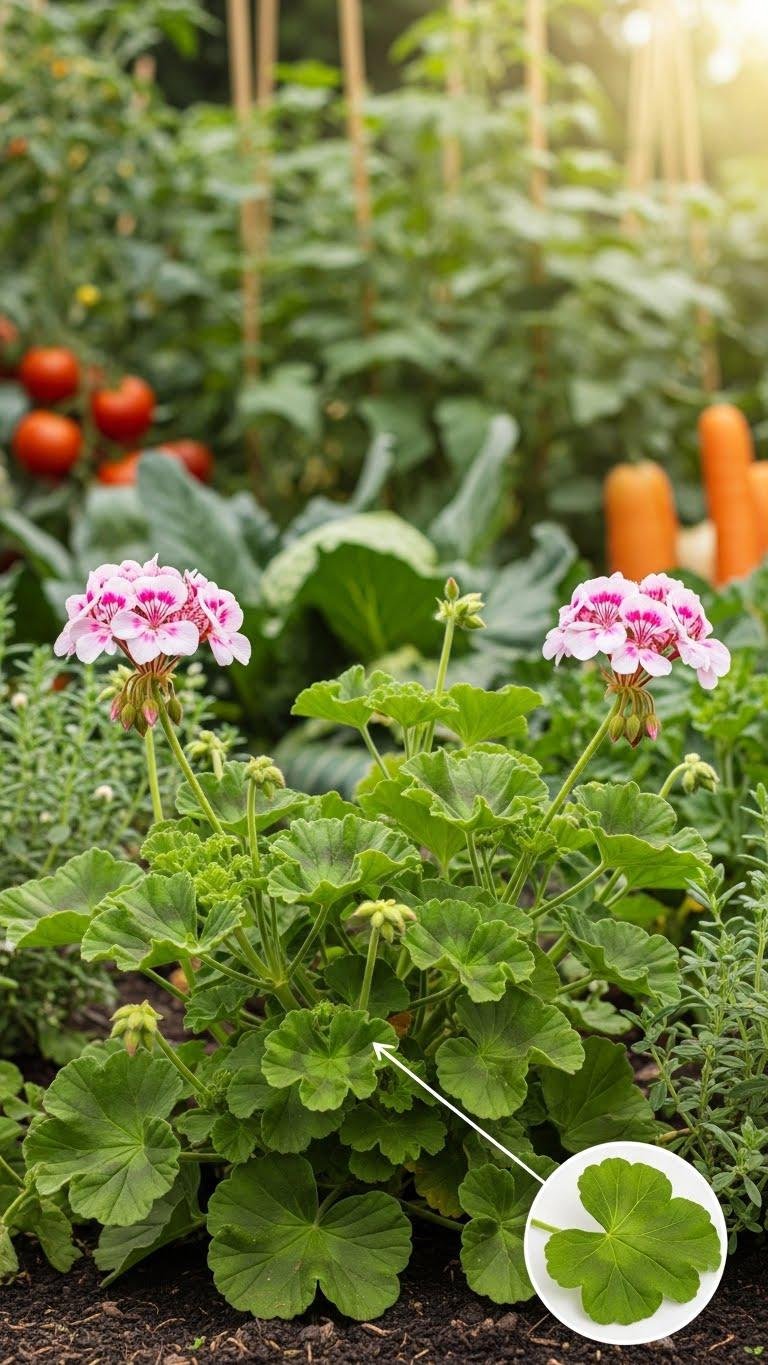
Plant geraniums (Pelargonium spp.) among vegetables and beds where you want to deter leaf-feeding pests and whiteflies; their aromatic foliage emits compounds that many insects find unappealing.
You’ll use them in companion planting to shield tomatoes and herbs, tapping scented oils by crushing leaves for stronger effect.
They’re low‑maintenance, drought tolerant, and give you a passive, natural pest barrier without chemicals.
Yarrow
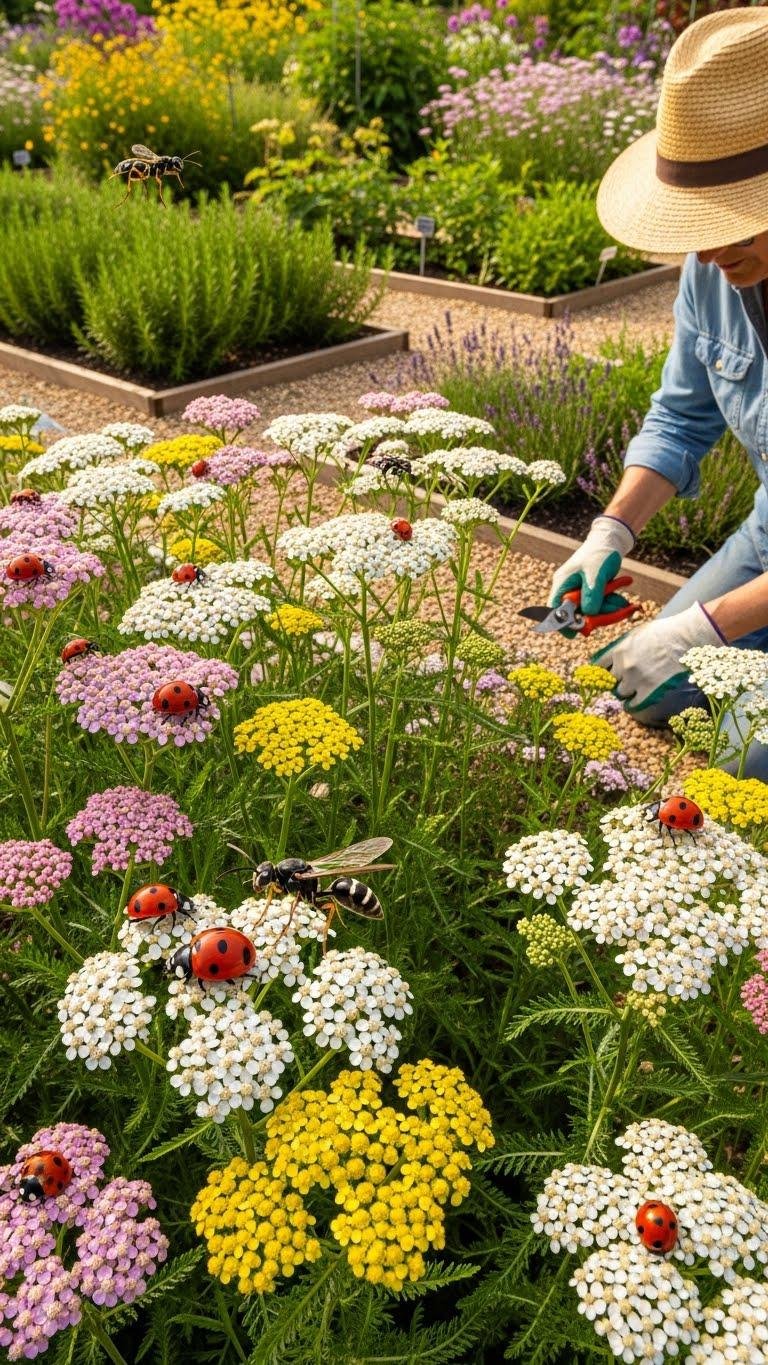
Yarrow (Achillea millefolium) attracts beneficial insects like ladybugs and parasitic wasps while repelling some sap‑sucking pests, so you can use it as a living insectary at the edge of beds or mixed into herb borders.
You’ll appreciate its nectar attraction, low maintenance, drought tolerance and practical medicinal uses; prune spent blooms to prolong flowering and support pollinators and natural pest control.