
You’ll create a calm, lived-in look by thinking like a stylist: pick one sculptural specimen to anchor a room, layer mid-height and trailing plants for depth, and group odd-numbered clusters with varied textures and pot scales. Pay attention to light, humidity and surface protection so your arrangements stay healthy and effortless — and there’s more on practical placement, watering zones and pest prevention that’ll make your displays both beautiful and resilient.
Choose a Statement Plant to Anchor the Room
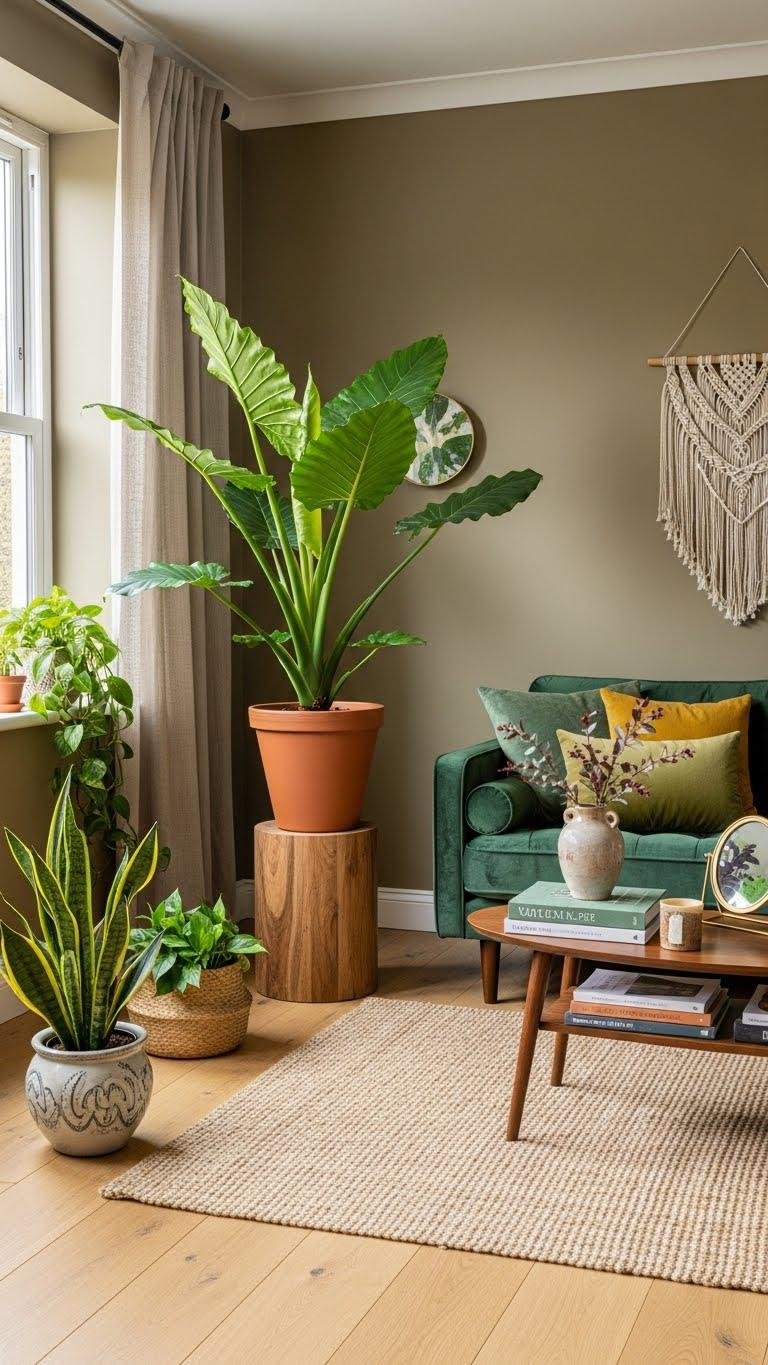
Start by picking one standout plant that anchors the room and sets the tone for your whole scheme. You’ll choose statement plantings that reflect your style and freedom — bold leaves, sculptural form.
Place focal foliage where it’s seen and cared for; let it guide color, texture, and accessory choices.
Keep surrounding plants subordinate so your anchor remains confident and effortless.
Use Tall Plants to Add Vertical Height
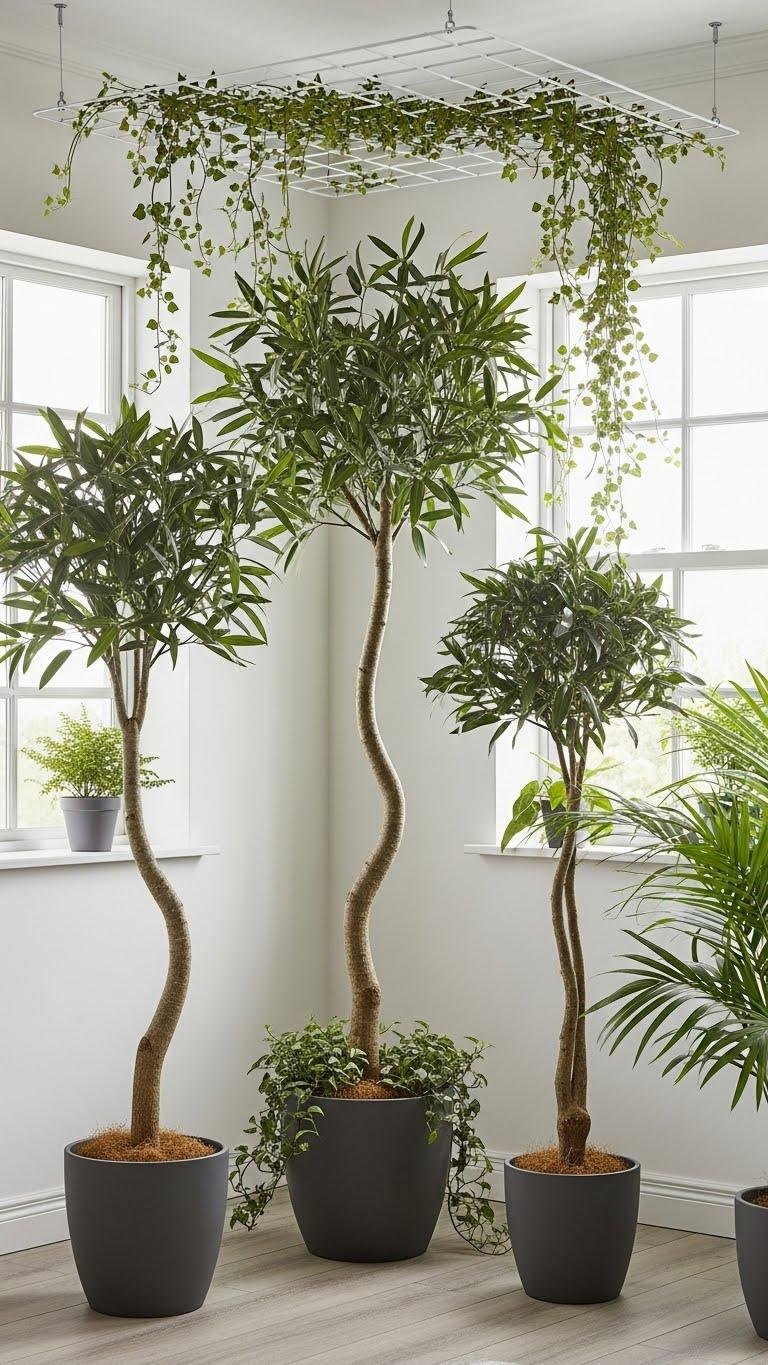
Once your statement plant has set the stage, bring in tall plants to stretch the eye upward and lend architectural balance to the room.
You’ll position them near windows or corners, pairing sculptural trunks with airy foliage to feel like living vertical art.
Consider a minimalist ceiling trellis for climbing varieties, and keep silhouettes clean so the space stays open and free.
Group Plants in Odd-Numbered Clusters
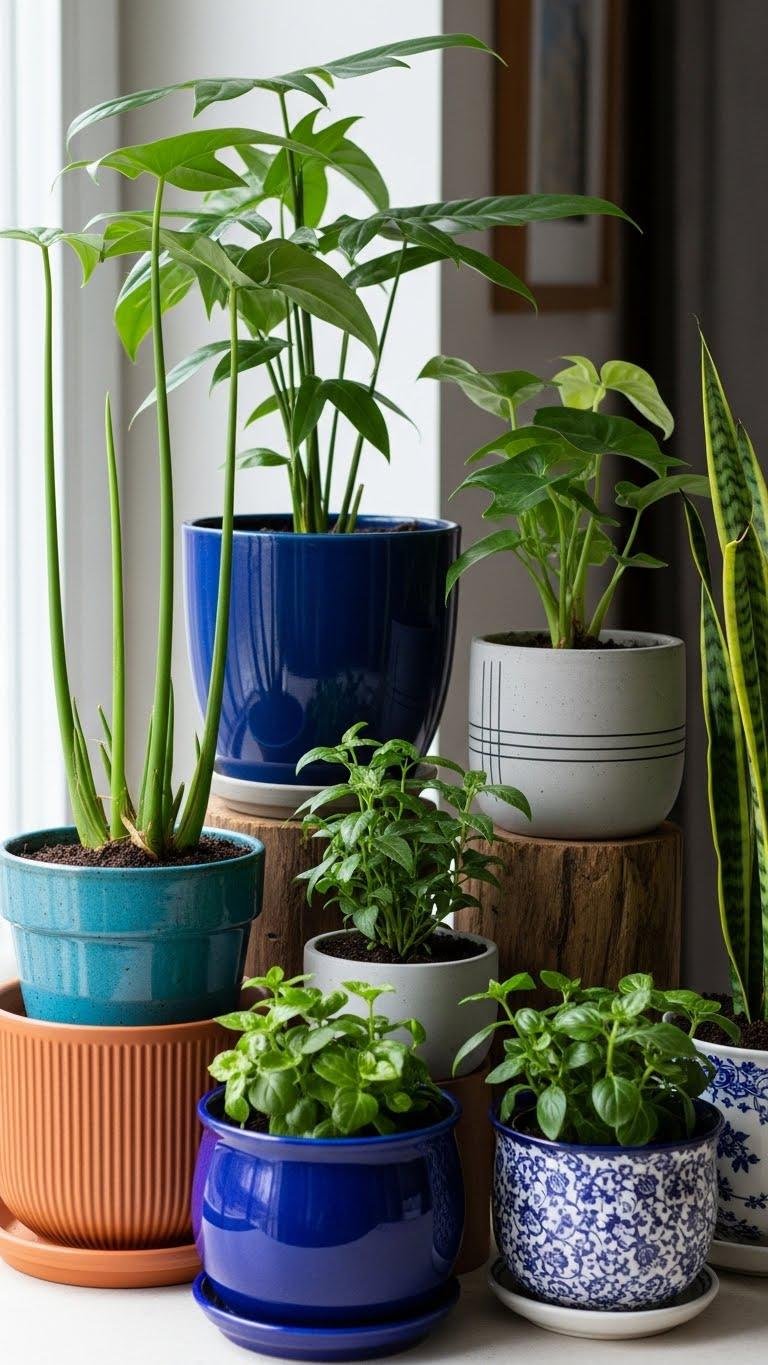
Odd-numbered clusters—three or five pots—create a natural rhythm that feels balanced without being predictable.
You’ll place plants on an asymmetrical tabletop to keep arrangements lively; vary heights and pot styles so each piece breathes.
Use cluster pruning to shape groups into cohesive forms without overworking them. Trust instinct, leave negative space, and let clusters evoke effortless freedom.
Mix Leaf Textures for Visual Depth
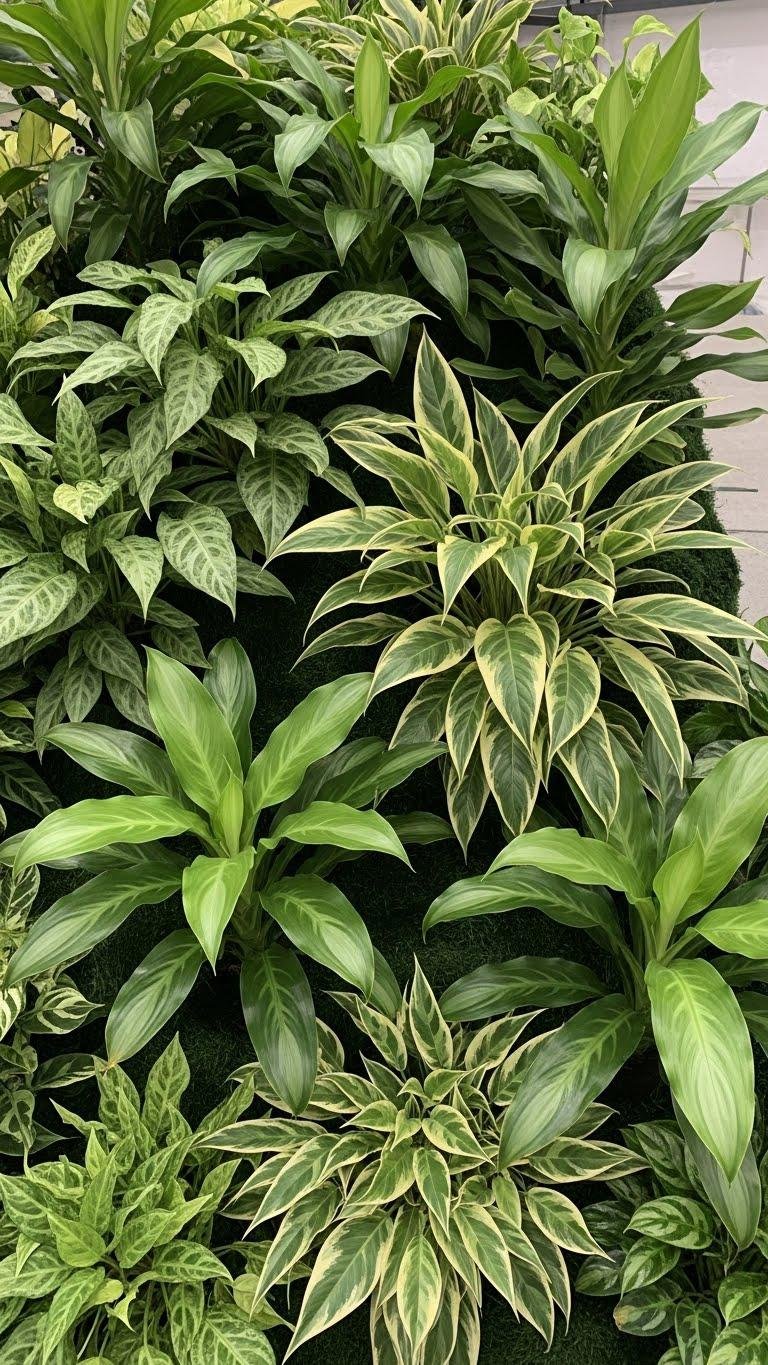
After you’ve settled plants into asymmetrical clusters, think about leaf texture to bring depth and contrast. You’ll mix broad, glossy foliage with slender, matte leaves for deliberate matte gloss contrast.
Use variegation pairing to link tones and guide sightlines. Let coarse, sculptural leaves anchor the composition while finer, softer textures breathe freedom into the space, creating layered, effortless elegance.
Combine Upright and Trailing Varieties
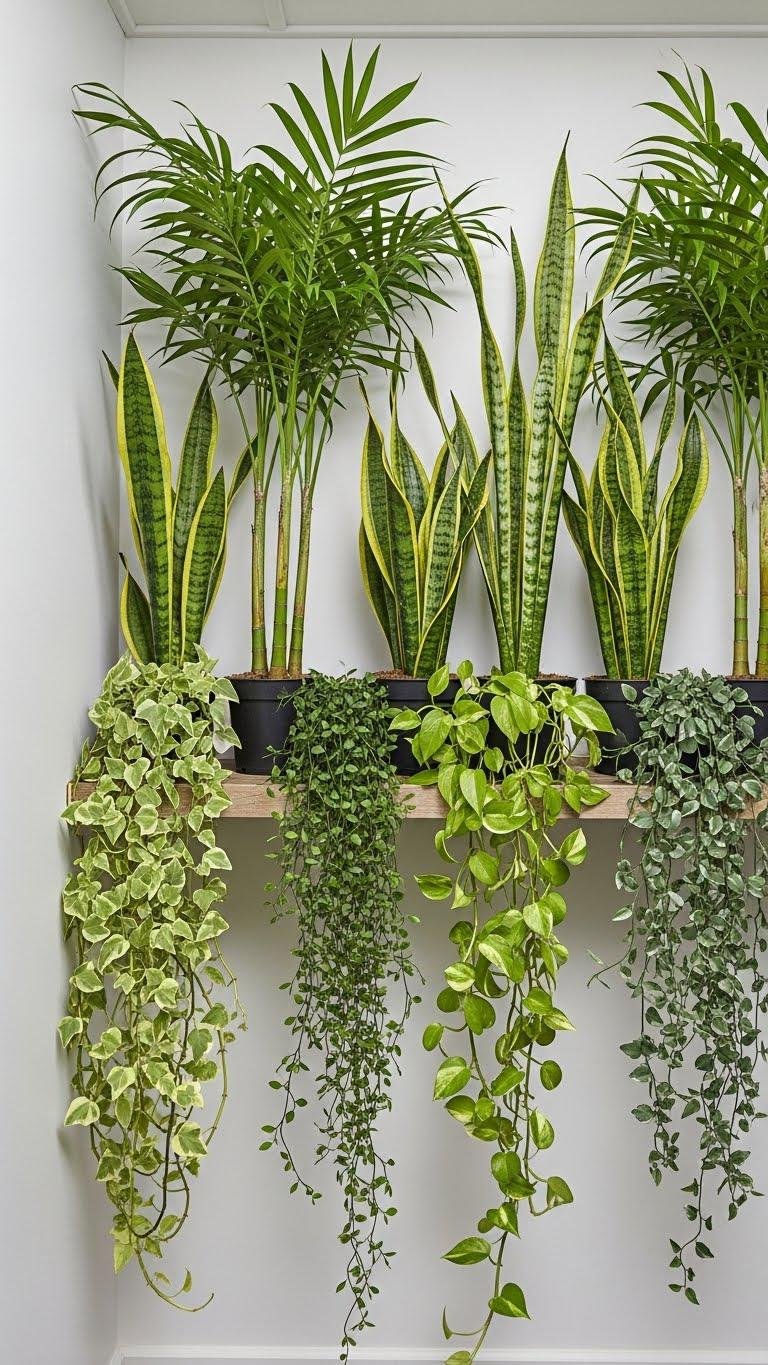
Pair upright specimens with trailing plants to create tension and flow—tall, architectural forms give the eye a vertical anchor while cascades soften edges and lead sightlines. You’ll balance scale by placing columnar palms or snake plants beside ivies or pothos in hanging shelf arrangements, and use terrarium contrasts for intimate vignettes.
Let natural movement guide composition; freedom comes from playful, confident pairings.
Position Plants in Empty Corners to Fill Space

Fill empty corners with plants to turn overlooked space into a purposeful focal point: choose a taller specimen or a grouped trio to lift the eye, then layer in mid-height and trailing plants to soften angles and add depth.
You’ll combine corner shelving for variety, mix textures confidently, and use ambient lighting to sculpt mood. Keep pathways clear and arrangements effortlessly adaptable.
Match Pot Size to Plant Scale
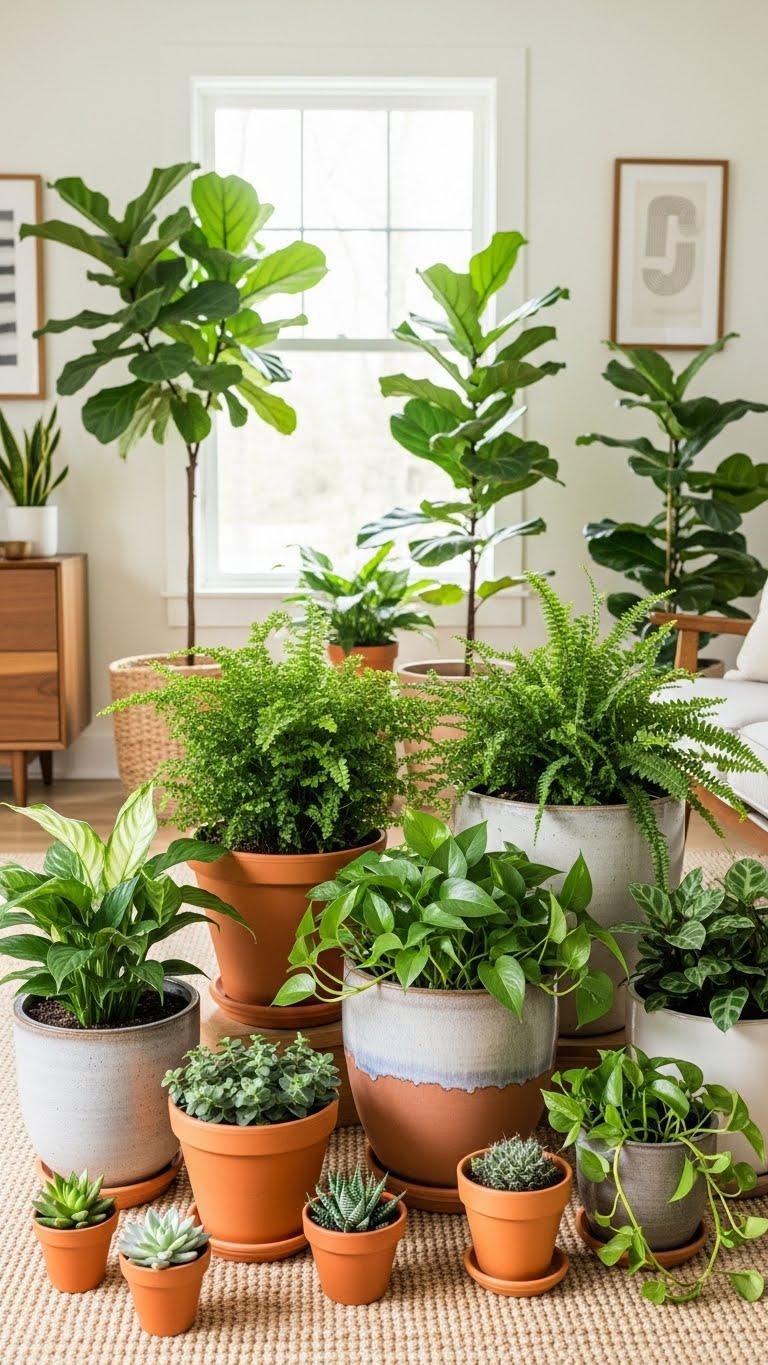
When you choose a pot, think about proportion as carefully as drainage and material: a container that’s too small will stunt roots and force constant repotting, while one that’s oversized can hold excess moisture and invite rot.
You’ll favor scale balance—select pots that echo plant height and foliage spread so aesthetic proportion feels natural, freeing your space without clutter or constraint.
Maintain a Consistent Pot Theme

After you’ve matched pot size to plant scale, think about a unifying pot theme to make your collection read as intentional rather than accidental. Choose color coordinated pots or a consistent texture so each piece complements the room without limiting you.
Rotate accents with seasonal pot swaps to refresh mood. Keep patterns minimal, silhouettes cohesive, and let plants remain the focal point of your liberated, curated display.
Introduce Natural Materials for Warmth

Bring in natural materials to soften the look and ground your plant display; they add warmth, texture, and a tactile contrast to glossy leaves. Use reclaimed wood shelves or stands to echo organic lines, and choose woven baskets for casual, breathable planters.
You’ll create a relaxed, liberated vibe that celebrates imperfection while keeping compositions intentional and easy to rearrange.
Layer Plants With Decorative Objects

Layer plants with decorative objects to create depth and personality without overwhelming the space. You’ll balance foliage with vintage ceramics, textured books, and small sculptures to craft relaxed vignettes. Place scented candles nearby for warmth and softness, but don’t clutter surfaces.
Edit ruthlessly: keep negative space, vary heights subtly, and let each piece breathe so your room feels open, intentional, and free.
Elevate Plants With Stands and Risers
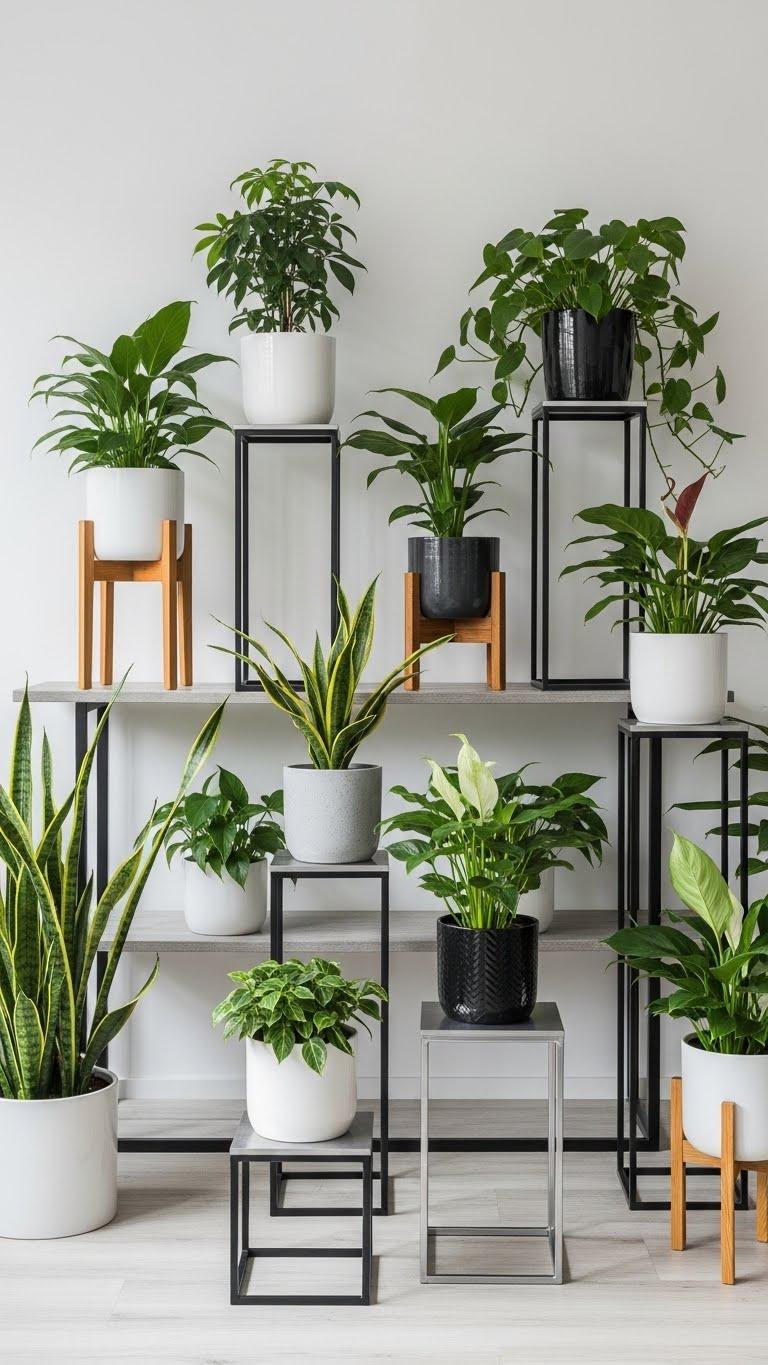
You can take the vignettes you’ve created to the next level by elevating plants on stands and risers to add height, rhythm, and focus. Use elevated planters to free floor space and spotlight specimens, mixing materials for contrast.
Pair low pots with taller stands or tiered shelves to create movement and sightlines. Keep proportions balanced, and let each piece breathe for a liberated, intentional look.
Use Mirrors to Amplify Greenery and Light

Hang a mirror behind your plants to double their visual impact and bounce natural light deeper into the room. You’ll create depth, highlight foliage, and make modest corners feel expansive.
Pair mirrors with reflective planters to amplify shine, and position them to catch angled lighting for dramatic shadows and texture. Keep frames simple so greenery stays the star and your space feels free and airy.
Repeat Shapes or Colors for Visual Continuity
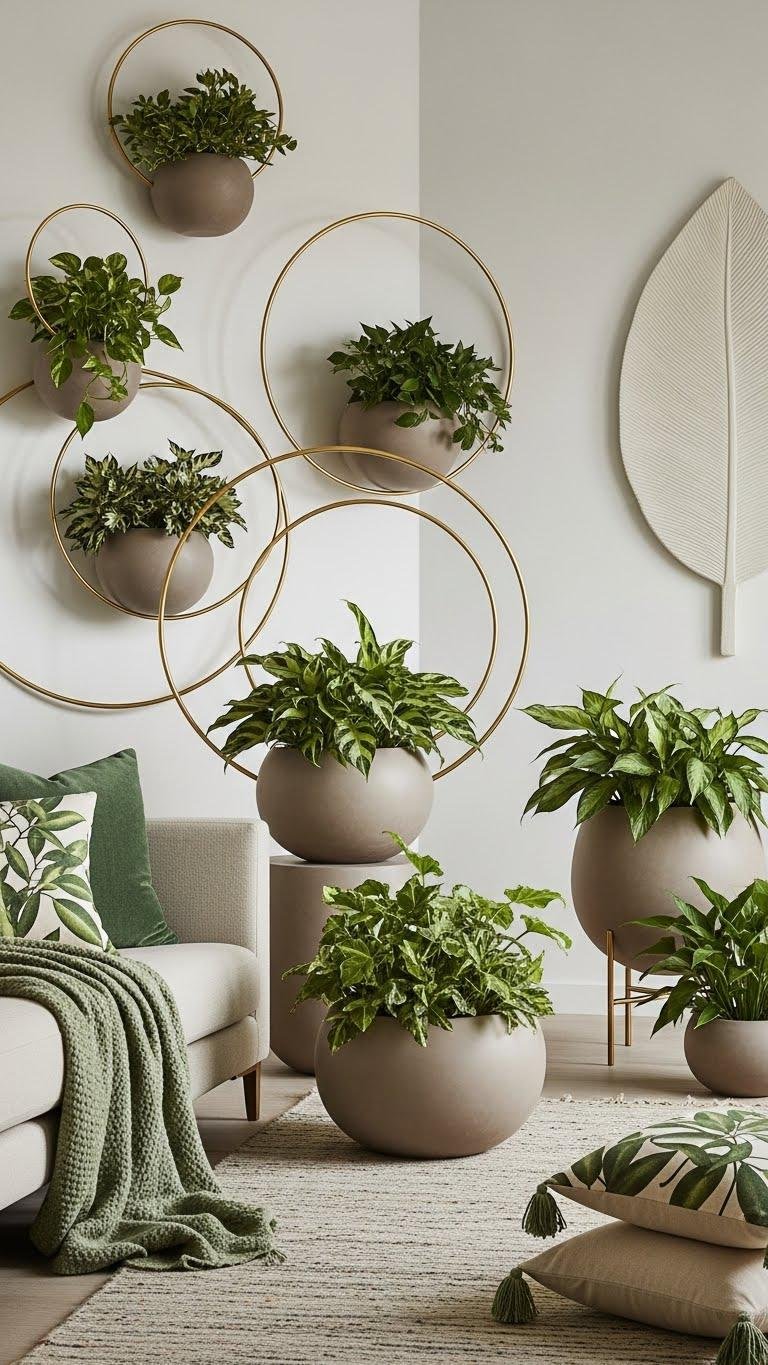
Often a small, repeated motif—like rounded planters, brass hoops, or a single leaf shape—brings cohesion to a room and guides the eye from one vignette to the next.
You’ll use shape repetition and color echoing to create rhythm: match pot silhouettes, echo foliage tones in textiles, or repeat metallic accents. That simple consistency feels freeing, intentional, and calming across your spaces.
Select Low-Maintenance Species for Busy Areas
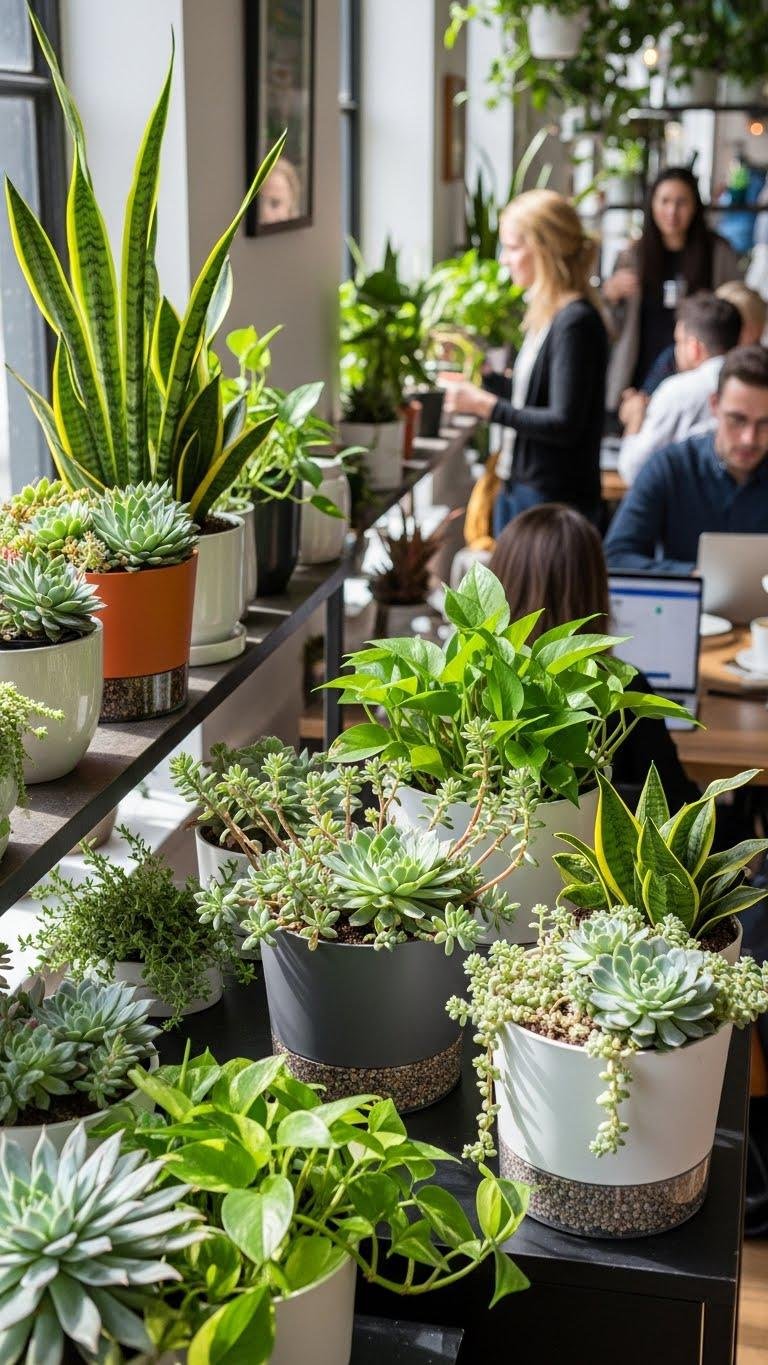
When life gets busy, pick plants that forgive missed waterings and low light so they actually thrive in high-traffic spots. Choose drought tolerant succulents and hardy snake or pothos varieties for carefree style.
Place them in self watering pots or pebble trays to reduce chores. You’ll enjoy greenery that feels liberating, looks intentional, and won’t demand constant attention.
Protect Surfaces With Trays and Liners

If you want to keep tabletops and floors looking flawless, use trays and liners under every pot to catch drips, soil, and mineral buildup.
Choose waterproof trays for messy plants and decorative liners to match your room’s vibe. They’ll protect finishes, simplify cleaning, and let you move plants without worry. Pick durable materials and sizes that cradle saucers and pots securely.
Rotate Plants Regularly for Even Growth

Regularly rotate your plants to guarantee even light exposure and balanced growth; left unturned, many indoor specimens lean toward the brightest window and develop lopsided foliage and uneven flowering.
You should rotate orientation weekly, keeping a simple sunlight logging note so you learn patterns. Rotate gently, adjust pot placement to encourage symmetry, and trust your instincts to craft liberated, evenly shaped displays.
Avoid Drafts and Temperature Fluctuations
Paragraphs