
You’ll get bigger, more reliable harvests when you design raised beds with comfort, drainage, soil depth, and labor-saving systems in mind. This guide gives 24 practical tactics—right bed height and width, durable materials, modular layouts, deep compost-rich soil, mulching, drip irrigation, vertical supports, season covers, and simple automation—to boost yield and cut work. Start with a few ergonomic changes and you’ll notice immediate gains; next, try the soil and irrigation tweaks.
Pick Durable, Safe Materials for Construction
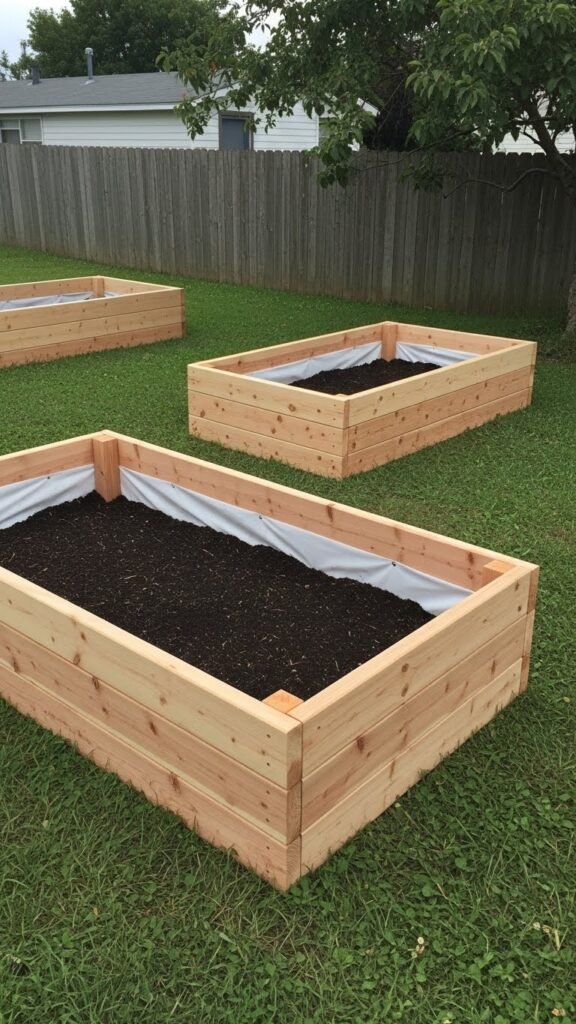
Now that you’ve planned bed widths and access paths, pick materials that will last and stay safe around your plants. Choose rot-resistant options — cedar, stainless fasteners, or recycled plastic — to minimize upkeep. Line interiors if needed and apply food safe sealants where wood contacts soil. You’ll preserve soil health, avoid contaminants, and keep your beds low-maintenance so you’re free to garden more.
Use Modular Beds to Fit Any Space
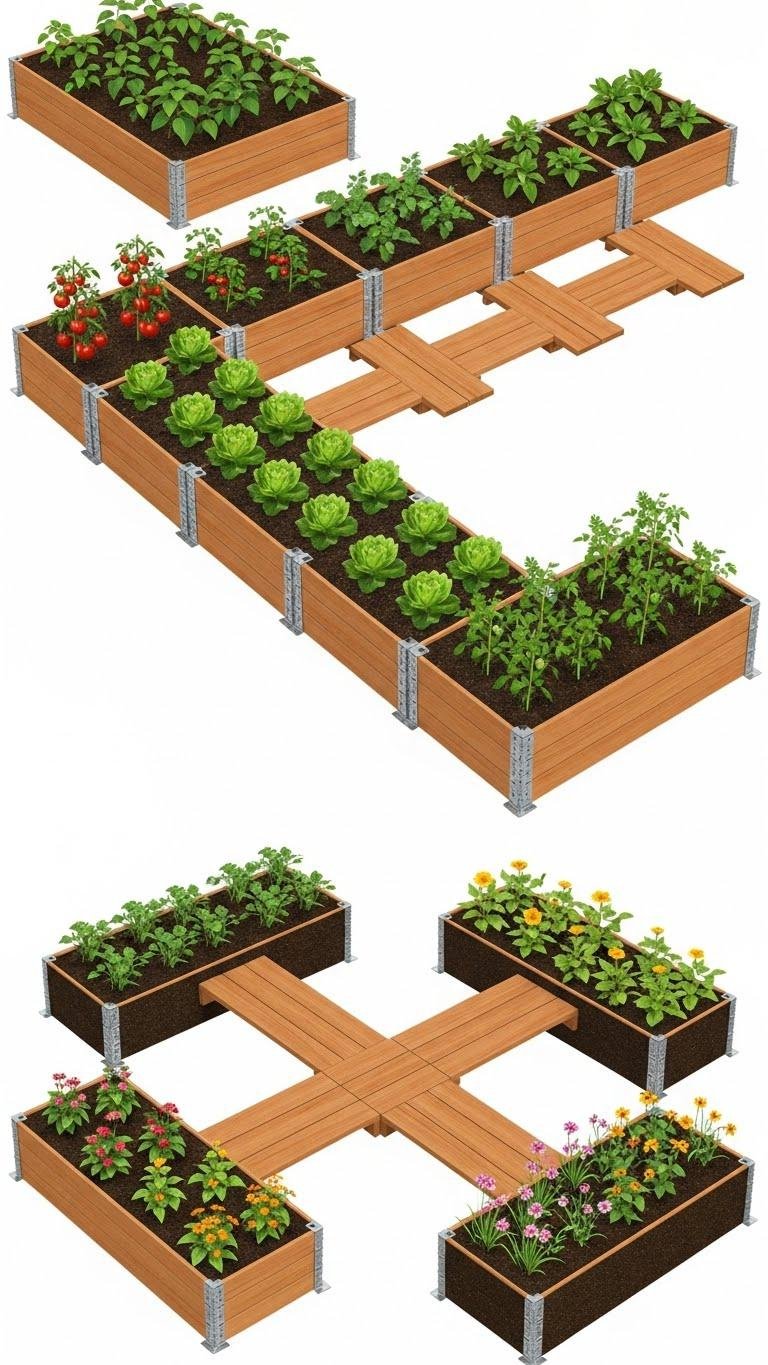
Think in modules: build a collection of standardized bed units you can combine, rearrange, or swap out as your space and needs change.
You’ll use modular connectors to secure edges fast, letting beds lock into scalable layouts that grow with projects or travel.
Design units at comfortable widths, keep soil depths consistent, and plan access routes so you stay flexible and independent.
Space Beds for Comfortable Movement and Maintenance
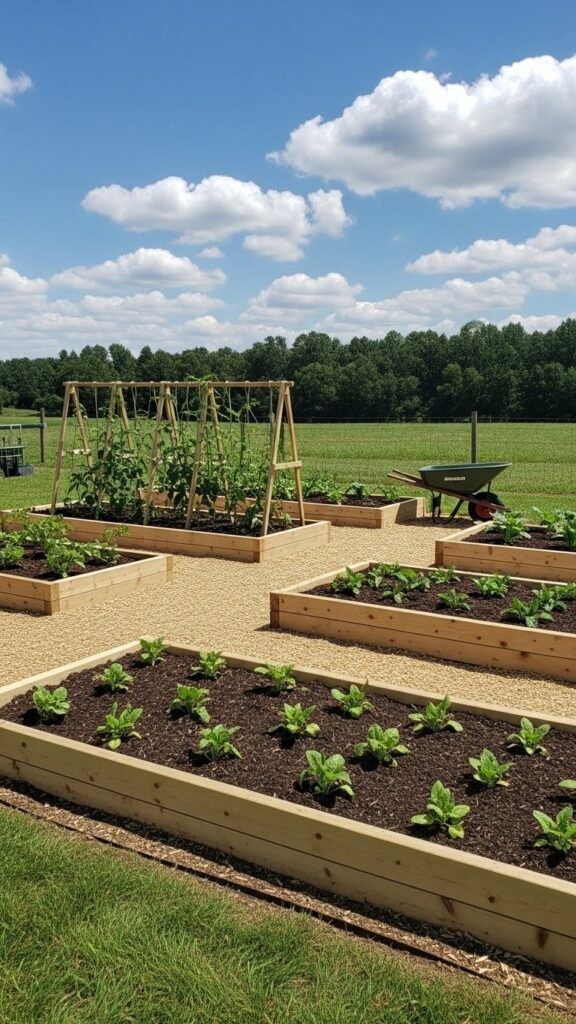
Once you’ve arranged modular units, set beds so you can move and work without strain: leave at least 18–24 inches between narrow beds for single-sided access and 3–4 feet for comfortable two-sided care, and make main pathways wide enough for wheelbarrows or a garden cart.
Plan ergonomic pathways and raised aisles to minimize bending, ease maintenance, and let you garden freely and confidently.
Build Well-Draining Soil With Plenty of Organic Matter
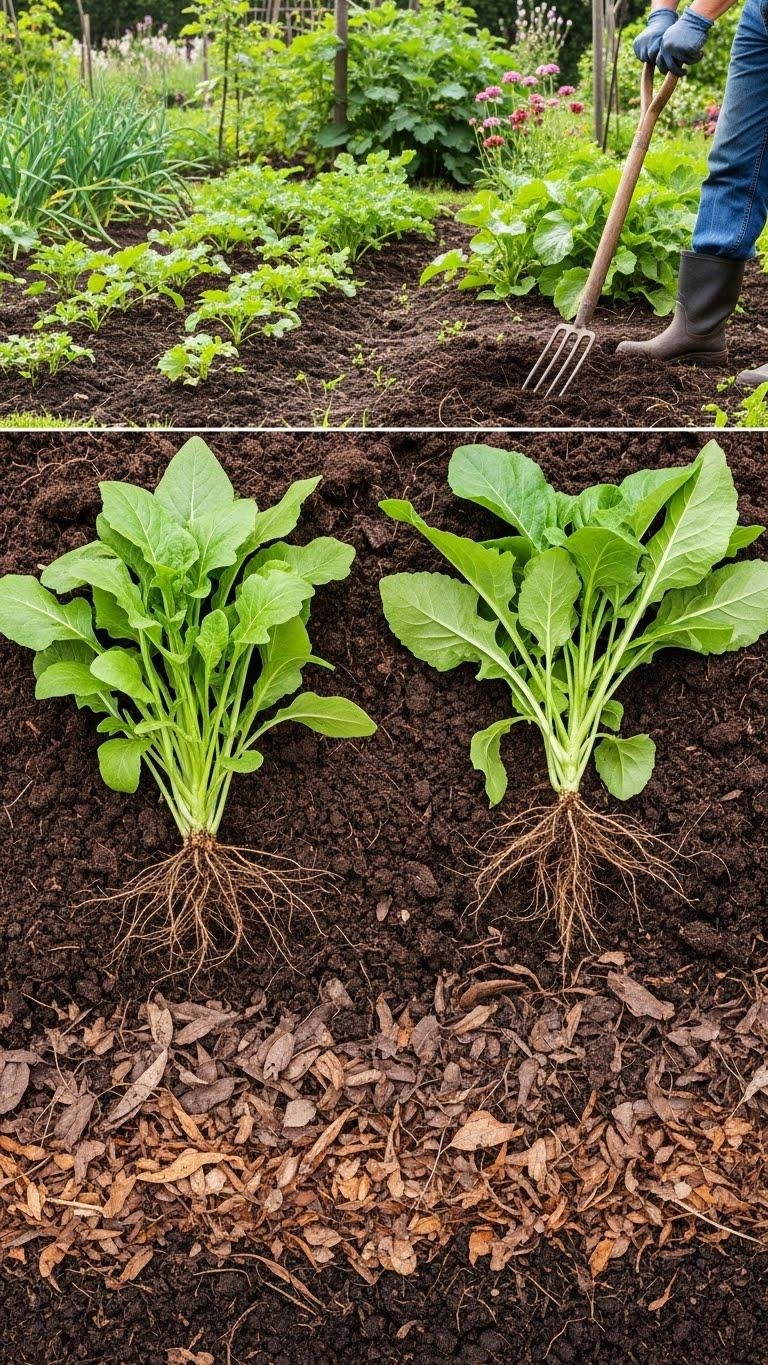
Improve drainage and feed your plants by building a loose, organic-rich soil that sheds excess water while holding enough moisture and nutrients for roots. Add compost, aged manure, and shredded leaves to improve soil structure and encourage nutrient cycling.
Work amendments in lightly, avoid compaction, and top-dress annually. You’ll get vigorous roots, faster establishment, and more predictable yields without constant watering.
Create a Custom Soil Mix to Match Plant Needs
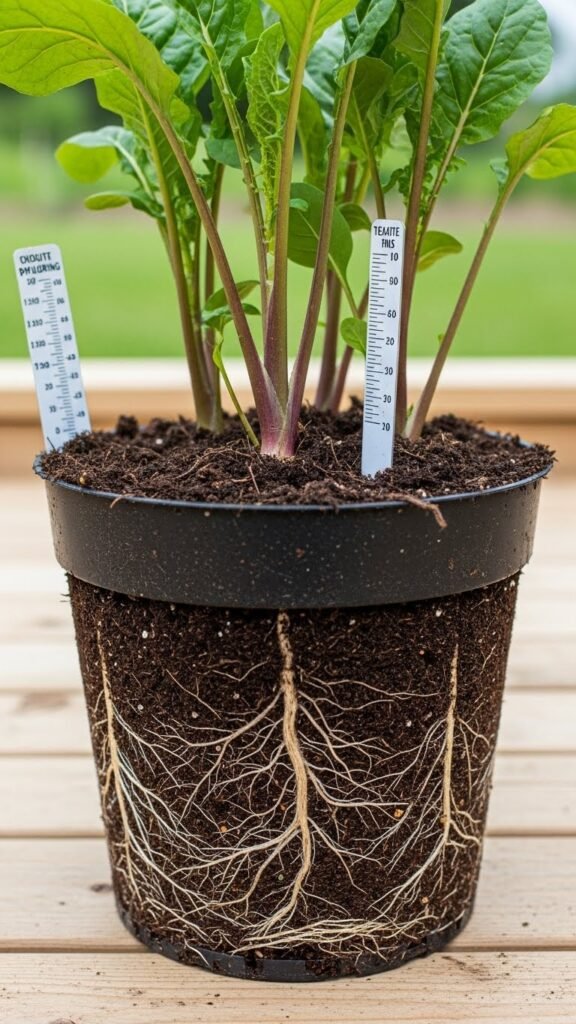
For specific crops, tailor your raised-bed mix so roots get exactly the water, air, and nutrients they need. You’ll choose base soil, adjust pH tailoring for acid- or alkaline-loving plants, and use texture layering—coarse at the bottom, fine at the top—to balance drainage and moisture. Measure, test, and document mixes; then plant confidently, knowing each crop has a customized root environment.
Add Compost Regularly to Maintain Fertility
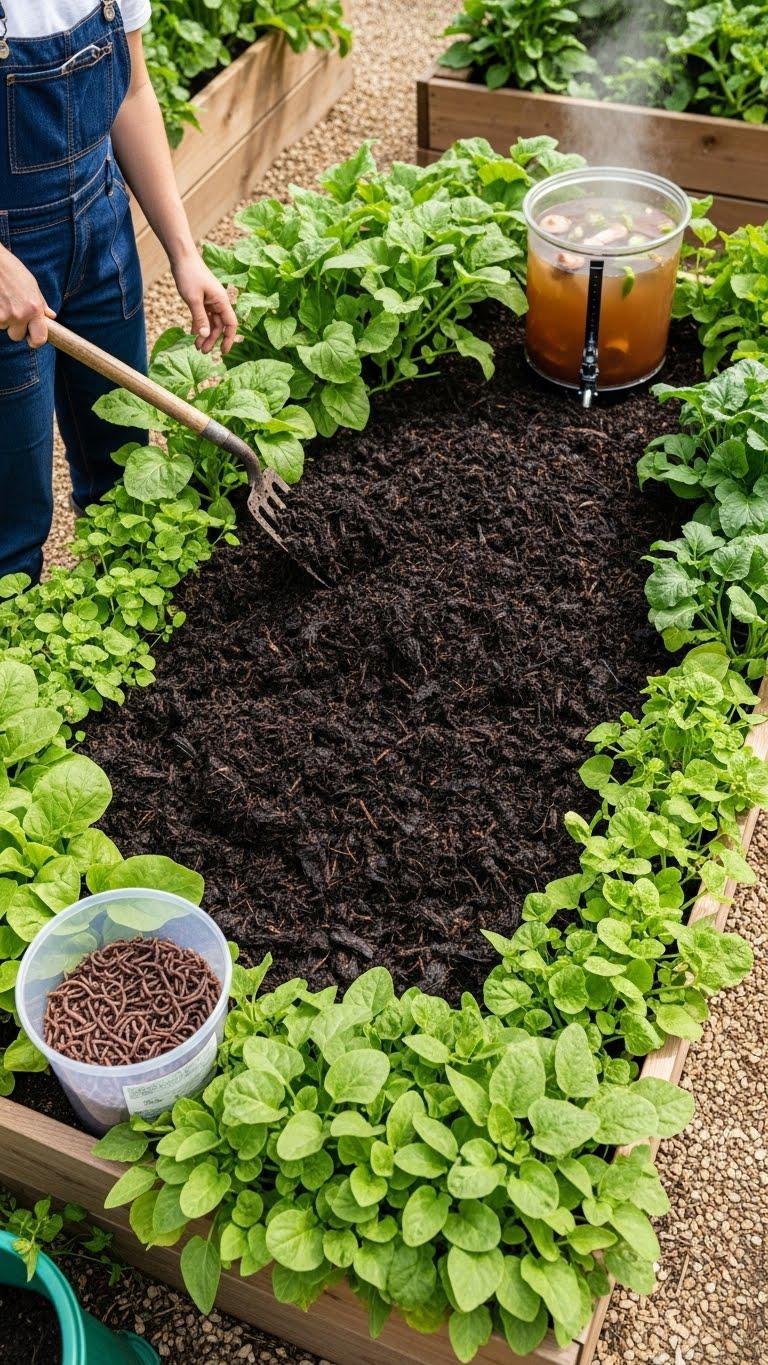
Regularly add compost to your raised beds so plants get a steady supply of nutrients, improved structure, and beneficial microbes. Top-dress with mature compost each season, lightly fork it in, and supplement with worm castings for concentrated nutrients. Brew compost tea for quick microbial boosts during growth spurts. You’ll keep fertility consistent, reduce fertilizer dependence, and preserve the freedom to plant boldly.
Mulch to Retain Moisture and Suppress Weeds
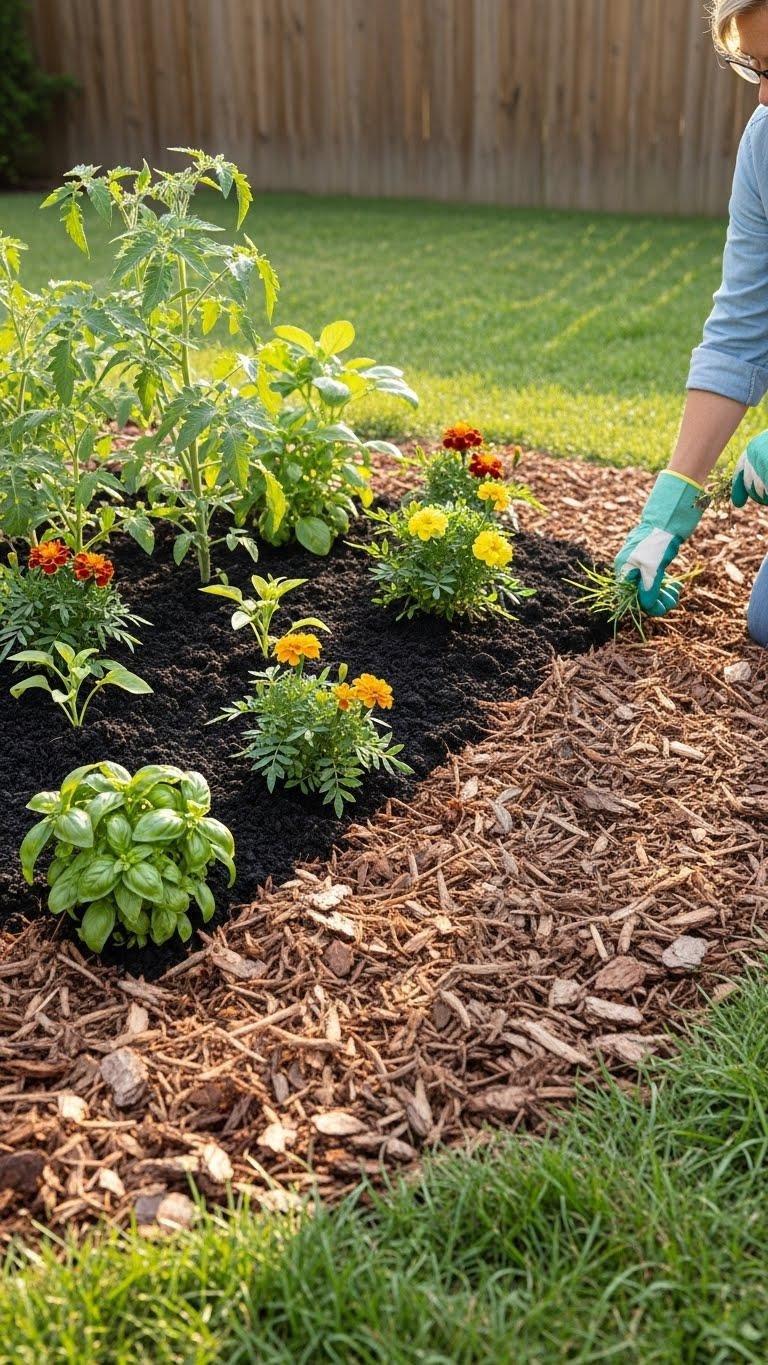
Once you’ve top-dressed beds with compost, cover the soil with a 2–4 inch layer of mulch to lock in that fertility and cut water loss.
Use organic bark for longevity, keeping mulch away from stems to prevent rot.
Skip landscape fabric under mulch unless drainage’s poor; it can impede roots.
Refresh annually and pull weeds promptly so your beds stay productive and free.
Warm Soil Early for a Longer Growing Season
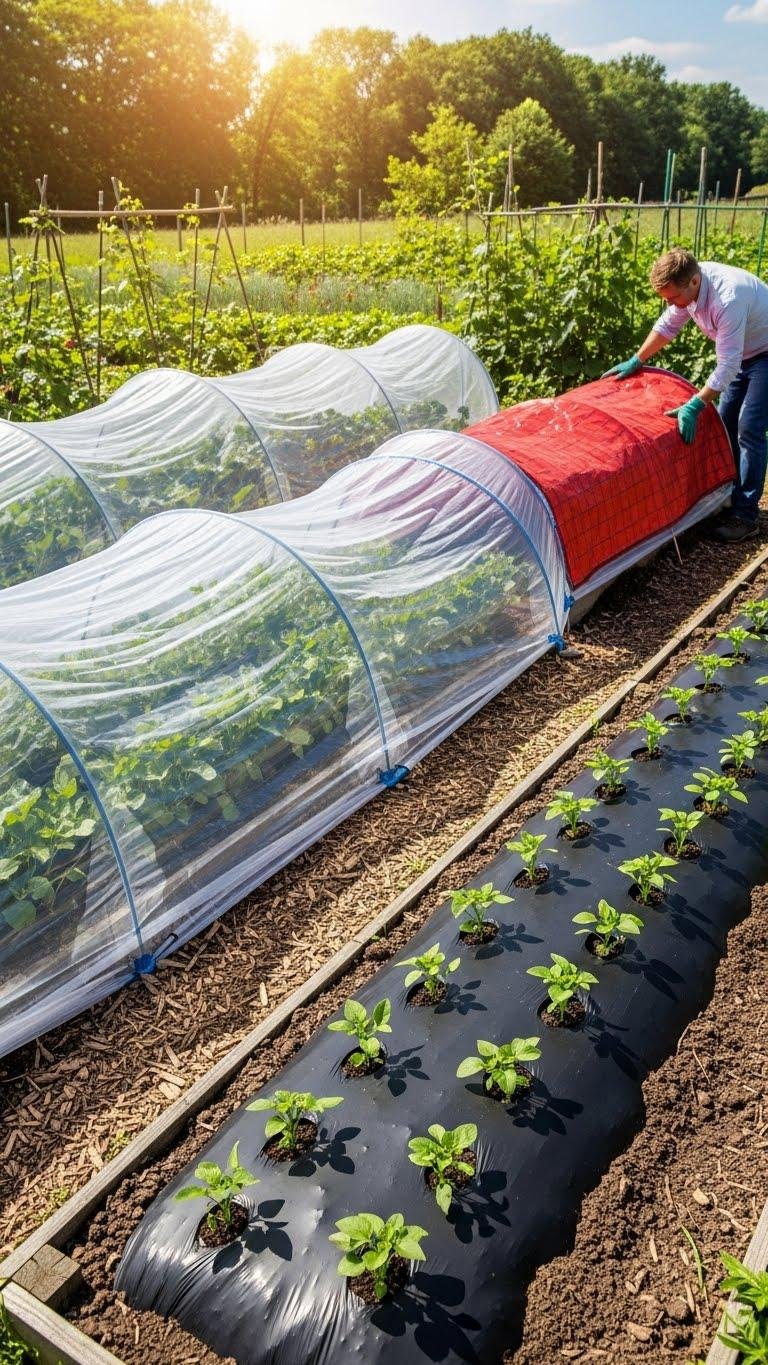
Paragraphs
Install Drip Irrigation or Self-Watering Systems
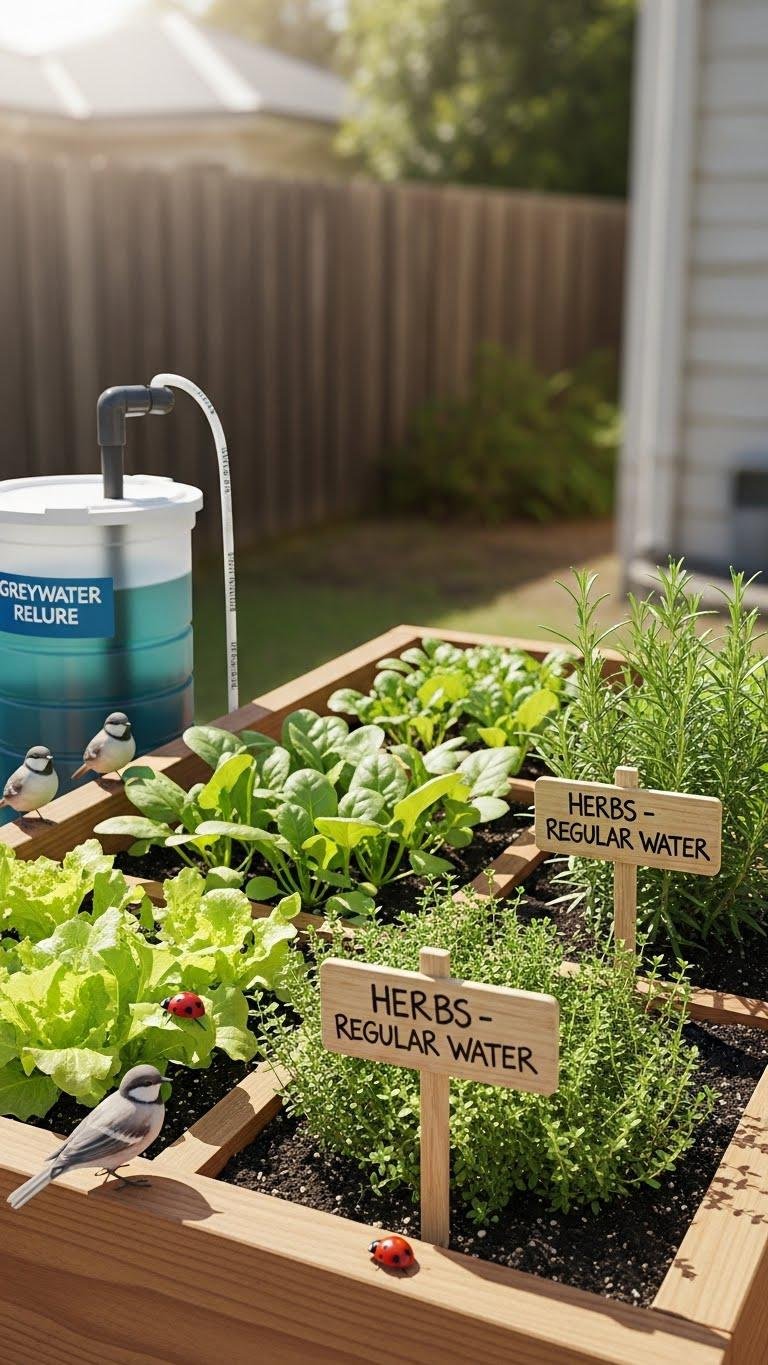
Warming your beds gives seedlings a head start, but keeping soil consistently moist the rest of the season matters just as much—installing drip irrigation or self-watering systems lets you supply steady, targeted moisture without daily hand-watering.
Use low-pressure drip lines, capillary matting for seedlings, and gravity-fed reservoirs. Plan for greywater reuse where legal, set zones, and embrace irrigation that frees your time.
Use Smart Sensors to Optimize Watering
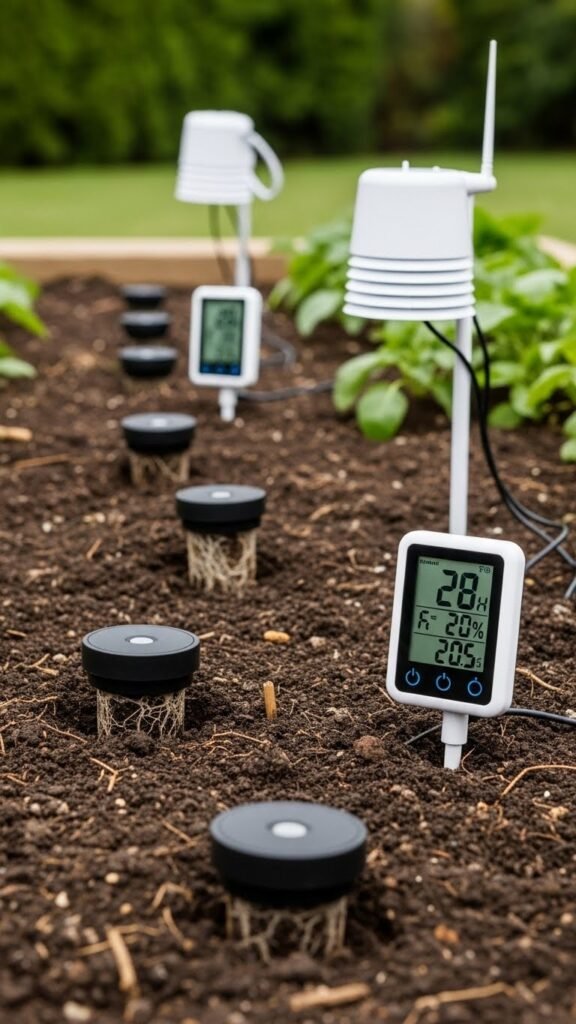
Monitoring soil moisture and microclimate with smart sensors helps you water only when plants need it, not on a calendar.
You’ll place soil sensors in root zones and pair them with compact weather stations to track rainfall, temperature, and evaporation.
That data feeds timers or alerts, so you conserve water, avoid overwatering, and maintain autonomy over your beds with minimal effort.
Monitor Moisture Consistently to Prevent Drying
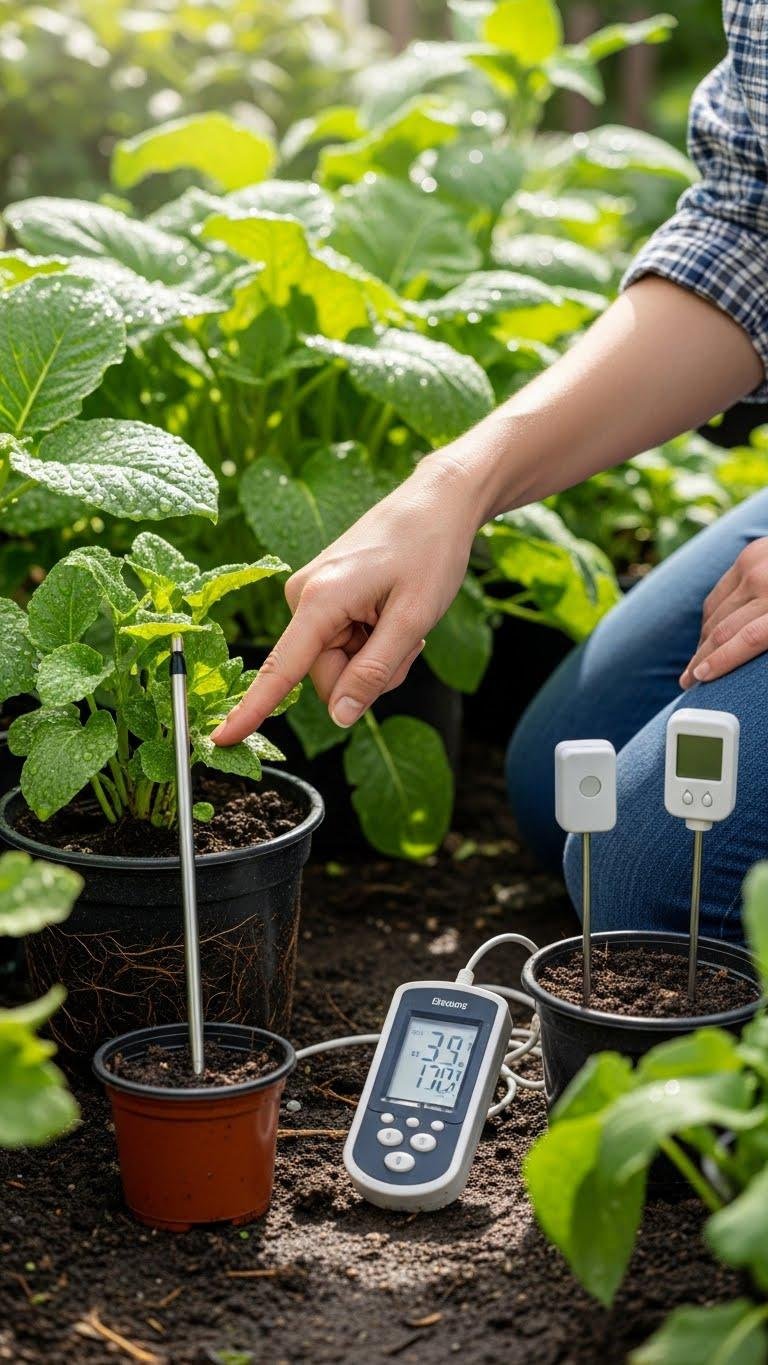
Regularly check moisture levels so your plants never sit too long in dry soil—finger tests, a simple probe, or the same smart sensors used earlier will tell you when to water.
You’ll use soil hygrometers for spot checks and set up moisture logging to spot trends. Act on readings promptly, adjust schedules, and trust data to free you from guesswork while keeping roots consistently healthy.
Implement Barriers to Reduce Ground Pests
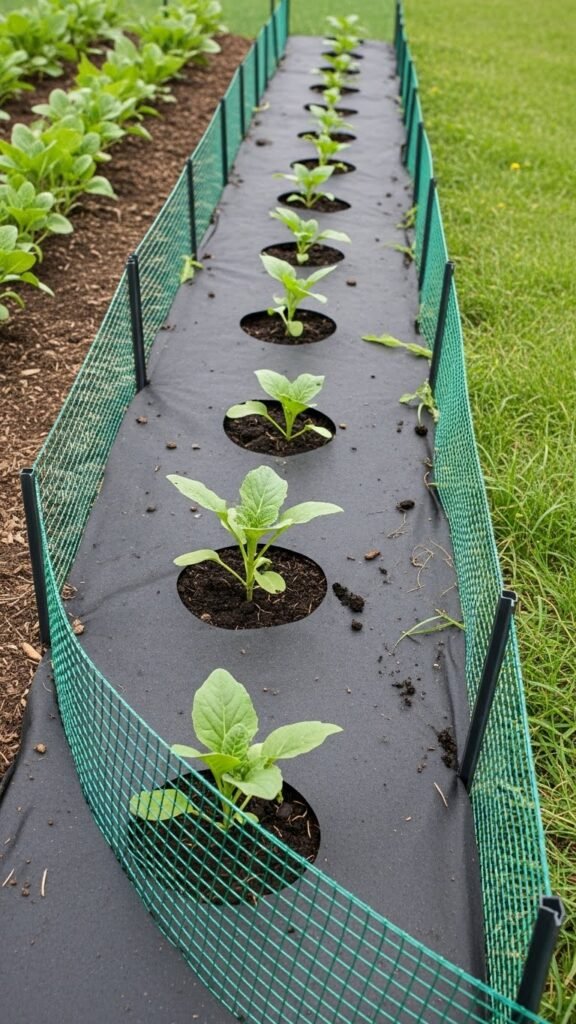
Because ground pests strike quietly from below, you should install physical barriers that block them before they reach roots and seedlings.
Use root exclusion fencing around bed perimeters and lay buried‑barrier fabric beneath seedlings to stop burrowers and root weevils.
Secure edges, inspect regularly, and combine barriers with targeted traps.
You’ll protect crops while keeping your beds manageable and free.
Practice Dense Planting to Shade Out Weeds
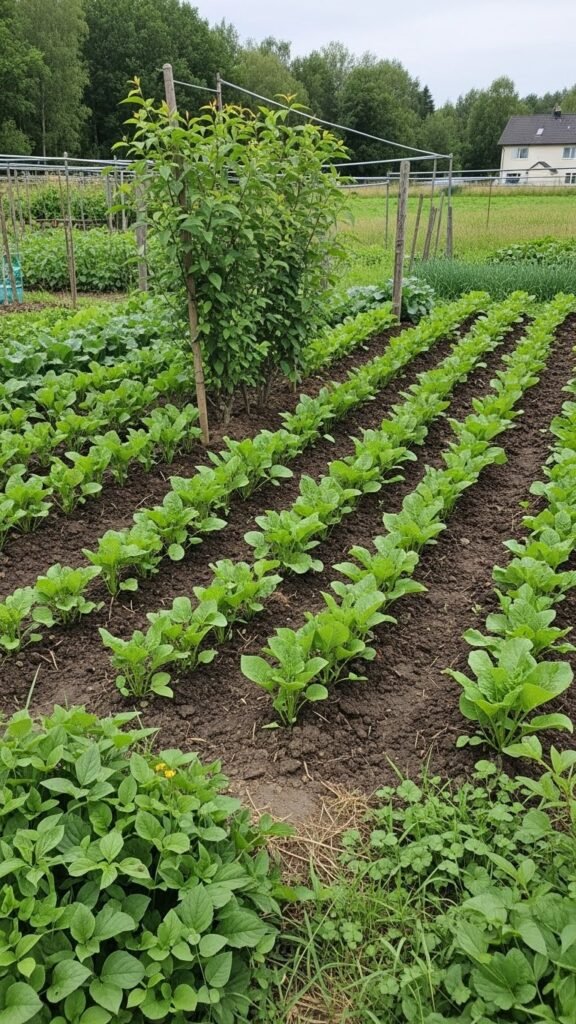
After you’ve sealed out burrowers with barriers, use dense planting to keep weeds from establishing in the open soil between seedlings.
You’ll favor tight spacing and strategic succession so leaves quickly form a living mulch, cutting sunlight and reducing mulch competition from opportunistic seedlings.
Plant deliberately, prune to maintain airflow, and let canopy cover do the weed-suppression work so you can garden with more freedom.
Scout Regularly for Pests and Diseases at Eye Level
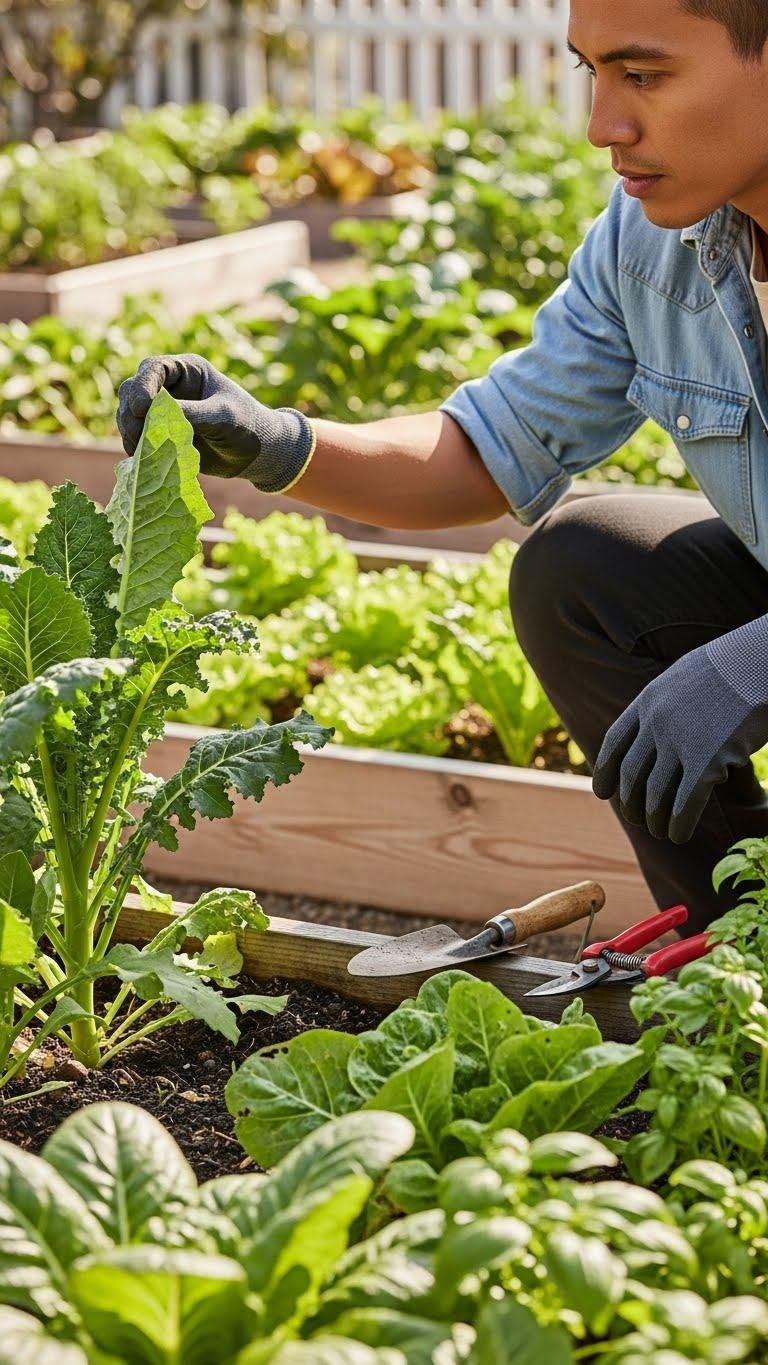
Often, walk the beds at eye level so you can spot early signs of pests and disease before they spread. You’ll do routine early inspection, scanning stems and undersides for eggs, spots, or wilting.
Make leaf level checks part of your habit: nip problems while small, remove affected foliage, and apply targeted controls. That keeps your beds productive and your freedom to garden intact.
Adopt Square-Foot Gardening for Maximum Yield
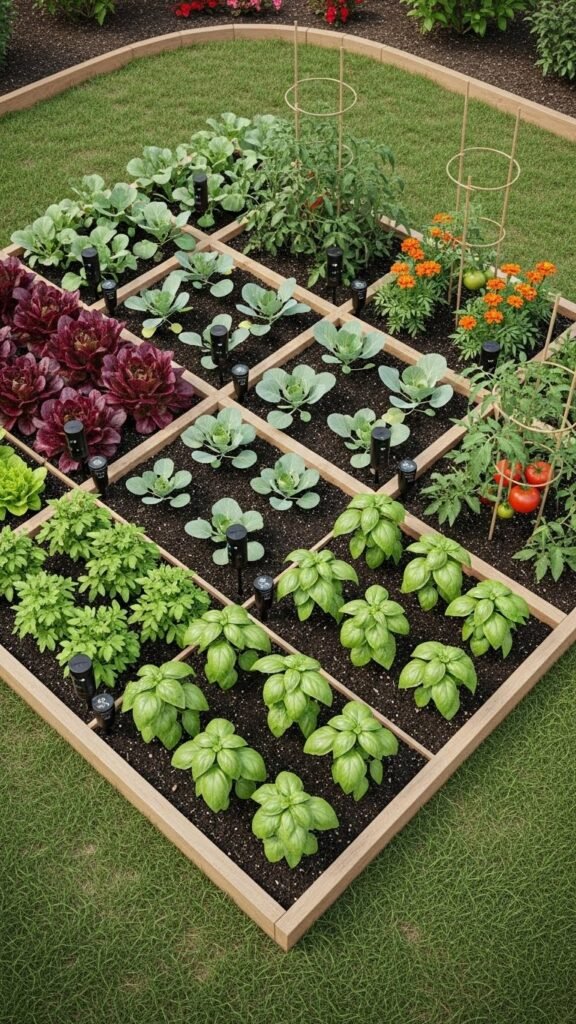
Pairing AI monitoring with square-foot gardening lets you squeeze more production from each bed while keeping care minimal. You’ll lay out one-foot squares, use intensive spacing, and choose crops that share nutrients. Rely on companion planting to deter pests and boost yields. With tidy grids and data-driven timing, you’ll maximize harvests, reduce waste, and keep maintenance liberatingly simple.
Use Vertical Supports to Save Ground Space
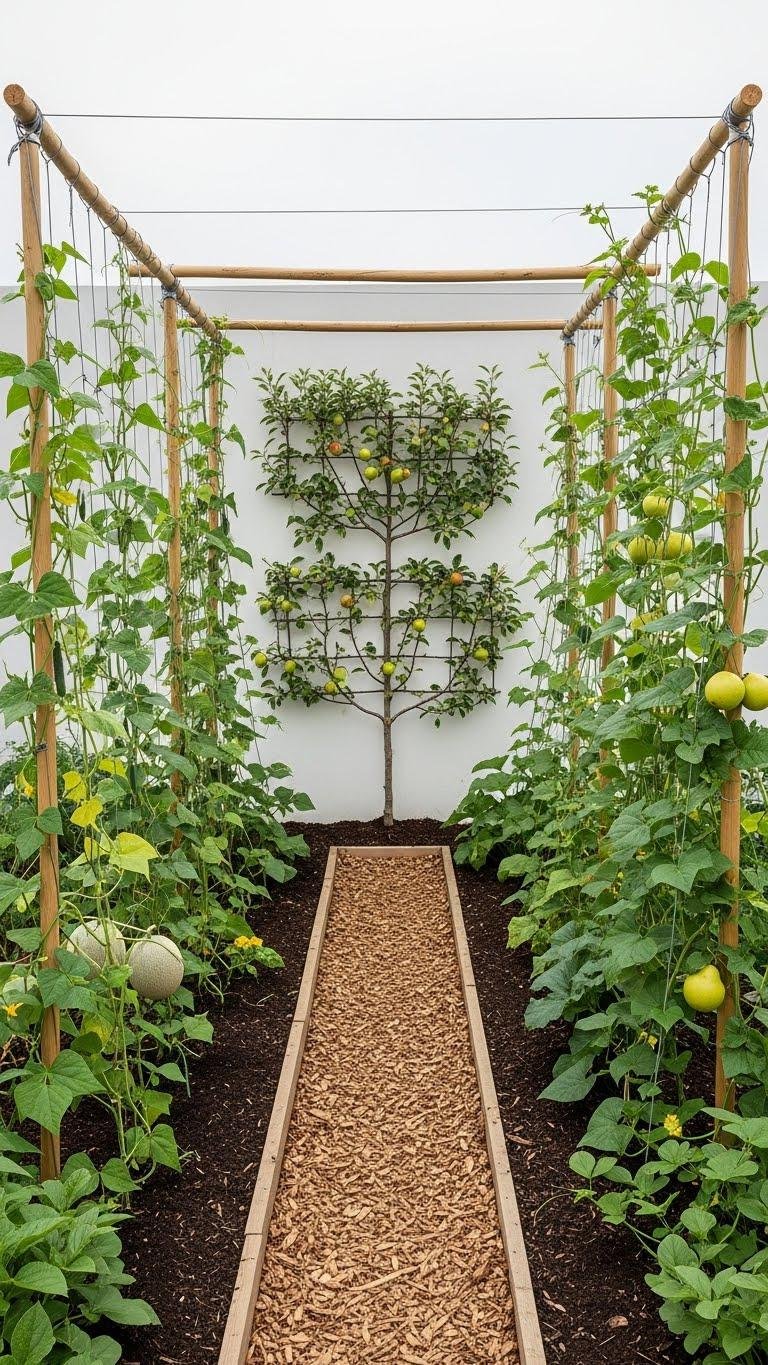
Stack plants upward to reclaim floor space and boost yields: by installing trellises, cages, arbors, or netting you can grow vining and sprawling crops in the air instead of across your beds. Use trellis training for beans, cucumbers and melons; prune and tie selectively.
Try the espalier technique on compact fruit trees. You’ll free ground, improve airflow, simplify harvest, and expand your garden’s reach.
Plan Succession Planting for Continuous Harvests
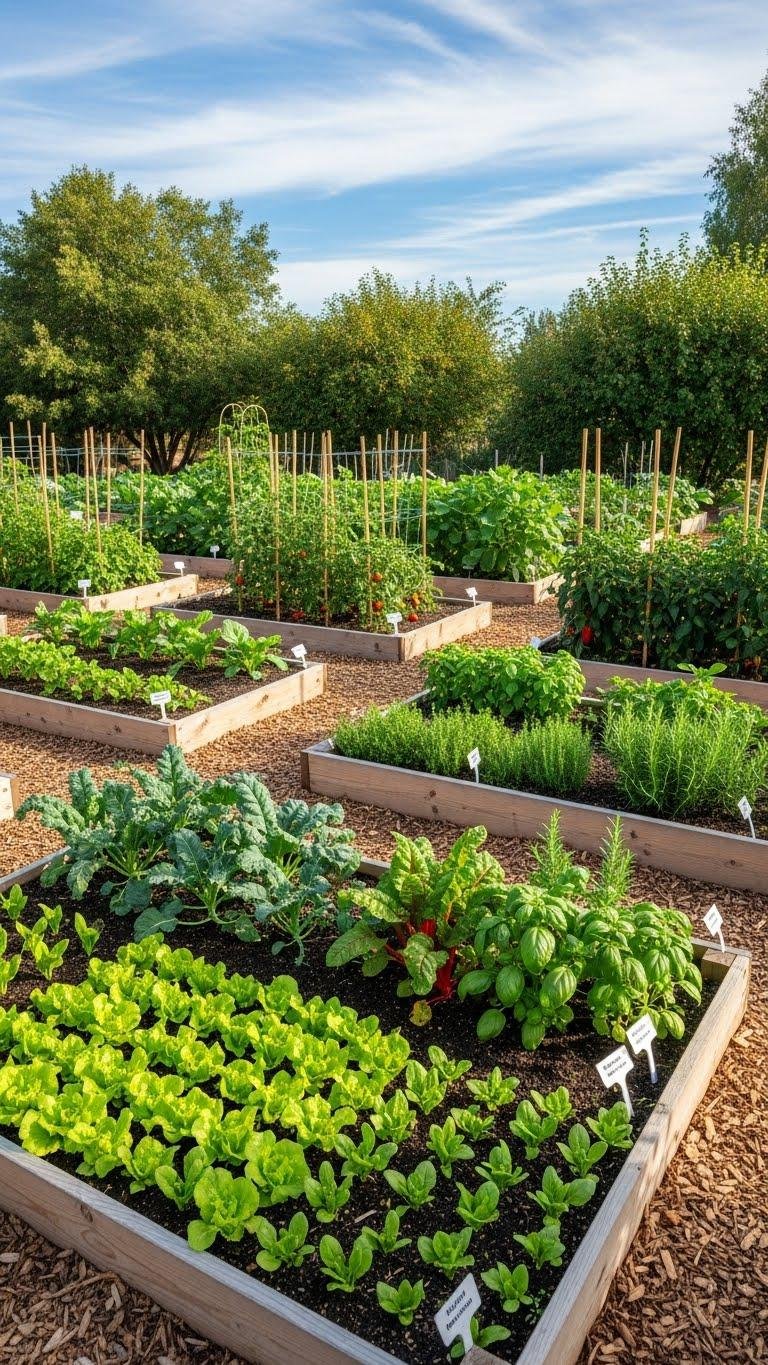
Because your beds can produce more than one crop per season, plan succession planting to keep harvests steady and soil productive.
You’ll use staggered sowing to replace finished crops, timing fast greens, herbs, and heat lovers so beds never sit idle.
Practice crop rotation each cycle to reduce pests and rebuild fertility, and map quick swaps that give you constant, freeing abundance.
Arrange Plants for Proper Sunlight and Airflow
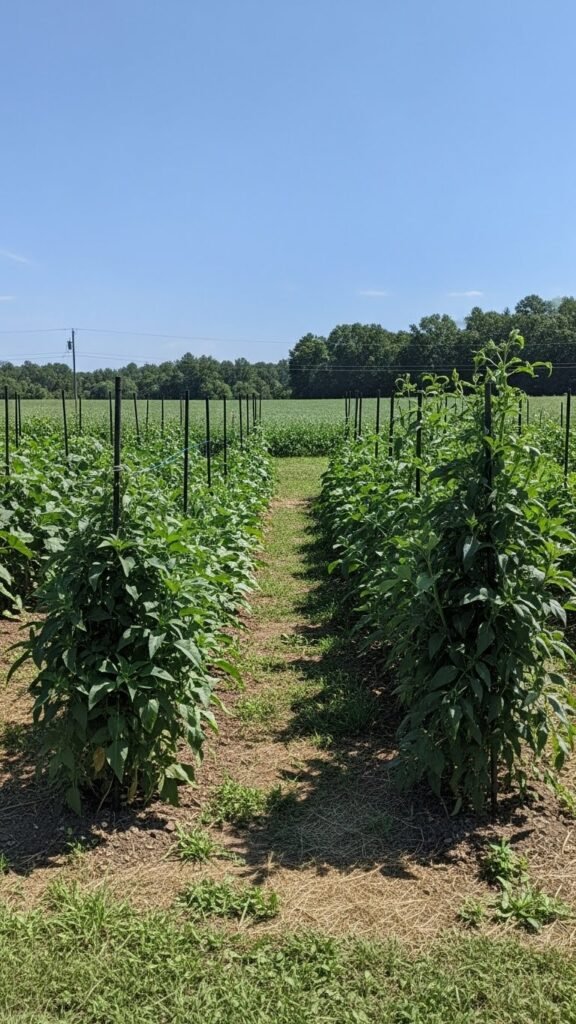
In full sun, orient taller plants to the north or west of shorter ones so they won’t cast shade over light-loving crops, and leave clear aisles for breezes to move through the beds.
You’ll use sunlight mapping and basic airflow modeling to place rows, cluster compatible plants, and avoid dense blocks. That keeps foliage dry, ripening even, and gives you freedom to manage crops efficiently.
Design Beds to Minimize Bending and Strain
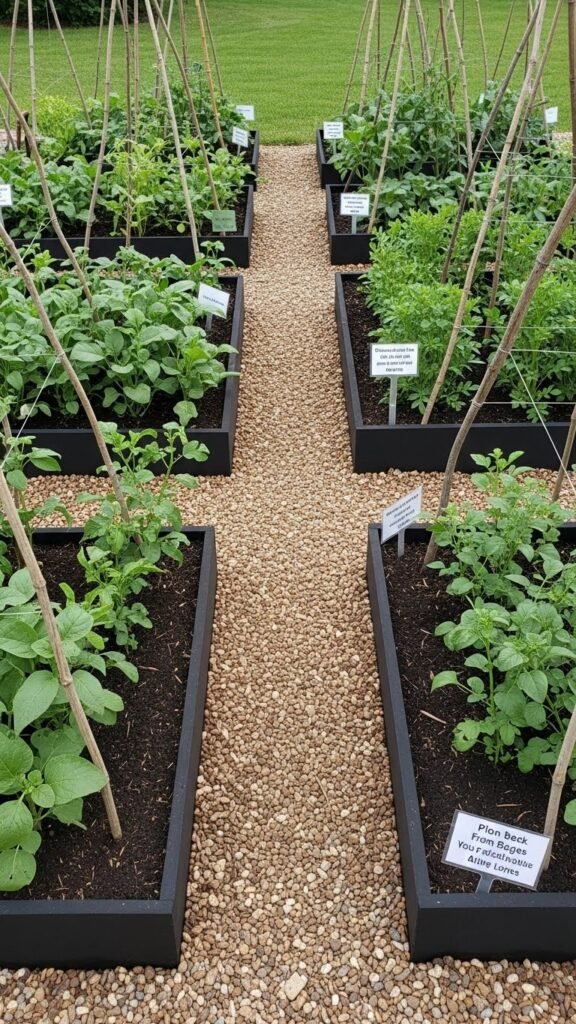
Plan beds so you can work from the edges without bending over the soil: keep bed widths 3–4 feet (so you can reach the center from either side), raise soil height to 12–18 inches where possible, and use sturdy, narrow paths that let you step close without compressing growing areas.
Add ergonomic edging and adjustable platforms so you’ll garden comfortably, reduce strain, and stay active longer.
Create Comfortable Edges and Pathways for Workability
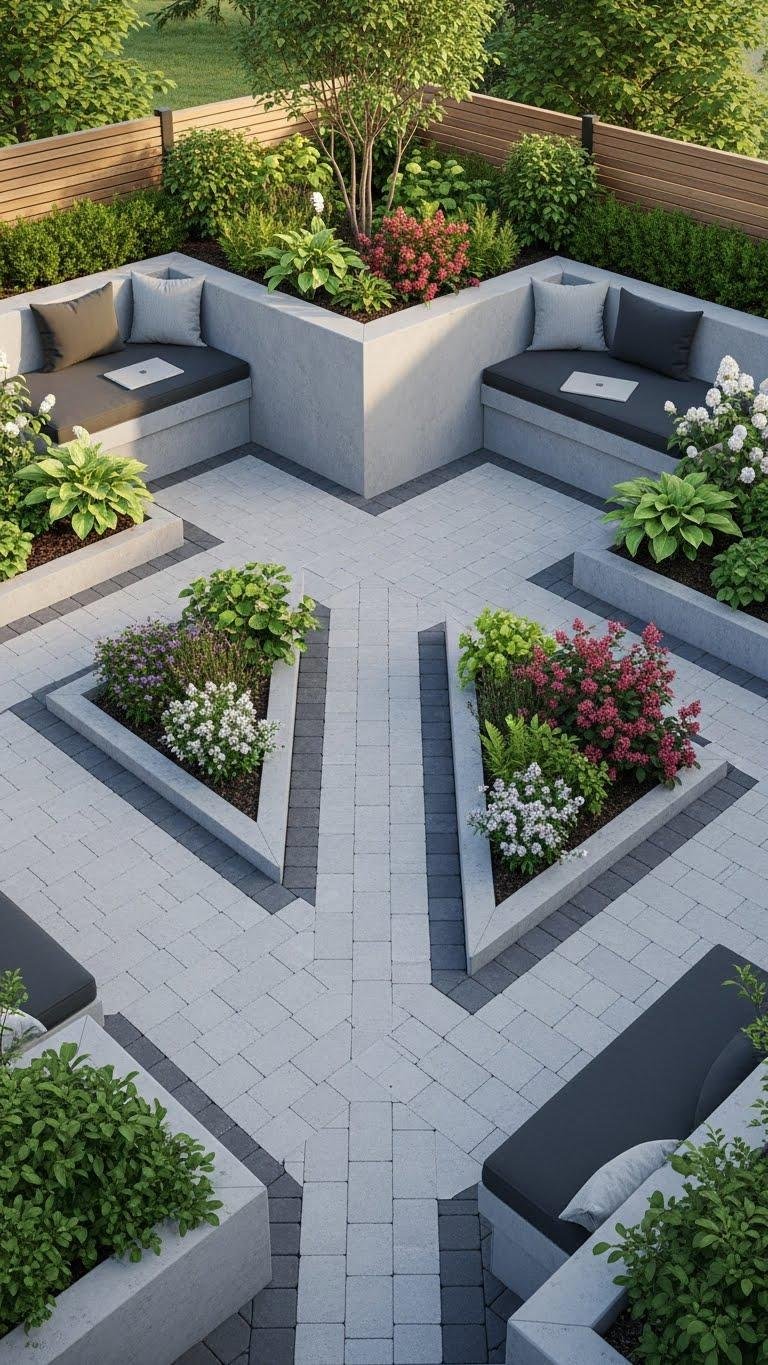
Set up firm, comfortable edges and clear, narrow paths so you can reach plants easily without stepping on beds or twisting to work. You’ll add beveled edging for safe, snag-free borders and compact paths for easy access. Include padded seating on corners or removable pads so breaks feel freeing. Keep surfaces level, non-slip, and deliberately simple to maximize mobility and low-effort maintenance.
Combine Smart Tools and Automation to Reduce Labor
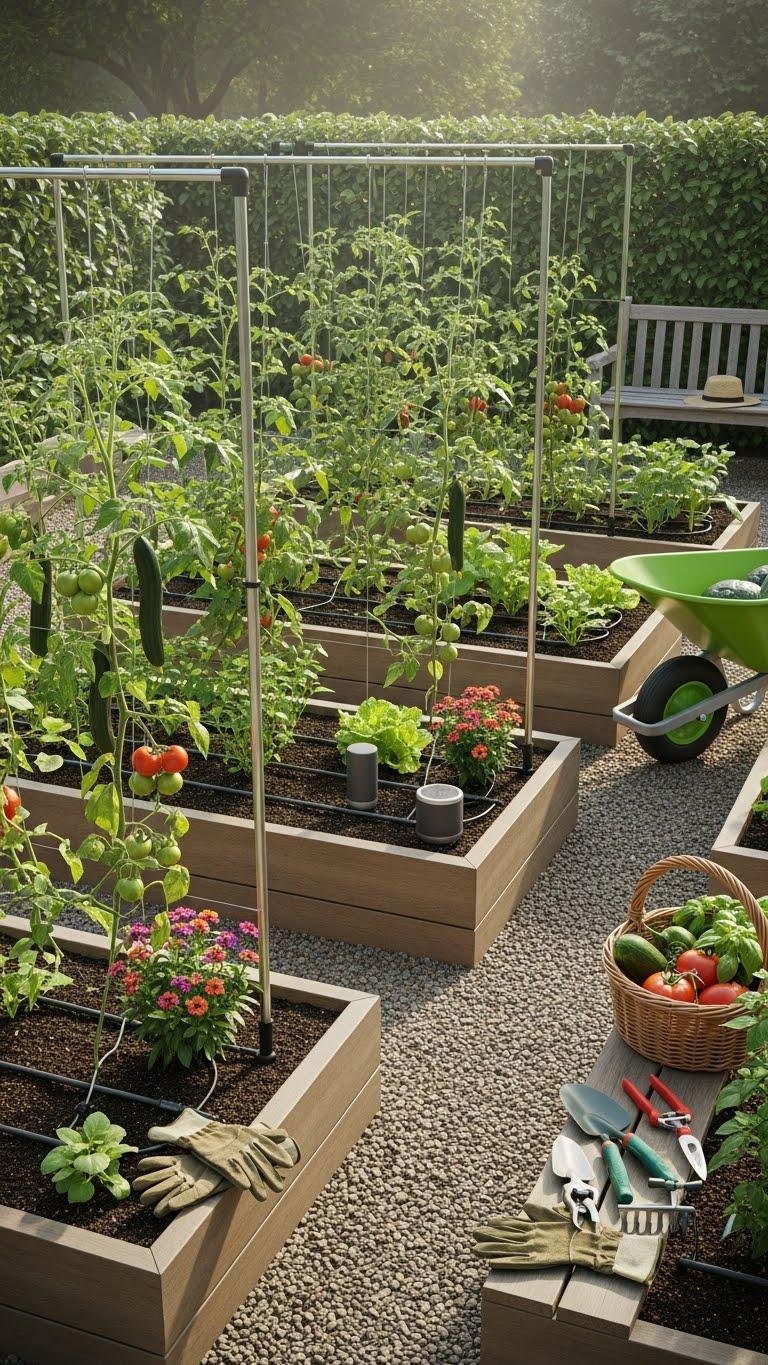
Bring together a few well-chosen tools and simple automation to cut the repetitive work out of raised-bed gardening. You’ll pair automated trellising for vines with drip lines and voice activated watering to save time and posture.
Use timers, lightweight wheelbarrows, and ergonomic hand tools. They free you to plan, harvest, and enjoy your garden rather than grind through routine chores.