
If you want shade that feels intentional rather than just empty, start by thinking in layers: canopy, shrubs, perennials and groundcover. You’ll learn to group bold hosta and ferns, add evergreen structure, and carve paths and seating nooks that invite use. These 25 layouts show practical plant combinations, circulation and maintenance tips so you can pick a strategy that fits your site and skill—keep going to find the one that fits.
Woodland Layering With Ferns and Hostas
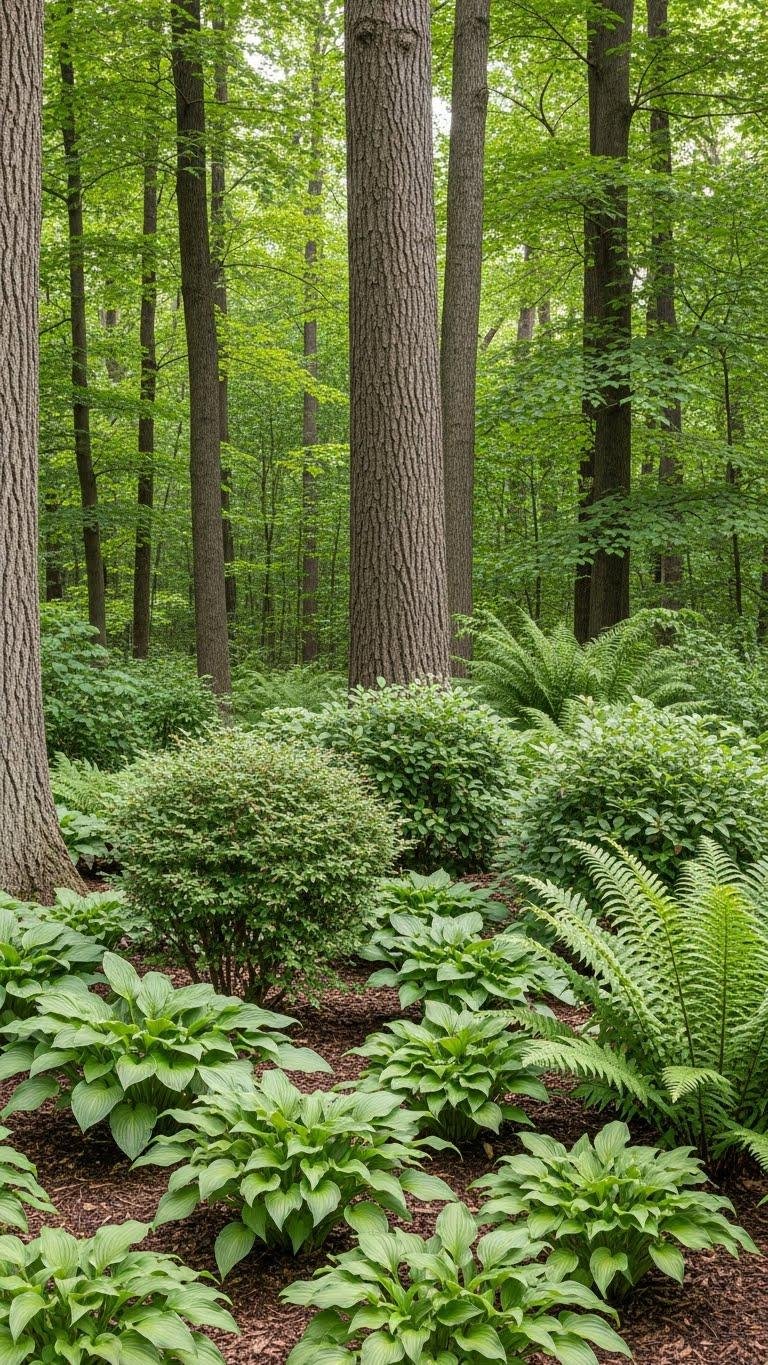
When you design a woodland layer with ferns and hostas, think in vertical bands: tall canopy trees, a midlayer of shrubs, then a lush groundcover of hostas punctuated by ferns.
You’ll plan a fern understory for texture and moisture retention, position hosta clumps for bold foliage anchors, mulch lightly, space for air circulation, and let each plant express natural form without rigid constraint.
Serpentine Path Through Mixed Shade Perennials
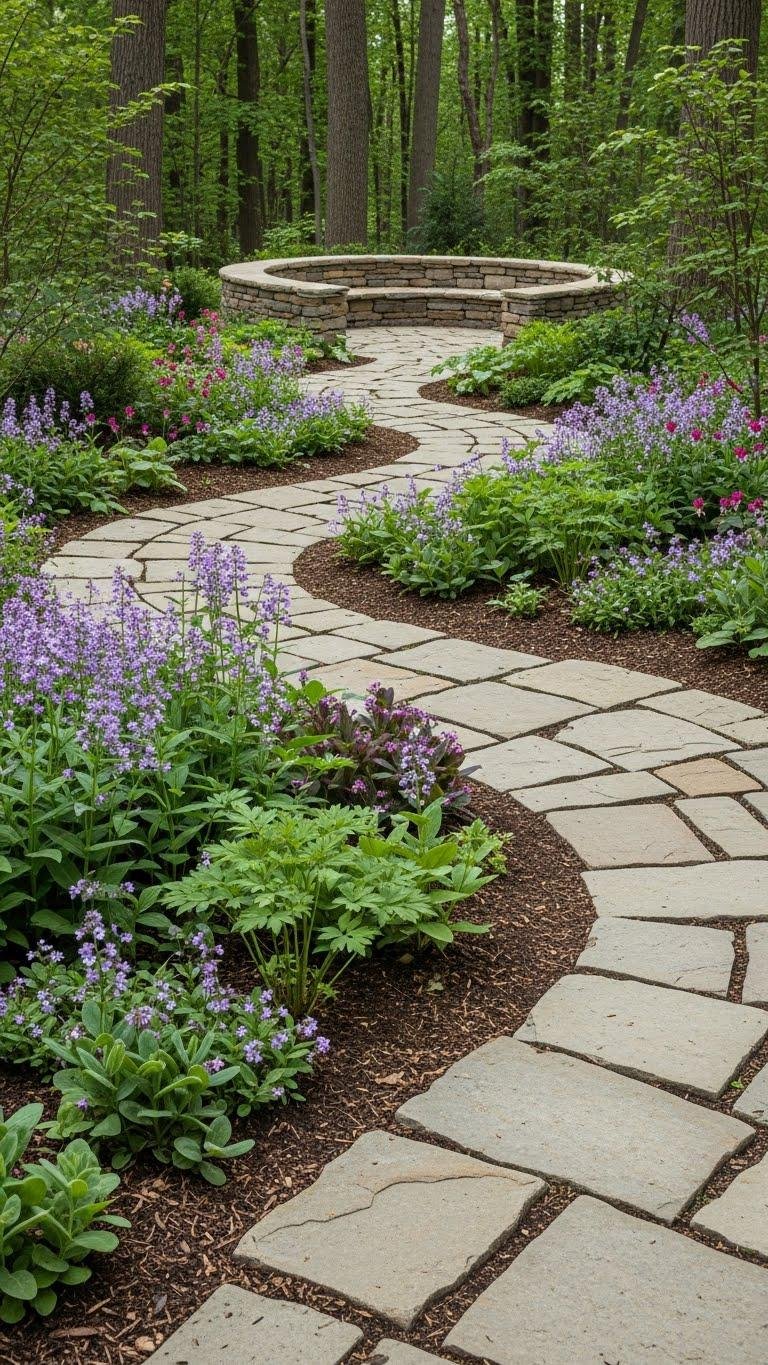
Moving from layered plantings into circulation, a serpentine path will knit your woodland beds into a strollable experience while highlighting mixed shade perennials.
You’ll lay meandering stonework edged with foamflower, lungwort and bleeding heart, pruning for air and bloom rhythm.
Route curves to reveal dappled seating niches, keep soil loose and mulch light, and let plant combos guide pace and seasonal interest.
Monochrome Green Massing for Calm Under Trees
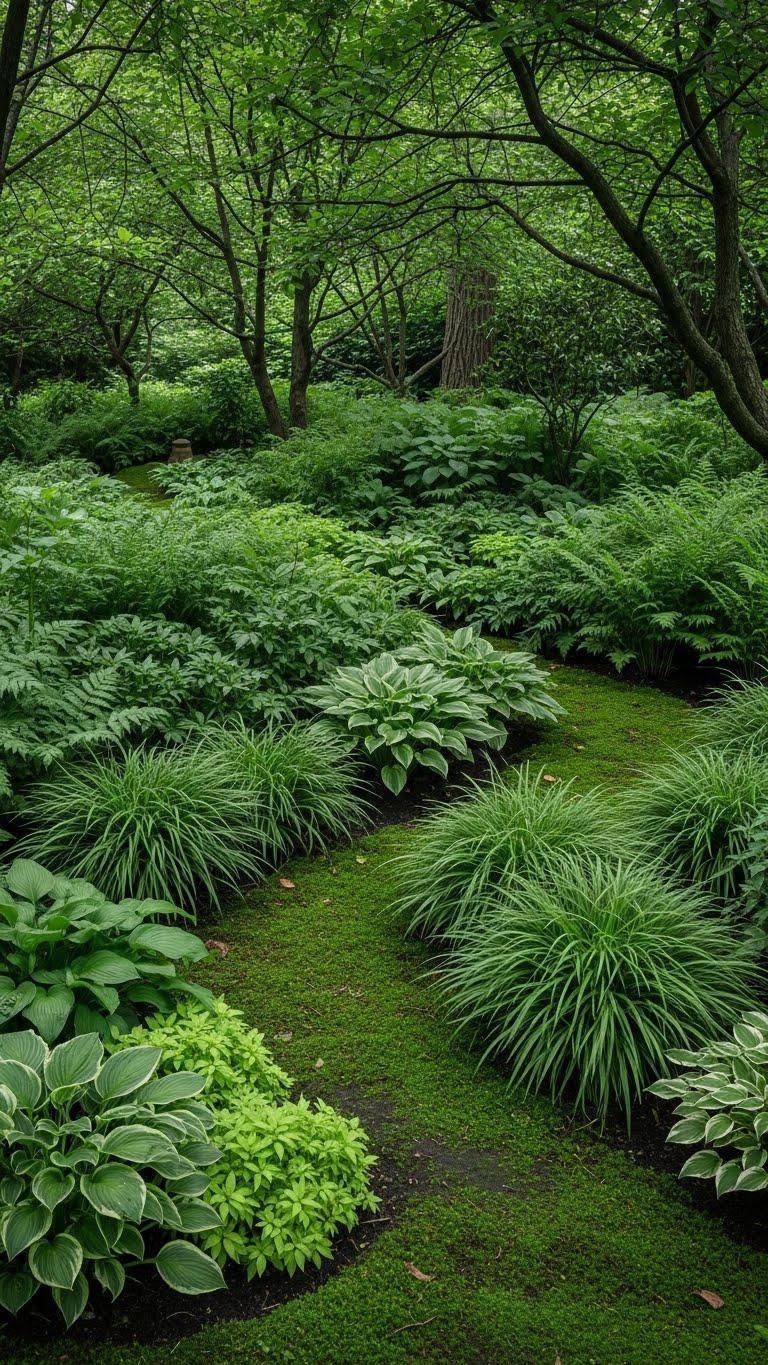
Embracing monochrome green massing under trees creates a calm, cohesive understory that lets texture and form do the work, so you don’t rely on flashy blooms to define the space.
You’ll plant groups of shade-tolerant ferns, hostas and carex for a mossy understory, mixing lime foliage for contrast. Keep edges simple, paths minimal, and let repeated greens free you to relax and wander.
Bold Tropical Accents in Deep Shade
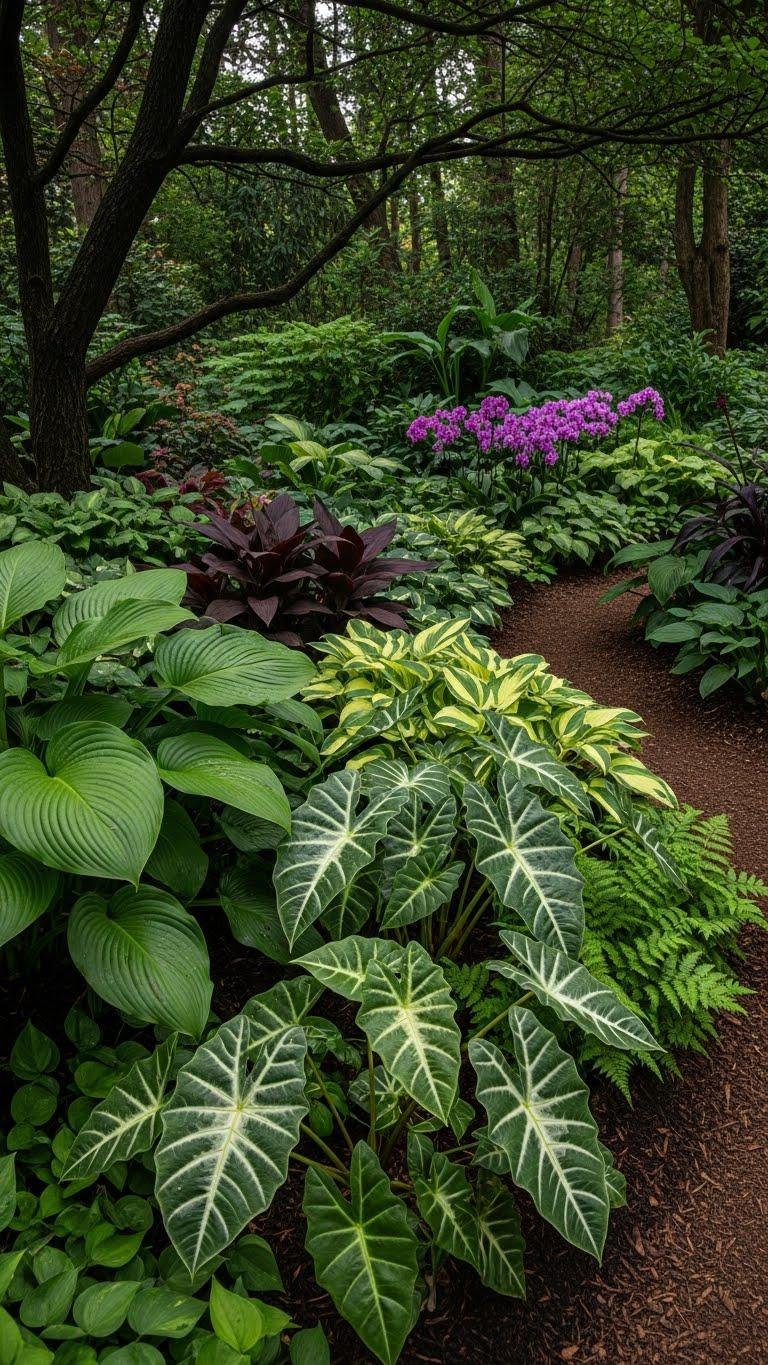
Layer bold tropical accents into deep shade to give the understory striking structure and contrast without overpowering the calm.
You’ll choose a tropical palette of large-leaf hostas, ligularias and variegated colocasias, then tuck shadow orchids and ferns into pockets of filtered light.
Arrange bold focal plants with loose drifted groupings, mulch well, and leave paths for movement and serendipity.
Formal Shade Border With Repeated Shapes
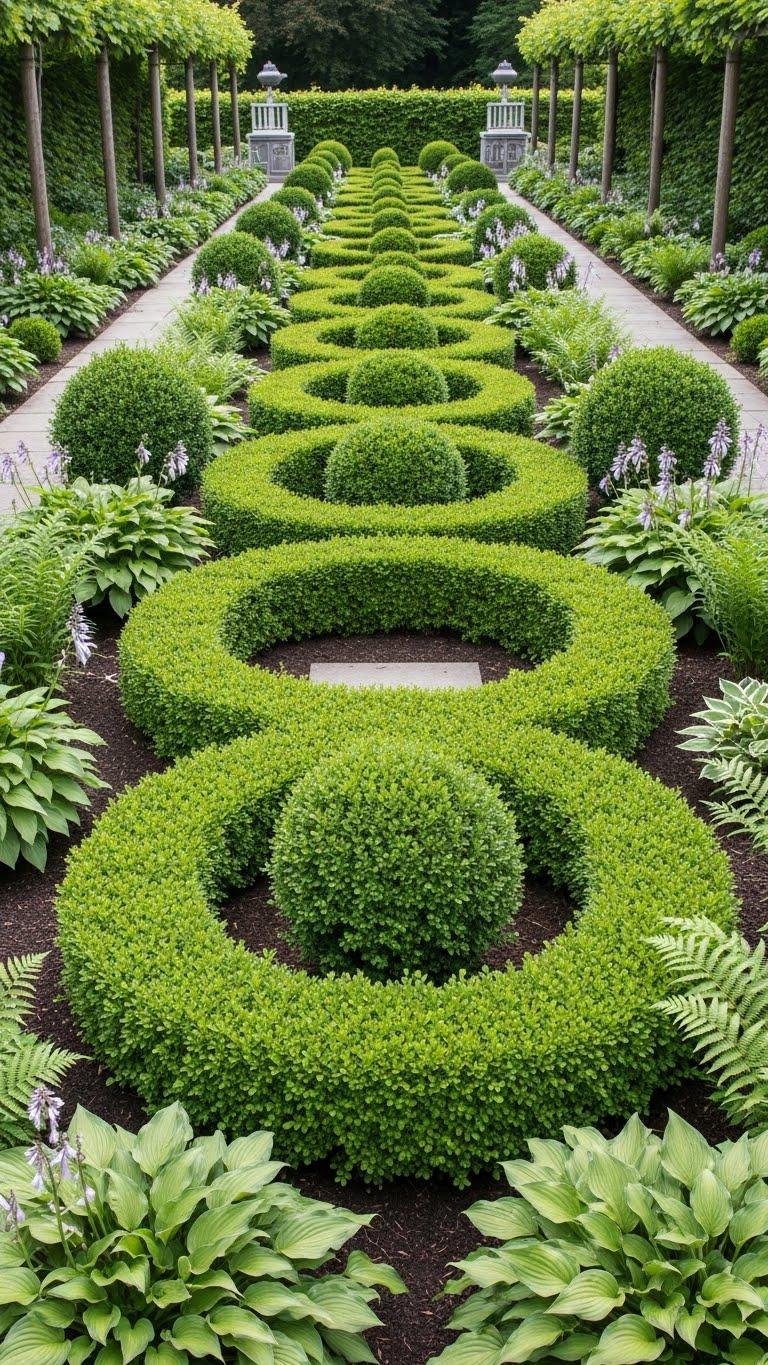
If you enjoyed the bold, loose compositions of a tropical understory, try tightening the plan into a formal shade border that relies on repeated shapes to create calm order.
You’ll choose durable perennials and foliage shrubs for symmetrical planting, repeat circles or rectangles with boxwood, hosta, and ferns, and use geometric repetition to guide movement. The result feels controlled yet freeing.
Cottage-Style Shady Corner With Bleeding Hearts
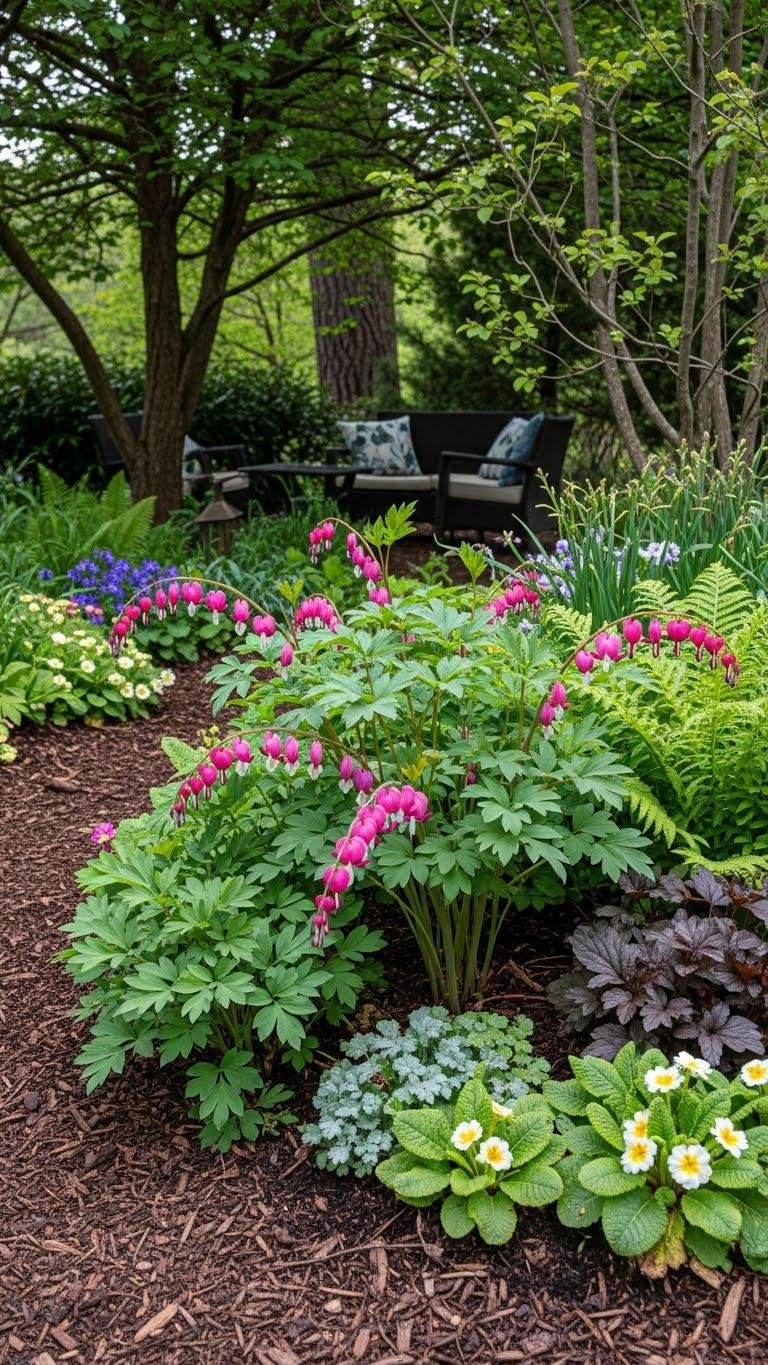
Often you’ll find a cottage-style shady corner comes alive with the soft, arching stems of bleeding hearts as its focal point, surrounded by a mix of textured foliage and spring-flowering perennials.
You’ll place shady seating nearby, mulch deeply and focus on humus enrichment for steady blooms, underplant with ferns and primroses, and prune sparingly to keep the relaxed, free-flowing cottage feel.
Drifts of Hydrangeas Along a Shaded Fence
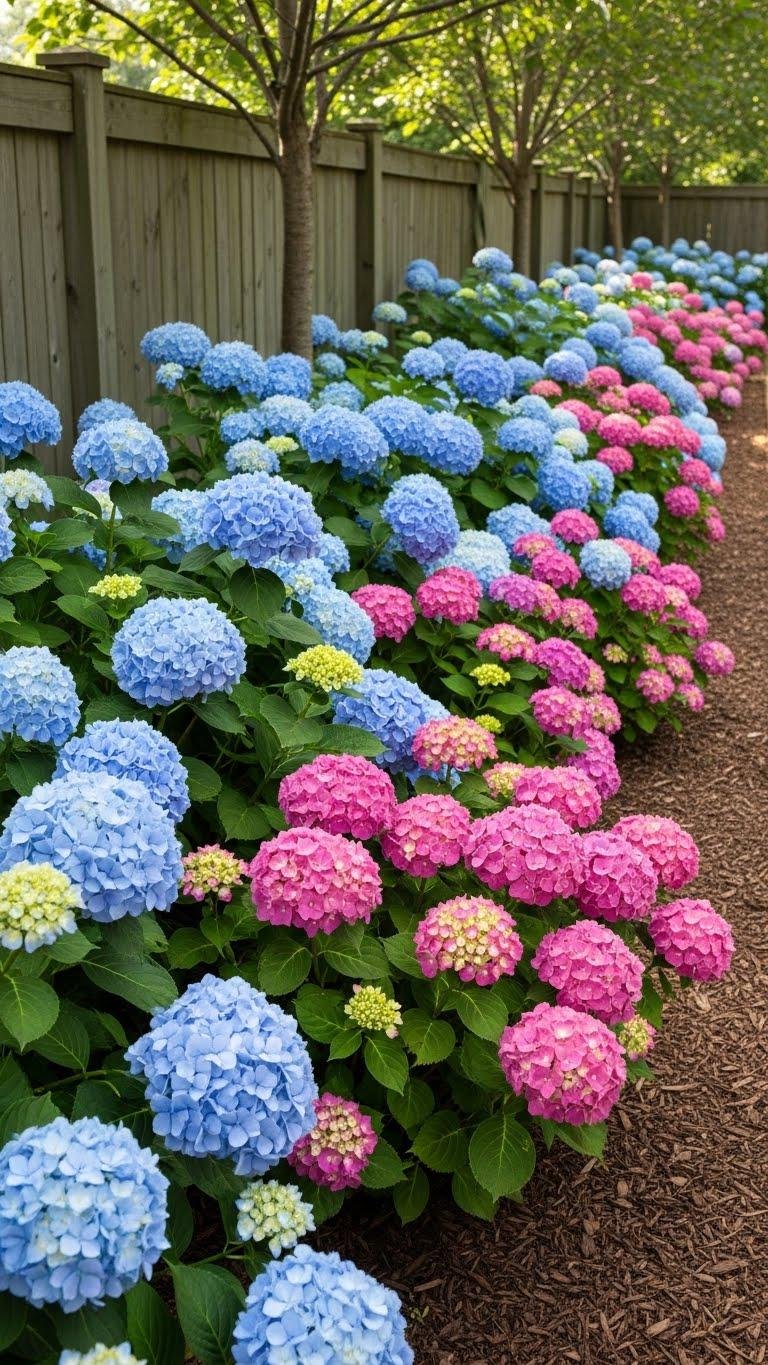
When you plant drifts of hydrangeas along a shaded fence, you create a sustained backbone of big, textural blooms that carry the eye and soften vertical structure.
You’ll space hydrangea drift groups for rhythm, choose varieties tolerant of shade fence conditions, and mulch for moisture. Prune selectively to encourage form, and enjoy a low-maintenance, freeing composition that reads calm and deliberate.
Native Shade Meadow With Foxglove and Columbine
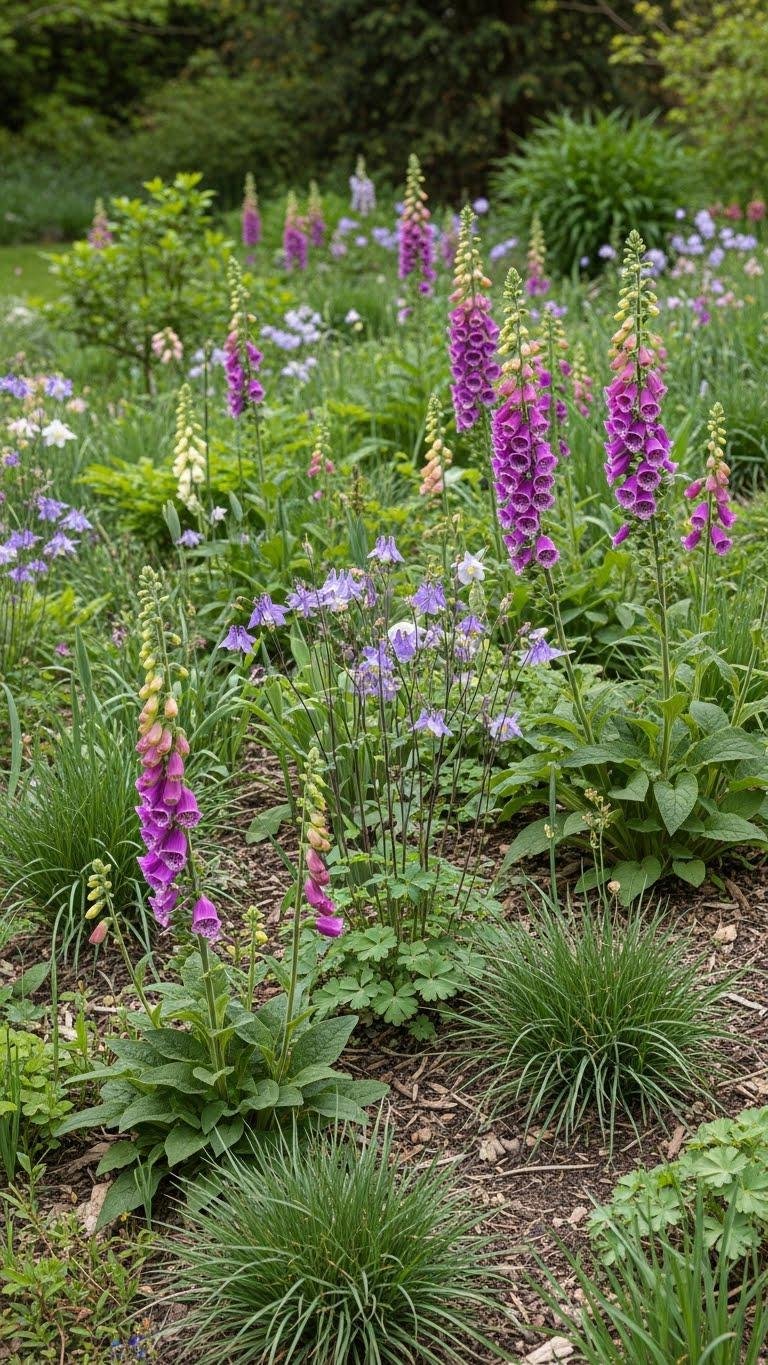
Planting a native shade meadow with foxglove and columbine brings layered texture and seasonal interest to dim corners of your yard while supporting local pollinators. You’ll mix low native grasses, spaced foxglove columbine clumps, and spring ephemerals for continual bloom.
Prepare rich, well-drained soil, plant in drifts, mulch thinly, and let volunteers establish — a relaxed, freeing approach that feels intentional.
Container Cluster With Heuchera and Ferns
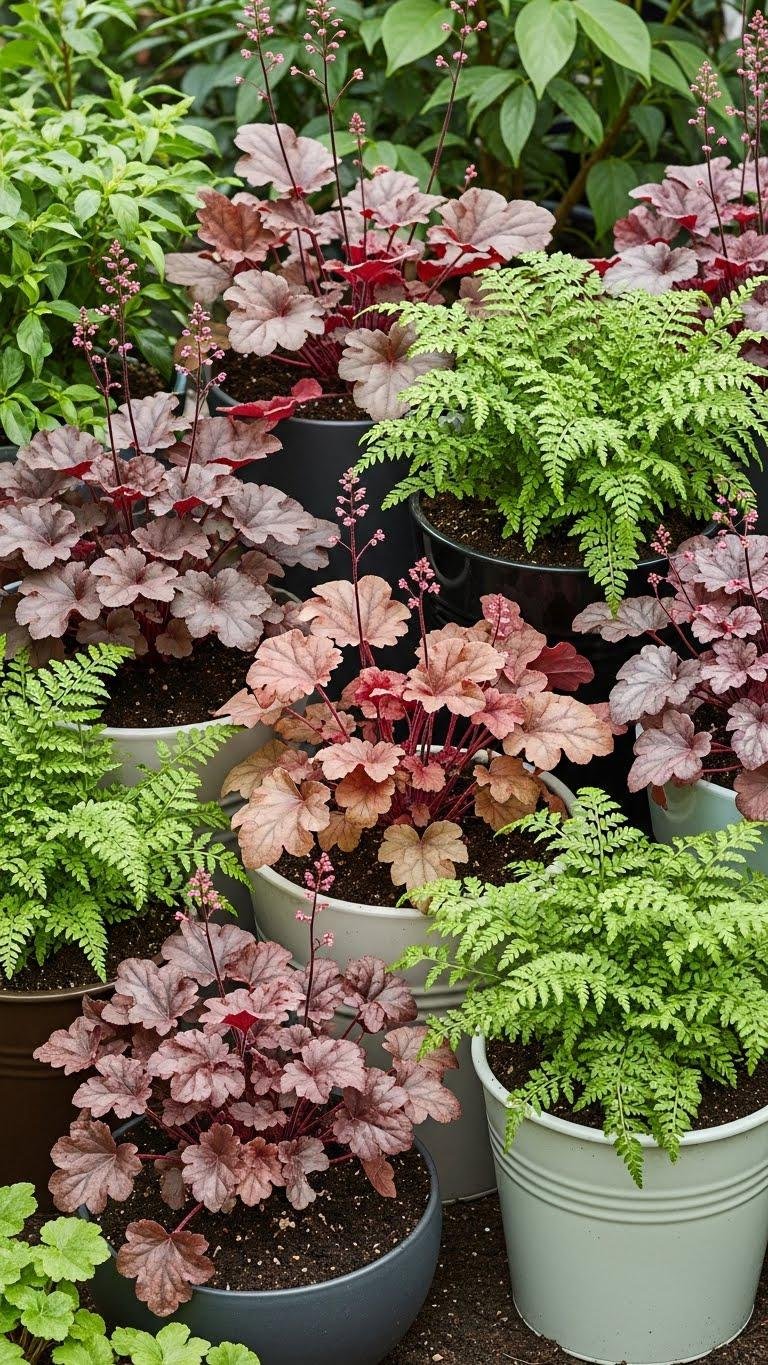
Group a selection of contrasting containers to create a compact, layered shade display centered on Heuchera’s colorful foliage and the airy fronds of assorted ferns.
You’ll mix textures, stagger heights, and select soil mixes that drain yet retain moisture.
Practice heuchera propagation for cost-effective repeats, and use fern companioning to balance form and humidity needs, giving you a liberated, low-maintenance vignette.
Vertical Interest Using Clematis and Climbing Hydrangea
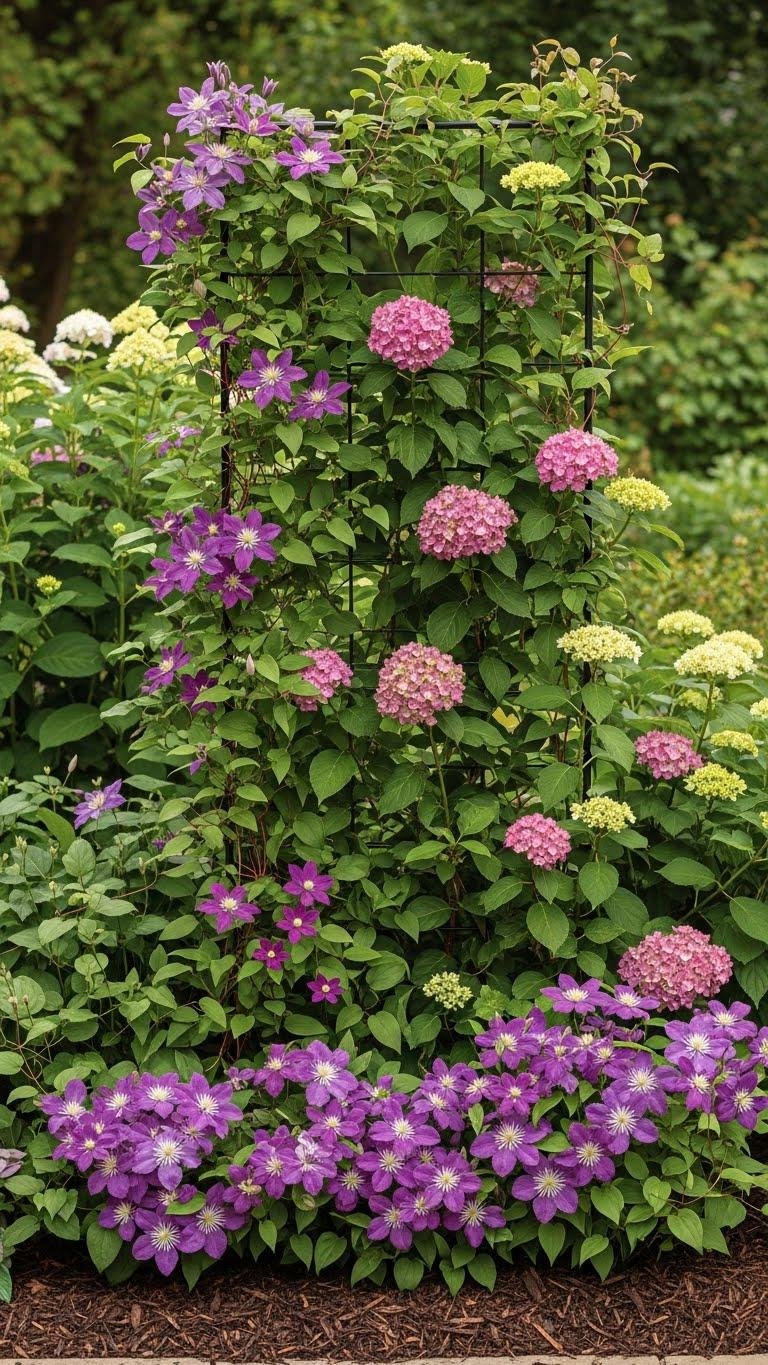
Add height and drama by pairing clematis with climbing hydrangea to create layered vertical interest that suits shady spots. You’ll train each on a sturdy vertical trellis, spacing roots apart so they don’t compete. Choose fragrant climbers for scent-rich evenings and pick shade-tolerant clematis varieties.
Prune and secure stems annually, and mulch deeply to preserve moisture while keeping the composition airy and freeing.
Mossy Rock Garden for Cool, Moist Shade
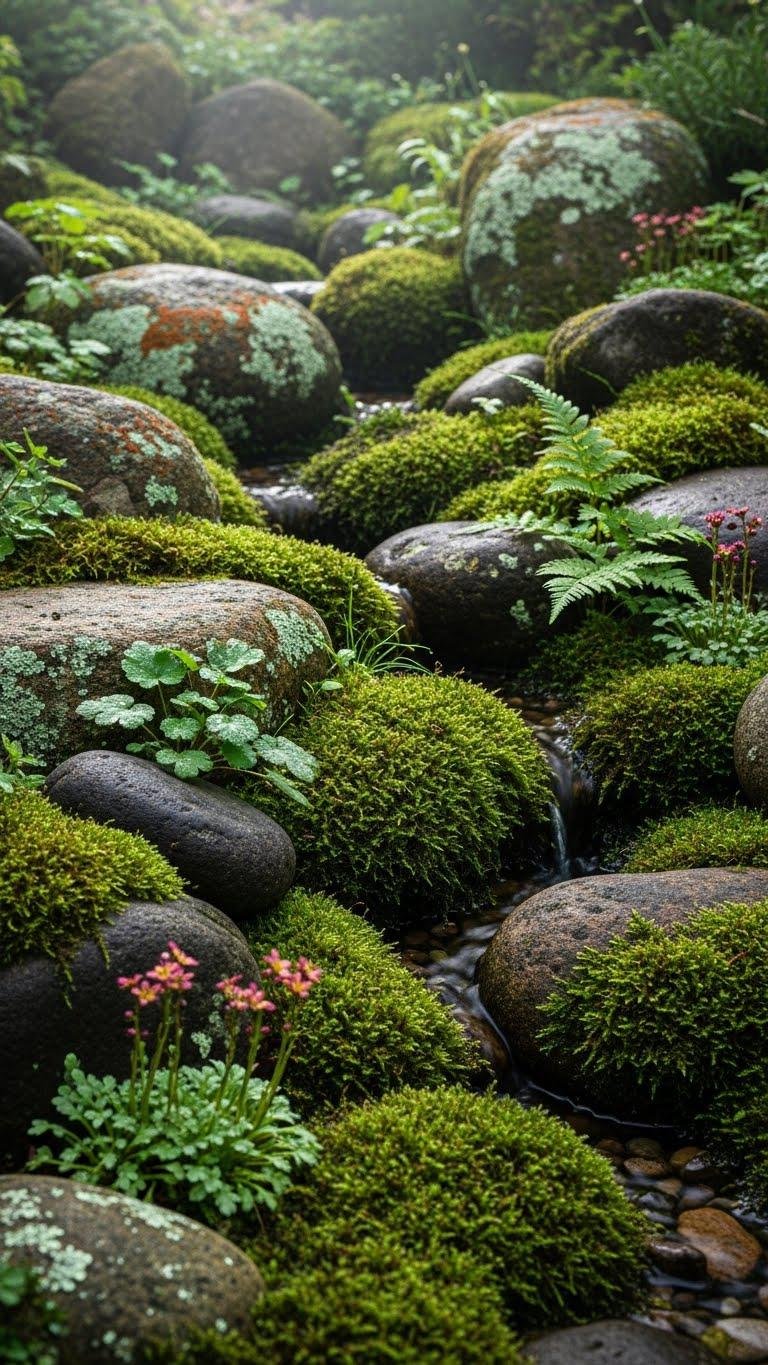
After you’ve trained climbers upward, consider bringing interest down to ground level with a mossy rock garden that thrives in cool, moist shade.
You’ll arrange stones to hold moisture, create a moss microhabitat, and tuck shade lovers like ferns and saxifrages between rocks.
Encourage lichen integration on older stones for texture.
Maintain gentle humidity, minimal disturbance, and let this calm, free-spirited composition settle in.
Evergreen Foundation Planting for Winter Structure

When winter strips back annual color, evergreens provide the bones of your garden, so choose species that hold form, texture, and seasonal interest from foundation beds outward.
You’ll plant a layered evergreen understory for year-round structure, pairing upright hollies, low yews, and boxwood to frame paths. Their winter silhouette guides sightlines and offers freedom to prune, rearrange, and enjoy clear, calm composition.
Dappled Light Under Deciduous Trees With Jacob’s Ladder
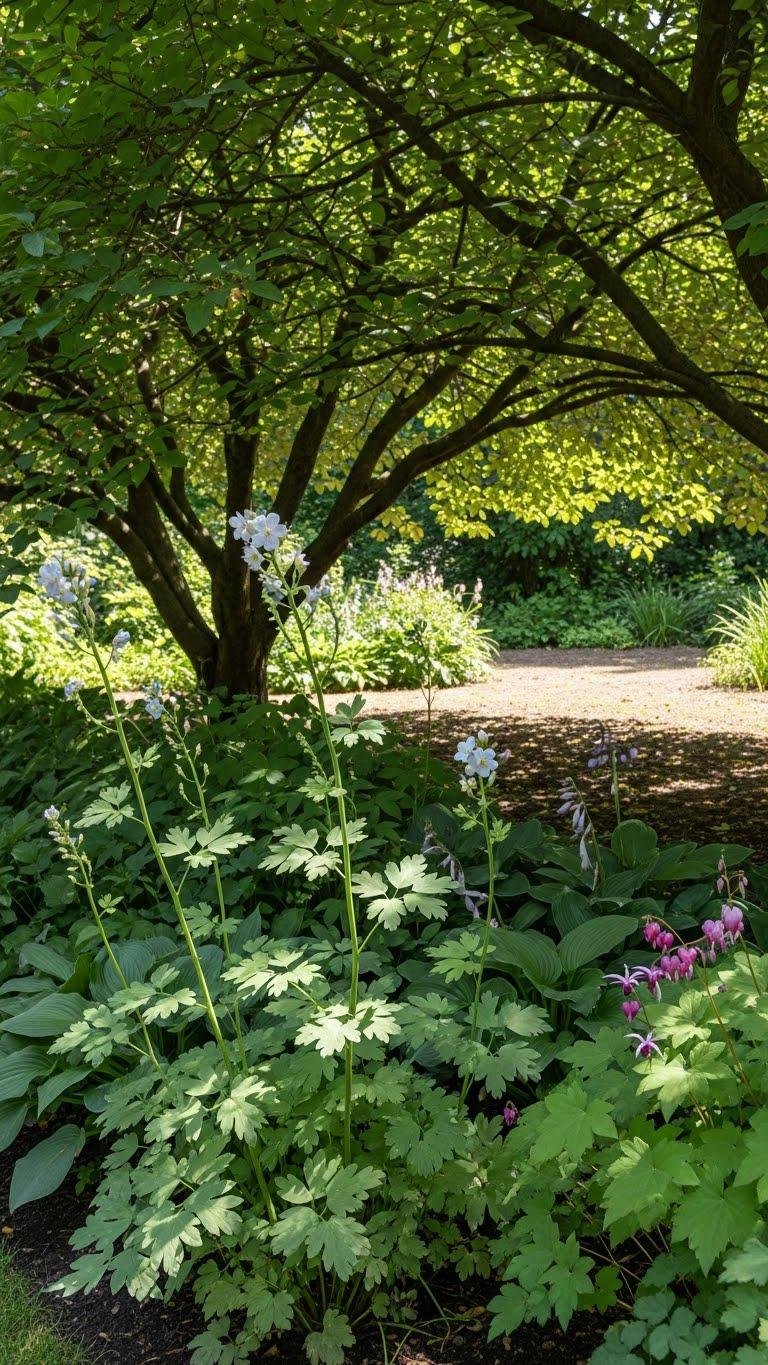
Siting Jacob’s ladder (Polemonium) beneath deciduous trees takes advantage of the cool, dappled light it prefers and lets you layer delicate, fern-like foliage under shifting canopy shadows.
You’ll plan for dappled light microclimates, choose Jacob’s ladder companions like hostas, bleeding heart, and epimedium, and maintain light soil, regular moisture, and light pruning so plants thrive without crowding, giving you effortless, liberated shade planting.
Shade Patio Retreat With Seating and Potted Layers
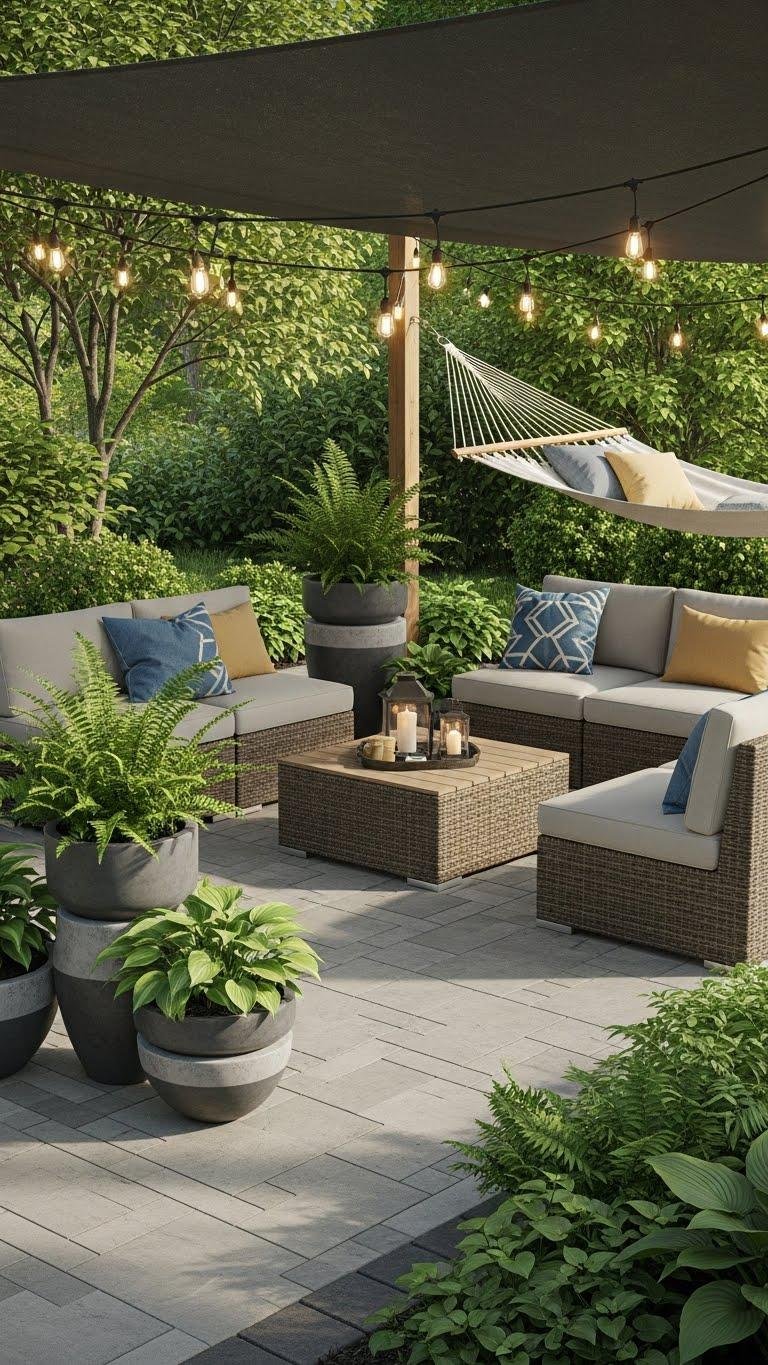
You can build on the cool, dappled understory by carving out a shade patio retreat that keeps plants and people comfortable. Choose durable pavers, layered pots with ferns and hostas, and modular seating you can rearrange.
Add a hammock nook for drifting, and hang string lights ambiance to extend evenings. Maintain good drainage, rotate containers, and prioritize low-maintenance, bold-textured foliage.
Bold Foliage Contrast With Obsidian Heuchera and Blue Hostas
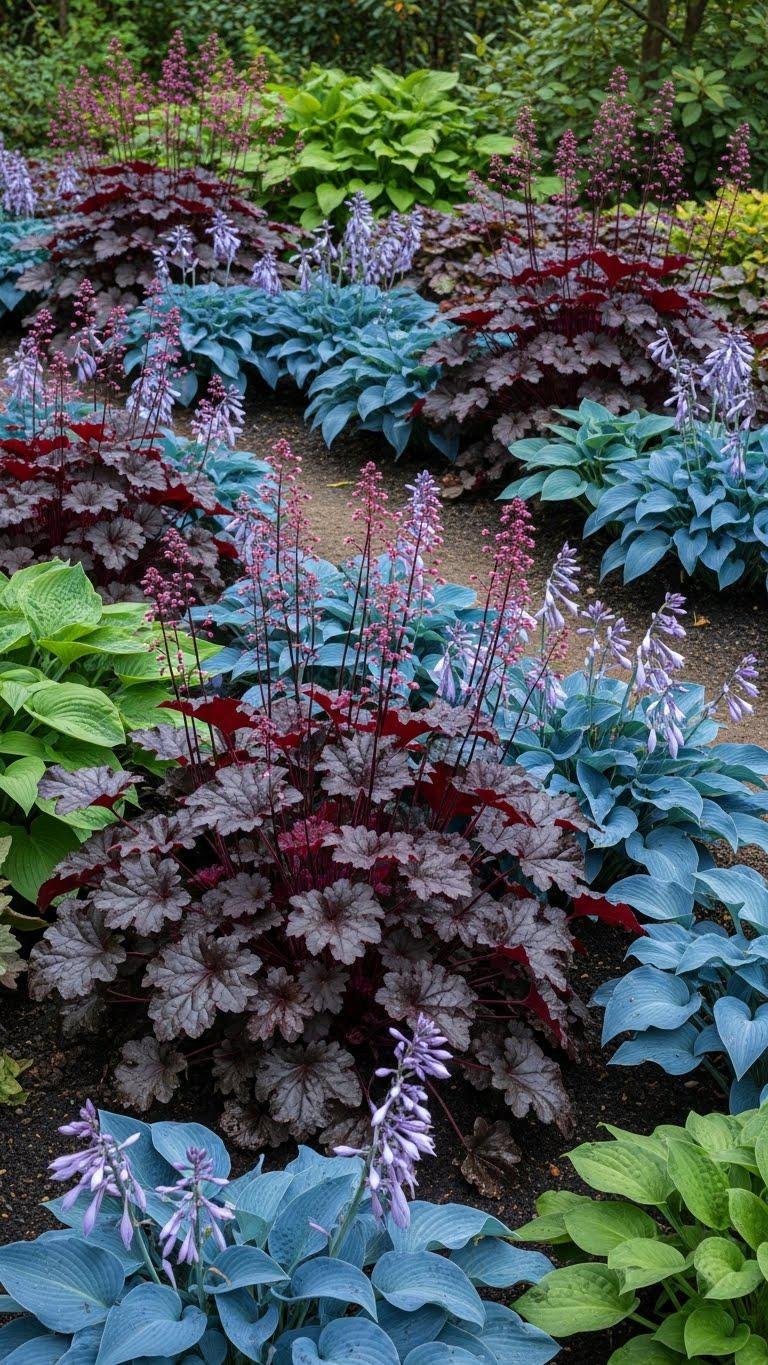
Pair obsidian Heuchera with blue hostas to create a high-contrast shade bed that reads clearly at a glance and holds interest up close. You’ll use Obsidian contrast to anchor paths and focal points while repeating Blue hosta pairing for rhythm.
Plant in drifts, stagger heights, and keep soil consistently moist. The result feels bold, controlled, and liberating for your shady space.
Woodland Edge Transition With Shrubs and Perennials
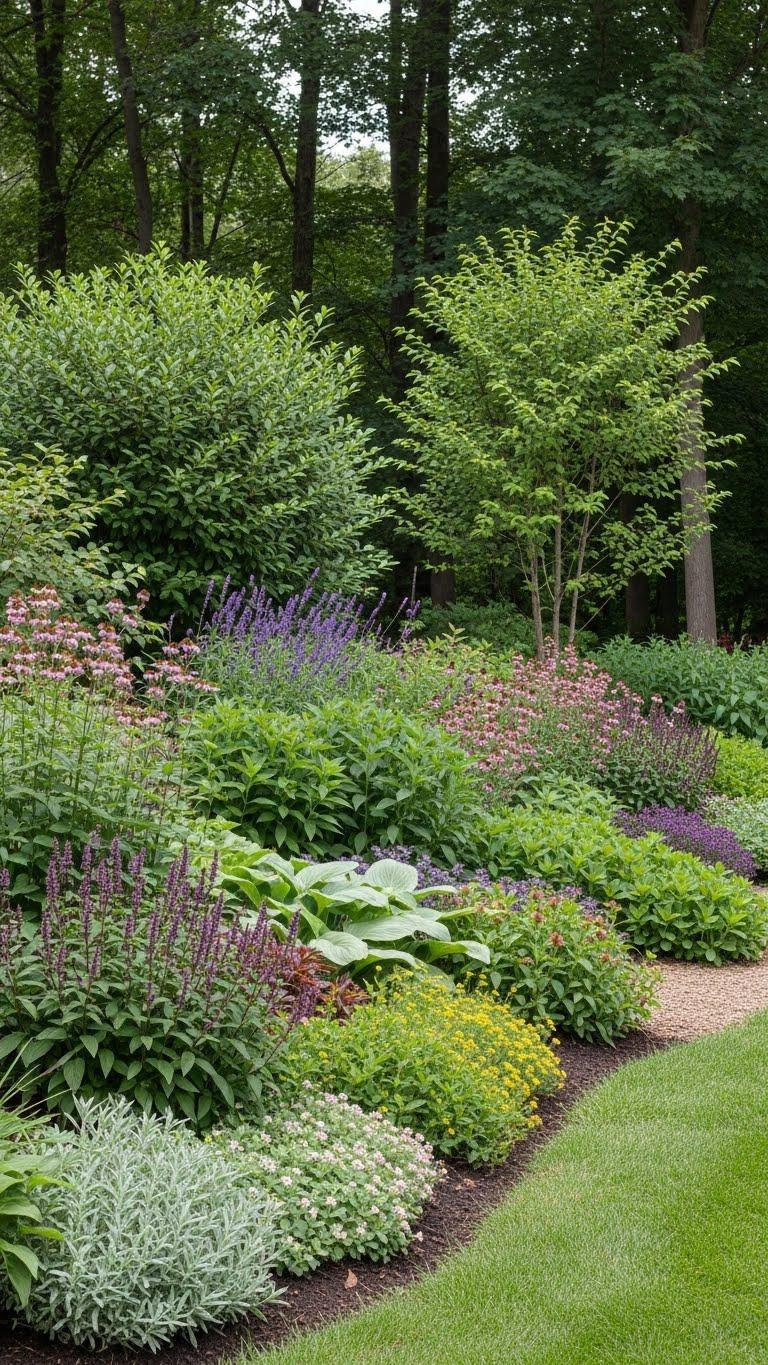
At the woodland edge, blend shrubs and perennials to create a gradual, natural-looking shift from canopy to garden, placing taller shrubs at the back with layered perennials stepping down toward the path.
You’ll choose hardy edge shrubs for structure and select shade-tolerant understory perennials for texture and season-long interest. Plant in drifts, allow natural gaps, and prune lightly to keep movement and freedom.
Shady Path Lined With Golden Japanese Forest Grass
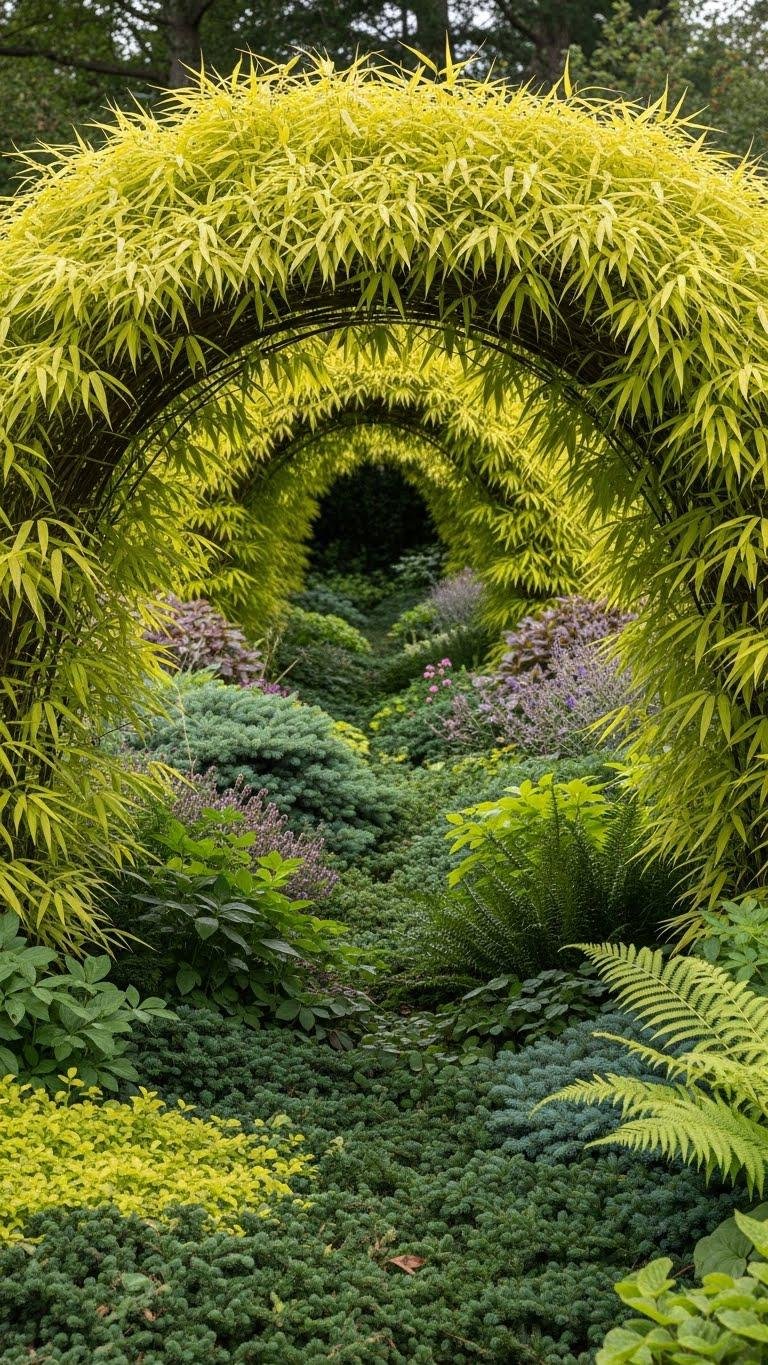
Moving from the layered shrub-and-perennial edge, guide visitors along a shaded path framed by Golden Japanese forest grass (Hakonechloa macra ‘Aureola’), whose arching, bamboo-like blades brighten dim corridors with soft, chartreuse color.
You’ll plant masses to form golden paths, edge compactly for clean movement, and mix ferns and low evergreens as a textured understory that’s low-maintenance and liberating.
Small Urban Shade Courtyard With Compact Trees
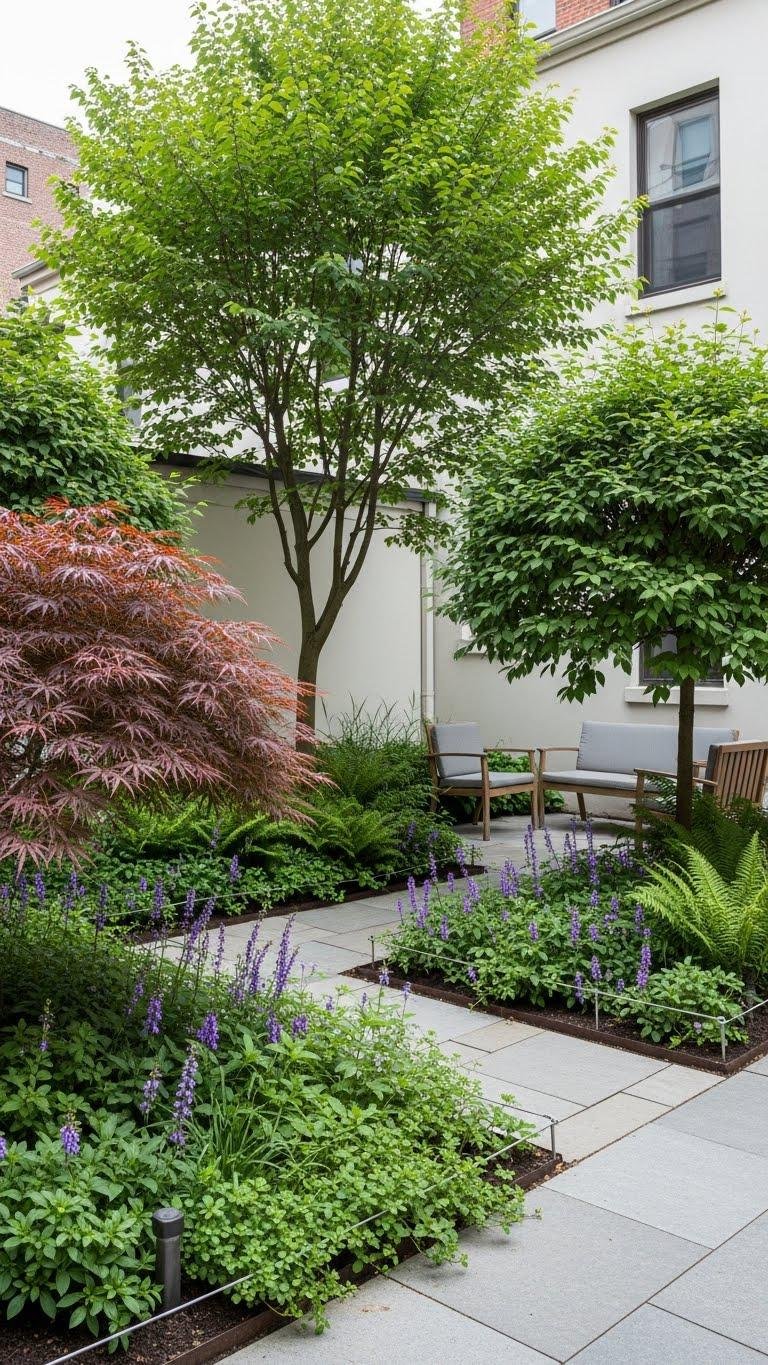
Create a compact, calming courtyard by choosing small, shade-tolerant trees—think Japanese maples, dwarf serviceberries, or Amelanchier cultivars—that give height without overwhelming limited space.
You’ll frame a miniature canopy above seating, use layered perennials and ferns for texture, and define paths to a paved oasis.
Keep root-friendly planting beds, drip irrigation, and clean lines so maintenance stays minimal and liberating.
Repeating Color Pops With Annuals Like Impatiens
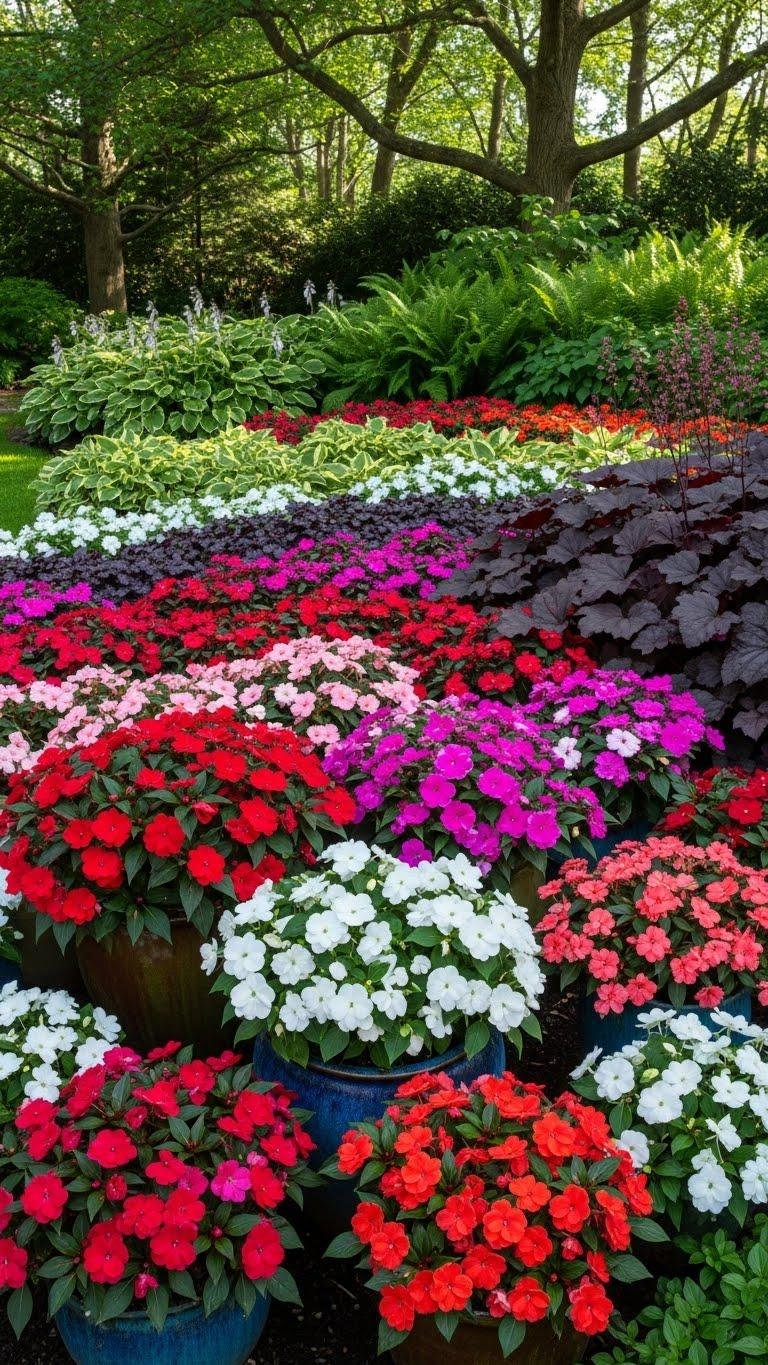
Often you’ll rely on low-maintenance annuals like impatiens to punctuate shade beds with repeatable bursts of color; plant them in drifts, containers, or at bed edges so the same hue recurs through sightlines and ties the space together.
You’ll use shade contrast with foliage textures, plan seasonal rotations to refresh palettes, and place repeats for effortless cohesion that still feels free and intentional.
Naturalized Bulb Planting for Spring Interest
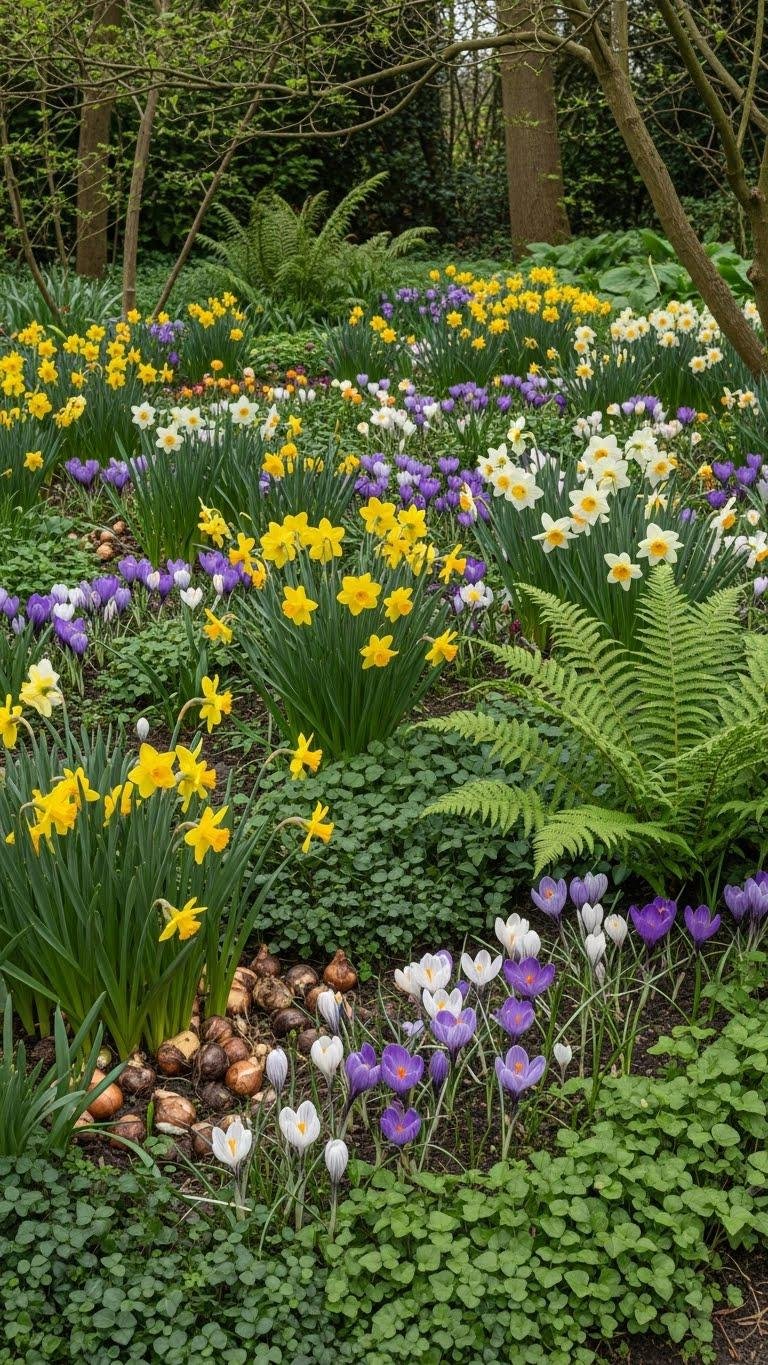
When you plant bulbs with a naturalized approach, they’ll come back year after year to give your shade garden early-season bursts without constant replanting. Choose naturalized bulbs like daffodils and crocus, scatter in woodland drifts, and plan spring succession with staggered bloom times.
Pair them with low bulb companions—ferns, groundcovers, and sedges—to keep the look effortless and free.
Mixed-Height Border With Sedge, Hosta, and Viburnum
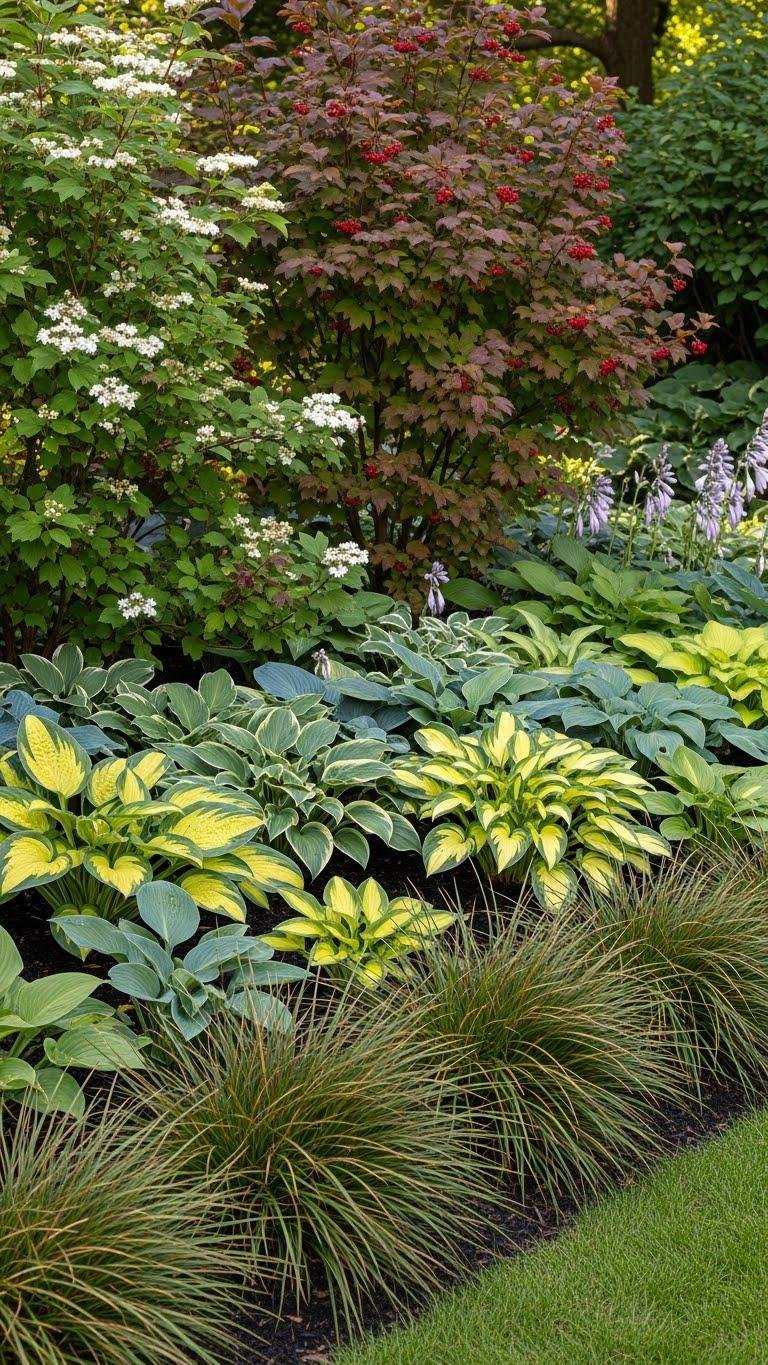
If you want a layered, year-round edge that reads cohesive from a distance, combine taller viburnums at the back with mid-height hostas and low sedges in front.
You’ll get strong textural contrast and clear sightlines. Place viburnums for structure, hostas for foliage mass, and sedges to soften the turf edge.
This mix delivers reliable seasonal interest and low-maintenance freedom.
Playful Accent Pieces: Logs, Chairs, and Glass Totems
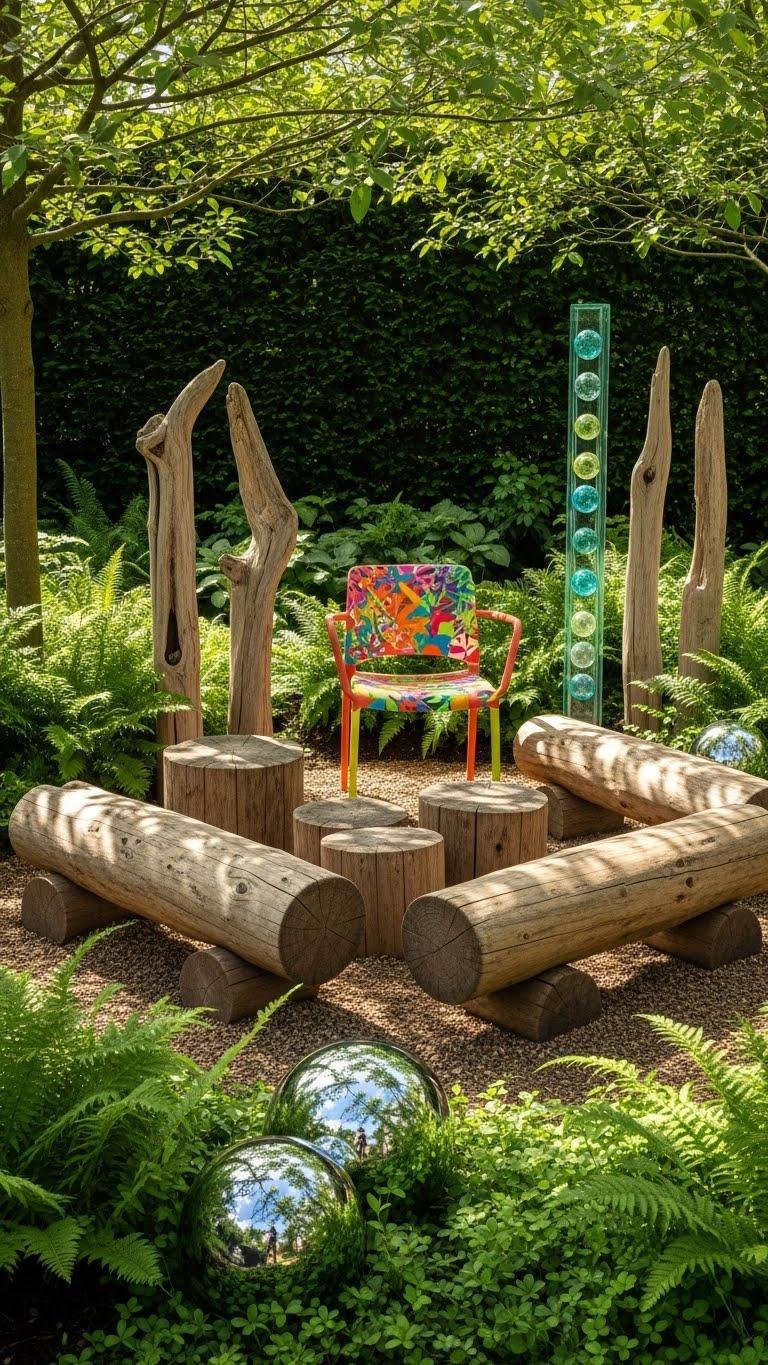
Add playful accents to punctuate shady beds and guide the eye: a cluster of low logs creates seating and habitat, a lone painted chair offers a focal pop, and a vertical glass totem catches dappled light.
Use driftwood sculptures to echo natural lines, tuck mirrored garden orbs among ferns to multiply shade, and position pieces so you can sit, roam, and tend plants freely.
Rain Garden in Partial Shade With Moist-Loving Plants
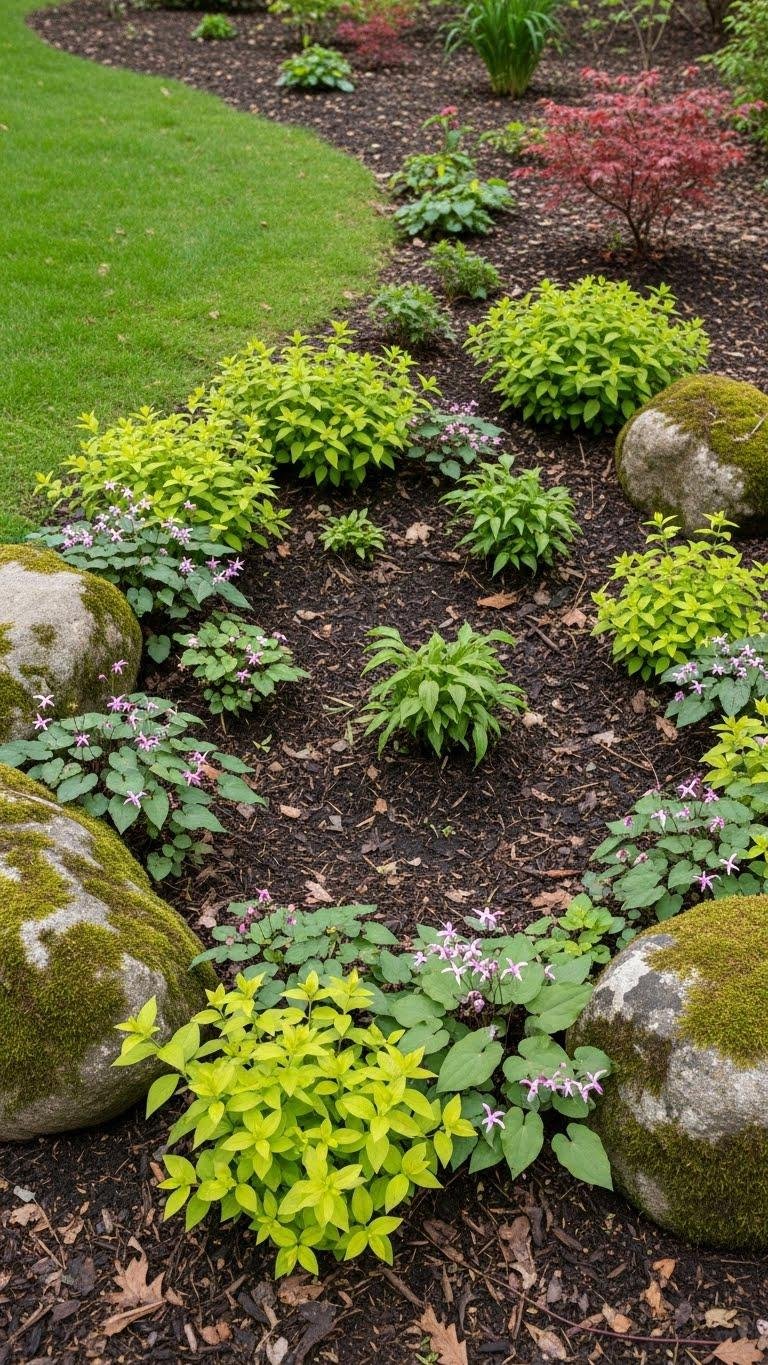
Designing a rain garden in partial shade gives you a practical way to manage runoff while supporting moisture-loving plants that thrive out of full sun.
You’ll create rain soaked microhabitats that welcome sedges, astilbes and ligularias, then anchor edges with shade tolerant groundcovers. Choose native, moisture-wise species, contour soil to hold water briefly, and let the planting flow freely for low-maintenance resilience.
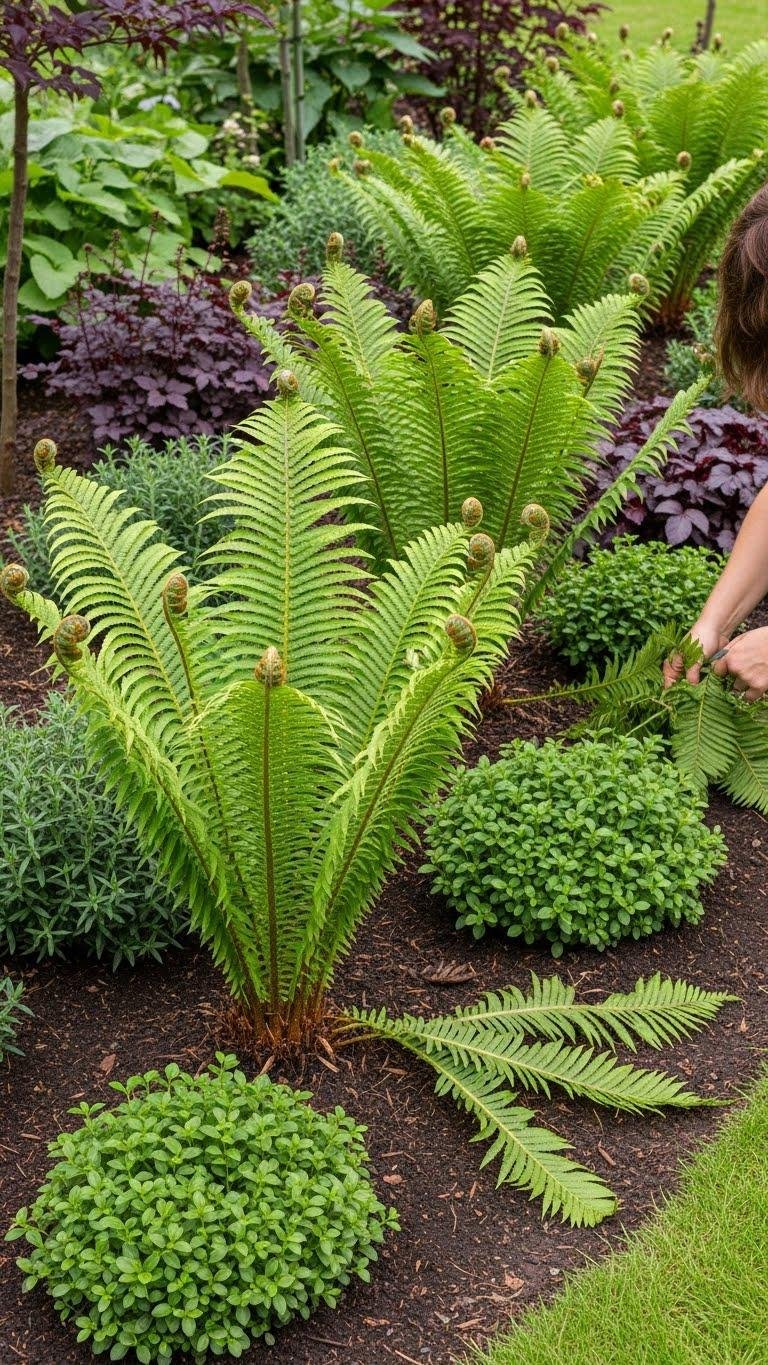
Layered Shade Border Featuring Ostrich Ferns
Paragraphs
Pollinator-Friendly Shade Garden With Native Flowers
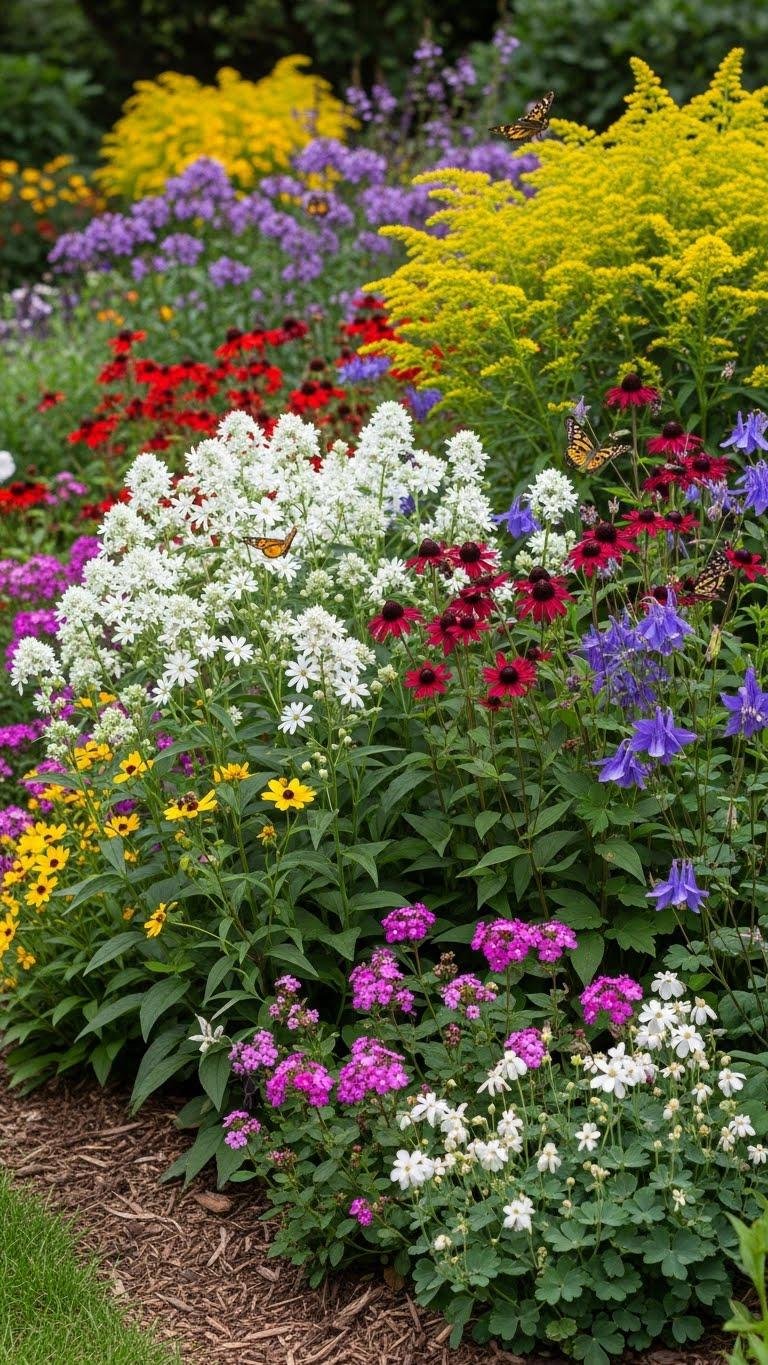
Because shade doesn’t mean silence, you can create a lively, pollinator-friendly border by choosing native shade-tolerant plants that bloom at staggered times and provide nectar, pollen, and larval host resources.
Design pollinator pathways through a native understory of foamflower, goldenrod, and columbine.
Mulch lightly, avoid pesticides, and group species for continuous bloom so you and local bees, butterflies, and moths enjoy freedom and steady forage.