
You can make a small garden feel much larger by thinking upward, layering plants, and simplifying sightlines. Use trellises, living walls and stacked pots to free ground space, pick columnar trees for structure, and repeat colors and species to create rhythm. I’ll show 26 practical, plant-focused hacks that help you open up visual space and make the garden more usable—starting with easy moves you can try this weekend.
Use Tall Trellises to Add Vertical Interest
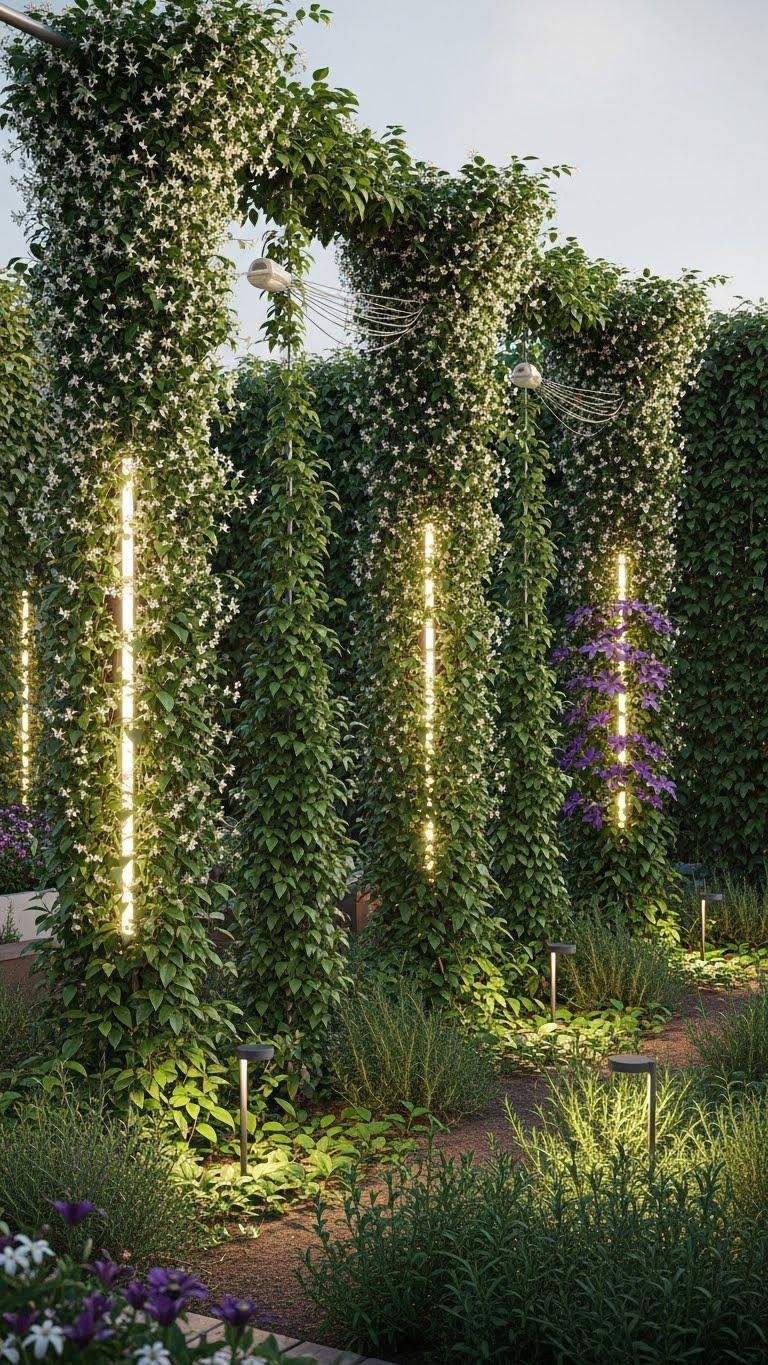
Install a tall trellis to lift your garden upward and make the most of limited space.
You’ll train climbers like jasmine or clematis to create green walls, freeing ground beds for roaming herbs.
Add vertical lighting to showcase foliage at night and treat structures as trellis art.
Position supports for airflow and easy harvest so your small plot feels open, wild, and liberating.
Install a Living Wall for Extra Planting Area
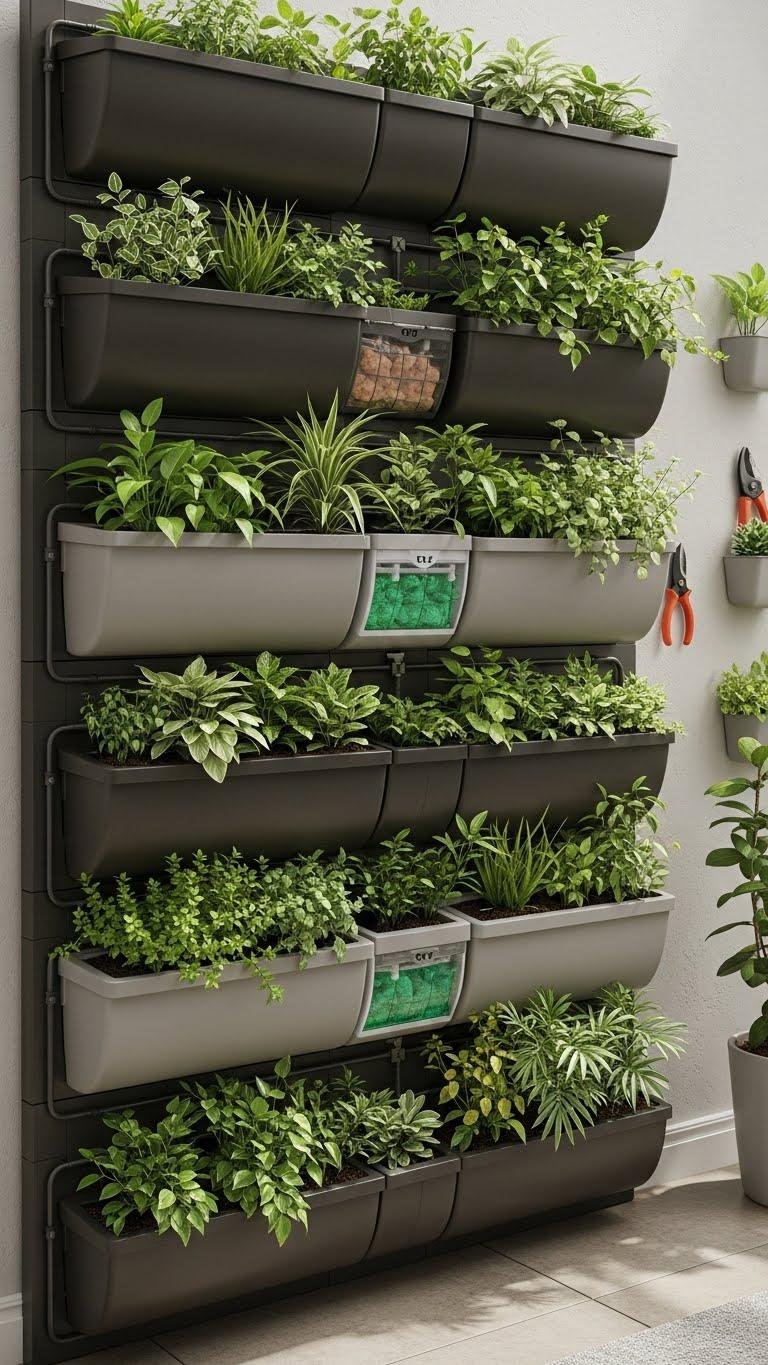
Creating a living wall lets you stack plants vertically to multiply planting area without eating into your floor space. You’ll choose containers and species that suit sun and shade, shaping lush faces that free up ground room.
Plan for microclimate management—heat, wind, humidity—and add irrigation integration with drip lines or reservoirs. Maintain access for pruning, swapping, and seasonal refreshes.
Hang Layered Baskets at Different Heights
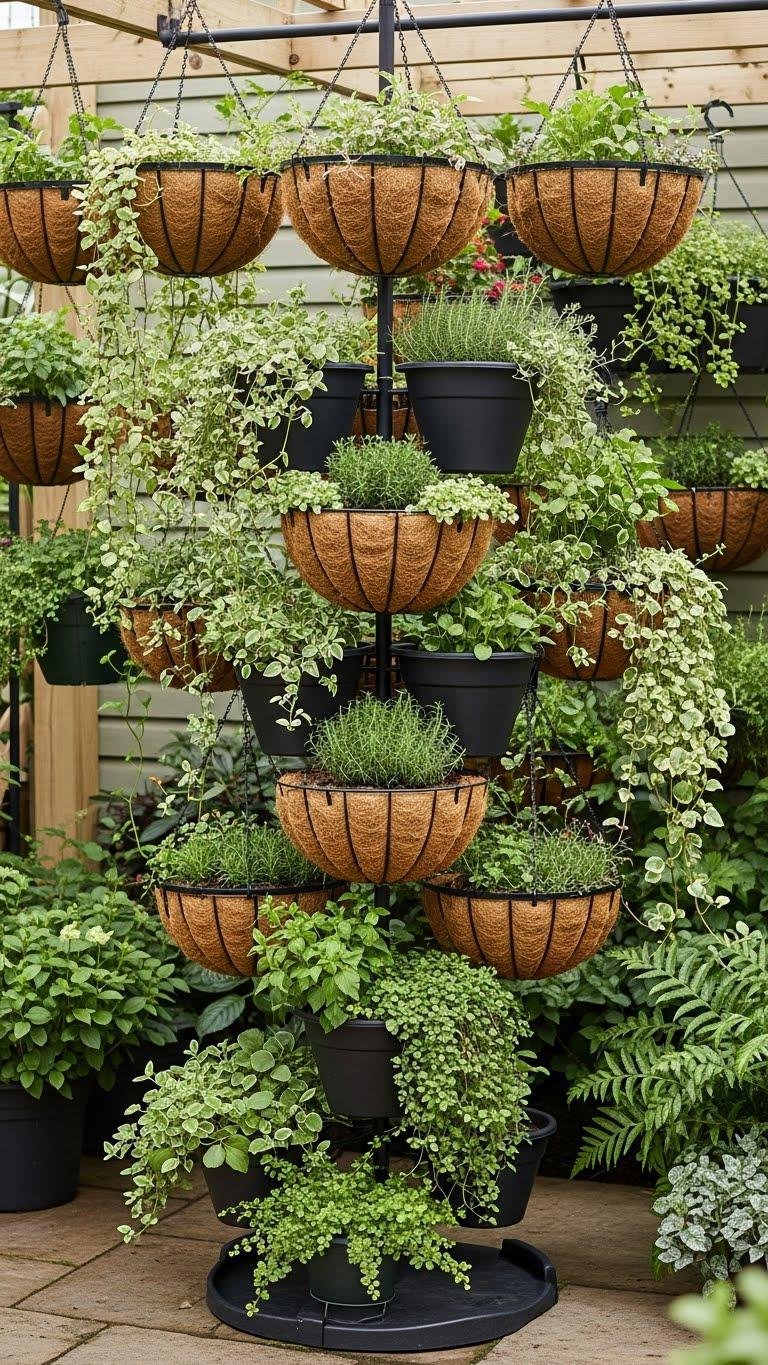
Layer baskets at varying heights to turn vertical space into a multi-tiered canopy that brings more plants — trailing vines, compact herbs, and shade-loving ferns — into easy reach.
You’ll mix textures and color contrast to create depth, arranging baskets so sightlines flow.
Rotate plantings for seasonal rotation, swap succulents, annuals or bulbs, and enjoy a liberated, lush display that maximizes small-space freedom.
Grow Climbers to Draw the Eye Upward
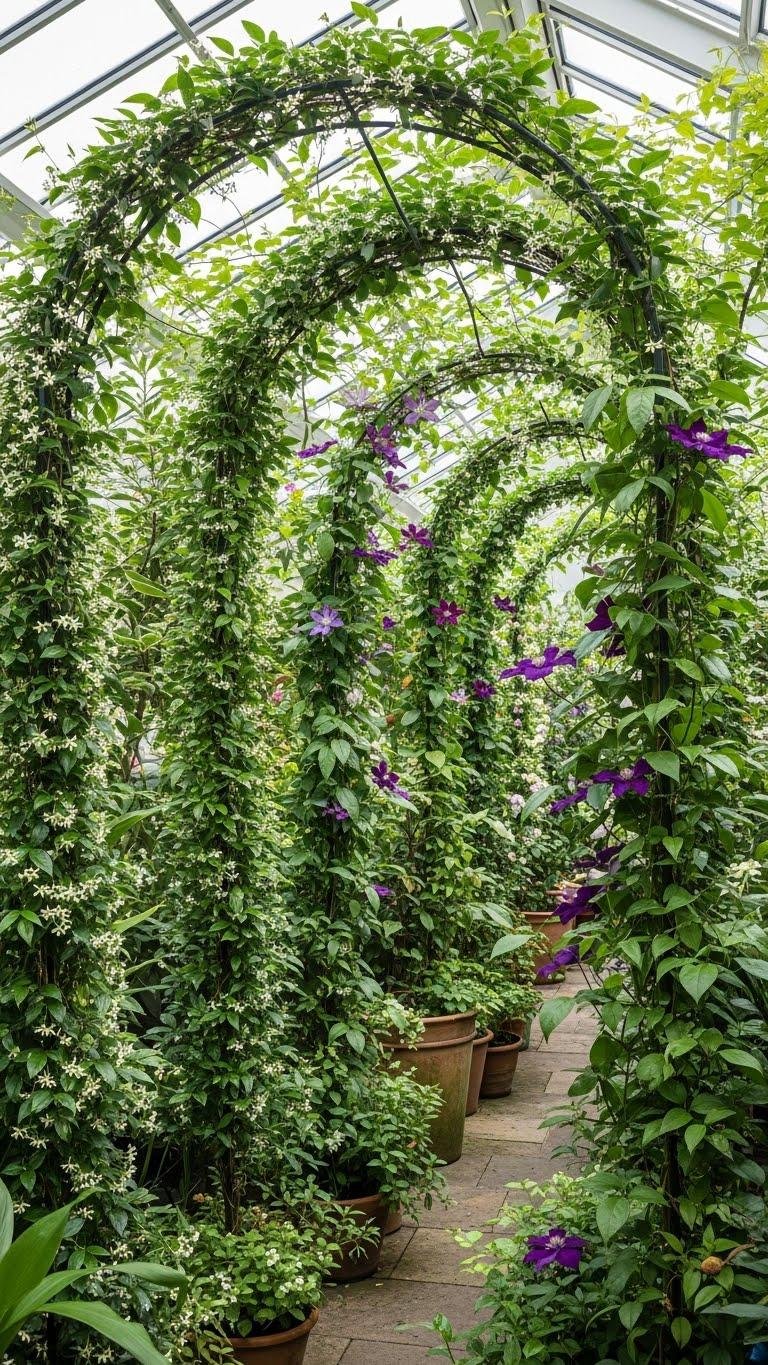
Training climbers upward gives you instant vertical drama and frees ground space for more pots or paths. You’ll use vertical training to guide jasmine, clematis or beans along trellis, wire or espalier frames.
Secure stems to aerial support, prune for shape, and choose fast, fragrant varieties. This creates layered sightlines, maximizes light, and lets you move freely through a taller, greener room.
Fit Narrow Shelving for Stacked Pots
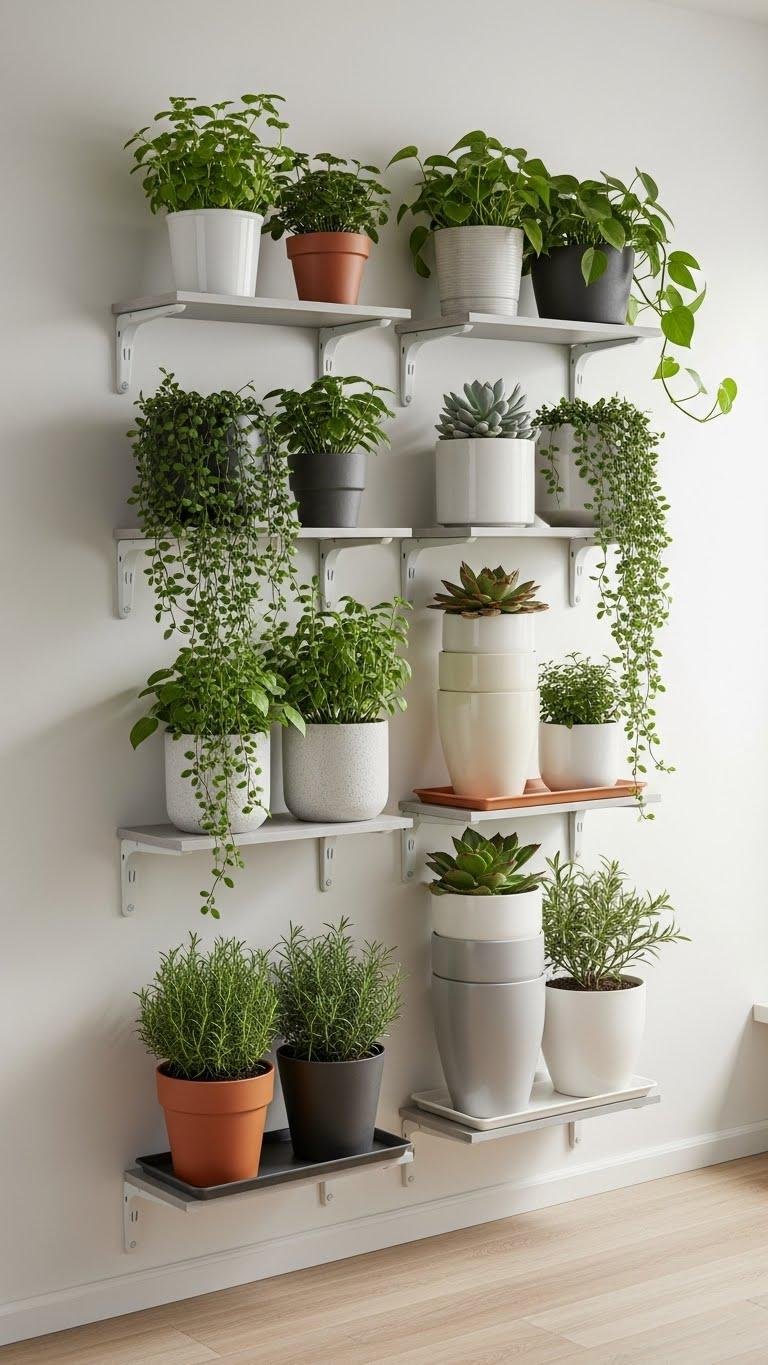
Slip in narrow shelving along a wall or fence to stack pots vertically and reclaim floor space while keeping plants visible and accessible.
You’ll use narrow ledges and lightweight brackets for secure vertical potstacking, arranging herbs, succulents, and trailing vines.
Keep pots staggered for light, leave breathing room, and choose removable trays so you can rearrange freely as your garden evolves.
Add a Slim Water Feature as a Focal Point
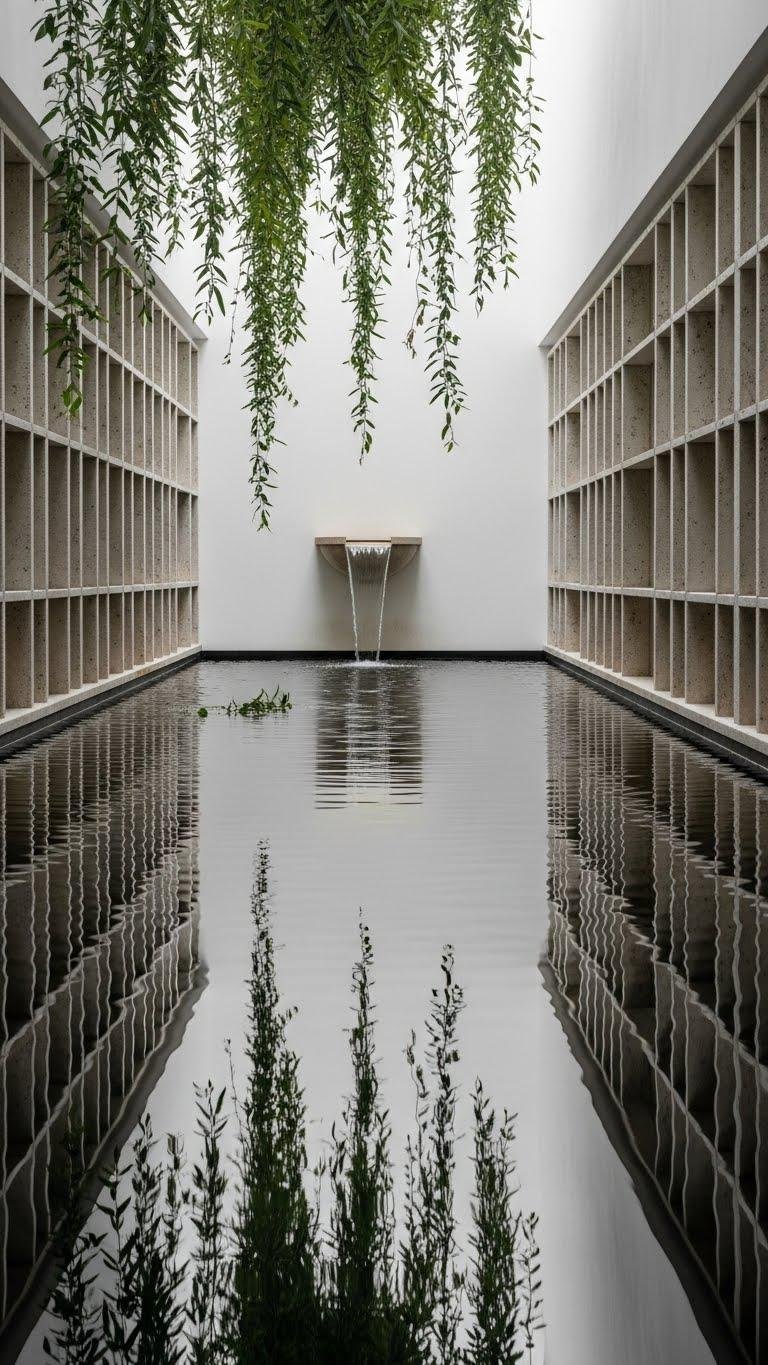
After you’ve freed up floor space with narrow shelving, a slim water feature can anchor the area without overwhelming it — think a tall, narrow fountain or a wall-mounted basin that echoes the vertical lines you’ve already created.
You’ll choose a minimalist fountain or a shallow reflective pool to mirror foliage, draw the eye upward, and let planting feel airy and intentional while you enjoy open, calm movement.
Frame a Borrowed View to Extend Depth
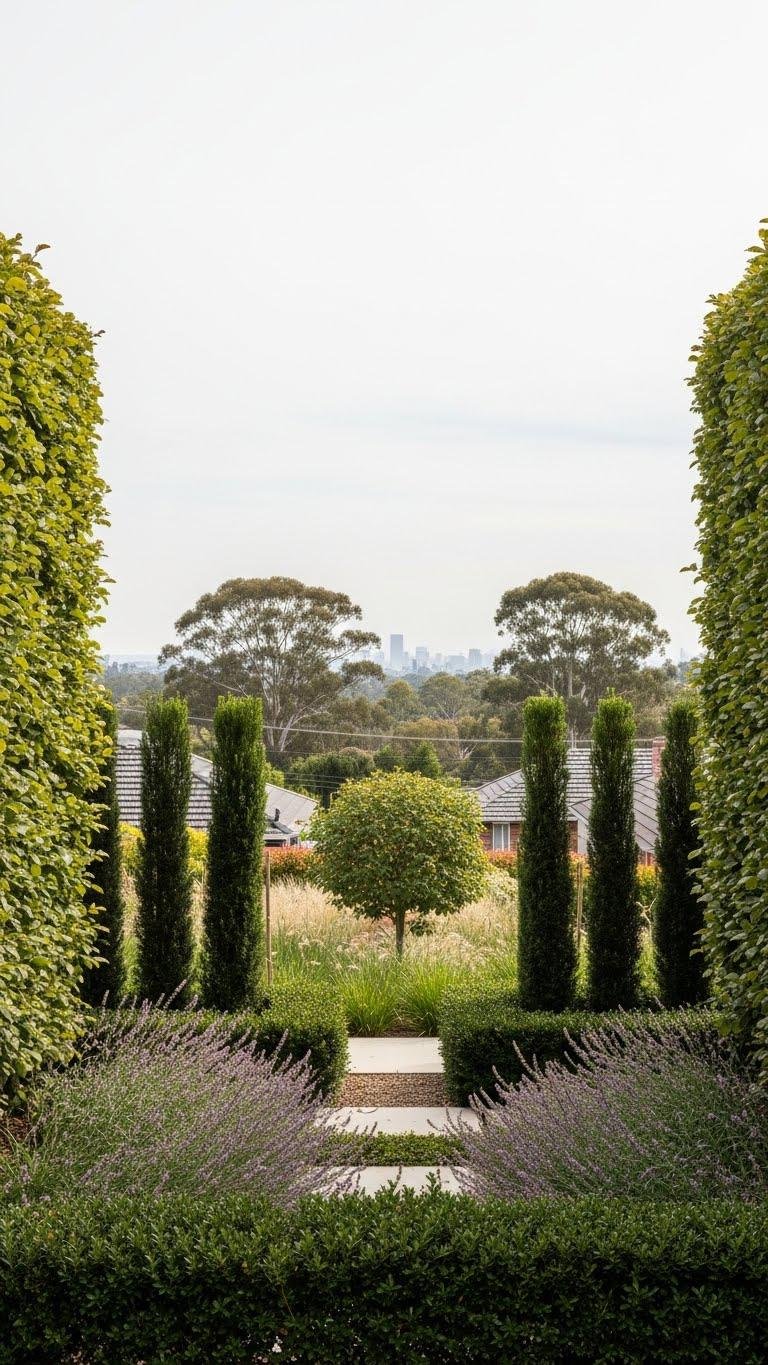
Open up sightlines by framing a distant patch of trees, a neighbor’s garden, or a skyline with planting and hardscaping that lead the eye outward. You’ll use layered shrubs, vertical accents, and a narrow path to frame perspective and create a borrowed vista.
Choose native, low-maintenance plants that rise and recede, guiding your gaze and freeing you to enjoy depth without crowding your small garden.
Place an Off‑Center Specimen Plant
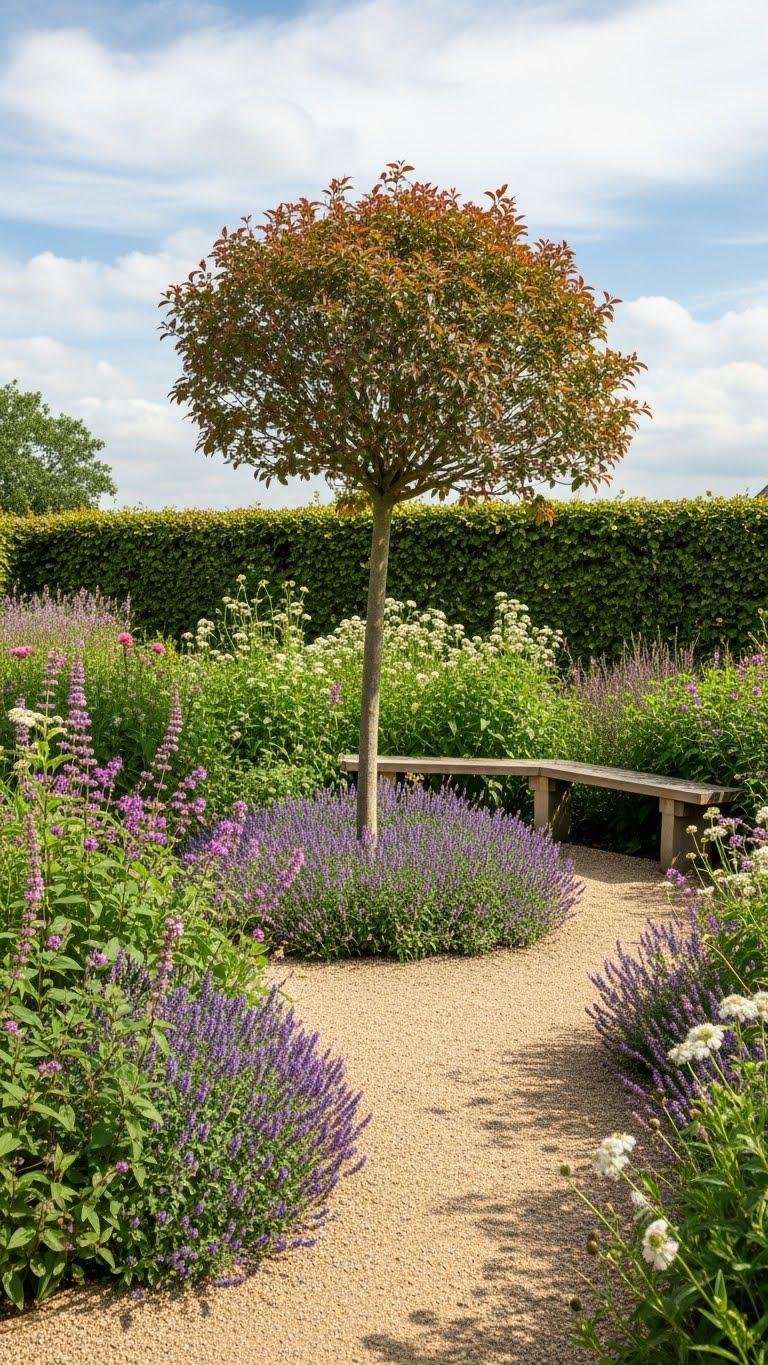
When you place a single specimen plant off‑center, you give the eye a focal anchor that feels natural and dynamic rather than forced; position it slightly left or right of the path or seating area so surrounding plants lead toward, not compete with, it.
Choose an asymmetrical focal like a sculptural tree or bold perennial in an offset container to create breathing space and effortless movement within your garden.
Repeat Matching Pots to Unify the Space
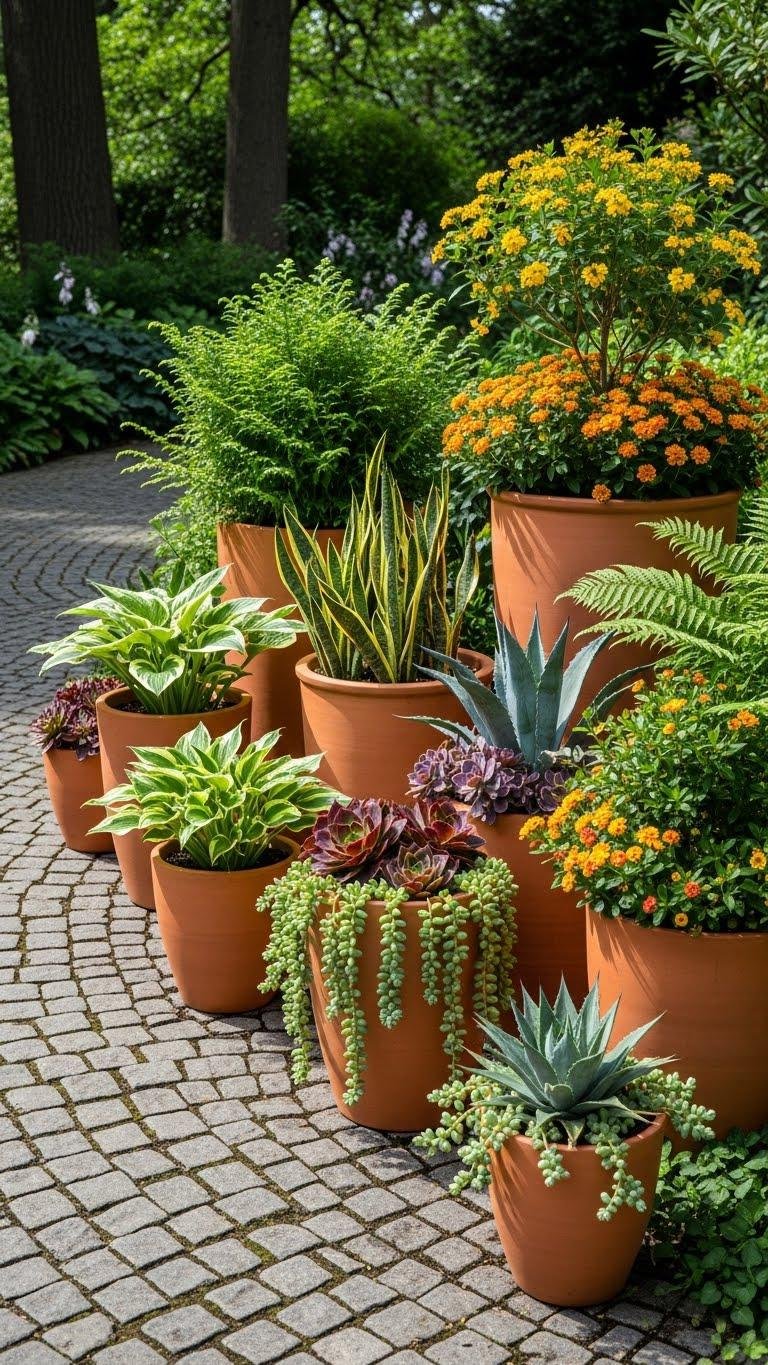
Often you’ll find that repeating a single pot style—same color, material, or shape—ties disparate plantings into a cohesive whole, so line up two or three of those matching containers along a path, patio edge, or stagger them at different heights to create rhythm.
You’ll emphasize color coordination and material contrast while keeping plant choices simple, letting foliage, form, and scale create an open, liberated feel.
Limit Your Color Palette to One or Two Hues
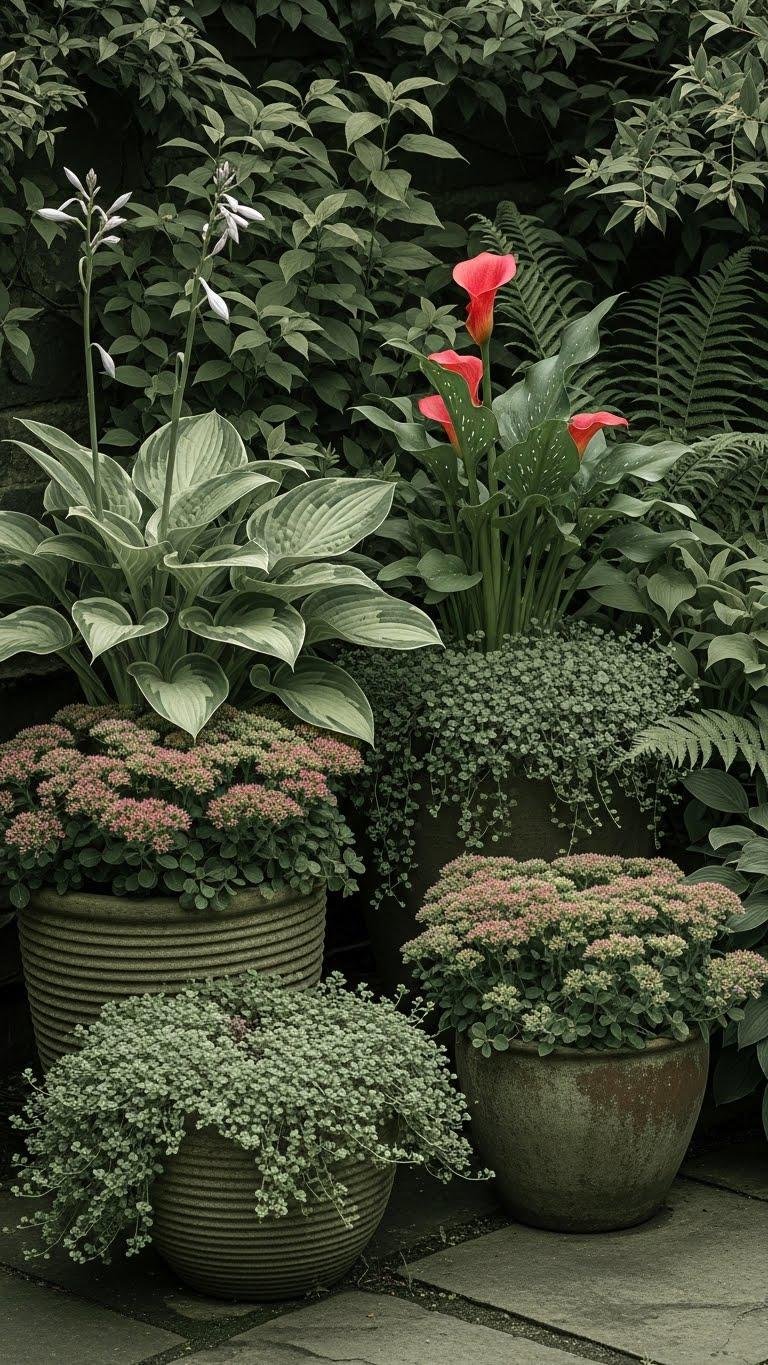
Choose one or two hues and let foliage, flower form, and texture do the rest. You’ll create calm, visually expanded corners by sticking to a monochrome container scheme with varied leaf shapes.
Plant taller, airy specimens at the back, low mats in front, and use limited accentation — a single contrasting bloom or sculptural leaf — to keep the scene bold yet free.
Emphasize Foliage Texture Over Flower Clutter
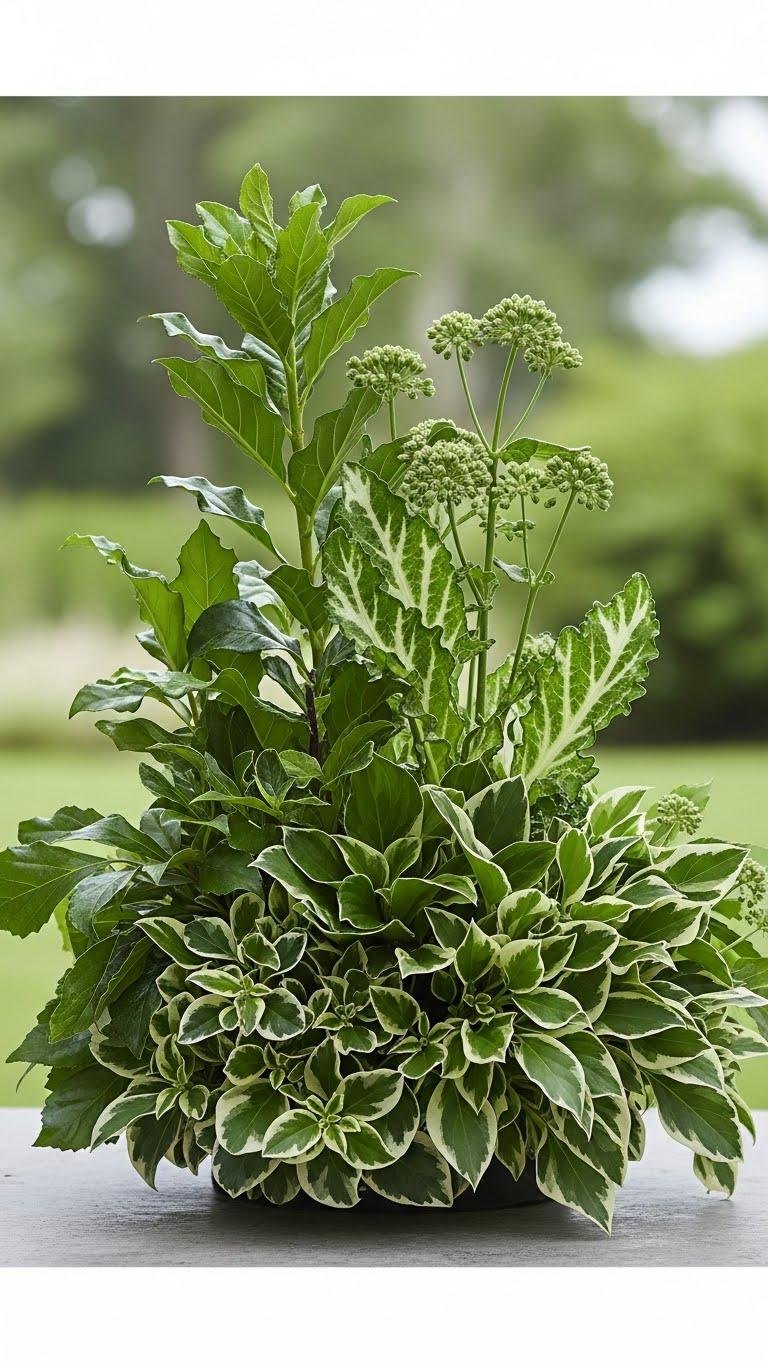
By focusing on foliage texture you’ll get more impact with fewer plants: mix glossy, matte, ruffled, and serrated leaves to build rhythm and depth so each container reads like a miniature landscape.
You’ll use textural layering and leaf contrast to guide the eye, create perceived space, and simplify maintenance.
Choose bold shapes and varied scales so arrangements feel free, intentional, and endlessly adaptable.
Choose Multi‑Seasonal Plants for Year‑Round Structure

When you pick plants that carry interest through multiple seasons, your small garden keeps structure and personality even when blooms fade. Choose evergreens, sculptural grasses and shrubs with winter interest to anchor paths and sightlines.
Favor native choices for resilience and low maintenance. Layer forms and varying leaf color so the plot reads larger, feels free and stills easily maintained year‑round.
Repeat Key Plants in Drifts for Cohesion
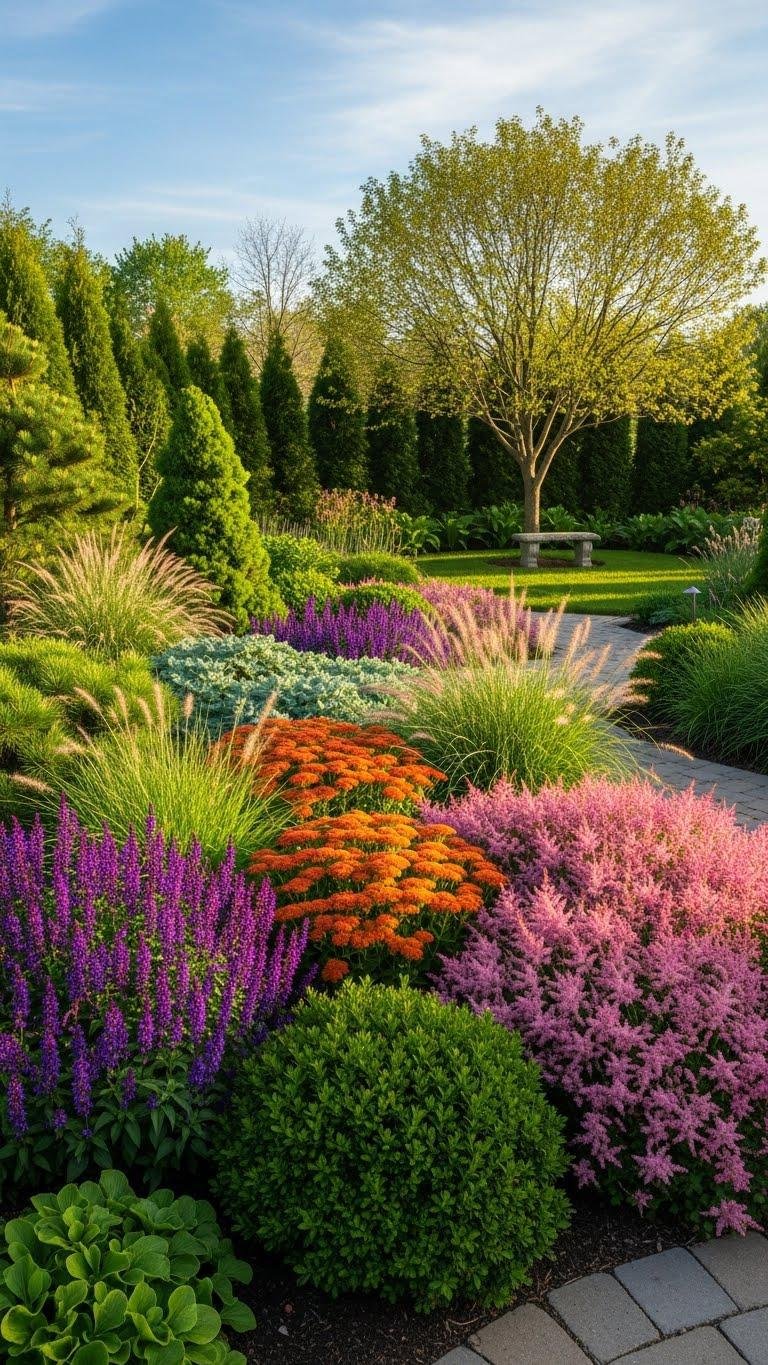
Having reliable evergreens and sculptural grasses in place makes it easier to repeat a few key plants in sweeping drifts that tie the whole plot together.
You’ll use drift repetition to create planting rhythm, guiding sightlines and opening space. Choose bold forms and repeat them in groups; the effect reads as one intentional gesture, freeing you to move and enjoy the garden.
Use Compact, Well‑Behaved Cultivars
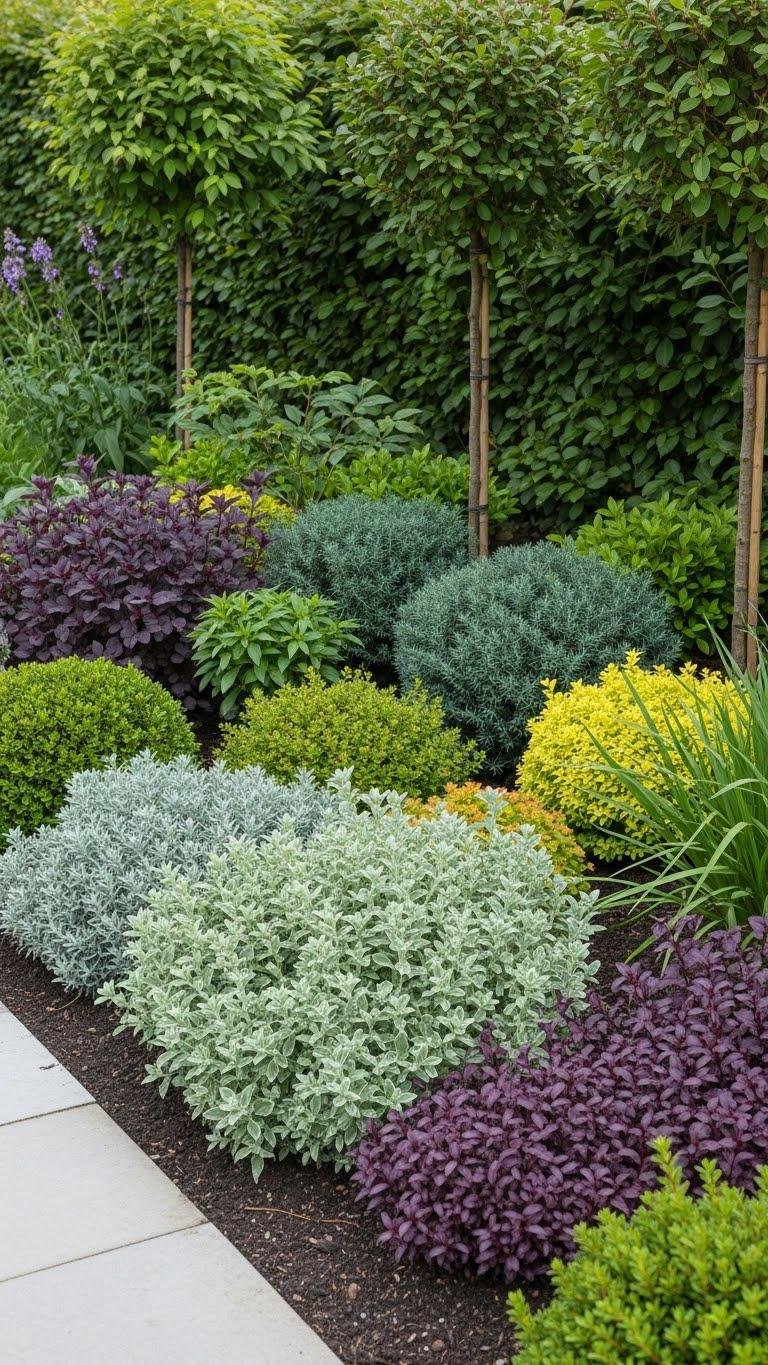
Pick compact, well‑behaved cultivars so your beds stay tidy and predictable.
Choose dwarf varieties and patio cultivars to keep height low and sightlines open.
Rely on compact rootstocks for controlled trees and slow growing selections for long‑term stability.
You’ll get dense, sculpted shapes that need less pruning, free up space for movement, and let you enjoy plants without constant maintenance.
Create Clear Circulation Paths
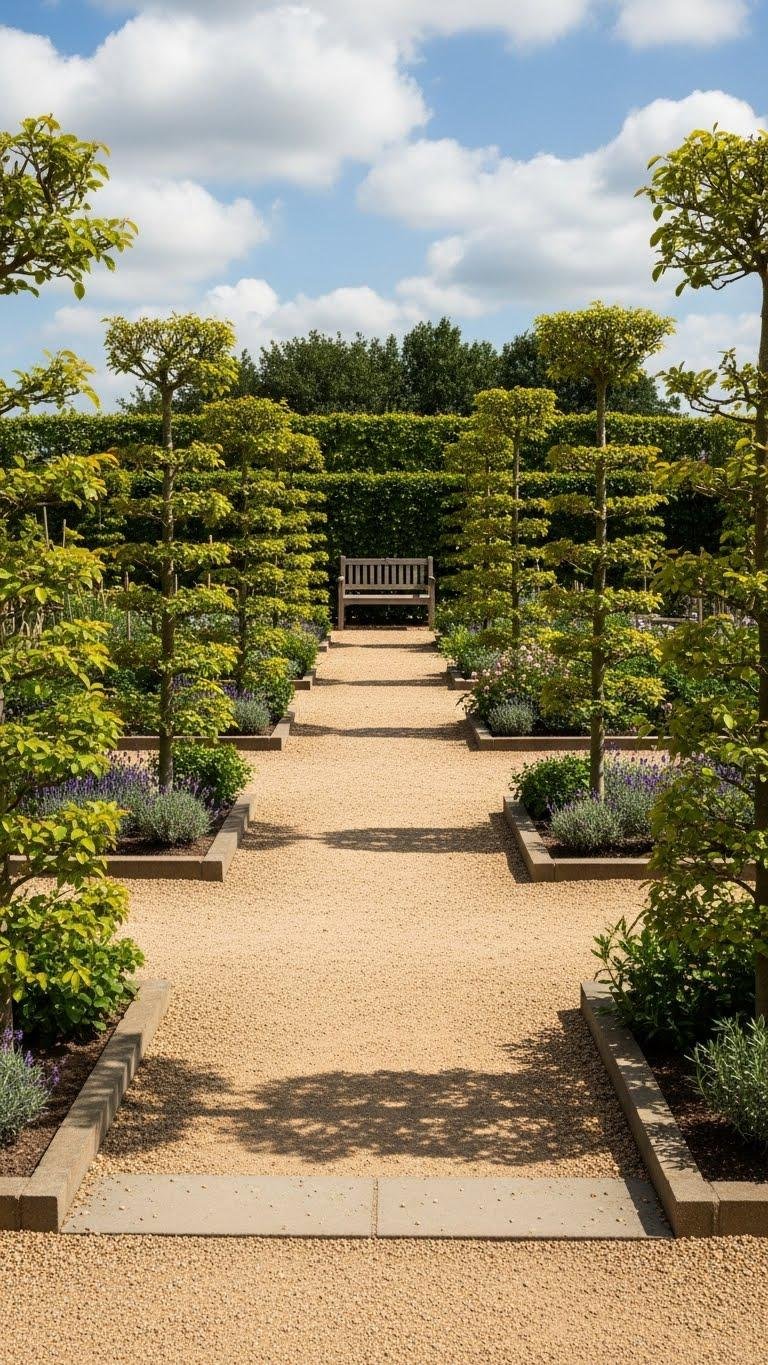
Keep pathways simple and visible so you can move through the garden without brushing past foliage or trampling beds. Define routes with low, planted edges and hard surfaces so you’ll enjoy clear sightlines and unobstructed access.
Guide movement with focal plants at turns, keep widths generous for comfort, and prune to maintain openness — you’ll feel free to wander and tend without constraint.
Plant Narrow Border Beds Along Fences
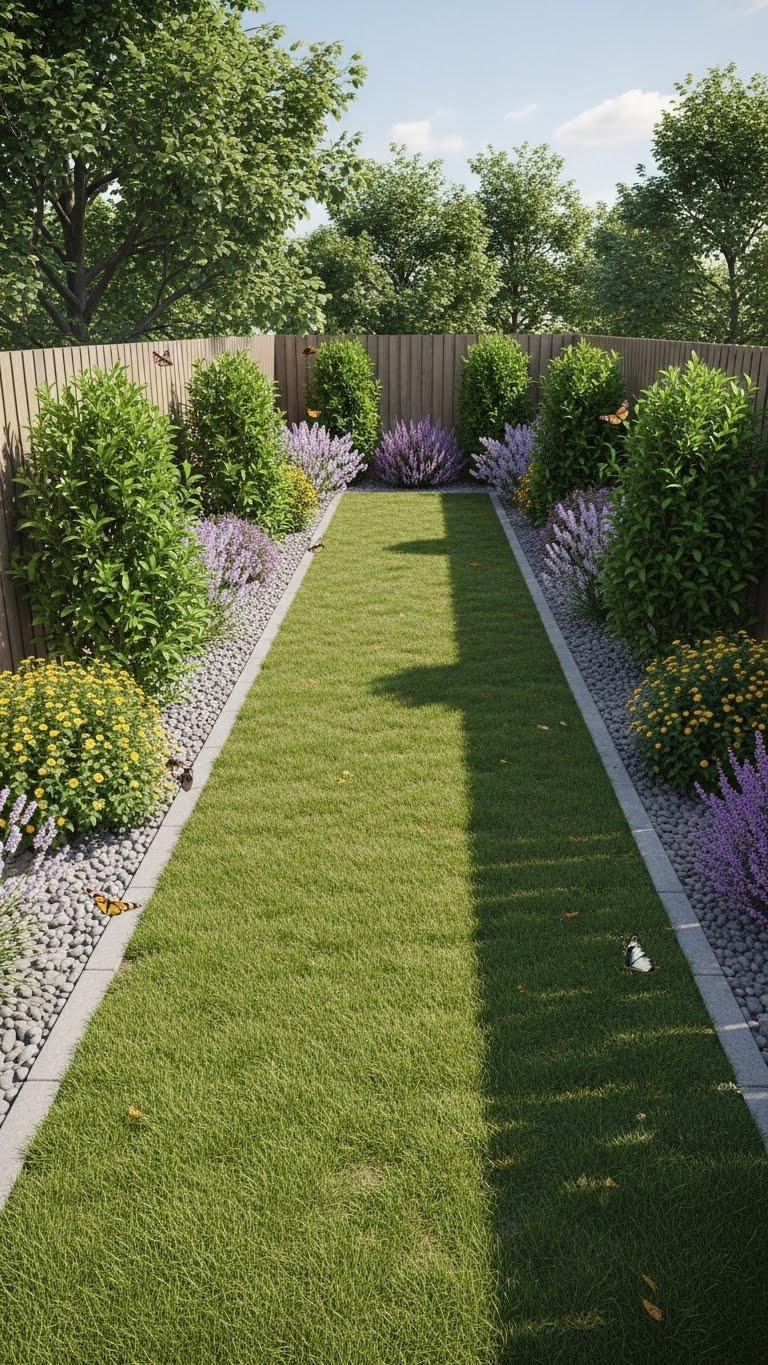
When you plant narrow border beds along fences, you’ll maximize growing space while keeping the center of the yard open for movement and lounging.
Line beds with pebble edging to define edges. Choose scented hedging and low perennials to free up visual weight, attract pollinators, and provide privacy without crowding. Plant in layers for texture and easy maintenance.
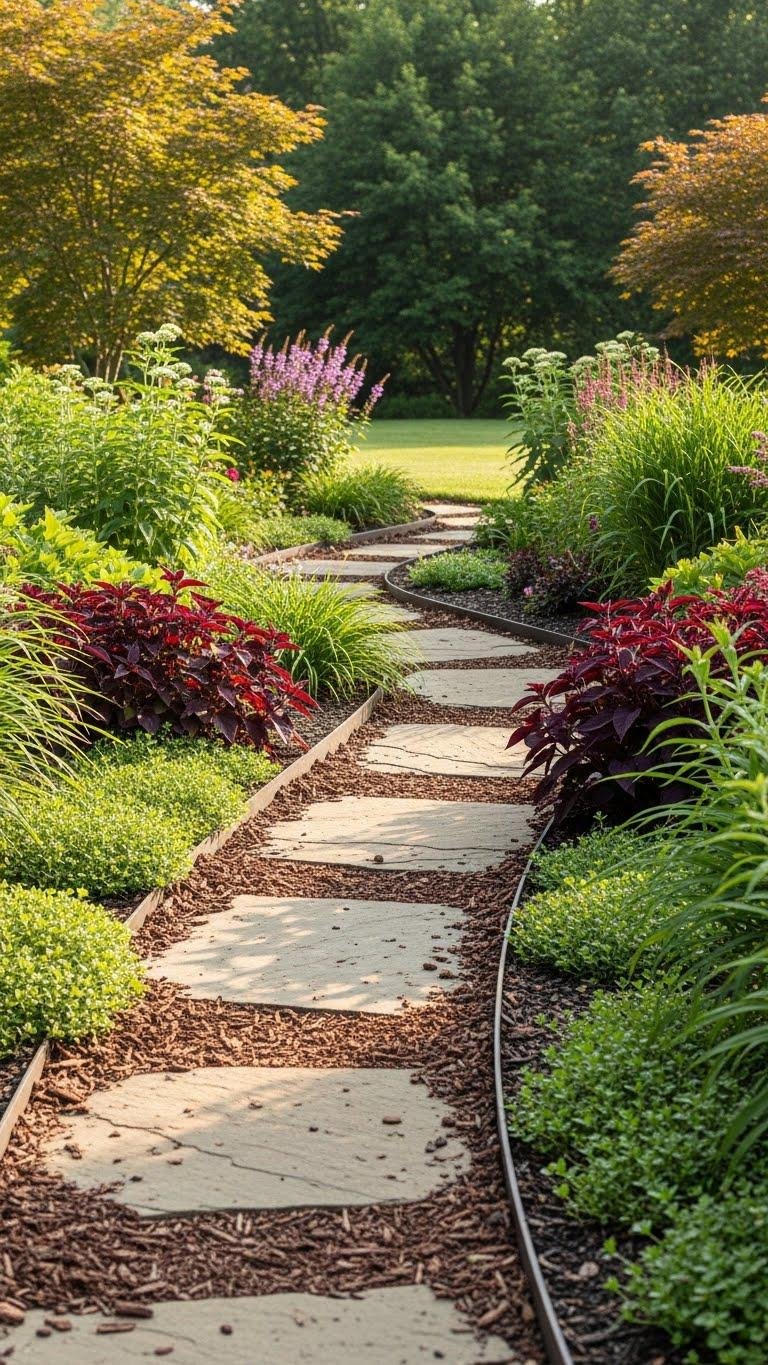
Lay a Diagonal or Curved Path to Add Depth
Build Low Retaining Walls That Double as Seating
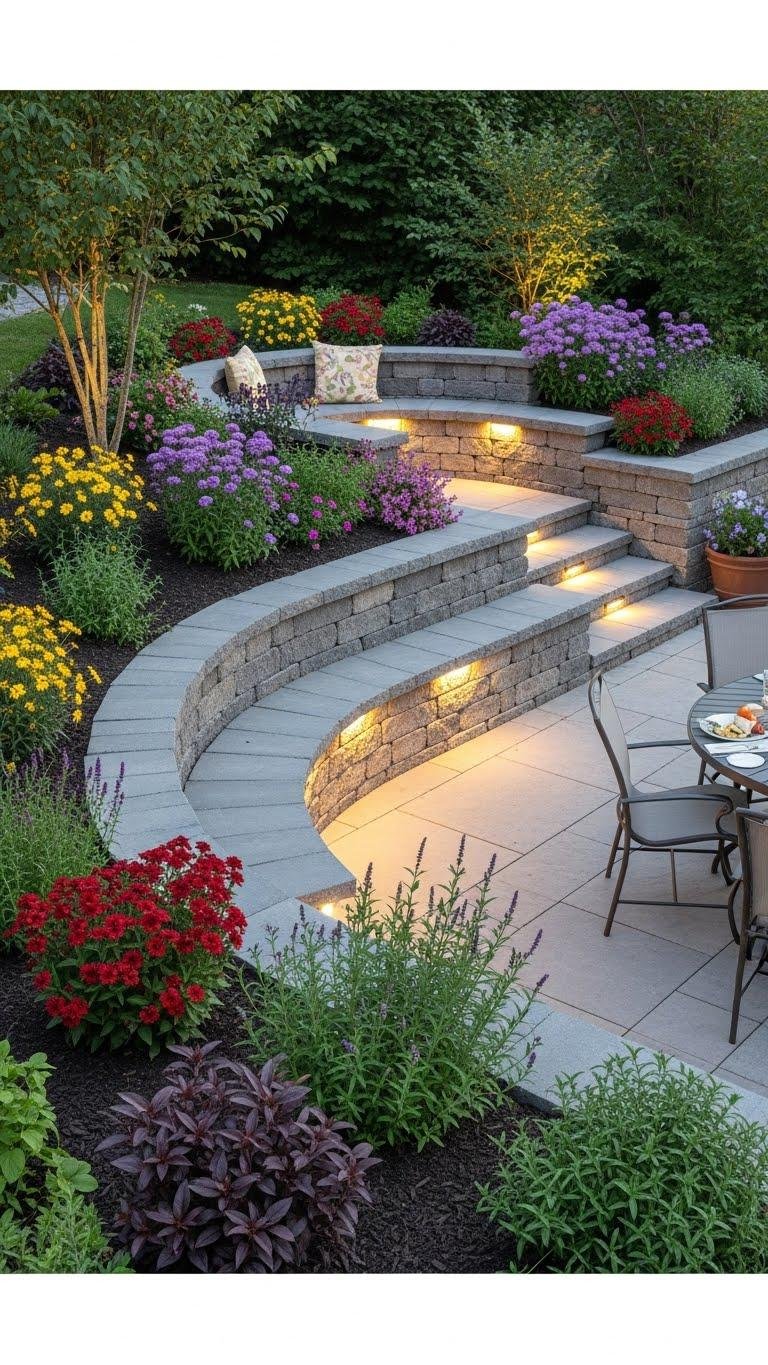
Set into a sloped bed or outlining a flat patio, low retaining walls can give your planting schemes structure while doubling as comfortable seating for plant lovers and guests.
You’ll use a low wall as a curved bench or step seating, framing bold perennials and herbs.
Add integrated lighting for evening drama, keep lines simple, and let plants soften the edges for a free, relaxed feel.
Tuck Utility Areas Out of Sight
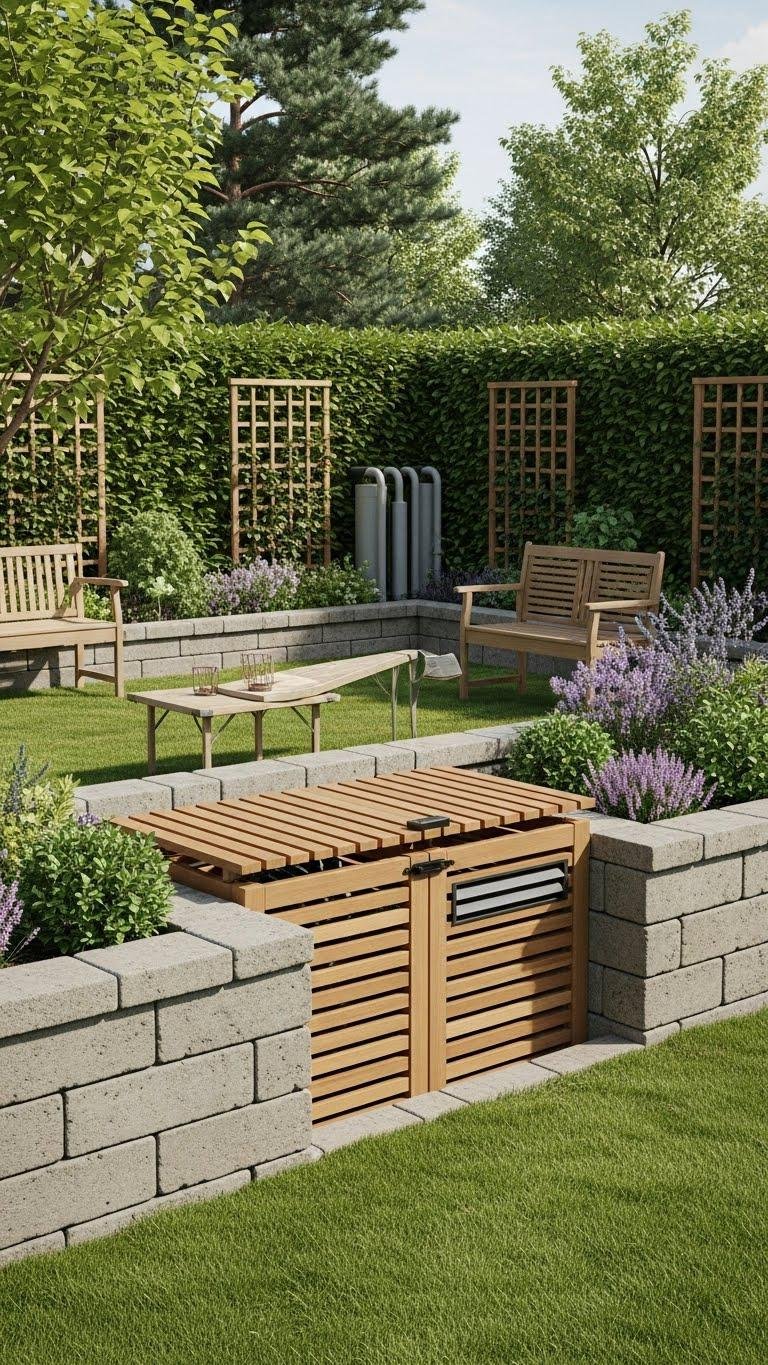
Pick Small or Foldable Furniture
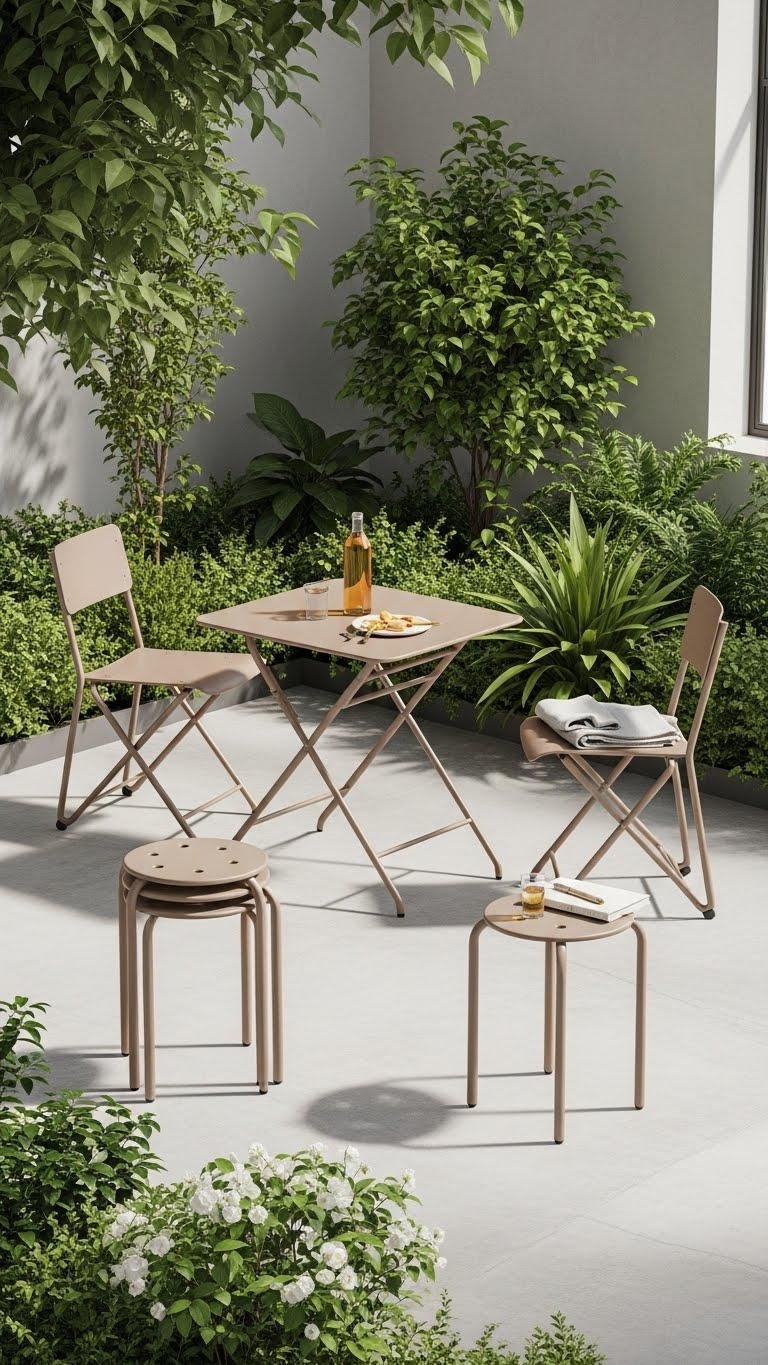
Think compact: choose chairs and tables with slim profiles or folding mechanisms so you can enjoy your plants without crowding them.
Go for a foldable bistro set that tucks away, or lightweight stackable stools you can move like a breeze.
Keep lines minimal, materials natural, and sightlines open so greenery feels endless and you stay free to rearrange as moods change.
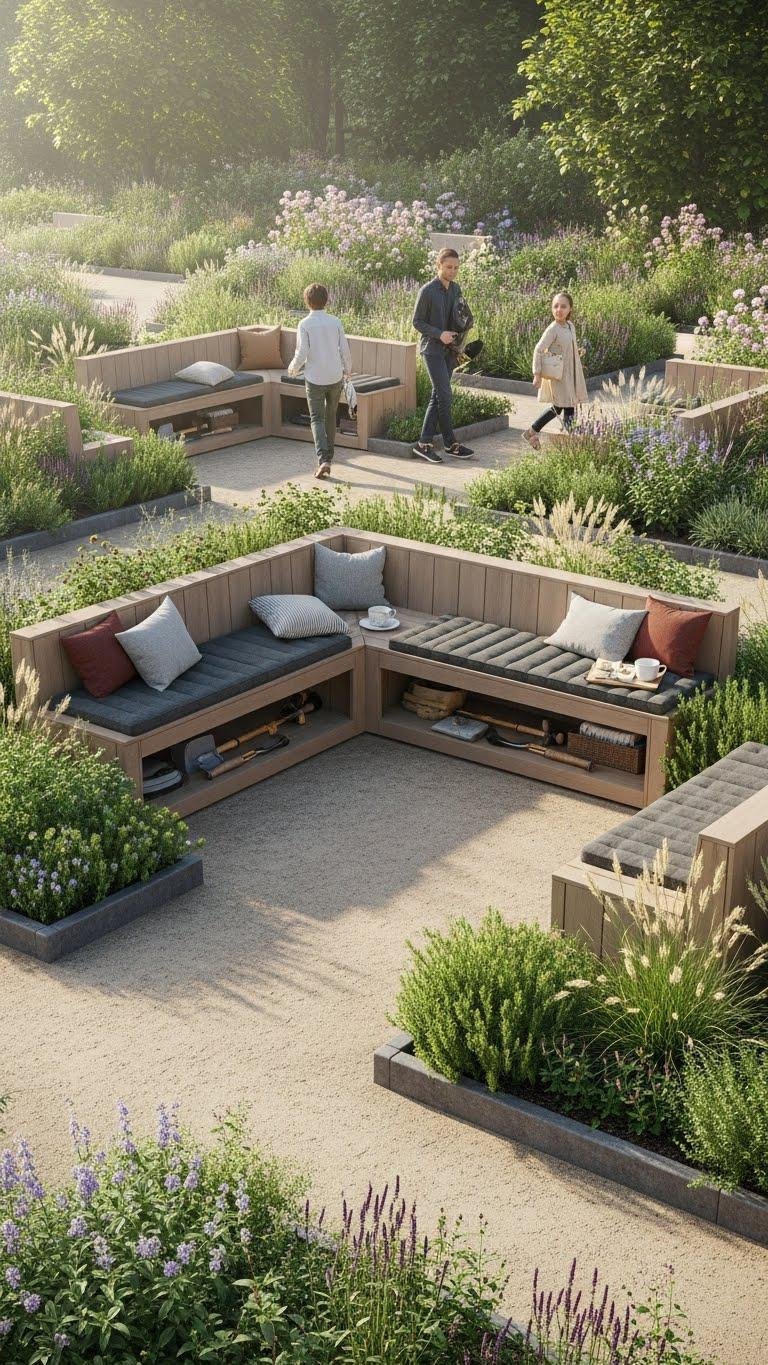
Install Built‑In Seating With Storage
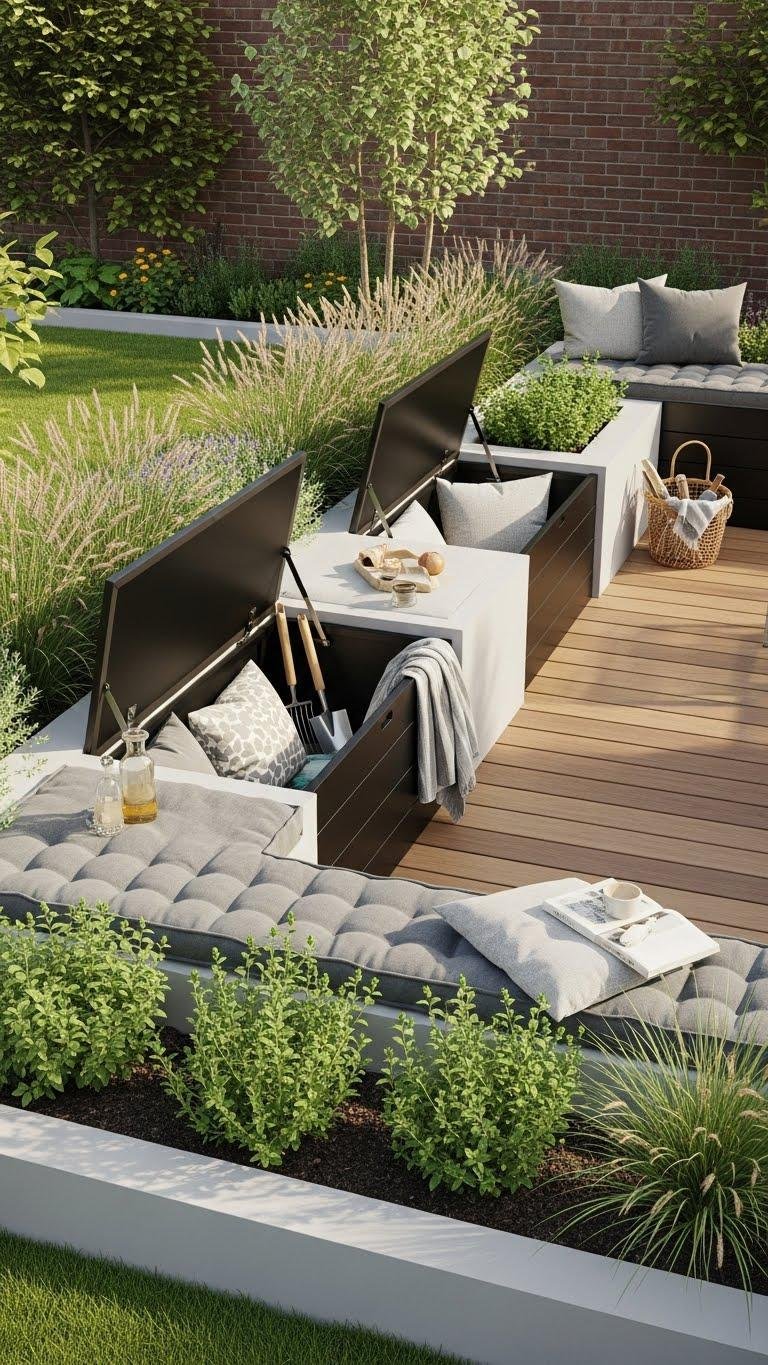
By carving seating into a border wall or decking, you’ll gain neat bench space that doubles as hidden storage for cushions, tools, and pots.
You’ll use hidden hinges for smooth lift-up lids and a cushioned ledge for lounging among herbs and grasses.
Built-in benches free paths, frame planting beds, and keep tools tucked away so you can move and breathe easily.
Use Corner Benches to Free Central Space
Make Planters Serve as Screens or Borders
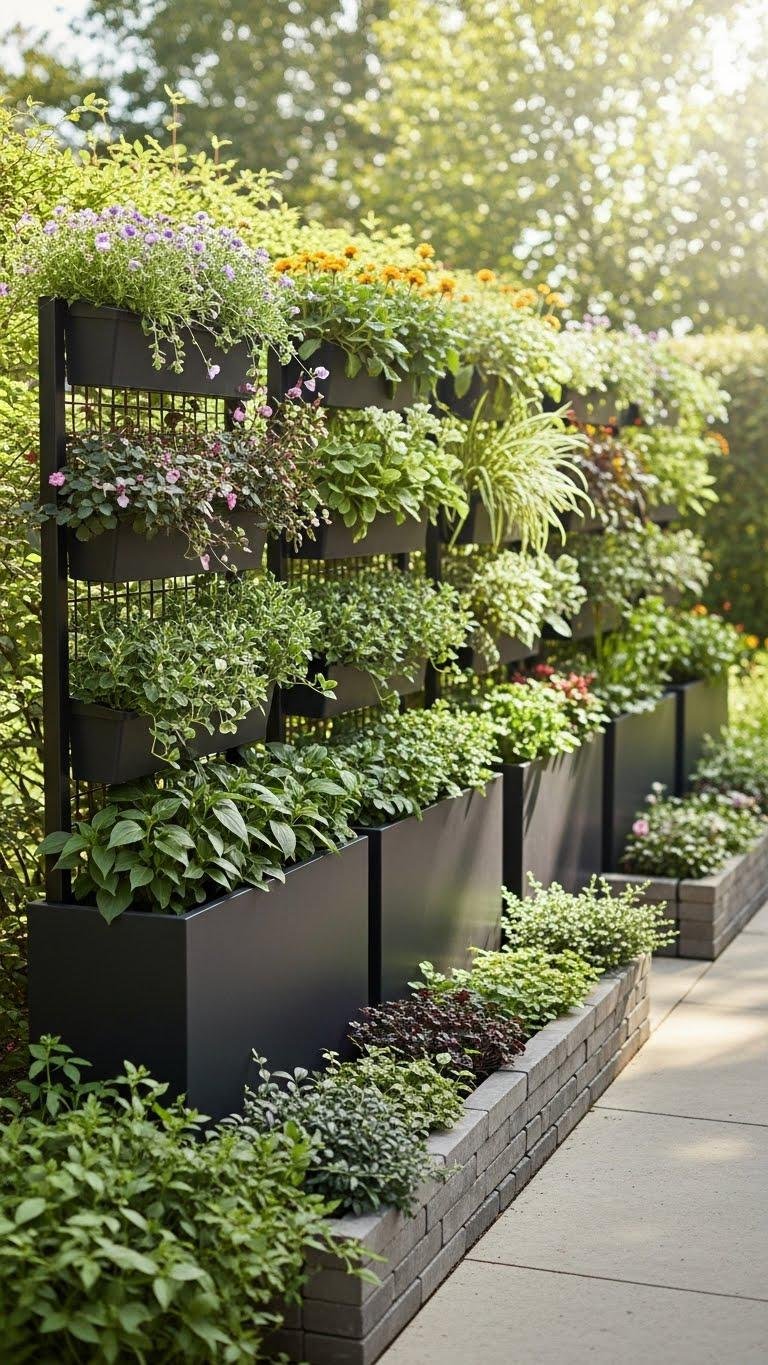
Let planters do double duty: you can line them up to form living screens that block views and soften edges, or stagger them as low borders that guide paths and beds.
You’ll use portable planter screens to shift privacy, swap plants seasonally, and create airy layers. Choose modular border panels and varied foliage heights to define zones without feeling boxed in.
Plant Densely With Mature Spacing in Mind
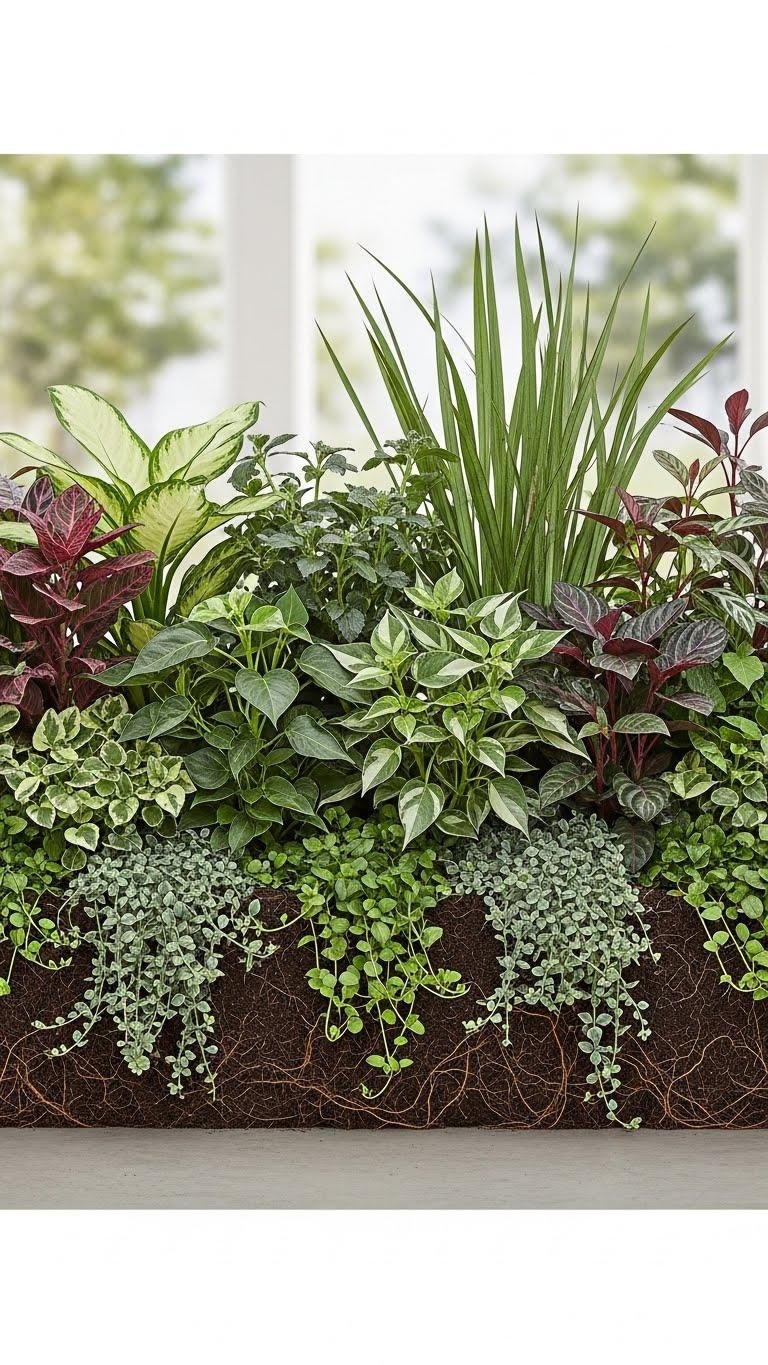
Once your planters are doing double duty as screens and borders, think about filling them so they look full fast — plant tightly but with mature size in mind. You’ll use layered planting for texture: low spillers, mid foliage, and taller accents.
Install root barriers to protect neighbors and control vigor. Prune selectively, let plants claim space, and enjoy a relaxed, roomy feel.
Select Columnar Trees and Shrubs for Structure
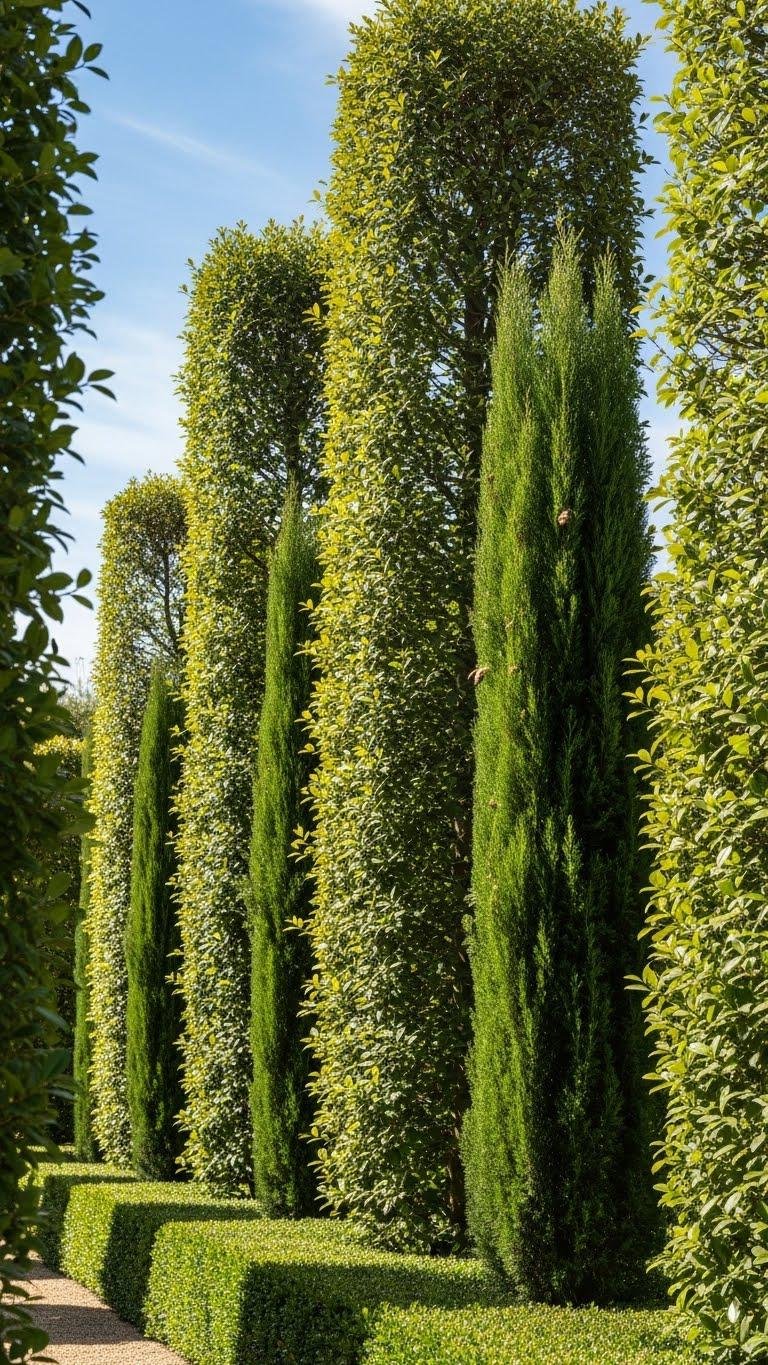
When you need vertical definition without taking up much ground, choose columnar trees and shrubs that match the scale of your space and the light they’ll get.
Plant pillar hollies for year-round screens and narrow form; use Italian cypresses to draw the eye skyward. Place them where they frame paths or corners, prune minimally, and let tall, slim silhouettes create airy structure.
Group Plants in Odd Numbers and Repeat Species
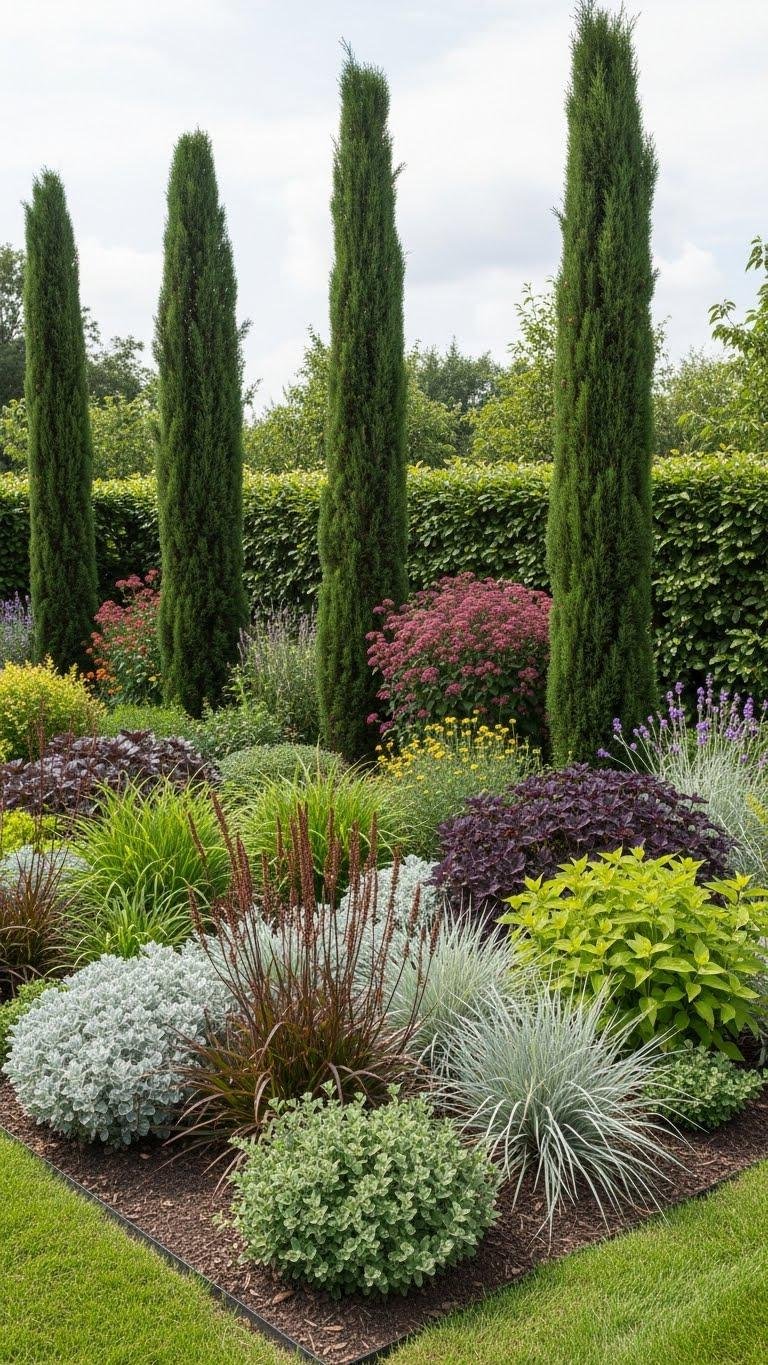
The tall, narrow backbone you’ve created with columnar trees becomes more inviting when you group smaller plants beneath and around them in odd-numbered clusters and repeat species to echo that rhythm.
You’ll use asymmetrical groupings to keep things natural, repeat species for cohesion, and vary heights and textures so sightlines stretch.
Plant boldly, prune lightly, and let the composition breathe.