
You can jump-start a season of steady color by tackling 24 focused spring projects that marry form, soil and pollinator value. I’ll show practical steps — from massing daffodils and layering tulips to adding forsythia structure, improving drainage, and setting up drip irrigation — so your beds bloom longer with less fuss. Start with a quick soil check, and keep going to build a plan that actually fits your site and schedule.
Plant Massed Daffodil Drifts for Early Color
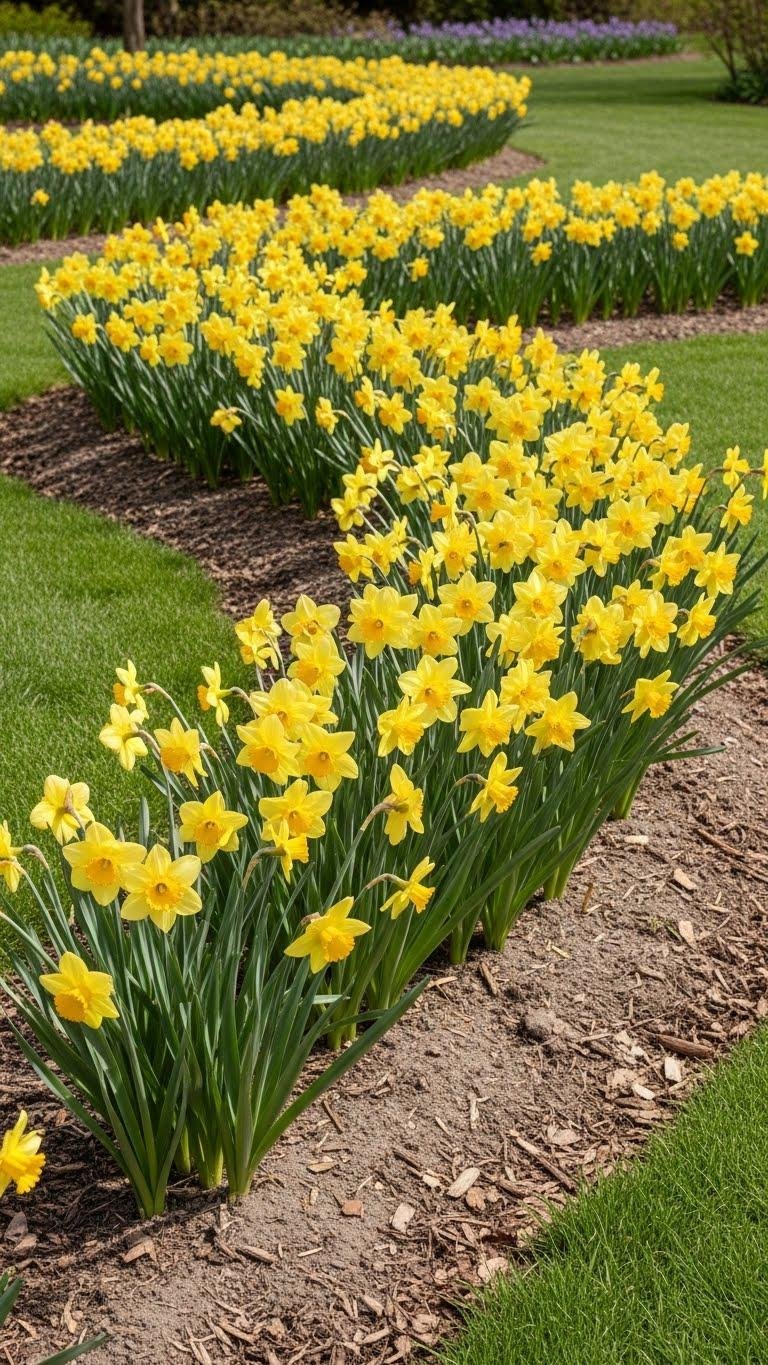
Think with respect to drifts rather than single bulbs: plant daffodils en masse in flowing groups to create early-season color that looks natural and fills beds efficiently.
You’ll plan bulb spacing for healthy clumps, set bulbs at proper depth, and make certain soil drainage to prevent rot.
You’ll choose sunny sites, loosen soil, and mulch lightly, giving you bold, low-maintenance spring impact.
Create a Tulip Mix Border for Sequential Bloom
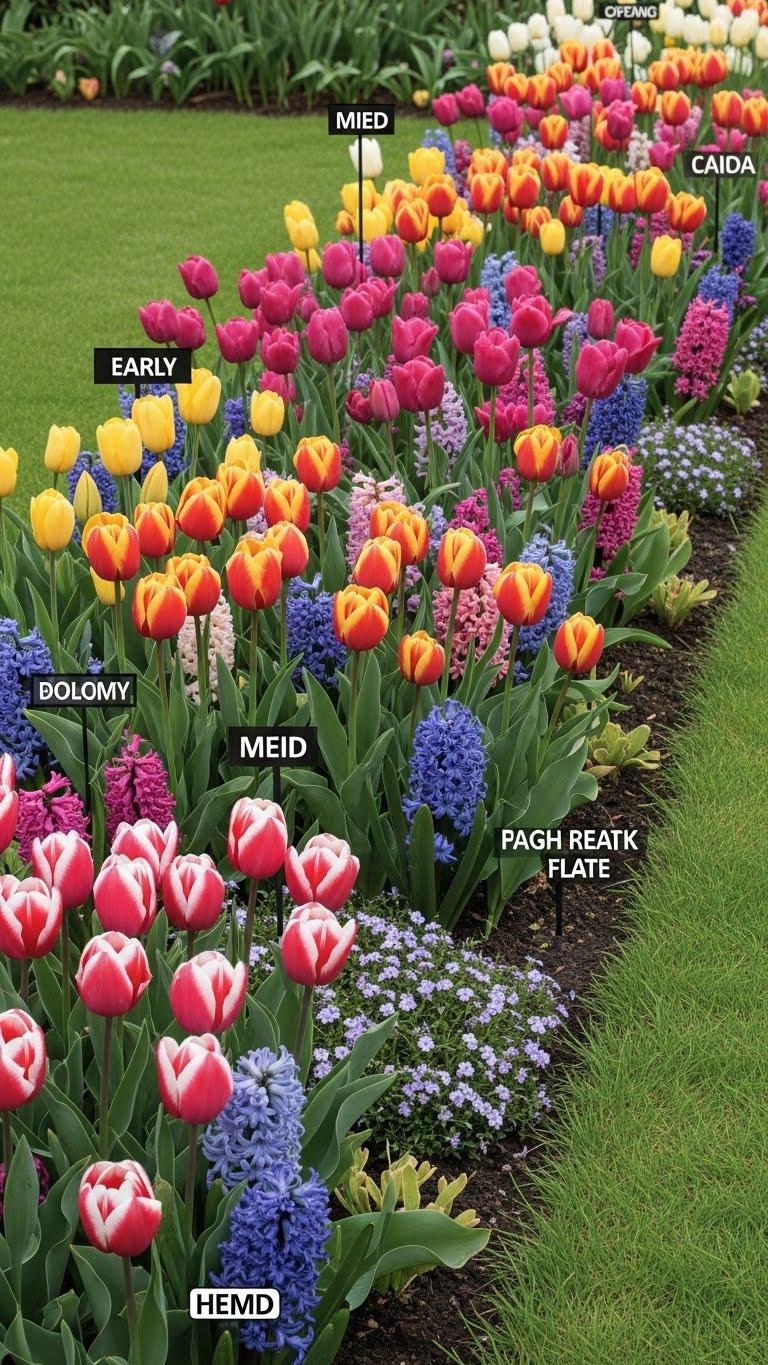
Design a tulip mix border that delivers weeks of color by staggering varieties with different bloom times, heights, and flower forms.
You’ll plant early, mid and late tulips in drifts, tuck low bulbs in front, and place taller types behind.
Include variegated foliage for contrast and fragrant companions like hyacinths.
Space bulbs for airflow, firm soil, and clear labeling for repeatable success.
Design a Shade Bed With Hellebores and Bleeding Hearts
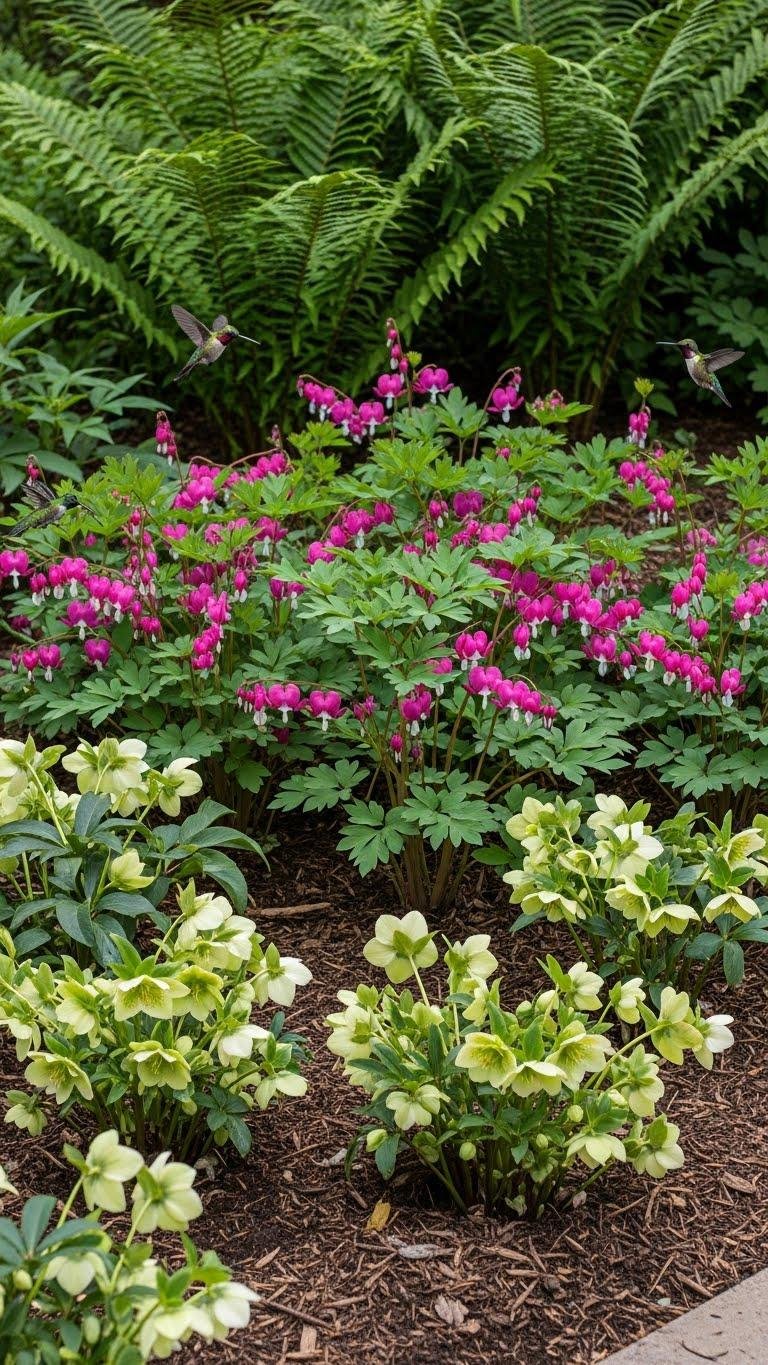
For a cool, shaded corner that blooms from late winter into early summer, plan a mixed bed of hellebores and bleeding hearts that balances form, foliage, and seasonal succession.
You’ll plant hellebores up front, bleeding hearts mid-bed, and shade loving ferns at the back for texture.
Use rich, well-drained soil, mulch heavily, and add nectar plants to create hummingbird magnets.
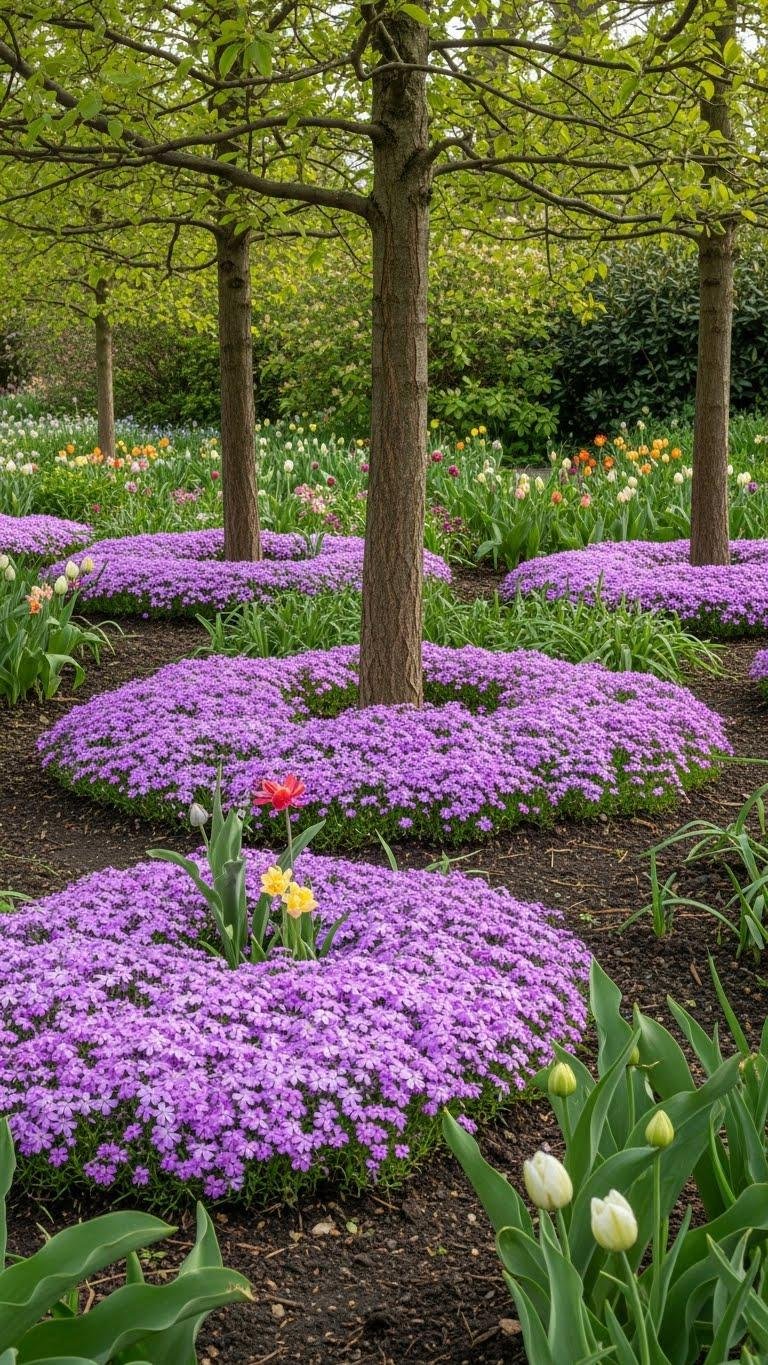
Establish a Creeping Phlox Groundcover Carpet
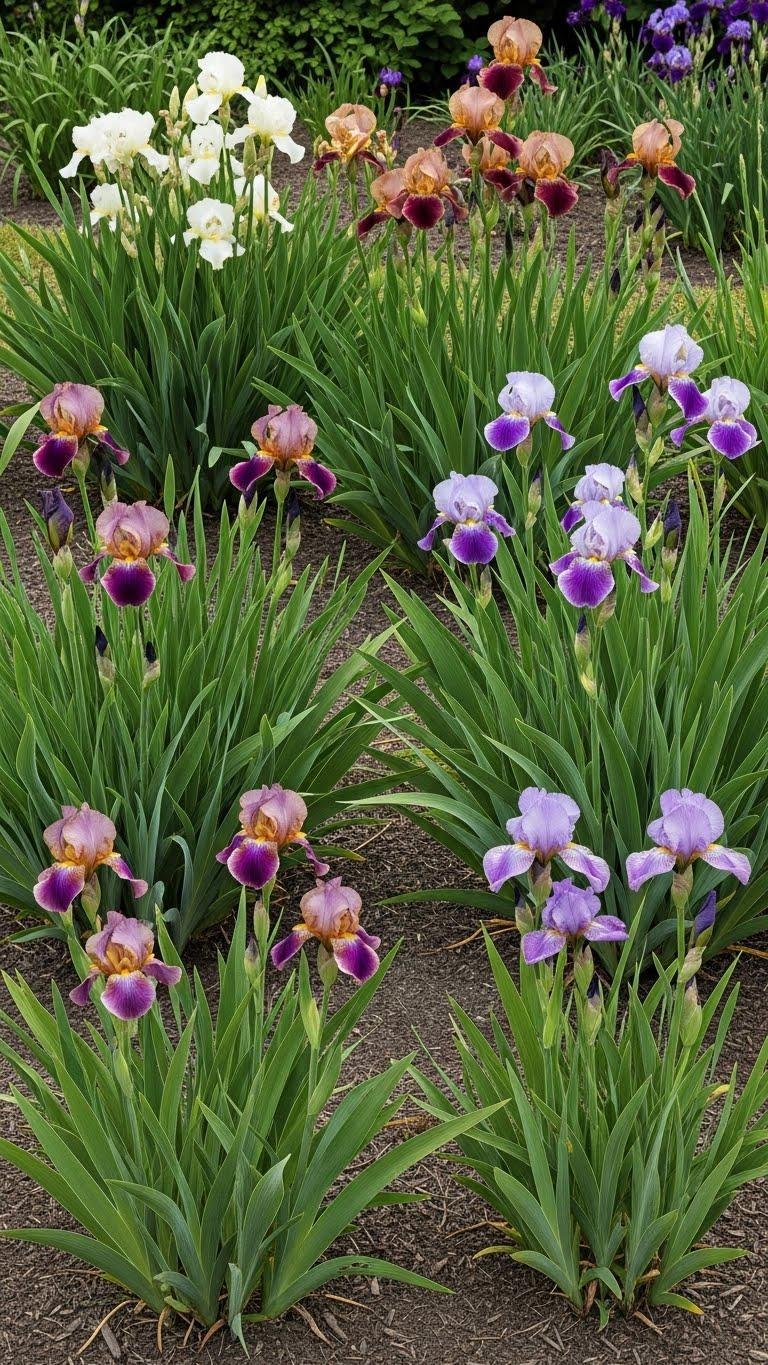
Add Iris Clumps for Vertical Spring Accents
Create a Pollinator Patch With Native Spring Flowers
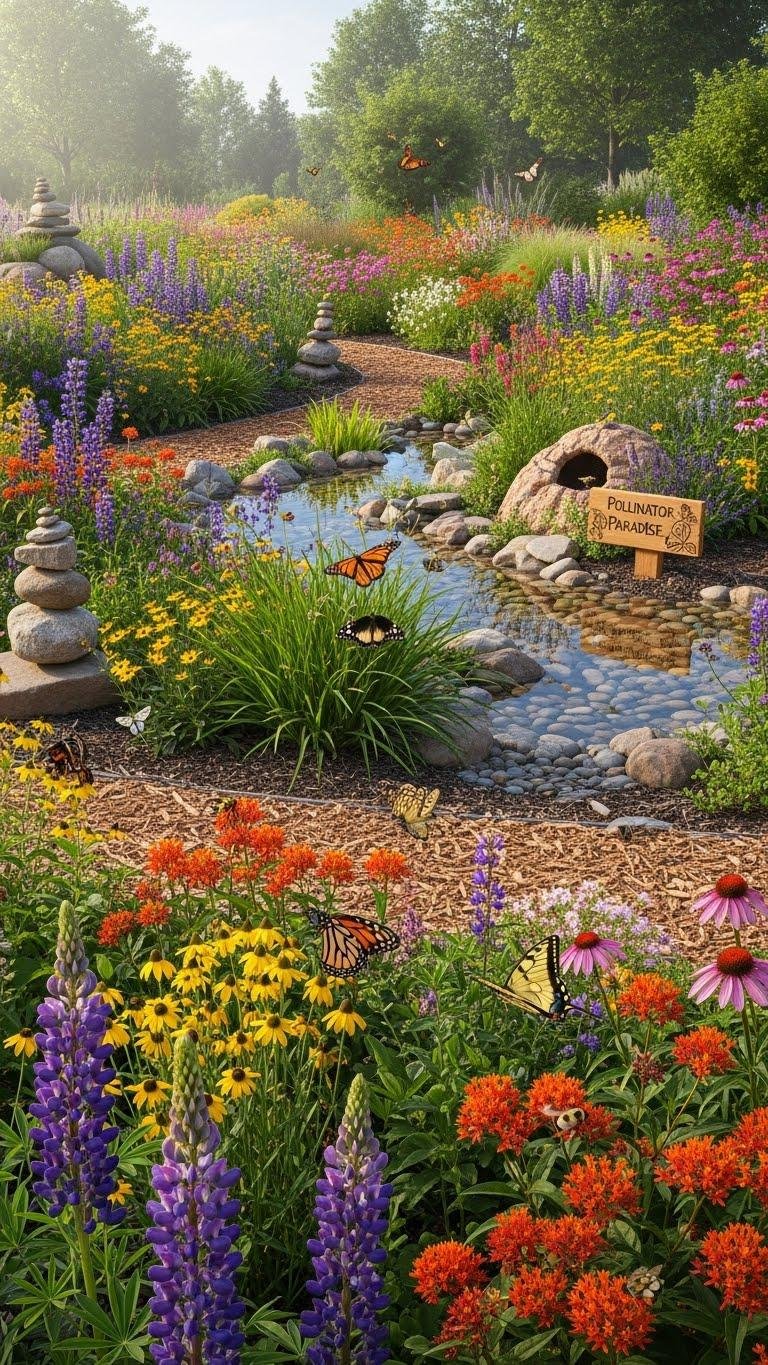
Creating a pollinator patch with native spring flowers gives you a reliable, low-maintenance source of nectar and pollen that supports local bees, butterflies, and other beneficial insects. Select regionally native species, group blooms by bloom time, and provide shallow water and shelter.
Design native nectarways and connected bee habitatways across your yard so pollinators move freely and your garden thrives without excess upkeep.
Plant Early-Flowering Primroses in Rock Gardens
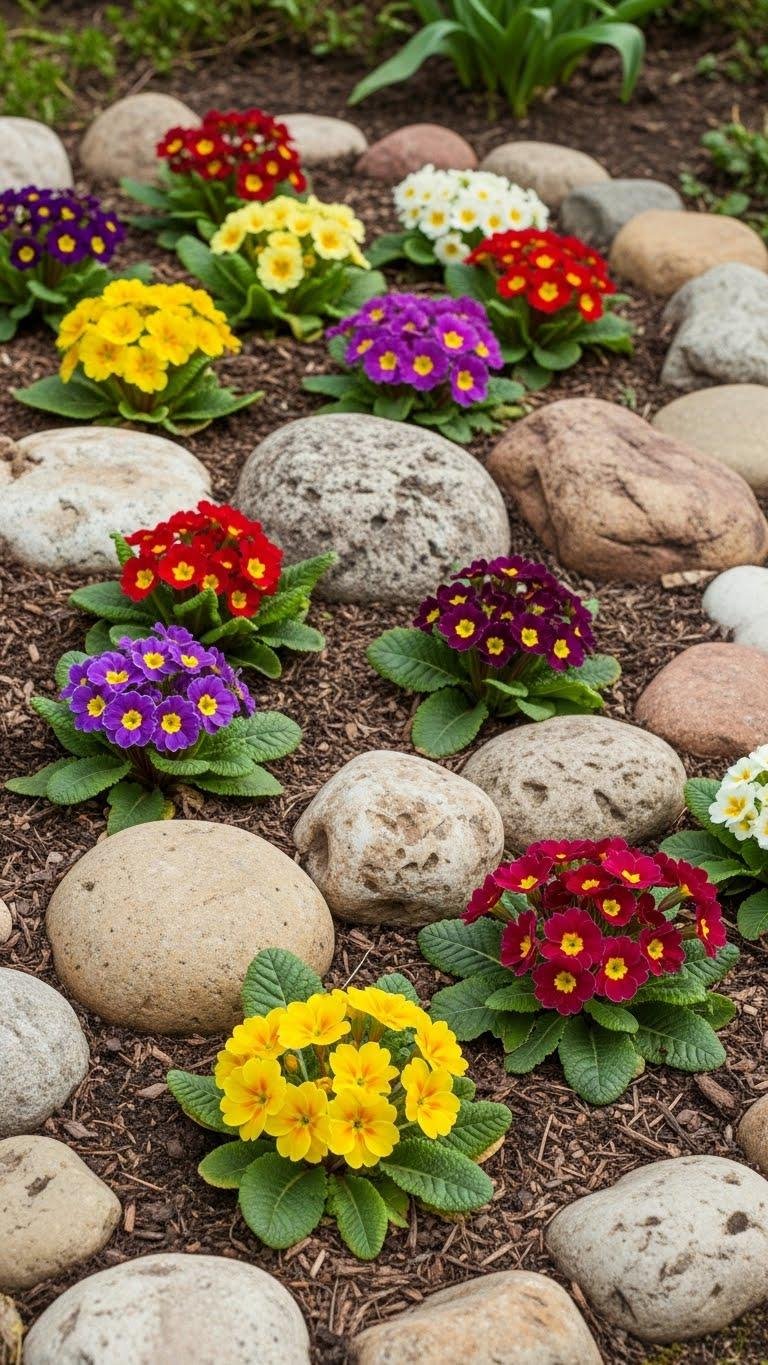
With bulbs snug under mulch, you can turn your attention to planting early-flowering primroses in rock gardens, where their compact habit and bright blooms thrive in shallow, well-drained pockets.
Choose alpine primroses for drought tolerance, tuck crowns into shaded crevices, firm soil around roots, water sparingly until established, and mulch lightly.
Space for airflow and deadhead spent flowers to encourage repeat bloom.
Introduce Gazanias and Warm-Climate Perennials for Long Bloom
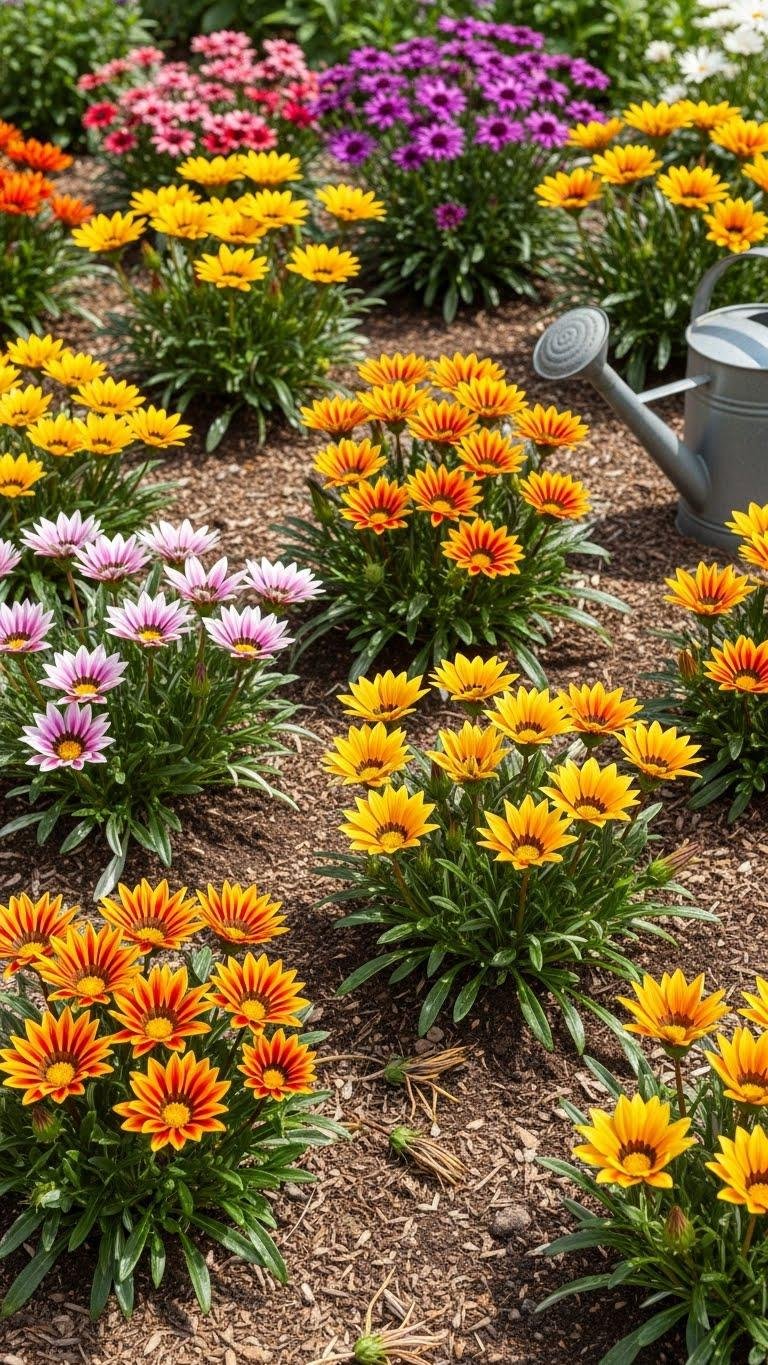
Warm-season perennials like gazanias bring sustained color through summer heat, so plan beds and containers around their low, sun-loving habit and fast, repeat flowering.
You’ll choose drought tolerant gazanias and other heat loving perennials, place them in well-drained soil, space for airflow, and mulch lightly.
Water deeply but infrequently, deadhead spent blooms, and enjoy long, low-maintenance color.
Plant Bulbs in Groupings of 12 or 24 for Maximum Impact
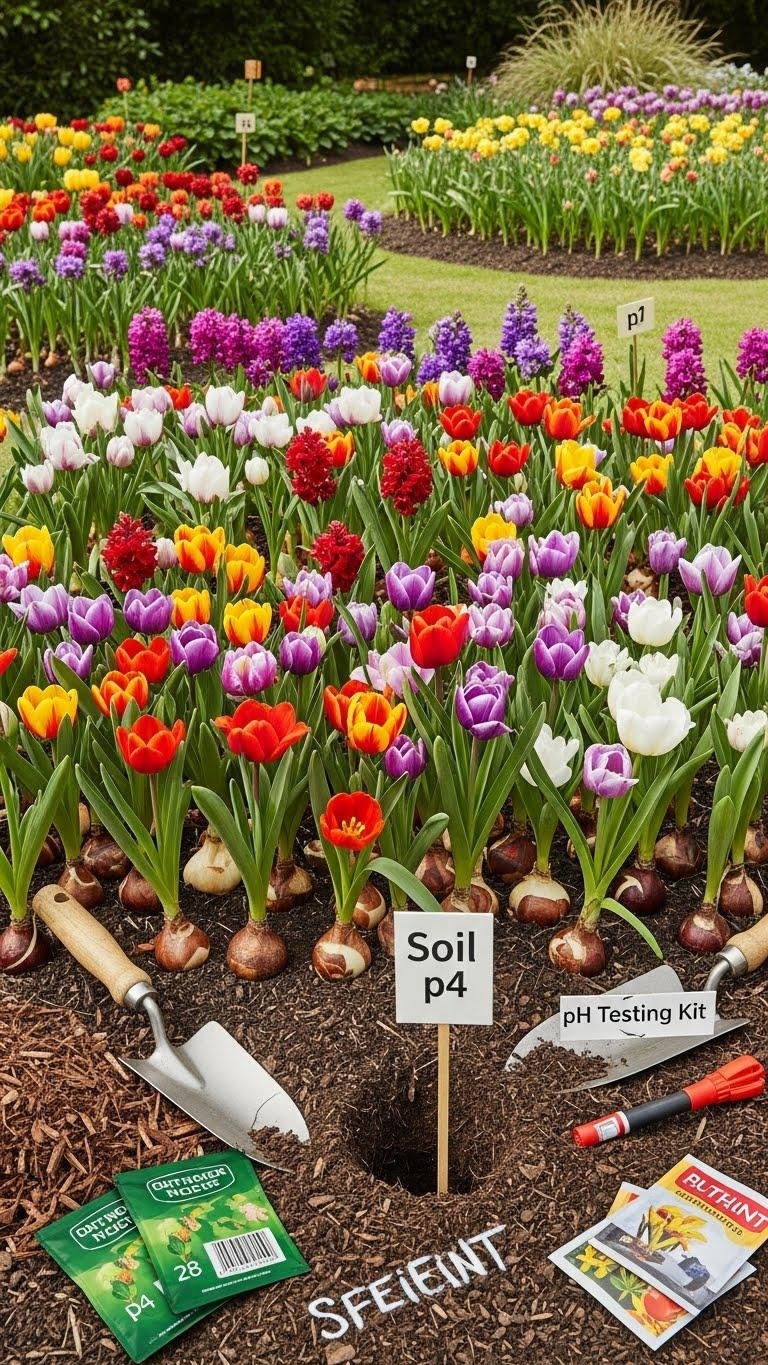
Plant bulbs in clusters of 12 or 24 to create bold, cohesive swaths of color that read clearly from a distance and simplify maintenance up close. You’ll plan using bulb spacing guides, mark holes efficiently, and perform seasonal soil testing to adjust pH and nutrients.
Dig consistent depths, mulch lightly, and stagger plantings for repeat bloom — practical steps that keep your beds free and vivid.
Create a Woodland Edge With Wildflower and Shade-Tolerant Plants
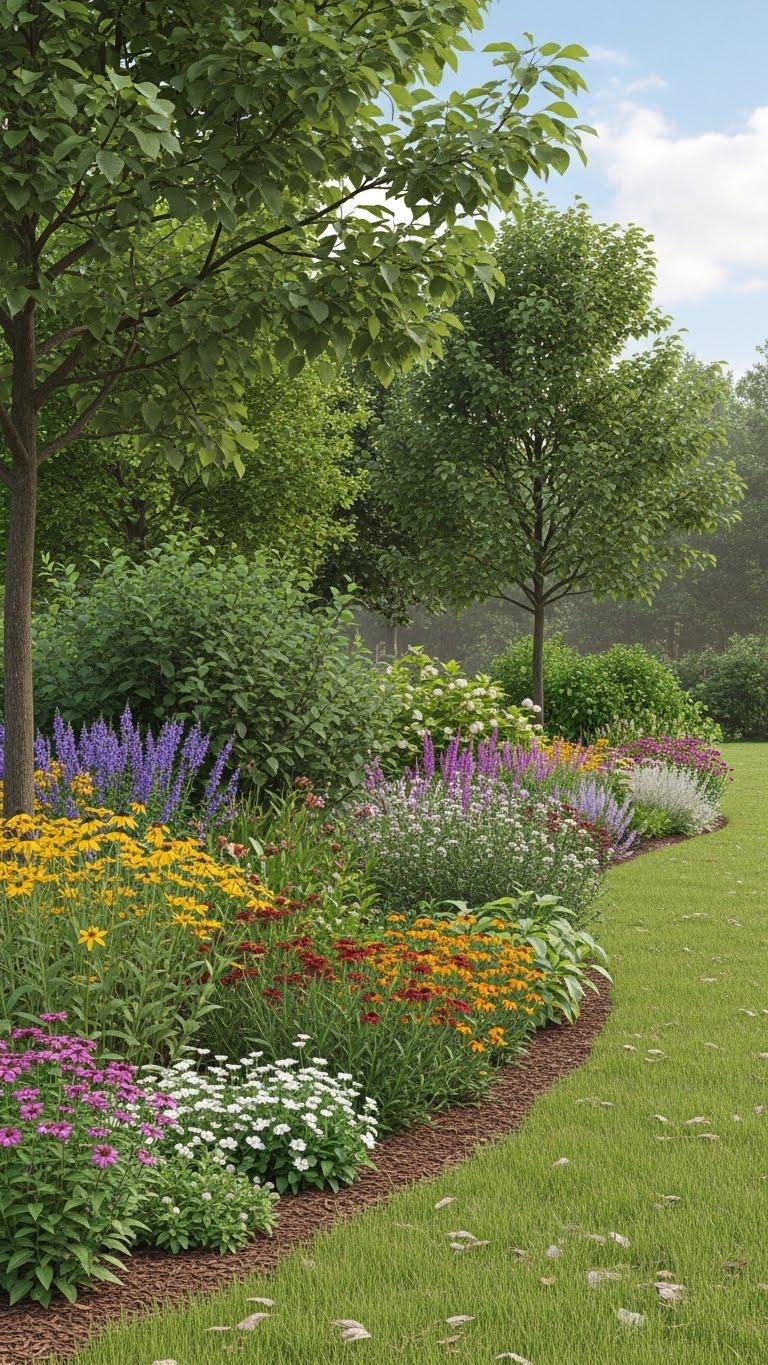
With a light hand and a clear plan, you can transform the margin of your yard into a productive woodland edge that blends wildflowers, shade-tolerant perennials, and native shrubs.
Map shade shifts, choose a layered native understory, and space plants for natural drift. Mulch thinly, favor local seed mixes, and prune selectively so your edge matures into a low-maintenance, biodiverse refuge.
Install Drip Irrigation for Consistent Moisture at Planting
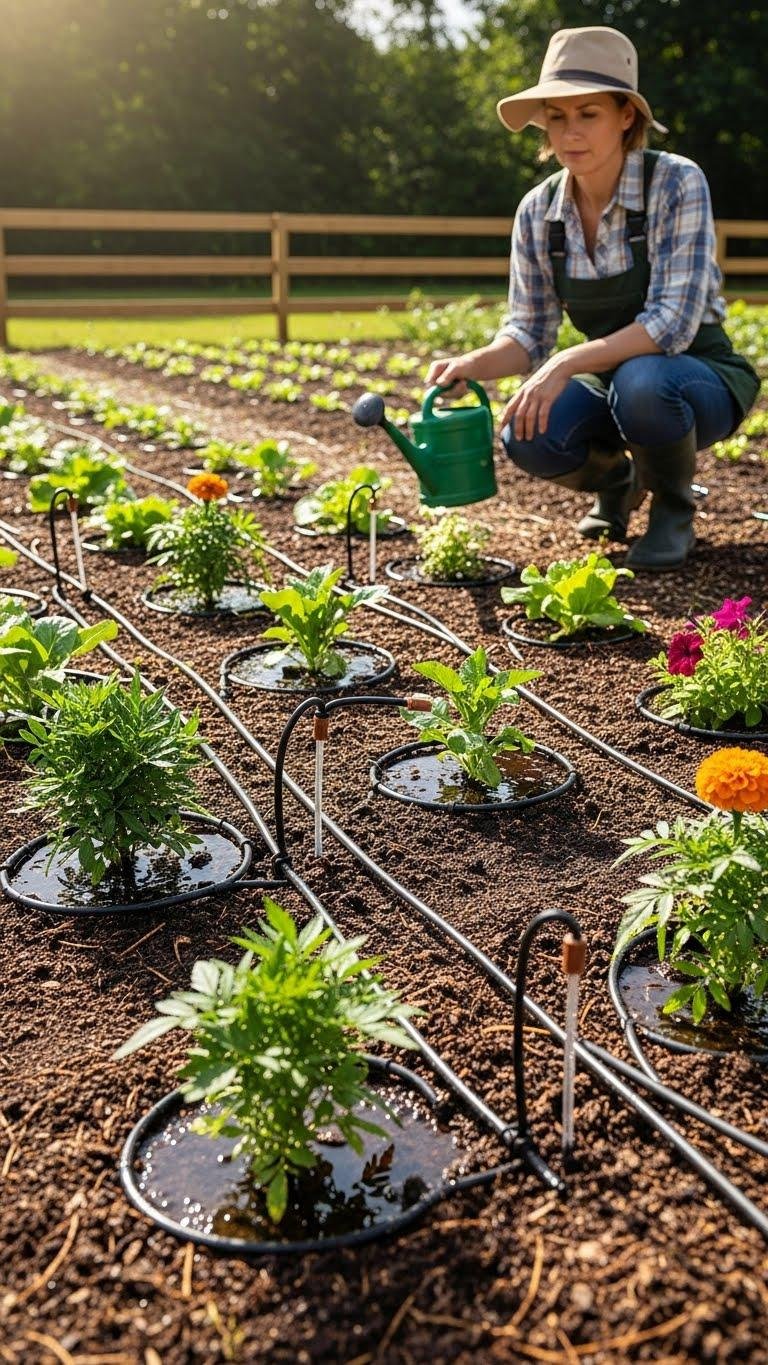
Because new transplants establish best when soil stays evenly moist, installing drip irrigation at planting time gives you precise control over water delivery and reduces transplant shock.
Set emitters for slow drip timing to encourage deep root soak, place tubing close to root zones, and run short, frequent cycles initially.
You’ll conserve water, cut weeding, and free yourself for other projects.
Start a Biodiversity Corner With Edible and Wildlife-Friendly Species
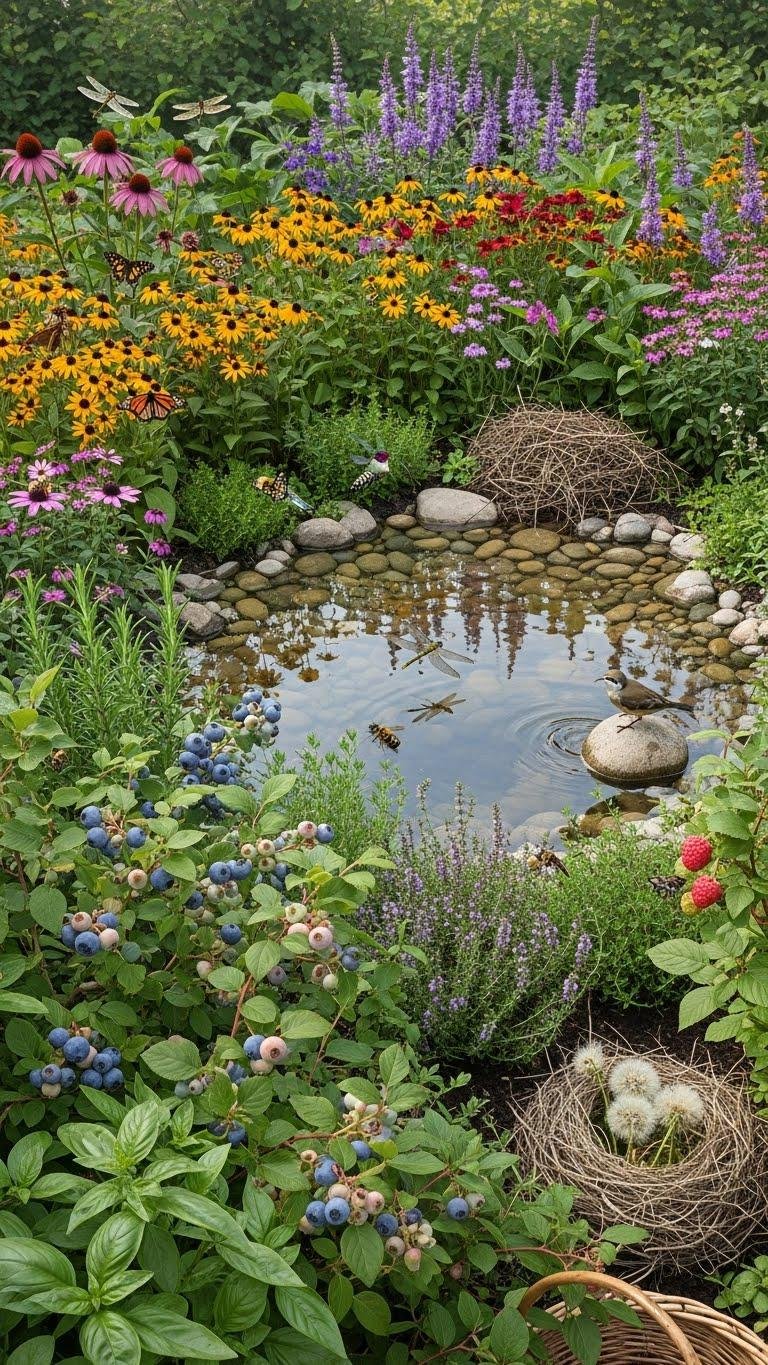
When you carve out a small biodiversity corner, aim for a mix of edible plants, native flowers, and structural elements that support pollinators, birds, and beneficial insects.
Design an edible hedgerow for fruit, herbs and shelter, place a modest wildlife pond with shallow edges, add native nectar sources and nesting materials, and maintain minimal intervention so ecosystems flourish while you harvest and enjoy freedom.
Force Bulbs Indoors for Early Cut Flowers
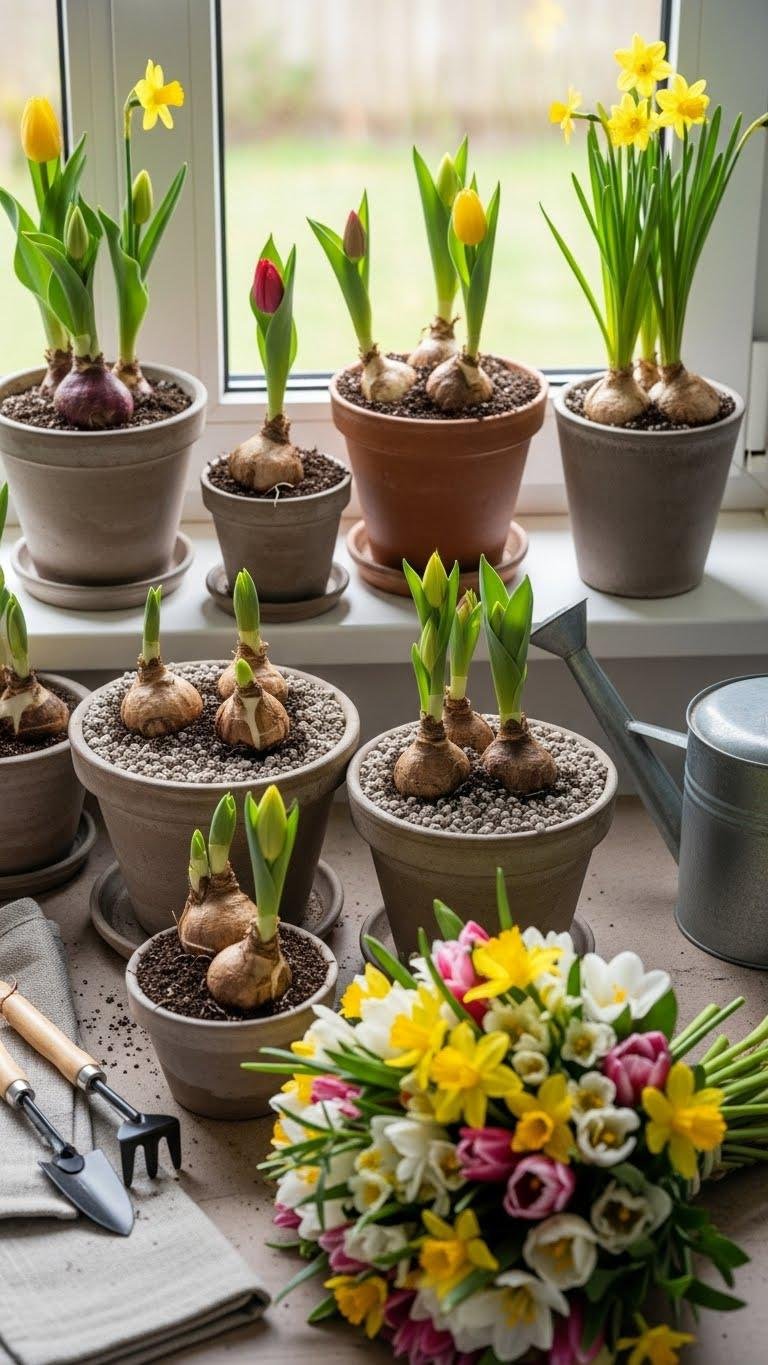
Often you’ll want blooms before outdoor bulbs awaken, so forcing bulbs indoors gives you predictable, early cut flowers for bouquets and décor. You’ll chill bulbs per instructions, pot them in gritty mix, keep roots cool, then move to bright window forcing spots when shoots appear.
Rotate containers for even growth, water sparingly, and harvest stems promptly to prolong flowering and freedom to arrange.
Refresh Fertility With Light Spring Feeding and Soil Amendment
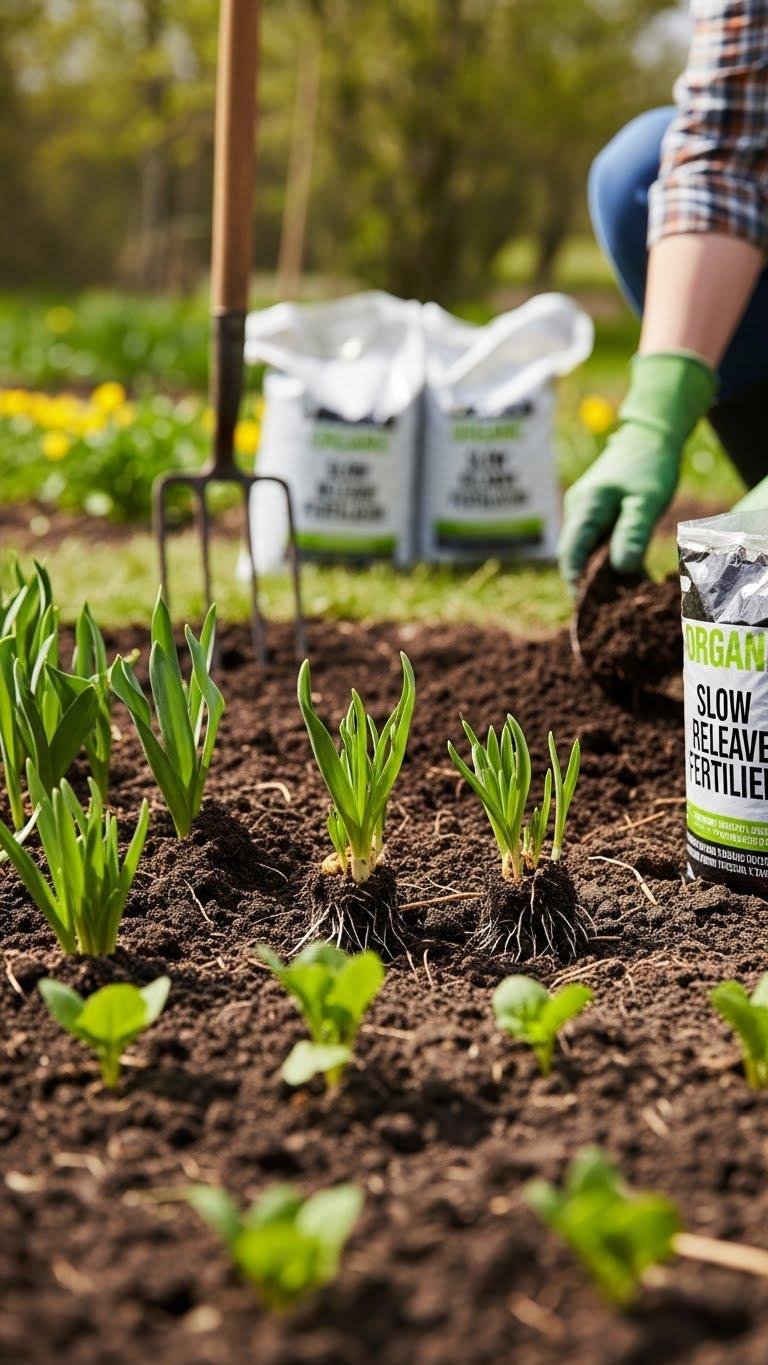
After forcing bulbs for indoor blooms, give your garden a light fertility boost to support emerging perennials and spring vegetables. You’ll top-dress with compost, apply a measured slow release fertilizer, and gently fork in loosened organic matter.
Encourage soil biology by avoiding harsh chemicals, testing pH, and matching amendments to needs so plants get steady nutrients without excess or extra work.
Design a Low-Maintenance Urban Balcony Pollinator Garden
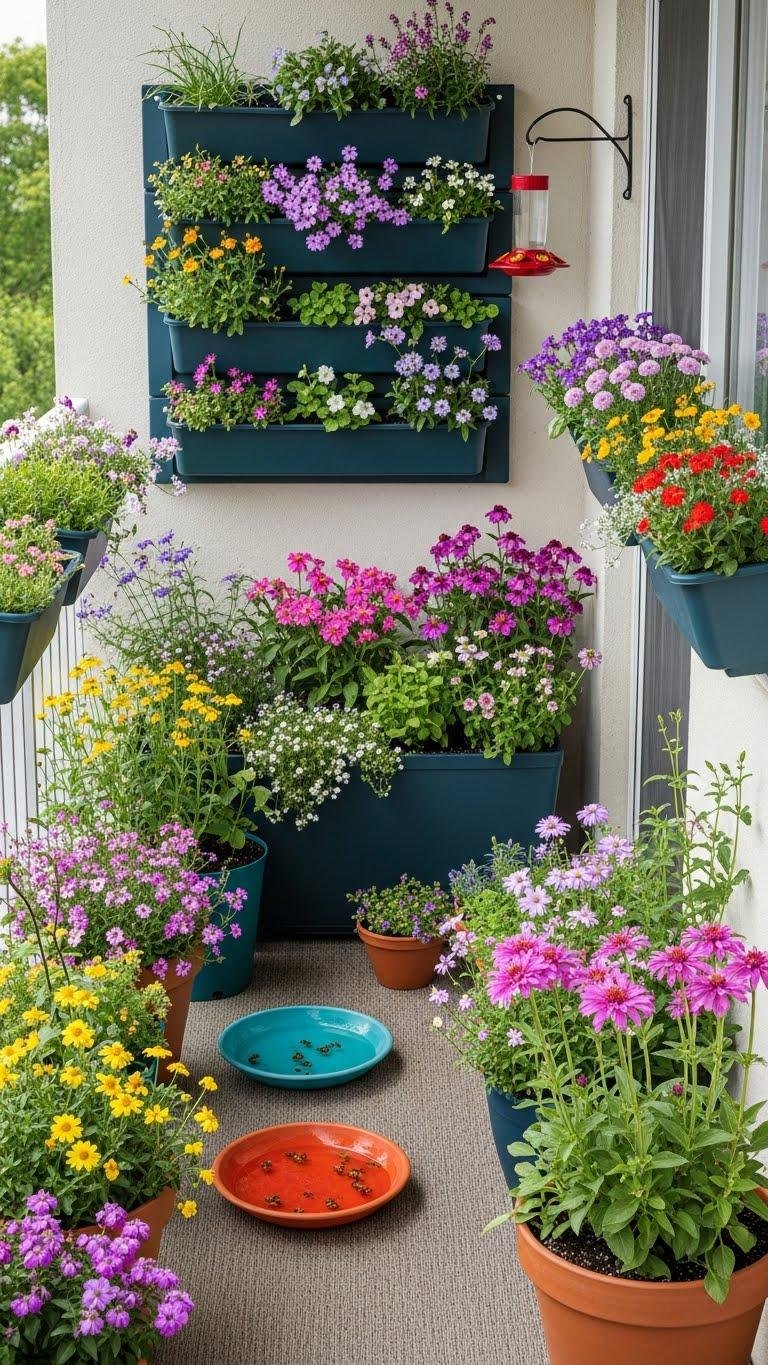
Creating a thriving pollinator garden on a compact urban balcony starts with intentional planning that balances plant choice, container design, and seasonal needs so you get maximum bloom and habitat with minimal upkeep. Choose native, low-water perennials, install vertical planters to maximize space, provide sheltered shallow water, add hummingbird feeders, use self-watering pots, group plants by sun exposure, and set a simple seasonal maintenance routine.