
You’ll find plenty of ways to use stone to add texture, form and low‑maintenance planting spots to your yard. Picture hollowed granite bowls for succulents, stacked stone towers spilling sedums, and pebble‑mosaic paths edged with thyme. Think about drainage, soil depth and plant needs as you place each piece. Keep going to see 21 practical ideas that pair stone with plants to transform every corner of your garden.
Hollowed Stone Planters for Succulents and Ferns
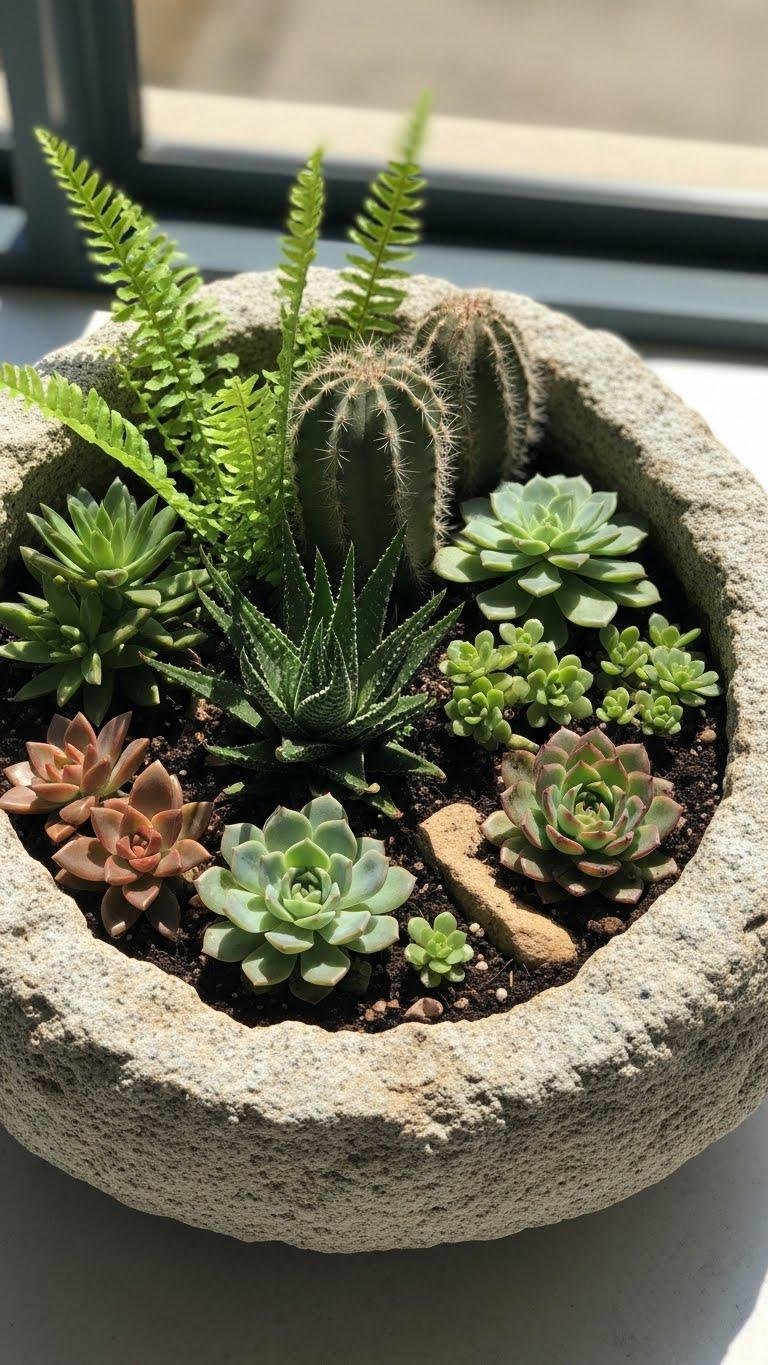
Hollow out a chunk of granite or limestone to create a low-maintenance planter that highlights the textures and shapes of succulents and ferns; the stone’s thermal mass helps regulate soil temperature while its porous surface provides natural drainage.
You’ll carve mini stonepots and arrange micro succulentbeds, placing varied leaf forms for contrast. Keep soil shallow, water sparingly, and position in bright, freeing spots for effortless, rugged beauty.
Stacked Stone Rustic Planter Towers
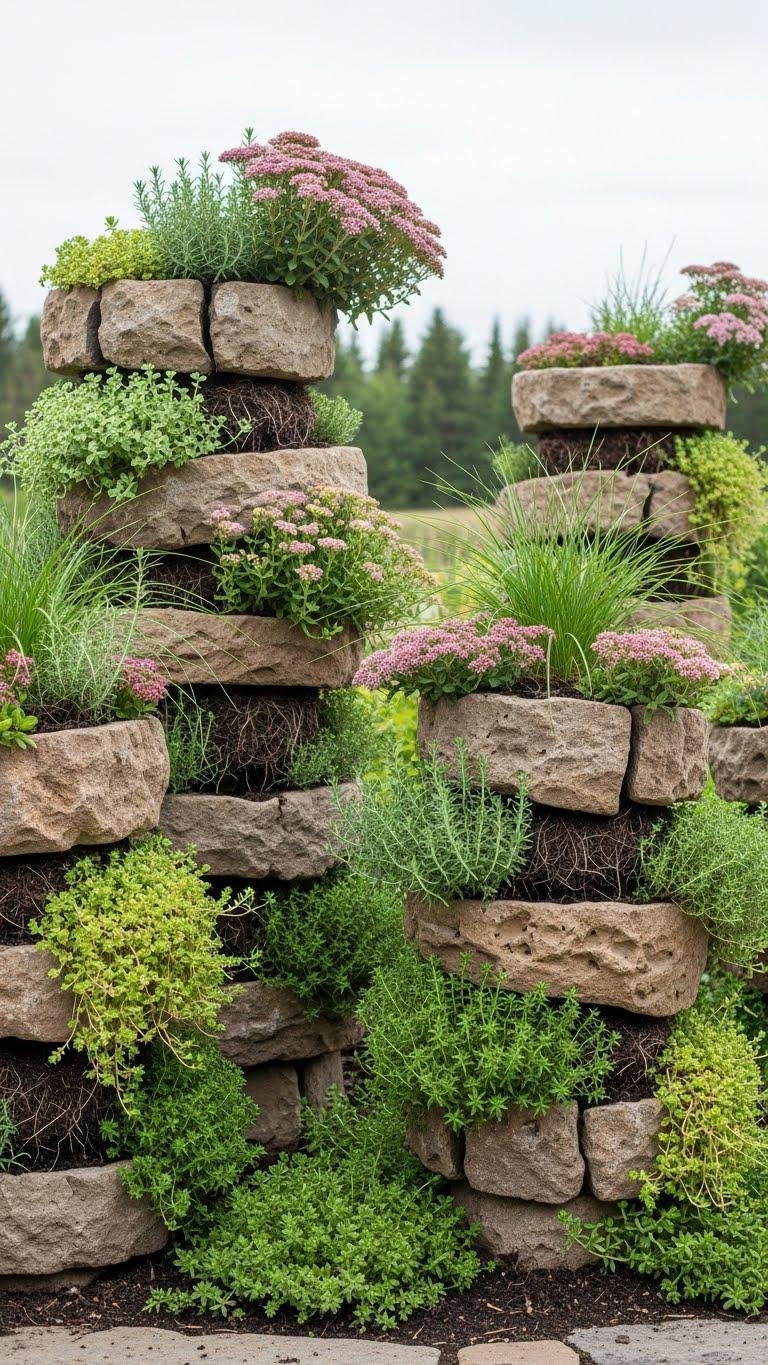
If you like the low-profile look of hollowed stone planters, try stacking rough-cut stones to build vertical planter towers that add height and drama without losing that rugged, low-maintenance feel.
You’ll create stacked planters that showcase trailing sedums, herbs, and dwarf grasses. Arrange rustic towers in clusters for wind-swept silhouettes, leaving gaps for roots and drainage so plants thrive with minimal fuss.
Polished River Stone Accents Around Pots
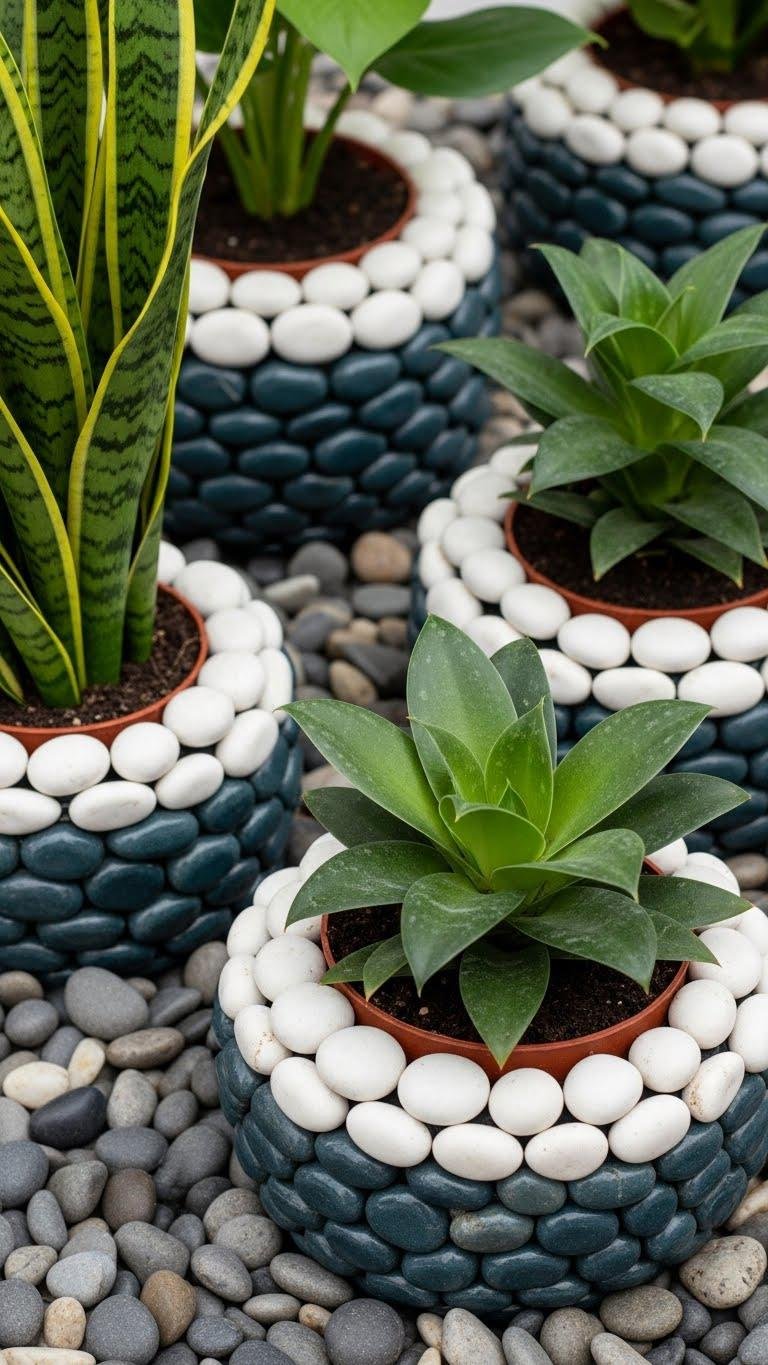
Ground a clean, finished look by edging pots with polished river stones that catch light and channel water away from vulnerable stems. You’ll place glossy pebble rings as container edging, keeping soil in place and roots cool.
The river smooth texture creates mini mosaics around each pot, highlighting foliage lines and letting you arrange, swap, or expand displays for carefree, plant-forward freedom.
Large Stone Containers for Statement Plants
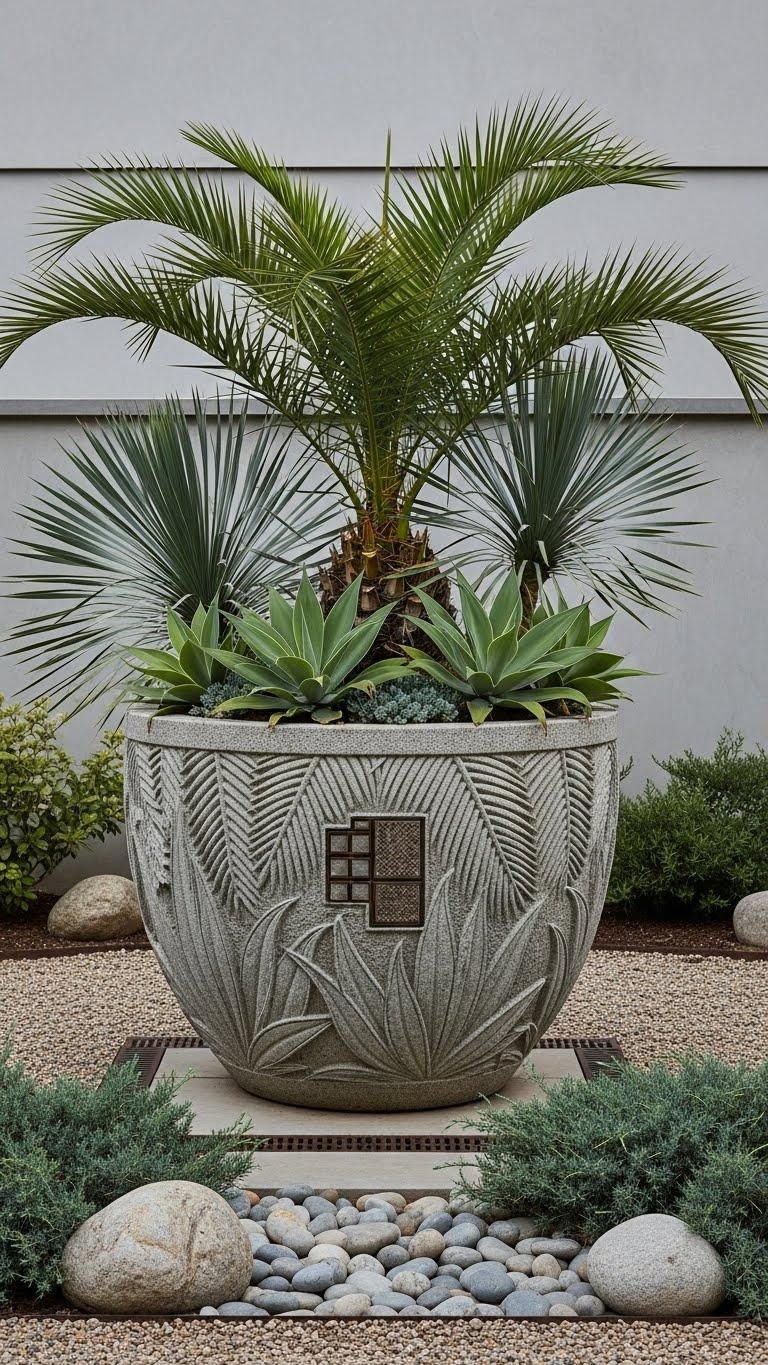
Anchor your largest specimens in substantial stone containers that read as sculpture as much as pots. You’ll pick pieces with dramatic scale to balance bold palms, agaves, or specimen shrubs.
Choose weather resistant finishes and deep drainage so roots thrive. Place them as focal anchors, rotate seasonal plantings, and let the heavy form free you from constant rearranging — bold, low-maintenance, and gallery-like.
Multi-Tiered Stone Fountain With Cascading Tiers
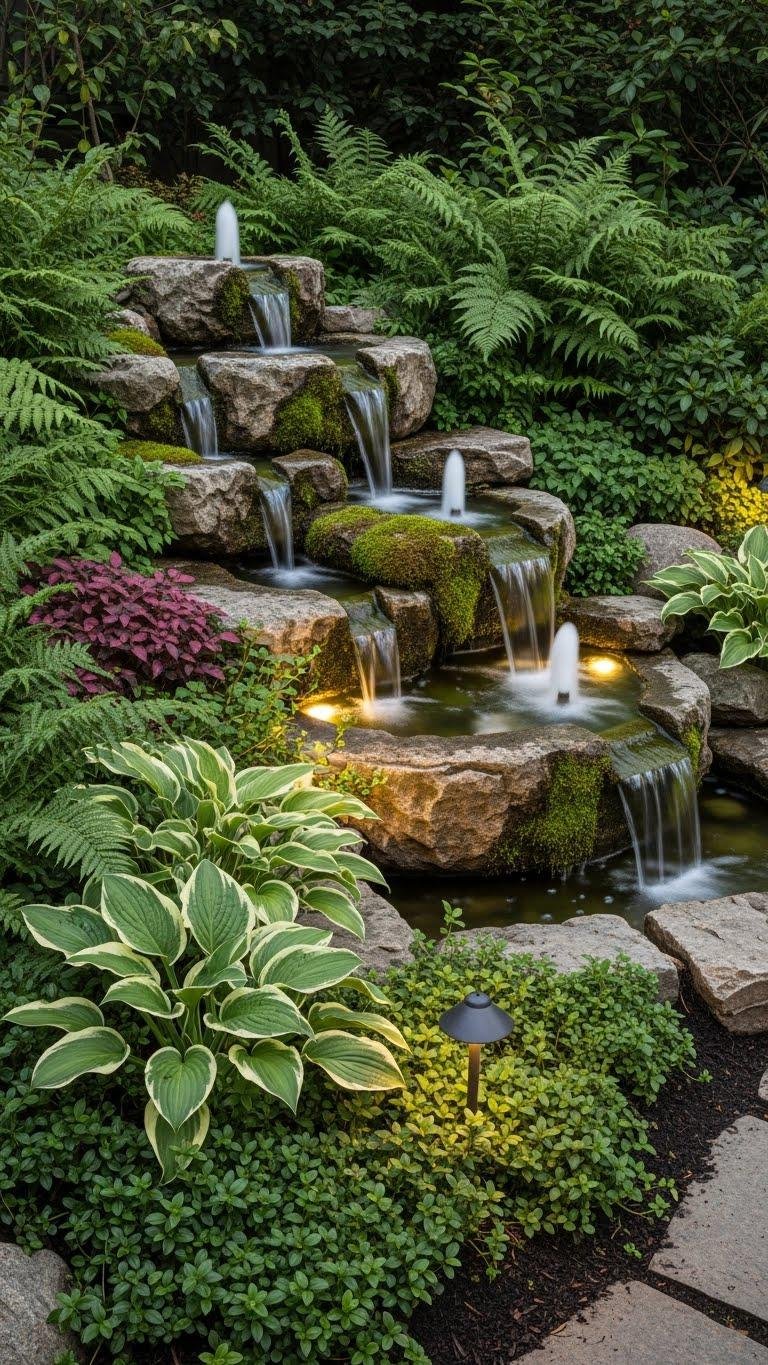
When you place a multi-tiered stone fountain amid beds and specimen pots, its cascading tiers add both height and a gentle soundtrack that benefits nearby moisture-loving plants like ferns, hostas, and moisture-tolerant groundcovers.
You’ll position moss accents in crevices for texture, let overflow feed root zones, and use subtle ambient lighting to extend evening enjoyment while keeping maintenance simple and freeing your planting design.
Red Sunset Marble or Greek Goddess Fountain Feature
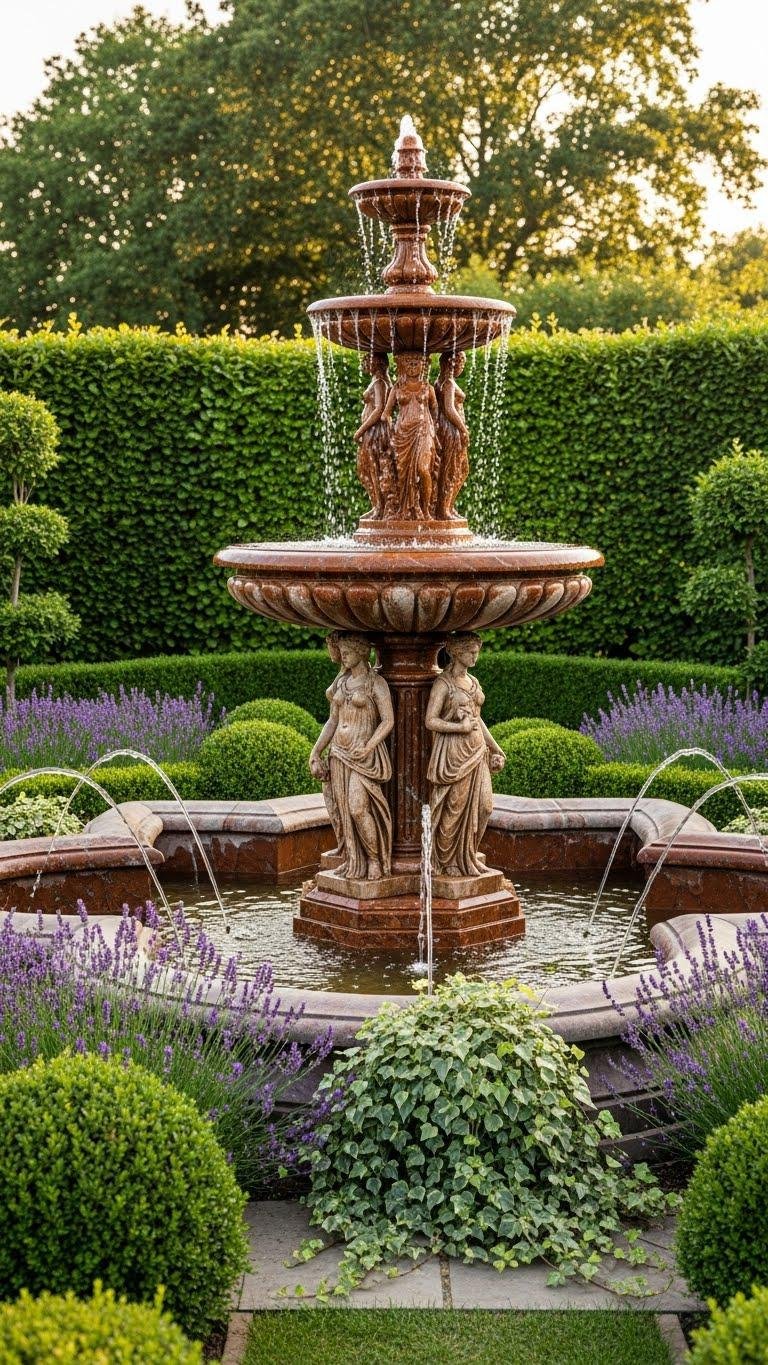
Shift from the soft, mossy tones of a tiered fountain to a bold Red Sunset marble or Greek goddess feature, and you’ll instantly change the garden’s mood from cottage cool to classical warmth.
You’ll place a red sunset marble fountain amid sculpted boxwood, fragrant lavender, and trailing ivy so water highlights foliage lines, invites birds, and gives you a free, timeless focal point.
Smooth River Rock-Lined Pond Edges
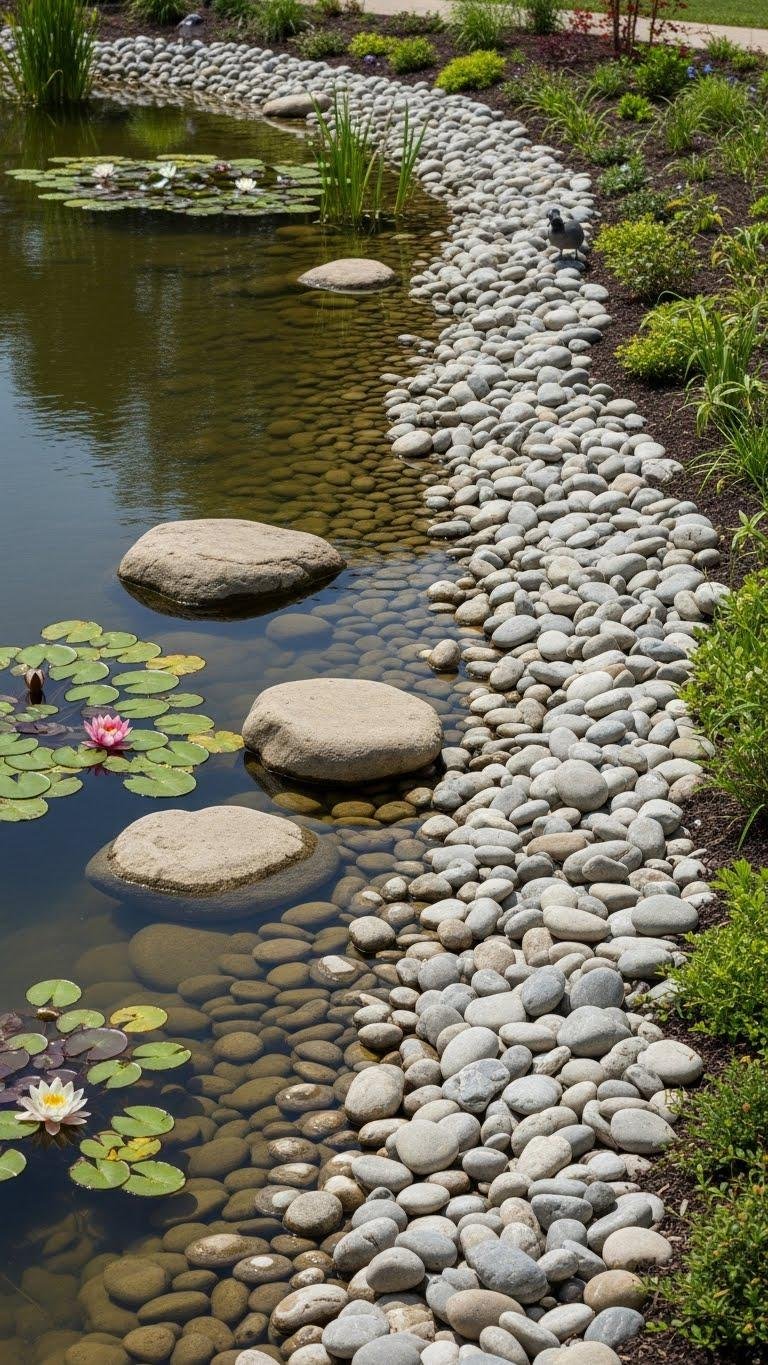
If you edge your pond with smooth river rocks, you’ll create a clean, natural shift from water to planting beds that emphasizes texture and movement.
Arrange varying sizes so water lilies can root near shallow edges while open stones offer basking spots.
You’ll invite frogs and birds, enhancing wildlife habitat, and keep plantings accessible for maintenance without feeling confined.
Pebble-Shimmer Water Basin With Clear Water
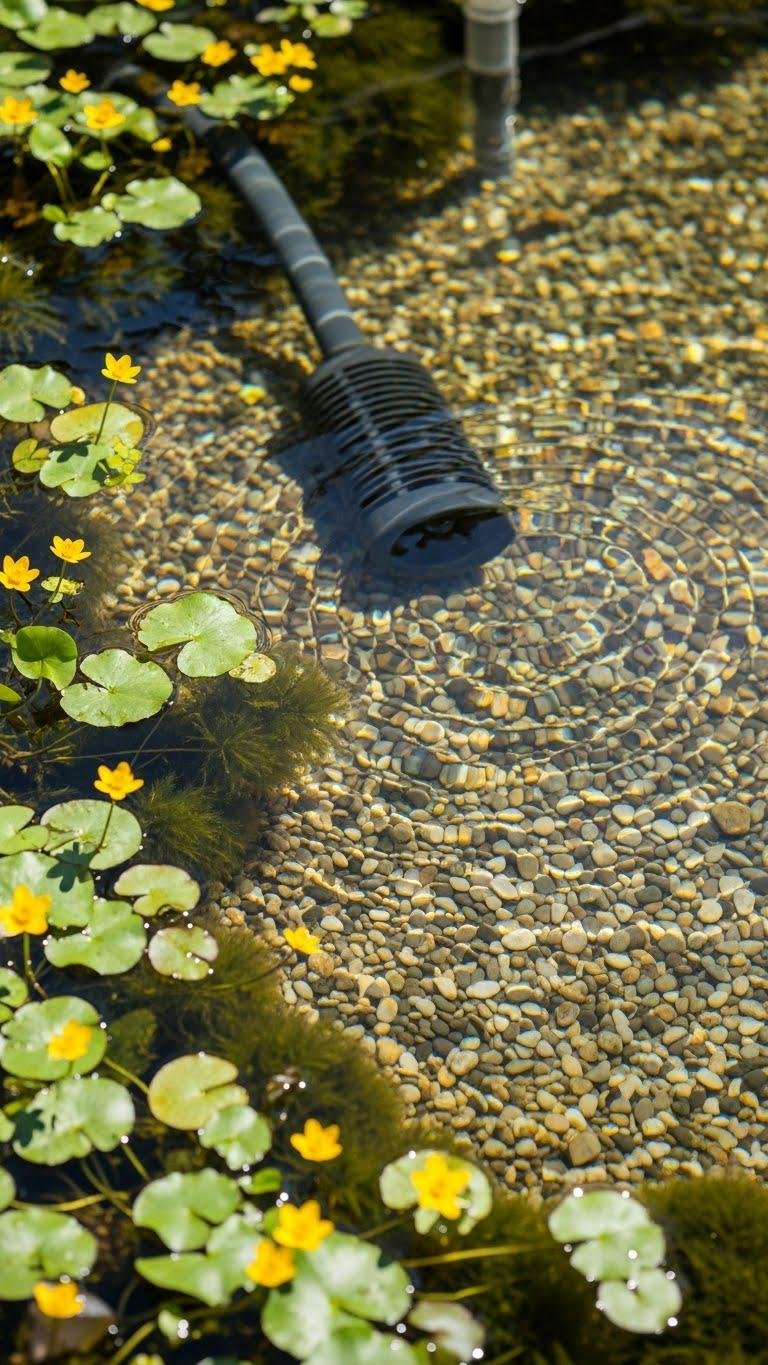
A shallow basin filled with tiny polished pebbles turns clear water into a shimmering stage for aquatic plants and reflected light. You’ll place a low glittering basin where sun and shade meet, tuck marsh marigolds or dwarf water lilies at the edge, and watch translucent ripple patterns soothe the space.
Maintain clarity with gentle filtration and occasional leaf skimming for effortless freedom.
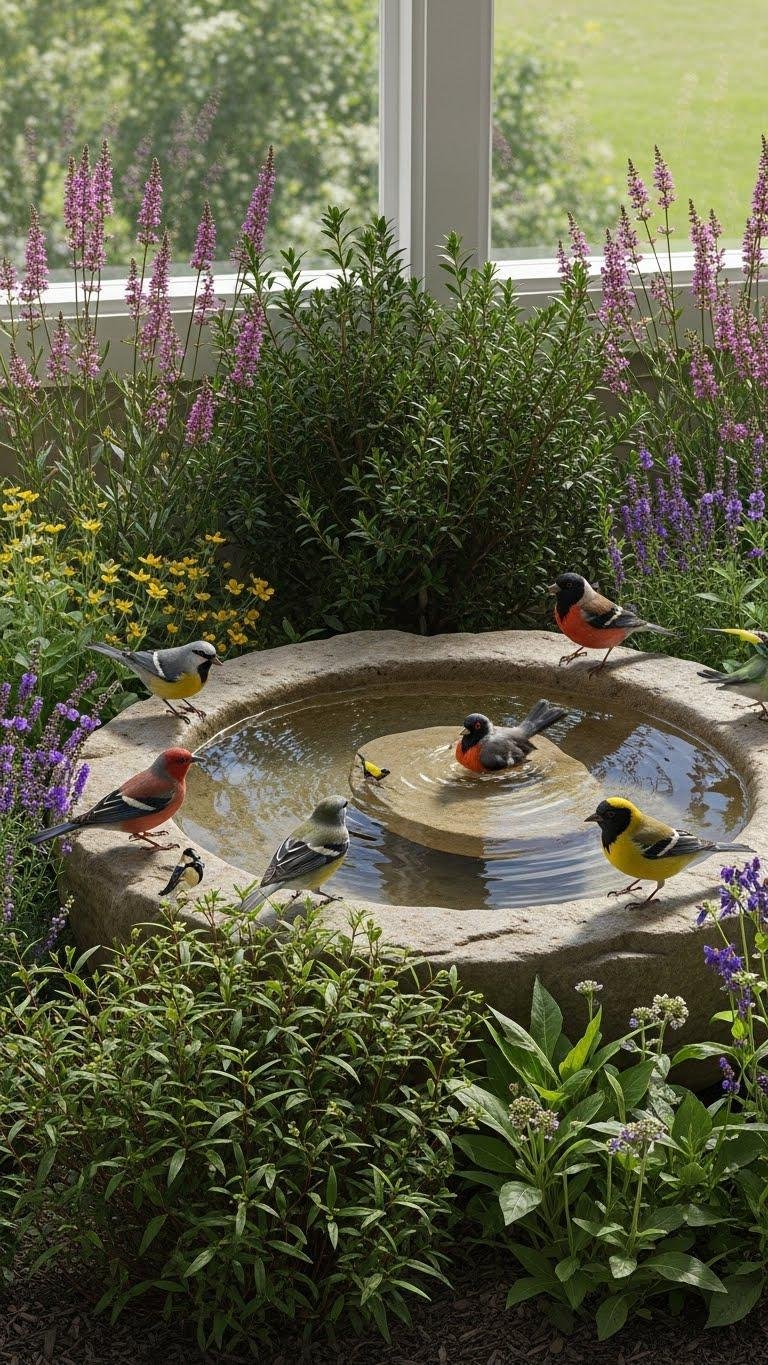
Stone Bird Bath Sanctuary to Attract Birds
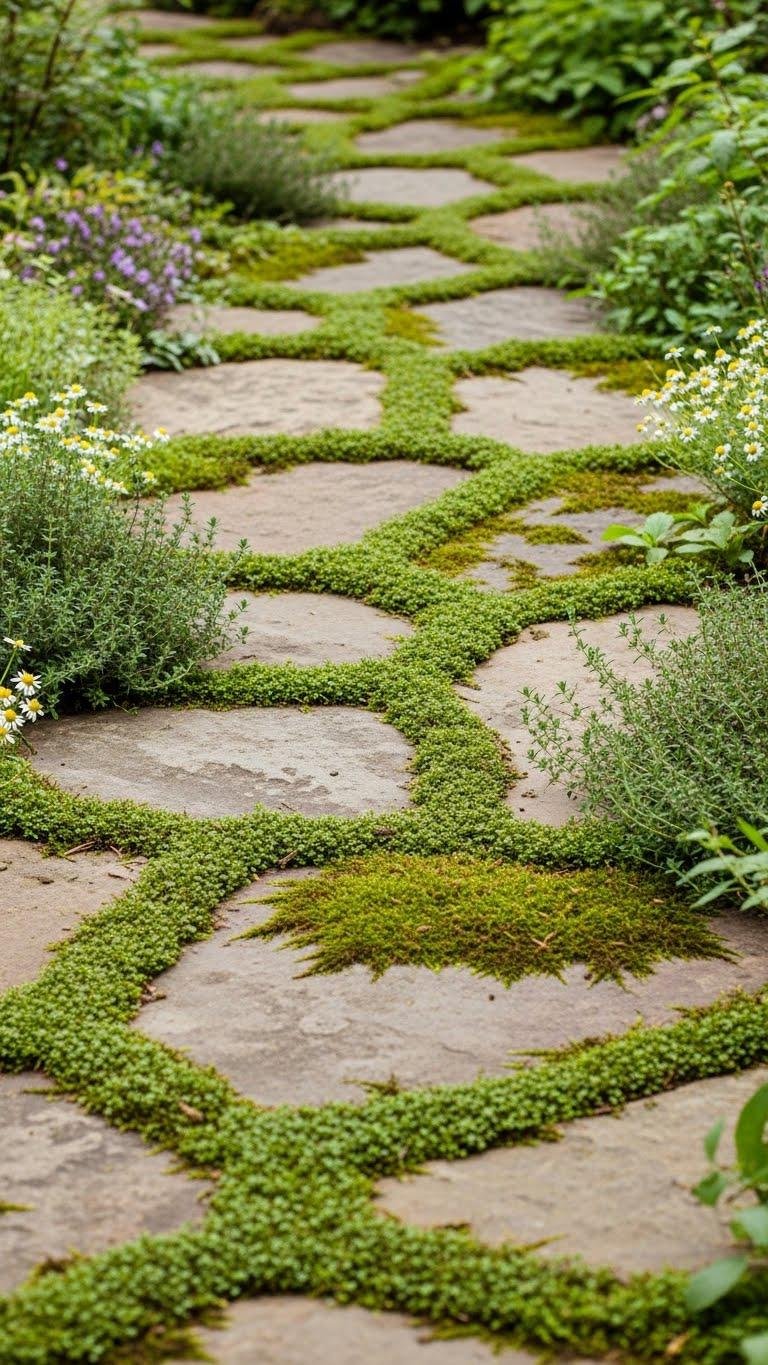
Flagstone Stepping Path for Natural Flow
Pebble Mosaic Path With Flower or Wave Patterns
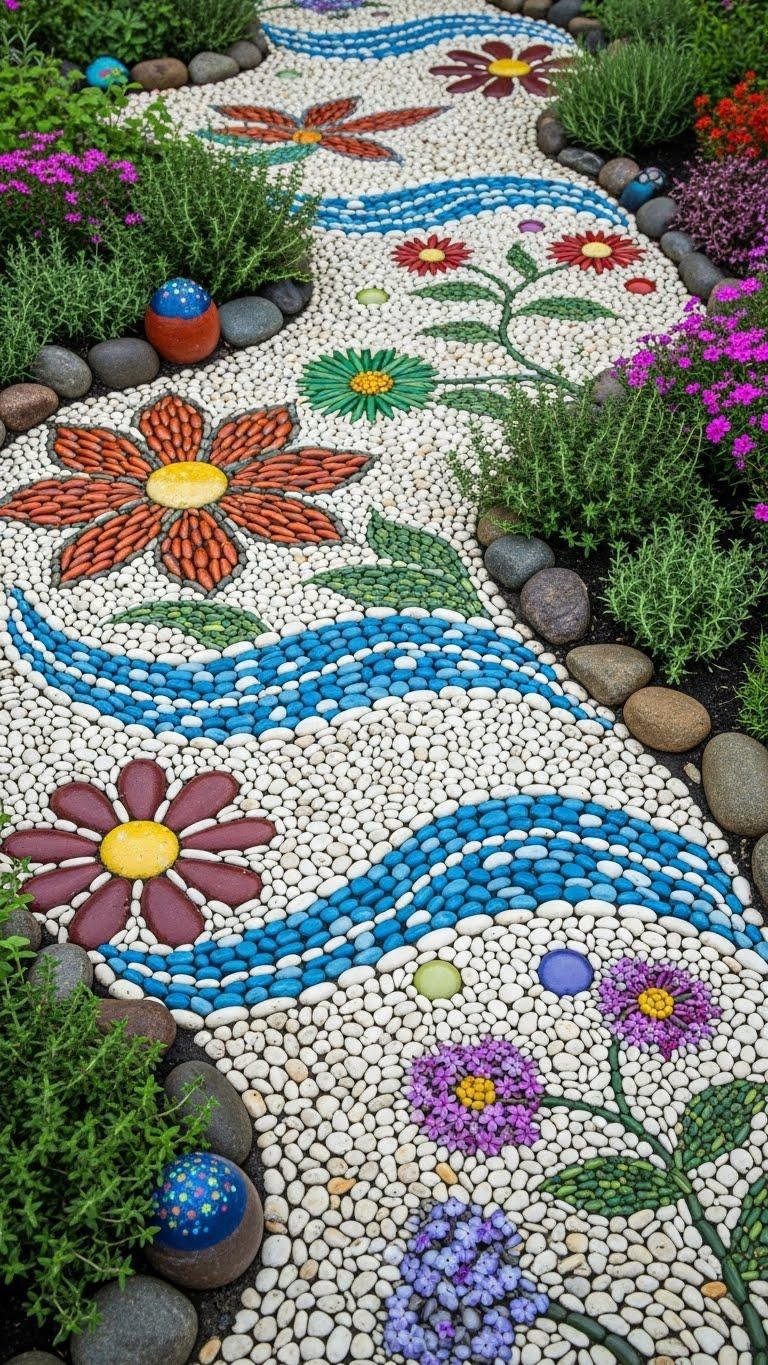
Lay smooth, contrasting pebbles into a shallow bed to create a mosaic path that guides the eye with floral or wave motifs, and plant low-growing herbs like thyme, sedum, or creeping phlox between the stones so the designs feel alive and fragrant underfoot.
You’ll set hand painted accents or glow pebbles heat resistant for night interest, then lock patterns with mosaic sealant for lasting, carefree freedom.
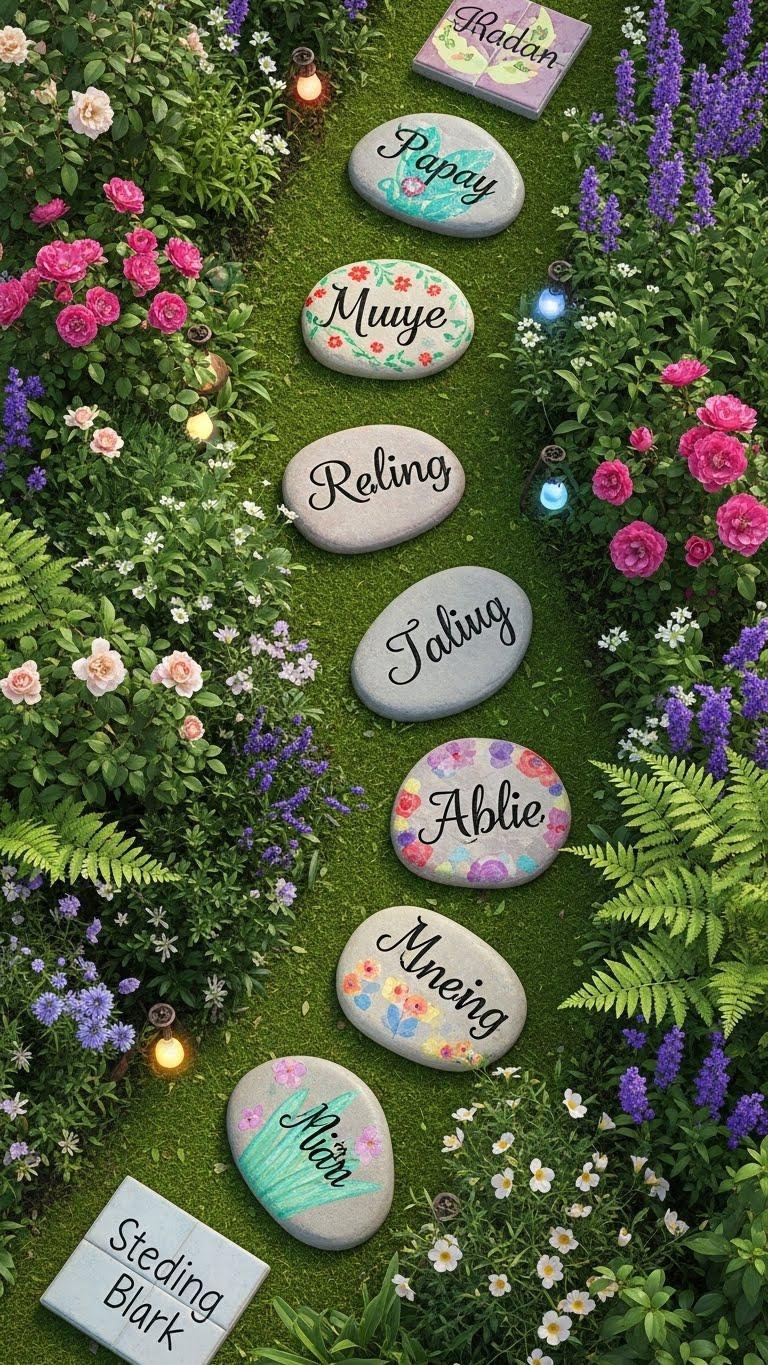
Engraved or Painted Stepping Stones for Whimsy
Lined Garden Walkways With Polished Pebbles
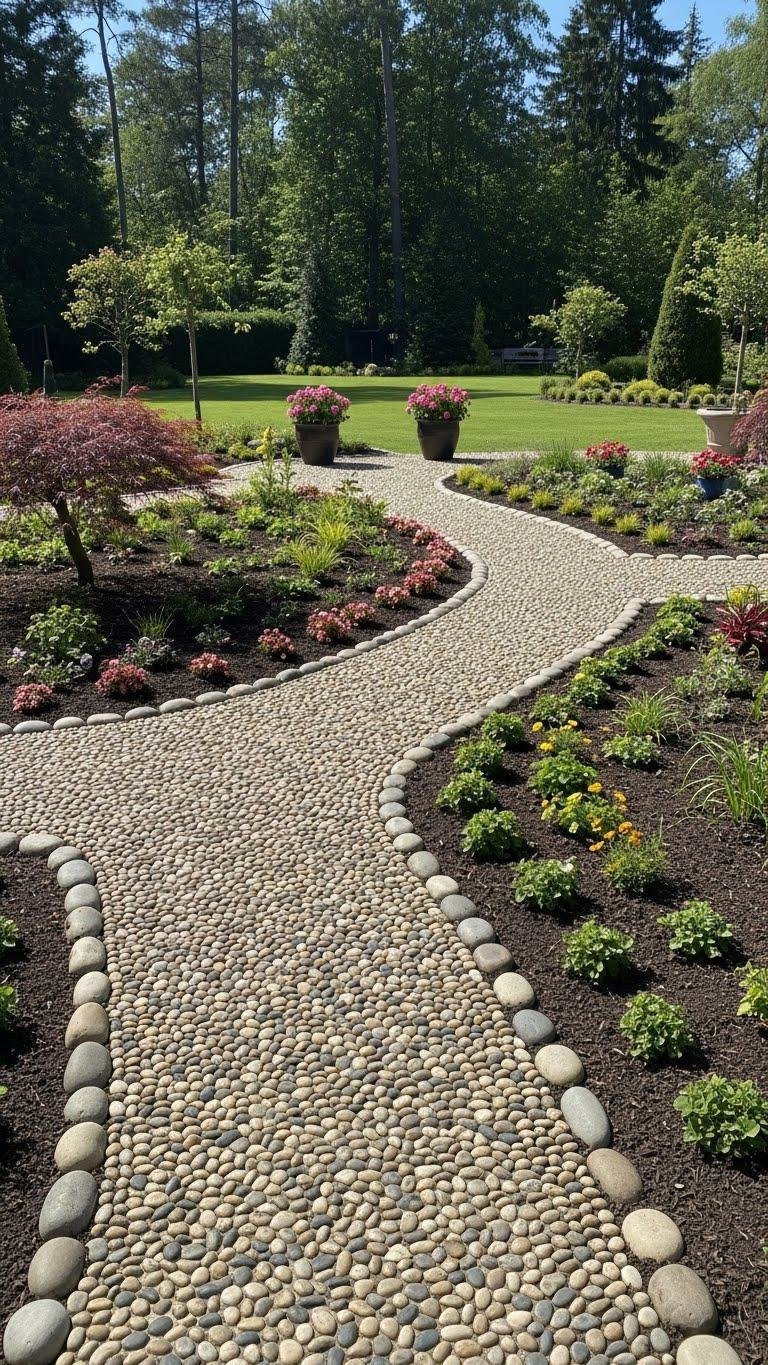
After the playful charm of painted stepping stones, you can frame a more refined route with lined garden walkways using polished pebbles. You’ll edge beds and borders with a low, tidy ribbon of smooth pebble, guiding sightlines to specimen plants and herbs.
A polished path catches light, defines movement, drains well, and keeps soil off foliage so your garden feels open and free.
Dry Stone Boundary Walls for Rustic Charm
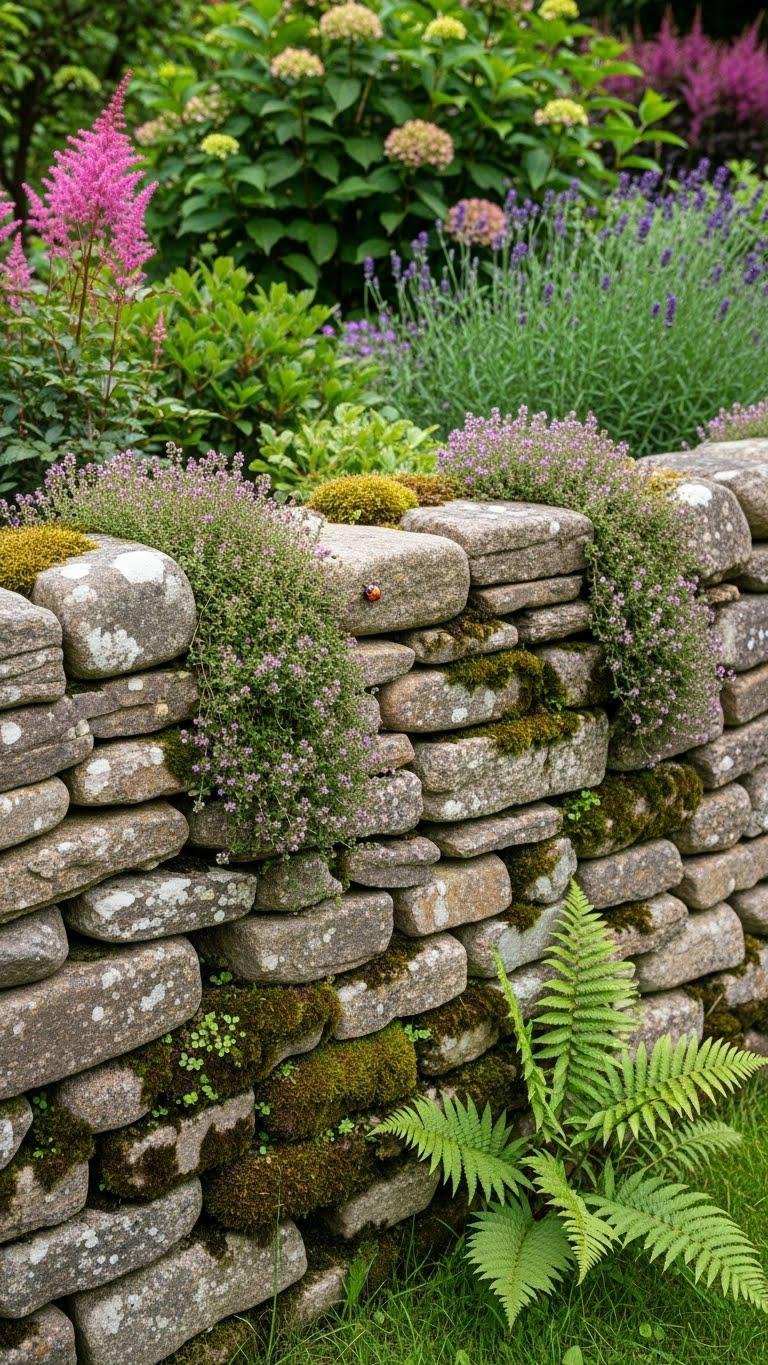
When you place stacked stones without mortar, you create a boundary that feels both natural and intentional, its rough textures echoing the shrubs and perennials it frames.
You’ll learn heritage techniques that lock stones by shape and gravity, letting trailing thyme and ferns root between seams. Skip weatherproof mortar to keep the wall breathable, maintainable, and alive with moss and insects.
Flat Stone Flower Bed Frames to Prevent Weeds
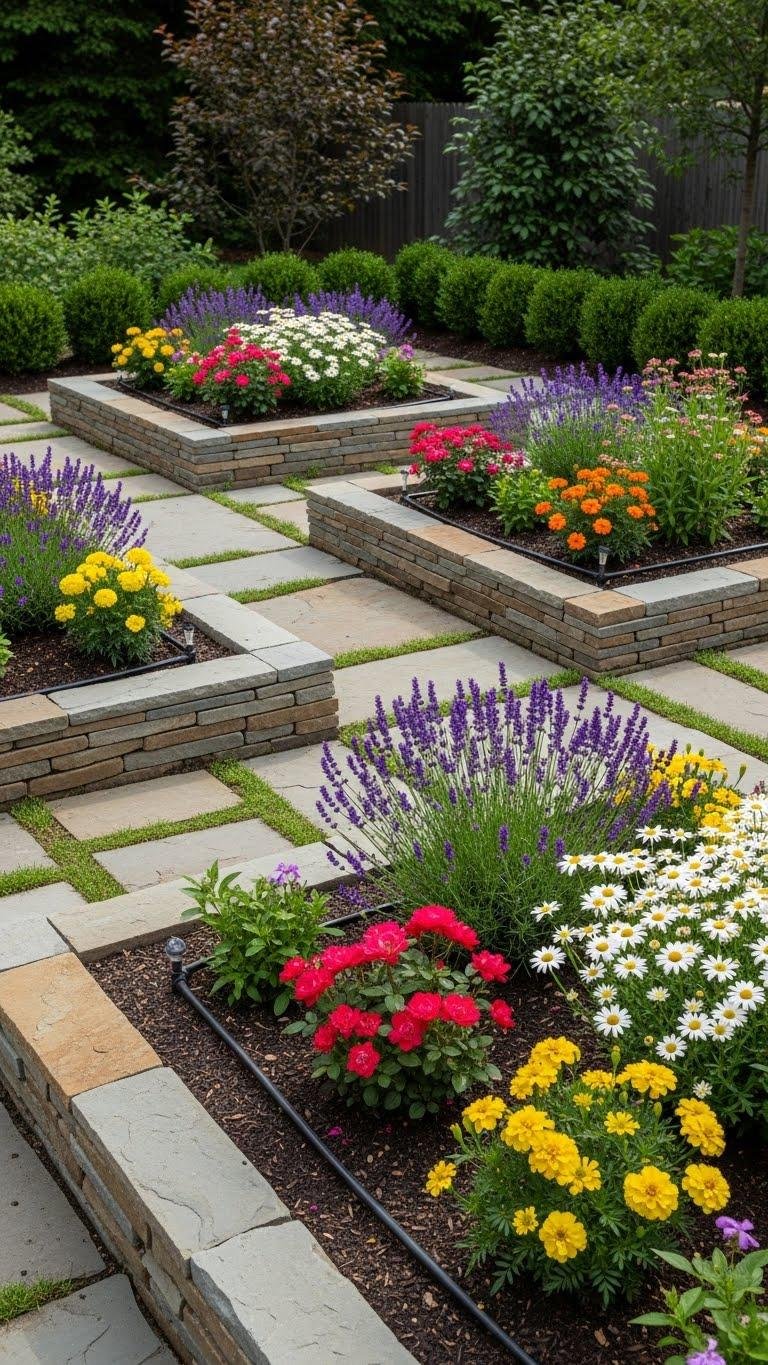
If you’ve enjoyed the tactile, breathable feel of a dry stone wall, you can bring that same low-maintenance logic closer to your plants with flat stone flower bed frames that keep weeds at bay.
You’ll edge perennial borders with slim, stacked slabs, creating defined beds that shed weed pressure.
Lay drip irrigation beneath stones, sculpt paths, and tend freely without constant weeding.
Retaining Stone Walls for Slope Control
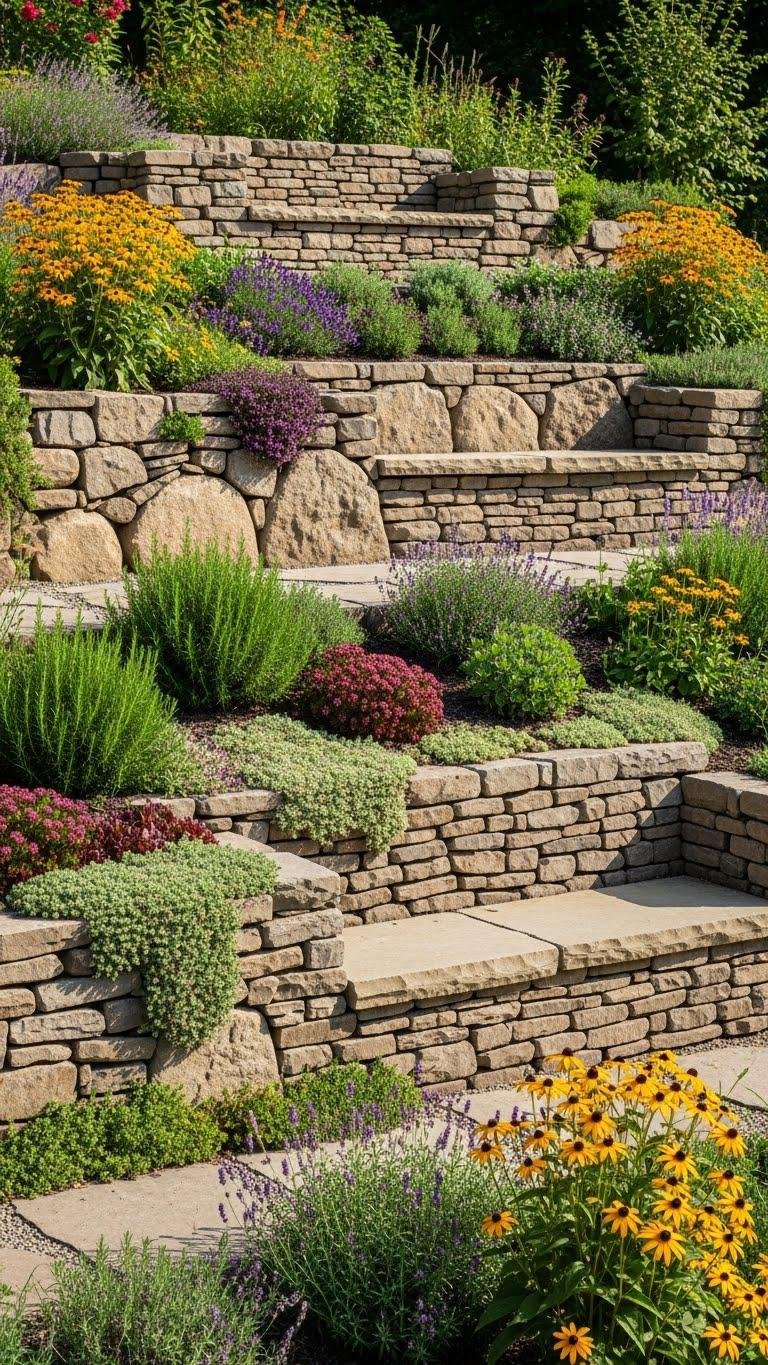
Though slopes can seem like a challenge, you can turn them into usable, planted terraces with retaining stone walls that both hold soil and create distinct growing zones.
You’ll design terraced grading to slow runoff, using stones for erosion mitigation while carving beds for herbs, succulents, and native perennials.
Low walls double as seating and paths, giving you freedom to plant, wander, and cultivate.
Stone Cairns and Balanced Zen Towers
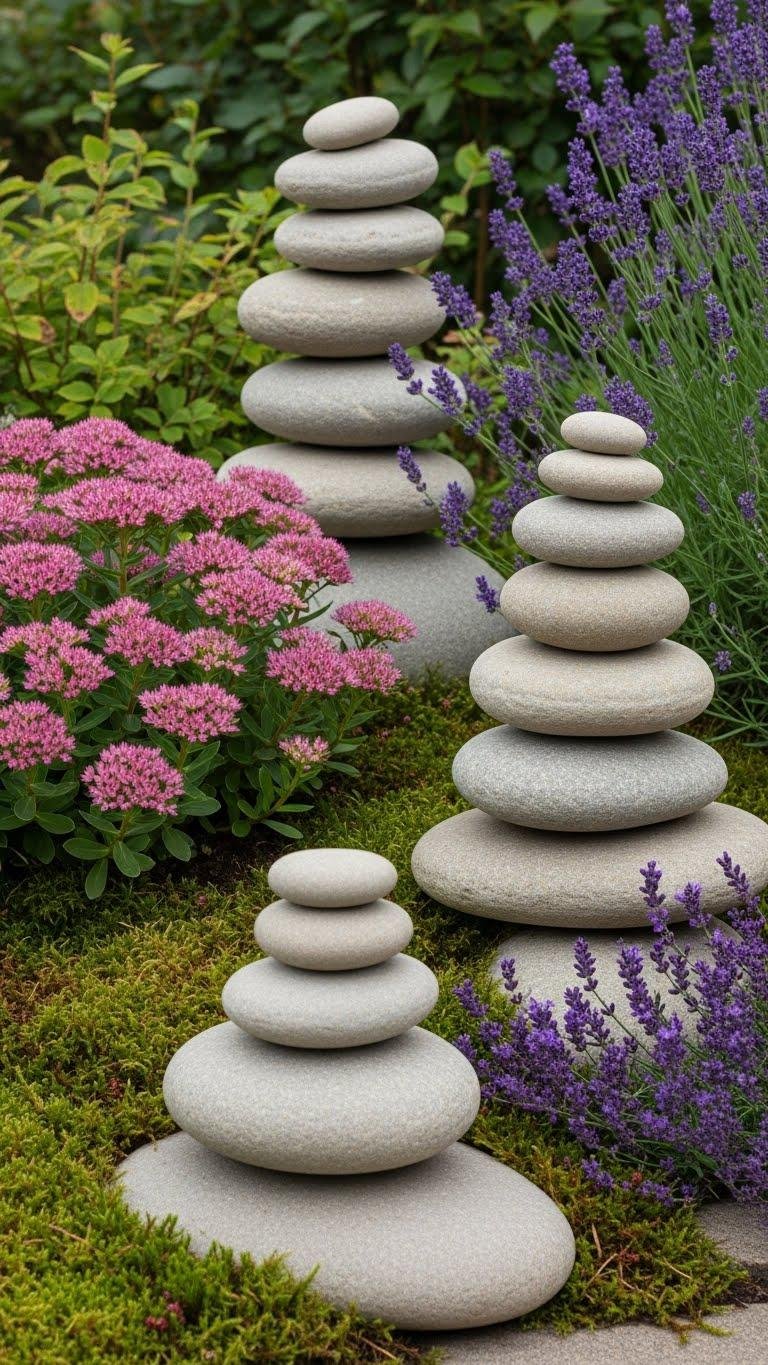
Stack smooth, flat stones into simple cairns or elegant balanced towers to add vertical interest and gentle focal points among plantings. You’ll place stacked cairns near moss, sedums, or lavender to lift beds without crowding roots.
Build breathing towers with wide bases, narrow tops, and stable cores so air and light reach surrounding foliage. Move them freely to change garden rhythm.
Abstract Stone Sculptures as Modern Focal Points
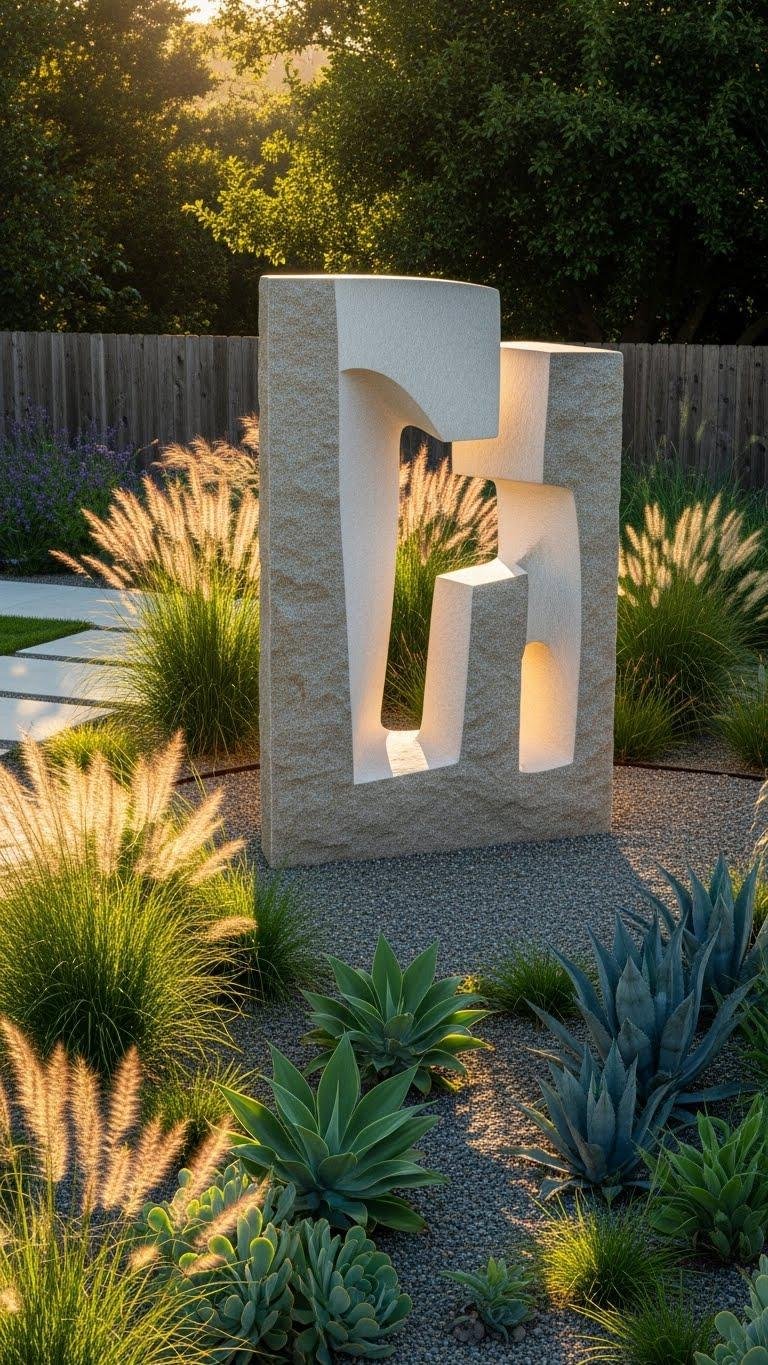
When you place an abstract stone sculpture amid plantings, it becomes a clean, modern anchor that frames foliage and movement without stealing the show.
You’ll choose pieces with minimalist forms and geometric voids to echo grasses and sculptural succulents. Position it with room to breathe, letting shadows, wind, and seasonal growth interact so your garden feels open, intentional, and free.
Carved Animal Stone Figures Like Birds and Turtles
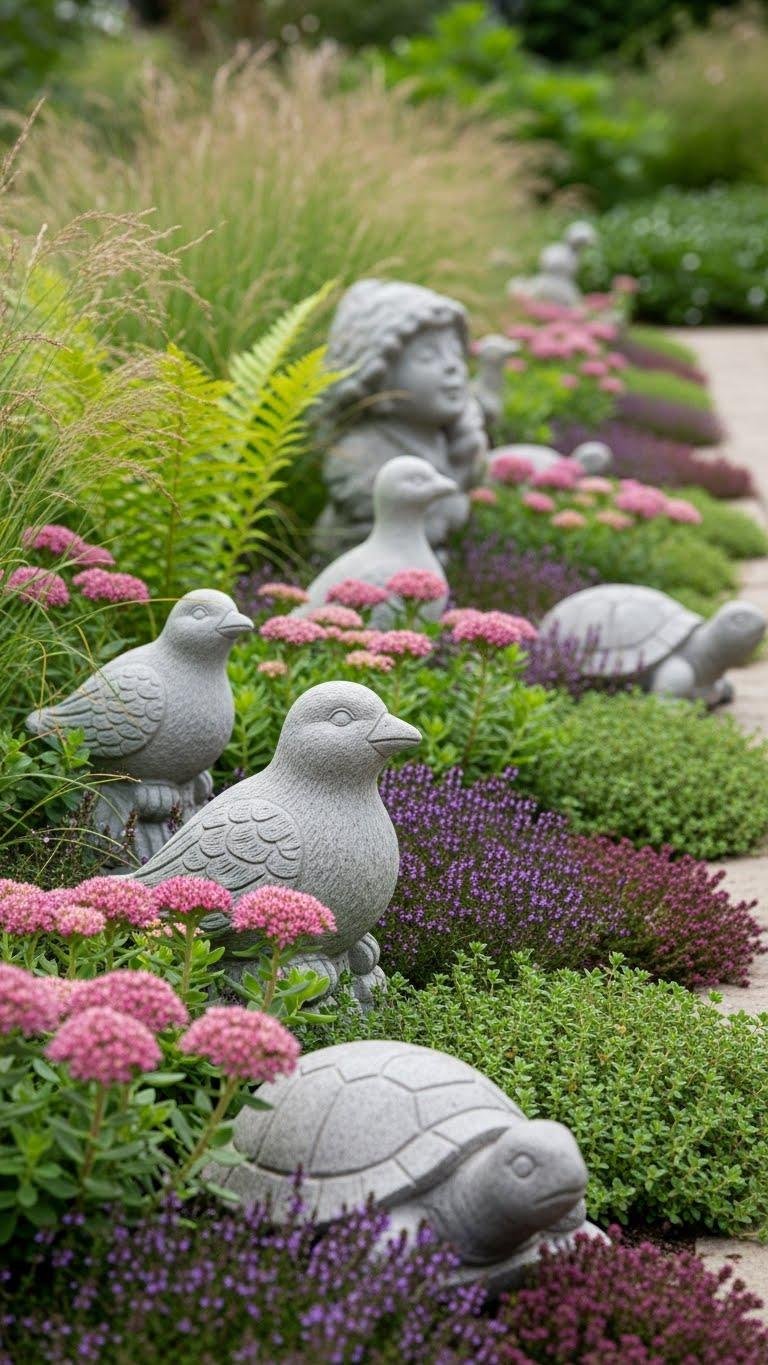
A carved bird or turtle can become a charming counterpoint to swaying grasses and low groundcovers, giving you a sense of personality without overwhelming the planting.
You’ll place hand carved figures among sedums, thyme, or ferns to echo scale and texture. Wildlife motifs invite quiet movement, draw pollinators, and anchor small beds.
Position them where sightlines meet paths for effortless, free-spirited charm.
Multi-Tiered Rock Garden Beds for Dimension
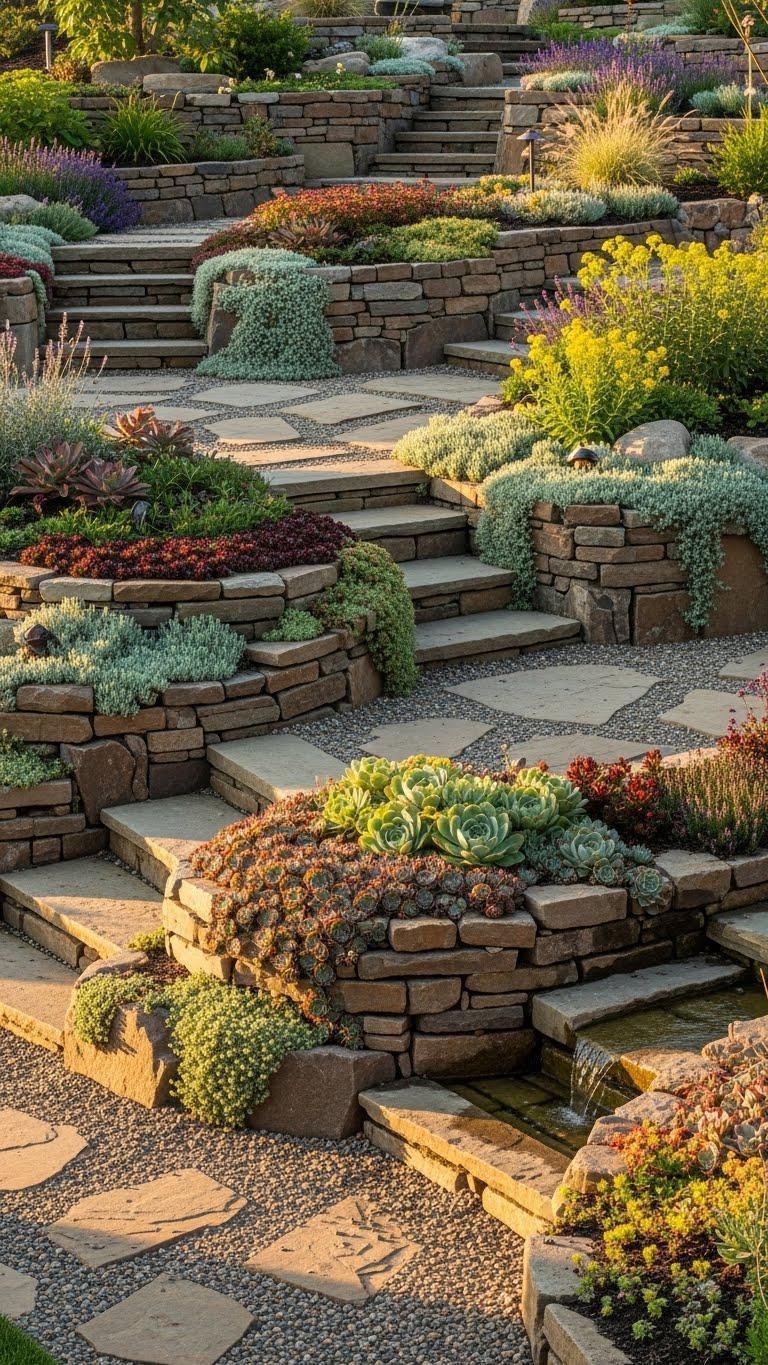
Because elevating your beds lets you play with height and soil depth, multi-tiered rock gardens create pockets where different plants can thrive together without competing for the same conditions.
You’ll arrange layered succulents, alpine herbs, and drought-tolerant perennials on terraces of stone. Use stepped irrigation to water precisely, sculpt sightlines, and leave paths for wandering hands and open, carefree planting decisions.
Dry Creek Bed With Mixed Pebbles and River Rocks
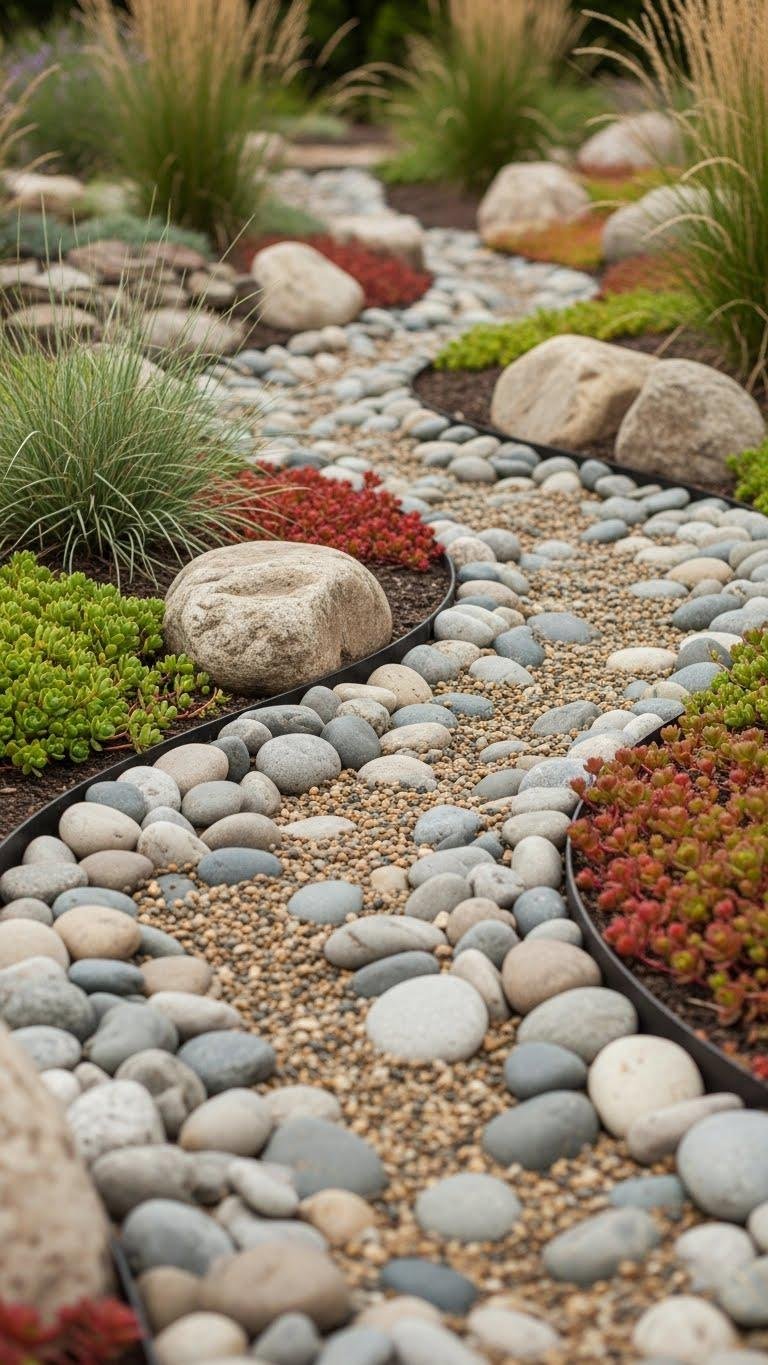
Shift from terraces to a flowing dry creek bed to add movement and texture to your stone garden; mixed pebbles and river rocks mimic a natural watercourse while giving roots excellent drainage.
You’ll contour a sinuous line with riverbed edging, plant drought-tolerant grasses and sedums along banks, and arrange a pebble gradient from coarse to fine to guide runoff and create a liberated, low-maintenance oasis.