
You’ll find compact, sculptural ideas that make succulents look intentional, not accidental. Each setup shows how shape, texture, and shallow containers work together, with quick tips on soil, drainage, and watering. They suit windowsills, side tables, and tiny niches, and they’ll change how you think about indoor greenery—so pick a style and you’ll be ready to try one that fits your light and space.
Classic Rosette Centerpiece for a Sunny Shelf
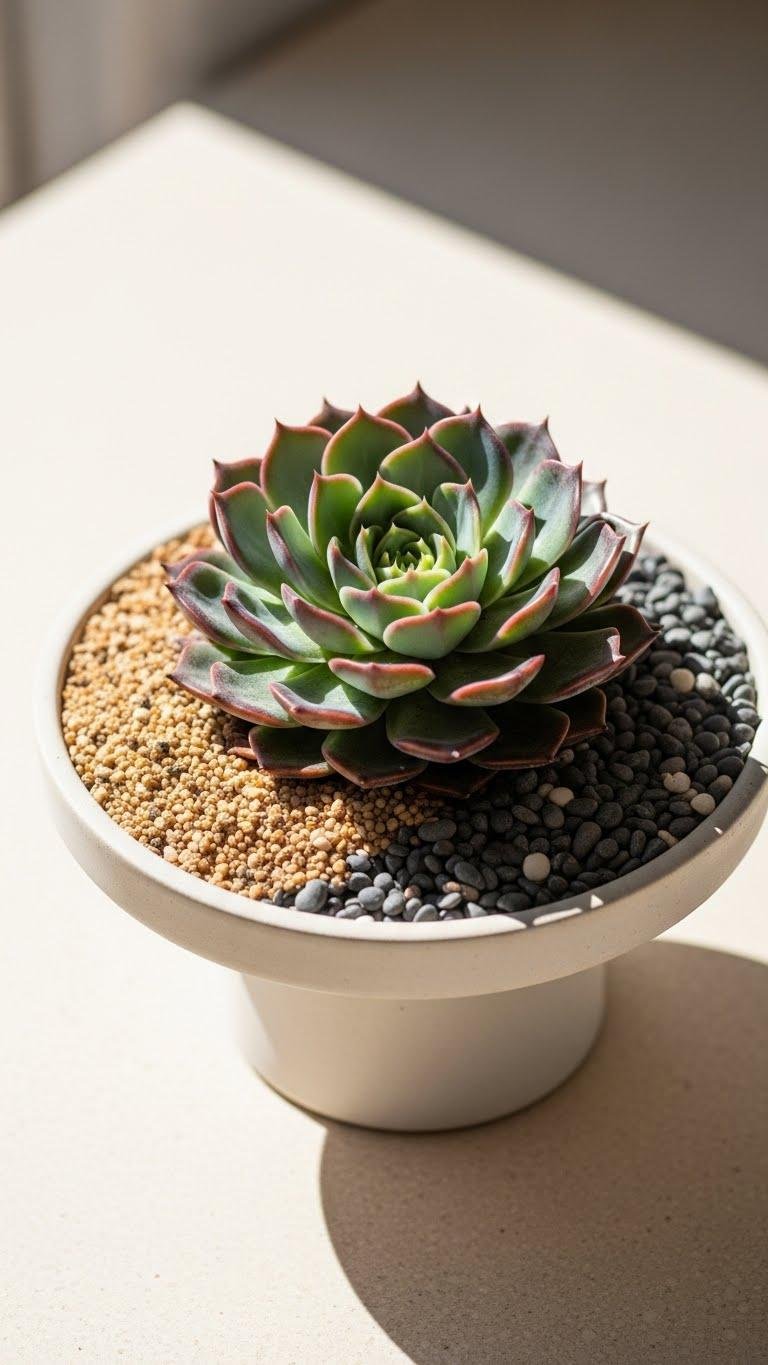
Want a low-fuss centerpiece that still looks sculptural? You’ll place a sunlit rosette on a shallow tray, pair it with gravel for contrast, and set it atop a simple ceramic pedestal.
Keep soil gritty, water sparingly, and rotate weekly so leaves stay even. You’ll enjoy a bold, free display that needs little fuss but reads deliberate and alive.
Low-Light Sansevieria and Haworthia Corner

Often overlooked, a corner planted with Sansevieria and Haworthia gives you sculptural, low-maintenance greenery that thrives where light is limited.
Place a vertical cluster of tall Sansevieria behind compact Haworthia rosettes for contrast. Use well-draining soil, a shallow pot, and sparse watering. This shadow tolerant pairing lets you claim a calm, resilient corner without fuss, freeing up time and space.
Miniature Echeveria Ring in a Shallow Bowl
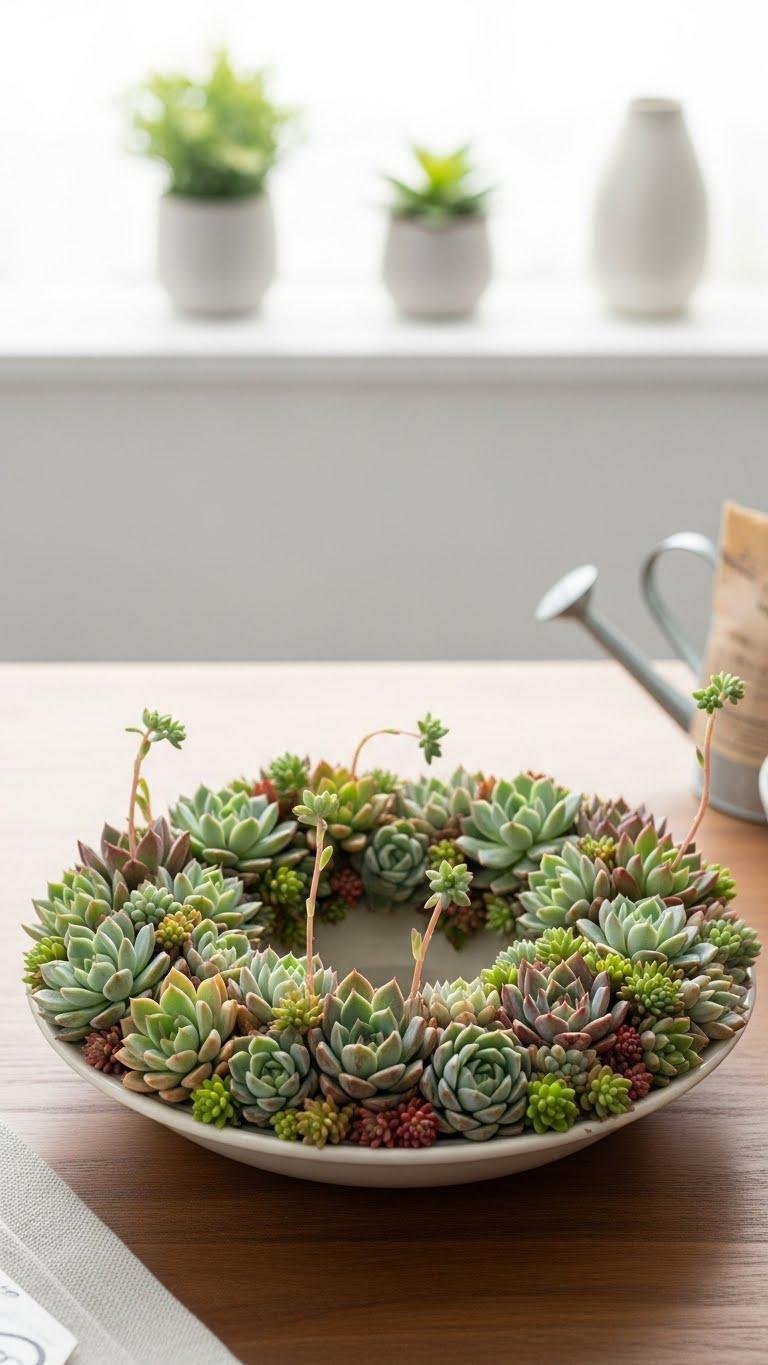
If you liked the sculptural contrast of Sansevieria and Haworthia, try a low-profile ring of miniature Echeveria in a shallow bowl to bring a different kind of calm to a table or windowsill.
You’ll create a compact centerpiece that’s low-maintenance, airy, and meditative. Use well-draining mix, bright indirect light, and staggered miniature propagation to renew the ring without overcrowding.
Undersea Clamshell Succulent Display
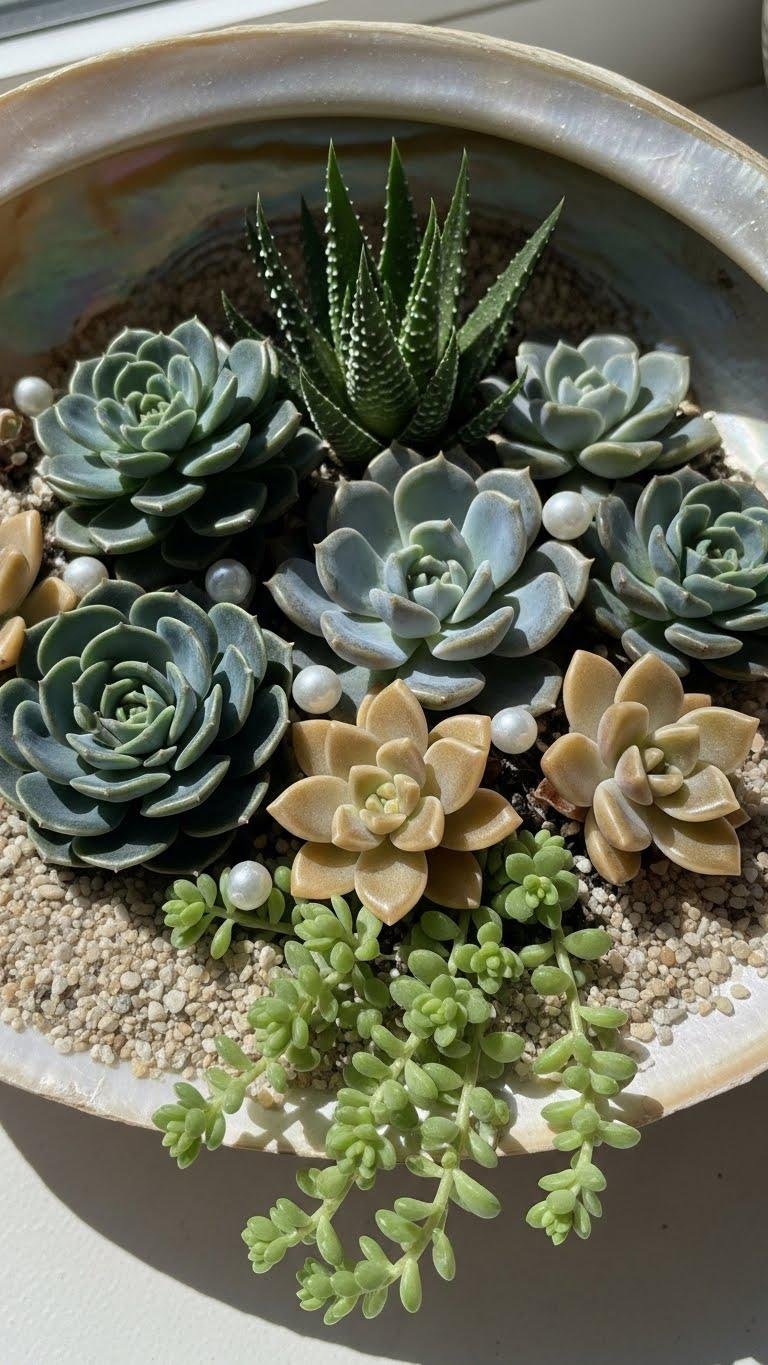
Bring a bit of the shore indoors by nesting small succulents in a polished clamshell — the curving form frames rosettes and trailing pups like sea life tucked into tide pools. You’ll choose oceanic colorways—teal, slate, sandy beige—pairing compact sedums and pups.
Add pearl accents, coarse sand, and a shallow drainage layer. Position for bright, indirect light and occasional misting.
Compact Haworthia Trio in Glass Planter
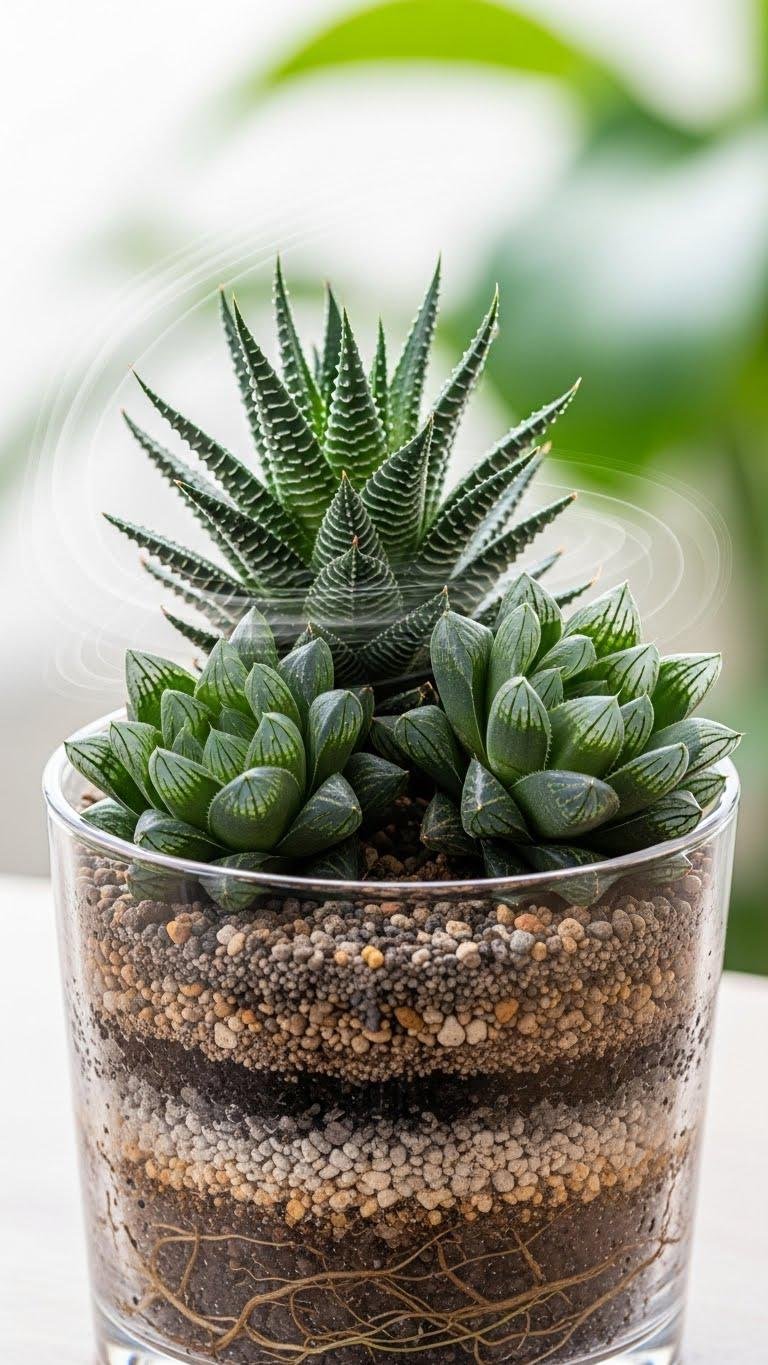
Three compact Haworthias fit snugly into a clear glass planter, letting their rosettes and striated leaves read like a tiny, living vignette.
You’ll enjoy compact propagation tips: use gritty mix, minimal water, bright indirect light.
The glass aesthetics let roots and soil layers show, so you monitor moisture easily.
Arrange for airflow and occasional rotation to keep growth balanced and free.
Concrete Dish Garden With Sculptural Euphorbia

If you liked the crisp, glassy look of the Haworthia trio, try a concrete dish garden for a more sculptural, tactile feel — the matte grey of the basin makes a striking backdrop for a single architectural Euphorbia.
You’ll enjoy bold architectural contrast, low-maintenance styling, and freedom to place it anywhere. Mind watering nuances: shallow drainage, sparse water, quick dry soil.
Color-Blocked Sand and Succulent Terrarium
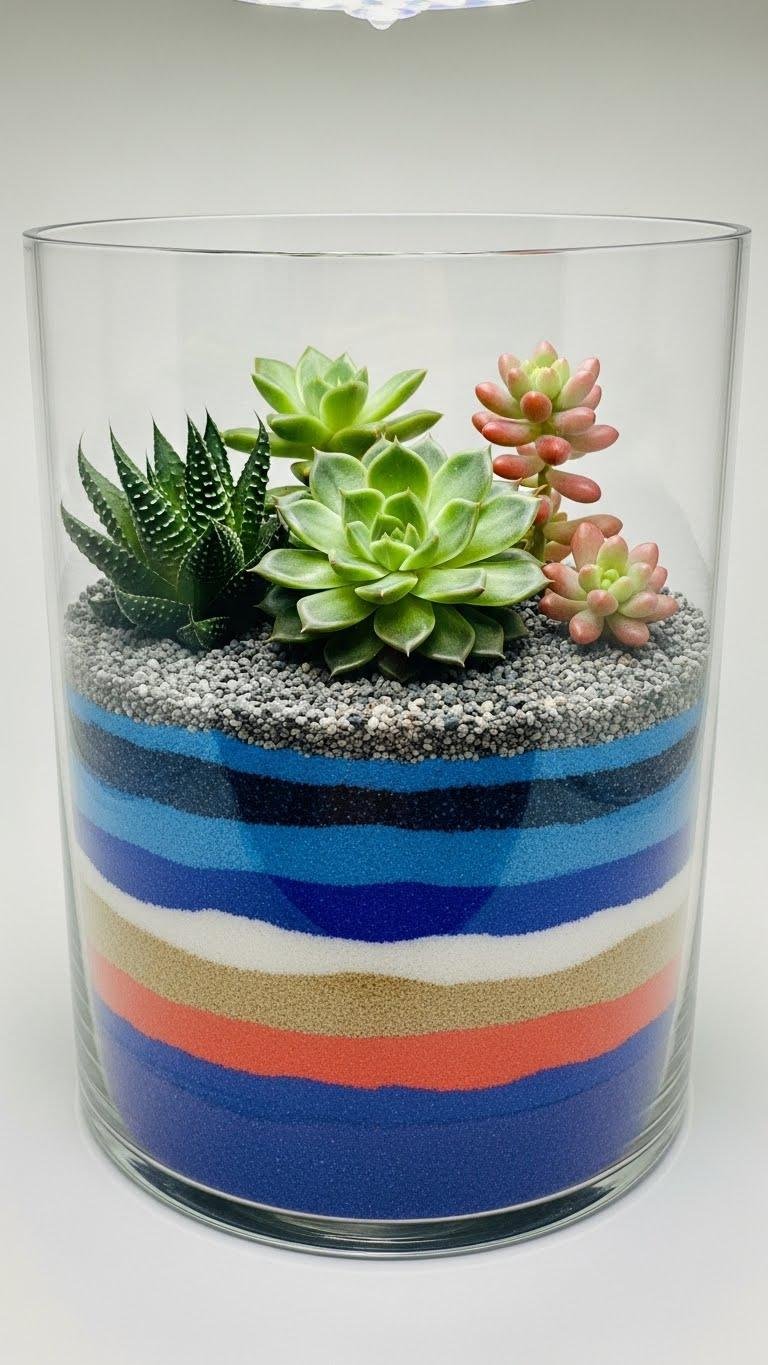
Layer colored sand in crisp bands and you’ll turn a simple glass terrarium into a modern focal point that’s both decorative and low-maintenance.
You’ll pick a color contrasted substrate to set off small succulents, arranging them like a miniature sculptural backdrop.
Keep drainage minimal but effective, position plants for light, and trim sparingly — freedom to style, minimal care required.
Pebble-Top Miniature Desert Scene
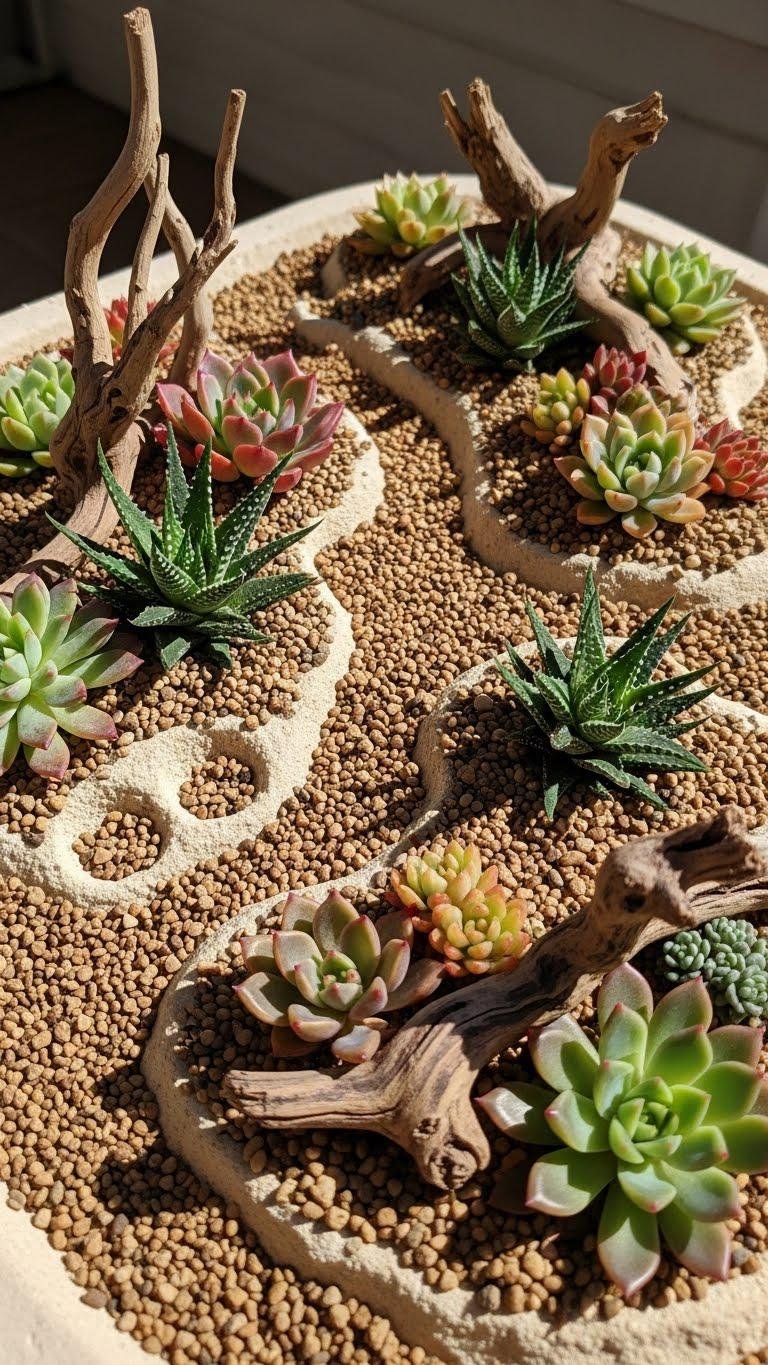
After the crisp bands of colored sand, swap in a textured, pebble-top layout to create a tiny desert tableau that reads like a sun-baked landscape.
You’ll place low, sun-loving succulents among micro pebbling, sculpting contours with small scoops.
Add a bit of faux driftwood for contrast and scale.
Keep drainage simple, water sparingly, and position where light feels liberating.
Vertical Wall Pocket Succulent Garden
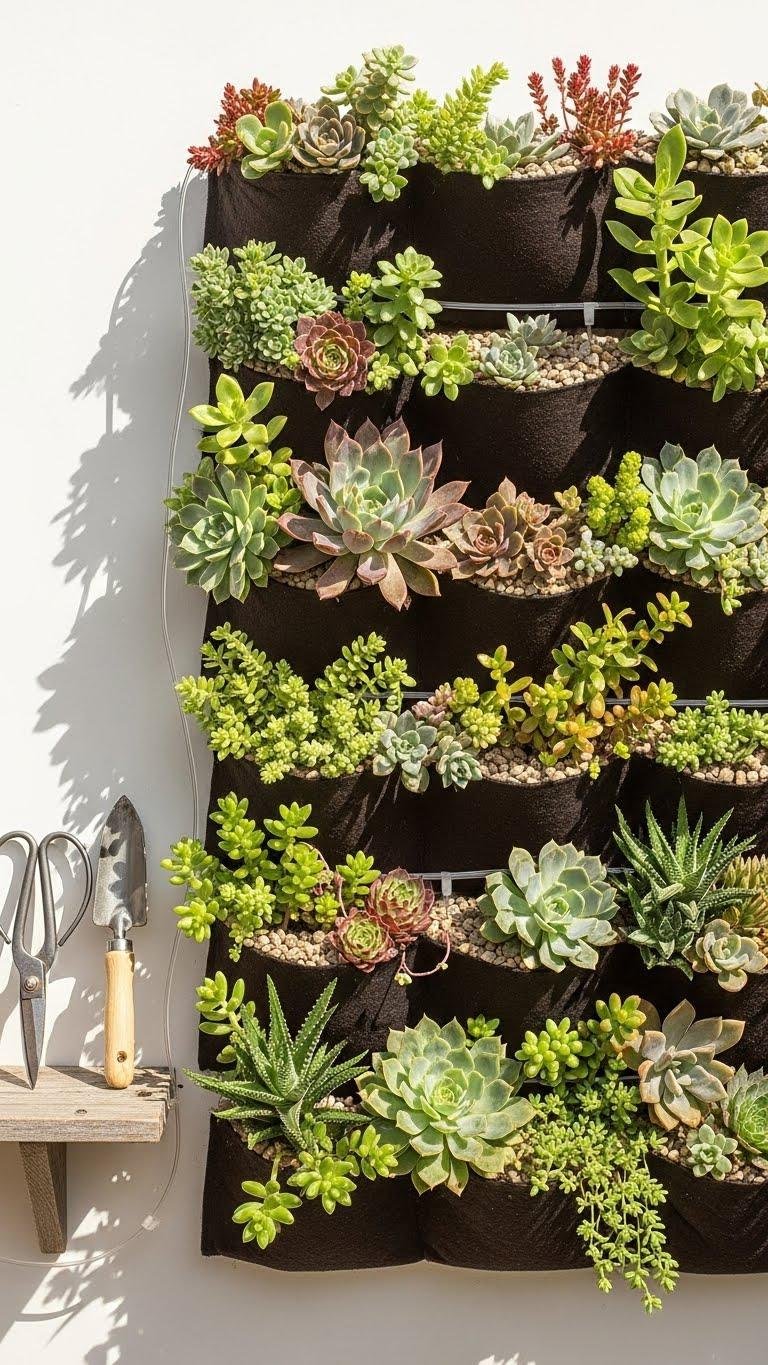
When you mount a wall pocket garden, you turn blank vertical space into a living tapestry of hardy succulents that thrive in shallow soil; choose pockets with drainage or add a layer of gravel so roots won’t sit in water.
You’ll hang modular pockets, plan for pocket drainage, and run discreet hanging irrigation. Position for sun, prune sparely, and enjoy liberated, low-maintenance green freedom.
Herb-Style Succulent Windowsill Row
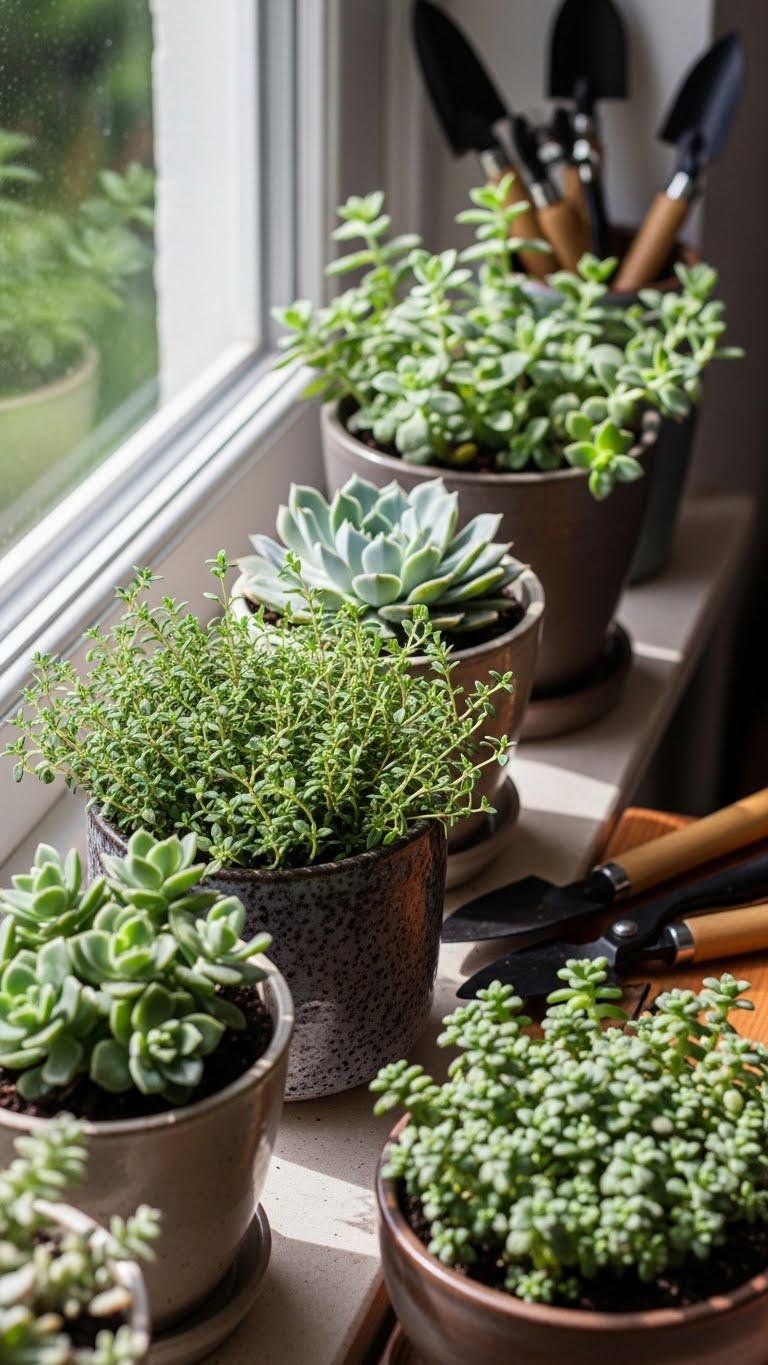
Bring a row of small, hardy succulents to your windowsill like a miniature herb garden—compact pots, consistent light, and easy access for watering and pruning.
You’ll line a compact windowsill with varied textures and low pots, rotate for even sun, and choose fragrant pairings like scented crassulas or thyme-like sedums. Trim, propagate, and move freely to suit mood and light.
Coral-Reef Inspired Arrangement With Upright Forms
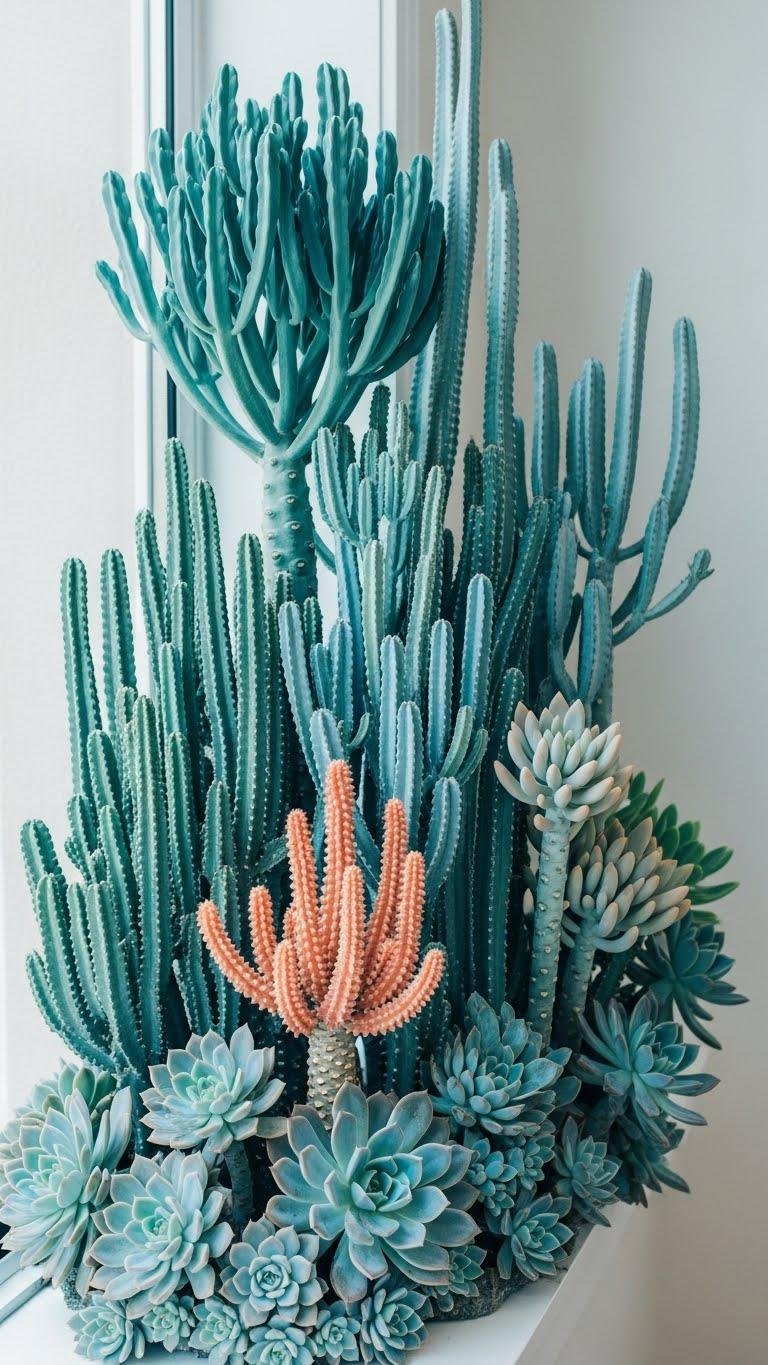
If you want a windowsill display that reads like a tiny underwater reef, choose upright succulents with branching, columnar, or flared forms and arrange them by height and texture to mimic coral layers.
Pair vertical spireforms and sculpted branches in oceanic colorways—teals, muted blues, pale corals—leave breathing space, rotate for light, and water sparingly to keep shapes clean and resilient.
White Pot Contrast With Colorful Cacti Accents

A crisp white pot makes colorful cacti sing, so choose a matte or glazed finish to amplify each spine and bloom. You’ll use color theory to balance vivid reds, yellows, and greens against neutral ceramic. Focus on textured pairing — rough cactus skin vs smooth pot — and deliberate accent placement: group bold specimens, leave breathing space, rotate light access for a liberated, tidy display.
Shallow Birdbath Basin Filled With Echeverias
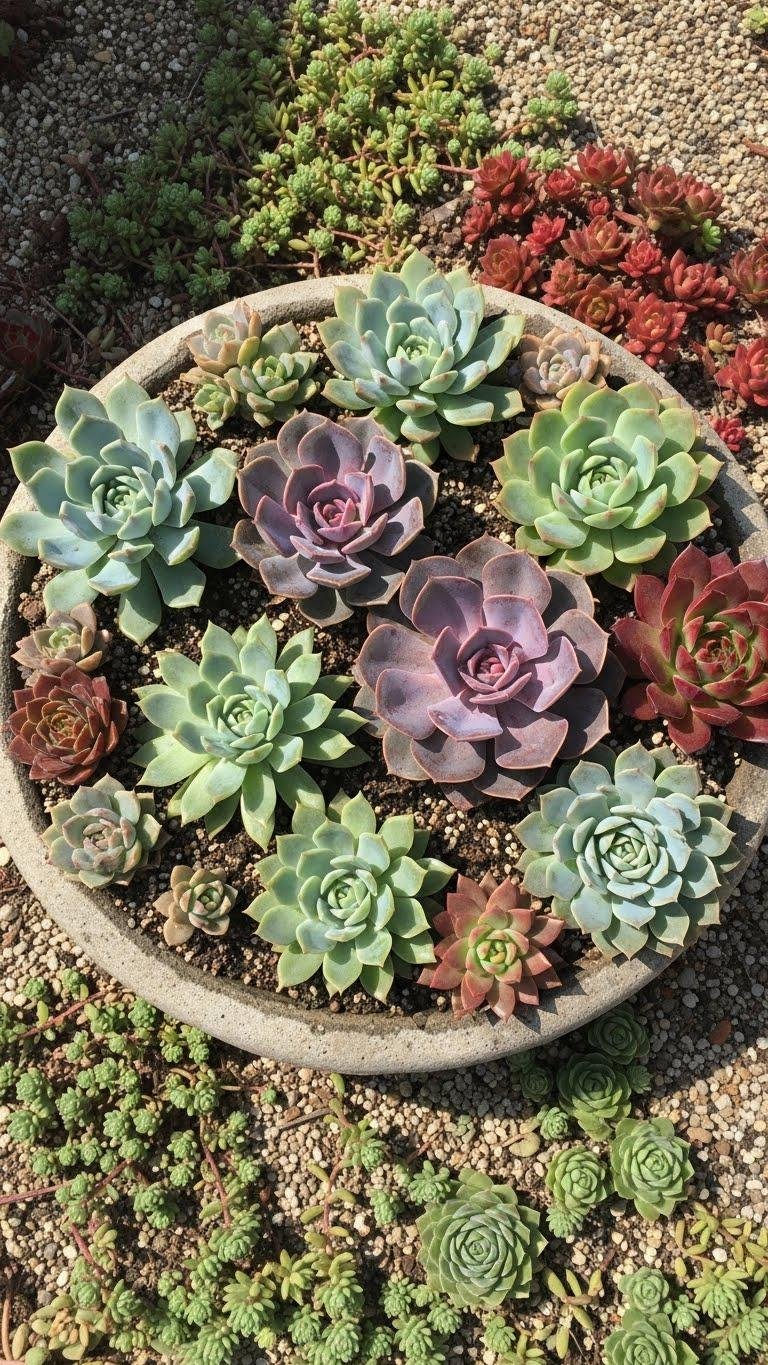
Moving from bold vertical cacti to low, rosette-driven displays lets you celebrate shape and surface on a different scale.
You’ll arrange echeverias in a shallow birdbath basin for a compact, gallery-like vignette. Use gritty mix and shallow soil techniques so roots breathe; choose drought tolerant pairing with sedums or sempervivums. Place in bright, indirect light and water sparingly for effortless freedom.
Moss and Bark Topdressed Storybook Mini Garden
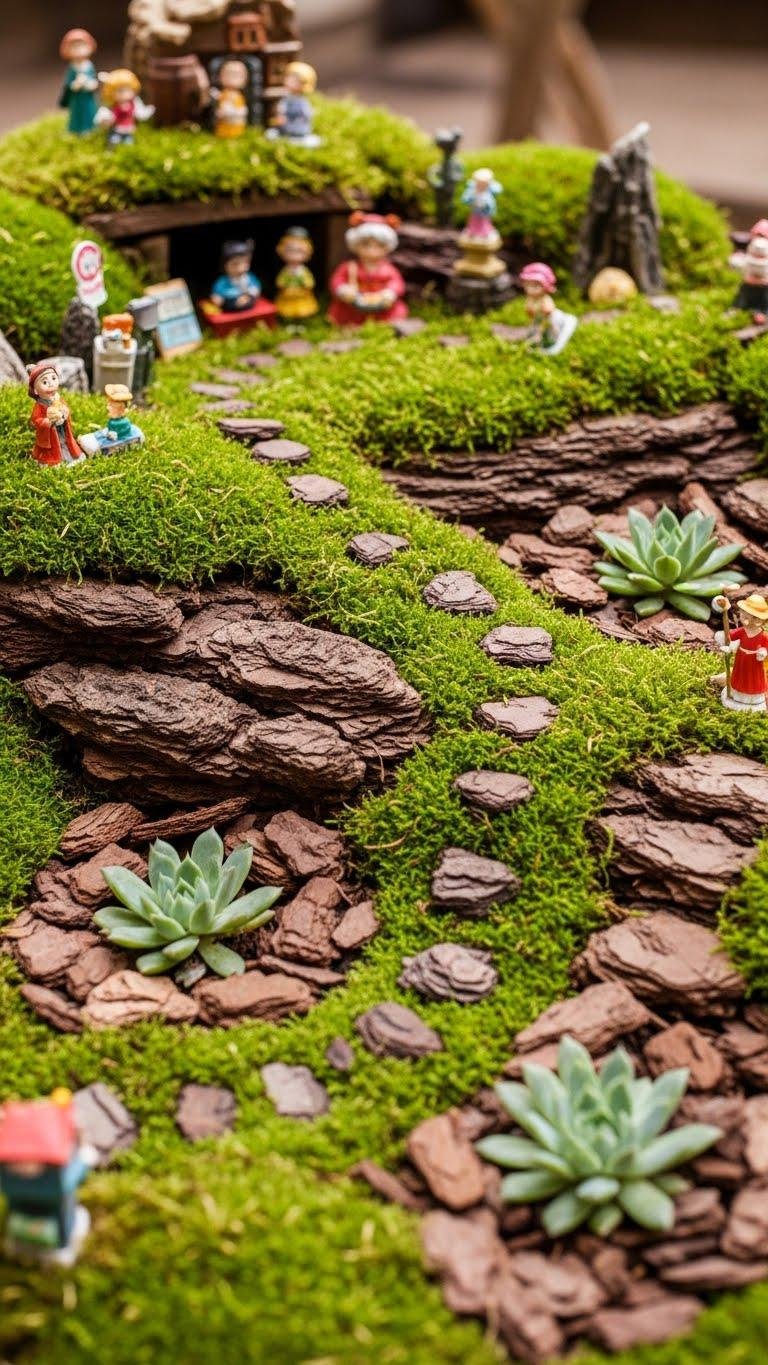
Bring small worlds to life by layering soft moss and rustic bark over your succulent soil to create a storybook mini garden that feels lived-in and deliberate. You’ll carve moss pathways, sprinkle bark mulch for texture, and tuck in storybook accents and miniature figurines to suggest narrative.
Water sparingly, prune selectively, and place where light lets your tiny scene breathe and invite exploration.
Mixed-Texture Arrangement for a Coffee Table
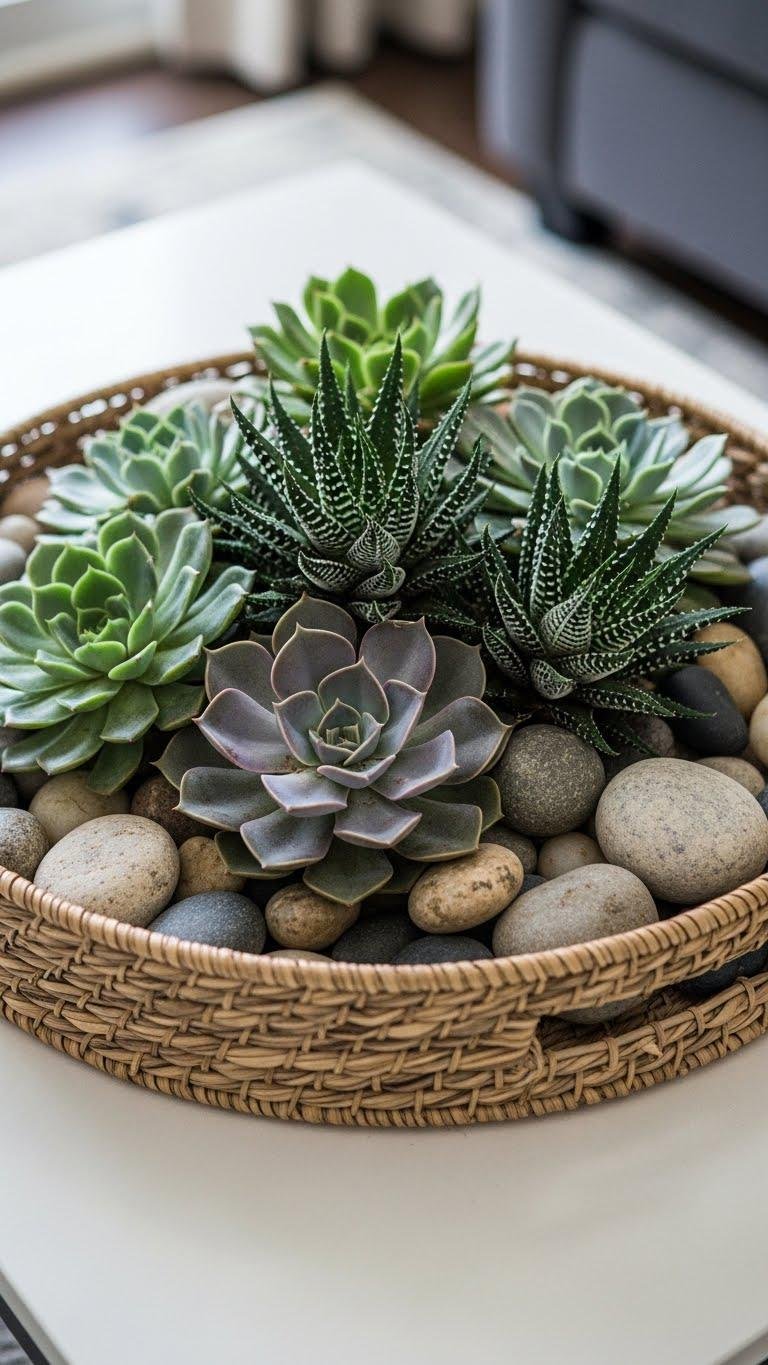
Mix different textures to give your coffee table arrangement depth and a tactile appeal that invites touch. Pair smooth echeverias, spiky haworthias, matte pebbles, and a woven tray for striking textural contrast.
You’ll create a low-profile coffee centerpiece that reads modern and relaxed. Keep scale small, use well-draining soil, and rotate lightly so each succulent gets balanced light and breathes.
Succulent and Air Plant Combination Bowl
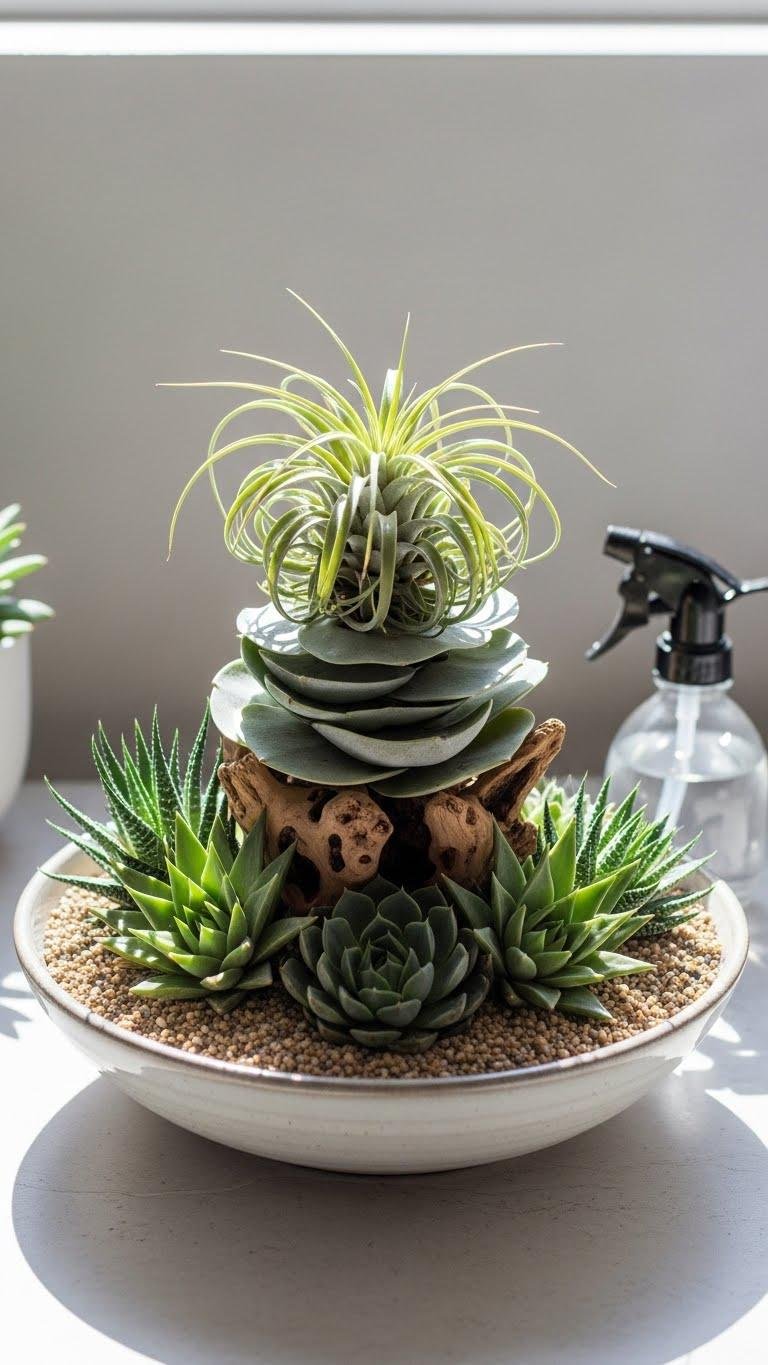
Combine low-growing succulents with airy tillandsias to build a bowl that feels light and layered. You’ll anchor a shallow ceramic bowl with sand and pebbles, tuck succulents around a small driftwood centerpiece, then position airplant pairing elements on top.
Rotate for even light, mist tillandsias weekly, and let succulents dry between waterings — a minimalist, mobile centerpiece you can rearrange freely.
Geometric Concrete Planters Cluster
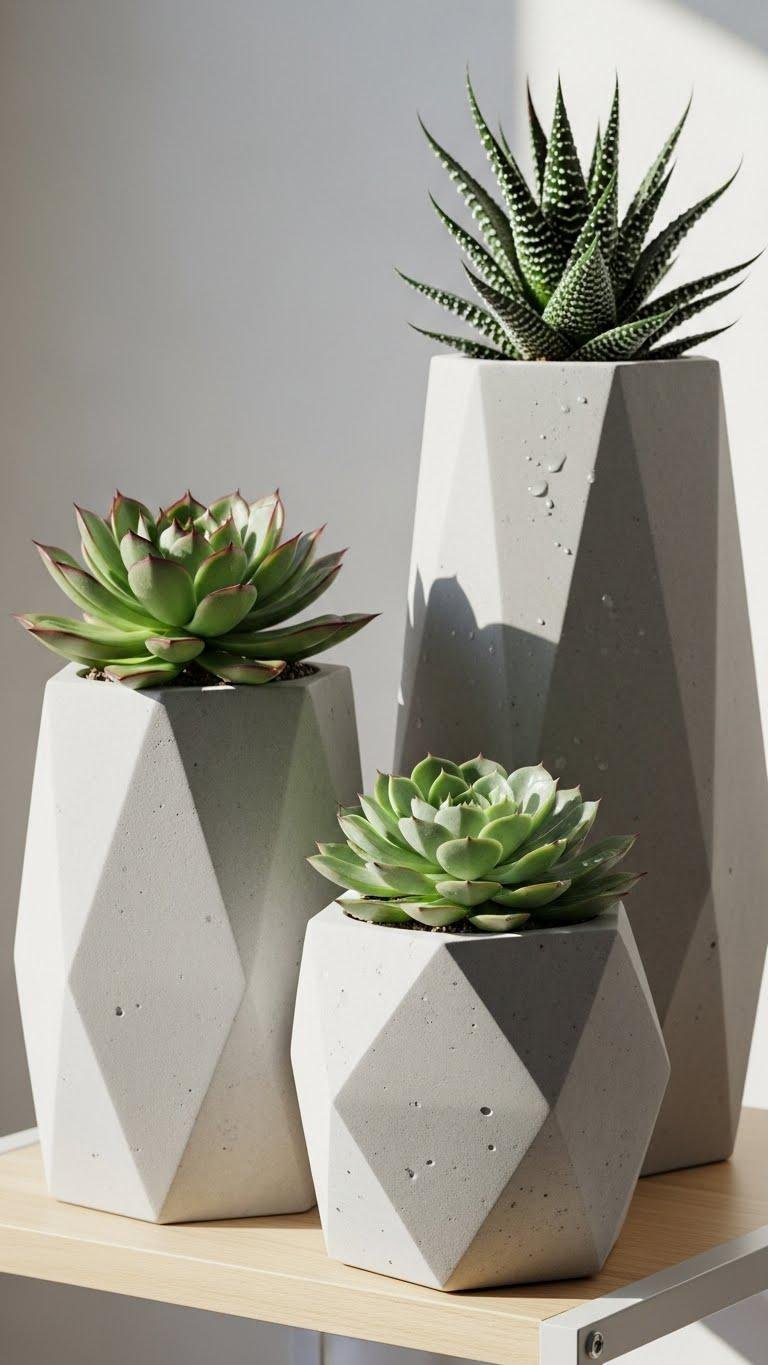
A trio of geometric concrete planters creates a striking, modern cluster that fits small shelves or windowsills; arrange varying heights and faceted shapes so each succulent gets its own light and visual space.
You’ll cast modular molds, choose aggregate finishes for texture, and position succulents to breathe. Water sparingly, use fast-draining mix, and rotate gently for even growth and effortless freedom.
Small-Scale Fairy Garden With Twig Furniture
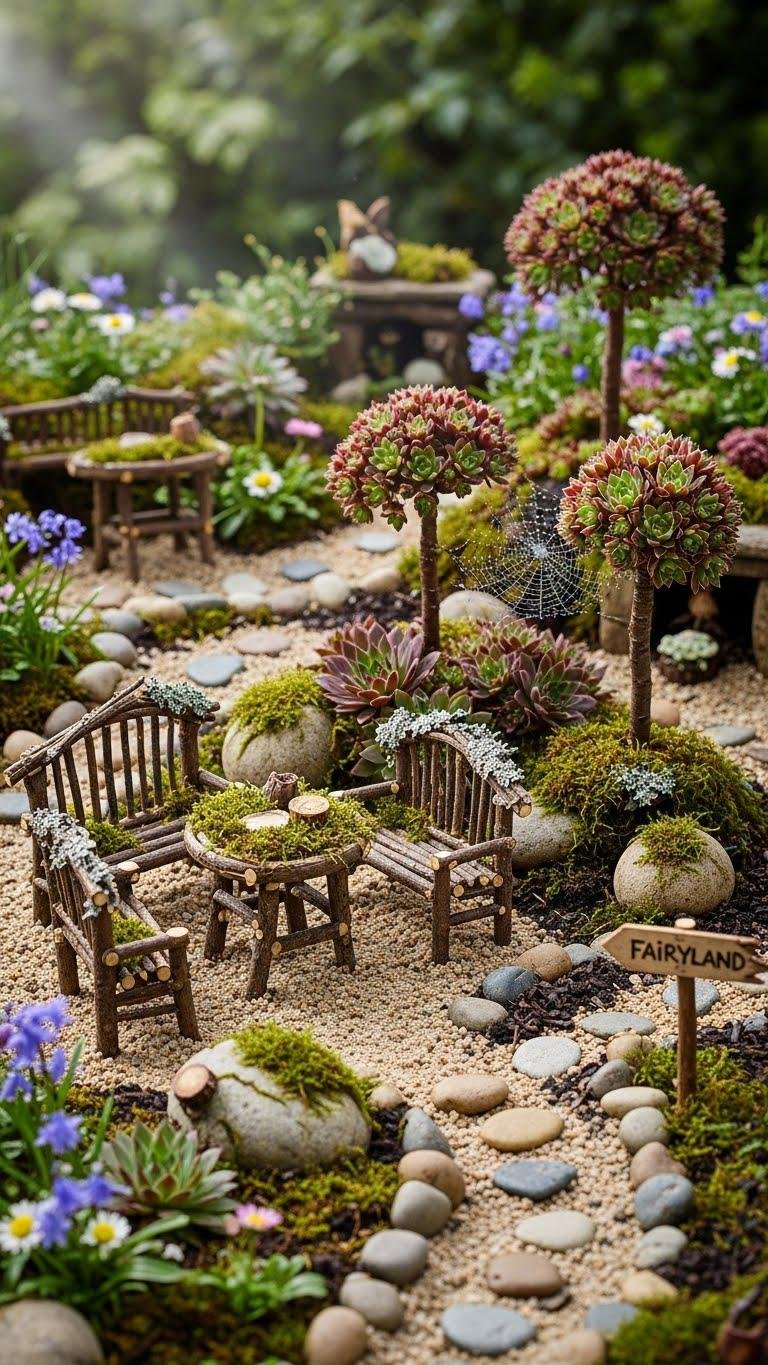
If your concrete planter cluster brought modern lines to a shelf, try shifting scale and mood by crafting a tiny fairy garden with twig furniture—you’ll keep the compact footprint but trade hard edges for rustic, organic charm.
You’ll build miniature twigwork benches and tables, nest succulents like tiny trees, and lay fairy scale pathways with sand or crushed stone.
It feels free, playful, deliberate.
Layered Gravel and Charcoal Drainage Display
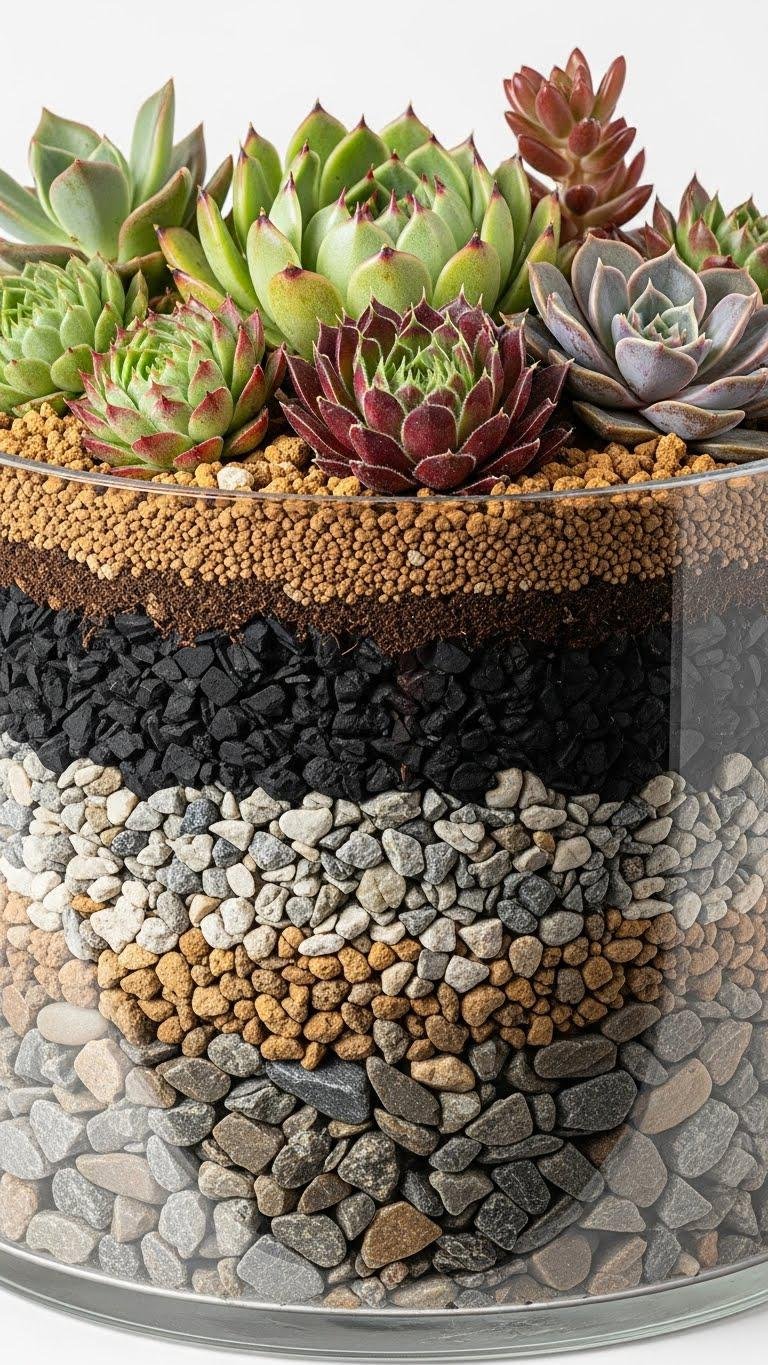
When you build a layered gravel and charcoal drainage display, you’ll create both a striking visual cross-section and a functional base that keeps succulents healthy.
You’ll layer coarse gravel, fine gravel stratification, then activated charcoal for odor control and filtration—charcoal benefits that prevent rot.
Top with gritty soil, position plants, and enjoy a low-maintenance, free-form arrangement that breathes and looks intentional.
Asymmetrical Arrangement With Tall Backlight Plant
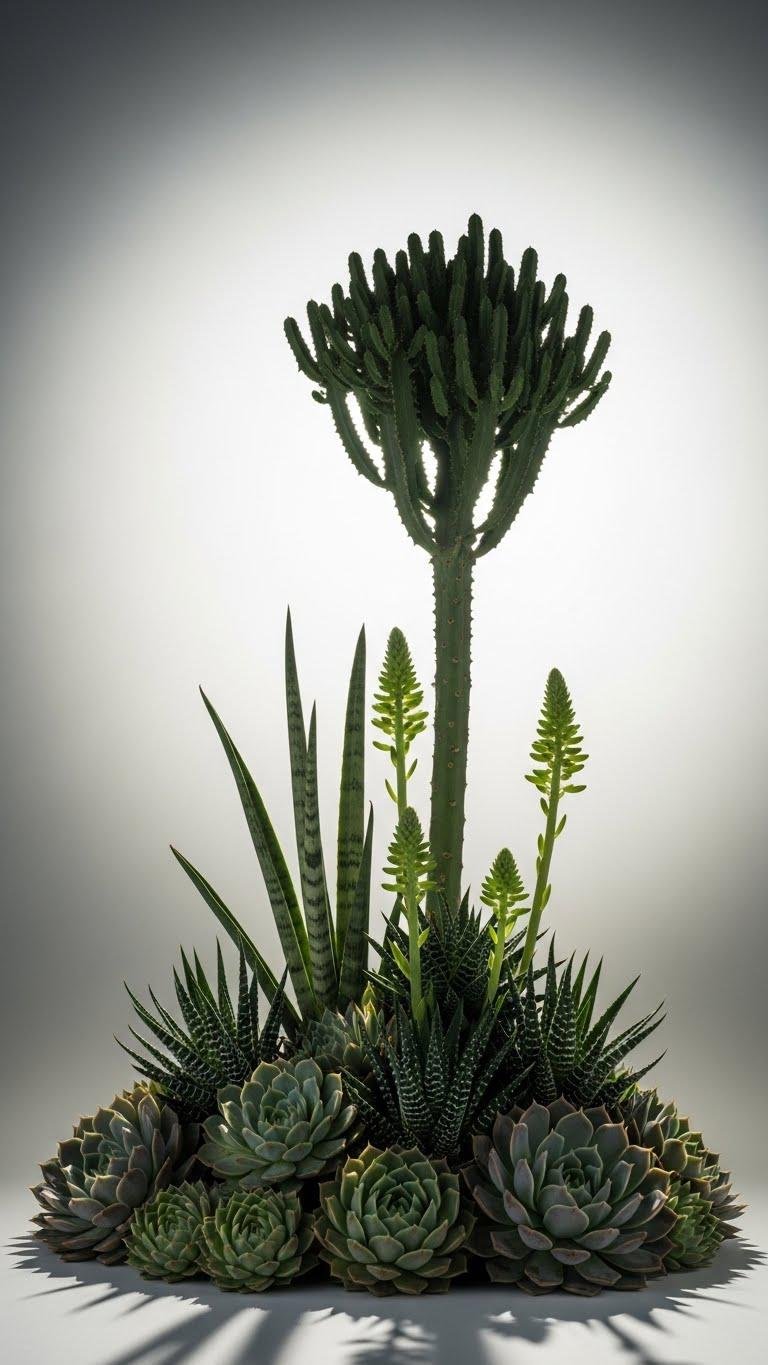
Placed off-center and anchored by a tall backlight plant, an asymmetrical succulent arrangement draws your eye up and across, creating movement and depth without clutter. You’ll position a vertical focalpoint behind lower rosettes, use a contrasting silhouette to punctuate light, and leave negative space for breathing room.
Trim sparingly, rotate for even light, and enjoy the liberated, sculptural look.
Glass Dome Miniature With Activated Charcoal Base
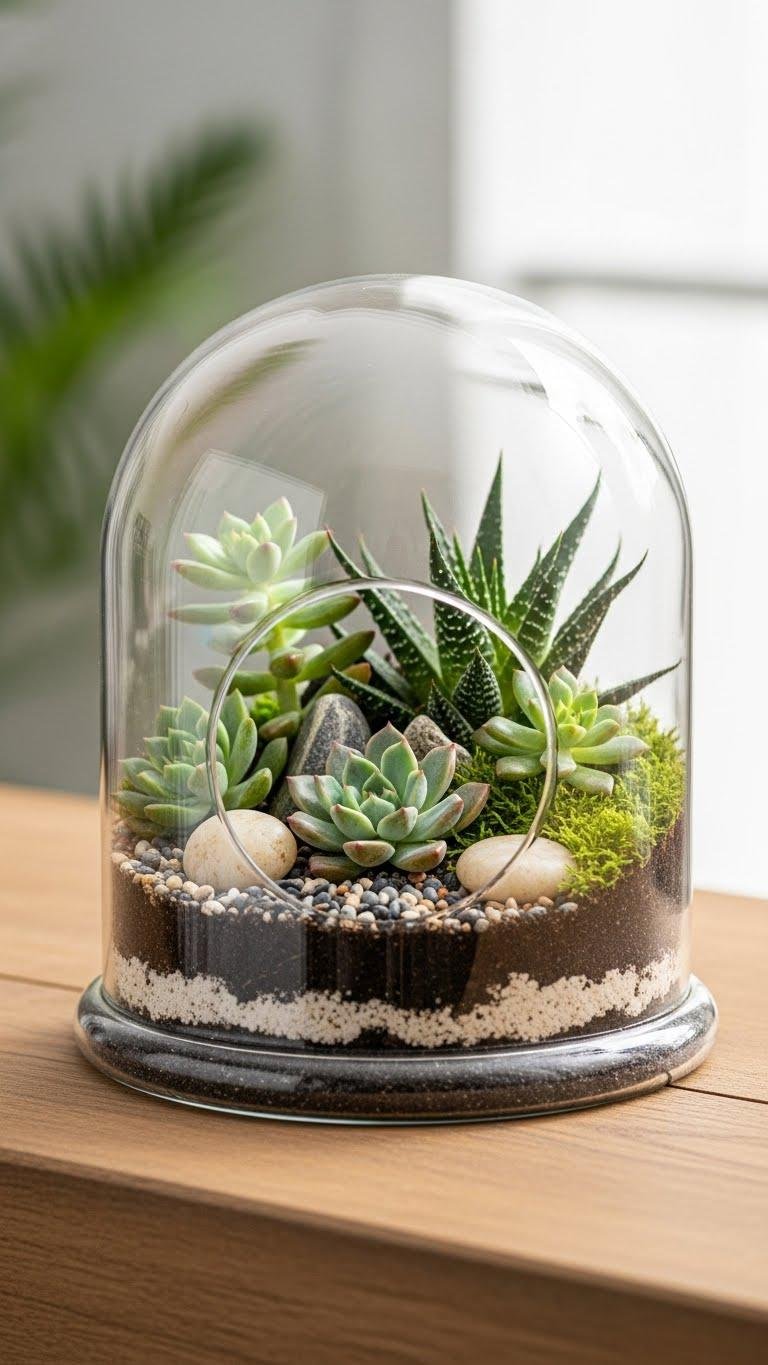
A glass dome miniature makes a striking, low-maintenance centerpiece by layering activated charcoal beneath soil to keep roots healthy and odors at bay.
You’ll craft a compact micro terrarium that feels open yet protected, pairing succulents with sculptural stones and charcoal aesthetics for contrast. Water sparingly, give bright indirect light, and lift the dome now and then to refresh air — freedom in tiny form.