
You’ll get more fruit when you match varieties to your climate, feed and structure plants for aggressive root growth, and manage water, pests, and airflow with surgical precision. These aren’t hobby tips — they’re field-tested tactics for commercial-scale yields: soil testing, timing, grafting, trellising, fertigation, and disease control. I’ll walk through 26 specific, practical moves that shift your crop from good to prolific — starting with what to pick this season.
Choose the Right Variety for Your Climate and Market
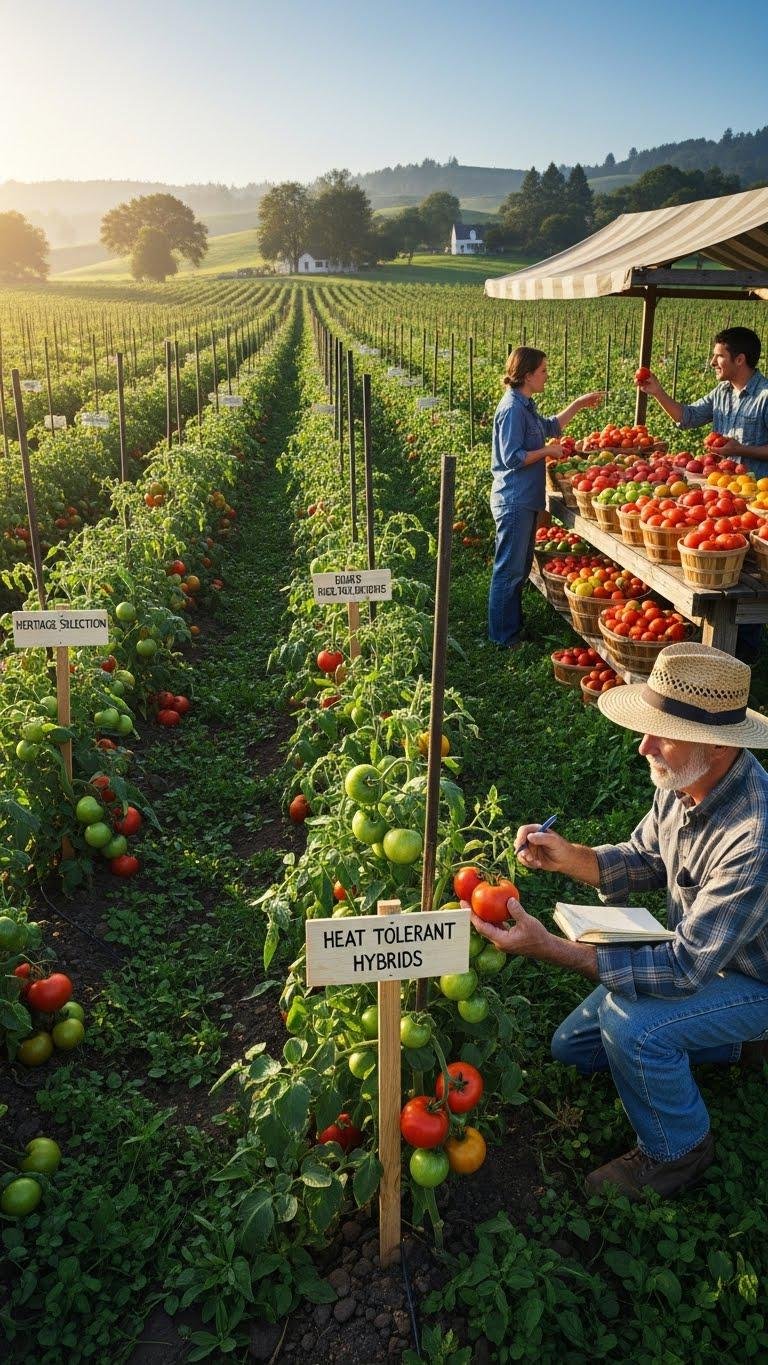
When you pick a tomato variety, match it to your climate, season length, and market needs—don’t guess.
You’ll choose heritage selection for flavor-focused buyers or durable heat tolerant hybrids for long, hot seasons.
Prioritize days-to-maturity, disease resistance, and yield stability.
Test small batches, track performance, and scale what frees you from risk while meeting customer demand.
Test Soil and Tailor Fertilizer Before Planting
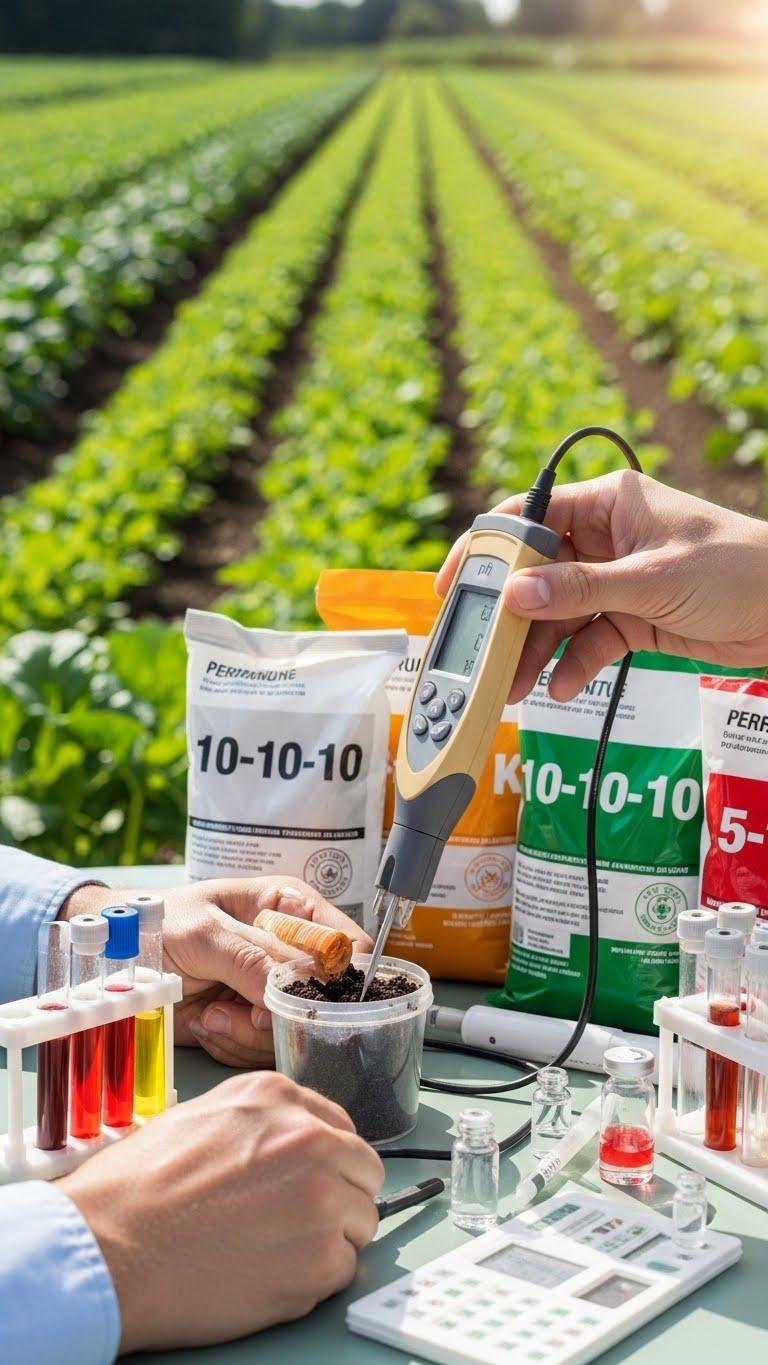
Testing your soil gives you the data you need to fertilize precisely, not guess.
You’ll collect samples, send them for soil pH and micronutrient testing, then interpret results to balance N-P-K and trace elements.
Tailor amendments and lime or sulfur to reach target pH, correct deficits with specific foliar or soil-applied micronutrients, and plant knowing inputs match your crop’s needs.
Prepare Soil With Deep Tillage for Vigorous Roots

Dig deep before you plant: breaking compacted layers with a chisel plow or deep spading fork lets tomato roots explore oxygen-rich, moisture-retentive soil rather than circling in a shallow, baked zone.
You’ll use deep tillage to loosen subsoil, improve drainage, and increase nutrient access. Work in organic matter, level beds, and avoid re-compacting so root vigor maximizes water uptake and plant resilience.
Plant in Ground Rather Than Pots for Maximum Yield
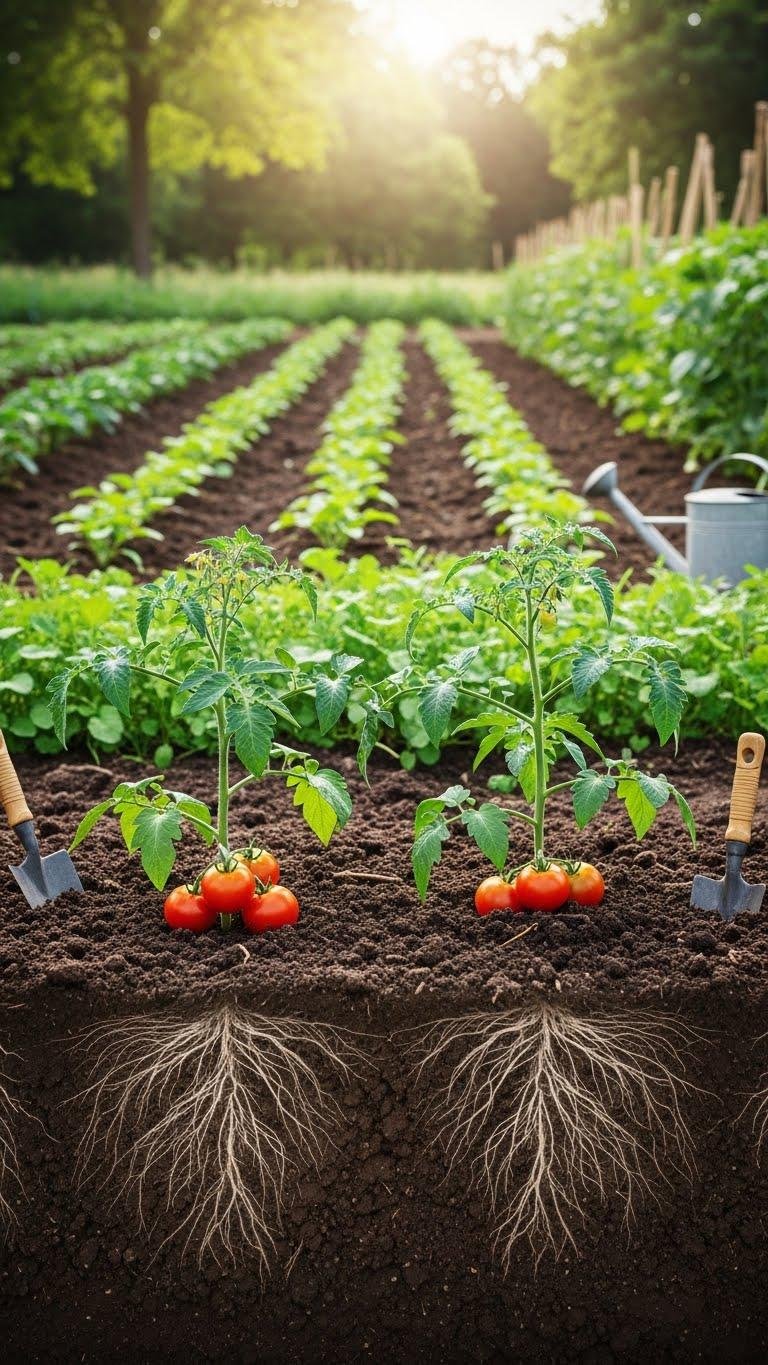
When you set tomatoes directly into garden soil instead of pots, they develop deeper, more extensive root systems that access steadier moisture, nutrients, and beneficial microbes — and that translates into higher yields.
You’ll benefit from improved soil stability and greater root depth, reduced watering frequency, and cooler roots.
Planting in ground frees you to manage rows, cover crops, and natural fertility for bigger harvests.
Warm Soil Before and After Transplanting
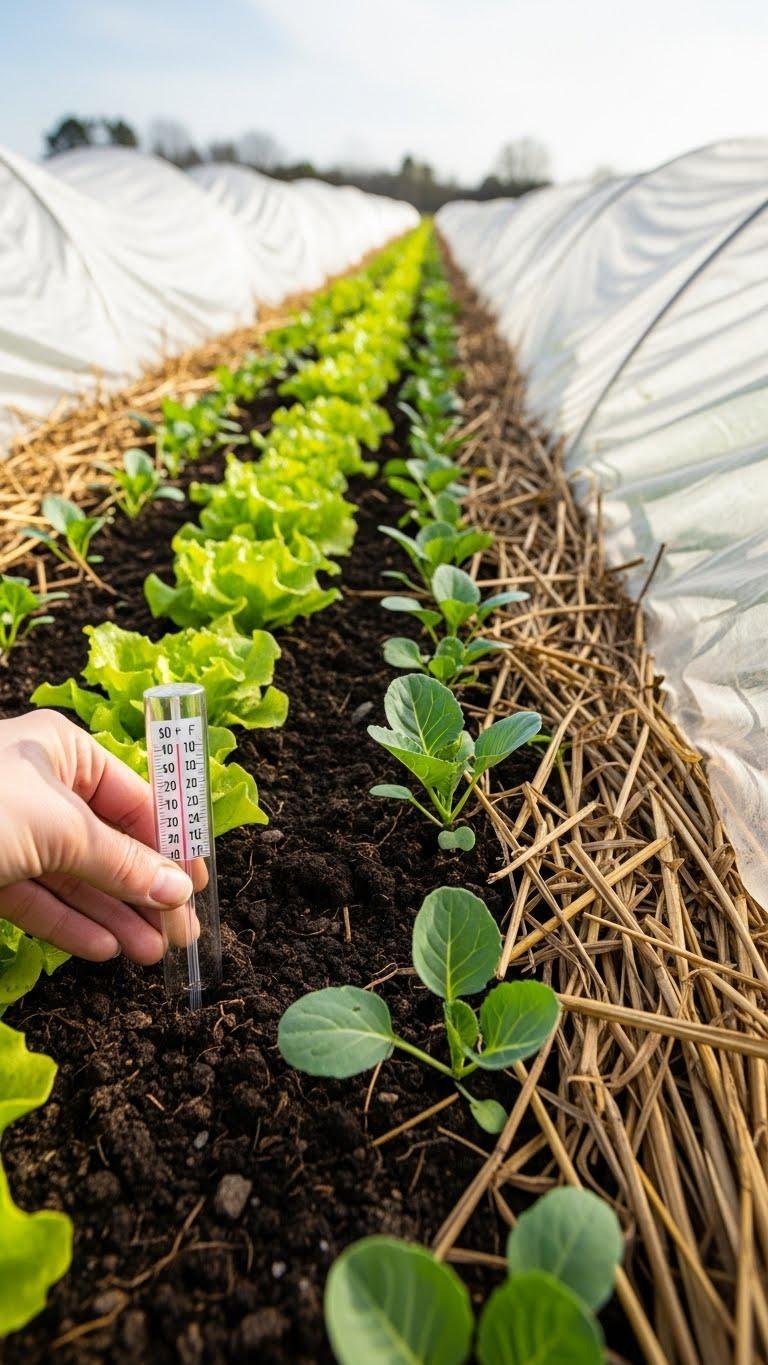
For best establishment, warm the soil to around 60–70°F (15–21°C) before you set transplants and keep it warm for the first two to three weeks afterward so roots can grow quickly and avoid shock.
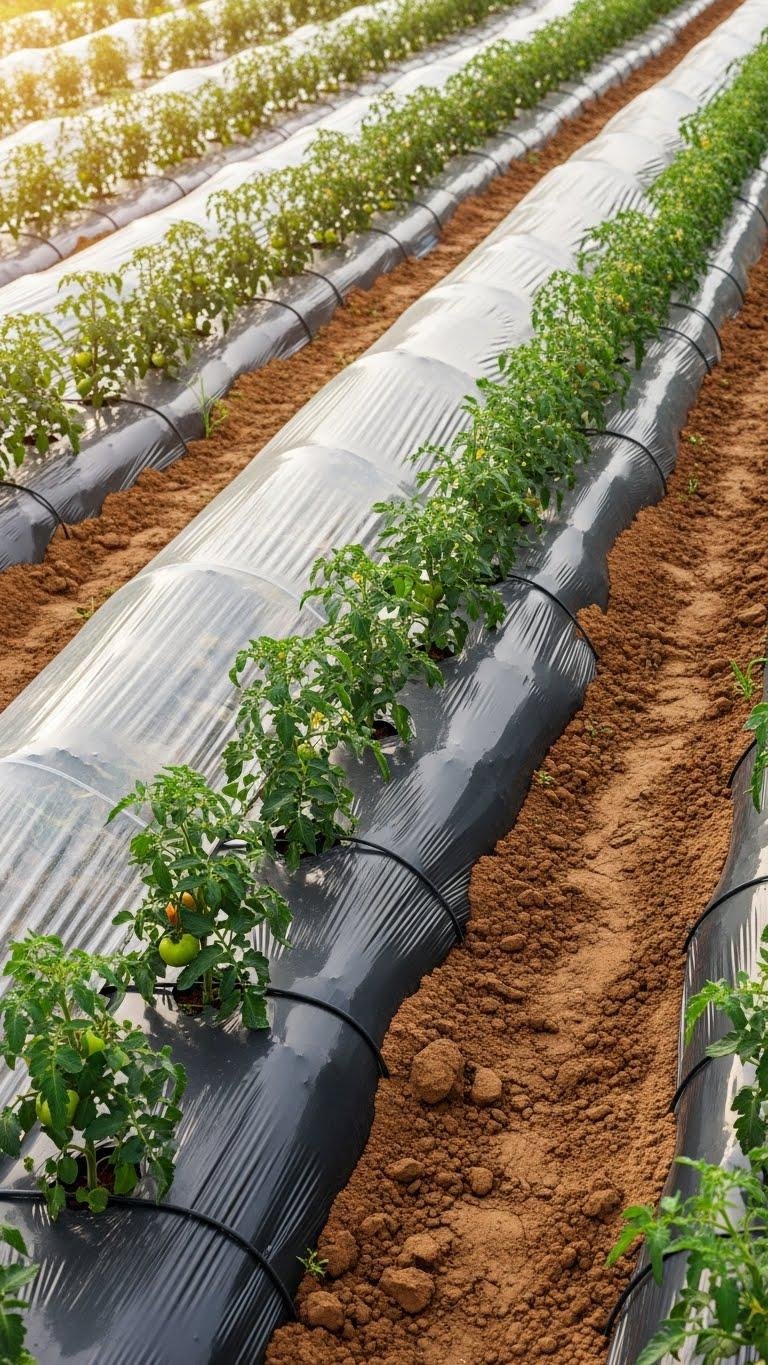
Use soil thermometers to monitor temperature, lay clear plastic or fabric row covers, and plan mulch timing to trap heat after seedlings settle so you’re free to focus on growth.
Water Transplant Holes Well for the First Ten Days
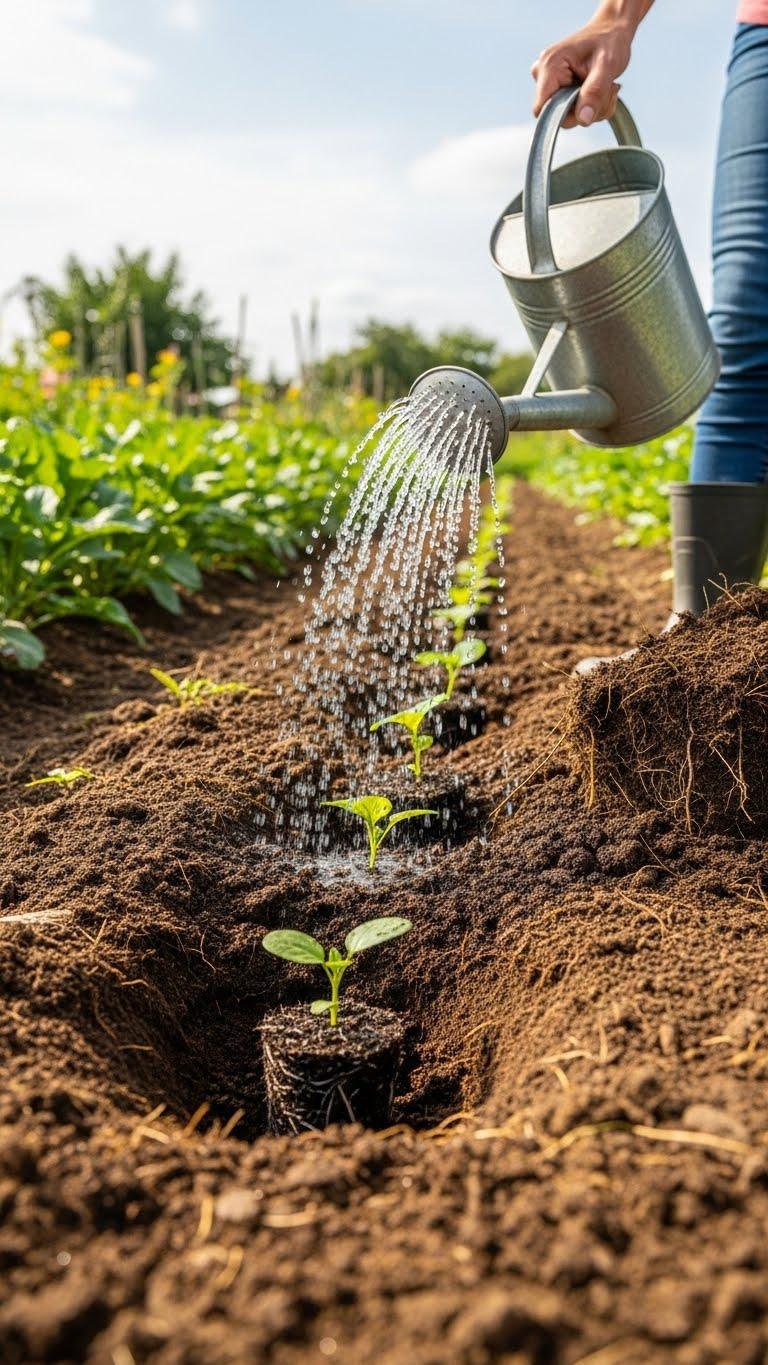
Regularly water the transplant holes thoroughly right after setting your seedlings and every day for the first ten days to eliminate air pockets and encourage rapid root-soil contact.
You’ll do early watering to speed root settling, prevent drought stress, and let roots explore calmly.
Keep soil moist but not soggy, monitor each plant, and adjust volumes to soil texture and weather for reliable establishment.
Dig Deeper Holes and Remove Lower Branches at Planting

Once your seedlings are strong and you’ve got light and nutrient timing sorted, prepare planting holes deeper than the original pots and strip off the lower branches that would sit below soil level.
Set seedlings deeply to encourage root development, burying stems where safe. Removing lower branches reduces disease risk and redirects energy upward, giving you vigorous, free-growing plants with cleaner bases for easier maintenance.
Prioritize Irrigation Over Dryland Methods
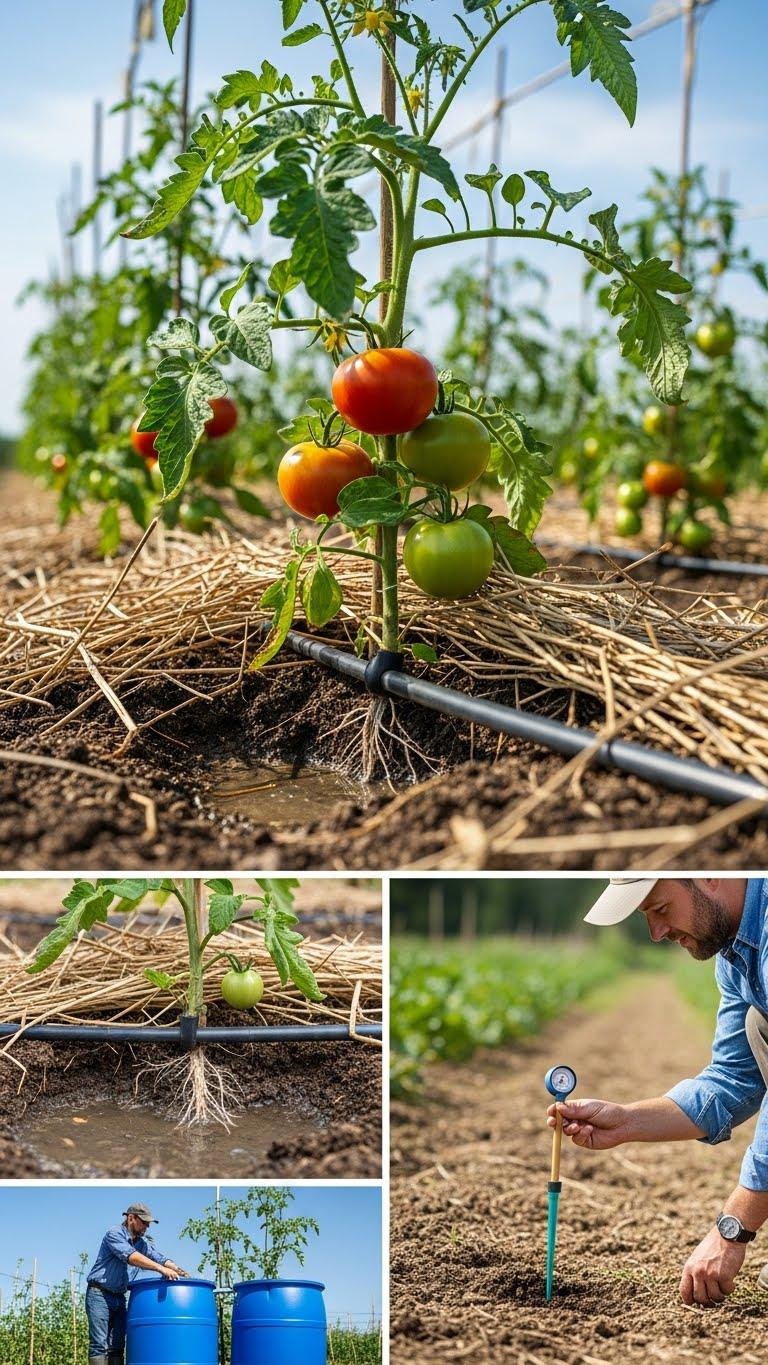
After you’ve got drip lines properly placed under the mulch, prioritize irrigation systems over traditional dryland methods to keep tomato root zones consistently moist without overworking the soil or your schedule.
You’ll use drip scheduling to match soil moisture targets, integrate simple water harvesting to reduce supply costs, and judge irrigation economics by yield per liter — freeing you from guesswork while maximizing consistent production.
Use Plastic Mulch to Boost Early Growth and Fruit Quality
Weave and Tie Plants to Maintain Upright, Healthy Canopies
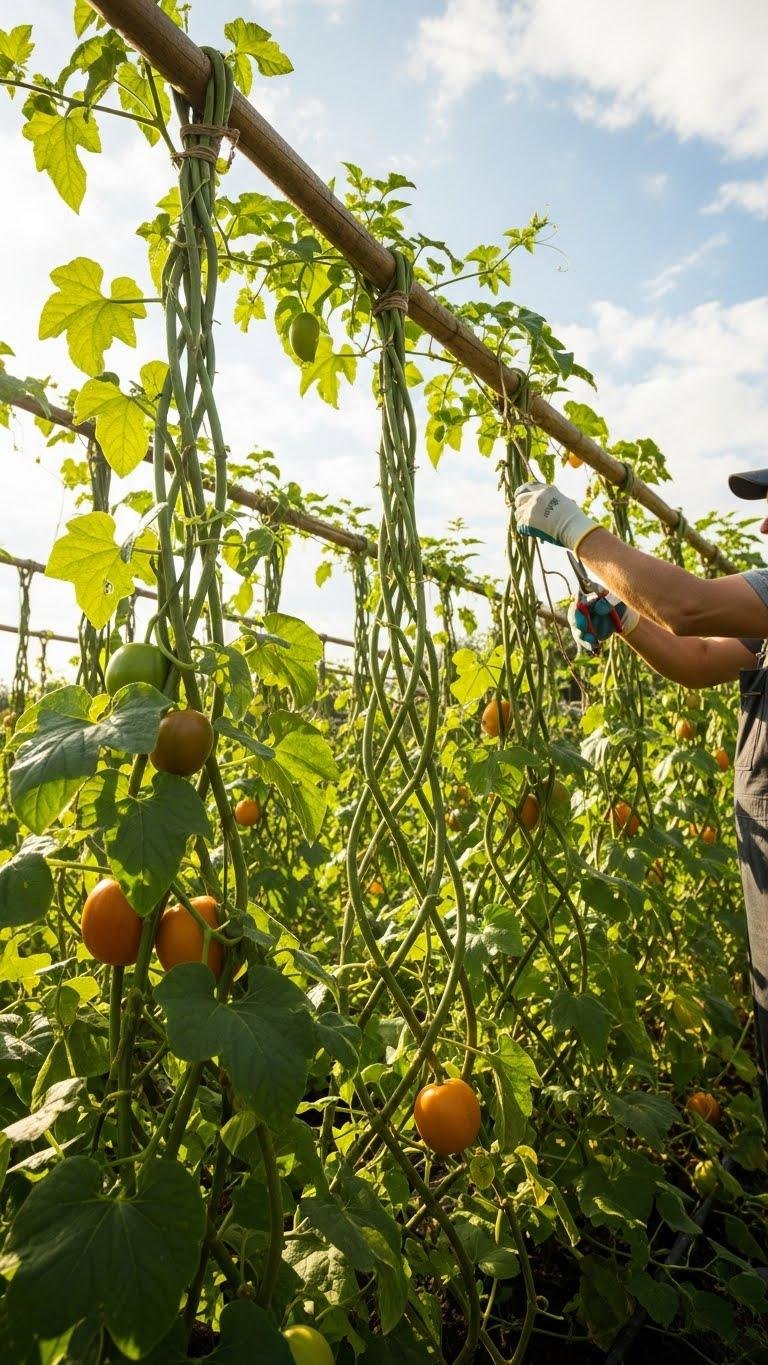
By gently weaving stems into your support and tying wayward branches as they grow, you’ll keep canopies open, reduce disease risk, and direct energy into fruiting instead of tangled foliage.
Check ties weekly, adjust tension, and remove crossing stems to preserve canopy ventilation. Keep a simple trellis maintenance routine: soft ties, spaced weaving, and prompt corrective pruning so plants stay upright, productive, and free.
Trellis Indeterminate Varieties for Better Light and Harvesting
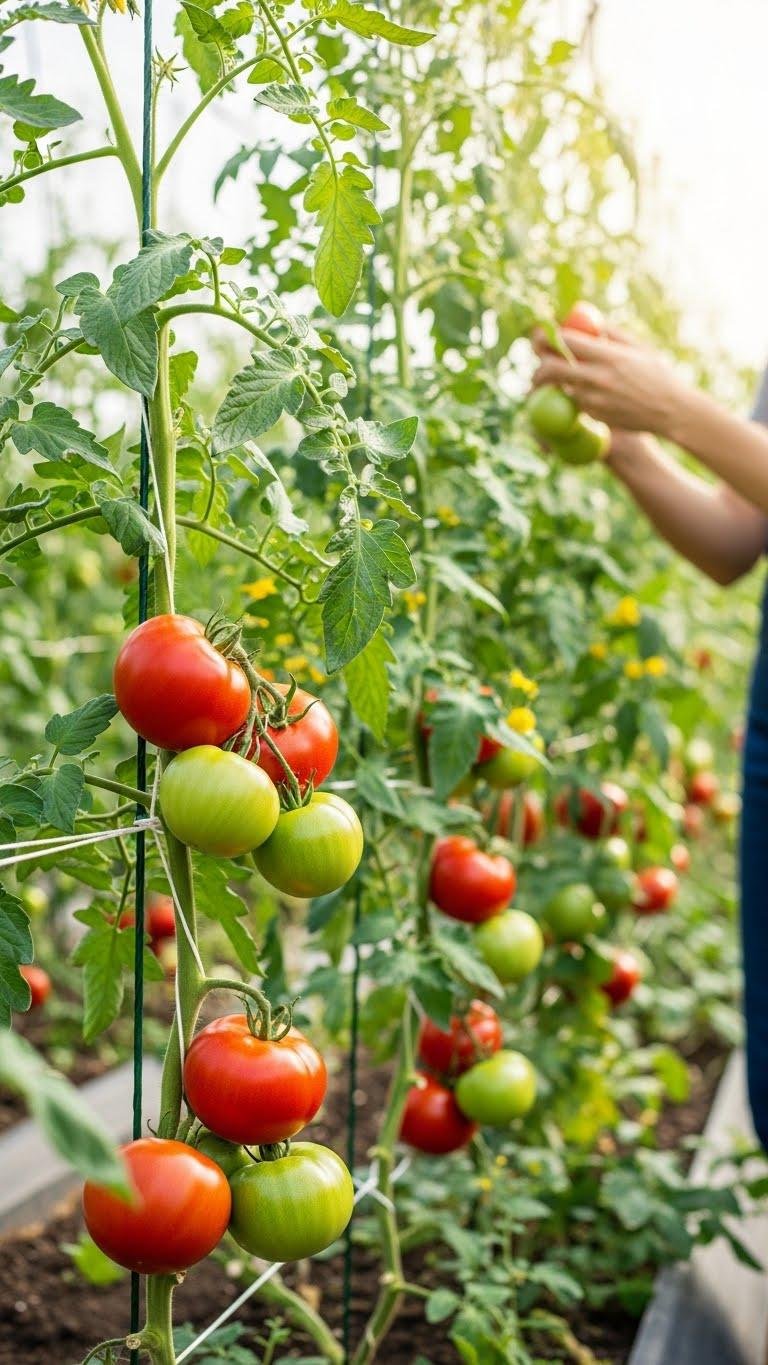
You’ve already seen how weaving and timely tying keep canopies open; now apply those habits to indeterminate tomatoes on a trellis to maximize light exposure and make harvests easier.
Use sturdy vertical supports, train leaders upward, and space plants for airflow. Tie gently, rotate harvest timing to pick peak ripeness, and free yourself from constant bending — you’ll harvest more, with less hassle.
Prune Carefully to Improve Spray Coverage and Fruit Quality
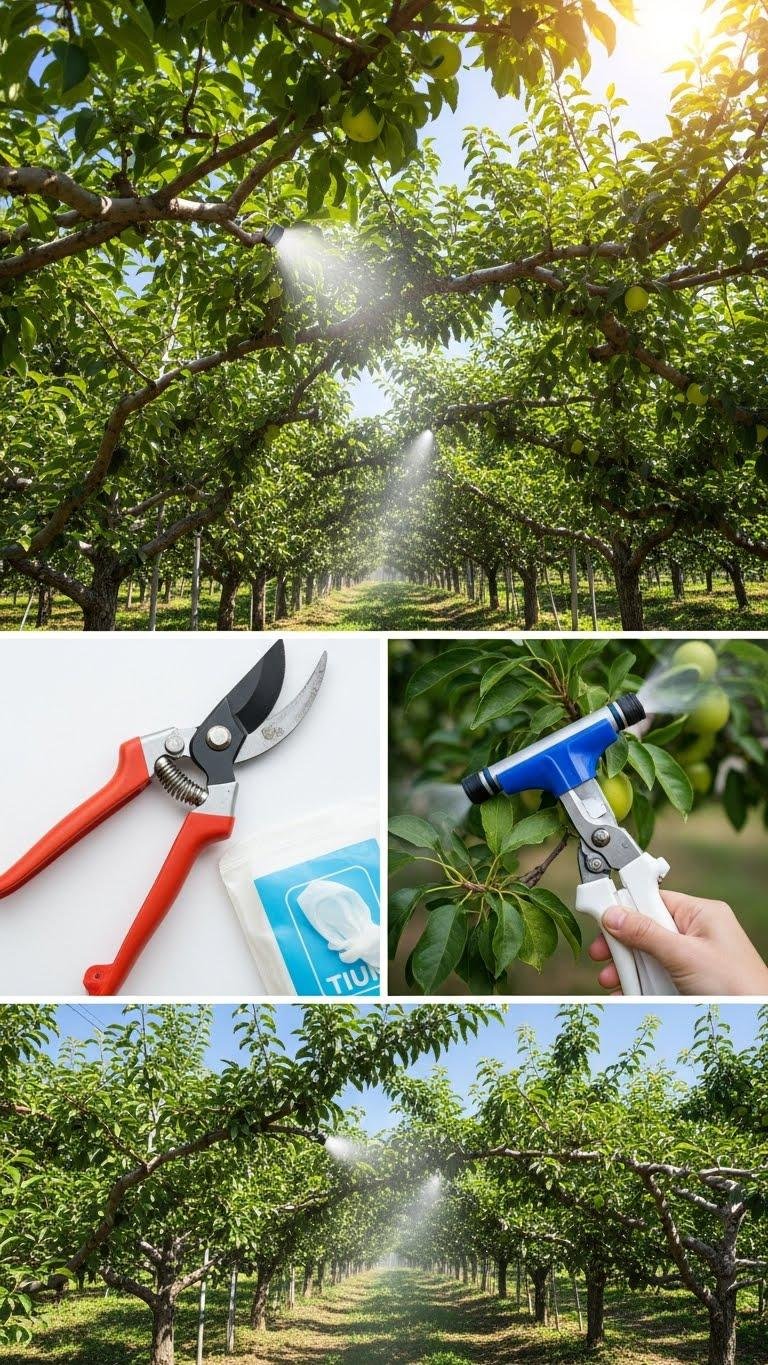
Prune selectively to open the canopy so sprays reach foliage and fruit evenly, and so sunlight and air can improve ripening and reduce disease.
You’ll remove low suckers, thin crowded stems, and maintain clear access for foliar timing of treatments.
Practice strict pruning sanitation: disinfect tools, discard cuttings, and avoid wet conditions.
That keeps fruit clean, disease low, and harvesting freer.
Avoid Over-Pruning in Sunny Regions to Prevent Sunscald
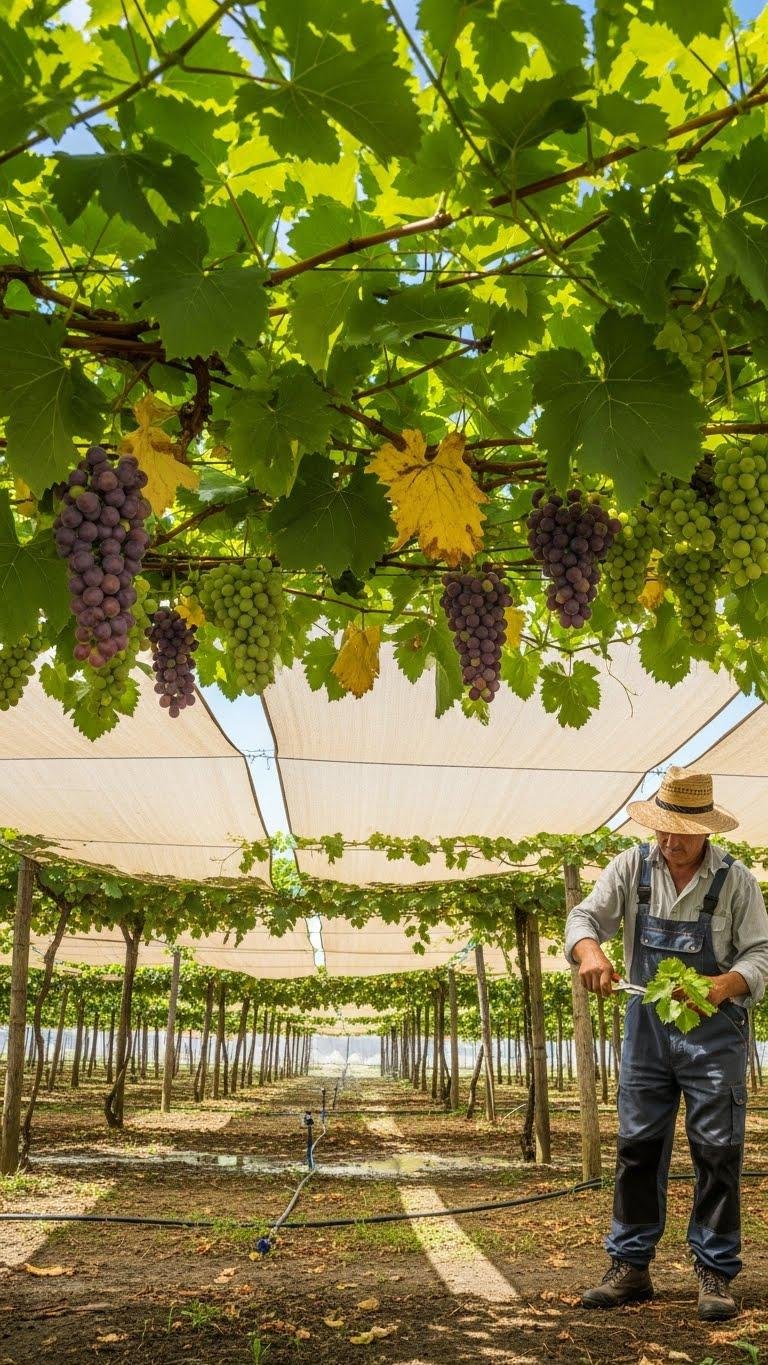
When you strip too many leaves in bright, sunny regions, fruit that’s been shaded all season suddenly gets exposed and can burn, so leave a protective canopy of healthy foliage while you trim.
You’ll protect flavor and yield: prune sparingly, use shade cloth when heat spikes, schedule midday watering to cool plants, and remove only diseased or obstructive foliage for freer, resilient vines.
Use High Tunnels and Soil Heating for Early, Heavy Yields
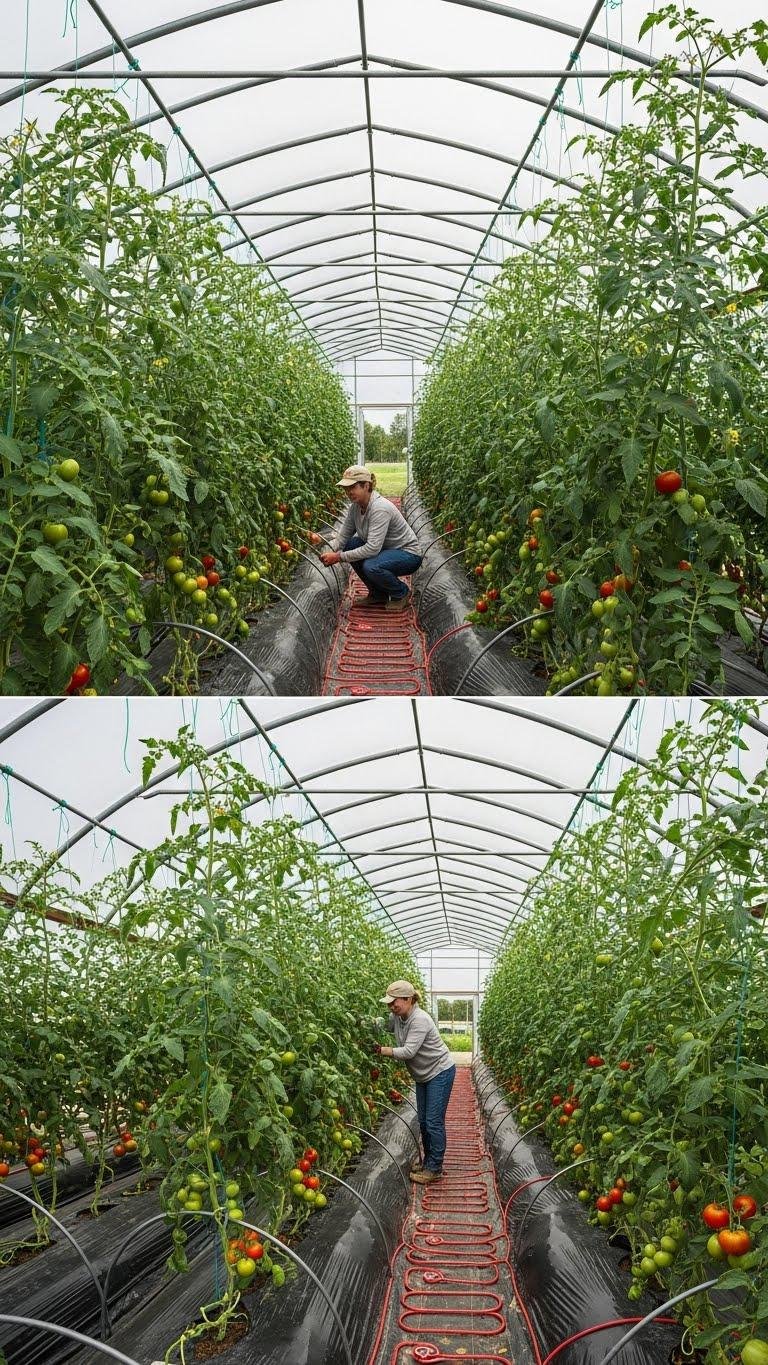
Because you can control temperature and moisture more precisely, installing high tunnels and warming the soil lets you push tomatoes into an earlier, more productive season.
You’ll extend your growing window with season extension tactics: black plastic, low tunnels, and passive soil thermals. Aim for steady root warmth, quick transplanting, and vigilant ventilation so plants thrive, fruit early, and you harvest big without babysitting.
Adopt Hydroponic or Substrate Cultivation for Maximum Output

Switch to hydroponic or substrate systems and you’ll trigger faster growth, higher yields per square foot, and far more control over nutrients and water than traditional soil gardening. You’ll choose Hydroponic NFT for steady flow, or Aeroponic Mist for vigorous roots; both cut pests, conserve water, and let you scale vertically.
Set pH, EC, and feeding schedules, then harvest on your terms.
Plant Habitat Flowers to Attract Beneficial Insects

Often you’ll get better pest control and pollination simply by planting the right flowers around your tomato beds: beneficial insects like ladybugs, lacewings, hoverflies, parasitic wasps, and native bees are drawn to specific blooms that provide nectar, pollen, and shelter.
You’ll plant native wildflowers and design pollinator gardens at edges and paths, creating low-maintenance habitats that free you from chemical controls.