
You can reclaim vertical space and turn a tiny plot into a productive veggie system by mixing smart trellises, stacked containers, and lightweight media. I’ll show practical ways to train vines, combine companion and succession planting, keep roots evenly moist, and secure modular frames for wind and pests. These 23 hacks save space and time while boosting yields — and the best ones are the simplest to implement.
Choose the Right Trellis for Your Space
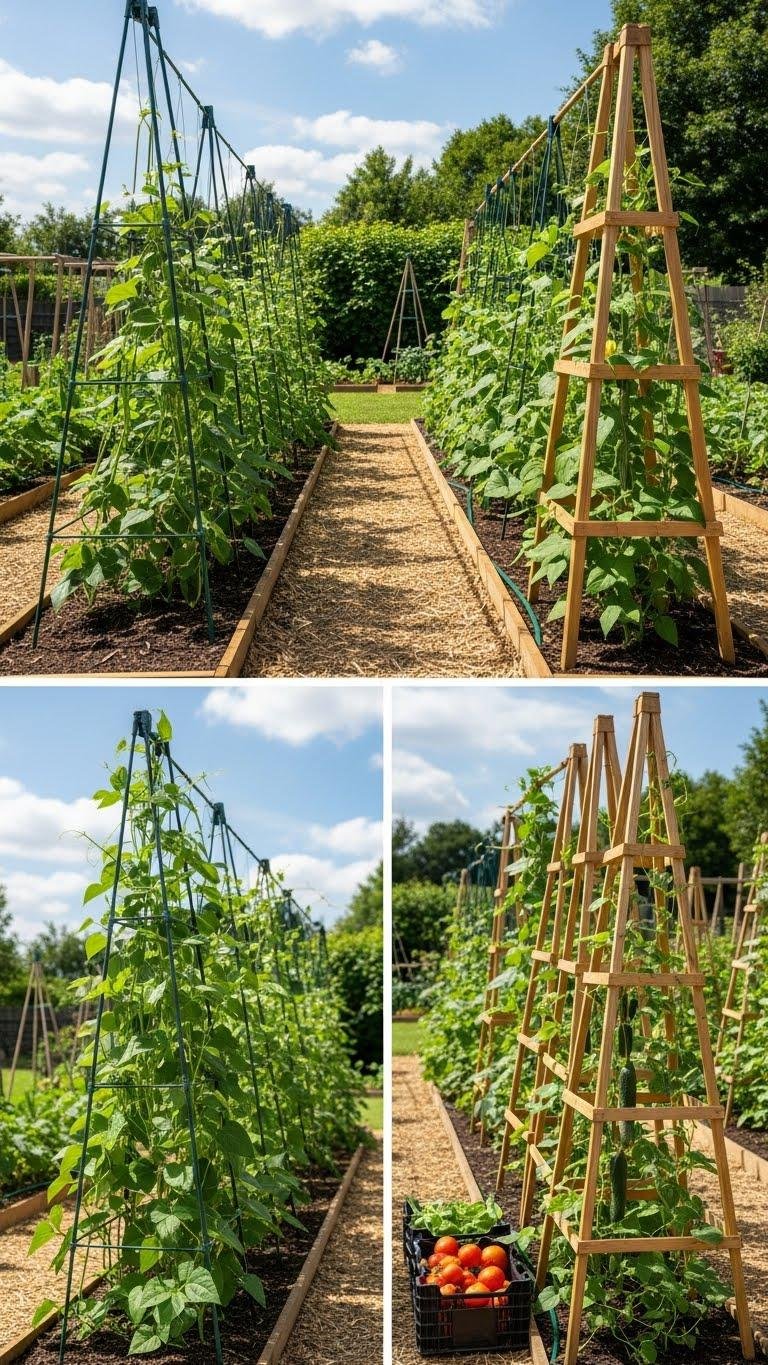
Pick a trellis that matches your available space and the plants you want to grow. You’ll choose designs that are space efficient and suit climbing beans, peas, or cucumbers. Prioritize material durability—metal for long-term support, treated wood for warmth.
Mount securely, orient for sun, and allow access for harvesting. You’ll free yourself from clutter while maximizing vertical yield with smart, sturdy choices.
Double-Sided Trellises to Double Yields
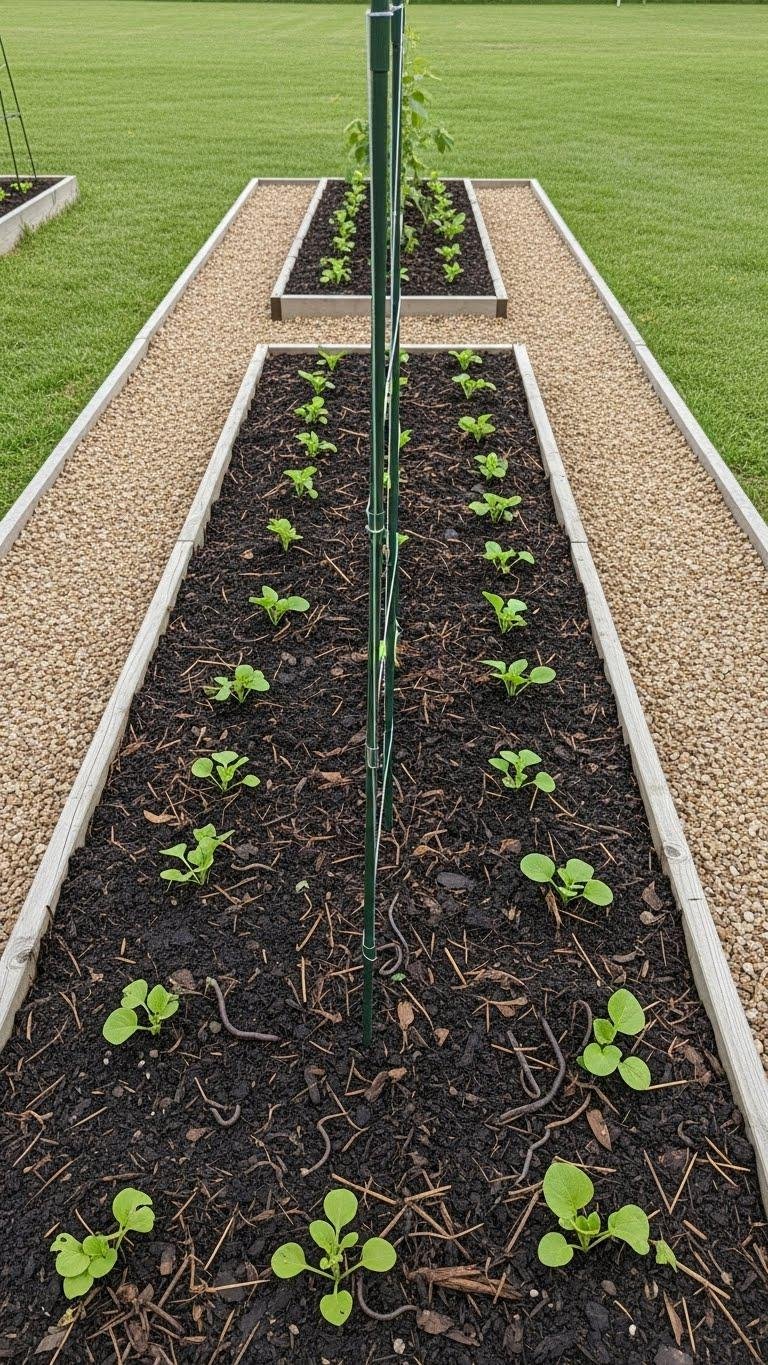
Flip your trellis to work twice as hard: a double-sided design lets you plant on both faces so you can grow twice the beans, peas, or cucumbers in the same footprint.
You’ll maximize sunlight, airflow, and harvests while maintaining access for pruning and harvesting.
Plan double sided setups with clear seasonal rotations to keep soil healthy and your garden productive year-round.
Convert Pallets and Reclaimed Materials Into Vertical Beds
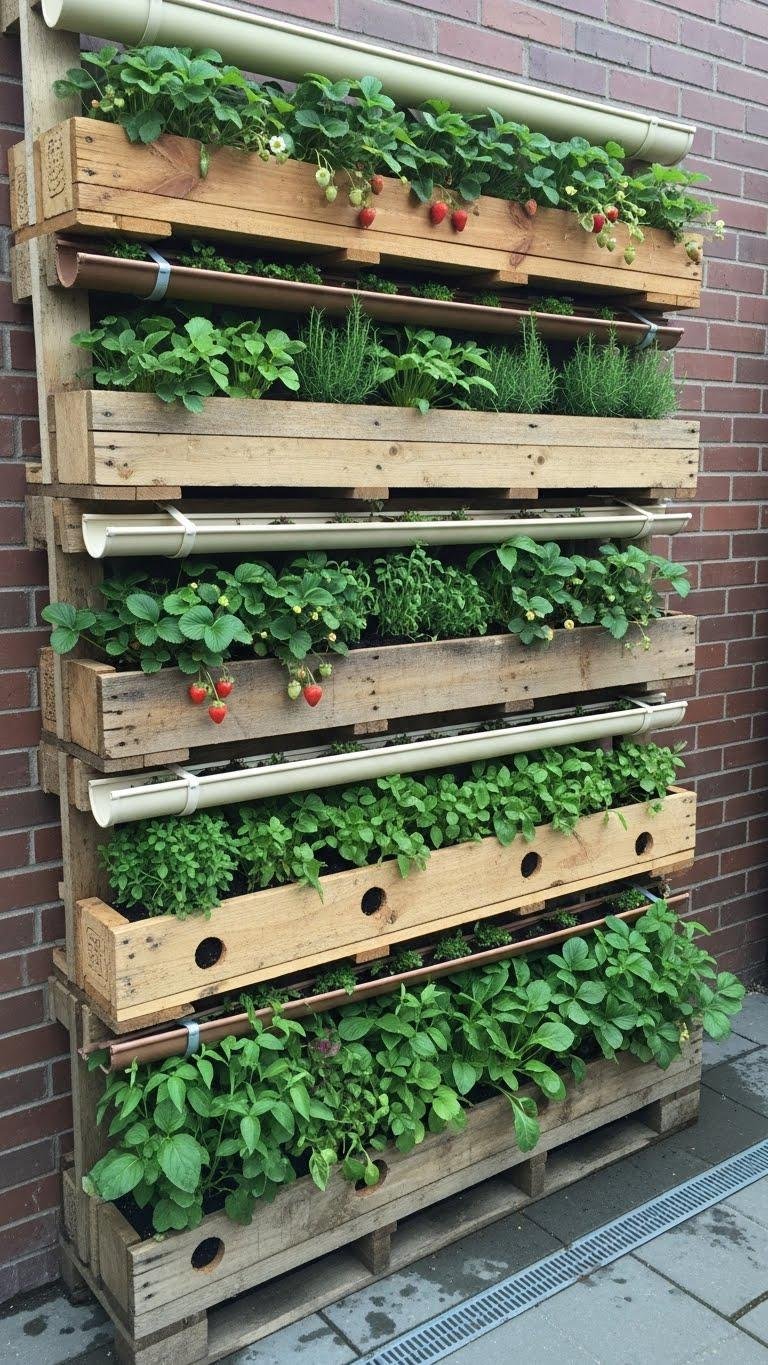
Repurpose old pallets and reclaimed wood into sturdy, space-saving vertical beds that cut costs and add character to your garden.
You’ll secure pallet planters vertically, line them, and add drainage.
Attach upcycled gutters for tiered sowing and irrigation.
Use food-safe sealant, sturdy brackets, and accessible heights so you can maximize yield, move units freely, and maintain soil health without complexity.
Select Compact Varieties for Tiers and Shelves
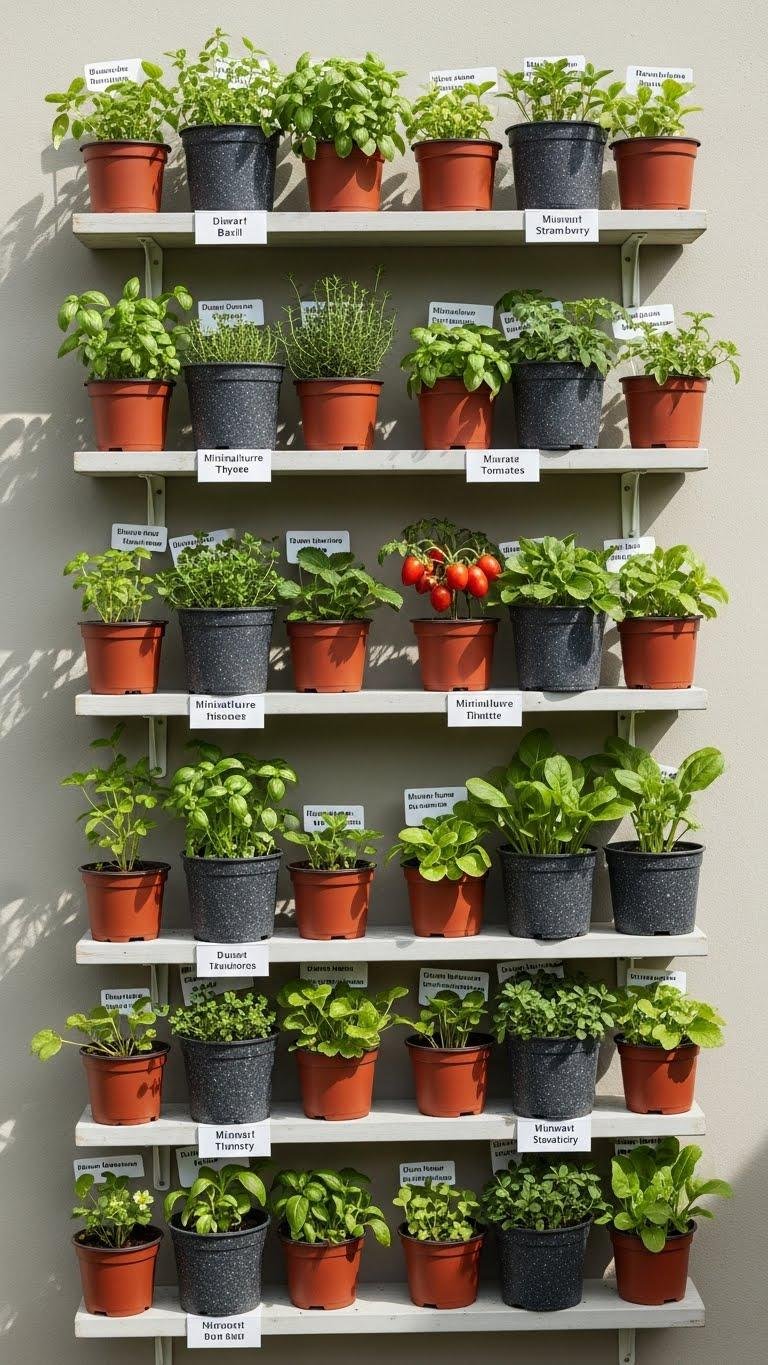
One smart move is to pick compact cultivars that suit narrow tiers and shallow shelves so you don’t overburden the structure or crowd neighboring pots. Choose compact cultivars and varieties grafted onto dwarf rootstocks to reduce vigor, simplify pruning, and increase planting density.
You’ll save space, maintain balance, and harvest more reliably from each tier without constant containment work.
Layer Plants by Height and Light Needs
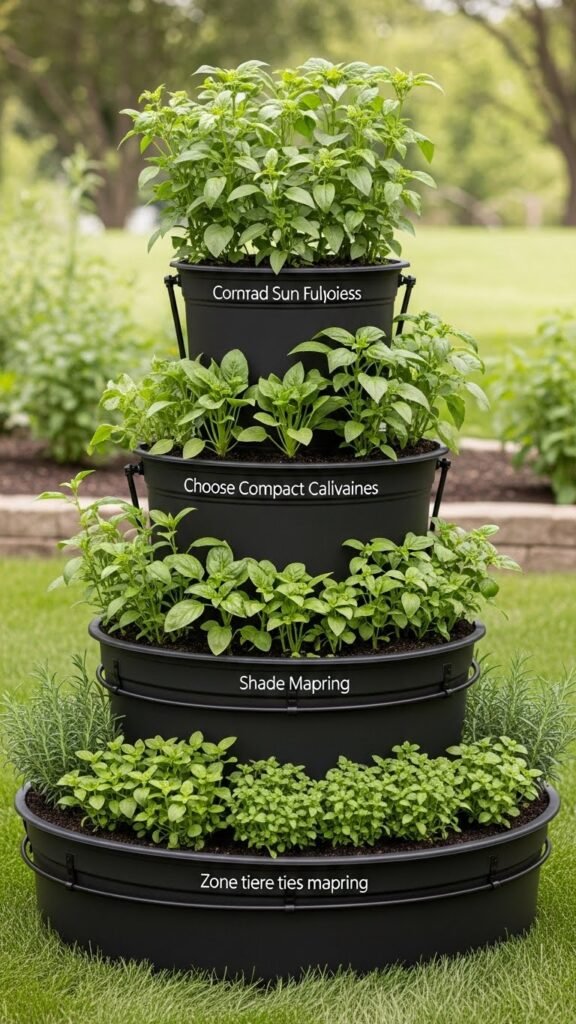
After you’ve chosen compact cultivars and dwarf rootstocks for each tier, arrange plants so height and light requirements work together rather than against you.
Use shade mapping to place tall, sun-loving staples at rear or top, lower shade-tolerant herbs forward.
Zone drip lines with tiered irrigation so each layer gets precise water.
Rotate seasonal placements to maximize sun and airflow.
Train and Prune Vines for Bigger Fruit
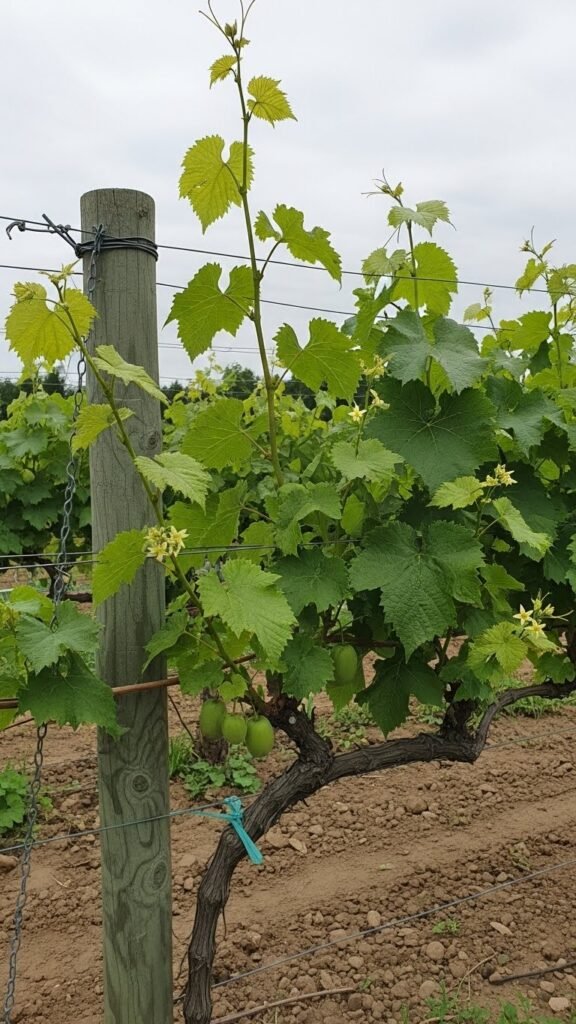
Train vines deliberately to concentrate the plant’s energy into fruiting shoots: tie main leaders to supports, remove competing suckers, and selective-prune excess flowers so remaining clusters develop larger fruits.
You’ll use vine thinning, fruit sizing pruning timing, and focused leaf removal to boost airflow and sun exposure. Prune after fruit set, keep one or two strong leaders, and steady ties to prevent damage.
Use Lightweight, Water-Retentive Media
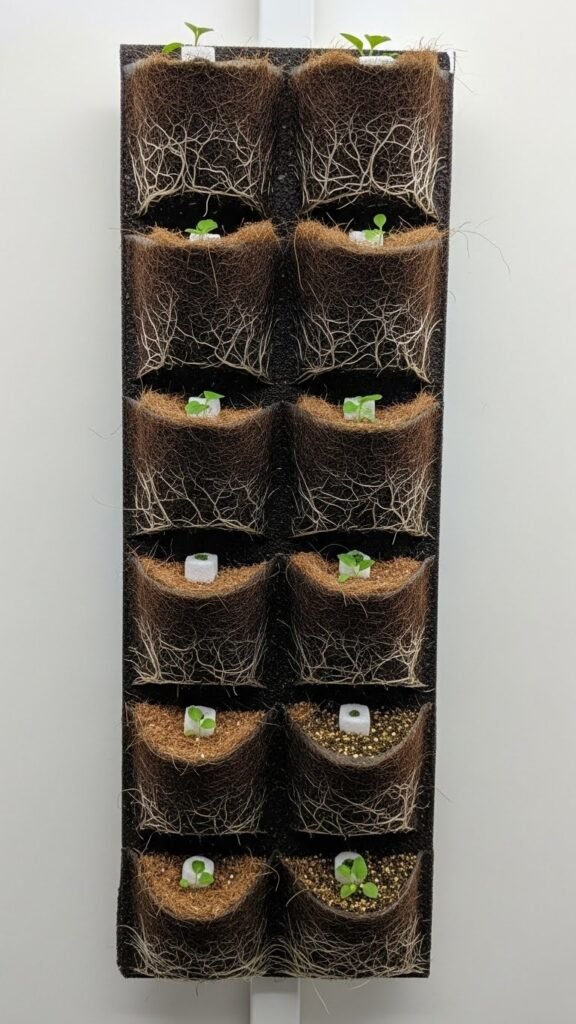
Because vertical setups put extra weight on walls and frames, choose lightweight, water-retentive media that keeps roots moist without overloading your structure. You’ll favor mixes with foam cubes for aeration and coconut coir for moisture retention. Blend with perlite or vermiculite for drainage balance, pack loosely to prevent compaction, and secure pockets so plants stay free-rooted and easy to harvest.
Plan Fertility With Regular Liquid Feeding

Lightweight, water-retentive media keeps roots happy, but it won’t supply all the nutrients your plants need over a season — so plan a regular liquid-feeding schedule to keep growth vigorous and harvests consistent.
You’ll feed weekly with balanced soluble fertilizer, add foliar feeding during heat stress, and rotate formulas for micronutrient boosts. Track EC/pH, adjust doses, and free yourself from guesswork for reliable yields.
Stagger Planting for Continuous Harvests
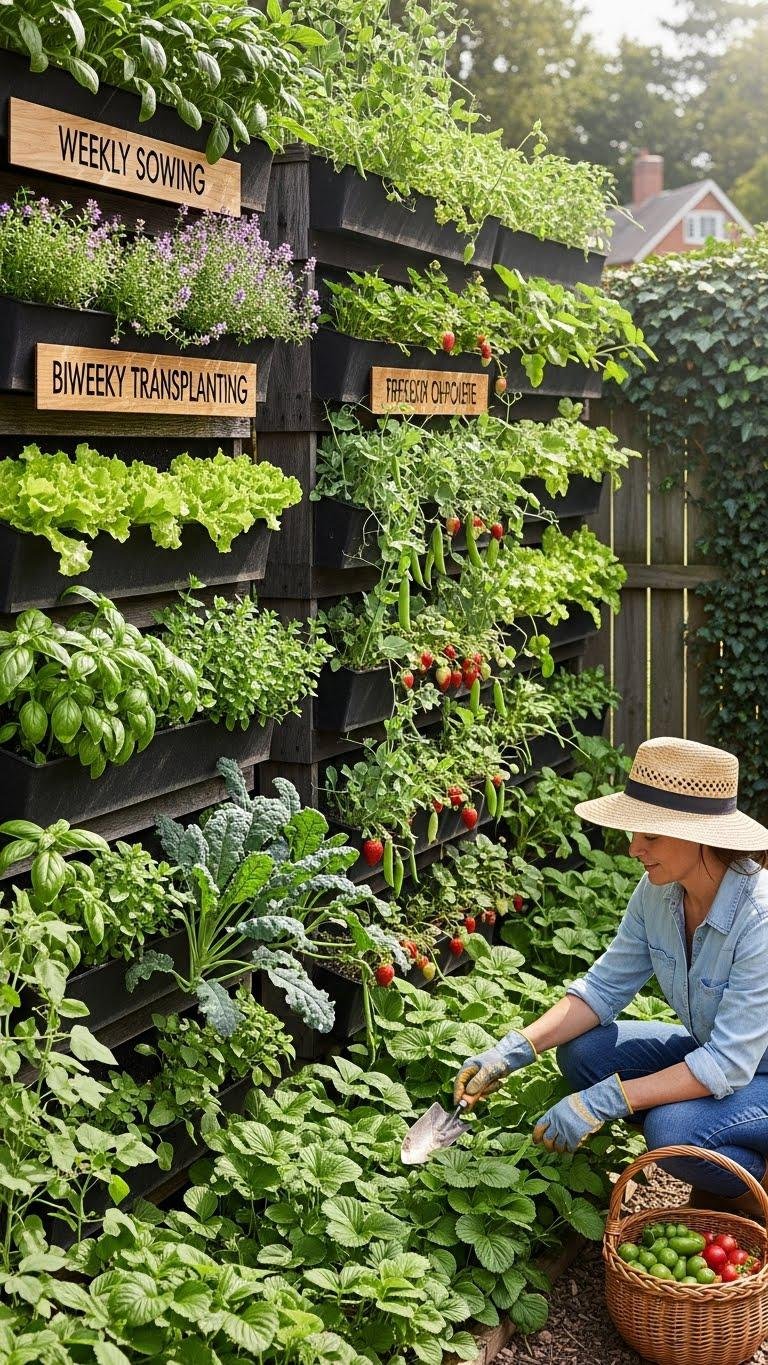
Regularly staggering your sowing and transplanting keeps your vertical beds producing instead of peaking all at once. You’ll plan succession sowing in weekly or biweekly rounds, matching crops to microclimates and container sizes.
Use staggered transplants to replace early harvests, extend flavor variety, and minimize waste. That rhythm frees you from frantic planting windows and delivers steady, abundant pickings all season.
Improve Drainage to Prevent Root Rot
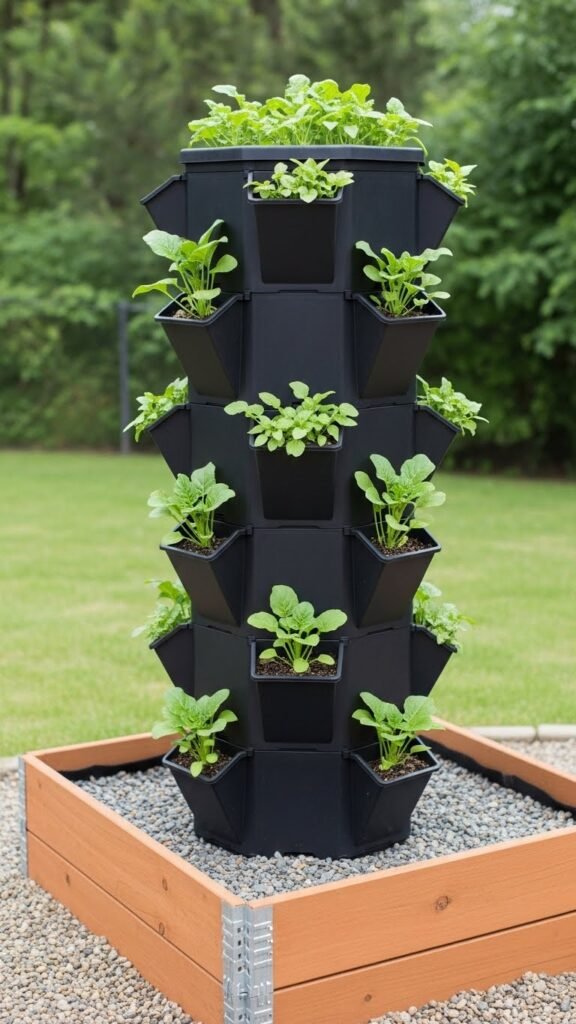
Anchoring your structure well is only half the battle; if water can’t escape, strong supports won’t save your plants from rot. You’ll angle containers, add drainage holes, and layer coarse media.
In raised beds, create gravel layers beneath soil, use fast-draining mixes, and avoid compacting. That control prevents root rot, speeds drying after storms, and lets your vertical garden stay productive and free.
Encourage Beneficial Insects With Flowering Herbs

Often you’ll get the best pest control by inviting helpful insects in with flowering herbs that provide nectar, pollen, and shelter. Plant thyme, borage, and lavender as aromatic borders on your vertical structures to create pollinator habitats and attract predators like ladybugs and lacewings.
You’ll reduce pests naturally, boost fruit set, and retain freedom to manage crops with minimal chemicals and effort.
You’ll gain control and freedom to optimize each vertical niche.
Keep Airflow to Reduce Fungal Disease
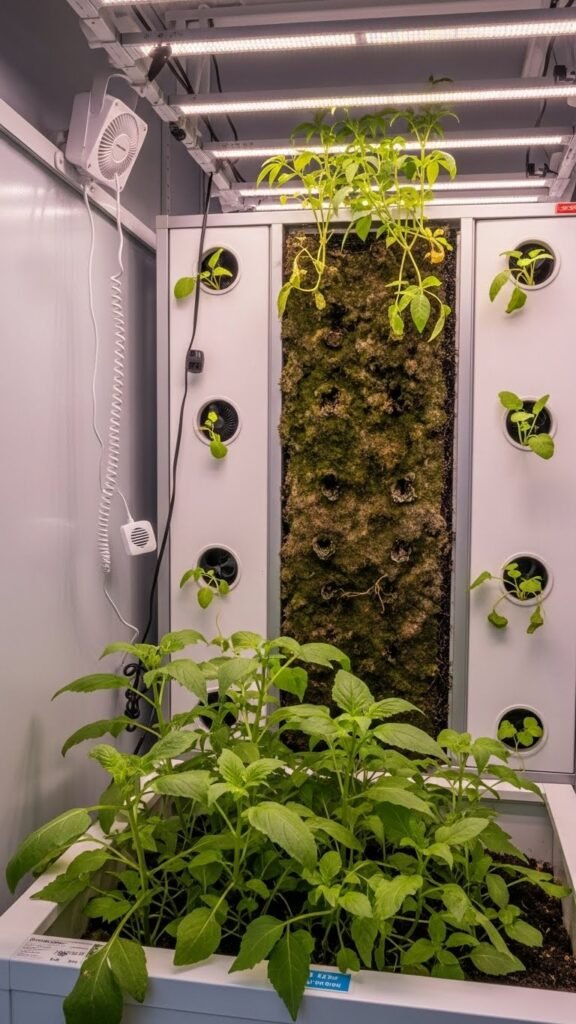
Because stagnant, humid air invites mildew and blight, you should prioritize steady airflow through your vertical beds to keep fungal spores from settling and multiplying. Use canopy spacing to improve natural ventilation, trim lower foliage, and orient panels to prevailing breezes.
Add small fans tied to airflow sensors for automated boosts. Dry leaf surfaces after watering and avoid tightly packed plantings to preserve healthy freedom and yields.
Use Straw-Bale Stacking for Cheap Vertical Beds
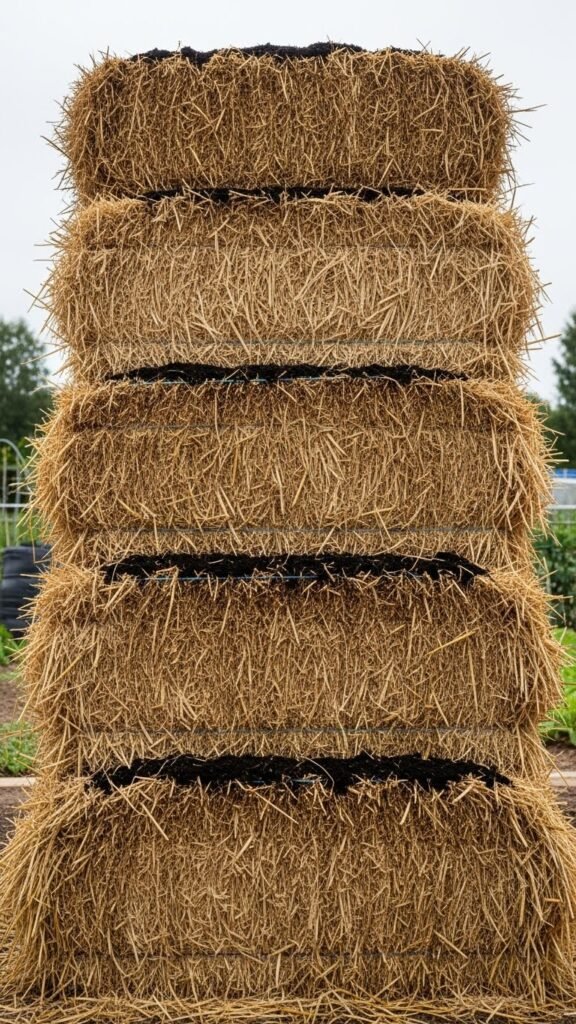
Stack bales of straw to build cheap, modular vertical beds that give you instant growing height and excellent drainage. You’ll arrange straw bales in tiers, secure them, and fill gaps with compost or potting mix.
Monitor moisture management closely: water deeply, mulch tops, and check cores so roots stay damp but not soggy. This setup frees you to expand fast and move beds as needed.
Design Modular Units for Easy Expansion
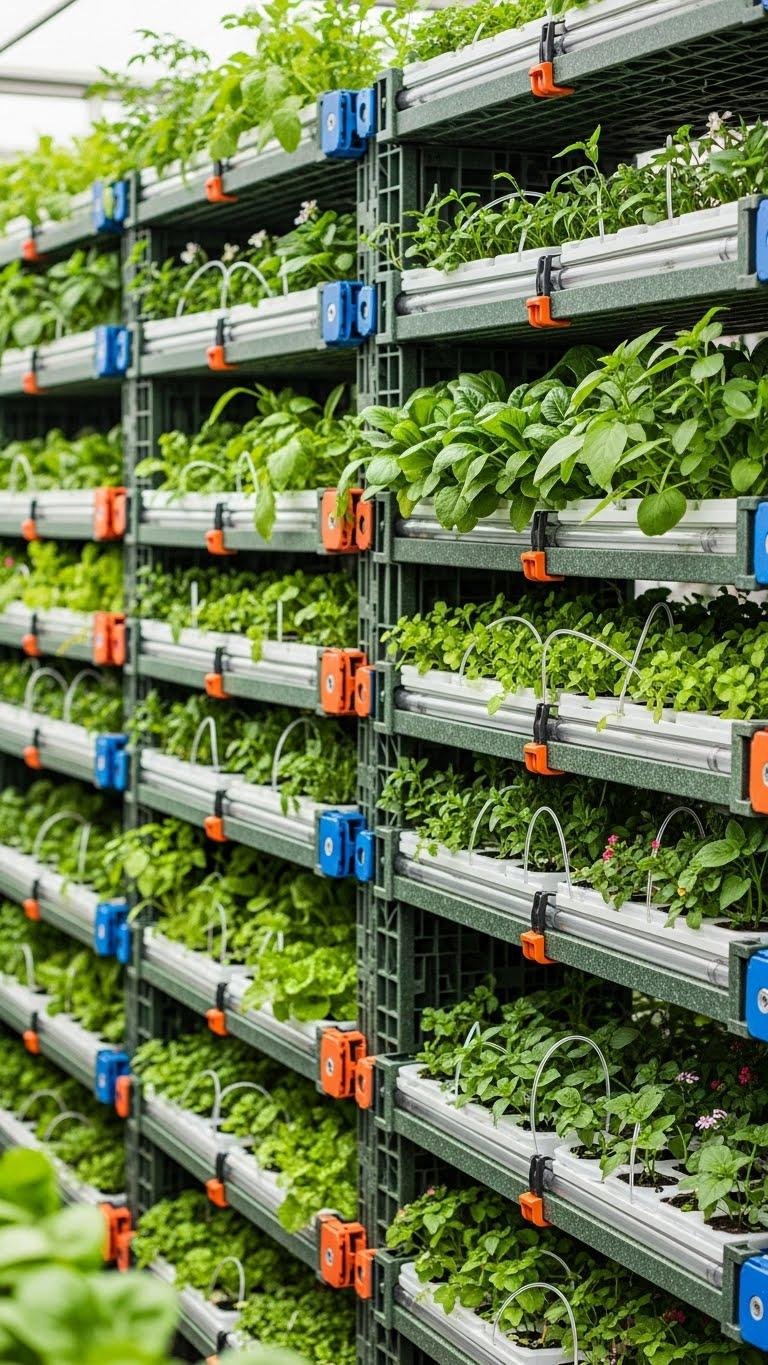
Think of modular units as building blocks for your vertical garden—you’ll design repeatable, compatible sections that snap together as your needs grow.
You’ll use durable modular connectors and simple expansion joints so units align, drain, and secure reliably.
Plan standardized tray sizes, irrigation runs, and attachment points.
This lets you add rows, swap modules, and scale rapidly while keeping structure, access, and harvests efficient.