
You’ll get better results if you water smart: morning watering, deep infrequent soakings, matching schedules to soil and plant type, and placing water right at the root zone all matter. I’ll show practical ways to set up drip lines, zone by needs, use mulch, monitor moisture, and adjust for weather and growth — plus simple rules of thumb that save water and keep plants vigorous. Keep going to learn the specifics.
Water Early in the Morning

Usually, water your plants early in the morning so the soil soaks up moisture before the heat of the day; this reduces evaporation and gives roots time to absorb what they need. You’ll favor dawn watering to steady root hydration, letting you control intake and cut disease risk.
Water deeply, observe runoff, and adjust frequency based on plant needs to keep them resilient.
Match Watering to Soil Type
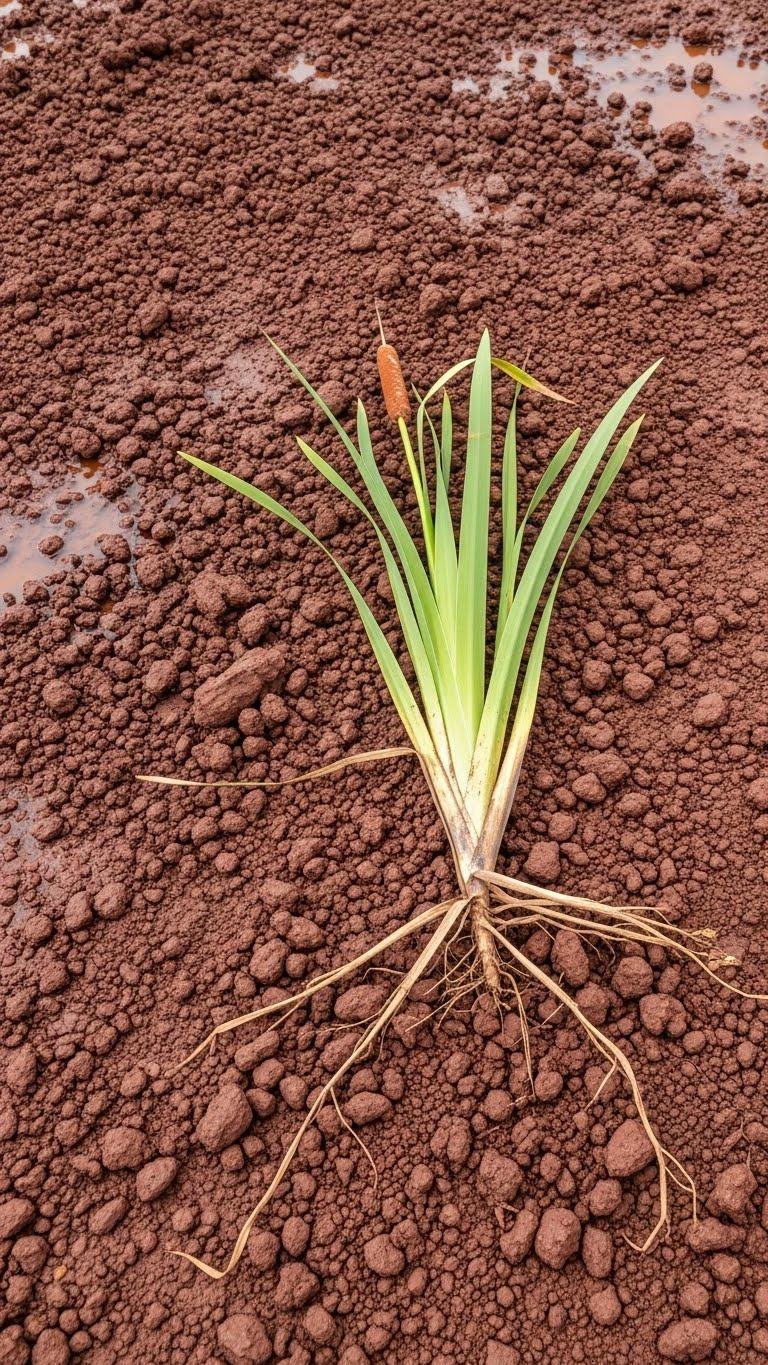
Knowing when to water is only half the job — you also need to match how much and how often to the soil you’re working with. Assess soil texture to know water retention: sandy soils drain fast, loams hold moisture, clays retain longer.
Adjust frequency to the drainage rate and root depth. You’ll give plants freedom to thrive by tailoring irrigation to substrate, not habit.
Wet 25 Percent of Tree Roots Regularly
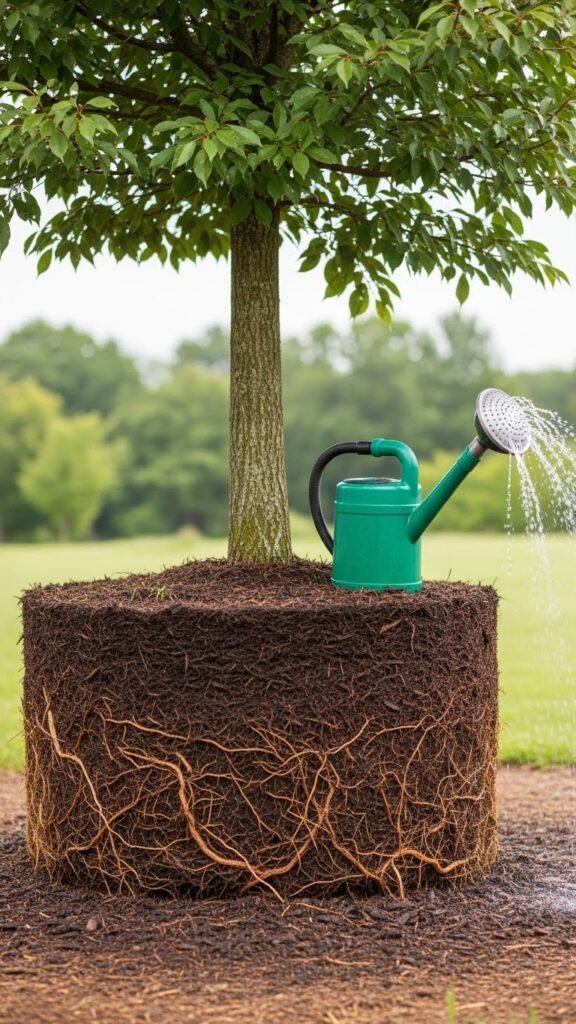
Regularly wet about 25% of a tree’s root zone to keep feeder roots active without over-saturating the entire root system. Water a focused sector deeply, rotating areas over weeks so roots explore.
Monitor mulch depth to avoid smothering, and avoid careless root pruning that reduces uptake. This targeted approach preserves vigor, conserves water, and lets you manage roots with control and confidence.
Check Plants Frequently Instead of Following a Calendar
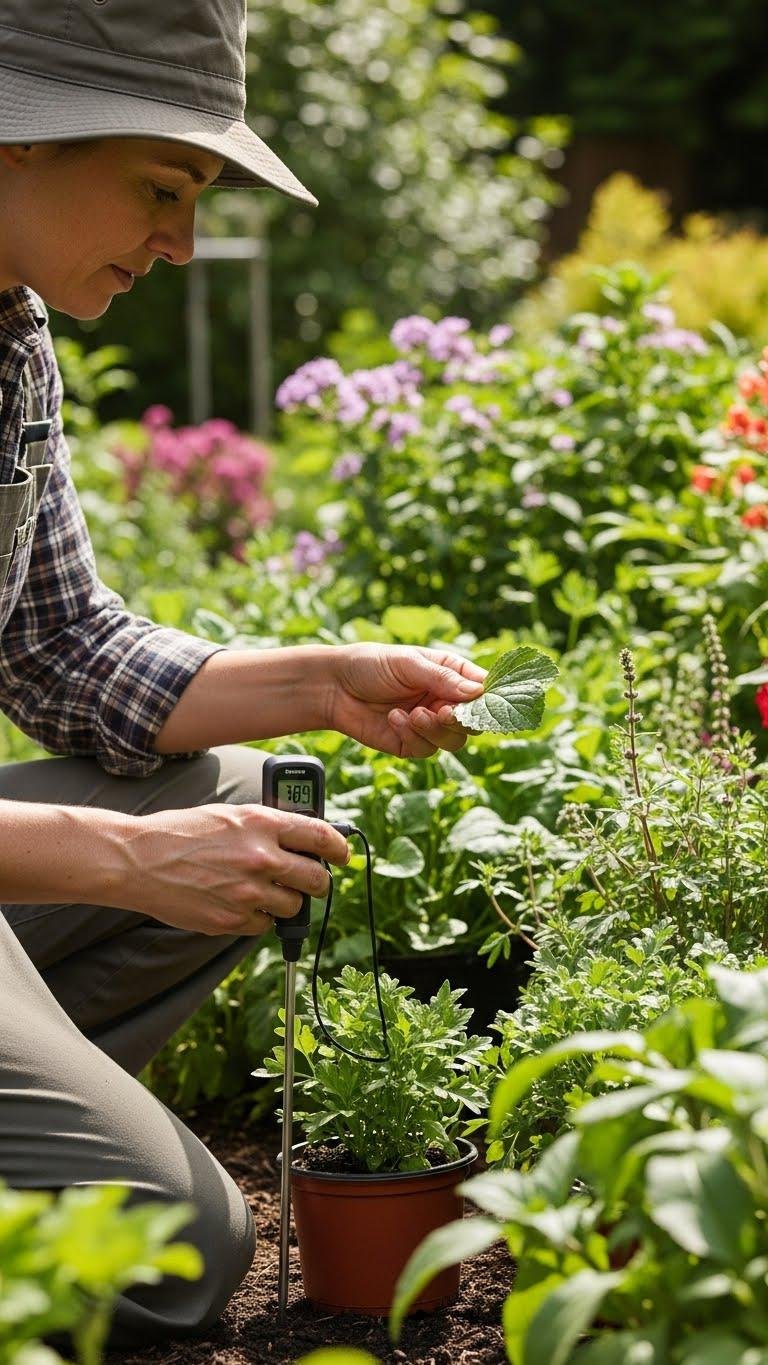
Often you’ll get better results by checking your plants frequently instead of sticking to a rigid watering calendar.
You’ll use sensor checks and quick visual inspection to decide when to water, responding to real needs rather than dates.
Trust your observations, loosen rules when conditions change, and water only when soil and foliage show it’s necessary, giving you freedom and healthier, resilient plants.
Avoid Daily Watering
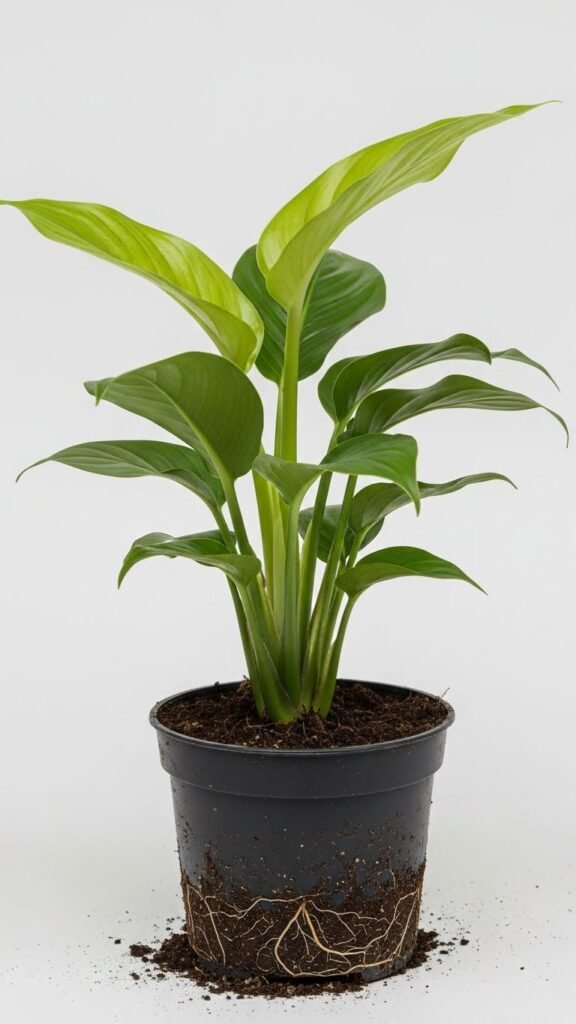
Because daily watering can encourage shallow roots and disease, give most plants a chance to dry slightly between drinks; check soil moisture and only water when the root zone actually needs it.
You’ll often skip watering when sensory cues — dampness an inch down, leaf turgor, pot weight — show adequate moisture. Trust those cues and water deeply but infrequently to build resilient roots.
Increase Water During Active Growth
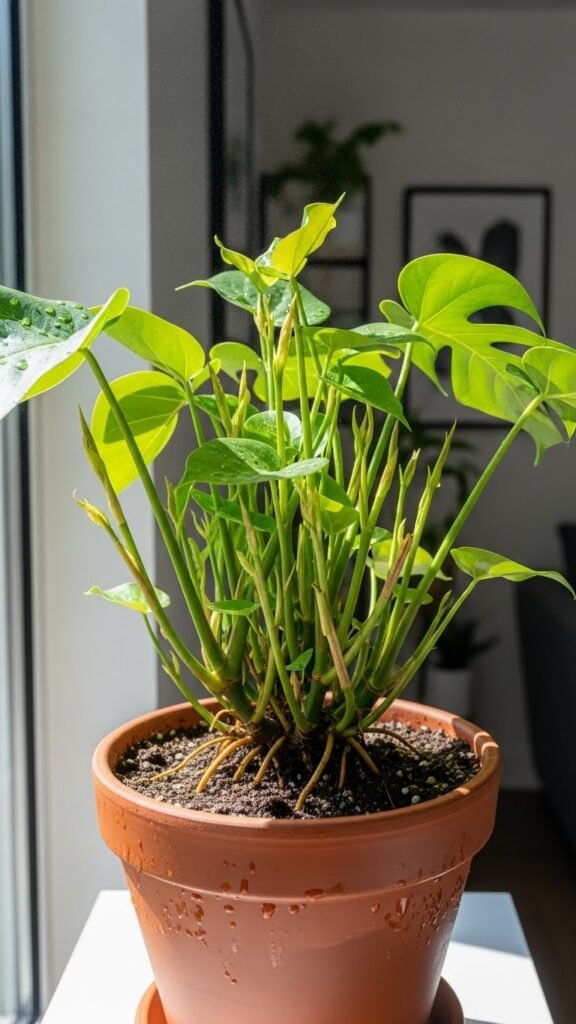
Noticing a surge in new leaves, blooms, or root growth means you should increase watering to match the plant’s higher demand. Water a bit more often and deeper to support increased transpiration and root hair proliferation.
Check soil moisture regularly, let upper inch dry between irrigations, and adjust for warmth or wind. You’ll keep growth vigorous without overwatering.
Keep Water Off Leaves to Prevent Disease
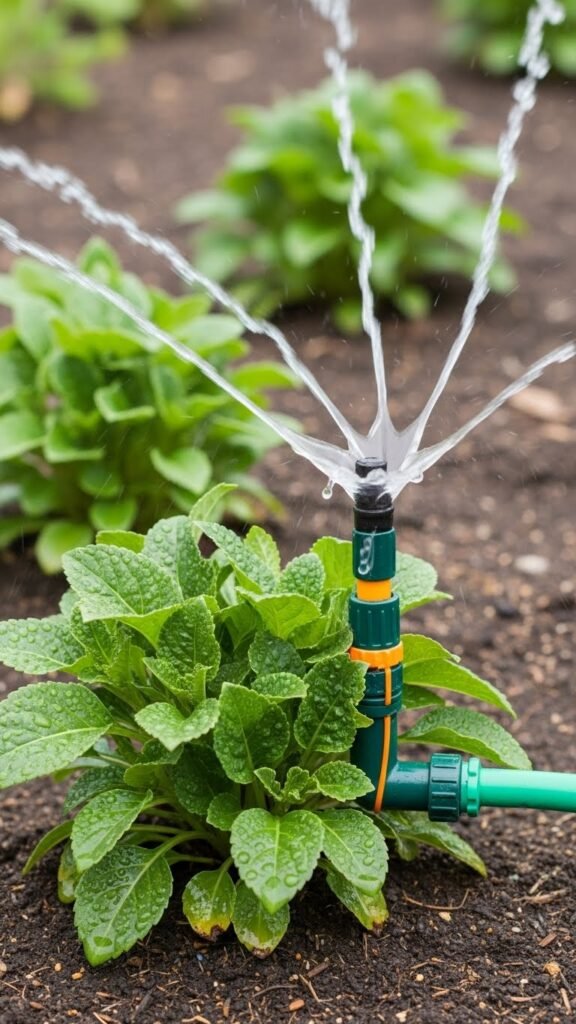
Regularly keeping water off leaves helps prevent fungal and bacterial diseases that thrive in damp foliage. Water at the soil line early morning, use drip irrigation or a soaker hose, and angle sprinklers away from foliage.
You’ll reduce foliar diseases and speed leaf drying, letting plants breathe and stay vigorous. Inspect leaves after watering and adjust habits to protect your garden’s freedom and health.
Top Water Pots to Saturation Before Planting
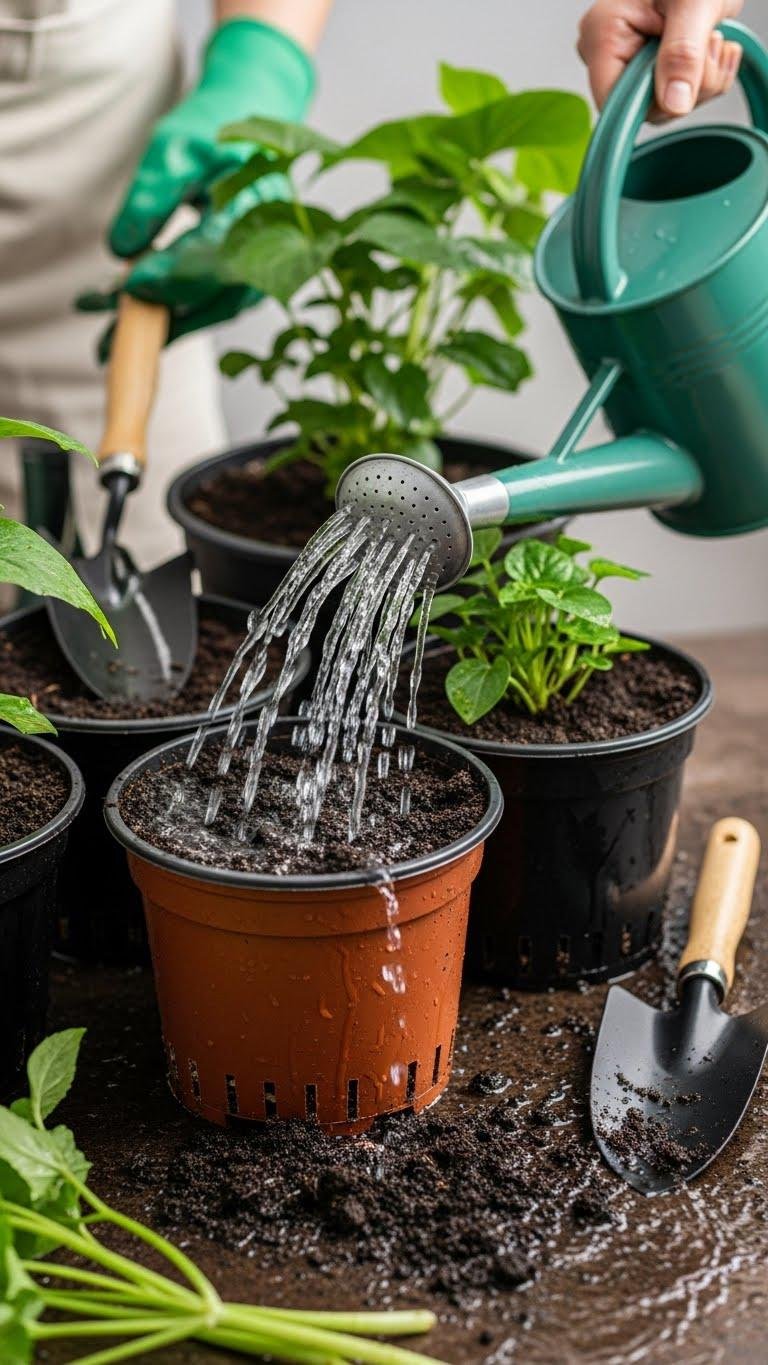
Before you pot up, top-water each container until water runs freely from the drainage holes so the soil is uniformly saturated and any dry pockets or hydrophobic layers are eliminated. You’ll guarantee pre planting saturation, settle the mix, and confirm pot drainage considerations are effective.
After excess drains, let soil equilibrate to avoid overwatering seedlings; this gives your plants a clean, predictable start.
Use Plant-Based Signals Like Leaf Temperature
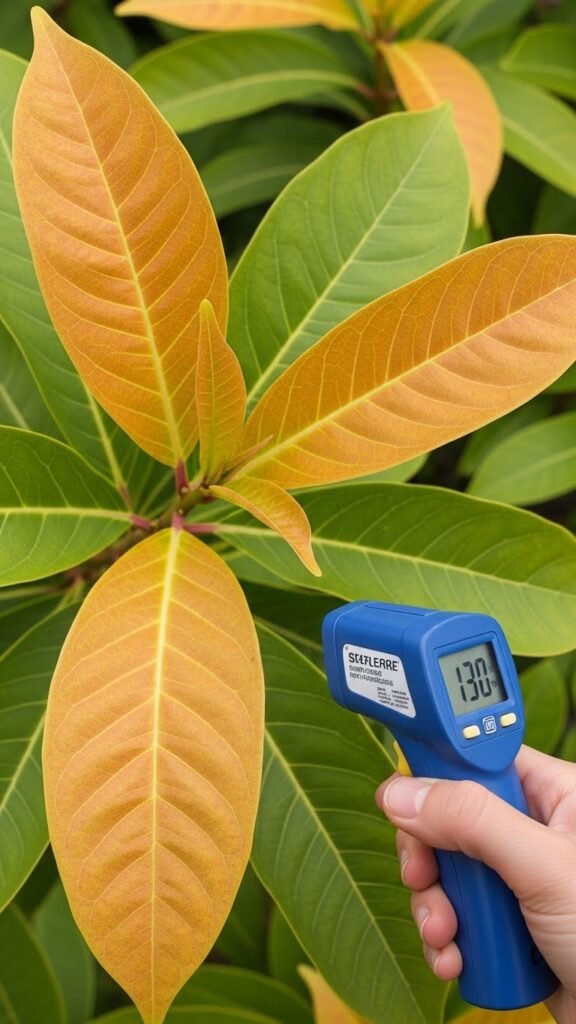
Often you’ll get the clearest cue from the plant itself: leaf temperature tells you a lot about its water status and stress.
You can feel or use an infrared thermometer to compare leaves; warmer leaves often indicate stomatal closure and drought signaling. Check multiple leaves, morning and midday, and act when temperature rises relative to baseline.
This simple feedback gives autonomy and precision to your watering.
Use a Plant Factor of 0.5 for Established Trees
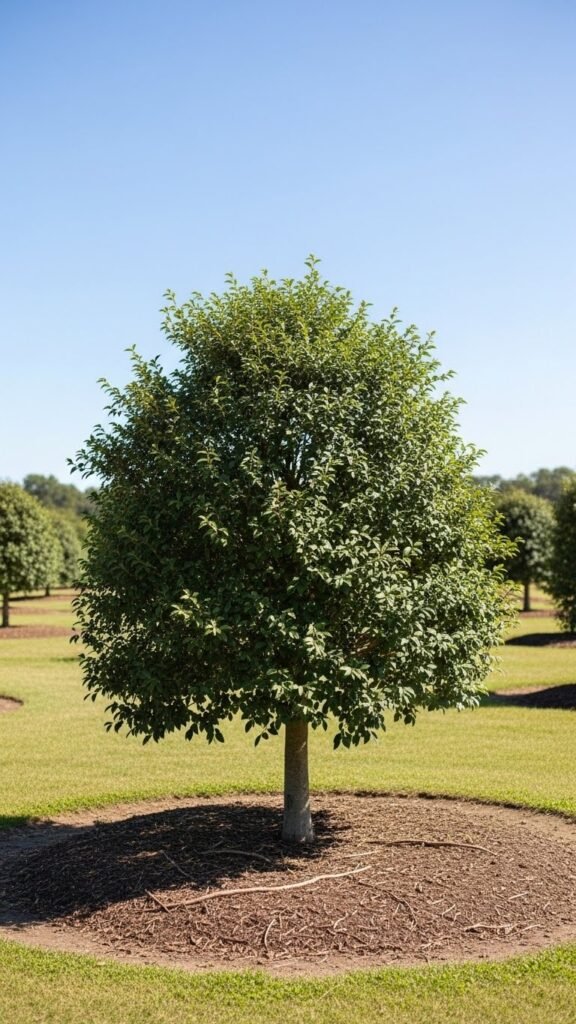
When estimating irrigation needs for established shade or ornamental trees, use a plant factor of 0.5 to scale evapotranspiration (ET) estimates to realistic water uptake by mature root systems. You’ll conserve water and respect drought tolerance while supplying reliable moisture.
Adjustments hinge on observed vigor and root architecture; monitor soil moisture, reduce frequency but increase soak depth, and avoid overwatering shallow roots.
Zone Irrigation by Similar Tree Requirements
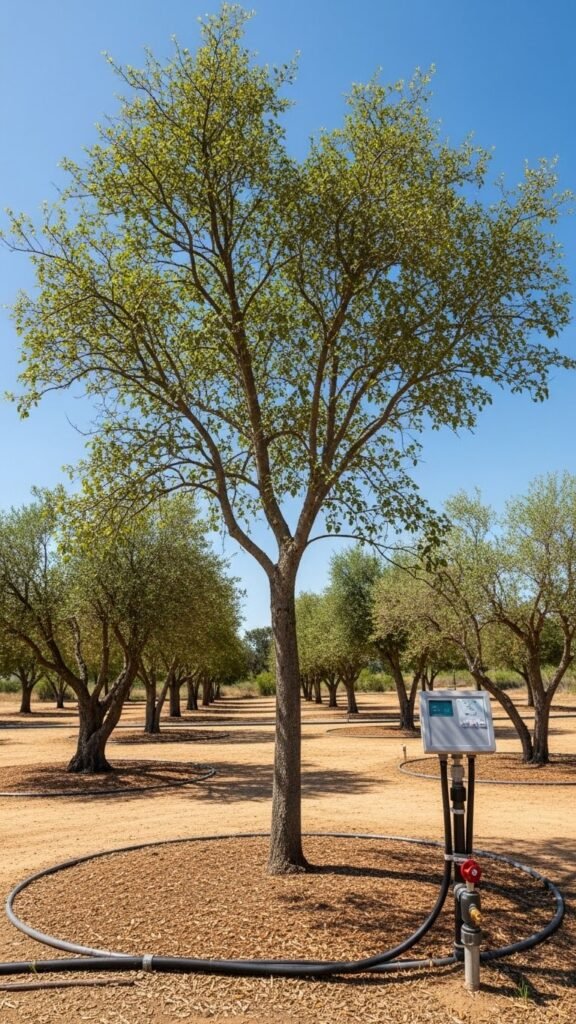
If you group trees with similar water needs into the same irrigation zone, you’ll deliver water more efficiently and avoid over- or under-watering individual species. Create species grouping by drought tolerance and root depth, mapping zones so valves match needs. You’ll conserve water, simplify scheduling, and give each tree appropriate moisture. Review and adjust zones seasonally to maintain independence and resilience.
Adjust Watering for Light, Temperature, and Humidity
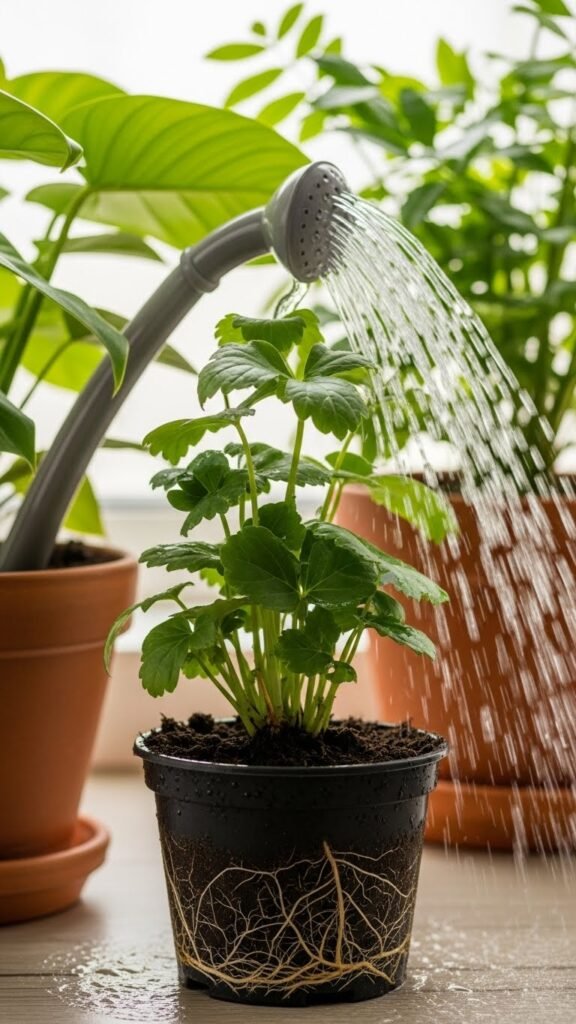
Because sunlight, temperature, and humidity all change how quickly soil and roots lose moisture, you should adjust watering schedules and amounts to match current microclimate conditions.
You’ll adopt light sensitive schedules for sun-exposed pots, shorten cycles during heat, and lengthen them in cool shade. Use humidity adjusted timers or manual checks, prioritize root-zone moisture, and give plants autonomy to thrive.
Thin Seedlings Early to Manage Water Competition

Although seedlings germinate together, you’ll need to thin them early so remaining plants don’t compete for water at the root zone. Thin to recommended seedling spacing, removing weaker stems at soil level.
Early pruning reduces transpiration stress and simplifies watering. You’ll save water and boost vigor by giving each plant clear access to moisture and nutrients, so they establish strong, independent roots.